Remember when cars weren’t just soulless transportation pods? Before everything became an indistinguishable blob of aerodynamic efficiency and driver assists, automobiles had character. They were brimming with quirky features that not only defined their eras but also brilliantly reflected their technological ambitions, sometimes with results that made you scratch your head in delightful confusion.
These mechanical time capsules do more than just transport us; they tell us a story about ourselves, about what we valued, and about the ingenious (and sometimes questionable) design choices of yesteryear. Like scrolling through vintage Instagram filters, these automotive oddities reveal both clever problem-solving and some truly wild fashion statements that captured the spirit of the times.
Ready for a tour through automotive history’s most fascinating dead ends and surprisingly innovative detours? We’re about to buckle up—though your seatbelt might be automatic, or maybe just a bench seat you slide across—and embark on an adventure into the bizarre and brilliant world of vintage American car features that time (mostly) forgot. Get ready to have your mind revved up!
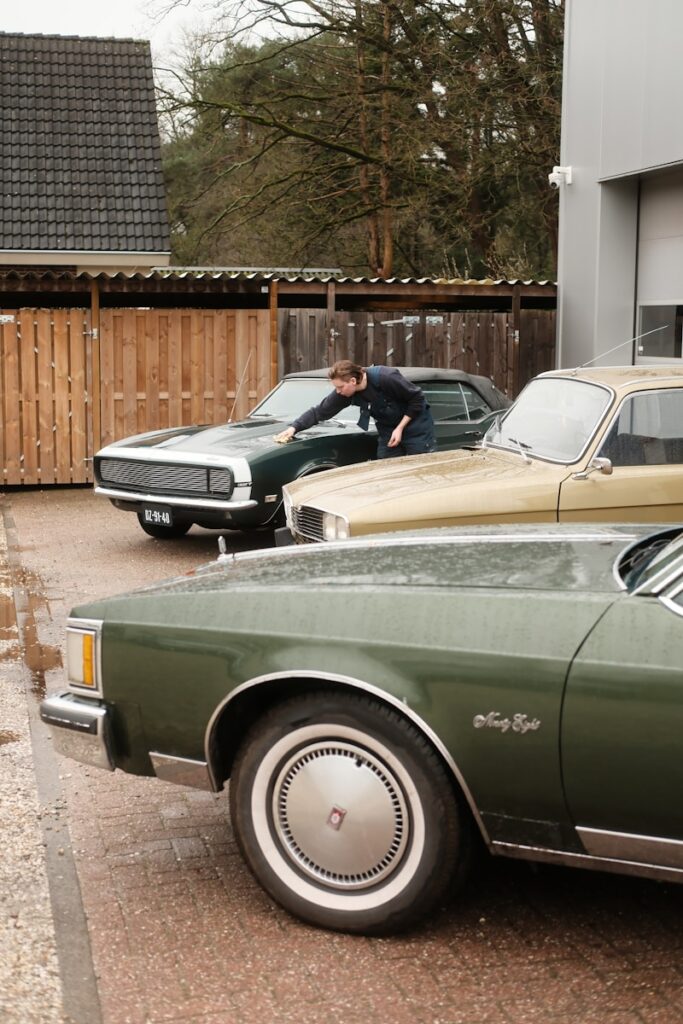
1. **Vinyl Roofs: The Original Automotive Combover**Imagine a car that decided it wanted to dress up for a fancy party, but instead of a sleek new coat of paint, it opted for a synthetic toupee. That’s essentially what vinyl roofs were all about! This distinctive styling trend first emerged in the 1920s, with manufacturers hoping to mimic the prestigious, luxurious appearance of convertible carriages without having to deal with the structural compromises or the higher expense of an actual convertible.
For a time, vinyl roofs wrapped cars in what felt like a touch of high-class flair. They transformed ordinary hardtops into convertible impersonators, giving a sophisticated look to vehicles that might otherwise have been a bit too mundane. It was a stylistic flourish, an attempt to elevate the everyday car into something a bit more special, a visual nod to elegance that caught the eye.
However, this cosmetic enhancement harbored a pretty significant fatal flaw, and it became apparent quite quickly. The vinyl, for all its perceived charm, had a nasty habit of trapping moisture directly against the metal bodywork underneath. This created the perfect breeding ground for rust, turning a stylish accent into a corrosive nightmare over time.
By the 1980s, the writing was on the wall. These high-maintenance coverings, which required constant vigilance against the elements, fell sharply from fashion. They were eventually replaced by far more durable paint finishes and, crucially, by sunroofs that actually offered tangible functionality, like letting in fresh air and light. Today’s panoramic glass roofs provide the openness people genuinely wanted, a far cry from the purely aesthetic and problematic vinyl.
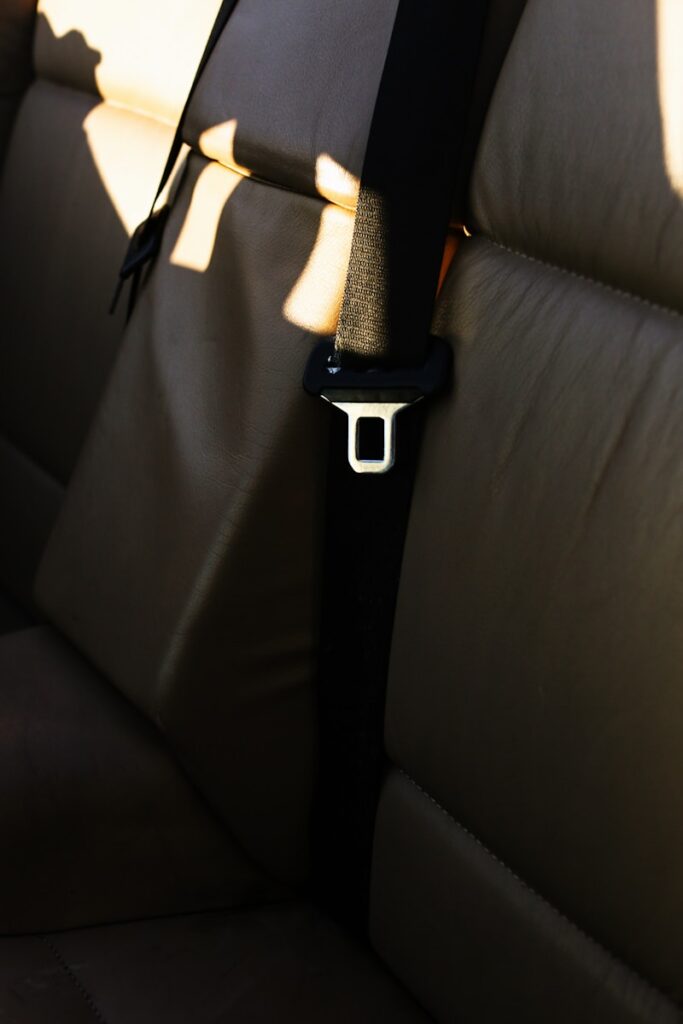
2. **Automatic Seat Belts: Safety With A Side Of Strangulation**Ah, the automatic seat belt. This was an invention born from a noble cause: to solve the perennial problem of driver non-compliance with seat belt laws, all through the power of engineering! These motorized restraints were quite a spectacle; they would glide across your torso as you entered the vehicle, creating a theatrical safety experience that truly felt like being embraced by an enthusiastic, albeit slightly unsettling, robot.
It was an innovative concept, designed to take the choice out of the driver’s hands and ensure they were buckled up every single time. The intention was solid, aiming to improve safety statistics by removing the human element of remembering to click that belt. The movement itself was quite futuristic, a tangible sign of progress in automotive safety.
But here’s the rub: their fundamental design flaw became immediately, glaringly apparent to anyone who used them. While they diligently secured your upper body, they often left your lap completely unprotected. This glaring oversight meant that in a frontal collision, despite the shoulder restraint, your body could still slide forward, leading to serious injury. It was an incomplete safety solution.
Adding to the problem, many drivers, either out of habit or discomfort, simply ducked under the shoulder portion, rendering the entire elaborate system completely useless. It was a classic case of over-engineering missing the mark on human behavior. Ultimately, the advent of airbags and significantly improved manual belt designs eventually sent these automated contraptions to the automotive retirement home, serving as a perfect example of how trying to engineer around human laziness sometimes creates more problems than it solves.

3. **T-Tops: Convertibles For Commitment-Phobes**If a car could have an identity crisis, the T-top would be its most prominent symptom. These beloved features perfectly split the difference between coupes and full-blown convertibles, much like someone who just can’t decide between pizza toppings. These removable roof panels, famously separated by a central structural beam that created their namesake “T” shape, offered a thrilling taste of open-air excitement without completely sacrificing the structural rigidity of a hardtop.
The 1968 Corvette played a huge role in popularizing this feature, and it wasn’t long before T-tops spread like wildfire to other iconic sports models of the era, including Camaros and Firebirds. They provided that exhilarating feeling of the wind in your hair, a sense of freedom that was incredibly appealing, especially on a sunny day, without the full financial or structural commitment of a true convertible.
Despite their undeniable popularity and the sheer cool factor they exuded, T-tops had a few nagging issues that owners grew to tolerate, if not outright despise. One of the most persistent complaints was their tendency to leak water, often at the most inconvenient times, turning a pleasant drive into a soggy ordeal. The seals were notoriously finicky, making them a common source of frustration.
Furthermore, when the panels were removed, they often created wind noise loud enough to drown out any conversation, turning a cruise into a blustery, noisy affair. And then there was the logistical challenge: owners were left with bulky, often heavy, panels that needed to be stored somewhere in the car, usually taking up precious trunk space. As automotive engineering advanced, fully retractable hardtops eventually rendered these charmingly half-baked solutions obsolete, offering superior convenience and weather sealing.

4. **Eight Track Tapes: Music By The Chunk**Oh, the eight-track tape. For a brief, shining moment, these clunky cartridges brought the promise of personalized soundtracks to road trips, delivering tunes with an often surprising unreliability. Introduced way back in 1964 by Bill Lear, these innovative cartridges offered a then-revolutionary 80 minutes of uninterrupted music, neatly divided into four stereo programs. This was a game-changer in an era where radio DJs held absolute sway over your listening destiny, making the ability to choose your own music feel like pure magic.
It was the first truly portable, car-friendly format for music, allowing drivers to escape the tyranny of commercial radio. The idea of compiling your favorite albums or mixtapes and taking them on the road was incredibly appealing, a precursor to today’s personalized playlists. For many, the eight-track represented the cutting edge of in-car entertainment, a true luxury that elevated the driving experience.
However, the fatal design flaws of the eight-track revealed themselves with a disheartening speed. Tapes were notorious for jamming constantly, often mid-song, bringing your musical journey to an abrupt and frustrating halt. The sound quality, which might have started off decent, deteriorated faster than many TikTok trends, becoming muddy and distorted with repeated plays. It was a format that seemed to wear out its welcome rather quickly.
Perhaps the most infuriating aspect for many users was the format’s inability to rewind. This meant that finding specific songs was nearly impossible; you had to fast-forward through entire programs or simply wait for the track to loop around. Cassettes, with their smaller size, superior sound quality, and crucial rewind function, quickly rendered eight-tracks obsolete. Today’s streaming services provide instant access to virtually any song ever recorded, making eight-tracks seem as primitive as stone tablets, a true monument to ambition outpacing practicality.

5. **White Wall Tires: When Rubber Dressed For Dinner**For a time, your tires weren’t just about grip and durability; they were a fashion statement, a bold splash of brightness below your vehicle’s bodywork, like sneakers with the latest, pristine drop. White wall tires added a distinctive flair that emerged around 1914, when manufacturers had a brilliant realization. They discovered they could transform ordinary black rubber into eye-catching fashion statements simply by leaving portions of the zinc oxide-whitened sidewalls exposed, especially since carbon black was added to the rest of the rubber for increased durability.
These tires instantly gave vehicles a touch of elegance and luxury, distinguishing them from the more utilitarian, all-black tires. They were a sign of style, a detail that showed attention to appearance, and they really made a car pop, particularly on classic cruisers and luxury sedans. The visual contrast was striking, elevating the vehicle’s overall aesthetic and making it stand out in a crowd.
But, as with all high fashion, this pristine appearance came hand-in-hand with a maintenance regimen that would exhaust even the most dedicated influencer. Keeping those white walls sparkling clean required constant scrubbing and a lot of effort to remove road grime, brake dust, and anything else that dared to mar their immaculate surface. It was a commitment, not just a casual choice.
Eventually, automotive fashion, as it always does, shifted. The trend moved towards all-black tires that offered the same performance without any of the high-maintenance requirements. Today’s performance tire sidewalls proudly feature size specifications and intricate construction details rather than decorative elements, clearly showing how automotive priorities have transitioned from purely aesthetic flourishes to a focus on technical specification and practical performance.
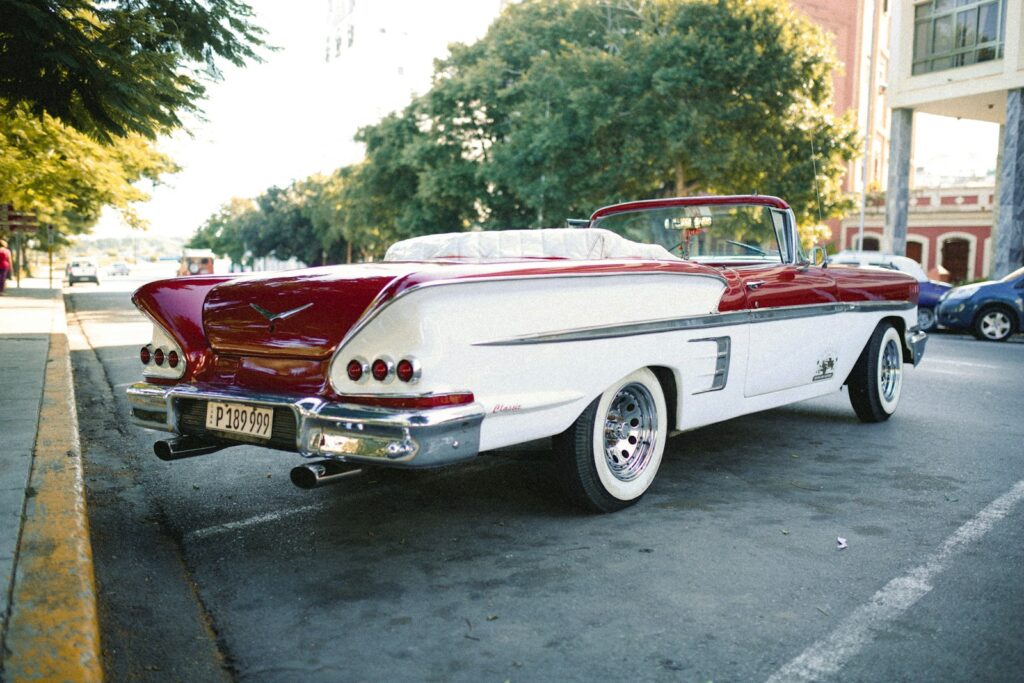
6. **Curb Feelers: Whiskers For Your Wheels**Before the age of ultrasonic sensors and rearview cameras, cars relied on a wonderfully simple, mechanical solution to a common problem: curb feelers. These ingenious devices provided cars with what were essentially mechanical whiskers, designed to prevent expensive and unsightly wheel damage with surprising effectiveness. Attached to the fenders near the wheels, these spring-loaded metal rods extended outward, ready to detect the proximity of a curb during those notoriously tricky parallel parking maneuvers.
Their operation was beautifully straightforward. When these metal feelers contacted the curb, they didn’t just gently tap it; they produced a distinctive and often attention-grabbing scraping sound. This auditory alert was the driver’s cue, a clear warning signal that they were getting too close, effectively preventing actual damage to the wheels, hubcaps, or even the tires. It was a low-tech, high-impact solution that many drivers swore by.
For a generation of drivers, the sound of the curb feeler scraping was an indispensable part of urban driving, a practical aid that saved countless rims from unfortunate encounters. They were particularly useful in an era before power steering was universal and when parking spaces seemed perpetually tight. It was a tactile feedback system that truly connected the driver to the car’s immediate surroundings.
However, progress marches on, and modern parking sensors and sophisticated cameras have long since rendered these mechanical assistants obsolete. Today’s vehicles offer precise distance information without the need for that distinctive scraping soundtrack. Drivers now rely on an orchestra of beeping alerts and clear digital displays, proving that sometimes, progress means losing some of the wonderfully tactile connections that once made driving a truly multi-sensory experience.
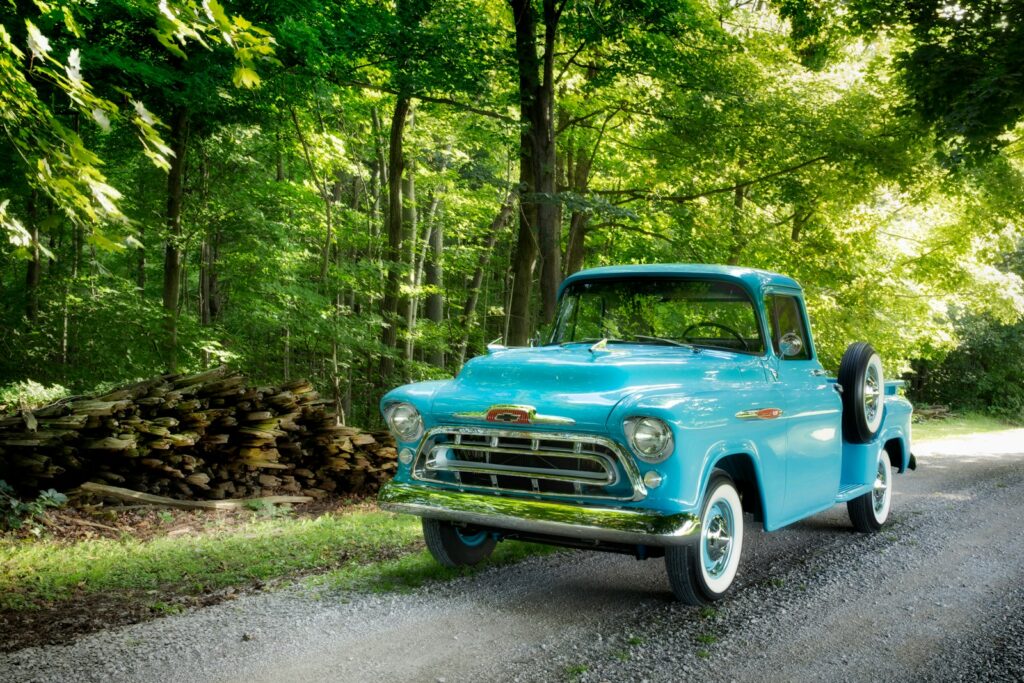
7. **Rear Hinge Doors: Elegance With A Side Of Danger**Step right up, because before modern safety standards reigned supreme, some cars featured doors that swung open from the front edge, much like welcoming arms. These were rear-hinged doors, often affectionately (or perhaps cautiously) referred to as “suicide doors” due to their notorious safety risks. Inspired by the grace of horse-drawn carriages, they created an entry and exit experience of unprecedented elegance, a particularly important consideration for formal occasions during the early automotive era.
Imagine the scene: a dignitary or a lady in a grand gown could step directly out of the car with minimal fuss, maintaining their poise and elegance. These doors truly offered a sense of grandiosity, a theatrical flair that added to the luxury and prestige of the vehicle. They were a design choice that prioritized style and ease of access for passengers, especially in a time when fashion dictated more voluminous attire.
But the fundamental safety flaw of these elegant portals became frighteningly apparent once vehicles started moving at higher speeds. If one of these doors happened to open while the car was in motion, the passing air would catch it like a powerful sail, forcing it wider and wider with potentially catastrophic results. This could, in the worst-case scenario, lead to the ejection of an unprotected passenger, a truly terrifying prospect.
Due to these significant safety concerns, most manufacturers wisely abandoned rear-hinged doors by the mid-20th century. While they do occasionally reappear on ultra-luxury vehicles today, they always come equipped with sophisticated added safety latches and interlocks, ensuring they cannot open when the vehicle is moving. Their evolution serves as a stark reminder of how automotive design constantly strives to balance aesthetic ideals with the paramount considerations of practical safety.”
The journey through the wonderfully wild world of vintage American car features continues! Just when you thought you’d seen all the bizarre brilliance and head-scratching innovations, prepare to buckle up (hopefully with a modern, reliable seatbelt this time) for six more fantastic detours into automotive history’s most distinct, and sometimes delightfully strange, offerings. These weren’t just parts; they were reflections of a different era, a time when cars truly had personality, sometimes for better, sometimes for a wonderfully weird worse.
Read more about: Hold On Tight! 14 Classic Cars That Were Absolutely Iconic and Are Still Crazy Cool

8. **Bench Seats: When Three’s Company, Not A Crowd**Before cars became mobile phone holders with engines attached, bench seats truly transformed front cabins into social spaces. Imagine a time when your car wasn’t just about individual comfort zones but about togetherness, allowing an entire family or a group of friends to cozy up in a single, broad row. This communal experience is utterly foreign to today’s highly compartmentalized driver and passenger layouts, offering a unique glimpse into past priorities.
These expansive, flat seating surfaces were a staple in American cars for decades, perfectly designed for an era when carpooling was less about efficiency and more about shared experiences. They facilitated easy conversation, playful banter, and perhaps even a bit of romantic closeness on those drive-in movie nights. It was all about maximizing human connection within the vehicle, making every ride feel like a mini-gathering.
However, the rapid demise of the bench seat was swift and, frankly, well-deserved from a safety perspective. As automotive engineering advanced and safety standards became paramount, their fundamental flaws were starkly exposed. It turns out sliding across a slick vinyl surface during emergency maneuvers isn’t exactly ideal for occupant protection, leading to significant risks in collisions or even sudden stops.
Automakers, driven by a growing understanding of crash dynamics, quickly replaced them with bucket seats. These offered vastly superior lateral support and integrated individual safety features like dedicated seatbelts and later, airbags, marking a definitive shift towards individual occupant protection. While the bench seat largely survives today only in distant memories or as a niche feature in some pickup trucks, it remains a charming reminder of when car interiors truly prioritized togetherness over individual comfort zones.

9. **Vent Windows: The Original Climate Control**Before touchscreen climate zones and sophisticated multi-filter air purifiers became standard, cars featured brilliantly simple triangular windows that pivoted like miniature doors. These mechanical marvels solved the universal problem of airflow with an elegance that modern, complex systems can only dream of. They were the original, analog answer to getting fresh air into your ride without blasting your hair into oblivion.
The true genius of vent windows lay in their sheer simplicity and customizable functionality. You could easily adjust their angle to direct precisely the right amount of fresh air exactly where you wanted it, creating a personalized microclimate for you and your passengers. Whether it was a gentle breeze on a warm evening or a focused gust to clear the smoky air (yes, cars used to be smoky places!), these little triangles were masters of localized ventilation.
Their slow, inevitable disappearance from the automotive landscape coincided with the widespread adoption of air conditioning as a standard feature. As AC units became more efficient and affordable, the need for these clever little vents diminished, taking with them the pure, unadulterated joy of customized, fresh-air ventilation. It was a technological leap that, while comfortable, arguably cost us a bit of tactile charm.
Today’s modern cars might boast particle filters, multi-zone climate control, and intelligent humidity sensors, but let’s be honest, they’ll never quite capture the sheer, visceral, tactile satisfaction of cranking open that little glass triangle on the first warm day of spring. It was a simple pleasure, a direct connection to the outside world, that no digital display can truly replicate.
Read more about: Unlock Crystal Clarity: Car Expert Reveals Unbelievable Hacks for Fog-Free Windows – No Wiping, No AC Blasting Required!
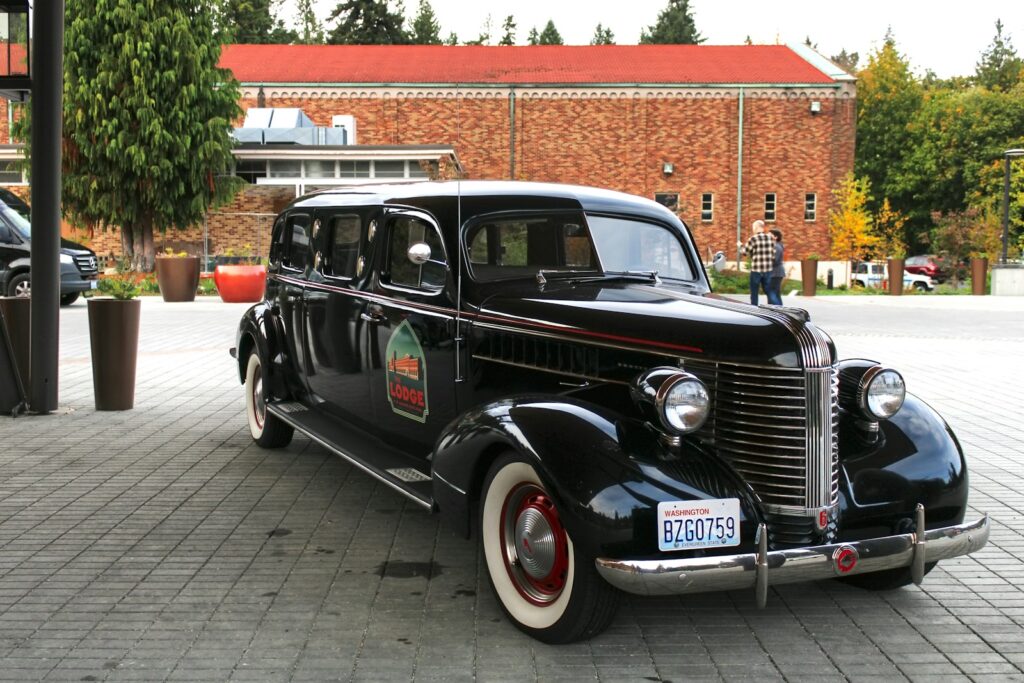
10. **Ashtrays: When Cars Doubled As Mobile Smoking Lounges**Oh, how times have changed! Cars once came equipped with more ashtrays than cup holders, a clear dashboard declaration that tobacco consumption was, for a significant portion of the population, absolutely essential to the driving experience. These metallic receptacles didn’t just appear in one discreet spot; they were often everywhere.
You’d find them strategically placed on dashboards, nestled into door panels, and even thoughtfully integrated into the backs of front seats for rear passengers. This created an interior environment that strikingly resembled a dimly lit 1960s airport lounge, where lighting up a cigarette or cigar was practically a mandatory part of settling in for the ride. The pervasive presence of ashtrays silently speaks volumes about the societal norms of a bygone era.
However, the ashtrays’ extinction unfolded with remarkable rapidity, mirroring a profound shift in public health awareness and societal attitudes towards smoking. As the dangers of tobacco became widely known and smoking restrictions tightened in public spaces, these once-essential automotive features quickly became pariahs, symbolizing an outdated habit rather than a convenience.
Manufacturers, responding to evolving customer demands and health concerns, began removing them entirely. Ashtrays were swiftly replaced with far more practical storage cubbies, handy coin holders, and, perhaps most tellingly, a plethora of charging ports for our ever-present electronic addictions. Today’s vehicles unequivocally prioritize your phone’s battery life over your smoking habit—a trade-off that perfectly captures our collective shift from lighting cigarettes to lighting up screens.

11. **Car Record Players: The Original Driver Distraction**Alright, let’s talk about ambition, shall we? Imagine engineering a delicate mechanical device requiring absolute stability, and then, with a straight face, installing it smack dab in the middle of something designed to bounce, vibrate, and jostle constantly. That’s exactly what ingenious automotive engineers did with car record players – arguably the most spectacularly mismatched technology pairing since, well, waterproof towels!
These bizarre, dashboard-mounted turntables were truly ahead of their time, promising the ultimate luxury of personal music choice decades before digital playlists were even a twinkle in a silicon chip’s eye. The dream was simple: bring your favorite tunes, spin a 45 RPM record, and enjoy your very own soundtrack to the open road, free from the whims of radio DJs.
But oh, the glorious, inevitable collision with reality! Every single bump, pothole, or even a slightly aggressive turn instantly transformed your favorite songs into a symphony of scratch-and-skip remixes, rendering musical enjoyment virtually impossible. And let’s not even get started on the sheer dexterity required to carefully change records while simultaneously navigating a moving vehicle – a feat that demanded the precision of a brain surgeon with the focus of a zen master.
Unsurprisingly, these mobile jukeboxes had a rather short, albeit memorable, run. The advent of the more robust and less finicky eight-track tape format soon rendered them utterly obsolete, beginning the swift evolutionary march toward today’s seamless streaming services. Car record players stand as perfect, charmingly absurd monuments to an era when ambition, imagination, and a dash of impracticality truly outpaced common sense.

12. **Landau Bars: Fake It Till You Make It**Ever spotted a car roof with peculiar S-shaped chrome strips clinging to it, adding visual flair but absolutely zero practical value? You’ve likely encountered the curious case of Landau bars. These undeniably unnecessary accessories were essentially automotive fashion statements, brazenly imposing yesteryear’s engineering solutions – specifically, the folding roof supports from horse-drawn carriages – onto perfectly rigid, modern vehicles.
The whole point? Purely aesthetic, darling! Automotive designers, with a penchant for historical nods and a desire to create a sense of faux luxury, slapped these chrome embellishments onto hardtops to conjure up a “faux-convertible” vibe. It was an attempt to imbue a standard sedan with the visual prestige of a more expensive, open-top vehicle, even if the roof was firmly fixed in place. They existed solely to look fancy, and frankly, bless them for that straightforward ambition.
However, as with most purely ornamental elements, Landau bars came with a few nagging downsides beyond their sheer redundancy. They added unnecessary weight, created potential rust spots by trapping moisture underneath, and honestly, answered questions nobody was really asking about a car’s structural integrity. Their gradual disappearance from the mainstream automotive design landscape marked a rare, but ultimately logical, victory for function over form.
While modern vehicles prioritize sleek aerodynamic efficiency and unadorned surfaces, there’s something charmingly honest, almost whimsical, about those historical decorations. They were a delightful anachronism, a quirky visual whisper from the past, reminding us that sometimes, designers just wanted to add a little sparkle, even if it served no other purpose than looking good. It was all about making that statement, however purely superficial.

13. **Column Shifters: Changing Gears Without Changing Hands**Ah, the column shifter – a relic that brought transmission control directly to your fingertips, albeit with what we can now definitively call questionable precision. Mounted directly on the steering column, often with a satisfyingly chunky feel, these mechanical appendages were the ultimate space-savers. They triumphantly freed up valuable floor real estate, a crucial design consideration back when expansive bench seats reigned supreme across the automotive interior landscape.
For decades, this placement was a celebrated design choice, allowing for a truly uninterrupted flow across the front cabin, making room for an extra passenger, a pile of groceries, or even a dog. The elegance of changing gears without having to remove your hand from the steering wheel was, for many, a peak of automotive convenience, providing a seamless driving experience that felt intuitive and uncluttered.
But alas, utility often comes with its own set of compromises. The long, complex linkage systems that connected the column shifter to the transmission beneath grew sloppier over time, often feeling less precise than an unmade bed. What started as a crisp, definitive shift could degrade into a vague, clunky affair, making gear selection a slightly less confident endeavor, especially in older, well-worn vehicles.
As automotive priorities began to shift dramatically towards performance, driver engagement, and more refined interior ergonomics in the 1960s and beyond, these column-mounted controls slowly but surely began their march toward extinction. Floor-mounted shifters, offering shorter throws and more direct feedback, quickly became the preferred choice, relegating the column shifter to a charming, if imprecise, footnote in the fascinating saga of automotive design evolution.
And there you have it, fellow automotive archaeologists! A fascinating, sometimes head-scratching, but always entertaining journey through the annals of vintage American car features. From bench seats designed for family road trips to ashtrays that screamed “smoke ’em if you got ’em,” each of these bizarre innovations tells a unique story. They remind us that before the era of seamless integration and homogenized design, cars were true canvases for experimentation, reflecting the quirky ambitions, social norms, and technological leaps of their time. So, the next time you’re cruising in your sleek, modern ride, take a moment to appreciate the delightfully weird road less traveled that brought us to today – a road paved with vinyl roofs, curb feelers, and a whole lot of automotive character!