Ah, the ever-changing world of automobiles! Just two decades feel like a few lifetimes when you look at how much the automotive landscape has been completely transformed. Who would’ve imagined a Ferrari with four-wheel drive, or a hybrid hypercar, or even a Mercedes S-Class that practically drives itself? It’s a truly wild ride, but through it all, our passion for what truly makes a car *cool* remains constant.
Here at Top Gear, we’ve always been your faithful companions, charting this incredible evolution with insightful writing, stunning photos, and, let’s be honest, a fair bit of delightful chaos. We once had a proper office brawl trying to crown the greatest car of the past 20 years – chairs were set alight, black eyes were handed out, it was glorious! But when it comes to the cars that aren’t just great, but genuinely *cool*, well, that’s a different beast entirely.
Cool isn’t always about being the fastest, the most expensive, or even the most outrageously engineered. Sometimes, it’s that subtle hum beneath the hood, that glint off polished chrome, or the sheer attitude they exuded before ‘attitude’ was even a marketing buzzword. These vintage machines didn’t just look different; they *felt* different. And decades later, they’re still impossible to forget. So, buckle up, because we’re taking you on an exhilarating journey to enjoy some of the coolest cars from the past, starting with seven absolute legends.
1. **1964 Aston Martin DB5**
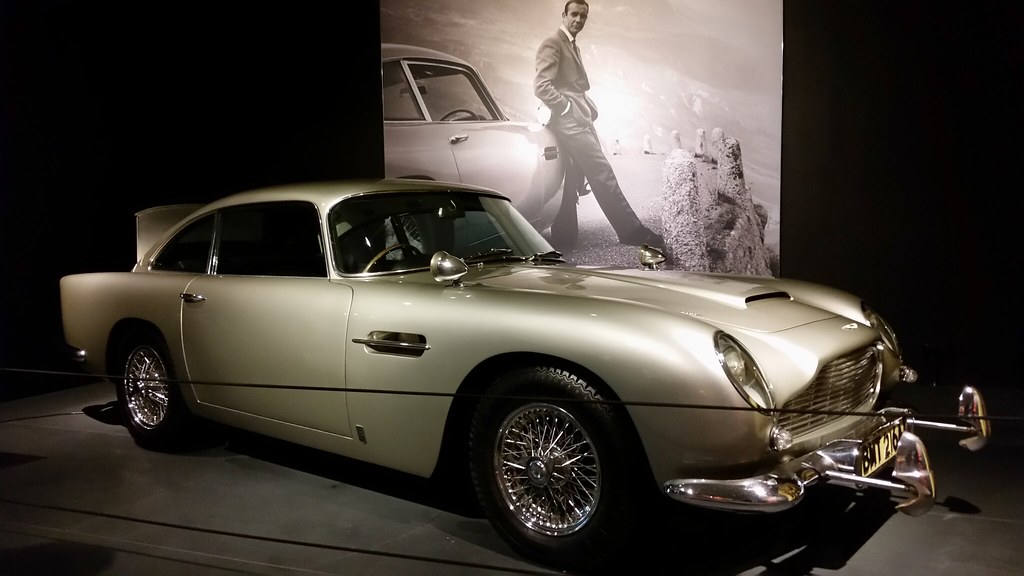
When you think of a car that practically oozes cool, the 1964 Aston Martin DB5 is probably one of the first machines to fire up in your mind. It’s inextricably linked with the silver screen, primarily thanks to a certain suave secret agent. James Bond’s adventures solidified its place in popular culture, transforming it from a mere automobile into an icon of sophisticated espionage and daring escapes.
This wasn’t just any sports coupe; it was built with support from the legendary Carrozzeria Touring, ensuring that every curve and line contributed to its timeless elegance. Of course, on film, it came equipped with all sorts of delightful contraptions – revolving license plates, an ejector seat, and enough hidden gadgets to make a supervillain blush. These cinematic embellishments only cemented its legendary status, turning a fantastic car into an automotive superstar.
Beneath its impeccably styled hood lay 282 horsepower, a respectable figure for its era, allowing it to perform with the kind of effortless grace one would expect from MI6’s unofficial company car. It represented a perfect blend of British engineering prowess and Italian design flair, creating a vehicle that was both beautiful to behold and thrilling to drive. The DB5 wasn’t just driven; it was an experience, a statement, and quite frankly, a masterclass in how to be effortlessly cool.
Car Model Information: 2022 Volkswagen Tiguan 2.0T SE
Name: Aston Martin DB5
Manufacturer: Aston Martin
Production: 1963–1965 (1,059 units),2020 (25 units)
Assembly: Newport Pagnell,England
Designer: Carrozzeria Touring Superleggera
Class: Grand tourer
BodyStyle: coupé
Layout: Front-engine, rear-wheel-drive layout
Engine: DOHC,Straight-6,3995 cc
Order: flip
Abbr: on
Powerout: convert
Transmission: ZF Friedrichshafen
Length: 4570 mm
Width: 1680 mm
Wheelbase: 98.0 in
Predecessor: Aston Martin DB4
Successor: Aston Martin DB6
Doors: 2
Weight: 3311 lb
Sp: uk
Categories: All Wikipedia articles written in British English, Articles with short description, Aston Martin vehicles, CS1: unfit URL, Cars discontinued in 1965
Summary: The Aston Martin DB5 is a British grand tourer (GT) produced by Aston Martin and designed by Italian coachbuilder Carrozzeria Touring Superleggera. Originally produced from 1963 to 1965, the DB5 was an evolution of the final series of DB4. The “DB” designation is from the initials of David Brown who built up the company from 1947 onwards.
The DB5 is best-known for its role in the James Bond films. It was first driven by the fictional spy in the film Goldfinger (1964). In 2013, the car featured on a “British Auto Legends” postage stamp issued by the Royal Mail.
Get more information about: Aston Martin DB5
Buying a high-performing used car >>>
Brand: Aston Martin Model: DB5
Price: $19,595 Mileage: 63,937 mi.
Read more about: The Hidden Hoard: Hollywood’s Most Valuable Props and the Prop Masters Who Knew Their True Worth
2. **1962 Ferrari 250 GTO**
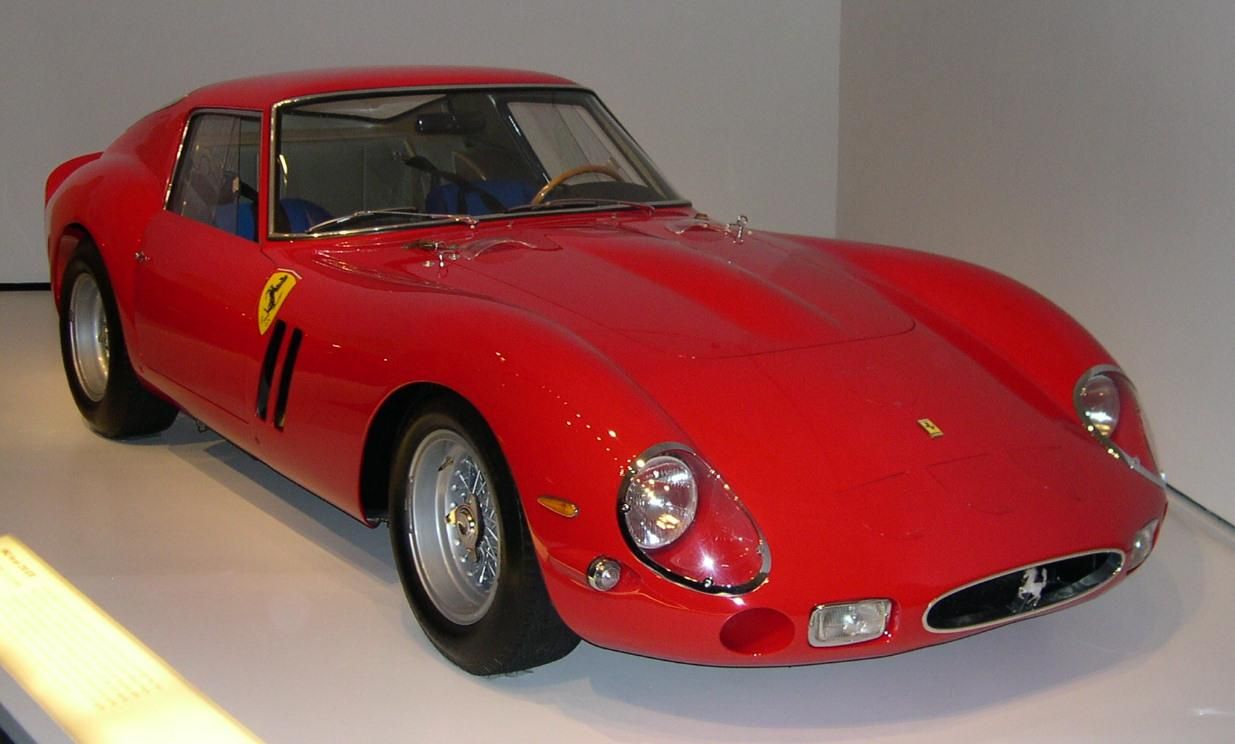
If cars could have a rockstar aura, the 1962 Ferrari 250 GTO would be headlining stadium tours decades after its prime. This wasn’t just a car; it was a force of nature that absolutely dominated endurance tracks in its day. Fast forward to today, and it continues to dominate the hearts, and indeed the wallets, of collectors worldwide, setting stratospheric auction records that make even the most seasoned petrolheads gasp.
Conceived by the brilliant Giotto Bizzarrini, the 250 GTO was a masterpiece of both form and function. Each unit was hand-shaped, giving it an artisanal quality that modern mass production simply can’t replicate. What’s more, it was built to be street-legal, blurring the lines between a purebred racer and a stunning road machine. Imagine driving a car capable of winning Le Mans straight to the shops – that was the GTO experience.
Enzo Ferrari himself was notoriously selective about who could even buy one, reportedly requiring a personal interview before approving buyers. This exclusivity, combined with its unparalleled racing pedigree and breathtaking V12 engine, has only fueled its mystique. Today, this V12 legend isn’t just worth a king’s ransom; at over $70 million, it’s practically worth its own small country, proving that true automotive passion knows no financial bounds.
Car Model Information: 2024 Kia Telluride SX Prestige X-Pro
Name: Ferrari 250 GTO
Caption: 1963 Ferrari 250 GTO (chassis 4153GT)
Manufacturer: Ferrari
Production: 1962–1964,(36 produced)
Designer: Giotto Bizzarrini,Scaglietti
Class: Sports car
BodyStyle: berlinetta
Related: Ferrari 330#330 LMB,Ferrari P#250 LM
Layout: FR layout
Engine: 2,953 cc,Ferrari Colombo engine#250,Overhead camshaft#Single Overhead camshatf,Weber carburetor,Compression ratio
Powerout: 300 PS
Abbr: on
Order: flip @ 5500 rpm
Transmission: Manual transmission
Wheelbase: 2400 mm
Length: 4325 mm
Width: 1600 mm
Height: 1210 mm
Weight: convert
Predecessor: Ferrari 250 GT SWB
Successor: Ferrari 250 LM,Ferrari 288 GTO
Categories: All articles lacking reliable references, All articles needing additional references, All articles with bare URLs for citations, All articles with unsourced statements, Articles lacking reliable references from March 2022
Summary: The Ferrari 250 GTO is a grand tourer produced by Ferrari from 1962 to 1964 for homologation into the FIA’s Group 3 Grand Touring Car category. It was powered by Ferrari’s Tipo 168/62 Colombo V12 engine. The “250” in its name denotes the displacement in cubic centimeters of each of its cylinders; “GTO” stands for Gran Turismo Omologato, Italian for “Grand Touring Homologated”.
Just 36 of the 250 GTOs were manufactured between 1962 and 1964. This includes 33 cars with 1962–63 bodywork (Series I) and three with 1964 (Series II) bodywork similar to the Ferrari 250 LM. Four of the older 1962–1963 (Series I) cars were updated in 1964 with Series II bodies.
When new, the 250 GTO cost $18,000 in the United States, with buyers personally approved by Enzo Ferrari and his dealer for North America, Luigi Chinetti. This model has since become highly desired by automobile collectors and sales have repeatedly set price records. The current record for world’s most expensive Ferrari was set in June 2018 when a 1963 250 GTO (chassis 4153GT) was sold in a private sale for $70 million.
In 2004, Sports Car International placed the 250 GTO eighth on their list of Top Sports Cars of the 1960s, and nominated it the top sports car of all time. Similarly, Motor Trend Classic placed the 250 GTO first on a list of the “Greatest Ferraris of All Time”. Popular Mechanics named it the “Hottest Car of All Time”.
Get more information about: Ferrari 250 GTO
Buying a high-performing used car >>>
Brand: Ferrari Model: 250 GTO
Price: $41,500 Mileage: 25,564 mi.
Read more about: Hold On Tight! 14 Classic Cars That Were Absolutely Iconic and Are Still Crazy Cool
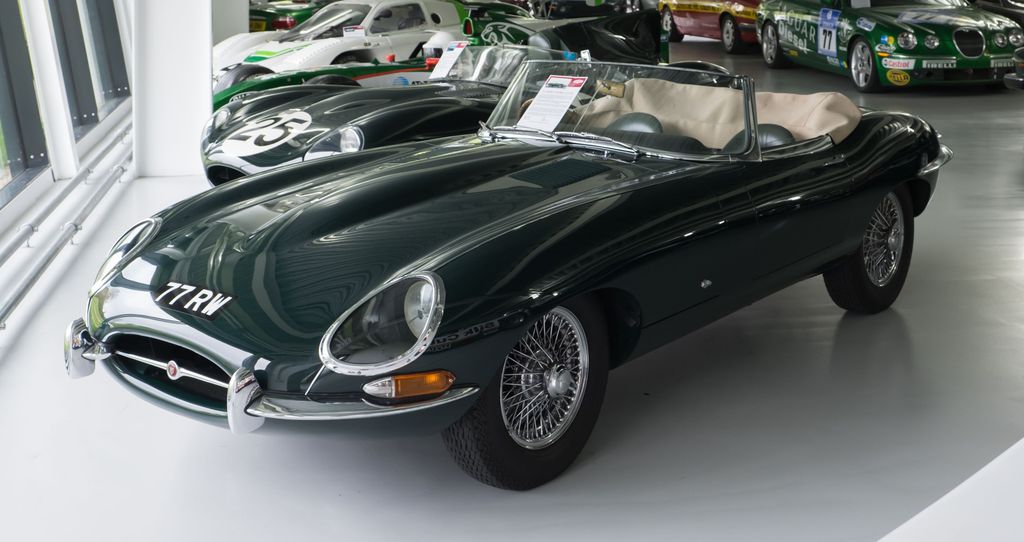
3. **1961 Jaguar E-Type**
Picture this: the Geneva Motor Show, 1961. A new car rolls out, and the crowd—a notoriously tough bunch—is silenced. Utterly, completely silenced. That was the impact of the 1961 Jaguar E-Type, a car so profoundly beautiful that it stopped people in their tracks. Its sleek, aerodynamic design was nothing short of artistic, a flowing sculpture of metal that seemed to defy the very concept of a four-wheeled vehicle.
But it wasn’t just a pretty face; this machine could hit an exhilarating 150 mph, making it a serious performer for its time. It combined breathtaking speed with jaw-dropping aesthetics in a way few cars ever have. So much so, that even the formidable Enzo Ferrari, a man not known for doling out compliments to rivals, reportedly declared it the most beautiful car ever made. High praise indeed, and richly deserved.
Beyond its stunning looks and blistering performance, the E-Type was also incredibly progressive for its era. It featured advanced engineering like disc brakes on all four wheels and monocoque construction, which were state-of-the-art innovations. These technical marvels underpinned its sculptural form, creating a car that was truly a harmonious blend of engineering excellence and artistic vision, securing its place as an enduring automotive icon.
Car Model Information: 1971 Jaguar E-Type Restomod
Sp: uk
Name: Jaguar E-Type
Caption: 1961 E-Type Series 1 3.8-Litre, the first production model of this open two-seater
Aka: Jaguar XK-E (North America),Jaguar V-12
Manufacturer: Jaguar Cars
Production: 1961–1974
Class: Sports car
Predecessor: Jaguar XK150
Related: Jaguar D-Type,Jaguar XJ13
Successor: Jaguar XJS
Layout: FMR layout
Assembly: Coventry,England
Designer: Malcolm Sayer
Categories: 1970s cars, 2+2 coupés, All Wikipedia articles written in British English, All articles with dead external links, All articles with specifically marked weasel-worded phrases
Summary: The Jaguar E-Type, or the Jaguar XK-E for the North American market, is a British front mid-engined sports car that was manufactured by Jaguar Cars Ltd from 1961 to 1974. Its sleek appearance, advanced technologies, high performance, and competitive pricing established it as an icon. The E-Type’s claimed 150 miles per hour (240 km/h) top speed, sub-7-second 0 to 60 mph (97 km/h) acceleration, largely unitary body construction, front and rear independent suspension with disc brakes, mounted inboard at the rear, and rack-and-pinion steering spurred industry-wide changes.
The E-Type was based on Jaguar’s D-Type racing car, which had won the 24 Hours of Le Mans for three consecutive years beginning in 1955.
The E-Type employed what was, for the early 1960s, a novel design principle, with a front subframe carrying the engine, front suspension and front bodywork bolted directly to the body tub. No ladder frame chassis, as was common at the time, was needed and as such the first cars weighed only 1,315 kg (2,899 lb).
It is rumored that, on its debut on 15 March 1961, Enzo Ferrari called it “the most beautiful car ever made”, but this statement is not fully confirmed. In 2004, Sports Car International magazine placed the E-Type at number one on their list of Top Sports Cars of the 1960s. In March 2008, the Jaguar E-Type ranked first in The Daily Telegraph’s online list of the world’s “100 most beautiful cars” of all time.
Get more information about: Jaguar E-Type
Buying a high-performing used car >>>
Brand: Jaguar Model: E-Type
Price: $64,900 Mileage: 2,455 mi.
Read more about: 14 Collectible Cars You Should Think Twice About Restoring: A Consumer’s Guide

4. **1963 Porsche 911**
When the 1963 Porsche 911 arrived on the scene, replacing the beloved 356, it made a bit more noise – and we mean that in the best possible way. This wasn’t just an incremental update; it was the birth of a legend, a compact frame housing a rear-mounted, air-cooled engine that would go on to define a brand and an entire philosophy of sports car design. It hummed, it whirred, and it bit, in all the right places.
Its distinctive teardrop shape wasn’t just for show; it was a testament to functional design, allowing the car to cut through the air with surprising efficiency. But where the 911 truly shone was in its handling. It danced on the road like a seasoned gymnast, responding to every input with a directness and agility that was addictive. This car demanded attention and rewarded skilled drivers with an unparalleled connection to the tarmac.
What’s truly remarkable is how the 911 has refused to fade into automotive history. Its iconic silhouette, recognizable across continents and generations, echoes through every single iteration of the model that has followed. From that very first ’63 model, Porsche created a timeless design and a driving experience so pure, it continues to inspire passionate debate and unwavering loyalty, proving that some ideas are simply too good to ever let go.
Car Model Information: 2020 Porsche 911 Carrera
Name: Porsche 911
Caption: The 1 millionth 911 produced on display at Volkswagen Group Forum, Berlin
Designer: Ferdinand Alexander Porsche
Manufacturer: Porsche
Production: September 1964 – present
Assembly: Stuttgart,Baden-Württemberg
Class: Sports car
BodyStyle: unbulleted list
Related: unbulleted list
Layout: Rear-engine design,rear-wheel drive
Predecessor: Porsche 356
Categories: 1970s cars, 1980s cars, 1990s cars, 2+2 coupés, 2000s cars
Summary: The Porsche 911 model series (pronounced Nine Eleven or in German: Neunelf) is a family of German two-door, high performance rear-engine sports cars, introduced in September 1964 by Porsche AG of Stuttgart, Germany, and now in its eighth generation. All 911s have a rear-mounted flat-six engine, and usually 2+2 seating, except for special 2-seater variants. Originally, 911s had air-cooled engines, and torsion bar suspension, but the 911 has been continuously enhanced, and evolved across generations. Though the 911 core concept has remained largely unchanged, water-cooled engines were introduced with the 996 series in 1998, and front and rear suspension have been replaced by Porsche-specific MacPherson suspension up front, and independent multi-link rear suspension.
The 911 has been raced extensively by private and factory teams, in a variety of classes. It is among the most successful competition cars. In the mid-1970s, the naturally aspirated 911 Carrera RSR won world championship races including Targa Florio and the 24 Hours of Daytona. The 911-derived 935 turbo also won the 24 Hours of Le Mans in 1979. Porsche won the World Championship for Makes in 1976, 1977, 1978, and 1979 with 911-derived models.
In a 1999 poll to determine the Car of the Century, the 911 ranked fifth — one of two in the top five that had remained continuously in production (the original Beetle remained in production until 2003). The one millionth example was manufactured in May 2017 and is in the company’s permanent collection.
Get more information about: Porsche 911
Buying a high-performing used car >>>
Brand: Porsche Model: 911
Price: $119,980 Mileage: 8,387 mi.
Read more about: Beyond the Showroom Shine: 14 Automotive Design Fails That Rocked the Industry
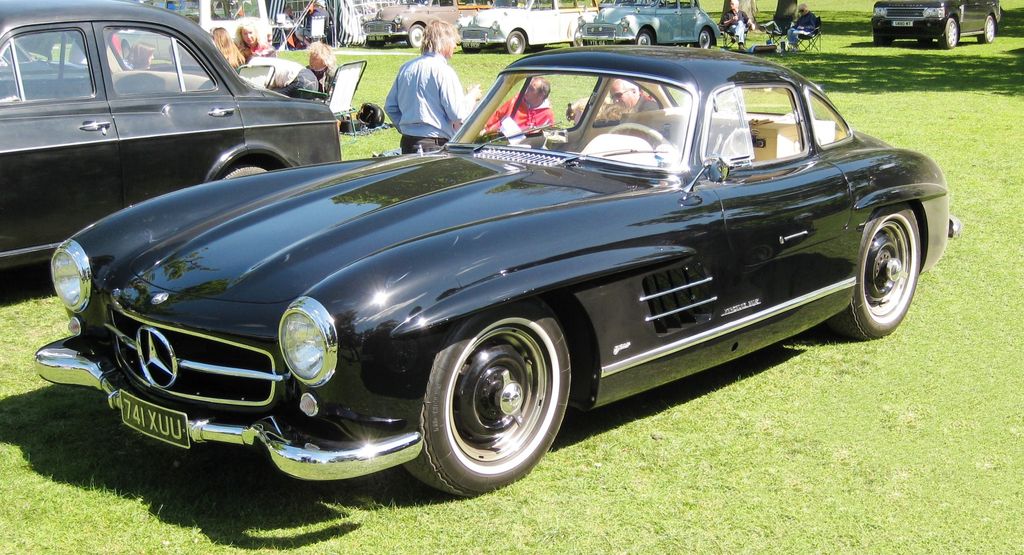
5. **1954 Mercedes-Benz 300SL Gullwing**
Prepare for takeoff, because lifting the doors of the 1954 Mercedes-Benz 300SL Gullwing isn’t just getting into a car; it’s climbing into what feels like a fighter jet ready for the Autobahn. This machine wasn’t just built for speed; it was a revelation, designed with serious racing pedigree and a relentless pursuit of engineering excellence. It’s a car that still manages to drop jaws today, let alone back in the mid-fifties.
Pushing the boundaries of what was possible, the Gullwing could hit an astounding 160 mph, a truly staggering figure for its time. Much of this performance was thanks to its groundbreaking direct fuel injection system, a world-first for a production car. This wasn’t just a fancy trick; it was a genuine innovation that unlocked incredible power and efficiency, setting new benchmarks for automotive technology.
Its distinctive roof-hinged doors weren’t a design flourish born of whimsy, but a necessity dictated by its intricate tubular frame. This incredibly strong and lightweight chassis, essential for its racing intentions, made conventional doors impossible. The result was a marvel of engineering and design, a car that looked, felt, and drove like a road-going spaceship. The Gullwing is, without question, an absolute icon, a testament to what happens when ambition meets pure, unadulterated genius.
Read more about: Hold On Tight! 14 Classic Cars That Were Absolutely Iconic and Are Still Crazy Cool
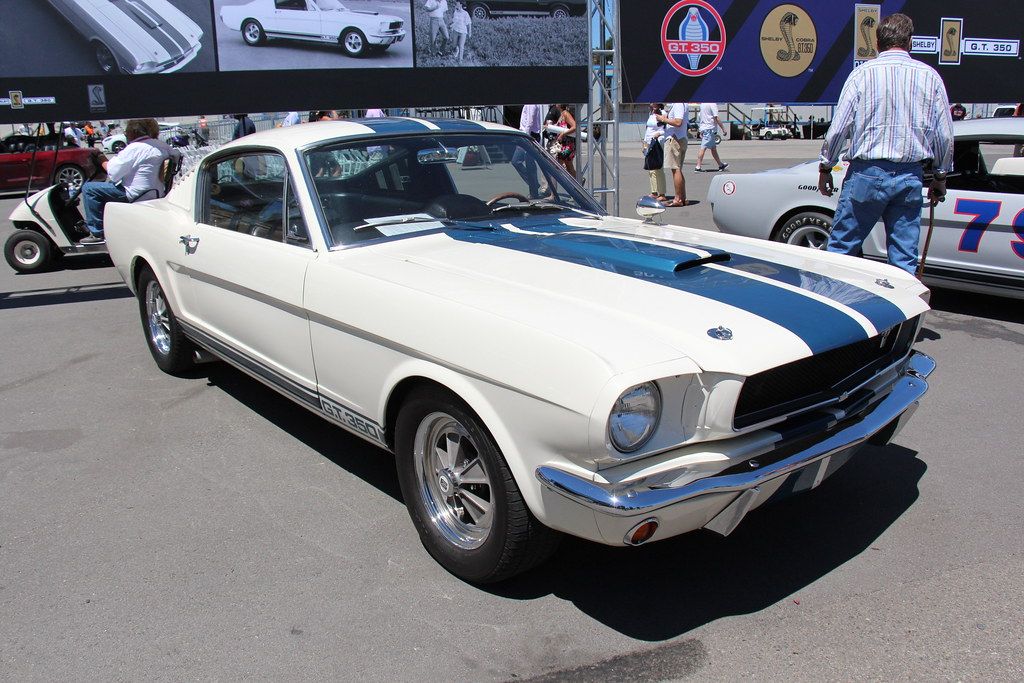
6. **1965 Ford Mustang Shelby GT350**
Forget your average pony car; the 1965 Ford Mustang Shelby GT350 was a different breed entirely. This was the Mustang tamed, or rather, unleashed, by the legendary Carroll Shelby. He took Ford’s already popular offering and injected it with a heavy dose of track-bred guts, transforming it from a stylish cruiser into a bona fide track star that could corner and sprint with fierce intent.
Shelby’s touch was unmistakable. He didn’t just bolt on some extra power; he meticulously re-engineered the car for performance. The suspension was stiffer, the brakes were improved, and the engine was massaged for maximum output. The result was a car that felt far more responsive and aggressive than its standard sibling, capable of truly exciting drivers who dared to push its limits on the open road or a challenging circuit.
Visually, the GT350 screamed performance, particularly in its iconic Wimbledon White paintwork with bold blue stripes. This livery became an instant image of raw American muscle and racing prowess for generations of enthusiasts. It wasn’t just a car; it was a statement, a rolling embodiment of Shelby’s philosophy: take a good car, make it great, and then make it absolutely unforgettable. A true legend that burns rubber in our memories.
Car Model Information: 2022 Volkswagen Tiguan 2.0T SE
Name: Shelby Mustang
Caption: 1965 Shelby Mustang GT350
Manufacturer: Unbulleted list
Aka: Unbulleted list
Production: Unbulleted list
Designer: John Chun
Assembly: Unbulleted list
Class: Unbulleted list
Platform: Unbulleted list
Related: Ford Mustang (first generation),Ford Mustang (fifth generation)
Layout: Front-engine, rear-wheel-drive layout
Categories: 1970s cars, 2000s cars, 2010s cars, 2020s cars, All Wikipedia articles written in American English
Summary: The Shelby Mustang is a high-performance variant of the Ford Mustang built by Shelby American from 1965 to 1967 and by the Ford Motor Company from 1968 to 1970.
In 2005, Ford revived the Shelby nameplate for a high-performance model of the fifth-generation Ford Mustang.
Get more information about: Shelby Mustang
Buying a high-performing used car >>>
Brand: Ford Model: Mustang Shelby GT350
Price: $19,595 Mileage: 63,937 mi.
Read more about: Unsung Powerhouses: The Ford Engines That Quietly Redefined Performance and Stole the Mustang’s Thunder
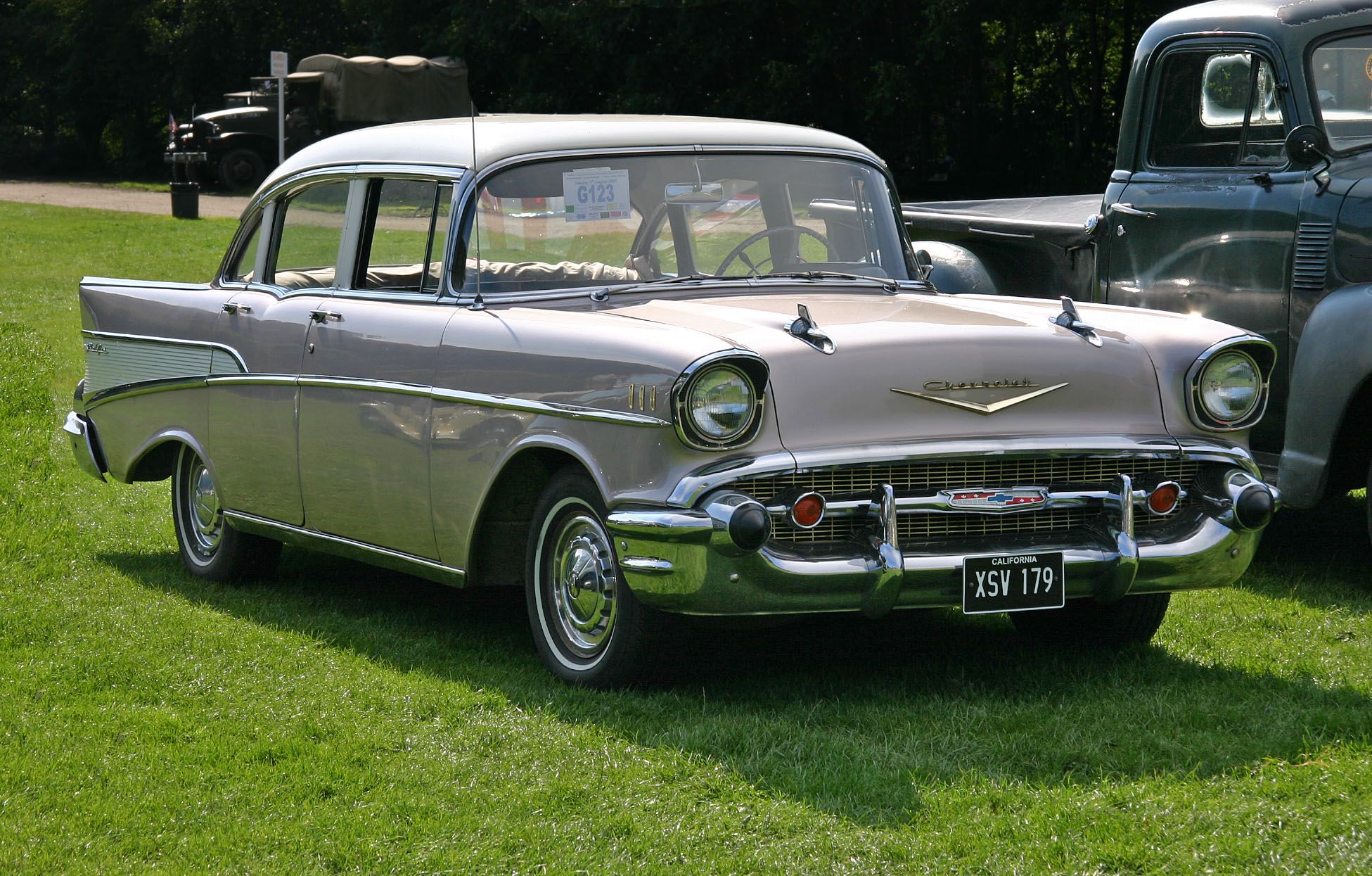
7. **1957 Chevrolet Bel Air**
If you want to understand what the 1950s looked and felt like in America, you simply need to gaze upon the 1957 Chevrolet Bel Air. This car wasn’t just transportation; it was a rolling symbol of post-war Americana, a vibrant, optimistic embodiment of a rapidly changing nation. Its silhouette, instantly recognizable, still evokes images of drive-in movies, sock hops, and booming rock and roll.
Perhaps its most distinctive feature were those magnificent tailfins, tall enough to seemingly rake the wind and make a definitive statement wherever they went. These weren’t just decorative; they were a bold declaration of style and modernity, capturing the imagination of teenagers who dreamed of owning one and families who packed it up for leisurely Sunday drives. It was an aspirational vehicle that perfectly encapsulated the spirit of the era.
Under the hood, a potent V8 engine growled with a characteristic authority, promising both power and reliability. This was a car designed to be noticed, adorned with glistening chrome that caught the light and reflected the optimism of the age. Anyone who drove a Bel Air, anywhere, was sure to make an entrance – and leave an impression that lasted far longer than the gasoline in its tank. It’s a timeless piece of American automotive art.
Car Model Information: 2022 Volkswagen Tiguan 2.0T SE
Name: Chevrolet Bel Air
Caption: 1957 Chevrolet Bel Air convertible
Manufacturer: Chevrolet
Production: 1949–1980
ModelYears: 1950–1981
Class: Full-size
Layout: FR layout
Predecessor: Chevrolet Fleetline,Chevrolet Biscayne
Successor: Chevrolet Impala
Categories: 1950s cars, 1960s cars, 1970s cars, 1980s cars, Articles with short description
Summary: The Chevrolet Bel Air is a full-size car produced by Chevrolet for the 1950–1981 model years. Initially, only the two-door hardtops in the Chevrolet model range were designated with the Bel Air name from 1950 to 1952. With the 1953 model year, the Bel Air name was changed from a designation for a unique body shape to a premium level of trim applied across a number of body styles. The Bel Air continued with various other trim level designations, and it had gone from a mid-level trim car to a budget fleet sedan when U.S. production ceased in 1975. Production continued in Canada, for its home market only, through the 1981 model year.
Get more information about: Chevrolet Bel Air
Buying a high-performing used car >>>
Brand: Chevrolet Model: Bel Air
Price: $19,595 Mileage: 63,937 mi.
Read more about: Unleash the Roar: 12 Iconic Convertibles That Defined Eras and Demand Attention on Every Road!
8. **1970 De Tomaso Pantera**
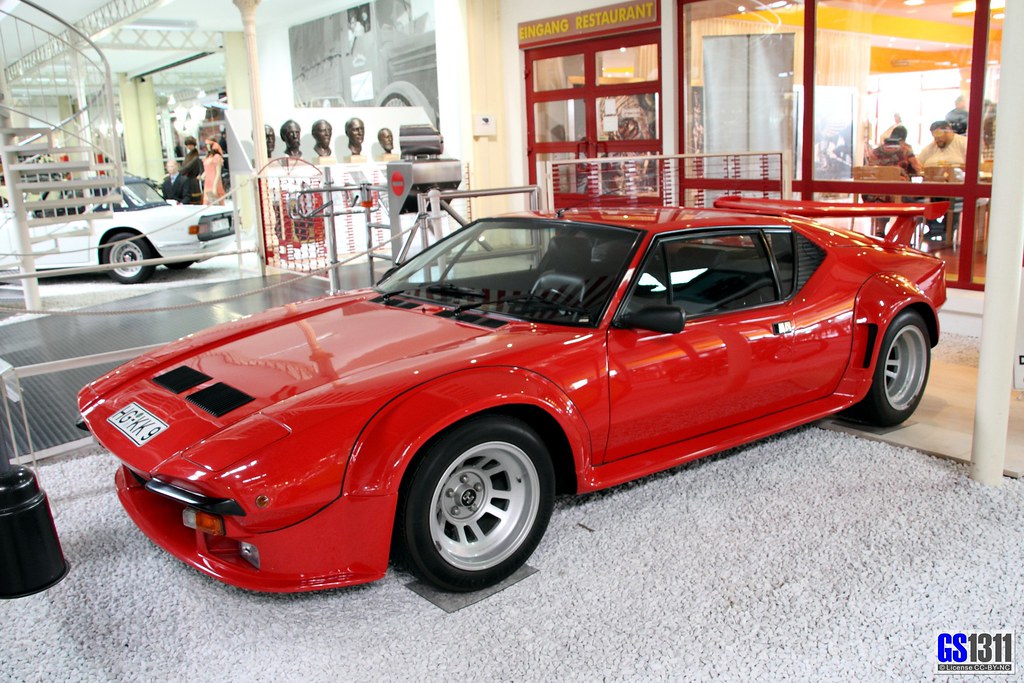
Here we have a proper bruiser, folks – the 1970 De Tomaso Pantera! It’s the kind of machine that makes a grand entrance, or at least tries to, with a Modena-designed body that screams Italian exoticism. But don’t let those sleek, sensual curves fool you; lurking beneath that stunning coachwork is the beating heart of pure, unadulterated American grunt: a Cleveland V8 engine. It was a fusion, a magnificent clash of cultures, taking the visual drama of Italy and wrapping it around the brute force that only a Detroit-bred V8 could deliver, an unlikely pairing that somehow just *worked*.
This car wasn’t just a pretty face; it was a statement, a bold challenge to the established order of European supercars. It was raw, a bit wild, and occasionally, shall we say, temperamental – qualities that only added to its charm. There’s a famous story, isn’t there, about Elvis Presley taking a rather direct approach to automotive troubleshooting when his Pantera refused to start? A well-aimed bullet, apparently, was his preferred method of persuasion. Now, we don’t advocate for such methods, but it certainly paints a vivid picture of a car with a personality strong enough to provoke such a legendary response!
The Pantera, even with its occasional quirks and a reputation for being a handful, stood out like a brawler in a tux. It didn’t just blend in; it demanded attention, turning heads with its aggressive stance and that unmistakable V8 rumble that promised exhilarating thrills. It offered accessible performance, a supercar for those who appreciated a bit of untamed spirit alongside their style, a machine that felt alive in your hands.
This wasn’t a car you owned quietly; it was a car you wrestled with, celebrated, and probably had a few choice words for on occasion, but you loved it all the same. It embodied a wonderfully rebellious spirit, a glorious blend of continent-crossing DNA that is simply magnetic, cementing its place as an unforgettable icon of audacious design and exhilarating power.
Car Model Information: 2024 Kia Telluride SX Prestige X-Pro
Name: De Tomaso Pantera
Caption: De Tomaso Pantera GT5-S
Manufacturer: De Tomaso
Assembly: Modena
Production: 1971–1992 (7,260 produced)
Designer: Tom Tjaarda,Marcello Gandini
Class: Sports car
BodyStyle: coupé
Layout: Rear mid-engine, rear-wheel-drive layout
Engine: ubl
Abbr: on – later spec
Order: Ford small block engine#351W
Transmission: Manual transmission,List of ZF transmissions
Wheelbase: 2500 mm
Length: 158 in
Disp: flip – later spec
Width: 67 in
Height: 1100 mm
Weight: 1474 kg
Predecessor: De Tomaso Mangusta
Successor: De Tomaso Guarà
Categories: 1980s cars, 1990s cars, All Wikipedia articles needing clarification, Articles with hAudio microformats, Articles with short description
Summary: The De Tomaso Pantera is a mid-engine sports car produced by Italian automobile manufacturer De Tomaso from 1971 to 1992. Italian for “Panther”, the Pantera was the automaker’s most popular model, with over 7,000 manufactured over its twenty-year production run. More than three quarters of the production were sold by American Lincoln-Mercury dealers from 1972 to 1975; after this agreement ended De Tomaso kept manufacturing the car in ever smaller numbers into the early 1990s.
Get more information about: De Tomaso Pantera
Buying a high-performing used car >>>
Brand: De Tomaso Model: Pantera
Price: $41,500 Mileage: 25,564 mi.
Read more about: Unleashing Automotive Legends: 14 Iconic 1970s Cars Now Commanding Millions in the Collector’s Market

9. **1966 Lamborghini Miura**
Oh, the Miura! If any car could be said to have invented the supercar as we know it, it’s this absolute stunner, the 1966 Lamborghini Miura. It didn’t just walk onto the scene; it glided in, radiating an aura of effortless cool and a radical new approach to performance that utterly transformed the automotive world, almost without even trying. Before the Miura, performance cars were fast, yes, but this was something else entirely – a whole new species of machine, poised and beautiful and utterly groundbreaking.
Its secret weapon? A transversely mounted V12 engine, nestled right behind the driver in what was a truly revolutionary layout for its era. This wasn’t just for packaging; it was about optimizing weight distribution and handling dynamics, a stroke of genius that redefined performance car architecture. It was an engineering marvel, conceived and brought to life in secret by Lamborghini’s brilliant young engineers, who dared to dream of a car that broke all the established rules.
When it finally debuted, it wasn’t just the engine layout that dropped jaws; it was the entire package. With its distinctive ‘lashes’ over the headlights and curves that flowed with the grace of a masterpiece by a Roman sculptor, the Miura was pure automotive art. It was sensuous, daring, and impossibly beautiful, a car that looked fast even standing still. This was a car that didn’t just achieve high speeds; it made an art form out of it, captivating everyone who saw it.
To this day, the Miura remains a benchmark for beauty and innovation, its legacy undeniable. In fact, it’s often said that if Sophia Loren were a car, she’d undoubtedly be a Miura – an ode to its unparalleled elegance, fiery spirit, and the sheer magnetic personality that solidified its place as a true automotive legend and the progenitor of the modern supercar era.
Read more about: Bertone’s Bold Revival: A MotorTrend Deep Dive into the Enduring Legacy of Pop-Up Headlights

10. **1961 Mini Cooper**
Now, for something utterly different, but no less cool: the diminutive yet mighty 1961 Mini Cooper! Forget the idea that cool needs to be gargantuan or ear-splittingly powerful. This little pocket rocket proved that sometimes, the greatest impact comes in the smallest package. Sir Alec Issigonis originally designed the Mini for efficient, sensible motoring, a clever solution to a fuel crisis, a true everyman’s car.
But then John Cooper, a motor racing legend with an eye for potential, got his hands on it and, with a touch of engineering wizardry, unleashed a beast! Suddenly, this humble economy car had speed, agility, and a mischievous grin. Racers like Paddy Hopkirk took this pint-sized marvel and turned it into an absolute rally icon, embarrassing much larger, more powerful rivals on the international stage with astonishing regularity.
How did it do it? Thanks to that brilliant transverse engine layout and its incredibly compact wheelbase, the Mini could dart and weave through tight corners with a nimbleness that was simply unbeatable. It was like watching a ballet dancer outmaneuver a sumo wrestler – utterly delightful to behold, and terrifying for its competition! This car demanded to be driven with gusto, rewarding drivers with an unparalleled connection to the road.
The Mini Cooper wasn’t just a car; it was a triumph of clever packaging and an underdog story personified. It proved that Grand Prix-level engineering could be shoehorned into what felt like the Gucci loafer of micro cars. It embodied a spirit of playful rebellion, a car that invited you to exploit every inch of its grip and every ounce of its momentum. To this day, the Mini Cooper remains a testament to the fact that brilliant ideas, perfectly executed, can create a legacy far greater than their physical size suggests.
Car Model Information: 2024 MINI Hardtop Cooper S
Sp: uk
Caption: 1959 Morris Mini-Minor (first one built)
Name: Mini
Aka: Austin 850,Rover Mini,Austin Cooper,Austin Mini,Austin Partner,Austin Seven,Innocenti Mini,Leyland Mini,Morris 850,Morris Mascot,Morris Mini Minor,Riley Elf,Wolseley 1000 (South Africa),Wolseley Hornet
Layout: Front-engine, front-wheel-drive layout
Manufacturer: British Motor Corporation,British Leyland,Rover Group
Production: 1959–2000 (5.38 million)
Class: City car
BodyStyle: sedan (car),convertible,Station wagon,sedan delivery,coupe utility
Engine: BMC A-series engine,Straight-four engine
Designer: Alec Issigonis,John Sheppard (car designer)
Transmission: 4-speed manual,AP automatic transmission,5-speed manual (optional extra on some later models)
Length: cvt,cvt,cvt
Width: cvt
Height: cvt
Weight: cvt
Wheelbase: cvt,cvt
Related: Mini Moke,Austin Metro,Innocenti Mini,Mini Wildgoose,Mini Marcos
Successor: Austin Metro,Mini Hatch
Assembly: Panmure, New Zealand
Categories: 1960s cars, 1970s cars, 1980s cars, 1990s cars, 2000s cars
Summary: The Mini is a very small two-door, four-seat car, produced for four decades over a single generation, with many names and variants, by the British Motor Corporation (BMC) and its successors British Leyland and the Rover Group, and finally (briefly) under BMW ownership. Minis were built as fastbacks, estates, convertibles, and various other body styles. Minus a brief 1990s hiatus, from 1959 into 2000, an estimated 5.38 million of all variations combined were built, and the Mini’s engines also powered another 2 million Mini Metros, though the Mini eventually outlasted its successor.
Initially, the Mini was marketed under the Austin and Morris names, as the Austin Seven and Morris Mini-Minor; the Austin Seven was renamed Austin Mini in 1962 and Mini became a marque in its own right in 1969. Retrospectively, the car is known as the “Classic Mini” to distinguish it from the modern MINI family of vehicles produced since 2001 by German carmaker BMW, who took ownership of the Mini name following the sale of Rover Group in 2000.
This distinctive two-door car was designed for BMC by Sir Alec Issigonis. Its space-saving transverse engine and front-wheel drive layout – allowing 80% of the area of the car’s floorpan to be used for passengers and luggage – influenced a generation of car makers. The front-wheel-drive, transverse-engine layout were used in many other “supermini” style car designs such as Honda N360 (1967), Nissan Cherry (1970), and Fiat 127 (1971). The layout was also adapted for larger subcompact designs. In 1999, the Mini was voted the second-most influential car of the 20th century, behind the Ford Model T, and ahead of the Citroën DS and Volkswagen Beetle. It is also considered an icon of 1960s British popular culture.
The Mini Mark I had three major UK updates: the Mark II, the Clubman, and the Mark III. Within these was a series of variations, including an estate car, a pick-up, a van, and the Mini Moke, a jeep-like buggy. The performance versions, the Mini Cooper and Cooper “S”, were successful as both race and rally cars, winning the Monte Carlo Rally in 1964, 1965, and 1967. The Mini was manufactured in England at the Longbridge plant in Birmingham located next to BMC’s headquarters and at the former Morris Motors plant at Cowley, as well as in Australia (Victoria Park/Zetland BMC Australia factory) and later also in Spain (Authi), Belgium, Italy (Innocenti, as the Innocenti Mini), Chile, Malta, Portugal, South Africa, Uruguay, Venezuela, and Yugoslavia (IMV). In 1980, British Leyland launched the Mini’s follow-up, the Austin Metro, however the Mini outlasted it and continued to be produced at Longbridge until October 2000.
Get more information about: Mini
Buying a high-performing used car >>>
Brand: Mini Model: Cooper
Price: $22,399 Mileage: 31,287 mi.
Read more about: Unleash the Roar: 12 Iconic Convertibles That Defined Eras and Demand Attention on Every Road!
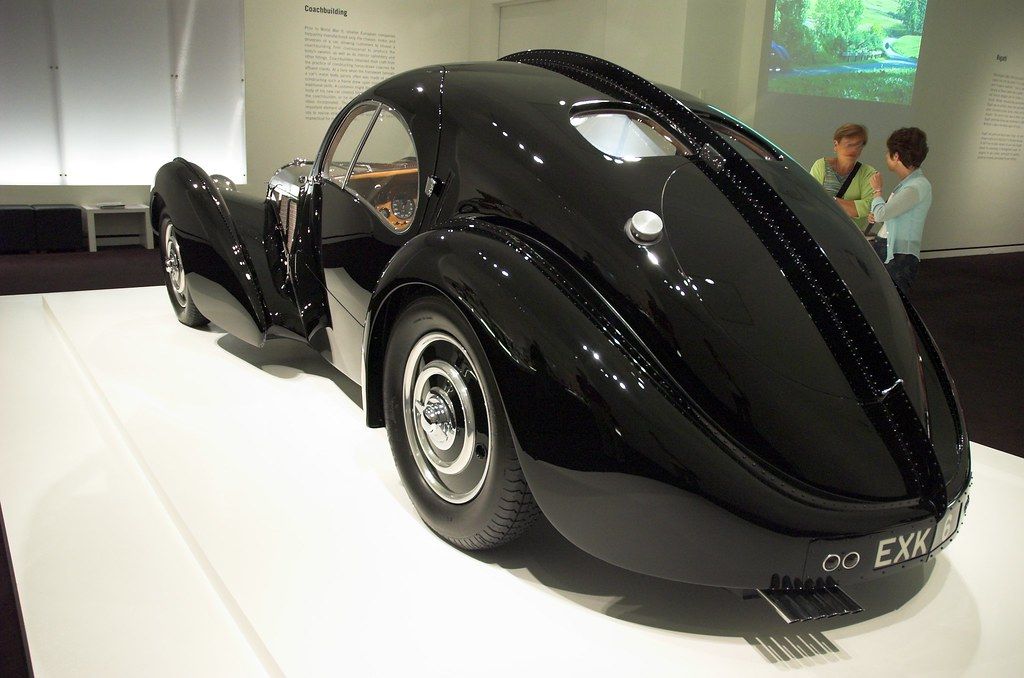
11. **1938 Bugatti Type 57 Atlantic**
Alright, prepare yourselves, because the 1938 Bugatti Type 57 Atlantic isn’t just a car; it’s a moving sculpture, a piece of automotive haute couture that looks like it’s been beamed directly from a forgotten, art deco future. This machine sits impossibly low, its silhouette a breathtaking sweep of lines and curves. But look closer, and you’ll see one of its most distinctive, almost alien, features: those riveted magnesium panels. They weren’t just for show; they were a necessity due to the magnesium’s tricky welding properties, turning a construction challenge into an unforgettable aesthetic hallmark.
The Atlantic was, and remains, an enigma. Only four of these incredible machines were ever built, making them rarer than hen’s teeth, or perhaps a unicorn sighted galloping through the golden age of motoring. And to add to the mystique, one of them famously went missing, disappearing into the annals of automotive legend, sparking countless theories and fervent hopes of rediscovery. Imagine the sheer audacity of crafting something so utterly unique, so far ahead of its time, and then having one simply vanish!
This was Jean Bugatti’s vision brought to life, a breathtaking blend of elegance and a hint of danger, a car that commanded respect not just for its unparalleled beauty but for its almost mythical status among enthusiasts. Every angle reveals a new sculptural detail, a testament to an era where cars were truly considered art on wheels, designed to evoke emotion and push boundaries.
If you were ever fortunate enough to spot one of these today, shimmering in the sunlight, you wouldn’t just be seeing a vintage car; you’d be witnessing a piece of rolling history, a whispered legend, a true automotive unicorn that continues to captivate and inspire awe with its unparalleled artistry and exclusivity. It’s simply magnificent, a timeless testament to a designer’s genius.
Car Model Information: 2024 Kia Telluride SX Prestige X-Pro
Name: Bugatti Type 57
Caption: 1936 Bugatti Type 57 Atalante
Manufacturer: Bugatti
Assembly: Molsheim
Production: 1934–1940,710 produced
Designer: Jean Bugatti
Class: Grand tourer
Engine: DOHC,Straight-8
Predecessor: Bugatti Type 49
Successor: Bugatti Type 101
Categories: 24 Hours of Le Mans race cars, Articles with short description, Bugatti automobiles, CS1 Romanian-language sources (ro), Cars introduced in 1934
Summary: The Bugatti Type 57 and later variants (including the famous Atlantic and Atalante) was a grand tourer built from 1934 through 1940. It was an entirely new design created by Jean Bugatti, son of founder Ettore. A total of 710 Type 57s were produced.
Type 57s used a straight-8 twin-cam engine of 3.3 L (3257 cc/198 in³) displacement. Bore and stroke were 72 mm by 100 mm based on that of the Type 49 but heavily modified by Jean Bugatti, unlike the single cam engines of the Type 49 and earlier models. The engines of the Type 50, 51 used bevel gears at the front of the engine to transmit power from the crankshaft, whereas the Type 57 used a train of spur gears at the rear of the engine, with fiber gear wheels on the camshafts to achieve more silence in operation.
There were two basic variants of the Type 57 car:
The original Type 57
The lowered Type 57S/SC
The Type 57 chassis and engine was revived in 1951 as the Bugatti Type 101. A rediscovered Type 57 was sold for 3.4 million euros at auction on 7 February 2009 at a motor show in Paris.
Get more information about: Bugatti Type 57
Buying a high-performing used car >>>
Brand: Bugatti Model: Type 57 Atlantic
Price: $41,500 Mileage: 25,564 mi.
Read more about: Beyond the Digital Divide: 15 Iconic Photos That Prove 20th Century Car Shows Were Pure Gold

12. **1949 Rolls-Royce Silver Dawn Drophead**
From mythical beasts to the epitome of old-world class, we present the 1949 Rolls-Royce Silver Dawn Drophead. If ever there was a car that exuded silent dignity and hand-built charm, it’s this post-war masterpiece. This wasn’t about flash or raw speed; it was about an unparalleled level of luxury, refinement, and a presence that simply commanded respect. When this majestic machine hit the road, it wasn’t just driving; it was making a regal procession, a testament to an era where craftsmanship was king.
Every detail, from its distinctive split windscreen to the meticulously crafted wooden interior trim, spoke volumes about the dedication to perfection that went into its creation. This was coachbuilding at its absolute finest, where each car was a bespoke work of art tailored to its discerning owner. The quality of materials and the attention paid to assembly were second to none, ensuring a truly exclusive experience for the privileged few.
And beneath that magnificent bonnet? An inline-six engine that operated with such super smooth authority, it felt less like a mechanical device and more like a gentle, powerful breath. The engineering focused on delivering a serene, effortless driving experience, making every journey feel like a grand occasion. It wasn’t about rapid acceleration, but about gliding in supreme comfort.
The Silver Dawn Drophead quickly became the vehicle of choice for the crème de la crème, adored by everyone from European royalty to the glittering stars of Hollywood’s golden age. It wasn’t just a status symbol; it was a statement of impeccable taste and an appreciation for the very best things in life. To ride in a Silver Dawn was to experience automotive serenity, a tranquil bubble of luxury gliding over the tarmac, proving that true cool can be utterly understated yet undeniably profound.
Car Model Information: 2022 Volkswagen Tiguan 2.0T SE
Name: Rolls-Royce Silver Dawn
Manufacturer: Rolls-Royce Limited
Production: 1949–1955,785 made
Predecessor: Rolls-Royce Wraith (1938)
Successor: Rolls-Royce Silver Cloud
Related: Rolls-Royce Silver Wraith,Bentley Mark VI,Bentley R Type
Wheelbase: 120 in
Abbr: straight-6
Length: 4877 to 5334 mm (192 to 210 inches)
Height: 64.5 in
Width: 69 in
Transmission: manual transmission
Engine: 4.2 L
Class: Full-size car,luxury car
BodyStyle: sedan (car)
Layout: Front-engine, rear-wheel-drive layout
Assembly: Crewe, Cheshire,England
Categories: 1950s cars, All Wikipedia articles written in British English, Articles with short description, Cars discontinued in 1955, Cars introduced in 1949
Summary: The Rolls-Royce Silver Dawn is a full-size luxury car that was produced by Rolls-Royce at their Crewe works between 1949 and 1955. It was the first Rolls-Royce car to be offered with a factory built body which it shared, along with its chassis, with the Bentley Mark VI until 1952 and then the Bentley R Type until production finished in 1955. The car was first introduced as an export only model. The left hand drive manual transmission models had a column gear change, while right hand drives had a floor change by the door. In the British home market the Silver Dawn only became available from October 1953, with the introduction of the model corresponding to the Bentley R Type.
Get more information about: Rolls-Royce Silver Dawn
Buying a high-performing used car >>>
Brand: Rolls-Royce Model: Silver Dawn
Price: $19,595 Mileage: 63,937 mi.
Read more about: Beyond the Giveaways: Oprah Winfrey’s Jaw-Dropping Car Collection, From Vintage Gems to Modern Marvels!

13. **1972 BMW 3.0 CSL**
Alright, rev your engines for a car that absolutely roared onto the scene and birthed a legend: the 1972 BMW 3.0 CSL! This wasn’t just a car; it was the machine that truly launched BMW Motorsport into the stratosphere, casting a formidable shadow that still influences performance cars today. Affectionately, and quite rightly, nicknamed the ‘Batmobile’ for its utterly wild aerodynamic kits – that massive rear wing and pronounced front air dam meant serious business – this lightweight coupe was born for one purpose: to dominate the racetrack.
Every inch of the CSL was dedicated to shedding weight and enhancing performance. It flaunted aluminum panels and plastic windows, a stark testament to its single-minded pursuit of speed and agility. This was BMW at its most aggressive, translating race-bred technology directly into a road-going machine that could genuinely tear up a circuit on Sunday and still make a rather quick dash to the shops on Monday, albeit with a certain undeniable flair.
This approach created a vehicle that was incredibly focused and thrilling to drive, demanding respect and skill from its pilot. Many people from that era will never forget the howling sound of that engine and its classic, imposing silhouette, often seen pushing the limits on some of the world’s most challenging tracks. It wasn’t just fast; it was visceral, an intoxicating blend of engineering precision and brute force that captivated drivers and spectators alike.
The 3.0 CSL stands as a monument to Bavarian engineering, a most famous Bimmer ever, predating the familiar 3 Series. It’s a car that proved that performance doesn’t have to be subtle to be utterly cool; it can be a glorious, winged, track-devouring spectacle that leaves an indelible mark on automotive history and the hearts of petrolheads.
Car Model Information: 2024 Kia Telluride SX Prestige X-Pro
Name: BMW E9
Manufacturer: BMW
Production: 1968–1975
Assembly: Rheine
Class: Grand tourer
Layout: Front-engine, rear-wheel-drive
BodyStyle: Coupé
Related: BMW New Six
Engine: BMW M30,straight-six engine
Wheelbase: Convert
Length: Convert
Width: Convert
Height: Convert
Predecessor: BMW New Class coupé
Successor: BMW 6 Series (E24)
Designer: Wilhelm Hofmeister (automobile designer)
Platform: BMW New Class
Categories: All articles with unsourced statements, Articles with short description, Articles with unsourced statements from January 2019, BMW model codes, BMW vehicles
Summary: The BMW E9 is a range of coupés produced by German automaker BMW from 1968 to 1975. Initially released as the 2800 CS model, the E9 was based on the BMW 2000 C / 2000 CS four-cylinder coupés, which were enlarged to fit the BMW M30 six-cylinder engine. The E9’s bodywork was built by Karmann.
As a racing car, the E9 was very successful in the European Touring Car Championship and the Deutsche Rennsport Meisterschaft, especially the 3.0 CSL homologation model.
The E9 range was replaced by the E24 6 Series.
Get more information about: BMW E9
Buying a high-performing used car >>>
Brand: BMW Model: 3.0 CSL
Price: $41,500 Mileage: 25,564 mi.
Read more about: Unleashing Automotive Legends: 14 Iconic 1970s Cars Now Commanding Millions in the Collector’s Market

14. **1962 Oldsmobile Starfire Convertible**
Now, let’s cruise back to the land of polished chrome and unapologetic American flair with the 1962 Oldsmobile Starfire Convertible! This car didn’t just arrive; it made an entrance, draped in enough glistening brightwork to shame a jewellery store display and loaded with a sense of occasion that few cars could match. It was Oldsmobile’s ultimate flex, a bold declaration of luxury and performance wrapped in a package that screamed, ‘Look at me!’
Inside, the Starfire was just as revolutionary, arriving with individual bucket seats and a center console – features that were virtually unheard of in its class at the time. This wasn’t just a big, comfy cruiser; it was trying to offer a sporty, personalized experience, hinting at the future of American luxury. It gave drivers a sense of connection and exclusivity that was a cut above the rest, with all that polished trim gleaming around them, creating an inviting, sophisticated cabin.
And under that expansive bonnet? A mighty 394-cubic-inch Rocket V8 engine, ensuring that the Starfire didn’t just look fast and luxurious; it had the prodigious muscle to back it up. This was a car that pulled with a confident authority, eating up highway miles with ease and a characteristic rumble that let everyone know it meant business. It embodied the power and presence that defined American motoring in the early 60s.
The Starfire wasn’t just about getting from A to B; it was about the journey, the style, and the sheer pride of driving something that truly stood out. It’s a testament to an era of bold automotive ambition, where cars were designed not just for transport, but as extensions of personality, turning every drive into a grand statement.
Car Model Information: 2024 Kia Telluride SX Prestige X-Pro
Name: Oldsmobile Starfire
Caption: 1961 Starfire convertible
Manufacturer: Oldsmobile
Production: 1960–1966,1974–1980
Class: Full-size
Categories: 1960s cars, 1970s cars, 1980s cars, Articles with short description, CS1 errors: ISBN date
Summary: The Oldsmobile Starfire is an automobile nameplate used by Oldsmobile, produced in three non-contiguous generations beginning in 1954. The Starfire nameplate made its debut as a convertible concept car in 1953 followed with the 1954–1956 Ninety-Eight series convertibles that shared a “halo status” with the Buick Skylark and Cadillac Eldorado. For 1957 only, all Ninety-Eight series models were named “98 Starfire”.
Oldsmobile during this time period was one of the most popular brands selling, and the company saw an opportunity to benefit from the Space Race of the 1960s. The “rocket” terminology was already a benefit with their Rocket V8.
After a two-year hiatus the Starfire name returned for 1961 as a separate model, offered in a single convertible body style. Intended to compete in the growing personal luxury car market, from 1961 to 1965 the Starfire Convertible was the highest-priced model offered by Oldsmobile. While it shared most of its sheet metal with other full-sized Oldsmobile models, the Starfire wore unique trim and luxurious interiors. The Starfire Coupe hardtop joined the convertible for the 1962 model year. For the final 1966 model year, the convertible was dropped.
The Starfire nameplate returned for the 1975 model year as Oldsmobile’s first subcompact, powered by a Buick V6 engine. The 1977 Starfire featured a four-cylinder engine as standard equipment, for the first time since the 1922 Model 43. Production ceased in 1980.
Get more information about: Oldsmobile Starfire
Buying a high-performing used car >>>
Brand: Oldsmobile Model: Starfire Convertible
Price: $41,500 Mileage: 25,564 mi.
Read more about: Hold On Tight! 14 Classic Cars That Were Absolutely Iconic and Are Still Crazy Cool

15. **1938 Volkswagen Beetle**
And finally, to wrap up our incredible journey, we arrive at a car that might not scream ‘cool’ in the traditional supercar sense, but whose legacy is utterly, undeniably cool: the 1938 Volkswagen Beetle. This is a machine whose story is as complex as it is fascinating, originally commissioned by one of history’s most controversial war figures, yet later adopted, embraced, and championed by peace-loving hippies around the globe. Talk about a redemption arc for an automobile!
The Beetle wasn’t built for flash or blistering speed. Instead, its charm lay in its ingenious simplicity and rugged reliability, a true testament to clever engineering for the masses. Its air-cooled engine, tucked away in the back like a wonderfully efficient secret, hummed along with an almost agricultural sincerity, powering a car designed to be incredibly easy to maintain and repair.
It was designed to be affordable, durable, and practical for millions, a true ‘people’s car’ in every sense of the word, and it achieved that goal in spades, becoming a global phenomenon. Its ubiquitous presence and approachable nature made it a fixture on roads worldwide, symbolizing resilience and practicality wherever it went.
But it’s the Beetle’s distinctive, utterly unique silhouette that truly became immortal. That rounded, friendly shape is instantly recognizable, transcending cultures and generations. It changed the world by introducing affordable motoring to millions, becoming a symbol of freedom, individuality, and sheer automotive tenacity. The Beetle isn’t just a car; it’s a cultural icon, proving that sometimes, the coolest cars are the ones that simply refuse to fade away, endearing themselves to generations with their humble charm and unstoppable spirit.
Car Model Information: 1969 Volkswagen Beetle (Pre-1980) Base
Sp: uk
Name: Volkswagen Type 1,”Beetle”
Caption: 1965–1966 Volkswagen Käfer
Manufacturer: Volkswagen
Alt: A front-three quarters view of a pale-yellow Volkswagen Käfer. It features 165/80R15 tires, which shod 15×4. 5″ silver, circular wheels. The Käfer features a beetle-like body, and its window is open. The picture is taken with much greenery in the background, and the photo was edited to give it a more warmer tone.
Aka: List of names for the Volkswagen Type 1
Assembly: #Markets and assembly
Designer: Ferdinand Porsche
Class: Small family car
BodyStyle: Sedan (automobile),convertible
Production: 1938–2003,21,529,464 produced
Successor: Volkswagen Golf Mk1,Volkswagen Gol#First generation (Typ30, 1980),Volkswagen New Beetle
Layout: Rear-engine, rear-wheel-drive layout
Engine: Petrol,Volkswagen air-cooled engine,1192 cc H4,1285 cc H4,1493 cc H4,1584 cc H4
Transmission: manual transmission,Saxomat,Autostick
Wheelbase: convert
Length: convert
Width: convert
Height: 1500 mm
Abbr: on
Weight: convert
Categories: 1940s cars, 1950s cars, 1960s cars, 1970s cars, 1980s cars
Summary: The Volkswagen Beetle, officially the Volkswagen Type 1, is a small family car produced by the German company Volkswagen from 1938 to 2003. A global cultural icon known for its bug-like design, the Beetle is widely regarded as one of the most influential cars of the 20th century. Its production period of 65 years is the longest for any single generation of automobile, and its total production of 21.5 million units makes it the most produced car of a single platform in history and the second-highest of all nameplates manufactured in the 20th century.
The Beetle was conceived in the early 1930s. The leader of Nazi Germany, Adolf Hitler, decided there was a need for a people’s car—an inexpensive, simple, mass-produced car—to serve Germany’s new road network, the Reichsautobahn. The German engineer Ferdinand Porsche and his design team began developing and designing the car in the early 1930s, but the fundamental design concept can be attributed to Béla Barényi in 1925, predating Porsche’s claims by almost ten years. The result was the Volkswagen Type 1 and the introduction of the Volkswagen brand. Volkswagen initially slated production for the late 1930s, but the outbreak of war in 1939 meant that production was delayed until the war had ended. The car was originally called the Volkswagen Type 1 and marketed simply as the Volkswagen. It was not until 1968 that it was officially named the “Beetle”.
Volkswagen implemented designations for the Beetle in the 1960s, including 1200, 1300, 1500, 1600, 1302, and 1303. Volkswagen introduced a series of large luxury models throughout the 1960s and 1970s—comprising the Type 3, Type 4 and K70—to supplement the Beetle, but none of these models achieved the level of success that it did. In 1972, it became the best-selling car of all time, a position it retained for nearly three decades. Rapidly changing consumer preferences toward front-wheel drive compact hatchbacks in Europe prompted Volkswagen’s gradual shift away from rear-wheel drive, starting with the Golf in 1974. In the late 1970s and ’80s, Japanese automakers dominated some markets around the world, which contributed to the Beetle’s declining popularity.
The Beetle remains one of the best-selling cars of all time and is the first to sell over 20 million units. Over its lifespan, its design remained consistent, yet Volkswagen implemented over 78,000 incremental updates. These modifications were often subtle, involving minor alterations to its exterior, interior, colours, and lighting. Some more noteworthy changes included the introduction of new engines, models and systems, such as improved technology or comfort. The Beetle maintains a substantial cultural influence and is regarded as one of the most iconic vehicles in automotive history; its success largely influenced the way automobiles are designed and marketed, and propelled Volkswagen’s introduction of a Golf-based series of vehicles.
Get more information about: Volkswagen Beetle
Buying a high-performing used car >>>
Brand: Volkswagen Model: Beetle
Price: $30,950 Mileage: 43,823 mi.
Read more about: Beyond the Showroom Shine: 14 Automotive Design Fails That Rocked the Industry
So there you have it, a whirlwind tour through some of the coolest cars to ever grace our roads. From the silver screen glamour of Bond’s Aston to the raw, untamed power of the Pantera, the elegant aggression of the Miura, and the utterly charming tenacity of the Beetle, each one tells a unique story. They’re more than just metal, rubber, and glass; they’re rolling monuments to human ingenuity, passion, and the endless pursuit of that elusive, indefinable quality we call ‘cool.’ These machines didn’t just move us from place to place; they moved our hearts, sparked our imaginations, and cemented their legendary status in the grand, glorious tapestry of motoring history. And for that, we salute them!