In the demanding world of trucks, where reliability and raw power are paramount, the engine stands as the undisputed heart of the vehicle. Yet, automotive history is littered with cautionary tales of powerplants that, despite ambitious promises, utterly failed to meet expectations. These weren’t mere design quirks or minor inconveniences; they were significant engineering missteps that led to unprecedented damage, class-action lawsuits, massive recalls, and ultimately, eroded the hard-earned reputations of America’s biggest automakers. When manufacturers persisted in selling vehicles equipped with known problematic engines, the impact on owners was often financially crippling and deeply frustrating.
Over the course of automotive history, manufacturers have engineered some impressively terrible engines. These engines often ended up being troubled by chronic reliability issues, generally poor performance, or even complete mechanical failure. Such failures left countless truck owners grappling with costly repairs and left the car companies themselves with a multitude of lost future customers. We’re about to delve into some of the most significant engine fails throughout history, focusing specifically on truck powerplants that have become legendary for all the wrong reasons. These are the engines mechanics still talk about today, not with fondness, but with a sense of the blunders they represent.
Today, we begin our journey into these infamous mechanical misfires, dissecting the engineering decisions and durability misses that turned powerful trucks into perpetual headaches. We will explore five of the most prominent blunders, starting with engines from Ford, Chevrolet, and Ram, examining the intricate details of their design flaws, the cascading failures they induced, and the lasting frustration they instilled in their owners. Prepare to witness how ambition, cost-cutting, or sheer oversight can transform a crucial component into a critical liability.
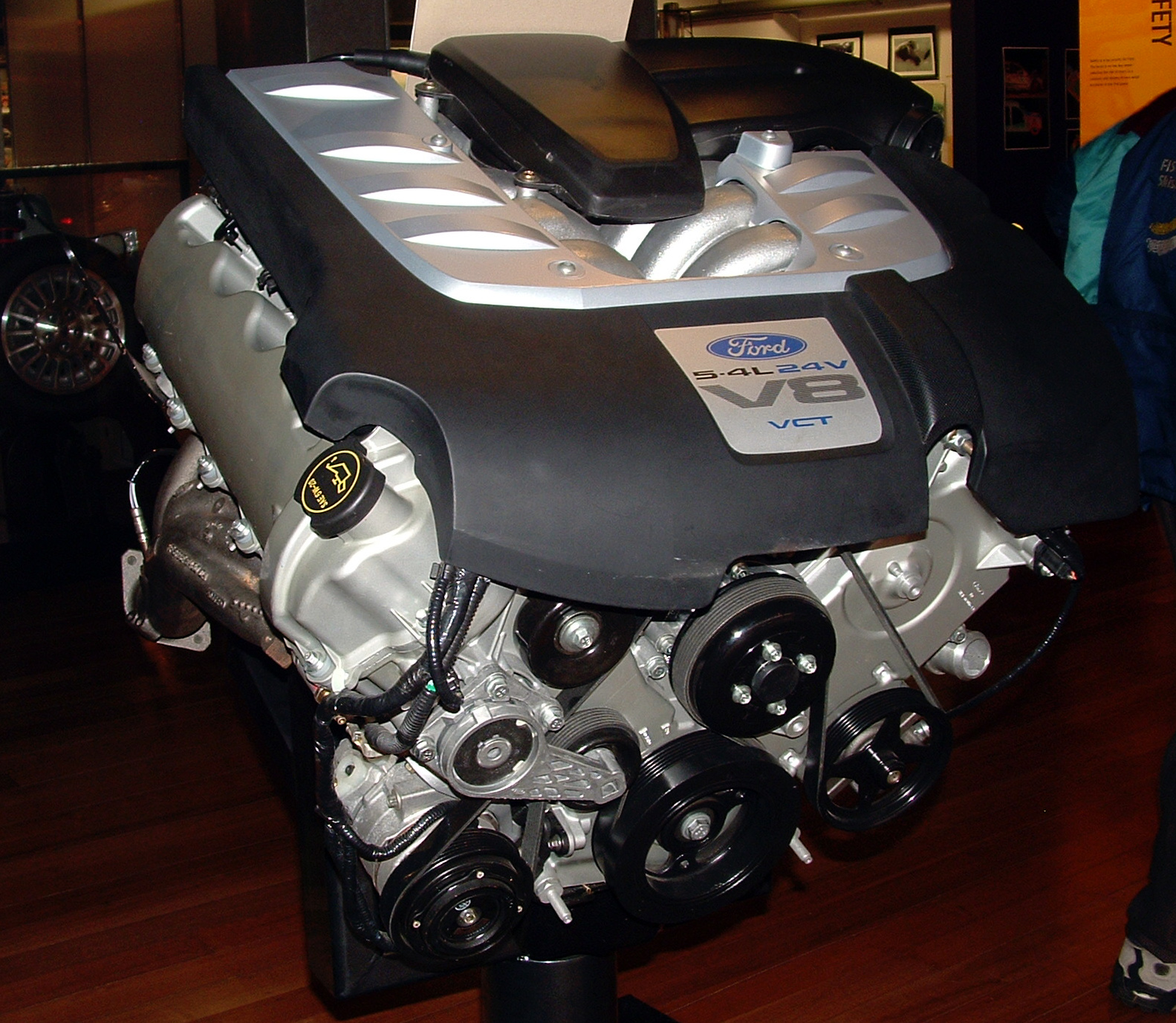
1. **Ford 5.4L Triton V8**
The Ford 5.4L Triton V8 has earned its infamous place in history as one of the worst truck engines ever produced, primarily due to its spectacular design flaws. This engine became a symbol of unreliability, sparking widespread complaints among owners and mechanics alike. Its fundamental issues often appeared without warning, transforming seemingly routine drives into stressful experiences fraught with the specter of expensive mechanical failure.
One of the most notorious problems associated with the 5.4L Triton was the alarming frequency of spark plug ejection. This was not an isolated incident but a widespread phenomenon that became so common that Ford dealerships reportedly developed special tools specifically to address this pervasive issue. The design of the cylinder heads was simply inadequate to retain the spark plugs under the engine’s operational stresses, leading to sudden, catastrophic failures that left owners stranded and frustrated.
Beyond the spark plug dilemma, the 5.4L Triton was also plagued by severe timing chain failures. These critical components, essential for the engine’s synchronized operation, would often fail without warning, resulting in significant internal damage. Such failures typically necessitated extensive and costly repairs, often amounting to a complete engine replacement, leaving owners with substantial financial burdens that far outweighed the initial investment in their truck.
The distinctive ticking sound emanating from the engine bay became an ominous soundtrack for many Triton owners. This sound often served as a clear countdown to expensive repairs or, in many cases, complete engine replacement. The cumulative effect of these inherent design flaws made the 5.4L Triton V8 a true liability from its inception, etching its legacy as a textbook example of how engineering oversights can severely compromise reliability and owner satisfaction.
Read more about: Planning on Trouble? The 14 Engines and Models Most Likely to Leave You Stranded Before 100,000 Miles

2. **Ford 6.0L Powerstroke Diesel V8**
The Ford 6.0L Powerstroke Diesel V8, launched in the early 2000s, was initially touted for its promises of power and performance, yet it rapidly devolved into one of Ford’s most catastrophic failures. Despite its strong marketing as a durable workhorse, this engine frequently fell short of expectations, becoming infamous for a litany of severe reliability issues that tormented truck enthusiasts and everyday owners alike. Its persistent problems became a significant headache, proving that even regular maintenance was often insufficient to prevent breakdowns.
At the heart of the 6.0L Powerstroke’s woes were recurrent head gasket failures, which occurred with shocking regularity. These failures were largely attributed to poor EGR (Exhaust Gas Recirculation) cooler designs, which frequently led to overheating. The excessive heat and pressure would then compromise the head gaskets, resulting in coolant leaks, loss of compression, and a cascade of further engine damage. Owners expressed immense frustration with the constant need for repairs related to these issues, underscoring the engine’s inherent design flaws.
In addition to head gasket issues, oil cooler problems were another significant vulnerability that often led to the destruction of entire engines. These coolers were prone to clogging, which would starve critical engine components of lubrication, leading to premature wear and catastrophic internal damage. Injector failures also became so common that owners began to expect them rather than merely fear them. This pervasive unreliability quickly diminished confidence in a powerplant that was designed to be robust and dependable.
Moreover, the intricate emissions control system on the 6.0L Powerstroke, while designed to meet environmental standards, added layers of complexity that often contributed to its unreliability. The combination of EGR issues, oil cooler failures, and problematic injectors meant that this engine consistently demanded expensive and time-consuming repairs. The cumulative effect of these widespread issues single-handedly damaged Ford’s diesel reputation for many years, leading many customers to question the brand’s commitment to reliability in its heavy-duty trucks.
This engine, despite its initial market positioning, failed to deliver the long-term durability that truck owners demand. It frequently broke down, leaving owners stranded and facing repair bills that often overshadowed the truck’s value. The sheer frequency and severity of its problems meant that for many, owning a 6.0L Powerstroke became a test of patience and financial resilience, rather than a testament to powerful, dependable trucking.
Read more about: The Definitive Guide to the Longest-Lasting Pickup Trucks on the Road

3. **Ford 6.4L Powerstroke Diesel V8**
Building on the problematic legacy of its predecessor, the Ford 6.4L Powerstroke Diesel V8 emerged as another significant blunder, embodying everything that could go wrong with modern diesel emissions systems. While intended to offer cleaner performance, its complex design proved to be a liability, resulting in persistent issues that frustrated owners and mechanics alike. This engine seemed to be a stark example of over-engineering without sufficient real-world reliability testing.
A central point of contention was its complicated dual turbo system, which many experts suggested seemed designed to fail expensively. The sophisticated nature of this setup meant that when issues arose, the diagnostic and repair processes were often intricate and prohibitively costly. The turbos, critical for delivering the engine’s power, were prone to premature wear and failure, leading to significant power loss and, ultimately, expensive workshop visits.
Radiator problems were another critical flaw that plagued the 6.4L Powerstroke. These issues often initiated a domino effect that could lead to complete engine failure. An inadequately performing or failing radiator would compromise the engine’s cooling, leading to severe overheating. This overheating, in turn, could warp cylinder heads, compromise gaskets, and cause irreversible damage to internal components, culminating in a total breakdown of the engine system.
The financial burden associated with the 6.4L Powerstroke was substantial. Repair costs regularly exceeded $10,000 for many of the common major failures, making ownership an incredibly expensive endeavor. These exorbitant repair bills not only drained owners’ wallets but also significantly destroyed the resale values of trucks equipped with this engine. The engine’s reputation for unreliability made it a tough sell on the used market, cementing its status as a major financial pitfall for those who invested in it.
Car Model Information: 2022 BMW X3 sDrive30i
Name: Power Stroke engine
Caption: 6.4 Powerstroke as installed in a Ford Super Duty
Aka: Ford Powerstroke
Manufacturer: Navistar International
Production: 1994–present
Configuration: V8 engine,Inline-five engine,V6 engine
Predecessor: International Harvester IDI
Fueltype: Diesel engine
Displacement: 3.0 L
Abbr: on
Order: flip
Bore: 95 mm
Stroke: 105 mm
Block: Cast iron
Head: Cast iron,Aluminum (reverse flow)
Valvetrain: Pushrod engine,DOHC,Multi-valve#Four valves
Timing: Gear (7.3, 6.0, 6.4, 6.7 L),Belt (3.0 L)
Compression: 17.5:1, 18.0:1
Turbocharger: Garrett AiResearch,Variable-geometry turbocharger
Fuelsystem: HEUI,Fuel injection#Direct injection systems
Coolingsystem: Radiator (engine cooling)
Oilsystem: High-pressure oil pump
Weight: convert
Power: convert
Torque: convert
EmissionsControl: Robert Bosch GmbH,Diesel particulate filter,Exhaust gas recirculation
Categories: All articles needing additional references, All articles with dead external links, Articles needing additional references from July 2020, Articles needing additional references from October 2024, Articles with dead external links from December 2017
Summary: Power Stroke, also known as Powerstroke, is the name used by a family of diesel engines for trucks produced by Ford Motor Company and Navistar International (until 2010) for Ford products since 1994. Along with its use in the Ford F-Series (including the Ford Super Duty trucks), applications include the Ford E-Series, Ford Excursion, and Ford LCF commercial truck. The name was also used for a diesel engine used in South American production of the Ford Ranger.
From 1994, the Power Stroke engine family existed as a re-branding of engines produced by Navistar International, sharing engines with its medium-duty truck lines. Since the 2011 introduction of the 6.7 L Power Stroke V8, Ford has designed and produced its own diesel engines. During its production, the Power Stroke engine range has been marketed against large-block V8 (and V10) gasoline engines along with the General Motors Duramax V8 and the Dodge Cummins B-Series inline-six.
Get more information about: Ford Power Stroke engine
Buying a high-performing used car >>>
Brand: Ford Model: 6.4L Powerstroke Diesel V8
Price: $28,452 Mileage: 46,868 mi.
Read more about: Mastering the Long Haul: 12 Exceptional Pickup Trucks with 8-Foot Beds You Need to Know

4. **Chevrolet 5.3L V8**
The Chevrolet 5.3L V8, a popular engine in GM trucks and SUVs, provides a compelling case study of how the introduction of advanced technology, specifically Active Fuel Management (AFM), could inadvertently ruin an otherwise robust V8 design. While AFM was intended to enhance fuel efficiency by deactivating cylinders during light-load conditions, its implementation created a host of new, serious problems that greatly undermined the engine’s reliability and owner satisfaction.
One of the most serious problems stemming from the Active Fuel Management system was a marked increase in oil consumption. The frequent activation and deactivation of cylinders, coupled with the design of the AFM lifters, led to significant oil burning. This issue not only forced owners to constantly monitor and top off their oil levels but also raised concerns about the long-term health and lubrication of critical engine components, potentially shortening the engine’s lifespan.
Lifter failures became an alarmingly common occurrence in the 5.3L V8. The AFM lifters, which are designed to collapse and expand to enable cylinder deactivation, proved to be a weak point, often failing prematurely. The widespread nature of these failures was so pervasive that aftermarket companies quickly developed bypass kits, offering owners a way to disable the problematic AFM system and avoid future lifter-related issues, albeit at an additional cost.
Furthermore, the increased complexity introduced by the AFM system and its associated components made repairs for the 5.3L V8 particularly expensive and time-consuming. Diagnosing issues required specialized knowledge, and accessing and replacing components in such an intricately designed engine was a labor-intensive process. This complexity meant that what might have been a straightforward repair on a simpler V8 became a significant financial and logistical challenge for owners, further contributing to its reputation as a problematic powerplant.
Read more about: Beyond 400,000 Miles: Unpacking the Engineering and Maintenance Behind Automotive Immortality

5. **Ram 3L EcoDiesel V6**
The Ram 3L EcoDiesel V6, an Italian-sourced diesel engine, initially offered an enticing blend of torque and fuel efficiency for American truck owners. However, it quickly gained notoriety for effectively importing a unique set of European-style problems to the demanding American truck market. What promised to be a powerful and efficient alternative often turned into a source of considerable frustration due to persistent and costly reliability issues.
A primary concern for owners was the pervasive nature of EGR (Exhaust Gas Recirculation) system failures. These components, critical for reducing nitrogen oxide emissions, were prone to malfunction, often leading to performance degradation and, more critically, the dreaded illumination of the check engine light. Such failures often required expensive repairs, highlighting a fundamental design weakness in the engine’s emission control strategy.
Complementing the EGR issues were frequent turbocharger problems, which became the norm rather than the exception for many EcoDiesel owners. Turbochargers are vital for boosting engine power and efficiency, but their premature failure directly translated to diminished performance, reduced fuel economy, and unexpected repair bills. The persistent cycle of failures meant that maintaining peak performance for this engine often felt like a continuous battle.
Indeed, the emissions control system on the Ram 3L EcoDiesel V6 seemed, to many, to be fundamentally designed to fail. It was a constant source of check engine lights and diagnostic trouble codes, indicating issues that often spiraled into significant repair needs. The intricate and often fragile nature of these systems meant that achieving compliance with emissions standards came at the cost of long-term reliability and owner peace of mind.
The cumulative impact of these systemic failures created a harsh economic reality for Ram EcoDiesel owners. The repair costs associated with EGR systems, turbochargers, and other emissions-related components frequently exceeded the perceived benefits of the engine’s fuel economy or torque. This rendered the engine a less-than-ideal choice for those seeking hassle-free reliability, as the ongoing expenses often negated any initial savings or performance advantages.
Having dissected the initial set of significant engine blunders that rocked the automotive world, we now turn our attention to five more powerplants that, despite their varied origins and ambitious designs, ultimately failed to deliver on the promise of robust truck performance. These engines, too, became infamous for their durability misses, angering owners and leaving indelible marks on their respective manufacturers’ reputations. Our journey continues, exploring how critical engineering oversights, or perhaps just a dash of misfortune, transformed these mechanical hearts into recurring nightmares.
Car Model Information: 2022 BMW X3 sDrive30i
Name: Dodge Ram / Ram pickup
Caption: 2017 Ram 1500 Express
Manufacturer: Dodge
ModelYears: 1981–present
Production: October 1980 – present
Class: Pickup truck#Full-size pickup truck,Pickup truck#Heavy-duty pickup truck
Layout: Front-engine, rear-wheel-drive layout,rear-wheel drive
Predecessor: Dodge D series
Categories: 1990s cars, 2000s cars, 2010s cars, 2020s cars, All-wheel-drive vehicles
Summary: The Ram pickup (marketed as the Dodge Ram until 2010 when Ram Trucks was spun-off from Dodge) is a full-size pickup truck manufactured by Stellantis North America (formerly Chrysler Group LLC and FCA US LLC) and marketed from 2010 onwards under the Ram Trucks brand. The current fifth-generation Ram debuted at the 2018 North American International Auto Show in Detroit, Michigan, in January of that year.
Previously, Ram was part of the Dodge line of light trucks. The Ram name was introduced in October 1980 for model year 1981, when the Dodge D series pickup trucks and B series vans were rebranded, though the company had used a ram’s-head hood ornament on some trucks as early as 1933.
Ram trucks have been named Motor Trend magazine’s Truck of the Year eight times; the second-generation Ram won the award in 1994, the third-generation Ram heavy-duty won the award in 2003, the fourth-generation Ram Heavy Duty won in 2010 and the fourth-generation Ram 1500 won in 2013 and 2014, and the current fifth-generation Ram pickup became the first truck in history to win the award four times, winning in 2019, 2020, 2021 and most recently, 2025.
Get more information about: Ram pickup
Buying a high-performing used car >>>
Brand: Ram Model: 3L EcoDiesel V6
Price: $28,452 Mileage: 46,868 mi.

6. **Nissan 5 L Cummins V8**
In the competitive realm of truck manufacturing, strategic partnerships are often forged with the aim of combining strengths and delivering superior products. The Nissan 5L Cummins V8 was one such collaboration, intended to blend Nissan’s vehicle prowess with Cummins’ legendary diesel engineering. Yet, as history often reminds us, even prestigious partnerships can fail spectacularly, and this engine provided ample proof of that unfortunate reality. It simply failed to deliver on its primary promises, disappointing many who had high hopes for its performance.
One of the most persistent complaints centered around its inability to achieve the promised fuel economy. Truck owners, especially those opting for a diesel, expect a certain level of efficiency, and when an engine falls short, the financial implications over years of ownership can be substantial. This, coupled with the engine’s demand for expensive maintenance routines, quickly eroded any potential savings or perceived value, turning anticipated benefits into unexpected liabilities.
Turbocharger failures became so common for this engine that they instilled genuine fear in owners, particularly when considering highway driving. A failing turbocharger not only compromises performance and fuel efficiency but can also lead to more severe engine damage if not addressed promptly. The recurring nature of these failures highlighted a fundamental design flaw or component weakness that plagued the engine throughout its operational life, demanding frequent and costly interventions.
Adding to the frustration was the engine’s complex design, which transformed even seemingly simple repairs into wallet-emptying ordeals. The intricate nature of its components and systems meant that specialized tools and expertise were often required, leading to higher labor costs and extended downtime. This combination of unmet expectations in fuel economy, frequent turbocharger breakdowns, and prohibitive repair expenses firmly cemented the Nissan 5L Cummins V8’s place as a significant blunder, proving that brand prestige alone cannot guarantee reliability.
Car Model Information: 2022 BMW X3 sDrive30i
Name: General Motors–Detroit Diesel V8
Manufacturer: General Motors
Configuration: V8 engine
Production: 1981 (limited),1982–2002
Predecessor: Oldsmobile Diesel engine#LF9,Convert
Successor: Duramax V8 engine
Bore: 6.2 L: {{Convert,3.98,in,mm,1,abbr=on
Stroke: 6.2 L: {{Convert,3.8,in,mm,1,abbr=on
Displacement: {{Convert,379,cid,L,1,order=flip,abbr=on
Block: Cast iron
Head: Cast iron
Valvetrain: Overhead valve engine
Turbocharger: BorgWarner
Fuelsystem: 1993 and older: Mechanical rotary pump,1994 and newer: Electronic rotary pump
Fueltype: Diesel fuel
Coolingsystem: Radiator (engine cooling)
Power: Convert
Torque: Convert
Compression: 21.5:1, Marine 18.0:1
EmissionsControl: Exhaust gas recirculation
Redline: 3,600
Idle: 550 ± 25
Categories: Articles with hAudio microformats, Articles with short description, CS1: unfit URL, Commons category link from Wikidata, Detroit Diesel engines
Summary: The General Motors–Detroit Diesel V8 engine is a series of diesel V8 engines first introduced by General Motors for their C/K pickup trucks in 1982. Developed in collaboration with GM subsidiary Detroit Diesel, the engine family was produced by GM through 2002, when it was replaced by the new Duramax line. AM General’s subsidiary General Engine Products (GEP) still produces a military variant of this engine for the HMMWV.
The General Motors light-truck 6.2L and 6.5L diesel engines were optional in many 1982 through 2002 full-size GM pickups, SUVs, and vans. They were also available in motor homes. The engine was standard on AM General’s military HMMWV, civilian Hummer H1, and the 1980s GM military Commercial Utility Cargo Vehicle.
Get more information about: Detroit Diesel V8 engine
Buying a high-performing used car >>>
Brand: Nissan Model: 5L Cummins V8
Price: $28,452 Mileage: 46,868 mi.
Read more about: Owner Alert: These 15 Popular Pickup Trucks Become Budget Breakers After a Decade of Ownership

7. **Dodge 4.7 L V8**
The automotive industry constantly strives for innovation, often introducing newer engine designs with promises of improved performance and efficiency. However, the Dodge 4.7L V8 serves as a stark reminder that ‘newer’ does not always equate to ‘better.’ This particular V8, widely used in various Dodge and Jeep applications, became notorious for a host of durability issues that left owners grappling with sudden, catastrophic failures and ongoing maintenance nightmares. Its problems often appeared without any prior warning, turning routine drives into high-stakes gambles.
One of its most destructive flaws was the propensity for valve seat failures, which could occur without warning and destroy engines in mere seconds. These sudden mechanical collapses would instantaneously halt vehicle operation, rendering the truck immobile and necessitating incredibly expensive, often complete, engine replacements. Such unpredictable and severe failures are among the most frustrating experiences for any vehicle owner, stripping away confidence in their truck’s fundamental reliability.
Furthermore, the 4.7L V8 was plagued by an alarming rate of oil sludge accumulation, a problem that persisted even with diligent adherence to regular maintenance schedules. Oil sludge acts like a corrosive build-up within the engine, restricting lubrication to critical components and leading to premature wear and ultimately, engine seizure. Owners found themselves in a constant battle against this internal decay, making long-term engine health a precarious and uncertain endeavor.
Compounding these issues was a cooling system design that practically guaranteed warped heads under various operating conditions. Overheating due to an inadequate cooling system is a precursor to severe engine damage, including compromised head gaskets and internal component distortion. This inherent design flaw made long-term reliability an impossible dream for many, as the engine seemed destined for significant repairs or total failure, firmly establishing the Dodge 4.7L V8 as a true durability miss.
Car Model Information: 2022 BMW X3 sDrive30i
Name: Dodge Dakota
Manufacturer: Unbulleted list
Production: 1986–2011
ModelYears: 1987–2011
Assembly: Unbulleted list
Class: Mid-size pickup truck
Layout: Unbulleted list
Predecessor: Dodge Ram 50
Categories: 1990s cars, 2000s cars, 2010s cars, All-wheel-drive vehicles, All articles with unsourced statements
Summary: The Dodge Dakota, marketed as the Ram Dakota for the final two years of production, is a mid-size pickup truck manufactured by Chrysler and marketed by its Dodge Truck division (model years 1987–2009) and later its Ram Truck division (2010–2011) — across three generations.
The Dakota was larger than the compact pickups from Ford and Chevrolet, the Ford Ranger and Chevrolet S-10, and was smaller than full-sized pickups such as Dodge’s own Ram. It used body-on-frame construction and a leaf spring/live axle rear end and was the first mid-size pickup with an optional V8 engine. For its entire production, the Dakota was manufactured at Chrysler’s Warren Truck Assembly in Michigan.
The Dakota was nominated for the North American Truck of the Year award for 2000.
Get more information about: Dodge Dakota
Buying a high-performing used car >>>
Brand: Dodge Model: 4.7 L V8
Price: $28,452 Mileage: 46,868 mi.
Read more about: The Ultimate Vibe: 14 Affordable Roadsters That Command a Million-Dollar Presence

8. **Toyota 3VZ-E 3.0L V6**
Toyota has long held a formidable reputation for engineering some of the most reliable and durable vehicles on the planet, a trust earned through decades of consistent performance. However, even automotive giants can falter, and the problematic 3VZ-E 3.0L V6 engine stands as a significant exception that dealt a massive blow to Toyota’s otherwise sterling image. This engine, found in numerous Toyota trucks and SUVs, became infamous for issues that not only frustrated owners but also significantly depreciated the value of their vehicles.
At the core of the 3VZ-E’s woes were its persistent head gasket failures, which occurred with alarming regularity, particularly after the 100,000-mile mark. This issue was exacerbated by Toyota’s decision to discontinue the use of asbestos gaskets, a change that, while perhaps well-intentioned, ultimately led to a wave of expensive repairs for owners. The failure of a head gasket often results in critical overheating, coolant mixing with oil, and ultimately, severe internal engine damage, costing owners thousands in necessary rectifications.
Beyond the head gasket saga, the engine was fundamentally handicapped by inherent flaws in its cooling system design. These design deficiencies led to chronic overheating issues, a problem that relentlessly stalked owners and demanded vigilant monitoring of engine temperatures. An engine that consistently runs hot is an engine under immense stress, prone to accelerated wear and breakdown, significantly shortening its lifespan regardless of other maintenance efforts.
Moreover, the 3VZ-E’s meager 150 horsepower output proved inadequate for many of the applications it powered, especially in trucks designed for hauling and tougher tasks. This lack of power, combined with its reliability issues, made it a less-than-ideal companion for demanding drivers. The engine also had a notorious propensity for developing oil sludge, which, despite diligent maintenance, could turn many otherwise functional vehicles into what the context describes as “worthless scrap,” sealing its fate as a blight on Toyota’s otherwise pristine record.
Car Model Information: 2022 BMW X3 sDrive30i
Name: Toyota 4Runner
Caption: 2025 Toyota 4Runner TRD Sport (N500)
Manufacturer: Toyota
Aka: Toyota Hilux Surf (Japan, 1983–2009)
Production: October 1983 – present
ModelYears: 1984–present (US)
Class: unbulleted list
Layout: unbulleted list
Chassis: Body-on-frame
Successor: unbulleted list
Categories: 1990s cars, 2000s cars, 2010s cars, 2020s cars, All-wheel-drive vehicles
Summary: The Toyota 4Runner is an SUV manufactured by the Japanese automaker Toyota and marketed globally since 1984, across six generations. In Japan, it was marketed as the Toyota Hilux Surf (Japanese: トヨタ・ハイラックスサーフ, Hepburn: Toyota Hairakkususāfu) and was withdrawn from the market in 2009. The original 4Runner was a compact SUV and little more than a Toyota Hilux pickup truck with a fiberglass shell over the bed, but the model has since undergone significant independent development into a cross between a compact and a mid-size SUV. All 4Runners have been built in Japan at Toyota’s plant in Tahara, Aichi, or at the Hino Motors (a Toyota subsidiary) plant in Hamura.
The name “4Runner” was created by copywriter Robert Nathan with the Saatchi & Saatchi advertising company as a play on the term “forerunner”. The agency held contests to invent new names for Toyota’s forthcoming vehicles. According to Toyota, the “4” described the vehicle’s 4-wheel drive system while “Runner” was a reference to its all-terrain capabilities and how it could “run” off-road.
For some markets, the Hilux Surf was replaced in 2005 by the lower cost but similar Fortuner, which is based on the Hilux platform.
As of 2021, the 4Runner is marketed in the Bahamas, Bolivia, Canada, Chile, Colombia, Costa Rica, El Salvador, Guatemala, Panama, Peru, the United States and Venezuela. Many markets that did not receive the 4Runner, such as Europe and the Middle East, instead received the similarly designed Land Cruiser Prado, another SUV that shared many of the same components.
The 4Runner came in at number five in a 2019 study by iSeeCars.com ranking the longest-lasting vehicles in the US. The 4Runner had 3.9 percent of vehicles over 200,000 miles (320,000 km), according to the study.
Get more information about: Toyota 4Runner
Buying a high-performing used car >>>
Brand: Toyota Model: 3VZ-E 3.0L V6
Price: $28,452 Mileage: 46,868 mi.

9. **Ford 2.7 L Ecoboost V6**
Ford’s EcoBoost line promised a revolutionary blend of power and fuel efficiency through advanced turbocharging and direct injection technologies. While many EcoBoost engines have been successful, the smaller 2.7L EcoBoost V6 unfortunately continued a troubling tradition of problematic turbocharged engines for the automaker. Despite its initial appeal, this powerplant soon revealed a series of significant issues that plagued owners with unexpected costs and diminished performance. It became another example of ambitious engineering struggling with real-world durability.
A major concern for owners of the 2.7L EcoBoost was the insidious problem of carbon buildup. Direct injection systems, while efficient, can lead to carbon deposits accumulating on intake valves, which, over time, can severely restrict airflow and render the system “nearly useless.” This progressive degradation directly impacted engine performance and fuel economy, necessitating costly and intensive cleaning procedures that were often not part of standard maintenance expectations.
Furthermore, this engine developed an alarming appetite for oil, with consumption levels reaching heights that forced owners to carry spare oil on trips for regular top-offs. Excessive oil consumption is not only an inconvenience but also a red flag for internal engine wear or design deficiencies, raising concerns about the long-term health and longevity of critical components. It indicated a fundamental lubrication or sealing problem that many owners found unacceptable in a modern engine.
The timing chain, a crucial component for engine synchronization, also proved to be a weak point, exhibiting premature wear. A stretched or failing timing chain is a significant mechanical flaw, creating a metaphorical “ticking time bomb of repair costs” for owners. Such a failure can lead to catastrophic engine damage if not addressed proactively, making the 2.7L EcoBoost V6 a source of constant anxiety and substantial financial risk for those who relied upon it for their daily driving needs.
Car Model Information: 2022 BMW X3 sDrive30i
Name: Ford EcoBoost engine
Manufacturer: Ford Motor Company
Aka: TwinForce (obsolete),EcoBoost SCTi,GTDi
Production: 2009–present
Predecessor: ubl
Configuration: Straight-3,Straight-4
Displacement: Cubic inch displacement#Engine displacement
Bore: V6 3.5: 3.64 in (92.5 mm),V6 3.0: 3.36 in (85.3 mm),V6 2.7: 3.30 in (83 mm),I4 2.3: 3.45 in (87.55 mm),I3 1.5: 3.31 in (84 mm),I3 1.0: 2.83 in (71.9 mm)
Stroke: V6 3.5: 3.41 in (86.7 mm),V6 3.0: 3.39 in (86 mm),V6 2.7: 3.30 in (83 mm),I4 2.3: 3.7 in (94.0 mm),I4 2.3 “MPC”: 4.0 in (102 mm),I4 2.0: 3.27 in (83.1 mm),I4 1.6: 3.2 in (81.4 mm),I3 1.5: 3.54 in (90 mm),I3 1.0: 3.2 in (82 mm)
Weight: V6 3.5: 449 lbs (203 kg),V6 3.0: 445 lbs (202 kg),V6 2.7: 440 lbs (200 kg),I4 2.0: 328 lbs(149 kg),I4 1.6: 251 lbs (114 kg),I3 1.0: 213 lbs (97 kg)
Block: Compacted graphite iron
Head: Aluminum
Valvetrain: DOHC
Turbocharger: Borg Warner
Fuelsystem: Gasoline direct injection
Management: CAN-Bus
Fueltype: Gasoline
Oilsystem: Wet sump
Coolingsystem: Radiator (engine cooling)
Compression: V6 3.5: 10.0:1(10.5:1 MY2017),V6 3.0: 9.5:1,V6 2.7: 10.3:1,I4 2.3: 9.5:1
,I4 2.3 “MPC”: 10.6:1,I4 2.0: 10.0:1,I4 1.6: 10.0:1,I3 1.5: 9.7:1
Categories: 2009 introductions, All Wikipedia articles in need of updating, All articles to be expanded, All articles with bare URLs for citations, All articles with dead external links
Summary: EcoBoost is a series of turbocharged, direct-injection gasoline engines produced by Ford and originally co-developed by FEV Inc. (now FEV North America Inc.). EcoBoost engines are designed to deliver power and torque consistent with those of larger-displacement (cylinder volume) naturally aspirated engines, while achieving up to 20% better fuel efficiency and 15% fewer greenhouse emissions, according to Ford. The manufacturer sees the EcoBoost technology as less costly and more versatile than further developing or expanding the use of hybrid and diesel engine technologies. EcoBoost engines are broadly available across the Ford vehicle lineup.
Get more information about: Ford EcoBoost engine
Buying a high-performing used car >>>
Brand: Ford Model: 2.7L EcoBoost V6
Price: $28,452 Mileage: 46,868 mi.
Read more about: Your Guide to the 8 Safest Used Trucks Under $25,000 for Savvy Buyers

10. **Ford 3.5L EcoBoost V6 (First Generation)**
Building upon the narrative of ambitious technology encountering real-world obstacles, the first-generation Ford 3.5L EcoBoost V6 provides another compelling chapter in the history of engine blunders. Despite its strong marketing as a powerful and efficient choice, this engine’s early iterations proved that even the most innovative concepts could not overcome fundamental engineering flaws. It was a clear demonstration that hype, no matter how well-crafted, simply cannot compensate for a lack of robust design and thorough testing.
One of its most widespread and notorious problems was timing chain stretching, a fault so prevalent in 2010-2014 models that Ford dealerships reportedly began stocking replacement parts in anticipation of regular failures. A stretched timing chain disrupts the engine’s precise valve timing, leading to reduced performance, increased fuel consumption, and, if ignored, potentially catastrophic internal engine damage, making it a recurring and expensive headache for many owners.
Adding to the list of woes, the direct injection system, while delivering performance benefits, contributed to severe carbon buildup on intake valves, effectively choking engine performance over time. Alongside this, intercooler condensation issues in 2011-2012 models could lead to dangerous stalling, particularly in humid conditions. This critical safety concern not only undermined reliability but also put drivers at risk, highlighting a serious design oversight that required significant manufacturer intervention and left many owners disillusioned.
Moreover, the ignition system in the first-generation 3.5L EcoBoost experienced premature wear compared to its naturally aspirated counterparts. This demanded more frequent and costly maintenance, adding another layer of expense and inconvenience for owners who had expected a dependable powerplant. The engine’s much-touted 365-horsepower rating, often a key selling point, frequently only materialized under ideal conditions and with the use of premium fuel, proving to be another instance where ambitious marketing collided with the disappointing realities of everyday operation.
Read more about: Behind the Grease and Grime: 12 Cars That Make Mechanics Secretly Cheer (Or Curse) When You Roll In
In examining these ten truck engine blunders, a clear pattern emerges: the pursuit of power, efficiency, or cost-savings, when pursued without an unwavering commitment to engineering integrity and rigorous real-world durability testing, inevitably leads to significant setbacks. From spark plug ejections to head gasket failures, carbon buildup to stretched timing chains, these powerplants left a trail of frustrated owners and damaged brand reputations. They serve as enduring cautionary tales within the automotive industry, powerful reminders that in the demanding world of trucks, reliability isn’t just a feature; it’s the very foundation of trust between manufacturer and driver, and its absence can prove catastrophic. Ultimately, these stories underscore a fundamental truth: a truly great engine isn’t just about what it can do on paper, but how reliably it performs, mile after mile, year after year.