Okay, pop culture fanatics, gather ’round! We all love a good story where the hero swoops in, saves the day, and everything wraps up with a neat little bow. Think about it: the triumphant fantasy, the heartwarming rom-com, or even the epic superhero showdown where good absolutely trounces evil. Those endings leave us feeling all warm and fuzzy, like everything in the world is right. But let’s be real, life isn’t always sunshine and roses, right? Sometimes, we need a dose of reality, a narrative curveball that reminds us that not every battle is won by the good guys. And honestly, sometimes, those are the stories that stick with us the most.
That’s why we’re totally obsessed with movies where the villain doesn’t just put up a good fight; they actually, genuinely *win*. We’re not talking about those run-of-the-mill horror flicks where vapid characters walk right into their doom (though those have their place, too!). We’re diving into the genuine dramas, the epic sagas, and the psychological thrillers where the antiheroes strive to vanquish their foes and, to our shock and awe, succeed. These aren’t just movies; they’re experiences that leave you pondering the meaning of life, and sometimes, how much it can really suck.
So, grab your popcorn (maybe a comfort blanket, you’ll need it!) because we’re taking a deep dive into some of the greatest movies ever made where the bad guys don’t just get away with it – they dominate. Get ready for some serious cinematic moments that defy expectation and remind us that sometimes, evil truly gets the last laugh. It’s time to celebrate the villains who actually pulled it off, leaving us both devastated and utterly impressed.
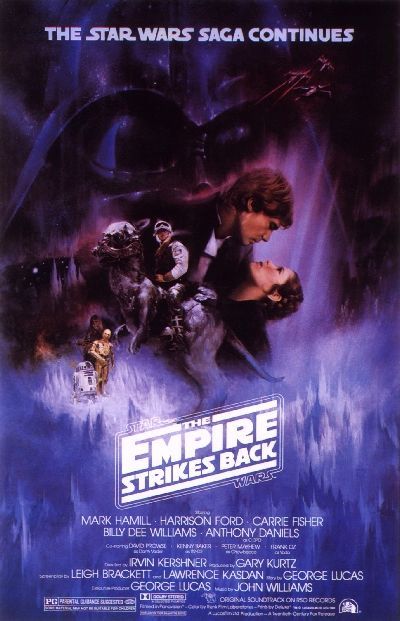
1. **The Empire Strikes Back**If you’re a fan of a galaxy far, far away, you know the Star Wars universe isn’t shy about showcasing the bad guys on top. Across various conflicts, warring space factions trade blows, and while films like *Rogue One* and *Revenge of the Sith* definitely end on some down notes, the most iconic Dark Side victory has to be found in the middle chapter of the original trilogy. This film truly came crashing back down to reality after the Death Star-destroying high of the first movie.
The movie kicks off with a crushing defeat for the Rebel base on Hoth, setting a grim tone right from the start. From there, the narrative splinters, following Luke’s Jedi training with Yoda on Dagobah and Han and Leia’s nail-biting evasion of Imperial pursuers. However, all roads eventually lead to Lando Calrissian’s floating haven, Cloud City, and that’s where things really start to unravel for our heroes.
When Darth Vader and his minions show up in Calrissian’s domain, everything goes south at an alarming rate. Han Solo is brutally tortured and used as a test subject for carbon freezing, leaving him in suspended animation, a chilling fate for one of our beloved scoundrels. Calrissian himself loses control of his city, and Luke is lured into a devastating trap.
In that legendary confrontation, Luke not only discovers that his most hated enemy, the one who just severed his hand, is actually his father, but he also experiences a complete and utter defeat. There’s simply no doubt about it: *The Empire Strikes Back* was a home run for Vader and company from beginning to end, leaving audiences stunned and eager for the next chapter, yet undeniably witnessing a villainous triumph.
Read more about: 14 ’70s ‘Comedies’: The Decade’s Most Dramatic Flops and Vanishing Acts

2. **Valkyrie**Talk about a grim note to end on – this one is actually based on a true story, which makes the villain’s win even more chilling. The 2008 film *Valkyrie* draws its inspiration from the harrowing, real-life assassination attempt against Adolf Hitler in the summer of 1944. A cabal of German officers, determined to overthrow the Nazi regime, concocted an elaborate plan, and the movie meticulously follows their desperate efforts.
Colonel Claus von Stauffenberg, portrayed by Tom Cruise, joins forces with Major-General Henning von Tresckow, played by Kenneth Branagh, and other conspirators. They carefully lay out their plans to eliminate the dictator and then utilize the Reserve Army to maintain order. Their ultimate goal is to establish themselves as the new government and negotiate favorable peace terms with the Allies, who, by this point, are clearly marching towards an inevitable victory.
As the film unfolds, everything seems to be moving towards a satisfying conclusion. The meticulous planning, the tension, and the sheer bravery of the conspirators almost make you forget that history has already written a different ending. Unlike a fantasy like *Inglourious Basterds*, *Valkyrie* is ruthlessly tethered to reality, and that reality is brutal.
Initially, the assassination comes tantalizingly close to success; the planted explosives detonate, and Operation Valkyrie is initiated. However, reports soon surface that the Führer has survived the explosion, and from that moment, the entire plot collapses. The movie concludes with Hitler still alive and breathing, and the courageous would-be heroes dead, signifying a profound and depressing victory for the true villains of history.
Read more about: 12 Movies So Unwatchable, People Literally Gave Up Midway Through!

3. **Life is Beautiful**Here’s another incredibly impactful story that, despite its profound depth and touching moments, ultimately concludes with the Nazis coming out on top. This Italian film was directed and co-written by the immensely talented Roberto Benigni, who also took on the lead role alongside Nicoletta Braschi, his wife. The film garnered numerous accolades, including an impressive three Academy Awards, a testament to its powerful storytelling.
The first half of *Life is Beautiful* is characterized by its lighthearted and comedic tone. It follows Guido Orefice, a Jewish bookshop owner in Italy, as he shamelessly pursues the love of his life with a series of slapstick antics and charming bits of acting. These early scenes are guaranteed to keep audiences laughing and rolling out of their seats, creating a vivid contrast with what is to come.
However, the narrative takes a drastic and heartbreaking turn when it jumps forward several years to a Nazi-occupied Italy. Guido, his wife, and their son are tragically sent to a concentration camp. Once imprisoned, the resilient bookshop owner uses his incredibly imaginative spirit to tirelessly shield his young son from the unimaginable horrors surrounding them, convincing him that their ordeal is nothing more than an elaborate holiday game.
Despite the grim subject matter, the movie artfully builds towards what feels like a potential happy ending, or at least a moment of hope. But in a gut-wrenching twist at the very last moment, Guido is suddenly gunned down by Nazis just as the camp is liberated. This emotional roller coaster leaves us devastated; while there’s a deeper subtext of victory in the preservation of a child’s innocence, the tragic loss of the protagonist undeniably gives evil the final, crushing edge as the credits begin to roll.
Read more about: Neil Young’s Garage: 8 Legendary Rides That Define His Eclectic Taste and Eco-Warrior Spirit

4. **The Crucible**If you’re looking for another story rooted in history where the villains prevail, *The Crucible* delivers a truly depressing win for the forces of evil. This film takes us way back to the end of the 17th century in colonial America, specifically to the sleepy, infamous town of Salem, Massachusetts. Inspired by the Salem Witch Trials, a dark chapter in historic legend, the movie chronicles a series of escalating accusations and hysteria.
The narrative centers around a group of young women, including Abigail Williams, played by Winona Ryder. Abigail has had an affair with John Proctor, portrayed by Daniel Day-Lewis, and harbors a sinister desire to put a curse on his wife, hoping to eliminate her and claim Proctor for herself. Already messed up right from the get-go, in that special kind of way that only real-life scenarios can truly provide, the situation quickly spirals out of control.
The critical turning point arrives when Abigail and her group of girls are nearly caught practicing witchcraft. To save their own skins, they begin to accuse others of witchcraft. In Puritan New England, these kinds of accusations were taken with deadly seriousness. Anyone accused by the supposedly innocent posse of girls faced an impossible choice: either confess to witchcraft and name others, or face execution.
The film culminates in a profoundly tragic ending, as several characters, including John Proctor himself, steadfastly refuse to confess to a lie. Their integrity costs them their lives, as they are ultimately killed for their defiance. It’s a truly depressing and stark victory for the forces of evil, showcasing how easily fear and manipulation can triumph over reason and truth, leaving a lasting impact on anyone who watches.
Read more about: When Innovation Stalled: Unearthing the 1940s’ Most Overlooked and Underperforming Automobiles

5. **Avengers: Infinity War**Marvel, across its decades of comic book storytelling, has seen plenty of tragic endings. However, in the Marvel Cinematic Universe (MCU), the good guys almost always come out on top, one way or another. This trend only began to noticeably shift with *Captain America: Civil War*, which pitted Avengers against one another and left behind a host of angry, PTSD-ridden superheroes. The slide downhill continued with *Thor: Ragnarok*, an otherwise fun movie that ended with the destruction of Asgard and a small band of survivors desperately searching for refuge.
But it was truly in the opening minutes of *Avengers: Infinity War*, when we witnessed more of Thor’s people being mercilessly destroyed, that Marvel finally took the plunge into a universe where villains genuinely can win—at least for a spell. This colossal crossover event throws Earth’s mightiest heroes and Guardians of the Galaxy into a desperate struggle to rise up and defend the entire universe against an unprecedented threat: Thanos, the Mad Titan.
Despite their combined might and valiant efforts, the heroes ultimately fail. Thanos, driven by his twisted ideology, successfully collects all six Infinity Stones and, in a moment that shocked audiences worldwide, pulls off his cataclysmic finger snap. This single act literally wipes out half of all life in the universe, an unimaginable cost and a devastating victory for the antagonist.
Has there ever been a higher price paid for a bad guy coming out the victor? While much of Thanos’ mad destruction was eventually “rewound” in *Avengers: Endgame*, that doesn’t change the undeniable fact that the Russo brothers purposefully crafted *Infinity War* as a Thanos-centric story. His victory upon the movie’s end is absolute and chillingly complete, leaving audiences with a profound sense of loss and the realization that sometimes, the biggest threats really do prevail.
Read more about: Unpacking the Marvel Method: 14 Films That Crafted an Unprecedented Cinematic Empire

6. **Se7en**Talk about a mind-bending, stomach-churning ride where the bad guy truly pulls the strings from start to finish! *Se7en* isn’t just a movie; it’s a masterclass in psychological dread, following two detectives, the jaded William Somerset (played by the always brilliant Morgan Freeman) and the hot-headed David Mills (a compelling Brad Pitt), as they chase down a mysterious killer. This particular villain uses the seven deadly sins as his horrific calling card, turning each murder into a gruesome sermon, leaving audiences utterly captivated and deeply disturbed.
As the seasoned duo races against time, they uncover the chilling details of the first five sins: gluttony, greed, sloth, lust, and pride. Each discovery ratchets up the tension, making us desperately hope they’ll catch this guy before he completes his twisted masterpiece. But then, in a move that only a true criminal mastermind could pull off, the murderer, known only as John Doe (an unsettling Kevin Spacey), strolls into the police station. He’s covered in the blood of an unknown victim, completely turning the tables and throwing the investigation into a terrifying new direction.
The climax of *Se7en* is not just iconic; it’s absolutely gut-wrenching, solidifying John Doe’s place in the pantheon of cinematic villains who truly win. He cunningly directs Mills and Somerset to a desolate desert location, teasing them with the promise of finding the last two victims. Of course, the victims are already there, in a horrifying revelation that makes your jaw drop. Doe chillingly confesses his envy of Mills’ seemingly perfect life with his pregnant wife, Tracy (a tragic Gwyneth Paltrow), before a box arrives containing Tracy’s severed head.
In a final, devastating act of pure manipulation, John Doe achieves his ultimate goal. Mills, consumed by rage and grief, exacts his revenge by killing Doe, thereby becoming the final victim himself – the embodiment of wrath. This wasn’t just a bad guy getting away with it; it was a villain controlling every single beat of the story, making the hero’s actions serve his own twisted agenda right up until the credits roll. *Se7en* leaves you feeling profoundly messed up, but utterly in awe of its antagonist’s dark genius.
Read more about: Inside the Elite World: The Seven-Figure Fees Celebrities Command Just to Make an Appearance

7. **The Dark Knight**Speaking of villains who steal the show, let’s talk about Christopher Nolan’s *The Dark Knight*. This movie is a juggernaut in the superhero genre, not just for its gritty realism and compelling storyline, but because it delivers one of the most unforgettable villain performances in cinematic history. Heath Ledger’s portrayal of the Joker wasn’t just incredible; it redefined what a comic book antagonist could be, and boy, did he have his way with Gotham and its caped crusader!
From the very moment he saunters into the dramatic opening heist sequence, the infamous DC villain doesn’t just make an entrance; he takes over. He’s the chaotic, unpredictable force that truly drives the narrative, making Bruce Wayne’s (Christian Bale) life a living nightmare. Much like *Infinity War* focused on Thanos, *The Dark Knight* is squarely centered around the Joker’s twisted machinations. He distressingly, yet playfully, antagonizes Batman, setting up a series of escalating showdowns that leave Gotham in utter disarray.
By the end of this epic second film in Nolan’s trilogy, the Joker’s impact is undeniably devastating. Rachel Dawes (Maggie Gyllenhaal), a central figure in Bruce Wayne’s life, is tragically killed. Harvey Dent (Aaron Eckhart), the city’s White Knight, is warped into the villainous Two-Face before meeting his own demise. And in a desperate attempt to preserve Dent’s reputation and Gotham’s hope, Batman takes responsibility for Dent’s crimes, becoming a hunted outlaw. Even Commissioner Gordon is forced to destroy the Bat-signal, a stark symbol of lost hope for the city.
Sure, the Joker was technically apprehended, but let’s be real: he won. He plunged Gotham into anarchy, corrupted its heroes, and forced Batman to make an impossible choice that shattered his public image. His plan wasn’t just to cause mayhem; it was to prove that even the best of us could be broken, and he succeeded with chilling completeness. *The Dark Knight* showcases a villain who achieves his aims, leaving a profound, dark legacy that resonates long after the screen fades to black.
Read more about: Buyer’s Remorse Hall of Fame: 12 Automotive Mistakes That Make Owners Physically Cringe

8. **1984**Prepare for a cinematic experience that’s about as soul-crushing as it gets, because George Orwell’s *1984*, faithfully adapted to the screen in, you guessed it, 1984, shows us a villainous triumph that’s truly depressing. This is a film steeped in futuristic, dystopian terror, featuring all the infamous stamps of “Big Brother” – from the ever-watchful “Thought Police” to brutal torture, insidious brainwashing, and the mind-bending concept of “doublethink.” It’s a stark reminder that sometimes, hope just isn’t enough.
The movie plunges us into a world dominated by the single, totalitarian super-state of “Oceania,” a meticulously engineered autocratic machine where every single move, every whispered thought, is scrutinized for any deviation from the government-approved behavior. We follow Winston Smith (the brilliant John Hurt), a supposedly loyal worker in the Ministry of Truth. But Winston, like so many dreamers, can’t help but “deviate” from the oppressive rules when he meets Julia (Suzanna Hamilton) and begins to secretly pursue an affair with this daring fellow thought-criminal.
Their rebellion, though brave and deeply human, is ultimately futile against the overwhelming might of the state. As the film progresses, the harsh reality of their world comes crashing down. Government forces prove infinitely more powerful than two defiant individuals. The movie culminates in their inevitable capture, followed by a horrifying system of “rehabilitation.” They are subjected to unimaginable torture and forced to confront their greatest fears, all designed to break their spirits and ensure their absolute, unwavering cooperation with the regime.
From the infamous caged rats in Room 101 to the truly depressing final scene in the cafe, there’s simply no doubt about it: Big Brother, the ultimate villain of surveillance and control, wins this one hands down. Winston’s spirit is crushed, his rebellion extinguished, and his love for Julia replaced by a forced adoration for the party. *1984* isn’t just a warning; it’s a chilling depiction of a world where individual freedom is obliterated, and the forces of oppression achieve a crushing, absolute victory.
Read more about: Ghost Stories: 14 Timeless Horror Movies Every Fan Needs to Experience

9. **Saw**Alright, let’s talk about a horror flick that flips the script and delivers a villainous triumph so clever, it’ll make your jaw drop! James Wan’s debut film, *Saw*, isn’t just a gory ride; it’s a masterclass in suspense and twisted ingenuity, introducing us to Jigsaw, one of the most successful and genuinely surprising antagonists in cinematic history. Forget your run-of-the-mill slasher; Jigsaw plays a different game, one where his victims are forced to confront their own choices in the most horrifying ways imaginable.
The movie’s brilliance lies in its shocking twist ending, which launched a massive franchise. Before that big reveal, though, the tension builds relentlessly. One of the early, terrifying revelations in the film involves the titular saws – seemingly tools for escape, but actually meant for cutting not metal, but flesh. This immediately sets a grim, desperate tone, letting the audience know that these aren’t easy puzzles. The captive protagonists, Dr. Lawrence Gordon (Cary Elwes) and Adam (Leigh Whannell), are forced into an impossible scenario, slowly losing their mental stability as the clock ticks down.
Jigsaw, the puppet master, orchestrates a brutal string of events, showcasing a chilling understanding of human psychology and a macabre creativity with his traps. From bear traps to barbed wire, each puzzle is designed not just to kill, but to make victims suffer and, perhaps, learn a grim lesson about appreciating life. Even before the shocking climax where Jigsaw dramatically rises from the center of the room, revealing himself to be the seemingly dead body that had been lying there all along, his control over the entire scenario is absolute.
It’s a horrifying success story for the villain. Jigsaw doesn’t just get away with it; he orchestrates a perfect, complex game, manipulates his victims into fulfilling his dark vision, and ultimately leaves the audience stunned by his sheer audacity and cunning. *Saw* delivers a villain who doesn’t just survive; he dominates, leaving a lasting impression and proving that sometimes, the most successful villains are the ones who play the long game.
Read more about: Neil Young’s Garage: 8 Legendary Rides That Define His Eclectic Taste and Eco-Warrior Spirit

10. **Memento**Okay, deep breath, because here’s another Christopher Nolan masterpiece that, you guessed it, lets the villain win. Nolan definitely has a unique gift for crafting narratives where the lines between hero and antagonist blur, and the ‘good guys’ don’t always come out on top. *Memento* is a mind-bending ride, as convoluted as they come, expertly playing with time and memory to craft a truly unforgettable experience. The narrative follows Leonard Shelby (G.
It seems our journey through villainous victories has hit a bit of a cinematic cliffhanger! While we could endlessly ponder the depths of Memento’s plot and its fascinating antagonist, it appears our intel on Leonard Shelby’s full story has gotten lost somewhere in the labyrinth of memory. However, the overarching theme remains crystal clear: in these gripping films, the bad guys often pull off an unforgettable win, challenging our expectations and leaving us utterly speechless.
Read more about: Mind Blown Yet? 15 Movies So Smart They’ll Make You Question Everything (And Then Rewatch Them)
So, there you have it: ten incredible movies where the villain doesn’t just get a lucky break; they genuinely dominate, leaving a trail of devastation and a profound impact on anyone who watches. These aren’t just stories of good versus evil; they’re gritty, thought-provoking explorations of human nature, power, and the unsettling reality that sometimes, the darkness prevails. They remind us that the most memorable narratives are often the ones that defy convention, giving us a much-needed dose of thrilling, uncomfortable truth. It’s a wild ride, and honestly, we wouldn’t have it any other way. What other villainous triumphs would you add to this list? Let us know!