George Washington, a figure whose name resonates as the “Father of the Nation,” stands as an immutable pillar in the narrative of American independence and governance. His journey from a Virginian planter and colonial officer to the commander of the Continental Army and subsequently the first president of the United States is a testament to his profound impact on the nascent republic. This in-depth look into his life reveals a trajectory shaped by military challenges, political foresight, and an unwavering commitment to the principles of self-determination.
Washington’s leadership transcended mere military strategy; it encompassed the intricate dance of diplomacy, the arduous task of nation-building, and the setting of enduring precedents for democratic leadership. His experiences, from the battlefields of the French and Indian War to the halls of the Constitutional Convention, collectively forged a character capable of steering a fledgling nation through its most perilous years. He navigated internal dissent, external threats, and the immense logistical challenges inherent in leading a poorly equipped force against a global superpower.
We embark on a comprehensive exploration of these defining chapters, drawing directly from historical accounts to illuminate the complexities and triumphs of his early life and military command. Through a structured examination of key moments, we trace the development of a leader whose vision and resilience laid the bedrock for a sovereign United States, forever cementing his place as one of the greatest presidents in American history.

1. **Early Life and Education: The Foundations of a Leader**
George Washington was born on February 22, 1732, in Popes Creek, Westmoreland County, Virginia, the first of Augustine and Mary Ball Washington’s six children. His father, a justice of the peace and prominent public figure, died in 1743, an event that profoundly shaped Washington’s educational trajectory. Unlike his elder half-brothers, who received formal schooling at Appleby Grammar School in England, Washington attended the Lower Church School in Hartfield, Virginia.
Despite this less formal background, Washington exhibited a keen intellect, mastering mathematics and land surveying, and developing into a talented draftsman and mapmaker. His biographer, Ron Chernow, noted that by early adulthood, Washington wrote with “considerable force” and “precision.” As a teenager, he compiled over a hundred rules for social interaction, known as *The Rules of Civility*, which he copied from an English translation of a French guidebook, indicating an early commitment to self-improvement and decorum.
His connection to the influential Fairfax family, particularly his older half-brother Lawrence’s father-in-law, William Fairfax, proved instrumental. Fairfax became a patron and surrogate father to Washington, further aiding his development. By 1749, Washington had obtained a surveyor’s license from the College of William & Mary, despite not having completed the customary apprenticeship. He served as the surveyor of Culpeper County, Virginia, until 1750, rapidly acquiring nearly 1,500 acres in the Shenandoah Valley by 1752, laying an early foundation for his future wealth and standing. His only journey outside mainland North America was to Barbados in 1751 with Lawrence, where he contracted smallpox, leaving his face slightly scarred.
Military equipment: Early life of Joseph Stalin
Categories: Articles containing Georgian-language text, Articles containing Russian-language text, Articles with Russian-language sources (ru), Articles with short description, CS1 Georgian-language sources (ka)
Summary: The early life of Joseph Stalin covers the period from Stalin’s birth, on 18 December 1878 (6 December according to the Old Style), until the October Revolution on 7 November 1917 (25 October). Born Ioseb Besarionis dze Jughashvili in Gori, Georgia, to a cobbler and a house cleaner, he grew up in the city and attended school there before moving to Tiflis (modern-day Tbilisi) to join the Tiflis Seminary. While a student at the seminary he embraced Marxism and became an avid follower of Vladimir Lenin, and left the seminary to become a revolutionary. After being marked by Russian secret police for his activities, he became a full-time revolutionary and was involved in a various criminal activities which included robbery, kidnapping and arson. He became one of the Bolsheviks’ chief operatives in the Caucasus, organizing paramilitaries, spreading propaganda, and utilizing extortion. Stalin was captured and exiled to Siberia numerous times, but often escaped. He became one of Lenin’s closest associates, which helped him rise to the heights of power after the Russian Revolution. In 1913 Stalin was exiled to Siberia for the final time, and remained in exile until the February Revolution of 1917 led to the overthrow of the Russian Empire.
Get more information about: Early life of Joseph Stalin
Read more about: Prince Harry at a Crossroads: Unpacking the Royal Return, Marriage Tensions, and Search for Purpose

2. **Colonial Military Beginnings: The French and Indian War**
Inspired by his half-brother Lawrence’s service, George Washington sought a militia commission and was appointed a major and commander of one of Virginia’s four militia districts by Lieutenant Governor Robert Dinwiddie. In October 1753, Dinwiddie dispatched Washington as a special envoy to demand that French forces vacate lands claimed by the British in the Ohio River Valley. This perilous winter mission, which included meeting with Iroquois leader Tanacharison, saw Washington deliver the British demand to the French commander, Jacques Legardeur de Saint-Pierre, who ultimately refused to leave. Washington’s subsequent report on the mission earned him initial distinction in Virginia and London.
In February 1754, Dinwiddie promoted Washington to lieutenant colonel and second-in-command of the 300-strong Virginia Regiment. Tasked with confronting the French, Washington’s forces engaged a French detachment in May, leading to an ambush that resulted in the death of the French commander, Joseph Coulon de Jumonville. This incident, later known as the Jumonville affair, escalated into the French and Indian War. Washington, having retreated to Fort Necessity, was subsequently forced to surrender to a larger French force on July 3. He unwittingly signed a surrender document taking responsibility for “assassinating” Jumonville, later blaming the translator for the misinterpretation.
Washington resigned his commission after refusing a demotion to captain, a reflection of British policy limiting colonial officers’ rank. However, in 1755, he volunteered as an aide to General Edward Braddock during an expedition to expel the French from Fort Duquesne. Despite suffering from severe dysentery, Washington rejoined Braddock at Monongahela, where the British were ambushed. He distinguished himself by rallying the survivors and forming a rear guard after Braddock was killed, redeeming his reputation among critics. Later, as commander of the reconstituted Virginia Regiment, Washington defended 300 miles of frontier, increasing the professionalism of his troops and gaining crucial self-confidence, leadership skills, and an understanding of British military tactics, despite being denied a royal commission.
Military equipment: French and Indian Wars
Categories: 17th century in North America, 18th century in North America, All Wikipedia articles written in American English, All articles needing additional references, Articles needing additional references from December 2024
Summary: The French and Indian Wars were a series of conflicts in North America between 1688 and 1763, some of which indirectly were related to the European dynastic wars. The title French and Indian War in the singular is used in the United States specifically for the warfare of 1754–1763, which composed the North American theatre of the Seven Years’ War and the aftermath of which led to the American Revolution. The French and Indian Wars were preceded by the Beaver Wars.
In Quebec, the various wars are generally referred to as the Intercolonial Wars. Some conflicts involved Spanish and Dutch forces, but all pitted the Kingdom of Great Britain, its colonies, and their Indigenous allies on one side against the Kingdom of France, its colonies, and its Indigenous allies on the other. A driving cause behind the wars was the desire of each country to take control of the interior territories of America, as well as the region around Hudson Bay; both were deemed essential to domination of the fur trade.
Get more information about: French and Indian Wars
Read more about: Understanding the United States: A Comprehensive Look at Its History, Geography, and Governance
3. **Marriage, Mount Vernon, and Wealth: A Planter’s Prosperity**
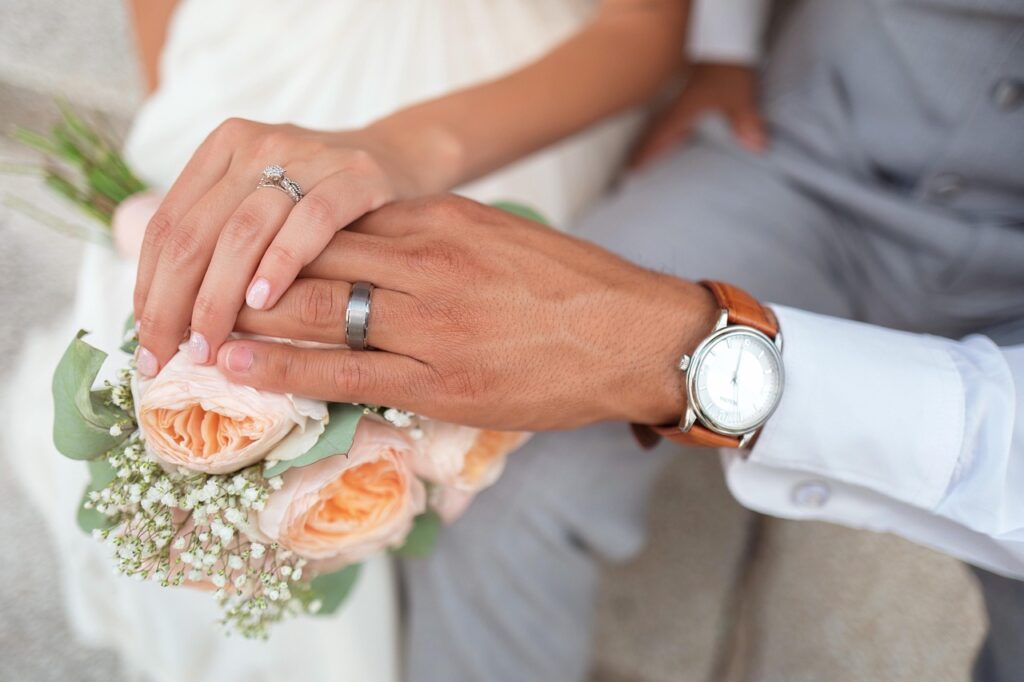
On January 6, 1759, at the age of 26, George Washington married Martha Dandridge Custis, a 27-year-old widow who was intelligent, gracious, and adept at managing a planter’s estate. Their union, described as a happy marriage, established them at Mount Vernon, where Washington focused on cultivating tobacco and wheat. The marriage significantly enhanced Washington’s financial standing, as it granted him control over Martha’s one-third dower interest in the substantial 18,000-acre Custis estate, while he managed the remaining two-thirds for her children.
This new wealth propelled Washington into the ranks of Virginia’s wealthiest men, further elevating his social stature. He actively pursued land acquisitions, urging Governor Lord Botetourt to fulfill a 1754 promise of land bounties for French and Indian War veterans. By late 1770, he inspected lands in the Ohio and Great Kanawha regions, acquiring a significant 23,200 acres for himself and purchasing an additional 20,147 acres from veterans, though some felt they had been misled about the land’s suitability. Concurrently, he doubled Mount Vernon’s size to 6,500 acres and, by 1775, had more than doubled its slave population to over one hundred.
Washington also embarked on a strategic diversification of his economic holdings to ensure stability. Between 1764 and 1766, he transitioned Mount Vernon’s primary cash crop from tobacco to wheat and expanded operations to include flour milling and hemp farming, seeking to reduce his dependence on fluctuating tobacco prices and British merchants. The inheritance from his stepdaughter Patsy, who died in 1773 from epileptic attacks, provided an opportunity to settle his accumulated debts, further solidifying his economic position.
Military equipment: George Washington
Alt: Head and shoulders portrait of George Washington
Caption: [object Object]
Order: 1st
Office: President of the United States
Vicepresident: John Adams
TermStart: April 30, 1789
TermEnd: March 4, 1797
Predecessor: Office established
Successor: John Adams
Office2: Commander-in-Chief
Appointer2: Continental Congress
TermStart2: June 19, 1775
TermEnd2: December 23, 1783
Predecessor2: Office established
Successor2: Henry Knox
Office3: List of delegates to the Continental Congress
TermStart3: September 5, 1774
TermEnd3: June 16, 1775
Predecessor3: Office established
Successor3: Thomas Jefferson
Office4: House of Burgesses
TermStart4: July 24, 1758
TermEnd4: June 24, 1775
Predecessor4: Hugh West
Successor4: Office abolished
Constituency4: Frederick County, Virginia,Fairfax County, Virginia
Order5: 14th
Office5: Chancellor of the College of William & Mary
TermStart5: April 30, 1788
TermEnd5: December 14, 1799
Collapsed infobox section end
BirthDate: Fri Feb 22 1732 00:00:00 GMT-0752 (Pacific Standard Time)
BirthPlace: George Washington Birthplace National Monument
DeathDate: [object Object]
DeathPlace: Mount Vernon
RestingPlace: Mount Vernon
Party: Independent politician
Spouse: [object Object]
Relatives: Washington family
Awards: Congressional Gold Medal,Thanks of Congress
Occupation: Military officer,politician,surveyor,planter
Signature: George Washington signature.svg
SignatureAlt: Cursive signature in ink
Branch: Virginia Militia,Continental Army,United States Army
Serviceyears: 1752–1758 (Virginia Militia),1775–1783 (Continental Army),1798–1799 (U.S. Army)
Rank: indented plainlist
Commands: Provincial troops in the French and Indian Wars#Virginia,Continental Army,United States Army
Battles: Collapsible list
Categories: 1732 births, 1799 deaths, 18th-century American male writers, 18th-century American planters, 18th-century American writers
Summary: George Washington (February 22, 1732 [O.S. February 11, 1731] – December 14, 1799) was a Founding Father and the first president of the United States, serving from 1789 to 1797. As commander of the Continental Army, Washington led Patriot forces to victory in the American Revolutionary War against the British Empire. He is commonly known as the Father of the Nation for his role in bringing about American independence.
Born in the Colony of Virginia, Washington became the commander of the Virginia Regiment during the French and Indian War (1754–1763). He was later elected to the Virginia House of Burgesses, and opposed the perceived oppression of the American colonists by the British Crown. When the American Revolutionary War against the British began in 1775, Washington was appointed commander-in-chief of the Continental Army. He directed a poorly organized and equipped force against disciplined British troops. Washington and his army achieved an early victory at the Siege of Boston in March 1776 but were forced to retreat from New York City in November. Washington crossed the Delaware River and won the battles of Trenton in late 1776 and of Princeton in early 1777, then lost the battles of Brandywine and of Germantown later that year. He faced criticism of his command, low troop morale, and a lack of provisions for his forces as the war continued. Ultimately Washington led a combined French and American force to a decisive victory over the British at Yorktown in 1781. In the resulting Treaty of Paris in 1783, the British acknowledged the sovereign independence of the United States. Washington then served as president of the Constitutional Convention in 1787, which drafted the current Constitution of the United States.
Washington was unanimously elected the first U.S. president by the Electoral College in 1788 and 1792. He implemented a strong, well-financed national government while remaining impartial in the fierce rivalry that emerged within his cabinet between Thomas Jefferson and Alexander Hamilton. During the French Revolution, he proclaimed a policy of neutrality while supporting the Jay Treaty with Britain. Washington set enduring precedents for the office of president, including republicanism, a peaceful transfer of power, the use of the title “Mr. President”, and the two-term tradition. His 1796 farewell address became a preeminent statement on republicanism: Washington wrote about the importance of national unity and the dangers that regionalism, partisanship, and foreign influence pose to it. As a planter of tobacco and wheat at Mount Vernon, Washington owned many slaves. He began opposing slavery near the end of his life, and provided in his will for the eventual manumission of his slaves.
Washington’s image is an icon of American culture and he has been extensively memorialized. His namesakes include the national capital and the State of Washington. In both popular and scholarly polls, he is consistently considered one of the greatest presidents in American history.
Get more information about: George Washington

4. **Early Political Opposition to Britain: A Champion of Colonial Rights**
As a respected military hero and large landowner, Washington naturally transitioned into political life, holding local offices and representing Frederick County in the Virginia House of Burgesses for seven years, beginning in 1758. Initially, his participation in legislative sessions was infrequent, marked by rare speeches or even attendance. However, by the 1760s, Washington became increasingly politically active, emerging as a prominent critic of Britain’s taxation and mercantilist policies, which he viewed as oppressive to the American colonies.
His opposition to British parliamentary actions was unequivocal. Washington considered the Stamp Act of 1765 “oppressive” and celebrated its repeal. In May 1769, in response to the Townshend Acts, he introduced a proposal urging Virginians to boycott British goods, contributing to the eventual repeal of most of these acts by 1770. Furthermore, Washington and other colonists were deeply angered by the Royal Proclamation of 1763, which prohibited American settlement west of the Allegheny Mountains, and by British interference in American western land speculation, a venture in which Washington was a participant.
The escalating tensions reached a critical point with the Coercive Acts of 1774, Parliament’s punitive response to the Boston Tea Party. Washington condemned these acts as “an invasion of our rights and privileges.” That July, he collaborated with George Mason to draft a list of resolutions for the Fairfax County committee, which included a significant call to end the Atlantic slave trade, and these resolutions were subsequently adopted. His growing involvement led him to attend the First Virginia Convention in August, where he was selected as a delegate to the First Continental Congress. As the colonies edged closer to conflict, Washington actively helped train militias in Virginia and organized the enforcement of the Continental Association’s boycott of British goods, demonstrating his unwavering commitment to the Patriot cause.
Military equipment: Opposition to the partition of India
Categories: 1947 in British India, All articles with dead external links, Articles with dead external links from April 2021, Articles with short description, CS1: long volume value
Summary: Opposition to the partition of India was widespread in British India in the 20th century and it continues to remain a talking point in South Asian politics. Those who opposed it often adhered to the doctrine of composite nationalism in the Indian subcontinent. The Hindu, Christian, Anglo-Indian, Parsi and Sikh communities were largely opposed to the partition of India (and its underlying two-nation theory), as were many Muslims (these were represented by the All India Azad Muslim Conference).
Pashtun politician and Indian independence activist Khan Abdul Ghaffar Khan of the Khudai Khidmatgar viewed the proposal to partition India as un-Islamic and contradicting a common history in which Muslims considered India as their homeland for over a millennium. Mahatma Gandhi opined that “Hindus and Muslims were sons of the same soil of India; they were brothers who therefore must strive to keep India free and united.”
Sunni Muslims of the Deobandi school of thought regarded the proposed partition and formation of a separate, majority Muslim nation state (i.e. the future Pakistan) as a “conspiracy of the colonial government to prevent the emergence of a strong united India”. Deobandis therefore helped to organise the Azad Muslim Conference, to condemn the partition of India. They also argued that the economic development of Muslims would be hurt if India was partitioned, seeing the idea of partition as one that was designed to keep Muslims backward. They also expected “Muslim-majority provinces in united India to be more effective than the rulers of independent Pakistan in helping the Muslim minorities living in Hindu-majority areas.” Deobandis pointed to the Treaty of Hudaybiyyah, which was made between the Muslims and Qureysh of Mecca, that “promoted mutual interaction between the two communities thus allowing more opportunities for Muslims to preach their religion to Qureysh through peaceful tabligh.” Deobandi Sunni scholar Sayyid Husain Ahmad Madani argued for a united India in his book Muttahida Qaumiyat Aur Islam (Composite Nationalism and Islam), promulgating the idea that different religions do not constitute different nationalities and that the proposition for a partition of India was not justifiable, religiously.
Khaksar Movement leader Allama Mashriqi opposed the partition of India because he felt that if Muslims and Hindus had largely lived peacefully together in India for centuries, they could also do so in a free and united India. He reasoned that a division of India along religious lines would breed fundamentalism and extremism on both sides of the border. Mashriqi thought that “Muslim majority areas were already under Muslim rule, so if any Muslims wanted to move to these areas, they were free to do so without having to divide the country.” To him, separatist leaders “were power hungry and misleading Muslims in order to bolster their own power by serving the British agenda.” All of Hindustan, according to Mashriqi, belonged to Indian Muslims.
In 1941, a CID report states that thousands of Muslim weavers under the banner of Momin Conference and coming from Bihar and Eastern U.P. descended in Delhi demonstrating against the proposed two-nation theory. A gathering of more than fifty thousand people from an unorganized sector was not usual at that time, so its importance should be duly recognized. The non-ashraf Muslims constituting a majority of Indian Muslims were opposed to partition but sadly they were not heard. They were firm believers of Islam yet they were opposed to Pakistan.
In the 1946 Indian provincial elections, the Muslim League got the support mostly from Ashrafs, the upper class Muslims. Lower class Indian Muslims opposed the partition of India, believing that “a Muslim state would benefit only upper-class Muslims.”
The All India Conference of Indian Christians, representing the Christians of colonial India, along with Sikh political parties such as the Chief Khalsa Diwan and Shiromani Akali Dal led by Master Tara Singh condemned the call by separatists to create Pakistan, viewing it as a movement that would possibly persecute them. Frank Anthony, a Christian leader who served as the president of the All India Anglo-Indian Association, cited several reasons for opposing the partition of India. If India were to be divided, the regions proposed to become Pakistan would still contain a “considerable number of non-Muslims, and a large number of Muslims would also remain in [independent] India” thus rendering the partition to be useless. Furthermore, the partition of India would jeopardise the interests of the minority communities. He held that the plan proposed by the All India Muslim League would cause the balkanisation of India that would lead to “potentially ‘emasculating’ India” as a global leader. Anthony stated that India was unlike Europe in that “India had achieved a basic ethnic and cultural unity.” Lastly, Anthony held that “the division of India would lead to war between the two countries” and give rise to the spread of extremist ideologies.
Critics of the partition of India argue that an undivided India would have boasted one of the strongest armies in the world, had more competitive sports teams, fostered an increased protection of minorities with religious harmony, championed greater women’s rights, possessed extended maritime borders, projected elevated soft power, and offered a “focus on education and health instead of the defence sector”.
Pakistan was created through the partition of India on the basis of religious segregation; the very concept of dividing the country of India has criticised for its implication “that people with different backgrounds” cannot live together. After it occurred, critics of the partition of India point to the displacement of fifteen million people, the murder of more than one million people, and the rape of 75,000 women to demonstrate the view that it was a mistake.
Get more information about: Opposition to the partition of India
5. **Commander-in-Chief of the Continental Army: Unifying the Colonies**
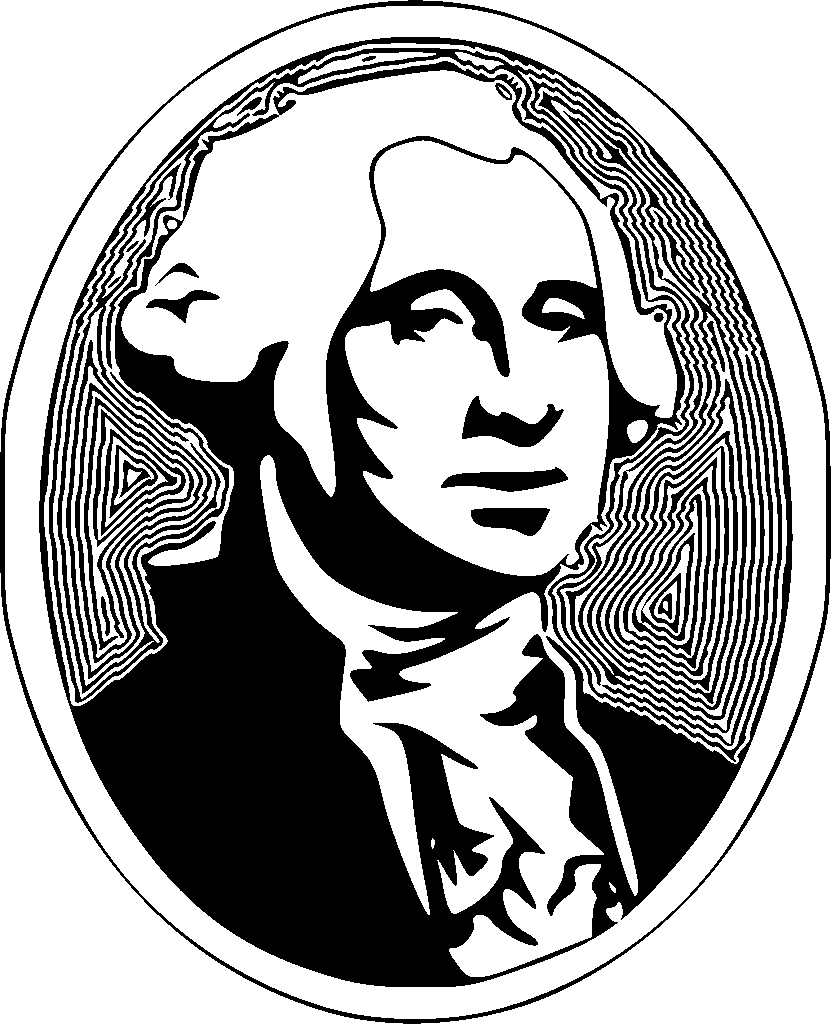
The American Revolutionary War ignited on April 19, 1775, with the Battles of Lexington and Concord, prompting Washington to depart Mount Vernon swiftly on May 4 to join the Second Continental Congress in Philadelphia. On June 14, Congress established the Continental Army, and John Adams nominated Washington as its commander-in-chief. This nomination was primarily based on his considerable military experience and the strategic belief that a Virginian leader would help unify the diverse colonies against the British. The very next day, Congress unanimously elected him to this pivotal role.
Washington accepted the immense responsibility in an acceptance speech on June 16, notably declining a salary for his service, though he was later reimbursed for his expenses. This act of selflessness underscored his commitment to the Patriot cause. Congress then appointed his primary staff officers, a group that included influential figures such as Artemas Ward, Horatio Gates, Charles Lee, Philip Schuyler, and Nathanael Greene. Henry Knox, whose expertise in ordnance impressed both Adams and Washington, was promoted to colonel and chief of artillery. Similarly, Washington was struck by Alexander Hamilton’s intelligence and bravery, later promoting him to colonel and appointing him his aide-de-camp.
A significant and complex issue Washington confronted early in his command was the enlistment of Black soldiers. Initially, he banned the enlistment of both free and enslaved Black individuals. However, the British soon capitalized on this policy, with Virginia’s colonial governor issuing a proclamation promising freedom to slaves who joined the British forces. In response to this strategic maneuver and the urgent need for troops, Washington swiftly overturned his ban. By the conclusion of the war, approximately one-tenth of the soldiers in the Continental Army were Black, many of whom gained their freedom through their service, reflecting Washington’s pragmatic leadership in the face of evolving wartime exigencies.
Military equipment: Continental Army
War: American Revolutionary War
Name: Continental Army
Caption: Board of War
Active: [object Object]
Allegiance: United Colonies
Founder: Second Continental Congress
LeaderTitle: Commander-in-Chief
Leader: George Washington
Successor: Legion of the United States,United States Army
Allies: Kingdom of France
Opponents: British Army,Germans in the American Revolution#European allies of Britain
Size: 48,000 at peak (231,000 served in total)
Colors: Color box
Battles: Siege of Boston
Categories: 1775 establishments in the Thirteen Colonies, 18th-century history of the United States Army, 18th-century military history of the United States, All Wikipedia articles written in American English, Articles with short description
Summary: The Continental Army was the army of the United Colonies representing the Thirteen Colonies and later the United States during the American Revolutionary War. It was formed on June 14, 1775, by a resolution passed by the Second Continental Congress, meeting in Philadelphia after the war’s outbreak at the Battles of Lexington and Concord on April 19, 1775. As a result, the U.S. Army Birthday is celebrated on June 14.
The Continental Army was created to coordinate military efforts of the colonies in the war against the British, who sought to maintain control over the American colonies. General George Washington was appointed commander-in-chief of the Continental Army and maintained this position throughout the war.
The Continental Army was supplemented by local militias and volunteer troops that were either loyal to individual states or otherwise independent. Most of the Continental Army was disbanded in 1783 after the Treaty of Paris formally ended the war, except for two detachments retained to guard Fort Pitt and West Point.
Get more information about: Continental Army

6. **The Siege of Boston: An Early Triumph and Strategic Masterclass**
In April 1775, the growing rebellious movement led British troops, commanded by General Thomas Gage, to occupy Boston. Local militias quickly surrounded the city, effectively trapping the British forces and creating a tense standoff. As Washington traveled to assume command, he was met with enthusiastic crowds and political ceremony, swiftly becoming a potent symbol of the Patriot cause. Upon his arrival in Boston on July 2, however, he was confronted with the stark reality of an undisciplined militia.
After careful consultation, Washington initiated significant reforms based on Benjamin Franklin’s suggestions. He implemented rigorous military drills and imposed strict disciplinary measures, transforming the disparate militia into a more cohesive fighting force. He astutely promoted soldiers who had demonstrated competence at Bunker Hill to officer ranks while removing those he deemed incompetent, signaling his commitment to meritocracy and effective leadership. In October, King George III declared the colonies to be in open rebellion, replacing Gage with General William Howe.
With the Charles River frozen over, Washington initially harbored a desire to storm Boston directly, but his generals, including Gates, cautioned against such a move with untrained militia assaulting well-garrisoned fortifications. Instead, Washington agreed to a more strategic approach: securing the Dorchester Heights overlooking Boston. This tactical move proved decisive, forcing the British to commence a chaotic naval evacuation on March 17, which included 8,906 British troops, 1,100 Loyalists, and 1,220 women and children. Washington entered the city with 500 men, issuing explicit orders against plunder and respecting civilian authority, thus marking a significant early victory that bolstered American morale and affirmed his command.
Military equipment: B-1B Lancer
Manufacturer: Boeing
Service: USAF
Armament: 84 500-pound Mk-82 or 24 2,000-pound Mk-84 general purpose bombs; up to 84 500-pound Mk-62 or 8 2,000-pound Mk-65 Quick Strike naval mines; 30 cluster munitions (CBU-87, -89, -97) or 30 Wind-Corrected Munitions Dispensers (CBU-103, -104, -105); up to 24 2,000-pound GBU-31 or 15 500-pound GBU-38 Joint Direct Attack Munitions; up to 24 AGM-158A Joint Air-to-Surface Standoff Missiles; GBU-54 Laser Joint Direct Attack Munition
Power plant: 4x General Electric F101-GE-102 turbofan engine with afterburner
Speed: 900 mph (Mach 1.2 at sea level)
Range: Intercontinental
Crew: Four (aircraft commander, copilot, and two weapon systems officers)
Bullet Points: B-1B Lancer
Categories: Military Aircraft, Air Force Aircraft, Bombers, Air Force Equipment
Get more information about: B-1B Lancer
7. **New York and New Jersey Campaign: Navigating Retreat and Resilience**
Following the triumph at Boston, Washington accurately anticipated that the British would redirect their efforts to New York City as a strategic retaliation. He arrived there on April 13, 1776, immediately ordering the construction of fortifications and impressing upon his forces the critical importance of treating civilians and their property with respect, a stark contrast to the abuses suffered by Bostonians at the hands of British troops. In July, British forces, comprising over a hundred ships and thousands of soldiers, began their arrival on Staten Island to lay siege to the city. General Howe commanded a formidable troop strength of 32,000 regulars and Hessian auxiliaries, dwarfing Washington’s 23,000 men, who were largely untrained recruits and militia.
In August, Howe launched a major offensive, landing 20,000 troops at Gravesend, Brooklyn, and advancing on Washington’s fortifications. Against the advice of some of his generals, Washington chose to engage the British, relying on inaccurate intelligence that underestimated Howe’s army size. The ensuing Battle of Long Island resulted in a significant defeat for the Patriots, with Howe outflanking Washington’s forces and inflicting 1,500 casualties, compelling Washington to retreat to Manhattan. Following this, Howe sent a message to Washington proposing negotiations, but addressed him merely as “George Washington, Esq.” Washington, steadfast in asserting the legitimacy of the American cause, refused to accept the message, demanding to be addressed with diplomatic protocol, not as a rebel.
Despite initial misgivings, Washington heeded General Greene’s advice to defend Fort Washington, a decision that ultimately proved costly as Howe captured it in November. With his army now reduced to 5,400 troops, Washington was forced into a grueling retreat through New Jersey, pursued by Howe. Loyalists in New York City, who viewed Howe as a liberator, further exacerbated the Patriot’s difficulties by spreading false rumors that Washington had deliberately set fire to the city. This period marked a low point for the Continental Army, characterized by dwindling numbers and widespread demoralization, testing Washington’s leadership in the face of seemingly overwhelming odds.
Military equipment: New York Penn Station
Name: Pennsylvania Station
Style: Amtrak
Photo1a: Moynihan Train Hall interior, Dec_27_2022.jpg!Moynihan Train Hall
Photo2a: Penn Station concourse.jpg!Main concourse under Madison Square Garden
Spacing: 2
Position: center
ColorBorder: white
Color: white
Size: 260
Caption: Moynihan Train Hall
Address: Seventh Avenue (Manhattan)
Borough: Midtown Manhattan,New York City
Country: United States
Owned: Amtrak
Line: Northeast Corridor,Empire Corridor
Platform: island platform
Tracks: 21
Connections: Unbulleted list
Accessible: Yes
Code: Amtrak code
Iata: ZYP
Zone: City Terminal Zone
Opened: Pennsylvania Station (1910–1963)
Rebuilt: [object Object]
Mpassengers: rail pass box,rail pass box,Amtrak ridership
ServicesCollapsible: true
Services: Adjacent stations
System1: Amtrak
Line1: Acela Express
Left1: Newark Penn
Right1: Stamford
Line2: Northeast Regional
Left2: Newark Penn
Right2: Jamaica
Line3: Hilltopper
Left3: Newark, New Jersey
Right3: Stamford
Line4: New Haven Penn
Left4: Newark, New Jersey
Line5: Port Jervis
Left5: Secaucus Junction
NoteMid5: 1972–1995
Line6: National Limited
Left6: Newark, New Jersey
Line7: Pascack Valley
Left7: Secaucus Junction
Line8: Main
Left8: Secaucus Junction
Line9: Bergen County
Left9: Secaucus Junction
Line10: ACES
Left10: Newark Penn
Line11: Keystone Service
Left11: Newark Penn
Line12: Lake Shore Limited
Left12: Croton–Harmon
Line13: Maple Leaf
Left13: Yonkers
Line14: Palmetto
Left15: Newark Penn
Line15: Pennsylvanian
Left14: Newark Penn
Line16: Silver Meteor
Left16: Newark Penn
System18: LIRR
Line19: Port Washington
Right19: Woodside
ToRight19: Port Washington
Line20: Hempstead
Right20: Woodside
Line21: Port Jefferson
Right21: Woodside
Line22: Oyster Bay
Right22: Jamaica
NoteMid22: limited service
Line23: Ronkonkoma
Right23: Woodside
ToRight23: Ronkonkoma
Line24: Montauk
Right24: Jamaica
Line25: Cannonball
Right25: Westhampton
Line26: Far Rockaway
Right26: Woodside
Line27: Babylon
Right27: Woodside
Line28: West Hempstead
Right28: Woodside
Line29: Long Beach
Right29: Woodside
Line30: Belmont Park
Right30: Woodside
System31: NJ Transit
Line32: Northeast Corridor
Left32: Secaucus Junction
Line33: North Jersey Coast
Left33: Secaucus Junction
Line34: Montclair-Boonton
Left34: Secaucus Junction
Line35: Morristown
Left35: Secaucus Junction
Line36: Raritan Valley
Left36: Secaucus Junction
Line37: Gladstone
Left37: Secaucus Junction
OtherServicesHeader: Former services
OtherServicesCollapsible: true
OtherServices: Adjacent stations
NoteMid2: 1986–1996
NoteMid3: 1978–1979
NoteMid4: 1971–2006
Right5: Rye
NoteMid6: 1971–1979
NoteMid7: 1971–1995
NoteMid8: 1995–2005
NoteMid9: 1971–2024
System10: NJ Transit
NoteMid10: 2009–2011
OtherServices2Header: Future services
OtherServices2Collapsible: true
OtherServices2: Adjacent stations
ToRight2: Ronkonkoma
System3: Metro-North Railroad
Right4: Hunts Point
ToRight5: New York
System6: NJ Transit
ToRight7: New York
ToRight8: New York
ToRight9: New York
Embedded: Infobox historic site
Embed: true
OtherName: Interactive map
Coordinates: Wikidatacoord
Categories: 1968 establishments in New York City, All Wikipedia articles written in American English, All articles containing potentially dated statements, Amtrak stations in New York (state), Articles containing potentially dated statements from 2019
Summary: Pennsylvania Station (also known as New York Penn Station or simply Penn Station) is the main intercity railroad station in New York City and the busiest transportation facility in the Western Hemisphere, serving more than 600,000 passengers per weekday as of 2019. The station is located beneath Madison Square Garden in the block bounded by Seventh and Eighth Avenues and 31st and 33rd Streets and in the James A. Farley Building, with additional exits to nearby streets, in Midtown Manhattan. It is close to several popular Manhattan locations, including Herald Square, the Empire State Building, Koreatown, and Macy’s Herald Square.
Penn Station has 21 tracks fed by seven tunnels, including its two North River Tunnels, four East River Tunnels, and one Empire Connection tunnel. It is at the center of the Northeast Corridor, a passenger rail line that connects New York City with Boston to its north and Philadelphia, Baltimore, and Washington, D.C. to its south, along with various intermediate stations. Intercity trains are operated by Amtrak, which owns the station, while commuter rail services are operated by the Long Island Rail Road (LIRR) and NJ Transit (NJT). Connections are available within the complex to the New York City Subway and buses.
Penn Station is named for the Pennsylvania Railroad (PRR), its builder and original owner, and shares its name with several stations in other cities. The original Pennsylvania Station was an ornate station building designed by McKim, Mead, and White and considered a masterpiece of the Beaux-Arts style. Completed in 1910, it enabled direct rail access to New York City from the south for the first time. Its head house and train shed were torn down in 1963 at a time of low train ridership, with the rail infrastructure reconstituted as the smaller underground station that survives today. The New York Times editorial board described the demolition of the original station as a “monumental act of vandalism”, and its destruction galvanized the modern historic preservation movement.
The 2020s saw the opening of Moynihan Train Hall, an expansion of Penn Station into the Farley Post Office building, as well as expansion of the LIRR concourse and a new direct entrance from 33rd Street. Prospective further plans call for reconstruction of the core of the station, which has seen competing proposals regarding the station’s relationship to Madison Square Garden, the potential reopening of the Gimbels passageway to Herald Square, and the construction of an annex one block south with new platforms to add capacity and connect to the Gateway Program tunnels under the Hudson River.
Get more information about: New York Penn Station
8. **Philadelphia Campaign: Shifting Tides and Enduring Setbacks**
The year 1777 brought formidable challenges for the Continental Army, particularly with the British general John Burgoyne leading his forces south from Quebec in the Saratoga campaign, aiming to divide New England. Simultaneously, General Howe, instead of joining Burgoyne near Albany, chose a different strategy: he moved his army from New York City south towards Philadelphia, the American capital. This divided British effort, while initially causing distress for the Patriots, ultimately presented an opportunity for the northern forces.
Washington and the Marquis de Lafayette swiftly converged on Philadelphia to engage Howe’s advancing army. The ensuing Battle of Brandywine on September 11, 1777, proved to be a significant defeat for Washington, as Howe skillfully outmaneuvered his forces, allowing the British to march unopposed into Philadelphia. A subsequent Patriot attempt to dislodge the British at Germantown in October also met with failure, marking a period of considerable military setback for Washington in the middle states.
However, far to the north, a different narrative was unfolding. General Horatio Gates led the Patriots in Upstate New York against Burgoyne. Washington, concerned by Burgoyne’s southward movements, made the critical decision to send reinforcements northward, including Generals Benedict Arnold and Benjamin Lincoln, underscoring the interconnected nature of the war’s various theaters. This strategic redeployment of resources would prove instrumental in shifting the momentum.
On October 7, 1777, Burgoyne attempted to seize Bemis Heights but found his forces isolated from support, leading to his eventual surrender. Gates’s victory at Saratoga was a monumental turning point, not only bolstering American morale but also securing crucial French recognition and military aid. Yet, this triumph also brought its own complexities, as it inadvertently fueled criticism of Washington’s command, with some figures advocating for Gates as a superior military leader amidst Washington’s defeats.
Military equipment: Atlantic City, New Jersey
1: Democratic Party (United States)
2: Ward 2: Latoya Dunston (D)
3: Ward 3: Kaleem Shabazz (D)
4: Ward 4: MD Hossain Morshed (D)
5: Republican Party (United States)
6: Ward 6: Jesse O. Kurtz (R)
7: At-Large: Stephanie Marshall (D)
8: At-Large: George Tibbitt (R)
9: At-Large: Bruce Weekes (D)
Name: Atlantic City, New Jersey
SettlementType: City (New Jersey)
Nicknames: Monopoly (game)
Motto: smaller
Border: infobox
TotalWidth: 280
Perrow: 1/2/2/2
CaptionAlign: center
Caption1: Sunset
Caption2: Ocean Casino Resort
Caption3: Hard Rock Hotel & Casino Atlantic City
Caption5: Caesars Atlantic City
Caption6: The Quarter at Tropicana
Caption7: Bally’s Atlantic City
Caption8: Nightlife
BlankEmblemType: Logo
MapCaption: Atlantic County, New Jersey
PushpinMap: USA New Jersey Atlantic County#USA New Jersey#USA
PushpinLabel: Atlantic City
PushpinMapCaption: Atlantic County, New Jersey
PushpinRelief: true
SubdivisionType: Country
SubdivisionType1: State
SubdivisionType2: List of counties in New Jersey
SubdivisionName: flagu
SubdivisionName1: New Jersey
SubdivisionName2: Atlantic County, New Jersey
GovernmentType: Faulkner Act (mayor–council)
GoverningBody: City Council
LeaderTitle: List of mayors of Atlantic City, New Jersey
LeaderName: Marty Small Sr.
LeaderTitle1: City Council
LeaderName1: collapsible list
Bullets: true
Title: Members
LeaderTitle2: City manager
LeaderName2: Anthony Swan
LeaderTitle3: Municipal clerk
LeaderName3: Paula Geletei
EstablishedTitle: Municipal corporation
EstablishedDate: Mon May 01 1854 00:00:00 GMT-0752 (Pacific Daylight Time)
UnitPref: Imperial
AreaTotalKm2: 44.59
AreaLandKm2: 27.87
AreaWaterKm2: 16.72
AreaTotalSqMi: 17.21
AreaLandSqMi: 10.76
AreaWaterSqMi: 6.45
AreaWaterPercent: 37.50
AreaRank: 165th of 565 in state,8th of 23 in county
PopulationAsOf: 2020 United States census
PopulationMetro: 274534
PopulationTotal: 38497
PopulationRank: 61st of 565 in state,2nd of 23 in county
PopulationDensityKm2: auto
PopulationDensitySqMi: 3577.8
PopulationDensityRank: 188th of 565 in state,4th of 23 in county
PopulationEst: 38464
PopEstAsOf: 2023
PopulationUrban: 294921
PopulationDensityUrbanKm2: 699.1
PopulationDensityUrbanSqMi: 1810.7
Timezone: Eastern Time Zone
UtcOffset: -05:00
TimezoneDst: Eastern Daylight Time
UtcOffsetDst: -04:00
ElevationFt: 7
Coordinates: 39|21|45|N|74|25|30|W|region:US-NJ_type:city(295,000),title
PostalCodeType: ZIP Code
PostalCode: 08401–08406
AreaCode: Area code 609
BlankName: Federal Information Processing Standards
BlankInfo: 3400102080
Blank1Name: Geographic Names Information System
Blank1Info: 0885142
Website: https://www.acnj.gov/
Categories: 1854 establishments in New Jersey, All Wikipedia articles written in American English, All articles containing potentially dated statements, All articles lacking reliable references, All articles to be split
Summary: Atlantic City, sometimes referred to by its initials A.C., is a Jersey Shore seaside resort city in Atlantic County, in the U.S. state of New Jersey.
Atlantic City comprises the second half of the Atlantic City-Hammonton metropolitan statistical area, which encompasses those cities and all of Atlantic County for statistical purposes. Both Atlantic City and Hammonton, as well as the surrounding Atlantic County, are culturally tied to Philadelphia and constitute part of the larger Philadelphia metropolitan area or Delaware Valley, the nation’s seventh-largest metropolitan area as of 2020.
Located in South Jersey on Absecon Island and known for its casinos, nightlife, boardwalk, and Atlantic Ocean beaches and coastline, the city is prominently known as the “Las Vegas of the East Coast” and inspired the U.S. version of the board game Monopoly, which uses various Atlantic City street names and destinations in the game. New Jersey voters legalized casino gambling in Atlantic City in 1976, and the first casino opened two years later. From 1921 to 2004, Atlantic City hosted the Miss America pageant, which later returned to the city from 2013 to 2018.
As of the 2020 census, the city had a population of 38,497, a decline of 1,061 (−2.7%) from the 2010 census count of 39,558, which in turn reflected a decrease of 959 (−2.4%) from the 40,517 counted in the 2000 census.
The city was incorporated on May 1, 1854, from portions of Egg Harbor Township and Galloway Township. It is located on Absecon Island and borders Absecon, Brigantine, Egg Harbor Township, Galloway Township, Pleasantville, Ventnor City, and the Atlantic Ocean.
Get more information about: Atlantic City, New Jersey
9. **Valley Forge and the Battle of Monmouth: Resilience Through Despair**
As December 1777 descended, Washington and his army, comprising 11,000 men, faced the harrowing prospect of winter quarters at Valley Forge, located north of Philadelphia. This encampment became a crucible of suffering, where between 2,000 and 3,000 men perished due to rampant disease, coupled with severe shortages of food, clothing, and adequate shelter. The army’s strength dwindled to below 9,000 men, and by February, low troop morale and a surge in desertions became acute challenges.
The immense hardships at Valley Forge triggered an internal revolt among Washington’s officers, leading some members of Congress to consider removing him from command. This moment represented one of the most severe tests of Washington’s leadership. However, his steadfast supporters within the military and Congress rallied, ultimately ensuring that the motion to relieve him was dropped, a testament to the trust and loyalty he commanded despite the adversity.
Washington did not passively endure the crisis; he tirelessly petitioned Congress for vital provisions and communicated the dire urgency of the situation to a congressional delegation. His persistence led to Congressional agreement to strengthen the army’s supply lines and reorganize the quartermaster and commissary departments. Simultaneously, Washington initiated the “Grand Forage of 1778,” a concerted effort to collect food from the surrounding region, demonstrating his pragmatic approach to immediate needs.
Amidst this struggle, the arrival of Baron Friedrich Wilhelm von Steuben proved transformative. His relentless drilling regimen forged Washington’s raw recruits into a disciplined fighting force, drastically improving their military proficiency. Washington, recognizing von Steuben’s invaluable contribution, appointed him Inspector General. The early months of 1778 also saw a pivotal development: France formally entered into a Treaty of Alliance with the Americans, promising crucial support that would fundamentally alter the course of the war.
In May 1778, General Howe resigned, succeeded by Sir Henry Clinton. The British subsequently evacuated Philadelphia for New York in June. Washington, seizing the opportunity, summoned a war council of American and French generals, deciding on a limited strike against the retreating British. Generals Lee and Lafayette, without Washington’s explicit knowledge, moved with 4,000 men and initially bungled their attack on June 28. Washington, intervening directly, relieved Lee and, after an expansive engagement, achieved a draw. This Battle of Monmouth marked the effective end of major campaigning in the northern and middle states, with the British continuing their retreat to New York and shifting their focus to the Southern theater.
Military equipment: M1A2 Abrams Main Battle Tank
Manufacturer:: General Dynamics Land Systems
Service:: US Army, USMC
Engine:: 1500 HP Gas Turbine Engine
Armament:: 120mm XM256 Smooth Bore Cannon; 7.62 M240 coaxial Machine gun; .50 cal M2 Machine gun
Maximum Speed:: 42 mph
Range:: 265 mi
Crew:: 4
Categories: Military Vehicles, Army Vehicles, Marine Corps Vehicles, Tanks, Army Equipment
Get more information about: M1A2 Abrams Main Battle Tank

10. **Espionage and the Treason of Benedict Arnold: A Test of Loyalty**
In a strategic move to counter the formidable British intelligence efforts, George Washington became America’s first spymaster, meticulously designing and implementing an espionage system. This covert network was crucial for gathering vital intelligence about British movements and intentions, particularly around their stronghold in New York. Washington understood that unconventional warfare, including the clandestine collection of information, was essential for the Continental Army to compete with a technologically superior enemy.
Under Washington’s direct guidance, Major Benjamin Tallmadge established the Culper Ring in 1778, a network tasked with secretly collecting intelligence within British-occupied New York. The information garnered by the Culper Ring proved invaluable, notably saving French forces from a surprise British attack—an attack that, ironically, was itself based on intelligence provided by Washington’s own general-turned-British spy, Benedict Arnold.
Arnold, a distinguished officer who had demonstrated exceptional bravery and leadership in numerous campaigns, including the invasion of Quebec, had previously shown instances of disloyalty that Washington had regrettably overlooked. However, in 1779, Arnold’s treachery deepened; he began to supply the British spymaster John André with sensitive information aimed at facilitating the capture of West Point, a critical American defensive position strategically located on the Hudson River.
On September 21, Arnold provided André with detailed plans to seize the garrison. Fortunately, André was captured by American militia who discovered the incriminating documents, leading to Arnold’s hasty escape to New York. Upon learning of Arnold’s profound betrayal, Washington acted decisively. He recalled all commanders positioned under Arnold at key points around the fort to prevent any potential complicity and immediately assumed personal command at West Point, reorganizing its defenses to safeguard this vital strategic asset. This episode highlighted the constant internal and external threats faced by the nascent nation.
Military equipment: Robert Howe (Continental Army officer)
Name: Robert Howe
Caption: Portrait of Howe
Nickname: “Bob” Howe
BirthDate: [object Object]
DeathDate: [object Object]
Placeofburial: Columbus County, North Carolina
BirthPlace: Brunswick County, North Carolina
DeathPlace: Bladen County, North Carolina
Allegiance: Province of North Carolina
Branch: North Carolina Army National Guard,Continental Army
Rank: Major general (United States)
Commands: 2nd North Carolina Regiment,Departments of the Continental Army#Southern Department,West Point, New York
Battles: Battle of Alamance
Relations: James Moore Sr.
Laterwork: North Carolina General Assembly
Signature: Gen. Robert Howe signature.png
Categories: 1730s births, 1786 deaths, American duellists, American slave owners, Articles with short description
Summary: Robert Howe (; c. 1732 – December 14, 1786) was an American military officer who served in the American Revolutionary War. The descendant of a prominent North Carolinian family, he was one of five general officers, and the only major general, in the Continental Army from North Carolina. Howe also played a role in the colonial and state governments of North Carolina, serving in the legislative bodies of both.
Howe served in the colonial militia during the French and Indian War and commanded Fort Johnston at the mouth of the Cape Fear River. He also served as a colonel of Governor William Tryon’s artillery during the Regulator Movement in North Carolina. Howe suffered greatly when Tryon, a personal friend, became governor of New York, and he staunchly opposed Tryon’s successor. He became active in organizing efforts within North Carolina and among the American colonies between 1773 and 1775 and was an active member of the North Carolina Provincial Congress. At the outset of the Revolutionary War, Howe was promoted to brigadier general and was heavily involved in actions in the Southern Department, commanding the Continental Army and Patriot militia forces in defeat in the First Battle of Savannah.
Howe’s career as a military commander was contentious and consumed primarily by conflict with political and military leaders in Georgia and South Carolina. In 1778, he fought a duel with Christopher Gadsden of South Carolina which was spurred in part by Howe’s conflict with South Carolina’s state government. Political and personal confrontations, combined with Howe’s reputation as a womanizer among those who disfavored him, eventually led to the Continental Congress stripping him of his command over the Southern Department. He was then sent to New York, where he served under General George Washington in the Hudson Highlands, although Howe did not have a successful or significant career in that theater.
Howe sat as a senior officer on the court-martial board that sentenced to death John André, a British officer accused of assisting Benedict Arnold in the latter’s plot to change allegiance and deliver West Point to the British. Howe himself was accused of attempting to defect to the British, but the accusations were cast aside at the time as having been based in a British attempt to cause further discord in the Continental Army. Howe also played a role in putting down several late-war mutinies by members of the Pennsylvania and New Jersey Lines in New Jersey and Philadelphia and returned home to North Carolina in 1783. He again became active in state politics, but died in December 1786 while en route to a session of the North Carolina House of Commons.
Get more information about: Robert Howe (Continental Army officer)

11. **Southern Theater and the Decisive Victory at Yorktown**
By June 1780, the British had firmly entrenched themselves in the South, occupying the South Carolina Piedmont and controlling key strategic areas. This period presented another bleak outlook for the American cause. However, a turning point arrived when the Marquis de Lafayette returned from France, bringing with him additional ships, men, and crucial supplies. Further reinvigorating Washington’s forces, 5,000 veteran French troops, under the command of Marshal Rochambeau, arrived at Newport, Rhode Island, in July, significantly boosting the Continental Army’s strength and morale.
In December, General Clinton dispatched Benedict Arnold, now serving as a British brigadier general, to Virginia with 1,700 troops to capture Portsmouth and conduct raids against Patriot forces. Washington responded by sending Lafayette south to counter Arnold’s disruptive efforts, demonstrating his strategic foresight in deploying resources where they were most needed. Washington initially harbored a desire to launch a direct assault on New York, believing it would draw British forces away from Virginia and hasten an end to the war.
Rochambeau, however, offered a different, ultimately more decisive, counsel: he advised Washington that General Cornwallis, then in Virginia, represented a more opportune and vulnerable target. Accepting this astute strategic assessment, Washington and Rochambeau initiated a coordinated march towards Yorktown, Virginia, on August 19, 1781—a movement now famously known as the “celebrated march.” This monumental undertaking saw Washington commanding a formidable combined army of 7,800 Frenchmen, 3,100 militia, and 8,000 Continental troops.
Despite his relative inexperience in siege warfare, Washington often deferred to Rochambeau’s seasoned judgment, a testament to his collaborative leadership style. Crucially, Rochambeau consistently respected Washington’s ultimate authority as the battle’s commanding officer. By late September, the combined Patriot-French forces successfully encircled Yorktown, effectively trapping the British Army. Concurrently, the French navy achieved a decisive victory at the Battle of the Chesapeake, cutting off Cornwallis’s sea escape and resupply routes. The final American offensive commenced with a symbolic shot fired by Washington, culminating in a British surrender on October 19, 1781, with over 7,000 British soldiers becoming prisoners of war. Though the peace treaty took two more years to negotiate, Yorktown proved to be the last significant battle of the Revolutionary War, leading the British Parliament to agree to cease hostilities in March 1782.
Military equipment: Siege of Yorktown
Conflict: Siege of Yorktown
Partof: Yorktown campaign
Caption: Surrender of Lord Cornwallis
MapType: Virginia
MapRelief: 1
MapSize: 290
Date: Age in years, months, weeks and days
Place: Gloucester Point, Virginia
Coordinates: Coord
Result: Franco-American victory
Combatant1: [object Object],flagcountry
Combatant2:
Commander1: George Washington,Benjamin Lincoln,Henry Knox,Alexander Hamilton,Friedrich Wilhelm von Steuben,Thomas Nelson Jr.,Moses Hazen,Henry Dearborn,Gilbert du Motier, Marquis de Lafayette,Jean-Baptiste Donatien de Vimeur, comte de Rochambeau,François Marie d’Aboville,Marquis de Choisy,François Joseph Paul de Grasse,Christian of the Palatinate-Zweibrücken (1752–1817)
Commander2: Charles Cornwallis, 1st Marquess Cornwallis
Strength1: Americans: 8,000–9,000 men
Strength2: British: 5,000,German: fewer than 3,000
Casualties1: 88 killed,301 wounded,Total: 389
Casualties2: 142–309 killed,326–595 wounded prisoners,7,416–7,685 captured,Total: 7,884ndash8,589
Campaignbox: Campaignbox American Revolutionary War: Yorktown
Categories: 1781 in Virginia, Articles with short description, Battles of the Yorktown Campaign, CS1 German-language sources (de), Commons category link from Wikidata
Summary: The siege of Yorktown, also known as the Battle of Yorktown and the surrender at Yorktown, was the final major land engagement of the American Revolutionary War. It was won decisively by the Continental Army, led by George Washington, with support from the Marquis de Lafayette and French Army troops, led by the Comte de Rochambeau, and a French Navy force commanded by the Comte de Grasse over the British Army commanded by British Lieutenant General Charles Cornwallis.
The French and American armies united north of New York City during the summer of 1781. Following the arrival of dispatches from France that included the possibility of support from the French West Indies fleet of the Comte de Grasse, disagreements arose between Washington and Rochambeau on whether to ask de Grasse for assistance in besieging New York or in military operations against a British army in Virginia. On the advice of Rochambeau, de Grasse informed them of his intent to sail to the Chesapeake Bay, where Cornwallis had taken command of the British army. Cornwallis, at first given confusing orders by his superior officer, Henry Clinton, was eventually ordered to build a defensible deep-water port, which he began to do at Yorktown. Cornwallis’s movements in Virginia were shadowed by a Continental Army force led by Gilbert du Motier, Marquis de Lafayette.
When word of de Grasse’s decision to engage the British navy at the Chesapeake Bay arrived in New York, the American and British armies began moving south toward Virginia, engaging in deception tactics to lead the British to believe a siege of New York was planned. De Grasse sailed from the West Indies and arrived at Chesapeake Bay at the end of August, bringing additional troops and creating a naval blockade of Yorktown. In the beginning of September, he defeated a British fleet led by Sir Thomas Graves, which was dispatched to relieve Cornwallis at the Battle of the Chesapeake. As a result of this victory, de Grasse blocked any reinforcement or escape by sea for Cornwallis and also disembarked the heavy siege guns required by the allied land forces. Washington and Rochambeau arrived at Yorktown on September 28, 1781. Washington moved the army closer to the British defenses on September 29. The American and French army and naval forces had completely surrounded Cornwallis.
After initial preparations, the Americans and French built their first parallel and began the bombardment. With the British defense weakened, on October 14, 1781, Washington sent two columns to attack the last major remaining British outer defenses. A French column under Vicomte de Deux-Ponts took Redoubt No. 9 and an American column under Lieutenant Colonel Alexander Hamilton took Redoubt No. 10. With these defenses, the allies were able to finish their second parallel. With the Franco-American artillery closer and its bombardment more intense than ever, the British position began to deteriorate rapidly. Cornwallis asked for capitulation terms on October 17. After two days of negotiation, the surrender ceremony occurred on October 19; Cornwallis was absent from the ceremony. With the capture of more than 7,000 British soldiers, negotiations between the United States and Great Britain began, resulting in the Treaty of Paris of 1783.
Get more information about: Siege of Yorktown
Read more about: America Unveiled: A Deep Dive into the United States’ Enduring Story, Landscapes, and Institutions

12. **Demobilization and Resignation: The Unprecedented Transfer of Power**
As peace negotiations commenced in April 1782, both British and French forces began a gradual process of evacuation. This period, though signaling the war’s end, brought new internal challenges for the nascent United States. In March 1783, Washington faced a particularly delicate situation with the Newburgh Conspiracy, a planned mutiny by American officers who were deeply dissatisfied with a lack of pay and uncertain futures. Through his powerful and persuasive address, Washington successfully calmed the discontent, averting a potentially catastrophic crisis that could have undermined the very foundations of the young republic.
Washington subsequently submitted a detailed account of $450,000 in expenses that he had personally advanced to the army throughout the conflict. While the account was settled, it included large, somewhat vague sums and even expenses incurred by his wife during her visits to his headquarters, highlighting the personal sacrifices and financial commitment he made to the Patriot cause. This transparency, despite its minor ambiguities, underscored his dedication.
The Treaty of Paris, officially signed on September 3, 1783, brought the long struggle to a formal close, with Britain finally recognizing the sovereign independence of the United States. Following this monumental achievement, Washington took the significant step of disbanding his army, delivering a heartfelt farewell address to his soldiers on November 2. He then oversaw the orderly evacuation of British forces from New York, a process greeted by widespread parades and celebrations, marking the official end of hostilities on American soil.
In early December 1783, Washington made a poignant farewell to his officers at Fraunces Tavern before proceeding to Annapolis. There, in a moment of profound historical significance, he officially resigned as commander-in-chief to Congress. In his final appearance in uniform, he stated, “I consider it an indispensable duty to close this last solemn act of my official life, by commending the interests of our dearest country to the protection of Almighty God, and those who have the superintendence of them, to His holy keeping.” This act of voluntarily relinquishing military power was acclaimed both domestically and internationally, widely extolled by historians as a seminal event that firmly established the country’s commitment to civilian control over the military, setting an enduring precedent for republican governance. The same month, Washington was appointed president-general of the Society of the Cincinnati, a newly established hereditary fraternity of Revolutionary War officers.
Military equipment: Adolf Hitler’s rise to power
Categories: Adolf Hitler’s rise to power, Articles containing German-language text, Articles with excerpts, Articles with short description, CS1 German-language sources (de)
Summary: The rise to power of Adolf Hitler, dictator of Germany during the Nazi era from 1933 until his suicide in 1945, began in the newly established Weimar Republic in September 1919, when Hitler joined the Deutsche Arbeiterpartei (DAP; German Workers’ Party). He quickly rose to a place of prominence and became one of its most popular speakers. In an attempt to more broadly appeal to larger segments of the population and win over German workers, the party name was changed to the Nationalsozialistische Deutsche Arbeiterpartei (NSDAP; National Socialist German Workers’ Party), commonly known as the Nazi Party, and a new platform was adopted. Hitler was made the party leader in 1921 after he threatened to otherwise leave. By 1922, his control over the party was unchallenged. The Nazis were a right-wing party, but in the early years they also had anti-capitalist and anti-bourgeois elements. Hitler later initiated a purge of these elements and reaffirmed the Nazi Party’s pro-business stance. This included killings of Hitler’s critics within the party during the Night of the Long Knives, which also served as a tool to secure power.
In 1923, Hitler attempted a coup in Bavaria, known as the Beer Hall Putsch. He was arrested and put on trial, which garnered him national fame. He was sentenced to five years in fortress confinement, but served only nine months. During this time, he wrote Mein Kampf, which became the handbook of his ideology of Nazism. Once released, Hitler switched tactics, opting to instead seize power through legal and democratic means. During the 1920s, he and the Nazis ran on a platform of anti-communism, antisemitism, and ultranationalism. Party leaders vociferously criticized the ruling democratic government and the Treaty of Versailles, while promising to turn Germany into a world power. Most Germans were indifferent to Hitler’s rhetoric as the German economy began to recover, in large part due to loans from the United States under the Dawes Plan. The German political landscape was dramatically affected by the Wall Street crash of 1929. The Great Depression brought the German economy to a halt and further polarized German politics. During this tumultuous time, the German Communist Party also began campaigning and called for a revolution. Some business leaders, fearful of a communist takeover, began supporting the Nazi Party.
Hitler ran for the presidency in 1932 and was defeated by the incumbent Paul von Hindenburg, but achieved a strong showing of second place in both rounds. In July 1932, the Nazis became the largest party in the Reichstag, albeit short of an absolute majority. Traditionally, the leader of the party who held the most seats in the Reichstag was appointed Chancellor. However, President von Hindenburg was hesitant to appoint Hitler. Following several backroom negotiations—which included industrialists, Hindenburg’s son Oskar, former chancellor Franz von Papen, and Hitler – Hindenburg acquiesced and on 30 January 1933, he formally appointed Hitler as Germany’s new chancellor. Although he was chancellor, Hitler was not yet an absolute dictator.
The groundwork for Hitler’s dictatorship was laid when the Reichstag was set on fire in February 1933. Baselessly blaming communists for the arson, Hitler convinced von Hindenburg to pass the Reichstag Fire Decree, which severely curtailed the liberties and rights of German citizens as Hitler began eliminating his political opponents. Following its passage, he began arguing for more drastic means to curtail political opposition, and proposed the Enabling Act of 1933. This law gave the German government the power to override individual rights prescribed by the constitution, and vested the Chancellor (Hitler) with emergency powers to pass and enforce laws without parliamentary oversight. The law came into force in March, and by April, Hitler held de facto dictatorial powers and ordered the construction of the first Nazi concentration camp at Dachau for communists and other political opponents. Hitler’s rise to power was completed in August 1934 when, after Hindenburg’s death, Hitler merged the chancellery with the presidency into the title of Führer (“leader”).
Hitler’s rise to power was aided by his willingness to use violence in advancing his political objectives and to recruit party members willing to do the same. In addition to electoral battles in which Hitler participated as a speaker and organizer, violent street battle took place between the Communists’ Rotfrontkämpferbund and the Nazis’ Sturmabteilung (SA). Once the Nazi dictatorship was firmly established, the Nazis themselves created a mythology surrounding their rise to power. German propaganda described this time period as either the Kampfzeit (the time of struggle) or the Kampfjahre (years of struggle).
Get more information about: Adolf Hitler’s rise to power

13. **Return to Mount Vernon and the Constitutional Convention of 1787: Shaping the Republic**
Upon his resignation, George Washington expressed a profound desire to return to a private life, a sentiment articulated in a letter to Lafayette: “I am not only retired from all public employments but I am retiring within myself, and shall be able to view the solitary walk and tread the paths of private life with heartfelt satisfaction.” After spending a mere ten days at Mount Vernon over eight and a half years of war, he arrived home on Christmas Eve, eager for the tranquility of his estate. However, his status as a national hero meant a constant stream of visitors paying their respects, limiting his solitude.
Despite his desire for privacy, Washington reactivated his interests in pre-war ventures, including the Great Dismal Swamp and Potomac Canal projects, though neither yielded significant financial dividends. In 1784, he undertook an extensive 34-day, 680-mile trip to inspect his land holdings in the Ohio Country. He also oversaw the completion of remodeling work at Mount Vernon, transforming his residence into the iconic mansion known today, despite facing a challenging financial situation marked by depreciated wartime currency, significant debts in taxes and wages, and persistently poor crop yields due to pestilence and bad weather. His estate recorded its eleventh consecutive year operating at a deficit in 1787.
To restore profitability to Mount Vernon, Washington implemented a new landscaping plan, successfully cultivating a variety of fast-growing trees and native shrubs. He also began breeding mules in 1785 after receiving a stud as a gift from King Charles III of Spain, believing these animals would revolutionize agriculture. Beyond his personal affairs, Washington remained deeply concerned about the state of the nascent union. Before returning to private life in June 1783, he had advocated for a strong central government, expressing concern that the Articles of Confederation were “no more than a rope of sand,” leaving the nation vulnerable to “anarchy and confusion” and foreign intervention.
The eruption of Shays’s Rebellion in Massachusetts in August 1786 further solidified Washington’s conviction that a national constitution was urgently needed. Nationalists, fearing that the young republic was descending into lawlessness, convened in Annapolis in September 1786 to request Congress revise the Articles of Confederation. Congress agreed to a Constitutional Convention in Philadelphia in 1787. Initially, Washington declined to lead the Virginia delegation due to concerns about the convention’s legality. However, influential figures like James Madison and Henry Knox persuaded him to attend, convinced that his presence would not only encourage reluctant states to send delegates but also lend legitimacy to the convention and smooth the ratification process. Washington arrived in Philadelphia on May 9, 1787, and when the convention officially began on May 25, Benjamin Franklin nominated him to preside over the historic meeting, a role he accepted, lending unparalleled gravitas to the proceedings.
Military equipment: Constitutional Convention (United States)
Categories: 1787 conferences, 1787 in American politics, 1787 in Pennsylvania, 18th century in Philadelphia, All Wikipedia articles written in American English
Summary: The Constitutional Convention took place in Philadelphia from May 25 to September 17, 1787. While the convention was initially intended to revise the league of states and the first system of federal government under the Articles of Confederation, leading proponents of the Constitutional Convention, including James Madison of Virginia and Alexander Hamilton of New York, sought to create a new frame of government rather than revise the existing one. Delegates elected George Washington of Virginia, former commanding general of the Continental Army in the American Revolutionary War and a proponent of a stronger national government, to serve as president of the convention. While the Constitutional Convention has been the only Federal one, the fifty states have held 233 constitutional conventions. The convention ultimately debated and ratified the Constitution of the United States, making the convention one of the most significant events in American history.
The convention took place in Pennsylvania State House, later renamed Independence Hall, in Philadelphia. The convention was not referred to as a constitutional convention. It was contemporarily known as the Federal Convention, the Philadelphia Convention, or the Grand Convention at Philadelphia. Most delegates did not arrive intending to draft a new constitution. Many assumed that the convention’s purpose was to discuss and draft improvements to the existing Articles of Confederation, and would not have agreed to participate otherwise. Once the convention began, however, most of the delegates – though not all – came to agree in general terms that the goal would be a new system of government, not simply a revised version of the Articles of Confederation.
Several broad outlines were proposed and debated, notably Madison’s Virginia Plan and William Paterson’s New Jersey Plan. The Virginia Plan was selected as the basis for the new government, and the delegates quickly reached consensus on a general blueprint of a federal government which has three branches (legislative, executive, and judicial) along with the basic role of each branch. However, disagreement over the specific design and powers of the branches delayed progress for weeks and threatened the success of the convention. The most contentious disputes involved the legislature, specifically the composition and election procedures for the Senate as the upper legislative house of a bicameral Congress, and whether proportional representation was to be defined by a state’s geography or by its population.
The role of the executive was also hotly debated, including the key issues of whether to divide the executive power among three people or vest the power in a single chief executive to be called the President; how a president would be elected; the length of a presidential term and the number of allowable terms; what offenses should be impeachable; and whether judges should be chosen by the legislature or the executive. Slavery was also a highly contentious issue, with delegates debating the inclusion of a fugitive slave clause, the potential abolition of the slave trade, and whether enslaved individuals should be counted for purposes of proportional representation. A significant portion of the Convention’s time was devoted to resolving these matters.
Progress was slow until mid-July, when the Connecticut Compromise resolved enough lingering arguments for a draft written by the Committee of Detail to gain acceptance. Though more modifications and compromises were made over the following weeks, most of this draft can be found in the finished version of the Constitution. After several more issues were debated and resolved, the Committee of Style produced the final version in early September. It was voted on by the delegates, inscribed on parchment by Jacob Shallus with engraving for printing, and signed by 39 of 55 delegates on September 17, 1787. The completed proposed Constitution was printed in several copies for review which began the debates and ratification process. Soon after, it was also printed in newspapers for public review.
Get more information about: Constitutional Convention (United States)
14. **The Presidency and Farewell Address: Forging a National Government and Enduring Precedents**
Following the successful drafting and ratification of the U.S. Constitution, George Washington was unanimously elected the first U.S. president by the Electoral College in both 1788 and 1792. His presidency, from 1789 to 1797, was marked by the monumental task of establishing a functional national government and setting enduring precedents for the office. He implemented a strong, well-financed national government, navigating the intense rivalry that emerged within his cabinet between Thomas Jefferson and Alexander Hamilton, all while striving to maintain impartiality.
During the tumultuous period of the French Revolution, Washington wisely proclaimed a policy of neutrality for the United States, carefully steering the young nation away from entangling foreign conflicts. Concurrently, he supported the Jay Treaty with Britain, a move designed to stabilize relations and ensure economic viability for the fledgling republic. His actions during these formative years laid the groundwork for American foreign policy, emphasizing peace and national interest over partisan allegiances.
Washington’s two terms as president established numerous foundational precedents for the office, including the principles of republicanism, ensuring a peaceful transfer of power, and even the respectful use of the title “Mr. President.” His voluntary decision to step down after two terms also initiated the two-term tradition, a practice that would guide presidential tenure for over a century and a half, symbolizing a commitment to civic duty over personal power.
In his profoundly influential 1796 Farewell Address, Washington bequeathed to the nation a preeminent statement on republicanism. He eloquently wrote about the paramount importance of national unity, warning against the insidious dangers posed by regionalism, partisanship, and foreign influence. This address stands as a timeless articulation of the principles necessary for the preservation of the American republic, reflecting his deep understanding of the forces that could either bind or fragment the nation.
Beyond his public service, Washington’s personal evolution on the issue of slavery is notable. As a planter of tobacco and wheat at Mount Vernon, he owned many slaves throughout his life. However, towards the end of his life, he began to oppose slavery, a profound shift in conviction. In an unprecedented move, his will provided for the eventual manumission of his slaves upon the death of his wife, Martha, demonstrating a personal commitment to the ideals of freedom he championed for the nation. Washington’s image remains an icon of American culture, extensively memorialized through namesakes like the national capital and the State of Washington. Consistently, in both popular and scholarly polls, he is considered one of the greatest presidents in American history, a testament to his pivotal role in forging a nation and shaping its enduring legacy.
Military equipment: Presidency of John Adams
Name: Presidency of John Adams
TermStart: March 4, 1797
TermEnd: March 4, 1801
Vicepresident: Thomas Jefferson
Cabinet: #Administration
Party: Federalist Party
Election: 1796 United States presidential election
Seat: President’s House (Philadelphia),White House
Predecessor: Presidency of George Washington
Successor: Presidency of Thomas Jefferson
Seal: US Dorsett seal (transparent background).png
SealCaption: Dorsett seal
Categories: 1790s in the United States, 1797 establishments in the United States, 1800s in the United States, 1801 disestablishments in the United States, Articles with short description
Summary: John Adams served as the second president of the United States from March 4, 1797, to March 4, 1801. Adams, who had served as vice president under George Washington, took office as president after winning the 1796 presidential election. The only member of the Federalist Party to ever serve as president, his presidency ended after a single term following his defeat in the 1800 presidential election. He was succeeded by Thomas Jefferson of the opposition Democratic-Republican Party.
When Adams entered office, the ongoing major European war between France and Great Britain was causing great difficulties for American merchants on the high seas and arousing intense partisanship among contending political parties nationwide. Attempts to negotiate with the French led to the XYZ Affair, in which French officials demanded bribes before they would assent to the beginning of negotiations. The XYZ Affair outraged the American public, and the United States and France engaged in an undeclared naval conflict known as the Quasi-War, which dominated the remainder of Adams’s presidency. Adams presided over an expansion of the army and the navy, and the navy won several successes in the Quasi-War.
The increased expenditures associated with these actions required greater federal revenue, and Congress passed the Direct Tax of 1798. The war and its associated taxation provoked domestic unrest, resulting in incidents such as Fries’s Rebellion. In response to the unrest, both foreign and domestic, the 5th Congress passed four bills, collectively known as the Alien and Sedition Acts. Signed into law by the president, these acts made it more difficult for immigrants to become U.S. citizens, allowed the president to imprison and deport non-citizens who were deemed dangerous or who were from a hostile nation, and criminalized making false statements that were critical of the federal government. The Federalist majority argued that the bills strengthened national security during a time of conflict, while the Democratic-Republicans harshly criticized the laws.
Opposition to the Quasi-War and the Alien and the Sedition Acts, as well as the intra-party rivalry between Adams and Alexander Hamilton, all contributed to Adams’s loss to Jefferson in the 1800 election. Historians have difficulty assessing Adams’s presidency. Samuel Eliot Morison has written that “he was by temperament unsuited for the presidency. He did know more than any other American, even James Madison, about political science; but as an administrator he was uneasy.” Nonetheless, Adams was able to avoid war with France, arguing that war should be a last resort to diplomacy. In this argument, he won the nation the respect of its most powerful adversaries. Although Adams was fiercely criticized for signing the Alien and Sedition Acts, he never advocated their passage nor personally implemented them, and he pardoned the instigators of Fries’s Rebellion. “Seen in this light,” observed historian C. James Taylor, “Adams’s legacy is one of reason, moral leadership, the rule of law, compassion, and a cautious but active foreign policy that aimed both at securing the national interest and achieving an honorable peace.”
Get more information about: Presidency of John Adams
George Washington’s journey, from a resolute colonial officer battling on the frontier to the revered general who secured independence, and finally, to the transformative first president, is a narrative woven into the very fabric of American identity. His legacy, built on unwavering resolve, strategic brilliance, and an enduring commitment to republican principles, continues to inspire. He not only led a revolution but painstakingly laid the groundwork for a democratic nation, setting standards of leadership, integrity, and public service that resonate through the ages, reminding us of the profound impact one individual can have in shaping the destiny of a nation and indeed, the world.