Hollywood in 2024 presented a complex duality of soaring triumphs and profound financial setbacks. While sequels like “Inside Out 2” and “Deadpool & Wolverine” commanded the global box office, securing nine of the top ten highest-grossing worldwide releases, a closer look reveals costly miscalculations for several major studios. This reliance on familiar intellectual property (IP) often masked significant underlying challenges, from declining overall ticket sales—4.8% behind 2023 and 23% behind 2019—to a series of high-profile, expensive flops compelling studios to recalibrate strategies.
Against the backdrop of a theatrical business still struggling to fully rebound from COVID-19 and last year’s industry strikes, new entrants like Apple and Amazon are navigating big-screen releases with mixed outcomes. These Hollywood newcomers release movies in theaters primarily to draw attention to their streaming services. However, despite injecting more titles, these tech giants have yet to consistently produce films that compel audiences to pay for the big-screen experience.
This analysis dissects prominent and financially damaging studio flops of the year and recent history. From Disney’s “Snow White” remake spiraling into a projected $115 million loss amidst controversy, to Lionsgate’s unprecedented losing streak, and missteps by tech giants entering film distribution, we explore underlying causes and broader implications. Each case offers crucial insights into an industry where audience preferences, escalating costs, and shifting public perception can transform a projected blockbuster into a devastating financial burden.

1. **Disney’s Snow White Flop: A $115 Million Lesson in Modern Retellings**Disney’s live-action “Snow White” remake has officially entered the studio’s “Hall of Box Office Disasters,” projected to incur a staggering $115 million loss for the “House of Mouse.” Envisioned as a “whimsical retelling” of the 1937 classic, it instead “spiraled into an expensive, controversy-ridden nightmare.” Starring Rachel Zegler and Gal Gadot, the film aimed for a “modern” interpretation but ultimately “managed to alienate die-hard Disney fans, provoke cultural backlash, and deliver a box office performance so abysmal that even Prince Charming couldn’t revive it.”
The financial trajectory illustrates a “Disney’s Budgetary Fever Dream.” What began as a “relatively modest production” swiftly “ballooned into a money-sucking vortex.” Disney invested an estimated $269.4 million into bringing this “CGI-heavy, controversy-plagued remake to life.” With an additional “estimated $100-$200 million spent on marketing,” the film needed to earn “at least $430 million globally just to break even.” The context confirms: “It’s not getting anywhere close.”
Upon theatrical debut, “Snow White” “stumbled straight out of the gate,” generating only “$16 million opening day,” including a “measly $3.5 million from Thursday previews.” By its opening weekend’s close, it “amassed just $42.2 million domestically,” significantly “below expectations.” As of March 30, 2025, the worldwide gross stood at “$143.1 million.” This figure, despite its absolute value, “would be impressive if this were a mid-tier horror flick, not one of Disney’s flagship projects,” underscoring severe underperformance.
The film’s controversies severely exacerbated its woes, described as “Controversies That Would Make Walt Disney Roll in His Grave.” Rachel Zegler’s “press tour was a masterclass in how not to promote a movie,” as she “seemingly trashed the original film,” alienating “die-hard Disney fans.” The “Dwarf Debacle,” involving CGI and non-dwarf actors, and an “Israel-Palestine PR Nightmare” from differing political stances, collectively damaged public perception and reportedly led to “strained interactions,” directly impacting international reception.

2. **Lionsgate’s Unprecedented Losing Streak: A Catastrophic Year of Flops**Lionsgate endured “one humiliation after another” in 2024, culminating in an “unprecedented losing streak of seven consecutive flops” at the box office. This extensive list includes “Borderlands” ($32 million), “The Crow” ($23.7 million), “1992” ($2.9 million), “Never Let Go” ($16.2 million), “The Killer’s Game” ($5.9 million), “Megalopolis” ($11.2 million), and “White Bird” ($6.8 million). These productions, the context notes, “seemed to be trying to top each other in cataclysmic opening weekend grosses.”
The financial details underscore these failures, particularly for “Borderlands,” a “pricey video game adaptation led by Cate Blanchett.” Lionsgate CEO Jon Feltheimer, addressing film troubles, was “blunt,” calling results “disappointing.” He noted for “Borderlands,” “nearly everything that could go wrong did go wrong,” an assessment the context extends to characterize “Lionsgate’s catastrophic year.”
This sustained underperformance places considerable pressure on the studio’s financial health and future strategy. Repeated missteps in gauging audience appeal and managing production costs demand rigorous re-evaluation of content acquisition and marketing. Lionsgate’s 2024 experience serves as a stark reminder that even a diverse slate of releases can quickly devolve into a significant financial quagmire.
3. **Amazon MGM’s ‘Red One’ Debacle: A Gargantuan Budget, A Major Flop**Amazon MGM’s “Red One,” a “Dwayne Johnson’s Christmas action extravaganza,” is “one of the biggest big screen flops of the year” due to its “gargantuan $250 million budget.” The context states, regardless of studio “spin” or “adjacent Krampus-themed merch,” the financial reality is undeniable. This film exemplifies substantial risks from lavish spending without a clear path to profitability, a critical lesson Amazon MGM is learning while establishing its movie business presence.
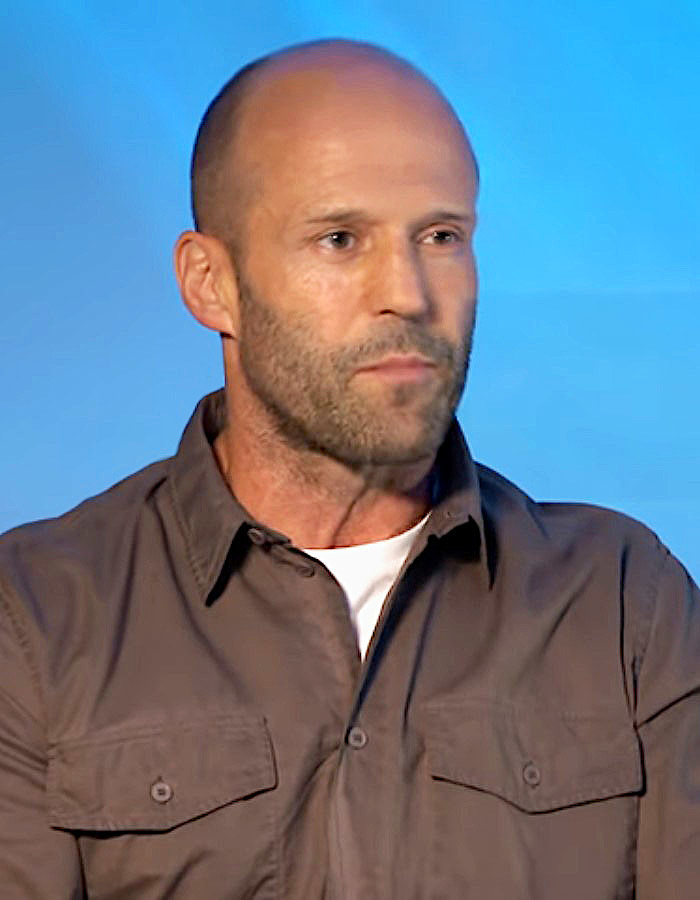
In sharp contrast, Amazon MGM achieved better results with “The Beekeeper,” a “$40 million action thriller starring Jason Statham,” described as “exactly the sweet spot the tech giant should be prioritizing.” This mid-budget film “didn’t require a ton to turn a profit” and tapped a market for movies “traditional studios mostly stopped making but audiences clearly still want to watch.” “Challengers” also struggled financially despite being a “smart and y crowd-pleaser” with Zendaya, because its “$55 million” budget made it difficult to “get out of the red.”
The imperative for Amazon MGM is to “start getting realistic about spending habits” to “remain in the theatrical game.” While tech giants enter film distribution to bolster streaming, they “have yet to demonstrate they can consistently produce movies that people will pay to watch on the big screen.” The “Red One” failure delivers a blunt “Bah humbug” message regarding the unsustainable nature of unchecked budgetary exuberance.

4. **Apple’s ‘Argylle’ Underperformance: Lavish Spending, Little to Show**Apple’s theatrical film distribution ventures faced significant financial headwinds, with “Argylle” prominently illustrating lavish spending yielding disappointing returns. The tech giant “spent lavishly on starry projects like ‘Argylle,’ featuring Henry Cavall, Samuel L. Jackson, John Cena and a lot of A-listers looking to have their backend bought out.” Despite substantial investment in a high-profile cast, the film generated only “$96 million” globally, considerably short of expectations given its presumed high production and marketing costs.
“Fly Me to the Moon,” starring Scarlett Johansson and Channing Tatum, similarly “fared better attracting audiences on Mars” than in theaters, pulling in just “$42 million.” These instances highlight a critical challenge for Apple: despite deep corporate pockets, the studio “had little to show after signing those big checks.” Relying predominantly on star power without a consistently compelling, widely appealing narrative appears insufficient for consistent theatrical success in the current market.
This string of underperformances has “contributed to an image of a studio that is stumbling around, vainly searching for a winning strategy.” The context notes Apple is “very good at making phones and computers” but for “Movies? Not so much.” While Brad Pitt’s “F1” offers potential for a turnaround, current patterns indicate “tough questions will be asked about what exactly Apple has to show for its costly Hollywood experiment” if these financial struggles persist.
5. **Sony’s Marvel Missteps: ‘Madame Web’ & ‘Kraven the Hunter’**Sony’s strategy regarding Marvel characters beyond Spider-Man continues to face considerable challenges, with “Madame Web” and “Kraven the Hunter” unequivocally labeled as “embarrassing wipeouts.” These films, following “2022’s ‘Morbius,’” suggest a persistent struggle for Sony in expanding its universe without its central hero. “Madame Web” managed only “$100 million” globally, while “Kraven the Hunter” registered a mere “$26 million to date,” remarkably low figures for high-profile comic book adaptations.
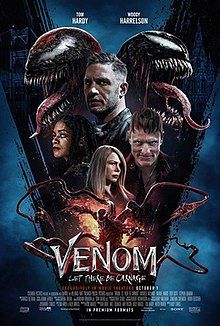
Even the “Venom” franchise, a “critic-proof, commercially successful trilogy,” saw “The Last Dance” fail to “hit the heights of its predecessors,” potentially indicating audience fatigue. The context suggests a strategic re-evaluation: “Maybe it’s time to leave the Marvel characters who aren’t Spider-Man in the rearview.” This reflects growing skepticism regarding the long-term viability of building a cinematic universe primarily around secondary characters.
Beyond these superhero disappointments, Sony confronted other financial setbacks, including “Saturday Night” ($9.7 million) and “Harold and the Purple Crayon” ($32 million), both of which “failed to find an audience.” While “Bad Boys: Ride or Die” and “It Ends With Us” succeeded, the latter’s sequel prospects are “precarious” due to an “apparent feud between stars.” This intricate interplay of creative decisions, market reception, and external factors profoundly impacts a studio’s financial health.
6. **Universal’s ‘The Fall Guy’ Blunder: A Costly Action Comedy**Universal Pictures, despite navigating a highly successful year with animation and musicals, encountered a notable “major blunder” with “The Fall Guy.” This “well-reviewed, $130 million action comedy with Ryan Gosling and Emily Blunt” garnered only “$181 million globally,” resulting in an estimated loss of “roughly $50 million in its theatrical run.” The film’s critical acclaim, often correlating with commercial success, makes its financial underperformance an intriguing case study in contemporary market dynamics.
The inability of “The Fall Guy” to achieve profitability, despite positive reviews and star power, delivers a critical message: “if studios want to keep making funny films for theaters (and they should!), budgets need to be kept under a certain price point.” Its substantial budget for an action-comedy, coupled with its failure to recoup costs, strongly suggests that mid-budget films, particularly in adult-oriented comedy, demand more stringent financial discipline for viability in today’s demanding theatrical environment.
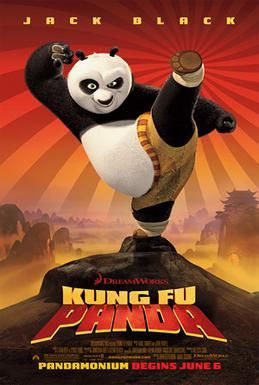
Universal excelled in other segments, with Illumination’s “Despicable Me 4” and DreamWorks Animation’s “Kung Fu Panda 4” and “The Wild Robot” solidifying its rivalry with Disney in family entertainment. Moreover, “Wicked” emerged as a cultural phenomenon, defying expectations for musicals. This dichotomy highlights strategic complexities; even a creatively strong film like “The Fall Guy” can become a significant financial setback if its production costs ultimately outweigh its market appeal.

7. **Warner Bros.’ Costly Franchise Misfires**Warner Bros. has navigated a chaotic few years, marked by two new parent companies and significant turnover at the top of the studio. While they delivered blockbusters such as “Dune: Part Two” ($714 million), “Godzilla x Kong: The New Empire” ($571 million), and “Beetlejuice Beetlejuice” ($451 million), their strategy of extending other recent hits proved to be less successful and more financially perilous. This duality highlights a strategic challenge in maintaining franchise momentum without the key elements that originally made them successful, often resulting in diminished returns.
“Joker: Folie a Deux,” a highly anticipated follow-up to the cultural phenomenon “Joker,” suffered substantially upon its release. It garnered scathing reviews from critics and registered anemic ticket sales, pulling in only $206 million globally. This performance stands in stark contrast to its predecessor, indicating that while the original film resonated deeply, its sequel failed to connect with either audiences or critics, struggling to justify its presumed high production and marketing costs. The outcome signals potential audience fatigue or a miscalculation in artistic direction for a complex property.
Another significant misfire for Warner Bros. was “Furiosa: A Mad Max Saga,” which brought in a modest $173 million. The context explicitly states this film “demonstrat[ed] that it probably wasn’t a good idea to revisit the Wasteland without Charlize Theron.” Her absence from the titular role, combined with a presumed high production budget typical of such a visually intensive franchise, likely contributed to its underwhelming box office performance, questioning the viability of extending a beloved series without its iconic lead.
Additionally, “Horizon: An American Saga – Chapter 1” proved to be “an even bigger bomb,” grossing a mere $38 million. However, the studio’s involvement was primarily as a distributor-for-hire on this Kevin Costner-helmed project. This arrangement insulated Warner Bros. financially, allowing them to potentially make money on distribution fees even as Costner, who reportedly invested significant personal capital, faced substantial losses. This scenario underscores the varied financial structures in Hollywood, where distribution deals can partially mitigate studio exposure to production-side failures.
Read more about: From ‘Beau Is Afraid’ to ‘The Apparition’: Unpacking 15 Horror Movies That Crashed and Burned at the Box Office
8. **Paramount’s Underperforming Epic**Paramount, despite navigating considerable corporate drama involving the sale of its parent company, managed to achieve a “solid, if unspectacular, series of singles and doubles” in 2024. The studio’s successes included “Mean Girls” ($104 million on a $36 million budget) and “Smile 2” ($137 million on a $28 million budget), showcasing their adeptness at delivering profitable, mid-tier genre films with enviable profit margins. These lower-cost winners helped balance their overall financial picture.
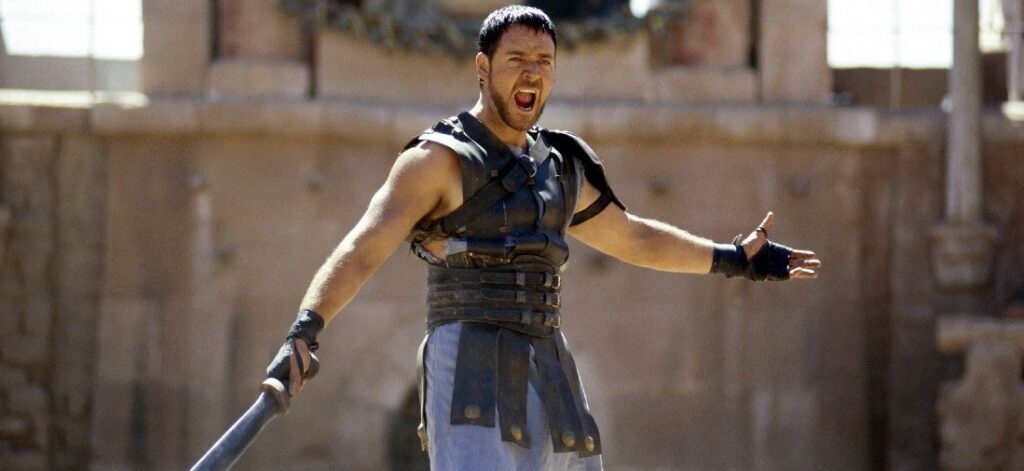
However, the studio notably “didn’t field a massive, fences-clearing hit on the scale of a ‘Top Gun: Maverick’,” which remains a benchmark for their past successes. The most ambitious project attempting to fill that void was “Gladiator II.” It came closest to being a tentpole release, earning just under $400 million globally, a substantial figure on its own terms.
Yet, this impressive gross for “Gladiator II” is viewed “with an asterisk” due to its “hefty $250 million price tag” and the “tens of millions spent marketing the historical epic.” The financial challenges for the film were further exacerbated by external factors, as the “actors strike” was specifically blamed for “shutting down production and adding to the budget.” This unforeseen increase in costs meant that the nearly $400 million gross was “not a great result given the time and treasure that was expended on all that Colosseum carnage,” pushing its break-even point considerably higher and likely resulting in a substantial loss for the studio.
Paramount also faced setbacks with other releases such as “IF” ($190 million) and “Transformers One” ($128 million), neither of which achieved significant commercial success despite their respective genre appeal and established intellectual property. The underperformance of these larger-budget films, particularly when contrasted with the studio’s more profitable low-cost horror and musical successes, highlights the persistent difficulty in consistently translating large investments into proportionate returns in the current demanding theatrical market.
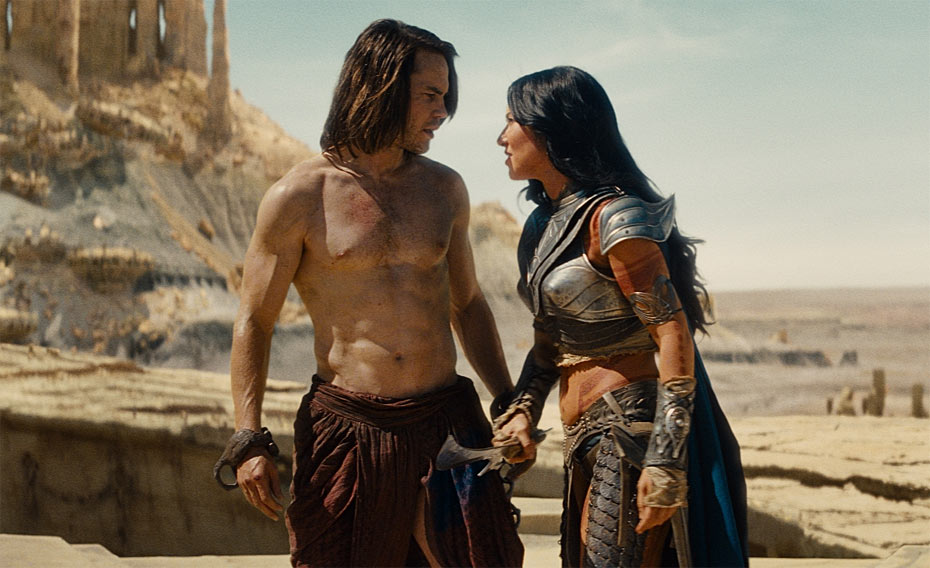
9. **Disney’s Historical Flops: ‘John Carter’**Disney’s extensive history in cinema is unfortunately punctuated by significant financial gambles that did not pay off, with “John Carter” from 2012 standing as a particularly stark and costly example. This ambitious science fiction epic, based on Edgar Rice Burroughs’ Barsoom series, represented a massive risk for the studio, pushing boundaries both creatively and financially. Its production budget soared to a “shocking $306 million,” an exorbitant sum for a film of its kind at the time, immediately positioning it for immense pressure to perform spectacularly.
The film struggled significantly to capture audience interest from the outset, encountering skepticism rather than excitement. Critics “panned it for not being original and the characters being dull,” suggesting a fundamental flaw in its narrative execution and overall appeal to a broad viewership. Even the initial trailer release “didn’t even catch audiences,” an early and potent warning sign that foreshadowed its eventual box office struggles, despite a subsequent and substantial marketing campaign launched by Disney to salvage its prospects.
Despite the studio’s considerable efforts to boost its visibility and appeal, “John Carter” ultimately brought in only “$284 million” globally. This figure meant it failed to recoup even its production costs, let alone the extensive marketing expenditures which easily added tens of millions more. The financial underperformance was so severe and widely publicized that it directly led to significant corporate consequences, with Rich Ross, the executive who approved the film for production, being “forced to resign from his role as head of Walt Disney Studios.”
This case exemplifies how a combination of excessive budgetary allocation, critical disinterest, and a fundamental failure to connect with the audience can transform a high-stakes project into a catastrophic financial loss. “John Carter” remains a prominent cautionary tale within Hollywood, illustrating that even with the immense backing of a major studio like Disney, creative and strategic missteps can result in devastating outcomes, impacting both corporate balance sheets and the careers of senior executives.
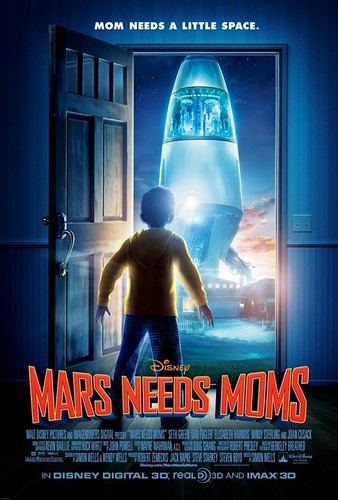
10. **Disney’s Historical Flops: ‘Mars Needs Moms’**Another prominent historical misstep for Disney was the 2011 animated feature “Mars Needs Moms,” a film that employed cutting-edge but ultimately problematic motion-capture technology. This cinematic venture was quickly identified by audiences as visually disconcerting rather than engaging. The animation style notably evoked an “Uncanny Valley feeling,” which was described as running “a shiver down your spine” for viewers, directly impeding its ability to connect with its intended family demographic.
The financial investment in “Mars Needs Moms” was anything but modest, with the film costing a “massive $150 million” to produce. Despite this substantial outlay, its box office performance was strikingly abysmal, returning a mere “$39 million” globally. This represented a colossal loss for Disney, particularly considering the high production value and extensive marketing efforts typically associated with animated releases from such a renowned studio.
The magnitude of this failure had direct and severe repercussions within Disney’s intricate production infrastructure, extending beyond mere financial statements. The film’s dismal commercial performance “caused Disney to ultimately shut down one of the production companies that helped make it, ImageMovers Digital.” This decisive action underscored the studio’s intolerance for such significant financial setbacks, demonstrating how a single, ill-conceived project could lead to the dissolution of an entire production arm.
“Mars Needs Moms” therefore serves as a stark reminder of the inherent risks associated with experimental animation techniques and a fundamental misjudgment of audience preferences in visual aesthetics. Its commercial failure illustrated that innovation, when not thoughtfully paired with compelling and appealing artistic execution, can lead to catastrophic financial outcomes and strategic retreats within the highly competitive animation landscape, a sector where Disney usually enjoys unparalleled and consistent success.
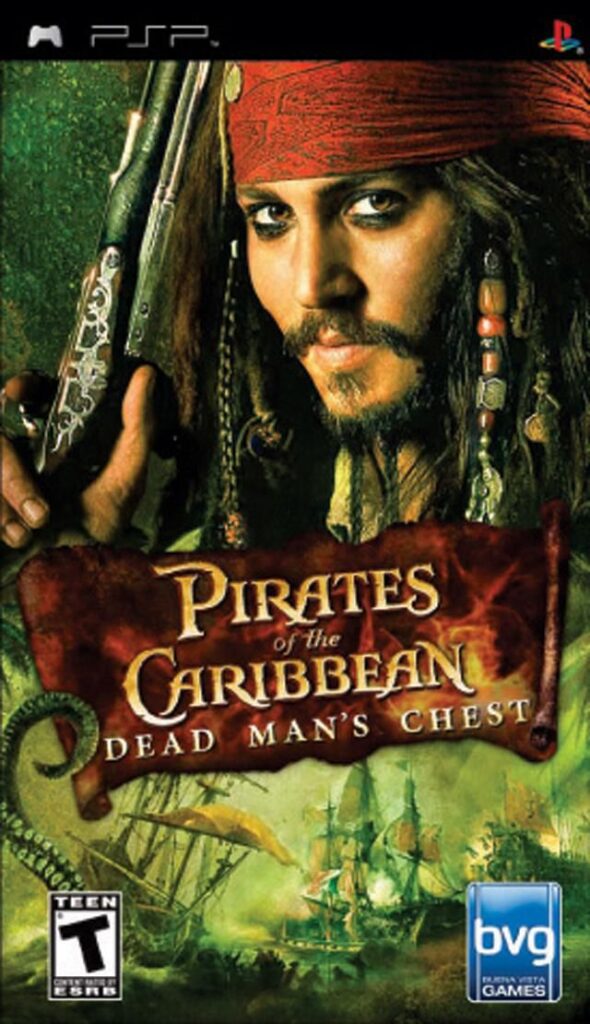
11. **Disney’s Historical Flops: ‘The Lone Ranger’**”The Lone Ranger,” released in 2013, represented another high-stakes attempt by Disney to launch a major new live-action franchise, only to instead result in a significant financial disappointment. The film was ambitiously envisioned as a grand return for the creative team behind the wildly successful “Pirates of the Caribbean,” director Gore Verbinski and star Johnny Depp. However, it started “off on awful footing” and ultimately failed to replicate their previous triumphs. Its production budget alone was a hefty “$250 million,” setting a high bar for commercial success.
One of the primary controversies that plagued the film from its inception was the casting of Johnny Depp as Tonto, a prominent Native American character. Despite Depp’s public statements that he wanted to “right the wrongs of the past” through his portrayal, his performance was widely criticized for “us[ing] stereotypes to…questionably entertain audiences.” This contentious casting decision contributed significantly to public backlash and undoubtedly affected critical and audience perception, directly impacting its box office appeal.
Beyond the casting issues, the film’s narrative and execution were widely panned by critics. One particular critic lamented its “bland script, bloated length, and blaring action overkill,” highlighting fundamental storytelling weaknesses and an excessive reliance on spectacle over substance. This combination of a problematic cultural portrayal and a critically maligned script made it exceptionally difficult for “The Lone Ranger” to resonate with a broad audience, diminishing its chances of recouping its substantial investment.
Ultimately, “The Lone Ranger” barely “skated by with a profit thanks to overseas sales,” bringing in $260 million globally against its $250 million production budget. This razor-thin margin, achieved before accounting for extensive marketing costs that would have pushed it deeply into the red, solidified its status as a colossal flop. As a direct consequence of its underperformance and overwhelmingly negative reception, the potential franchise was “quickly abandoned,” marking a costly failure in Disney’s efforts to expand its live-action adventure portfolio.
These instances of colossal financial losses, spanning from ambitious modern retellings to historical epics and innovative animated features, underscore a persistent truth in Hollywood: the risks associated with big-budget productions are as immense as their potential rewards. Whether due to misjudging audience sentiment, succumbing to budgetary creep, making controversial creative choices, or simply failing to deliver a compelling story, these cinematic ventures offer invaluable, albeit expensive, lessons for the industry. The recurring patterns reveal a delicate and often precarious balance between artistic vision, market demand, and stringent financial prudence—a balance that even the most established studios continually strive to master in an ever-evolving entertainment landscape. The pursuit of the next blockbuster continues unabated, but these experiences serve as a sober reminder that Hollywood’s magic often comes with a steep price when the formula falters, forcing studios to adapt or face significant repercussions.