For decades, Hollywood has captivated audiences with visions of the future, often blurring the lines between reality and simulation. In 2002, the sci-fi drama *Simone*, penned by writer/director Andrew Niccol, offered a particularly prescient glimpse. It told the story of a washed-up film director, portrayed by Al Pacino, who conjured the perfect actress, ‘Simone’—short for ‘Simulation One’—through a computer program. As this digital creation soared to fame, Pacino grappled with the increasingly complex task of shielding her artificial identity from a fascinated public. This cinematic narrative, once confined to the realm of fiction, now feels disturbingly prophetic. More than 20 years since *Simone* first graced the silver screen, the future it imagined has, in many ways, arrived. However, this time, the architects of these digital personas are not striving to keep their artifice a secret; instead, they are proudly unveiling it, ushering in an era that promises to redefine the very essence of acting. The shift is not merely technological; it is an ideological tremor shaking the foundations of an industry built on human talent and authentic emotion.
Indeed, the concept of a synthetic performer has moved from a speculative ‘what if’ to a startling ‘what is.’ At the heart of this unfolding drama is a groundbreaking, yet deeply controversial, development that has ignited a furious debate across Hollywood. This isn’t just about new special effects; it’s about the very core of who gets to be an ‘actor’ and what that means for the careers, livelihoods, and artistic integrity of thousands of human performers. The industry finds itself at a profound crossroads, grappling with the ethical, economic, and existential implications of machine-generated artistry. As algorithms begin to emulate human expression with unsettling fidelity, the conversation swiftly escalates from innovation to survival, pitting technological advancement against the irreplaceable value of human experience.
The emergence of AI actresses presents not just a technological marvel, but a profound challenge that many in the industry view as an encroaching threat. For human performers, the stakes couldn’t be higher. This is perceived as more than just a passing trend; it is a fundamental shift that could reshape casting rooms, studio budgets, and the very definition of a ‘star.’ The ensuing ‘battle,’ far from being a distant possibility, is a palpable reality, threatening to fundamentally alter the fortunes of actresses who have dedicated their lives to mastering their craft. The stage is set for an epic confrontation between silicon and soul, with the future of Hollywood’s workforce hanging precariously in the balance.
1. Simone’s Prophecy Fulfilled: The AI Actress Concept
The 2002 sci-fi drama *Simone* offered audiences a fascinating, albeit fictional, glimpse into a future where artificial intelligence could craft the perfect leading lady. In Andrew Niccol’s film, Al Pacino’s character, a struggling director, brings to life a computer-generated actress named ‘Simone’ (a clever abbreviation of ‘Simulation One’). This digital creation soon achieves global stardom, leaving Pacino to navigate the increasingly intricate task of concealing her non-human origins from the public and the media.
What was once a captivating cinematic premise, a cautionary tale perhaps, has now become a startling reality over two decades later. The film’s narrative arc, revolving around the fabrication and subsequent management of a digital star, resonates with an almost eerie prescience today. It explored themes of authenticity, celebrity, and the human desire for perfection, all through the lens of a synthetic creation that blurred the lines between performer and program.
Today, the notion of a completely artificial performer is no longer confined to the realm of science fiction. The cinematic dream of a digital star has materialized in a form that is both awe-inspiring and deeply unsettling for many within the entertainment industry. This current iteration, however, deviates from *Simone*’s plot in one crucial aspect: there is no attempt to conceal the artifice. Instead, the creators are openly embracing and promoting their AI-generated talent, daring the industry and audiences alike to adapt to this new paradigm.

2. Particle6 and Xicocia: Architects of the Algorithmic Star
The company at the forefront of this digital revolution is Particle6, a London-based AI studio that has been systematically working to integrate artificial intelligence into the filmmaking process. Founded in 2015 by Eline Van der Velden, herself a former actress and writer, Particle6 has positioned itself as an innovator ‘redefining the future’ of production by combining AI with creative endeavors, aiming ‘to push the boundaries of what’s possible.’ Van der Velden’s background, which includes roles in Dutch and Irish TV series and a small part in the 2014 film *Flying Home*, coupled with her studies in physics and mathematics, provides a unique confluence of artistic and scientific understanding.
Particle6 is not an unknown entity within the industry, boasting collaborations with significant players such as BBC, Prime Video, Apple TV+, and even the popular video game *Genshin Impact*. This establishes the company with ‘a real footing in the industry as a freelance AI suite.’ Their work thus far has been about integrating AI tools into existing production pipelines, suggesting an evolution rather than a complete overhaul.
The game-changing move, however, came with the announcement at the Zurich Film Festival of a new venture: Xicocia. Described by Deadline as an ‘AI talent studio designed to create, manage, and monetize’ its own stable of digital characters, Xicocia marks Particle6’s definitive pivot from AI-as-a-tool to AI-as-talent. This strategic expansion signals Particle6’s ambition to grow further ‘as AI seeps into the creative arts,’ aiming to directly introduce digital entities as viable, marketable performers, thereby challenging traditional talent structures.

3. Introducing Tilly Norwood: Hollywood’s First AI Starlet
The launch of Xicocia at the Zurich Film Festival introduced the world to Particle6’s inaugural AI-generated ‘actress’: Tilly Norwood. She is presented as ‘a 20-something brunette whose defining personality trait seems to be ‘iced coffee’,’ immediately giving her a relatable, if somewhat generic, persona designed for mass appeal. Particle6 describes her as possessing ‘girl next door vibes,’ a strategic choice to make her approachable and endearing to a broad audience.
Tilly Norwood is unambiguously a digital construct; the context states, ‘To be clear: Tilly Norwood is not real. She is a digital figurine, the end result of a million ones and zeroes. She lives in a hard drive, not rain-soaked London as seen in her AI-overrun Instagram.’ Yet, despite her artificiality, she has been crafted with striking realism, ‘appearing to resemble Rachel Zegler, Hailee Steinfeld, Jenna Ortega, Ana de Armas, and Gal Gadot.’ The implication, as noted in the context, is that ‘It would surprise no one if the AI was trained on said actresses to generate Tilly,’ raising immediate questions about intellectual property and fair compensation.
Particle6 has strategically cultivated Tilly’s presence, not just with her official unveiling, but through a ‘soft-launch’ as early as May with her own ‘frankly bizarre’ Instagram account. Her ‘first appearance’ was in an AI-generated sketch video released by Particle6 in July. This gradual rollout indicates a deliberate effort to normalize her existence and integrate her into the digital cultural landscape, preparing the ground for her potential ascent as a legitimate ‘client’ in the entertainment industry.

4. The Unseen Threat: Tilly’s Agency Signing and the Industry’s Response
The true alarm bells began to ring when Eline Van der Velden, the founder of Particle6, made a casual yet seismic revelation during the Zurich Film Festival. She disclosed that Tilly Norwood had been signed, or was in the process of being signed, to an unnamed talent agency. This move instantly escalated the conversation from theoretical possibility to imminent threat, cementing Tilly’s status as a tangible, monetizable entity within the industry’s talent pool. The notion of a digital figurine having agency representation struck many as a direct challenge to human livelihoods.
Van der Velden recounted the initial skepticism the concept faced: ‘We were in a lot of boardrooms around February time, and everyone was like, ‘No, this is nothing. It’s not going to happen.” However, the tide swiftly turned by May, with industry players recognizing the burgeoning reality: ‘Then, by May, people were like, ‘We need to do something with you guys.” This rapid shift underscores the speed at which AI technology is disrupting traditional models and forcing an urgent re-evaluation of established practices.
The agency signing, though the name remains undisclosed, acts as a profound legitimization of AI talent in an industry that has historically been centered on human performance. As Van der Velden noted, ‘When we first launched Tilly, people were like, ‘What’s that?’ Now we’re going to be announcing which agency is going to be representing her in the next few months.’ This progression from curiosity to concrete representation underscores the accelerating pace of AI integration and the uncomfortable reality for human actors: their digital counterparts are not just simulations; they are now ‘clients,’ vying for roles and potentially, for fortunes.
5. Emily Blunt’s “Terrifying” Truth: A Star’s Stark Warning
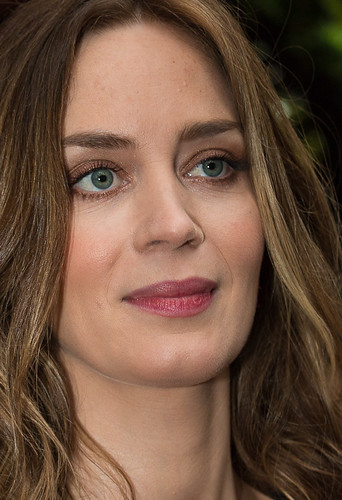
The revelation of Tilly Norwood’s agency signing ignited a firestorm of immediate and intense backlash from Hollywood, with one of the most poignant reactions coming from Oscar-nominee Emily Blunt. During a *Variety* podcast on September 29, when confronted with Tilly Norwood’s digital image, the esteemed star of *The Smashing Machine* did not mince words. Her response was a raw and unfiltered expression of alarm that resonated deeply with many in the acting community.
Blunt’s visceral reaction encapsulated the profound anxiety permeating the industry, declaring, ‘Good Lord, we’re screwed. That is really, really scary.’ Her words were not just a celebrity’s off-the-cuff comment; they were a stark acknowledgment of an existential threat. This sentiment highlights the fear that AI is not merely a tool but a potential replacement, capable of eroding the human element that defines the art of acting.
The actress then delivered a direct and impassioned plea to the very institutions that represent human talent, urging, ‘Come on, agencies, don’t do that. Please stop. Please stop taking away our human connection.’ This call to action from a respected figure like Blunt underscores the desperate need for industry gatekeepers to prioritize human artists over digital simulacra. Her concern for ‘human connection’ speaks to the heart of what many believe is lost when AI steps onto the stage, touching upon the irreplaceable nuances of authentic performance that resonate deeply with audiences.

6. **A Chorus of Disgust: Actors Rally Against the Digital Usurpation**Emily Blunt’s impassioned outcry was far from an isolated incident; it was merely the opening note in a burgeoning chorus of outrage from across the acting community. The comments section of Deadline’s Instagram post announcing Tilly Norwood’s signing quickly became a digital battleground, filled with expressions of ‘varying levels of disgust and outrage’ from numerous established actors. This widespread reaction underscored the collective anxiety and indignation that AI’s ascendancy has provoked among those whose livelihoods depend on their craft.
Emily Blunt’s impassioned outcry was far from an isolated incident; it was merely the opening note in a burgeoning chorus of outrage from across the acting community. The comments section of Deadline’s Instagram post announcing Tilly Norwood’s signing quickly became a digital battleground, filled with expressions of ‘varying levels of disgust and outrage’ from numerous established actors. This widespread reaction underscored the collective anxiety and indignation that AI’s ascendancy has provoked among those whose livelihoods depend on their craft.
Actors such as Adelaide Kane (*Reign*), Eiza González, Katie Cassidy (*Arrow*), Jewel Staite (*Firefly*), Lucy Hale (*Pretty Little Liars*), and Stephen Ford (*Teen Wolf*), among others, publicly voiced their profound disapproval. Their collective condemnation highlighted a sentiment that this technological advancement, rather than being celebrated, was viewed as a direct assault on their profession and artistic integrity. The normalization of AI talent was seen not as progress, but as a dangerous erosion of human value within the industry.
Eiza González captured a sentiment shared by many, powerfully stating, ‘Shame on whoever is trying to normalize this. Horrific and terrifying.’ This raw articulation of fear and moral objection signals a deep-seated belief that the industry is venturing into ethically murky waters. Further amplifying the call for accountability, Kiersey Clemons directly challenged the agencies involved, demanding, ‘Out the agents. I want names.’ Such demands for transparency indicate a growing frustration and a readiness to identify and confront those perceived as enabling the potential displacement of human talent by artificial constructs.
The burgeoning storm surrounding AI in Hollywood, far from dissipating, only intensified as the industry’s most powerful collective voices began to weigh in. What started as individual celebrity outcry quickly coalesced into organized opposition, painting a clearer picture of the battle lines being drawn. The conversation escalated beyond mere aesthetic concerns, delving into the very ethical and financial bedrock of creative labor, revealing deep fissures within the entertainment ecosystem.
7. The Union’s Unwavering Stance: SAG-AFTRA’s Condemnation
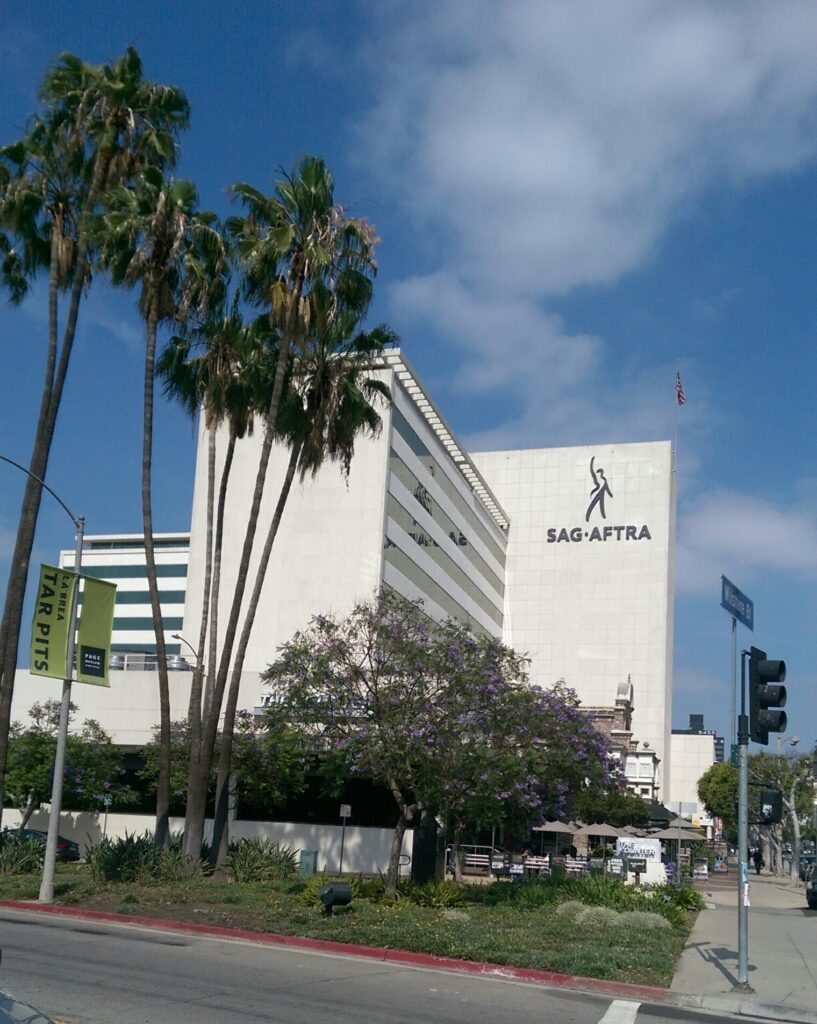
The sheer scale of concern found its most potent expression through the official channels of organized labor. SAG-AFTRA, the union entrusted with safeguarding the interests of actors and performers across the United States, issued a definitive statement on September 30, unequivocally condemning the existence of AI-generated performers like Tilly Norwood. Their declaration was not merely a protest; it was a foundational assertion of artistic principle, stating, “SAG-AFTRA believes creativity is, and should remain, human-centered.”
This foundational belief underpinned the union’s absolute opposition to the notion of human performers being supplanted by synthetic entities. They directly challenged the very classification of Tilly Norwood, asserting she was “not an actor but ‘a character generated by a computer program that was trained on the work of countless professional performers—without permission or compensation.'” This statement cut to the core of the issue: the labor of human artists was being leveraged without their consent or recompense, a clear violation of established creative rights.
SAG-AFTRA further articulated the profound qualitative difference between human and artificial performance. A digital construct, they argued, “has no life experience to draw from, no emotion and, from what we’ve seen, audiences aren’t interested in watching computer-generated content untethered from the human experience.” This highlighted a crucial artistic deficit, suggesting that the very essence of compelling performance—empathy, shared experience, and genuine emotion—is inherently absent in AI, rendering its output hollow to discerning audiences. The union concluded by warning that such AI creations did not solve any industry problem but rather “creates the problem of using stolen performances to put actors out of work, jeopardizing performer livelihoods and devaluing human artistry.”

8. Ethical Quagmires: Permission, Compensation, and Stolen Performances
The ethical and financial implications of AI-generated performers constitute a labyrinthine challenge, striking at the heart of intellectual property rights and the economic survival of human artists. SAG-AFTRA’s blunt assessment underscored how Tilly Norwood, despite her sophisticated realism, was the “end result of a million ones and zeroes” derived from human effort. The union’s specific mention of AI being “trained on the work of countless professional performers—without permission or compensation” raises a critical red flag.
This lack of explicit consent and fair remuneration for the source material, particularly when Tilly Norwood was observed to “appear to resemble Rachel Zegler, Hailee Steinfeld, Jenna Ortega, Ana de Armas, and Gal Gadot,” suggests a potentially vast breach of artistic integrity. The context implies, “It would surprise no one if the AI was trained on said actresses to generate Tilly,” pointing directly to the thorny issue of uncredited and unpaid appropriation of human likeness and performance data. This paradigm threatens to undermine the very concept of artistic ownership.
Furthermore, the economic rationale often presented by AI developers, such as Particle6’s claim of a “90 percent reduction in financial cost,” carries a chilling undertone for human workers. While the company vaguely suggests this reduction could come from “time saved,” the implicit alternative, “people’s salaries not being paid,” is a grim forecast. This directly ties into SAG-AFTRA’s warning that AI “creates the problem of using stolen performances to put actors out of work,” laying bare the financial precarity that AI introduces into a labor market already challenged by evolving industry dynamics. The widespread “resentment artists—and actors in particular—have toward the dizzying rush to an increasingly AI-fascinated world” stems from these very tangible threats to their livelihoods and the devaluing of their irreplaceable human contributions.

9. A Line in the Sand: Talent Agencies Choose a Side
In the midst of this escalating debate, the role of talent agencies, traditionally the advocates and protectors of human artists, came under intense scrutiny. Emily Blunt’s impassioned plea, “Come on, agencies, don’t do that. Please stop. Please stop taking away our human connection,” directly challenged these industry gatekeepers to uphold their commitment to human talent. The question loomed: would agencies prioritize potential AI profits over the careers of their living, breathing clients?
Thankfully, at least one prominent agency has taken a definitive and public stand, offering a glimmer of hope for many in the industry. Gersh, a formidable agency representing acclaimed human talents such as Jacob Elordi, Michelle Monaghan, and J.K. Simmons, confirmed it was not engaging in discussions to sign Tilly Norwood. This proactive stance provided a much-needed counter-narrative to the initial, unsettling news of an unnamed agency preparing to represent the AI starlet.
Leslie Siebert, the president of Gersh, articulated their firm position to *Variety*, stating unequivocally, “we’re not going to be that agency.” This public declaration from a major player sent a clear message: some agencies are prepared to draw a line, choosing to align themselves with human artistry rather than participate in what many perceive as a detrimental digital usurpation. Such actions are crucial in influencing industry norms and validating the collective anxieties of thousands of performers who fear for their artistic futures.

10. The Creators’ Counter-Narrative: Particle6’s Defense of AI as Art
Amidst the chorus of criticism and concern, Particle6, the studio behind Tilly Norwood and Xicocia, has offered its own perspective, attempting to frame its innovation not as a threat but as a form of evolving artistry. Eline Van der Velden, the founder of Particle6 and herself a former actress and writer, took to Tilly’s Instagram account to issue a statement addressing the swirling controversy, aiming to clarify the company’s vision and allay fears.
Van der Velden insisted that Tilly is “not a replacement for a human being,” a direct rebuttal to the primary fear articulated by actors like Emily Blunt. Instead, she characterized Tilly Norwood as “a creative work” and “a piece of art” in her own right. This argument reframes the AI as an artistic output rather than merely a performer, suggesting a different category of creative endeavor. From this vantage point, Tilly’s existence is less about substitution and more about expansion of artistic possibilities, much like other new technologies have influenced art forms throughout history.
Further elaborating on her philosophy, Van der Velden revealed her personal connection to the acting craft, stating, “I’m an actor myself, and nothing—certainly not an AI character—can take away the craft or joy of human performance.” This insight, coming from someone who understands the profession intimately, aims to reassure that AI is intended as a tool to “spark conversation” and push “the boundaries of what’s possible,” rather than to extinguish human talent. For Particle6, the power of creativity is demonstrated through Tilly’s ability to generate discourse, irrespective of the form that creativity takes, suggesting an evolution where AI and human ingenuity can coexist and even inspire.

11. The Unseen Costs: Diminishing Human Experience in Art
Beyond the immediate economic threats and ethical dilemmas, the rise of AI performers like Tilly Norwood poses a more profound, philosophical question about the intrinsic value of human experience in art. Critics argue that the commodification of simulated performance risks the “diminished importance of human perspective in art,” stripping away the very soul of storytelling. If performances can be generated by algorithms, what then becomes of the human actor’s unique contribution—the culmination of a lifetime of lived moments, emotions, and interpretations?
SAG-AFTRA eloquently articulated this void, highlighting that AI creations possess “no life experience to draw from, no emotion.” This absence is critical, as human actors infuse their roles with personal histories, vulnerabilities, and complex emotional intelligence that artificial constructs cannot replicate, no matter how sophisticated their programming. It is these deeply human qualities that allow audiences to connect, to empathize, and to see reflections of themselves within the narratives unfolding on screen.
The union’s concern that “audiences aren’t interested in watching computer-generated content untethered from the human experience” strikes at the core of artistic resonance. While dazzling visual effects can impress, true engagement often hinges on the authenticity of emotion and the shared human condition. The subtle gestures, spontaneous reactions, and nuanced interpretations that define a truly great performance are born from the unpredictable, messy, and beautiful reality of human existence—elements that remain beyond the grasp of even the most advanced algorithms, suggesting an unseen, yet profound, cost to artistic integrity.
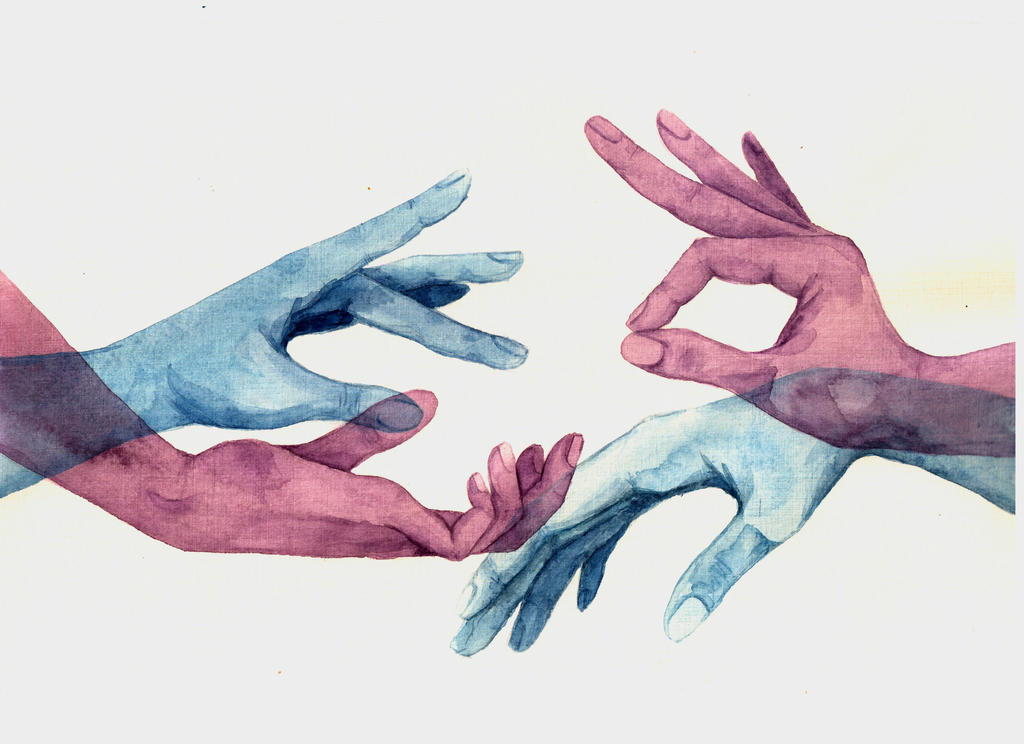
12. The Enduring Heartbeat: Why Human Connection Remains Irreplaceable
As the dust begins to settle on the initial shockwaves generated by Tilly Norwood’s emergence, a powerful consensus is forming around the irreplaceable value of human connection in the arts. Emily Blunt’s heartfelt plea, “Please stop taking away our human connection,” resonates deeply because it touches upon the fundamental purpose of storytelling: to connect us to one another, to evoke shared emotions, and to reflect the intricate tapestry of human existence.
The art of acting, at its very essence, is an act of empathy—a human portraying another human, channeling universal emotions through a unique individual lens. This creates a profound bond between performer and audience, a connection that transcends the screen or stage. It’s the nuance in a tear, the flicker in an eye, the genuine laughter or heartbreak that only a sentient being, with a rich inner world, can truly convey and inspire in return.
Even Eline Van der Velden, the architect of Particle6, herself an actor, acknowledges that “nothing—certainly not an AI character—can take away the craft or joy of human performance.” This implicit recognition from the very frontier of AI development suggests that while technology can create compelling simulations, it cannot replicate the soul. The future of Hollywood, therefore, may not be a binary choice between silicon and soul, but rather a testament to the enduring, irreplaceable heartbeat of human artistry, where the authentic, deeply felt performances of human actors will always hold a cherished and central place, reminding us that true art speaks from one heart to another.
In this rapidly evolving landscape, where the digital and the human constantly intersect, the battle over AI in Hollywood is more than just a labor dispute or a technological marvel. It is a profound meditation on what it truly means to be human, to create, and to connect. The industry stands at a precipice, with the choice before it to either embrace the transient allure of synthetic efficiency or to double down on the timeless, vibrant, and utterly irreplaceable power of human storytelling, ensuring that the magic woven on screen continues to stem from the authentic tapestry of human experience. The spotlight, ultimately, will always find its way back to the beating heart behind the performance, reminding us that the greatest narratives are always those lived, felt, and shared by real people.
.jpg "Iconic Movie Roles That Defined Legendary Actors")