James Grashow, a singular artist whose career spanned decades and mediums, from intricate woodcuts to monumental cardboard installations, passed away on September 15 at his home in Redding, Conn., at the age of 83. The cause was pancreatic cancer, as confirmed by his wife, Lesley Grashow. Grashow’s artistic journey was defined by a profound engagement with themes of creation, impermanence, and the eventual dissolution of all things, even as he created works of enduring impact and often startling scale.
His legacy is one of a whimsical yet dark vision, channeling warring impulses toward the whimsical and the dark into a diverse body of work that challenged conventional notions of art and its longevity. He found inspiration in seemingly disparate sources, from 16th-century woodblock prints to 20th-century Pop Art, weaving these influences into a style uniquely his own. Grashow’s ability to imbue humble materials like corrugated cardboard with profound philosophical weight cemented his reputation as an innovator.
This exploration into James Grashow’s life and work will delve into the milestones and defining characteristics of his remarkable career. We examine the origins of his distinct artistic perspective, his formal training, his impactful contributions to editorial illustration and album art, and the initial groundbreaking works that established his mastery of cardboard as a sculptural medium, ultimately revealing an artist deeply attuned to the cycles of life and decay.

1. **Early Life and Artistic Genesis**James Bruce Grashow was born on January 16, 1942, in Brooklyn, the middle child among three siblings to Edward Grashow, who owned an automobile antenna manufacturing company, and Estelle (Moscow) Grashow. It was within this seemingly industrial backdrop that the foundations of his distinctive artistic vision were first laid. His childhood was marked by a deep fascination with drawing fantastical images, often of monsters and goblins, revealing an early inclination towards the imaginative and the macabre.
This imaginative impulse found a tangible outlet in the everyday materials available at his father’s plant. He frequently assembled structures using the cardboard boxes found there, an early precursor to the material that would later define much of his seminal work. This hands-on, exploratory approach to creation, coupled with his predilection for the fantastical, established a unique artistic language that he would continue to refine throughout his career.
His early academic life, however, presented significant challenges. Unbeknownst to him at the time, Grashow was dyslexic, leading to considerable struggles as a student at Erasmus Hall High School in the Flatbush neighborhood. Art, which had been a childhood diversion, transformed into a crucial escape and a source of profound self-expression, offering a realm where his creativity could flourish unhindered by academic obstacles.
This period of intense personal struggle and artistic refuge deeply informed his later creations. The dark yet droll vision, which became a hallmark of his style, was undoubtedly formed during these formative years, allowing him to channel complex emotions into compelling and often haunting visual narratives. It was a testament to his innate artistic drive that he not only overcame these early difficulties but leveraged them to cultivate a truly original perspective.
Read more about: From Stadiums to Seclusion: 14 Iconic Musicians Who Left Fame Behind (and What They Did Next)

2. **Formal Education and European Influence**Following his graduation from Erasmus Hall High School in 1959, Grashow embarked on a more formal artistic path, enrolling at the prestigious Pratt Institute in Brooklyn. Here, he dedicated himself to the study of painting, immersing himself in an environment where his talents were recognized and nurtured. The experience was transformative for him; he remarked, “As soon as I put my foot in the door, everything was fantastic.” This period solidified his commitment to art as a lifelong pursuit.
His academic excellence at Pratt culminated in a Bachelor of Fine Arts degree in 1963. This achievement was swiftly followed by a significant opportunity for further artistic development: he earned a Fulbright scholarship, which allowed him to continue his studies in painting in Florence, Italy. This European sojourn proved to be a pivotal chapter, broadening his artistic horizons and introducing him to a rich tapestry of art historical influences.
In Europe, Grashow found particular inspiration in the intricate and powerful woodcut prints of Albrecht Dürer, the renowned 16th-century German artist. Dürer’s mastery of line, detail, and narrative through woodblock techniques profoundly resonated with Grashow’s own developing aesthetic, which often embraced meticulous craftsmanship and storytelling. This classical influence would later manifest in his own highly detailed wood engravings.
Concurrently, his time in Europe also exposed him to the burgeoning contemporary art scene, particularly at the 1964 Venice Biennale. There, he encountered the groundbreaking Pop Art movement, including Claes Oldenburg’s iconic giant tube of toothpaste. This exposure to Pop Art, with its embrace of everyday objects and bold, often outsize scale, provided a crucial counterpoint to the historical influences, shaping Grashow’s capacity to blend the whimsical and the profound, the ephemeral and the monumental.
Read more about: America Unveiled: A Deep Dive into the United States’ Enduring Story, Landscapes, and Institutions

3. **Editorial Illustration Career**Upon his return to New York from his Fulbright studies, James Grashow swiftly embarked on a dual career path, taking up sculpting while simultaneously establishing himself as an acclaimed illustrator for magazines and newspapers. His illustrative work quickly gained recognition for its distinctive style, characterized by a playful yet dark sensibility that captured the attention of major publications. He was an award-winning editorial illustrator, producing thought-provoking imagery that often leaned towards the brooding and phantasmagorical.
His wood engravings, a medium requiring exceptional precision and patience, became particularly sought after. These intricate works were regularly featured in prestigious national publications, including The New York Times, Esquire, and Time, among many others. Grashow’s ability to distill complex ideas and emotions into compelling visual metaphors made him a unique and memorable voice in the field of editorial art.
One notable example of his editorial prowess was a piece created for a 1977 Opinion article in The Times. Addressing the subject of urban sprawl and its impact on suburban areas, Grashow conjured a powerful image: a massive, wild-eyed dragon, meticulously constructed from jagged skyscrapers, ominously lurching towards a serene, leafy town. This illustration perfectly encapsulated his signature blend of the fantastical, the droll, and the subtly unsettling, making a potent commentary on contemporary issues.
His work as an illustrator was not merely decorative; it was an integral extension of his broader artistic philosophy. Through these detailed and often surreal wood engravings, Grashow continued to explore the dark undercurrents and whimsical distortions of reality that informed all his creative endeavors. This extensive experience in visual storytelling and compositional mastery undoubtedly enriched his later sculptural explorations, demonstrating a holistic artistic vision across different mediums.
Read more about: From NYC Streets to Irish Shores: A Look Inside the Lives of Sarah Jessica Parker’s Twin Daughters, Marion & Tabitha

4. **Iconic Album Cover Art**Beyond his celebrated contributions to editorial illustration, James Grashow also left an indelible mark on the music world through his distinctive album cover art. These visual contributions introduced his unique aesthetic to a vast, new audience, cementing his place in popular culture while maintaining his signature blend of the whimsical and the slightly unnerving. His covers became instantly recognizable, elevating the visual identity of several prominent musical acts.
One of his most iconic designs graced the cover of the 1969 Jethro Tull album, “Stand Up.” This artwork, which was featured prominently, demonstrated Grashow’s talent for creating visually arresting images that complemented the progressive and often theatrical nature of the band’s music. The cover helped define the album’s identity, showcasing his ability to translate his dark yet droll vision into a commercial context without compromising artistic integrity.
Another significant contribution to album art was his work for the Yardbirds’ “Live Yardbirds: Featuring Jimmy Page,” released in 1971. For this project, Grashow again applied his inimitable style, creating imagery that captured the raw energy and experimental spirit of the legendary rock band. These album covers served not just as packaging but as extensions of the musical experience, inviting listeners into the artist’s imaginative world.
The ubiquity of these album covers meant that Grashow’s art reached a demographic far beyond the traditional gallery or editorial readership. It was a testament to the broad appeal and universal resonance of his aesthetic that his fantastical images could find a home across such diverse platforms. These iconic designs remain a significant part of his artistic legacy, showcasing his versatility and enduring influence on both art and music.
Read more about: The Unforgettable Journeys of 2000s Child Stars: From Silver Screen to Surprising Second Acts

5. **Pioneering Cardboard Sculpture**While his contributions to illustration and album art were considerable, James Grashow was perhaps best known for his pioneering work in creating large, often fantastical installations out of one of the most unassuming and ephemeral of materials: corrugated cardboard. This choice of medium was not arbitrary; it was central to his artistic philosophy and distinguished him as a true innovator in the sculptural field, demonstrating that profound art could emerge from the readily disposable.
Grashow embraced cardboard not as a substitute for more traditional sculptural materials like marble or bronze, but as a medium with its own inherent qualities and expressive potential. He purchased the material by the truckload, typically in 4-by-8-foot sheets, transforming these humble, ubiquitous planks into monumental and intricate works of art. His vision allowed the cheap and disposable to achieve unexpected grandeur and emotional depth.
The shift to cardboard sculpture represented a bold departure, allowing him to create works of immense scale and complexity that would have been financially and logistically prohibitive with other materials. This democratic approach to materials made his art accessible in its very essence, while simultaneously elevating the perception of what common objects could become in the hands of a master craftsman.
Through his extensive body of cardboard work, Grashow demonstrated a masterful understanding of form, texture, and structural integrity. He imbued his cardboard creations with a vitality and presence that belied their humble origins, inviting viewers to reconsider the beauty and potential residing in the everyday. His dedication to this material became synonymous with his name, making “cardboard art” a recognized genre within contemporary sculpture largely thanks to his efforts.
Read more about: Leonardo da Vinci: A Comprehensive Examination of the Renaissance Polymath’s Life, Art, and Enduring Influence

6. **”The City” (1980): An Early Cardboard Magnum Opus**Among James Grashow’s early and most striking large-scale cardboard installations was “The City,” completed in 1980. This monumental piece, constructed from cardboard, plywood, and fabric, stood an impressive 13 feet tall and immediately captured attention for its intricate detail and thematic depth. It exemplified his developing mastery of the material and his ability to construct narratives within his three-dimensional works.
“The City” was an aggregation of anthropomorphic skyscrapers, each imbued with a distinct personality, devilishly smirking as they reached skyward. This personification of urban architecture was a hallmark of Grashow’s imaginative approach, blending the inanimate with the animated in a way that was both cartoonish and profoundly haunting. The piece suggested a commentary on the character and perhaps the soul of modern urban environments.
The visual impact of “The City” was significant, showcasing Grashow’s capacity to evoke complex emotions through material and form. The smirking facades conveyed a playful malevolence, creating a sense of unease that was characteristic of his “dark yet droll vision.” It was a world entirely Grashow’s, simultaneously inviting and unsettling, demonstrating his unique aesthetic voice in sculptural form.
This work solidified his reputation as an artist capable of creating expansive, immersive environments from unexpected materials. “The City” served as a powerful declaration of his artistic intent: to transform the mundane into the extraordinary, and to explore the often-overlooked emotional and philosophical dimensions of the built world around us. It was a crucial step in his journey, paving the way for even more ambitious projects that would further explore themes of impermanence and monumentality.

7. **The Philosophy of Impermanence and Auto-Destructive Art**James Grashow’s artistic philosophy was deeply rooted in the concept of impermanence, a theme he explored with a singular intensity throughout his career. While his creations often possessed a monumental presence, many were designed with the explicit intention of eventual dissolution, reflecting his conviction that “everything dissolves in eternity.” This perspective allowed him to imbue his work with a profound, almost meditative quality, directly confronting the fleeting nature of existence.
His engagement with ephemerality was not merely an aesthetic choice but a philosophical stance, particularly evident in his use of cardboard. Grashow explicitly articulated this focus on decay, stating, “All artists talk about process… But the process that they talk about is always from beginning to finish, and nobody really talks about full-term process — to the end, to the destruction, to the dissolution of a piece.” This declaration underscored his commitment to exploring the entire lifecycle of an artwork, including its demise.
This approach resonated, in some respects, with the mid-20th-century artist Gustav Metzger’s theories of auto-destructive art, which advocated for works created specifically to be demolished. However, Grashow’s vision diverged in its tone; it was less violent and more contemplative, examining decay as a natural, inevitable process rather than an aggressive artistic statement. He found inspiration for this concept in deeply personal reflections, revealing in an interview that his themes were “based in my own emotional problems,” and that “Death has been the single prime force in everything that I’ve ever done.”
This profound connection to mortality and the transient nature of all things provided the intellectual and emotional bedrock for many of his most ambitious cardboard installations. By embracing materials destined for decay and processes that acknowledged the end, Grashow transformed simple corrugated cardboard into a powerful vehicle for existential inquiry.

8. **”The Great Monkey Project” (2006)**Expanding upon his pioneering use of cardboard for large-scale, fantastical installations, James Grashow created “The Great Monkey Project” in 2006. This ambitious work showcased his continued exploration of whimsical yet dark themes, translated into an immersive environment constructed from his signature material. It stands as a significant example of his ability to craft compelling narratives and environments from humble, disposable matter.
“The Great Monkey Project” comprised one hundred life-size cardboard monkeys, intricately fashioned and suspended as if dangling from vines. The sheer number of figures and their dynamic arrangement created a captivating spectacle, demonstrating Grashow’s meticulous craftsmanship and his enduring fascination with animating the inanimate, a characteristic deeply ingrained since his childhood drawings of monsters and goblins.
This installation further solidified his reputation for creating art that transcended the expectations of its material. While the monkeys were undeniably playful in their imagery, the inherent impermanence of the cardboard subtly underscored Grashow’s overarching philosophical concerns about transience. The work invited viewers into a fantastical realm, yet simultaneously reminded them of the ephemeral nature of all earthly creations.
The project was a testament to his unique artistic voice, merging elaborate sculptural execution with an underlying awareness of decay. It exemplified how Grashow harnessed the democratic, readily available nature of cardboard to realize visions of grand scale, reinforcing his status as an innovator in contemporary sculpture.

9. **”Corrugated Fountain”: A Monument to Decay**Perhaps the most explicit embodiment of James Grashow’s philosophy of impermanence was “Corrugated Fountain,” his packing-box reinterpretation of Rome’s iconic Trevi Fountain. This monumental work, which he began exhibiting in museums in 2010, was a sprawling installation, taking up an area of approximately 20 by 30 feet and standing about 12 feet tall. Its centerpiece, like the original designed by Nicola Salvi with influences from Gian Lorenzo Bernini, featured a proud rendition of Oceanus, sculpted entirely from cardboard.
Unlike traditional sculptures in marble or bronze, which are built to endure for centuries, “Corrugated Fountain” was deliberately conceived to be transient. Grashow’s intention was not to replicate the eternal grandeur of its inspiration but to explore the beauty and pathos of its inevitable decay. “Evanescence was the point,” he affirmed, challenging conventional notions of artistic longevity and value.
For its final exhibition at the Aldrich Contemporary Art Museum in Ridgefield, Conn., Grashow moved the heretofore waterless fountain outdoors, exposing it to the elements. The transformation was swift and dramatic; within a few weeks, rain had reduced the monumental work to a “mushy tangle.” This deliberate act of allowing his creation to succumb to natural forces echoed the ancient statue in ruins depicted in Shelley’s poem “Ozymandias,” a powerful commentary on the futility of striving for permanent monuments.
The public response to the fountain’s disintegration was poignant, with visitors bringing flowers “as if to a grave.” Grashow reflected on this process in a 2012 documentary about the project, “The Cardboard Bernini,” stating that the idea was “to make something eternal, something extraordinary… But also something transient. Like the Afghan Buddhas, like the World Trade Center, everything has its time.” This installation became a profound meditation on the cycle of creation and destruction, cementing his unique contribution to auto-destructive art with a meditative rather than violent intent.
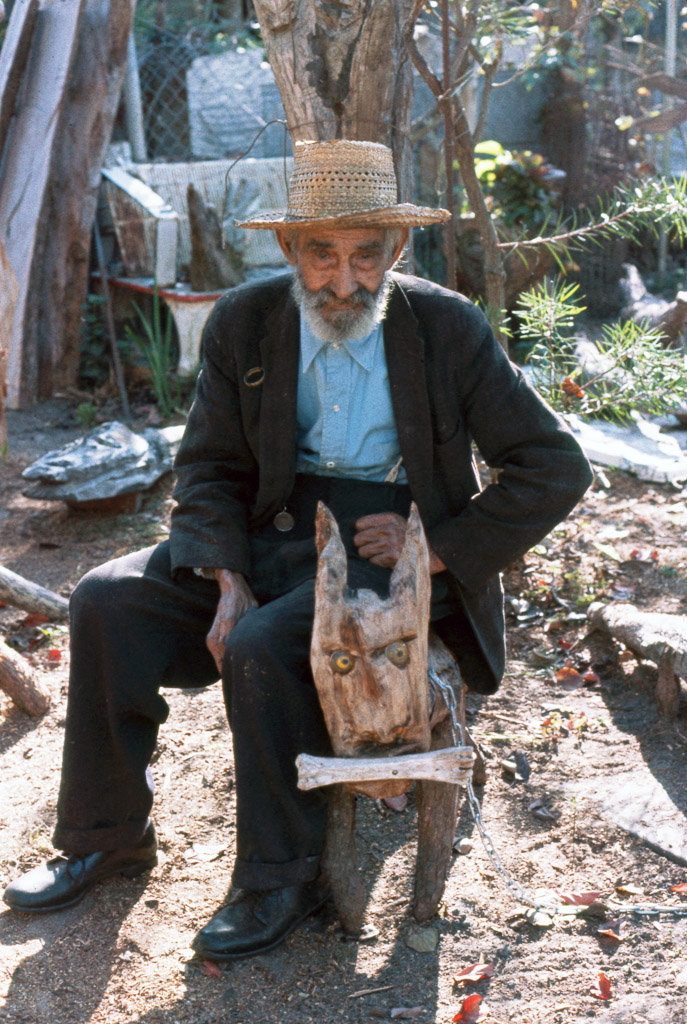
10. **The Late-Life Pivot to Woodcarving**In a significant shift late in his career, in his late 70s, James Grashow pivoted from his celebrated cardboard sculptures to an entirely different medium: woodcarving. This change represented a profound artistic evolution, moving toward a material known for its inherent durability and permanence, a striking contrast to the deliberate ephemerality of his most famous works. This decision was driven by deeply personal and philosophical considerations.
Grashow, who had experience with woodcuts earlier in his career, noted that this new endeavor was distinct: “Of course I did woodcuts, but never carved like this.” The undertaking required him to “completely retool,” mastering new techniques and tools suited to the resistive nature of wood. This late-life challenge underscored his continuous artistic curiosity and his unwavering commitment to craft.
The motivation for this pivot was directly linked to his escalating awareness of his own mortality. He candidly expressed his inspiration as coming from “a now 82-year-old man — me — trying to figure out how to keep his faith alive in an increasingly chaotic world.” This search for enduring meaning and spiritual resilience in the face of death found a tangible outlet in the creation of a piece designed for the “long haul,” rather than for eventual decay.
This transition allowed Grashow to explore themes of faith and endurance with a new gravity, contrasting sharply with the playful impermanence that defined his cardboard art. The enduring quality of wood provided a symbolic anchor for his late-life ruminations on existence, demonstrating an artist still evolving and confronting fundamental questions of life and death through his chosen medium.
11. **”The Cathedral”: A Magnum Opus of Endurance**James Grashow’s late-life foray into woodcarving culminated in what he considered his magnum opus, “The Cathedral.” This monumental eight-foot-tall basswood sculpture was a profound and deeply personal work, completed in June 2024 after four years of intensive labor. It represented the apex of his new artistic direction, directly addressing themes of faith, burden, and enduring spirit.
The sculpture depicts Jesus wearing a crown of thorns, not carrying a traditional cross, but a Gothic cathedral on his back. At his feet, snarling demons dance, portraying hellish imagery that captures a profound struggle between light and darkness. This powerful visual metaphor embodies a “competition between light and darkness,” serving as “a devotional tribute to life’s joys and impermanence” while simultaneously representing endurance.
Despite being Jewish, Grashow chose Jesus as his subject because, for him, the Christian savior symbolized “endurance through faith, even with death looming.” He described the work as a commission, yet emphasized, “it was all my idea,” indicating the deep personal investment and symbolic resonance the piece held for him. The narrative of faith and perseverance in the face of overwhelming burdens became central to his final major creation.
“The Cathedral” was not only an artistic triumph but also a testament to Grashow’s physical and mental fortitude. As documented in the film “Jimmy & the Demons,” he articulated the immense effort involved, stating, “I never did anything like it before,” and reflecting, “I feel like I’m running in front of a wave for three years… And I never thought I’d get here. I never thought it would be finished.” The completion of this intricate and spiritually charged work provided him a final opportunity to ruminate on his own impermanence, even as he created something designed to last.

12. **Enduring Legacy and Documentary Recognition**James Grashow’s singular artistic vision and prolific output have secured his lasting legacy within the art world, evidenced by widespread exhibition and critical documentation. His works have been featured in dozens of galleries and esteemed museums, including the Whitney Museum of American Art, the Armory Show in New York, the DeCordova Museum and Sculpture Park in Massachusetts, the Art Complex Museum, the Center for the Arts at SUNY Purchase, the Taubman Museum of Art, and the Aldrich Contemporary Art Museum.
Beyond his impactful creations, Grashow also committed himself to nurturing future generations of artists, serving as a longtime teacher at Pratt Institute and other institutions. His dedication to education further broadened his influence, sharing his unique perspectives and technical expertise with countless students over the years.
His remarkable career has been chronicled in compelling documentaries, cementing his place in art history. “The Cardboard Bernini,” released in 2012, intimately detailed the creation, exhibition, anticipated decay, and ultimate destruction of his monumental “Corrugated Fountain.” This film captured the essence of his philosophy on impermanence and the life cycle of art.
Read more about: Beyond the Spotlight: 11 Child Stars Who Smashed the Odds and Kept Their Stardom Shining Bright
More recently, his late-life masterpiece, “The Cathedral,” became the subject of another acclaimed documentary, “Jimmy & the Demons.” Directed by Cindy Meehl, this film premiered at the Tribeca Festival in June 2025 and chronicled the four-year arduous process of carving the eight-foot basswood sculpture. In the film, Grashow reflected on his impending mortality as he completed his final work, stating, “And now I feel the wave catching up to me. It’s a big wave, and I’m a little, little man.” These documentaries ensure that the profound philosophical underpinnings and the whimsical yet dark artistry of James Grashow will continue to inspire and provoke thought for generations to come, transforming the ordinary into the extraordinary, much like the artist himself did throughout his extraordinary life.