The world of automotive excellence is a constantly evolving landscape, where innovation often pushes beloved classics to the wayside. We, as enthusiasts, cherish the machines that not only defined an era but also carved paths through untouched wilderness and urban jungles alike. There’s a distinct passion that ignites when discussing vehicles that embody adventure, durability, and timeless style – particularly those robust SUVs that once dominated roads and trails with an undeniable presence.
Yet, beneath the shine of new models and the roar of advanced powertrains, a silent, poignant shift is occurring. Many of the models that once ruled the roads are now facing the end of their production runs, and even more alarmingly, their very existence on our streets. With changing consumer preferences, increasingly stringent regulations, and the relentless march of technological progress, some of these iconic vehicles may soon be gone for good, relegated to history books or the garages of a privileged few.
This article invites you on a journey to explore 14 such automotive legends – classic SUVs that are currently on the verge of extinction. We will delve into their unique stories, celebrate their engineering prowess, and understand the forces pushing them towards obsolescence. This is more than just a list; it’s a tribute to the machines that shaped our automotive past and a reminder that for some, this might be the last chance to own or admire these disappearing titans before they vanish entirely.

1. **Toyota Land Cruiser (U.S. Market)**The Toyota Land Cruiser is a nameplate that evokes images of unparalleled off-road capability, legendary reliability, and an enduring spirit of adventure. For decades, it has stood as a benchmark in the SUV segment, revered by enthusiasts who demanded a vehicle capable of conquering the most challenging terrains while still offering a comfortable and luxurious ride for everyday use. Its robust construction and proven drivetrain made it a favorite among global explorers and those seeking uncompromising durability.
However, despite its loyal following and formidable reputation, Toyota announced in 2021 that it would discontinue the Land Cruiser in the U.S. market. This decision marked a significant turning point, signaling the end of an era for a vehicle that had become deeply embedded in American automotive culture. The reasons for this surprising move were multifaceted, reflecting broader shifts in consumer demand and market dynamics that often dictate the fate of even the most beloved models.
At its core, the Land Cruiser, particularly in its later U.S. iterations, was defined by its potent 5.7-liter V8 engine and traditional body-on-frame construction. These attributes, while contributing to its legendary ruggedness, also made it a less competitive option in a market increasingly leaning towards smaller, more fuel-efficient, and often unibody crossovers. Its luxurious interior further elevated its status, positioning it as a top contender for both formidable off-road excursions and refined upscale environments.
Ultimately, the dwindling sales figures served as the undeniable metric that sealed its fate in the U.S. market. As buyers migrated towards different segments, the Land Cruiser’s relatively higher price point and operational costs became harder to justify against newer, more mainstream alternatives. While the Land Cruiser continues its legacy in other parts of the world, its departure from American showrooms leaves a void, transforming what was once a readily available icon into a rapidly appreciating classic on the brink of extinction for U.S. collectors.
Car Model Information: 2017 Cadillac XT5 Luxury
Name: Toyota Land Cruiser
Caption: 2021 Toyota Land Cruiser ZX (VJA300, Colombia)
Manufacturer: Toyota
Production: 1951–present
Class: unbulleted list
Layout: Front-engine, four-wheel-drive
Categories: 1960s cars, 1970s cars, 1980s cars, 1990s cars, 2000s cars
Summary: The Toyota Land Cruiser (Japanese: トヨタ・ランドクルーザー, Hepburn: Toyota Rando-Kurūzā), also sometimes spelt as LandCruiser, is a series of four-wheel drive vehicles produced by the Japanese automobile manufacturer Toyota. It is Toyota’s longest running series of models. As of 2019, the sales of the Land Cruiser totalled more than 10 million units worldwide.
Production of the first generation of the Land Cruiser began in 1951. The Land Cruiser has been produced in convertible, hardtop, station wagon and cab chassis body styles. The Land Cruiser’s reliability and longevity have led to huge popularity, especially in Australia, where it is the best-selling body-on-frame, four-wheel drive vehicle. Toyota also extensively tests the Land Cruiser in the Australian outback – considered to be one of the toughest operating environments in both temperature and terrain. In Japan, the Land Cruiser was once exclusive to Toyota Japanese dealerships called Toyota Store.
Since 1990, the smaller variation of the Land Cruiser has been marketed as the Land Cruiser Prado. Described as a ‘light-duty’ version of the Land Cruiser by Toyota, it features a different design compared to the full-size model and, up until 2023, it remains the only comfort-oriented Land Cruiser available with a short-wheelbase 3-door version.
As of 2023, the full-size Land Cruiser was available in many markets. Exceptions include the United States (since 2021 where the smaller Land Cruiser Prado has been sold under the Land Cruiser name since 2024), Canada (since 1996), Malaysia (which receives the Lexus LX instead), Hong Kong, Macau, South Korea, Brazil, and most of Europe. In Europe, the only countries where the full-size Land Cruiser is officially sold are Gibraltar, Moldova, Russia, Belarus, and Ukraine. The Land Cruiser is hugely popular in the Middle East, Russia, Australia, India, Bangladesh, Pakistan, New Caledonia, and Africa. It is used by farmers, the construction industry, non-governmental and humanitarian organizations, the United Nations, national armies (often the pickup version), and irregular armed groups who turn them into “technicals” by mounting machine guns in the rear. In August 2019, cumulative global sales of the Land Cruiser family surpassed 10 million units.
Get more information about: Toyota Land Cruiser
Buying a high-performing used car >>>
Brand: Toyota Model: Land Cruiser
Price: $16,922 Mileage: 61,672 mi.

2. **Jeep Cherokee (XJ)**Few vehicles have left as indelible a mark on the SUV landscape as the Jeep Cherokee XJ, produced from 1984 to 2001. This revolutionary model is widely regarded as one of the most iconic and influential SUVs ever conceived, fundamentally altering perceptions of what an off-road vehicle could be. Its genius lay in its pioneering unibody design, a departure from the traditional body-on-frame construction, which offered an unprecedented blend of robust durability and surprisingly car-like handling.
The XJ’s heart beat with the legendary 4.0-liter inline-six engine, an powertrain renowned for its bulletproof reliability and ample torque, making it a formidable force on any trail. This combination of innovative design and proven mechanicals ensured the XJ’s exceptional off-road capabilities and remarkable longevity, cementing its reputation as a go-anywhere, do-anything machine that was adored by off-roaders and families alike. It was a vehicle that simply refused to quit.
However, the very elements that made the XJ a trailblazer eventually contributed to its current endangered status. Its older design, while celebrated for its rugged simplicity, ultimately struggled to keep pace with the rapid evolution of more modern SUVs, which offered greater creature comforts, advanced safety features, and refined driving dynamics. As the automotive industry moved forward, the XJ’s utilitarian charm became less appealing to the broader market.
Today, the Jeep Cherokee XJ is increasingly pushed towards the brink of extinction, not by a sudden discontinuation, but by the slow attrition of time and wear. Parts are becoming scarcer, and finding well-maintained, unmolested examples is a growing challenge for enthusiasts. Its dwindling numbers on the road serve as a stark reminder of its transition from a mass-produced workhorse to a cherished classic, its legacy secured even as its physical presence fades.
Car Model Information: 2022 Jeep Cherokee X
Name: Jeep Cherokee
Caption: Fifth generation (KL)
Manufacturer: Jeep
Aka: Jeep Liberty
ModelYears: unbulleted list
Class: unbulleted list
Layout: unbulleted list
Chassis: unbulleted list
Categories: All-wheel-drive vehicles, Anti-Indigenous racism in the United States, Articles with short description, Compact sport utility vehicles, Crossover sport utility vehicles
Summary: The Jeep Cherokee is a line of sport utility vehicles (SUV) manufactured and marketed by Jeep over six generations. Marketed initially as a variant of the Jeep Wagoneer (SJ), the Cherokee has evolved from a full-size station wagon (before the SUV description came into use) to one of the first compact SUVs and into its latest generation as a crossover SUV.
Named after the Cherokee tribe of Native Americans in the United States, Jeep has used the nameplate in some capacity since late 1973 when American Motors Corporation (AMC) introduced the 1974 model year line.
Production of the Cherokee ended in February 2023. The Cherokee nameplate has since been used by the Grand Cherokee and its extended version, the Grand Cherokee L.
Get more information about: Jeep Cherokee
Buying a high-performing used car >>>
Brand: Jeep Model: Cherokee
Price: $25,000 Mileage: 26,492 mi.
Read more about: From Junkyard Finds to Collector’s Dreams: 9 American Cars That Defied Depreciation and Skyrocketed in Value
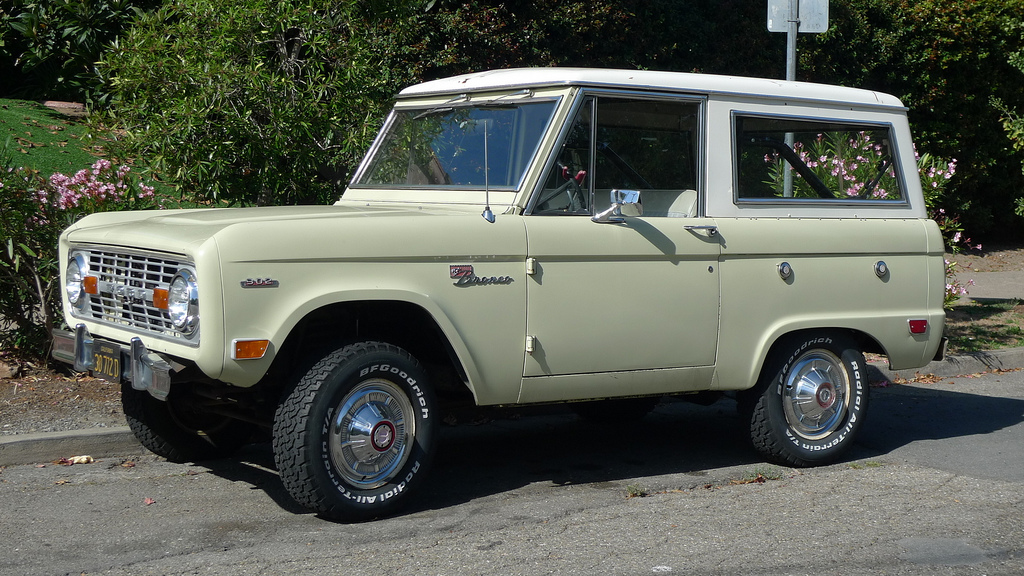
3. **Ford Bronco (First Generation)**The name “Bronco” carries with it an undeniable aura of American adventure and pioneering spirit, especially when referring to the first-generation model introduced in 1966. Ford’s initial foray into the compact off-road segment was an instant hit, quickly becoming a beloved vehicle for its rugged charm and exceptional capabilities. Its design was a masterclass in functional simplicity, delivering everything an off-road enthusiast could want without unnecessary frills.
Characterized by its compact size, the original Bronco was perfectly suited for navigating tight trails and challenging landscapes. This nimble footprint was paired with a robust 4×4 system and straightforward, yet highly effective, engineering that ensured reliable performance in harsh conditions. Whether for recreational off-roading, farm work, or simply as a distinctive daily driver, the first-generation Bronco captured the hearts of a diverse range of owners, establishing an iconic status.
Fast forward to today, and original Broncos are becoming increasingly rare and highly sought after collector’s items. Their increasing scarcity is a testament to their enduring appeal, but also a consequence of time and the natural lifecycle of vehicles. Many surviving examples have undergone extensive restoration or modification, transforming them from practical off-roaders into prized showpieces, often commanding significant prices in the classic car market.
While newer Bronco models have successfully reclaimed the spotlight, rekindling interest in the nameplate, they also inadvertently underscore the classic’s endangered status. The modern iteration, with its advanced technology and contemporary design, caters to today’s drivers, leaving the venerable first generation more as a cherished piece of automotive history than a practical choice for everyday transportation. Its original form is fading, making each glimpse on the road a special event.
Car Model Information: 2021 Ford Bronco Outer Banks
Name: Ford Bronco
Caption: 2021 Ford Bronco Outer Banks (4-door)
Manufacturer: Ford Motor Company
Production: 1965–1996,2021–present
Class: Compact SUV
Layout: Front-engine, four-wheel-drive
BodyStyle: SUV
Successor: Ford Expedition
ModelYears: 1966–1996,2021–present
Categories: 1970s cars, 1980s cars, 1990s cars, 2020s cars, All-wheel-drive vehicles
Summary: The Ford Bronco is a model line of SUVs manufactured and marketed by Ford. The first SUV model developed by the company, five generations of the Bronco were sold from the 1966 to 1996 model years. A sixth generation of the model line was introduced for the 2021 model year. The nameplate has been used on other Ford SUVs, namely the 1984–1990 Bronco II compact SUV, the 2021 Bronco Sport compact crossover, and the China-only 2025 Bronco New Energy.
Originally developed as a compact off-road vehicle using its own chassis, the Bronco initially competed against the Jeep CJ-5 and International Scout. For 1978, Ford enlarged the Bronco, making it a short-wheelbase version of the F-Series pickup truck; the full-size Bronco now competed against the Chevrolet K5 Blazer and Dodge Ramcharger.
Following a decline in demand for large two-door SUVs, Ford discontinued the Bronco after the 1996 model year, replacing it with the four-door Ford Expedition; followed by the larger Ford Excursion. After a 25-year hiatus, the sixth-generation Bronco was reintroduced in 2021 as a mid-size two-door SUV. It is also offered as a full-size four-door SUV with a 16 in (41 cm) longer wheelbase. It competes directly with the Jeep Wrangler as both a two-door and a four-door (hardtop) convertible.
From 1965 to 1996, the Ford Bronco was manufactured by Ford at its Michigan Truck Plant in Wayne, Michigan, where it also manufactures the sixth-generation version.
Get more information about: Ford Bronco
Buying a high-performing used car >>>
Brand: Ford Model: Bronco
Price: $29,950 Mileage: 78,126 mi.
Read more about: Navigating the Automotive Spectrum: What You Need to Know About Car Color and Its Impact on Resale Value for Savvy Consumers

4. **Land Rover Defender (Original)**For generations, the original Land Rover Defender has been synonymous with unyielding ruggedness, utilitarian design, and an unwavering spirit of adventure. Produced in various forms from 1983 to 2016, this iconic vehicle transcended mere transportation, becoming a global symbol of exploration, humanitarian aid, and unparalleled off-road prowess. Its distinctive boxy silhouette and no-nonsense engineering spoke volumes about its purpose-built nature.
The Defender’s legendary status was forged in some of the world’s most challenging environments, where its robust construction and exceptional capability proved invaluable. It was designed to be repaired in the field, with mechanical simplicity that made it a favorite of those who ventured far beyond paved roads. This commitment to durability and functionality earned it a loyal following and an almost mythical reputation among adventurers and professionals alike.
However, even legends must eventually yield to the forces of progress and regulation. The original Defender’s enduring production run was ultimately brought to an end by increasingly strict emissions regulations and evolving safety standards that its aging platform could no longer realistically meet. These mandates, while crucial for modern vehicle design, posed insurmountable challenges for a vehicle rooted in a much earlier engineering philosophy.
While a new Defender has been introduced to carry on the legacy, it represents a distinctly modern interpretation, lacking the raw, mechanical simplicity that defined its predecessor. This shift, while necessary for contemporary market demands, only serves to push the classic Defender closer to true extinction. Original models, particularly those in good condition, are now revered artifacts, their numbers dwindling as they transition from working vehicles to treasured historical assets.
Car Model Information: 2021 Mazda Mazda3 AWD w/Premium Package
Caption: 2015 Land Rover Defender 90 (Australia)
Name: Land Rover Defender
Manufacturer: ubl
Class: Small offroader
Aka: Land Rover 90, Ninety, 110, One Ten, One Two Seven (1983–1990)
Production: ubl
Predecessor: Land Rover Series III
Successor: Land Rover Defender (L663)
Assembly: Shah Alam,Kulim
Layout: Front-engine, four-wheel-drive layout,four-wheel drive
Categories: 1990s cars, 2000s cars, 2010s cars, All-wheel-drive vehicles, All Wikipedia articles written in British English
Summary: The Land Rover Defender (introduced as the Land Rover One Ten, joined in 1984 by the Land Rover Ninety, plus the extra-length Land Rover One Two Seven in 1985) is a series of British off-road cars and pickup trucks. They have four-wheel drive, and were developed in the 1980s from the Land Rover series which was launched at the Amsterdam Motor Show in April 1948. Following the 1989 introduction of the Land Rover Discovery, the term ‘Land Rover’ became the name of a broader marque, no longer the name of a specific model; thus in 1990 Land Rover renamed them as Defender 90 and Defender 110 and Defender 130 respectively.
The vehicle, a British equivalent of the Second World War derived (Willys) Jeep, gained a worldwide reputation for ruggedness and versatility. With a steel ladder chassis and an aluminium alloy bodywork, the Land Rover originally used detuned versions of Rover engines.
Though the Defender was not a new generation design, it incorporated significant changes compared to the Land Rover series, such as adopting coil springs front and rear. Coil springs offered both better ride quality and improved axle articulation. The addition of a centre differential to the transfer case gave the Defender permanent four-wheel-drive capability. Both changes were derived from the original Range Rover, and the interiors were also modernised. Whilst the engines were carried over from the Series III, a new series of modern and more powerful engines was progressively introduced.
Even when ignoring the series Land Rovers and perhaps ongoing licence products, the 90/110 and Defender models’ 33-year production run were ranked as the sixteenth longest single-generation car in history in 2020.
In 2020, Jaguar Land Rover introduced an all new generation of Land Rover Defender Land Rover Defender (L663) switching from body on chassis to integrated bodywork and from live, rigid axles to all around independent suspension.
Get more information about: Land Rover Defender
Buying a high-performing used car >>>
Brand: Land Rover Model: Defender
Price: $19,148 Mileage: 54,821 mi.

5. **Chevrolet Blazer (K5)**When Chevrolet introduced the K5 Blazer in 1969, it was a bold statement, a direct answer to the burgeoning popularity of vehicles like the Ford Bronco. What quickly followed was a strong and dedicated following for its distinctive large, truck-based design. The K5 wasn’t just another SUV; it was a versatile powerhouse, built on a robust platform that promised both formidable off-road capabilities and the sheer utility of a full-size truck.
Under the hood, the K5 Blazer often housed powerful V8 engines, providing ample torque and horsepower for both towing and tackling challenging terrain. Its full-size 4×4 system was a testament to its serious off-road credentials, making it a popular choice for those who needed a vehicle that could handle anything from hauling a boat to navigating muddy trails. It embodied the American spirit of strength and adaptability, making it a true icon of its era.
Over time, however, the Blazer nameplate underwent a significant transformation, moving away from its large, truck-based origins. Chevrolet’s lineup evolved, prioritizing smaller, more fuel-efficient crossovers and SUVs that catered to the demands of everyday city driving and suburban family life rather than rugged off-road adventures. This shift effectively phased out the original full-size K5, leaving its legacy in the hands of enthusiasts.
Today, the K5 Blazer remains a cherished classic, but finding original models in good, unmolested condition is becoming an increasingly difficult task. The ravages of time, combined with the hard life many of these workhorses endured, mean that fewer and fewer pristine examples survive. As fewer K5s remain on the road, their status as an endangered species in the automotive world becomes more pronounced, appealing primarily to collectors and restorers who appreciate their historical significance.
Car Model Information: 2024 Chevrolet Blazer EV eAWD LT
Categories: All set index articles, Articles with short description, Cars introduced in 1969, Chevrolet vehicles, Commons category link from Wikidata
Summary: The Chevrolet Blazer is an automobile nameplate used by General Motors for its Chevrolet brand since 1969 for several SUV models:
Full-size Chevrolet K5 Blazer, based on the C/K pickup chassis and built from 1969 to 1995 (renamed Blazer in 1992 and renamed Tahoe in 1995 for the 2-door and 4-door model)
Compact and mid-size Chevrolet S-10 Blazer, based on the S-10 pickup and built from 1983 to 2012
Chevrolet Grand Blazer, sold in Argentina, Brazil and Ecuador from 1990 to 2000
Chevrolet Grand Blazer, full-size sold in Venezuela under the “Grand Blazer” name from 1993 to 1999 (GMT400 platform)
Chevrolet Grand Blazer Z71, sold in Venezuela from 2000 to 2002 (GMT820 platform)
Chevrolet Blazer (crossover), a mid-size crossover produced since 2019
Chevrolet Blazer EV, a battery electric mid-size crossover produced since 2023
Get more information about: Chevrolet Blazer
Buying a high-performing used car >>>
Brand: Chevrolet Model: Blazer
Price: $28,598 Mileage: 24,000 mi.
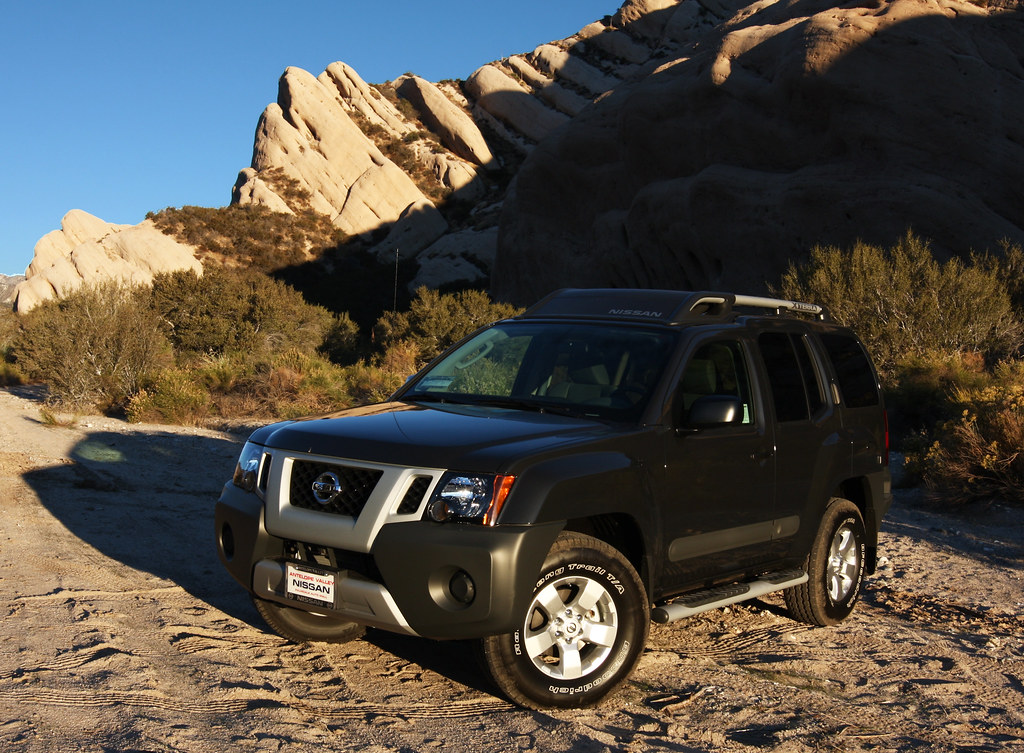
6. **Nissan Xterra**The Nissan Xterra emerged onto the scene in 1999 with a clear and refreshing purpose: to be a no-nonsense, rugged SUV aimed squarely at off-road enthusiasts and adventurers. In an era where many SUVs were softening their edges for suburban appeal, the Xterra stood out for its uncompromising design and capabilities. It was a vehicle designed to look and act the part of a serious explorer, right down to its distinctive roof rack and aggressive stance.
Central to its rugged identity was its durable body-on-frame construction, a foundational element that ensured its resilience in challenging conditions. The Xterra offered both rear-wheel drive and an available four-wheel-drive system, making it well-equipped to handle tough terrain and unpredictable paths. It was a utilitarian machine, free of excessive luxuries, focused instead on delivering reliable performance where it mattered most: off the beaten path.
Despite its popularity and its strong appeal within the adventure segment, Nissan eventually discontinued the Xterra in 2015. This decision was largely driven by a combination of declining sales and a broader industry trend of shifting consumer preferences towards more car-like crossovers. As fuel efficiency became a more pressing concern and safety features evolved rapidly, the Xterra’s traditional design began to show its age in the competitive market.
The Xterra’s lack of modern fuel efficiency and advanced safety features, while consistent with its rugged ethos, also contributed to its phase-out from Nissan’s lineup. Consequently, surviving models are becoming harder to come by, particularly those that have not been heavily modified or subjected to the harsh conditions they were designed for. It stands as a testament to a specific era of SUV design, now rapidly disappearing from public view.
Car Model Information: 2007 Nissan Xterra S
Name: Nissan Xterra
Caption: Second-generation Nissan Xterra
Manufacturer: Nissan
Aka: Nissan Paladin (China),Nissan Roniz (Iran),Dongfeng Oting (China)
Production: 1999–2015,2003–2015 (China)
Class: Compact sport utility vehicle
BodyStyle: Sport utility vehicle
Layout: Front-engine, rear-wheel-drive layout,Front-engine, four-wheel-drive layout
Successor: Nissan Rogue,Nissan Murano,Nissan Terra
ModelYears: 2000–2015
Categories: 2000s cars, 2010s cars, All-wheel-drive vehicles, Articles with short description, CS1 Brazilian Portuguese-language sources (pt-br)
Summary: The Nissan Xterra is a truck-based compact SUV manufactured and marketed by Nissan from 1999 to 2015 across two generations; the first (1999–2004) sharing a platform and many of its major exterior parts from the front doors forward with the Nissan (D22) Frontier pickup – and the second (2005–2015) sharing the Nissan F-Alpha platform with the Frontier and Pathfinder.
Sporting a name licensed from the XTERRA off-road triathlon race series, the vehicle was positioned by Nissan as functional and reliable outdoor gear, epitomized by its marketing tagline “Everything You Need, Nothing You Don’t.”
It was developed in La Jolla, California, by Nissan Design International (NDI)’s (now Nissan Design America) then Director of Design Tom Semple, and became the first Nissan vehicle completely conceived, developed and manufactured in the United States. According to Jerry Hirshberg, president of Nissan Design International (NDI), “the impetus for Xterra designers was to create an affordable, rugged, quality piece of equipment”. He later described it as “a garage tool that says, ‘treat me rough’ – it’s designed to look better dirty than clean.”
While the two Xterra generations differed significantly, both prioritized ruggedness, practicality, and affordability over luxury. Traditional body-on-frame construction and underbody skid plates reflected both its truck heritage and off-road capability. Throughout its lifetime the Xterra used a two-box design with a prominent two-tiered roof enabling second row stadium seating, C-pillar-mounted rear door handles, asymmetrical rear window, and a distinctive tailgate bump-out for an inside mounted first aid kit. For hauling exterior loads a roof rack with a removable forward gear basket was standard equipment.
Road & Track described the Xterra as “an honest SUV that doesn’t try to be a luxury car alternative, nor tries to hide its truck underpinnings”. Jalopnik called it a “knockoff of the Land Rover Discovery”. The Washington Post described it as “rugged without bravado”.
First generation manufacture took place at Nissan’s Decherd, Tennessee Plant (engines) and Smyrna Assembly plant (final assembly). Second generation Xterras were manufactured at the company’s Canton, Mississippi plant (final assembly). Variants were also manufactured in Brazil and China.
Get more information about: Nissan Xterra
Buying a high-performing used car >>>
Brand: Nissan Model: Xterra
Price: $5,998 Mileage: 158,814 mi.
Read more about: Prepare to Facepalm: 15 Hilariously Awful Product Designs That Will Make You Scream ‘WHO APPROVED THIS?!’
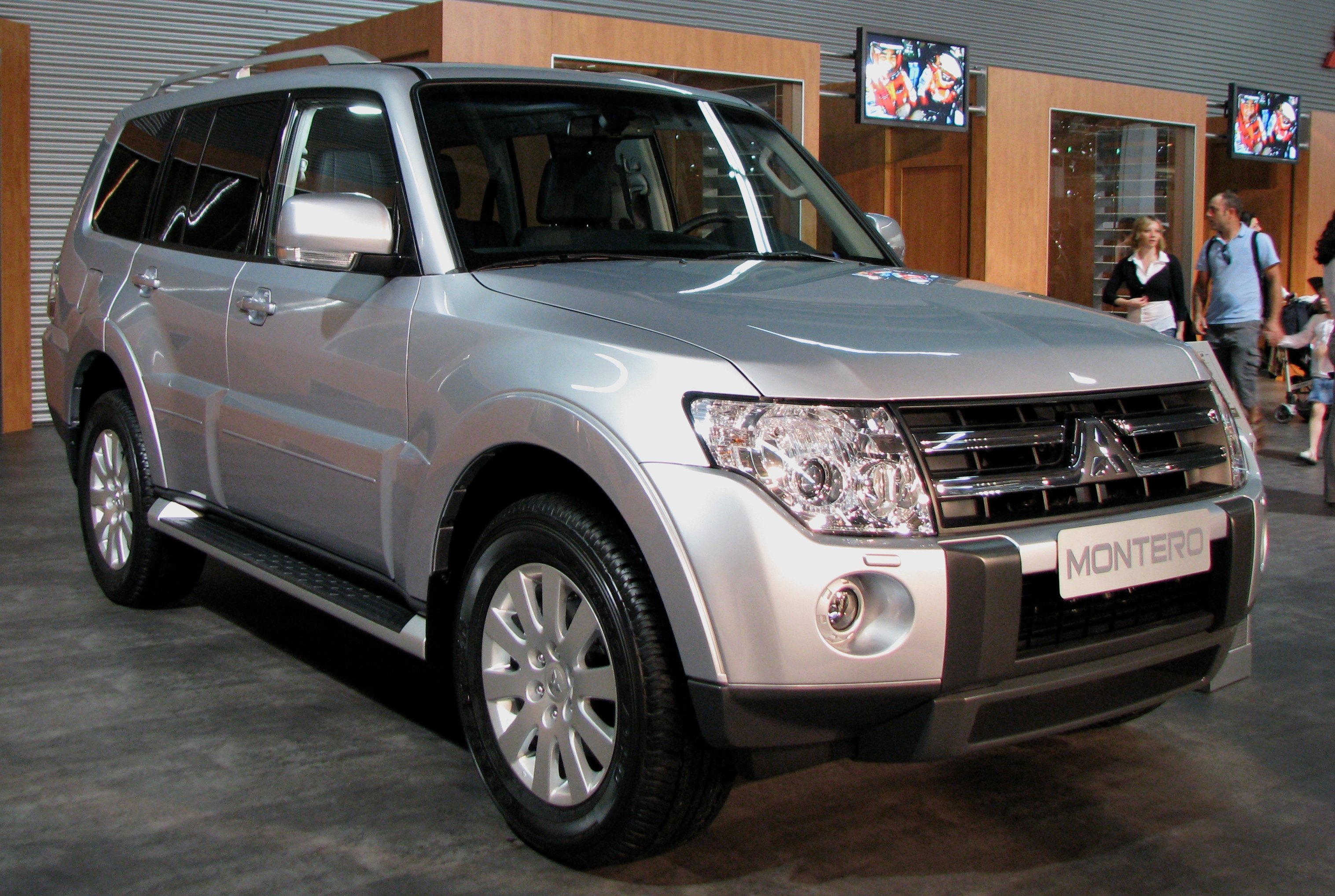
7. **Mitsubishi Montero**The Mitsubishi Montero holds a significant place in the history of off-road vehicles, having carved out a niche for itself as a reliable and rugged SUV, particularly prominent during the 1990s and early 2000s. Its reputation was bolstered by its strong presence in grueling endurance races like the Dakar Rally, where it proved its mettle against the toughest competitors and terrain on the planet. This racing heritage imbued the Montero with a sense of genuine capability and adventure.
Built upon a sturdy body-on-frame construction, the Montero was engineered for serious off-road performance. Its capable 4×4 system, combined with a robust powertrain, made it an ideal companion for adventurous souls seeking to explore beyond paved roads. It offered a practical yet commanding presence, balancing a functional interior with impressive durability, distinguishing itself in a crowded SUV market by truly delivering on its rugged promises.
However, like many of its contemporaries, the Montero faced an uphill battle against shifting market trends and evolving consumer demands. Due to declining sales globally and Mitsubishi’s strategic decision to pivot its focus towards smaller, more urban-friendly crossovers, the Montero was gradually discontinued in many key markets, including North America. This change in corporate direction marked the beginning of its slow fade from prominence.
Today, the Mitsubishi Montero is becoming an increasingly rare sight, particularly in North America where the brand has largely moved away from its rugged SUV roots. Finding well-preserved examples requires dedication, as its numbers dwindle on the roads, transforming it into a cherished relic for those who remember its glory days. Its disappearance underscores the challenges even highly capable and historically significant vehicles face in a rapidly changing automotive landscape.
Car Model Information: 2003 Mitsubishi Montero Limited
Name: Mitsubishi Pajero
Manufacturer: Mitsubishi Motors
Aka: Mitsubishi Montero,Mitsubishi Shogun (United Kingdom)
Production: 1981–2021
Class: Full-size SUV
Layout: Front-engine, four-wheel-drive layout
Chassis: unbulleted list
Predecessor: Mitsubishi Jeep
Categories: 1990s cars, 2000s cars, 2010s cars, 2020s cars, All-wheel-drive vehicles
Summary: The Mitsubishi Pajero (三菱・パジェロ; Japanese: [pad͡ʑeɾo]; English: ; Spanish: [paˈxeɾo]) is a full-size SUV (sport utility vehicle) manufactured and marketed globally by Mitsubishi over four generations — introduced in 1981 and discontinued in 2021.
The Pajero nameplate derives from Leopardus pajeros, the Pampas cat. Mitsubishi marketed the SUV as the Montero in North America, Spain, and Latin America (except for Brazil and Jamaica) due to the term “pajero” being derogatory (meaning “wanker”) in Spanish. In the United Kingdom, it was known as the Shogun, named after the Japanese word for “General.” The model was discontinued in North America in 2006.
The Pajero, Montero, and Shogun names were used on other, mechanically unrelated models, such as the Pajero Mini kei car, the Pajero Junior and Pajero iO/Pinin mini SUVs, and the Triton-based Pajero/Montero/Shogun Sport mid-size SUVs. The Pajero is one of four models by Mitsubishi (the others being the Triton, Pajero Sport and the Pajero iO) that share Mitsubishi’s heavy-duty, off-road-oriented Super-Select four-wheel-drive system as opposed to their light-duty Mitsubishi S-AWC all-wheel-drive system.
The Pajero has generated more than 3.3 million sales in its 40-year run. The name lives with the smaller Pajero Sport, which is based on the Mitsubishi Triton/L200/Strada pickup. Despite the similarity in name, the Pajero Sport shares none of the original Pajero’s underpinnings and is smaller in overall size. First generation Pajero, launched in 1982, was selected as a Historic Car by the Japan Automotive Hall of Fame for its contributions to Japanese automotive history in November, 2023.
Get more information about: Mitsubishi Pajero
Buying a high-performing used car >>>
Brand: Mitsubishi Model: Montero
Price: $9,999 Mileage: 157,942 mi.
Read more about: The Perilous Pavement: Unpacking 9 Off-Road Icons That Became Highway Hazards, Including the Unprecedented Ban of 3-Wheel ATVs
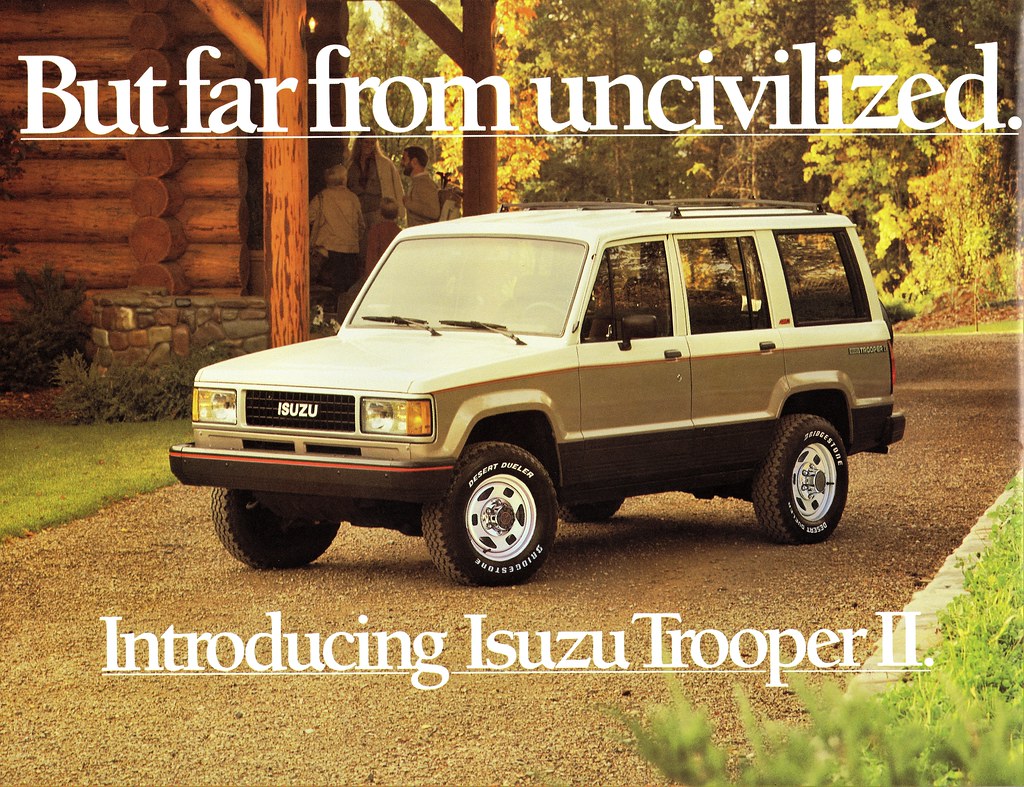
8. **Isuzu Trooper**The Isuzu Trooper carved out a formidable reputation as a tough, no-frills SUV throughout the 1980s and 1990s. This was a vehicle engineered for purpose, delivering robust performance and unwavering reliability without the superfluous luxuries that began to define the burgeoning SUV market. Its distinctive, boxy silhouette became a familiar sight on diverse landscapes, signaling its readiness for any adventure.
What truly set the Trooper apart was its solid construction and undeniable off-road capabilities. It was a true workhorse, designed not just for casual family errands but for demanding tasks and challenging expeditions. Owners appreciated its straightforward mechanicals, which often meant easier maintenance and a reassuring sense of dependability, qualities that fostered a loyal following among those who valued substance over show.
However, the Trooper’s trajectory towards extinction was unfortunately tied to the broader fate of its manufacturer in the U.S. passenger vehicle market. Isuzu’s eventual exit in 2008 marked a poignant end for many of its beloved models, including the Trooper. This strategic withdrawal left remaining Troopers as cherished relics, their numbers steadily dwindling with each passing year.
Today, finding a well-preserved Isuzu Trooper is a testament to its original durability and an owner’s dedication. With fewer examples remaining on the road, this classic SUV is indeed inching closer to becoming a footnote in automotive history, a powerful reminder of an era when utility and ruggedness reigned supreme in the SUV segment.
Car Model Information: 1996 Isuzu Trooper SE 4dr 4WD SUV
Name: Isuzu Trooper
Caption: Second generation Isuzu Trooper (United States)
Manufacturer: Isuzu
Production: 1981–2002
Assembly: Fujisawa, Kanagawa
Class: Full-size car,SUV
Layout: front engine, selectable four-wheel-drive
Successor: ubl
Categories: 1990s cars, 2000s cars, All-wheel-drive vehicles, All articles needing additional references, All articles with unsourced statements
Summary: The Isuzu Trooper is a full-size SUV manufactured and marketed by Isuzu between September 1981 and September 2002 over two generations, the first, produced between 1981 and 1991; and the second (UBS) produced between 1991 and 2002, the latter with a mid-cycle refresh in 1998. In its earliest iterations, the Trooper was based on the company’s first generation Isuzu Faster/Chevrolet LUV pickup.
Marketed in the Japanese domestic market, as the Isuzu Bighorn, Isuzu marketed it internationally primarily as the Trooper, and in other markets as the Acura SLX (USA), Chevrolet Trooper, Subaru Bighorn, SsangYong Korando Family, Honda Horizon, Opel Monterey, Vauxhall Monterey, Holden Jackaroo, and Holden Monterey.
In the United States, for the first generation, which was initially solely offered with two doors, Isuzu was required to comply with the 25% U.S. Chicken Tax on two-door trucks. Prior to its formal introduction Paul Geiger, product-development manager at American Isuzu Motors, noted the Roman numeral “II” designated the truck version (with the rear seat as a mandatory $300 option) and “I” indicating the passenger version with a rear seat included along with certain other features. Isuzu thus marketed the first generation two-door as the Trooper II, and when introducing the four-door retained the Trooper II nameplate. Isuzu never formally marketed a Trooper I, and Car & Driver later inferred the company had changed their mind about the suffix before the SUV went on sale.
Isuzu offered the Trooper initially with four-cylinder motor, four-speed manual transmission, and part-time four-wheel drive, subsequently adding amenities and luxuries, including optional air-conditioning, power windows, and a more powerful V6 engine. The second generation was available with two-wheel- or four-wheel drive.
Competitors included the Toyota Hilux Surf, Mitsubishi Pajero, and Nissan Terrano.
Get more information about: Isuzu Trooper
Buying a high-performing used car >>>
Brand: Isuzu Model: Trooper
Price: $22,900 Mileage: 3,331 mi.
Read more about: Beyond the Bulletproof Reputation: 15 Japanese Cars That Left Owners With Buyer’s Remorse

9. **Jeep Grand Wagoneer (Original)**The original Jeep Grand Wagoneer, in production from 1963 to 1991, stands as a groundbreaking icon, widely regarded as one of the very first luxury SUVs to grace the American automotive landscape. It masterfully blended the utilitarian ruggedness expected of a Jeep with an unexpected level of sophistication and comfort, setting a precedent for a segment that would eventually dominate the market. This vehicle was not merely transportation; it was a statement.
Its distinctive exterior, famously adorned with wood paneling, instantly became a symbol of upscale American craftsmanship and adventurous spirit. Underneath its refined façade, a robust V8 engine provided ample power, ensuring it was as capable off-road as it was stately on paved avenues. The interior was a testament to luxury, offering plush seating and amenities that elevated the driving experience far beyond its utilitarian counterparts.
Despite its enduring appeal and historical significance, the original Grand Wagoneer now faces the inevitable march of time and evolving automotive trends. Modern interpretations of the luxury SUV have since captured the spotlight, pushing the venerated classic into the realm of rare collector’s items. These contemporary models, while benefiting from advanced technology, often lack the authentic, pioneering spirit of their predecessor.
The cost of restoring these vintage beauties to their former glory, coupled with the increasing scarcity of original parts, presents significant challenges for enthusiasts. These factors collectively contribute to the Grand Wagoneer’s looming extinction as a readily available classic, ensuring that each surviving example becomes a more treasured piece of American automotive heritage.
Car Model Information: 2021 Mazda Mazda3 AWD w/Premium Package
Name: Jeep Wagoneer
Aka: Jeep Grand Wagoneer
Caption: 1990 Jeep Grand Wagoneer (SJ)
Manufacturer: Jeep
Class: Full-size SUV
Production: 1962–1993,2021–present
Layout: Front-engine, rear-wheel-drive
Chassis: ubl
Categories: 1960s cars, 1970s cars, 1980s cars, 1990s cars, 2020s cars
Summary: The Jeep Wagoneer and Grand Wagoneer are a sport utility vehicle (SUV) nameplate of Jeep vehicles, with several models marketed for the 1963 through 1993 model years and again since the 2022 model year.
Various versions of the Wagoneer/Grand Wagoneer were manufactured in the US and other nations by Kaiser Motors (1962−1971), by American Motors (1971−1987), by Chrysler (1987−1993), and Stellantis from 2021.
A revival of the Jeep Wagoneer was introduced as a concept version on September 3, 2020, and as the production model on March 11, 2021. Sales began in the second half of 2021 for the 2022 model year. In 2024, Jeep added an all-electric vehicle called the Wagoneer S to the lineup.
Get more information about: Jeep Wagoneer
Buying a high-performing used car >>>
Brand: Jeep Model: Grand Wagoneer
Price: $19,148 Mileage: 54,821 mi.
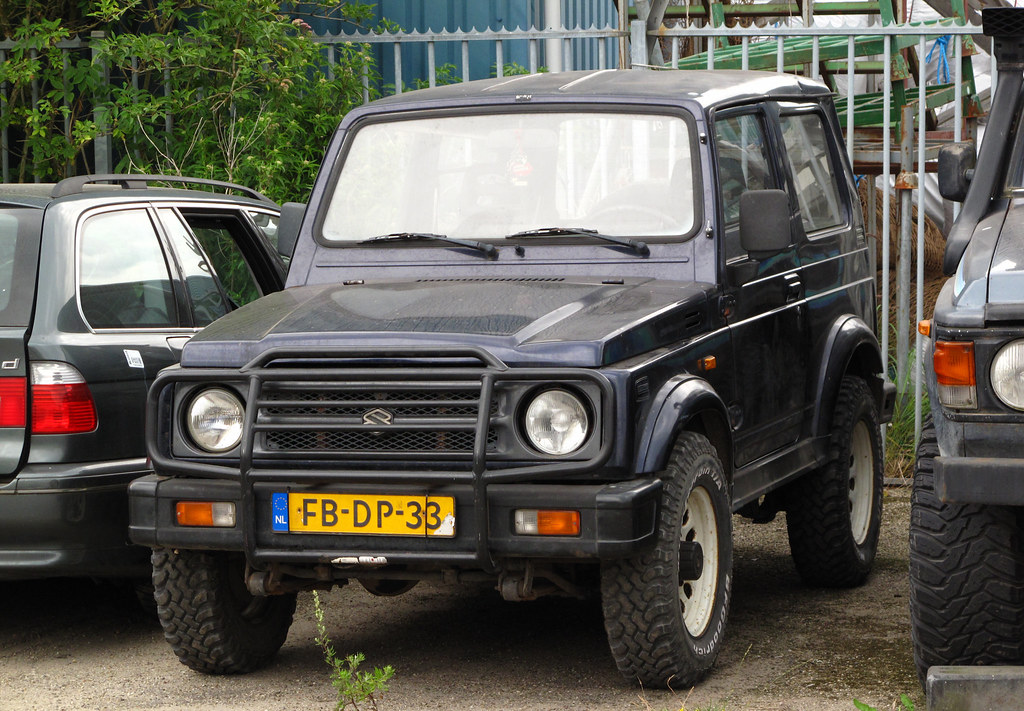
10. **Suzuki Samurai**When the Suzuki Samurai burst onto the U.S. scene in the mid-1980s, it quickly defied expectations for what an SUV could be. Eschewing the growing trend towards larger, more comfortable family haulers, the Samurai offered a refreshingly small, lightweight, and incredibly nimble package. Its compact dimensions made it an immediate favorite for those seeking uncompromised off-road prowess in a manageable size.
The Samurai’s reputation was forged in its remarkable simplicity and affordability, qualities that made it particularly popular among younger drivers and budget-conscious adventurers. Despite its diminutive stature, its robust 4×4 system and high ground clearance allowed it to punch far above its weight class on challenging trails. It delivered an authentic, unfiltered off-roading experience that few other vehicles could match at its price point.
However, the Samurai’s spirited run was ultimately curtailed by unfortunate safety concerns and highly publicized roll-over controversies. These issues cast a significant shadow over its widespread appeal and eventually led to Suzuki’s difficult decision to pull the Samurai from the U.S. market. It was a premature end for a vehicle that had carved out a unique niche.
Today, the Suzuki Samurai has become an increasingly rare sight on American roads. Finding surviving models, especially those in good and drivable condition, requires considerable effort and passion. Its disappearance underscores the challenges small, focused off-roaders face in a market that constantly juggles performance, safety, and mainstream appeal, cementing the Samurai’s place as a cherished, albeit endangered, cult classic.
Car Model Information: 1987 Suzuki Samurai Base 2dr 4WD SUV
Name: Suzuki Jimny
Caption: 2019 Suzuki Jimny SZ5
Manufacturer: Suzuki
Production: April 1970 – present (2.85 million units sold by September 2018)
Class: Off-road vehicle,mini SUV
BodyStyle: SUV,van,convertible,pickup truck
Layout: Front-engine, rear-wheel-drive layout,Front-engine, four-wheel-drive layout
Chassis: Body-on-frame
Related: Maruti Gypsy
Categories: 1980s cars, 1990s cars, 2000s cars, 2010s cars, All Wikipedia articles written in British English
Summary: The Suzuki Jimny (Japanese: スズキ・ジムニー, Suzuki Jimunī) is a series of four-wheel drive off-road mini SUVs, manufactured and marketed by Japanese automaker Suzuki since 1970.
Originally belonging to the kei class, Japan’s light automobile tax/legal class, the company continues to market a kei-compliant version for the Japanese and global markets as the Jimny, as well as versions that exceed kei-class limitations. Suzuki has marketed 2.85 million Jimnys in 194 countries through September 2018.
Get more information about: Suzuki Jimny
Buying a high-performing used car >>>
Brand: Suzuki Model: Samurai
Price: $18,900 Mileage: 74,344 mi.
Read more about: Beyond the Bulletproof Reputation: 15 Japanese Cars That Left Owners With Buyer’s Remorse

11. **Ford Excursion**The Ford Excursion, unleashed upon the automotive world from 2000 to 2005, was nothing short of a leviathan, proudly holding the title as the largest SUV ever produced by Ford. This colossal vehicle was purpose-built for those with extensive needs, specifically designed to comfortably accommodate large families while simultaneously providing formidable heavy towing capabilities that rivaled many full-size trucks. It was truly a king of the road, dominating with its sheer presence.
Central to its titanic capabilities was a massive V10 engine, delivering the immense power and torque required to move its substantial mass and whatever it might be hauling. With its impressive three rows of seating, the Excursion offered unparalleled interior space, making long journeys with multiple passengers and all their gear a surprisingly comfortable affair. It represented the pinnacle of utility and sheer size in the SUV segment.
Yet, the very attributes that made the Excursion so remarkable ultimately contributed to its discontinuation. The early 2000s saw a significant shift in consumer tastes, coupled with a dramatic surge in fuel prices. These changes made the Excursion’s massive size and substantial fuel consumption less practical and increasingly unappealing to a broader market segment. Its era of unconstrained demand had come to an end.
As a result, the Ford Excursion has become a diminishing presence on today’s roads, with very few examples still in active service. Its days are undoubtedly numbered as fuel efficiency and environmental consciousness continue to rise as paramount concerns for modern vehicle buyers. The Excursion stands as a powerful, albeit short-lived, testament to a bygone era of automotive excess and utility.
Car Model Information: 2004 Ford Excursion Limited
Name: Ford Excursion
Caption: 2001 Ford Excursion Limited
Manufacturer: Ford Motor Company
ModelCode: UW137
Production: 1999 – September 30, 2005
ModelYears: 2000–2005,2000–2006 (Mexico)
Assembly: Louisville, Kentucky
Class: Full-size SUV
BodyStyle: Sport utility vehicle
Related: Ford Super Duty
Layout: FR layout
Engine: Ford Modular engine#5.4.C2.A0L,V8 engine
Transmission: Ford C6 transmission#4R100
Wheelbase: 137.1 in
Abbr: on (Gasoline)
Length: 226.7 in
Width: 80.0 in
Height: 80.2 in
Weight: 7700 lb
Successor: Ford Expedition#Expedition EL/Max
Categories: 2000s cars, All-wheel-drive vehicles, All articles with unsourced statements, Articles with short description, Articles with unsourced statements from March 2024
Summary: The Ford Excursion is a heavy-duty (Class 2) full-size SUV marketed by Ford Motor Company from 2000 through 2005. At its introduction, the Excursion was the longest and heaviest SUV ever to enter mass production. The third Ford SUV was derived from the F-Series pickup trucks (after the Ford Bronco and the Ford Expedition), and the model line used a heavier-duty chassis and frame than the Expedition; both vehicles competed against the Chevrolet Suburban.
Developed as a competitor for the 2500-series (3⁄4-ton) Chevrolet Suburban/GMC Yukon XL, the Ford Excursion was derived from the 3⁄4-ton F-250 Super Duty pickup truck (sharing its chassis with the regular cab, long-bed chassis). The model line was produced for a single generation; a shortened 2006 model year was offered exclusively for Mexico. Targeting the North American market, only a few were produced for export. The Excursion remains the second largest mass-produced SUV (matched in length by the 2023 introduction of the lighter Jeep Grand Wagoneer L, and beaten by the 2021 Cadillac Escalade ESV); currently, only the GMC Hummer EV SUV is heavier.
The Excursion was assembled at its Kentucky Truck Plant (Louisville, Kentucky) alongside the Ford Super Duty line. The last example was produced on September 30, 2005. For 2007, Ford introduced the extended-length Ford Expedition EL/MAX (today, Expedition MAX), competing more closely against the 1500-series Suburban in capability.
Get more information about: Ford Excursion
Buying a high-performing used car >>>
Brand: Ford Model: Excursion
Price: $59,999 Mileage: 60,779 mi.
Read more about: Engineering Excellence: An In-Depth Look at the 12 Most Reliable Trucks Ever Built
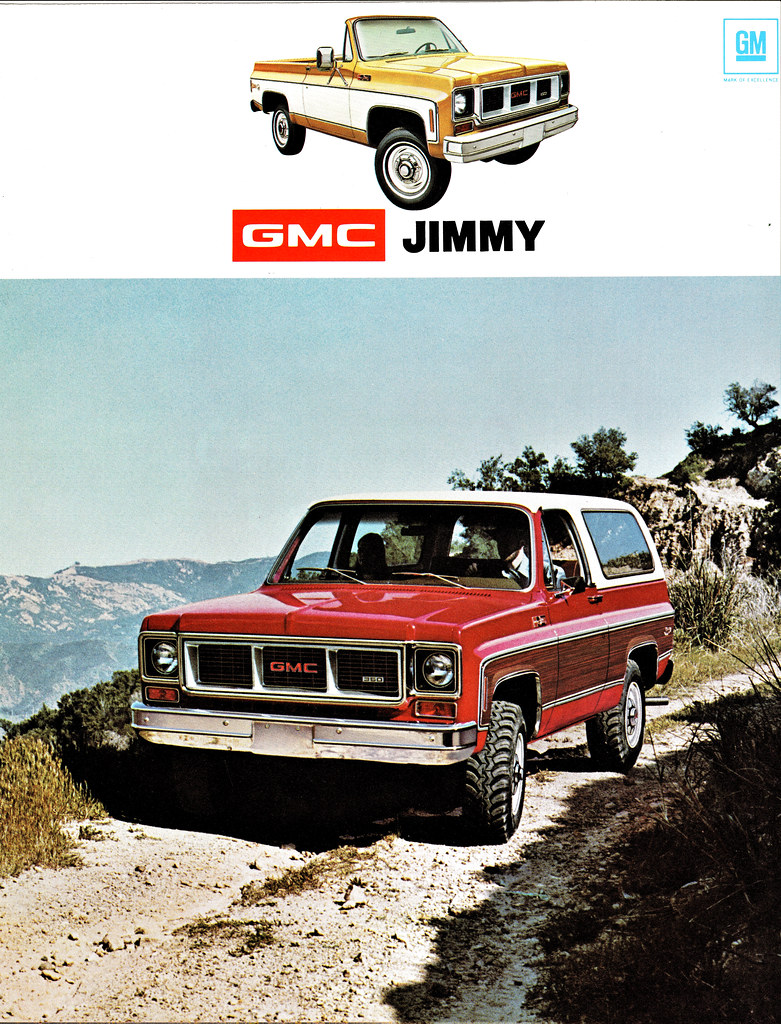
12. **GMC Jimmy (Full-Size)**The full-size GMC Jimmy, produced from 1970 to 1991, emerged as a highly popular and formidable contender in the rapidly expanding SUV market. Sharing its robust platform with the iconic Chevrolet Blazer K5, the Jimmy offered a very similar promise of serious off-road prowess combined with the practical utility and rugged design that consumers of the era had come to expect from General Motors. It was a twin in capability, but with its own distinctive GMC branding.
Under its sturdy hood, the Jimmy was frequently equipped with powerful V8 engines, providing abundant horsepower and torque crucial for navigating challenging terrains and hauling heavy loads. Its dependable full-size 4×4 system further cemented its credentials as a truly capable off-roader, making it a favorite for outdoor enthusiasts and those who needed a vehicle that could conquer both the wild and the paved road with equal aplomb.
However, like its Blazer sibling, the full-size Jimmy eventually found itself phased out of GMC’s lineup. The automotive industry began a significant pivot towards smaller, more fuel-efficient models and the burgeoning crossover segment, which prioritized urban-friendly driving dynamics over brute-force off-road ability. This strategic shift marked the end of an era for these large, truck-based SUVs.
Today, the full-size GMC Jimmy remains a cherished relic for many classic truck and SUV enthusiasts. Its transition from a widely available workhorse to a prized collector’s item reflects this broader industry movement. Finding well-maintained examples is becoming increasingly difficult, making each sighting a special reminder of its past glory and its current endangered status.
Car Model Information: 1990 GMC Jimmy Sierra Classic 2dr 4WD SUV
Name: Chevrolet (S-10) Blazer,GMC (S-15) Jimmy
Manufacturer: General Motors
ModelYears: 1983–2005 (North America)
Class: Compact SUV,Mid-size SUV
BodyStyle: Sport utility vehicle
Layout: Front-engine, rear-wheel-drive layout
Transmission: automatic transmission
Wheelbase: 100.5 in
Abbr: on
Successor: Chevrolet Equinox
Caption: 1991 Chevrolet S-10 Blazer Tahoe
Categories: 1980s cars, 1990s cars, 2000s cars, All-wheel-drive vehicles, All articles needing additional references
Summary: The Chevrolet (S-10) Blazer and its badge engineered GMC (S-15) Jimmy counterpart are compact/mid-size SUVs manufactured and marketed by Chevrolet and GMC from the 1983 through 2005 model years, over two generations – until the early 1990s alongside these brands’ full-size SUVs with near identical nameplates, but lacking removable hardtops. From the 1992 model year, GMC’s full-size Jimmy had become the “Yukon”, and so, the S-15 prefix was dropped on the smaller GMC Jimmy. Starting with the 1995 second generation, the large Blazer was rebranded as the Chevrolet Tahoe, and these mid-size SUVs were simply launched as the “all-new Chevrolet Blazer”.
Upon launch, these models were 14.5 in (37 cm) shorter and 14.9 in (38 cm) narrower than the full-size K5 Blazer, sometimes leading to the nickname of “baby Blazer”. Like their full-sized counterparts, the S-series Blazer and Jimmy were originally offered only in a two-door body style. In 1991, four-door versions were added, with a 6.5 in (17 cm) longer wagon body.
The S-10 Blazer and S-15 Jimmy were based on the Chevrolet S-10 and GMC S-15/Sonoma pickup trucks and were manufactured in Pontiac, Michigan; Linden, New Jersey; Moraine, Ohio; Shreveport, Louisiana; and São José dos Campos, Brazil.
In the United States, retail sales of four-door Blazer models ended in 2004, though production of two- and four-door models for fleet sales continued into 2005. In the Canadian market, four-door models of the Blazer and Jimmy were sold until the 2004 model year and until the 2005 model year for the two-door models of both.
The Brazilian variant, based on the second-generation S-series, continued in production in Brazil through 2012 with its own sheetmetal stampings which were also used on the Chinese, Indonesian, and Russian versions. In North America, the Moraine, Ohio, plant produced only 4-door vehicles, with both 2- and 4-door models being produced at Linden, which was the main assembly plant after the switch (for the 1995 model year) from Pontiac West Assembly in Pontiac, Michigan, which closed in 1994.
Get more information about: Chevrolet S-10 Blazer
Buying a high-performing used car >>>
Brand: GMC Model: Jimmy
Price: $20,900 Mileage: 112,767 mi.
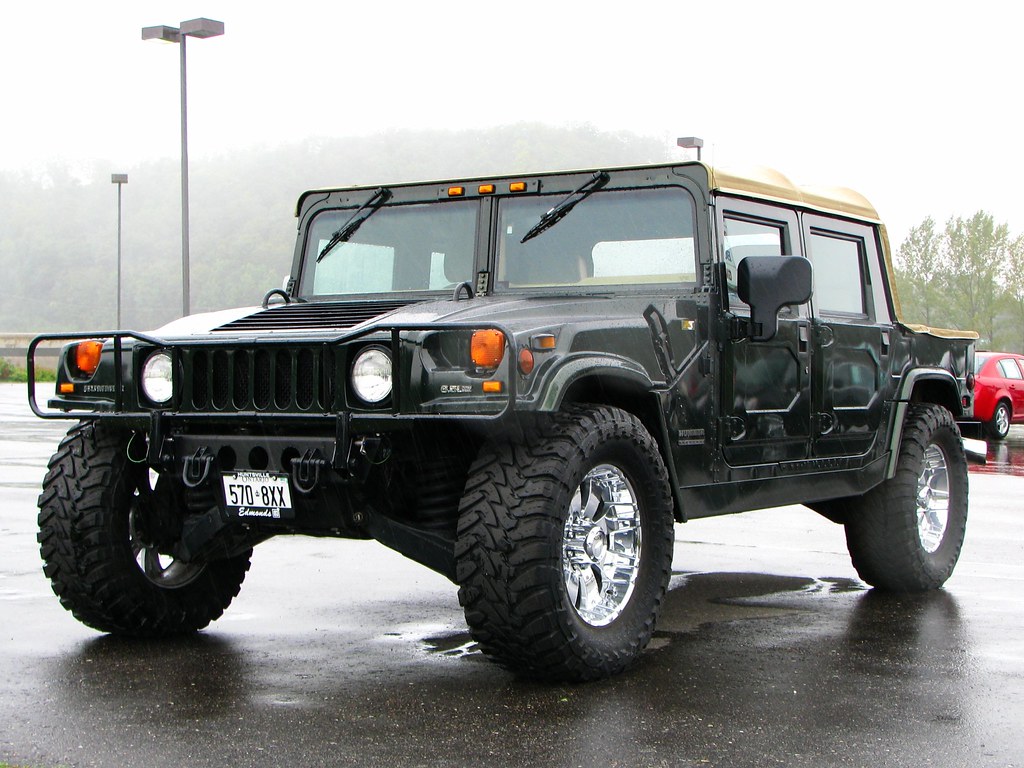
13. **Hummer H1**The Hummer H1, first introduced to the public in 1992, immediately distinguished itself as an icon of both excess and unparalleled off-road capability. Directly derived from the military’s formidable Humvee, this civilian version brought uncompromising ruggedness and a truly imposing design to civilian roads. It wasn’t just a vehicle; it was a statement of power and adventure that turned heads everywhere it went.
Powered by a massive diesel engine, the H1 possessed an almost unbelievable ability to traverse virtually any terrain, from rocky trails to deep sand and even shallow rivers. Its wide stance, incredible ground clearance, and robust drivetrain were engineered for the harshest conditions, making it the ultimate tool for serious adventurers and those who simply wanted to own the most capable vehicle on the planet.
Despite its legendary status and immense capabilities, the H1’s sheer size, exorbitant fuel consumption, and inherent impracticality for everyday driving ultimately led to its discontinuation in 2006. As environmental concerns grew and urban environments became more congested, the H1 struggled to find a sustainable place in the mainstream automotive market. It was simply too much car for most drivers.
Consequently, very few Hummer H1s remain on public roads today. These rare behemoths are now primarily confined to the garages of dedicated collectors and passionate off-road enthusiasts who appreciate their unique heritage and uncompromising performance. The H1 stands as a powerful, albeit somewhat unwieldy, symbol of a particular moment in automotive history when capability knew no bounds.
Car Model Information: 2003 Hummer H1 Wagon 4D
Name: Hummer H1
Manufacturer: AM General
Aka: Hummer HMC (1992–2002),HMMWV (HUMVee)
Production: 1992–2006 (11,818 produced)
ModelYears: 1992–2004 , 2006
Assembly: Mishawaka, Indiana
Class: Full-size,pickup truck
BodyStyle: 4-door Open Top – HMCO , 4-door SUV – HMCS , 4-door Hard Top – HMC4 , 2-door Fleet – KSC2 , 2-door Pickup – XLC2
Related: Humvee
Layout: Front-engine, four-wheel-drive layout,four-wheel drive
Engine: Chevrolet_small-block_engine_(first-_and_second-generation)#L05,V8 engine
Transmission: Automatic transmission,GM 4L80-E transmission
Wheelbase: 130 in
Abbr: on
Length: 184.5 in
Width: 86.5 in
Height: 77 in
Caption: Hummer HMC Soft Top
Categories: 2000s cars, AM General vehicles, All-wheel-drive vehicles, Articles with short description, Cars introduced in 1992
Summary: The Hummer H1 is a full-size four-wheel-drive utility vehicle based on the M998 Humvee, which was developed by AM General when it was a subsidiary of American Motors Corporation (AMC). Originally designed strictly for military use, the off-road vehicle was released to the civilian market.
The civilian version was produced from 1992 through 2006 and was the first of what became the Hummer line. AM General built both the H1 and the Humvee in its Mishawaka, Indiana, facility. GM stopped marketing the H1 in the 2006 model year, but AM General continued production of the military Humvee versions through 2018.
Get more information about: Hummer H1
Buying a high-performing used car >>>
Brand: Hummer Model: H1
Price: $74,900 Mileage: 90,088 mi.
Read more about: The Ghosts of the Grid: Unearthing 15 Vanished Truck Engines That Left Their Mark on Automotive History

14. **Dodge Durango (First Generation)**The first-generation Dodge Durango, which rolled off the assembly lines from 1998 to 2003, arrived on the scene as a robust and highly practical mid-size SUV. It was specifically engineered to cater to families who needed generous interior space, offering a functional three rows of seating. Beyond its passenger-carrying capabilities, it also boasted strong towing capacities, making it a versatile contender in its segment.
Built upon a sturdy truck platform, the original Durango provided the kind of rugged durability and capable performance that many buyers sought in an SUV. This foundational design made it an ideal choice for families requiring a vehicle that could handle both daily commutes and weekend adventures, comfortably accommodating both passengers and their essential cargo without compromise. It successfully bridged the gap between a family hauler and a utility vehicle.
However, as the automotive landscape rapidly evolved, the first-generation Durango began its slow fade from prominence. The Durango nameplate itself continued, but subsequent iterations shifted towards a more modern, crossover-like SUV design, departing significantly from the original’s truck-based roots. This evolution, while necessary for contemporary market demands, ultimately left the pioneering first generation in the past.
Today, finding well-maintained examples of the first-generation Dodge Durango is becoming increasingly challenging. Its numbers are dwindling on the roads, as newer models and changing preferences have relegated the original design to a cherished memory for enthusiasts. The original Durango serves as a reminder of a time when practicality and ruggedness defined the family SUV, now a disappearing classic in its own right.
Car Model Information: 2021 Dodge Durango Citadel
Name: Dodge Durango
Manufacturer: Dodge
Production: 1997–present
Class: Mid-size,SUV
Predecessor: Dodge Ramcharger,Dodge Town Panel and Town Wagon
Related: Dodge Dakota
Layout: Front-engine, rear-wheel-drive layout,automobile layout
Caption: Dodge Durango GT 2021
ModelYears: 1998–2009,2011–present
Categories: 2000s cars, 2010s cars, 2020s cars, All-wheel-drive vehicles, All accuracy disputes
Summary: The Dodge Durango is a mid-size SUV produced by Dodge starting with the 1998 model year. The first two generations were very similar in that both were based on the Dodge Dakota and Dodge Ram, both featured a body-on-frame construction and both were produced at the Newark Assembly Plant in Newark, Delaware through the 2009 model year.
The third-generation Durango began with the 2011 model year. It is built on the same platform as the Jeep Grand Cherokee, features unibody construction, and has been assembled at the Jefferson North Assembly Plant in Detroit, Michigan, since late 2010.
Each generation had options for different engine sizes and power ratings, with different transmissions also. In 2009 a hybrid variant was introduced, but ended quickly with the second generation Durango. From 2007 to 2009 the Durango was available as the Chrysler Aspen from Chrysler. Over two million Durangos have been sold since it was introduced in 1998.
Get more information about: Dodge Durango
Buying a high-performing used car >>>
Brand: Dodge Model: Durango
Price: $31,477 Mileage: 40,096 mi.
Read more about: The Unsung and Unmissed: 14 Muscle Cars That Faded From Memory
The journey through these 14 classic SUVs, teetering on the precipice of extinction, is more than just a nostalgic look back; it’s a vivid reminder of automotive history’s relentless march. Each of these vehicles, from the pioneering luxury of the Grand Wagoneer to the unyielding ruggedness of the Hummer H1, tells a unique story of innovation, design, and adaptability. They shaped our roads, inspired our adventures, and defined entire eras of motoring. Yet, as consumer tastes shift, regulations tighten, and technology accelerates, these titans are slowly fading from view, transforming from everyday machines into cherished artifacts. For enthusiasts and collectors, this moment represents a rare opportunity – perhaps the last – to own a tangible piece of this extraordinary legacy before they vanish entirely into the annals of automotive lore. Don’t let these magnificent machines become merely memories; embrace the chance to keep their stories alive.