:max_bytes(150000):strip_icc():focal(1007x267:1009x269)/Lionel-Taylor-signs-a-helmet-that-has-all-three-Broncos-logo-081425-838da71a8c2e4dafa2dff7c1ade838c2.jpg)
Lionel Taylor, a foundational figure in the American Football League and a barrier-breaking coach in the National Football League, passed away on August 6 at his home in Rio Rancho, N.M., at the age of 89. His daughter Bunny Taylor confirmed the death, marking the end of a remarkable life that profoundly shaped professional football, both on the field and from the sidelines.
Taylor’s career was characterized by a series of significant “firsts” and sustained excellence. As a wide receiver for the Denver Broncos, he became the inaugural player in either the N.F.L. or A.F.L. to achieve 100 receptions in a single season. This extraordinary feat not only cemented his status as an elite athlete but also signaled the advent of a new era for offensive play in professional football. His influence, however, extended far beyond his playing days, leaving an indelible mark on the sport’s strategic and social landscapes.
His transition from a dominant player to an equally impactful coach saw him guide the Pittsburgh Steelers’ wide receivers to two Super Bowl championships in the 1970s. Taylor’s dedication to developing talent, coupled with his innovative offensive philosophy, culminated in his historic promotion to offensive coordinator for the Los Angeles Rams in 1980, making him the N.F.L.’s first Black coordinator. This retrospective examines the life, career, and enduring legacy of a man whose contributions continue to resonate throughout the world of football.

1. **A Life of Impact Concludes: Lionel Taylor’s Passing**The passing of Lionel Taylor on August 6, 2025, at 89 years old, marked the end of an era for many who followed the early days of professional football and the subsequent evolution of its coaching ranks. Residing in Rio Rancho, N.M., Taylor’s departure was confirmed by his daughter Bunny Taylor, prompting reflections on a career that spanned decades and brought numerous accolades. His life, a testament to resilience and pioneering spirit, began on August 15, 1935, in Kansas City, Mo., setting the stage for an impactful journey.
Taylor’s significance is encapsulated not just in the records he set, but in the barriers he broke. He was an individual who consistently pushed the boundaries of what was thought possible in professional football, both as a player and as a coach. His quiet determination and relentless pursuit of excellence served as an inspiration to many, and his contributions are etched into the annals of the sport’s history.
The widespread acknowledgement of his death, from former colleagues to the organizations he served, underscores the depth of his influence. The Denver Broncos, for whom he was an original star, and the Pittsburgh Steelers, where he contributed to Super Bowl victories, are among those who mourned his passing. His legacy is one of sustained achievement and groundbreaking contributions that continue to inspire future generations in sports.
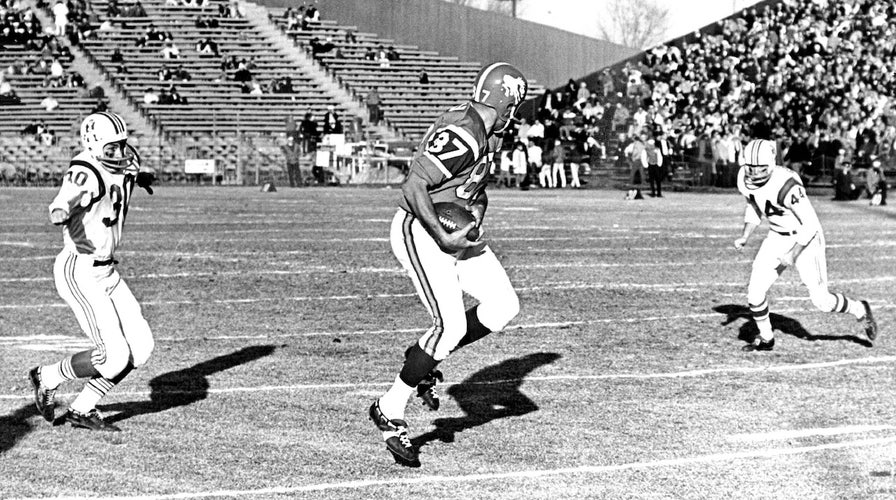
2. **The Groundbreaking 100-Catch Season of 1961**In 1961, Lionel Taylor etched his name into the history books by becoming the first wide receiver in the nascent American Football League, or indeed the established National Football League, to achieve 100 receptions in a single season. Playing for the Denver Broncos in only the A.F.L.’s second year of existence, Taylor’s performance was nothing short of revolutionary. This monumental achievement occurred late in the final game of the season, a 49-21 loss to the Dallas Texans, when he caught his 100th pass.
Remarkably, the significance of this record was not immediately recognized by the media or even by the team itself. Taylor famously remarked to The Denver Gazette in 2023, “I didn’t see it in my paycheck,” highlighting the understated acknowledgement of what would later be understood as a pivotal moment in football statistics. This reflects a time when passing records were not yet the centerpiece of media attention they are today, and individual player compensation was less tied to such milestones.
Despite the initial muted reaction, Taylor’s 100-catch season stood as a benchmark for years. It would be broken by Charlie Hennigan of the Houston Oilers, who recorded 101 receptions in 1964. The record has since been significantly surpassed, with Michael Thomas setting the current mark of 149 passes for the New Orleans Saints in 2019. Nevertheless, Taylor’s pioneering effort laid the groundwork, demonstrating the potential for wide receivers to dominate games through sheer volume of catches.
His individual brilliance during this period, particularly his ability to consistently secure passes from various quarterbacks, underscored his elite talent. In 1960, the A.F.L.’s inaugural season, Taylor led the league with an impressive 92 receptions for 1,235 yards and 12 touchdowns. This initial success set the stage for his record-breaking 1961 campaign, establishing him as a premier offensive weapon in the league and a constant threat to opposing defenses.
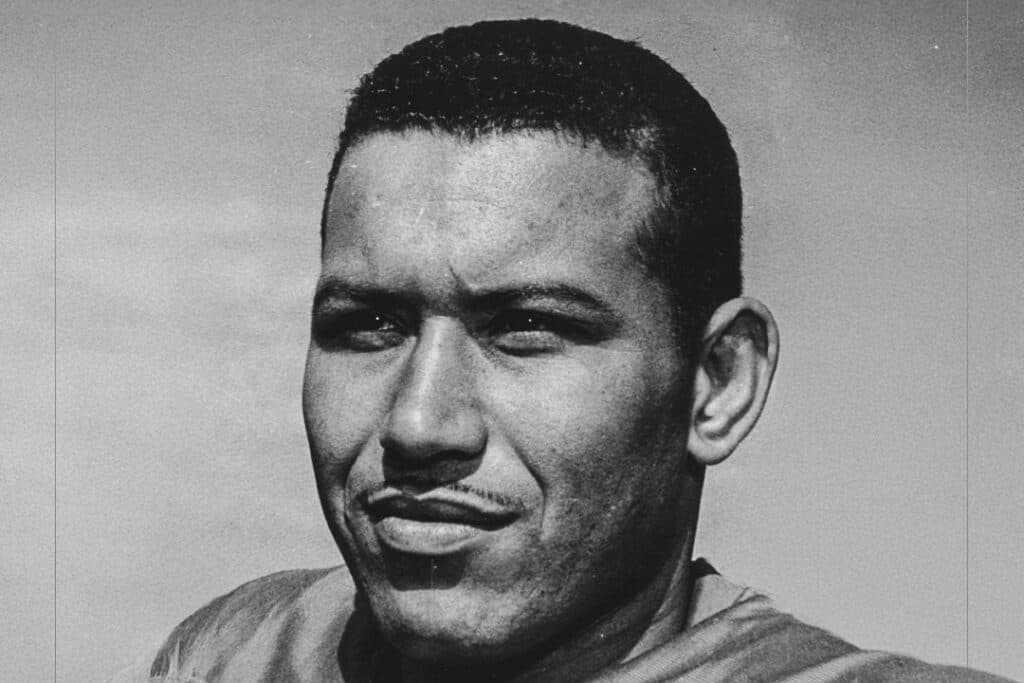
3. **An AFL Star’s Dominance: Taylor with the Denver Broncos**Lionel Taylor’s tenure with the Denver Broncos, spanning from the A.F.L.’s inaugural season in 1960 to 1966, solidified his reputation as one of the league’s most dominant wide receivers. During this period, he consistently led the A.F.L. in receptions, doing so five times, including his record-setting 1961 season. His ability to consistently haul in passes from a revolving door of quarterbacks, most notably Frank Tripucka from 1960 to 1962, highlighted his exceptional skill and reliability, even on teams that struggled to achieve winning records.
Taylor’s impact on the Broncos’ offense was profound, often making him the primary, if not sole, focus of opposing defenses. Lou Saban, the head coach of the Buffalo Bills, articulated this challenge in a pregame analysis for The Buffalo News in 1962: “The last two years, if you could do a good defensive job on Lionel Taylor, Tripucka’s passing ability was pretty well nullified.” This quote underscores how central Taylor was to Denver’s offensive strategy and how much his individual performance dictated the team’s aerial attack.
His consistent production was extraordinary. Taylor averaged 79 receptions a year over the four seasons following his 100-catch year, leading the league in that category in 1962, 1963, and 1965. By 1965, he caught the 500th pass of his career in a game against the Boston Patriots, further demonstrating his remarkable longevity and productivity at the top level of the sport. His ability to maintain such high standards speaks volumes about his athleticism, route running, and hands.
Throughout his first six seasons with the Broncos, Taylor recorded 508 receptions for 6,424 yards and 43 touchdowns, outpacing the best receivers in the rival N.F.L. For comparison, Bobby Mitchell, the N.F.L.’s leading receiver during this same timeframe, had 338 receptions for 5,571 yards and 43 touchdowns. This stark contrast highlights Taylor’s unparalleled dominance in an era where passing statistics were generally lower, solidifying his status as a true pioneer of the receiving position.

4. **From West Virginia to Professional Football: Taylor’s Early Journey**Lionel Thomas Taylor’s path to professional football began far from the bright lights of stadium fields, rooted in the humble beginnings of his childhood. Born on August 15, 1935, in Kansas City, Mo., Taylor spent his formative years in Lorado, W.Va. His upbringing was shaped by his stepfather, J.C. Glend, a coal miner whom he regarded as his father, and his mother, Bertha Glend, who worked as a chef. An article in The Denver Gazette in 2024 revealed that Taylor did not know his birth father, adding another layer to the narrative of his early life.
His athletic talents blossomed in high school, where he excelled in both football and basketball at an all-Black high school. These early experiences undoubtedly honed his physical abilities and competitive spirit, setting the foundation for his future career. The challenges and opportunities presented during his youth in West Virginia contributed to the resilient character that would later define his professional endeavors.
Taylor continued his athletic and academic pursuits at New Mexico Highlands University, where he distinguished himself on the football field. He earned all-Frontier Conference honors as a wide receiver, showcasing his potential for higher levels of competition. Despite his collegiate success, the path to professional football was not straightforward, embodying the struggles faced by many talented athletes from less prominent programs during that era.
5. **The Undrafted Path: Chicago Bears and the Leap to Denver**Despite his collegiate prowess at New Mexico Highlands University, Lionel Taylor was not selected in the 1958 N.F.L. draft, a common fate for many players from smaller schools at the time. This initial setback did not deter him. Instead, he received an invitation to the Chicago Bears’ training camp, an opportunity he eagerly embraced. While he did not make the final roster with the Bears that year, his determination remained unwavering, leading him to play for a semiprofessional club in Bakersfield, Calif., to continue pursuing his dream.
His persistence paid off when he signed with the Bears again in 1959. During this season, Taylor made eight appearances but recorded no catches, indicating he was likely used in a limited or different capacity. His time with the Bears was brief, and he was ultimately cut from the team shortly before the 1960 season. This period of uncertainty and unfulfilled potential could have easily ended his professional football aspirations, but Taylor possessed a resolve that would soon be recognized.
The turning point came with the formation of the American Football League and the Denver Broncos in 1960. Following his release from the Bears, Taylor signed with the newly formed Broncos, a move that would dramatically alter the trajectory of his career and the history of the AFL. He made an immediate and impactful impression in his very first game with the Broncos, catching six passes for 125 yards in a 28-24 loss to the New York Titans (now the Jets).
This explosive debut signaled the arrival of a true star. It demonstrated that Taylor, despite his undrafted status and earlier struggles, possessed the talent and drive to excel at the highest level of professional football. His quick adaptation and immediate success with the Broncos laid the groundwork for his legendary receiving career, marking the true beginning of his influence on the sport.

6. **A Seamless Transition to the Sidelines: Pittsburgh Steelers’ Wide Receivers Coach**Following a distinguished playing career that saw him redefine the wide receiver position, Lionel Taylor embarked on a second influential chapter in professional football: coaching. His transition from catching passes to teaching others how to do so began in 1970, when he joined the Pittsburgh Steelers as their wide receivers coach. Under the leadership of then-head coach Chuck Noll, Taylor quickly became an integral part of a team that was on the cusp of forging a dynastic era in the National Football League.
During his seven seasons with the Steelers, Taylor’s expertise and keen understanding of the receiving craft proved invaluable. He was instrumental in developing the talents of two future Pro Football Hall of Famers, Lynn Swann and John Stallworth. His guidance helped these legendary players hone their skills, master their routes, and excel in a league that was increasingly recognizing the importance of a strong aerial attack. Taylor’s quiet mentorship laid the groundwork for their individual success and, by extension, the Steelers’ collective triumphs.
Taylor’s tenure with the Steelers coincided with the franchise’s ascendancy to the pinnacle of professional football. He contributed directly to the team’s first two Super Bowl championships in the 1970s, a period that cemented Pittsburgh’s reputation as a dominant force. His ability to cultivate elite receiving talent was a critical component of those championship teams, ensuring that the Steelers possessed the offensive firepower necessary to complement their formidable defense.
Even after his playing days, Taylor’s competitive spirit and dedication to excellence shone through. He approached coaching with the same meticulousness and strategic insight that characterized his on-field performance, establishing a reputation as a highly effective and respected position coach. His contributions to the Steelers’ early Super Bowl victories are a testament to his enduring impact on the sport, proving that his influence extended far beyond his individual playing statistics.