

Navigating the complexities of investment management can often feel like piloting a sophisticated machine through uncharted territories. For many investors, the sheer volume of data, the intricacies of market trends, and the continuous need for adjustments can be overwhelming. This is precisely where SectorSurfer’s My Strategies page steps in, offering a robust and intuitive platform designed to streamline your investment decisions, transforming arduous analysis into automated simplicity.
At its core, SectorSurfer empowers users with sophisticated tools to define, manage, and optimize their investment strategies. It takes the heavy lifting out of market analysis, allowing you to focus on your financial goals rather than getting bogged down in endless calculations and research. This comprehensive system is built on the principle that smart investing should be accessible, efficient, and ultimately, effective.
In this in-depth exploration, we will embark on a journey through the heart of SectorSurfer’s My Strategies page. We will dissect its key components, illuminate its advanced functionalities, and provide a clear understanding of how this powerful tool works to identify market leadership and guide your investment actions. Prepare to discover how SectorSurfer puts advanced algorithmic analysis right at your fingertips, making complex investment strategies tangible and manageable.

1. **Defining a SectorSurfer Strategy: The Core of Intelligent Investing**At the heart of SectorSurfer’s innovative platform lies the fundamental concept of a ‘Strategy.’ As defined, “A Strategy, in the context of Sector Surfing, is a set of up to 12 mutual funds, ETFs, or stocks along with an indicator algorithm to evaluate the performance of each to determine which one, and only one, is currently demonstrating leadership and should be owned.” This precise definition highlights the system’s focus: identifying and recommending a single, top-performing asset from a curated list, based on a dynamic algorithm.
This isn’t just about picking a few funds; it’s about creating a disciplined framework for your investments. The ability to select up to 12 distinct mutual funds, Exchange Traded Funds (ETFs), or individual stocks offers significant flexibility, allowing investors to tailor their strategies to specific market segments or personal preferences. Whether you’re interested in broad market exposure or niche sectors, the initial selection forms the bedrock of your strategy.
Crucially, SectorSurfer provides access to a wealth of pre-configured options, enabling you to “browse the performance characteristics of numerous ready-made Free Strategies and Premium Strategies.” This immediate access to proven models can be a powerful starting point. However, the platform truly shines in its capacity to let you “create your own Custom Strategy using the funds of your choice,” a particularly vital feature for individuals constrained by the limited mutual fund options within a company-sponsored retirement plan.
2. **Automated Algorithm Configuration: The Engine of Simplified Performance**The power of any investment strategy often hinges on the underlying algorithms that drive its decisions. While indicator algorithms can often appear “complex and difficult to understand and configure,” SectorSurfer dramatically simplifies this critical aspect. The groundbreaking news is that the platform has “totally automated the indicator algorithm configuration for each Strategy according to the character of your chosen funds/stocks.”
This automation is not merely a convenience; it’s a necessity given the diverse nature of financial instruments. As the system intelligently observes, “There are significant differences in the behavior of mutual funds, bonds, and stocks.” For instance, the market dynamics of “commodities, such as oil and gold, will behave differently from the stocks of companies that manufacture consumer goods, or from funds holding T-bills or certificates of deposit (money market funds).”
Recognizing these inherent differences, SectorSurfer steps in to perform the intricate work. It “automatically determines the algorithm and parameters most appropriate for the character of each Strategy so you don’t have to.” This is the essence of its promise: “Our computers will do the hard work while you go have a life!” You simply provide a set of funds, and SectorSurfer’s sophisticated system intuitively discerns the optimal approach to manage them, ensuring that the analytical engine is perfectly tuned to your specific investment choices.

3. **Crafting Your Custom Strategy: Tailoring Investments to Your Vision**One of SectorSurfer’s most compelling features is the ability to easily forge a Custom Strategy, empowering users to precisely define their investment universe. The process is remarkably straightforward: “A Custom Strategy is simply made by editing any of the ticker symbols in an existing Strategy, adding new ticker symbol to a Strategy, or deleting an existing ticker symbol from a Strategy.” This flexibility ensures that your strategy can evolve as your market outlook or fund availability changes.
Initiating these modifications is as simple as a click. By “clicking the ticker symbol (or blank) to open the popup window to ‘Find a Mutual Fund, ETF, or Stock’,” you unlock a powerful search tool. This intuitive popup window allows you to “search by either ticker symbol or by words in its name,” making it effortless to locate the exact investment vehicle you wish to include or replace within your strategy.
Once identified, adding a fund is a simple matter of clicking the designated button. Conversely, should you need to remove an asset, the popup window conveniently “provides a means to delete the current ticker symbol by clicking.” The platform also offers immediate contextual information; “when you place the mouse pointer above a ticker symbol, its name, pertinent hold days, and early trade fees are shown,” providing crucial details at a glance to inform your selections.
As you fine-tune your strategy, SectorSurfer provides real-time feedback. “At each step of your Strategy development, you can check its progress by clicking the chart icon,” allowing for immediate visual evaluation of your changes. Furthermore, you can explore “other properties of the Strategy by clicking the information icon,” ensuring you have all the necessary data to make informed decisions. This iterative process, coupled with immediate feedback, makes building a robust custom strategy both efficient and effective.

4. **Making a Strategy-of-Strategies: Elevating Your Portfolio Architecture**For investors seeking to implement more complex, layered approaches, SectorSurfer introduces the concept of a ‘Strategy-of-Strategies.’ This advanced feature allows you to orchestrate multiple individual strategies under a single, overarching decision-making framework. Instead of typical fund or stock ticker symbols, a “Strategy-of-Strategies uses special ticker symbols to refer to your other Strategies.”
Functionally, it operates with the same core logic as a standard SectorSurfer Strategy: “it will pick the one, and only one, best performing Strategy from among up to 12 candidates.” This means you’re essentially creating a meta-strategy that dynamically selects the strongest performer from a diversified pool of your own pre-defined strategies. The designated ticker symbol format for these sub-strategies is specific: “SSSnn, for SectorSurferStrategy # nn, where nn does not have a leading zero if it is only a single digit.”
Adding to its versatility, you’re not limited to just combining strategies; the system allows you to “mix normal ticker symbols with the Strategy ticker symbols if you like.” This hybrid approach enables sophisticated portfolio construction, blending direct asset holdings with dynamic strategy allocations. It’s a powerful way to diversify your approach to market leadership, responding to trends across different strategic segments.
It’s important to note a key operational characteristic: “A Strategy-of-Strategies does make buy/sell decisions and thus is not a free Strategy.” Furthermore, due to the system’s daily processing sequence, “all referenced Strategies must come before (lower number than) the Strategy-of-Strategies because Strategies are processed sequentially every evening and all referenced Strategies must be processed before the Strategy-of-Strategies in order for it to produce meaningful results.” This sequential processing ensures the integrity and accuracy of the meta-strategy’s decisions. For a broader understanding, the concept also ties into the “Portfolio-of-Strategies.”

5. **Managing Strategies: A Central Hub for Your Investment Control**The ‘My Strategies’ page is designed as your personal command center, serving as the definitive location where “your investment Strategies are managed and your Trade Alerts are viewed.” To access this crucial hub, a simple navigation path is provided: “click the My Account tab on the top menu, and then the My Strategies tab on the second level menu.” Since the strategies housed here are exclusively yours, an account creation and login are prerequisites for full management capabilities, with no cost to create an account.
This page offers a clear distinction between two types of strategies you can manage: “up to 30 Active Strategies for which Trade Alerts are sent and may require a subscription fee, and up to 20 Sandbox Strategies which are for experimental evaluation, but neither send Trade Alerts nor require a subscription fee.” This tiered approach allows for serious investment management alongside a dedicated space for risk-free experimentation, ensuring flexibility for all user needs. Beneath each strategy’s name, you’ll find “Three brief performance measures: (1) Score, a measure of risk-adjusted return, (2) Safety, a measure of return severely punished by large drawdowns, and (3) the Max Drawdown in any 2-year rolling measurement period.”
Adding new strategies to your personalized list is made simple through three distinct methods. Firstly, you can “Select ready-made Strategies by clicking the Strategy icon and considering the Strategies presented in the Select-A-Strategy popup window.” A click on the desired strategy’s row followed by the button at the bottom adds it to your list. Secondly, for sharing or importing specific strategies, you can “Import a Strategy using a Strategy-ID by clicking the Strategy icon, pasting the Strategy-ID into the text box at the upper right,” then clicking the relevant button. This ID can be easily shared by finding it via the Information icon.
The third method, which offers the highest degree of customization, is to “Assemble your own Custom Strategy by clicking the ticker symbol positions in the Strategy List and selecting one from the many thousands of mutual funds, ETFs, or index stocks on the list that pops up.” This method is complemented by additional details and tips for building robust Custom Strategies, and even specific guidance for quickly building a great 401k Strategy, ensuring comprehensive support for users.
Furthermore, the leftmost column of your Strategies list prominently displays the “Strategy Number and Subscription Status,” offering immediate insight into each strategy’s operational state. For instance, “Strategy #1” might be designated as a “FREE Strategy that will never require a subscription fee to receive email Trade Alerts and see the most recent trade.” In contrast, a Premium Strategy might show “PAID” if the subscription is active, or “NOT PAID” if it has lapsed, disabling certain features. Should a subscription issue arise, a conveniently placed button allows for quick resolution, ensuring uninterrupted access to your vital trade alerts and strategy insights.
Read more about: Your Essential Guide to Authentic Collectibles and Smart Selling with Jane.com
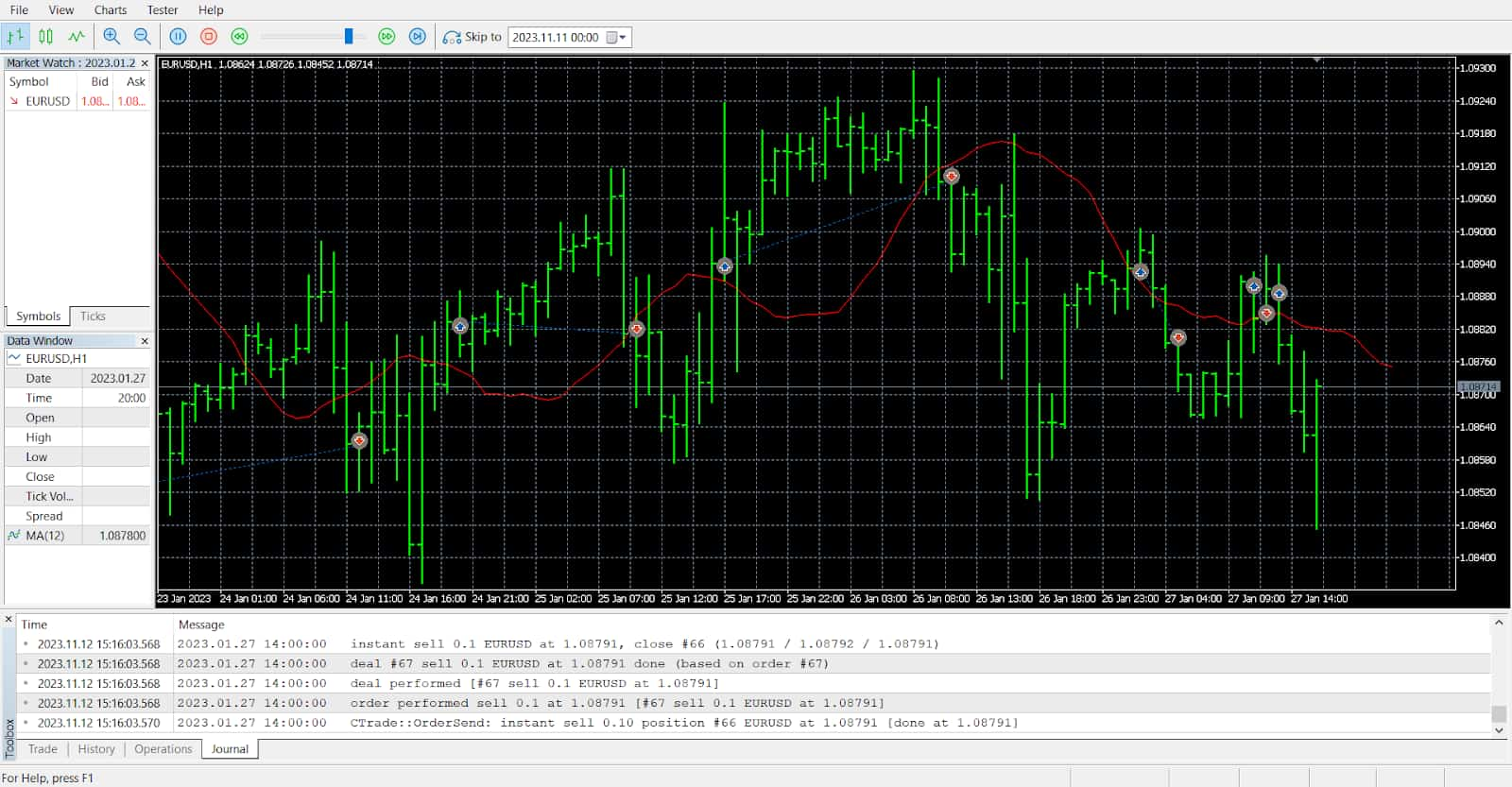
6. **Deciphering Trade Signal History: A Look Back at Algorithm’s Recommendations**Understanding past performance is crucial for evaluating any investment system, and SectorSurfer provides a detailed ‘Trade Signal History’ for each strategy. It’s vital to differentiate this from your ‘Actual Trade History’; the Trade Signal History, accessible by clicking the History icon, “is what the Strategy algorithm says one should have done to achieve the results portrayed on the charts.” It’s a comprehensive record of the system’s recommendations, not necessarily a log of your personal brokerage transactions.
This historical record provides a wealth of information, presenting “the entire history of trade signals, days held, performance for each holding compared to the S&P 500 and the cumulative value for both the Strategy and S&P 500 had you invested $10,000 in each at the start of the available data for the Strategy.” This granular data allows for a thorough review of how the algorithm has guided decisions over time, offering transparency into its effectiveness against a benchmark.
A common point of misunderstanding in interpreting this data relates to the performance attribution. As the context clarifies, “A common misinterpretation of the Trade Signal History data is that each line reports performance associated with the BUY fund. The correct interpretation is that it reports the status on the date found in the left-hand column. On the day of the Trade Signal Date, one has only just bought the BUY fund. Thus the performance data reported relates to the SELL fund.” This distinction is crucial for accurate analysis.
To illustrate this, consider the provided example: “On Jan 31, 2011 SectorSurfer signaled to BUY EWY and to sell IIH which had been held for 248 days. During the 248 day period from May 28, 2010, to Jan 31, 2011, the S&P 500 returned 19.5% and the Strategy returned 23.0%.” This clearly shows that the performance figures relate to the fund *sold*, representing the returns generated during its holding period. Additionally, when “StormGuard directs you to move to the safety of a money market fund,” the generic symbol “$CASH” is utilized, acknowledging that individual investors may have different money market fund options, all serving a similar purpose. For advanced data analysis, a convenient button at the bottom allows you to “download a CSV (comma separated variables) spreadsheet of all the important Strategy statistics and trade signal history,” including daily data for both the strategy and its reference fund.

7. **Interpreting Strategy Performance Charts: Your Visual Dashboard**For any investor, quickly grasping the performance of a strategy is paramount. SectorSurfer’s ‘Strategy Performance Charts’ provide an immediate, visual summary of a strategy’s efficacy, accessible simply by “clicking its Chart icon.” These charts are dynamic and responsive, offering fresh insights “within a few seconds whenever you make a change to a Strategy to enable evaluation of the change’s effects.” This real-time feedback loop is invaluable for iterative strategy refinement.
The charts are not static representations; they are continuously updated to reflect the latest data and any modifications you make. “Fresh charts are also produced: (a) during daily data update processing, (b) when a Strategy is imported to your list, and (c) when you change a fund in the Strategy or change its Minimum Hold Time.” This ensures that your visual dashboard is always current, providing an accurate reflection of your strategy’s performance characteristics.
SectorSurfer prides itself on its “Seven-In-One Charts,” an integrated display designed to offer a comprehensive view of risk and return. These powerful visualizations condense multiple critical metrics into a single, digestible format. Among the seven features presented are: “(1) a logarithmic price chart showing all of the Strategy’s constituent funds along with the S&P 500 Index plotted in white and the SectorSurfer’s results plotted in yellow; (2) a bar chart comparing the annualized return performance of the Strategy and the S&P 500 Index over 3-Years, 10-Years, and Max-Years; (3) the Sharpe Ratio measure of risk; (4) the 10-year maximum drawdown; (5) the probability of loss of real money; (6) the relative trend strength for each fund in the Strategy; and (7) the StormGuard Indicator.”
Each major element within these charts is designed for ease of use, featuring “popup explanatory text when you place the mouse pointer over it.” Some elements even go further by providing “clickable links to portions of this page,” ensuring that users can delve deeper into specific metrics or definitions as needed. This thoughtful design makes the charts not just data displays, but interactive learning tools, helping investors understand the ‘why’ behind the ‘what’ of their strategy’s performance.” , “_words_section1”: “1945
Having navigated the foundational aspects of SectorSurfer’s My Strategies page, we’ve established a robust understanding of its core functionalities. Now, it’s time to delve deeper into the sophisticated layers of advanced customization and detailed performance analysis that truly empower investors. This section will peel back the layers, revealing how SectorSurfer allows for granular control over strategy parameters, leverages historical data for richer modeling, streamlines trade execution, and provides comprehensive tools to meticulously evaluate investment outcomes. We’ll explore the nuanced features that transform mere market participation into strategic portfolio mastery.

8. **Strategy Information and Minimum Hold Time**The ‘Strategy Information’ popup window is your command center for personalizing and optimizing each investment strategy. Here, you can easily “rename it to something meaningful to you” and utilize ‘Strategy Notes editing’ to “better remember which investment account this Strategy is meant to control.” The ‘Strategy Classification’ provides a personal reference for investment style, and the ‘Strategy-ID number’ facilitates seamless sharing, allowing you to “copy and paste into an email so a friend can import an exact copy of the Strategy.”
A pivotal element is the ‘Strategy Minimum Hold Time’ setting. This parameter directly “control[s] when a Trade Alert can be issued” and is vital for ensuring compliance with various fund or plan regulations. For instance, “Fidelity Sector Funds all have a 30-day minimum hold time with a 0.75% early trading fee,” and “529 College Savings Plans have a one-year government mandated minimum hold time.” SectorSurfer proactively assists by maintaining a database of these hold times for “hundreds of popular funds.”
The platform offers “seven choices for the Strategy Minimum Hold Time,” giving users precise control over trade alert issuance, from “Trade Automatic” to specific durations like “Trade if >30 days” or “Trade if > 1 year.” “Trade Automatic” is the default, as it not only respects fund-specific rules but also capitalizes on the observation that “trend signals actually do become more reliable around the end of the month.” Note that changing this setting will cause the algorithm to “re-evaluate and determine what the best parameters are for the Strategy,” potentially altering the optimum trend measurement period.
Read more about: Beyond the Legends: 14 Forgotten Muscle Cars Ready for a Second Look and a Resurgence

9. **Selecting Funds and Stocks with Historical Context**The selection of appropriate ticker symbols forms the bedrock of any robust investment strategy, and SectorSurfer provides an expansive universe of choices. By “clicking the position of a ticker symbol,” the ‘Find a Fund, ETF or Stock’ popup window appears, enabling you to swiftly “search by either ticker symbol or by words in its name.” This intuitive interface ensures that identifying and adding desired investment vehicles is a seamless process.
With “in excess of 12,000 mutual funds and ETFs available,” the platform offers extensive flexibility. However, a crucial requirement is that a fund or ETF “has at least 3 years of data.” This is because “SectorSurfer’s algorithm cannot properly characterize a fund that has not seen a variety of market conditions,” posing a “risk [of] unexpected Strategy behavior in the future.” The platform advises against choosing funds with shorter histories based on superficial reasons, emphasizing that “long-term character matters.”
Beyond funds, SectorSurfer’s database contains “well over 3,000 U.S. Stocks.” Similar to funds, new stocks are generally not made available “until they have about 3 years of data” to ensure the algorithm can properly characterize them against diverse market conditions. Any change to a ticker symbol triggers a complete re-optimization of your strategy. “Each time you change one of the ticker symbols, SectorSurfer will re-make your Strategy chart so you can immediately see the effect of your changes.”
Read more about: Mark Cuban’s Ultimate Playbook: 15 Timeless Tips to Fortify Your Retirement Against Financial Disaster

10. **Leveraging Extended History Ticker Symbols**The depth of historical data for each ticker symbol profoundly influences projected strategy performance, especially during back-testing through significant market events. A common challenge arises when newer funds or ETFs lack sufficient data to model through past market crashes. For instance, modeling a strategy with SPDR sector ETFs and newer treasury funds like IEF or TLT is problematic because “neither of these ETFs has data that extends back past mid-2002,” preventing accurate modeling of the 2001-2002 crash.
SectorSurfer provides a sophisticated solution: “artificially extended versions of important modeling symbols.” This involves “adding on older data portions taken from another fund that can act as a proxy for this fund during earlier periods.” These extended symbols, identified by a hyphen (e.g., “SHY-“), enable investors to simulate newer funds’ performance over much longer historical periods, gaining a more complete understanding of a strategy’s resilience.
For leveraged ETFs (2x and 3x), the extension process is more intricate. “2x and 3x ETFs have other characteristics that require a scale factor somewhat less than would be expected from its name” due to “volatility, which causes daily rebalanced ETFs to decay over time.” SectorSurfer’s scale factors are meticulously “derived from actual performance comparisons during generally rising markets.” The platform offers an extensive list of these ‘Extended History Ticker Symbols,’ categorized for clarity, ensuring proper “initial tuning of the Strategy” for accurate outcomes.
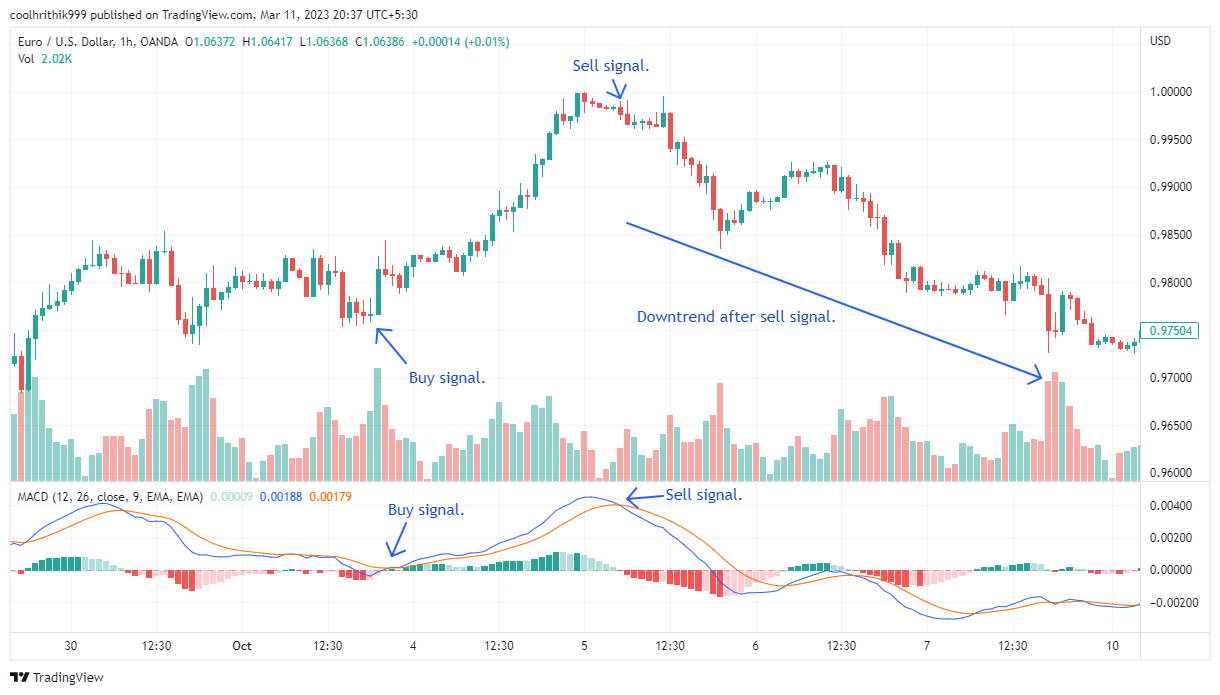
11. **Executing Trades and Acknowledging Signals**Beyond strategy design and performance analysis, SectorSurfer provides a clear framework for executing and managing your actual trades. The ‘BUY/SELL Trade’ section is where you interact directly with the system’s recommendations, viewing “trade details” such as “the trade signal date and BUY/SELL ticker symbol information.” A “red button to acknowledge completion of the recommended trade” informs SectorSurfer that “you have completed the task so that no further reminder emails will be sent” and updates your personal trade history.
The system employs special ticker symbols for specific market situations. When “StormGuard indicates it is time to move to/from the safety of a money market fund,” the generic symbol “$CASH” is used. For new strategies or cautious market conditions, “$WAIT” may appear, indicating “you should wait a bit for a better entry point.” For month-end trading strategies, “$WAIT” always resolves into a specific ticker symbol at month-end. Finally, “-NEW-” appears as the SELL symbol for brand new strategies with no prior acknowledged trades.
SectorSurfer also provides crucial contextual guidance. The ‘Warning or Special Trade Advice’ icon replaces the standard information icon if there’s a “special situation regarding the recommended trade,” such as “the current fund you own may have a stronger trend signal.” Clicking this reveals a message offering essential insights. The ‘Trade Options Information’ icon displays “four options for acknowledging this trade,” giving users choices from executing the trade immediately to delaying it, rejecting the strategy, or “Exit[ing] for the sidelines to sit in cash.” For personal records, the ‘View Strategy Trade History’ icon displays “all trades you have acknowledged, rejected, or that still may be pending.”
Read more about: Ford CEO Jim Farley’s ‘Epiphany’: A Deep Dive into the Crisis Facing Gen Z Factory Workers and the Future of America’s Essential Economy

12. **Advanced Chart Interpretation: Logarithmic Price Chart**While Section 1 briefly introduced the ‘Seven-In-One Charts,’ a deeper understanding of the ‘Logarithmic Price Chart’ is essential for truly appreciating a strategy’s nuanced performance. This chart offers distinct advantages for evaluating compounded returns over time, primarily through its “vertical interval spacing that provides the same percentage change for each interval.” This is a critical distinction from linear charts, which can visually distort performance over long periods.
On a logarithmic chart, “performance is measured relative to its price at the start of the chart — hence everything starts at 0.0% return on the left side and goes from there.” This normalized starting point allows for immediate, clear comparisons of percentage gains between different assets or strategies. For example, if “the first vertical interval above 0.0% is 41.4%,” it means a 41.4% gain, and the compounding effect is clearly illustrated as “the next interval up will be another 41.4% return, compounded on top.”
One of the most valuable features is its ability to visually represent consistent growth rates, as “a straight line represents a constant percent return per year.” This allows for a quick visual assessment of steady growth trajectories. The logarithmic chart displays “all of the Strategy’s constituent funds along with the S&P 500 Index plotted in white and the SectorSurfer’s results plotted in yellow.” Furthermore, the chart can be viewed in “three different time scales — 3-Years, 10-Years, and Max-Years,” offering flexibility, with intelligent adaptation for available data.

13. **Advanced Chart Interpretation: Annualized Returns and Sharpe Ratio**Beyond the dynamic visualization of the logarithmic price chart, SectorSurfer’s performance charts delve into crucial quantitative metrics for a complete understanding of strategy efficacy. Immediately below the logarithmic price chart is the ‘Annualized Return Bar Chart.’ This direct visual “compares the annualized return (average yearly return) performance of the Strategy to the S&P 500 Index over the most recent 3-Years, 10-Years, and Max-Years.” The ability to see these key performance indicators at a glance, alongside their numerical values, offers a rapid and clear assessment of how your strategy performs against a benchmark across different timeframes.
Another cornerstone of sophisticated performance evaluation is the ‘Sharpe Ratio Risk Measure.’ This metric, named after Nobel laureate William Sharpe, is “commonly used in the financial industry to measure an investment’s added return over that of a very safe money market fund relative to the higher investment risk taken.” It moves beyond just raw returns to incorporate risk, providing a more holistic view of an investment’s quality. A higher Sharpe Ratio indicates a better risk-adjusted return, making the interpretation of strategy efficiency accessible.
These core metrics are complemented by other vital indicators within the ‘Seven-In-One Charts’ that collectively provide a comprehensive risk and return profile. These include “(4) the 10-year maximum drawdown,” “(5) the probability of loss of real money,” “(6) the relative trend strength for each fund,” and “(7) the StormGuard Indicator.” Each major chart element offers “popup explanatory text” for clarity, and “clickable links to portions of this page” for deeper dives. This integration of visual data, quantitative analysis, and educational resources makes SectorSurfer’s performance charts an invaluable dashboard for informed decisions.
As we conclude our in-depth exploration of SectorSurfer’s My Strategies page, it becomes unequivocally clear that this platform is more than just a tool; it’s a comprehensive ecosystem designed for the modern investor. From the foundational definitions of a strategy to the intricate dance of algorithms, custom strategy crafting, and the advanced layers of strategies-of-strategies, every feature is engineered to put sophisticated investment power into your hands. The robust management features, detailed trade signal history, and the visually rich, analytically deep performance charts, including logarithmic views, annualized returns, and the all-important Sharpe Ratio, coalesce to provide an unparalleled level of control and insight. Whether you’re a seasoned enthusiast or looking to elevate your investment game, SectorSurfer demystifies market leadership and empowers you to navigate the financial seas with newfound confidence and precision. It truly represents the cutting edge of automated investment intelligence, allowing you to not just participate in the market, but to lead your portfolio with authority.