The 1960s, what a decade! Think groundbreaking designs, technological leaps, and the roar of iconic muscle cars like the Ford Mustang and Chevrolet Camaro. It was a time when the automotive world was truly finding its rhythm, constantly pushing the boundaries of what a car could be. Innovation was the name of the game, and manufacturers were eager to get their latest creations onto the bustling roads.
But here’s a little secret history often glosses over: not every shiny new model rolled off the assembly line to a chorus of cheers and roaring sales. For every legendary vehicle, there were a handful of head-scratchers, models that, for one reason or another, simply missed the mark. These weren’t just minor missteps; some were outright design disasters, engineering nightmares, or marketing blunders that left buyers—and sometimes even the companies themselves—with a serious case of buyer’s remorse.
So, buckle up, fellow gearheads and curious minds, as we take a rather unique journey back in time. We’re diving deep into the quirky, the perplexing, and the downright regrettable rides of the 1960s. Prepare to uncover the fascinating, often amusing, stories behind the cars that promised much but delivered little, highlighting the industry’s trial-and-error journey toward excellence. These aren’t just tales of failure; they’re valuable lessons wrapped in chrome and steel, reminding us that even in an era of innovation, not every bright idea shines.
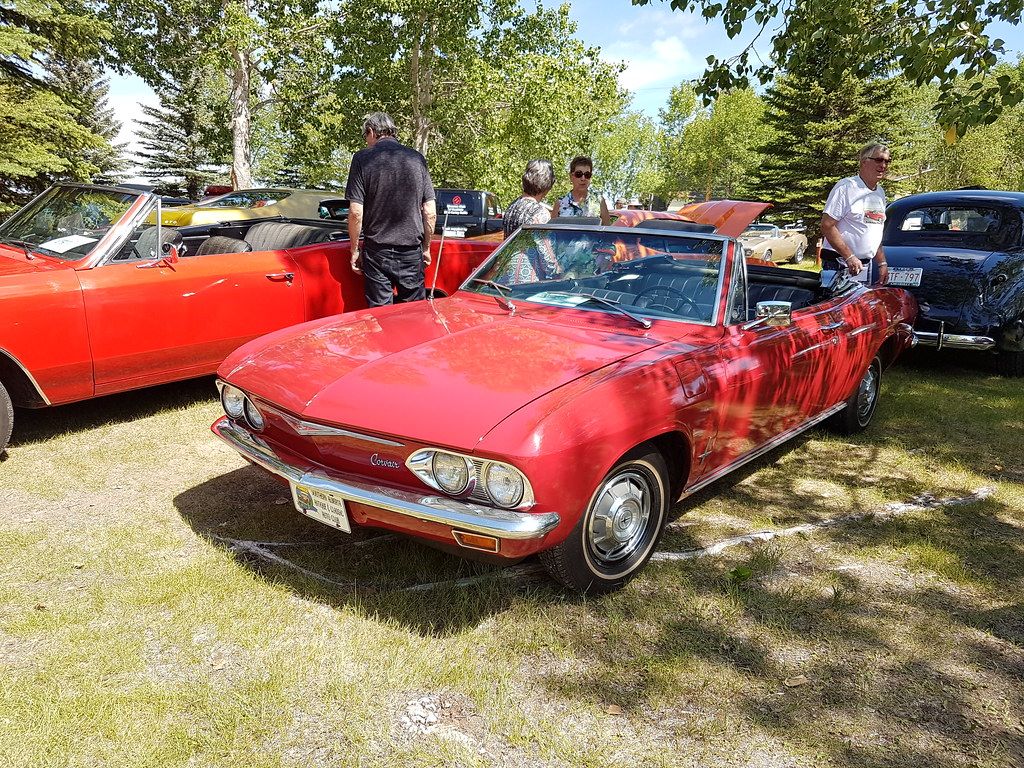
1. **Chevrolet Corvair (1960-1969)**The Chevrolet Corvair arrived on the scene with big ambitions, standing out from its American contemporaries with a distinctly European flavor. Its rear-mounted, air-cooled engine and independent suspension were innovative choices for an American mass-produced car. This bold approach aimed to offer a more compact, efficient, and nimble alternative to the large, V8-powered sedans dominating the market at the time. It was a car that dared to be different, sparking both admiration and apprehension.
However, the Corvair’s innovative engineering quickly became its Achilles’ heel. The swing-axle rear suspension design, while offering a comfortable ride, had a critical flaw. It was notorious for its tendency to cause severe oversteer, especially during hard cornering or sudden maneuvers. This characteristic meant the car could unexpectedly lose rear-wheel traction and spin out of control, making for a rather unsettling and, frankly, dangerous driving experience.
This inherent instability didn’t go unnoticed. Ralph Nader, the legendary consumer advocate, famously spotlighted the Corvair’s safety issues in his groundbreaking 1965 book, “Unsafe at Any Speed.” Nader’s sharp critique argued that General Motors had prioritized cost-cutting over safety, particularly regarding the car’s handling dynamics. His accusations ignited a public firestorm and forever linked the Corvair with serious safety concerns.
The fallout was swift and severe. General Motors found itself embroiled in over 100 lawsuits related to Corvair accidents, a staggering number that underscored the gravity of the car’s design flaws. The intense public scrutiny and legal battles surrounding the Corvair had a monumental impact, directly contributing to the establishment of the National Highway Traffic Safety Administration (NHTSA) in the U.S. and ushering in a new era of federal vehicle safety regulations.
Despite its brief moment of glory as a stylish and unconventional offering, the Corvair’s legacy is largely defined by its safety controversies. It serves as a stark reminder of the critical importance of rigorous design and testing in automotive engineering. While later models received improvements to address the suspension issues, the damage to its reputation was permanent, cementing its place as one of the most regrettable rides of the 1960s.
Read more about: Unsafe at Any Speed: The 12 Automotive Deathtraps That Reshaped Car Safety Forever

2. **Hillman Imp (1963)**The 1963 Hillman Imp was Britain’s ambitious answer to the wildly successful Mini, an attempt by the Rootes Group to capture a slice of the burgeoning compact car market. It was a car designed with modernity in mind, featuring a rear-mounted aluminum engine and a sophisticated all-synchromesh gearbox. On paper, it sounded like a promising contender, ready to challenge the dominance of its small-car rival and carve out its own niche.
Yet, for all its potential, the Imp unfortunately became a financial nightmare for its maker. It’s often been linked directly to the eventual downfall of the Rootes Group, a company that ultimately had to be acquired by Chrysler. A significant part of these financial woes stemmed from some truly unconventional, and ultimately problematic, engineering choices. Placing the engine in the rear and opting for a rear-wheel-drive layout was an odd decision for a car of its class, complicating manufacturing and maintenance.
Beyond its quirky layout, the Imp was plagued with a laundry list of reliability issues that quickly soured its reputation. Owners frequently faced vexing problems such as persistent overheating engines, a notorious flaw that led to costly repairs and frustrated drivers. To compound matters, the gearboxes and water pumps, critical components for any vehicle, had an alarming tendency to fail far too often, leaving owners stranded.
These chronic mechanical troubles meant the Imp spent more time in the repair shop than on the road for many. Such frequent breakdowns not only eroded customer confidence but also significantly increased the cost of ownership, making it a far less appealing option than its more dependable competitors. The promise of a modern British compact quickly faded under the weight of its technical woes, leading to plummeting sales.
Given these myriad troubles and its reputation for being a money pit, it’s not surprising that the Imp fell far short of matching the Mini’s sales success. It became a cautionary tale of overambition and under-execution, a car whose innovative spirit was ultimately crushed by fundamental reliability flaws. The Hillman Imp remains a poignant example of how even the best intentions can lead to one of the decade’s most regrettable automotive endeavors.
Read more about: More Bark Than Bite: 14 Classic Cars That Didn’t Quite Live Up to Their Legendary Looks

3. **Amphicar (1961)**Imagine a car that could effortlessly glide from highway to waterway, offering the ultimate freedom of both road and river. That was the audacious promise of the 1961 Amphicar, a German-made marvel that dared to combine the functionalities of an automobile and a boat. This innovative vehicle was certainly ahead of its time, capturing the imagination of anyone who dreamed of a truly versatile mode of transport. It was a bold, adventurous concept that hinted at a futuristic world of seamless travel.
However, the Amphicar, for all its inventive spirit, tried to be a jack-of-all-trades but ultimately turned out to be a master of neither. Its performance capabilities were decidedly modest, whether on land or in water. On the open water, it was rather sluggish, managing a mere 7 knots, which isn’t exactly a thrilling pace for a boat. On terra firma, its top speed was only 70 mph, placing it firmly in the realm of everyday commuter cars, not speed demons.
The vehicle’s dual nature introduced unique engineering challenges, particularly concerning its steering system in aquatic environments. While navigating water, the Amphicar relied solely on its front wheels for steering, a method that made it significantly less agile and responsive than a typical boat. This limitation meant that precise maneuvering in water was often a cumbersome and frustrating experience, dampening the appeal of its amphibious capabilities.
Moreover, the very design required to make it watertight added considerable weight and complexity, compromising its efficiency and handling in both domains. The novelty of being able to transition from road to lake was undeniably cool, but the practical shortcomings in performance and usability often overshadowed this unique feature. It was a vehicle that embodied an incredible concept but struggled with the execution required to make it truly practical or enjoyable.
Despite its flaws, there was one great thing about it, a feature that was as cool as it was unique: you could simply park it in the water. This quirky capability often drew smiles and stares, serving as a testament to its singular nature. While the Amphicar never achieved widespread commercial success, it remains a charming and fascinating footnote in automotive history, a testament to the era’s willingness to experiment, even if the result was a bit more peculiar than practical.
Read more about: 19 Hilariously Useless Cars Ever Made

4. **Subaru 360 (1968)**The 1968 Subaru 360, a tiny “kei car” from Japan, found considerable success in its home market, where its compact size and fuel efficiency were perfectly suited for crowded cities and narrow streets. It was an economical and practical solution for many Japanese families, embodying the spirit of post-war ingenuity. However, when this diminutive vehicle made its way to the North American market, its reception was a dramatically different story, highlighting a stark mismatch between its design philosophy and American consumer expectations.
One of the primary reasons the Subaru 360 even made it to the U.S. market was its incredibly lightweight design. This characteristic, perhaps unintentionally, allowed it to skirt around certain American automotive safety standards that applied to heavier vehicles. While this loophole facilitated its importation, it raised immediate red flags about the car’s inherent safety and structural integrity, setting the stage for public and critical disapproval.
Critics didn’t hold back their punches, immediately labeling it the “ugliest car” to grace American roads, a harsh judgment that spoke volumes about its unconventional aesthetics compared to the larger, more flamboyant American cars of the era. Beyond its polarizing looks, its performance was, to put it mildly, painfully slow. The car was notorious for taking a staggering 37.5 seconds to go from 0 to 60 mph, a pace that made merging onto highways a terrifying, if not impossible, ordeal.
Safety-wise, the Subaru 360 didn’t inspire much confidence either, and for very good reasons. Its structure was so frail that in crash tests conducted at a mere 30 mph, the bumper was almost ineffective, offering minimal protection to occupants. This alarming lack of structural robustness only reinforced the perception that the car was a genuine hazard on American roads, further alienating potential buyers and intensifying its negative reputation.
With its combination of questionable safety, glacial acceleration, and unappealing aesthetics, it’s not hard to see why the 360 is often remembered as one of the worst cars of the 1960s. It stands as a powerful testament to the challenges of adapting a vehicle designed for one market to the entirely different demands and regulatory landscapes of another. The Subaru 360’s American adventure was, by all accounts, a regrettable misstep.
Car Model Information: 2021 Subaru Crosstrek Base
Name: Subaru 360
Aka: Subaru 450
Manufacturer: Subaru
Production: 1958–1971
Assembly: Subaru#Manufacturing facilities,Ōta, Gunma
Class: Microcar
BodyStyle: Sedan (car),cabrio coach,station wagon
Engine: List of Subaru engines#Two Cylinder,List of Subaru engines#Two Cylinder,List of Subaru engines#Two Cylinder
Length: 117.7 in
Abbr: on
Disp: flip
Width: 51.2 in
Wheelbase: 70.9 in
Height: 54.3 in
Weight: 900 lb
Successor: Subaru R-2
Doors: Suicide doors
Layout: RR layout
Related: Subaru Sambar
Designer: Shinroku Momose
Categories: 1960s cars, 1970s cars, Articles with short description, Cars discontinued in 1971, Cars introduced in 1958
Summary: The Subaru 360 is a rear-engined, two-door city car manufactured and marketed by Subaru from 1958 to 1971. As the company’s first mass-produced automobile, production reached 392,000 over its 12-year model run.
Noted for its small overall size, 450 kg (1,000 lb) curb weight, monocoque construction, swing axle rear suspension, fiberglass roof panel, and rear-hinged doors, the inexpensive car was designed in response to the Japanese government’s light car or Kei car regulations and its proposal for a larger “national car,” both intended to help motorize the post WWII Japanese population. The 360’s overall size and engine capacity complied with Japan’s Kei car regulations.
Nicknamed the “ladybug” in Japan, and ultimately superseded by R-2, the 360 was one of Japan’s most popular cars and was available in a single generation in two-door, station wagon (“Custom”), “convertible” (a sedan with a roll-back fabric roof) and sporting variants. The two-door sedans’ model code is K111, while the wagon is known as K142. Ten thousand were sold in the United States, imported by Malcolm Bricklin and advertised as “Cheap and Ugly.”
The nameplate 360 derived from its tax-limited engine displacement: 356 cc.
Get more information about: Subaru 360
Buying a high-performing used car >>>
Brand: Subaru Model: 360
Price: $20,000 Mileage: 51,370 mi.
Read more about: From Flop to Coveted Classic: Unearthing the Most Notorious ‘Worst’ Cars of the Mid-20th Century That Now Command Respect

5. **NSU Ro 80 (1967)**The NSU Ro 80, launched in 1967, was a truly forward-thinking automobile that seemed poised to revolutionize the automotive world. It boasted a sleek, aerodynamic design that looked like it belonged to a future decade, setting it apart from its contemporaries. More importantly, it featured a revolutionary Wankel rotary engine, a bold piece of engineering that promised smoother operation, fewer moving parts, and impressive power output from a compact unit. It was a vision of innovation wrapped in an elegant package.
However, it was this very engine—the car’s most defining and ambitious feature—that ultimately became its Achilles’ heel. The Wankel rotary engine, while smooth and compact, suffered from severe reliability issues that quickly overshadowed all of its advantages. Owners frequently reported rapid wear of the rotor tip seals, a critical component that led to a cascade of problems and significantly reduced the engine’s lifespan.
These fundamental design flaws resulted in notoriously poor fuel economy, draining owners’ wallets at the gas pump, and, more distressingly, frequent breakdowns. It wasn’t uncommon for Ro 80 owners to face multiple engine replacements within the car’s early life, leading to immense frustration and skyrocketing maintenance costs. This chronic unreliability transformed a cutting-edge technological marvel into a maintenance nightmare, severely tarnishing its otherwise stellar reputation.
Despite its truly innovative design and comfortable ride, the Ro 80’s engine problems proved to be a fatal blow. The sheer cost of warranty repairs and engine replacements placed an unsustainable financial burden on NSU, contributing directly to the company’s financial troubles and eventual acquisition by Volkswagen. It’s a classic tale of a brilliant concept brought down by a critical flaw in execution, a car that was simply too far ahead of its time for its core technology to be reliable.
The NSU Ro 80 stands as a bittersweet symbol of 1960s automotive ambition. It showcased stunning design and groundbreaking engineering, but its revolutionary engine was simply not ready for prime time. Its legacy is a stark reminder that innovation, however brilliant, must be paired with unwavering reliability to achieve true success, making it one of the decade’s most fascinating, yet regrettable, experiments.
Car Model Information: 2020 RAM 1500 Laramie
Name: NSU Ro 80
Manufacturer: NSU Motorenwerke
Production: 1967–1977
Assembly: Neckarsulm
Designer: Claus Luthe
Class: Executive car
BodyStyle: sedan (car)
Layout: FF layout
Engine: Wankel engine,115 PS
Abbr: on
Transmission: Fichtel & Sachs
Wheelbase: 112.6 in
Disp: flip
Length: 188.2 in
Width: 69.3 in
Height: 55.5 in
Weight: convert
Successor: Audi 100#Audi 100, 200 and 5000 (C2, 1976–1982)
Categories: 1970s cars, All articles needing additional references, All articles with unsourced statements, Articles needing additional references from February 2015, Articles with short description
Summary: The NSU Ro 80 is a four-door, front-engine executive sedan manufactured and marketed by the West German firm NSU from 1967 until 1977.
Noted for innovative, aerodynamic styling by Claus Luthe and a technologically advanced powertrain, the Ro 80 featured a 84 kW (113 bhp), 995 cc (60.7 cu in) twin-rotor Wankel engine driving the front wheels through a semi-automatic transmission with an innovative vacuum-operated clutch system. Engine dimensions (Comotor units): length 412 mm (16.2 in); width 340 mm (13 in), height 340 mm (13 in), weight 101 kg (223 lb). Power 80 kW (107 hp) at 6,500 rpm; torque 137 N⋅m (101 lbf⋅ft) at 3,000 rpm (all figures approximate).
The Ro 80 was voted Car of the Year for 1968 and 37,398 units were manufactured over a ten-year production run, all in a single generation.
Get more information about: NSU Ro 80
Buying a high-performing used car >>>
Brand: NSU Model: Ro 80
Price: $36,995 Mileage: 64,342 mi.
Read more about: Cruise Nights to Forgotten Rides: Boomer Classics Millennials *Need* to Experience
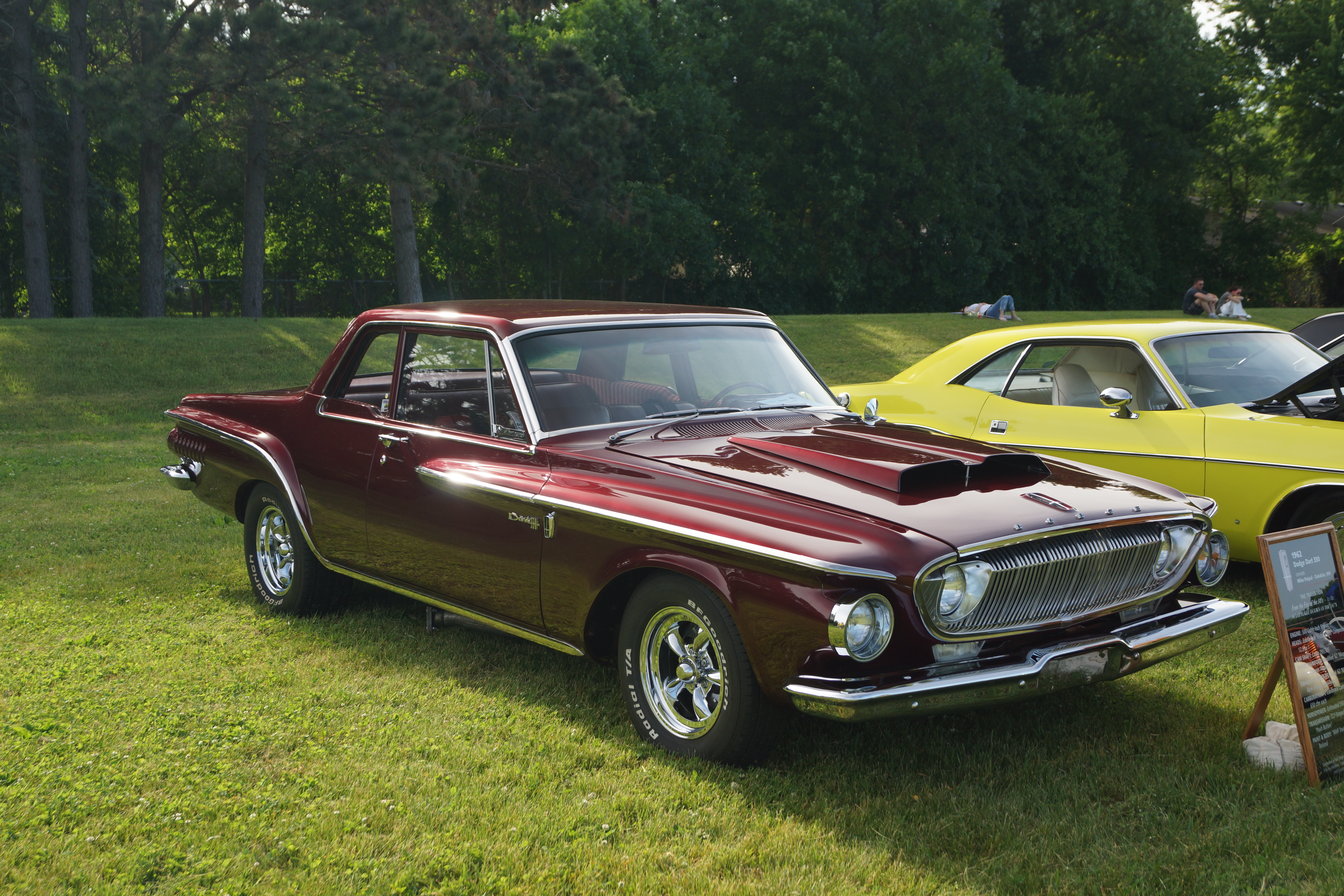
6. **Dodge Dart (1962)**When the Dodge Dart first rolled out in the early 1960s, it was intended to be a compact car, designed to compete in a rapidly growing segment that valued efficiency and maneuverability. However, the initial models of the Dart conspicuously missed this crucial mark. While later years would see significant improvements and a more focused identity, the early Darts were criticized for their surprisingly oversized bodies, which seemed out of place in the compact market. This made them less nimble and economical than key rivals, a fundamental miscalculation.
What makes the early Dart particularly intriguing is the curious paradox it presented. Despite its struggles in the compact segment, the Dart certainly had muscle under the hood, with engine options that could include powerhouses delivering over 400 hp. This capability solidified its status as a muscle car, appealing to those who sought raw power. However, its external styling was a different story altogether and didn’t receive the same positive reception as its engine prowess.
The Dart’s design was quite unique for its time, featuring a front end with distinctly droopy headlights that lent the car a somewhat comical, almost mournful, look. It was an aesthetic choice that certainly polarized opinion, standing out but not necessarily in a flattering way. The rear design didn’t do the car any favors either, giving the unsettling impression that the car was trying to go in two entirely different directions at once, creating a sense of visual dissonance.
These daring, yet widely criticized, styling choices led to mixed reactions from both the public and critics. It became clear very quickly that the design needed a rethink. As a result, Dodge had to quickly revisit the design board, acknowledging the feedback and rolling out a significantly redesigned version for the 1963 model year. This rapid design overhaul served as a tacit admission that the original styling had indeed been a misstep.
The 1962 Dodge Dart, therefore, became a memorable example of a car caught between identities, simultaneously powerful yet stylistically perplexing. Its journey from an intended compact to an awkward muscle car, and its quick dash back to the drawing board for a styling correction, truly cemented its place as one of the more regrettable and curious entries in the automotive annals of the 1960s.
Car Model Information: 2015 Dodge Dart SXT
Name: Dodge Dart
Caption: 1966 Dodge Dart GT 2-door hardtop
Manufacturer: Dodge
Production: 1959–1976 (US market)
ModelYears: 1960–1976 (US market)
Class: Full-size
Layout: FR layout
Predecessor: Dodge Coronet#Fourth generation (1957–1959)
Related: Plymouth Valiant,Chrysler Valiant,Dodge Phoenix
Successor: Dodge Aspen,Dodge Diplomat,Talbot Tagora
Categories: 1970s cars, All articles with unsourced statements, Articles with short description, Articles with unsourced statements from December 2023, Articles with unsourced statements from May 2025
Summary: The Dodge Dart is a line of passenger cars produced by Dodge from the 1959 to 1976 model years in North America, with production extended to later years in various other markets.
The production Dodge Dart was introduced as a lower-priced full-size model in 1960 and 1961, but became a mid-size car for one model year for 1962, and was then reduced to a compact for two generations, from 1963 to 1976.
Chrysler had first used ‘Dart’ name plates on two Italian styled show cars, in 1956 and 1957, before it became a Dodge model name. The Dart nameplate was resurrected for a Fiat-derived compact car that was introduced in 2012.
Get more information about: Dodge Dart
Buying a high-performing used car >>>
Brand: DODGE Model: DART
Price: $9,995 Mileage: 143,082 mi.
Read more about: How Well Do You Know Classic Cars? Try Taillight Identification Quiz

7. **Plymouth Valiant (1960-1976)**The Plymouth Valiant, while eventually becoming a popular and long-running model, had a decidedly rocky start in the early 1960s, particularly with its 1961 and 1962 iterations. From its inception, the Valiant was noted for a rather unique design aesthetic that, while distinctive, wasn’t universally admired. Critics and the public alike often criticized its odd styling, which was famously likened to an “angry kitchen appliance,” a descriptor that perfectly captured its unconventional and somewhat jarring appearance.
The Valiant’s early years were not only marked by polarizing looks but also by genuine reliability issues. A notable problem with the 1961 model was its tendency to overheat, posing an inconvenient, and at times risky, problem for drivers. Plymouth attempted to address these early setbacks with the subsequent release, aiming for improvements that would rectify the initial flaws and enhance its appeal. However, as with many such efforts, they didn’t quite hit the mark.
Indeed, they seemed to miss the mark again with their 1962 version, at least from a design perspective. This model was characterized by a questionable and somewhat haphazard combination of various styling elements, resulting in an aesthetic that did the car no favors. Its appearance was a bit ofilter, featuring an oddly proportioned bustle-back trunk, peculiar taillights that seemed out of place, and fender bulges that appeared out of sync with the rest of the car’s overall design. It was a patchwork approach to styling that lacked cohesion.
Regarding performance, the Valiant was generally considered just average, failing to inspire much excitement or confidence on the road. It was typically equipped with an inline-6 engine that produced between 101 and 145 hp. While adequate for basic commuting, this power output was barely sufficient for a car weighing around 2,750 lbs. This left much to be desired in terms of driving dynamics, with many drivers wishing for more responsiveness and pep.
Despite its rocky start and the early criticisms regarding its design and performance, the Valiant line grew in popularity over time. Plymouth continued to refine and improve the design and engineering, addressing many of the initial shortcomings. This transformation underscores a valuable lesson: while initial impressions can be challenging, persistence and iterative improvements can sometimes turn a regrettable beginning into a long-standing success story in the automotive world.
Car Model Information: 1967 Plymouth Valiant
Name: Plymouth Valiant
Caption: 1969 Plymouth Valiant Signet 2-door sedan
Manufacturer: Plymouth (automobile)
Production: 1959–1976
Class: Compact car
Platform: Chrysler A platform
Layout: FR layout
Successor: Plymouth Volaré
Categories: 1970s cars, 1976 disestablishments, All articles with unsourced statements, Articles with short description, Articles with unsourced statements from August 2019
Summary: The Plymouth Valiant (first appearing in 1959 as simply the Valiant) is an automobile which was marketed by the Plymouth division of the Chrysler Corporation in the United States from the model years of 1960 through 1976. It was created to give the company an entry in the compact car market emerging in the late 1950s and became well known for its excellent durability and reliability. It was one of Chrysler’s best-selling automobiles during the 1960s and 1970s helping to keep the company solvent during an economic downturn. Road & Track magazine considered the Valiant to be “one of the best all-around domestic cars”.
The Valiant was also built and marketed, with or without the Plymouth brand, worldwide in countries including Argentina, Australia, Brazil, Canada, Finland, Mexico, New Zealand, South Africa, Sweden, and Switzerland, as well as other countries in South America and Western Europe. Its compact size, by American standards, allowed it to be sold as a large car in Europe and elsewhere, without being too large for local conditions.
Get more information about: Plymouth Valiant
Buying a high-performing used car >>>
Brand: Plymouth Model: Valiant
Price: $37,900 Mileage: 23,456 mi.
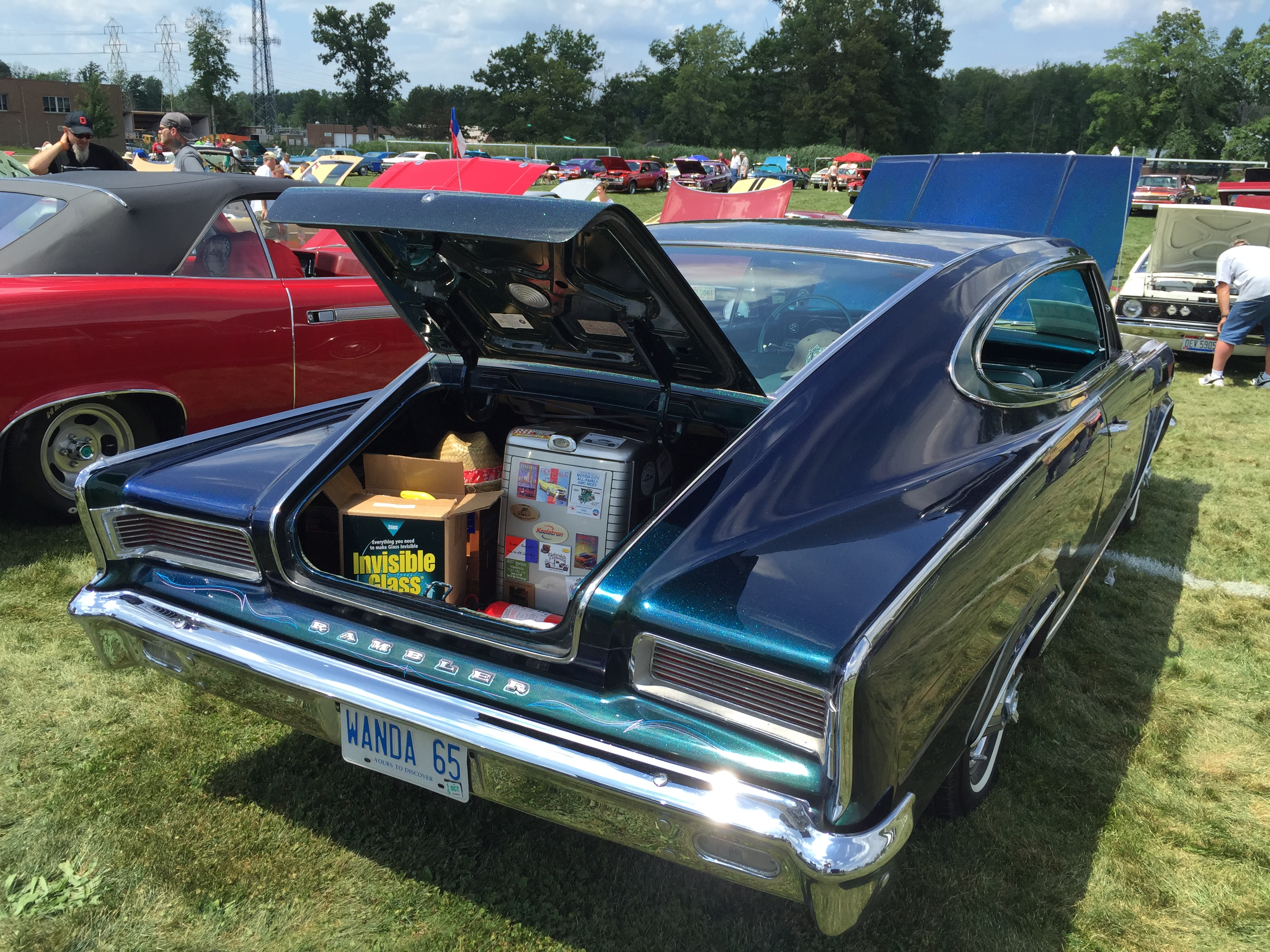
8. **AMC Rambler Marlin (1965)**The American Motors Corporation (AMC) introduced the Marlin in 1965, hoping to capitalize on the burgeoning interest in sporty fastback cars. It was marketed as a personal luxury coupe, aiming to blend upscale comfort with a sleek, performance-oriented aesthetic. This was AMC’s clear bid to enter a popular and rapidly growing niche within the competitive automotive market of the mid-sixties.
However, the Marlin was, in many ways, a stylistic misadventure right from its very inception. Its foundation was unexpectedly based on the mid-sized Rambler Classic, a family sedan known primarily for its practicality and sensible design rather than its dynamism or sporty prowess. This underlying platform led directly to a disproportionate and ultimately rather awkward appearance for what was intended to be a stylish and desirable sport coupe.
The car’s polarizing aesthetics were not its only significant shortcoming; the Marlin’s performance also decidedly failed to match its sporty pretensions. Buyers who expected a thrilling ride found themselves instead with lackluster engine options that struggled to deliver any genuine excitement. This was coupled with mediocre handling characteristics that hardly inspired confidence on winding roads or during spirited driving. It was a vehicle that simply couldn’t live up to the athletic image it desperately tried to project, falling flat in key areas.
Predictably, its sales figures proved to be deeply disappointing, failing significantly to capture the hearts or wallets of consumers who clearly preferred more cohesive designs and genuinely spirited drives. The model was ultimately discontinued in 1967, marking a short-lived and, frankly, rather forgettable chapter for AMC. Even AMC designer Bob Nixon, a man intimately involved with its creation, famously and starkly called it “one of our worst production cars,” a candid admission that speaks volumes about its ultimate failure.

9. **Ford Anglia (1962)**Ford, as one of the oldest and most established car companies globally, has undoubtedly experienced its fair share of both soaring successes and regrettable downs. The 1962 Ford Anglia, unfortunately, falls firmly into the latter category, often securing its place in discussions as one of the worst Fords produced during the dynamic 1960s. Its introduction came at a crucial time when consumer expectations for reliable, responsive, and genuinely enjoyable drives were steadily increasing across the board.
From the crucial perspective of the driver, the Anglia was plagued by a myriad of issues that made every journey less than ideal. Owners consistently reported poor handling characteristics, making the car feel unstable and unpredictable on various road surfaces. This was compounded by notoriously unresponsive steering, which required excessive effort and offered little feedback, transforming even simple turns into a wrestling match.
These fundamental mechanical flaws certainly made navigating daily roads a genuine challenge for drivers. Such significant drawbacks undeniably detracted from the overall driving experience, fostering frustration rather than the pleasure one expects from a personal vehicle. It simply wasn’t built for a spirited or even a comfortably controlled drive, which was a major letdown for many.
Despite these glaring performance and handling deficiencies, one aspect where the Anglia undeniably did stand out was its design. Its rather unique and unconventional appearance truly set it apart from many other cars crowding the roads of the era. This distinctiveness gave it a memorable, if not universally admired, place in automotive history, proving that sometimes, being visually striking doesn’t necessarily equate to being good, or even practical, for that matter.
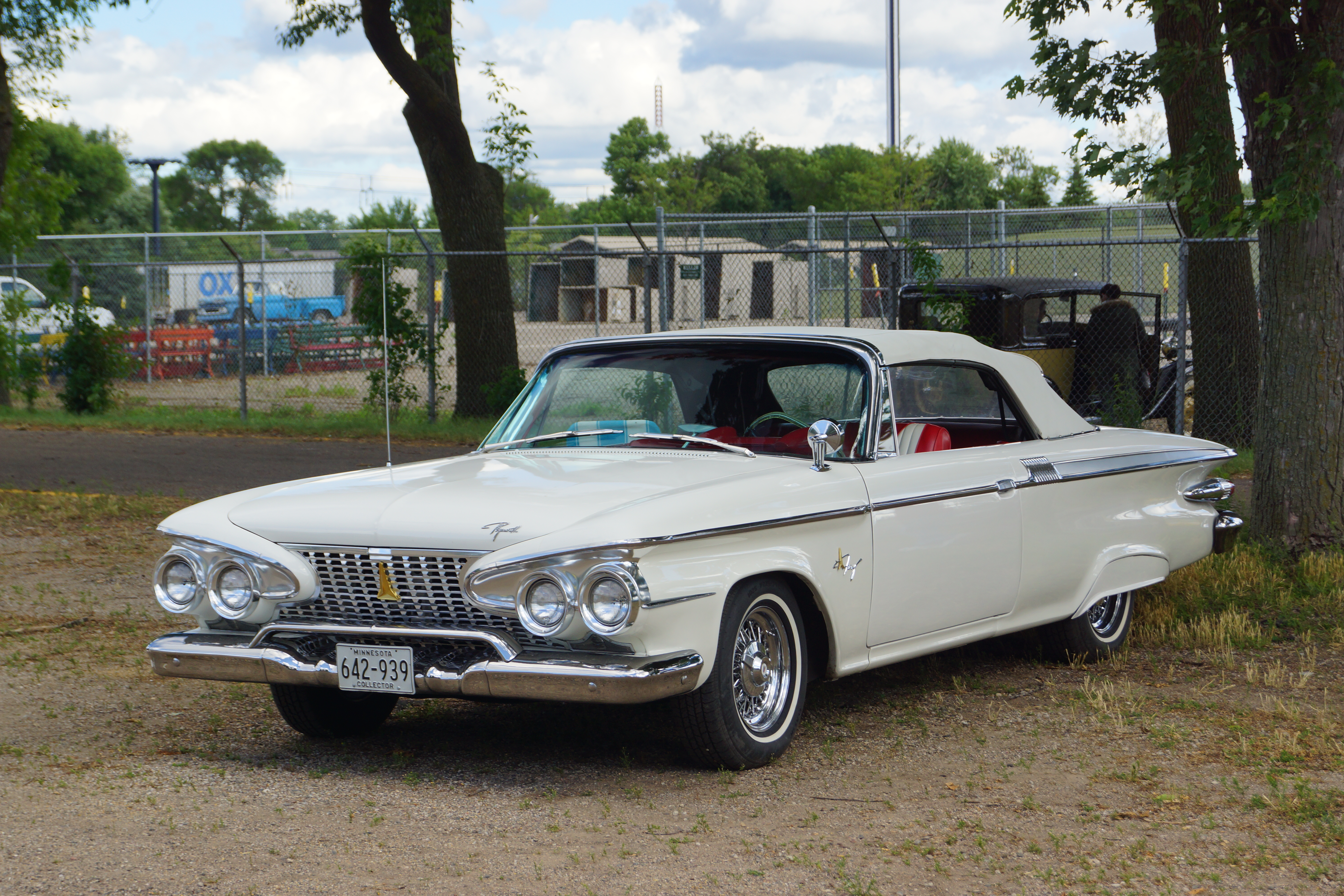
10. **Plymouth Fury (1961)**The 1961 Plymouth Fury, much like its contemporary, the Valiant, appeared to be a veritable mishmash of daring and sometimes questionable design experiments. It seemed as though Plymouth was pushing the boundaries of automotive aesthetics, for better or for worse, in a bold new direction. Living up to its fierce and evocative name, the Fury featured a distinctive front design that, to many, gave it a look of constant aggression, as if perpetually ready to pounce.
This aggressive stance was thanks, in no small part, to the exaggerated ‘brows’ positioned conspicuously over the headlights, a stylistic flourish that was quite polarizing. These distinctive overhangs weren’t merely confined to the front fascia; they extended dramatically around the sides and continued all the way to the back of the car, creating a consistent, if somewhat imposing, visual theme. It was an aesthetic that undeniably demanded attention, though perhaps not always garnering the right kind of admiration.
Plymouth clearly aimed for a highly stylish and avant-garde touch with the Fury’s dramatically sloped roofline, intending to give it a sleek and modern profile. However, this particular design choice, while visually striking, resulted in a significant and quite inconvenient compromise on practicality, notably reducing precious headroom for passengers seated in the rear. This oversight often left back-seat occupants feeling cramped and uncomfortable on longer journeys.
The only real exception to this headroom constraint was, rather unsurprisingly, if one opted for the convertible model, which naturally offered an abundance of open air and thus, more headspace. Despite its undeniably bold and visually impactful design, the Fury’s fundamental practical limitations ultimately cemented its place as a standout example of form significantly trumping function in the early 1960s automotive landscape, making it a head-turner but not always a comfortable ride.
Car Model Information: 1960 Plymouth Fury
Name: Plymouth Fury
Caption: 1959 Plymouth Sport Fury
Manufacturer: Plymouth (automobile)
Aka: Plymouth Sport Fury (1959, 1962–1971),Plymouth VIP (1966–1969)
Production: 1958–1978
ModelYears: 1959–1978
Assembly: bulleted list
Class: Full-size,Mid-size,Full-size,Mid-size,Full-size,Mid-size
Layout: FR layout
Predecessor: Plymouth Belvedere,Plymouth Plaza,Plymouth Savoy
Successor: Plymouth Gran Fury,Plymouth Gran Fury
Sp: us
Categories: 1960s cars, 1970s cars, All articles needing additional references, Articles needing additional references from December 2018, Articles with short description
Summary: The Plymouth Fury is a model of automobile that was produced by Plymouth from 1955 until 1989. It was introduced for the 1956 model year as a sub-series of the Plymouth Belvedere, becoming a separate series one level above the contemporary Belvedere for 1959. The Fury was a full-size car from 1959 until 1961, then a mid-size car from 1962 until 1964, again, a full-size car from 1965 through 1974, and again, a mid-size car from 1975 through 1978. From 1975 until 1977, the Fury was sold alongside the full-size Plymouth Gran Fury. In 1978, the B-body Fury was the largest Plymouth, and by 1979, there was no large Plymouth. This product gap was filled in 1980 with the R-body Gran Fury, followed by the M-body Fury in 1982. Production of the last V8, RWD Plymouth Fury ended at the Kenosha Main assembly plant in Kenosha, WI, on December 23, 1988. Unlike its sibling brand, Dodge, Plymouth would not live to see the resurgence of the large, V8/RWD sedan.
Get more information about: Plymouth Fury
Buying a high-performing used car >>>
Brand: Plymouth Model: Fury
Price: $75,000 Mileage: 44,509 mi.
Read more about: The 37 Ugliest Cars Ever Made: Automotive Design Fails

11. **Maserati Mistral (1963-1970)**The 1967 Maserati Mistral encapsulated Italian design elegance, boasting a truly stunning body and impressive power that promised an exhilarating driving experience. It truly had all the makings of a classic grand tourer, emanating an aura of sophistication and undeniable speed, drawing eyes wherever it went. It seemed poised to conquer the hearts of discerning enthusiasts with its striking looks and potent performance.
However, despite these initial promises, the Mistral was ultimately let down by its execution, becoming notorious for persistent electrical and mechanical reliability issues. Owners often found themselves grappling with unexpected breakdowns and frustrating, often expensive, repairs, dimming the luster of its powerful engine. The dream of effortlessly cruising often turned into a frustrating mechanical puzzle.
Its complex mechanics and susceptibility to rust only added to the burden, requiring meticulous and costly maintenance to keep it running smoothly and looking its best. This reputation for fragility meant that the thrill of driving was often overshadowed by the anxiety of potential problems, transforming ownership into a high-stakes commitment rather than pure enjoyment.
These myriad problems, coupled with its inherently high cost of acquisition and upkeep, made the Mistral a particularly challenging car for even the most ardent enthusiasts to truly love. It was a beautiful, powerful machine, yes, but one that demanded a constant, costly commitment from its owners, ultimately leading to a reputation for being a beautiful yet impractical vehicle in the grand scheme of automotive history.
Car Model Information: 1967 Maserati Mistral 4000
Name: Maserati Mistral
Caption: 1967 Maserati Mistral
Manufacturer: Maserati
Production: 1963–1970,968 produced
Aka: Maserati 2 Posti,Maserati 4000 GT
Designer: Pietro Frua
Class: Grand tourer
Layout: Front-engine, rear-wheel-drive layout
BodyStyle: coupé
Engine: Straight-six engine
Transmission: ZF Friedrichshafen,Manual transmission
Wheelbase: convert
Length: convert
Width: convert
Height: convert
Weight: convert
Predecessor: Maserati 3500 GT
Successor: Maserati Ghibli#Ghibli .28AM115.29
Sp: uk
Categories: 1970s cars, All articles needing additional references, All articles with unsourced statements, Articles needing additional references from June 2019, Articles with short description
Summary: The Maserati Mistral (Tipo AM109) is a 2-seat gran turismo produced by Italian car manufacturer Maserati between 1963 and 1970. The successor to the 3500 GT, it was styled by Frua and bodied by Maggiora of Turin. A total of 844 coupés and 124 Spyders were built.
Named after a cold northerly wind of southern France, it was also the first in a series of classic Maseratis to be given the name of a wind. The Mistral was succeeded by the Ghibli gran turismo, which overlapped production from 1967 on.
Get more information about: Maserati Mistral
Buying a high-performing used car >>>
Brand: Maserati Model: Mistral
Price: $67,500 Mileage: 0 mi.

12. **Chrysler Imperial Crown Southampton (1960)**The 1960 Imperial Crown Southampton was Chrysler’s bold attempt to make a definitive mark in the premium automobile segment. It aimed squarely at established rivals like Cadillac, seeking to establish itself as a pinnacle of American luxury, design, and engineering prowess. It was clearly designed to make an unforgettable statement on the boulevards of America, asserting its presence with audacious styling.
However, the car’s undeniably over-the-top styling raises significant questions about the prevailing automotive preferences of that era, and indeed, about its own fundamental design choices. It was, in many ways, a visual statement that, for many observers, simply went a step too far, pushing the boundaries of good taste and practical aesthetics to their very limits.
Its design was undeniably quite a statement, but it certainly could have been executed with more refinement and foresight. The massive fins, a ubiquitous design element of the time, already seemed curiously outdated and perhaps even exaggerated when the car was first released, giving it a somewhat anachronistic feel. The placement of the taillights, positioned conspicuously at the very ends of these towering fins, was an unconventional choice that didn’t quite resonate with contemporary automotive aesthetics or practical visibility.
Perhaps the most telling critique came from the car’s own esteemed designer, the legendary Virgil Exner, who himself acknowledged the questionable nature of the design. He once famously and quite candidly referred to it as a ‘Frankenstein,’ a strong self-critique from its creator that speaks volumes about its polarizing looks and fundamental design missteps, firmly cementing its place as a regrettable ride.
Car Model Information: 2023 Dodge Charger GT
Name: Imperial
Logo: Imperial chrysler brand logo.png
LogoSize: 150
Type: division (business)
Industry: Automotive industry
Fate: Chrysler Imperial
Predecessor: Chrysler Imperial
Founded: 1955
Founder: Chrysler
Defunct: [object Object]
HqLocationCity: Detroit
HqLocationCountry: United States
Products: Luxury vehicle
Parent: Chrysler
Categories: 1960s cars, 1970s cars, All articles with dead YouTube links, All articles with dead external links, All articles with specifically marked weasel-worded phrases
Summary: Imperial was the Chrysler Corporation’s luxury automobile brand from 1955 until 1975 and again from 1981 through 1983.
The Imperial name had been used since 1926 as a Chrysler luxury model, the Chrysler Imperial. In 1955, the automaker repositioned and launched the Imperial as a separate make and division to better compete with its North American rivals, Lincoln and Cadillac.
The Imperial would feature new or modified body styles introduced every two to three years, all with V8 engines and automatic transmissions, as well as technologies that would later be introduced in Chrysler Corporation’s other models.
Get more information about: Imperial (automobile)
Buying a high-performing used car >>>
Brand: Chrysler Model: Imperial Crown Southampton
Price: $26,990 Mileage: 19,257 mi.

13. **Mercury Comet Cyclone (1964)**The 1964 Mercury Comet Cyclone finds itself nestled in the burgeoning shadows of the muscle car era of the ’60s. This was a time celebrated for introducing some of the most iconic and undeniably powerful muscle cars in history, vehicles that truly captured the spirit of speed, raw horsepower, and unapologetic automotive aggression, setting new standards for performance.
The Cyclone, despite its sporty name and rather aggressive appearance, struggled significantly to live up to the burgeoning expectations of this high-performance segment. While it aimed for the muscle car market, it often fell short in delivering the visceral thrill that buyers in this category desperately sought. In its highest trim, it came equipped with a 289 cubic-inch V8 engine, a respectable offering for sure, and one that promised a decent level of power.
But here’s the rub: that V8 engine, while a good effort, only churned out a modest 271 hp. This figure, while not insignificant in isolation, paled significantly when compared to the formidable output of its contemporaries, such as the wildly popular and more potent Pontiac GTO. The GTO was, at the same time, setting new benchmarks for muscle car performance, making the Cyclone seem underpowered in comparison.
Consequently, the Cyclone struggled immensely to attract buyers in a market absolutely brimming with more compelling and powerful options that offered a greater bang for the buck. By August 1964, Mercury had only managed to build 7,454 Cyclones, a number starkly lower than the approximately 32,000 Pontiac GTOs produced in the same timeframe, a testament to its struggle. This dramatic contrast in production numbers vividly highlights the Cyclone’s uphill battle to stand out and truly compete in a fiercely competitive, power-hungry segment.
Car Model Information: 2023 Dodge Charger GT
Name: Mercury (Comet) Cyclone
Caption: 1971 Mercury Cyclone GT
Manufacturer: Mercury (automobile)
ModelYears: 1964–1971
Class: Muscle car
Layout: FR layout
Predecessor: Mercury Comet
Successor: Mercury Cougar#Third generation (1974–1976)
Related: Mercury Comet,Ford Fairlane (Americas),Mercury Montego,Ford Torino Talladega
BodyStyle: coupe
Categories: 1970s cars, Articles with short description, Cars introduced in 1964, Commons category link from Wikidata, Coupés
Summary: The Mercury Cyclone is an automobile that was marketed by the Mercury division of Ford from 1964 to 1971. Introduced in 1964 as the Mercury Comet Cyclone, the Cyclone replaced the S-22 as the performance-oriented version of the Mercury Comet model line. The Cyclone became a distinct nameplate for the 1968 model year, as the Mercury Montego was phased in to replace the Comet.
Within Mercury, the Cyclone was positioned between the Cougar pony car and the Marquis/Marauder full-size two-doors. Though largely overshadowed by the Cougar, the Cyclone was positioned as a muscle car, representing the Mercury brand in racing as a clone of the Ford Fairlane Thunderbolt.
Four generations of the Cyclone were produced, with production ending after the 1971 model year. For the 1972 model year, the Cyclone returned as an option package for the Montego; only 30 examples were produced. Within the Mercury line, the Cyclone was not directly replaced. The Cougar XR7 was repackaged as a personal luxury version of the Montego for 1974.
Get more information about: Mercury Cyclone
Buying a high-performing used car >>>
Brand: Mercury Model: Comet Cyclone
Price: $26,990 Mileage: 19,257 mi.
Read more about: Unearthing the Roaring Truth: 10 Key Differences Between Ford and Mercury Classic Muscle Cars

14. **Cadillac Eldorado (1967-1968)**The late 1960s models of the Cadillac Eldorado are often viewed through a critical lens, particularly for their noticeable shift away from raw performance towards an almost singular focus on ostentation and grandiosity. It was a move that, in hindsight, didn’t quite align with the evolving demands of the market, which was slowly beginning to value more balanced automotive attributes.
Boasting a heavy, bulky design, these Eldorados presented a truly formidable and imposing presence on the road, embodying a certain kind of unapologetic American luxury. However, this substantial heft, combined with a notoriously fuel-thirsty engine, rendered the car rather impractical for the burgeoning market demands of the time, where considerations of efficiency were slowly gaining traction among consumers.
The emphasis was unequivocally on luxury and prestige, seemingly at the expense of efficiency and long-term reliability. This strategic choice, prioritizing opulence and grandeur, ultimately made the Eldorado less desirable among a growing segment of luxury car buyers who were increasingly seeking a harmonious blend of lavish comfort, respectable performance, and practical dependability.
While undeniably a symbol of luxury and American automotive excess, the Eldorado of this era inadvertently became a cautionary tale of how a singular focus on grandeur without adequately balancing performance and practicality can ultimately miss the mark in a rapidly changing and increasingly discerning automotive landscape. It was a statement, but one that perhaps spoke a language few were still listening to.
Conclusion
Car Model Information: 1976 Cadillac Eldorado Convertible
Caption: 1963 Cadillac Eldorado Convertible
Name: Cadillac Eldorado
Manufacturer: Cadillac
Production: 1952–2002
Layout: Front-engine, rear-wheel-drive layout
Aka: Cadillac Fleetwood Eldorado
Class: Personal luxury car
Successor: Cadillac CTS
Categories: 1960s cars, 1970s cars, 1980s cars, 1990s cars, 2000s cars
Summary: The Cadillac Eldorado is a luxury car manufactured and marketed by the Cadillac Motor Car Division of General Motors from 1952 until 2002, over twelve generations.
The Eldorado was at or near the top of the Cadillac product line. The original 1953 Eldorado convertible and the Eldorado Brougham models of 1957–1960 had distinct bodyshells and were the most expensive models offered by Cadillac during those years. The Eldorado was never less than second in price after the Cadillac Series 75 limousine until 1966. Beginning in 1967, the Eldorado retained its premium position in the Cadillac price structure, but was manufactured in high volumes on a unique, two-door personal luxury car platform.
The Eldorado carried the Fleetwood designation from 1965 through 1972, and was seen as a modern revival of the pre-war Cadillac V-12 and Cadillac V-16 roadsters and convertibles.
Get more information about: Cadillac Eldorado
Buying a high-performing used car >>>
Brand: Cadillac Model: Eldorado
Price: $28,499 Mileage: 31,898 mi.
The 1960s were a period of great innovation and experimentation in the automotive world. However, not all experiments result in success. The cars discussed here were created with an ambitious, sometimes groundbreaking intent but were ultimately flawed. These models remind us that progress often comes with setbacks and that failure is another step toward success. These ‘regrettable rides’ offer fascinating glimpses into the challenges of balancing ambition with execution, and the enduring lessons learned from vehicles that, for better or worse, left their unique mark on history.