Ford, a name synonymous with American automotive innovation, has graced the world with some of the most iconic vehicles in history. From the revolutionary Model T that put America on wheels to the enduring popularity of the Mustang, their lineup boasts numerous successes that have shaped the industry. Yet, even the greatest artists have their missteps, and Ford is certainly no exception to this universal truth. This journey through automotive history will dive into the eccentric and often debated designs that didn’t quite hit the mark, exploring models that raised eyebrows, drew criticism, and became legendary for all the wrong reasons.
At the heart of Ford’s legacy beats the powerful pulse of the Mustang. Since 1964, America’s favorite pony car has been punishing the pavement and dominating drag strips the world over, commanding accolades like ‘powerful, beautiful, iconic.’ However, like any beauty queen with a history of transformations, it hasn’t always been pretty. The storied Mustang has undergone a number of changes since its fateful debut, and not every idea can be a winner. Car designers are human just like us, and sometimes they make mistakes, leading to some truly regrettable examples.
As we revisit some of the most egregious mistakes to ever darken the door of your local Ford dealer, we’ll see just what kind of glue factory candidates have been sired by this champion thoroughbred. Beyond the Mustang, we’ll also examine other Ford models that, for whatever reason, simply missed their mark, becoming the butt of a joke or two along the way. Get ready to explore the models that taught Ford — and us — valuable lessons about design, performance, and what truly resonates with the enthusiast community. Truly, we live in the golden age of muscle cars today, where both incredible performance and decent fuel economy can be found in cars like the Mustang. Even at every-man prices, and that’s something to be excited about, especially when looking back at these less-than-stellar moments.

1. **1969 Ford Mustang E: The Fuel-Sipper That Nobody Wanted**When most consumers purchase a Mustang, they do so with the intent of having a blast behind the wheel. Therefore, it stands to reason that many were mystified by Ford’s 1969 decision to produce a Mustang so underwhelming that most have forgotten it existed. Nonetheless, the 1969 Ford Mustang E did see the light of day, much to the despair of performance enthusiasts. This particular model, signifying ‘Economy,’ was an anomaly in the Mustang lineup, seemingly created to contradict everything the pony car stood for.
This underpowered pony car came equipped with a 4.1-liter inline-six engine, capable of producing no more than 155 horsepower. To further dampen any semblance of performance, it featured 2.33:1 gears at the back, ensuring that no matter how much you floored it, you were absolutely not, under any circumstances, going to have fun in this car. It was a stark departure from the raw power typically associated with the Mustang brand, leaving many scratching their heads about its purpose.
The reasoning behind the Mustang E’s existence was simple: Ford’s fuel-sipping Mustang was intended for use in the MobilGas Economy Run. During this annual race, production vehicles traversed 1,900 miles between Los Angeles and Kansas City in a bid for fuel-efficient supremacy. It was probably one of the ugliest manifestations of the ’70s oil crisis: muscle cars trying to be fuel-efficient. The very concept clashed with the Mustang’s inherent identity as a performance machine.
Luckily, only 50 of the 1969 Ford Mustang E were ever produced, leading to hope that few remain to tarnish the Mustang’s legacy. If you ever see one, the advice is clear: run the other way, because it certainly won’t catch you. Its extreme rarity today might make it a curiosity, but its original reception cemented its place as a forgotten, underperforming chapter in Mustang history.
Car Model Information: 2008 Ford Mustang GT Premium
Name: Ford Mustang
Caption: 2018 Ford Mustang GT 5.0
Aka: Ford T5 (Germany)
Manufacturer: Ford Motor Company
Production: March 1964 – present
ModelYears: 1965–present
Class: Unbulleted list
BodyStyle: Unbulleted list
Layout: Front-engine, rear-wheel-drive layout
Categories: 1970s cars, 1980s cars, 1990s cars, 2+2 coupés, 2000s cars
Summary: The Ford Mustang is an American automobile manufactured and marketed by Ford since 1964, as Ford’s longest nameplate in continuous production. Currently in its seventh generation, it is the fifth-best selling Ford car nameplate. The namesake of the “pony car” automobile segment, the Mustang was developed as a highly styled line of sporty coupes and convertibles derived from existing model lines, initially distinguished by its pronounced “long hood, short deck” proportions.
Originally predicted to sell 100,000 vehicles yearly, the 1965 Mustang became the most successful vehicle launch since the 1927 Model A. Introduced on April 17, 1964 (16 days after the Plymouth Barracuda), over 400,000 units were sold in its first year; the one-millionth Mustang was sold within two years of its launch. In August 2018, Ford produced the 10-millionth Mustang; matching the first 1965 Mustang, the vehicle was a 2019 Wimbledon White convertible with a V8 engine.
The success of the Mustang launch led to multiple competitors from other American manufacturers, including the Chevrolet Camaro and Pontiac Firebird (1967), AMC Javelin (1968), and Dodge Challenger (1970). It also competed with the Plymouth Barracuda, which was launched around the same time. The Mustang also had an effect on designs of coupes worldwide, leading to the marketing of the Toyota Celica and Ford Capri in the United States (the latter, by Lincoln-Mercury). The Mercury Cougar was launched in 1967 as a unique-bodied higher-trim alternative to the Mustang; during the 1970s, it included more features and was marketed as a personal luxury car.
From 1965 until 2004, the Mustang shared chassis commonality with other Ford model lines, staying rear-wheel-drive throughout its production. From 1965 to 1973, the Mustang was derived from the 1960 Ford Falcon compact. From 1974 until 1978, the Mustang (denoted Mustang II) was a longer-wheelbase version of the Ford Pinto. From 1979 until 2004, the Mustang shared its Fox platform chassis with 14 other Ford vehicles (becoming the final one to use the Fox architecture). Since 2005, Ford has produced two generations of the Mustang, each using a distinct platform unique to the model line.
Through its production, multiple nameplates have been associated with the Ford Mustang series, including GT, Mach 1, Boss 302/429, Cobra (separate from Shelby Cobra), and Bullitt, along with “5.0” fender badging (denoting 4.9 L OHV or 5.0 L DOHC V8 engines).
Get more information about: Ford Mustang
Buying a high-performing used car >>>
Brand: Ford Model: Mustang
Price: $16,785 Mileage: 81,832 mi.

2. **1974 Ford Mustang Mach 1: The Iconic Nameplate’s Powerless Plunge**In the world of Ford Mustangs, the Mach 1 namesake carries substantial weight. After all, Mach 1 Mustangs of the late 1960s and early 70s were never short on power and came standard with the formidable 351CI V8. Ford even offered several sporty variations of the Mustang in its earlier years, including the GT, Boss 302, and Shelby GT500, with options all the way up to the famed 428 Super Cobra Jet. The Mach 1 was off to a raging start in 1969, embodying raw American muscle.
Perhaps this is why so many consumers were appalled at the 1974 Mustang Mach 1’s release. This version of the famed Mach 1 simply fell flat. It came standard with an improbable 2.8-liter V6, a powerplant so weak that it is dwarfed today by virtually every minivan on the streets. This weak-kneed engine would limp its way to a stomach-turning 105 horsepower, barely outperforming bumper cars at county fairs nationwide.
For most consumers, there was little to love about the 1974 Mach 1. The dramatic drop in power from its predecessors led to less than outstanding sales and widespread disappointment. Mustang enthusiasts expected performance, not a compromise, especially under a badge as revered as ‘Mach 1.’ The car’s inability to live up to its heritage was a major blow to its reputation and sales figures.
In an attempt to right the ship, Ford offered the 1975 Mach 1 with an available 302 cubic-inch Windsor V8. However, this engine, rated at an uninspiring 140 horsepower, truly was of little actual improvement. The upside of this model was the presence of a stick shift, giving frustrated Mach 1 owners something to slam around while enduring the interminable 13.5-second crawl to 60 mph. It was a pathetic apology that did little to restore the Mach 1’s performance credibility.
Car Model Information: 2025 Genesis GV80 2.5T
Name: Ford Mustang Mach 1
Manufacturer: Ford Motor Company
Assembly: Dearborn, Michigan
Production: 1969–1978,2003–2004,2021–2023
Class: Muscle car
BodyStyle: coupe
Layout: FR layout
Categories: 1970s cars, 2000s cars, 2020s cars, All Wikipedia articles written in American English, All articles needing additional references
Summary: The Ford Mustang Mach 1 is a combination performance and appearance package offered as an option for the Ford Mustang.
It first appeared in August 1968 for the 1969 model year, and ran through 1978. After a long hiatus it briefly returned in 2003-2004, and most recently between 2021 and 2023.
The first generation of the package, available with various engines, debuted at its hottest, then was progressively eroded in performance as emissions controls, unleaded gas, fleet mileage quotas, and higher gasoline prices undercut the “horsepower wars” that had originally spurred the option. Similarly, early packages included other performance upgrades, such as suspension, that were deleted in subsequent model runs, leaving only a wide array of external and interior upgrades.
As part of a Ford heritage program, the Mach 1 package returned in 2003 as a high-performance version of the New Edge platform. Visual elements paying homage to the 1969 model were integrated into the design. This generation of the Mach 1 was discontinued after the 2004 model year, with the introduction of the fifth generation Mustang.
The Mach 1 returned again in 2021 in the sixth generation Mustang, offering marginally more power than the high-performance 5.0 L Coyote V-8 in the base GT V8, but borrowing front and rear subframes from the Shelby GT350 and various parts from it and the Shelby GT 500 models. It was produced until the debut of the seventh generation Mustang following the 2023 model year.
Get more information about: Ford Mustang Mach 1
Buying a high-performing used car >>>
Brand: Ford Model: Mustang Mach 1
Price: $54,355 Mileage: 19,781 mi.
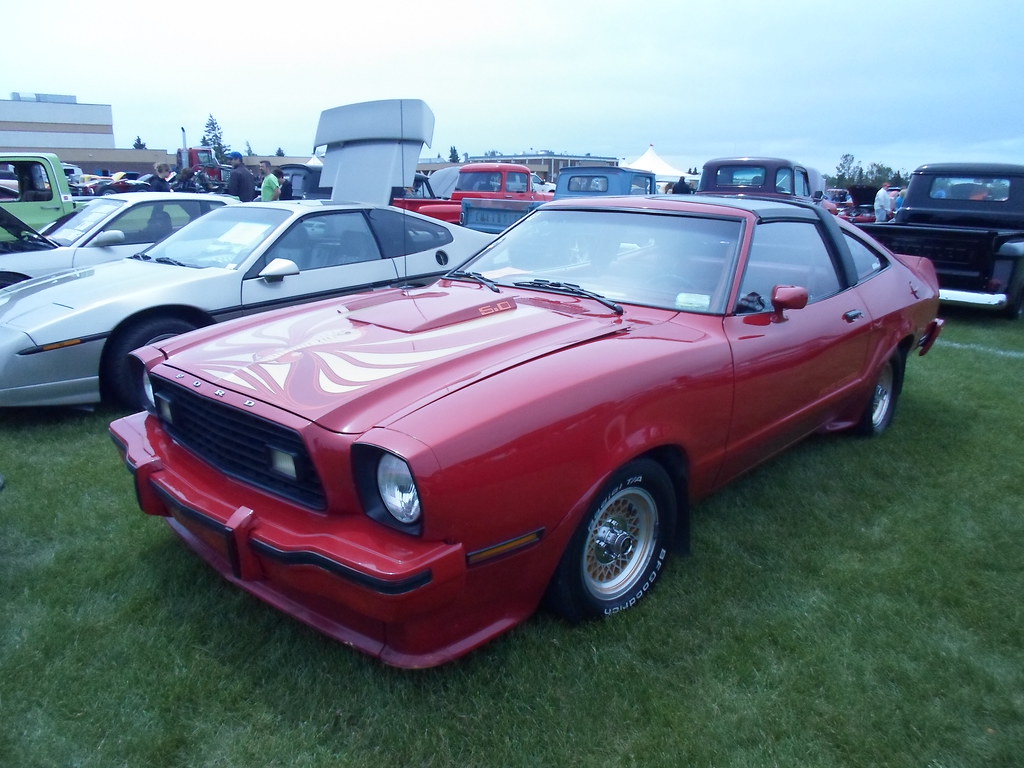
3. **Ford Mustang II: The Pinto-Based Purist’s Nightmare**The Ford Mustang II is all too easy to hate. Produced from 1974-1978, this lackluster pony car looked more like a rehashed sedan and performed like your grandma’s grocery-getter, much to the disdain of Mustang purists. Following the immense success of the original Mustang, the Mustang II was widely seen as a significant letdown, primarily due to its underwhelming performance and questionable design choices. It strayed far from the muscular aesthetic that defined its predecessors.
Initially, the Mustang II was offered without an available V8, leaving consumers to choose between an abysmal 84 horsepower four-banger or an undeniably anemic inline-six. This was a radical departure for a car famed for its V8 power. The fundamental issue stemmed from its platform; it was based on the subcompact Pinto, making it significantly smaller and inherently less powerful than earlier Mustangs. This move sacrificed the very essence of what Mustang enthusiasts cherished.
Finally, in 1975, the Mustang was once again offered with an available V8, though it too was grossly underpowered, barely reaching 140 horsepower. Despite these significant drawbacks, the Mustang II sold, and sold quite well at that, especially during the oil crisis when fuel efficiency gained prominence. In fact, MotorTrend even named the Mustang II “Car Of The Year” for 1974, a decision that has puzzled enthusiasts for decades.
However, this initial success, like the Mustang II itself, has not aged well. Most now remember the Mustang II as a reimagined Ford Pinto, a vehicle notorious for its own set of controversies. Its attempt to be more fuel-efficient and practical during a challenging economic period ultimately came at the cost of the raw power and muscular presence that defined the Mustang legend, solidifying its place as a low point in the brand’s history.
Car Model Information: 2025 Genesis GV80 2.5T
Name: Second generation
Caption: Ford Mustang II coupe
Aka: Ford Mustang II , Ford T5 (in Germany)
Class: Pony car,Subcompact car
Production: 1973–1978
ModelYears: 1974–1978
Predecessor: Ford Mustang (first generation)
Successor: Ford Mustang (third generation)
Assembly: Unbulleted list
Layout: Front-engine, rear-wheel-drive layout
BodyStyle: coupé,hatchback
Related: Ford Pinto,Ford Pinto
Manufacturer: Ford Motor Company
Engine: ubl
Transmission: ubl
Wheelbase: cvt
Length: cvt
Width: cvt
Height: cvt
Designer: Buck Mook, Dick Nesbitt
Categories: All articles with dead external links, All articles with unsourced statements, Articles with dead external links from April 2024, Articles with permanently dead external links, Articles with short description
Summary: The second-generation Ford Mustang, marketed as the Ford Mustang II, is a two- or three-door, four-passenger, front-engine/rear-drive pony car manufactured and marketed by Ford from 1973 until 1978. Introduced in September 1973 for the 1974 model year, the Mustang II arrived roughly coincident with the oil embargo of 1973 and subsequent fuel shortages. Developed under Lee Iacocca, it was an “entirely new kind of pony car.” Ford “decided to call it Mustang II, since it was a new type of pony car designed for an era of high gas prices and fuel shortages.”
The Mustang II was 490 lb (222 kg) lighter and almost 19 in (483 mm) shorter than the 1973 Mustang, and derived from the subcompact Pinto platform. While sharing a limited number of driveline components with the Pinto, the Mustang II employed an exclusive subframe, isolating its front suspension and engine mount subframe. The steering used a rack-and-pinion design.
Named Motor Trend’s 1974 Car of the Year and reaching over 1.1 million sales over four years of production, the Mustang II is noted simultaneously for both its marketing prescience and strong sales – while criticized as having abandoned essential aspects of the Mustang heritage and described, in a retrospective after 40 years since its introduction, as embodying the Malaise era.
Get more information about: Ford Mustang (second generation)
Buying a high-performing used car >>>
Brand: Ford Model: Mustang II
Price: $54,355 Mileage: 19,781 mi.
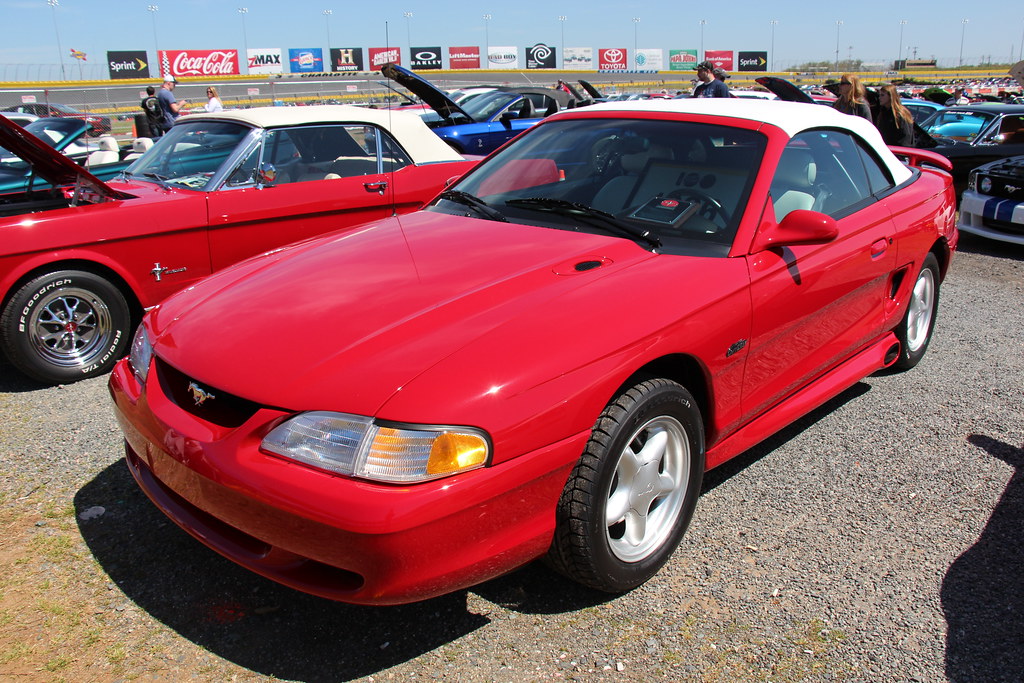
4. **1999 Ford Mustang SVT Cobra: The Horsepower Promise That Fell Short**The 1999 Mustang SVT Cobra would almost certainly have avoided a place on this list had Ford ensured that it was capable of performing as advertised. In fact, it was the SVT Cobra’s inability to live up to its manufacturer’s promises that drew widespread bad press and a significant loss of consumer trust. For a performance-oriented vehicle like an SVT Cobra, integrity in specifications is paramount, and this model unfortunately fell short.
Original sales literature from Ford advertised the 1999 SVT Cobra’s total output at an impressive 320 horsepower. This figure was a key selling point, promising exhilarating performance to eager buyers. However, studious consumers, along with a host of independent dyno tests conducted by automotive publications and enthusiasts, soon proved this claim to be false. The discrepancy was undeniable and deeply troubling for a flagship performance model.
In reality, the 1999 SVT Cobra produced little more than 280 horsepower, falling approximately 40 horsepower shy of that which was so prominently advertised. This significant horsepower deficit was not just a minor oversight; it was a fundamental misrepresentation that eroded confidence in Ford’s Special Vehicle Team (SVT). The backlash was immediate and severe, forcing the company to take drastic action to rectify the situation.
Ford was soon forced to admit their mistake, ultimately recalling all 1999 SVT Cobras for further upgrade. Recalled units were fitted with new intake manifolds and exhaust systems in a bid to achieve true output ratings in excess of 320 horsepower. This costly and embarrassing recall underscored the importance of accurate performance figures and served as a stark reminder that even revered performance divisions can stumble when promises don’t align with reality.
Car Model Information: 2019 Hyundai SANTA FE 2.0T Limited
Caption: 2004 Ford Mustang SVT Cobra
Name: Ford SVT Mustang Cobra
Manufacturer: Special Vehicle Team
Production: 1993–2004 (79,958 produced)
Assembly: Dearborn, Michigan
Class: Pony car
BodyStyle: 1993:,hatchback,coupe,convertible
Successor: Shelby Mustang#2007.E2.80.932009 Ford Shelby GT500
Platform: Ford Fox platform
Layout: Front-engine, rear-wheel drive layout
Categories: 2000s cars, All articles with specifically marked weasel-worded phrases, Articles with short description, Articles with specifically marked weasel-worded phrases from July 2025, Cars introduced in 1993
Summary: The Ford SVT Mustang Cobra (also known as “SVT Mustang Cobra, SVT Cobra,” or simply as “Cobra”) is a pony car that was built by American automobile manufacturer Ford Motor Company’s Special Vehicle Team division (or SVT) for the 1993 to 2004 model years.
The SVT Cobra was a high-performance version of the Ford Mustang and was considered the top-of-the-line variant, being positioned above the Mustang GT and Mach 1 models during its production run. On three occasions, the race-ready, street-legal SVT Cobra R variant was produced in limited numbers.
The SVT Cobra was succeeded by the Mustang Shelby GT500 which was introduced for the 2007 model year.
Get more information about: Ford Mustang SVT Cobra
Buying a high-performing used car >>>
Brand: Ford Model: Mustang SVT Cobra
Price: $20,142 Mileage: 80,163 mi.
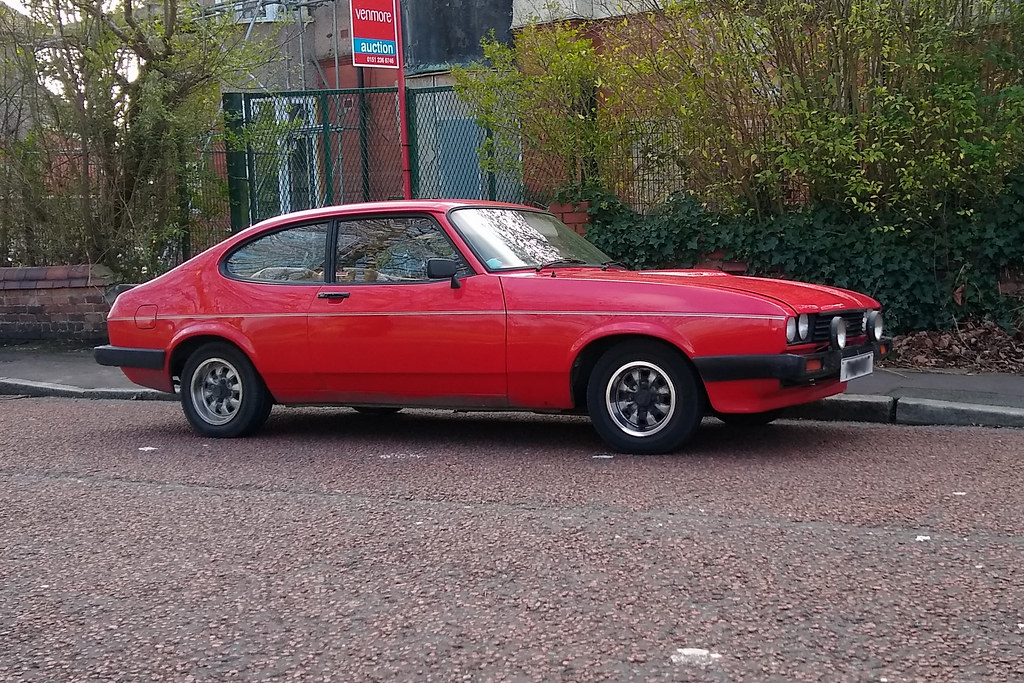
5. **Any V6 Mustang: The Perennial Second-Best, Lacking V8 Soul**The Mustang is, and should always be, a performance-oriented vehicle. Therefore, it is only natural that the Mustang comes equipped with a V8 beneath its hood, thundering with unbridled power. Nonetheless, Ford still tends to offer their famed pony car with an optional V6 engine, a decision that has consistently sparked debate and dissatisfaction among the most dedicated Mustang enthusiasts. For many, this choice fundamentally compromises the Mustang’s identity.
This offering is seen by many Mustang enthusiasts as nothing short of an abomination of sorts. To most, a Mustang is simply not a Mustang without a V8 thundering beneath its hood. The distinctive rumble, the raw power, and the historical connection to American muscle cars are all intrinsically linked to the V8 engine. Without it, the car loses a significant part of its soul, becoming a mere shadow of what it truly should be.
Because of this deeply held belief, all V6 Mustangs earn a rightful, albeit regrettable, spot on this list. No matter the generation of production, a 6-cylinder Mustang is simply not as collectible—nor anywhere near as powerful in most cases—as its V8-equipped counterparts. While a V6 Mustang is certainly still a Mustang in name, its performance and character often fall short of the expectations set by the legendary badge it wears, struggling to inspire the same level of passion and respect.
Sure, not every V6 is bad inherently; as a matter of fact, some of them can be downright fun to drive in other applications. But this isn’t about making fun cars; Mustang is about making champions, about pushing boundaries and dominating the road. While a V6 Mustang is always objectively better than, say, walking, it doesn’t really garner much more praise than that. After all, even the four-cylinder SVO models had a turbocharger, 200 hp, and a factory Hurst shifter, setting a higher bar. V6 Mustangs are a perennial second-best, a close but no cigar, going-through-the-motions kind of sports car.
Having explored the specific missteps within the legendary Mustang lineage, our journey now expands to encompass other Ford models that, despite Ford’s ambitious intentions, faced their own share of design challenges and public scrutiny. These vehicles, from ambitious failures to polarizing experiments, offer further insights into the complexities of automotive aesthetics and consumer acceptance, proving that even a global giant like Ford isn’t immune to hitting a few sour notes in the symphony of automotive creation.
Car Model Information: 2008 Ford Mustang GT Premium
Name: Ford Mustang
Caption: 2018 Ford Mustang GT 5.0
Aka: Ford T5 (Germany)
Manufacturer: Ford Motor Company
Production: March 1964 – present
ModelYears: 1965–present
Class: Unbulleted list
BodyStyle: Unbulleted list
Layout: Front-engine, rear-wheel-drive layout
Categories: 1970s cars, 1980s cars, 1990s cars, 2+2 coupés, 2000s cars
Summary: The Ford Mustang is an American automobile manufactured and marketed by Ford since 1964, as Ford’s longest nameplate in continuous production. Currently in its seventh generation, it is the fifth-best selling Ford car nameplate. The namesake of the “pony car” automobile segment, the Mustang was developed as a highly styled line of sporty coupes and convertibles derived from existing model lines, initially distinguished by its pronounced “long hood, short deck” proportions.
Originally predicted to sell 100,000 vehicles yearly, the 1965 Mustang became the most successful vehicle launch since the 1927 Model A. Introduced on April 17, 1964 (16 days after the Plymouth Barracuda), over 400,000 units were sold in its first year; the one-millionth Mustang was sold within two years of its launch. In August 2018, Ford produced the 10-millionth Mustang; matching the first 1965 Mustang, the vehicle was a 2019 Wimbledon White convertible with a V8 engine.
The success of the Mustang launch led to multiple competitors from other American manufacturers, including the Chevrolet Camaro and Pontiac Firebird (1967), AMC Javelin (1968), and Dodge Challenger (1970). It also competed with the Plymouth Barracuda, which was launched around the same time. The Mustang also had an effect on designs of coupes worldwide, leading to the marketing of the Toyota Celica and Ford Capri in the United States (the latter, by Lincoln-Mercury). The Mercury Cougar was launched in 1967 as a unique-bodied higher-trim alternative to the Mustang; during the 1970s, it included more features and was marketed as a personal luxury car.
From 1965 until 2004, the Mustang shared chassis commonality with other Ford model lines, staying rear-wheel-drive throughout its production. From 1965 to 1973, the Mustang was derived from the 1960 Ford Falcon compact. From 1974 until 1978, the Mustang (denoted Mustang II) was a longer-wheelbase version of the Ford Pinto. From 1979 until 2004, the Mustang shared its Fox platform chassis with 14 other Ford vehicles (becoming the final one to use the Fox architecture). Since 2005, Ford has produced two generations of the Mustang, each using a distinct platform unique to the model line.
Through its production, multiple nameplates have been associated with the Ford Mustang series, including GT, Mach 1, Boss 302/429, Cobra (separate from Shelby Cobra), and Bullitt, along with “5.0” fender badging (denoting 4.9 L OHV or 5.0 L DOHC V8 engines).
Get more information about: Ford Mustang
Buying a high-performing used car >>>
Brand: Ford Model: Mustang
Price: $16,785 Mileage: 81,832 mi.
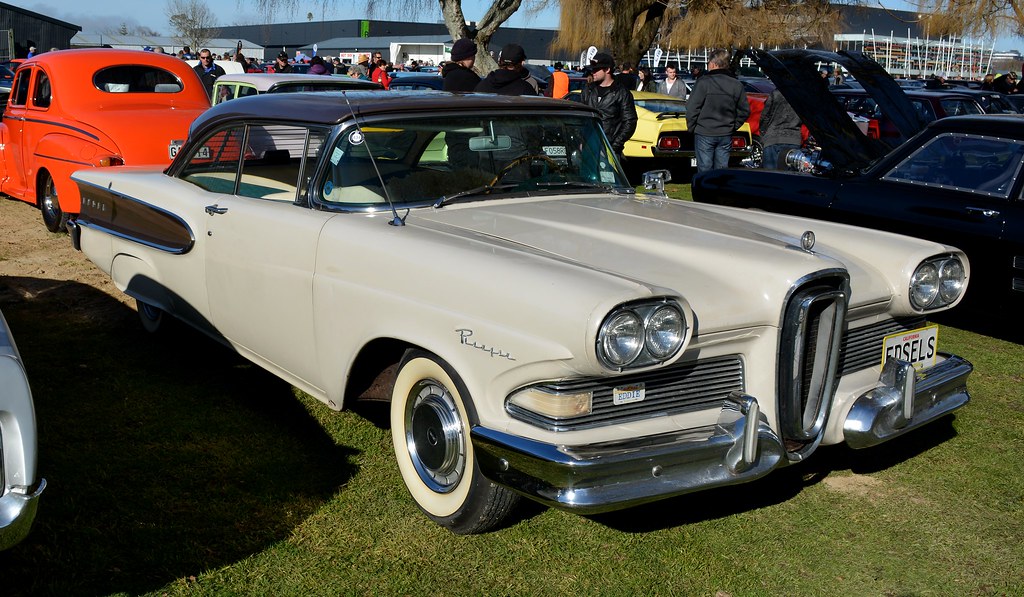
6. **Ford Edsel (1958-1960): The Infamous Grille and Commercial Catastrophe**Stepping beyond the Mustang’s domain, we encounter perhaps one of the most legendary commercial flops in automotive history: the Ford Edsel. Launched with immense fanfare and a staggering investment, the Edsel was meant to be a revolutionary addition to Ford’s lineup, bridging the gap between Ford and Mercury. However, from its debut, it became a textbook example of how a polarizing design can sink even the most ambitious projects, forever cementing its place in the annals of automotive cautionary tales.
The Edsel’s design, particularly its infamous grille, became its immediate and most enduring downfall. Many critics and consumers alike likened its unconventional vertical front grille to a ‘horse collar’ or even worse, a ‘toilet seat,’ immediately drawing widespread ridicule. This central design element, intended to be distinctive and futuristic, instead appeared disjointed and aesthetically unpleasing, clashing severely with the prevailing automotive tastes of the late 1950s.
Beyond the grille, the Edsel suffered from an ‘overly busy dashboard’ and a general design language that many perceived as an ‘overreach in design innovation.’ Ford had attempted to create a car that was simultaneously luxurious, modern, and unique, but the execution was widely seen as a miscalculation. The car’s overall appearance lacked the cohesive elegance that consumers desired, instead presenting an awkward and often ridiculed aesthetic.
Ultimately, the Edsel’s commercial performance was disastrous, leading to its discontinuation after just three years and an estimated loss of $250 million (equivalent to billions today). Its failure wasn’t solely due to design—market timing and economic conditions played roles—but its polarizing appearance was undeniably a significant factor. The Edsel remains a potent reminder that bold design, without widespread appeal, can lead to monumental commercial catastrophe, forever etched as a symbol of automotive ambition gone awry.
Car Model Information: 1959 Edsel Ranger
BirthName: Edsel Bryant Ford
Caption: Ford in 1921
BirthDate: [object Object]
BirthPlace: Detroit, Michigan
DeathDate: [object Object]
DeathPlace: Grosse Pointe Shores, Michigan
Occupation: Automobile executive
Title: Ford Motor Company
Spouse: [object Object]
Parents: Henry Ford,Clara Bryant Ford
Relations: Edsel Ford II
Children: Henry Ford II,Benson Ford,Josephine Ford,William Clay Ford Sr.
Categories: 1893 births, 1943 deaths, 20th-century American businesspeople, All Wikipedia articles written in American English, All articles with dead external links
Summary: Edsel Bryant Ford (November 6, 1893 – May 26, 1943) was an American business executive and philanthropist, who was the only child of pioneering industrialist Henry Ford and his wife, Clara Jane Bryant Ford. He was the president of the Ford Motor Company from 1919 until his death in 1943.
He worked closely with his father, as sole heir to the business, but was keen to develop cars more exciting than the Model T (“Tin Lizzie”), in line with his personal tastes. Even as president, he had trouble persuading his father to allow any departure from this formula. Only a change in market conditions enabled him to develop the more fashionable Model A in 1927. Edsel also founded the Mercury division and was responsible for the Lincoln-Zephyr and Lincoln Continental. He introduced important features, such as hydraulic brakes, and greatly strengthened the company’s overseas production.
Ford was a major art benefactor in Detroit and also financed Admiral Richard Byrd’s polar explorations. He died of stomach cancer aged 49. Henry Ford temporarily reassumed the presidency of Ford Motor Company on Edsel’s death, then Edsel’s eldest son, Henry Ford II, succeeded Henry as president of the company in 1945.
He was also a member of the board of directors of American IG, the American subsidiary of the German chemical conglomerate IG Farben.
Get more information about: Edsel Ford
Buying a high-performing used car >>>
Brand: Ford Model: Edsel
Price: $19,000 Mileage: 21,529 mi.
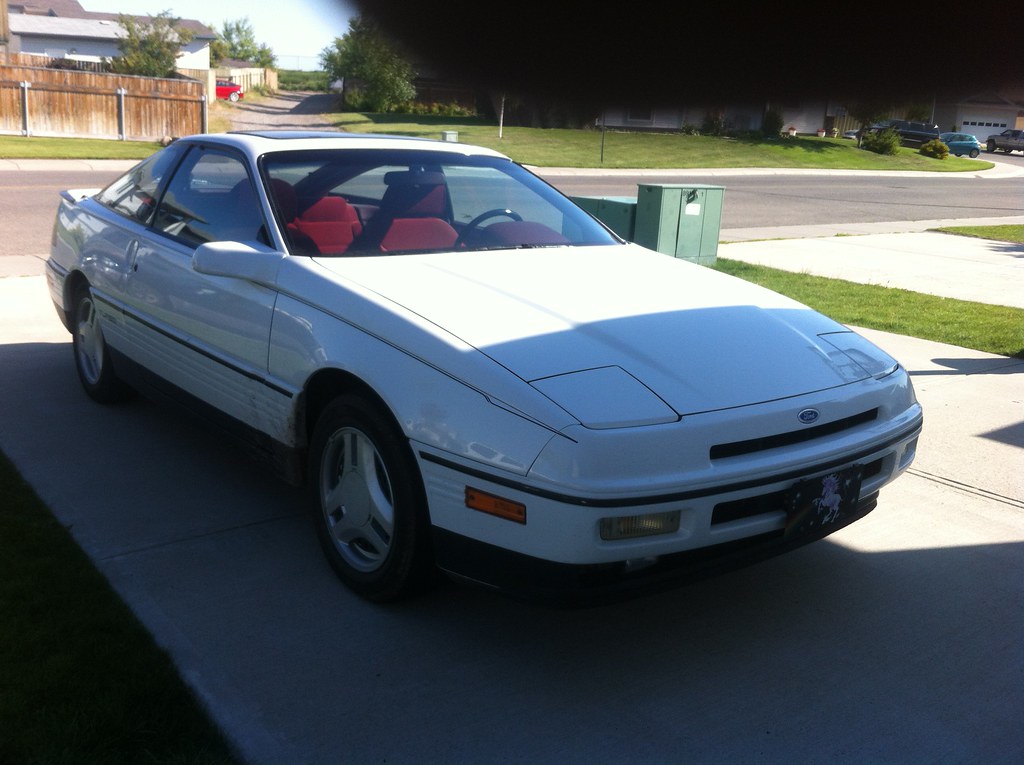
7. **Ford Probe (1989-1997): The Jelly Bean That Almost Replaced a Legend**The Ford Probe represents a fascinating, albeit controversial, chapter in Ford’s design history, particularly given its audacious initial intent: to replace the venerable Mustang. This front-wheel-drive sports compact, developed in collaboration with Mazda, was a stark departure from the traditional rear-wheel-drive, V8-powered muscle car. Its design epitomized the aerodynamic, ‘jelly bean’ aesthetic popular in the late 1980s and early 1990s, a style that fundamentally clashed with the Mustang’s established image.
The Probe’s ’rounded, jelly bean-like contours’ and ‘droopy rear’ were a direct result of Ford’s pursuit of aerodynamic efficiency and contemporary styling. While these characteristics might have been cutting-edge for some segments, they were universally ‘derided for lacking any distinct character or muscle’ when considered as a potential successor to the iconic Mustang. Mustang purists vehemently rejected the idea of their beloved pony car transforming into a sleek, Japanese-influenced FWD coupe.
This intense backlash ultimately saved the Mustang, allowing the Probe to carve out its own niche as a separate, albeit short-lived, sports compact. However, even in its own right, the Probe’s design struggled to resonate deeply with a broad audience. Its smooth, almost characterless surfaces, while aerodynamically efficient, left many yearning for the more aggressive lines and assertive stance that defined traditional American sports coupes. The lack of a powerful V8 option further alienated performance enthusiasts.
Despite its performance capabilities and reasonable sales figures, the Ford Probe never quite shed the shadow of its controversial inception. It served as a pivotal moment, demonstrating Ford’s willingness to experiment with global platforms and design trends, but also underscored the unwavering loyalty and specific expectations of its core customer base, particularly concerning its legendary nameplates. The Probe stands as a testament to the fact that not all evolutionary design concepts are met with open arms.

8. **Ford Taurus (1996-1999): The Oval Obsession That Divided Opinions**When Ford redesigned the Taurus for its third generation in 1996, they aimed for nothing less than a bold, revolutionary statement. However, what emerged was a design so utterly committed to a singular aesthetic principle that it ended up polarizing the market and significantly contributing to a decline in sales. This particular iteration of the Taurus became instantly recognizable, but not always for the right reasons, earning it nicknames like the ‘jelly bean’ or, more tellingly, the ‘oval obsession.’
The 1996 Taurus embraced rounded shapes to an unprecedented degree. From the headlights and grille to the rear window and even interior elements, almost every visible component incorporated an oval or rounded form. While this design was conceptually tied to Ford’s corporate oval logo and was undeniably aerodynamic, many consumers found it ‘unattractive and overly futuristic at the time.’ The radical departure from the previous generation’s widely praised, more conventional styling proved to be too much for the mainstream market.
Critics pointed to the car’s somewhat bulbous and almost cartoonish appearance, arguing that the pervasive use of ovals created a visual monotony rather than a harmonious aesthetic. The distinct lack of sharp lines or assertive angles, which were beginning to regain popularity, made the Taurus appear soft and indistinct to many eyes. This design alienated a significant portion of the buying public who preferred more traditional or subtly modern styling cues in their family sedans.
The public’s lukewarm reception and subsequent ‘decline in sales’ quickly prompted Ford to acknowledge the misstep. The result was a ‘more conservative redesign in later years,’ attempting to backtrack from the extremes of the ‘oval obsession.’ The 1996-1999 Taurus serves as a powerful lesson in balancing innovation with market acceptance, demonstrating that even a design intended to be iconic can backfire if it strays too far from consumer tastes, proving that sometimes, less is indeed more.
Car Model Information: 2016 Ford Taurus Limited
Name: Ford Taurus
Caption: 2010 Ford Taurus Limited
Manufacturer: Ford Motor Company
Production: October 1985 – October 2006,May 2007 – March 2019
ModelYears: 1986–2019 (2007 sold only to fleets)
Class: Mid-size car
Layout: Transverse engine,front-engine, front-wheel drive,Transverse engine,front-engine, all-wheel drive
Predecessor: Ford LTD (North America)
Successor: Ford Taurus X
Categories: 1980s cars, 1990s cars, 2000s cars, 2010s cars, All-wheel-drive vehicles
Summary: The Ford Taurus is an automobile that was manufactured and marketed by the Ford Motor Company in the United States from 1985 to 2019. From 1985 to 2009, Ford marketed the Taurus alongside its rebadged variant, the Mercury Sable. Four generations of the high-performance version (named the Ford Taurus SHO) were also manufactured from 1988-1999 and 2009-2019.
The original Taurus was a milestone for Ford and the American automotive industry, as the first automobile at Ford designed and manufactured using the statistical process control ideas brought to Ford by W. Edwards Deming, a prominent statistician consulted by Ford to bring a “culture of quality” to the enterprise. The Taurus had an influential design that introduced new features and innovations.
In the late 1990s and early 2000s, sales of the Taurus declined as it lost market share to Japanese mid-size sedans and as Ford shifted resources towards developing SUVs. The Taurus was withdrawn after the 2007 model year, with production ending on October 27, 2006. As part of a model line revision, the Taurus and the larger Ford Crown Victoria were to be replaced with the full-size Five Hundred and mid-size Fusion sedans; the Taurus station wagon was replaced with the Ford Freestyle wagon, branded as a crossover SUV. During the 2007 Chicago Auto Show, the nameplates of the Taurus and Sable were revived, intended as 2008 mid-cycle revisions of the Five Hundred. The Freestyle was renamed the Ford Taurus X. For the 2010 model year, Ford introduced the sixth-generation Taurus, marking a more substantial model update, alongside the revival of the Taurus SHO; in 2013, the Ford Police Interceptor Sedan was introduced as a successor for its long-running Crown Victoria counterpart.
From 1985 to 2007, the Taurus was a mid-size car, offering front-wheel drive. Initially built on the DN5 platform (renamed the DN101 platform in 1995 and the D186 platform in 1999), the Taurus became a full-size car in 2007, adopting the Volvo-derived D3 platform, offering front- or all-wheel drive. The Taurus was produced as a four-door sedan through its entire production, with a five-door station wagon offered from 1986 to 2005.
All generations of the Taurus were assembled by Chicago Assembly on Chicago’s South Side. Prior to its 2006 closure, Atlanta Assembly also produced both the Taurus and Sable. From its 1985 launch to its initial withdrawal following the 2007 model year, Ford assembled 7,519,919 examples of the Taurus. The fifth best-selling Ford nameplate in North America, the Taurus has been surpassed only by the F-Series, Escort, Model T, and Mustang. Between 1992 and 1996, the Taurus was the best-selling car nameplate in the United States, overtaken by the current title holder in 1997, the Toyota Camry.
Get more information about: Ford Taurus
Buying a high-performing used car >>>
Brand: Ford Model: Taurus
Price: $13,950 Mileage: 41,489 mi.
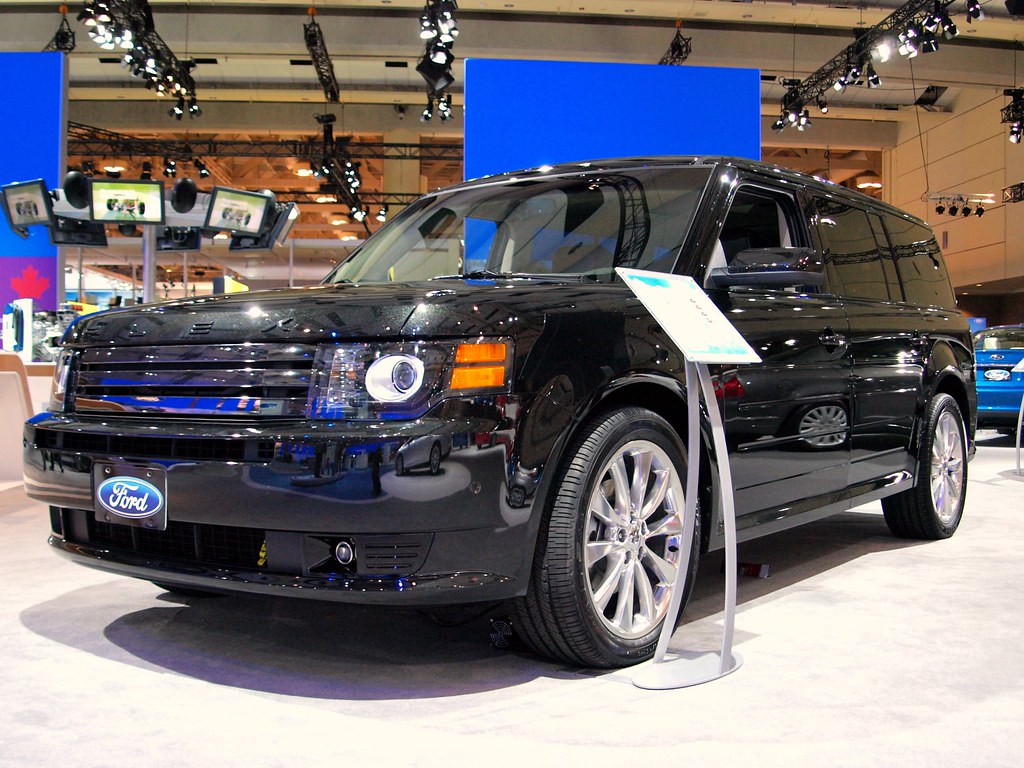
9. **Ford Flex (2009-2019): The Boxy Crossover That Polarized the Market**In an era dominated by sleek, aerodynamic SUVs and crossovers, Ford introduced the Flex, a vehicle that boldly defied convention with its unapologetically ‘boxy and polarizing design.’ The Flex was an ambitious attempt to blend the practicality of a minivan, the ruggedness of an SUV, and the distinctiveness of a station wagon into a single package. While it undoubtedly carved out a niche of dedicated fans who appreciated its unique aesthetic, its design proved to be highly divisive among the broader automotive public.
The Flex ‘resembled a modernized station wagon’ but pushed the boundaries of traditional design with its long, flat roofline, upright stance, and distinctive side grooves that evoked images of wood paneling, albeit in a contemporary fashion. While some lauded its refreshing originality and practical, spacious interior born from its rectilinear form, many found its exterior ‘too long, flat, and unappealingly square.’ It simply didn’t conform to the popular, curvaceous aesthetic that dominated the market.
Its distinctive, almost retro-futuristic appearance was certainly a conversation starter, but it wasn’t a design that garnered universal appeal. For every buyer who loved its utilitarian chic and ample interior space, there was another who simply couldn’t get past its brick-like proportions and unique, almost industrial, styling. This polarizing effect meant that while the Flex developed a loyal following, it struggled to achieve the widespread commercial success of its more conventionally styled competitors.
Ultimately, the Ford Flex demonstrated that while uniqueness can be a powerful selling point for some, it also carries the risk of alienating a larger segment of the market. Its design represented a courageous leap for Ford, daring to be different in a segment often characterized by conformity. While it never achieved mass-market dominance, the Flex remains a notable example of Ford’s willingness to experiment with forms that challenged prevailing trends, leaving behind a legacy as a truly distinctive, if divisive, offering.
Car Model Information: 2018 Ford F-150 XLT
Name: Ford Flex
Caption: 2010 Ford Flex Limited
Manufacturer: Ford Motor Company
Production: June 3, 2008–2019
ModelYears: 2009–2019
Assembly: Oakville, Ontario
Designer: Peter Horbury
Class: Full size car,crossover SUV
BodyStyle: SUV
Platform: Ford D3 platform#D4
Related: Ford Taurus (fifth generation),Lincoln MKS,Lincoln MKT
Layout: FF layout
Engine: Ford Cyclone engine#3.5 L,V6 engine
Transmission: GM-Ford 6-speed automatic transmission,automatic transmission
Wheelbase: 117.9 in
Abbr: on
Length: 201.8 in
Width: 75.9 in
Height: 68 in
Weight: 4468 lb. (FWD) , 4640 lb. (AWD)
Predecessor: Ford Taurus X,Ford Windstar
Categories: 2010s cars, All-wheel-drive vehicles, All articles with failed verification, Articles with failed verification from October 2010, Articles with short description
Summary: The Ford Flex is a full-size crossover SUV manufactured and marketed by Ford over a single generation from 2009–2019, as the successor to the Ford Taurus X.
The Flex was introduced in 2005 as a concept vehicle based on the Ford D4 chassis architecture, a variant of the Ford D3 platform shared with the 2011-2019 Explorer and the Lincoln MKT; the latter a rebadged variant of the Flex.
From June 2008 until its withdrawal, the Ford Flex was manufactured by Ford Canada at Oakville Assembly (Oakville, Ontario); the Flex and the Lincoln MKT were produced alongside the Ford Edge and Lincoln MKX (today, Lincoln Nautilus). The Flex was marketed in the United States, Canada, Mexico, and the Middle East — with production reaching just over 300,000.
Get more information about: Ford Flex
Buying a high-performing used car >>>
Brand: Ford Model: Flex
Price: $22,345 Mileage: 70,866 mi.
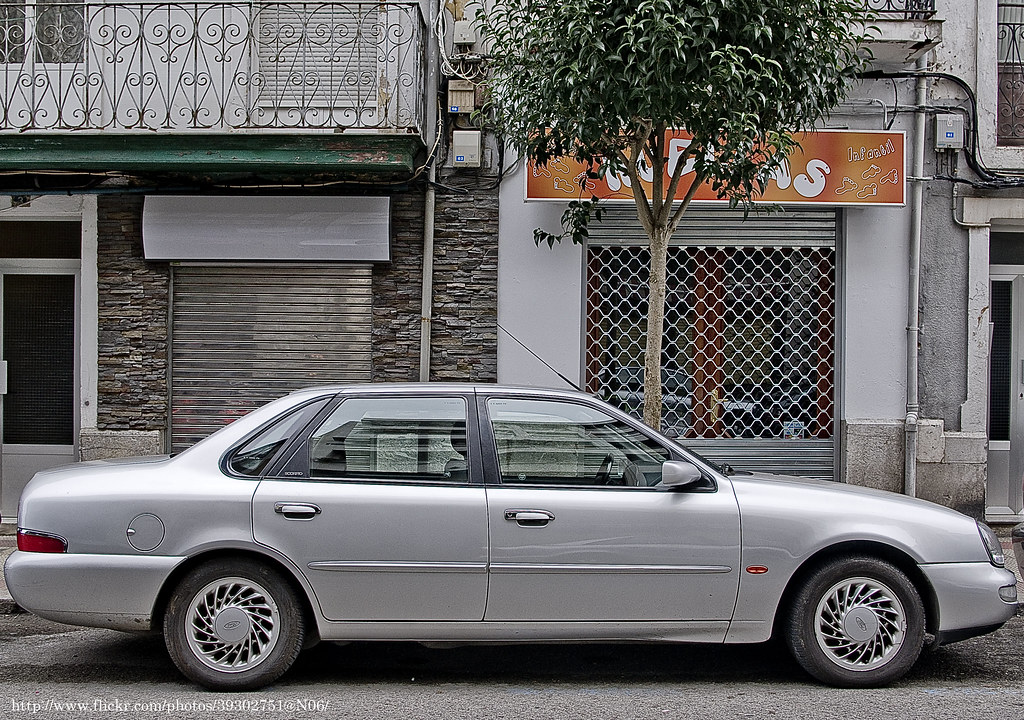
10. **Ford Scorpio (1985-1998): Europe’s Design Enigma with a Bulbous Rear**Across the Atlantic, Ford of Europe launched the Scorpio, a large executive car intended to compete with established premium offerings. While early versions had a relatively conventional, albeit conservative, design, it was the later iterations, particularly the 1990s facelift, that earned the Scorpio its infamous place on this list. This redesign, aimed at injecting more character and modernity, instead resulted in a dramatically ‘disjointed appearance’ that was widely ridiculed, especially for its rear styling.
The primary targets of criticism were the Scorpio’s ‘large, oddly-shaped headlights’ and, most notably, its ‘bulbous rear’ design. The front end, with its distinctive ‘frog-eye’ headlights that appeared oversized and awkwardly placed, immediately drew unfavorable comparisons. However, it was the rear end that truly confounded observers, featuring an exaggerated, rounded tailgate and taillight cluster that seemed disconnected from the rest of the car’s body.
This radical departure from the more understated and European-influenced designs of its competitors left many bewildered. The design language, intended to be bold and distinctive, instead came across as unbalanced and aesthetically challenging. It failed to convey the sophistication and elegance expected of a car in its class, instead appearing ungainly and, to some, even comical. The lack of visual harmony between the front and rear, coupled with the car’s overall proportions, created an automobile that struggled for widespread aesthetic acceptance.
Despite offering a comfortable ride and generous interior space, the Scorpio’s polarizing looks heavily impacted its market appeal. It became a byword for questionable automotive styling and struggled to compete with more aesthetically refined rivals. The Ford Scorpio serves as a cautionary tale from Ford’s European division, illustrating that even with a solid foundation, a significant design misstep can overshadow a vehicle’s other merits, creating a lasting impression of aesthetic awkwardness that is hard to shake.
Reflecting on this diverse collection of Ford’s design choices—from the misguided economy Mustang to the polarizing Edsel and the “oval obsession” of the Taurus—it’s clear that even the most successful automotive manufacturers have their moments of aesthetic experimentation that don’t quite hit the mark. These vehicles, each unique in their shortcomings, offer invaluable lessons not just for designers and engineers, but for anyone who appreciates the delicate balance between innovation, market trends, and timeless appeal. They remind us that every design, no matter how ambitious, must ultimately resonate with the public, or risk becoming another fascinating, albeit ‘ugly,’ footnote in the grand tapestry of automotive history. Yet, it is precisely these daring ventures, successful or otherwise, that contribute to the rich, dynamic narrative of Ford’s enduring legacy.