

The allure of the open road, the promise of adventure, and the freedom of exploration often begin with the purchase of a recreational vehicle. For many, a used RV presents an attractive, more budget-friendly entry point into this cherished lifestyle. However, navigating the financial landscape of RV ownership, especially when it comes to potential savings, can sometimes feel like traversing an uncharted trail.
While the direct question of “Which 4 States Are Offering the Biggest Rebates for Buying a Used RV?” might lead one to expect a straightforward list of state-specific programs for all types of used RVs, the current landscape, as detailed in available information, points to a more nuanced reality. The most significant potential financial incentives for used RV buyers are found not in broad state-level rebates for conventional RVs, but rather in a proposed federal tax bill and specific federal and state initiatives targeting clean vehicles.
This article aims to cut through the complexity, offering clear, actionable insights into the existing and proposed financial opportunities that could significantly reduce the cost of owning a used RV or a tow vehicle. We’ll dive deep into a potential federal tax bill that could offer substantial deductions, alongside a federal credit for used clean vehicles and a prominent state program for zero-emission vehicles, helping you understand how these benefits work and how you might qualify.

1. **Decoding the One Big Beautiful Bill: A Game-Changer for RV Buyers**Imagine a world where your RV dreams come with a substantial federal tax break. That’s precisely what the proposed “One Big Beautiful Bill,” currently under debate in Congress, aims to deliver. This federal law, if it passes, is packed with proposals that could significantly benefit RV buyers and owners by offering major income tax breaks, especially for those purchasing an RV or a tow vehicle like a truck or SUV.
Nicknamed the “One Big Beautiful Bill,” this legislation is still in the proposal stage, having passed the U.S. House of Representatives and now awaiting a vote in the Senate. It’s crucial to remember that its final version could look different, with amendments still being debated concerning income limits, loan qualifications, and the senior bonus deduction. However, its core intent is to make RV ownership more accessible and affordable.
At its heart, the bill seeks to allow qualified buyers to deduct up to $10,000 a year in interest paid on RV or tow vehicle loans from their federal income taxes. For seniors, this potential saving could be even greater. This isn’t just a minor adjustment; such a deduction has the power to reduce your taxable income enough to lower your overall tax bill by hundreds, or even thousands, of dollars, depending on the interest you’ve paid.

2. **Unlocking the RV Loan Interest Deduction: How it Works and Who Qualifies**The central mechanism of the One Big Beautiful Bill’s proposed assistance for RV buyers is its interest deduction. This deduction allows individuals to subtract a portion of the interest they pay on qualifying vehicle loans from their adjusted gross income. The proposed limit for this deduction is up to $10,000 per year, which can be a substantial sum for many RV owners.
It is important to clarify that this is not a flat $10,000 deduction for everyone. Instead, you can only deduct the actual amount of interest you paid on your loan during that tax year, up to the $10,000 ceiling. This means if you paid $2,775 in interest, that’s the amount you could deduct, assuming you meet all other qualifications. This deduction ultimately lowers your taxable income, leading to a reduced tax bill, rather than providing a direct refund or rebate.
The range of vehicles that would qualify for this proposed interest deduction is quite broad. Eligible vehicles may include RVs (both motorhomes and towable campers), pickup trucks and SUVs (including those used as tow vehicles), cars, minivans, vans, and even motorcycles and some ATVs, provided they are street-legal and assembled in the United States. This wide scope means many potential buyers of various used vehicles could stand to benefit.
To be considered for the proposed deduction, the vehicle itself must meet specific criteria: it must be assembled in the United States, manufactured for use on public roads (excluding off-road-only vehicles), and intended for personal use, not for business or commercial purposes. These stipulations ensure the benefit is directed towards individual consumers and supports domestic manufacturing, further defining the landscape of eligibility for this significant financial break.

3. **Income Thresholds and Personal Use: Navigating Eligibility for the Deduction**While the prospect of significant tax deductions for RV or tow vehicle loan interest is exciting, it’s crucial to understand that specific requirements must be met to qualify under the proposed One Big Beautiful Bill. One of the primary considerations revolves around income limits, ensuring that the benefits are targeted effectively. To be eligible, your adjusted gross income (AGI) must fall below certain thresholds.
Specifically, for single filers, your AGI must be $100,000 or less. For married couples filing jointly, the income threshold is $200,000 or less. If your income happens to exceed these limits, the deduction begins to phase out gradually. This means that if your income is significantly above these thresholds, the deduction may not be available to you at all, highlighting the importance of checking your AGI against these proposed guidelines.
Another critical requirement is the nature of the vehicle’s use: it must be for personal, not business or commercial, purposes. The proposed deduction is explicitly designed for personal-use vehicles. If you currently write off your RV or tow vehicle as a business asset on your taxes, you would likely not qualify for this specific tax break under the One Big Beautiful Bill, preventing what is known as ‘double-dipping’ on tax benefits.
Furthermore, it’s essential to differentiate this proposed deduction from other existing tax benefits, such as claiming your RV as a second home. The current tax code allows for the deduction of interest on a qualified second home, which an RV can sometimes be. However, you cannot combine, or ‘stack,’ these two deductions if the new bill becomes law. You would need to choose which deduction offers you the most significant savings, making a careful assessment of your individual financial situation paramount.

4. **The Senior Bonus Deduction (65+): An Extra Layer of Savings**For individuals aged 65 and older, the proposed One Big Beautiful Bill introduces an additional and particularly welcome layer of financial relief. This bonus deduction is specifically designed to provide extra support for seniors, helping to alleviate some of the financial pressures often encountered during retirement. It represents a significant enhancement to the bill’s overall benefits for older taxpayers.
Under the bill’s current proposals, individuals who are 65 or older could qualify for an additional $4,000 deduction. This isn’t a substitute for the standard deduction; rather, it’s an extra benefit. Importantly, it’s available to both those who itemize their deductions and those who take the standard deduction, broadening its accessibility across different tax filing strategies. This means more seniors could see their taxable income reduced.
For married couples where both spouses are 65 or older, the combined bonus deduction would effectively double, amounting to an impressive $8,000. This substantial additional deduction is aimed at helping older adults manage various living expenses, healthcare costs, and other financial obligations, serving as a tangible form of tax relief that could free up valuable funds for other priorities.
While this bonus deduction offers significant potential savings, it also comes with its own set of income limitations. The proposed senior bonus deduction begins to phase out for taxpayers with modified adjusted gross incomes (MAGI) over $75,000 for single senior filers and $150,000 for married senior couples filing jointly. Eligibility, however, is based solely on age and income thresholds, meaning that receiving Social Security benefits is not a requirement to qualify for this extra tax break, as highlighted by Kiplinger.com.
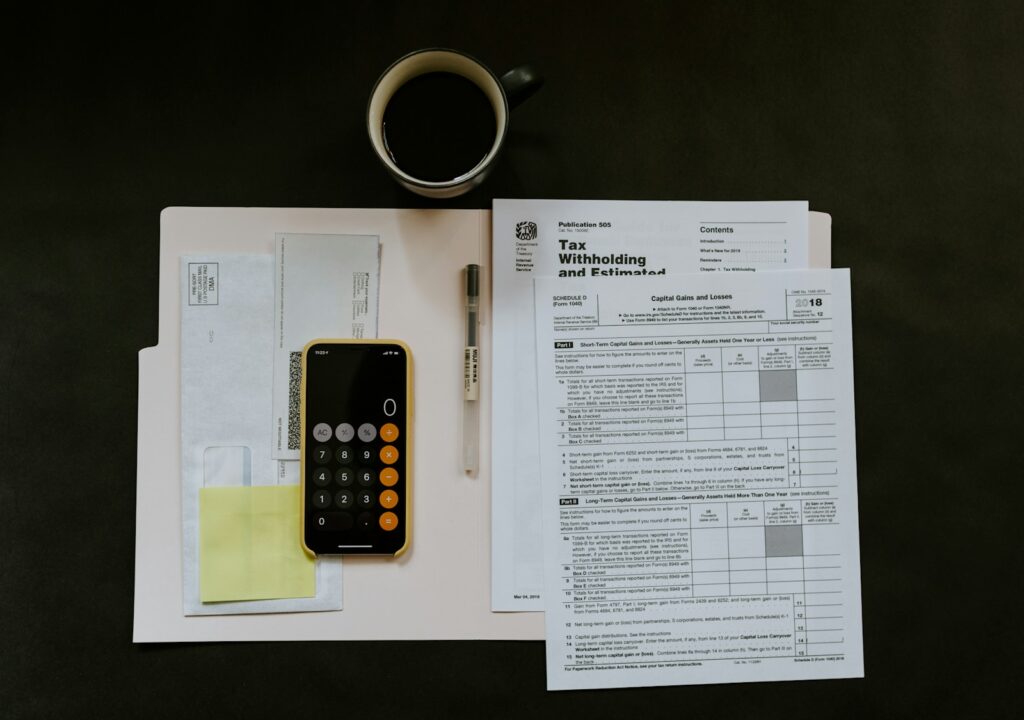
5. **Real-World Impact: How the Deduction Translates to Tax Savings**Understanding how a tax deduction works in theory is one thing, but seeing its real-world impact truly brings its value into perspective. The One Big Beautiful Bill’s proposed tax deduction for RV and tow vehicle loan interest aims to put tangible money back in your pocket by reducing your taxable income. This doesn’t mean you get a direct check for the deduction amount, but rather you save the tax on that income.
To illustrate, consider someone earning $90,000. If they deduct $3,000 in RV loan interest, their taxable income drops to $87,000. If they are in the 22% federal tax bracket, that $3,000 deduction could save them approximately $660 at tax time ($3,000 x 0.22 = $660). This saving comes from the fact that less of their income is subject to taxation at their marginal rate.
Let’s look at three distinct scenarios, directly from the provided context, to demonstrate how this proposed bill could reduce your tax burden if it passes. These examples showcase different financial situations and how the deduction could play out in real life for various RV buyers, emphasizing that the benefits are not one-size-fits-all but are tailored to individual circumstances.
**Example 1: Young Couple Buys Their First Camper**
This couple has a $35,000 loan with an 8.1% interest rate over 15 years, leading to about $2,775 in interest paid in the first year. With a household income of $95,000 (married filing jointly) placing them in the 22% tax bracket, they qualify to deduct the full $2,775. This translates to a tax saving of $610.50 ($2,775 x 22%), effectively like reducing their monthly payment by nearly $51 for the year.
**Example 2: Retired Couple Buys a Fifth Wheel and Tow Vehicle**
This scenario involves a larger investment: a $135,000 loan for a fifth wheel and tow vehicle at 7% interest over 12 years. In their first year, they pay approximately $9,347 in interest. With a household income of $75,000 (married, both over 65) and a 12% tax bracket, they qualify for two deductions: the $9,347 loan interest deduction and an $8,000 senior bonus deduction ($4,000 per person). Their total deductions of $17,347 would lead to a significant tax saving of $2,081.64 ($17,347 x 12%), equivalent to over $170 off their monthly payments.
**Example 3: Solo Traveler Buying a Go Play Camper**
Our solo traveler takes out a $23,000 loan at 8.9% interest over 6 years. In the first year, they pay about $2,016 in interest. With a $60,000 household income (single filer) and a 22% tax bracket, they can deduct the $2,016, resulting in a tax saving of $443.52 ($2,016 x 22%). This effectively lowers their monthly camper payments by about $37 for the year, showcasing that even smaller loan amounts can yield noticeable savings.
These diverse examples clearly illustrate that whether you’re embarking on your first camper purchase, upgrading to a larger setup, or optimizing your solo travel arrangements, the proposed Big Beautiful Bill has the potential to help you spend less at tax time. The core principle is understanding how your specific loan details, income, and the new deduction rules align to maximize your financial benefit. Every dollar of interest you deduct directly contributes to reducing your overall tax burden, adding up to meaningful savings over time.

6. **Financing Smarter: Why Taking a Loan Can Be Advantageous with the Bill**When considering a major purchase like an RV or tow vehicle, a common dilemma arises: should you pay cash or opt for financing? Under the proposed One Big Beautiful Bill, the answer leans heavily towards financing, as the bill’s benefits are explicitly tied to loan interest. If you pay cash for your RV, there’s no loan and, consequently, no interest to deduct, meaning you would miss out on this particular tax break.
Financing a camper, even if you have the cash reserves, offers strategic advantages that extend beyond just unlocking tax deductions. One of the primary reasons individuals choose to finance is to spread out the considerable cost of an RV over time. This approach allows you to retain more liquid cash in your pocket, which can be crucial for various other financial needs such as unexpected emergencies, planned travel expenses, essential upgrades to your RV, or unforeseen repairs.
For instance, if you have $40,000 saved, you could certainly pay cash for a camper. However, doing so would completely deplete your savings. By choosing to finance, you make manageable monthly payments while keeping your substantial savings intact as a vital safety net. This financial prudence can offer peace of mind and flexibility, especially in an unpredictable economic climate.
While it’s true that campers, like most vehicles, typically depreciate in value over time, deciding whether to finance depends on your personal financial situation and goals. If financing enables you to preserve cash for emergencies, prevents you from draining your entire savings, or even helps you acquire a newer or better model with less upfront capital, then it might be a worthwhile strategy. The added bonus of potential tax breaks on the interest through the Big Beautiful Bill can further soften the impact of depreciation and make financing a more attractive option in the long run.
To make financing work most effectively in your favor, several smart moves can be employed. Always strive to shop around for the lowest possible interest rate, as a lower rate translates to less total interest paid over the life of the loan. Additionally, putting more money down upfront can significantly reduce your loan amount, thereby decreasing your monthly payments and the overall interest accrued. Finally, by consciously leveraging the Big Beautiful Bill deduction, if it passes, you can actively offset a portion of those interest costs, maximizing your financial advantage.

7. **Beyond the Individual: How Dealer Tax Breaks Could Benefit You**It might seem counterintuitive to care about tax perks for RV dealers when your focus is on your own savings, but the proposed One Big Beautiful Bill includes a specific provision that could indirectly benefit buyers. This particular tax break for dealers has the potential to create a more favorable buying environment, allowing for greater flexibility in pricing and potentially better deals for consumers.
RV dealers typically rely on what are known as “floor plan loans” to finance their inventory – essentially, a line of credit they use to stock their lots with campers and trailers. Currently, dealers face limitations on deducting all the interest they pay on these loans, which adds to their operational costs. The Big Beautiful Bill proposes to bring back this crucial deduction for dealer floor plan interest.
If this provision passes and becomes law, dealers could stand to save thousands of dollars annually in interest costs. This is a significant financial relief for them, and these savings don’t necessarily stay hidden in their balance sheets. When dealers experience reduced financial stress from carrying inventory, they often gain more leeway and flexibility in their pricing strategies.
This increased flexibility is particularly relevant if dealers find themselves with RVs that haven’t sold as quickly as anticipated. With lower carrying costs, they have more room to negotiate prices, offer special promotions, or provide more competitive deals to move inventory. While you might never see this specific dealer perk itemized on your purchase agreement, its effects could very well be felt in the final price you pay for your RV. In essence, less financial burden for dealers can translate directly into more advantageous opportunities for savvy buyers looking for a good deal on a used camper.

8. **The Federal Used Clean Vehicle Tax Credit: A Potential $4,000 Savings**The landscape of financial incentives for vehicle purchases extends beyond traditional RVs, particularly when considering the growing market for clean energy transportation. For those eyeing a previously owned electric vehicle (EV) or fuel cell vehicle (FCV) as a tow vehicle or even a small, efficient camper, a federal program offers a compelling opportunity for significant savings. The Federal Used Clean Vehicle Tax Credit provides a notable incentive, particularly for eco-conscious buyers looking to reduce their environmental footprint and their tax burden.
This credit is specifically available for qualified used electric or fuel cell vehicles acquired from a licensed dealer. To be eligible, the vehicle’s sale price must be $25,000 or less. If these conditions are met, buyers can look forward to a credit equal to 30% of the sale price, capped at a maximum of $4,000. It’s a direct reduction to your tax liability, making these greener options even more accessible.
It’s important to note the timing restrictions for this credit. While you might be considering a purchase now, the credit is not available for vehicles acquired after September 30, 2025. To be eligible for the credit, the vehicle must be “placed in service” — meaning you take possession of it — by this date. For vehicles placed in service after this deadline, you must have acquired it through a binding written contract and made a payment on or before September 30, 2025.
This credit is nonrefundable when filed with your taxes, meaning you can’t get back more on the credit than you owe in taxes. Any excess credit cannot be applied to future tax years. This highlights the importance of understanding your individual tax situation to maximize the benefit.

9. **Who Qualifies: Buyer and Income Requirements for the Used Clean Vehicle Credit**Beyond the vehicle itself, there are specific buyer qualifications you must meet to unlock the Federal Used Clean Vehicle Tax Credit. This incentive is meticulously designed to benefit individual consumers directly, ensuring that the savings reach those who genuinely need them for personal transportation. Understanding these criteria is the first step toward claiming your potential $4,000 tax reduction.
To qualify as a buyer, you must be an individual purchasing the vehicle for use, not for resale. This immediately rules out dealers or those intending to flip the vehicle for profit. Additionally, you cannot be the original owner of the vehicle, emphasizing its “previously owned” nature. You also cannot be claimed as a dependent on another person’s tax return, ensuring the credit directly benefits the independent taxpayer. Furthermore, you must not have claimed another used clean vehicle credit in the three years immediately preceding your purchase date, preventing repeated use by the same individual within a short timeframe.
Income limitations are also a critical component of buyer eligibility, ensuring the credit is targeted effectively. Your modified adjusted gross income (AGI) cannot exceed certain thresholds. For married couples filing jointly or surviving spouses, the limit is $150,000. Heads of households face a threshold of $112,500, while all other filers, including single individuals, have a limit of $75,000.
A helpful provision allows you to use your modified AGI from either the year you take delivery of the vehicle or the year before, whichever amount is less. This flexibility provides a broader window for eligibility, particularly if your income fluctuated. If your income falls below the threshold for even one of these two years, you can still claim the credit, simplifying the qualification process for many potential buyers. For comprehensive guidance, taxpayers can consult Publication 5866-A, the Used Clean Vehicle Tax Credit Checklist PDF.

10. **Qualifying Vehicles and Sales: What Used Clean Vehicles are Eligible?**Once you’ve confirmed your personal eligibility, the next crucial step is to determine if the specific used clean vehicle you’re considering meets the federal government’s requirements for the tax credit. The criteria are precise, ensuring that the incentive supports a defined segment of the clean vehicle market. Buyers should meticulously check these specifications to avoid any surprises at tax time.
A primary requirement for the vehicle is its sale price: it must be $25,000 or less. This cap is inclusive of all dealer-imposed costs or fees that are not mandated by law. However, it explicitly excludes charges such as state taxes or title and registration fees. Another key factor is the vehicle’s age; its model year must be at least two years earlier than the calendar year in which you buy it. For instance, a vehicle purchased in 2023 would need to be a 2021 model year or older to qualify.
Furthermore, the vehicle must not have already been transferred to a qualified buyer after August 16, 2022, preventing the credit from being claimed multiple times on the same vehicle. It also needs to have a gross vehicle weight rating of less than 14,000 pounds and must be an eligible FCV or plug-in EV with a battery capacity of at least 7 kilowatt hours. Finally, the vehicle must be primarily for use within the United States.
The sale transaction itself also carries important stipulations. The vehicle must be purchased from a dealer, defined as a person licensed to sell motor vehicles in a state, the District of Columbia, U.S. territories, or an Indian tribal government. Crucially, for qualified used EVs, the dealer is required to report specific information to both you and the IRS at the time you take possession of the vehicle. This includes the dealer’s and buyer’s names and taxpayer ID numbers, the sale date and price, the maximum allowable credit, the VIN (if applicable), and the battery capacity. Without this dealer reporting, your vehicle will not be eligible for the credit, underscoring the importance of choosing a reputable dealer who is compliant with these regulations.

11. **Decoding the Sale Price: What Counts Towards the $25,000 Limit?**Navigating the nuances of what constitutes the “sale price” for the Used Clean Vehicle Credit is essential, as this figure directly impacts whether a vehicle meets the crucial $25,000 limit. This isn’t just the sticker price; it’s a carefully defined calculation that includes certain elements and excludes others. Buyers need clarity here to accurately assess a vehicle’s eligibility and avoid miscalculations.
The sale price, for the purpose of this credit, encompasses the retail price for all accessories or optional equipment that are physically attached to the vehicle at the time of sale. This also includes any delivery charges applied. Interestingly, dealer documentation fees are considered part of the sale price. These are typically listed in the sales contract and contribute to the final cost of purchasing the vehicle, even if not legally required by federal or state law. The calculation of the sale price happens after the application of any incentives but before any trade-in value is factored in.
Conversely, certain items are explicitly excluded from the sale price calculation. These include separately listed taxes and fees that are required by state or local law. Financing costs, extended warranties, and insurance premiums are also not part of the qualifying sale price. Understanding these distinctions is vital, as a vehicle might appear to be under the $25,000 threshold until all included components are accounted for, or conversely, might seem over when excluded items are mistakenly added.
It’s also important to note that a buyer’s decision to transfer the Clean Vehicle Credit to the dealer at the point of sale (in exchange for a financial benefit like a cash payment or down payment) does not impact the vehicle’s original sale price for eligibility purposes. This means the used clean vehicle must still be priced below $25,000 *before* considering any financial benefit received from the credit transfer. Dealers are strictly prohibited from altering the sale price based on whether a buyer chooses to transfer the tax credit, nor can they reduce the sale price through trade-in values or mandatory add-ons to meet the $25,000 limit. Any such reductions would still be considered part of the sale price for the credit’s determination.

12. **Claiming Your Credit: Transferring at Sale or Filing with Taxes**Once you’ve identified a qualifying used clean vehicle and confirmed your eligibility, the final step is to claim your Federal Used Clean Vehicle Tax Credit. The IRS provides two convenient methods for receiving this benefit, offering flexibility to suit your financial planning. Whether you prefer an immediate reduction or a claim during tax season, understanding these options ensures you capitalize on the savings.
One appealing option is to apply the credit immediately towards the amount you pay for the vehicle at the point of sale. This is achieved by transferring the credit directly to the dealer. When you choose this route, the dealer effectively gives you a financial benefit equal to the credit amount, which could be a cash payment, a partial payment, or an immediate reduction in your down payment. This means instant savings, making the purchase more affordable upfront. To transfer the credit, the vehicle must be purchased from a registered dealer and primarily for personal use.
Alternatively, you can choose to wait and claim the credit when you file your annual tax return. This method allows you to factor the credit into your overall tax planning for the year. Regardless of which method you choose, there are administrative steps involved. The dealer is mandated to provide you with a paper copy of a “time-of-sale report” when you take possession of the vehicle. This report confirms that the dealer has submitted the necessary information to the IRS, and keeping your copy is crucial for your records.
Regardless of whether you transferred the credit at the point of sale or plan to claim it later, you must file Form 8936, “Qualified Plug-in Electric Drive Motor Vehicle Credit,” with your tax return for the year in which you take delivery of the vehicle. This form is essential for both acknowledging the transfer of the credit or for claiming it directly. Following these guidelines ensures a smooth process for benefiting from this valuable clean vehicle incentive.

13. **Massachusetts MOR-EV Program: A State-Level Zero-Emission Vehicle Initiative**While federal incentives like the Used Clean Vehicle Tax Credit provide broad opportunities, some states have also developed robust programs to further encourage the adoption of electric and fuel-cell vehicles. Massachusetts stands out with its MOR-EV Program, an initiative designed to reduce air pollution and greenhouse gas emissions while accelerating the use of zero-emission vehicles (ZEVs) across the Commonwealth. This program offers specific rebates that can complement federal benefits, especially for used EVs.
The Massachusetts Offers Rebates for Electric Vehicles (MOR-EV) Program provides financial incentives for both the purchase and lease of eligible battery electric vehicles (BEVs) and fuel-cell electric vehicles (FCEVs). Its scope is broad, covering passenger cars, medium- and heavy-duty trucks, and various other vehicle types. Crucially for used RV buyers or those considering clean tow vehicles, the MOR-EV program also extends rebates to used EVs, making it a valuable resource for Massachusetts residents.
Eligibility for the MOR-EV program is comprehensive, structured by regulation (225 CMR 26.00) and detailed program guidelines provided by the Department of Energy Resources (DOER). Beyond the basic vehicle type, the program includes a rebate adder for income-qualifying residents, making clean transportation even more accessible to a wider demographic. There’s also an additional rebate for medium- and heavy-duty vehicles that are registered within or predominantly operate in designated Environmental Justice census block groups, underscoring the program’s commitment to equitable environmental benefits.
For Massachusetts residents, corporations, and other entities, detailed information regarding MOR-EV rebate offerings, including specific eligibility criteria and application processes, is readily available on the MOR-EV website. Updated guidelines, such as the August 12, 2025, MOR-EV Program Guideline for Applicants, provide the latest information. Dealers also have specific guidelines to follow for enrollment and reimbursement processes, ensuring a streamlined experience for both buyers and participating dealerships in the Commonwealth.
As we conclude this deep dive into the financial landscape of used RV and clean vehicle acquisitions, it’s clear that navigating potential savings requires both diligence and awareness. While the promise of the “One Big Beautiful Bill” offers substantial federal tax deductions for interest on RV and tow vehicle loans, the world of clean vehicle credits provides another compelling avenue for reducing costs, particularly for those considering electric or fuel-cell options. From federal tax credits offering up to $4,000 for used clean vehicles to state-specific programs like Massachusetts’ MOR-EV, understanding these opportunities can truly transform your purchase into a smarter financial decision. Staying informed about legislative developments and specific program requirements is key to unlocking these valuable incentives, ensuring your journey into RV ownership or greener transportation is as financially rewarding as it is adventurous. Keep these insights in mind, and you might just find that your next used RV or tow vehicle comes with a much sweeter deal than you anticipated.