Alright, gearheads and music lovers, buckle up! When you think of legendary rock stars, images of flashy sports cars, custom choppers, or even ridiculously stretched limos often come to mind. But then there’s Neil Young, the undisputed godfather of folk-rock, a man whose musical genius has shaped generations. Just like his genre-defying albums, his car collection isn’t what you’d typically expect, and honestly, that’s exactly why we love it. He’s an eco-warrior who also happens to love cars, creating a beautiful, often contradictory, dance between petrol fumes and planetary preservation.
Neil Young isn’t about collecting the latest supercars or flexing with absurd horsepower purely for the sake of it. No, this Canadian legend, active since the 1960s with 43 studio albums to his name, has curated a stable of automobiles that perfectly mirrors his down-to-earth lifestyle, his deep environmental convictions, and that quintessential, sometimes quirky, “Neil Young” persona. His cars aren’t just transportation; they’re extensions of his soul, canvases for his activism, and often, silent co-conspirators in his creative journey. This isn’t just a garage; it’s a museum of meaningful metal.
From humble beginnings to audacious eco-innovations, Young’s rides tell a story as compelling as any of his ballads. He finds “soul, design, culture, expression” in these magnificent machines, firmly believing in the concept of a “great vehicle’s living contribution and soul.” So, prepare to dive deep into the fascinating world of Neil Young’s garage, where vintage Americana meets pioneering green technology, and where every vehicle has a tale to tell. Let’s hit the road and explore the first half of these truly iconic machines, each one a testament to his exceptional taste!
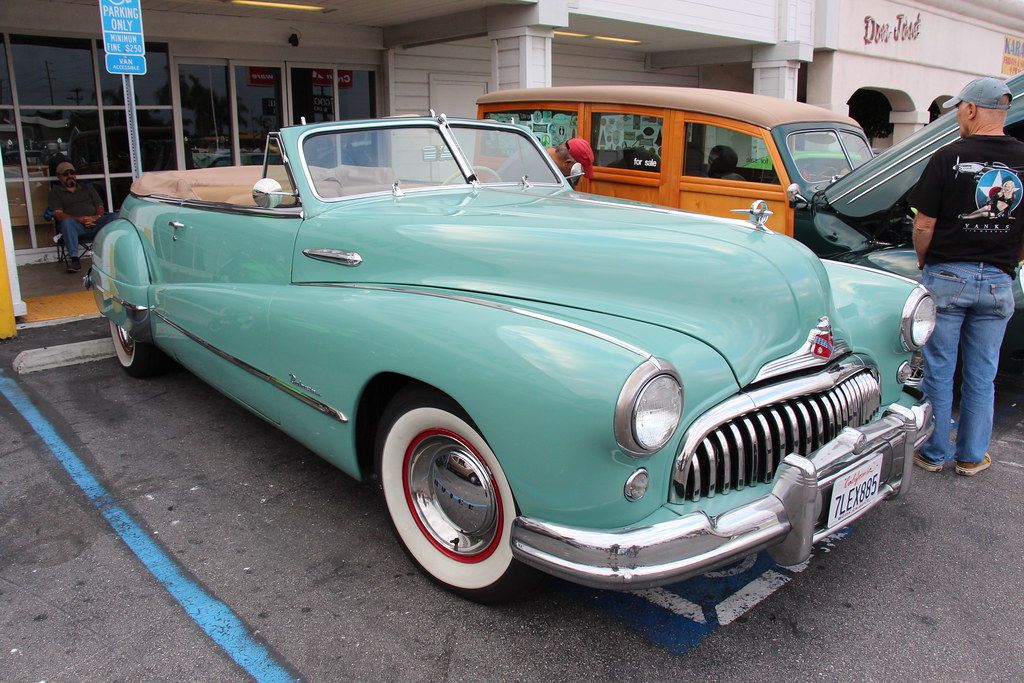
1. **1948 Buick Roadmaster Hearse – “Mort Hearseberg”: The Unlikely Bandmate**Imagine your first car. Most of us picture some beat-up sedan or a compact hand-me-down, right? Not Neil Young, the man started his automotive journey with a 1948 Buick Roadmaster Hearse. Yes, a hearse. This profoundly unconventional choice, revealed in a 2014 interview, proved from the outset that his taste was anything but ordinary, perfectly encapsulating his anti-establishment cool.
He affectionately dubbed this macabre but incredibly practical ride “Mort Hearseberg.” It wasn’t just for shock value or a morbid sense of humor, though. Young told GQ, “I used to carry my band equipment around [in it].” He elaborated, “I had rollers in the back, and the amplifiers would slide in and out very easily, just like the coffins used to.” Talk about repurposing with purpose, this car was a crucial, albeit spooky, member of the early band, enabling his musical dreams on the road.
Young, ever the poet of the prosaic, mused, “I think the hearse itself was a very happy hearse to be reassigned.” This sentiment speaks volumes about his unique perspective on objects, especially cars. This hearse wasn’t just a vehicle; it was a character in his unfolding story, so much so that it inspired one of his most beloved songs, “Long May You Run.” The enduring nature of that tune perfectly mirrors the spirit of a car that refused to be confined to its original, somber destiny.
When Mort Hearseberg eventually gave up the ghost, Young didn’t abandon the idea. He simply got another hearse, then an ambulance hearse, continuing a tradition that blended practicality with a touch of the beautifully bizarre. It’s a testament to his practical, no-frills approach to life, even as he ascended to rock and roll royalty. This car wasn’t just a ride; it was a partner in crime, a true road dog.
Car Model Information: 2024 Honda Civic LX
Name: Long May You Run
Type: studio
Artist: The Stills–Young Band
Cover: LongMayYouRun.jpg
Released: September 20, 1976
Recorded: February 16 – June 7, 1976
Studio: Criteria Studios
Genre: Country rock
Length: 39:10
Label: Reprise Records
Producer: Don Gehman,Stephen Stills,Neil Young
PrevTitle: Illegal Stills
PrevYear: 1976
NextTitle: Still Stills: The Best of Stephen Stills
NextYear: 1976
Chronology: Stephen Stills
Misc: [object Object]
Single1: Long May You Run (song)
Single1date: Wed Dec 31 1975 16:00:00 GMT-0800 (Pacific Standard Time)
Single2: Midnight on the Bay” / “Black Coral
Single2date: Wed Dec 31 1975 16:00:00 GMT-0800 (Pacific Standard Time)
Categories: 1976 collaborative albums, 1976 debut albums, Album articles lacking alt text for covers, Albums produced by Don Gehman, Albums produced by Neil Young
Summary: Long May You Run is a studio album credited to the Stills–Young Band, a collaboration between Stephen Stills and Neil Young, released in 1976 on Reprise Records. It peaked at No. 26 on the Billboard 200 and was certified gold in the United States by the RIAA. The album is the sole studio release by Stills and Young as a duo.
Get more information about: Long May You Run
Buying a high-performing used car >>>
Brand: Buick Model: Roadmaster Hearse
Price: $25,547 Mileage: 18,825 mi.

2. **1947 Buick Roadmaster Sedan – “Fastback”: Soul, Design, Culture, Expression**If the hearse was a practical, punk-rock statement, his 1947 Buick Roadmaster sedan is pure automotive poetry, a piece of art on wheels. Young considers this car one of his most prominent collector pieces, a genuine icon. When asked about what attracts him to specific makes, he told NPR in 2014, “Soul, design, culture, expression — the one that is probably the most beautiful is a ’47 Buick Roadmaster sedan.” You can almost hear the reverence in his voice for this magnificent machine.
He even bestowed a nickname upon his Roadmaster: “Fastback.” This wasn’t just some random classic he picked up; Young firmly believes the ’47 Roadmaster is a “classic” American design, and anyone with eyes can see he’s absolutely right. The car truly embodied Buick’s most popular body style of the era, a sweeping masterpiece of steel. It’s rounded gracefully across the top, with those distinctive flared front bumpers that stretch elegantly across the front axle and wheels, giving it an undeniable presence and smooth lines.
The aesthetic appeal continues along the back edge of the passenger compartment, where the body rounds down into a pair of subtle bubbles. These elegant curves, which Young himself noted “might resemble saddlebags on a classic Harley-Davidson,” spiral around the back corners to complete a genuinely aerodynamic and stylish vintage auto. It’s a design that whispers sophistication and timeless class rather than shouting extravagance, fitting Young’s understated yet powerful persona perfectly. It’s a masterclass in automotive art.
Under the hood, this beauty featured a 320.2 cubic inch, OHV straight-eight engine, adding dramatically to the allure of this stylish vessel. This powerhouse made it perfect for cruising around town or embarking on long highway journeys, delivering smooth, reliable performance. For Young, this car isn’t just metal and machinery; it’s a living, breathing entity, a “living contribution and soul,” as he described in his 2014 book “Special Deluxe.” It truly lives in his custom-built barn, designed to house his most prized automotive possessions.
Car Model Information: 2024 Honda Civic LX
Name: Buick Roadmaster
Predecessor: Buick Master Six
Manufacturer: Buick
Production: 1935–1942,1946–1958,1990–1996
ModelYears: 1936–1942,1946–1958,1991–1996
Class: Full-size car
Layout: FR layout
Categories: 1950s cars, 1980s cars, 1990s cars, All articles with unsourced statements, Articles with short description
Summary: The Buick Roadmaster is an automobile built by Buick from 1936 until 1942, from 1946 until 1958, and then again from 1991 until 1996. Roadmasters produced between 1936 and 1958 were built on Buick’s longest non-limousine wheelbase and shared their basic structure with the entry-level Cadillac Series 65, the Buick Limited, and after 1940, the Oldsmobile 98. Between 1946 and 1957, the Roadmaster served as Buick’s flagship.
After being resurrected in 1991, the Roadmaster became the marque’s largest vehicle, measuring 10 in (254 mm) longer with a 5 in (127 mm) greater wheelbase than the C-body Buick Park Avenue. This generation was the first in Roadmaster history to be built on the General Motors B-body platform rather than the C-body, which had traditionally been reserved for GM’s largest and most opulent models that were not Cadillacs.
A Buick Roadmaster Estate station wagon was introduced in 1947 and was manufactured in several generations through 1996. The final run of 1991-1996 Roadmasters shared powertrains and platforms with the Chevrolet Caprice, Cadillac Fleetwood, and Oldsmobile Custom Cruiser.
Get more information about: Buick Roadmaster
Buying a high-performing used car >>>
Brand: Buick Model: Roadmaster Sedan
Price: $25,547 Mileage: 18,825 mi.

3. **1959 Lincoln Continental – The LincVolt: Merging Power with Purpose**Now, let’s talk about one of the most visible and ideologically significant cars in Young’s collection: his 1959 Lincoln Continental. This white-cream convertible is a majestic embodiment of 1950s American automotive design, showcasing that larger-than-life aesthetic Young openly adored. He once told The New York Times, “With all this talk about gas, people are saying we should go to small cars. But I love big American cars with power, why give up on that?” He wasn’t about to give up on that power, but he was certainly going to rethink its source.
But here’s the twist, and it’s a seismic one. While he loved the grandeur and power of American muscle, it seemingly clashed with his passionate environmental advocacy. So, Neil Young, ever the visionary and a man unwilling to accept an either/or scenario, devised a brilliant plan to reconcile these two worlds. This wasn’t about compromise; it was about audacious innovation, a true testament to his forward-thinking spirit.
He teamed up with “automotive genius” Jonathan Goodwin to transform his Continental into the now-famous LincVolt. The project involved meticulously swapping out the stock V8 engine for an electric motor, specifically designed to still deliver high output. This ambitious conversion created a hybrid electric car, fueled by a small biodiesel engine and a large lithium-ion battery pack, a pioneering endeavor. It was a bold statement, aiming to prove that even massive, luxurious classic cars could shed their carbon footprint without sacrificing their desirable qualities, showing the world that green can be grand.
Goodwin, the man behind the wrench, recounted Young’s infectious enthusiasm to The Times, noting, “There have been times where Neil will get out of a concert at midnight or 1 a.m., charter a $60,000 flight and come here to work on the project.” That’s not just passion; that’s absolute, unwavering dedication to a cause. The LincVolt perfectly encapsulates Young’s hands-on approach, his profound environmental commitment, and his belief that big American cars can indeed drive into a greener future. It’s perhaps the quintessential car in his garage, embodying who he is at his very core, a true fusion of past and future.
Car Model Information: 2018 Lincoln Continental Black Label
Name: Lincoln Continental
Caption: 2019 Lincoln Continental
Manufacturer: Lincoln Motor Company
Production: 1939–1942,1946–1948,1956–2002,2016–2020
ModelYears: 1940–1942,1946–1948,1958–1980,1982–2002,2017–2020
Class: Full-size car,luxury car
Layout: Longitudinal engine,Front-engine, rear-wheel-drive layout
Categories: 1930s cars, 1940s cars, 1950s cars, 1960s cars, 1970s cars
Summary: The Lincoln Continental is a series of mid-sized and full-sized luxury cars produced between 1939 and 2020 by Lincoln, a division of the American automaker Ford. The model line was introduced following the construction of a personal vehicle for Edsel Ford, who commissioned a coachbuilt 1939 Lincoln-Zephyr convertible, developed as a vacation vehicle to attract potential Lincoln buyers. In what would give the model line its name, the exterior was designed with European “continental” styling elements, including a rear-mounted spare tire.
In production for over 55 years across nine different decades, Lincoln has produced ten generations of the Continental. Within the Lincoln model line, the Continental has served several roles ranging from its flagship to its base-trim sedan. From 1961 to 1976, Lincoln sold the Continental as its exclusive model line. The model line has also gone on hiatus three times. From 1949 to 1955, the nameplate was briefly retired. In 1981, the Continental was renamed the Lincoln Town Car to accommodate the 1982 seventh-generation Continental. After 2002, the Continental was retired, largely replaced by the Lincoln MKS in 2009; in 2017, the tenth-generation Continental replaced the MKS.
As part of its entry into full-scale production, the first-generation Continental was the progenitor of an entirely new automotive segment, the personal luxury car. Following World War II, the segment evolved into coupes and convertibles larger than sports cars and grand touring cars with an emphasis on features, styling, and comfort over performance and handling. From 1956 to 1957, the Continental nameplate was the namesake of the short-lived Continental Division, marketing the 1956–1957 Continental Mark II as the worldwide flagship of Ford Motor Company; as a second successor, Ford introduced the Continental Mark series in 1969, produced over six generations to 1998.
Along with the creation of the personal luxury car segment, the Lincoln Continental marked the zenith of several designs in American automotive history. The Continental is the final American vehicle line with a factory-produced V12 engine (1948), the final four-door convertible (1967), and the final model line to undergo downsizing (for the 1980 model year).
American production of the Continental and MKZ, its only two sedans, ended in 2020 thereby making Lincoln a crossover/SUV-only brand in the US.
Get more information about: Lincoln Continental
Buying a high-performing used car >>>
Brand: Lincoln Model: Continental
Price: $33,888 Mileage: 45,001 mi.
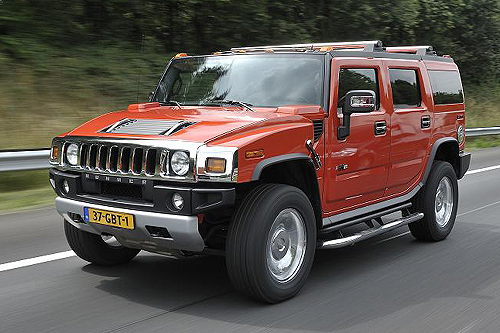
4. **Converted Biodiesel Hummer: The Eco-Warrior’s Unlikely Tank**Of all the vehicles in Neil Young’s eclectic fleet, perhaps none is more startlingly symbolic than his Hummer. On the surface, it seems like a glaring contradiction for a committed environmentalist, almost a practical joke. The Hummer, after all, is the quintessential emblem of gas-guzzling machismo and military-inspired excess, a beast of consumption. Yet, in Young’s hands, this beast is transformed into a powerful statement of his beliefs, becoming a fascinating piece of automotive theater that challenges perceptions.
But here’s the kicker, and it’s a hugely important distinction: Young’s Hummer is a *converted* model. This isn’t some ostentatious display of fossil fuel consumption; far from it, this is an act of reclamation. This Hummer “no longer guzzles gas like others built to emulate the Humvee that military personnel travel in,” an impressive feat of engineering. Instead, this behemoth “runs on biodiesel,” thanks once again to the expertise of Jonathan Goodwin and Young’s LincVolt company, which was established for such ambitious conversions.
Beyond its radically eco-friendly engine, the Hummer is literally “covered in environmentalist slogans.” It’s not just a car; it’s a mobile billboard for his cause, a rolling manifesto demanding attention. Young deliberately targeted “one of the biggest gas users on the roadways” to showcase the immense potential for change, demonstrating that even the most notorious polluters can be reimagined for a brighter, cleaner future. It’s an ingenious, in-your-face approach to environmental advocacy, making a point with every mile.
This vehicle isn’t subtle, but neither is the urgent message Young wants to convey about electric automotive power and sustainability. It’s a bold, uncompromising statement that resonates deeply with his activism. As the context puts it, “Young’s chosen exterior stylings further drive home the point that electric automotive power is a necessary change for a brighter future.” It’s an eloquent and elegant way to make a powerful point, proving that sometimes, you fight fire with a beautifully repurposed, biodiesel-fueled fire truck that commands attention.
Alright, rock and roll historians and petrolheads, if you thought Neil Young’s garage was fascinating already, hold onto your hubcaps because we’re just getting started! The man’s automotive journey is a winding road of personal stories, environmental ambition, and pure, unadulterated passion for machines with soul. Each turn reveals another layer of his remarkable taste, blending the unexpected with the deeply meaningful.
We’ve seen the hearse that launched a thousand tunes and the LincVolt that proved big can be green. Now, let’s peel back the layers on four more truly legendary rides that further define Neil Young’s exceptional and, frankly, incomparable automotive philosophy. Get ready for spontaneous acquisitions, rare anniversary gems, cars with starry (if unproven) connections, and even a famously fiery experimental project that embodies his unyielding dedication. This is where the rubber truly meets the road in the saga of Neil Young and his cherished machines.
Car Model Information: 2003 Hummer H2
Name: High Mobility Multipurpose Wheeled Vehicle (HMMWV)
Caption: M1151 Enhanced Armament Carrier
Origin: United States
Type: truck,Military light utility vehicle,Infantry mobility vehicle
IsVehicle: true
Service: 1985–present
Wars: Gulf War
Manufacturer: AM General
UnitCost: Format price
ProductionDate: January 2, 1985 – present
Number: 281,000
Weight: 5200 to
Abbr: on
Length: 15 ft
Width: 7 ft
Height: 6 ft
PrimaryArmament: #Design features
Engine: Detroit Diesel V8 engine#6.2L,V8 engine
Transmission: 3-speed automatic or 4-speed automatic
Suspension: Independent 4×4
FuelCapacity: 25 U
VehicleRange: convert
Speed: 55 mph (89 km/h) at max gross weight
Categories: 1980s cars, AM General vehicles, All-wheel-drive vehicles, All articles lacking reliable references, All articles needing additional references
Summary: The High Mobility Multipurpose Wheeled Vehicle (HMMWV; colloquial: Humvee) is a family of light, four-wheel drive military trucks and utility vehicles produced by AM General. It has largely supplanted the roles previously performed by the original jeep, and others such as the Vietnam War-era M151 Jeep, the M561 “Gama Goat”, their M718A1 and M792 ambulance versions, the Commercial Utility Cargo Vehicle, and other light trucks. Primarily used by the United States military, it is also used by numerous other countries and organizations and even in civilian adaptations.
The Humvee saw widespread use in the Gulf War of 1991, where it navigated the desert terrain; this usage helped to inspire civilian Hummer versions. The vehicle’s original unarmored design was later seen to be inadequate and was found to be particularly vulnerable to improvised explosive devices in the Iraq War. The U.S. hastily up-armored select models and replaced frontline units with the MRAP. Under the Joint Light Tactical Vehicle (JLTV) program, in 2015 the U.S. Army selected the Oshkosh L-ATV to replace the vehicle in frontline U.S. military service.
Get more information about: Humvee
Buying a high-performing used car >>>
Brand: Hummer Model: Hummer
Price: $12,490 Mileage: 152,679 mi.
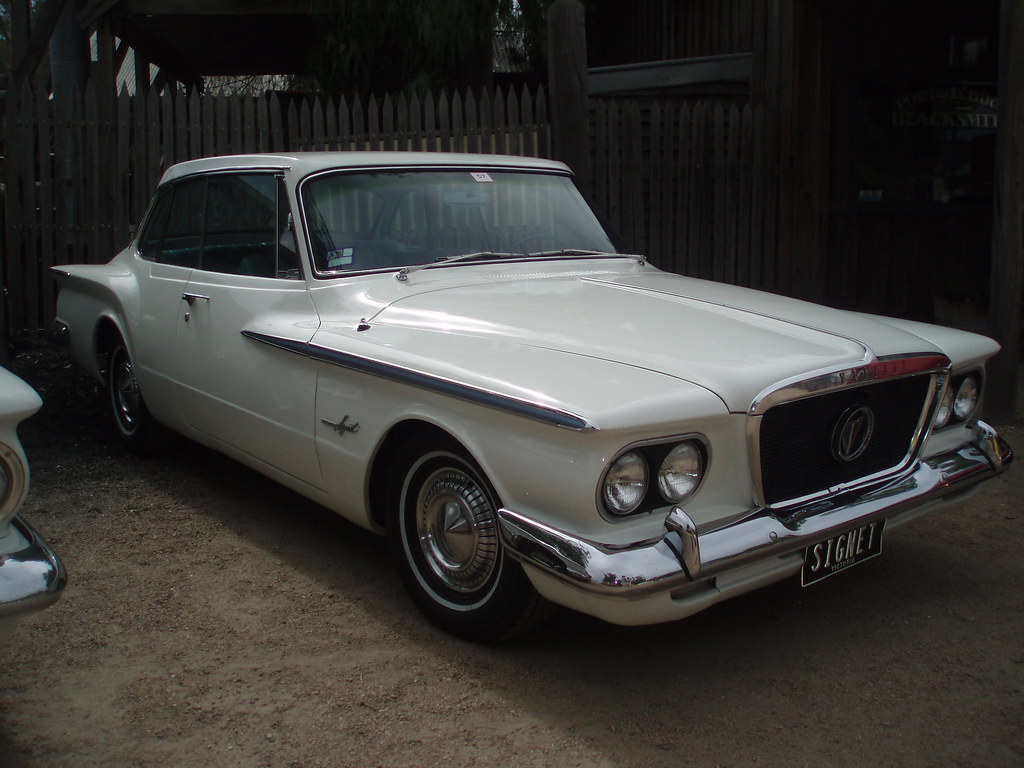
5. **1950 Plymouth Special Deluxe – The Spontaneous Keeper**Sometimes, the best treasures are found without a grand plan, almost on a whim. That’s precisely the story behind Neil Young’s 1950 Plymouth Special Deluxe. In 1974, while enjoying some downtime in a local bar near his California ranch—a spot he frequented so much he eventually married the barmaid, Pegi—a friend tipped him off. A 1950 Plymouth Special Deluxe four-door sedan was for sale, and the price tag? A mere $1,800. Young, ever the spontaneous connoisseur of characterful cars, snapped it up, and it quickly became an undeniable favorite.
This wasn’t just another car; it was a companion, a silent witness to countless moments in Young’s life. He chronicled its significance in his 2014 autobiographical book, aptly titled “Special Deluxe: A Memoir of Life And Cars.” This isn’t just a nod to the car’s model name, but a testament to how truly special this vehicle was to him. The book, in a charming touch, even sells for a symbolic $18.00 price tag, mirroring its original purchase cost.
Within the pages of his memoir, Young paints vivid pictures of the memories this car holds. He recounts idyllic times with his beloved Tennessee Bluetick hound, Elvis, who had a special affinity for the back seat, often commandeering it with his blanket. But beyond canine companionship, the Plymouth also played a pivotal role in Young’s personal life, providing a means to rebuild a bond with his sometime estranged father, symbolizing shared journeys and renewed connections.
Whether he was driving around the potholed roads near his ranch for hours on end or creating new memories, this vintage classic was more than just transportation. It was a vessel of personal history, a backdrop to evolving relationships, and a testament to the fact that some of the most cherished possessions are those acquired not for their status, but for the stories they come to hold. The Special Deluxe, purchased on a lark, is certainly a special and prominent addition to his remarkable collection.
Car Model Information: 2024 Honda Civic LX
Caption: 1948 Plymouth Special De Luxe Club Coupe
Name: Plymouth De Luxe / Special De Luxe
Manufacturer: Plymouth (automobile)
Aka: Dodge Kingsway
Production: 1933–1942,1946–1950
Assembly: Lynch Road Assembly,Highland Park, MI,Los Angeles (Maywood) Assembly#San Leandro Assembly,San Leandro, California
Related: DeSoto Deluxe,Dodge Deluxe
Predecessor: Plymouth Model PJ
Successor: Plymouth Concord
Class: Full-size
BodyStyle: sedan (car)
Layout: FR layout
Engine: 217.8 CID
Abbr: on
Wheelbase: 114 in
Length: 195.625 in
Width: Convert
Categories: 1950s cars, Articles with short description, Cars discontinued in 1950, Cars introduced in 1946, Commons category link from Wikidata
Summary: The Plymouth De Luxe and Special De Luxe were full-sized automobiles which were produced by American manufacturer Plymouth during the 1933–1942 and 1946–1950 model years.
The Plymouth Deluxe Model PD appeared in 1933, shortly after the Plymouth Six Model PC which was the company’s first six-cylinder automobile but offered a 107 in (2,718 mm) wheelbase versus 112 for the De Luxe.
It was an upscale alternative to the Plymouth Six (1933-1934), Business Six (1935-1938) and Roadking (1938-1940). In 1941, the Roadking name was dropped for the low trim Plymouths, which were referred as P11 and not renewed in 1942, making the De Luxe, the entry level.
Between 1941 and 1950, the De Luxe was offered in two trim levels, the De Luxe and the top-of-the-line Special De Luxe. The engine in 1946 was a 95 bhp (71 kW) 217.8 cu in (3.6 L) Plymouth Straight Six. In 1949 this engine was upgraded to produce 97 bhp (72 kW).
Get more information about: Plymouth De Luxe
Buying a high-performing used car >>>
Brand: Plymouth Model: Special Deluxe
Price: $25,547 Mileage: 18,825 mi.
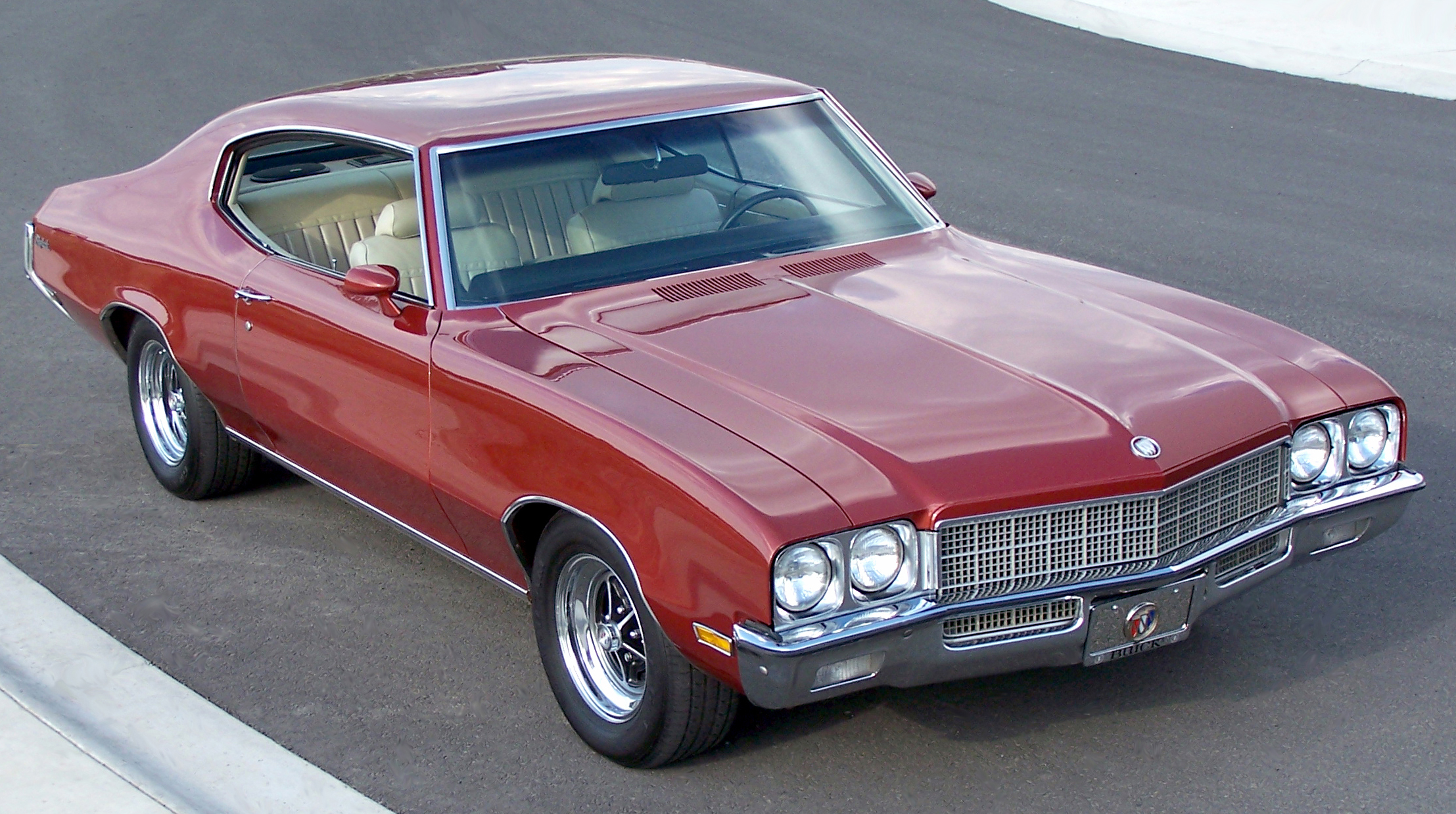
6. **1953 Buick Roadmaster Skylark Convertible – The Rare Anniversary Gem**If you’ve been following Neil Young’s automotive tastes, you might be sensing a definite fondness for Buick, and for good reason. His 1953 Buick Roadmaster Skylark Convertible is a prime example of why. Adorned in a fiery red paint job with a classic soft top, this car is a stunning celebration of American automotive design from a golden era. Buick itself rolled out the Skylark as a special commemoration of the brand’s 50th anniversary, marking it as a truly significant and limited-edition model.
Indeed, Young’s particular vehicle holds a special place in history, being the very first of Buick’s production run for that year. With a total of just 1,690 Skylarks built in 1953, owning unit number one is a testament to its rarity and collectible status. For many years, this beautiful piece of automotive engineering remained a cherished part of his collection, complete with a unique, personal touch: the steering wheel was customized to proudly read, “Customized for Neil Young.”
Underneath its exquisite exterior, the Skylark was powered by a 322 cubic-inch “Fireball” nailhead V8 engine, harnessing a respectable 188 horsepower. But it wasn’t just about raw power; Buick engineered this engine with meticulous care. Each piston was custom fitted to its cylinder, a detail that translated into a remarkably long-lasting lifespan and ensured efficient, quiet mechanical functionality while cruising down the highway or around town. It was a sophisticated powerplant for a sophisticated machine.
Beyond its powerful engine, the Skylark also boasted significant improvements in its suspension system, ensuring an incredibly smooth ride over a variety of driving conditions. Buick equipped the vehicle with coil springs at each corner and hydraulic shock absorbers, creating a cushioned journey for its occupants. Furthermore, the front end included an independent anti-roll bar, specifically designed to minimize any tilt in the car’s body from front to back, enhancing stability and comfort, making every drive a pleasure.
Young eventually sold this iconic convertible in 2017 for a staggering $400,000, a clear indicator of its enduring value and desirability among collectors. This 1953 Buick Roadmaster Skylark isn’t just a car; it’s a piece of pure retro Americana, reflecting Young’s profound respect for automotive history and his unwavering love for classic cars that embody craftsmanship and timeless style. It is, without a doubt, a rare anniversary gem.
Car Model Information: 2024 Honda Civic LX
Name: Buick Roadmaster
Predecessor: Buick Master Six
Manufacturer: Buick
Production: 1935–1942,1946–1958,1990–1996
ModelYears: 1936–1942,1946–1958,1991–1996
Class: Full-size car
Layout: FR layout
Categories: 1950s cars, 1980s cars, 1990s cars, All articles with unsourced statements, Articles with short description
Summary: The Buick Roadmaster is an automobile built by Buick from 1936 until 1942, from 1946 until 1958, and then again from 1991 until 1996. Roadmasters produced between 1936 and 1958 were built on Buick’s longest non-limousine wheelbase and shared their basic structure with the entry-level Cadillac Series 65, the Buick Limited, and after 1940, the Oldsmobile 98. Between 1946 and 1957, the Roadmaster served as Buick’s flagship.
After being resurrected in 1991, the Roadmaster became the marque’s largest vehicle, measuring 10 in (254 mm) longer with a 5 in (127 mm) greater wheelbase than the C-body Buick Park Avenue. This generation was the first in Roadmaster history to be built on the General Motors B-body platform rather than the C-body, which had traditionally been reserved for GM’s largest and most opulent models that were not Cadillacs.
A Buick Roadmaster Estate station wagon was introduced in 1947 and was manufactured in several generations through 1996. The final run of 1991-1996 Roadmasters shared powertrains and platforms with the Chevrolet Caprice, Cadillac Fleetwood, and Oldsmobile Custom Cruiser.
Get more information about: Buick Roadmaster
Buying a high-performing used car >>>
Brand: Buick Model: Roadmaster Skylark Convertible
Price: $25,547 Mileage: 18,825 mi.
Read more about: Rev Your Engines! 15 Legendary Rides That Roared: How the 1950s Became the Golden Era for Automotive Design

7. **1941 Chrysler Series 28 Windsor Highlander Coupe – The Star-Studded Mystery**Neil Young’s eclectic collection isn’t just about the Buicks or the groundbreaking conversions; it also delves into other significant American marques. Take, for instance, his 1941 Chrysler Series 28 Windsor Highlander Coupe, a car that came up for auction in 2017 as Young began thinning out his extensive collection. This vehicle hails from Chrysler’s hugely successful 1940s heyday, a period when American automotive design was truly flourishing, showcasing a blend of elegance and robust engineering.
The 1941 Chrysler Series 28 was offered in three distinct models: the Royal, the Highlander, and the most prestigious of the lot, the Windsor Highlander. Young’s coupe was indeed the latter, representing the pinnacle of the line. It boasted a relatively novel feature for its time – a three-seater configuration. This unique seating arrangement was complemented by a standard leather interior, further enhanced with distinctive inserts of tartan plaid, adding a touch of classic sophistication and a truly bespoke feel to the cabin.
What made this particular Chrysler even more intriguing, according to Young himself, was its alleged previous owner: none other than the King of Cool, Steve McQueen. Imagine the allure of owning a motor that had belonged to not one, but two showbiz icons – a dream for any collector! Such a provenance would undoubtedly elevate the car’s status and value significantly, blending rock and roll legend with Hollywood royalty.
However, despite Young’s assertion, there was sadly no definitive proof of this starry heritage. This lack of concrete evidence likely played a role in the car reaching a relatively modest $35,200 at auction. While it didn’t fetch the astronomical sums a proven McQueen car might, it remains a fascinating piece within Young’s collection, a testament to his appreciation for classic American design and perhaps, a touch of romantic speculation about its past. It’s a prime example of a car chosen for its inherent qualities, rather than just a flashy price tag.
Car Model Information: 2024 Honda Civic LX
Name: Chrysler Windsor
Caption: 1960 Chrysler Windsor hardtop coupe
Manufacturer: Chrysler (division)
Production: Canada
Class: Full-size car
Layout: FR layout
Assembly: Jefferson North Assembly#Jefferson Avenue Assembly,Detroit
Predecessor: Chrysler Royal
Successor: Chrysler Newport
Categories: 1940s cars, 1950s cars, 1960s cars, Articles with short description, Cars introduced in 1939
Summary: The Chrysler Windsor is a full-size car which was built by Chrysler from 1939 through to the 1960s. The final Chrysler Windsor sold in the United States was produced in 1961, but production in Canada continued until 1966. The Canadian 1961 to 1966 Windsor model was for all intents and purposes the equivalent of the Chrysler Newport in the United States.
The Windsor was almost identical to the more luxurious Chrysler New Yorker in terms of size, interior and standard features except that it was only available with the Chrysler Straight Six that originally started the company in 1925, which offered customers a luxurious car with a more modest and economic engine. As the years progressed and technology and manufacturing costs improved, the Windsor offered items that were initially optional as standard equipment while maintaining a market position lower in the Chrysler product hierarchy.
The Windsor was mechanically similar to the Royal from 1939 to 1950 and offered more standard equipment and an upscale interior to the well equipped Royal while both vehicles came with the Chrysler Straight Six. As the Royal nameplate was discontinued for the 1951 model year the Windsor became Chrysler’s six cylinder coupe until 1955 when the Poly V8 was introduced. For the 1961 model year the Chrysler Newport assumed the market position originally held by the Royal, keeping the Windsor positioned one level above the Newport. Chrysler replaced the Windsor name in 1962 with the introduction of the non-lettered series Chrysler 300.
Get more information about: Chrysler Windsor
Buying a high-performing used car >>>
Brand: Chrysler Model: Series 28 Windsor Highlander Coupe
Price: $25,547 Mileage: 18,825 mi.

8. **1960 Lincoln Continental Mark IV – The Fiery Experiment**Just when you think you’ve got Neil Young’s automotive tastes pinned down, he throws another curveball, albeit a rather fiery one. While we’ve already explored his pioneering 1959 Lincoln Continental LincVolt, his 1960 Lincoln Continental Mark IV tells a slightly different, more dramatic tale of his environmental ambitions. This project further underscores his commitment to embracing new technology over fossil fuels, even if the path was, shall we say, a bit more… explosive.
This particular 63,000-pound convertible, a true heavy-metal classic, was also built for Young by the “car wizard” Jonathan Goodwin. The ambitious theory behind it was to create a car that would run entirely on electricity, with that power generated by a bio-fuel engine. It was another audacious step towards a greener future, aiming to prove that massive American machines could be reimagined to shed their carbon footprint.
However, this experiment proved to be far more temperamental than its ’59 counterpart. Young, with his characteristic poetic understatement, would euphemistically describe it by saying, “She has a great personality, she’s very fiery that way.” The reality was more challenging: the car had a tendency to conk out, a lot. This temperamental nature culminated in a famously problematic incident in 2010 when, while charging, it catastrophically caught fire, causing a devastating warehouse blaze that destroyed an estimated $1 million worth of music memorabilia.
Despite the significant setback and the literal trials by fire, the car was eventually restored. It seems Neil Young, with his deep-seated belief in the potential for sustainable innovation, just couldn’t quit her. This 1960 Lincoln Continental Mark IV stands as a testament not just to his vision, but also to his resilience and unwavering dedication to pushing the boundaries of what’s possible, even when faced with monumental challenges. It embodies the spirit of experimentation, proving that sometimes, even a noble pursuit can have its dramatic, unforgettable moments.
Car Model Information: 2024 Honda Civic LX
Manufacturer: Lincoln Motor Company
Caption: 1975 Continental Mark IV
Name: Mark IV
Production: 1971–1976
ModelYears: 1972–1976
BodyStyle: coupe
Layout: Front-engine, rear-wheel-drive layout
Engine: 460 cuin
Abbr: on
Assembly: Wixom Assembly,Wixom, Michigan
Transmission: Ford C6 transmission
Predecessor: Lincoln Continental Mark III
Wheelbase: 120.4 in
Length: 228.1 in
Width: 79.8 in
Height: 53.5 in
Weight: convert
Successor: Lincoln Continental Mark V
Related: Ford Thunderbird (sixth generation)
Categories: 1970s cars, All Wikipedia articles needing clarification, Articles with short description, Cars discontinued in 1976, Cars introduced in 1972
Summary: The Continental Mark IV is a personal luxury car that was marketed by the Lincoln division of Ford Motor Company from the 1972 to 1976 model years. The third generation of the Mark series, the Mark IV grew in size over its Continental Mark III predecessor. As with the previous generation, the Mark IV saw little direct competition in the American marketplace, competing nearly exclusively against the Cadillac Eldorado (redesigned for 1971).
As with the Mark III, the Mark IV shared its chassis with the Ford Thunderbird, with the Mark IV receiving its own bodywork below the windows. Hidden headlights and a faux Rolls-Royce chrome grille were retained, and a Continental spare tire trunklid. For 1976, the Designer Series option package was introduced; in what would become a tradition for the Mark series (and later Lincoln), the option consisted of specially coordinated exterior and interior trims developed between Lincoln and contemporary fashion designers.
Ford assembled the Continental Mark IV at its Wixom Assembly Plant in Michigan) facility alongside the Ford Thunderbird and the Lincoln Continental. For 1977, the Mark IV underwent a substantial revision, becoming the Continental Mark V.
Get more information about: Lincoln Continental Mark IV
Buying a high-performing used car >>>
Brand: Lincoln Model: Continental Mark IV
Price: $25,547 Mileage: 18,825 mi.
Read more about: Beyond Glare: Unpacking the Most Controversial Car Design Features and Their Unforeseen Impacts on the Road and Culture
So there you have it, folks. Neil Young’s garage is far more than just a collection of cool cars; it’s a living, breathing museum of his passions, his principles, and his unparalleled journey through life. From humble hearses that inspired timeless songs to audacious eco-conversions that literally went up in smoke, each vehicle tells a story as rich and complex as his discography. He’s proven that a deep love for automobiles can perfectly coexist with fierce environmental advocacy, all while maintaining that distinctive, soulful, and undeniably cool Neil Young persona. He finds the heart in every machine, treating them not just as metal, but as partners in a lifelong adventure, a sentiment that truly makes his taste legendary. Keep on rockin’ in the free world, Neil, and long may your wheels run!