
Hollywood. The land of dreams, where glittering careers are forged and legacies cemented. For many, the ultimate validation of talent and hard work comes in the form of a golden statuette – an Academy Award. It’s meant to be the pinnacle, a moment of triumph promising endless possibilities and an assured place in cinematic history, a stamp of approval that should open every door.
Yet, beneath the dazzling lights and celebratory applause, a darker, more perplexing phenomenon often lurks: the infamous ‘Oscar curse.’ It’s a whisper in the hallowed halls of Tinseltown, a peculiar affliction that seems to plague some winners, transforming what should be a career-defining moment into a period of unexpected decline or struggle. This isn’t necessarily about interpersonal rivalries in the traditional sense, but a profound form of personal betrayal—a betrayal by the very expectations and promises that come with Hollywood’s highest honor. It’s as if the statuette itself becomes a formidable, silent rival to the very career it was meant to elevate.
Consider the recent triumph of Cillian Murphy, whose Best Actor win for ‘Oppenheimer’ last year brought not a curse, but rather a grounding connection with his closest circle. “There was a lot of healthy slagging [off]. In Ireland, slagging is one of the deepest forms of affection,” Murphy recounted, highlighting how his best friend and brother flew out as a surprise for the event, offering a loving dose of reality amidst the glitz. This supportive experience stands in stark contrast to the narratives we’re about to explore, where for some, despite holding the same golden prize, their paths diverged into unforeseen challenges, proving that sometimes, the greatest win can precipitate the most unexpected of personal and professional rivalries.
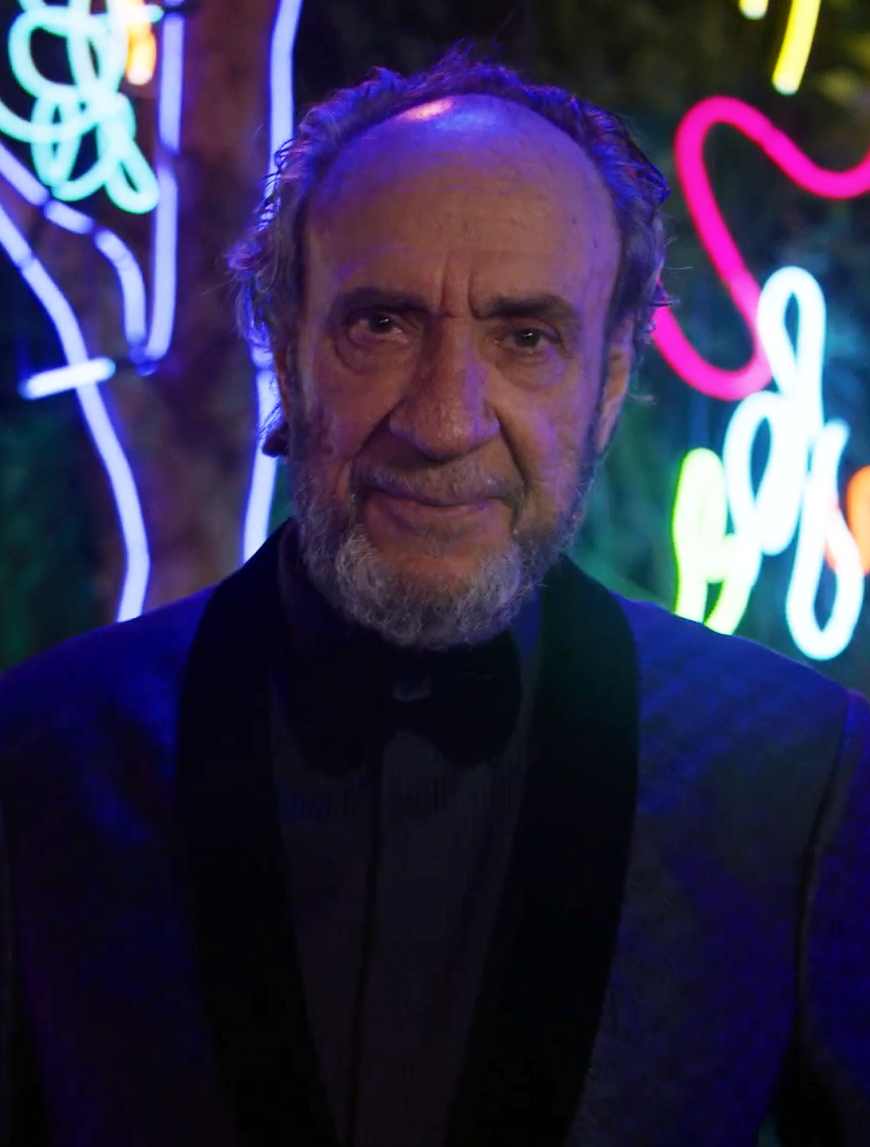
1. **F Murray Abraham: The Syndrome of Early Success**
The concept of the ‘Oscar curse’ finds its very definition in the term ‘F Murray Abraham Syndrome,’ a moniker coined to describe performers who achieve significant early success only to struggle immensely in maintaining it. Abraham’s journey serves as a poignant example, a testament to how even the highest accolades can sometimes herald an unexpected downturn rather than a sustained rise. His powerful portrayal of Antonio Salieri in the 1985 classic ‘Amadeus’ earned him the coveted ‘Best Actor’ award, seemingly cementing his place among Hollywood’s elite.
Prior to his Oscar win, Abraham had already established himself as a formidable presence on the stage, known for his rigorous dedication and compelling performances. The Academy Award, however, was supposed to be his gateway to major film success, translating his theatrical prowess into a thriving screen career. Unfortunately, the post-Oscar landscape proved less hospitable than anticipated, as he failed to secure the big, impactful film roles that typically follow such a prestigious victory. It was a puzzling twist of fate, a quiet form of personal betrayal where the promise of the Oscar seemed to vanish.
Instead of becoming a leading man in blockbuster productions, Abraham largely returned to his roots in the theatre, focusing predominantly on plays in the years immediately following his triumph. This shift, while allowing him to continue his artistic pursuits, nonetheless represented a divergence from the expected trajectory of an Oscar-winning film actor. It was a period marked by a struggle to translate his critical acclaim into commercial film viability, leading many to question the true value of the golden statuette when it came to career longevity in cinema. The industry’s fickle nature became his unexpected rival.
His story, however, is not one of complete obscurity. In later life, F Murray Abraham managed to carve out a healthy screen presence, demonstrating his enduring talent in acclaimed projects such as ‘Inside Llewyn Davis,’ ‘The Grand Budapest Hotel,’ and the popular television series ‘Homeland.’ These later successes prove his resilience and artistic depth, but they came after a significant period where the ‘Oscar curse’ seemed to weigh heavily, defining a peculiar, winding path for an actor who had once reached the pinnacle of recognition.

2. **Mercedes Ruehl: The Unseen Star**
In the constellation of Oscar winners, Mercedes Ruehl shines as another example of an actor whose significant achievement failed to propel her into consistent mainstream film success. Her win for ‘Best Supporting Actress’ in Terry Gilliam’s ‘The Fisher King’ in 1992 was a remarkable feat, especially considering the film largely centered on the star power of Robin Williams and Jeff Bridges. Ruehl’s nuanced and emotionally resonant performance as Anne, the mistreated girlfriend of Bridges’ shock jock character, captivated critics and earned her the statuette over formidable nominees like Diane Ladd and Jessica Tandy.
The victory should have been a launchpad, a clear signal to Hollywood that Ruehl possessed an exceptional talent worthy of prominent roles. Yet, the doors that typically swing open for Oscar winners remained stubbornly ajar, or sometimes closed altogether. Major film roles, the kind that build momentum and maintain visibility, largely eluded her in the wake of her win. It was a puzzling turn of events, a subtle but undeniable form of personal betrayal where the industry’s highest honor didn’t deliver on its implicit promise of continued opportunity.
Furthermore, her post-Oscar career saw a distinct absence of future award success, a stark contrast to the immediate acclaim she had garnered. This lack of sustained recognition in film highlighted a struggle to find roles that matched the caliber of her Oscar-winning performance, leading to a period where her cinematic presence became increasingly sparse. The glow of her Academy Award, while permanent, did not illuminate a clear path forward in the competitive film world. It was as if the spotlight that came with the Oscar quickly dimmed, leaving her to contend with a new rival: Hollywood’s fleeting memory.
In a narrative echoing that of F Murray Abraham, Mercedes Ruehl eventually returned to her roots on the stage, where she continued to thrive. It’s an impressive detail that she won a Tony Award in the very same year she secured her Oscar, showcasing her versatile talent across different mediums. Despite her continued artistic contributions, particularly in theatre, her name has, sadly, become largely forgotten by mainstream audiences in the context of major film work, making her a poignant case study in the unpredictable and sometimes cruel aftermath of an Oscar victory.
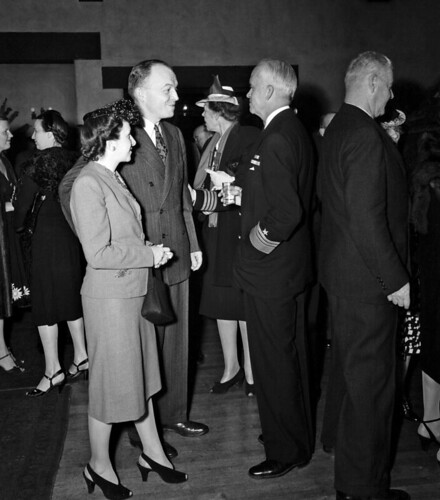
3. **Harold Russell: A Singular, Unrepeatable Triumph**
Harold Russell’s story is, by any measure, one of the most extraordinary and unique in Academy Award history, yet it also perfectly encapsulates a distinct facet of the ‘Oscar curse.’ His journey from a war veteran to an Oscar winner is unlike any other, beginning with a life-altering event during World War II, where he lost both his hands and subsequently had them replaced by hooks. This profound personal experience unexpectedly led him to acting, and in a truly astonishing turn, he won ‘Best Supporting Actor’ for his very first film, ‘The Best Years of Our Lives.’
Russell’s win was groundbreaking; he became the first non-professional actor to ever receive an Academy Award for acting, a testament to the raw authenticity and emotional depth he brought to his role. This achievement, a sudden leap from anonymity to global recognition, was a moment of immense pride and celebration. However, the unique circumstances of his casting and his performance meant that his acting career was, by its very nature, singular and difficult to replicate. The industry found no clear path for an actor whose compelling presence was so intrinsically tied to his personal story and physical condition.
Following this astonishing achievement, Russell did not pursue a conventional acting career. Instead, he channeled his energy into other impactful avenues, acquiring a business degree and dedicating himself to various charitable organizations. This pivot away from Hollywood wasn’t necessarily a failure, but it certainly meant he did not appear in another film for an extended period, resurfacing only in 1980, decades after his initial triumph. For someone whose entry into acting was so explosively successful, the subsequent absence from the screen highlighted how the Oscar, for some, marks an endpoint rather than a beginning in film.
Harold Russell passed away in 2002 at the age of 88, leaving behind a truly remarkable story of resilience, unexpected fame, and a life lived with purpose beyond the glitz of cinema. His Oscar win, while a crowning moment, did not lead to a sustained film career but rather served as a powerful, isolated chapter, demonstrating how for some, the statuette acts as a personal narrative punctuation mark rather than an open-ended invitation to more acting work, making the ‘curse’ a quiet, almost respectful withdrawal from the limelight. The battle to extend his acting career was a rivalry he quietly chose not to pursue.

4. **Roberto Benigni: The Controversial Charmer’s International Slide**
Roberto Benigni, the flamboyant Italian actor and director, created an undeniable stir when he claimed the ‘Best Actor’ Oscar in 1998 for his deeply moving performance in ‘La Vita è Bella’ (Life is Beautiful). His exuberant acceptance speech, climbing over seats to reach the stage, became an iconic moment in Academy Awards history. More significantly, his win marked a historic milestone as the first non-English speaking performance to secure the prestigious award, opening conversations about the Academy’s expanding global perspective.
However, the triumph was not without its critics. Some observers suggested that Benigni’s win was, in part, a form of self-congratulation by the Academy, an effort to pat themselves on the back for acknowledging international cinema rather than a pure assessment of the performance’s superiority. This underlying sentiment, whether fair or not, perhaps foreshadowed the unpredictable trajectory of his subsequent international career. While Benigni continued to be a significant and beloved star in his native Italy, his global success proved far more volatile.
The international audience, it seemed, was less enchanted by his follow-up projects. His movie ‘La tigre e la neve’ (The Tiger and the Snow) went down poorly with critics and audiences outside Italy, failing to capture the magic and widespread appeal of his Oscar-winning work. This stark contrast highlighted a struggle to replicate his unique blend of pathos and humor for a global demographic, signaling a quiet but palpable form of personal betrayal where global acclaim proved fleeting. The expectations of international success became a rival too formidable to conquer consistently.
Perhaps the most notable example of his post-Oscar struggles was his 2002 interpretation of ‘Pinocchio,’ a film that is widely regarded as one of the worst movies ever made. This critical and commercial disaster solidified a narrative of international decline, proving that even an Oscar for a non-English performance doesn’t guarantee sustained cross-cultural appeal or quality. For Benigni, the Oscar became a double-edged sword: a symbol of historic achievement that, ironically, preceded a period of fluctuating international fortunes and a diminished global presence.
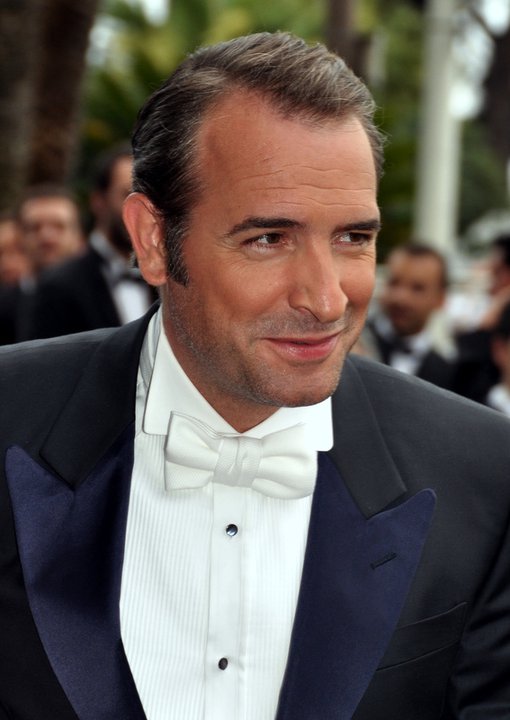
5. **Jean Dujardin: The Silent Film Star’s Deliberate Retreat**
When ‘The Artist’ swept the board at the 2012 Oscars, capturing the hearts of critics and audiences with its charming homage to silent cinema, it also ignited a debate among onlookers. Many worried that the silent movie throwback would be perceived by future generations as a mere gimmick, lacking true staying power in the annals of film history. These same fears, a subtle form of industry anxiety, were also espoused for ‘Best Actor’ winner Jean Dujardin, who delivered a captivating performance in the largely silent role.
Dujardin’s victory was a monumental achievement, especially as he triumphed over a formidable lineup of Hollywood heavyweights including George Clooney, Gary Oldman, and Brad Pitt. The Oscar cemented his status as an international talent, and the expectation was that this win would launch him into a new era of global stardom. However, Dujardin made a conscious and deliberate choice to focus predominantly on projects in his native France following his win, rather than fully immersing himself in the Hollywood machine.
While his commitment to French cinema is admirable, this decision meant that his appearances in major international productions became periodic rather than central. He notably popped up in films like ‘The Wolf of Wall Street’ and ‘The Monuments Men,’ demonstrating his ability to hold his own amongst Hollywood’s elite, but these were supporting roles, not the leading man showcases one might expect from a recent Best Actor winner. His career, post-Oscar, developed a different rhythm than typically anticipated, raising questions about what could have been.
Dujardin’s path highlights a unique aspect of the ‘Oscar curse’—not necessarily a decline in quality or opportunity, but a divergence from the expected trajectory, almost a personal rivalry with the conventional path of an Academy Award winner. His commitment should certainly be admired for its artistic integrity, yet it’s intriguing to consider where his career might have gone had he chosen a more aggressive pursuit of Hollywood fame. The Oscar, in this instance, didn’t lead to outright failure but perhaps a quieter, less globally dominant career than many predicted, a subtle betrayal of the blockbuster dreams often associated with the award.

6. **Marcia Gay Harden: The Stagnation of a Surprise Victor**
Talk about a plot twist no one saw coming! Marcia Gay Harden’s win for ‘Best Supporting Actor’ in ‘Pollock’ was, quite frankly, an absolute shocker. She hadn’t even been nominated for any other major award leading up to the ceremony, which makes her surprise victory all the more dramatic. It should have been a moment of unadulterated triumph, a clear signal that her talent was undeniable and that Hollywood was ready to embrace her fully.
Yet, for Harden, the golden statuette didn’t open doors to bigger and better things; instead, it seemed to slam them shut. As she herself candidly admitted in 2003, the award was “disastrous on a professional level. Suddenly, the parts you’re offered and the money become smaller. There’s no logic to it.” Imagine reaching the pinnacle of your craft, only for it to usher in a period of professional uncertainty and a subtle, but profound, personal betrayal of career expectations.
It’s a truly perplexing outcome for an actor of her caliber, highlighting how the ‘Oscar curse’ can manifest in the most illogical ways. While her film career saw this unexpected stagnation, Harden’s resilience and undeniable talent eventually found a different stage for major recognition. She went on to win a Tony Award in 2009, proving that artistic brilliance, even when overlooked by film, will always find its spotlight.
Her story serves as a stark reminder that in the cutthroat world of movies, awards success doesn’t always follow a predictable path. Sometimes, the industry’s highest honor can become an unforeseen rival, challenging an actor to redefine success on their own terms, away from the initial blaze of Oscar glory. It really makes you wonder about the unpredictable currents beneath Hollywood’s glittering surface.
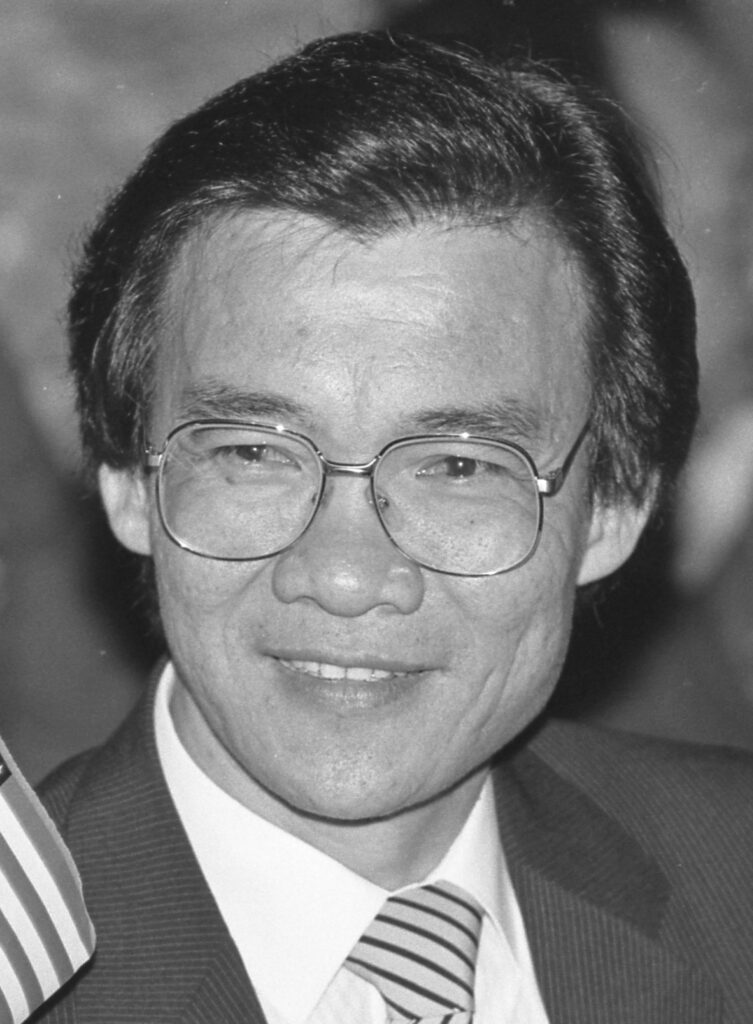
7. **Haing S Ngor: A Solemn, Unrepeatable Performance**
Haing S Ngor’s journey to an Oscar is perhaps one of the most heartbreakingly authentic and unique narratives in Academy Award history. Cast in ‘The Killing Fields,’ a film set against the brutal backdrop of the Khmer Rouge regime in Cambodia, Ngor brought an unparalleled level of emotional depth to his role. Why? Because he was a real-life survivor of the dictatorship, lending an authenticity that no trained actor could ever replicate.
His emotional portrayal of journalist Dith Pran earned him the ‘Best Supporting Actor’ Oscar, an astonishing feat for a first-time, non-professional actor. It was a moment of global recognition for a man who had endured unimaginable horrors, a triumph of human spirit over adversity, and a powerful statement from the Academy. The world watched, moved by his story and his raw performance, and surely, it seemed like the beginning of an extraordinary new chapter.
However, the unique circumstances that led to his casting and his subsequent win also, tragically, limited his future in Hollywood. Despite his Oscar, Ngor failed to gain any serious work that could capitalize on his critically acclaimed performance. His name, once on every lip, slowly receded from the headlines, a silent form of professional betrayal where the ultimate recognition didn’t translate into a sustained career.
His story took an even darker turn when he was tragically murdered outside his home in 1996, in what was initially thought to be a robbery. While rumours swirled that his death was ordered by the Khmer Rouge, it was never proven. This deeply sad ending to a life marked by both immense suffering and an incredible, fleeting triumph, underscores the unpredictable and sometimes cruel aftermath of an Oscar victory, leaving many questions about the true cost of such singular fame.

8. **Mo’Nique: The Price of Professional Disagreement**
Monique Hicks, known by her powerhouse stage name Mo’Nique, was a celebrated stand-up comedian long before she captivated audiences and critics alike in Lee Daniels’ ‘Precious.’ Her performance as Mary Lee Johnson, the abusive mother of the lead character, was nothing short of a revelation – raw, unflinching, and utterly compelling. It rightly earned her the ‘Best Supporting Actor’ Oscar, making her only the fourth African-American woman to achieve this prestigious honor. It should have been a springboard to countless other dramatic roles, a moment of unbridled career acceleration.
However, the path to her Oscar win was fraught with unexpected challenges that, arguably, cast a long shadow over her subsequent film career. During the intense campaign process, Mo’Nique reportedly fell out with two major Hollywood power players: producers Oprah Winfrey and Tyler Perry. In an industry where relationships and allegiances are paramount, ticking off such influential figures can have significant, long-lasting repercussions.
Could this very public and contentious disagreement have been the silent rival that stunted her post-Oscar trajectory? While she has certainly done alright for herself, finding steady work in television and continuing with her successful comedy specials, Mo’Nique has never again reached the dramatic heights or widespread acclaim of her performance in ‘Precious.’ The Oscar, in this instance, became a symbol of a peak that, for various reasons, proved difficult to return to in the film world.
Her experience offers a fascinating, if sobering, look into the intricate power dynamics of Hollywood. Sometimes, the personal betrayals aren’t about best friends turning into rivals, but about professional disagreements becoming insurmountable obstacles, proving that the battles for supremacy can extend far beyond the screen, quietly shaping an Oscar winner’s destiny in ways few outsiders ever truly comprehend.

9. **Mira Sorvino: From Critical Darling to Conscious Activist**
Mira Sorvino, an actor perhaps best known by mainstream audiences for her iconic role in ‘Romy and Michele’s High School Reunion,’ truly burst onto the critical scene in 1995. Her nuanced performance as Linda Ash, a worker and mother to Woody Allen’s character’s adoptive son in ‘Mighty Aphrodite,’ wowed critics and secured her the ‘Best Supporting Actress’ Oscar. It was a significant triumph, as she beat out formidable contenders like Joan Allen and Kate Winslet, marking her as a serious talent to watch in Hollywood.
With such a significant award under her belt, the industry and audiences alike anticipated a string of critically acclaimed roles that would cement her status. Yet, despite ‘Romy and Michele’ becoming a cult favorite, Sorvino struggled to replicate the critical and commercial success that typically follows an Oscar win. The expected flood of challenging, high-profile projects didn’t materialize, leaving her career, by traditional Hollywood metrics, at a plateau rather than a continued ascent. It was a subtle, yet undeniable, form of career betrayal by the very expectations the Oscar ignited.
However, Sorvino’s story is far from a decline into obscurity. Instead, she consciously pivoted her focus and became a prominent activist, dedicating her voice and platform to crucial causes. She became a passionate advocate against human trafficking, raising awareness and working tirelessly to combat this global issue. Furthermore, she was one of the brave voices who spoke out against Harvey Weinstein during his downfall, demonstrating immense courage and integrity in a challenging environment.
Her post-Oscar path exemplifies how some winners forge a different kind of legacy, where the golden statuette becomes less about perpetual acting roles and more about empowering personal convictions. While her filmography might not have maintained the initial Oscar glow, her impact as an activist showcases a profound redirection of energy, perhaps a personal rivalry with the conventional path, choosing a different, equally impactful, definition of success.

10. **Cher: The Icon Whose Acting Peak Was ‘Moonstruck’**
Cher. The name itself conjures images of groundbreaking fashion, chart-topping music, and an undeniable force of personality. Her status as a cultural icon has only grown stronger since she clinched the ‘Best Actress’ Oscar for ‘Moonstruck’ in 1987. That on-screen love affair with Nicolas Cage was pure magic, solidifying her as not just a musical superstar, but a serious dramatic actor. It was a moment that cemented her versatility and seemed to promise an equally illustrious film career ahead.
However, in a curious manifestation of the ‘Oscar curse,’ her acting career, specifically, never again reached the same critical peaks as her ‘Moonstruck’ triumph. While she continued to grace the silver screen, her filmography post-Oscar includes a mixed bag of titles such as ‘Burlesque,’ ‘Zookeeper,’ and ‘Mamma Mia! Here We Go Again.’ While these roles certainly played to her strengths as an entertainer, few would argue they rivaled the dramatic depth and critical acclaim of her Oscar-winning performance.
It’s true that she had some critical hits along the way, like ‘Mermaids’ and ‘Tea with Mussolini,’ proving her enduring talent. But the general consensus among many is that ‘Moonstruck’ was her undisputed “golden goose” when it came to major acting achievements. It’s a fascinating dynamic: her overall cultural influence and icon status soared, yet the specific trajectory of her dramatic acting found its pinnacle relatively early in her film career.
For a pop star to win an Oscar at all is, as the context states, pretty incredible, a testament to her unique and multifaceted talent. And nobody is ever going to take that away from her. Yet, her story subtly illustrates how even for undeniable superstars, the Oscar can mark a high point in a specific craft, becoming a quiet benchmark against which all future roles are measured, a unique form of personal rivalry with past glory.
The ‘Oscar curse’ remains one of Hollywood’s most enigmatic phenomena, a reminder that the path to success, even after reaching its apparent pinnacle, is rarely linear. From unexpected career stagnations to tragic withdrawals from the limelight, or conscious shifts toward different forms of impact, the golden statuette often ushers in a period of profound personal and professional realignment. These stories challenge the simplistic notion of an Oscar as a guarantee of unending triumph, revealing instead a complex interplay of personal choices, industry dynamics, and the often-unpredictable forces that shape a life in the spotlight. The real rivalry, it seems, isn’t always with another person, but with the weighty expectations and unforeseen challenges that come with holding the industry’s most coveted prize.