The world of vintage automobiles is a realm where history, engineering prowess, and sheer passion converge, creating a vibrant market for collectors. Among the most revered categories are vintage trucks, robust machines that once served as the backbone of industry and daily life, now transformed into highly coveted pieces of automotive art. These aren’t just old vehicles; they are rolling testaments to innovation, durability, and a bygone era of American manufacturing.
What drives the staggering prices these classic haulers command at auction? It’s a potent cocktail of rarity, iconic design, historical significance, and the emotional resonance they hold for enthusiasts. From groundbreaking utilitarian designs to stylish urban workhorses, each truck tells a unique story of its contribution to automotive evolution. For many, owning one of these meticulously restored or preserved examples isn’t merely an investment; it’s a connection to a tangible piece of the past, a symbol of craftsmanship that resonates deeply.
In this in-depth exploration, we’ll delve into some of the most sought-after vintage trucks that consistently fetch top dollar, often soaring well into six figures, at auctions across the globe. We’ll examine their distinctive features, technical specifications, and the indelible mark they’ve left on automotive culture, giving them their undisputed place in the pantheon of collectible vehicles. Prepare to be fascinated by the blend of power, style, and history that makes these machines truly legendary.
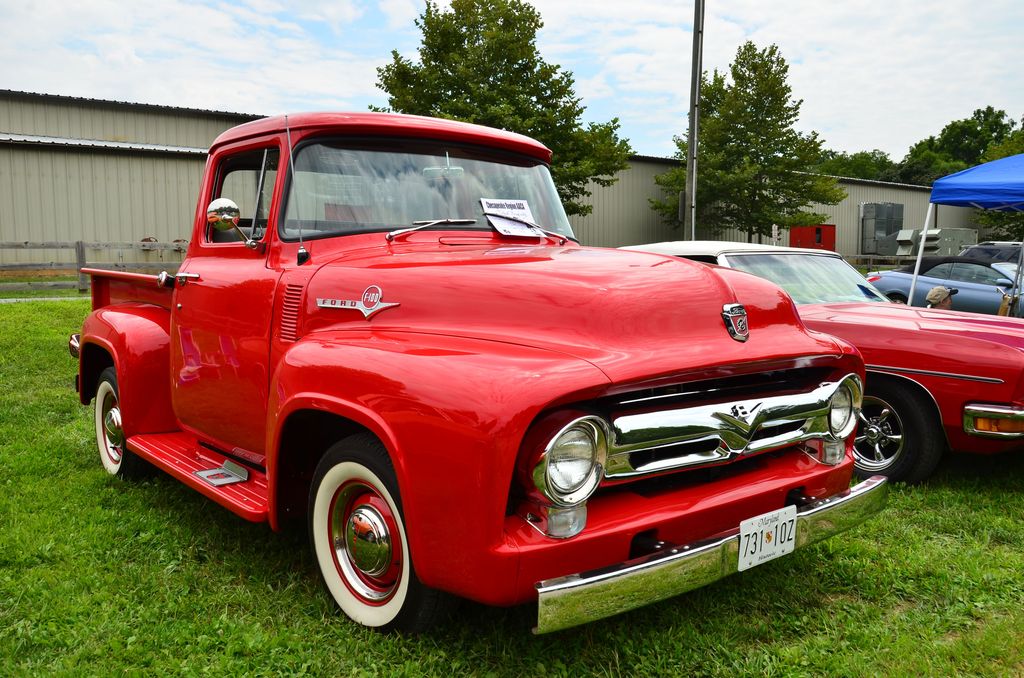
1. **1956 Ford F-100**The 1956 Ford F-100 stands as an undisputed icon in the pantheon of vintage trucks, celebrated universally for its blend of sleek design and formidable performance. This particular model year holds a special place in history as it marked the grand finale of Ford’s acclaimed second-generation F-series, bringing with it a culmination of refined aesthetics and engineering advancements that set it apart. Its distinct visual identity, characterized by a striking wraparound windshield and elegantly vertical A-pillars, endowed the truck with an instantly recognizable and deeply appealing profile that continues to captivate enthusiasts.
Beneath its stylish exterior, the 1956 F-100 was engineered for robust capability. It featured the renowned Y-block V8 engine, a powerhouse known for its reliability and ample torque, providing the grunt needed for both work and cruising. This potent engine, combined with a durable chassis, ensured that the F-100 was not only a looker but also a true workhorse capable of handling demanding tasks with ease. Its solid construction contributed significantly to its longevity and desirability in the decades that followed its production.
Collectors are particularly drawn to the 1956 F-100’s stylish lines and its remarkable potential for customization. The truck’s design lends itself beautifully to various modifications, from hot-rod transformations to meticulous period-correct restorations, allowing owners to infuse their personality while preserving its classic essence. This adaptability, coupled with its historical significance as the end of an era for the second-generation F-series, firmly cements its position as a perennial top contender at high-stakes vintage truck auctions, consistently attracting spirited bidding and impressive sale prices.
Car Model Information: 1969 Ford F100 Base
Name: Ford F-Series
Caption: 2022 Ford F-150 Lariat Luxury
Manufacturer: Ford Motor Company
Aka: Ford Lobo (Mexico, 1992–present)
Production: 1948–present
Class: Pickup truck#Full-size pickup truck
Layout: Front-engine, rear-wheel-drive layout,rear-wheel drive
Predecessor: 1941 Ford
Categories: All-wheel-drive vehicles, All Wikipedia articles written in American English, All articles that may contain original research, All articles with unsourced statements, Articles that may contain original research from September 2020
Summary: The Ford F-Series is a series of light-duty trucks marketed and manufactured by the Ford Motor Company since model year 1948 as a range of full-sized pickup trucks — positioned between Ford’s Ranger and Super Duty pickup trucks. Alongside the F-150 (introduced in 1975), the F-Series also includes the Super Duty series (introduced in 1999), which includes the heavier-duty F-250 through F-450 pickups, F-450/F-550 chassis cabs, and F-600/F-650/F-750 Class 6–8 commercial trucks.
Get more information about: Ford F-Series
Buying a high-performing used car >>>
Brand: Ford Model: F-100
Price: $59,999 Mileage: 5,246 mi.
Read more about: The Unspoken Truth: What Gearheads *Really* Think When You Roll Up in These 14 Legendary Vintage Trucks
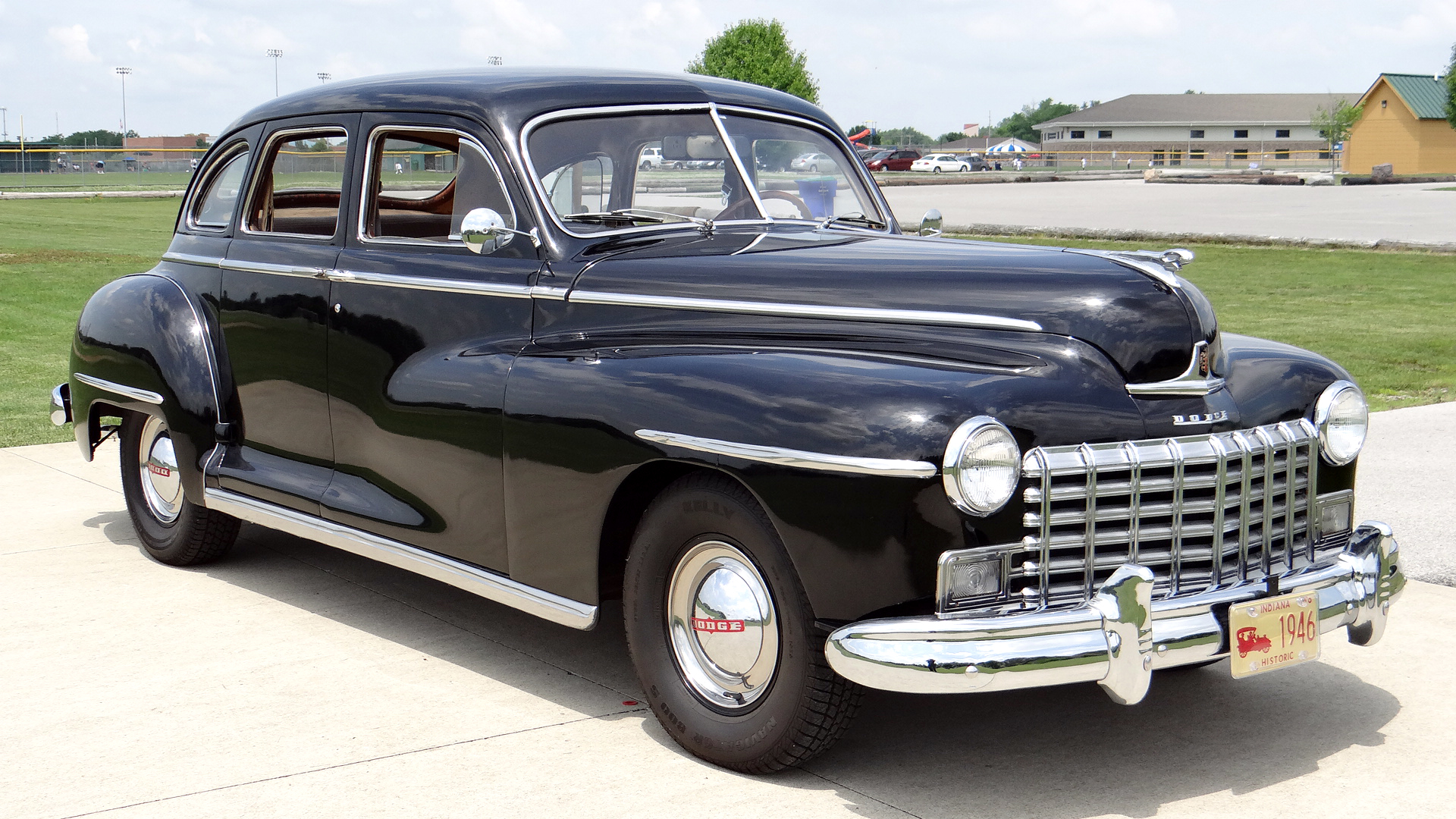
2. **1946-1948 Dodge Power Wagon**Stepping into the rugged world of post-war utility vehicles, the 1946-1948 Dodge Power Wagon emerges as a true titan, celebrated for its unyielding, military-inspired design and unparalleled capabilities. Born from a legacy of wartime service, this formidable truck was ingeniously developed as a civilian adaptation of the combat-proven military vehicles that had served valiantly during World War II. This direct lineage instilled in the Power Wagon an inherent toughness and an indomitable spirit, making it an instant legend among those who demanded extreme performance.
The Power Wagon’s reputation for incredible off-road prowess is well-earned, a direct result of its sophisticated engineering. Equipped with a groundbreaking four-wheel-drive system and built upon an exceptionally robust, heavy-duty frame, this truck was designed to conquer the most challenging terrains imaginable. Whether navigating treacherous trails, hauling heavy loads across undeveloped landscapes, or performing tasks in remote environments, the Power Wagon proved its mettle time and again, earning the unwavering trust of farmers, loggers, and utility companies alike.
This truck’s rich history as a pioneer in the realm of heavy-duty, four-wheel-drive vehicles renders it exceptionally collectible, particularly within the competitive sphere of vintage auctions. Its rugged aesthetic, combined with its tangible connection to military heritage and its groundbreaking utility, creates a potent appeal for enthusiasts. The Power Wagon isn’t just a vehicle; it’s a living testament to American resilience and engineering ingenuity, making its vintage appeal a powerful draw for bidders eager to own a piece of this pioneering legacy.
Car Model Information: 2023 Toyota Tacoma SR
Manufacturer: Dodge
Layout: Front-engine, four-wheel-drive layout,four-wheel drive
Caption: 1954 Power Wagon
Production: 1945–1980, 2005–present
ModelYears: 1946–1980, 2005–present
Predecessor: Dodge WC series
Successor: Dodge Ram
Related: Legacy Classic Trucks,Legacy Classic Trucks
Class: Full-size,pickup truck
Wheelbase: 126 in
Abbr: on
Assembly: Warren, Michigan
Engine: {{Convert,230,cid,L,1,abbr=on,Chrysler flathead engine,Straight-six engine
Categories: 1950s cars, 1960s cars, 1970s cars, 1980s cars, All-wheel-drive vehicles
Summary: The Dodge Power Wagon is a four-wheel drive medium duty truck that was produced in various model series from 1945 to 1980 by Dodge. The Power Wagon name was revived for the 2005 model year as a four-wheel drive version of the Dodge Ram 2500. As a nameplate, “Power Wagon” continues as a special package of the four-wheel drive version of 3/4 ton Ram Trucks 2500 model.
The original civilian version, commonly called the “flat fender” Power Wagon (FFPW) or “Military Type”, was mechanically based on Dodge’s 3/4-ton WC series of World War II military trucks. The Power Wagon was the first 4×4 medium duty truck produced by a major manufacturer in a civilian version. It represents a significant predecessor to the many modern four-wheel drive trucks in use today. It was marketed as the WDX truck. The 230 cubic inch six cylinder engine in the first Power Wagons was known as the T137 – a name still used for the original series by enthusiasts. Following Chrysler Corporation policy of badge engineering to provide a greater number of sales outlets overseas, Power Wagons were also marketed around the world under the Fargo and De Soto badges.
Starting in the 1957 model year, factory four-wheel-drive versions of the Dodge C Series trucks were produced and sold as the W-100, W-200, W-300, and W-500, alongside the older Power Wagon. The pickups had the “Power Wagon” badge on the fender. The older design Power Wagon was marketed as the “Military Type” to distinguish it from the styled pickup versions. Later the “Military Type” was given the series number W-300M, and ultimately WM-300.
The heavy-duty four-wheel-drive W-300 and W-500 trucks were marketed as “Power Giants”. The four-wheel-drive version of the Dodge Town Wagon also got the “Power Wagon” badge.
The “Military Type” sales in the United States ended by 1968, because the vehicle did not comply with new federal light-duty truck regulations. The “Power Wagon” options continued on the Dodge D-Series through the 1980 model year. For the 1981 model year, “Power Ram” became the marketing name for four-wheel-drive Ram pickups, and aside from a 1999 concept vehicle, the “Power Wagon” name was not used until the 2004 revival.
Get more information about: Dodge Power Wagon
Buying a high-performing used car >>>
Brand: Dodge Model: Power Wagon
Price: $33,199 Mileage: 59,070 mi.
Read more about: The Legendary American Pickup Trucks Every Collector Wants: A Deep Dive into Enduring Icons
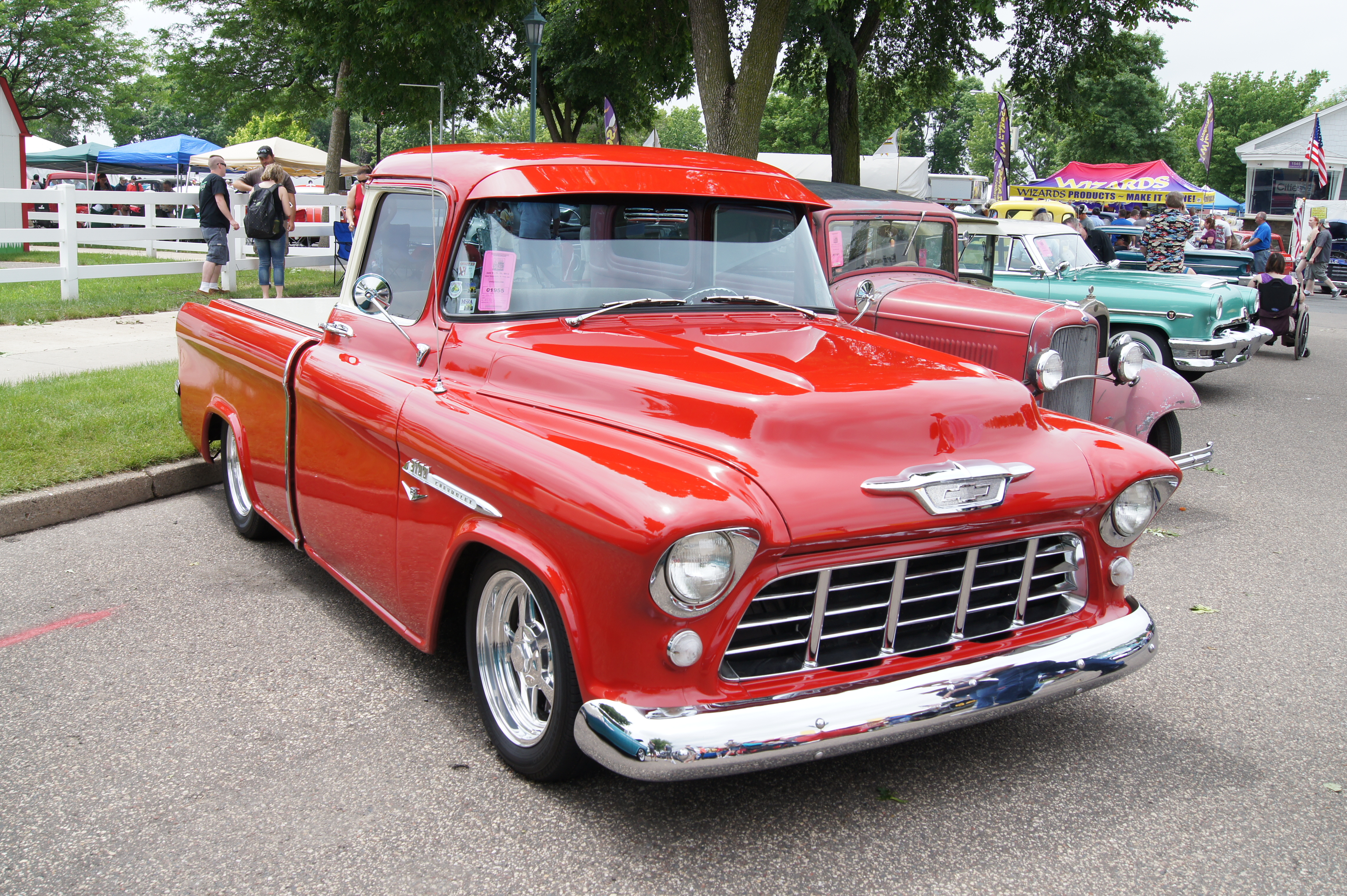
3. **Chevrolet Cameo Carrier (1955-1958)**The Chevrolet Cameo Carrier, produced between 1955 and 1958, stands as a pivotal trailblazer in the evolution of pickup truck design, particularly renowned for its revolutionary introduction of the smooth-sided truck bed concept. Prior to the Cameo, most pickups featured exposed exterior fender wells, a design that emphasized utility over aesthetics. Chevrolet’s innovative approach with the Cameo sought to bridge the gap between a utilitarian work truck and a stylish personal vehicle, appealing to a broader market segment that desired both functionality and elegance.
This groundbreaking truck masterfully combined stylish design with practical utility, creating a vehicle that was both hardworking and remarkably attractive. It boasted sophisticated features typically reserved for passenger cars of the era, including gleaming chrome trim and eye-catching two-tone paint options that enhanced its premium appearance. The smooth, flush-sided bed not only contributed to its sleek, modern look but also offered a more integrated and car-like aesthetic, distinguishing it sharply from its more rugged contemporaries and foreshadowing future trends in truck design.
The limited production run of the Chevrolet Cameo Carrier, combined with its truly unique aesthetic and its significant role as a design innovator, positions it as a top contender at high-profile vintage automobile auctions. Its rarity ensures that well-preserved examples are eagerly sought after, while its pioneering design continues to draw significant interest from collectors who appreciate its historical impact and its undeniable visual appeal. Owning a Cameo Carrier is to possess a piece of design history, a truck that dared to be different and ultimately reshaped expectations for what a pickup could be.
Car Model Information: 2023 Toyota Tacoma SR
Caption: 1956 Chevrolet Task Force (3100)
Name: Chevrolet Task Force Series
Manufacturer: Chevrolet
Aka: unbulleted list
Production: 1955–1959
Assembly: unbulleted list
Layout: Front-engine, rear-wheel-drive layout,rear-wheel drive
BodyStyle: pickup truck
Class: Pickup truck,commercial truck
Platform: General Motors A platform (RWD)
Related: Chevrolet Suburban#Fourth generation (1955)
Predecessor: Chevrolet Advance Design
Successor: Chevrolet C/K#First generation (1960–1966)
Engine: ubl
Abbr: on
Transmission: unbulleted list
Wheelbase: unbulleted list
Categories: 1950s cars, Articles with short description, Cars introduced in 1955, Cars of Argentina, Cars of Brazil
Summary: The Chevrolet Task Force (or in some cases, Task-Force) is a light-duty (3100-short bed & 3200-long bed) and medium-duty (3600) truck series by Chevrolet introduced in 1955, its first major redesign since 1947. Known as the Blue Chip in the parallel GMC it had more modern design than the preceding Advance Design without sacrificing ruggedness or durability.
First available on March 25, 1955, these trucks were sold with various minor changes over the years from 1955 (2nd series) until 1957. Model years 1955 and 1956 had the “egg crate grill”. 1955 had the emblems below the lateral line of the front fender, whereas in 1956, the emblem was located above the lateral line and the hood emblem was a bit higher on the hood. In 1957, the grill changed to a more open design and the hood was given “spears” resembling the Bel Air.
In 1958 the series was renamed “Apache”, found on fender emblems, given a second set of headlights, and received other minor changes. The model continued with minor changes through 1959.
In 1960 the truck was replaced by the new C/K Series, but this retained the Apache name for some years.
Get more information about: Chevrolet Task Force
Buying a high-performing used car >>>
Brand: Chevrolet Model: Cameo Carrier
Price: $33,199 Mileage: 59,070 mi.

4. **1940-1941 Ford Pickup**The 1940-1941 Ford Pickup commands immense respect among collectors, prized for its quintessential early design elements and its robust, no-nonsense engineering. These pre-war trucks represent a crucial period in American automotive history, encapsulating the aesthetic and mechanical principles that defined vehicle manufacturing just prior to a global upheaval. Their enduring appeal lies in their unpretentious yet powerful presence, a testament to a time when vehicles were built with an emphasis on durability and straightforward functionality.
A significant factor contributing to the elevated auction value of these particular Ford pickups is their inherent scarcity. Produced in the narrow window just before the United States officially entered World War II, manufacturing priorities shifted dramatically towards military production, curtailing civilian vehicle output. This historical context means that fewer of these trucks were made and survived, making them comparatively rare finds today. Each surviving example carries with it a tangible link to a pivotal moment in both national and industrial history.
Underneath its classic exterior, the 1940-1941 Ford Pickup was typically equipped with the legendary flathead V8 engine, an engineering marvel of its time renowned for its smooth power delivery and remarkable reliability. This formidable powerplant, coupled with the truck’s timeless and functional design, makes it a beloved piece of automotive heritage. For serious collectors seeking early American pickups, these Fords offer an irresistible combination of historical authenticity, mechanical integrity, and an aesthetic that continues to define the vintage truck ideal, consistently fetching impressive prices at auction.
Car Model Information: 2024 Ford F-150 Lightning Platinum
Name: Ford F-Series
Caption: 2022 Ford F-150 Lariat Luxury
Manufacturer: Ford Motor Company
Aka: Ford Lobo (Mexico, 1992–present)
Production: 1948–present
Class: Pickup truck#Full-size pickup truck
Layout: Front-engine, rear-wheel-drive layout,rear-wheel drive
Predecessor: 1941 Ford
Categories: All-wheel-drive vehicles, All Wikipedia articles written in American English, All articles that may contain original research, All articles with unsourced statements, Articles that may contain original research from September 2020
Summary: The Ford F-Series is a series of light-duty trucks marketed and manufactured by the Ford Motor Company since model year 1948 as a range of full-sized pickup trucks — positioned between Ford’s Ranger and Super Duty pickup trucks. Alongside the F-150 (introduced in 1975), the F-Series also includes the Super Duty series (introduced in 1999), which includes the heavier-duty F-250 through F-450 pickups, F-450/F-550 chassis cabs, and F-600/F-650/F-750 Class 6–8 commercial trucks.
Get more information about: Ford F-Series
Buying a high-performing used car >>>
Brand: Ford Model: Pickup
Price: $64,193 Mileage: 15,622 mi.
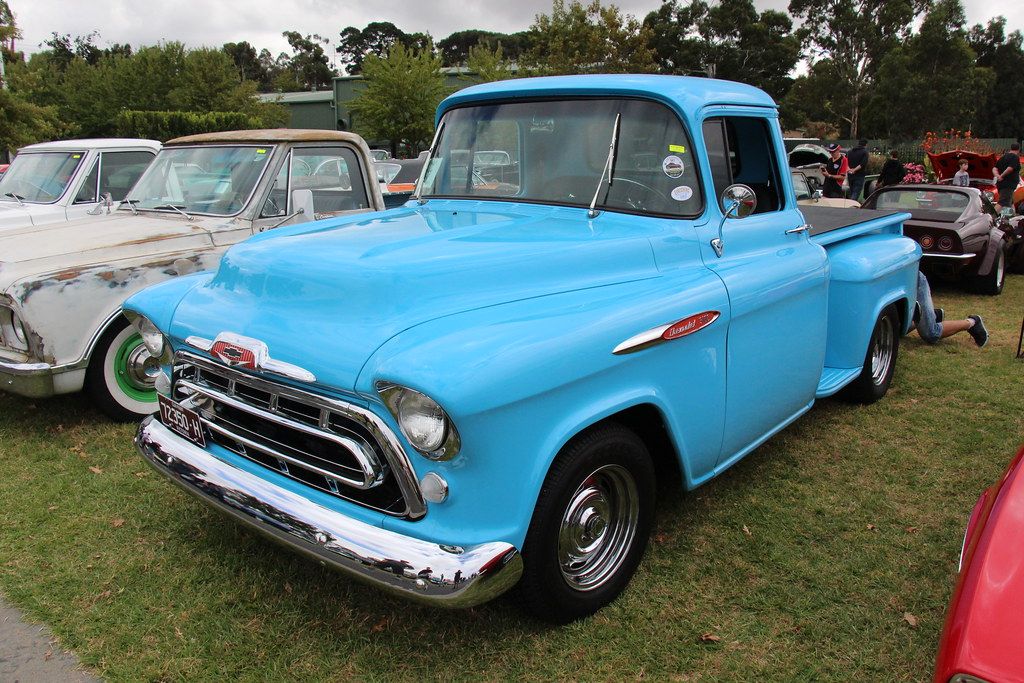
5. **1957 Chevrolet 3100**The 1957 Chevrolet 3100 holds a revered status as an integral part of the iconic Task Force series, a line of trucks celebrated for its groundbreaking sleek styling and an array of powerful engine options. This particular model year is frequently singled out by enthusiasts and collectors alike as a pinnacle of post-war truck design, encapsulating a perfect balance between utilitarian capability and burgeoning automotive aesthetics. The ’57 iteration introduced refinements that solidified its place as a design classic.
Among its most distinguishing and desirable features are the distinctive wraparound windshield and the highly coveted “big window” option, which together contributed to an expansive, airy cabin and an enhanced sense of style. These design elements were not merely cosmetic; they significantly improved visibility and lent the truck a more modern, passenger-car-like feel, making it attractive to a wider audience. The seamless integration of these features amplified its already classic look, distinguishing it sharply from its predecessors and contemporaries.
The enduring appeal of the 1957 Chevrolet 3100 extends beyond its looks; its robust construction and potential for customization have made it a favorite canvas for hot-rodders and restorers. Owners appreciate its versatility, transforming these trucks into everything from period-perfect showpieces to high-performance custom builds, all while retaining their inherent classic charm. This blend of iconic aesthetics, powerful underpinnings, and adaptability ensures its continued status as a frequent high-seller at vintage truck auctions, where its legacy as a true American classic is consistently reaffirmed by enthusiastic bidders.
Car Model Information: 1955 Chevrolet 3100 Base
Caption: 1953 Chevrolet 6100 (Advanced Design)
Name: Chevrolet Advance-Design Series
Manufacturer: Chevrolet
Aka: ubl
Production: 1947–1955
Assembly: ubl
Class: Pickup truck
Platform: GM A platform
Related: Chevrolet Suburban#Fourth generation (1955)
BodyStyle: Pickup truck
Predecessor: Chevrolet AK Series
Successor: Chevrolet Task Force
Engine: ubl
Transmission: ubl
Wheelbase: ubl
Abbr: on (1953–1955)
Length: ubl
Weight: convert
Layout: FR layout
Categories: 1950s cars, Articles with short description, Cars introduced in 1947, Chevrolet trucks, Commons category link from Wikidata
Summary: The Advance-Design is a light and medium duty truck series by Chevrolet, their first major redesign after WWII. Its GMC counterpart was the GMC New Design. It was billed as a larger, stronger, and sleeker design in comparison to the earlier AK Series. First available on June 28, 1947, these trucks were sold with various minor changes over the years until March 25, 1955, when the Task Force Series trucks replaced the Advance-Design model.
The same basic design family was used for all of its trucks including the Suburban, panel trucks, canopy express, and cab overs. The cab overs used the same basic cab configuration and similar grille but used a shorter and taller hood and different fenders. The unique cab over fenders and hood required a custom cowl area which makes the cab over engine cabs and normal truck cabs incompatible with one another while all truck cabs of all weights interchange.
From 1947 until 1955, Chevrolet trucks were number one in sales in the United States, with rebranded versions sold at GMC locations.
While General Motors used this front end sheet metal, and to a slightly lesser extent the cab, on all of its trucks except for the cab overs, there are three main sizes of this truck: the half-, three-quarter-, and full-ton capacities in short and long wheelbase.
Get more information about: Chevrolet Advance Design
Buying a high-performing used car >>>
Brand: Chevrolet Model: 3100
Price: $44,999 Mileage: 33,671 mi.
Read more about: The Unspoken Truth: What Gearheads *Really* Think When You Roll Up in These 14 Legendary Vintage Trucks
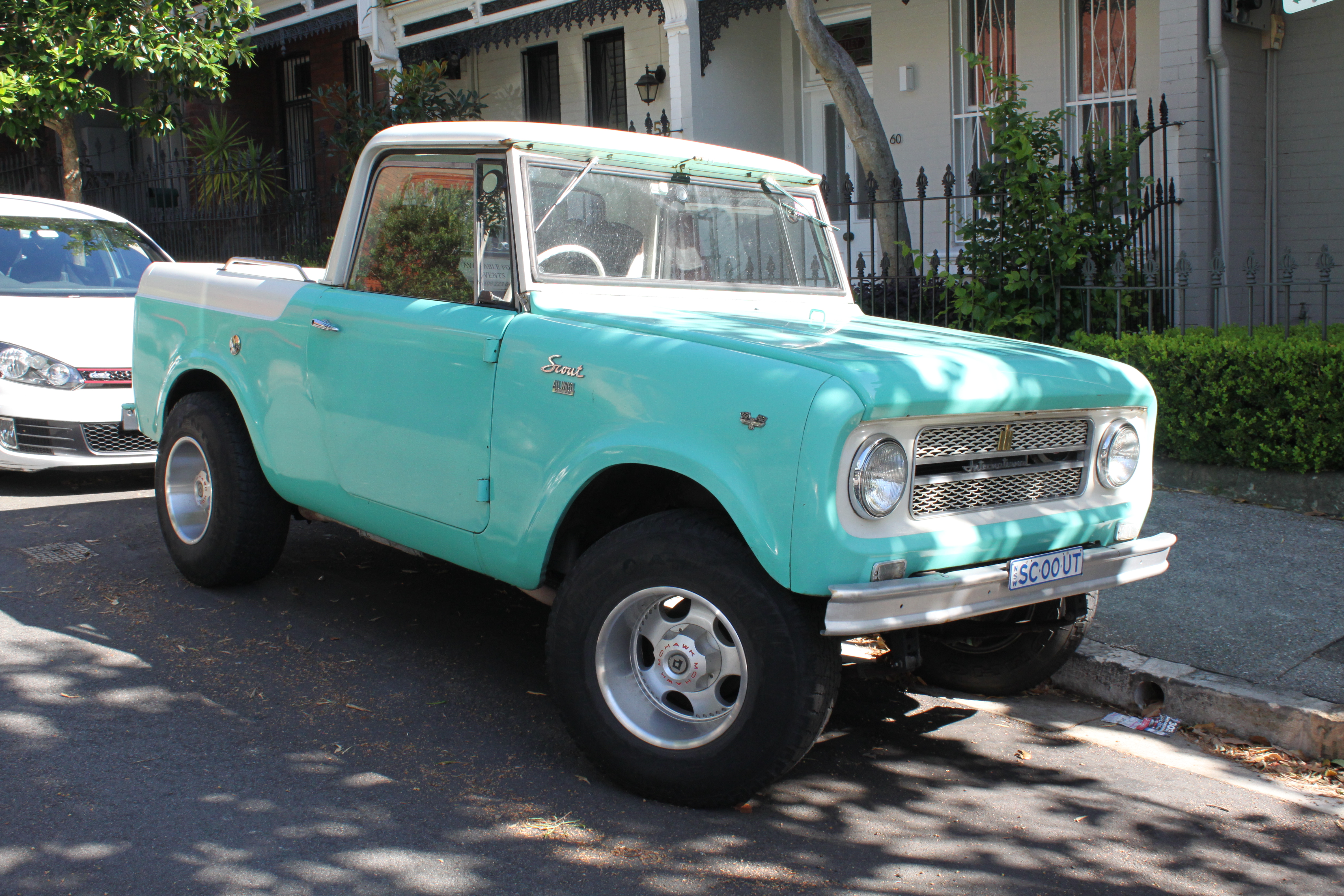
6. **International Harvester Scout 80 (1960-1965)**Long before the term “SUV” became commonplace, the International Harvester Scout 80, produced between 1960 and 1965, emerged as a pioneering vehicle in what would eventually become a massive automotive category. Its innovative, boxy design, coupled with the practical flexibility of a removable hardtop, truly set the stage for the modern sport utility vehicle. This trailblazing approach to personal utility and off-road capability marked a significant departure from traditional trucks and passenger cars, offering a new kind of freedom to adventurous drivers.
The Scout 80 is particularly sought after for its legendary rugged off-road capabilities and its fundamental simplicity, a design philosophy that prioritized functionality and durability. It was built to be tough, capable of traversing challenging landscapes with an unassuming reliability that endeared it to outdoor enthusiasts, farmers, and anyone needing a go-anywhere vehicle. Its straightforward mechanicals also made it relatively easy to maintain and repair, further adding to its practical appeal.
This unassuming yet revolutionary vehicle undeniably paved the way for the legion of modern SUVs that dominate today’s roads, establishing a blueprint for compact, versatile, and off-road-capable vehicles. The scarcity of well-preserved examples today, combined with its undeniable significance in automotive history as a forefather of an entire vehicle segment, ensures that the International Harvester Scout 80 consistently commands strong auction prices. It represents not just a truck, but a significant evolutionary step in automotive design.
Car Model Information: 2023 Toyota Tacoma SR
Name: International Scout
Caption: 1978 Scout II wagon
Manufacturer: International Harvester
Production: 1961–1980
Class: Full-size,SUV
Assembly: Fort Wayne, Indiana
BodyStyle: SUV
Layout: Front-engine, rear-wheel-drive layout,rear-wheel drive
Categories: 1970s cars, 1980s cars, All-wheel-drive vehicles, All articles needing additional references, All articles with dead external links
Summary: The International Scout is an off-road vehicle produced by International Harvester from 1960 to 1980. Created as a competitor for the Jeep CJ, the Scout was the precursor of more sophisticated SUVs, including the Ford Bronco, Chevrolet Blazer, and the later Jeep Cherokee.
Produced for two generations, the Scout was designed as an open-top two-door truck as a base vehicle with options to configure it as a station wagon, half-cab pickup truck, or a soft-top convertible.
International Harvester assembled the model line in its facility in Fort Wayne, Indiana.
Get more information about: International Scout
Buying a high-performing used car >>>
Brand: International Harvester Model: Scout 80
Price: $33,199 Mileage: 59,070 mi.

7. **1959 Dodge Sweptline**The 1959 Dodge Sweptline stands out as a truly distinctive classic truck, celebrated for its pioneering embrace of a stylish, streamlined design that seamlessly blended utility with passenger-car aesthetics. At a time when many pickups still emphasized purely utilitarian forms, the Sweptline made a bold statement with its integrated body lines and a visual flair that was undeniably ahead of its curve. This truck proved that a workhorse could also be a head-turner, setting new expectations for pickup truck styling.
A key element defining the Sweptline’s unique aesthetic was its wide-bed configuration, which was meticulously integrated into the overall body, creating a more cohesive and sophisticated look than its contemporaries. This design philosophy, combined with its forward-canted A-pillars, gave the truck a dynamic and visually assertive stance. It was a clear departure from the more upright, strictly functional designs of previous eras, signaling a shift towards trucks that could serve multiple roles, including personal transport.
The allure of the 1959 Dodge Sweptline at auction is further amplified by its limited production run, which contributes significantly to its scarcity and desirability among discerning collectors. Its unique aesthetic, coupled with its inherent practical utility, establishes it as a highly coveted item. For enthusiasts, owning a Sweptline is to possess a piece of design innovation, a truck that helped redefine what a pickup could be, blending rugged capability with unmistakable mid-century modern style.
Car Model Information: 1980 Dodge D150 Sweptline
Name: Dodge D series
Manufacturer: Chrysler Corporation
Aka: Dodge Ram (1980–1993), Dodge W series (4×4 models), Dodge Power Ram (4×4 models from 1980–1993)
Predecessor: Dodge C series
Successor: Ram pickup
Class: pickup truck
Production: 1960–1993
Platform: Chrysler AD platform
Assembly: Warren Truck Assembly,Warren, Michigan
BodyStyle: truck
Layout: Front-engine, rear-wheel-drive layout,rear-wheel drive,Front-engine, four-wheel-drive layout,four-wheel drive
Categories: 1970s cars, 1980s cars, All-wheel-drive vehicles, All articles needing additional references, All articles with unsourced statements
Summary: The D series (also called D/W series) is a line of pickup trucks that was sold by Dodge from October 1960 to September 30, 1993. The same basic design was retained until the October 1993 introduction of a completely redesigned Ram. The D/W series shared its AD platform with the Dodge Ramcharger/Plymouth Trail Duster twins. Two-wheel-drive (4×2) models were designated D, while four-wheel-drive (4×4) models were designated W.
Get more information about: Dodge D series
Buying a high-performing used car >>>
Brand: Dodge Model: Sweptline
Price: $14,991 Mileage: 93,960 mi.
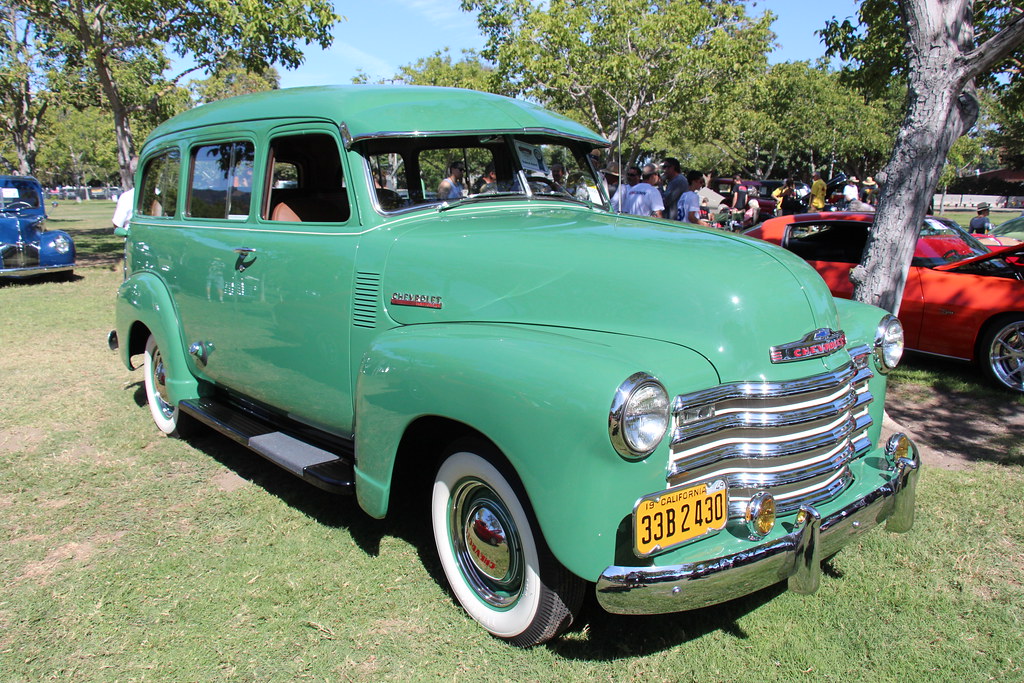
8. **1947-1953 Chevrolet Advance Design Series**The Chevrolet Advance Design Series trucks, produced from 1947 to 1953, are among the most immediately recognizable and beloved vintage pickups in American automotive history. Emerging in the optimistic post-war era, these trucks captured the spirit of a nation ready to rebuild and advance, embodying a fresh, modern aesthetic that resonated deeply with the public. They became, for many, the quintessential image of an American pickup truck.
This series marked a bold new chapter in truck design, moving away from the more utilitarian, pre-war styling to embrace a larger, more comfortable cab and a notably more powerful engine lineup. The spacious interior, improved visibility, and enhanced ergonomics represented a significant leap in driver comfort and practicality, making these trucks not just work implements but also more pleasant vehicles for daily use. This blend of form and function was groundbreaking.
The enduring popularity of the Advance Design Series at auction is a testament to its solid build quality, timeless appeal, and historical significance. These trucks were built with an emphasis on durability, which explains why so many have survived and are still cherished today. Their robust construction, combined with their iconic design and strong sentimental value, ensures they remain consistent favorites, continually attracting robust bidding and impressive sale prices from collectors.
Car Model Information: 2022 Dodge Charger R/T
Caption: 1953 Chevrolet 6100 (Advanced Design)
Name: Chevrolet Advance-Design Series
Manufacturer: Chevrolet
Aka: ubl
Production: 1947–1955
Assembly: ubl
Class: Pickup truck
Platform: GM A platform
Related: Chevrolet Suburban#Fourth generation (1955)
BodyStyle: Pickup truck
Predecessor: Chevrolet AK Series
Successor: Chevrolet Task Force
Engine: ubl
Transmission: ubl
Wheelbase: ubl
Abbr: on (1953–1955)
Length: ubl
Weight: convert
Layout: FR layout
Categories: 1950s cars, Articles with short description, Cars introduced in 1947, Chevrolet trucks, Commons category link from Wikidata
Summary: The Advance-Design is a light and medium duty truck series by Chevrolet, their first major redesign after WWII. Its GMC counterpart was the GMC New Design. It was billed as a larger, stronger, and sleeker design in comparison to the earlier AK Series. First available on June 28, 1947, these trucks were sold with various minor changes over the years until March 25, 1955, when the Task Force Series trucks replaced the Advance-Design model.
The same basic design family was used for all of its trucks including the Suburban, panel trucks, canopy express, and cab overs. The cab overs used the same basic cab configuration and similar grille but used a shorter and taller hood and different fenders. The unique cab over fenders and hood required a custom cowl area which makes the cab over engine cabs and normal truck cabs incompatible with one another while all truck cabs of all weights interchange.
From 1947 until 1955, Chevrolet trucks were number one in sales in the United States, with rebranded versions sold at GMC locations.
While General Motors used this front end sheet metal, and to a slightly lesser extent the cab, on all of its trucks except for the cab overs, there are three main sizes of this truck: the half-, three-quarter-, and full-ton capacities in short and long wheelbase.
Get more information about: Chevrolet Advance Design
Buying a high-performing used car >>>
Brand: Chevrolet Model: Advance Design Series
Price: $33,961 Mileage: 44,022 mi.
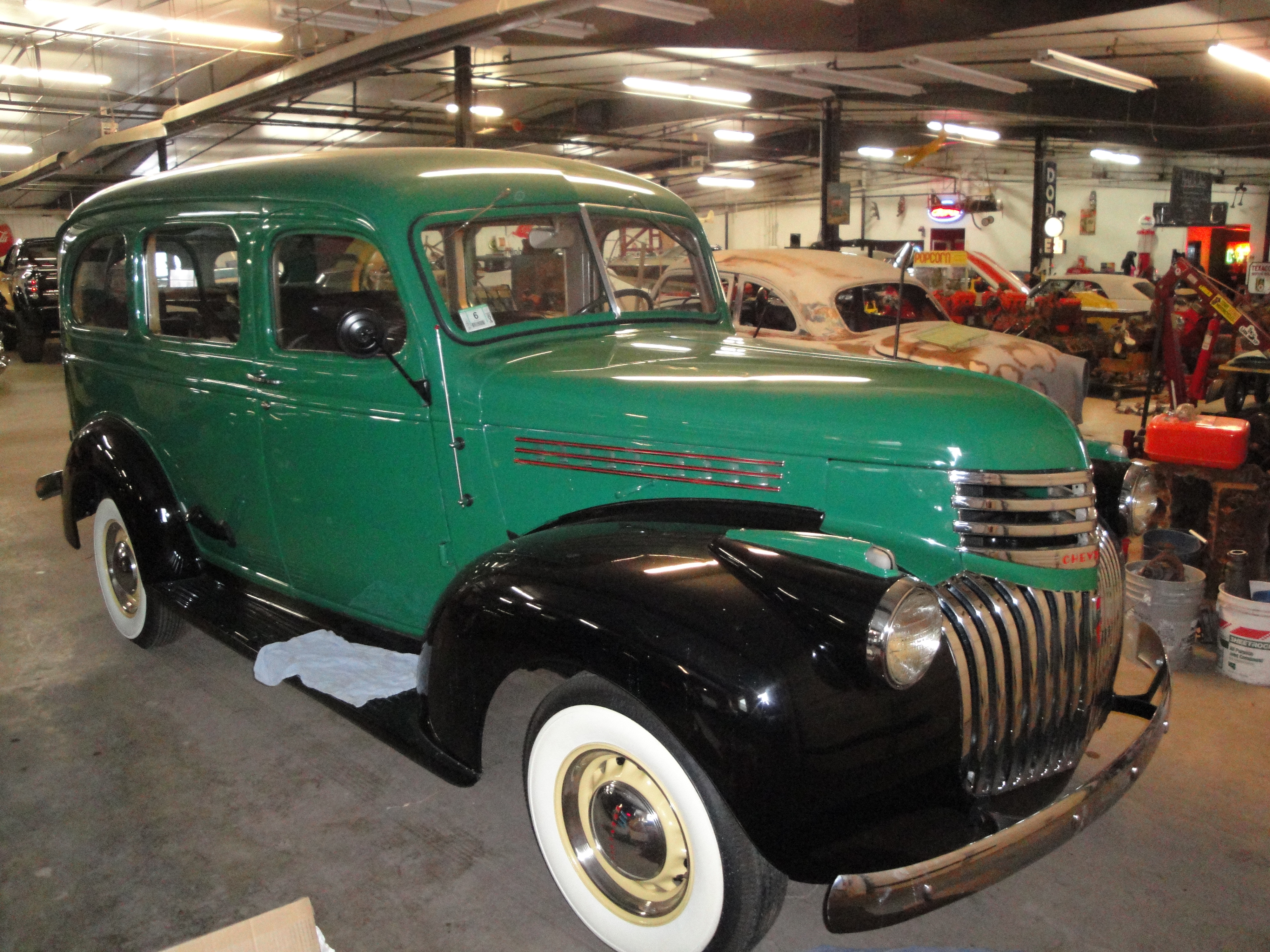
9. **1941 Chevrolet AK Series**The 1941 Chevrolet AK Series truck holds a significant place in automotive history, primarily recognized for its exceptionally robust build quality and profound wartime significance. Produced on the cusp of America’s entry into World War II, these trucks quickly became integral to both civilian infrastructure and military logistics, demonstrating an inherent durability that was crucial during a period of national crisis. They symbolized resilience and steadfast performance.
During World War II, the AK Series trucks were deployed extensively across various applications, serving valiantly in both military and essential civilian roles, from transporting vital supplies to supporting agricultural efforts. This dual-purpose utility and their deployment during such a pivotal global conflict imbue each surviving example with a rich, tangible connection to history. Owning an AK Series truck is not just about possessing a vintage vehicle; it’s about preserving a piece of American wartime heritage.
The historical relevance and inherent durability of the 1941 Chevrolet AK Series make it a deeply cherished collector’s favorite at auctions. Its straightforward, no-nonsense design speaks to an era when vehicles were built to withstand immense demands and minimal maintenance. For collectors drawn to the intersection of automotive engineering and significant historical periods, the AK Series offers an irresistible combination, often fetching impressive sums as a testament to its enduring legacy.
Car Model Information: 2022 Dodge Charger R/T
Name: Chevrolet AK Series
Caption: 1946 Chevrolet AK series truck
Assembly: Baltimore Assembly
ModelYears: 1941–1947
Manufacturer: Chevrolet
Layout: FR layout
BodyStyle: pickup truck
Successor: Chevrolet Advance Design
Transmission: 3-speed manual
Engine: 216 CID
Abbr: GMC straight-6 engine#228
Predecessor: Chevrolet Master#Trucks and buses
Categories: 1940s cars, All articles needing additional references, All articles with unsourced statements, Articles needing additional references from November 2015, Articles with short description
Summary: The Chevrolet AK Series is a range of pickup trucks sold under the Chevrolet brand, produced from 1941 through 1947. It used the GM A platform, shared with the Chevrolet Deluxe. The AK series was also branded and sold at GMC locations, with the primary visual difference being the Chevrolet had vertical bars in the grille, while the GMC had horizontal bars. The 1941–45 GMC models were sold as the C-Series and became E-Series for the 1946 and 1947 model years (CC-Series/EC-Series for the conventional cab models and CF-Series/EF-Series for the COE ones).
The AK series represented an appearance split from previous Chevrolet products where the passenger cars and pickup trucks shared a common appearance, as demonstrated in the Chevrolet Master truck. The Chevrolet Deluxe was an all-new appearance when it was introduced in 1941, and shared much of its mechanicals with the AK series truck and second generation Chevrolet Suburban.
It was replaced with the Advance-Design, that was also sold as a GMC.
Get more information about: Chevrolet AK Series
Buying a high-performing used car >>>
Brand: Chevrolet Model: AK Series
Price: $33,961 Mileage: 44,022 mi.
Read more about: Watch Out: The 10 Most Stolen Car Models Dominating US Streets
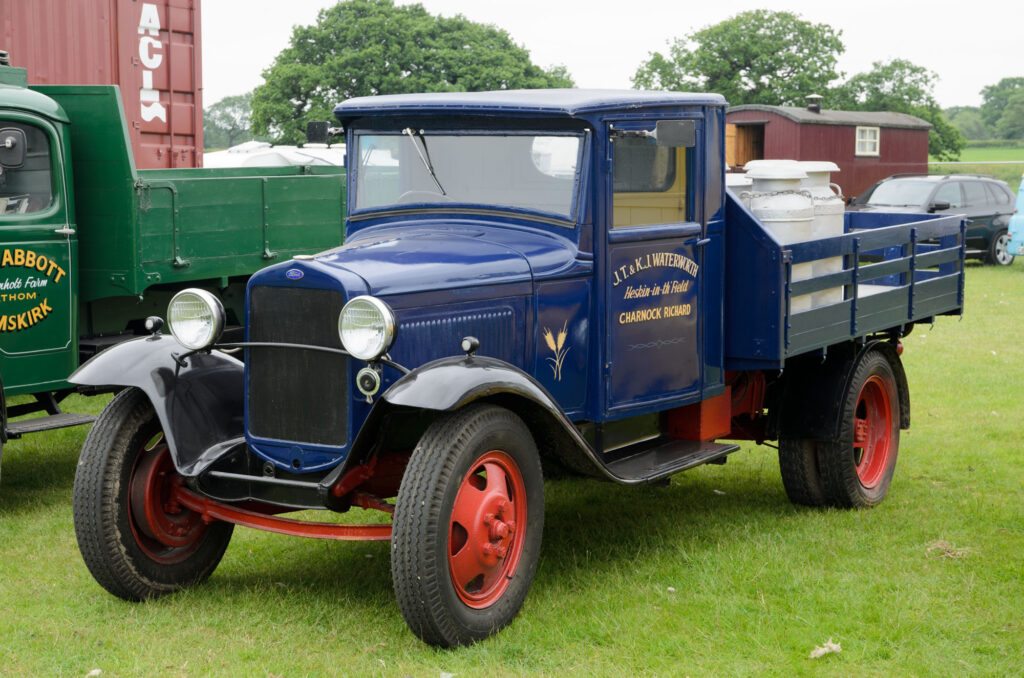
10. **Ford Model AA Truck (1928-1932)**The Ford Model AA truck, produced between 1928 and 1932, stands as a formidable and historically significant heavy-duty version of the iconic Ford Model A car. Developed to meet the growing demand for more robust commercial vehicles, the Model AA was engineered with a stronger frame, a heavy-duty drivetrain, and more substantial components, making it far more capable of carrying heavy loads than its passenger-car sibling. It was a true workhorse designed for the rigorous demands of early 20th-century commerce.
These rugged trucks were ubiquitous across America, serving an incredibly diverse range of utilitarian purposes. From hauling agricultural produce on farms to making deliveries for burgeoning businesses in rapidly expanding cities, the Model AA proved its mettle in virtually every sector imaginable. Its unparalleled rugged construction and simple, yet effective, engineering ensured that it could withstand the harshest conditions and the passage of time, with many examples enduring for decades.
Collectors today highly prize the Ford Model AA for its profound historical significance and its tangible link to the formative years of American industry and transportation. Its role in shaping the nation’s infrastructure and commerce lends it an undeniable gravitas. Well-preserved or meticulously restored examples of the Model AA, showcasing its original robust glory, consistently achieve high prices at auction, standing as venerable symbols of an industrious past.
Car Model Information: 2022 Dodge Charger R/T
Caption: Kilgore, Texas
Name: Ford Model AA
Manufacturer: Ford Motor Company
Production: 1927–1932
Predecessor: Ford Model TT
Successor: Ford Model BB,GAZ-AA
Class: Medium commercial
BodyStyle: ubl
Engine: Straight-four engine
Transmission: Manual transmission
Wheelbase: 131 in
Abbr: on
Length: Varied by body style
Width: 67 in
Height: Varied by body style
Weight: Varied by body style
Related: Ford Model A (1927-1931),GAZ-AA,GAZ-MM,GAZ-AAA
Designer: Henry Ford and Edsel Ford
Categories: All articles needing additional references, All articles with unsourced statements, Articles needing additional references from May 2020, Articles with Russian-language sources (ru), Articles with short description
Summary: Ford Model AA is a truck from Ford. As the Model T and TT became obsolete and needed to be replaced, Henry Ford began initial designs on the Model A and Model AA in 1926. Basic chassis layout was done rapidly and mechanical development was moved forward quickly. Body design and style was developed and then outsourced to various body manufacturers, including Briggs and Murray. The designs of the Model A shared parts and materials with the Model AA Ford, notably the body, engine and interior. The AA usually received plainer interiors than their car counterparts. The Model AA followed similar design changes to the Model A during the AA’s four years in production, often delayed anywhere from three to nine months. The mechanical changes and upgrades were done during production of the vehicles. Body changes that occurred between 1929 and 1930 were also integrated into AA production, but leftover parts were used longer in the heavy commercial trucks.
Get more information about: Ford Model AA
Buying a high-performing used car >>>
Brand: Ford Model: Model AA Truck
Price: $33,961 Mileage: 44,022 mi.
Our exploration of these magnificent vintage trucks underscores a timeless truth: classic vehicles are far more than just metal, rubber, and glass. They are vessels of history, engineering triumphs, and deeply personal connections to a bygone era. Each truck, from the pioneering Power Wagon to the iconic Ford F-Series, carries with it a legacy of innovation, durability, and a spirit of adventure. As technology advances, the appeal of these robust, character-filled machines only grows stronger, cementing their place not just on the auction block, but in the hearts of automotive enthusiasts worldwide. Their value, both monetary and sentimental, will undoubtedly continue to accelerate, ensuring they remain cherished artifacts for generations to come.