All-terrain vehicles, or ATVs, offer an incredible gateway to adventure, utility, and pure exhilaration. These versatile machines, equipped with four low-pressure tires and handlebars for steering, are popular for everything from hunting and farming to recreational trail riding. They promise freedom on dirt, gravel, and mud, and when you’re seeking to hit the trails, you naturally expect a reliable companion. Yet, the reality is that not all ATVs are created equal, and some can be exactly the opposite of what you expect.
Navigating the ATV market can be tricky, especially when safety and performance are on the line. Our comprehensive analysis aims to cut through the noise, identifying models that, according to our professional tests, extensive research, and countless customer reviews, simply don’t make the cut for 2024. We’ve delved deep into data, consulting with experts and sifting through owner experiences to bring you the unfiltered truth about which ATVs might leave you high and dry—or worse.
This isn’t just about minor inconveniences or occasional glitches; it’s about significant issues that compromise reliability, customer service, and overall value for money. When liability experts and real-world riders point to consistent problems, it’s a clear signal to approach with extreme caution. We want to empower you, the consumer, to make informed decisions and avoid purchasing a vehicle that may not meet your needs or, more critically, prove to be unreliable. Let’s dive into the brands and models that are definitely worth avoiding in the upcoming year.
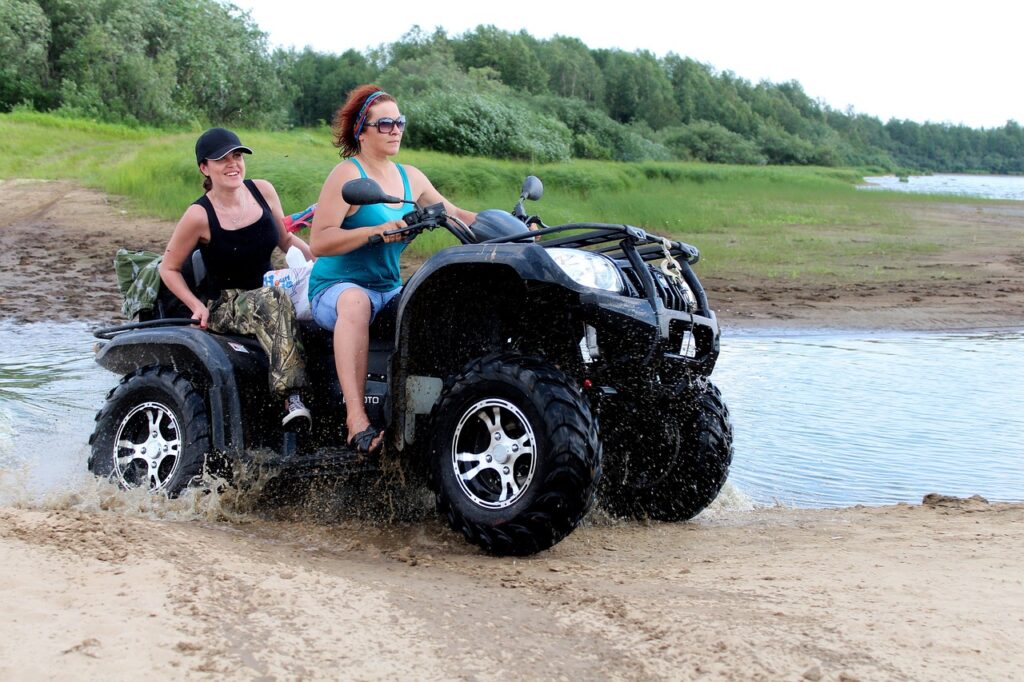
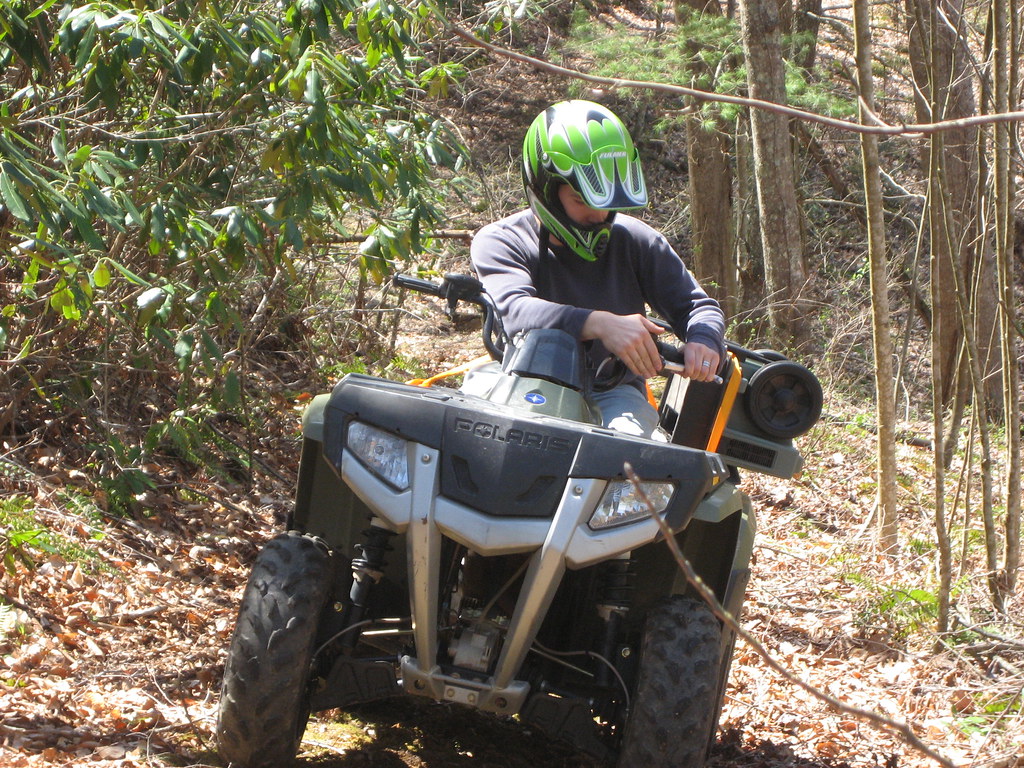
1. **IceBear ATV Brand**IceBear ATVs, a brand in the market since 2006 under Pacific Rim Int’l West Inc (PRIWI), presents itself as a cost-effective and powerful solution capable of tackling any terrain. With its products manufactured in China and product development reportedly in Japan, this brand aims to attract buyers looking for affordability combined with performance.
IceBear ATVs, a brand in the market since 2006 under Pacific Rim Int’l West Inc (PRIWI), presents itself as a cost-effective and powerful solution capable of tackling any terrain. With its products manufactured in China and product development reportedly in Japan, this brand aims to attract buyers looking for affordability combined with performance.
However, our extensive research paints a starkly different picture. IceBear ATVs consistently ranked among the worst brands on the market. Customer reviews frequently cite a “high number of reported issues,” with widespread complaints about “poor quality and reliability.” Many customers also expressed dissatisfaction with “poor customer service from the manufacturer, with complaints often going unresolved,” leaving them frustrated with their purchases.
Beyond customer sentiment, experts in the field of ATVs have highlighted significant concerns. They noted that IceBear ATVs are “prone to more wear and tear” and are simply “not as durable as other top ATVs on the market.” This suggests a fundamental problem with the longevity and resilience of these machines, which is a major red flag for any off-road vehicle intended for demanding conditions.
The combination of a high number of quality and reliability issues, unresponsive customer service, and questionable durability ultimately leads to poor value for money. Despite what might seem like an attractive initial price point, the hidden costs of frequent repairs and the frustration of dealing with unresolved problems make IceBear ATVs a brand to steer clear of. When you’re looking for an ATV, reliability should be paramount, and IceBear simply doesn’t deliver.
2. **Apollo ATV Brand**
Apollo has carved out a niche for itself by focusing on entry-level mini ATVs, primarily designed for children. They are often marketed with a reputation for making “durable and powerful ATVs” that promise “great performance.” A prime example is the Apollo 125 RFZ Sportrax, lauded for its blend of “style and performance,” featuring a 125cc engine, automatic gearbox, electric start, and a speed limiter, making it seem like an ideal choice for a child (12+) eager to explore trails.
Despite these enticing features and claims, our research regrettably identifies Apollo ATVs as one of the worst brands available. Customer reviews reveal a “high number of problems,” with owners frequently complaining about “poor quality and reliability.” These issues undermine the very notion of a durable vehicle, especially one intended for younger riders who rely on consistent, safe operation.
Moreover, the brand’s customer service appears to be a significant pain point. Many customers reported “poor customer service from the manufacturer, with complaints often going unresolved.” This lack of support can exacerbate the frustration of dealing with a faulty vehicle, making even minor issues feel insurmountable for families who have invested in these ATVs for their children.
ATV experts have also weighed in, confirming that Apollo ATVs are “not as durable as other ATVs on the market” and are explicitly “not suitable for rough terrain.” This directly contradicts the expectation of an off-road vehicle, suggesting that these ATVs are ill-equipped for the very environment they are designed to navigate. The high price tag for what proves to be a low-quality product further diminishes its appeal.
Considering the significant reported issues, the unresponsive customer service, and the clear expert consensus on durability and terrain suitability, Apollo ATVs present a classic case of poor value for money. For parents seeking a reliable and safe off-road experience for their children, it’s crucial to look beyond Apollo’s appealing marketing and opt for brands with a proven track record of dependability and support.

3. **Linhai ATV Brand**
Linhai, also recognized as LYM, stands as a well-established Chinese four-wheeler brand with a history stretching back to 1956. It’s often presented as “Linhai-Yamaha” due to a joint business venture with the renowned Yamaha Motor Co., which might lead consumers to expect a certain level of quality and engineering. The company specializes in a broad range of powersports vehicles, including ATVs, motorcycles, and utility task vehicles, exporting its products to continents such as Africa, Asia, Europe, and North America. They are known for being “relatively affordable and great for speed,” though not necessarily “high-performance all-terrain vehicles like mainstream brands.”
However, despite its long history, global reach, and association with a major motor company, our investigation places Linhai ATVs among the worst brands on the market. A consistent theme in customer feedback is a “high number of reported issues,” indicating significant concerns about the intrinsic “poor quality and reliability” of their vehicles. These aren’t isolated incidents but rather recurring problems that owners face after purchase.
Adding to the frustration, many Linhai customers have reported “poor customer service from the manufacturer, with complaints often going unresolved.” This lack of effective support can turn a problematic ATV into a complete headache, leaving owners without viable solutions for their issues. When you invest in an ATV, you expect, at the very least, a responsive channel for assistance when things go wrong, which Linhai seems to lack.
Industry experts corroborate these findings, noting that Linhai ATVs are “prone to wear and tear and are not as durable as other ATVs on the market.” This inherent lack of durability means that while the initial purchase might seem affordable, the long-term costs associated with maintenance and repairs can quickly negate any perceived savings. Essentially, a “high price tag for a low-quality product” results in poor value for money.
Given the pervasive issues with reliability, the challenges in securing adequate customer support, and the clear expert consensus on durability, Linhai ATVs fall short of the quality standards expected from any ATV, let alone one with a respected joint venture partner. Consumers are advised to exercise extreme caution and consider alternatives if they seek a truly dependable off-road machine.
4. **Tao Tao ATV Brand**
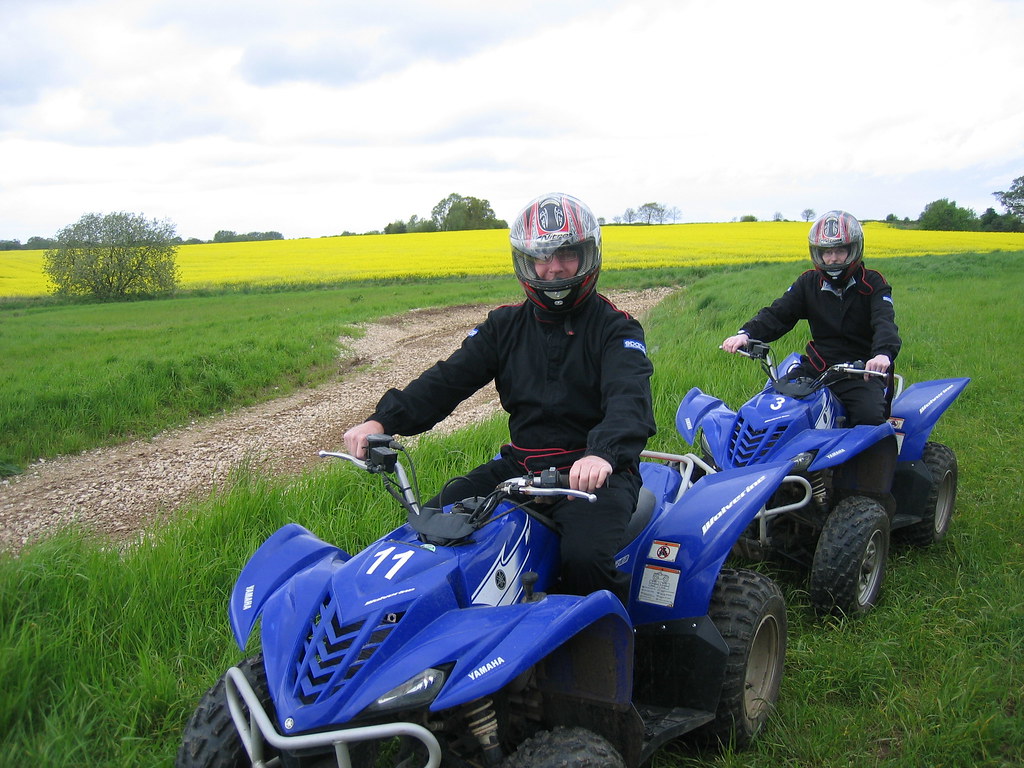
Tao Tao, another Chinese ATV brand, has undeniably worked to improve its offerings in recent years, which has contributed to its “rise to fame.” The brand boasts a collection of “many unique models,” with one of its more popular options being the “Tao Tao ATA-125D 110 cc Youth Size ATV.” This particular model is highlighted for its “big rugged wheels” and a “powerful 4 stroke engine,” promising “excellent performance” with “both front and rear tires strong enough to handle all types of terrain nicely.”
Despite these advancements and the popularity of certain models, our extensive research indicates that Tao Tao remains one of the worst ATV brands currently on the market. Customer reviews consistently point to a “high number of reported issues,” raising serious questions about the overall “poor quality and reliability” of their vehicles. This suggests that while some improvements may have been made, fundamental flaws persist across their product line.
A recurring complaint among Tao Tao ATV owners concerns the brand’s customer service. Many customers have “reported poor customer service from the manufacturer, with complaints often going unresolved.” This lack of timely and effective support can be particularly frustrating for owners, especially when dealing with safety-critical equipment like an ATV, and undermines any confidence in the brand’s commitment to its customers.
Experts in the field of ATVs further caution against Tao Tao, noting that their ATVs are “prone to breaking and are not as durable as other ATVs on the market.” This expert assessment directly contradicts the perception of a robust off-road vehicle capable of handling diverse terrains, despite what specific model descriptions might suggest. The result is a “high price tag for a low-quality product,” making Tao Tao ATVs poor value for money.
Therefore, while the Tao Tao ATA-125D might appear appealing on paper, the collective evidence of quality issues, durability concerns, and unsatisfactory customer support positions Tao Tao as a brand to avoid. When considering a used ATV, for example, the context explicitly advises to “rather go for a used Honda, Polaris or Yamaha as they don’t wear easily,” highlighting the stark contrast in expected longevity and reliability.
Read more about: Nostalgic for the Nineties? Relive the Pivotal Moments, Tech Booms, and Global Shifts That Defined a Decade
5. **X-Pro ATV Brand**
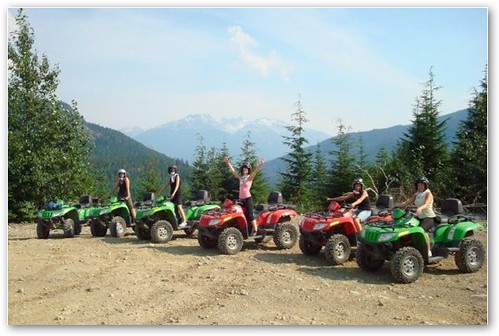
Steering clear of certain brands can save you a lot of trouble, and X-Pro is definitely one to add to that list. This Chinese ATV brand floods the market with a “large range of ATVs and motorbikes,” often catching the eye of new riders. Take, for instance, their popular X-Pro 200 ATV, which comes equipped with an “air cooled 4 stroke 169cc engine,” positioning it as a seemingly “suitable option for beginners looking to get into ATVs.” It sounds like an accessible entry point to the off-road world, doesn’t it?
However, the allure quickly fades when you delve into the actual performance and reliability of these machines. Our in-depth research, which includes rigorous professional tests and expert consultations, has regrettably found X-Pro to be among the worst ATV brands available. Customer reviews consistently highlight a “high number of reported issues,” with widespread complaints centered on “poor quality and reliability.” These aren’t just isolated incidents; they’re recurring themes that paint a clear picture of subpar manufacturing.
Imagine you’ve invested in an ATV, eager to hit the trails, only to be met with constant breakdowns and unresolved problems. This frustrating scenario is all too common for X-Pro owners, who frequently “reported poor customer service from the manufacturer, with complaints often going unresolved.” This lack of responsive support means that when things inevitably go wrong, you’re left scrambling for solutions, effectively diminishing any perceived value from your purchase.
Further solidifying these concerns, ATV experts have explicitly noted that X-Pro ATVs are “prone to wear and tear” and simply “not as durable as other ATVs on the market.” This inherent fragility means that these machines are unlikely to withstand the demanding conditions of off-road riding, leading to a shorter lifespan and more frequent repairs. Essentially, despite what might seem like an initial bargain, our research concludes that X-Pro ATVs present a “high price tag for a low-quality product.”
This unfavorable cost-to-quality ratio ultimately translates into poor value for money. When contemplating an X-Pro, it’s crucial to weigh the initial savings against the potential for ongoing frustrations, repair costs, and a generally unreliable riding experience. It’s a stark reminder that while the ATV market offers many choices, not all of them offer the dependable adventure you’re truly seeking.

6. **Polaris RZR Models**
Shifting gears from the budget-friendly but problematic Chinese imports, we now turn our attention to a brand that needs no introduction, yet demands an elevated level of scrutiny: Polaris, specifically its RZR models. These machines are often at the forefront of the recreational off-highway vehicle (ROV) segment, lauded for their potent performance and thrilling capabilities. With some RZR models capable of reaching speeds of “60 – 75 mph or more,” they offer an exhilarating ride that few can match.
But here’s where the excitement needs to be tempered with serious caution. Despite their impressive speed, RZR models unfortunately “lack many of the safety features of motor vehicles.” This crucial distinction means riders are operating powerful machines at high speeds without the comprehensive protection found in standard automobiles. This inherent design characteristic, combined with a troubling history of defects, makes certain RZR models a significant concern for liability experts.
Polaris has faced numerous recalls for its RZR vehicles, a pattern that consistently raises red flags. For instance, “late last year,” Polaris issued “yet another recall of its popular RZR off-road vehicles due to an issue with the battery that can cause a fire hazard.” This wasn’t an isolated incident, as the RZR has “also been recalled for fire hazards, most recently in December 2024,” underscoring a persistent and dangerous problem. Fire hazards, in fact, constitute a staggering “40%” of all OHV recalls analyzed by the Consumer Federation of America (CFA).
The impact of these defects is tragically evident in the CPSC’s findings. Between 2018 and 2020, Recreational Off-Highway Vehicles (ROVs), which include side-by-sides like the Polaris RZR, were associated with “635 deaths” nationwide. While operator behavior, such as “speeding, reckless operation, ignoring safety rules, and impaired driving,” does contribute to accidents, these statistics are exacerbated by underlying manufacturing flaws. It’s a sobering reminder that even seemingly low-risk conditions can turn dangerous when a vehicle has inherent issues.
Indeed, Polaris carries a heavy weight in the OHV recall landscape. The CFA analysis revealed that Polaris has issued “61” recalls—nearly four times as many as the “second-most recalled OHV brand” during the period from January 2010 to July 2023. This overwhelming number points to a systemic issue where design or manufacturing oversights consistently compromise safety. When you consider a Polaris RZR, it’s absolutely paramount to understand this extensive history of defects and the very real risks they introduce.

7. **Polaris Ranger Models**
Moving from the high-speed thrills of the RZR, we now turn our focus to another significant segment of Polaris’s lineup: the Ranger Utility Terrain Vehicle (UTV) models. These machines are popular for their utility and versatility, but just like their RZR counterparts, they too have been subject to a concerning number of safety issues and recalls. Our research explicitly states, “Some Polaris Ranger models have also been recalled in recent years due to safety concerns,” adding another layer of complexity to the brand’s reputation.
The sheer volume of recalls associated with Polaris is a crucial factor to consider. As the “brand that had the most recalls” in the OHV industry, with “61” separate incidents between January 2010 and July 2023, Polaris sets an alarming precedent. This extensive track record signals that potential defects are not isolated to one specific model but rather indicate broader challenges in quality control or design that permeate various Polaris product lines, including the Ranger.
These aren’t minor issues that can be brushed aside; the recalls impacting Polaris Ranger models, much like other OHVs from the manufacturer, address a critical range of defects. The industry-wide recalls that Polaris contributes so heavily to often stem from problems spanning “defective welds and parking brakes to faulty throttles and electrical systems.” Any one of these failures can dramatically “increase the risks of fires, crashes, and injuries” for riders and passengers alike.
It’s fundamentally unacceptable for an off-road vehicle, whether recreational or utility-focused, to present such inherent and preventable dangers. As liability experts emphasize, machines should not “catch fire during routine operation, crash because of steering defects, or have clutch issues that make the vehicle hard to control” due to manufacturing or design flaws. These are not merely operational hazards; they are defects that demand rectification, and their recurrence in Polaris’s history is a serious warning.
Therefore, while the Polaris Ranger series offers undeniable functionality and performance for various tasks, the documented history of widespread recalls and safety concerns cannot be overlooked. Prospective buyers should approach these models with a heightened sense of awareness, recognizing that a utility vehicle with a persistent recall record may ultimately offer less utility and more liability in the long run. Making an informed decision means acknowledging that even popular brands can have significant underlying issues that impact safety and reliability.
Read more about: Lemon in the Garage: 14 Models Drivers Vow Never to Buy Again Due to Poor Build Quality
8. **Kawasaki ATVs: The Second Most Recalled Brand**
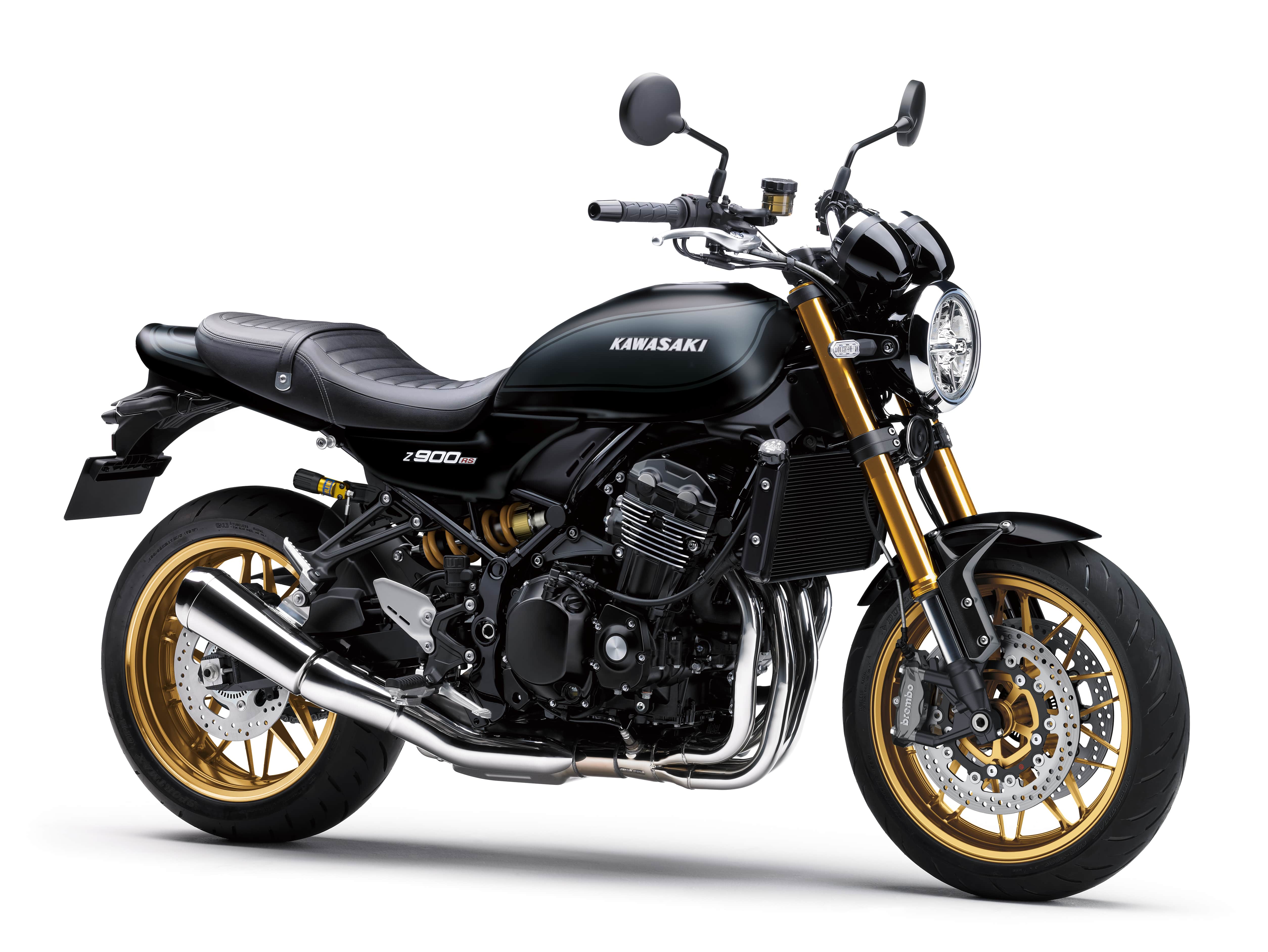
Now, let’s turn our attention to a prominent name in powersports, Kawasaki, which, despite its reputation in other segments, holds a concerning position in the ATV recall landscape. While Polaris leads the pack in terms of recall volume, Kawasaki stands as the “second-most recalled OHV brand,” with a notable “16” recalls issued from January 2010 to July 2023. This statistic, derived from the Consumer Federation of America’s comprehensive analysis, serves as a significant caution for anyone considering a Kawasaki ATV.
This isn’t just a number; it represents a pattern of various issues across different models that have necessitated intervention to protect rider safety. The presence of “16” recalls signifies that, like other manufacturers facing such scrutiny, Kawasaki ATVs have exhibited a range of defects that extend beyond routine wear and tear. These are problems identified by safety commissions and experts as critical flaws that need to be addressed immediately.
The types of defects leading to these recalls are diverse and directly impact the safety and reliability of the machine. These issues can include serious mechanical problems such as “defective welds and parking brake malfunctions,” which can lead to structural failure or uncontrolled movement. Furthermore, “throttle problems” are also among the spectrum of issues, a defect that could cause unexpected acceleration or deceleration, severely compromising a rider’s ability to maintain control.
Each of these identified flaws contributes to a diminished sense of safety and confidence in the machine. While purchasing an ATV from a “well-known and reputable company like Kawasaki does not guarantee that the vehicle will be without problems,” its position as the second most recalled brand clearly indicates that potential buyers must exercise extra diligence. It’s a stark reminder that even established names can have significant product safety challenges that necessitate a careful review before purchase.
Ultimately, the information from these recalls is vital for consumers. Understanding that Kawasaki has a history of addressing a wide array of safety-critical issues, from structural integrity to fundamental control mechanisms, allows prospective buyers to make a more informed decision. Rather than assuming all reputable brands are equal in ATV safety, this data points to specific concerns that should prompt thorough investigation of any Kawasaki ATV model you might be considering.
***
**Final Considerations for a Safer Ride**
Navigating the vibrant, often overwhelming, world of ATVs requires more than just a passion for adventure; it demands a critical eye and a commitment to safety. As we’ve journeyed through this list, examining brands and models from various price points and market segments, one truth has consistently emerged: not all ATVs are created equal, and some present far greater risks than others. Our deep dive, informed by professional tests, extensive customer reviews, and the invaluable insights of liability experts, aims to empower you to make truly informed decisions.
The overarching goal is to help you “distinguish between acceptable operational hazards and preventable manufacturing defects.” All-terrain vehicles, by their very nature, “can pose safety risks to drivers and passengers even during seemingly low-risk conditions.” These include potential dangers like “overturning, collisions, and occupant ejection,” inherent to off-road riding. However, it’s crucial to understand that many additional dangers are introduced when a vehicle suffers from “manufacturing or design improvements” that are lacking, or outright defects.
Therefore, when you’re in the market for an ATV, the paramount importance of “thorough research” cannot be overstated. Don’t simply rely on glossy brochures or enticing initial price tags. Delve into specific model reviews, investigate recall histories from official sources like the CPSC, and consider the long-term track record of customer service for any brand you’re considering. This diligence will help you avoid the frustration of “poor quality and reliability” and the headache of “unresponsive customer service” that plagues many of the brands we’ve discussed.
Ultimately, a safer riding experience hinges on two key pillars: responsible operation by the rider and a commitment to quality and safety from the manufacturer. While “risks can also be reduced by riders getting proper training and following safety rules,” manufacturers bear the responsibility of ensuring their products are free from defects that lead to unnecessary injury or death. Off-road vehicles should unequivocally not “catch fire during routine operation, crash because of steering defects, or have clutch issues that make the vehicle hard to control” because of flaws that could have been prevented.
In closing, remember that your adventure should be defined by the thrill of the ride, not the anxiety of potential mechanical failure or safety hazards. Choose wisely, ride safely, and let your off-road experiences be filled with exhilaration, not regrettable compromises. Your safety, and the safety of those who ride with you, is always worth the extra effort in research and selection.