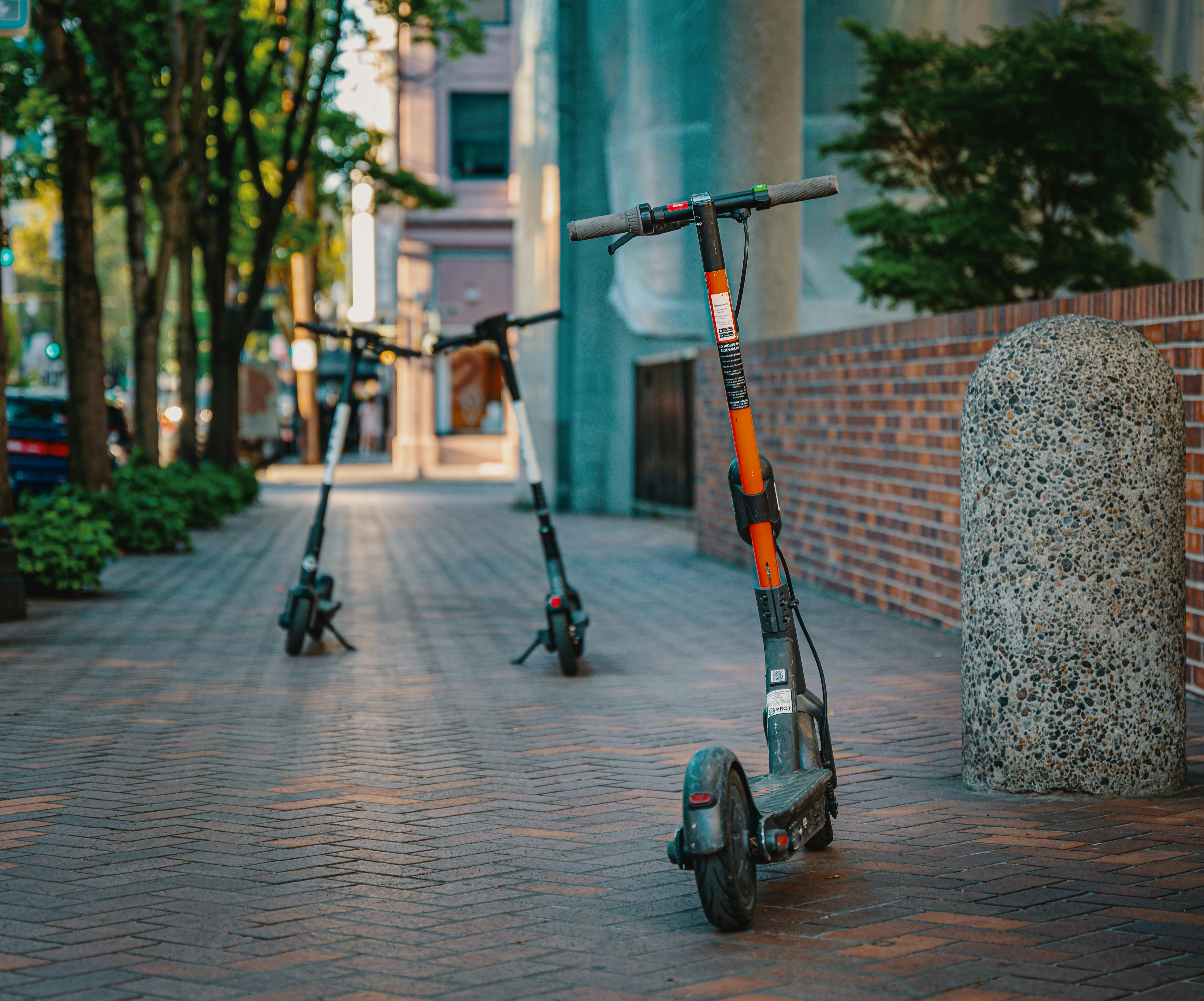
The modern urban landscape is constantly evolving, and with it, the ways we navigate our daily lives. In recent years, scooters have emerged as a highly popular choice for commuting, promising a practical, fun, and often eco-friendly way to move through bustling city streets and serene residential neighborhoods. The allure is undeniable: beating traffic, saving on fuel, and often enjoying a breath of fresh air as you go. Many recent advances in technology have resulted in excellent pricing for scooters as well as excellent capabilities, fueling a renewed interest, especially with increases in gas prices experienced globally.
Indeed, the advantages are numerous. From inexpensive maintenance and substantial savings on parking and gas costs to the undeniable ability to maneuver through traffic easily, scooters offer a compelling alternative to traditional automobiles. They can make the commute to work, often considered the worst part of the day, a much more enjoyable experience. However, beneath the surface of convenience and cost-effectiveness, traffic engineers—those experts dedicated to optimizing traffic flow, safety, and urban mobility—look at these vehicles with a discerning eye. Their perspective often uncovers nuances that might make certain models less than ideal for specific commuting demands or urban infrastructure, despite their general appeal.
While many scooters are celebrated for their design, performance, and features, a closer look through the lens of traffic engineering reveals aspects that could, in certain contexts, lead to suboptimal commuting experiences or even pose regulatory challenges. This article, guided by a focus on factual, thoroughly researched information and a commitment to empowering consumers, delves into 11 specific scooter models. We aim to provide clear recommendations and highlight the practical considerations that might lead a traffic engineer to advise against them for particular commuting uses in 2024, helping you make informed decisions.
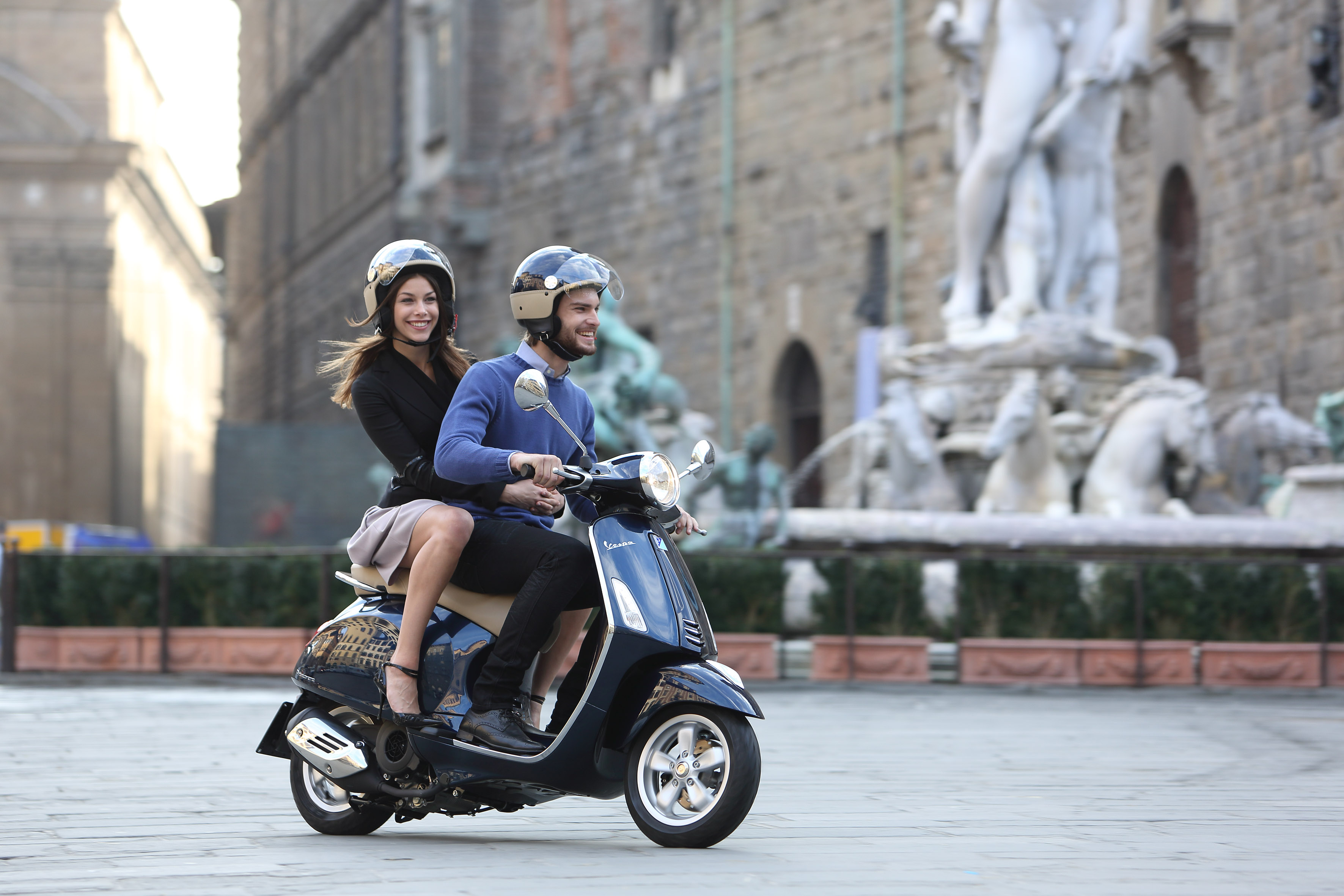
1. **Vespa Primavera (150cc)**The Vespa Primavera is frequently lauded as a stylish, eco-friendly option, perfect for city driving, boasting impressive fuel efficiency of up to 100 mpg and a range of up to 90 miles per tank. It features a 150cc engine, a front disk brake, and ample room for two people, all wrapped in a classic design with a step-through entry and a comfortable upright riding position. This design even accommodated women in skirts or dresses, while a casing ensured no grease stains on clothing, making it seem like an ideal choice for many.
However, from a traffic engineer’s viewpoint, the 150cc engine presents a nuanced challenge. The context clearly states that “More powerful scooters such as the 150cc will be able to travel at highway speeds and will need to be tagged in most states.” This immediately raises questions about its suitability for commuters in states where “many states prohibit the use of scooters on the highways.” For those living in areas with such restrictions, investing in a scooter designed for highway speeds could lead to frustration or even legal issues, rendering its primary power advantage moot for their daily route.
Furthermore, while its classic aesthetics are charming, traffic engineers prioritize practical, modern safety features for dense urban environments. The text mentions a “front disk brake” but doesn’t detail advanced braking systems like ABS as standard, which might be a preference for enhanced safety in heavy traffic. For a commuter seeking a truly fuss-free experience across varied legal landscapes, the Primavera’s 150cc capability could be an unnecessary complication, pushing it into a category of scooters that, while generally excellent, might not be the most universally compliant or practical choice for all urban commutes in 2024.
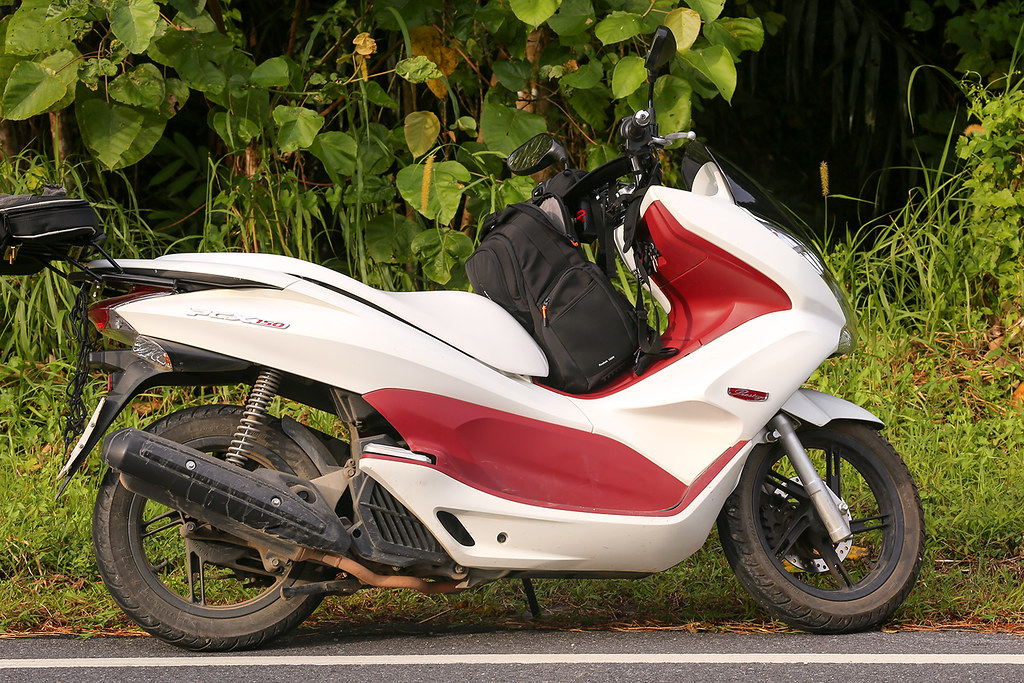
2. **Honda PCX150 (157cc)**The Honda PCX150 has long held a reputation as one of the most popular commuter scooters, celebrated for its affordability, compact design that comfortably seats two adults, and exceptional reliability and fuel efficiency, also achieving up to 100 mpg. With a 157cc engine, it can reach speeds of up to 65 mph, offering an upright riding position and convenient under-seat storage. These attributes certainly make it appealing for a broad spectrum of commuters.
Yet, much like the Vespa Primavera, the PCX150’s engine size and speed capability—”157cc engine that can reach up to 65 mph”—place it firmly within the category of scooters subject to varying state laws regarding highway use and tagging requirements. Traffic engineers, concerned with public safety and regulatory compliance, would note that for commuters in states where “many states prohibit the use of scooters on the highways,” this scooter’s potential might be curtailed. This means a significant portion of its design capacity for speed would go unused, making it less efficient for a strictly urban, non-highway commute.
Moreover, a critical detail highlighted is the presence of “optional ABS brakes for safety.” For traffic engineers, who emphasize robust safety standards to protect riders in complex urban environments, an essential feature like ABS being optional, rather than standard, could be a point of concern. Relying on optional upgrades for fundamental safety functions means that not all PCX150s on the road will offer the highest level of braking performance, potentially increasing risk in emergency stop situations. Thus, while generally reliable, the PCX150 might not uniformly meet the highest safety expectations for all commuters in 2024.

3. **Yamaha XMAX (300cc)**The Yamaha XMAX presents itself as a sporty, high-performance scooter, featuring a robust 300cc engine capable of reaching a top speed of 80 mph. It boasts front and rear disk brakes, an adjustable windscreen and seat, and spacious footboards, allowing riders to find an ideal riding position. The text explicitly positions it as “the perfect scooter for long highway commutes at faster speeds,” catering to those with more extensive travel needs.
From a traffic engineering standpoint focused on typical urban commuting, the Yamaha XMAX’s very strengths can become its weaknesses. Its powerful 300cc engine and top speed of 80 mph are, as the context confirms, ideal for “long highway commutes.” However, for commuters navigating dense city streets or areas where scooters are expressly forbidden on highways, this power is often excessive and potentially legally restricted. Traffic engineers prioritize efficient and safe movement through *urban* congestion, where such high speeds are unnecessary and can even be detrimental to local traffic flow dynamics.
Furthermore, the article mentions that the Yamaha XMAX comes “at a higher price point.” While value is subjective, for many urban commuters seeking a cost-effective alternative, this higher initial investment might contradict the fundamental economic advantage scooters often present. When considering the weight of “397 lbs,” the XMAX also becomes less adaptable for multimodal commuting, where users might need to carry their scooter onto public transport. Therefore, while a high-performance machine, the Yamaha XMAX’s highway-centric design and cost might make it a less practical or desirable choice for the average city-bound commuter in 2024.
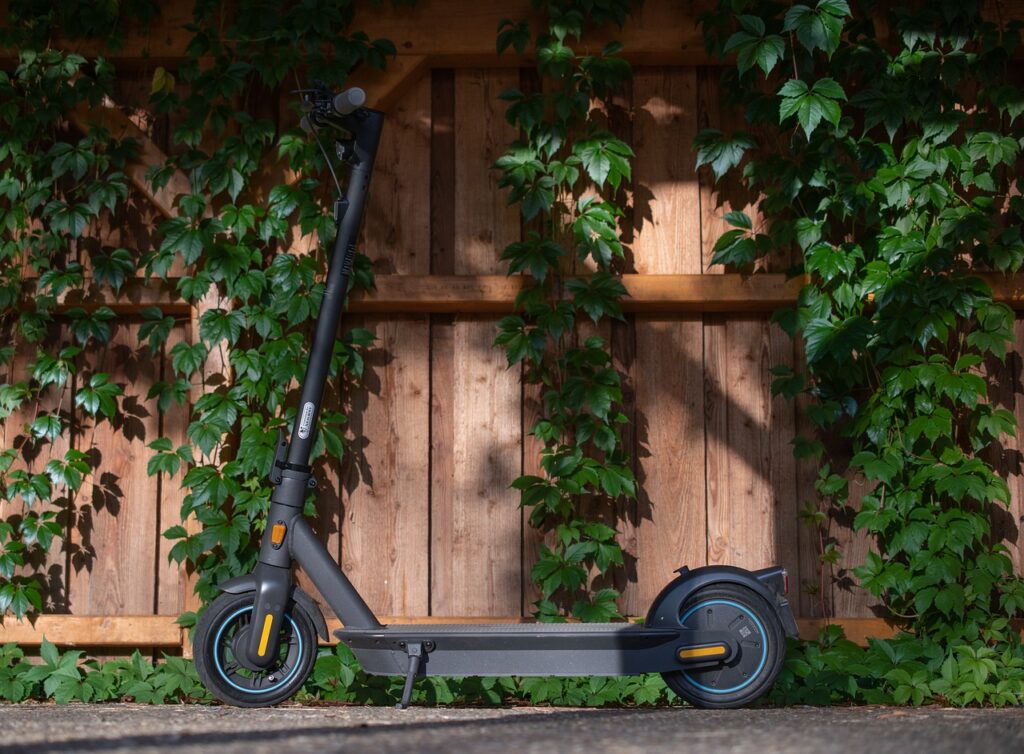
4. **Gotrax GXL V2**The Gotrax GXL V2 is presented as a solid option for simplifying the commute, primarily due to its lightweight design and portability. Its solid honeycomb tires are lauded for their durability and maintenance-free nature, eliminating worries about flat tires. The scooter offers a relatively smooth ride and a top speed of 15.5 mph, making it a quick option for daily travel, particularly for short distances.
Despite these advantages, traffic engineers and consumer advocates alike would point to certain compromises that make the Gotrax GXL V2 less universally ideal for commuting. A primary concern is that “battery life might vary with heavy use” and, more concretely, the observation that “After about nine miles, I felt the scooter slowing down a bit.” This inconsistency in performance and range can be a significant practical drawback for commuters whose routes might approach or exceed this threshold, leading to range anxiety and the need for frequent, potentially inconvenient, recharging during the workday.
Furthermore, the explicit mention that it “lacks advanced features like suspension” is a critical point for rider comfort and safety, especially on typical urban roads that are rarely perfectly smooth. Traffic engineers understand that a lack of suspension means riders “might feel some bumps when riding over uneven surfaces,” increasing fatigue and potentially reducing control over prolonged commutes. While its lightweight nature is a definite plus, these performance limitations and comfort compromises might position the Gotrax GXL V2 as a less robust choice for consistent, daily commuting compared to other models in 2024.
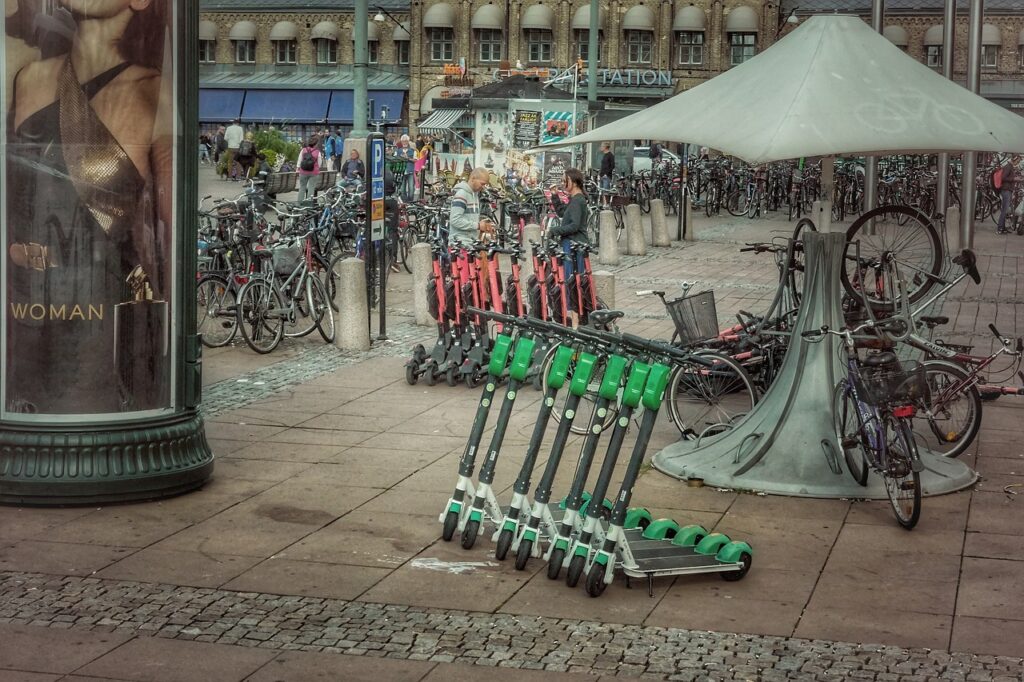
5. **Apollo Phantom Pro Scooter**The Apollo Phantom Pro scooter is introduced as a solid choice for making commutes quicker and more enjoyable. Its 8-inch wheels are credited with helping it glide smoothly over pavement bumps and cracks, offering a stable ride even on rougher terrain. Its lightweight yet durable build, combined with an easy folding feature for storage and transport, suggests a practical solution for urban mobility.
However, from a traffic engineer’s and safety expert’s perspective, specific drawbacks make this scooter a less ideal recommendation for general commuting. The most concerning issue highlighted is that “the brake can be tricky to use at times.” In urban environments where quick and reliable braking is paramount for avoiding accidents with pedestrians, cyclists, and other vehicles, a braking system that is inconsistent or difficult to operate presents a significant safety hazard. This alone could be a deal-breaker for any commuter prioritizing safety above all else.
Adding to the practical considerations, the “folding mechanism can be tough sometimes,” which undermines the convenience factor essential for multimodal commuters or those with limited storage space. If the scooter isn’t consistently easy to fold, it can create delays and frustration. Moreover, the comment that it is “designed more for teens than for taller adults” points to potential ergonomic issues for a large segment of the adult commuting population, implying that comfort and proper riding posture may be compromised for many. These combined factors suggest that while it has its merits, the Apollo Phantom Pro might not meet the comprehensive safety and practicality standards traffic engineers would advise for adult commuters in 2024.
The journey continues as we scrutinize additional scooter models through the rigorous lens of traffic engineering, an essential perspective often overlooked by the casual commuter. Our objective remains to equip you, the consumer, with data-driven insights to make the most informed decision for your daily travel. We’ll explore how specific design choices and performance metrics, while seemingly advantageous, can actually present drawbacks when evaluated against the practicalities of urban mobility and safety in 2024.
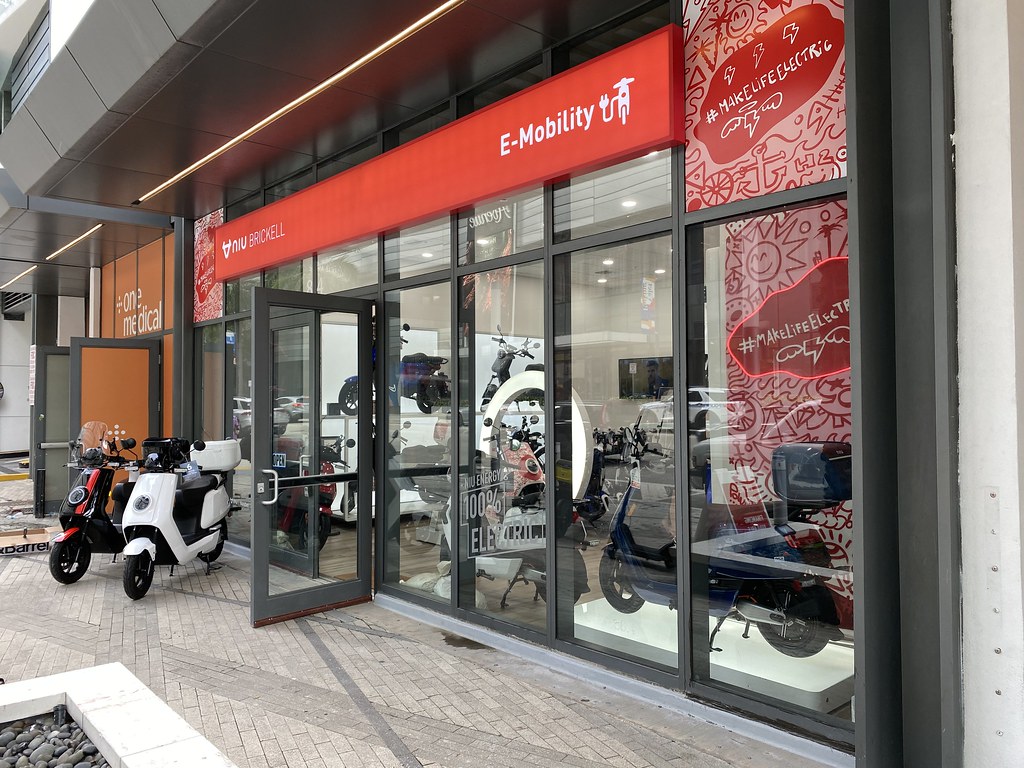
6. **NIU Electric Scooter**The NIU Electric Scooter generally presents itself as a robust option for the urban jungle, flaunting a 300W motor capable of propelling it to speeds of up to 17.4 mph. Its claimed 18-mile range on a single charge positions it as a practical contender for many daily commutes, minimizing battery anxiety for regular trips. The design also incorporates a 36mm dual-stroke suspension and pneumatic tires, which promise a comfortable ride, even over less-than-perfect urban surfaces.
From a traffic engineer’s perspective, the “comfortable ride on various terrains with good suspension” is a definite plus for rider safety and fatigue management, especially considering the varied quality of city roads. A smooth ride contributes to better control and reduces the likelihood of accidents caused by unexpected jolts. The maximum speed is well within typical urban speed limits, promoting safer integration with bicycle lanes and local traffic without being excessively fast.
However, the scooter is not without its caveats. It weighs “38.1 lbs,” a factor that, while manageable for some, could be “slightly heavy for some users” and pose a challenge for commuters who frequently need to lift their scooter onto public transport or carry it up stairs. The “app setup can be frustrating” and it has “limited features on the app.” While not directly a traffic safety concern, these usability issues can create friction in the user experience, potentially deterring seamless daily integration and management of the scooter, which traffic engineers value for promoting consistent and reliable commuting habits.
Read more about: The Electric Enigma: 15 E-Bikes Ranked on Battery Life – From Marathon Runners to Quick Drainers
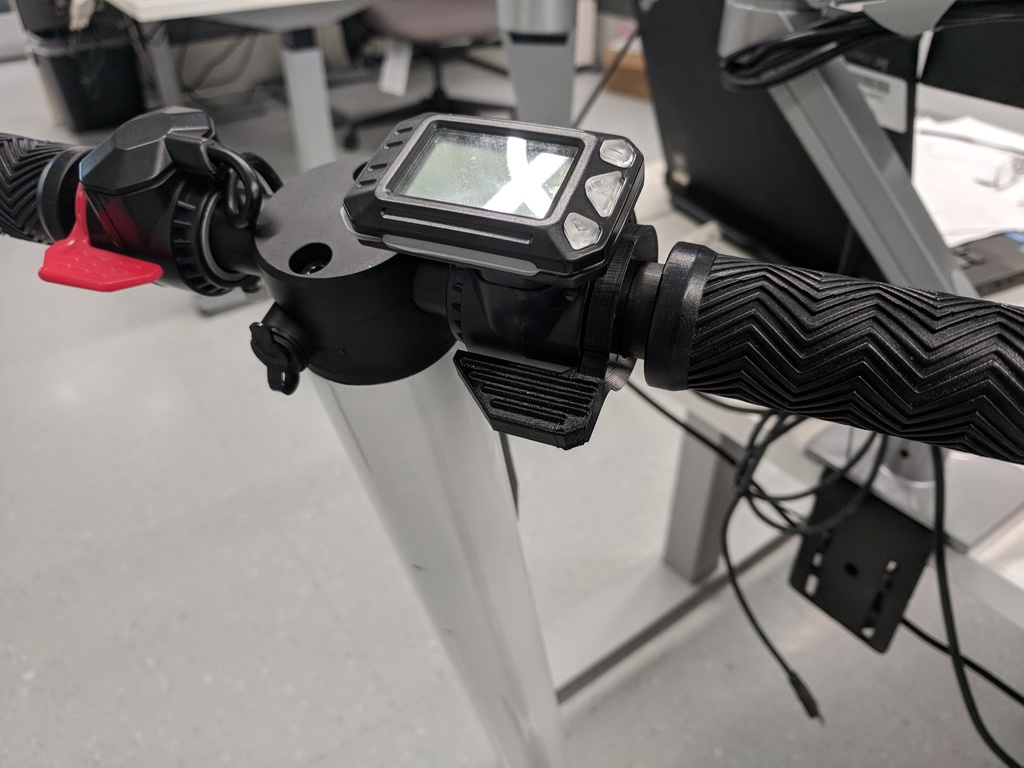
7. **Gotrax ASTRO Electric Scooter**The Gotrax ASTRO Electric Scooter appears to prioritize rider comfort and utility, featuring a dual rear suspension and an adjustable saddle designed to provide a smooth ride, even on “bumpy roads.” The extra-wide deck contributes to a stable platform, aiming to make “long commutes much more enjoyable.” Its motor allows for speeds up to 15.5 mph, and the 14-inch tires are noted for absorbing bumps effectively, suggesting a confident navigation through diverse urban landscapes.
The inclusion of dual rear suspension and a comfortable, adjustable saddle are commendable features that enhance rider comfort and potentially reduce fatigue, which are indirect safety benefits. A less fatigued rider is generally a more attentive rider. The practical rear basket for carrying groceries or other necessities is a thoughtful addition for daily errands, extending its utility beyond just commuting to work, aligning with the multifaceted needs of urban dwellers.
Nonetheless, closer inspection reveals potential limitations for consistent, broad-spectrum commuting. The “seat may feel a bit stiff after long usage,” which contradicts the goal of making “long commutes much more enjoyable,” indicating that it might not be suitable for extended periods on the saddle. Furthermore, the scooter has a “limited to a maximum weight of 264 pounds,” potentially excluding a significant portion of the adult commuting population. Most critically from a practical and engineering standpoint, the battery range “in cold weather, range can drop,” introduces an element of unpredictability. This variability could be a significant practical drawback for commuters in colder climates, necessitating more frequent charging or potentially leaving riders stranded, factors that undermine reliability for daily use.
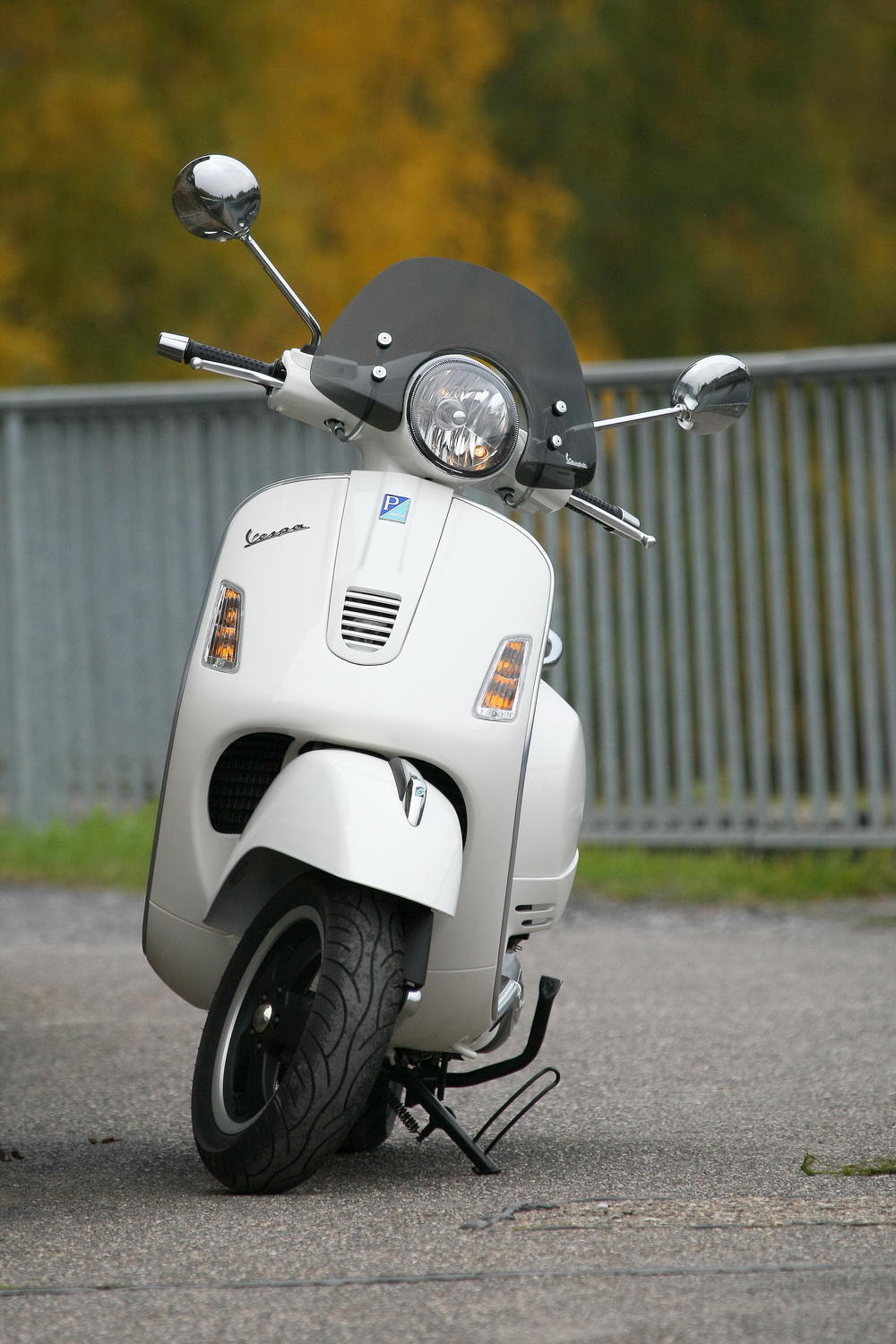
8. **Vespa GTS Super 300**The Vespa GTS Super 300, while exuding an iconic style, presents itself as a more powerful motor scooter for those with robust commuting needs. It is equipped with a “278cc, single-cylinder” engine, capable of reaching a “Top Speed: Around 80 mph.” The model is highlighted for its “advanced technology including ABS brakes, and a comfortable ride,” alongside its classic design, suggesting a blend of performance and safety features that would appeal to many riders.
From the meticulous perspective of a traffic engineer, the sheer power of the 278cc engine and its 80 mph top speed immediately flags concerns for typical urban commuting scenarios. As the context previously noted for similarly powerful scooters, “many states prohibit the use of scooters on the highways.” This means a significant portion of the GTS Super 300’s performance capability would be legally restricted or impractical for many urban commuters, making the investment in such power potentially inefficient for their daily routes. The high top speed, while useful on highways, is largely unnecessary and potentially less safe for navigating congested city streets where lower speeds are paramount for avoiding accidents.
Adding to these considerations is its substantial “Weight: 344 lbs.” This considerable mass, while potentially contributing to a stable ride, detracts significantly from the agility and maneuverability often required in dense urban traffic. For commuters who might need to navigate tight spaces, lift their vehicle, or integrate it with public transport (though unlikely at this weight), the GTS Super 300 proves less adaptable. While the “advanced technology including ABS brakes” is a critical safety advantage, the overall package of high power and heavy weight might position it as an over-engineered solution for the average city-bound commuter, potentially creating more regulatory and practical hurdles than benefits in 2024.
Read more about: 10 Compact Motorcycles Ideal for City Commuting in 2025: Fuel-Saving & Agile

9. **Suzuki Burgman 200**The Suzuki Burgman 200 is positioned as a feature-rich motor scooter designed for comfort and utility, boasting a “200cc, liquid-cooled” engine that can achieve a “Top Speed: 70 mph.” It includes a “large windscreen for added protection,” a “comfortable riding position,” and “ample storage space,” all elements that speak to a refined commuting experience, particularly for those with longer distances or a need for carrying items.
However, traffic engineers would scrutinize the Burgman 200 based on its engine size and weight for urban applicability. A “200cc engine” places it squarely in the category of more powerful scooters that “will need to be tagged in most states,” and critically, many states “prohibit the use of scooters on the highways.” This implies that its 70 mph top speed, while robust, may be legally unusable for a significant portion of a commuter’s journey if their route involves highways in restrictive states. For purely urban travel, this speed is largely excessive and contributes to an overall design that is less optimized for lower-speed, stop-and-go conditions.
Perhaps the most significant concern from an urban mobility standpoint is its considerable “Weight: 403 lbs.” This makes it the heaviest scooter on our list, fundamentally compromising the lightweight and agile characteristics that make scooters attractive for navigating congested cityscapes. Such a heavy vehicle can be more challenging to maneuver in tight traffic, park in limited spaces, and is entirely impractical for any form of multimodal transport where carrying or lifting is involved. While the “large windscreen” and “ample storage” enhance comfort and convenience, these advantages might be overshadowed by the bulk and power that, for many urban commuters, represent an over-specification rather than an ideal solution for efficient and universally compliant daily travel in 2024.

10. **Kymco Like 150i**The Kymco Like 150i offers a blend of style and practicality, featuring a “149cc, liquid-cooled” engine that delivers a “Top Speed: Approximately 60 mph.” It is praised for its “Stylish design, user-friendly technology, and excellent handling,” suggesting a scooter that is both aesthetically pleasing and competent on the road. With a “Fuel Efficiency: Up to 80 mpg,” it presents itself as an economical choice for daily travel, aligning with common commuter priorities.
From a traffic engineering perspective, the 149cc engine and 60 mph top speed immediately raise familiar regulatory questions. As highlighted throughout our analysis, scooters of this engine size “will be able to travel at highway speeds and will need to be tagged in most states.” Crucially, the context reiterates that “many states prohibit the use of scooters on the highways.” For a commuter in such a state, the Kymco Like 150i’s ability to reach highway speeds becomes a legal and practical impediment rather than an asset, forcing riders onto slower, potentially less direct routes, thus undermining the efficiency gains often sought from scooter commuting.
Furthermore, while “excellent handling” and “user-friendly technology” contribute to a positive riding experience, the weight of “265 lbs” positions it on the heavier side for a 150cc class scooter. While not as heavy as the 300cc models, this weight still impacts agility in very dense urban traffic and makes it less suitable for scenarios requiring frequent lifting or carrying. Ultimately, for the traffic engineer focused on maximizing urban mobility and compliance for the widest range of commuters, the Kymco Like 150i’s performance capabilities, while strong, are potentially at odds with the legal and practical realities of diverse urban commuting environments in 2024.
As we’ve navigated through these 11 scooter models, it becomes abundantly clear that while the market is flooded with enticing options, the ‘perfect’ commuter scooter isn’t a one-size-fits-all solution. Through the expert lens of traffic engineers, we’ve peeled back the layers of marketing appeal to reveal the practical nuances, regulatory hurdles, and design compromises that can make certain models less than ideal for your specific commuting reality in 2024. From engine power that exceeds legal urban limits, to weights that challenge portability, and safety features that are either optional or tricky to use, each scooter presents a unique set of considerations. Your commute is uniquely yours, and the decision requires careful alignment with local laws, personal physical needs, and the specific demands of your daily journey. The goal is not just to ride, but to ride efficiently, safely, and without unforeseen complications. So, before you commit, scrutinize, question, and ensure your chosen ride truly empowers, rather than complicates, your daily urban adventure.