The automotive landscape, a realm of roaring engines and sleek designs, has always been a complex beast. Yet, in 2025, it’s not just the winding roads that present challenges, but the treacherous terrain of global trade policy. Manufacturers, suppliers, and even the keenest of car enthusiasts are finding themselves caught in what Cox Automotive chief economist Jonathan Smoke describes as “a complex, multi level chess game in the dark on a tilted table.” It’s a game where the rules change with alarming frequency, and the stakes for your next vehicle purchase couldn’t be higher.
Indeed, the very ground beneath the industry’s feet is shifting. As Erin Keating, executive analyst at Cox Automotive, starkly put it, “Tariffs have evolved from a temporary disruption to a structural reality. We’ve seen multiple rounds of increases, reciprocal actions and shifting exemptions.” This relentless uncertainty is the antithesis to the predictability automakers and suppliers require for sound product and financial planning. The result? A market rife with potential pitfalls for the unsuspecting buyer, and a clear signal for industry insiders to steer well clear of certain vehicles.
So, if you’re about to dip your toe into the showroom, consider this your essential guide from those who truly know the nuts and bolts – and the looming price tags. We’re not just talking about minor adjustments; we’re dissecting the very models and market segments that are set to feel the full force of these new trade winds. Forget fleeting trends; these are the vehicles poised to deliver a significant dose of sticker shock, or worse, become a lesson in automotive economics. Let’s get stuck in.

1. **Mazda Miata: The Canary in the Coal Mine for Tariffs**
The Mazda Miata, a perennial favorite for its nimble handling and pure driving joy, finds itself at the forefront of the tariff onslaught. With a mere 1% of its content sourced domestically, this beloved roadster is practically a poster child for import vulnerability. When tariffs bite, they bite hard, and the Miata is uniquely exposed.
Fans of this lightweight marvel might find their enthusiasm dampened by rapidly escalating prices. The economics are brutally simple: a higher percentage of imported parts directly translates to a heavier tariff burden. For a car so meticulously engineered and largely built abroad, the consequences are immediate and unavoidable.
Industry insiders, who understand the razor-thin margins and the long-term planning involved, are acutely aware of this exposure. They see the Miata as a clear indicator of how swift and significant price increases can be for vehicles lacking substantial domestic content. If you’ve been eyeing one, the smart money says to act with a sense of urgency before the market fully recalibrates.
This isn’t just about the initial purchase price; it’s about the underlying philosophy. Automakers chose global supply chains for efficiency and cost-effectiveness. Now, that very strategy is creating a significant liability, turning a car like the Miata into a prime example of a vehicle that will inevitably become a lot more expensive for consumers.
Car Model Information: 2023 Mazda MX-5 Miata Club
Name: Mazda MX-5
Manufacturer: Mazda
Aka: unbulleted indent list
Production: 1989–present
Assembly: Hiroshima
Class: Roadster (car),sports car
Layout: unbulleted indent list
Platform: List of Mazda model codes#Model codes
Categories: 1990s cars, 2000s cars, 2010s cars, 2020s cars, All Wikipedia articles in need of updating
Summary: The Mazda MX-5 is a lightweight two-seat sports car manufactured and marketed by Mazda. In Japan, it is marketed as the Mazda Roadster or, previously, as the Eunos Roadster. In the United States it is sold as the Mazda Miata (), and it was formerly marketed under the same name in Canada. The name miata derives from Old High German for “reward”.
Produced at Mazda’s Hiroshima plant, the MX-5 debuted in 1989 at the Chicago Auto Show. It was created under the design credo Jinba ittai, meaning “unity of horse and rider”. Noted for its small, light, balanced and minimalist design, the MX-5 has often been described as a successor to the 1950s and 1960s Italian and British roadsters, with the Lotus Elan serving as a design benchmark.
Each generation is identified by a two-letter code, beginning with the first generation NA. The second generation NB launched in 1998, followed by the third generation NC in 2005, and the fourth generation ND in 2015.
More than one million MX-5s have been sold, making it the best-selling two-seat convertible sports car in history.
Get more information about: Mazda MX-5
Buying a high-performing used car >>>
Brand: Mazda Model: Miata
Price: $26,087 Mileage: 32,837 mi.
2. **Hyundai Elantra: Budget Favorite Facing Border Blues**
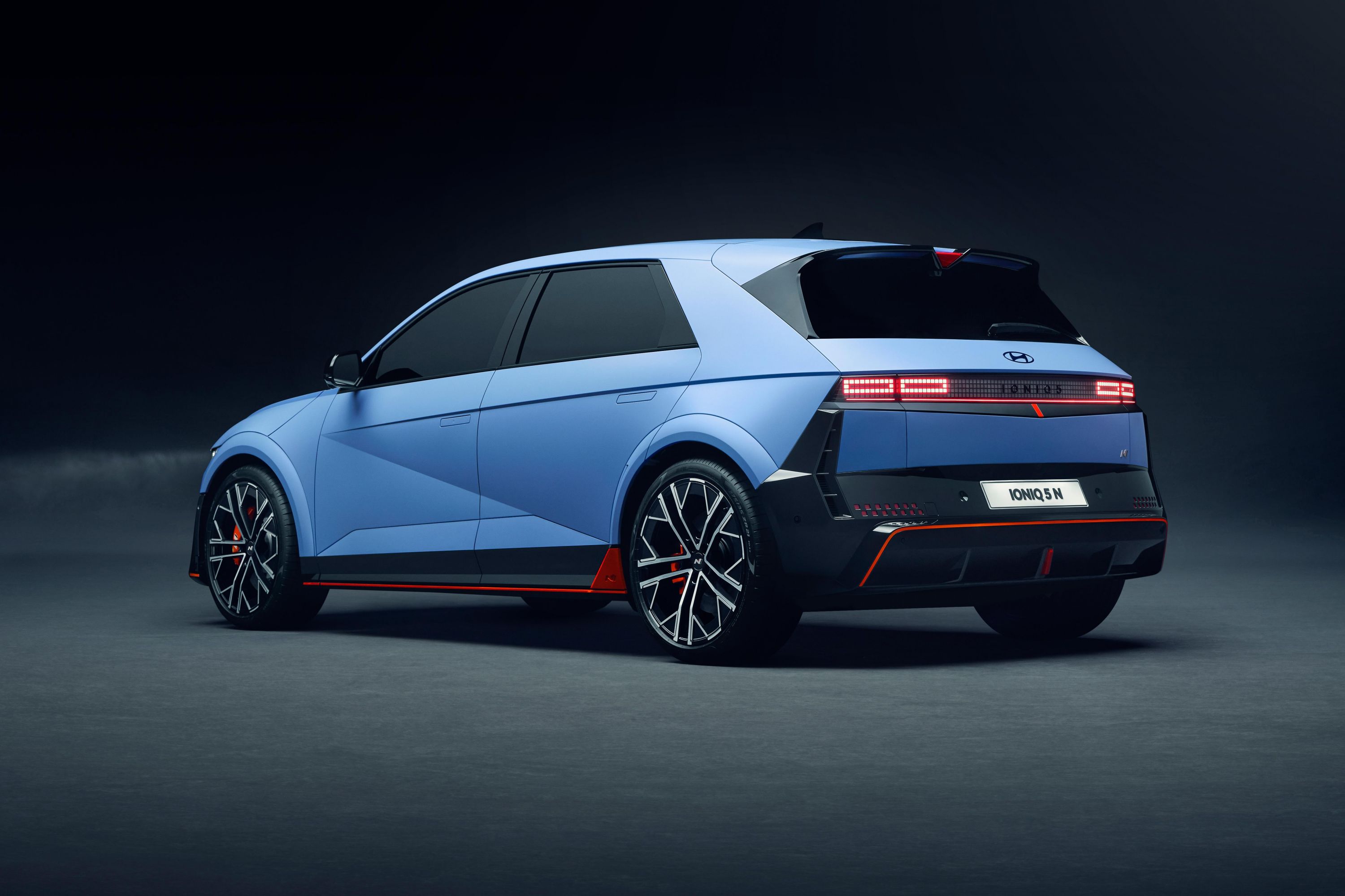
The Hyundai Elantra has long been a go-to for budget-conscious buyers seeking reliable, efficient transportation. However, its economic appeal is now severely threatened by the same tariff issues plaguing more exotic machinery. Like the Miata, the Elantra also registers an alarmingly low 1% domestic content.
This minimal U.S.-sourced componentry means that this popular compact sedan is positioned directly in the line of fire. What was once an accessible and cost-effective choice for many could soon see its price point shift dramatically upwards, eroding its core value proposition. The promise of affordability is on a collision course with the reality of import duties.
It’s a cruel irony that a vehicle designed to offer maximum bang for buck will now incur some of the heaviest tariff-induced penalties. The increased costs of materials and manufacturing from international sources will inevitably be passed on to the consumer, making the Elantra a much less attractive proposition in the new tariff landscape.
For those in the know, this isn’t merely a bump in the road; it’s a fundamental challenge to the Elantra’s market position. Insiders recognize that sustaining competitive pricing on such a heavily imported vehicle is simply untenable in the long run, making it a purchase fraught with future financial adjustments.
Car Model Information: 2018 Hyundai ELANTRA Value Edition
Name: Hyundai Elantra/Avante
Manufacturer: Hyundai Motor Company
Aka: Hyundai Avante,Hyundai Lantra (1990–2000, Australia and Europe),Hyundai i30 Sedan (2020–present, Australia)
Production: 1990–present
Class: Compact car
Layout: Front-engine, front-wheel-drive layout
Predecessor: Hyundai Stellar
Categories: 2000s cars, 2010s cars, 2020s cars, All Wikipedia articles written in British English, All articles with bare URLs for citations
Summary: The Hyundai Elantra (Korean: 현대 엘란트라), also known as the Hyundai Avante (Korean: 현대 아반떼), is a compact car produced by the South Korean manufacturer Hyundai since 1990.
In Australia and some European markets, the Elantra was initially marketed as the Lantra during its first two generations, due to the similarly named “Elante” trim for the Mitsubishi Magna in the former market, and the Lotus Elan in the latter. After Mitsubishi Motors Australia Limited (MMAL) dropped the “Elante” trim from the Magna range, and Lotus ceased production of the Elan in 1995, Hyundai standardized the “Elantra” name for both Australian and European markets following the introduction of the third-generation in 2001. The first-generation model was also sold as the Bimantara Nenggala in Indonesia between 1995 and 1998.
Its home market name, Avante was first appeared starting from the second generation in 1995. The “Avante” name is not used in most export markets due to its similarity with Audi’s “Avant” designation, used for their station wagon models. As of 2018, Singapore is the only export market outside South Korea to utilize the “Avante” name.
Since the seventh-generation, the “Elantra” name was retired in Australia, when Hyundai intergrated it into the i30 range, badging it as the i30 Sedan.
Get more information about: Hyundai Elantra
Buying a high-performing used car >>>
Brand: Hyundai Model: Elantra
Price: $11,430 Mileage: 79,284 mi.

3. **BMW M3 Sedan: Where Luxury Meets Tariff Trouble**
Luxury vehicles, with their already premium price tags, are by no means immune to the tariff crunch. In fact, a car like the BMW M3 Sedan, known for its performance and prestige, also boasts a scant 1% U.S.-sourced content. This places it firmly in the category of vehicles poised for significant price hikes.
For luxury buyers, the expectation of a high price is standard, but a sudden, tariff-driven escalation changes the value equation. The sophisticated global supply chains that allow BMW to source the best components from around the world are now contributing to an unavoidable increase in cost for the American consumer. This isn’t a marginal adjustment; it’s a substantial recalibration.
Industry experts note that while some automakers initially absorbed tariff costs, this strategy is “unsustainable.” The margins in the automotive industry aren’t so vast that they can continually absorb 10%, 15%, or even 25% cost increases. This means luxury models like the M3 are prime candidates for rapid price adjustments, as automakers seek to maintain profitability.
Smart money, even in the luxury segment, understands that the M3’s low domestic content is a significant vulnerability. Expect prices to reflect this reality sooner rather than later, as the economic imperative for automakers to offset higher costs becomes paramount. It’s a performance machine, but it’s performing poorly in the tariff avoidance league.
Car Model Information: 2022 BMW X3 sDrive30i
Name: BMW M3
Caption: 2021 BMW M3 Competition (G80)
Manufacturer: BMW M
Production: unbulleted list
Class: Compact executive car
Layout: unbulleted list
Related: unbulleted list
Categories: 1990s cars, 2000s cars, 2010s cars, 2020s cars, All Wikipedia articles written in British English
Summary: The BMW M3 is a high-performance version of the BMW 3 Series, developed by BMW’s in-house motorsport division, BMW M GmbH. M3 models have been produced for every generation of 3 Series since the E30 M3 was introduced in 1986.
The initial model was available in a coupé body style, with a convertible body style made available soon after. M3 saloons were offered initially during the E36 (1994–1999) and E90 (2008–2012) generations. Since 2014, the coupé and convertible models have been rebranded as the 4 Series range, making the high-performance variant the M4. Variants of the 3 Series since then have seen the M3 produced as a saloon, until 2020, when the M3 was produced as an estate (Touring) for the first time, alongside the saloon variant.
Get more information about: BMW M3
Buying a high-performing used car >>>
Brand: BMW Model: M3 Sedan
Price: $28,452 Mileage: 46,868 mi.

4. **Subaru BRZ: Sporty Drive, Soaring Price Tag**
Much like its close cousin, the Mazda Miata, the Subaru BRZ offers an exhilarating, lightweight, and engaging driving experience. Yet, it shares the same critical flaw in the current economic climate: a negligible 1% domestic production. This makes the BRZ another prime candidate for significant tariff-induced price increases.
For enthusiasts drawn to its accessible performance and engaging dynamics, the prospect of a ballooning price tag is a genuine concern. The tariffs aren’t just an abstract economic concept; they translate directly into hundreds, if not thousands, of additional dollars at the point of sale. This could push the BRZ out of the reach of many potential buyers.
The global nature of automotive manufacturing means that cars like the BRZ, assembled from a diverse array of international components, are particularly susceptible. The charm of its Japanese engineering suddenly comes with a new, unforeseen cost, challenging its historical value proposition as an affordable sports car.
Insiders are advising caution, understanding that the delicate balance of price and performance that makes the BRZ so appealing will be heavily disrupted. The expectation is that, much like other heavily imported models, its price could surge under prolonged tariff regimes, fundamentally altering its market competitiveness.
Car Model Information: 2017 Subaru BRZ Series.Yellow
Name: Toyota 86 / Subaru BRZ
Caption: 2022 Toyota GR86 Premium (ZN8)
Manufacturer: Toyota
Aka: unbulleted list
Production: January 2012 – present
ModelYears: 2013–present
Assembly: Ōta, Gunma
Class: Sports car
BodyStyle: fastback,coupé
Layout: Front-engine, rear-wheel-drive
Sp: uk
Categories: 2+2 coupés, 2020s cars, All Wikipedia articles written in British English, All articles with dead external links, All articles with unsourced statements
Summary: The Toyota 86 and the Subaru BRZ are 2+2 sports cars jointly developed by Toyota and Subaru, manufactured at Subaru’s Gunma assembly plant.
The 2+2 fastback coupé has a naturally aspirated boxer engine, front-engined, rear-wheel-drive configuration, 53/47 front/rear weight balance and low centre of gravity; it was inspired by Toyota’s earlier AE86, a small, light, front-engine/rear-drive Corolla variant widely popular for Showroom Stock, Group A, Group N, Rally, Club and drift racing.
For the first-generation model, Toyota marketed the sports car as the 86 in Asia, Australia, North America (from August 2016), South Africa, and South America; as the Toyota GT86 in Europe; as the 86 and GT86 in New Zealand; as the Toyota FT86 in Brunei, Nicaragua and Jamaica and as the Scion FR-S (2012–2016) in the United States and Canada.
The second-generation model is marketed by Toyota as the GR86 as part of the Gazoo Racing family.
Get more information about: Toyota 86
Buying a high-performing used car >>>
Brand: Subaru Model: BRZ
Price: $21,747 Mileage: 54,658 mi.
5. **Other Heavily Imported Vehicles: A Blanket Warning for Foreign Dependence**
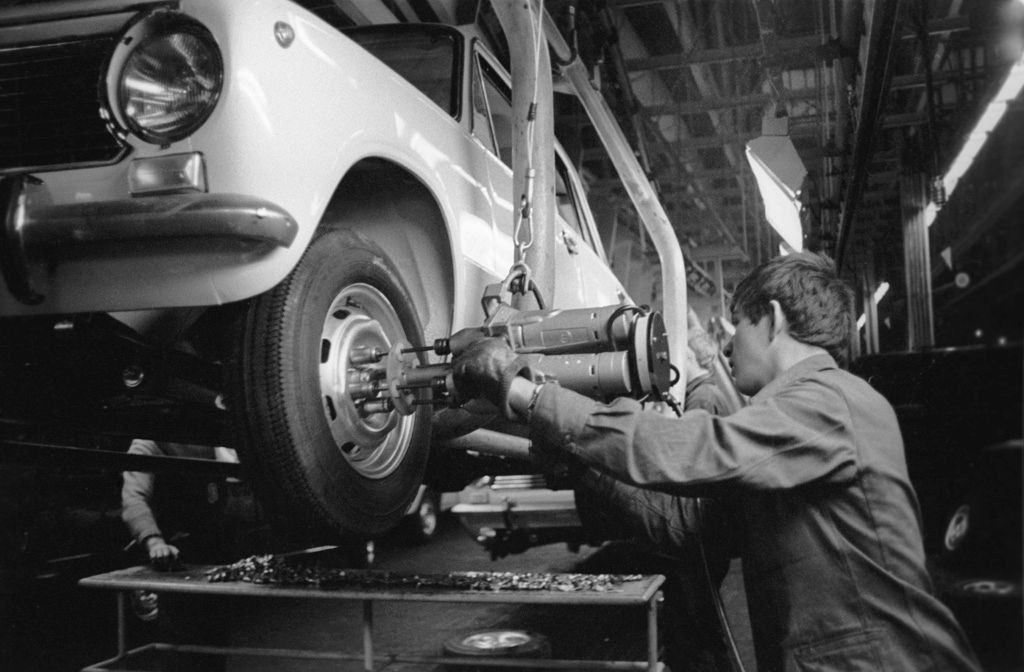
Beyond the specific models we’ve highlighted, the broader category of “other imports” serves as a blanket warning for consumers. The market is adjusting quickly, and any vehicle heavily reliant on foreign-made parts or foreign assembly is inherently at risk. The crucial point here is that some brands simply aren’t set up to shift production fast enough.
Automakers have built complex, international supply chains over decades to optimize for cost and quality. Untangling and rebuilding these chains domestically is not a simple flip of a switch; it takes years and billions in investment. This inertia means that many imported vehicles, regardless of brand, will continue to bear the brunt of tariff costs.
Kevin Roberts from CarGurus observed that average new car prices jumped around $650 within a month of the tariff announcements, and this trend is expected to continue. This rise isn’t isolated to a few models but impacts a broad spectrum of vehicles whose origins lie predominantly outside the U.S. or Mexico and Canada.
Therefore, a general rule of thumb for smart buyers: scrutinize the domestic content. If a vehicle doesn’t meet the US-Mexico-Canada Agreement thresholds – roughly 85% domestic parts – it’s largely unprotected. Industry insiders know that the fewer U.S.-sourced components, the higher the likelihood of a tariff-related price hike, making many foreign-dependent vehicles a risky proposition.

6. **Vehicles from Companies Facing “Unsustainable” Cost Absorption**
When tariffs were first announced, many automakers initially chose to absorb the additional costs rather than immediately passing them on to consumers. This was a strategic move to avoid alienating customers and to maintain market share. However, this benevolence is rapidly reaching its breaking point, and any vehicle from a company still attempting this strategy is on borrowed time.
Robert Riley, chief value partner at Honigman LLP, unequivocally declared this approach to be “unsustainable.” He points out that “The margins in the automotive industry aren’t 25 or 30 or 40 or 50%” to accommodate such substantial increases in input costs. When costs go up by 10, 15, or even 25% or more, depending on component origin, absorbing them indefinitely simply isn’t feasible.
This means that vehicles which may have appeared to be “pre-tariff bargains” in the short term are living on borrowed time. The bargain party is indeed “already breaking up,” as average transaction prices have begun to tick upwards. Automakers cannot bleed profit margins indefinitely, and eventually, the cost will be reflected in the showroom price.
For insiders, this signals a clear warning: any purchase based on the assumption that current prices will hold firm, particularly for vehicles heavily impacted by tariffs, is a gamble. The inevitable price correction for these models, once the “unsustainable” absorption ends, will be swift and significant.

7. **Vehicles with Delayed Launches or Canceled Programs (Especially EVs)**
Uncertainty, particularly around tariff policy, has a chilling effect on long-term investment. Robert Riley highlighted this stark reality, stating that companies are “deferring some long-term capital investments, extending a vehicle’s normal seven to nine year lifecycle to perhaps 10 or 12 years due to the upfront dollars needed to replace or refresh a vehicle.” This has direct implications for new models and, crucially, for electric vehicles.
“You’re seeing that with launches delayed or deferred or some programs canceled entirely, especially on the electric side,” Riley pointed out. This means that exciting new models, particularly in the rapidly evolving EV space, might not arrive as planned, or might never see the light of day. This creates a vacuum, and for consumers, it means fewer choices or older technology for longer.
President Trump’s claims of plants opening up and tremendous growth in the auto industry due to tariffs are directly contradicted by industry executives. Honda, for instance, confirmed hours after a presidential address that it had not announced any new plant construction, despite being heralded as such. This disconnect between political rhetoric and manufacturing reality is critical for understanding future vehicle availability.
The real risk here is not just about missing out on a specific new model. It’s about investing in a platform that might be quickly outdated, or choosing a brand that’s struggling to innovate due to capital constraints and policy instability. Insiders see these delayed or canceled programs as a sign of deeper trouble, making any vehicle tied to such uncertain development paths a questionable long-term investment. They’re avoiding vehicles from companies that can’t commit to the future because the future is simply too expensive and too unpredictable.
Beyond the immediate showroom shock and the specific models already feeling the tariff squeeze, the automotive world is grappling with a set of structural realities that make future planning, and indeed the viability of certain segments, a far more precarious affair. This isn’t just about a few percentage points on a sticker price; it’s about the very foundations of how cars are made, bought, and sold. These are the deeper, more insidious challenges that industry insiders are watching like hawks, and they signal long-term shifts that will redefine the market for years to come. Buckle up, because the ride ahead is anything but smooth.

8. **The New Reality of ‘Structural Tariffs’: No Going Back**
The most unsettling shift isn’t just the existence of tariffs, but their transformation from a temporary blip to a ‘structural reality.’ As Erin Keating, executive analyst at Cox Automotive, starkly put it, we’ve seen “multiple rounds of increases, reciprocal actions and shifting exemptions.” This isn’t a negotiating tactic that will simply fade away; it’s a new, enduring economic landscape, forcing an entirely different approach to product and financial planning within the industry.
Imagine trying to design a car for 2030 when the cost of its fundamental components can swing wildly based on a presidential tweet or an executive order. Jonathan Smoke, Cox Automotive’s chief economist, perfectly encapsulated this absurdity, describing it as “a complex, multi level chess game in the dark on a tilted table.” Automakers thrive on predictability, but tariffs have stripped that away, leaving them to guess at the financial implications of every decision, years in advance.
Indeed, industry executives are now “getting comfortable being uncomfortable,” as Robert Riley of Honigman LLP noted. The days of stable, predictable trade policies are gone, replaced by a volatile environment that forces constant adaptation. This means trade-offs across the board – from supply chain adjustments to capital expenditure deferments and even shifts in customer behavior. The long-term implications are clear: vehicles caught in this perpetual state of flux will inevitably reflect this instability in their availability and pricing, making them risky propositions for any consumer hoping for a stable investment.
When tariffs become a permanent fixture, the trick isn’t to hope they disappear, but to understand how to operate within them, as Honigman partner Chauncey Mayfield shrewdly observed. This new normal means that any vehicle business model predicated on pre-tariff assumptions is fundamentally flawed and ripe for disruption. Insiders see this as a foundational crack in the industry, making anything less than a fully revised strategy a significant gamble.

9. **The Impossibility of ‘Just-in-Time’: Stockpiling for Survival**
For decades, the automotive industry perfected the ‘just-in-time’ supply chain – a finely tuned ballet of parts arriving exactly when needed, minimizing inventory costs and maximizing efficiency. It was a marvel of global logistics. However, in the age of ‘structural tariffs’ and geopolitical instability, that model has been unceremoniously thrown out the window, replaced by a ‘just-in-case’ mentality.
Seth Drucker, VP and General Counsel for Valeo, highlighted this dramatic shift, noting that companies now face requirements to hold “a 30 or 45 day, or sometimes a one year stock of certain critical components where there’s a geopolitical risk.” This isn’t just about a bit of extra inventory; it’s a fundamental re-evaluation of risk, demanding significant capital tied up in stockpiles that once seemed unnecessary. Those vehicles whose supply chains cannot rapidly adapt to this new reality are immediately at a disadvantage.
This new approach necessitates unprecedented levels of trust and data sharing across the supply chain. Manufacturers and suppliers, traditionally guarded with their information, must now communicate their production, spending, and contingency plans with a transparency that would have been unthinkable just a few years ago. Without this deeper collaboration, companies cannot be agile enough to react to sudden tariff changes, leading to bottlenecks and, ultimately, higher costs for the end product.
Consider the implications: increased warehousing costs, potential obsolescence of stored components, and the sheer complexity of managing vast inventories. Any vehicle whose production relies on components from volatile regions, or whose manufacturer is slow to embrace this ‘just-in-case’ strategy, is inherently unstable. Insiders know that a car is only as reliable as its supply chain, and a vulnerable supply chain translates directly into a vulnerable product and, inevitably, a higher price tag for the consumer. This isn’t about driving pleasure; it’s about the cold, hard logistics of getting the car built at all.
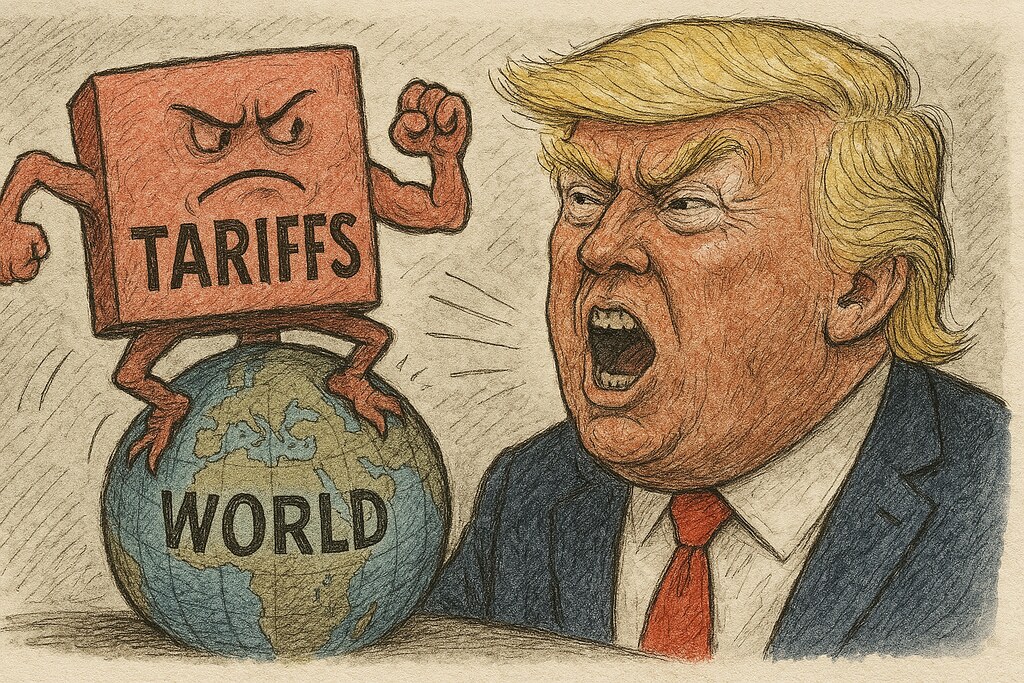
10. **The Myth of the ‘All-American’ Car: Tariffs on Homegrown Products**
President Trump’s rhetoric might suggest that building cars in the U.S. magically makes them immune to tariffs. The reality is far more complex, and frankly, far more brutal. Even vehicles assembled on American soil are not immune to the tariff crunch, as a significant portion of their components are still imported from around the world, incurring levies that dramatically inflate production costs.
As one auto industry executive succinctly put it, “There are not a lot of levers we can pull in the very short term.” The truth is that there’s no such thing as a truly “all-American” car in today’s globally integrated industry. Parts flow across borders continually during the assembly process. This means that even if a car rolls off a U.S. assembly line, thousands of dollars in tariffs have already been silently baked into its price, thanks to imported engines, transmissions, electronics, and countless other components from Mexico, Canada, Europe, and Asia.
Anderson Economic Group estimates that these embedded tariffs could hike costs by anywhere from $3,500 to a staggering $12,000 per vehicle. This isn’t loose change; it’s a colossal burden that impacts every car buyer, regardless of whether their chosen model is ‘built in America.’ The idea that plants can simply expand “inexpensively and quickly” to circumvent these costs is a fantasy when confronted with the reality of long lead times for new physical capacity and the extensive validation required for new suppliers and parts.
Industry insiders understand that relocating entire supply chains is an monumental task, far more complex than a home renovation. It takes years and billions, and it’s not a switch you can flip. So, for the discerning buyer, the ‘Made in USA’ badge no longer guarantees immunity from tariff-induced price pain. It’s a bitter pill to swallow, but one that industry veterans know must be accounted for in every purchasing decision. Any vehicle that appears to be a ‘safe’ domestic choice still carries a hidden tariff load beneath its hood.

11. **Escalating Commodity Prices: The Foundation Crumbles**
Tariffs aren’t just impacting finished goods or components; they’re reaching down to the very raw materials that form the backbone of every vehicle. Duties of 25% on steel and aluminum imports, for instance, have had a ripple effect, raising the prices of these crucial metals even when they’re sourced from U.S. mills. This isn’t merely an inconvenience; it’s a direct assault on the fundamental cost structure of automotive manufacturing.
While automakers might have long-term contracts cushioning them from immediate spikes, future costs are undeniably set to climb. When foreign competition is hampered by tariffs, domestic producers gain the leverage to raise their prices, knowing automakers have fewer alternative sources. This creates a double-whammy: direct tariffs on imported materials, and indirect price increases on domestically sourced ones.
The financial hit is already substantial. General Motors and Ford, for example, each estimated that increased commodity costs following the 2018 steel and aluminum tariffs cost them over $1 billion annually. These aren’t abstract figures; they represent real money that ultimately has to be recouped, either through higher vehicle prices or reduced investment in future technologies. Phil Gibbs, a steel analyst for KeyBanc, further highlighted the immediate impact, noting American steel prices surged 30% or more in recent months, with aluminum following suit at 15%.
Any vehicle, regardless of its country of assembly, is constructed from these fundamental building blocks. When the price of steel, aluminum, and other commodities rises significantly and becomes a permanent fixture, the cost of every single vehicle increases. This structural cost inflation means that the affordability and value proposition of many vehicles are fundamentally compromised, making them less attractive to buyers who are already feeling the pinch elsewhere. The smart money is watching the metals market as closely as the showroom floor.
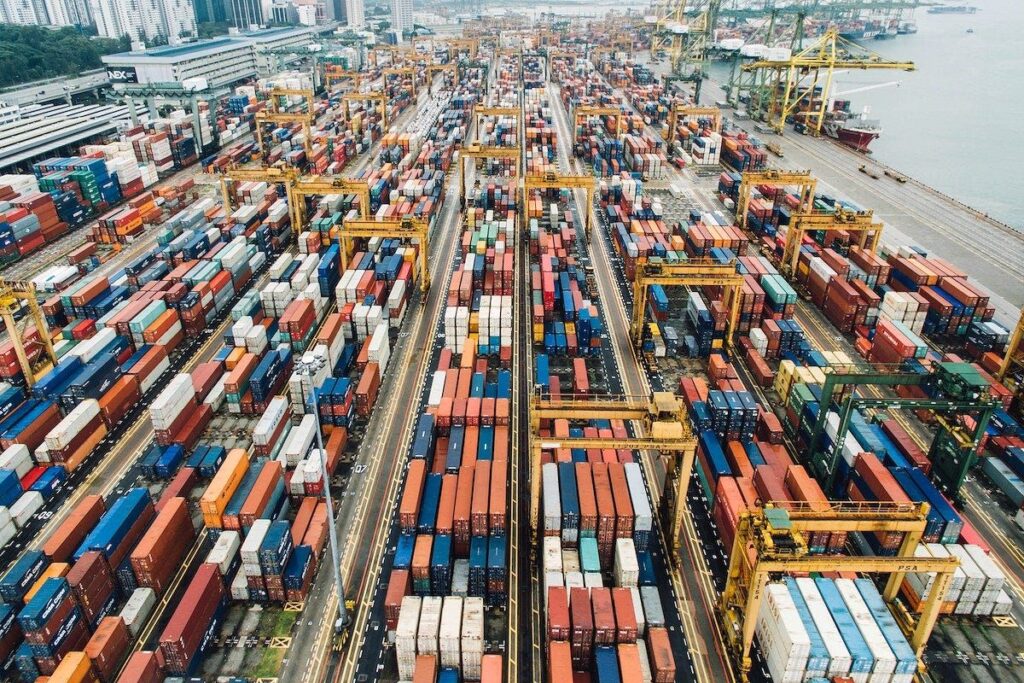
12. **High Barriers to Entry and Oligopolistic Structure: A Citadel Under Siege**
The automotive industry is not some nimble startup hub; it’s a capital-intensive oligopoly, a fortress of established players with deeply entrenched market positions. This inherent structure makes it incredibly difficult for new entrants to gain a foothold, and equally challenging for existing players to pivot quickly in response to unprecedented disruptions like widespread tariffs. It’s an environment where the strong get stronger, or at least try to hold their ground, while everyone else struggles to find purchase.
Consider the sheer investment required: billions for factories, R&D, acquiring labor, and natural resources, not to mention establishing extensive distribution networks. These aren’t minor hurdles; they are monumental barriers to entry that deter most entrepreneurs. The “existence of economies of scale” is perhaps the most significant, meaning only massive production volumes can make a car profitable, squeezing out any smaller, agile contenders that might try to innovate around the tariff problem.
This oligopolistic structure means that major producers often sell vehicles at similar prices, making it hard for any new firm to differentiate on cost. And when tariffs are introduced, the established giants, with their complex global supply chains, are often hit harder but also have the deeper pockets to absorb some of the initial shock – though even that is proving “unsustainable.” Meanwhile, new players simply can’t afford to play the game on a tilted field. They face a daunting climb against brands with “strong brand loyalty” and decades of market influence.
For consumers, this means fewer truly innovative choices and potentially less competitive pricing, as the industry becomes more insular. The difficulty of entry, exacerbated by tariff-induced chaos, ensures that models from companies that can’t rapidly reconfigure their manufacturing footprint or absorb additional costs will remain untenable. Insiders aren’t just looking at the cars; they’re looking at the corporate balance sheets, knowing that only the most robust will survive this onslaught.
13. **Regulatory Hurdles and Compliance Costs: The Unseen Tax**
Beyond the raw materials and the assembly lines, every vehicle must navigate a labyrinth of safety and environmental regulations. These aren’t optional extras; they are fundamental requirements that demand continuous, significant investment in technology and resources. In an era of tariff-driven cost increases and supply chain instability, achieving and maintaining compliance becomes an even heavier burden, acting as an ‘unseen tax’ on every car produced.
Manufacturers must comply with complex requirements, from stringent safety standards for crashworthiness and occupant protection to ever-tightening emission regulations aimed at reducing environmental impact. These compliance costs are substantial and non-negotiable, meaning they cannot be deferred or absorbed indefinitely. They are an intrinsic part of the vehicle’s final price, adding another layer of expense that tariffs only exacerbate.
Imagine a scenario where a manufacturer needs to source a new, compliant component due to tariff issues with its previous supplier. The new component not only costs more but also requires extensive re-validation and testing to ensure it meets all regulatory benchmarks. This process is time-consuming and expensive, delaying production and adding further financial strain. It’s a costly Catch-22, where adapting to one challenge creates another.
For the discerning insider, vehicles from companies struggling to manage these intricate regulatory landscapes, especially amidst broader economic turmoil, are a red flag. The complexity of compliance presents a formidable challenge, and any vehicle tied to a manufacturer that cannot robustly manage this constant evolution will either be delayed, priced out of the market, or worse, found to be non-compliant. These are the details that separate a viable product from a financial black hole, and they’re increasingly difficult to overcome.
14. **The Peril of Long-Term Investment in Uncertainty: Betting on a Moving Target**
Finally, and perhaps most critically, the persistent policy uncertainty surrounding tariffs has paralyzed long-term capital investment within the auto industry. Building a new car plant or fundamentally shifting a supply chain isn’t a weekend project; it involves billions of dollars and a planning horizon of many years. Automakers simply cannot commit to such massive investments when the rules of the game are subject to rapid, unpredictable change by shifting administrations.
As GM CFO Paul Jacobson candidly stated, companies have “too many questions about the future of trade policy to make those kinds of decisions at this time.” The risk of spending billions on new capacity, only for tariff policies to be reversed by a subsequent administration, is simply too great. This “whipsawing the business back and forth” is anathema to sound financial planning, leading to a deferment of crucial long-term capital investments, extending vehicle lifecycles to “10 or 12 years” instead of the normal seven to nine.
An executive speaking to CNN highlighted that even if a new plant were conceived today, it would take “three years at best for brand new automotive capacity that could potentially span into a new administration, where the rules could change.” This means that by the time new production capabilities come online, they might no longer align with optimal trade policies, effectively rendering the investment obsolete. Ford CEO Jim Farley’s stark warning – that “a 25% tariff across the Mexico and Canada borders would blow a hole in the US industry that we’ve never seen” – underscores the existential threat of such instability.
For consumers, this translates into fewer new models, slower technological advancement, and potentially older, less efficient vehicles remaining on the market for longer. Any vehicle tied to a brand that cannot confidently commit to its future product pipeline due to this chronic policy paralysis becomes a questionable long-term investment. Industry insiders are avoiding vehicles from companies trapped in this cycle of uncertainty, knowing that a company that can’t plan for tomorrow can’t deliver the best cars today.
The automotive landscape is a minefield, bristling with hidden costs and structural challenges that go far beyond a simple price tag. The vehicles hitting showrooms today are products of a market in flux, a ‘complex, multi level chess game’ where the rules are rewritten on the fly. Whether it’s the shift to ‘just-in-case’ manufacturing, the hidden tariffs on ‘domestic’ cars, the spiraling cost of raw materials, or the paralysis of long-term investment, the industry is navigating a treacherous path. For the astute buyer, understanding these deeper currents is not just smart — it’s essential to avoid a costly mistake. Don’t just kick the tires; understand the tariffs, the supply chains, and the fundamental economics that are reshaping your next ride. The days of simply buying a car are over; now, you’re investing in a complex, unpredictable future. Choose wisely.