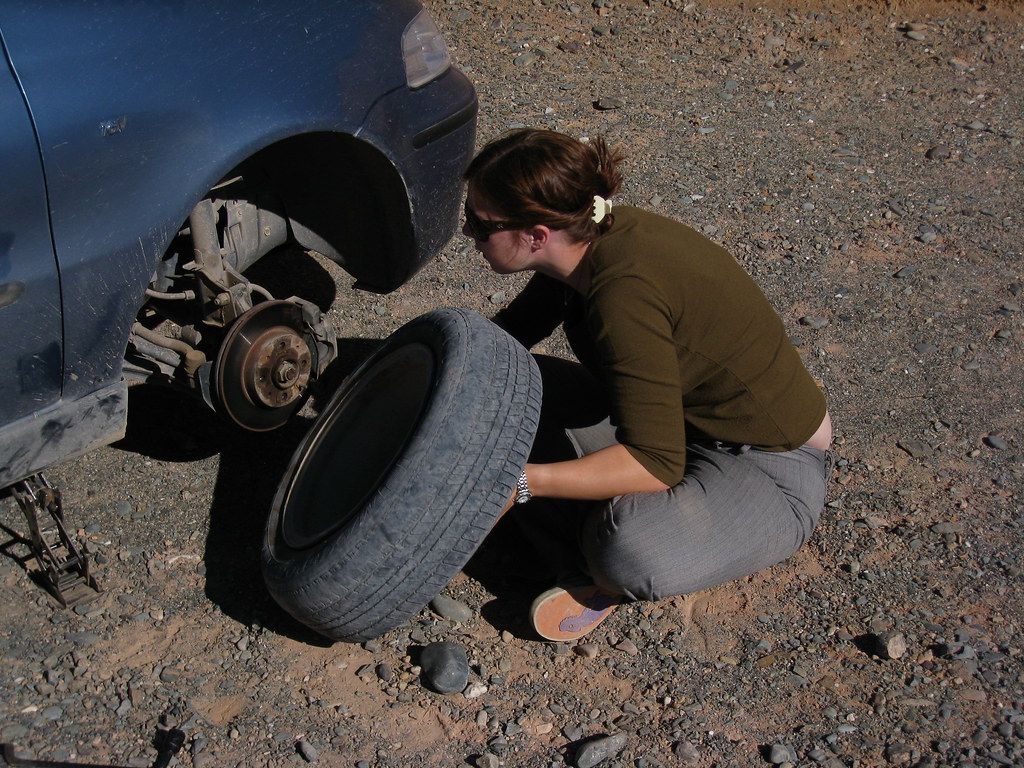
There are few things more frustrating than the sudden, unwelcome discovery of a flat tire. One minute you’re driving along, minding your own business, and the next, a little hole in your rubber immobilizes your vehicle, throwing an unexpected wrench into your day and, often, your wallet. What starts as a minor inconvenience can quickly escalate into a significant expense, especially if you’re caught unprepared.
Fortunately, there’s a surprisingly simple and incredibly affordable solution that can prevent these roadside disasters from turning into financial headaches. We’re talking about do-it-yourself tire repair kits. These unassuming tools are designed to empower you to handle minor tire punctures yourself, saving you not just time and hassle, but potentially hundreds of dollars in repair costs or even the need for a premature tire replacement. It’s about taking control and getting back on the road with minimal fuss.
In this in-depth guide, we’ll dive into the world of DIY tire repair, breaking down everything you need to know to confidently tackle a flat. We’ll explore the real costs of professional repairs, highlight various types of repair kits from basic plugs to advanced sealants, and review some of the best options available. Get ready to transform that feeling of helplessness into one of empowered self-reliance, because with the right knowledge and a small investment, you can save a considerable amount when that inevitable nail finds its way into your tire.

1. **The Hidden Costs of a Flat Tire: Why DIY Matters**Flat tires are more than just an inconvenience; they can be a significant financial drain if not managed wisely. Professional flat fixes typically cost anywhere from $5 to $40 for a standard tire, with run-flat tires demanding a higher price tag of $30 to $60 for repair. While these figures might seem manageable on their own, the real cost can quickly balloon, especially if the damage necessitates a full tire replacement, which can range from $50 to $750 or more per tire depending on your vehicle type.
Real-world experiences shared by drivers underscore just how unpredictable these costs can be. We’ve seen reports of a Cadillac XT5 owner in Naples, FL, paying $93 for a repair, a Hyundai Sonata driver in Minneapolis, MN, shelling out $85, and a Honda Odyssey owner in Duluth, GA, facing a staggering $400 for what should have been a flat tire repair. Even a seemingly simple fix can become pricey, as one user in Columbia, MD, reported an Audi A4 repair totaling $39.27, including hidden fees like a TPMS stem seal kit and shop supplies. These examples highlight the wide variance and potential for unexpected expenses.
These anecdotes paint a clear picture: relying solely on professional services can lead to considerable, unplanned spending. While some shops, like Discount Tire (aka America’s Tire), offer free flat repairs ‘no questions asked,’ and others provide free services for tires purchased from them or through loyalty programs like Pep Boys Rewards, you still have to get your vehicle to their location. This often involves the hassle and potential cost of roadside assistance or towing, adding further strain to your budget.
Empowering yourself with a DIY tire repair kit means you can mitigate these sudden expenditures. By addressing the puncture yourself, at least temporarily, you bypass immediate towing fees and potentially expensive last-minute shop charges, giving you the flexibility to seek out more affordable or even free professional follow-up options if available. It’s a proactive step that can turn a $400 problem into a $10 solution, keeping your cash where it belongs – in your pocket.
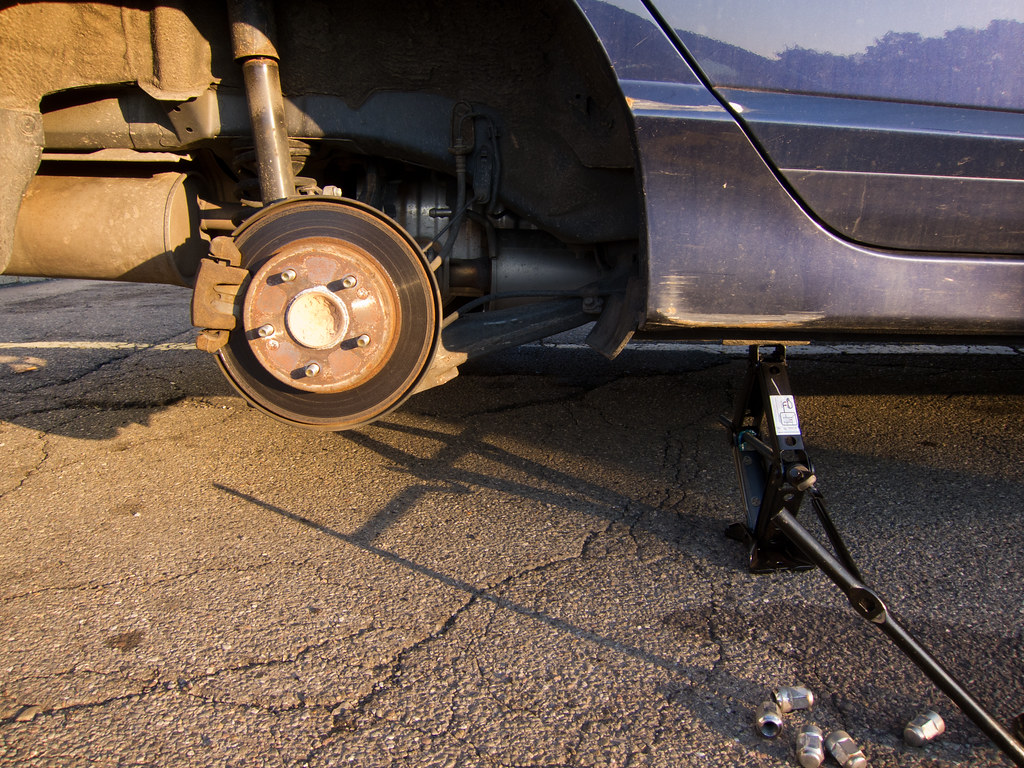
2. **Introducing the Lifesaving DIY Tire Repair Kit**The simple answer to mitigating flat tire financial woes is the humble do-it-yourself tire repair kit. These essential tools are remarkably affordable, making them an accessible solution for virtually every driver. A basic kit, usually containing simple tools and plugs to fill a puncture, can cost as little as $5 to $20. For those looking for a more comprehensive package, a larger kit that includes a sealant and a pump or compressor to re-inflate the tire typically runs between $20 and $50. Considering the potential savings, this small investment is a no-brainer.
The core benefit of these kits is their ability to provide a rapid, on-the-spot fix, allowing you to get your vehicle back on the road quickly. While often designed for temporary solutions, their immediate impact is invaluable. They bridge the gap between getting a flat and reaching a professional repair shop, preventing you from being stranded or forced into expensive towing services. This immediate usability is precisely what makes them so empowering for drivers.
It’s important to understand that a DIY kit usually creates a temporary patch. Its primary role is to seal the outside of the tire well enough for you to drive safely to a facility where the tire can receive a more permanent repair with an interior patch, or be replaced if the damage is too severe. This isn’t about bypassing professional service entirely, but rather about gaining control over the emergency situation and avoiding predatory pricing or inconvenient delays.
These indispensable kits are widely available, ensuring you can easily equip yourself for any unforeseen tire incident. You can find them at most auto parts stores, such as Autozone, major big box discount retailers like Walmart, or through convenient online platforms like Amazon. Their widespread availability means there’s no excuse not to have one tucked away in your trunk, ready to provide peace of mind and significant savings when you need it most.

3. **Temporary vs. Permanent: Understanding Your Repair Options**When it comes to flat tires, it’s crucial to distinguish between a temporary fix and a permanent repair. A do-it-yourself kit is typically designed to create a temporary seal, allowing you to safely drive your vehicle to a repair shop. This interim solution ensures mobility and prevents further damage, but it’s not meant to be the final word on your tire’s integrity. The ultimate goal is to get your tire either professionally repaired from the inside or replaced if the damage is beyond repair.
For a safe and lasting repair, there are specific industry-recommended procedures that must be followed. The Rubber Manufacturers Association (RMA) outlines these critical steps, emphasizing that ‘the tire must be removed from the rim and the work done inside the tire (rather than an outside patch).’ Furthermore, repairs are strictly limited to the tread area, and ‘the puncture cannot be more than 1/4″ in diameter.’ It’s also vital that ‘repairs should not overlap,’ and a combination of ‘a rubber stem (plug) should be used to fill the puncture and a patch applied to seal the inner liner’ to ensure an airtight seal. These rigorous standards are what differentiate a professional, permanent fix from a roadside patch.
While rope plugs, commonly found in DIY kits, can hold air for a considerable period, they are generally considered a temporary measure. These external plugs, while effective in an emergency, can eventually allow moisture and road salt to ingress into the puncture site. Since a tire’s inner belts are often made of steel, this exposure to elements can lead to corrosion and compromise the tire’s structural integrity over time. Therefore, even a seemingly robust DIY plug should prompt a visit to a professional for a thorough internal inspection and a more secure repair.
The takeaway is clear: do-it-yourself kits are invaluable for getting you out of a bind and saving you money in the moment. However, for the longevity and safety of your daily driver, a professional evaluation and proper internal patch remain the gold standard. As the experts advise, ‘While these kits can get you back on the road, you should find a repair shop and get a permanent fix when you have the opportunity’ to ensure your tire continues to perform safely for its entire serviceable life.
4. **Essential Components of a Standard Tire Plug Kit**Most high-quality do-it-yourself tire repair kits are designed to be comprehensive, providing all the necessary tools to address a puncture effectively. At the heart of these kits are the sticky rope-style plugs themselves, which are essential for sealing the damaged area. Alongside these plugs, you’ll typically find a rasp, an insertion tool, a lubricant, and often an air pressure gauge. These components form the core of any successful roadside tire repair, enabling drivers to perform a crucial temporary fix.
Each tool serves a vital function in the repair process. The rasp is used to ‘bore the hole out’ where the puncture occurred. This step is critical for cleaning and preparing the puncture channel to ensure the plug forms a tight seal, and it can sometimes require ‘quite a bit of force’ to execute properly. Once the hole is prepped, the insertion tool, often equipped with a T-handle for better leverage, is used to push the plug firmly into the tire, effectively sealing the leak.
Beyond the core plug and insertion tools, many kits include additional accessories that streamline the repair. Pliers are a common inclusion, invaluable for ‘remov[ing] whatever caused the flat,’ whether it’s a nail, screw, or other debris. A small blade or utility knife is also frequently provided to ‘cut it flush’ once the plug has been successfully inserted, ensuring a clean finish. Some kits even go a step further, incorporating valve repair components, which are useful for fixing a faulty valve stem if that’s the source of your air loss.
For optimal performance and ease of use, look for kits that feature full-size, heavy-duty tools. Trying to wrestle with a flat tire using flimsy or undersized implements can make an already challenging situation even more difficult. Quality metal tools with comfortable grips provide the necessary leverage and durability to perform the repair efficiently and effectively, ensuring you’re truly empowered to get back on the road without unnecessary struggle.
Read more about: The Critical Mistake: Why Prolonged Idling in Winter is Destroying Your Car’s Engine and How to Protect It
5. **The Quick Fix: How Aerosol Sealants Like Slime Work**For those seeking the absolute easiest and quickest emergency flat tire solution, aerosol sealants like Slime stand out. These products are popular precisely because of their convenience, requiring ‘no tools’ and being ‘aerosolized for easy application.’ Slime’s appeal lies in its self-contained nature; you simply attach it to your tire’s valve stem and let it work, making it an incredibly straightforward option for drivers with limited time or mechanical experience.
The application process for modern Slime formulas is simpler than ever. Past versions often necessitated removing the valve core, but newer formulations ‘pass through the valve,’ making them as user-friendly as possible. Once the liquid sealant is inside your tire, the next crucial step is to ‘inflate it right away and drive a quarter mile.’ This brief drive allows the Slime to spread evenly throughout the tire’s inner surface and effectively seal the leak, getting you back in motion almost immediately.
However, this convenience comes with distinct limitations. Slime is explicitly recommended ‘for emergency use only’ and is considered ‘a very short-term fix.’ The liquid sealant, while effective in a pinch, is ‘not as robust as a rope plug or mushroom patch’ for a lasting repair. Its water-based composition also means it can ‘turn to slush and sluffs off the tire’s inner wall in cold climates,’ further reducing its effectiveness in certain conditions.
Moreover, the use of Slime absolutely requires access to compressed air. If you don’t have a way to reinflate your tire immediately after applying the sealant, you’ll be ‘wasting your can of sealant,’ as the tire needs to be inflated and driven to allow the product to distribute and seal effectively. While Slime can certainly ‘get you out of a bind,’ your very next stop after using it should unequivocally be ‘a tire repair shop that can provide you with a long-term solution,’ as it’s not designed for permanent use.
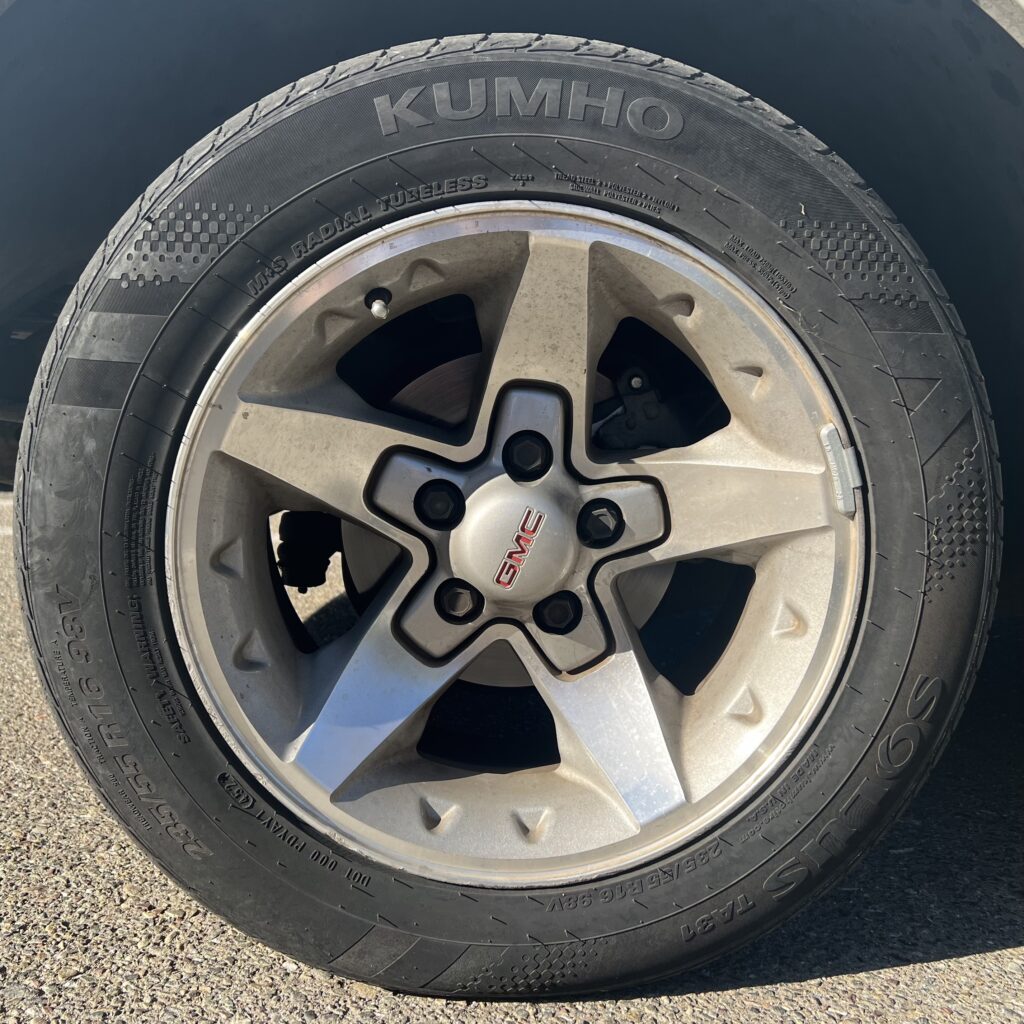
6. **Comprehensive Solutions: The Rhino USA 86-Piece Kit**When it comes to comprehensive preparedness for flat tires, the Rhino USA 86-Piece Tire Repair Kit consistently earns its reputation as a top contender, often hailed as the ‘Best Overall.’ This kit is designed to cover ‘all the bases with the essentials and all the accessory tools you need to get the job done,’ ensuring you’re never caught off guard. It’s lauded for its robust collection of tools and components, all housed within an ‘organized, hard-shell carrying case’ that keeps everything tidy and readily accessible.
The kit boasts heavy-duty tools, which are critical for tackling stubborn punctures. After using the included pliers to remove the offending debris, the crucial step involves boring out the hole with the kit’s rasp. This process ‘can take quite a bit of force,’ but the ‘included lubricant and T-handle make the job easier,’ providing the necessary leverage. Once the sticky rope-style plug is inserted, a sharp blade, also part of the kit, allows you to ‘cut it flush’ for a clean and effective seal. An included air pressure gauge ensures you can monitor your tire’s inflation accurately after the repair.
A standout feature of the Rhino USA kit is its inclusion of valve repair components. If the core of your tire’s air valve fails, requiring replacement, this kit provides everything you need to perform the job yourself, adding an extra layer of utility often overlooked in simpler kits. This attention to detail means you’re prepared for multiple types of air loss issues, not just punctures.
Beyond its extensive features, the Rhino USA 86-Piece Kit offers ‘excellent price for everything that’s included’ and is proudly ‘backed by a lifetime warranty,’ underscoring its value and durability. While incredibly comprehensive, one practical tip from experienced users is to ‘do yourself a favor and throw in a pair of Mechanix gloves,’ as tire repair can often be a messy endeavor. With this kit, you’ll have all the gear required to keep your car, truck, or off-road vehicle rolling smoothly.
7. **Built for the Long Haul: Western Weld’s Frequent Repair Kit**For those who seem to attract punctures more often than others, or operate vehicles like tractors, lawn mowers, or UTVs that frequently encounter sharp debris, the Western Weld 65-Piece Tire Repair Kit emerges as the ‘Best for Frequent Repairs.’ While perhaps not as all-encompassing as some larger kits, Western Weld focuses intensely on its core strength: providing an abundant supply of high-quality plugs designed for repeated use, offering ‘most plugs of any kit here’ with a whopping 60 units.
This American-made kit is distinguished by its ‘solid construction’ and the unique quality of its plugs, which are ‘self-vulcanizing’ to ‘create a strong seal’ with your tire’s rubber. The tools, though basic, are designed to be ‘full-size, heavy-duty tools,’ which is a significant advantage when you need to apply considerable force. While it requires you to supply your own pliers and blade, and doesn’t include valve repair components, its focus on reliable plugging makes it a specialist’s choice.
Practical application of the Western Weld kit is notably user-friendly. The rasp included in this set is slightly smaller in diameter compared to others, making it ‘the easiest of the bunch to use.’ This design choice, while potentially limiting for exceptionally large punctures, means that ‘this kit requires less physical force than most’ during the crucial reaming step. The inserting tool is also appropriately sized, ensuring efficient plug insertion without unnecessary strain.
Given its generous supply of self-vulcanizing plugs and robust, full-size tools, the Western Weld kit is ‘a perfect repair set to keep around the house.’ It’s particularly suited for environments where punctures are a regular occurrence, offering a reliable and cost-effective way to maintain multiple vehicles without constantly replenishing supplies. For those with a fleet of equipment prone to flats, this kit provides exceptional value and peace of mind.
Navigating the unexpected challenge of a flat tire can be a real headache, both for your schedule and your wallet. In our previous section, we delved into the surprising costs that can arise from punctures and introduced the foundational world of DIY repair kits. Now, we’re ready to shift gears and explore more specialized solutions, advanced techniques for achieving near-professional fixes, essential complementary tools like portable air compressors, and, crucially, how to know when it’s time to call in the pros or consider a full tire replacement. Get ready to truly master your tire troubles with these next-level insights.

8. **Slime Tire Repair: The Ultimate On-The-Go Quick Fix**For those moments when you need an immediate, no-fuss solution to a flat tire, aerosol sealants like Slime are an absolute game-changer. These products are incredibly popular for their sheer convenience, living up to their “Best Budget” moniker by offering an emergency fix that requires absolutely “no tools” for application. They are ingeniously “aerosolized for easy application,” making them an ideal choice when time is short, and mechanical know-how is limited.
Modern Slime formulas have made the application process even simpler. Unlike older versions that often required the fiddly step of removing your valve core, newer formulations are designed to “pass through the valve” with ease. Once the liquid sealant is injected into your tire, the critical next steps are to “inflate it right away and drive a quarter mile.” This brief bit of driving ensures the Slime spreads evenly across the tire’s inner surface, allowing it to effectively locate and seal the leak, getting you back in motion almost instantly.
However, it’s essential to understand that this remarkable convenience comes with distinct limitations. Slime is explicitly recommended “for emergency use only” and should be considered “a very short-term fix.” The liquid sealant, while effective in a pinch, is simply “not as robust as a rope plug or mushroom patch” for a lasting repair. Furthermore, its water-based composition means it can “turn to slush and sluffs off the tire’s inner wall in cold climates,” which can severely compromise its effectiveness when temperatures drop.
Crucially, using Slime effectively hinges on having access to compressed air. Without a means to immediately reinflate your tire after applying the sealant, you’ll unfortunately be “wasting your can of sealant,” as the tire needs pressure and rotation for the product to distribute and seal properly. While Slime can certainly “get you out of a bind,” your very next stop after using it should unequivocally be “a tire repair shop that can provide you with a long-term solution,” as it’s not engineered for permanent use on your daily driver.
9. **Boulder Tools Tire Repair Kit: Compact Power for Any Adventure**When every inch of storage space counts, but you refuse to compromise on preparedness, the Boulder Tools Tire Repair Kit stands out as the “Best Compact” option. This meticulously designed kit proves that great things truly do come in small packages, offering everything you need for a robust plug-style repair without taking up excessive room in your trunk, glove box, or even motorcycle panniers. It’s an ideal companion for road trips, off-road excursions, or simply daily commuting.
The genius of the Boulder Tools kit lies in its comprehensive inclusion of essentials within its soft case, which is notably “about half the size of the next-smallest kit” we explored. This compact powerhouse contains 15 sticky rope-style plugs, the indispensable rasp and insertion tool, and a jar of lubricant to ease the repair process. Beyond the core plugging components, it thoughtfully adds pliers for debris removal, a razor blade for trimming excess plug, four valve-stem repair sets for those often-overlooked valve issues, and a reliable tire pressure gauge.
A key differentiator for the Boulder Tools kit is its commitment to providing “full-size, heavy-duty tools” despite its compact footprint. This is a critical advantage, as wrestling with a flat tire, especially in less-than-ideal conditions, can be incredibly challenging. Flimsy or undersized tools only exacerbate the difficulty, but Boulder Tools ensures you have the necessary leverage and durability to perform the repair efficiently and effectively. The kit even comes in a MOLLE pouch, making it easy to integrate into compatible storage systems.
For those who venture off-road or simply demand reliability beyond a temporary sealant, this kit offers a robust and effective solution. Its ability to perform a legitimate plug repair, even when space is at a premium, makes it a superior choice for many situations compared to a can of sealant. It empowers you to confidently tackle punctures and keep rolling, knowing you have quality tools at your disposal.
10. **Tech Tire Repair Products: Achieving the Professional Permanent Fix at Home**While rope plugs and aerosol sealants are excellent for getting you out of an immediate bind, for those seeking a truly lasting solution that rivals a professional repair, Tech Tire Repair Products offer the “Best Permanent Fix.” These mushroom-style repair units represent the closest you can get to a commercial-grade repair in your own garage or workshop, providing a far more secure and durable seal than any exterior patch.
This advanced repair method is not a roadside quick-fix; it’s a job best suited for a controlled environment where you can properly prepare the tire. The process demands that “the tire must be separated from the wheel” for the repair to be performed from the inside. Once the puncture is cleared and opened with a rasp, you meticulously clean the tire’s inner surface. Then, a coat of vulcanizing fluid is applied to the mushroom-style repair unit, which is then installed, and a security coat is applied over the patch to ensure an airtight seal. After proper drying, the tire is ready to be mounted back on the wheel.
It’s important to note that, unlike all-in-one kits, this approach requires you to “assemble this one yourself,” as “each component is sold separately.” You’ll need to acquire the repair units, vulcanizing fluid, and security coat individually, alongside essential tools like pliers for debris removal and a rasp to prep the hole. For safety, it’s also highly recommended to use gloves and eye protection when working with the liquid chemicals involved in the process.
The efficacy of this repair hinges significantly on careful execution. The biggest risk with this style of repair is user error, particularly in properly cleaning the tire’s inner surface to allow the product to bond securely to the rubber. Additionally, care must be taken not to pull too hard when installing a mushroom-style repair, as separating the patch from the stem can compromise its effectiveness. However, by diligently following Tech’s instructions for installation and chemical cure times, you can achieve a high-quality, long-lasting repair that can extend the serviceable life of your tire.
And so, we bring our journey through the world of DIY tire repair to a close. We’ve seen how a small investment in the right tools can save you not just money, but invaluable time and stress, transforming a helpless roadside situation into an empowering display of self-reliance. From quick aerosol sealants and compact kits for on-the-go fixes to advanced mushroom patches for a near-permanent solution and specialized kits for dreaded sidewall damage, the options are plentiful. Remember, while these kits are incredible lifesavers, knowing your limits and understanding when to seek professional help is just as crucial. Always carry a portable air compressor to re-inflate your tire, and after any DIY repair, make a professional shop your next destination for a thorough inspection and a permanent fix. Being prepared isn’t just about having the tools; it’s about having the knowledge to use them wisely. With these insights, you’re not just ready for a flat tire; you’re ready to conquer it.”
}, {“_words_section2”: “1942