The intriguing question of why three famous comedians might have shared a single Emmy award in television history beckons us to delve into the intricate annals of the Primetime Emmy Awards. Such an occurrence, far from being an inexplicable anomaly, reveals a profound narrative about the very foundations of television’s most prestigious honors. The Academy of Television Arts & Sciences, in its nascent years and through various periods of introspection, has consistently adapted its awarding mechanisms, reflecting both the burgeoning industry it sought to recognize and its own evolving understanding of excellence.
This journey through Emmy history unveils a fascinating landscape where criteria for recognition were often experimental, sometimes broad, and occasionally, as in the specific instance suggested by our inquiry, remarkably inclusive. To truly understand such moments, we must navigate the historical currents that shaped these decisions, examining the administrative impulses and the creative output of the era. Our exploration will thus unpack not only the specific instance of multiple comedic talents being honored simultaneously but also the broader contextual shifts that underscore the often-unpredictable evolution of the Primetime Emmy Awards.
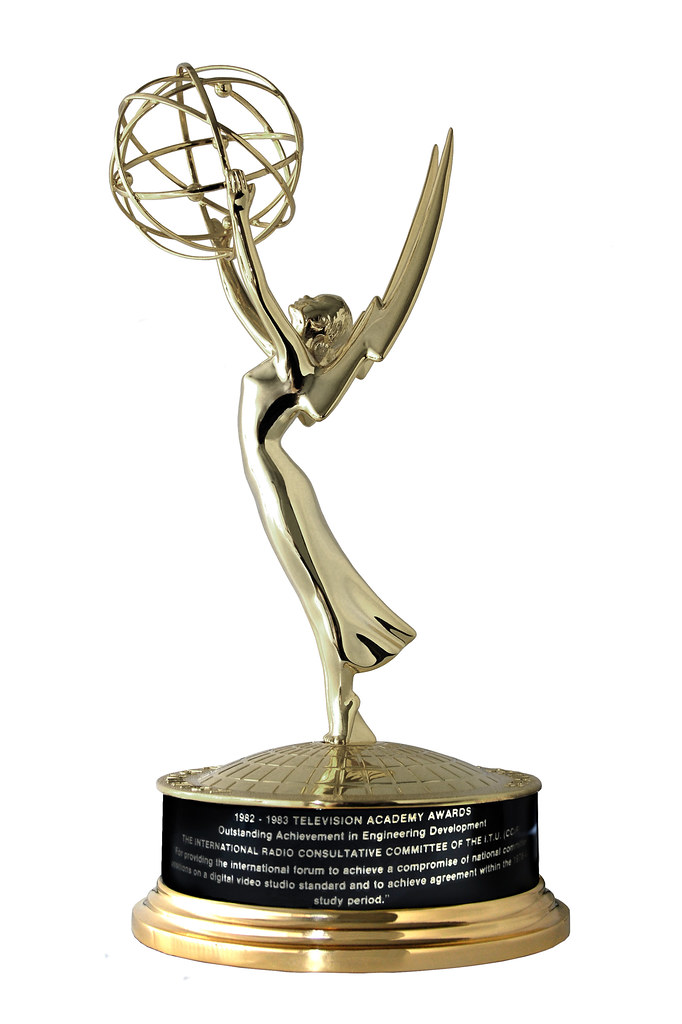
1. **The Enigma of Shared Trophies: Unpacking the 1965 ‘Area Awards’**The heart of our initial inquiry finds its direct answer in the 1965 Primetime Emmy Awards, distinguished by what were termed “Area Awards.” This particular year marked a unique experiment initiated by Academy President Rod Serling, whose vision was to “foster less competition in favor of more programs and individuals receiving credit for their work.” This administrative shift consciously departed from the traditional singular winner model, aiming to broaden the scope of recognition across various achievements.
Under this innovative, albeit short-lived, system, categories were narrowed, and critically, multiple winners were explicitly allowed. The impact is vividly seen in the “Outstanding Individual Achievements in Entertainment – Actors and Performers” category for 1965, which recognized five distinct individuals. These included Leonard Bernstein for “New York Philharmonic Young People’s Concerts,” Lynn Fontanne and Alfred Lunt for “The Magnificent Yankee,” Barbra Streisand for “My Name Is Barbra,” and Dick Van Dyke for “The Dick Van Dyke Show.”
While the prompt mentions “three famous comedians,” the 1965 record reveals a broader spectrum, with Dick Van Dyke standing out as a titan of comedic television. His eponymous show was a consistent winner for “Outstanding Comedy Series” around this period. His recognition here, alongside others, signifies the Academy’s explicit intention to credit individual artistry without enforcing a direct competitive hierarchy. Barbra Streisand, recognized for her variety special, also contributed a blend of musicality and comedic timing common in variety entertainment.
The “Area Awards” experiment, despite its noble intentions, proved ephemeral, “lasting for only one awards season.” This brief chapter highlights the Academy’s ongoing efforts to balance celebrating excellence with managing the inherent competitive nature of awards. It underscores a moment where focus shifted from a singular spotlight to a more diffuse acknowledgment of multiple outstanding contributions. Thus, 1965 offers a compelling explanation for why multiple celebrated performers, including comedic icons, found themselves sharing honors.
2. **Early Emmy Irregularities: A Shifting Landscape of Categories**To fully appreciate the 1965 “Area Awards,” one must understand the foundational fluidity of the Primetime Emmy Awards’ early years. The Academy, navigating a new medium, embedded an exploratory spirit in its categories, which “changed year-to-year, causing irregularities in the continuity of the listed awards.”
This shifting landscape meant early Emmy ceremonies were far from today’s standardized events. Categories would appear one year, then revise or disappear, reflecting television’s rapid advancements and evolving programming. Such instability challenged consistent benchmarks for excellence, making historical comparisons complex, as the Academy built its recognition framework alongside the industry.
Consider 1949, where “Pantomime Quiz” was “Most Popular Television Program” and “The Necklace” from “Your Show Time series” won “Best Film Made for Television.” These broad categories acknowledged early achievements but lacked later Emmy specificity. They captured immediate impact and technical innovations, demonstrating the fledgling nature of formal television criticism.
This inherent irregularity is a crucial backdrop for later innovations. It illustrates an institutional willingness to experiment and adapt. This foundational flexibility, despite historical discontinuity, paved the way for reform and inclusive recognition, like Rod Serling’s initiative.

3. **The Undifferentiated Era: ‘Best Continuing Performance’ and Beyond**Further highlighting the Emmys’ evolution is a period in the late 1950s and early 1960s, a time marked by “the undifferentiated era” for individual performance awards. During these years, the Academy opted not to distinguish between comedic and dramatic performances in its individual acting categories, effectively blurring genre lines for sustained acting excellence.
Instead of separate “Lead Comedy Actor” or “Lead Drama Actor” awards, catch-all titles like “Best Continuing Performance” or “Outstanding (Actor/Actress) in a Series” were issued. This meant a sitcom performer could be nominated alongside a dramatic actor. Such a system necessitated judging performance beyond genre, focusing on an actor’s consistent quality across a season.
For instance, Robert Young, winning for “Father Knows Best” (1957, 1958), was recognized under these broad umbrellas, his wholesome work not isolated into a ‘drama’ specific award. Similarly, comedic talent like Sid Caesar, recognized for “Caesar’s Hour” (1957), was evaluated against a wider pool of dramatic performers, illuminating a time when emphasis was on overall “continuing performance.”
This undifferentiated approach, while simplifying structure, challenged comparing distinct acting crafts. It implied a universal performance standard, not accounting for comedy versus drama demands. Though the Academy later recognized distinct characteristics, this era reminds us of the early Emmys’ experimental nature, where televised excellence definitions were still under construction.

4. **Specialization in Drama: The Mid-1950s Category Splits**Contrasting the undifferentiated individual awards, a trend towards specialization emerged within drama program awards during the mid-1950s. The Academy significantly dissected the broad “Outstanding Drama” category into more specific, format-driven distinctions. This reflected growing recognition of diverse narrative structures and production scales in dramatic television.
The Academy “split Outstanding Drama into several categories,” acknowledging not all dramatic programming was equal in length or sub-type. These included “One Hour or More,” “Half Hour or Less,” and “Western or Adventure Series.” This stratification allowed nuanced appreciation, ensuring shorter dramas weren’t unfairly pitted against sprawling productions. It also underscored the popularity of specific genres like the Western.
For example, in 1955, “The U.S. Steel Hour” won for “One Hour or More,” “Dragnet” for “Half Hour or Less,” and “Stories of the Century” for “Western or Adventure Series.” Each program represented distinct storytelling, with segmented categories providing appropriate recognition. This was a clear step towards a more refined awards system.
This move, occurring contemporaneously with undifferentiated individual performance awards, highlights the Emmys’ inconsistent evolution. It suggests the Academy, while creating finer distinctions for program types, still grappled with individual acting across genres. Nevertheless, the mid-1950s drama splits marked a significant stride in developing a detailed system for acknowledging dramatic television’s expanding breadth.
5. **Comedy’s First Laugh: “Pantomime Quiz” (1949) and the Genesis of Humor Awards**Comedy’s journey at the Primetime Emmy Awards began in television’s earliest days, before established “Outstanding Comedy Series” categories. The 1949 ceremony offers a glimpse into how television, and humor within it, was initially perceived and honored, reflecting broad popularity more than strict artistic classifications.
In that inaugural year, “Most Popular Television Program” was bestowed upon “Pantomime Quiz,” a show heavily reliant on improvisational humor. While not a traditional sitcom, its recognition as “most popular” underscores humor’s immediate appeal to early television audiences, marking the first instance a primarily humor-driven program achieved top Emmy recognition.
The simplicity of “Most Popular Television Program” reflects the awards’ embryonic stage. It focused on broad cultural impact and viewership over dissecting specific comedy merits. “Pantomime Quiz,” broadcast by KTLA, captivated audiences, demonstrating television’s power to unite viewers in shared laughter.
This foundational recognition serves as comedy’s initial Emmy footprint. It foreshadowed a future where comedy would be appreciated for popularity and meticulously judged for craft and storytelling. It set the stage for sophisticated categories and multi-layered analyses that would eventually define Emmy awards for comedic programs.
:strip_icc()/i.s3.glbimg.com/v1/AUTH_59edd422c0c84a879bd37670ae4f538a/internal_photos/bs/2022/Q/P/nB1FxUTU2GXKxZUAdyQg/miltonnascimento-marcoshermes80.jpg)
6. **Milton Berle & Ed Wynn: The Kinescoped vs. Live Personality Divide (1950)**The 1950 Primetime Emmy Awards provided another example of early awards’ innovative, yet at times idiosyncratic, categorization for individual performance. This year introduced distinctions less about genre and more about television production’s technical realities, offering insight into how the Academy recognized talent in early live and recorded broadcasting.
Instead of a singular “Best Actor” or “Best Comedian” award, the Academy differentiated based on the method of broadcast. Milton Berle, a preeminent comedic force, was “Most Outstanding Kinescoped Personality” for his work on “Texaco Star Theatre” (KNBH). Simultaneously, Ed Wynn, another celebrated comedian, received the award for “Most Outstanding Live Personality” for “The Ed Wynn Show” (KTTV). This division highlights the crucial early distinction between live and kinescoped performances.
These categories underscore technical challenges and artistic differences: a live performer like Wynn commanded unedited presence, while a kinescoped one like Berle was judged on a captured, reproducible version. Both were celebrated for charisma, but criteria were rooted in transmission and recording practicalities.
The recognition of Berle and Wynn in these distinct, technically-driven categories speaks to early Emmy classifications’ experimental nature. It demonstrates the Academy’s effort to acknowledge various facets of television production as then understood. While these distinctions faded with technology, they offer invaluable insight into early awards and foundational steps to recognize individual entertainment talent.
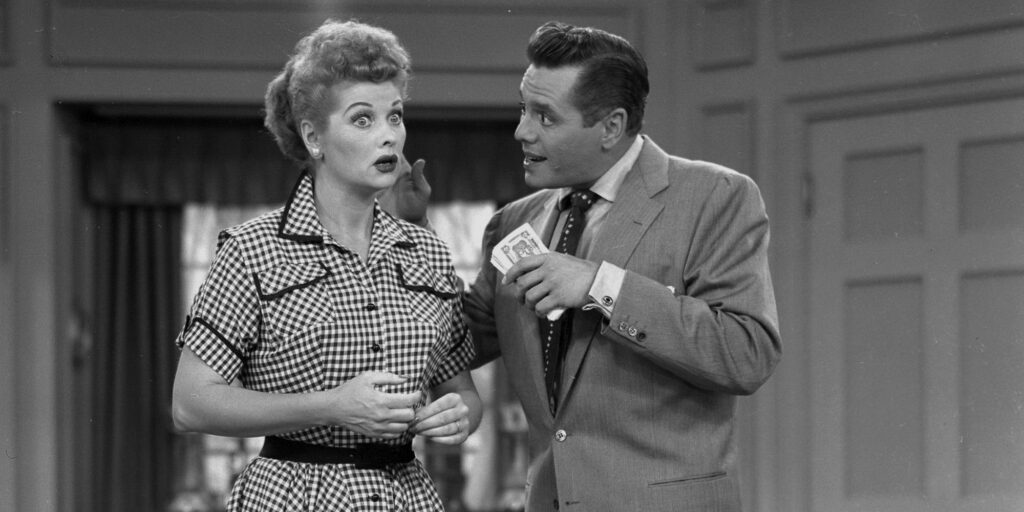
7. **”I Love Lucy” (1953, 1954): Comedy’s Early Dominance and Enduring Legacy**If “Pantomime Quiz” marked comedy’s first popular acknowledgment, then “I Love Lucy” cemented its place as a dominant, critically acclaimed genre in the early 1950s. This iconic CBS sitcom, starring the incomparable Lucille Ball, became a cultural phenomenon, laying groundwork for multi-camera comedy production. Its success at the Primetime Emmy Awards was both immediate and profound.
“I Love Lucy” secured the Emmy for “Best Comedy” in both 1953 and 1954, an impressive feat underscoring its unparalleled appeal and artistic quality. These consecutive wins were not just triumphs for the show, but significant milestones for the comedy genre, demonstrating that precision, innovation, and charismatic performances could achieve the highest industry recognition.
The show’s influence stretched far beyond its Emmy wins. Lucille Ball’s physical comedy, the pioneering use of three cameras, and its groundbreaking ensemble cast set new production standards. Storylines, often revolving around Lucy Ricardo’s zany schemes, resonated deeply. Its recognition by the Academy affirmed its status as truly outstanding, elevating the sitcom format to prestige.
“I Love Lucy” stands as a foundational pillar in television comedy history, a testament to well-crafted humor and brilliant performances. Its early Emmy dominance in “Best Comedy” validated its enormous popularity and provided a clear precedent for recognizing comedic excellence as a distinct and important component of the television landscape. Its legacy continues to echo, a benchmark for subsequent comedy series.
Having explored the foundational fluidity and experimental phases of the Primetime Emmy Awards, particularly in its early decades and the unique administrative decisions of the mid-1960s, we now turn our attention to the chronological evolution of influential, multi-award-winning comedy series from the 1970s through the 2010s. This period witnessed the maturation of the sitcom as a distinct art form, with shows not only reflecting societal changes but also consistently pushing the boundaries of what television comedy could achieve, often earning multiple accolades for their cultural impact, consistent excellence, and innovative storytelling. The landscape of Emmy recognition for comedic achievement transformed significantly, moving from broad acknowledgments to highly specific distinctions that celebrated nuance and craft.
This journey through televised humor illuminates how comedy, while often seen as lighter fare, has frequently been a powerful vehicle for social commentary and artistic innovation. The series that garnered repeated Emmy attention during these decades are more than just popular programs; they represent milestones in television production, writing, and performance, each leaving an indelible mark on the medium and influencing subsequent generations of creators. As the industry expanded and diversified, so too did the sophistication of its comedic offerings, leading to a vibrant tapestry of award-winning humor that continues to resonate today.

8. **All in the Family (1971, 1972, 1973, 1978): Confronting the American Conscience with Laughter**
Norman Lear’s seminal sitcom, “All in the Family,” burst onto television screens in 1971, fundamentally altering the landscape of American comedy. Unlike its predecessors, which often shied away from contentious topics, the series directly confronted contemporary social and political issues, including racism, ism, and homophobia, through the outspoken and bigoted character of Archie Bunker. This bold approach made it both controversial and profoundly resonant, sparking conversations in living rooms across the nation and demonstrating comedy’s capacity for critical engagement.
The Academy of Television Arts & Sciences quickly recognized the groundbreaking nature of “All in the Family,” honoring it with four Primetime Emmy Awards for Outstanding Comedy Series in 1971, 1972, 1973, and again in 1978. Such consistent acclaim underscored the show’s exceptional writing, its courage to tackle uncomfortable truths, and the brilliant performances of its cast. Carroll O’Connor, as Archie Bunker, and Jean Stapleton, as his long-suffering wife Edith, both received multiple Emmys for their nuanced portrayals, cementing their status as television legends.
Beyond its immediate awards, the series fostered a new paradigm for television comedy, proving that audiences were ready for programs that entertained while also challenging their perspectives. Its success paved the way for a generation of socially conscious sitcoms, influencing everything from spin-offs like “Maude” and “The Jeffersons” to later shows that dared to address complex themes. “All in the Family” remains a benchmark for how humor can dissect, rather than merely distract from, the intricacies of the human condition and societal fault lines.
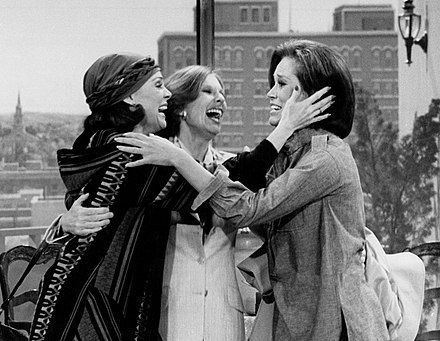
9. **The Mary Tyler Moore Show (1975, 1976, 1977): A Portrait of Modern Womanhood**”The Mary Tyler Moore Show,” which premiered in 1970, offered a revolutionary portrayal of an independent, single career woman in her thirties, Mary Richards, pursuing a career in television news. Set against the backdrop of a Minneapolis newsroom, the series skillfully blended workplace comedy with personal storytelling, exploring themes of friendship, ambition, and identity without relying on marriage or family as its central focus. It was a sophisticated and witty reflection of evolving gender roles in American society.
The critical reception for “The Mary Tyler Moore Show” was overwhelmingly positive, culminating in three consecutive Primetime Emmy Awards for Outstanding Comedy Series in 1975, 1976, and 1977. These accolades were a testament to the show’s sharp writing, its finely tuned ensemble cast, and the enduring charisma of Mary Tyler Moore herself, who won multiple Emmys for Lead Actress. The supporting cast, including Valerie Harper as Rhoda Morgenstern and Ed Asner as Lou Grant, also received significant recognition.
The show’s influence extended far beyond its remarkable awards haul. It became a cultural touchstone for women seeking professional and personal fulfillment outside traditional domestic roles, inspiring countless viewers. By presenting a complex, relatable female protagonist who was defined by her career and friendships, rather than a husband, “The Mary Tyler Moore Show” established a new template for character-driven comedy and significantly advanced female representation in mainstream media.

10. **Cheers (1983, 1984, 1989, 1991): The Enduring Appeal of the Neighborhood Bar**”Cheers,” a sitcom that debuted in 1982, masterfully established its identity around a singular setting: a Boston bar “where everybody knows your name.” This premise allowed for an exploration of diverse characters, their foibles, and their interconnected lives, fostering a sense of community and surrogate family among its patrons and staff. The show distinguished itself through its witty dialogue, character-driven humor, and the romantic tension between its leads, Sam Malone and Diane Chambers, and later, Rebecca Howe.
The Academy recognized “Cheers” as an exemplary comedy, bestowing upon it four Primetime Emmy Awards for Outstanding Comedy Series in 1983, 1984, 1989, and 1991. This sustained success across nearly a decade demonstrated the series’ consistent quality and its ability to reinvent itself while maintaining its core appeal. Its cast, including Ted Danson, Shelley Long, Rhea Perlman, and Woody Harrelson, received numerous individual acting Emmys, underscoring the strength of its ensemble.
“Cheers” became a blueprint for the “hangout sitcom,” a genre that thrived on the chemistry and evolving dynamics of its core group of characters within a fixed setting. Its longevity and critical acclaim cemented its place as one of television’s most beloved and influential comedies. The show’s ability to create a warm, inviting, yet endlessly entertaining fictional world for its viewers highlighted the power of ensemble writing and relatable human connection in comedic storytelling.

11. **The Golden Girls (1986, 1987): Redefining Seniority with Sass and Wit**”The Golden Girls,” premiering in 1985, broke significant ground by centering its narrative on four older women living together in Miami: the sharp-tongued Dorothy, her feisty mother Sophia, the naive Rose, and the promiscuous Blanche. The series defied stereotypes about aging, presenting its protagonists as vibrant, complex individuals with active romantic lives, careers, and opinions. Its humor often derived from their distinctive personalities, their candid conversations, and their unwavering support for one another.
The show quickly garnered critical acclaim, earning back-to-back Primetime Emmy Awards for Outstanding Comedy Series in 1986 and 1987. This recognition was further enhanced by a remarkable achievement: it is one of only three shows, alongside “All in the Family” and “Will & Grace,” to win acting Emmys for all of its main cast members. Bea Arthur, Betty White, Rue McClanahan, and Estelle Getty each received individual awards for their unforgettable performances, a rare testament to an ensemble’s collective brilliance.
“The Golden Girls” proved that stories about older women could be both popular and critically celebrated, expanding the demographic scope of television representation. Its pioneering spirit, combined with its sharp writing and comedic timing, offered a fresh, often poignant, perspective on friendship, family, and the challenges and joys of aging. The series’ lasting legacy lies in its bold portrayal of female camaraderie and its ability to find humor and dignity in later life.
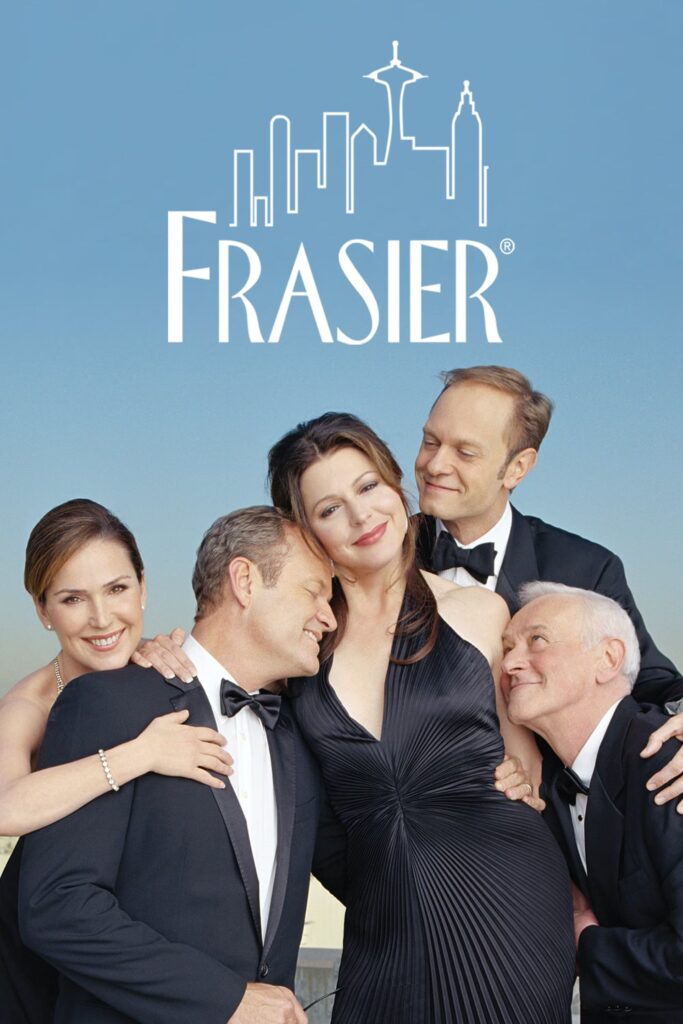
12. **Frasier (1994, 1995, 1996, 1997, 1998): Highbrow Humor in Prime Time**A spin-off from the immensely successful “Cheers,” “Frasier” premiered in 1993 and quickly established its own distinct identity. Centered on the erudite psychiatrist Dr. Frasier Crane, who returns to his hometown of Seattle to host a radio call-in show, the series distinguished itself with sophisticated wit, complex character relationships, and a unique blend of highbrow cultural references and accessible physical comedy. Its narrative often explored themes of class, intellect, and the intricacies of family dynamics.
“Frasier” achieved an unprecedented level of Emmy dominance, securing five consecutive Primetime Emmy Awards for Outstanding Comedy Series from 1994 to 1998. This remarkable streak set a record, demonstrating the Academy’s consistent admiration for its unparalleled writing and performances. Kelsey Grammer, David Hyde Pierce, and Jane Leeves all received Emmys for their portrayals, highlighting the exceptional talent within the main cast.
The show’s enduring appeal lay in its ability to marry intellectual humor with genuine emotional depth, making its characters both aspirational and deeply flawed. “Frasier” not only maintained the high standards set by its predecessor but also pushed the boundaries of what a network sitcom could achieve in terms of sophisticated storytelling and comedic artistry. Its record-breaking success solidified its place as a cornerstone of television comedy and a testament to the power of well-developed characters.

13. **30 Rock (2007, 2008, 2009): A Meta-Comedic Tour de Force**Tina Fey’s “30 Rock,” which debuted in 2006, offered a satirical, behind-the-scenes look at a fictional live sketch comedy show, “The Girlie Show with Tracy Jordan,” and its head writer, Liz Lemon. The series was renowned for its fast-paced, absurd humor, intricate pop culture references, and a meta-narrative style that frequently broke the fourth wall. It dissected the absurdity of television production and corporate media with a sharp, intelligent wit that was both unique and highly influential.
Despite its candid acknowledgment of not being a ratings juggernaut, Fey famously thanked the show’s “dozens and dozens of viewers” upon its first win. However, “30 Rock” was a critical darling, earning three consecutive Primetime Emmy Awards for Outstanding Comedy Series in 2007, 2008, and 2009. These wins highlighted its innovative writing, exceptional comedic performances from Tina Fey and Alec Baldwin, and its fresh, irreverent take on the sitcom format.
The show’s impact transcended its viewership numbers, inspiring a new wave of smart, self-aware comedies. Its rapid-fire jokes, quirky characters, and clever deconstruction of entertainment industry tropes left a significant mark on the comedic landscape. “30 Rock” proved that intellectual, niche humor could achieve the highest accolades, demonstrating the evolving tastes of both audiences and awards committees.

14. **Modern Family (2010, 2011, 2012, 2013, 2014): Redefining the Contemporary American Family**”Modern Family,” which premiered in 2009, quickly captivated audiences with its mockumentary style and its portrayal of a large, diverse, and often chaotic extended family. The series ingeniously depicted three interconnected family units—the Pritchetts, the Dunphys, and the Tuckers—each representing different facets of the contemporary American family, including traditional, blended, and same- partnerships. Its humor derived from the universal experiences of family life, misunderstandings, and the unconditional love that ultimately binds them.
The show’s critical and popular success was unprecedented, leading to an astonishing five consecutive Primetime Emmy Awards for Outstanding Comedy Series from 2010 to 2014. This achievement mirrored “Frasier”‘s record and solidified “Modern Family”‘s place as one of the most acclaimed comedies of its era. The series also dominated the supporting acting categories, with stars like Ty Burrell, Eric Stonestreet, and Julie Bowen earning multiple statues for their standout performances.
“Modern Family” was celebrated for its warmth, its inclusive representation, and its ability to blend clever writing with genuine heart. It navigated the complexities of modern relationships and societal shifts with humor and sensitivity, making it a cultural touchstone for many. Its record-breaking Emmy run affirmed its status as a paradigm of contemporary ensemble comedy, demonstrating how universal themes could be explored through fresh narrative techniques.

15. **Veep (2015, 2016, 2017): The Sharp-Edged Satire of Political Folly**Based on the British series “The Thick of It,” “Veep” debuted in 2012, offering an unsparingly cynical and darkly hilarious look at the inner workings of American politics. Centered on Selina Meyer, the narcissistic and perpetually beleaguered Vice President (and later President), the series distinguished itself with its rapid-fire, expletive-laden dialogue, meticulously crafted political machinations, and the sheer incompetence and venality of its characters. It was a masterclass in political satire, providing a cutting commentary on the pursuit of power.
“Veep” achieved significant critical success, garnering three consecutive Primetime Emmy Awards for Outstanding Comedy Series in 2015, 2016, and 2017. A cornerstone of its acclaim was Julia Louis-Dreyfus’s tour-de-force performance as Selina Meyer, for which she won a record-setting six consecutive Emmys for Best Comedy Actress. This unparalleled individual recognition underscored the brilliance of her portrayal and the show’s exceptional writing.
The series’ unflinching portrayal of Washington D.C.’s absurdities, coupled with its sharp dialogue and relentless pace, made it a defining comedy of the 2010s. “Veep” not only pushed the boundaries of political humor but also demonstrated the power of a perfectly cast ensemble and incisive writing to create a show that was both profoundly entertaining and deeply insightful about the nature of power and ambition. Its sustained critical success solidified its legacy as a modern comedic classic.
The journey through the annals of the Primetime Emmy Awards for comedy reveals a narrative of constant evolution, reflecting both the dynamic nature of television itself and the shifting cultural zeitgeist. From the early experiments in category definition to the sophisticated, multi-layered narratives of the 21st century, comedy has consistently demonstrated its versatility and its vital role in mirroring, and often shaping, societal discourse. The series recognized by the Academy, from the pioneering shows of the 1970s to the groundbreaking programs of the 2010s, stand as testaments to the enduring power of laughter—whether it challenges, comforts, or simply entertains—to capture the essence of our shared human experience. These comedic triumphs are not merely awards but markers of cultural significance, reminding us that television’s golden statuettes often illuminate the very best of our collective storytelling.