Ford. The name conjures images of groundbreaking innovations, rugged trucks, iconic muscle cars, and a legacy that helped put the world on wheels. From the Model T to the Mustang, the F-150 to the Bronco, Dearborn has gifted us some true legends that define American automotive culture. But even the best chefs burn the occasional biscuit, and in Ford’s long and storied history, there have been more than a few aesthetic misfires that make us scratch our heads, or perhaps, shield our eyes.
We’re not talking about minor cosmetic blips or subjective stylistic choices that simply didn’t catch on. No, we’re diving headfirst into the truly egregious design decisions, the kinds of visual blunders that elicit a collective groan from even the most ardent Blue Oval enthusiasts. This isn’t about sales figures, or groundbreaking performance, or even infamous safety records – although some of these contenders might unfortunately boast those as well. Our mission today is a purely aesthetic one: to highlight the Fords that, for one reason or another, failed spectacularly in the looks department.
So buckle up, buttercups, because we’re about to embark on a journey through some truly questionable sheet metal, dissecting the unfortunate design choices that have earned these vehicles a permanent spot on the unofficial ‘ugliest Fords ever’ list. Prepare for strong opinions, perhaps a dash of sarcasm, and a profound appreciation for when Ford actually gets it right. Let’s peel back the layers of questionable chrome and awkward proportions to reveal the automotive equivalent of a fashion faux pas.

1. **1958 Ford Edsel Pacer**Ah, the Edsel. The very name has become shorthand for spectacular corporate failure, a cautionary tale whispered in boardrooms and design studios worldwide. Ford poured over $250 million into this ill-fated division, meticulously researching, developing, and aggressively marketing what they hoped would be their next big triumph. The company president’s son, Edsel Ford, lent his name, adding a layer of personal tragedy to what would become an industrial-scale flop after just a little over two years on the market.
But beyond the disastrous market timing, the recession launch, and the litany of mechanical and quality control issues, the Edsel Pacer brought with it a design that was, to put it mildly, deeply polarizing. Its defining, and arguably most offensive, feature was its front grille. Picture a tall snout, sitting ‘right smack dab in the middle of the front of each car.’ It was an attempt at uniqueness, perhaps even an unwitting echo of the 1956 BMW 503’s kidney grille, but it landed with all the grace of a lead balloon.
Instead of looking forward-thinking or elegant, the vertical, horse-collar-like grille already seemed dated the moment the Pacer rolled off the line in 1958. It created an awkward, almost equine facial expression that no amount of surrounding chrome could mitigate. This jarring centerpiece alone has cemented the Edsel Pacer’s place on countless ‘worst cars ever’ lists, making it a poster child for how not to introduce a new automotive brand.
One must admit, the Edsel brand wasn’t entirely devoid of merit. It did offer an ‘awesome 410 cubic inch V8 engine’ and featured a ‘Teletouch Drive automatic transmission’ which, in a delightful bit of irony, could be seen as a precursor to today’s push-button shifters. Such innovations, however, were tragically overshadowed by everything else. Ultimately, while many factors contributed to the Edsel’s monumental failure, its ‘bad looks certainly didn’t help’ its chances for success in a competitive era.
Car Model Information: 2020 Alfa Romeo Stelvio Base
Name: Edsel Pacer
Manufacturer: Edsel
ModelYears: 1958
Class: Full-size car
Assembly: Mahwah Assembly,Louisville Assembly Plant,San Jose Assembly Plant,Oakville Assembly
Predecessor: Ford Fairlane (Americas)
Successor: Ford Galaxie
BodyStyle: convertible (car)
Engine: 361 cuin
Abbr: on
Transmission: 3-speed manual,3-speed automatic
Width: 78.8 in
Weight: convert
Wheelbase: 118.0 in
Related: Edsel Ranger,Edsel Bermuda,Edsel Villager,Edsel Roundup,Ford Fairlane (Americas),Ford Custom,Ford Country Squire
Categories: Articles with short description, Cars discontinued in 1958, Cars introduced in 1958, Commons category link is on Wikidata, Coupés
Summary: The Edsel Pacer is an automobile that was produced and sold by Edsel in 1958. The Pacer was based on the shorter narrower Edsel platform, shared with Ford and the Ranger.
Pacer is one of two Edsel model names reused by manufacturers other than Ford, as was Citation. The Corsair, a 1958-only Edsel model, used a name previously applied to the Henry J by the Kaiser-Frazer Corporation.
The Pacer represented a step up from the basic Ranger model. In addition to the Ranger’s base trim appoints, the Pacer received contoured seat backs, nylon upholstery cloth, color-keyed rubber floor mats, and extra stainless steel exterior and interior trim pieces and window moldings. A basic heater (as a US$92 option) and radio (at $95) were available, and air conditioning was optional, as well (at $417). A tachometer was optional.
All Pacers rode on Ford’s 118 in (2997 mm) wheelbase and shared the Ranger’s engine choices, with a 303 hp (226 kW) 361 cu in (5.9 L) FE V8 (with four-barrel carburetor) as standard. (The 345 hp (257 kW) 410 cu in (6.7 L) MEL V8, standard in the Corsair and Citation, was not available.) A three-speed manual transmission was also standard. Buyers also could upgrade to a three-speed automatic transmission with a standard column-mounted gear selector, or choose Edsel’s highly promoted but trouble-prone Teletouch automatic, which placed its drive-selection buttons in the steering wheel hub, as a US$231 option.
While their roll-out was highly publicized in the fall of 1957, Edsels were a marketing disaster for Ford and for Ford’s corporate strategy for meeting General Motors product line for product line. Total Pacer output in U.S. and Canada for the model stood at 20,988 units, of which 1,876 were U.S.-built convertibles, 7,141 four-door sedans (6,083 U.S./1,058 Canada), 6,717 hardtop coupes (6,139 U.S./578 Canada), and 5,254 four-door hardtops (4,959 U.S./295 Canada). Prices for the Pacer ranged from $2,700 to $2,993. Despite being among the best-selling 1958 Edsel models, the Pacer was discontinued at the end of the 1958 model year. The premium Citation model was also dropped, as was the trouble-prone Teletouch system.
Get more information about: Edsel Pacer
Buying a high-performing used car >>>
Brand: Ford Model: Edsel Pacer
Price: $16,684 Mileage: 70,086 mi.
Read more about: Steer Clear: 15 Cars That Leave Automotive Enthusiasts Drowning in Collector’s Remorse

2. **1958 Ford Thunderbird (Second-Generation)**From one 1958 design misstep to another, though this one involved an existing icon rather than a brand-new, doomed venture. The first-generation Ford Thunderbird remains ‘a beautiful piece of art’ and ‘a symbol of American car culture in the 1950s,’ a sleek, desirable two-seater that captured the zeitgeist. Then came the second-generation, released in 1958, and it veered wildly ‘from the course,’ trading lithe sportiness for something altogether more… substantial.
Despite the visual shift, this iteration managed to nab MotorTrend’s ‘1958 Car of the Year Award.’ A decision that, in hindsight, feels like a historical head-scratcher, given that the ‘very same magazine’ would later include it on its own list of ‘ugliest cars ever made some 65 years later.’ The second-gen T-bird simply ‘did not age well,’ its design choices becoming increasingly questionable with the passage of time, losing the elegance it once possessed.
The ‘biggest issue that many took with the second-generation T-bird’ was its inexplicable growth spurt. It swelled ‘larger just about everywhere—price, payload, and passenger capacity—except for performance.’ Its ‘engine putting out an anemic 144 hp’ only compounded the problem, creating a heavy, underpowered behemoth that struggled to justify its newfound bulk. This shift in philosophy alienated many who loved the original’s focused, personal luxury aesthetic.
This ballooning in size was not accompanied by any corresponding grace. Instead, the ‘classic, sleek 1950s look of the original Thunderbird made way for an oversized body with a lot of chrome trim that dripped with excess.’ The front fascia, in particular, became a chrome-laden spectacle. Its ‘massive chrome grille that blended into the chrome bumper made it look like the car went to a cosmetic surgeon to give it a plump lip job,’ a comparison that perfectly captures its unfortunate, overdone countenance. It was a clear case of more not always being better, especially when it came to tasteful automotive design.
Car Model Information: 1966 Ford Thunderbird Base
Name: Ford Thunderbird
Caption: 1957 Thunderbird
Manufacturer: Ford Motor Company
Production: unbulleted list
ModelYears: unbulleted list
Class: unbulleted list
Layout: Front-engine, rear-wheel drive layout
Categories: 1960s cars, 1970s cars, 1980s cars, 1990s cars, 2000s cars
Summary: The Ford Thunderbird is a personal luxury car manufactured and marketed by Ford Motor Company for model years 1955 to 2005, with a hiatus from 1998 to 2001.
Ultimately gaining a broadly used colloquial nickname, the T-Bird, the model was introduced as a two-seat convertible, subsequently offered variously in a host of body styles including as a four-seat hardtop coupe, four-seat convertible, five-seat convertible and hardtop, four-door pillared hardtop sedan, six-passenger hardtop coupe, and five-passenger pillared coupe, before returning in its final generation, again as a two-seat convertible.
At its inception, Ford targeted the two-seat Thunderbird as an upscale model. The 1958 model year design introduced a rear seat and arguably marked the expansion of a market segment that came to be known as personal luxury cars, positioned to emphasize comfort and convenience over handling and high-speed performance.
Get more information about: Ford Thunderbird
Buying a high-performing used car >>>
Brand: Ford Model: Thunderbird
Price: $44,999 Mileage: 71,017 mi.
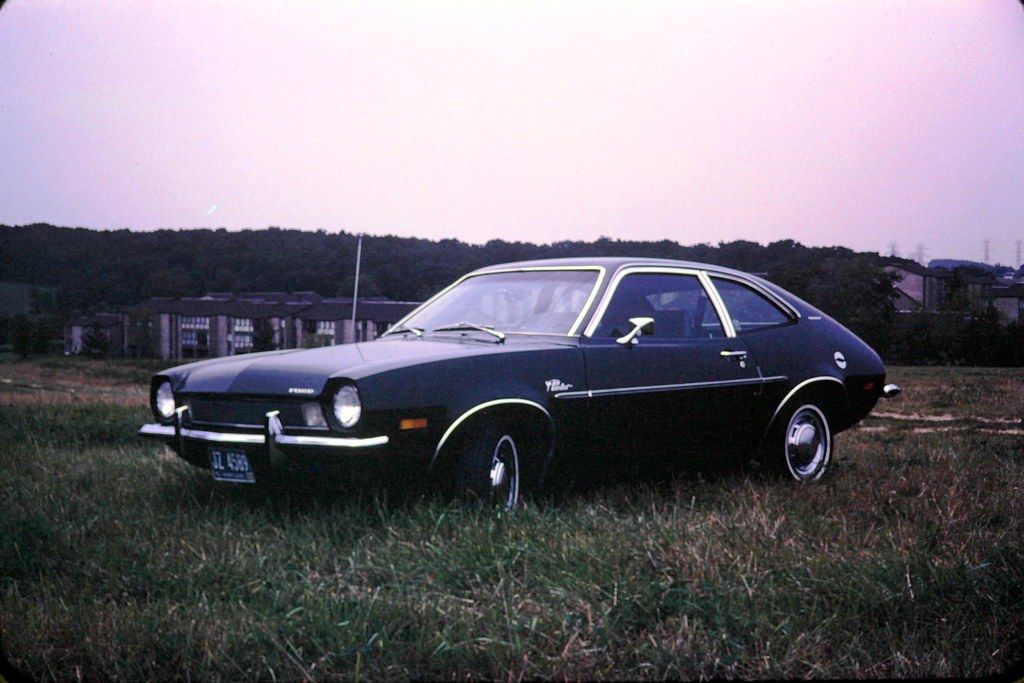
3. **1971 Ford Pinto**The 1971 Ford Pinto is a car that carries a baggage heavier than its modest curb weight, primarily due to its utterly damning safety record. It’s ‘widely scorned because of its propensity to catch fire when rear-ended,’ a horrifying fact made even worse by revelations that ‘Ford already knew about this problem before the car went into production.’ The company’s cold, calculated decision not to address the issue, based on a cost-benefit analysis valuing lives at a mere fraction of the reinforcement cost, remains one of the darkest chapters in automotive history.
But setting aside the egregious ethical failings – a Herculean task, to be sure – the Pinto was, purely from an aesthetic standpoint, just ‘one bland car.’ It wasn’t just forgettable; it was aggressively unremarkable, a visual non-entity that blended into the drab automotive landscape of the 1970s. It ‘looked just like any other cheap subcompact made in the ’70s,’ devoid of any distinctive flair or redeeming design qualities that might have distracted from its inherent issues.
What truly exacerbated its visual offenses were its ‘bulbous looks’ compounded by glaringly ‘mismatched proportions.’ This wasn’t an accident of design so much as a consequence of engineering shortcuts. As the context reveals, ‘Ford engineers simply removed the latter half of the car to save weight and development costs.’ The result was a car that was ‘technically a larger car with its rear shaved off,’ giving it an unnatural, truncated appearance. This awkward amputation left it looking perpetually unfinished, like a cartoon character that ran into a wall headfirst.
Despite its blandness, its proportional woes, and its chilling safety concerns, the ’71 Ford Pinto somehow found popularity. Its primary, if not sole, redeeming quality was its price. With ‘a base price of $1,919 (about $15,000 today),’ it was undeniably cheap, making it accessible to a wide swathe of buyers desperate for affordable transportation. This affordability, however, proved to be its undoing for many, proving that sometimes, you truly do get what you pay for.
Ford’s journey through automotive design has, as we’ve seen, featured some rather spectacular scenic detours. We’ve cringed at the Edsel’s face and pondered the T-bird’s baffling bloat, all while acknowledging the Pinto’s… utilitarian blandness. But the Blue Oval’s aesthetic anomalies didn’t stop in the mid-70s. Oh no, dear reader, there were still more questionable decisions lurking in the design studios of Dearborn, proving that sometimes, even a storied marque can lose its way with a paintbrush. Let’s continue our deep dive into the unfortunate side of Ford’s design ledger.
Car Model Information: 1980 Ford Pinto WAGON
Name: Ford Pinto
Caption: Ford Pinto
Manufacturer: Ford Motor Company
Aka: Mercury Bobcat
Production: September 1970 – July 1980
ModelYears: 1971–1980 (Pinto),1974–1980 (Bobcat)
Assembly: Edison, New Jersey,Milpitas, California
Designer: Robert Eidschun (1968)
Class: Subcompact car
BodyStyle: Sedan (automobile),sedan delivery,station wagon,hatchback
Related: #Mercury Bobcat (1974–1980),Ford Mustang (second generation)
Layout: Front-engine, rear-wheel-drive layout
Chassis: Unibody
Engine: unbulleted list
Abbr: on
Disp: Ford Cologne engine
Transmission: unbulleted list
Wheelbase: 94.0 in
Length: 163 in
Width: 69.4 in
Height: 50 in
Weight: convert
Predecessor: Ford Cortina#Mark II (1966–1970)
Successor: Ford Escort (North America)
Categories: 1980s cars, Articles with short description, Cars discontinued in 1980, Cars introduced in 1970, Commons category link from Wikidata
Summary: The Ford Pinto is a subcompact car that was manufactured and marketed by Ford Motor Company in North America from 1970 until 1980. The Pinto was the first subcompact vehicle produced by Ford in North America.
The Pinto was marketed in three body styles throughout its production: a two-door fastback sedan with a trunk, a three-door hatchback, and a two-door station wagon. Mercury offered rebadged versions of the Pinto as the Mercury Bobcat from 1975 until 1980 (1974–1980 in Canada). Over three million Pintos were produced over its ten-year production run, outproducing the combined totals of its domestic rivals, the Chevrolet Vega and the AMC Gremlin. The Pinto and Mercury Bobcat were produced at Edison Assembly in Edison, New Jersey, St. Thomas Assembly in Southwold, Ontario, and San Jose Assembly in Milpitas, California.
Since the 1970s, the safety reputation of the Pinto has generated controversy. Its fuel-tank design attracted both media and government scrutiny after several deadly fires occurred when the tanks ruptured in rear-end collisions. A subsequent analysis of the overall safety of the Pinto suggested it was comparable to other 1970s subcompact cars. The safety issues surrounding the Pinto and the subsequent response by Ford have been cited widely as business ethics and tort reform case studies.
Get more information about: Ford Pinto
Buying a high-performing used car >>>
Brand: Ford Model: Pinto
Price: $5,951 Mileage: 107,000 mi.
Read more about: The Road Less Traveled: Unpacking 13 Automotive Technology Failures That Shaped History

4. **2002 Ford Thunderbird (Eleventh-Generation)**After a five-year absence from the market, the Thunderbird nameplate was resurrected in 2002, riding the wave of early 2000s retro fever. The idea, on paper, must have seemed like a slam dunk: bring back the iconic two-seater personal luxury car, echoing the beloved first-generation’s styling cues, but with modern engineering. Yet, as the context reveals with a sigh, ‘Ford completely missed the mark with this model.’ It was an attempt at nostalgia that landed with a thud, failing to capture the magic of its ancestor, or even the zeitgeist of the era.
While the fifth-generation Mustang, which followed in 2004, successfully harnessed the power of retro design, the 11th-generation T-bird stumbled. It tried to be sleek and sophisticated, much like the original, but ended up looking a bit too soft, too rounded, and ultimately, rather anonymous. The design felt like a watered-down homage rather than a vibrant revival, losing the crisp lines and athletic stance that made the ’55-’57 ‘Bird so memorable. It lacked the visual punch and confidence needed to stand out.
Perhaps it was the proportions, or the detailing, but something about the 2002 Thunderbird’s aesthetic just didn’t quite gel. It was neither bold enough to be a true retro statement nor modern enough to forge its own path. The outcome was clear: ‘This meant that the 11th-generation T-bird didn’t last long, with the model finally ending production in 2005.’ It was a short-lived chapter, a testament to how even the best intentions can go awry when the design execution misses its mark by a country mile.
The car seemed to exist in a stylistic limbo, a bland imitation rather than a glorious rebirth. Its attempt at recapturing past glory resulted in a lukewarm reception from enthusiasts who had hoped for a true successor to a legend. The 2002 Thunderbird serves as a prime example that merely dusting off an old nameplate and adding a few retro touches isn’t enough; the soul of the design, that intangible quality that makes a car truly beautiful, must be present.
Car Model Information: 1966 Ford Thunderbird Base
Name: Ford Thunderbird
Caption: 1957 Thunderbird
Manufacturer: Ford Motor Company
Production: unbulleted list
ModelYears: unbulleted list
Class: unbulleted list
Layout: Front-engine, rear-wheel drive layout
Categories: 1960s cars, 1970s cars, 1980s cars, 1990s cars, 2000s cars
Summary: The Ford Thunderbird is a personal luxury car manufactured and marketed by Ford Motor Company for model years 1955 to 2005, with a hiatus from 1998 to 2001.
Ultimately gaining a broadly used colloquial nickname, the T-Bird, the model was introduced as a two-seat convertible, subsequently offered variously in a host of body styles including as a four-seat hardtop coupe, four-seat convertible, five-seat convertible and hardtop, four-door pillared hardtop sedan, six-passenger hardtop coupe, and five-passenger pillared coupe, before returning in its final generation, again as a two-seat convertible.
At its inception, Ford targeted the two-seat Thunderbird as an upscale model. The 1958 model year design introduced a rear seat and arguably marked the expansion of a market segment that came to be known as personal luxury cars, positioned to emphasize comfort and convenience over handling and high-speed performance.
Get more information about: Ford Thunderbird
Buying a high-performing used car >>>
Brand: Ford Model: Thunderbird
Price: $44,999 Mileage: 71,017 mi.
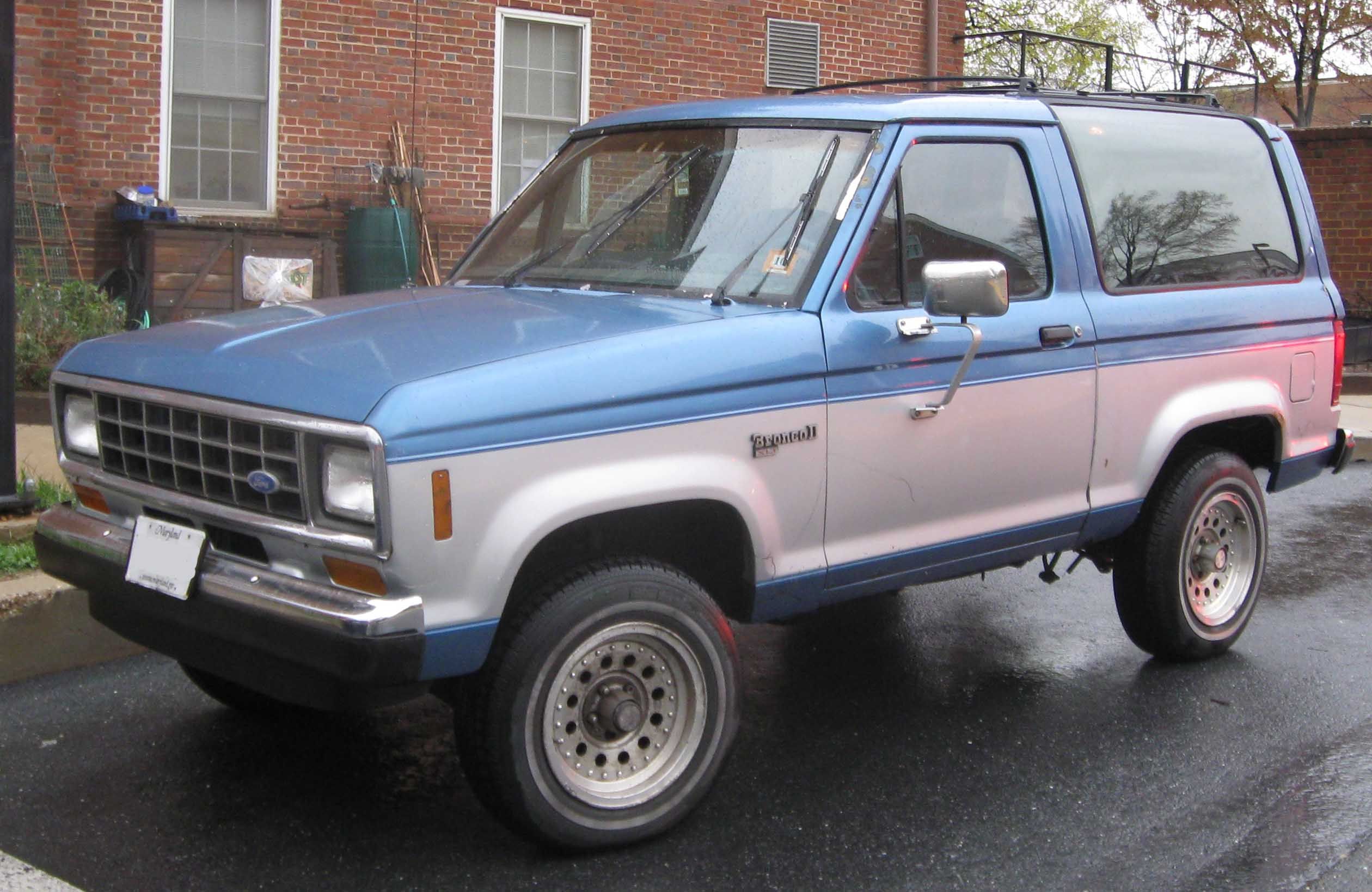
5. **Ford Bronco II**Now, let’s talk about a different kind of aesthetic anomaly, one that shares a tragic spotlight with the much-maligned Pinto: the Ford Bronco II. Our context bluntly notes its inclusion among ‘some of the deadliest defects in automotive history,’ alongside the Pinto and Explorer. While our primary mission today is aesthetics, it’s impossible to completely detach a vehicle’s public perception from its full history, and sometimes, unfortunate legacies can cast a long shadow over every aspect, including its looks.
Released as a compact SUV, the Bronco II essentially aimed to give buyers a smaller, more ‘maneagable’ version of the full-size Bronco. However, in the process of scaling down, its proportions often felt, to many eyes, a touch awkward. It was squatter, narrower, and often looked as if it had been somewhat compressed, losing the commanding presence of its larger sibling without truly finding its own distinctive visual identity. It became a bit of an automotive chameleon, blending into the background of more memorable designs.
The design language of the Bronco II leaned heavily into utilitarianism, prioritizing function over form – a common trait in this segment. While that can be admirable, it often translates to a somewhat bland, uninspired visual package when not executed with a certain flair. The Bronco II’s boxy, somewhat truncated silhouette, coupled with relatively high ride height on a narrow track, contributed to a look that, while practical, certainly wouldn’t win any beauty pageants or design awards. It was simply there, serving a purpose, rather than making a statement.
Car Model Information: 2020 Alfa Romeo Stelvio Base
Name: Ford Bronco II
Caption: 1983–1988 Ford Bronco II XLT
Manufacturer: Ford Motor Company
ModelYears: 1984–1990
Production: January 1983 – January 1990
Assembly: Louisville, Kentucky
Class: Compact SUV
Related: Ford Ranger (Americas)
Layout: Front-engine, rear-wheel-drive layout,rear-wheel drive
Engine: Ford Cologne V6 engine#2.8,Ford Cologne V6 engine#2.9,Mitsubishi Motors
Transmission: Manual transmission,Mazda,Mazda,Mazda,Mitsubishi Motors,Mitsubishi Motors,Automatic transmission,Ford C4 transmission#C5,Ford C3 transmission#A4LD
Wheelbase: 94.0 in
Abbr: on
Length: 1983–1988: {{convert,158.3,in,mm,0,abbr=on
Width: 68.0 in
Height: 1983–1988: {{convert,68.2,in,mm,0,abbr=on
Successor: Ford Explorer#Ford Explorer Sport (1991–2003)
BodyStyle: 3-door wagon
Categories: 1990s cars, All-wheel-drive vehicles, Articles with short description, CS1 French-language sources (fr), Cars discontinued in 1990
Summary: The Ford Bronco II is a compact sport utility vehicle (SUV) that was manufactured by the American manufacturer Ford. Closely matching the first-generation Ford Bronco in size, the Bronco II was sold for the 1984 to 1990 model years, alongside the third and fourth generations of Ford’s full-size Bronco. Derived from the Ford Ranger compact pickup truck, the Bronco II was produced in a single generation as a three-door wagon only, competing against the three-door version of the Jeep Cherokee introduced the same year, and the compact Chevrolet S-10 Blazer and GMC S-15 Jimmy which GM had launched as smaller, similar-named SUVs alongside their full-size Blazer and Jimmy a year prior.
For the 1991 model year, Ford replaced the Bronco II with a larger but still Ranger-derived SUV, the mid-size Explorer. Alongside a three-door wagon, a five-door version was also built to better meet consumer demands. Ford’s next compact SUV was the 2001 Escape, available only as a five-door. Ford did not release another three-door SUV until the 2021 mid-size Bronco.
The Bronco II was assembled alongside the Ford Ranger in the Louisville Assembly Plant in Louisville, Kentucky from January 1983 to January 1990.
Get more information about: Ford Bronco II
Buying a high-performing used car >>>
Brand: Ford Model: Bronco II
Price: $16,684 Mileage: 70,086 mi.
Read more about: Don’t Get Stuck: 15 Critically Flawed Cars Mechanics Urge You to Avoid (And Uncover Their Biggest Red Flags)
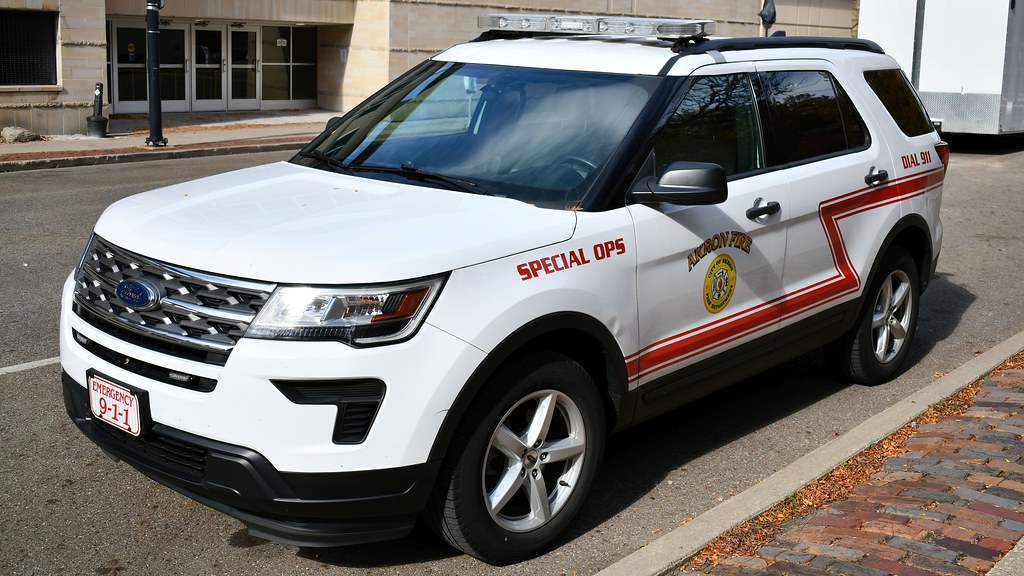
6. **Ford Explorer**Rounding out our list of aesthetically challenged Fords is another entry from the unfortunate trio mentioned in our context: the Ford Explorer. Like the Bronco II, the Explorer is also flagged for ‘deadliest defects in automotive history.’ While its sales figures certainly defied any aesthetic critique for many years, becoming an absolute sales juggernaut for Ford, our focus remains on the visual impact, or lack thereof, that places it on our ‘ugliest’ roster.
Early generations of the Explorer, particularly as it evolved from its Bronco II roots, retained a certain unrefined, almost agricultural aesthetic. They were designed for rugged utility, to haul families and gear, and often looked the part. Its design, while aiming for robustness and capability, frequently resulted in a somewhat generic, bulky appearance that lacked elegance or distinctive flair. It was the quintessential ‘everyman’ SUV, which sometimes meant it was also the ‘every-bland-man’ SUV.
As the Explorer evolved through various generations, its aesthetic journey often saw it chasing prevailing trends rather than setting them. This sometimes led to awkward compromises, such as overly rounded edges in one era or a heavy-handed application of design cues in another, all in an attempt to maintain its broad appeal. The visual result, in many instances, was a vehicle that, despite its immense popularity, never truly broke free from a certain aesthetic anonymity or outright clumsiness.
Ultimately, the Explorer’s design, especially in its earlier forms, could be perceived as a functional box on wheels, built to serve a purpose rather than to inspire. While incredibly successful in the market, its design often prioritized interior space and a commanding road presence over sleek lines or cohesive visual harmony. For a truly critical eye, the sheer ubiquity of the Explorer also meant that its design flaws became all the more apparent, a constant reminder that mass appeal doesn’t always equate to mass beauty.
Car Model Information: 2018 Ford Explorer Sport
Name: Ford Explorer
Caption: Sixth-generation Ford Explorer
Manufacturer: Ford Motor Company
Production: 1990–present
ModelYears: 1991–present
Class: unbulleted list
Chassis: unbulleted list
Predecessor: Ford Bronco II
Successor: Ford Territory (Australia)
Categories: 2000s cars, 2010s cars, 2020s cars, All-wheel-drive vehicles, All Wikipedia articles in need of updating
Summary: The Ford Explorer is a range of SUVs manufactured by the Ford Motor Company since the 1991 model year. The first five-door SUV produced by Ford, the Explorer, was introduced as a replacement for the three-door Bronco II. As with the Ford Ranger, the model line derives its name from a trim package previously offered on Ford F-Series pickup trucks. As of 2020, the Explorer became the best-selling SUV in the American market.
Currently in its sixth generation, the Explorer has featured a five-door wagon body style since its 1991 introduction. During the first two generations, the model line included a three-door wagon (directly replacing the Bronco II). The Ford Explorer Sport Trac is a crew-cab mid-size pickup derived from the second-generation Explorer. The fifth and sixth generations of the Explorer have been produced as the Ford Police Interceptor Utility (replacing both the Ford Crown Victoria Police Interceptor and the Ford Police Interceptor Sedan).
The Explorer is slotted between the Ford Edge and Ford Expedition within North America’s current Ford SUV range. The model line has undergone rebadging several times, with Mazda, Mercury, and Lincoln each selling derivative variants. Currently, Lincoln markets a luxury version of the Explorer as the Lincoln Aviator.
For the North American market, the first four generations of the Explorer were produced by Ford at its Louisville Assembly Plant (Louisville, Kentucky) and its now-closed St. Louis Assembly Plant (Hazelwood, Missouri). Ford currently assembles the Explorer alongside the Lincoln Aviator and the Police Interceptor Utility at its Chicago Assembly Plant (Chicago, Illinois).
Get more information about: Ford Explorer
Buying a high-performing used car >>>
Brand: Ford Model: Explorer
Price: $19,485 Mileage: 123,120 mi.
Read more about: Driving into Tomorrow: The 11 Best New SUVs & Crossovers Redefining the Road for 2025-2026
So there you have it, a candid and, dare we say, rather opinionated tour through some of the more visually challenging chapters in Ford’s illustrious history. From the Edsel’s ill-fated face-lift to the T-bird’s identity crisis, and from the utilitarian but aesthetically wanting Bronco II and Explorer, it’s clear that even giants occasionally stumble on the design runway. But that’s the beauty of the automotive world, isn’t it? For every timeless classic, there’s often a head-scratcher waiting to be dissected and, with a knowing wink, perhaps even celebrated for its sheer audacity to exist. These aren’t just ugly cars; they’re fascinating footnotes in the sprawling, sometimes chaotic, story of how cars come to be, and why, sometimes, they just don’t quite hit the mark. And honestly, isn’t that far more interesting than a world of perfect, indistinguishable vehicles?