Mariah Carey. Just the name conjures images of glitter, glamour, and a vocal range that defies gravity. She’s the “Songbird Supreme,” the “Queen of Christmas,” and frankly, a legend who has captivated the world with her undeniable talent and, let’s be real, her iconic “diva persona.” But what does it truly take to be Mariah? What kind of expectations does a global superstar, renowned for her unique style and unwavering vision, set for the world around her?
Forget everything you *think* you know about celebrity demands. We’re not just talking about fluffy towels or specific champagne (though we bet those are on the list too, somewhere!). We’re diving deep into the very fabric of Mariah Carey’s career and life, straight from the annals of her extensive biography, to uncover the “demands” that have truly defined her. These aren’t just whims; these are the non-negotiable assertions of an artist who has consistently pushed boundaries, taken control, and cemented her place as one of the most influential figures in music history.
So, buckle up, lambs! We’re about to unveil nine of the most outrageous — and utterly Mariah-esque — “demands” that showcase her incredible journey, her fierce independence, and the sheer audacity of a true icon. These are the moments where Mariah didn’t just ask; she *demanded* her space, her sound, and her narrative, reshaping the music industry one legendary step at a time.
1. **The Demand for Artistic Autonomy**Early in her illustrious career, Mariah Carey didn’t just sing the songs; she demanded to own her artistic vision, even if it meant clashing with her record label. After her second album, *Emotions*, didn’t quite hit the commercial highs of her debut, there was a clear shift. Her subsequent release, *Music Box*, was designed to be more adult contemporary and pop-friendly, but Mariah was already charting a course toward greater creative control.
This demand became particularly evident with her fifth studio album, *Daydream*. The context explicitly states that with *Daydream*, Carey “found her consolidating creative control over her career, leading to tensions with Columbia.” This wasn’t just about picking songs; it was about shaping her sound, her image, and her destiny. It was an audacious move for an artist tied to a major label, but Mariah wasn’t one to back down from asserting her creative identity.
This assertion of artistic autonomy was an “outrageous demand” because it challenged the conventional wisdom of record labels dictating an artist’s sound. It signaled that Mariah Carey was more than just a voice; she was a creative force with a clear vision for her music. Her determination to steer her own ship, even amidst “tensions with Columbia,” highlights an early, powerful demonstration of her unwavering resolve.
Read more about: Unlocking the Empire: Kendall Jenner’s Journey from Reality TV Star to Global Fashion & Business Mogul
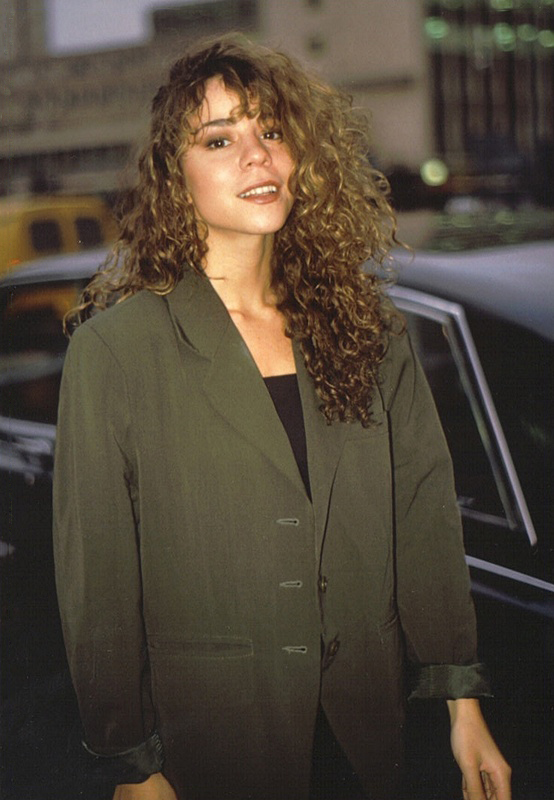
2. **The Demand for a Genre-Bending Sound**Why stick to one lane when you have a five-octave vocal range and a mind brimming with musical ideas? Mariah Carey didn’t just demand creative control; she demanded the freedom to *evolve* her sound, breaking free from the pop-balladry mold that first brought her fame. Her career is a testament to an artist constantly pushing musical boundaries, reflecting an “outrageous demand” for sonic exploration.
Following the *Daydream* era, Carey’s subsequent musical releases mirrored a significant trend: “Her music began relying less on pop and adult contemporary-tinged balladry and instead incorporating heavy elements of hip hop and R&B.” This wasn’t a subtle pivot; it was a full-blown embrace of new sounds. On her album *Butterfly*, she went all in, collaborating with a diverse roster of producers beyond her longtime partner Walter Afanasieff, bringing in heavyweights like Sean Combs, Q-Tip, and Missy Elliott.
This deliberate shift in musical style was a bold declaration, an “outrageous demand” to redefine what a pop superstar could be. It was a rejection of genre constraints and an embrace of a more diverse, urban sound that not only broadened her artistic palette but also influenced the entire music landscape. Mariah wasn’t just adapting to trends; she was setting them, demanding that her music reflect her evolving artistic sensibilities, irrespective of commercial expectations tied to her earlier success.
Read more about: Unveiling the Future: 8 Exhilarating Performance Machines Redefining Driving in 2026

3. **The Demand for a Liberated Image**Along with a fresh sound came an entirely new visual identity. Mariah Carey wasn’t afraid to shed her earlier innocent image, making an “outrageous demand” to present a more mature and overtly ual persona to the world. This transformation wasn’t just skin deep; it was a powerful statement of personal and artistic liberation.
This bold new direction was vividly captured in the music video for “Honey,” the lead single from her *Butterfly* album. Notably, this was “her first since separating from Mottola,” a personal and professional break that clearly empowered her. The video didn’t just feature a new look; it “introduced a more overtly ual image,” signaling a deliberate and confident step into a new phase of her public persona.
For a superstar whose early career was carefully curated, this shift was nothing short of an “outrageous demand” for self-expression. It showcased Mariah taking full ownership of her sensuality and confidence, moving away from previous constraints. This visual overhaul wasn’t just for shock value; it was an integral part of her artistic evolution, demanding that the world see her as the multifaceted woman she was becoming, both inside and out.
Read more about: The $22.5 Billion Vision: How Ramp’s Single Idea Redefined Corporate Finance and Launched an A-List Enterprise
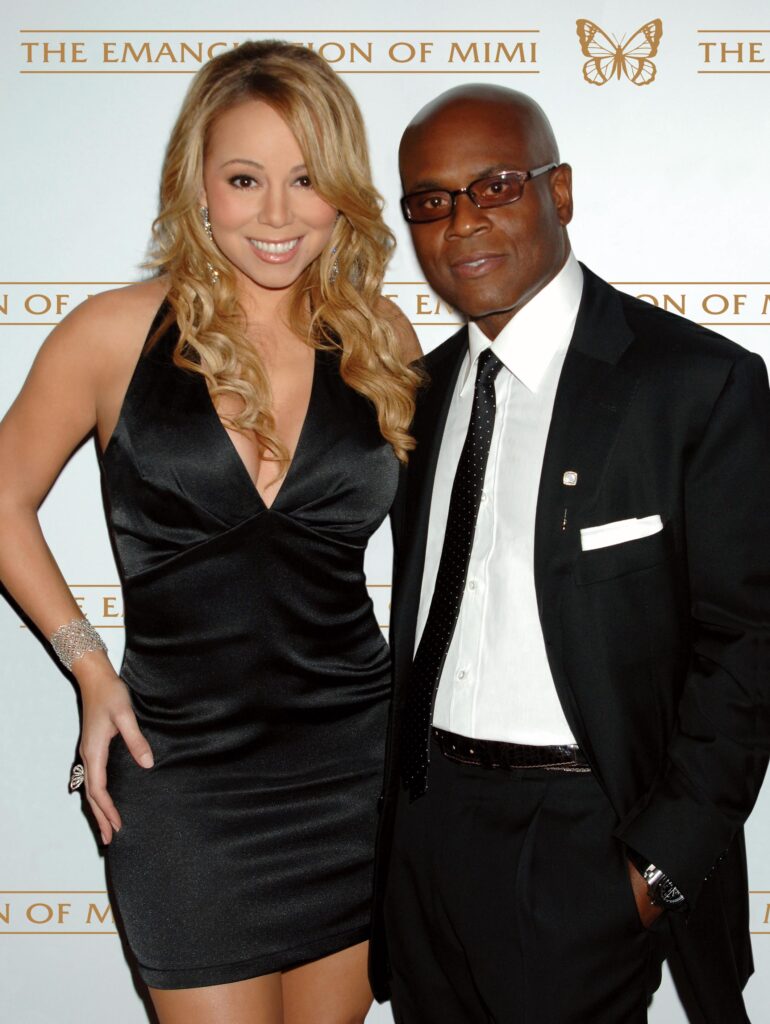
4. **The Demand for Professional Freedom**Imagine being at the peak of your career, yet feeling constrained by your professional ties, especially when those ties are linked to a past personal relationship. Mariah Carey faced this exact scenario, and her response was an “outrageous demand” for complete professional freedom, even if it meant working at an unprecedented pace to achieve it.
As her contract with Sony neared its end, Mariah’s desire to sever professional ties with the record label – which her ex-husband still headed – became paramount. The context details her determination: “With only one album left to fulfill her contract with Sony, and with a desire to separate herself professionally from the record label her ex-husband still headed, Carey completed the album in three months in mid-1999.” This incredible turnaround time for her album *Rainbow* was a clear manifestation of her urgent need for independence.
This intense focus and rapid production schedule were an “outrageous demand” on herself and her team, all driven by a singular goal: to escape a situation that no longer served her artistic or personal well-being. It wasn’t just about making another album; it was about reclaiming her agency and demonstrating an unwavering resolve to control her destiny, regardless of the personal and professional hurdles in her path.
Read more about: Hollywood Hissy Fits: These Blockbuster Stars Had MAJOR On-Set Drama (And You Won’t Believe Who Was Involved!)

5. **The Demand for Fan Solidarity**When battling a powerful record label, what’s a diva to do? Mariah Carey made an “outrageous demand” directly to her loyal fanbase: rally around her and help her assert her will against corporate powers. This wasn’t a typical promotional strategy; it was a direct call to arms, showcasing her innovative (and slightly rebellious) approach to navigating industry tensions.
During the tumultuous period surrounding her *Rainbow* album, Mariah’s relationship with Columbia Records grew increasingly strained, described as “fractious.” Instead of keeping the dispute behind closed doors, she took an unconventional route. She “began posting messages on her website, sharing inside information with fans on the dispute, as well as instructing them to request ‘Can’t Take That Away (Mariah’s Theme)’ on radio stations.”
This direct appeal to her fans was an “outrageous demand” for their active participation in her career battles. It bypassed traditional PR channels and empowered her fanbase, affectionately known as the “lambs,” to become advocates for her artistic vision. In an era before pervasive social media, Mariah was ahead of her time, using her platform to mobilize her supporters and demand that her music be heard on her terms, demonstrating a savvy and defiant spirit.
Okay, lambs, if you thought Mariah’s journey so far was just about hitting those whistle notes, you’re about to see how she applied that same unparalleled power to every aspect of her career and personal narrative. We’ve already seen her demand artistic freedom and fan loyalty, but now we’re peeling back another layer to reveal how Mariah Carey asserted her independence, controlled her story, and fiercely pursued her market value, all while keeping that iconic diva sparkle intact. Get ready for four more “outrageous demands” that only the Queen of Christmas herself could pull off!
Read more about: The ’90s Unleashed: 10 Era-Defining Trends That Secretly Forged Tomorrow’s Stars

6. **The Demand for Her Worth: The Multi-Million Dollar Maneuvers**Imagine being at the absolute zenith of your career, having just been crowned Billboard’s Artist of the Decade and the World Music Award’s Best-Selling Pop Female Artist of the Millennium. What’s the next logical step for a superstar of Mariah Carey’s caliber? Demanding her undeniable market value, of course! After parting ways with Columbia Records, a monumental move in itself, Mariah was ready to set a new standard for celebrity contracts, showcasing her unyielding belief in her own financial and artistic power.
In April 2001, Mariah signed an unprecedented $80 million five-album recording contract with Virgin Records (EMI Records). This wasn’t just a big deal; it was a jaw-dropping declaration of her worth in the music industry, a move that loudly broadcasted: “I am Mariah Carey, and this is what I command!” Such a massive deal underscored her status as a global icon, affirming that her talent and influence were valued at an astronomical figure, a clear assertion of her unwavering pursuit of market value and professional accountability.
However, even a queen can have a momentary stumble, and when her *Glitter* project faced commercial challenges, Mariah didn’t wallow. Instead, she executed another audacious demand for professional accountability, forcing Virgin Records to buy out her contract for a cool $28 million. Think about that for a second: she secured a buyout that most artists could only dream of, effectively demanding that the label acknowledge their investment and her enduring worth, even when things didn’t go according to plan. It was a strategic, no-nonsense power play.
Not one to stay sidelined, Mariah swiftly inked another deal, this time with Island Records, valued at more than $24 million. She simultaneously launched her own record label, MonarC, further cementing her independence and control. This rapid succession of lucrative contracts and entrepreneurial ventures wasn’t mere luck; it was Mariah consistently demanding, and receiving, what she believed she was worth, proving that even after setbacks, her star power and business acumen were non-negotiable.

7. **The Demand for Unfiltered Artistic Vision: The *Glitter* Saga**Every artist dreams of full creative freedom, but few ever truly achieve it, especially at the level of a global superstar. Yet, Mariah Carey, ever the trailblazer, made an “outrageous demand” for complete conceptual and creative control over her film and soundtrack project, *Glitter*. This wasn’t just about making music; it was about shaping an entire artistic narrative, from the sound to the visual aesthetic, set against the backdrop of a 1980s post-disco era.
This demand for unfettered artistic vision was deeply personal for Mariah. She had previously stated that Columbia had regarded her as a “commodity,” feeling stifled by a label system where her separation from Tommy Mottola only exacerbated tensions. *Glitter* was her opportunity to break free from those shackles, to assert her unique perspective, and to prove that she was the master of her own creative destiny, regardless of external pressures or commercial expectations.
Being given “full conceptual and creative control” was a powerful assertion of independence, allowing Mariah to fully immerse herself in recreating a specific musical era and tell a story entirely on her terms. It highlighted her unyielding desire to control her narrative, to present a vision that was authentically hers, free from the compromises she felt had defined parts of her earlier career. This was an artistic statement, a demand for her voice to be heard without filter.
While *Glitter* ultimately faced commercial difficulties and critical panning, the sheer act of demanding and securing such extensive creative control remains a testament to Mariah’s resolve. It underscores her unwavering pursuit of artistic authenticity, demonstrating that for her, the integrity of her vision was paramount, an “outrageous demand” that prioritized her artistic soul above all else, even if the outcome wasn’t what she, or anyone, hoped for. It was a bold swing, and you’ve got to admire the courage behind it.
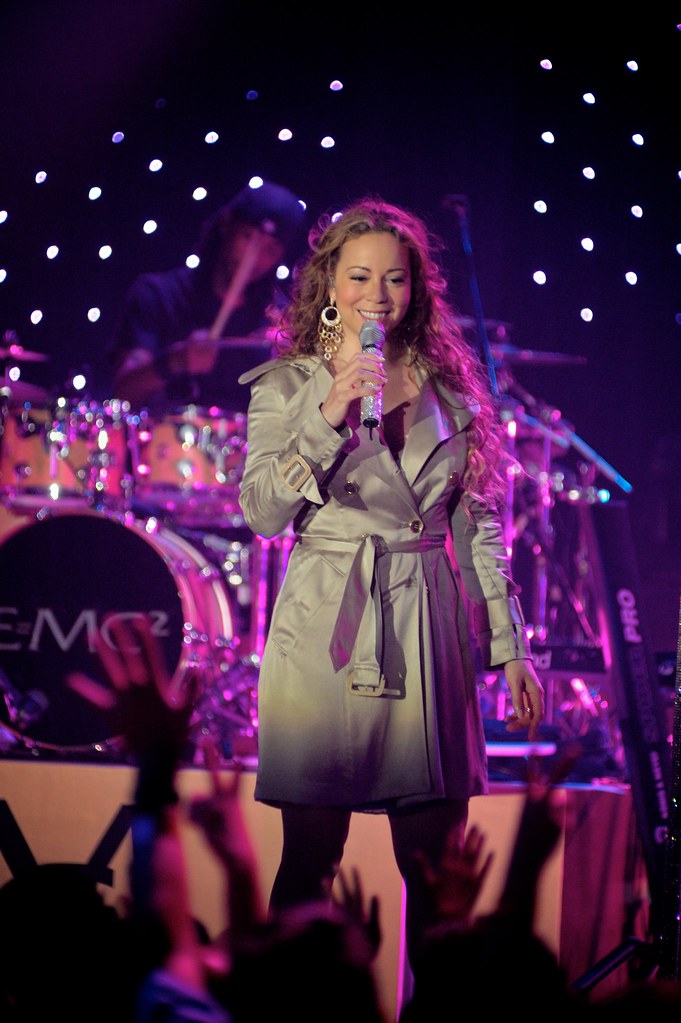
8. **The Demand for an Epic Comeback: The Emancipation of the Queen**After a period of career turbulence, including the commercial struggles of *Glitter* and the mixed reception to *Charmbracelet*, many critics and industry watchers began to speculate about Mariah Carey’s future. There were even unflattering remarks, with some describing her voice as “shot, sounding in tatters throughout the record.” But to doubt Mariah Carey is to underestimate the power of a true icon’s “outrageous demand” for resurgence and reign.
Enter 2005, and with it, *The Emancipation of Mimi*. This wasn’t just another album; it was a carefully orchestrated, powerful declaration of her return to form. Collaborating with heavy-hitters like the Neptunes, Kanye West, and Jermaine Dupri, Mariah crafted what she described as “very much like a party record.” It was a deliberate, strategic demand to reclaim her throne and remind everyone why she was, and always would be, the “Songbird Supreme.”
The album’s second single, “We Belong Together,” became an instant sensation and, critically, a “career re-defining” moment. Music critics heralded it as her “return to form” and, thrillingly, the “return of The Voice.” The song shattered records, becoming her sixteenth chart-topper on the Billboard Hot 100 and the second-longest-running number one song in US chart history at the time. Billboard even declared it the “song of the decade,” an undeniable testament to Mariah’s ability to demand, and achieve, unparalleled success.
*The Emancipation of Mimi* wasn’t just a critical darling; it was a commercial juggernaut, becoming 2005’s best-selling album in the United States and selling over 12 million copies worldwide. It was her first number-one album since *Butterfly* (1997), solidifying her comeback as one of the most successful in music history. This album was Mariah’s grandest demand yet: a powerful assertion of her enduring talent, her unwavering professional accountability to her artistry, and her absolute control over her narrative as a living legend.
From demanding creative autonomy and multi-million dollar contracts to prioritizing her well-being and orchestrating monumental comebacks, Mariah Carey’s career is a masterclass in asserting her power. These “outrageous demands” aren’t just celebrity whims; they are the strategic, bold, and utterly Mariah-esque moves of an artist who has consistently defined her own terms, cementing her status as an influential, independent, and unforgettable icon. Long live the Queen, indeed!