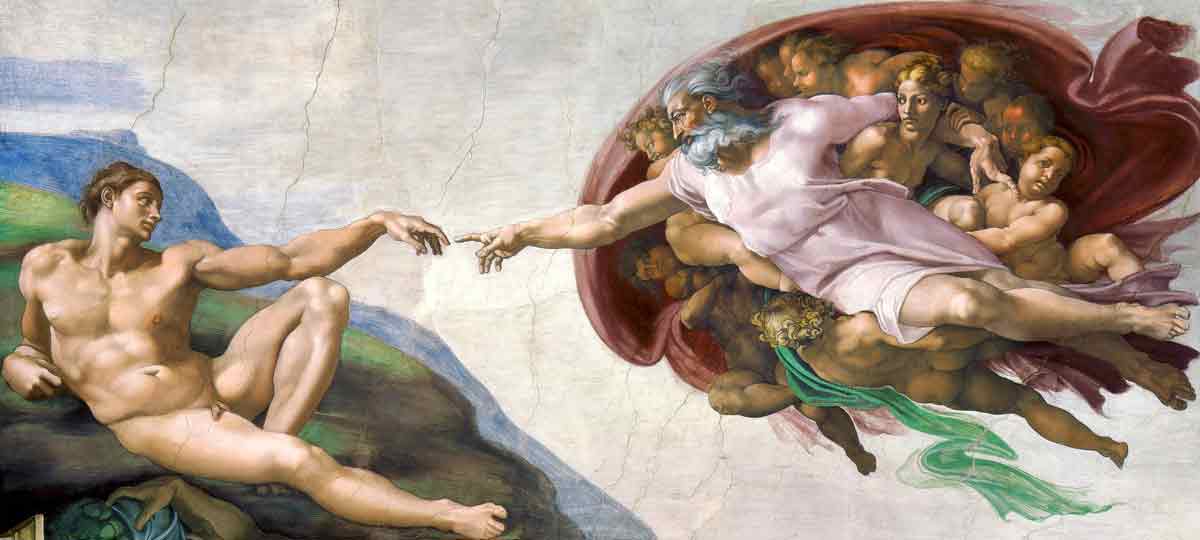

In the sprawling tapestry of human belief, certain figures emerge with such indelible clarity that they seem to embody the very essence of our collective story. Among these, Adam stands as arguably the most enduring and universally recognized ‘character’ in the drama of humanity’s origins. Far from being confined to a single narrative, the figure of Adam has permeated, informed, and transformed a vast array of religious traditions, consistently playing a foundational role in defining what it means to be human, to sin, and to seek redemption. It’s a testament to the power of archetypes that this ancient figure continues to resonate with such profound significance.
Indeed, the concept of Adam isn’t a static portrait; it’s a dynamic, evolving archetype, interpreted and reinterpreted through the lenses of Judaism, Christianity, Islam, and various esoteric traditions. This enduring presence, a constant in the ever-shifting landscape of faith and philosophy, allows us to consider Adam not just as a historical or mythical personage, but as a recurring ‘character’ whose fundamental narrative arc—creation, temptation, fall, and the subsequent implications for all humanity—is re-staged across different belief systems. Each tradition, while stemming from a common root, offers its own unique script for Adam, revealing layers of meaning that continue to shape our understanding of existence.
So, prepare for an insightful journey into the genesis of the human story, as we peel back the layers of tradition and scholarship to uncover the various facets of Adam. We’ll explore how this singular figure, born of dust and breathed into life, became the ultimate recurring character, a powerful symbol of our origins, our moral dilemmas, and our deepest aspirations across millennia. His story, told and retold, reveals not just theological truths but also the complex, often contradictory, nature of the human condition itself.
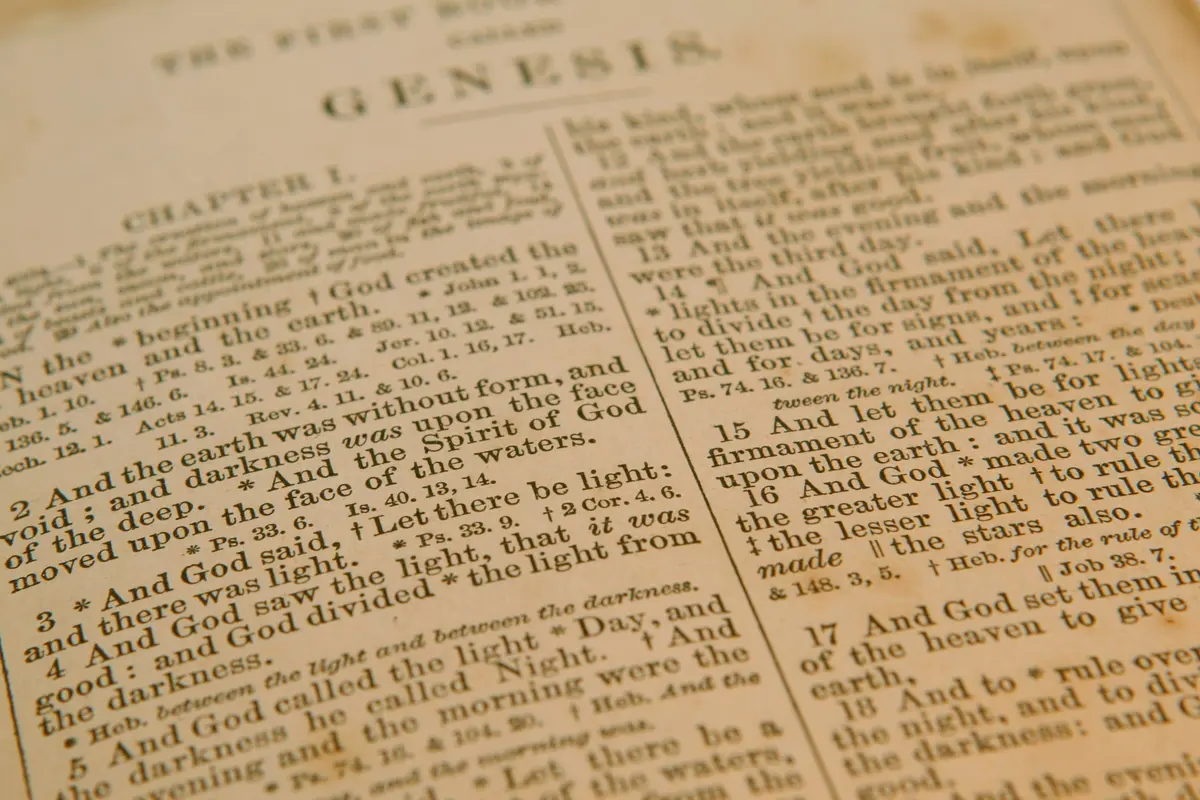
1. **The Genesis Narrative: Adam’s Initial Account in the Hebrew Bible**To understand Adam, one must inevitably begin with the foundational accounts found within the Hebrew Bible, specifically in chapters 1–5 of the Book of Genesis. These texts provide the bedrock for subsequent theological and mythical elaborations across numerous faiths. Interestingly, the Bible presents not one, but two distinct, albeit complementary, narratives of Adam’s creation, reflecting different compositional traditions that scholars have identified over time.
The Priestly (P) history, generally dated to the 5th or 6th century BCE, offers a panoramic view in Genesis 1:1–2:4. In this account, God, on the sixth day of Creation, brings forth all living creatures and, notably, creates humankind “in his own image,” comprising both “male and female.” This version emphasizes a collective creation, where God blesses the couple, commanding them to “be fruitful and multiply,” and bestowing upon them dominion over all other living things. It’s a grand, ordered vision of creation where humanity is given a regal mandate.
Conversely, the lengthier Yahwist (J) narrative, traditionally placed around the 10th century BCE, delves into a more intimate and anthropomorphic portrayal in Genesis 2:5–7, 2:15–4:1, and 4:25. Here, God, or Yahweh, forms Adam individually from “the dust of the ground” and breathes “into his nostrils the breath of life,” transforming inert matter into a living soul. This account personalizes Adam’s existence, placing him in the Garden of Eden with specific instructions and the subsequent creation of Eve, setting the stage for the dramatic events that define his legacy.
While the final text of Genesis is widely considered by scholars to date from the Persian period (5th century BCE), there’s a significant scholarly debate regarding the earlier chapters. A “sizeable minority” of scholars suggests that Genesis 1–11, which includes the Adam narratives, may have been composed much later than the chapters that follow, possibly in the 3rd century BCE, due to the absence of its characters and incidents in the rest of the Hebrew Bible. This ongoing discussion underscores the complex layering of ancient traditions that contribute to the rich and multifaceted portrayal of Adam we encounter today.
2. **The Multifaceted Name: ‘Adam’ as Mankind, Human, and Male Individual**The very name “Adam” in the Hebrew Bible is far from a simple designation; it carries a profound semantic richness that mirrors the complexity of the figure himself. The Hebrew word אָדָם (‘adam) serves multiple functions, transcending the role of a proper noun to encompass broader concepts of humanity, an individual person, and even gender specificity. This linguistic versatility is a cornerstone of his archetypal significance.
Collectively, ‘adam’ is used to denote “mankind” or “humankind,” as seen in Genesis 1:27, where “God created man in his own image, in the image of God created he him; male and female created he them.” This initial usage establishes Adam as a representative figure, embodying the entirety of human existence from the moment of creation. It’s a powerful statement about shared origin and destiny, tying every person back to this primordial entity.
As the narrative progresses, ‘adam’ also takes on the specific meaning of an individual “man.” Genesis 2:7 marks the first instance where “Adam” refers to a singular male human: “And the Lord God formed man of the dust of the ground, and breathed into his nostrils the breath of life; and man became a living soul.” This transition from collective to individual highlights Adam’s unique position as the first among many, the pioneer of the human experience. The context of is notably absent in this initial individual framing.
Furthermore, the word is used in a gender-nonspecific sense to refer to “man and woman” in Genesis 5:1–2, yet simultaneously can denote the “male” as distinguished from the female, as found in Genesis 2:23–24. This fluid usage creates a captivating literary dynamic, as “the interplay between the individual ‘Adam’ and the collective ‘humankind’ is a main literary component to the events that occur in the Garden of Eden.” This ambiguity reflects “the complexity of the human condition,” suggesting that Adam’s story is both uniquely his own and universally ours. The text carefully avoids specifying a particular country from which the dust was taken, reinforcing the idea that Adam is identified with humankind rather than any specific nationality, a belief echoed by rabbis who suggested the dust came from all over the earth to prevent any one group from claiming ancestral superiority.

3. **Dust to Dust: Adam’s Profound Connection to the Earth**A recurring and deeply poignant literary motif woven throughout the Adam narrative is the intimate and unbreakable bond between Adam and the earth, often referred to as ‘adamah’ in Hebrew. This connection is fundamental to Adam’s identity, establishing him not just as a creation of God, but as intrinsically linked to the very ground from which he sprang. It grounds his spiritual journey in a physical reality.
The creation account in Genesis 2:7 vividly illustrates this bond: God creates Adam by molding him “out of the dust of the ground” in the final stages of the creation narrative. This act of forming evokes the careful work of a potter, shaping an exquisite piece of art from raw earth. The breath of life then transforms this earthen vessel, but the earthy origin remains a core component of his being, a constant reminder of his humble beginnings and his physical nature.
This connection becomes tragically pronounced after the Fall. As punishment for his disobedience, God curses Adam and the earth itself. Adam is condemned to “labour on the earth for his food and and to return to it on his death,” as stated in Genesis 3:19. This pronouncement isn’t merely a punishment; it’s a reaffirmation of his earthly composition and his ultimate destiny. From dust he came, and to dust he shall return, solidifying the cycle of life and death.
This “earthly” aspect is an undeniable component of Adam’s identity, and his subsequent “curse of estrangement from the earth seems to describe humankind’s divided nature of being earthly yet separated from nature.” This separation after the Fall highlights a fundamental tension within the human condition: we are part of the natural world, yet also set apart from it, burdened by consciousness and moral choice. The chiastic structure of the death oracle given to Adam in Genesis 3:19—”A you return B to the ground C since (kî ) from it you were taken C’ for (kî ) dust you are B’ and to dust A’ you will return”—powerfully links his creation from “dust” to the “return” of his beginnings, emphasizing the inescapable nature of this bond.
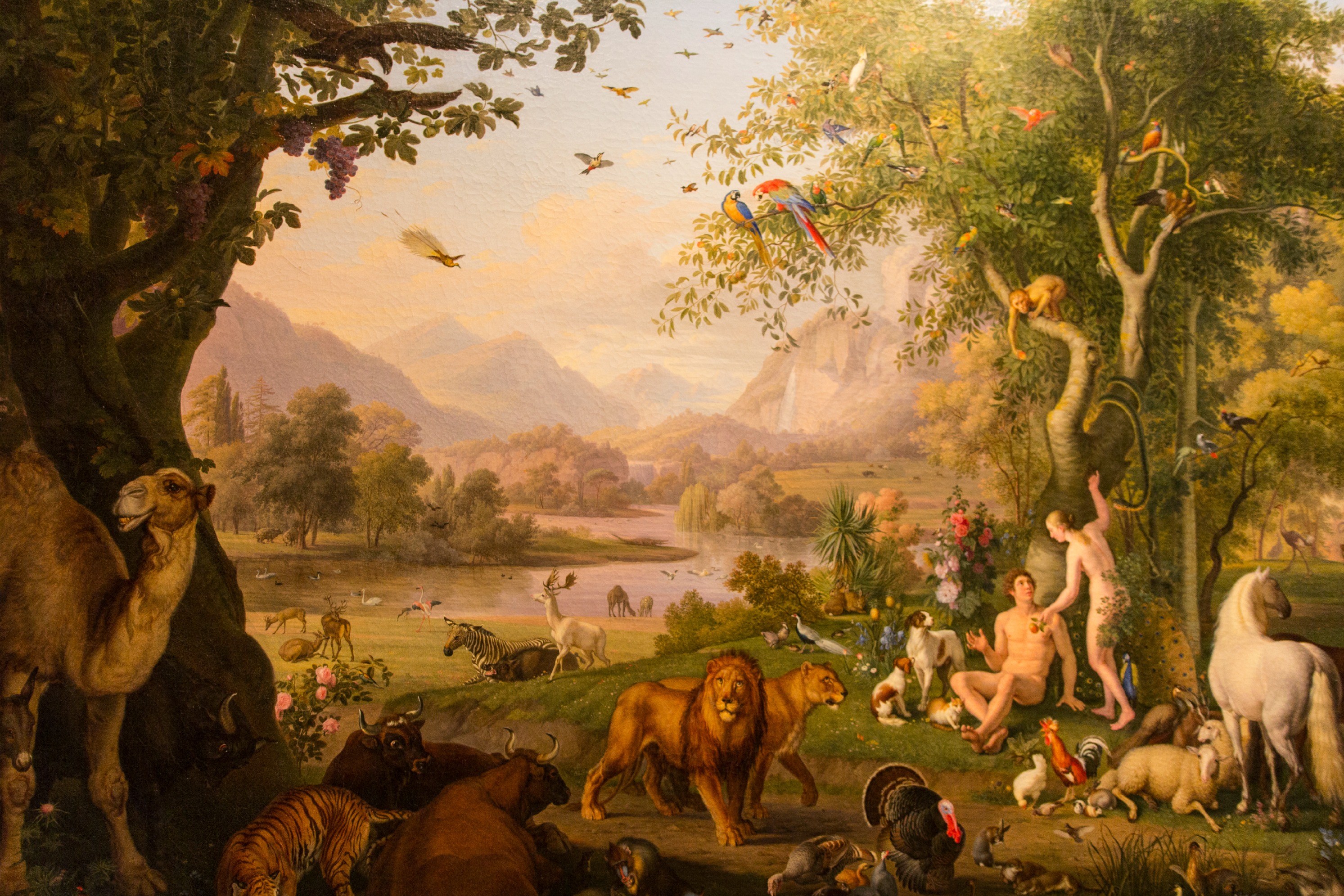
4. **Creation and Companionship: Adam in the Garden of Eden**The Garden of Eden serves as the pristine, initial stage for Adam’s existence, a paradisiacal setting where humanity first experienced unburdened life and direct communion with its creator. This period, detailed predominantly in Genesis 2, highlights not only Adam’s unique creation but also God’s deliberate provision for his well-being, including the vital aspect of companionship.
Following his formation from the earth’s dust and the divine breath that infused him with life, Adam is placed by God in this idyllic garden. Here, he is given a clear directive: to tend to and keep the garden. Crucially, a specific commandment is issued regarding the “tree of the knowledge of good and evil.” God explicitly warns him, saying, “Of every tree of the garden thou mayest freely eat: But of the tree of the knowledge of good and evil, thou shalt not eat of it: for in the day that thou eatest thereof thou shalt surely die” (Genesis 2:16–17). This command establishes the boundaries of Adam’s freedom and introduces the concept of choice with profound consequences.
Despite the beauty and bounty of Eden, God observes a fundamental incompleteness in Adam’s solitary state, declaring, “It is not good that the man should be alone” (Genesis 2:18). This divine insight underscores a core human need for connection and partnership. To address this, God brings all the animals to Adam, who diligently gives them their names, an act that signifies his dominion and intellectual capacity. Yet, among all these creatures, “there was not found a companion for him” (Genesis 2:20) who was truly suitable, reinforcing the uniqueness of human need for a relational equal.
The culmination of God’s provision for Adam’s companionship is the creation of Eve. God causes a “deep sleep to fall upon Adam” and, in an act of profound intimacy and connection, forms a woman from his rib (Genesis 2:21–22). Upon waking, Adam recognizes her as his destined partner, exclaiming, “This is now bone of my bones, and flesh of my flesh: she shall be called Woman, because she was taken out of Man” (Genesis 2:23). This narrative beautifully establishes the “identity of nature and oneness of origin” between man and woman, illustrating a period of shared innocence before the advent of sin.
5. **The Fateful Choice: Adam’s Transgression and the Fall**The blissful innocence of Eden, however, was not destined to last. Genesis 3 recounts the pivotal event known as the Fall, a moment of profound disobedience that irrevocably altered the course of human history and Adam’s relationship with both God and creation. This narrative isn’t merely a cautionary tale; it’s the genesis of many theological concepts across Abrahamic faiths.
The catalyst for this dramatic shift is the serpent, a figure of cunning and deception, who approaches the woman, Eve. It persuades her to disobey God’s explicit command and eat from the tree of knowledge, promising wisdom and god-like understanding rather than the threatened death. Eve yields to the temptation, partakes of the forbidden fruit, and subsequently convinces Adam to do likewise. This act of shared disobedience marks the end of their innocent existence.
Immediately after eating the fruit, a profound change occurs: “they become conscious of their ness, cover themselves, and hide from the sight of God.” This newfound awareness and shame signal the loss of their original innocence. God, walking in the garden, confronts Adam, who, when questioned, famously blames the woman, stating, “The woman whom thou gavest to be with me, she gave me of the tree, and I did eat.” This deflection underscores the immediate fracturing of relationships – between humanity and God, and between man and woman.
God then pronounces judgment, beginning with the serpent, condemning it “to go on his belly.” The woman is cursed with “pain in childbirth and subordination to her husband.” Finally, Adam is condemned to “labour on the earth for his food and to return to it on his death,” a harsh existence of toil and sweat. To prevent them from eating from the Tree of Life and thus becoming immortal in their fallen state, “God then expels the man and woman from the garden.” This expulsion from paradise, according to Christian theology, is the act that “introduced death and sin into the world,” inaugurating a new, fallen epoch for all humanity.
6. **Beyond Eden: Adam’s Descendants and the Path of Humanity**Expulsion from the Garden of Eden marked a profound transition for Adam and Eve, moving them from a state of pristine innocence into the harsh realities of a cursed earth. Yet, their story did not end there; it continued through their progeny, laying the groundwork for the entirety of human civilization and the complex tapestry of family dynamics. The narratives in Genesis 4 and 5 illuminate the immediate aftermath of the Fall and the nascent stages of humanity’s expansion.
Genesis 4 immediately deals with the birth of Adam’s first two sons, Cain and Abel. This chapter introduces the tragic narrative of the first murder, wherein Cain, a tiller of the ground, out of envy and resentment over God’s favor towards Abel’s offering as a keeper of sheep, kills his brother. This fratricide further underscores the deep-seated impact of sin that had entered the world through Adam and Eve’s disobedience, manifesting in violence and discord within the very first family.
Following the sorrow of Abel’s death and Cain’s banishment, Adam and Eve receive a measure of solace with the birth of a third son, Seth. Seth is presented as a replacement for Abel, and through him, the narrative continues the lineage of humanity. Genesis 5, famously known as the “Book of the Generations of Adam,” meticulously lists the descendants from Seth all the way to Noah. This genealogical account isn’t just a dry list of names; it serves as a vital bridge, connecting Adam directly to the figures who would shape the earliest epochs of biblical history.
This chapter also provides numerical details that speak to the long lifespans of early humanity, noting that “Adam lives 930 years.” Furthermore, it mentions his age at the birth of Seth, his third son. Significantly, the text acknowledges that Adam had “other sons and daughters after Seth,” though it refrains from naming them. This detail is important, implying a growing family and the rapid proliferation of humankind beyond the named patriarchs. It effectively conveys that Adam and Eve, despite their fall, fulfilled the initial divine command to “be fruitful and multiply,” thus initiating the human race that would spread across the earth.

7. **Rabbinic Insights: Adam’s Mystical Body and Soul in Jewish Traditions**Beyond the literal biblical accounts, Jewish traditions, particularly through midrash and rabbinic literature, delve into richer, more mystical interpretations of Adam’s creation and being. These post-Biblical insights offer profound reflections on Adam’s physical composition, the divine essence of his soul, and the inherent glory he possessed before the Fall, painting a picture far more nuanced than the scriptural text alone.
Louis Ginzberg, a prominent scholar of Jewish legends, retells a fascinating midrash concerning Adam’s body. According to this tradition, God meticulously gathered dust not from one location, but “from all four corners of the earth.” This act underscored Adam’s universal nature, ensuring no single people could claim their ancestry as superior. Each color of dust—red for blood, black for bowels, white for bones and veins, and green for pale skin—contributed to his complex physicality, symbolizing the diverse elements that constitute human life.
Even more profoundly, Jewish literature posits that Adam’s soul was the direct “image of God.” This concept elevates Adam beyond mere flesh and blood, attributing to him a spiritual likeness to the divine. The midrash elaborates on this parallel, stating, “as God fills the world, so the soul fills the human body: ‘as God sees all things, and is seen by none, so the soul sees, but cannot be seen; as God guides the world, so the soul guides the body; as God in His holiness is pure, so is the soul; and as God dwells in secret, so doth the soul.'” This intricate comparison draws a direct line between the divine attributes and the inherent qualities of the human soul, highlighting Adam’s elevated status as the first being aware of God.
Adding another layer to this mystical portrayal, Jewish literature asserts that Adam possessed a “body of light,” a luminous form “identical to the light created by God on the first day.” This incandescent physicality spoke to his original glory and purity, a state of profound connection to the divine light itself. The tradition maintains that this “original glory of Adam can be regained through mystical contemplation of God,” suggesting a path to spiritual restoration. Such was his initial splendor that rabbis even speculated, with a touch of poetic hyperbole, that “the glory of Adam’s heel outshone the sun,” emphasizing his unparalleled radiance before sin dimmed his light.

8. **Jewish Lore’s Intricate Dance: Eve, Lilith, and Adam’s Complex Origins**Stepping beyond the immediate biblical accounts, Jewish midrash and rabbinic literature unveil an even more intricate tapestry of creation, particularly concerning Adam’s companions. The apparent discrepancy between Genesis 1, speaking of man and woman created simultaneously, and Genesis 2, detailing Eve’s individual formation, prompted fascinating elaborations. This intellectual wrestling offers profound commentary on primordial male-female dynamics and the very nature of partnership, reminding us that ancient texts often invite layers of imaginative interpretation beyond their surface.
One of the most compelling narratives born from this tension introduces Lilith. According to rabbinic lore, God initially created Lilith from the same dust as Adam, intended as his equal and first wife. However, their union was fraught with discord. Lilith, asserting her co-equal creation, famously refused to “lie under him,” insisting that Adam should lie under her. This radical demand for equality led to an irreconcilable clash, culminating in Lilith’s dramatic flight from Eden, leaving Adam in solitude and paving the way for Eve’s creation from his rib. This narrative, greatly developed through Aggadic midrashim, the Zohar, and Jewish mysticism, serves as a powerful counter-narrative to the conventionally accepted genesis of Eve.
Jewish tradition also casts Eve’s role in the Fall in a distinct light, emphasizing her heightened culpability while presenting Adam’s own failings. It is said the serpent approached Eve, rather than Adam, because Adam had received God’s commandment directly, while Eve had only heard his report, potentially making her more susceptible. Upon tasting the forbidden fruit, Eve, instantly aware of her impending doom, believed it “better she trick Adam into eating so that he too would die, and not take another woman in her place.” Yet, when Adam did eat and blamed Eve, God’s rebuke was clear: “Adam as a man should not have obeyed his wife, for he is the head, not her,” highlighting Adam’s lapse in leadership.
Even Adam and Eve’s post-Edenic life is imbued with unique traditional insights. After their expulsion, Adam reportedly withdrew from Eve for 130 years, during which both were said to have “had with demons.” Eventually, they reunited, leading to the birth of Seth. The Book of Jubilees expands on their family, naming daughters Awân and Azura, along with “nine other sons,” explaining how Cain married Awân and Seth married Azûrâ, accounting for humanity’s spread. Later Jewish literature even portrays Adam repenting his sin in exile, a penance that ultimately earned him the reward of being “transported to the heavenly paradise.”

9. **The Weight of Genesis: Christianity’s Doctrine of Original Sin**For many, the figure of Adam is inextricably linked to one of Christianity’s most foundational and debated doctrines: Original Sin. This concept, largely absent in Judaism and Islam, posits that Adam’s disobedience in Eden had catastrophic, far-reaching consequences, introducing not just death but also a pervasive sinful nature into the world—an inheritance passed down through all humanity. It’s a theological linchpin that fundamentally reshaped the understanding of human nature and the necessity of divine intervention, marking a radical departure in Abrahamic thought.
The Apostle Paul is credited with introducing this pivotal idea into Christian theology, drawing upon Hellenistic Jewish philosophy. For Paul, Adam’s sin indeed “introduced death and sin into the world,” portraying sin as a formidable “power to which all humans are subject.” However, Paul’s formulation held a crucial nuance: while humanity was universally impacted, Christ’s coming offered redemption, restoring the righteous to the “Paradise from which Adam’s sin had banished mankind.” Critically, Paul “did not conceive of this original sin of Adam as being biologically transmitted or that later generations were to be punished for the deeds of a remote ancestor,” emphasizing a universal human predicament requiring universal grace. Adam, in this view, served as “a type of the one who was to come,” establishing a profound parallel between his initiation of human life and Christ’s initiation of humanity’s new life.
It was Augustine, the influential early Christian theologian, who took the concept of original sin a significant step further, solidifying its place in Western Christian thought. Working within the biological understandings of the ancient world—which believed male sperm contained the entire unborn baby—Augustine controversially “located sin itself in male semen.” He argued that when Adam and Eve ate the forbidden fruit and became ashamed, they covered their genitals, thereby “identifying the place from which the first sin was passed on to all succeeding generations.” In this rigorous interpretation, only Jesus Christ, conceived without human semen, could be “free of the stain passed down from Adam,” establishing a unique exemption central to Christian soteriology.
This Augustinian formulation became profoundly influential, underpinning much of later Christian theology, emphasizing humanity’s inherent sinfulness and need for grace. The idea that “humankind has been held captive since the Fall of Adam and Eve” became a dominant paradigm. However, it’s important to note that this specific doctrine, while based on Pauline scripture, “has not been accepted by a number of Christian sects and interpreters,” particularly among those who view the Eden narrative “less a fact and more a metaphor.” Even the symbolic burial place of Adam was adapted; early Christians moved his traditional burial from Solomon’s Temple to Golgotha, linking Adam’s sin and death directly to Christ’s sacrifice, portraying Jesus as the new Adam who reverses the original fall.

10. **Adam in Islam: The First Prophet and Khalīfa of Earth**In the expansive universe of Islamic theology, Adam is far more than just the first man; he is revered as Allah’s chosen “Khalīfa” (successor or deputy) on Earth and the inaugural prophet of Islam. His story, as recounted in the Qur’an and Islamic traditions, shares fundamental similarities with the biblical narrative but diverges significantly in its theological implications, particularly concerning the nature of his “sin” and its consequences. This unique perspective underscores a profound emphasis on individual responsibility, repentance, and Allah’s boundless mercy.
The Islamic creation myth begins with Allah meticulously forming Adam “from a handful of earth taken from the entire world,” a beautiful detail explaining the diverse skin colors of all peoples. From this earthly vessel, Adam was infused with a soul and exalted with such profound “knowledge that the angels were commanded to prostrate themselves before him.” This act of prostration, withheld by Iblīs (Satan) out of arrogance, highlights Adam’s superior status and humanity’s inherent dignity. When Allah informed the angels of His intention to create a “vicegerent (khalifa) on Earth,” and they questioned whether it would spread “corruption and bloodshed,” Allah responded: “I know what you know not” (Qur’an 2:30), signaling Adam’s unique and divine appointment.
Crucially, unlike the Christian doctrine of original sin, Islamic teachings emphasize that Adam’s transgression in the Garden was his sin alone, and “did not make all men sinners.” Both Adam and his “wife” (traditionally identified as Eve) “ate from the Tree of Immortality… despite Allah’s warnings,” and “both shared guilt equally.” The Qur’an unequivocally states that “Eve neither tempted Adam or ate before him; nor is Eve to blame for the pain of childbirth, for God never punishes one person for the sins of another.” This radical departure places individual accountability at the forefront. Furthermore, the Shia school of Islam offers an even more nuanced interpretation, suggesting their action “was not a sin,” as “obedience and disobedience are possible only on Earth, and not in heaven.”
Following their expulsion, both Adam and his wife deeply repented, and in a profound demonstration of divine mercy, “he is forgiven by God.” This act of repentance and forgiveness is presented as crucial “guidance for human-life, who sin, become aware of their mistake, and repent.” Traditional Islamic narratives, like Qisas al-Anbiya, embellish Adam’s earthly journey, recounting his descent onto “Adam’s Peak located in central Sri Lanka.” From there, he was guided to Mecca, where he repented, was forgiven, and is credited with building the “first Sanctuary (the Kaabah)” and being taught the ritual of the Hajj. The Ahmadiyya sect offers a unique perspective, positing that Adam “was not the first human being on earth,” but rather a prophet sent to different civilizations when humanity had evolved to receive revelation. In Islamic traditions (ahadith), Adam is revered with the honorary name “Adam-al-Safi,” meaning “Adam, The Chosen One” by Allah.
11. **Gnosticism’s Adam: A Soul Imprisoned, a Divine Spark Awakened**Gnostic belief systems offer a starkly different, often counter-intuitive, perspective on Adam, veering sharply from conventional Abrahamic narratives. For Gnostics, the material world is inherently flawed, a creation of a lesser, often malevolent, deity known as the Demiurge. Within this dualistic worldview, Adam’s bodily creation is viewed negatively, a testament to the “underlying demonization of matter” that permeates Gnostic cosmology. His physical form, far from being a divine blessing, is depicted as a “form of prison” for his luminous soul, a spark of true divinity trapped within earthly confines.
The Gnostic understanding of Adam’s origin is intricately linked to the cosmic drama of divine emanations and misguided creation. In texts like “On the Origin of the World,” Adam initially appears as a “primordial being born from light poured out by the aeon known as forethought,” a higher, spiritual existence. However, his ambition to “reach the eighth heaven” is thwarted by “the corruption mixed with his light,” leading him to create his own realm of six universes and worlds, seven times superior to the chaotic lower heavens. This portrays Adam as a cosmic, albeit imperfect, figure in his own right, distinct from the physical entity.
The true architects of physical Adam’s imprisonment, in the Gnostic view, are the Archons, the subordinate rulers of the material cosmos, led by the arrogant Demiurge (Yaldabaoth). Upon observing the luminous Adam, these Archons realize Yaldabaoth had “lied to them by claiming he was the only god,” exposing his false authority. Driven by envy, “they decide to create a physical version of Adam in the image of the spiritual Adam.” This act, however, aims to trap the divine essence. The divine spark, the soul, “would have been transferred by Sophia (wisdom) onto the creator (Demiurge) of the material world, who in turn is tricked into blowing the soul into a body,” highlighting the Demiurge’s unwitting role in imprisoning the divine within matter.
The Gnostic Adam, therefore, symbolizes humanity’s true, divine origin and its subsequent spiritual amnesia within a corrupt material realm. The “Hypostasis of the Archons” states a “spirit descends on the physical Adam and gives him a living soul,” emphasizing that true life and consciousness come from above. Sophia, the divine wisdom, sends her daughter Zoe (the spiritual Eve) to bestow “life” upon the physical Adam. Zoe then leaves the physical Eve with Adam and “enters the Tree of Knowledge.” This reversal of roles and emphasis on a ‘spiritual Eve’ underscores the Gnostic belief in transcendent wisdom guiding humanity towards selnowledge and liberation.

12. **Echoes of the First Man: Adam in Mandaean and Druze Faiths**Beyond the major Abrahamic traditions, the figure of Adam resonates with profound significance in lesser-known but historically rich faiths, notably Mandaeism and the Druze faith. These traditions offer unique lenses through which to understand Adam, not merely as a historical progenitor, but as a foundational spiritual guide, a first prophet whose message laid the groundwork for divine truth and communal identity. Their interpretations add crucial layers to the global understanding of humanity’s genesis.
In Mandaeism, an ancient Gnostic religion with roots in Mesopotamia, Adam holds a place of unparalleled reverence. He is unequivocally regarded as “the founder of the religion and the first prophet,” a pivotal figure who “heralds manda (knowledge) and the true path of enlightenment.” Unlike some traditions focusing on his fall, Mandaeism emphasizes Adam’s role as a “propagator of kushta or divine truth,” suggesting an unblemished connection to celestial wisdom. This foundational status is deeply embedded in their temporal reckoning: the Mandaean calendar dramatically dates itself “after the creation of Adam,” with the Gregorian years 2021–2022 corresponding to the astounding Mandaean year 445391 AA. This singular focus on Adam’s epoch-making arrival highlights his centrality not just in Mandaean cosmology, but in their very concept of linear time and spiritual history.
Similarly, within the esoteric and distinct Druze faith, Adam is honored as an “important prophet of God,” holding a distinguished position among “the seven prophets who appeared in different periods of history.” The Druze understand Adam’s role as the “first spokesman (natiq),” entrusted with the monumental task of transmitting “the foundational teachings of monotheism (tawhid) intended for a larger audience.” This portrayal casts Adam not simply as a recipient of divine grace, but as an active agent in disseminating the core tenets of faith, a trailblazer whose spiritual legacy continues to guide the community. His designation as ‘natiq’ signifies his crucial communicative role, bridging the divine and the human, making the ultimate truth accessible to nascent humanity.

13. **Beyond Myth: Adam Through the Lens of History and Genetics**While Adam primarily exists as a foundational figure in religious narratives, the modern era has brought new methods of inquiry, prompting examinations through historical criticism and scientific investigation. These approaches, while not seeking to confirm or deny religious dogma, offer intriguing perspectives that contextualize the Adam narrative within broader human history and evolutionary science, challenging traditional understandings and prompting a more complex dialogue. It’s a fascinating intersection where ancient belief meets contemporary knowledge, often yielding surprising insights into our collective past.
From a historical and academic standpoint, the traditional view that the Book of Genesis was authored by Moses and is a strictly historical account has largely been re-evaluated by modern scholars. Instead, the Genesis creation narrative is now widely considered “one of various ancient origin myths,” part of a global tapestry of stories humanity has woven to explain its beginnings. Analytical frameworks, such as the documentary hypothesis, “suggests that the text is a result of the compilation of multiple previous traditions, explaining apparent contradictions” within the narrative. This scholarly approach treats the biblical text not as a monolithic historical record, but as a carefully layered composition reflecting diverse ancient perspectives and editorial processes. Even other iconic biblical stories, such as the Genesis flood narrative, are understood as “having been influenced by older literature, with parallels in the older Epic of Gilgamesh,” further situating them within a rich intertextual ancient Near Eastern context.
Delving into the realm of genetics, science offers its own compelling “origin story” for humanity, often drawing parallels, albeit purely metaphorical, to the biblical Adam and Eve. Biologists refer to the “Y-chromosomal Adam” and “Mitochondrial Eve” as the most recent common ancestors of humans when tracing male and female lineages, respectively, through genetic markers. These are not a single, simultaneous couple in the biblical sense, but rather individuals whose Y-chromosome (for Adam) or mitochondrial DNA (for Eve) exists in all living humans today, having been passed down through countless generations. Importantly, these genetic “Adams” and “Eves” “do not fork from a single couple at the same epoch, despite their names.” They represent distinct points in our evolutionary past, existing tens of thousands of years apart, reflecting the complex, branching nature of human genetic history rather than a singular point of origin.
Adam, in essence, is not merely a figure of ancient lore, but a vibrant, continually evolving symbol of humanity itself. From the dust of Genesis to the complexities of modern genetic studies, his story—and the myriad ways it has been told, debated, and reinterpreted—reveals our enduring fascination with origins, our struggles with morality, and our eternal yearning for understanding. He is the ultimate recurring character because, in his many forms, he embodies the universal human experience, inviting us all to reflect on our place in the grand narrative of existence.