Divorces, even under the best circumstances, are fraught with emotion and complexity. When you add billions of dollars, vast real estate portfolios, and priceless art collections into the mix, the process escalates into a public spectacle of legal and financial wrangling. Celebrity splits, in particular, captivate our attention, offering a glimpse into the dizzying sums and unique assets at stake, as couples navigate the end of their unions under intense scrutiny.
From Ariana Grande and Dalton Gomez to Sophie Turner and Joe Jonas, and the recent split of Britney Spears and Sam Asghari, high-profile separations are a constant source of fascination. These cases often hinge on the fair division of millions, if not billions, in assets, including everything from lavish mansions and ranches to intricate investment portfolios. Among these assets, art collections often present some of the most unique and challenging valuation dilemmas, forcing courts and experts into a delicate dance of appraisal.
The division of art is rarely straightforward, as the Macklowe v. Macklowe case vividly illustrated. This New York divorce, between a real estate tycoon and an art critic, brought to light the extraordinary difficulties involved in assigning a definitive value to unique masterpieces. With a collection once valued at over $500 million, and later purportedly worth $700 million at trial, the court faced the monumental task of dividing 165 pieces, many of which had not seen the market in decades. It’s a fascinating, often frustrating, realm where aesthetics meet cold, hard cash, and where experts often find themselves at loggerheads over a canvas or a sculpture.
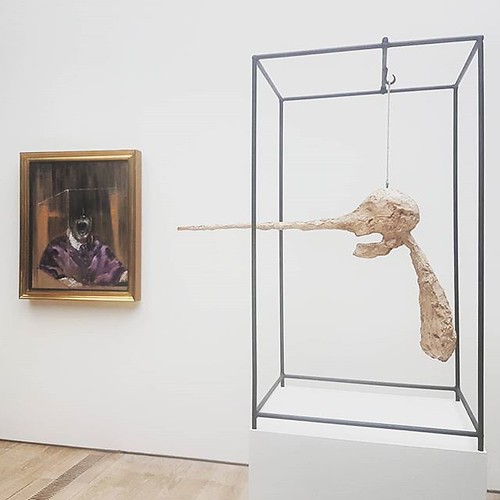
1. Alberto Giacometti’s “Le Nez”
The Macklowe divorce case provided a striking example of the valuation challenges with “Le Nez,” a sculpture by the celebrated artist Alberto Giacometti. This piece, acquired by the couple in 1992, is exceptionally rare, with only five versions known to exist. Its scarcity alone makes appraisal an arduous task, relying heavily on historical sales data that may not accurately reflect current market trends or the unique attributes of a specific version.
In court, the experts presented wildly divergent valuations, underscoring the subjective nature of art appraisal for such singular works. The wife’s expert, for instance, based their opinion on comparable auction sales of different Giacometti sculptures from as far back as 1990 and 1992, with sale prices spanning from less than $1 million to $25 million. This approach yielded an estimated fair market value of $35 million for “Le Nez.”
Conversely, the husband’s expert cited more recent auction and private sales of Giacometti’s works from 2010 and 2013, with values ranging from $50 million to an astonishing $100 million. This expert pointed to a recent surge of interest in Giacometti’s oeuvre, arguing for a much higher, and perhaps more contemporary, valuation. Their conservative estimate for “Le Nez” was $65 million, nearly double that of the opposing expert. This monumental disparity for a single piece highlights how expert methodologies and interpretations of market dynamics can lead to hundreds of millions in disagreement across an entire collection.

2. Jackson Pollock’s “Number 17”
Another compelling case in the Macklowe divorce involving expert disagreement was the valuation of Jackson Pollock’s “Number 17.” What makes this particular example fascinating is the reversal of the typical pattern of valuation. Usually, the party seeking to retain an asset might argue for a lower value, while the party seeking its sale might argue for a higher one, to maximize their share upon distribution.
In the instance of “Number 17,” the husband’s expert, Gaillard, valued the work at $35 million, whereas the wife’s expert, Von Habsburg, opined it was worth a considerably lower $15 million. This stands in contrast to the overall trend where the husband’s expert generally ascribed higher values to the art collection. This anomaly underscores the fact that expert opinions are not always uniformly aligned with the broader strategic interests of their clients, and individual pieces can present unique valuation puzzles.
This specific discrepancy for a work by an artist of Pollock’s stature highlights the subjective interpretations that can arise even with a well-established artist. Factors such as the specific period of creation, the condition of the artwork, its provenance, and its perceived marketability at the time of valuation can all contribute to substantial differences in expert opinions. It’s a stark reminder that even within a single, high-stakes divorce, the valuation landscape is constantly shifting, piece by piece, challenging the court to make equitable decisions.

3. Andy Warhol’s “Nine Marilyns”
Amidst the widespread disagreements over the value of the vast Macklowe art collection, there were moments of consensus, albeit still significant ones. Andy Warhol’s famed “Nine Marilyns” series was one such instance where the experts, remarkably, found common ground. Both the wife’s and husband’s experts agreed on a value of $50 million for this iconic pop art piece. This agreement, while seemingly a small victory, still signifies a substantial individual asset within the collection’s overall worth.
Even with an agreed-upon valuation, the presence of “Nine Marilyns” within the collection was not without its complexities regarding division. The court’s ultimate challenge was to distribute 50% of the marital assets to each party, and even pieces with an agreed value still needed to be allocated. The fact that its value was settled didn’t remove it from the larger question of who would retain it or how its value would balance against other assets, whether cash or real estate.
This agreement on a $50 million asset highlights a different facet of high-value divorce: some masterpieces are so recognizable and have such a well-established market presence that their value is less debatable. Yet, even these pieces play a crucial role in the intricate calculus of asset division, influencing cash distributive awards or the allocation of other contested properties. The “Nine Marilyns” may not have been contested in terms of its price tag, but it was certainly a central figure in the grand narrative of equitable distribution, underscoring that even in agreement, strategic decisions about art assets remain paramount.
Navigating the murky waters of art valuation in divorce isn’t exclusive to cases like Macklowe. Indeed, as marital estates swell into the multi-billions, the stakes for art collections become even more monumental. Beyond the intricate disagreements over individual pieces, these cases often serve as powerful lessons in the broader financial and cultural impact of art as a high-value asset. When we talk about divorces that redefine wealth division, the names Bill and Melinda French Gates invariably come up, a separation that involved a staggering $130 billion and, critically, a $124 million art collection. This collection, a treasure trove of masterpieces, featured works by artists whose names resonate through art history, each piece bringing its own set of valuation intricacies to the table.
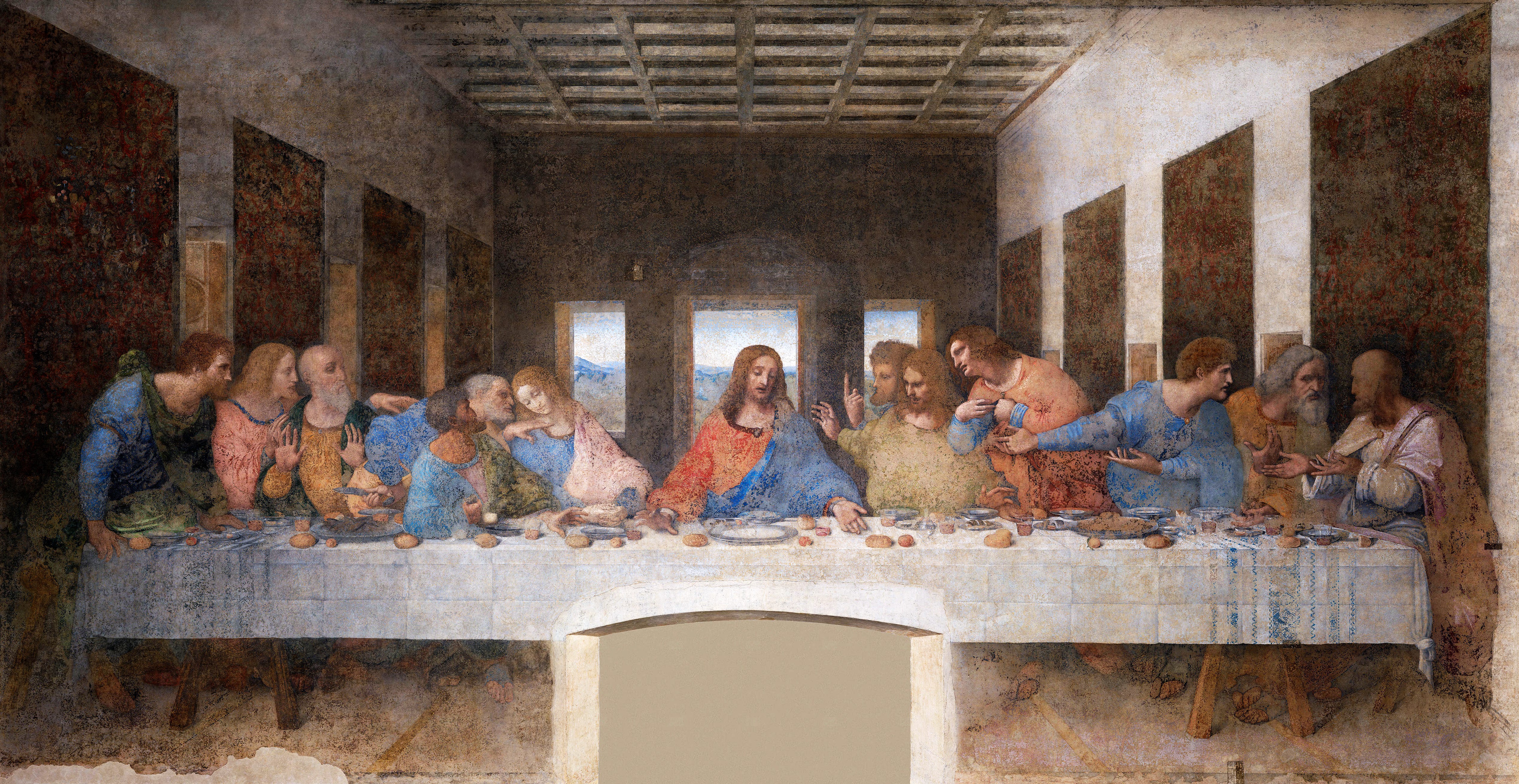
4. Leonardo da Vinci’s Works in the Gates Divorce
The separation of Bill and Melinda Gates, finalized in August 2021 after 27 years of marriage, was anticipated to be one of the most expensive divorces in history. Residing in Washington, a community property state, meant that without a prenup, their shared assets would likely be split equally. Among their vast holdings, including real estate and Microsoft stock, was a formidable $124 million art collection. Within this collection, the inclusion of works by an artist as universally revered as Leonardo da Vinci would have undoubtedly presented a unique set of challenges in valuation and division.
Valuing any piece by Leonardo da Vinci is an undertaking fraught with immense difficulty, dwarfing many of the valuation debates seen in the Macklowe case. Da Vinci’s surviving body of work is incredibly small, with only about 20 paintings generally attributed to him. Each piece is a global treasure, commanding prices that defy conventional market analysis. The scarcity, historical significance, and iconic status of a Da Vinci mean that comparable sales are virtually non-existent, and any valuation would lean heavily on scholarly consensus, historical provenance, and the singular perceived cultural worth of the artwork.
For a divorce settlement of this magnitude, deciding the fate of a Da Vinci piece would extend beyond mere monetary value. Such an artwork represents not just an investment, but a profound cultural legacy. The complexity would lie not only in assigning an astronomical figure but also in how to equitably distribute an asset so singular. Would it be sold, as was mandated for much of the Macklowe collection, to ensure an equal split? Or would its value be offset against other assets, requiring intricate financial maneuvers to balance the scales for both parties? The strategic implications of retaining or selling such a piece would be immense, influencing the entire framework of asset distribution.

5. Winslow Homer’s Works in the Gates Divorce
Another distinguished artist whose works formed part of the substantial Gates art collection was Winslow Homer. An iconic American landscape painter, particularly known for his marine subjects and powerful depictions of nature, Homer’s art holds a significant place in American art history. His pieces often evoke a sense of rugged individualism and the sublime power of the natural world, making them highly sought after by collectors and institutions alike. The presence of Homer’s works would have added another layer of complexity to the Gates’ $124 million art portfolio.
The valuation of Winslow Homer’s works, while perhaps not reaching the astronomical rarity of a Da Vinci, nonetheless presents its own set of appraisal hurdles. His oeuvre spans different periods and styles, from early illustrative works to his mature, dramatic seascapes. The market for Homer’s art is robust, with certain masterpieces achieving tens of millions at auction. However, as the Macklowe case demonstrated with Jackson Pollock’s “Number 17,” even for established artists, the specific period, condition, provenance, and uniqueness of a particular piece can lead to substantial disagreements among experts, creating a wide range of potential values.
In the context of the Gates divorce, the challenge would be identifying suitable comparable sales that accurately reflect the quality and significance of the specific Homer pieces held in their collection. Experts would need to carefully consider the nuances of each painting, weighing factors such as its historical exhibition record, its condition, and its place within Homer’s artistic progression. These considerations, when applied to a collection worth well over a hundred million dollars, emphasize the painstaking detail required in appraising even a single piece, let alone an entire collection of this caliber.
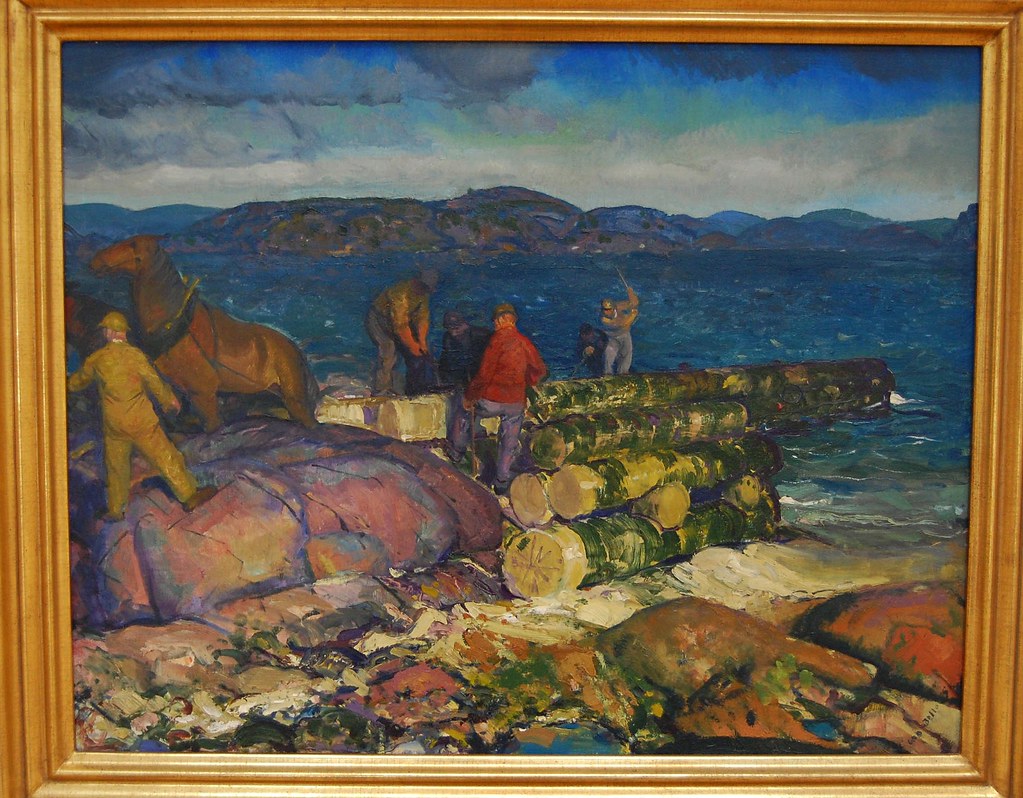
6. George Bellows’ Works in the Gates Divorce
The Gates’ art collection also featured pieces by George Bellows, a prominent American realist painter renowned for his bold depictions of urban life, boxing matches, and stark landscapes. A key figure in the Ashcan School, Bellows captured the dynamism and grit of early 20th-century America with a distinctive energy. His powerful portrayals of everyday scenes and social commentary make his works significant contributions to American modernism, ensuring their high value and desirability in the art market.
Appraising works by George Bellows, like those of other celebrated artists, involves a meticulous process where expert opinions can diverge considerably. While Bellows has a well-established market, the rarity and demand for specific pieces can fluctuate based on subject matter, scale, and period. For instance, a seminal boxing scene or a dramatic landscape might command a far higher price than a less iconic work, creating potential for significant valuation gaps, similar to the varying expert opinions encountered for artists like Jeff Koons in the Macklowe case, even when using similar sales data.
In a divorce settlement as globally significant as that of Bill and Melinda Gates, every major asset, including Bellows’ paintings, becomes a point of careful consideration. The decision of how to divide such valuable works, whether through direct allocation, sale, or offsetting against other assets, would have been a complex negotiation. The court, or the mediating parties, would have had to contend with the potential impact of these valuations on the overall equitable distribution, underscoring how even pieces with agreed-upon market values still play a central role in the strategic calculus of multi-billion-dollar asset divisions.
**Overarching Lessons from High-Stakes Separations**
The intricate narratives of divorces involving significant art collections, from the Macklowes to the Gates, reveal profound overarching lessons for anyone navigating the division of unique, high-value assets. Firstly, the absolute necessity of expert testimony cannot be overstated. As witnessed in Macklowe v. Macklowe, without highly qualified appraisers, courts are left in a quagmire of subjective value. However, the cases also highlight the significant limitations of experts themselves; even with the best intentions and data, methodologies can vary, leading to millions, if not hundreds of millions, in disagreement. Judges are then faced with the unenviable task of discerning the most credible approach or, as a last resort, mandating a sale.
Secondly, these high-stakes separations underscore the strategic importance of art as an investment, not just an aesthetic pleasure. While parties often initially collect for passion, the collection’s role in wealth preservation and growth becomes undeniable during divorce. The decision to retain or sell, to argue for higher or lower valuations, is inextricably linked to the broader financial interests of each party. Art is rarely a simple asset; it is a complex financial instrument that can either stabilize or complicate an already volatile situation. Its division often requires innovative solutions, whether through court-ordered sales, as seen with the majority of the Macklowe collection, or intricate offsetting arrangements, as likely occurred in the Gates divorce.
Ultimately, the journey through these multi-million and multi-billion dollar divorces involving art is a stark reminder of the unpredictable nature of unique asset division. The preference for assigning a present value to an asset often clashes with the reality of insufficient market data or wildly divergent expert opinions, forcing courts to consider future recovery processes, such as ordered sales. These cases teach us that while the emotional toll of divorce is immense, the financial and strategic battles over a lifetime’s accumulation of artistic masterpieces can be just as demanding, requiring meticulous attention to detail, a nuanced understanding of market dynamics, and a willingness to confront significant disagreements to achieve an equitable resolution.