Alright, gearheads and automotive aficionados, prepare yourselves for a candid journey through the darkest corners of car history. We often celebrate the masterpieces, the innovations that pushed boundaries and ignited passion on the open road. But let’s be honest, for every iconic triumph, there’s a spectacular, head-scratching failure lurking in the shadows—vehicles that didn’t just disappoint their owners, but actively infuriated them, racking up repair bills and destroying reputations along the way.
Automotive history isn’t merely a tale of gleaming chrome and roaring engines; it’s also a cautionary anthology of what happens when engineering goes awry, design takes a disastrous detour, or corporate corner-cutting takes precedence over safety and quality. These aren’t just ‘bad’ cars; these are the outright vehicular blunders, the four-wheeled embarrassments that mechanics dreaded seeing roll into their bays and owners quickly wished they could forget ever signing the papers for.
From concept cars that crashed and burned in the market to everyday commuters that became rolling liabilities, these vehicles represent the peak of automotive regret. They didn’t just fail to meet expectations; they redefined the very meaning of automotive disappointment, often leaving a trail of frustrated drivers, class-action lawsuits, and a legacy of lessons learned the hard way. Join us as we crank up the critical engine and dive deep into seven of these unforgettable automotive disasters.

1. **Ford Edsel (1958)**Ah, the Edsel. The name itself has become synonymous with failure, a cautionary tale whispered in boardrooms and design studios worldwide. Ford poured immense resources and hype into this supposed game-changer, aiming for a revolutionary statement in the late 1950s. What they delivered, however, was a car that fundamentally misunderstood its market, boasting a design that was less groundbreaking and more grating, leaving many buyers utterly perplexed.
Its styling, particularly the infamous “horse collar” grille, was widely considered unappealing, creating an aesthetic that polarized rather than pleased. Beyond the looks, the Edsel suffered from lousy build quality that often left owners questioning their sanity. And if the appearance and construction weren’t enough to deter prospective buyers, its inflated price tag certainly did the trick, positioning it awkwardly in a competitive market segment without delivering the promised premium experience.
Mechanics, bless their souls, bore the brunt of Ford’s ambition. They quickly discovered the Edsel’s overly complicated engineering, which transformed routine maintenance and necessary repairs into arduous, time-consuming ordeals. This design philosophy, prioritizing complexity over practicality, only compounded the car’s problems, making ownership a frustrating and expensive endeavor. The Edsel’s short, ignominious run ended after just three years, a stark reminder that even the biggest marketing blitz can’t save a fundamentally flawed product.
Car Model Information: 1958 Edsel Citation
BirthName: Edsel Bryant Ford
Caption: Ford in 1921
BirthDate: [object Object]
BirthPlace: Detroit, Michigan
DeathDate: [object Object]
DeathPlace: Grosse Pointe Shores, Michigan
Occupation: Automobile executive
Title: Ford Motor Company
Spouse: [object Object]
Parents: Henry Ford,Clara Bryant Ford
Relations: Edsel Ford II
Children: Henry Ford II,Benson Ford,Josephine Ford,William Clay Ford Sr.
Categories: 1893 births, 1943 deaths, 20th-century American businesspeople, All Wikipedia articles written in American English, All articles with dead external links
Summary: Edsel Bryant Ford (November 6, 1893 – May 26, 1943) was an American business executive and philanthropist, who was the only child of pioneering industrialist Henry Ford and his wife, Clara Jane Bryant Ford. He was the president of Ford Motor Company from 1919 until his death in 1943.
He worked closely with his father, as sole heir to the business, but was keen to develop cars more exciting than the Model T (“Tin Lizzie”), in line with his personal tastes. Even as president, he had trouble persuading his father to allow any departure from this formula. Only a change in market conditions enabled him to develop the more fashionable Model A in 1927. Edsel also founded the Mercury division and was responsible for the Lincoln-Zephyr and Lincoln Continental. He introduced important features, such as hydraulic brakes, and greatly strengthened the company’s overseas production.
Ford was a major art benefactor in Detroit and also financed Admiral Richard Byrd’s polar explorations. He died of stomach cancer aged 49. Henry Ford temporarily reassumed the presidency of Ford Motor Company on Edsel’s death, then Edsel’s eldest son, Henry Ford II, succeeded Henry as president of the company in 1945.
He was also a member of the board of directors of American IG, the American subsidiary of the German chemical conglomerate IG Farben.
Get more information about: Edsel Ford
Buying a high-performing used car >>>
Brand: Ford Model: Edsel
Price: Not Priced Mileage: 68,904 mi.
Read more about: 16 Legendary Car Flops: The Vehicles Nobody Wanted

2. **Chevrolet Corvair (1960)**The Chevrolet Corvair began its life with a certain flair, offering a European-inspired, rear-engine design that stood apart from its domestic contemporaries. However, its sophisticated aspirations were quickly overshadowed by a dark cloud of controversy, becoming a poster child for automotive safety issues and forever linked with one of the most pivotal moments in consumer advocacy history. It became infamous, not for its innovations, but for its dangerous handling.
The real nail in the Corvair’s coffin was delivered by Ralph Nader’s seminal 1965 book, “Unsafe at Any Speed.” Nader meticulously highlighted the car’s inherent rear-suspension problems, which, under certain conditions, could lead to severe oversteer. This made the vehicle notoriously difficult to control, particularly for unsuspecting drivers, and tragically contributed to numerous accidents. The book didn’t just damage the Corvair’s reputation; it utterly demolished it.
Beyond the safety concerns that dominated public perception, the Corvair also presented a unique set of challenges for the professionals tasked with keeping it on the road. Mechanics found working on its air-cooled rear engine to be notoriously tricky and cumbersome. This intricate design, while novel, wasn’t suited for easy serviceability, adding to the headaches for owners and repair shops alike. The Corvair’s story is a profound lesson in the critical importance of safety and the power of public scrutiny in shaping automotive design standards.
Car Model Information: 1964 Chevrolet Corvair Monza
Caption: 1964 Chevrolet Corvair Monza
Name: Chevrolet Corvair
Manufacturer: Chevrolet
Production: July 1959
Platform: GM Z platform
Chassis: Unibody
ModelYears: 1960–1969
Assembly: United States,Kansas City, Missouri,Oakland, California,Van Nuys,St. Louis,Flint, Michigan,Belgium,Canada,Mexico,South Africa,Switzerland,Venezuela
Class: Compact car
Successor: Chevrolet Vega
Layout: Rear-engine, rear-wheel-drive layout
Categories: All Wikipedia articles written in American English, All articles lacking in-text citations, All articles needing additional references, All articles with dead external links, All articles with specifically marked weasel-worded phrases
Summary: The Chevrolet Corvair is a rear-engined, air-cooled compact car manufactured and marketed by Chevrolet over two generations from the 1960 through 1969 model years. The Corvair was a response to the increasing popularity of small, fuel-efficient automobiles, particularly the imported Volkswagen Beetle and American-built compacts like the Rambler American and Studebaker Lark.
The first generation (1960–1964) was offered in four-door sedan, two-door coupe, convertible, and four-door station wagon configurations. A two- and four-door hardtop, as well as a convertible, were available as second-generation variants (1965–1969). The Corvair platform was also offered as a subseries known as the Corvair 95 (1961–1965), which consisted of a passenger van, commercial van, and pickup truck variant. Total production was approximately 1.8 million vehicles from 1960 until 1969.
The name “Corvair” was first applied in 1954 to a Corvette-based concept with a hardtop fastback-styled roof, part of the Motorama traveling exhibition. When applied to the production models, the “air” part referenced the engine’s cooling system.
A prominent aspect of the Corvair’s legacy derives from controversy surrounding the handling of early models equipped with rear swing axles, articulated aggressively by Ralph Nader’s Unsafe at Any Speed but tempered by a 1972 Texas A&M University safety commission report for the National Highway Traffic Safety Administration (NHTSA) which found that the 1960–1963 Corvair possessed no greater potential for loss of control in extreme situations than contemporary compacts.
To better counter popular inexpensive subcompact competitors, notably the Beetle and Japanese imports such as the Datsun 510, GM replaced the Corvair with the more conventional Chevrolet Vega in 1970.
Get more information about: Chevrolet Corvair
Buying a high-performing used car >>>
Brand: Chevrolet Model: Corvair
Price: $29,988 Mileage: 74,787 mi.
Read more about: Buyer Beware: Unmasking 12 Vehicles Plagued by Early Mechanical Woes and Reliability Nightmares

3. **AMC Gremlin (1970)**When AMC introduced the Gremlin, it was touted as a bold, if not foolhardy, attempt to carve out a niche in the burgeoning compact American car market. Its design was unquestionably distinctive, yet that distinctiveness quickly morphed into widespread ridicule. The chopped-off rear end, a peculiar styling choice, became the butt of jokes for decades, contributing to an overall appearance that many found undeniably awkward and visually jarring.
But the Gremlin’s problems extended far beyond mere aesthetics. Beneath its unusual skin lay a vehicle plagued by unreliability. The motor itself suffered from frequent mechanical problems, making consistent performance more of a hopeful wish than a guarantee. Owners often found themselves on first-name terms with their local mechanics, a testament to the car’s numerous shortcomings and constant need for attention.
Mechanics were less than impressed with the Gremlin’s overall construction, noting its fragile components and a significant lack of longevity. This was not a car built to withstand the rigors of daily driving or to inspire confidence in its owners. The combination of its polarizing design, subpar performance, and relentless mechanical woes ensured the AMC Gremlin secured its place in the automotive hall of shame as a quirky, unreliable, and ultimately disappointing compact car.
Read more about: Mechanic’s Crucial Warning: 15 Popular Vehicles That Turn into Costly Financial Traps Well Before 120,000 Miles

4. **Ford Pinto (1971)**The Ford Pinto, initially marketed for its affordability during a crucial oil crisis, was an omnipresent sight on American roads in the 1970s. Its diminutive size, modest chrome bumpers, and inoffensive rounded edges made it automotive wallpaper for budget-conscious Americans. Available in various body styles, the Pinto’s outwardly conventional sedan styling gave no hint of the deadly secret lurking beneath its sheet metal, making its eventual infamy all the more shocking.
Behind that unassuming facade, however, lay a truly catastrophic design disaster. The fuel tank was positioned perilously close to the rear bumper, completely unprotected, leaving it vulnerable to rupture and catastrophic fire in rear-end collisions at speeds as low as 20 mph. What makes this flaw particularly egregious is that Ford engineers identified this critical safety issue during development. Yet, executives made a chilling calculation, prioritizing profit over human life.
This cold, calculated decision determined that the cost of an $11 protective shield per vehicle would be more expensive than paying out settlements for the inevitable deaths and injuries. The consequences were dire, leading to numerous fire-related fatalities. A recall of 1.5 million vehicles finally occurred in 1978, but for many families, it came far too late. The Pinto’s saga became a stark symbol of corporate negligence, eventually leading to stricter fuel system standards and forever tarnishing Ford’s reputation.
Mechanics, too, found themselves grappling with the Pinto’s cheap design, which made proper repairs a challenge even beyond the glaring safety issues. Its overall reputation for failure only grew with each breakdown and tragic incident. The Pinto remains a grim testament to the devastating impact of valuing expediency and cost-cutting over the fundamental safety of human lives.
Car Model Information: 1980 Ford Pinto WAGON
Name: Ford Pinto
Caption: Ford Pinto
Manufacturer: Ford Motor Company
Aka: Mercury Bobcat
Production: September 1970 – July 1980
ModelYears: 1971–1980 (Pinto),1974–1980 (Bobcat)
Assembly: Edison, New Jersey,Milpitas, California
Designer: Robert Eidschun (1968)
Class: Subcompact car
BodyStyle: Sedan (automobile),sedan delivery,station wagon,hatchback
Related: #Mercury Bobcat (1974–1980),Ford Mustang (second generation)
Layout: Front-engine, rear-wheel-drive layout
Chassis: Unibody
Engine: unbulleted list
Abbr: on
Disp: Ford Cologne engine
Transmission: unbulleted list
Wheelbase: 94.0 in
Length: 163 in
Width: 69.4 in
Height: 50 in
Weight: convert
Predecessor: Ford Cortina#Mark II (1966–1970)
Successor: Ford Escort (North America)
Categories: 1980s cars, Articles with short description, Cars discontinued in 1980, Cars introduced in 1970, Commons category link from Wikidata
Summary: The Ford Pinto is a subcompact car that was manufactured and marketed by Ford Motor Company in North America from 1970 until 1980. The Pinto was the first subcompact vehicle produced by Ford in North America.
The Pinto was marketed in three body styles throughout its production: a two-door fastback sedan with a trunk, a three-door hatchback, and a two-door station wagon. Mercury offered rebadged versions of the Pinto as the Mercury Bobcat from 1975 until 1980 (1974–1980 in Canada). Over three million Pintos were produced over its ten-year production run, outproducing the combined totals of its domestic rivals, the Chevrolet Vega and the AMC Gremlin. The Pinto and Mercury Bobcat were produced at Edison Assembly in Edison, New Jersey, St. Thomas Assembly in Southwold, Ontario, and San Jose Assembly in Milpitas, California.
Since the 1970s, the safety reputation of the Pinto has generated controversy. Its fuel-tank design attracted both media and government scrutiny after several deadly fires occurred when the tanks ruptured in rear-end collisions. A subsequent analysis of the overall safety of the Pinto suggested it was comparable to other 1970s subcompact cars. The safety issues surrounding the Pinto and the subsequent response by Ford have been cited widely as business ethics and tort reform case studies.
Get more information about: Ford Pinto
Buying a high-performing used car >>>
Brand: Ford Model: Pinto
Price: $5,951 Mileage: 107,000 mi.
Read more about: Beyond the Showroom Shine: 14 Automotive Design Fails That Rocked the Industry
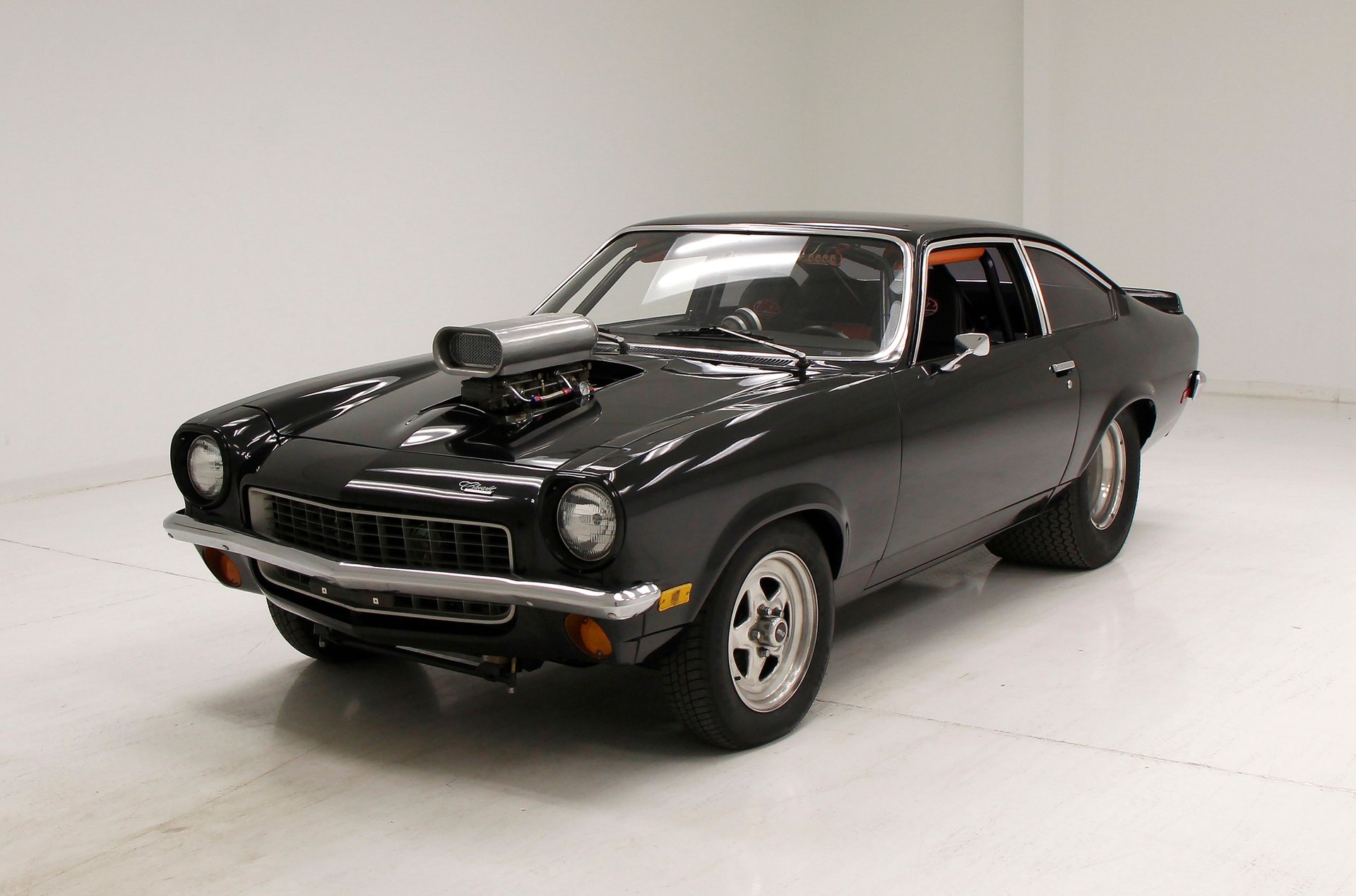
5. **Chevrolet Vega (1971)**Chevrolet’s Vega burst onto the scene in the early 1970s, initially garnering praise for its clean, European-influenced styling and respectable handling. Its low hood line, available fastback profile, and modern proportions offered a promising aesthetic that belied its budget pricing. Automotive journalists of the era even recognized its design, suggesting that the Vega might be one of the few bright spots in GM’s compact car strategy. However, these initial accolades proved to be a tragically thin veneer over a fundamentally flawed machine.
Beneath its appealing exterior, the Vega was a monument to rushed development and engineering malpractice. Early models were notorious for their severe rust issues, exacerbated by the absence of inner fender liners that should have protected against corrosion. Despite efforts to improve rust protection in later years, the damage to its reputation was already done, with early examples visibly disintegrating from the elements with alarming speed.
The true Achilles’ heel of the Vega, however, was its innovative all-aluminum engine block. Designed without conventional cylinder liners to save weight and cut costs, this decision proved catastrophic. It led to widespread issues with cylinder head warping and excessive oil consumption, with factory figures themselves admitting consumption of one quart every 1,500 miles—a truly astounding rate that only marginally improved later. Mechanics frequently found themselves dealing with catastrophic engine failures, turning the Vega into one of GM’s biggest duds.
Adding insult to injury, the interior materials were as cheap and disposable as the rest of the car, quickly deteriorating under normal use. The Chevrolet Vega stands as a powerful, albeit negative, case study in prioritizing cost-cutting over robust engineering integrity, a decision that ultimately doomed a car that had so much initial potential for success.
Car Model Information: 1976 Chevrolet Vega
Name: Chevrolet Vega
Caption: 1971 Chevrolet Vega
Aka: Vega 2300
Manufacturer: Chevrolet
Production: 1970–1977
ModelYears: 1971–1977
Assembly: Lordstown, Ohio
Predecessor: Chevrolet Corvair
Successor: Chevrolet Monza
Class: Subcompact car
BodyStyle: notchback,hatchback,station wagon,Panel van
Layout: FR layout
Platform: GM H platform (RWD)
Engine: {{cvt,2.3,L,cuin,0,Chevrolet 2300 engine
Transmission: manual transmission,4-speed manual,overdrive (mechanics),Torque-Drive 2-speed Powerglide requiring manual shifting,Powerglide,Turbo-Hydramatic
Wheelbase: cvt
Length: cvt
Width: cvt
Height: cvt
Weight: cvt
Related: Pontiac Astre,Chevrolet Monza,Pontiac Sunbird#First generation (1976–1980),Buick Skyhawk#First generation (1975–1980),Oldsmobile Starfire#Second generation (1975–1980)
Designer: Bill Mitchell (designer)
Categories: 1970s cars, All articles needing additional references, All articles with unsourced statements, Articles needing additional references from July 2023, Articles with short description
Summary: The Chevrolet Vega is a subcompact automobile manufactured and marketed by GM’s Chevrolet division from 1970 until 1977. Available in two-door hatchback, notchback, wagon, and sedan delivery body styles, all models were powered by an inline four-cylinder engine designed specifically for the Vega, with a lightweight aluminum alloy cylinder block. The Vega first went on sale in Chevrolet dealerships on September 10, 1970. Variants included the Cosworth Vega, a short-lived limited-production performance version introduced spring 1975.
The Vega received the 1971 Motor Trend Car of the Year. Subsequently, the car became widely known for a range of problems related to its engineering, reliability, safety, propensity to rust, and engine durability. Despite numerous recalls and design upgrades, Vega’s problems tarnished its reputation and that of General Motors. Production ended with the 1977 model year.
The car was named for Vega, the brightest star in the constellation Lyra.
Get more information about: Chevrolet Vega
Buying a high-performing used car >>>
Brand: Chevrolet Model: Vega
Price: $30,000 Mileage: 82,344 mi.
Read more about: Beyond the Showroom Shine: 14 Automotive Design Fails That Rocked the Industry

6. **Austin Allegro (1973)**The British automotive industry has its fair share of legends, but the Austin Allegro is emphatically not one of them. Instead, it has earned its place as one of the most universally derided European cars ever produced. From its debut, the Allegro was plagued by a myriad of problems, cementing its reputation as a symbol of the declining quality and ill-conceived design that characterized a particular era of British car manufacturing.
Among its most memorable—and mocked—features was the infamous ‘quartic’ steering wheel. This peculiar, squarish design was universally panned by drivers, proving impractical and uncomfortable rather than innovative. Beyond this ergonomic blunder, the Allegro’s overall design was largely unattractive, lacking the charm or functional elegance of its rivals, and did little to inspire confidence or desire in potential owners.
Yet, the visual and ergonomic quirks were only the beginning of the Allegro’s woes. Owners quickly discovered the car was a nightmare of unreliability and build quality issues. Rust developed quickly and relentlessly, while mechanical problems became a frequent and frustrating occurrence. Its engines were underpowered, making driving a laborious affair, and when things inevitably broke down, mechanics found it frustrating to repair, further dooming the ill-conceived car’s reputation. The Austin Allegro remains a stark reminder of how a series of poor design and engineering decisions can coalesce into an automotive disaster.
Read more about: Buyer Beware: Unmasking 12 Vehicles Plagued by Early Mechanical Woes and Reliability Nightmares

7. **AMC Pacer (1975)**Behold, the AMC Pacer, a car that looked less like a conventional vehicle and more like a fishbowl mounted on wheels. Arriving in 1975, it was touted as America’s first “wide small car,” a genuinely ambitious concept for its time. Its signature feature was a bubble-like greenhouse, boasting an astonishing 37% glass-to-body ratio, which created a truly unique, almost rolling terrarium effect. While undeniably futuristic in some design studios, this peculiar silhouette proved highly polarizing in showrooms, leaving many potential buyers scratching their heads.
The Pacer’s unconventionality wasn’t limited to its expansive glass. It also featured asymmetrical doors, with the passenger side noticeably longer than the driver’s, adding another layer of oddity to its peculiar proportions. This goofy door design, combined with its overall overweight body, made the Pacer stand out—though not always for the right reasons. It was a car unlike anything else on American streets, and that was both its greatest strength and its most significant weakness.
However, the Pacer’s “revolutionary packaging promises” quickly delivered “evolutionary disappointment.” It was originally engineered around GM’s compact Wankel rotary engine, a promising but ultimately doomed technology. When GM abandoned the Wankel, AMC was left scrambling, stuffing its existing inline-six engine into the Pacer’s design. This last-minute swap was a critical misstep, adding approximately 90 pounds and dramatically shifting the weight distribution from an intended 50/50 to a less favorable 60/40, negatively impacting its handling characteristics.
As if the handling wasn’t enough, the Pacer’s performance was thoroughly underwhelming. Its engines didn’t live up to expectations, struggling to move the overweight body with any sense of urgency. Fuel economy plummeted to a dismal 16 mpg, a truly abysmal figure even by 1970s standards, further alienating buyers already dealing with a post-oil crisis economy. The Pacer quickly earned notoriety for its reliability issues, adding ongoing frustration to its long list of drawbacks.
From its odd dashboard layout, which mirrored the asymmetrical door arrangement, to the feeling that passengers were mere exhibits in a mobile display case, the Pacer was a driver’s regret waiting to happen. Sales maxed out in 1976 before taking a nosedive, with production dwindling to a mere 9,000 units in its final year. The AMC Pacer stands as a testament to how even bold, unique visions can be crippled by engineering compromises and polarizing aesthetics, consigning it to the depths of automotive infamy.
Alright, if you thought the first batch of automotive horrors was bad, buckle up, because our journey through the annals of vehicular infamy is far from over. We’re not just talking about minor inconveniences here; we’re diving deeper into some truly head-scratching engineering choices, audacious rebadging attempts, and design decisions that practically dared consumers to buy something, *anything*, else. These next seven entries didn’t just disappoint; they actively eroded brand trust and left a lasting, often hilarious, legacy of regret.
Continuing our deep dive, we’ll see how some manufacturers thought they could pull a fast one with badge engineering, how others prioritized innovation over basic common sense, and how one particular SUV managed to scare an entire generation of drivers. These are the machines that taught the automotive world some incredibly hard, and often expensive, lessons. Let’s not waste any more time; prepare your grimaces and your shaking heads, because it only gets worse from here!
Read more about: 18 Notorious Car Flops That Defined the 1970s

8. **Cadillac Cimarron (1982)**Oh, Cadillac. There was a time when the mere mention of the name evoked images of American luxury, power, and prestige. Then came the Cimarron, a car that effectively took that hard-earned reputation, crumpled it up, and tossed it into the nearest dumpster fire. This was Detroit’s desperate, frankly embarrassing, attempt to battle the influx of sophisticated European compact luxury sedans. What they delivered was less a luxury car and more a desperate cry for help, thinly veiled beneath a slightly altered facade.
Imagine, if you will, the utter bewilderment of a Cadillac loyalist walking into a showroom, expecting grandeur, and being presented with what was essentially a Chevrolet Cavalier in an ill-fitting tuxedo. Despite minimal alterations—a unique grille, a few Cadillac emblems, and some slightly upgraded lighting—the economy car proportions screamed its humble origins. This was a front-wheel-drive compact, a dramatic departure from everything Cadillac traditionally stood for, and the embarrassment was palpable.
The textbook example of brand dilution truly began inside. Cadillac attempted to justify an approximate $12,131 price tag in 1981 by slapping on leather seats and a few power accessories. Yet, they couldn’t disguise the same anemic 88-horsepower 1.8L four-cylinder engine wheezing under the hood—a laughable figure, less than half the power of what a proper Cadillac should deliver. The upgraded sound system and leather-wrapped steering wheel couldn’t mask the unmistakable economy car bones.
Luxury buyers, perhaps unsurprisingly, saw straight through this thin veneer of prestige. The Cimarron taught Detroit an incredibly expensive lesson: you simply cannot fake prestige with emblems and marketing fluff. This vehicular blunder didn’t just fail; it damaged Cadillac’s once-unassailable reputation for decades, setting the brand back in ways it would take monumental effort to recover from.
Read more about: Beyond the Hype: 15 Classic Cars That Will Break Your Heart (and Wallet) – A Jalopnik Guide for Enthusiasts
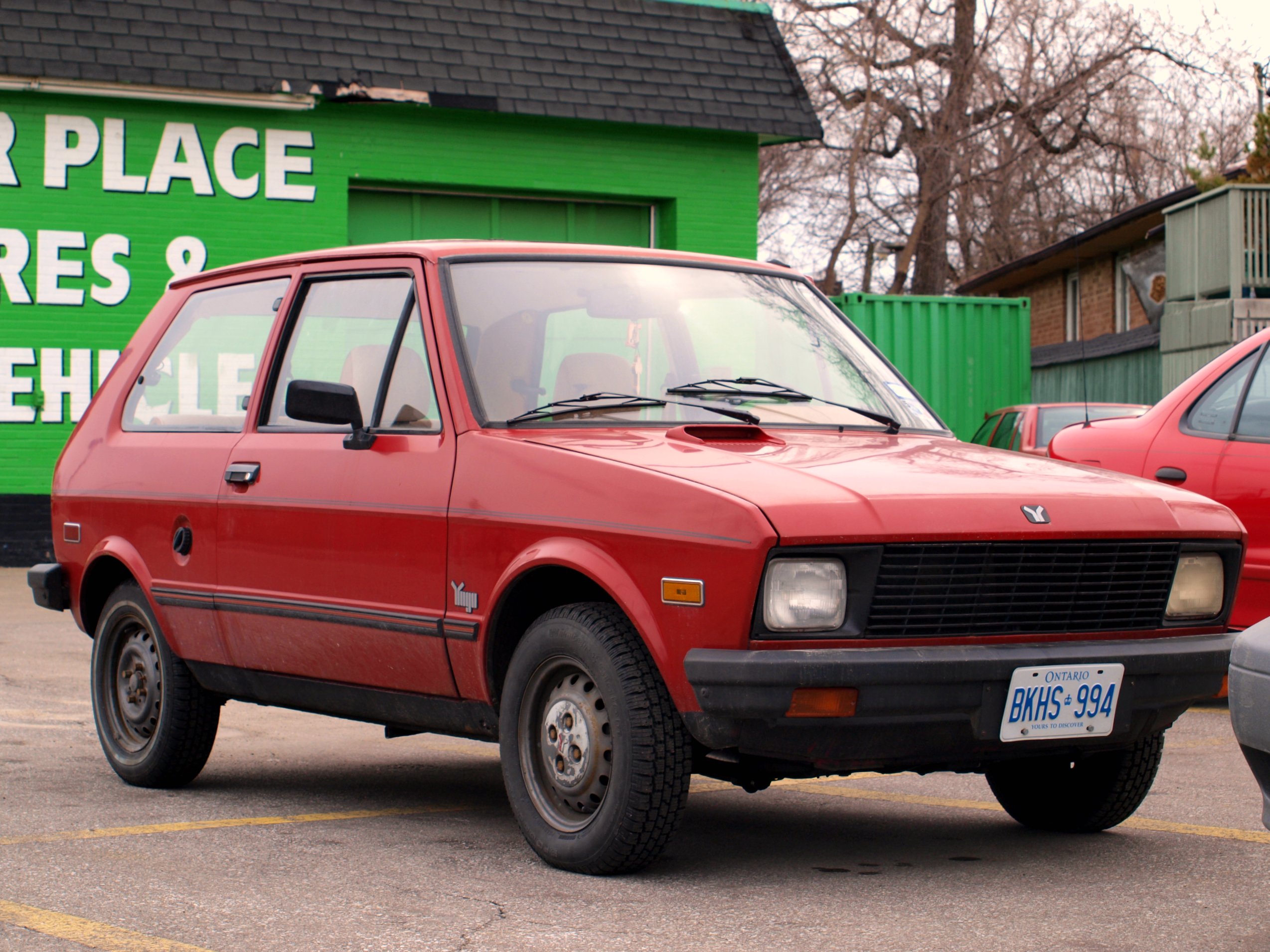
9. **Yugo GV (1985)**If the Edsel is synonymous with failure, the Yugo GV is legendary for its sheer, unadulterated awfulness. There’s a special place in automotive purgatory for cars that were “so bad they’re good,” but the Yugo, frankly, wasn’t one of them. It was just plain horrible, a Yugoslav import that redefined rock-bottom expectations for American car buyers and mechanics alike. When this tiny three-door hatchback hit U.S. shores in 1985, its $3,990 price tag was indeed remarkable—but not nearly as remarkable as its extraordinary tendency to break down.
Its exterior design was vehicular minimalism taken to the absolute extreme, boasting all the design flair of a Soviet apartment block. Bare-bones aesthetics ensured it was instantly recognizable, its diminutive footprint appearing practically microscopic on American highways, dwarfed by even the most compact domestic models. Budget constraints were glaringly evident in every single exterior detail, from the minimal trim to the flimsy-looking bumpers, and stamped steel wheels that completed its look as transportation reduced to its most fundamental, joyless form.
Underneath its no-frills shell, the Yugo was a catastrophic symphony of flaws. Its 55-horsepower overhead cam engine didn’t just struggle to motivate its minimal mass; it practically redefined automotive fragility, rarely going beyond 30,000 miles without major issues. Owners reported a litany of extensive reliability problems, ranging from failing transmissions to interiors that seemed designed to disintegrate with alarming speed.
Mechanics, the poor souls, complained bitterly about poor parts availability and flimsy construction that made every repair a nightmare. The sparse cabin featured plastics that cracked on cue, upholstery that rapidly deteriorated, and switchgear that required frequent jiggling just to function. The Yugo’s reputation for unreliability quickly, and justly, overshadowed its budget-friendly positioning, cementing its place as an icon of automotive ineptitude.
Read more about: Buyer Beware: Unmasking 12 Vehicles Plagued by Early Mechanical Woes and Reliability Nightmares
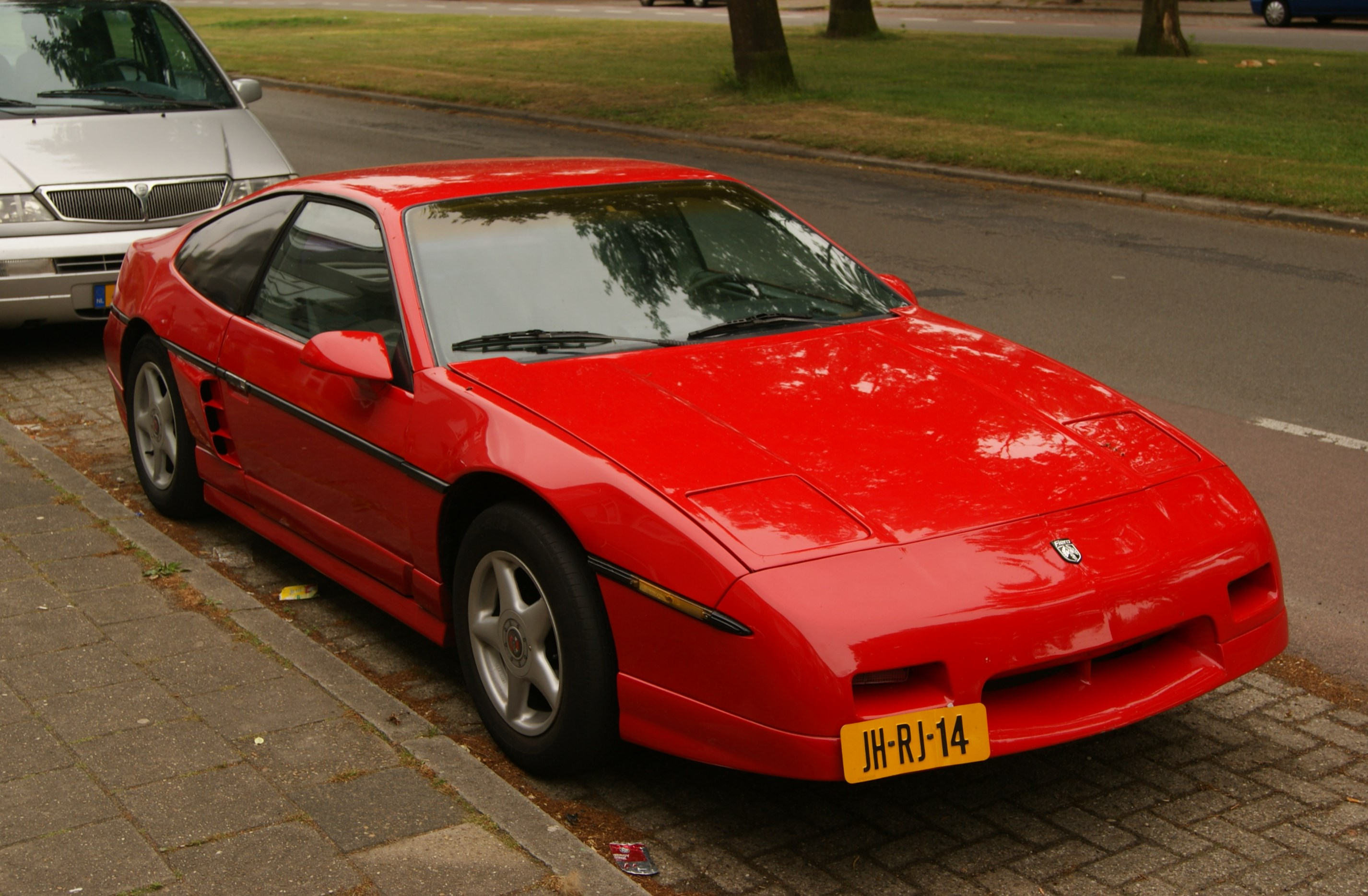
10. **Pontiac Fiero (1987)**The Pontiac Fiero arrived with a flourish, promising sports car looks and a dash of mid-engine exoticism for the everyday driver. It was a bold move by GM, an attempt to inject some excitement and European flair into their lineup, and from certain angles, it certainly looked the part. Its sleek lines and low-slung stance hinted at performance, but unfortunately, that’s where the illusion ended. The Fiero had sports car looks, yes, but not much else to back it up, quickly becoming known for all the wrong reasons.
This mid-engine wonder was engineered with a plastic body over a steel space frame, an innovative approach at the time that offered intriguing possibilities for design and manufacturing. Pontiac poured resources into making it an affordable, fun-to-drive machine. However, the ambition quickly outpaced the execution, with cost-cutting measures undermining its potential and ultimately leading to critical flaws that severely marred its legacy.
The real trouble for the Fiero, and its owners, lay beneath the surface. It tragically became most known for a rather terrifying flaw: engine fires. These catastrophic thermal events, often attributed to connecting rod issues and oil leaks, were not isolated incidents but a widespread and deeply concerning problem. Combine this with generally fragile components throughout the vehicle, and you had a recipe for owner headaches and mechanics shaking their heads.
Working on the Fiero was no picnic either. Mechanics found its compact, mid-engine layout notoriously tough to work on, turning even routine maintenance into a frustrating ordeal. This added difficulty, coupled with its alarming propensity for unexpected breakdowns and literal combustion, only exacerbated its already disappointing reputation. The Fiero remains a poignant example of a car with immense potential that was ultimately crippled by engineering shortcuts and disastrous reliability.
Car Model Information: 1984 Pontiac Fiero SE
Name: Pontiac Fiero
Caption: 1988 Fiero Formula
Manufacturer: Pontiac (automobile)
Production: August 1983 – August 16, 1988,370,168 produced
ModelYears: 1984 – 1988
Successor: Pontiac Solstice
Assembly: Pontiac, Michigan
Designer: Hulki Aldikacti,George Milidrag
Class: Sports car
BodyStyle: fastback,notchback
Platform: GM P platform
Layout: Rear mid-engine, rear-wheel-drive layout
Engine: {{cvt,151,CID,L,1,disp=flip,Iron Duke engine#LR8,Inline-four engine
Transmission: Turbo-Hydramatic 125,Manual transmission,Getrag 282 transmission,Isuzu
Wheelbase: 2373 mm
Abbr: on
Length: 4072 mm
Width: 1750 mm
Height: 1191 mm
Weight: 1116 to
Categories: All articles with unsourced statements, Articles with short description, Articles with unsourced statements from February 2012, Articles with unsourced statements from July 2024, Articles with unsourced statements from September 2011
Summary: The Pontiac Fiero is a rear mid-engine, light sports car manufactured and marketed by Pontiac for model years 1984 – 1988. Intended as an economical commuter car with modest performance aspirations, it was Pontiac’s first two-seater since their 1926 to 1938 coupes, and the first mass-produced, rear mid-engine car by any American manufacturer.
In addition to using 4- and 6-cylinder engines to help Pontiac meet America’s ‘CAFE’ average fuel economy requirements, the Fiero’s chassis and structure technology used non-load-bearing, composite body-panels, contributing to the car’s light-weight and its unique selling proposition. Pontiac engineers modified the design over its life to enhance its performance and reposition the two-seater closer to the implications of its sporty configuration.
The Fiero 2M4 (two-seat, mid-engine, four-cylinder) placed on Car and Driver magazine’s Ten Best list for 1984, and was the Official Pace Car of the Indianapolis 500 for 1984.
A total of 370,168 Fieros were manufactured over five years’ production, its mild performance, reliability and safety issues becoming points of criticism. The Fiero was discontinued after annual sales fell steadily.
Get more information about: Pontiac Fiero
Buying a high-performing used car >>>
Brand: Pontiac Model: Fiero
Price: $8,500 Mileage: 88,397 mi.
Read more about: Unearthing Hidden Performance: 14 Underrated Sports Cars That Defy Expectations for Today’s Performance Seekers
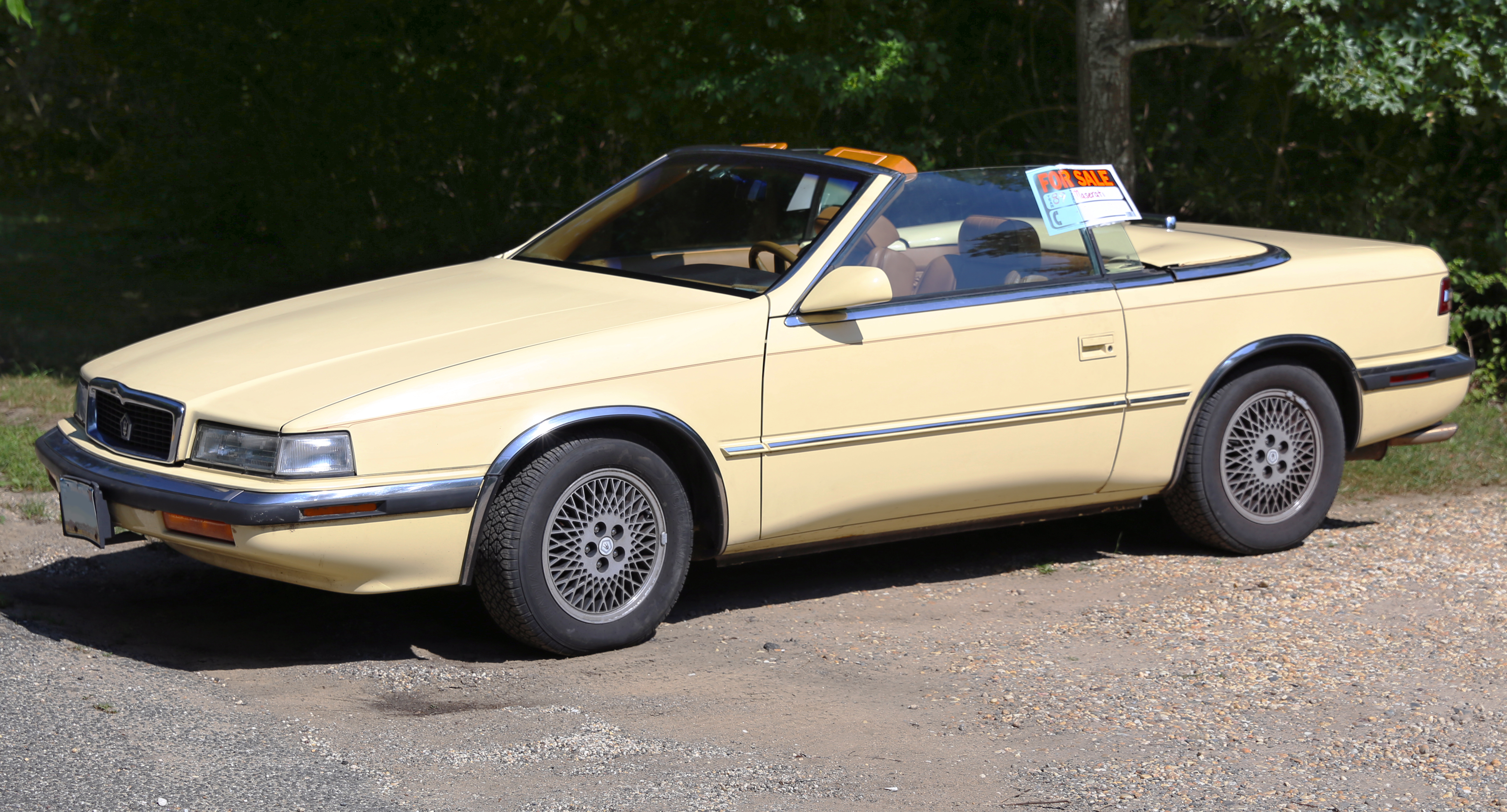
11. **Chrysler TC By Maserati (1989)**Ah, the Chrysler TC by Maserati—a name that, on paper, promised an intoxicating blend of Italian luxury and American practicality. This was Lee Iacocca’s pet project, a grand vision of a glamorous collaboration designed to elevate Chrysler’s image and perhaps, just maybe, rival European grand tourers. It was meant to be an exclusive, upscale personal luxury car, but what rolled off the assembly line was a spectacularly confused, poorly executed misfire that managed to disappoint everyone involved.
The first hint of trouble was its appearance. Despite the exotic badge, the TC by Maserati didn’t look significantly different from the already existing Chrysler LeBaron GTC convertible, a car that, while perfectly decent, didn’t exactly scream “Italian exotic.” This striking lack of visual differentiation left buyers wondering why they were paying a premium for something that looked so remarkably… familiar, robbing the car of its intended exclusivity and allure from the get-go.
Underneath that familiar facade, the story only got worse. This supposed luxury coupe was plagued by abysmal build quality and a litany of constant mechanical headaches. Owners quickly discovered a bizarre collection of mismatched parts, as Italian and American components were haphazardly combined, often with disastrous results for reliability. Electrical gremlins, leaky tops, and general fit-and-finish issues became the norm, not the exception.
The Chrysler TC by Maserati was a car destined for failure, not glamorous collaboration. It was a testament to how even the most ambitious cross-continental projects can fall apart when execution is sloppy and vision becomes muddled. Instead of elevating Chrysler, it served as a painful reminder that throwing a prestigious badge on a mediocre car doesn’t magically transform it into a masterpiece, leaving a sour taste in the mouths of owners and a significant dent in Chrysler’s aspirations.
Car Model Information: 2024 Kia Telluride SX Prestige X-Pro
Name: Chrysler TC by Maserati
Manufacturer: Maserati,Chrysler (division)
Production: 1988–1990
ModelYears: 1989–1991
Class: Grand tourer
Layout: Front-engine, front-wheel-drive layout
Predecessor: Imperial (automobile)#Sixth generation (1981–1983)
Successor: Chrysler Crossfire
Platform: Chrysler Q platform
BodyStyle: convertible
Engine: Chrysler 2.2 & 2.5 engine#Turbo II,Chrysler 2.2 & 2.5 engine#TC,Mitsubishi 6G7 engine#6G72
Transmission: manual transmission,TorqueFlite,Ultradrive
Weight: 3033 lb
Abbr: on
Wheelbase: 93.3 in
Length: 175.8 in
Width: 68.5 in
Height: 51.9 in
Assembly: Torino,Sparone,Milan
Categories: 1990s cars, All articles with unsourced statements, Articles with short description, Articles with unsourced statements from August 2025, Articles with unsourced statements from March 2021
Summary: The Chrysler TC by Maserati is a two-passenger, two-door convertible jointly developed by Chrysler and Maserati. Introduced at the 1986 Los Angeles Auto Show., the TC was positioned as a grand tourer using a “Q” body on a modified second-generation Chrysler K platform. After two years of development delays, the TC became available in late-1988 and a total of 7,300 units (the minimum required under the contract) were manufactured in Milan, Italy, through 1990. All cars sold as 1991 models were manufactured in 1990.
Get more information about: Chrysler TC by Maserati
Buying a high-performing used car >>>
Brand: Chrysler Model: TC By Maserati
Price: $41,500 Mileage: 25,564 mi.
Read more about: 1980s Automotive Hall of Shame: The Decade’s Most Notorious Car Flops

12. **Ford Explorer (1990s)**For a time, the Ford Explorer was *the* SUV, a symbol of suburban adventure and family practicality that dominated American roadways throughout the 1990s. It was a runaway sales success, perfectly tapping into the burgeoning SUV craze. But beneath its popular facade, a truly terrifying and widespread safety scandal brewed, turning a family favorite into a vehicle synonymous with danger and corporate negligence.
The Explorer became infamous for its devastating rollover risk, tragically linked to catastrophic tire blowouts, primarily involving Firestone tires. This wasn’t just a defect; it was a nationwide crisis, with countless accidents, injuries, and fatalities directly attributed to the vehicle’s design and tire specifications. The very SUV meant to carry families safely became a rolling hazard, eroding public trust in both Ford and Firestone.
Beyond the catastrophic tire-related rollovers, the Explorer of this era was also plagued by common suspension and steering issues. These mechanical shortcomings compounded the already severe safety concerns, keeping mechanics perpetually busy, not just with routine maintenance, but with attempting to fix deeply ingrained design flaws. The sheer volume of recalls and the media firestorm surrounding them made the Explorer one of the most intensely criticized SUVs of its time.
The Ford Explorer crisis fundamentally reshaped automotive safety regulations and corporate accountability. It forced a harsh spotlight on manufacturer responsibility, leading to significant changes in tire standards and vehicle design to prevent similar tragedies. For many drivers who lived through that era, the Explorer remains a stark, chilling reminder of how widespread popularity can mask critical, life-threatening flaws.
Car Model Information: 2016 Ford Explorer Sport
Name: Ford Explorer
Caption: Sixth-generation Ford Explorer
Manufacturer: Ford Motor Company
Production: 1990–present
ModelYears: 1991–present
Class: unbulleted list
Chassis: unbulleted list
Predecessor: Ford Bronco II
Successor: Ford Territory (Australia)
Categories: 2000s cars, 2010s cars, 2020s cars, All-wheel-drive vehicles, All Wikipedia articles in need of updating
Summary: The Ford Explorer is a range of SUVs manufactured by the Ford Motor Company since the 1991 model year. The first five-door SUV produced by Ford, the Explorer, was introduced as a replacement for the three-door Bronco II. As with the Ford Ranger, the model line derives its name from a trim package previously offered on Ford F-Series pickup trucks. As of 2020, the Explorer became the best-selling SUV in the American market.
Currently in its sixth generation, the Explorer has featured a five-door wagon body style since its 1991 introduction. During the first two generations, the model line included a three-door wagon (directly replacing the Bronco II). The Ford Explorer Sport Trac is a crew-cab mid-size pickup derived from the second-generation Explorer. The fifth and sixth generations of the Explorer have been produced as the Ford Police Interceptor Utility (replacing both the Ford Crown Victoria Police Interceptor and the Ford Police Interceptor Sedan).
The Explorer is slotted between the Ford Edge and Ford Expedition within North America’s current Ford SUV range. The model line has undergone rebadging several times, with Mazda, Mercury, and Lincoln each selling derivative variants. Currently, Lincoln markets a luxury version of the Explorer as the Lincoln Aviator.
For the North American market, the first four generations of the Explorer were produced by Ford at its Louisville Assembly Plant (Louisville, Kentucky) and its now-closed St. Louis Assembly Plant (Hazelwood, Missouri). Ford currently assembles the Explorer alongside the Lincoln Aviator and the Police Interceptor Utility at its Chicago Assembly Plant (Chicago, Illinois).
Get more information about: Ford Explorer
Buying a high-performing used car >>>
Brand: Ford Model: Explorer
Price: $15,319 Mileage: 102,599 mi.

13. **Pontiac Aztek (2001)**If there was ever a vehicle that screamed, “What were they thinking?!” from the rooftops, it was the Pontiac Aztek. Launched in 2001, this multi-purpose vehicle quickly became the undisputed poster child for bad design, a visual assault that consistently tops lists of the ugliest cars ever conceived. Its aggressively discordant styling wasn’t just polarizing; it was a full-blown attack on aesthetics, making it a cautionary tale that still resonates in design studios today.
Its exterior assaulted eyeballs with a seemingly random collection of angular plastic cladding, awkward proportions, and a thoroughly confused front end featuring a split-grille design. The result was a visual disaster that resembled less a cohesive vehicle and more an angry kitchen appliance left out in the rain. Comparing the relatively attractive concept car to the production version was particularly damning; it looked like the concept had melted and then unsatisfyingly resolidified.
Adding insult to injury, beneath its challenging exterior, the Aztek’s performance was thoroughly un-adventurous. Its 3.4L V6 engine delivered a modest 185 horsepower, struggling to inspire any sense of urgency. GM initially projected 75,000 annual sales for this supposed game-changer, but reality delivered a brutal blow, with its best year managing a mere 27,793 units as consumers wisely fled dealerships after just one glance.
Despite its outward hideousness, the Aztek’s interior actually offered some genuinely clever and versatile features, including a removable center console/cooler and an available tent attachment for tailgating. The versatile cargo area, with removable package trays, showcased thoughtful utility. Unfortunately, these practical innovations couldn’t overcome an exterior styling that became an automotive punchline for years—at least until its unexpected cameo in *Breaking Bad* gave it a peculiar, ironic cult status.
Car Model Information: 2004 Pontiac Aztek 4dr All Purpose FWD
Name: Pontiac Aztek
Manufacturer: General Motors
Production: July 2000 – December 2004
Assembly: Ramos Arizpe
Designer: Tom Peters (chief designer: 1997)
Class: Mid-size crossover SUV
BodyStyle: SUV
Platform: GM U platform
Related: Buick Rendezvous
Layout: Front-engine, front-wheel-drive layout
Engine: General Motors 60° V6 engine#LA1,V6
Transmission: GM 4T65-E transmission,Automatic transmission
Wheelbase: 108.3 in (2,751 mm)
Length: 182.1 in (4,625 mm)
Width: 73.7 in (1,872 mm)
Height: 66.7 in (1,694 mm)
Weight: 3,779–4,043 lb (1,714–1,834 kg)
Predecessor: Pontiac Sunrunner
Successor: Pontiac Torrent
ModelYears: 2001–2005
Categories: All-wheel-drive vehicles, All articles needing additional references, All articles with unsourced statements, Articles needing additional references from October 2013, Articles with short description
Summary: The Pontiac Aztek is a mid-size crossover SUV marketed by General Motors introduced in 2000 for the model years 2001 through 2005. As a four-door crossover with front-wheel drive and optional all-wheel drive, the Aztek featured a four-speed automatic transmission with a V6 engine. Marketed by Pontiac as a “sport recreational vehicle,” the Aztek used a shortened platform shared with GM’s minivans (e.g., the Pontiac Montana) featuring 94 cubic feet of cargo room with its rear seats removed. The design employed conventional rear outswing doors rather than sliding doors, and a split rear tailgate, the lower section formed with seat indentations and cupholders. Other features included a front center console that doubled as a removable cooler, optional rear stereo controls in the cargo area, optional sliding cargo floor with grocery compartments, and optional camping package with an attachable tent and air mattress.
Get more information about: Pontiac Aztek
Buying a high-performing used car >>>
Brand: Pontiac Model: Aztek
Price: $995 Mileage: 0 mi.
Read more about: The Engines of Legend: How Iconic Vehicles Drive Cinematic Narratives and Automotive Innovation

14. **Smart Fortwo (2008)**When the Smart Fortwo zipped onto the scene, it was hailed as the ultimate urban mobility solution, a tiny beacon of efficiency perfect for navigating congested city streets and squeezing into impossibly small parking spots. Its diminutive size and eco-friendly promise seemed like a breath of fresh air. However, much like a perfectly wrapped tiny gift box that contains nothing but disappointment, the Fortwo quickly revealed itself to be a deeply flawed proposition, offering poor ride quality and a litany of transmission problems that made city driving more of a chore than a charm.
The concept was brilliant: a vehicle designed specifically for two people in tight urban environments. Its compact dimensions were indeed unparalleled, making it an undeniable master of spatial efficiency. Yet, the engineering compromises made to achieve this footprint were simply too great, creating a driving experience that was often jarring, uncomfortable, and frankly, quite irritating on anything but the smoothest of surfaces.
The true Achilles’ heel of the Smart Fortwo was its notoriously jerky automated manual transmission. This gearbox, designed for efficiency, instead delivered a frustrating, head-nodding experience, often hesitating and lurching through shifts. It turned what should have been a simple, agile city car into a tiresome exercise in patience, alienating drivers who expected smooth, responsive performance, even from a small car.
Mechanics, often faced with perplexed owners, quickly disliked its fragile components and an awkward design that made even seemingly simple repairs surprisingly tricky and time-consuming. Despite its tiny footprint and promising premise, the Smart Fortwo developed a big reputation for being unreliable and fundamentally unrefined, proving that sometimes, smaller isn’t always smarter, especially when it comes to automotive engineering.
Car Model Information: 2009 smart ForTwo BRABUS
Name: Smart Fortwo
Manufacturer: Daimler-Benz
Aka: Smart City-Coupé (1998–2002),Smart car (colloquially)
Production: 1998–2007 (MkI),2006–2014 (MkII),2014–2024 (MkIII)
Assembly: Hambach, Moselle
Class: City car,Microcar
BodyStyle: hatchback
Layout: Rear-engine, rear-wheel-drive layout,Rear-engine, rear-wheel-drive layout
Related: Smart Roadster,Smart Forfour
Successor: Smart 2
Categories: 2000s cars, 2010s cars, 2020s cars, All Wikipedia articles written in American English, All articles needing additional references
Summary: The Smart Fortwo (stylized as “smart fortwo”) is a two-seater city car manufactured and marketed by the Smart division of the Mercedes-Benz Group for model years 1998–2024, across three generations — each using a rear-engine, rear-wheel-drive layout and a one-box design.
The first generation was internally designated as the W450, launched at the 1998 Paris Motor Show. The second generation W451-build series was launched at the 2006 Bologna Motor Show. The third generation Fortwo (2014–2024) was internally designated as the C453 build series, and debuted globally on July 16, 2014, at the Tempodrom in Berlin along with a closely related four-door version, the Smart Forfour, co-developed and sharing the same platform and engines with the third-generation Renault Twingo.
Marketed in 46 countries worldwide, Fortwo production had surpassed 1.7 million units by early 2015.
The brand name Smart supposedly derives from its early history as a cooperative venture between Swatch and Mercedes: Swatch Mercedes ART. The Fortwo nameplate derives from its two-person seating capacity. Until 2002, the Fortwo had been marketed as the smart City-Coupé.
Get more information about: Smart Fortwo
Buying a high-performing used car >>>
Brand: Smart Model: Fortwo
Price: $8,798 Mileage: 71,427 mi.
Read more about: More Than Just Horsepower: A Deep Dive into 14 Cars That Challenge Even Seasoned Drivers
Our journey through the worst-made cars of all time has been a wild ride, hasn’t it? From the glorious misfires of early automotive ambition to the perplexing blunders of more recent decades, these vehicles represent more than just bad decisions; they’re vital lessons etched in steel and plastic. They show us how crucial it is to prioritize safety, quality, and a genuine understanding of what drivers truly need, not just what manufacturers think they want. These automotive footnotes remind us that even in an industry built on innovation, the greatest progress often comes from learning, very publicly, from spectacular failure. And for that, we can almost—*almost*—thank them.