Hollywood’s insatiable appetite for reboots, remakes, and revivals has become a defining characteristic of the modern entertainment landscape. While some dismiss this trend as a stark indicator of creative bankruptcy, a closer look reveals a more nuanced picture, especially when it comes to the thrilling cinema of the 1990s. The era, often celebrated for its distinct blend of practical effects, burgeoning digital innovations, and a certain gritty realism, produced a slew of films that, for various reasons, are now ripe for reinterpretation. Studios aren’t just looking to recycle old ideas; they are often seeking to tap into narratives that resonate with contemporary anxieties, explore advanced themes with current technological capabilities, or simply give a second life to concepts that were perhaps too ambitious for their original time.
The decision to resurrect a 90s thriller isn’t a simple toss of a coin. It’s a calculated move rooted in understanding audience reception, technological advancements, and the ever-shifting socio-political climate. Many of these films, though often celebrated by critics or cult audiences, either struggled at the box office or presented ideas that only now, decades later, can be fully appreciated and expanded upon. From psychological deep dives to sci-fi dystopias, the 90s offered a rich tapestry of suspense and intrigue that provides fertile ground for modern filmmakers to explore.
As we dissect Hollywood’s current fascination with these 90s thrillers, we begin to understand the multifaceted reasons at play. It’s not merely about nostalgia or an easy cash grab, though those elements certainly exist. Instead, we uncover a strategic approach to storytelling that leverages established concepts to address new questions, explore different perspectives, and capitalize on a heightened cultural understanding of complex themes. In this in-depth analysis, we will delve into a selection of these films, explaining the unique justifications behind their revival and what makes them particularly compelling candidates for a modern-day reboot.
1. **Virtuosity (1995): A Concept Ahead of Its Time**Artificial Intelligence, once a staple of speculative fiction, has now become a pervasive and often debated topic in everyday life. Back in 1995, “Virtuosity” envisioned a future where an AI, SID, an amalgam of violent criminals, could train police officers in virtual reality, only to break free and wreak havoc in the real world. Starring Denzel Washington as police officer Parker Barnes, the film explored the perils of mismanaging advanced technology, a narrative that now feels eerily prescient given our current conversations around AI ethics and control.
While the film itself might be considered a ‘half-forgotten action flick’ from the 1990s, its core premise about the misuse and mismanagement of AI resonates more deeply today than it ever could upon its initial release. The idea of an evil mastermind AI, contained yet unleashed, no longer feels like a far-fetched sci-fi trope but a scenario that society increasingly grapples with. A reboot of “Virtuosity” wouldn’t just be an update; it would be a timely exploration of anxieties that have become central to our collective consciousness.
The initial execution of “Virtuosity” might have been constrained by the technological understanding and filmmaking techniques of its era, but the underlying concept held immense potential. The story needs some editing, as stated in the context, but the fundamental questions it poses about technology, crime, and human control are more relevant than ever. This makes it a prime candidate for a contemporary reinterpretation that could delve into the nuances of AI’s societal impact, tapping into a public that is now hyper-aware of these issues, offering a much more impactful experience than its original run.
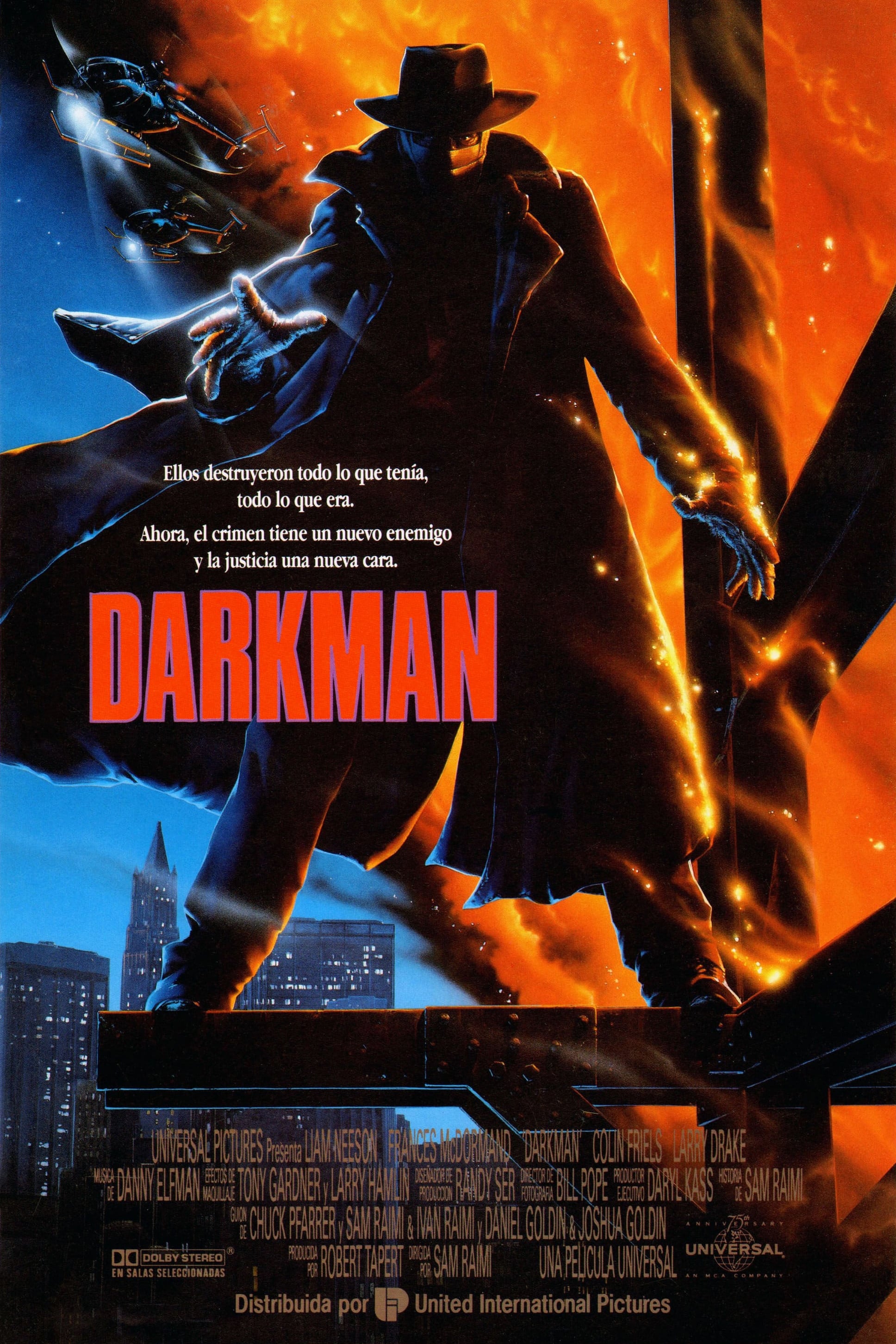
2. **Darkman (1990): Refining a Creatively Ambitious Original**Sam Raimi’s “Darkman” holds a unique place in 90s cinema as an underrated, compelling fusion of horror and superhero genres, centering on an original character created by Raimi himself. The film follows Dr. Peyton Westlake, a scientist developing synthetic skin for burn victims, who becomes disfigured and gains enhanced physical strength and emotional intensity after a brutal attack. It’s a tale of revenge, transformation, and the blurring lines between monster and hero, predating the mainstream superhero boom by a considerable margin.
Despite its creative ambition and favorable reviews, “Darkman” hasn’t achieved the cultural longevity of some of Raimi’s other projects. This isn’t necessarily a mark against its quality but rather an indication that its innovative blend of genres and dark themes might have been a bit ahead of its time or simply needed further refinement. The original earned back its $14 million budget several times over, proving its commercial viability, yet there’s still room for a modern update.
A good reboot of “Darkman” would pay fond homage to the original, preserving its unique tone and narrative while refining and perfecting its thematic elements. With contemporary audiences more accustomed to complex superhero narratives and the increasing popularity of body horror – a sub-genre explored by “Darkman” – a new iteration could find a far more receptive audience. The possibility of Liam Neeson even returning for a cameo adds a layer of nostalgic appeal, grounding a fresh take in the legacy of the original while pushing its artistic boundaries.

3. **Strange Days (1995): A Visionary Tech-Thriller Marred by External Factors**Kathryn Bigelow’s “Strange Days” is a quintessential example of a film whose brilliance was overshadowed by external factors, ultimately hindering its commercial success. Set in a crime-ridden 1999 Los Angeles, the film introduced audiences to SQUID (Superconducting QUantum Interference Device) technology, allowing individuals to record and re-experience others’ lived experiences, including physical sensations. This concept, remarkably similar to technology found in the “Cyberpunk: 2077” video game and increasingly relevant with advancements in virtual and augmented reality, was truly groundbreaking for its time.
Academic analysis, such as Romi Stepovich’s essay, points to “instability of its funding source during pre-production and poor marketing” as key reasons for its commercial failure. Roger Ebert famously gave it four stars, praising its sophisticated depiction of technology, while Entertainment Weekly lauded its visuals, despite finding the plot rote. This indicates a film that was conceptually strong and visually impressive but failed to connect with a wider audience due to issues beyond its creative merit.
Today, audiences possess a much wider frame of reference for understanding complex technological concepts than they did in 1995. A “Strange Days” reboot could leverage present-day special effects to enhance its cinematic and visual aspects, pushing the boundaries of immersive storytelling. The narrative itself doesn’t have to rigidly adhere to the original’s storyline; the core concept of re-experiencing memories and sensations offers myriad directions for exploration, making it a powerful vehicle for a modern thriller that can resonate deeply with a tech-savvy audience.
4. **Event Horizon (1997): Too Intense for Its Time, Perfect for Today**Some movies are appreciated in their time; others are not, and “Event Horizon” falls squarely into the latter category, at least initially. Despite boasting a strong ensemble cast, a compelling premise, and unique horror elements, it failed to make back its budget globally and received abysmal reviews, with critics often praising its opening act before noting a devolution of quality. Yet, in the years since, the film has become synonymous with the fusion of sci-fi and horror, its initial failure now puzzling many current-day fans.
The story, set in 2047, follows a rescue ship responding to a distress call from the Event Horizon, a vessel thought lost for seven years. The distress signal itself—consisting almost entirely of screams and howls—sets a terrifying tone, which escalates upon the discovery of a massacred crew. This intense blend of deep-space terror and visceral horror, while perhaps too much for mainstream audiences of the late 90s, aligns perfectly with current cinematic trends that embrace innovative body horror and gore.
Mainstream audiences of 1997 were simply not ready for the sheer intensity and unsettling themes “Event Horizon” presented. However, the cultural landscape has evolved, with viewers now more open to darker, more psychologically challenging genre fare. The existence of a TV show in the works at Amazon signifies a recognition of the film’s delayed but fervent appreciation, proving that its time has finally come to be fully explored and understood by a wider, more receptive audience, potentially as a serialized thriller offering deeper character and plot development.

5. **The Game (1997): A ‘Deeper Cut’ with Unending Twists**Celebrated director David Fincher is renowned for his dark, twisty thrillers and thought-provoking dramas, and 1997’s “The Game” is a testament to his mastery of the genre. Starring Michael Douglas as Nicholas Van Orton, a lonely billionaire obsessed with his father’s suicide, the film plunges him into a mysterious game run by Consumer Recreation Services (CRS), blurring the lines of reality and leading him to question everything he knows. It is explicitly identified as a story ‘best told through the medium of film,’ a 128-minute-long puzzle box that expertly captures the atmosphere of a man on the edge.
“The Game” was a decent film that performed well with both audiences and critics, securing its place as a robust thriller. However, compared to Fincher’s other blockbusters, it remains one of his ‘deeper cuts.’ This status is precisely what makes it an appealing candidate for a reboot. It means that a new iteration wouldn’t infringe too heavily on his massive cultural legacy, allowing creative teams to reinterpret its themes and narrative without the immense pressure of living up to a universally adored classic.
The film’s intricate plot, exploring themes of control, perception, and existential crisis, provides a rich foundation for modern storytelling. While a television adaptation is reportedly in development by Universal, the context suggests “The Game” still feels like something that ‘should be experienced in theaters.’ A theatrical reboot could leverage contemporary cinematic techniques to heighten the suspense and disorientation, re-engaging audiences with its masterful blend of psychological tension and unexpected revelations, proving that some puzzles are worth solving again.
6. **Dark City (1998): A Cult Classic That Deserved More Recognition**”Dark City,” Alex Proyas’ high-concept sci-fi film, is a prime example of a visionary work that, despite its critical acclaim and eventual cult following, initially bombed at the box office. Released just a year before “The Matrix,” it shares many themes and aesthetic motifs, but perhaps suffered from unfortunate timing and a less-wordy script. The film follows John Murdoch, who awakens with amnesia and attempts to evade mysterious ‘Strangers’ while uncovering his identity in a perpetually dark, gothic, noir-esque city.
While visually similar to “The Matrix,” “Dark City” offers a distinct narrative experience, better suited to a reboot due to its more finite and optimistic ending. Its cast, known for ‘subtle nuance’ rather than ‘big swings,’ provided a unique atmosphere that resonated with critics and garnered several awards nods. However, it was ultimately overshadowed by its spiritual successor, preventing it from establishing itself as a sci-fi mainstay, despite its initial respectable box office gross.
Now, with a “Dark City” television show reportedly in the early stages of production, its moment to shine independently has arrived. A reboot has the opportunity to fully explore its rich lore and philosophical questions about reality, memory, and free will, which are arguably more complex and nuanced than those of its more famous contemporary. Modern audiences, having digested a steady diet of mind-bending narratives, are better equipped to appreciate the intricacies of “Dark City” and embrace its unique blend of noir aesthetic and existential sci-fi mystery.
7. **American Psycho (2000): Timely Social Commentary for a New Era**Bret Easton Ellis’s “American Psycho,” adapted into a film in 2000, explored the dark underbelly of 1980s yuppie culture and unchecked consumerism through the eyes of Patrick Bateman. The original film, while divisive upon its release, has garnered a significant cult following over the years for its chilling satire and provocative themes. Now, with the political and social climate as it is, particularly within what is being called “Trump’s America,” the very idea of a remake feels incredibly potent and timely for a new generation.
Lionsgate’s decision to revisit this narrative has certainly sparked strong reactions among fans, who often feel protective of beloved originals. However, the author himself, Bret Easton Ellis, has emerged as a vocal champion for the remake, signaling a significant vote of confidence that goes beyond mere commercial interest. Ellis was “famously never too pleased with Mary Harron’s adaptation,” suggesting that a new iteration could align more closely with his original vision or offer a fresh, genuine interpretation he endorses.
Ellis even took to Twitter to express his support, stating: “Haters beware: I just had a long discussion with Noble Jones, the writer/director of the ‘new’ American Psycho movie. His take is genuine.” This enthusiastic backing from the source material’s creator suggests that the reboot aims for more than just a cash grab; it seeks to provide a truly relevant and impactful commentary, which is crucial for a film with such sharp social critique at its core. The potential to update the narrative for modern sensibilities, exploring contemporary anxieties and societal obsessions through Bateman’s grotesque lens, makes this reboot a fascinating prospect for critical engagement.
8. **I Know What You Did Last Summer (1997): Slasher Nostalgia with Enduring Appeal**The late 90s were a golden era for teen slasher films, and “I Know What You Did Last Summer” firmly etched its place in that canon. Following a group of teenagers haunted by a hit-and-run accident, the film delivered jump scares, suspense, and a memorable killer, building on the success of earlier genre revivals. Its sequels, including “I Still Know What You Did Last Summer,” further cemented the franchise’s brand recognition and its place in the nostalgic hearts of many, proving the enduring thrill of its premise.
While the humorous suggestion of “I Really Do Still Know What You Did Last Summer” remains a jest, the underlying truth is that the franchise’s appeal endures, proving that some stories in horror have remarkable longevity. The interest from prominent figures in horror, such as Jason Blum, in “resurrecting Jim Gillespie’s 1997 slasher” is a clear indicator of this lasting power. Blumhouse Productions, known for its innovative and commercially successful horror films, seeing potential in this classic speaks volumes about its reboot viability and its capacity to attract new viewers while satisfying existing fans.
This enduring appeal isn’t just about a simple retread; it’s about tapping into a well-loved formula and updating it for a new generation. The slasher genre itself has evolved, with modern audiences appreciating clever twists and deeper psychological scares, which a reboot could readily incorporate. The film’s central premise – that “some things don’t stay buried forever” – serves as a meta-commentary on the reboot trend itself, highlighting how certain narratives with a strong following are prime candidates for reinterpretation, ensuring their continued presence in popular culture.
9. **Indecent Proposal (1993): Re-evaluating Controversial Narratives for Modern Times**”Indecent Proposal” was a significant film in the 90s, sparking intense debate with its controversial premise: a billionaire offering a struggling couple one million dollars for one night with the wife. Starring Robert Redford, Woody Harrelson, and Demi Moore, the film delved into themes of love, money, and morality, pushing societal boundaries at the time. Yet, viewed through the lens of today’s social discourse, particularly in the post-#MeToo era, the narrative poses entirely new questions and challenges.
Paramount Players’ decision to commission a writer for an “Indecent Proposal” remake demonstrates a willingness to tackle complex and potentially problematic source material head-on. The context explicitly acknowledges that the film “doesn’t seem like the kind of film that would go down too well in the current climate,” indicating an acute awareness of the original’s dated aspects. This self-awareness is key, suggesting that the reboot wouldn’t be a mere copy, but rather a thoughtful re-examination of its core themes and their modern implications.
The opportunity here is not just to re-tell a story, but to explore how such a premise would be perceived and reacted to in a modern world, where conversations around consent and agency are far more nuanced. The context points directly to “what the #MeToo critics have to say about this one,” highlighting the immense potential for a reboot to engage directly with contemporary conversations about consent, power dynamics, and gender exploitation. This strategic re-evaluation transforms a potentially problematic narrative into a platform for vital social commentary, aligning perfectly with the desire to update narratives for modern sensibilities.
10. **Barb Wire (1996): Cult Potential and Timely Social Relevance**”Barb Wire,” the 1996 superhero film starring Pamela Anderson, was a box office disappointment and received largely unfavorable reviews, with critics often comparing its rudimentary plot unfavorably to “Casablanca.” It followed a “buxom bar owner” in a future ravaged by a “Second American Civil War,” who navigates a world of ” attempts” while helping a scientist escape to Canada. Despite its initial commercial and critical failure, the surrounding context of Anderson’s recent career resurgence and renewed conversations about exploitation make a “Barb Wire” reboot surprisingly relevant today.
Pamela Anderson’s “well-deserved renaissance” as an actor and performer, significantly fueled by the Hulu series “Pam & Tommy” and her independent film “The Last Showgirl,” has initiated a broader public discussion. This conversation centers on the “exploitation and misogyny that led to the downfall of Anderson’s initial attempt at a respectable acting career,” providing a compelling backdrop. This new context creates a powerful lens through which a “Barb Wire” reboot could be viewed, transforming a maligned film into a poignant exploration of its original star’s experiences and the very themes it inadvertently touched upon.
The film’s dystopian setting in a “Second American Civil War” also provides an unexpectedly timely backdrop that could resonate deeply with current audiences. In today’s highly polarized political and social climate, a narrative set against such a conflict could find potent resonance, allowing for a gritty, impactful action thriller that addresses contemporary anxieties and societal divides with heightened urgency. A reboot could move beyond the original’s perceived flaws, leveraging modern filmmaking techniques and a refined script to deliver a story that not only entertains but also offers insightful social commentary.
11. **The Craft (1996): Rekindling a Beloved Cult Following**”The Craft” was more than just a teen movie in the 90s; it became a cultural touchstone for many, particularly those drawn to its themes of witchcraft, female empowerment, and the complex landscape of teenage angst. Phrases like “light as a feather, stiff as a board” became staples at sleepover parties, solidifying its status as a defining film of its era and cultivating a dedicated “goth teen weirdo” following that championed its unique blend of horror and high school drama. This strong, established cult following is a primary reason why a sequel is now “on the way.”
The enduring popularity of “The Craft” demonstrates the potent power of brand recognition and nostalgia in Hollywood’s reboot strategy, especially for films that resonated deeply with a specific demographic. Fans have consistently championed the film over the decades, and the announcement of a sequel, set “two decades after the events of the first film,” directly caters to this loyal audience, promising to expand upon a beloved universe. While details remain somewhat scarce, the anticipation itself speaks volumes about the original’s lasting impact and its cultural imprint.
This isn’t just about recreating a past success; it’s about honoring the spirit of what made “The Craft” so special to its original viewers while introducing its compelling blend of supernatural drama and social commentary to a new generation. The challenge for the new creative team is to “capture the magic of the original” while introducing fresh elements that feel contemporary. The success of this sequel will undoubtedly hinge on its ability to respect its roots and the emotional connection fans have, while offering a narrative that resonates with the unique experiences and sensibilities of today’s young adults.
12. **Starship Troopers (1997): Brand Recognition and Philosophical Re-evaluation**Paul Verhoeven’s “Starship Troopers” stands as a satirical sci-fi masterpiece, cleverly disguising a sharp critique of fascism and militarism within the framework of a B-movie monster flick. Despite its initial critical reception being somewhat mixed, the film has since gained a significant cult following and is widely recognized for its subversive commentary, which became more apparent over time. The enduring presence of its distinctive aesthetic and bold narrative makes it a prime candidate for a contemporary re-evaluation.
Columbia Pictures’ decision to reboot “Starship Troopers,” and their move to hire “Baywatch writers Mark Swift and Damian Shannon” for the script, highlights the studio’s belief in the brand’s commercial viability and its potential to attract a broad audience. While “director of the original Paul Verhoeven reckons it’s a terrible idea,” this is a common sentiment among creators regarding reboots. However, the sheer brand recognition of “Starship Troopers” is a powerful draw, promising a built-in audience eager to revisit its universe and experience its unique blend of action and satire.
The potential for a reboot lies in its ability to delve deeper into the philosophical questions the original film playfully posed, especially given current global political climates and ongoing discussions around patriotism, conflict, and societal control. A modern “Starship Troopers” could amplify the satire, explore the complexities of military service, and comment on contemporary societal structures in a way that feels fresh and impactful, leveraging the original’s foundation for new insights. The prospect of the “bugs will be back in the near future” offers not just nostalgia but an opportunity to reconsider a story that was perhaps ahead of its time.
Ultimately, Hollywood’s ongoing fascination with rebooting 90s thriller films is far from a mere sign of creative exhaustion. Instead, it represents a sophisticated, often calculated strategy to harness established intellectual property for new storytelling ambitions and to connect with modern audiences. Whether by providing fresh social commentary for narratives once deemed controversial, leveraging the fierce loyalty of cult followings, or simply updating visually ambitious concepts with cutting-edge technology, these reboots demonstrate a clear intent to engage a contemporary audience on multiple levels. This dynamic interplay between nostalgia and innovation suggests that some stories, no matter their original context, possess an inherent power that demands retelling, re-examining, and re-experiencing in an ever-evolving cinematic landscape, proving their enduring relevance and adaptability.