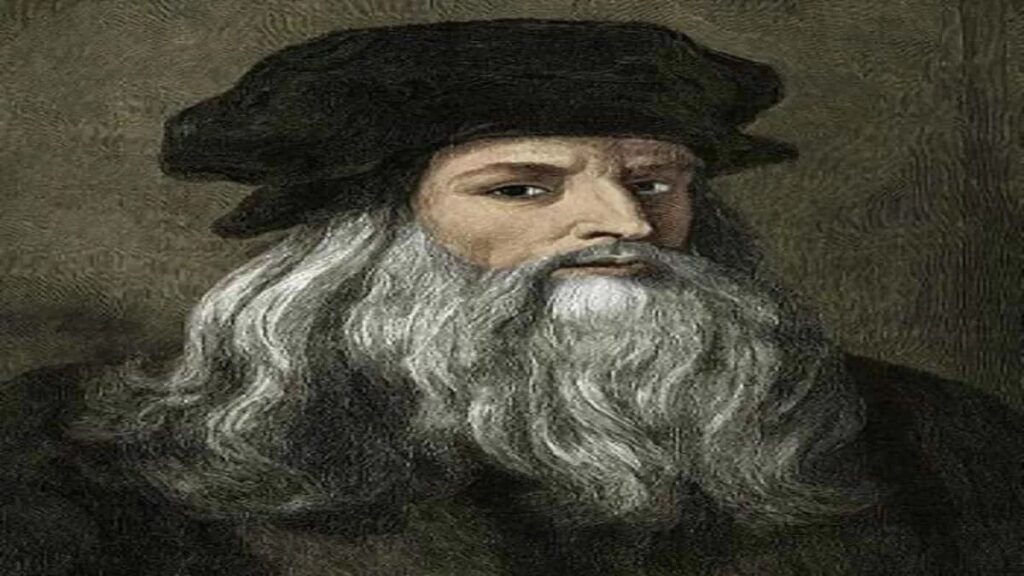
Prepare to be absolutely captivated as we embark on an exhilarating journey through the life of perhaps the most celebrated genius the world has ever known: Leonardo da Vinci! His name alone conjures images of revolutionary art and boundless intellect, a man whose curiosity knew no limits and whose contributions reshaped the course of history. He wasn’t just a painter; he was a draughtsman, engineer, scientist, theorist, sculptor, and architect – truly a polymath of the High Renaissance!
Even centuries after his passing, the sheer breadth of his achievements, his diverse interests, his enigmatic personal life, and his empirical thinking continue to inspire awe and admiration. From the moment he first put brush to canvas to the intricate notes he scribbled in his now-famous notebooks, Leonardo epitomized the Renaissance humanist ideal. His influence on generations of artists and thinkers is matched only by that of his younger contemporary, Michelangelo.
So, buckle up! We’re diving deep into the fascinating world of Leonardo da Vinci, pulling back the curtain on the pivotal moments and groundbreaking creations that cemented his legend. Get ready to discover the unbelievable stories behind the man who gave us the *Mona Lisa*, *The Last Supper*, and countless inventions that were centuries ahead of their time. Here are just a few of the jaw-dropping revelations about this unparalleled icon!
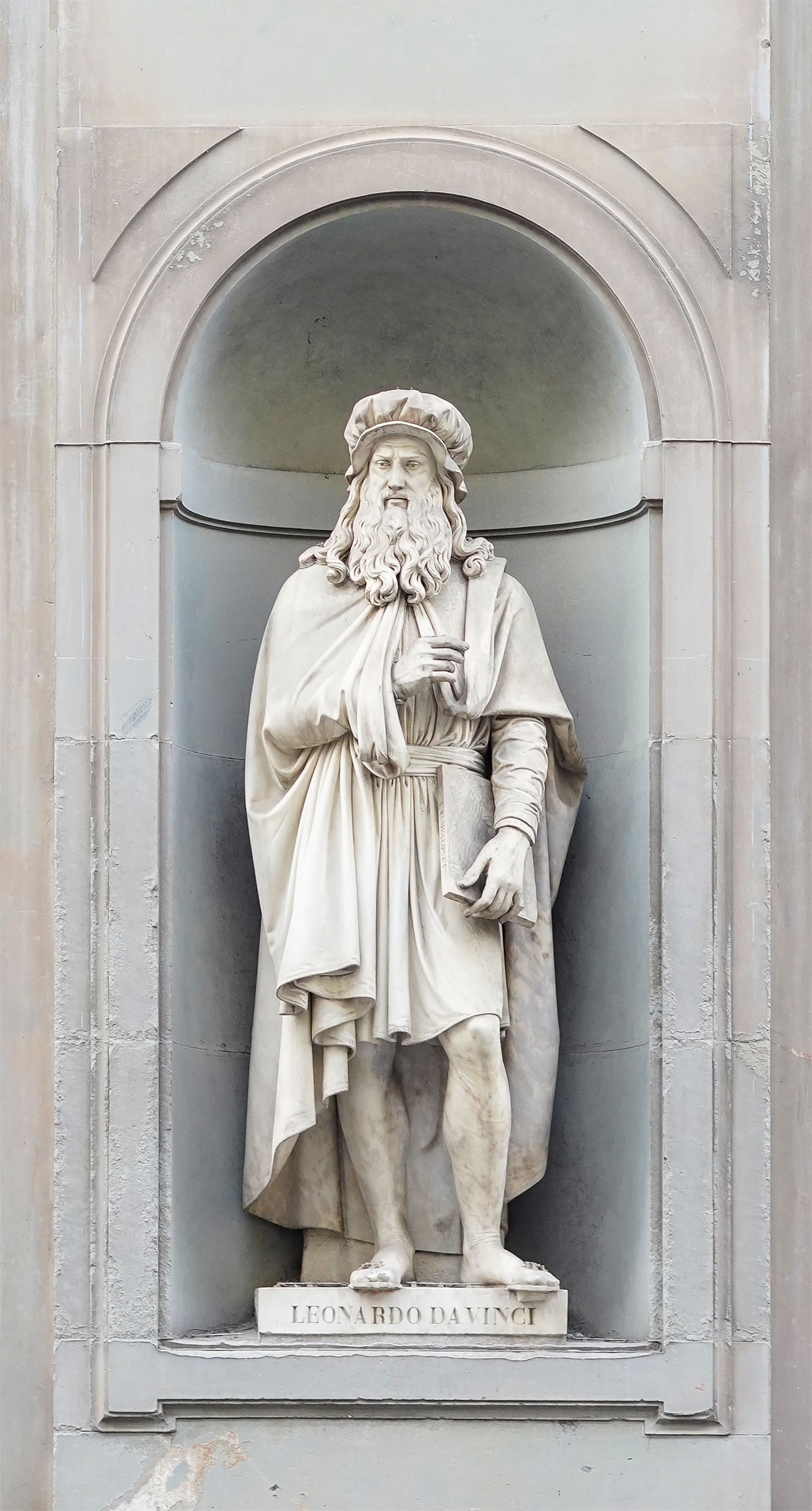
1. **His Extraordinary Birth and Early Years**Leonardo da Vinci, properly named Leonardo di ser Piero da Vinci, which translates to “Leonardo, son of ser Piero from Vinci,” began his incredible life on April 15, 1452. He was born in, or very close to, the picturesque Tuscan hill town of Vinci, Italy, a mere 20 miles from the bustling city of Florence. What makes his start even more intriguing is that he was born out of wedlock, a child of Piero da Vinci, a successful Florentine legal notary, and Caterina di Meo Lippi, a woman from the lower class.
Details of Leonardo’s childhood are largely shrouded in a fascinating blend of fact and myth, partly due to the often-apocryphal biography penned by 16th-century art historian Giorgio Vasari. Tax records from 1457 suggest he was living in the household of his paternal grandfather, Antonio da Vinci, though it’s possible he spent his earliest years with his mother in Vinci itself. It’s truly a testament to his innate brilliance that, despite coming from an unconventional background, his destiny was set to be anything but ordinary.
Interestingly, both of Leonardo’s parents married separately the year after his birth. Caterina, who appeared in his later notes simply as “Caterina” or “Catelina,” is usually identified as Caterina Buti del Vacca. She married local artisan Antonio di Piero Buti del Vacca, known as L’Accattabriga, ‘the quarrelsome one.’ Ser Piero, Leonardo’s father, went on to have three subsequent marriages after the death of his first wife, Albiera Amadori, in 1464.
From these marriages, Leonardo eventually gained 16 half-siblings, though only 11 survived infancy. They were considerably younger than him, with the last being born when he was 46 years old, and he had very little contact with them. Despite his father’s successful career as a descendant of a long line of notaries in Florence, Leonardo himself received only a basic and informal education in writing, reading, and mathematics. This decision was likely made because his extraordinary artistic talents were recognized early, prompting his family to focus their attention there, a choice that would undoubtedly shape the future of art and science.
Read more about: Claudia Cardinale, Italian Cinema’s Enduring Star and ‘Dream Girl,’ Dies at 87
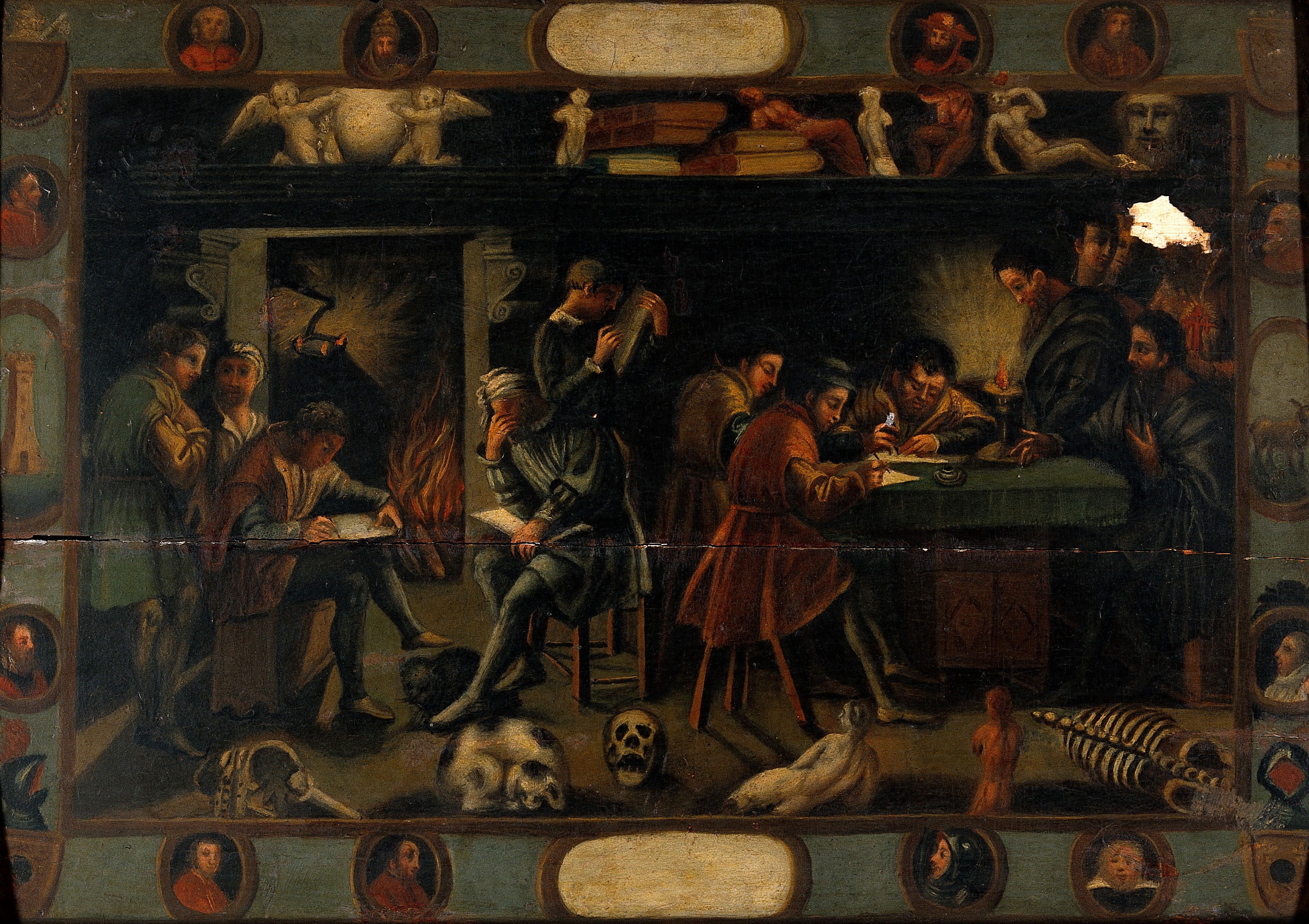
2. **The Apprentice Years with Verrocchio**Around the mid-1460s, a pivotal moment arrived in young Leonardo’s life when his family made the move to Florence. This vibrant city was, at the time, the beating heart of Christian Humanist thought and culture, brimming with artistic innovation and intellectual fervor. At approximately 14 years old, Leonardo began what would become a transformative experience: he became a ‘garzone,’ or studio boy, in the illustrious workshop of Andrea del Verrocchio. Verrocchio was not just any artist; he was the leading Florentine painter and sculptor of his era, and his influence on Leonardo would be profound.
This apprenticeship, which began around the time of the great sculptor Donatello’s death, saw Leonardo become a formal apprentice by the age of 17, a role he maintained for seven intensive years. It wasn’t just painting he learned; Verrocchio’s workshop was a crucible of creativity and technical skill. Leonardo was immersed in a wide array of disciplines, including drafting, chemistry, metallurgy, metal working, plaster casting, leather working, mechanics, and woodwork. Alongside these practical trades, he honed his artistic talents in drawing, painting, sculpting, and modeling, laying an incredibly diverse foundation for his future endeavors.
Leonardo found himself surrounded by an extraordinary peer group during these years. Other famous painters who either apprenticed in or associated with Verrocchio’s workshop included names that would also echo through history: Ghirlandaio, Perugino, Botticelli, and Lorenzo di Credi. He would have encountered these luminaries either within Verrocchio’s studio or at the Platonic Academy of the Medici, an intellectual hub where artists, poets, and philosophers converged. Florence itself was a living canvas, adorned with the works of masters like Masaccio and Ghiberti, whose realism, emotion, and intricate compositions deeply impacted the young Leonardo.
One of the most famous anecdotes from this period, recounted by Vasari, highlights Leonardo’s burgeoning genius. He collaborated with Verrocchio on *The Baptism of Christ* (c. 1472–1475), painting the young angel holding Jesus’s robe. Vasari claims Leonardo’s skill was so superior to his master’s that Verrocchio was utterly amazed, purportedly laying down his brush and never painting again – a dramatic, though likely apocryphal, testament to Leonardo’s extraordinary talent. The innovative use of oil paint in this work, particularly in the landscape and parts of Jesus’s figure, is widely seen as clear evidence of Leonardo’s hand, signaling the arrival of a truly groundbreaking artist.
Read more about: A Journey Through Genius: Unveiling the Life, Art, and Enduring Legacy of Leonardo da Vinci
3. **Emerging as a Master Painter**By 1472, at the remarkable age of 20, Leonardo had achieved the significant milestone of qualifying as a master in the Guild of Saint Luke, the esteemed guild for artists and doctors of medicine. This was a clear declaration of his independent artistic status. Yet, his attachment to Verrocchio remained so strong that even after his father established him in his own workshop, Leonardo continued to collaborate and live with his former master. This enduring bond speaks volumes about the mentorship and the deep respect between them, but it also marked a transition point toward his truly independent career.
It was during this period that Leonardo produced his earliest known dated work: a captivating pen-and-ink drawing of the Arno valley from 1473. This early landscape not only showcased his nascent talent but also foreshadowed his lifelong fascination with natural phenomena and topography. Interestingly, Vasari tells us that the young Leonardo was the first to propose an ambitious project: making the Arno river a navigable channel between Florence and Pisa, demonstrating his early inclination towards engineering and practical problem-solving alongside his artistic pursuits.
January 1478 brought a significant step in his career: an independent commission to paint an altarpiece for the Chapel of Saint Bernard in the Florentine town hall, the Palazzo della Signoria. This commission was a powerful indicator of his growing independence from Verrocchio’s studio, establishing him as an artist capable of handling major public works on his own. In March 1481, he received another notable commission from the monks of San Donato in Scopeto for *The Adoration of the Magi*.
However, neither of these initial commissions were ever completed. Leonardo abandoned them when he made a pivotal move, offering his services to Duke Ludovico Sforza in Milan. His letter to Sforza was a masterclass in self-promotion, detailing an astonishing array of skills in engineering and weapon design, almost as an afterthought, he mentioned, “I can paint.” To further impress the duke, he arrived with a silver string instrument, either a lute or lyre, uniquely crafted in the form of a horse’s head – a truly charming and memorable introduction to a powerful patron.
Read more about: Leonardo da Vinci: Unpacking the Genius, His Masterpieces, and the Fascinating Secrets of a Renaissance Icon
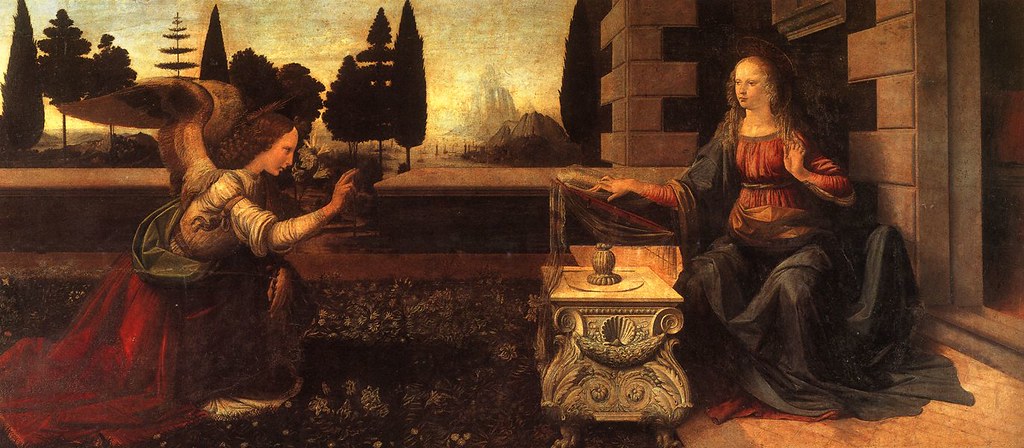
4. **The Milanese Years: Artist, Engineer, Entertainer**Leonardo’s nearly two decades in Milan, from 1482 to 1499, marked an incredibly fertile period of innovation and creation. He wasn’t just an artist for Ludovico Sforza; he was a versatile talent, commissioned for a staggering array of projects. It was here that he was tasked with painting the iconic *Virgin of the Rocks* for the Confraternity of the Immaculate Conception, a work that showcases his profound understanding of light, shadow, and human emotion within a mystical landscape. Simultaneously, he began work on what would become one of the most famous paintings in Western art: *The Last Supper* for the monastery of Santa Maria delle Grazie.
His duties extended far beyond the canvas. In the spring of 1485, Leonardo even traveled to Hungary on behalf of Sforza to meet King Matthias Corvinus, who commissioned him to paint a Madonna. Five years later, in 1490, his expertise was sought as a consultant, alongside Francesco di Giorgio Martini, for the grand building site of the cathedral of Pavia. During this visit, he was so struck by the equestrian statue of Regisole that he left behind a sketch, revealing his deep appreciation for monumental sculpture and engineering.
One of the most ambitious projects of his Milanese period was a colossal equestrian monument to Ludovico’s predecessor, Francesco Sforza, which became known as the *Gran Cavallo*. This statue was envisioned to surpass in size even Donatello’s *Gattamelata* and Verrocchio’s *Bartolomeo Colleoni*, the two largest equestrian statues of the Renaissance. Leonardo dedicated immense effort to this, completing a magnificent model for the horse and meticulously detailed plans for its casting. Tragically, in November 1494, history intervened: Ludovico diverted the metal, intended for the statue, to his brother-in-law for cannons to defend Milan from the invading forces of Charles VIII of France, forever halting the *Gran Cavallo*’s completion.
Yet, his creative energy remained boundless. Around 1498, contemporary records show that Leonardo and his assistants were commissioned by the Duke of Milan to adorn the Sala delle Asse in the Sforza Castle. This project culminated in a spectacular trompe-l’œil decoration, transforming the great hall into what appeared to be a lush pergola. The design featured the interwoven limbs of sixteen mulberry trees, their canopy culminating in an intricate labyrinth of leaves and knots that adorned the ceiling, a breathtaking example of his artistic vision combined with his keen understanding of natural forms.
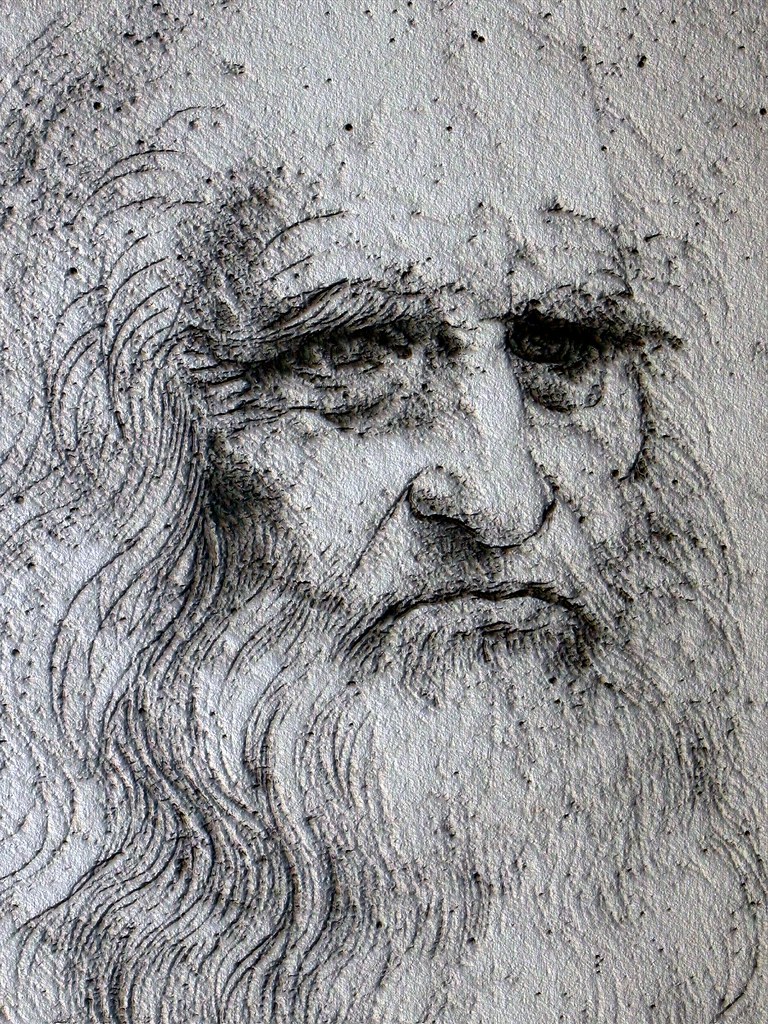
5. **The Masterpiece of The Last Supper**Among the countless works that define Leonardo’s genius, *The Last Supper* stands as an unparalleled achievement, commissioned during his first Milanese period for the refectory of the Convent of Santa Maria delle Grazie. This monumental painting captures one of the most dramatic moments in Christian scripture: the last meal shared by Jesus with his disciples just before his capture and death. Leonardo chose to depict the exact instant Jesus reveals, “one of you will betray me,” immortalizing the profound consternation and varied emotional responses this revelation caused among his followers.
The creative process behind such a masterpiece was as unique as the artist himself. The writer Matteo Bandello, who observed Leonardo at work, vividly recounted his unusual painting habits. Some days, Leonardo would paint with an almost feverish intensity from dawn till dusk, completely forgetting to eat. Then, for three or four days at a time, he would not touch his brush, disappearing into contemplation. This erratic yet deeply thoughtful approach was beyond the comprehension of the convent’s prior, who constantly hounded him until Leonardo was compelled to ask Ludovico Sforza to intervene.
Another famous anecdote, recounted by Vasari, details Leonardo’s struggle to adequately depict the faces of Christ and the traitor Judas. In a moment of frustration and perhaps wit, Leonardo told the duke that if the prior continued his incessant nagging, he might be compelled to use the prior himself as the model for Judas, a story that adds a touch of humor to the creation of this solemn work. This particular challenge highlights Leonardo’s meticulous focus on human physiognomy and emotional expression, striving for absolute authenticity in his characters.
Upon its completion, *The Last Supper* was immediately acclaimed as a masterpiece of both design and characterization, stunning viewers with its innovative composition and psychological depth. However, Leonardo’s experimental technique, deviating from the reliable fresco method, unfortunately led to its rapid deterioration. Instead of traditional fresco, he applied tempera over a ground that was mainly gesso, resulting in a surface highly susceptible to mold and flaking. Within a mere hundred years, it was already described by one viewer as “completely ruined.” Despite its physical fragility, the painting has endured as one of the most reproduced works of art, inspiring countless copies across various mediums and cementing its place in the global artistic consciousness.
Read more about: A Journey Through Genius: Unveiling the Life, Art, and Enduring Legacy of Leonardo da Vinci
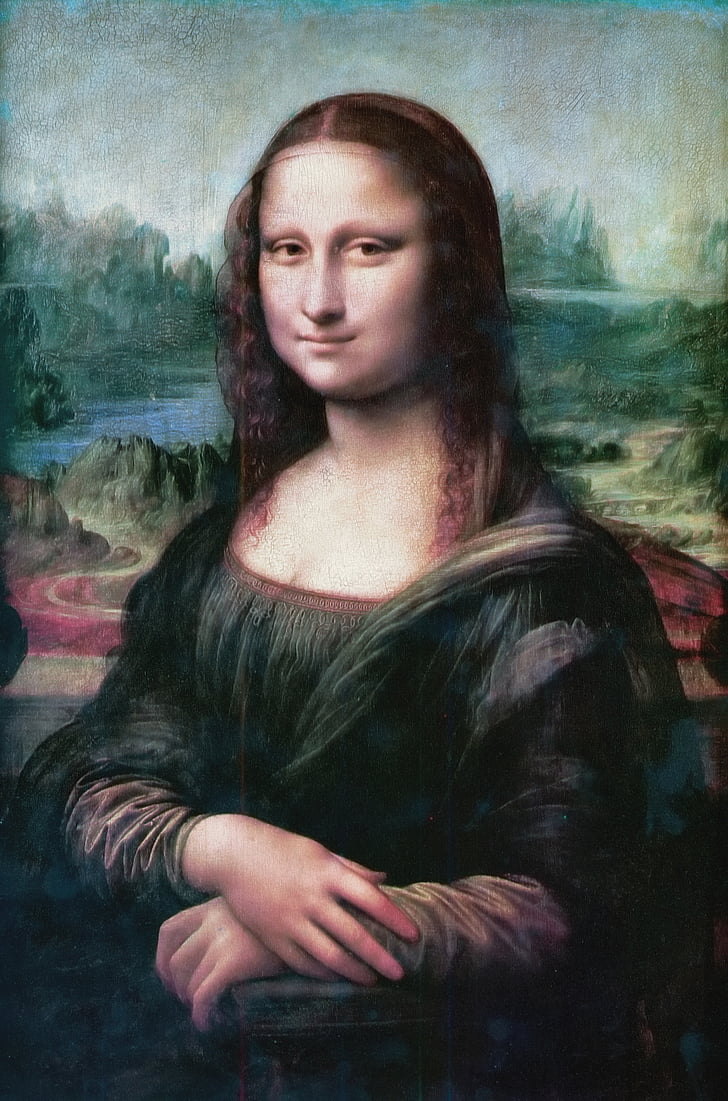
6. **The Elusive Smile of the Mona Lisa**Returning to Florence by early 1503, Leonardo rejoined the Guild of Saint Luke and, in that very same month, began work on what would become arguably the most famous painting in the world: the portrait of Lisa del Giocondo, famously known as the *Mona Lisa*. This was a project he would continue to refine and carry with him until his twilight years, a testament to its profound personal and artistic significance for him. The painting’s global fame rests, in particular, on the elusive, enigmatic smile gracing the woman’s face, a quality that has fascinated and perplexed viewers for centuries.
This mysterious quality, the very essence of her smile, is perhaps due to Leonardo’s masterful use of subtly shadowed corners of the mouth and eyes, making it almost impossible to pinpoint the exact nature of her expression. Is she amused? Knowing? Dreamy? It’s this ambiguity that has captivated generations. The shadowy, soft transitions for which the work is renowned came to be known as ‘sfumato,’ or literally, ‘Leonardo’s smoke,’ a technique that blurs outlines and tones to create a soft, hazy appearance, making the figures merge seamlessly with the background.
Vasari himself was utterly enchanted by the portrait, writing that the smile was “so pleasing that it seems more divine than human, and it was considered a wondrous thing that it was as lively as the smile of the living original.” This glowing praise from his contemporary underscores the immediate impact and revolutionary nature of the *Mona Lisa* upon its creation. It wasn’t just a portrait; it was a living, breathing presence on the canvas, a feat of artistic magic that defied conventional understanding.
Beyond the smile, other characteristics contribute to the painting’s unparalleled allure. Her unadorned dress ensures that the viewer’s attention is drawn directly to her expressive eyes and hands, free from the distraction of extraneous details. The dramatic landscape background, often described as appearing to be in a state of flux, adds to the mysterious atmosphere, creating a world both grand and unsettling behind her serene presence. The subdued coloring contributes to its timeless quality, drawing the viewer deeper into its subtle complexities.
Furthermore, the painting is celebrated for the extremely smooth nature of Leonardo’s painterly technique. He employed oils laid on much like tempera, meticulously blended on the surface so that individual brushstrokes are virtually indistinguishable. This seamless finish creates a remarkable illusion of reality, so much so that Vasari expressed that the painting’s quality would make even “the most confident master… despair and lose heart.” The *Mona Lisa*’s perfect state of preservation, with no signs of repair or overpainting, is a rare marvel for a panel painting of its age, allowing us to experience Leonardo’s genius almost exactly as he intended.
Read more about: A Journey Through Genius: Unveiling the Life, Art, and Enduring Legacy of Leonardo da Vinci

7. **Return to Florence and a New Role as Military Architect**As the 16th century dawned with political turmoil, Leonardo da Vinci fled Milan in 1500 after Ludovico Sforza’s overthrow. Accompanied by his loyal assistant Salaì and mathematician Luca Pacioli, he first sought refuge in Venice. Here, his unparalleled intellect was put to work, devising ingenious methods to defend the city from naval attacks, showcasing his boundless, practical genius beyond art!
Upon his return to Florence that same year, Leonardo was welcomed, finding a workshop at the monastery of Santissima Annunziata. He created the breathtaking cartoon of *The Virgin and Child with Saint Anne and Saint John the Baptist*. This artwork was an instant sensation, so admired that, as Vasari tells us, “men [and] women, young and old” flocked to see it “as if they were going to a solemn festival,” highlighting its profound beauty.
But Leonardo’s drive for innovation stretched beyond fine art. In 1502, he entered the service of Cesare Borgia as chief military architect and engineer. Traveling extensively, he created meticulous maps like the strategic town plan of Imola and a crucial overlay of the Chiana Valley. He even envisioned a grand dam project to supply Florence with water, proving his visionary genius extended into vital civil engineering. Returning to Florence by early 1503, he began working on the *Mona Lisa*. He then dedicated two years to painting *The Battle of Anghiari*, a dramatic artistic challenge.
Read more about: A Journey Through Genius: Unveiling the Life, Art, and Enduring Legacy of Leonardo da Vinci
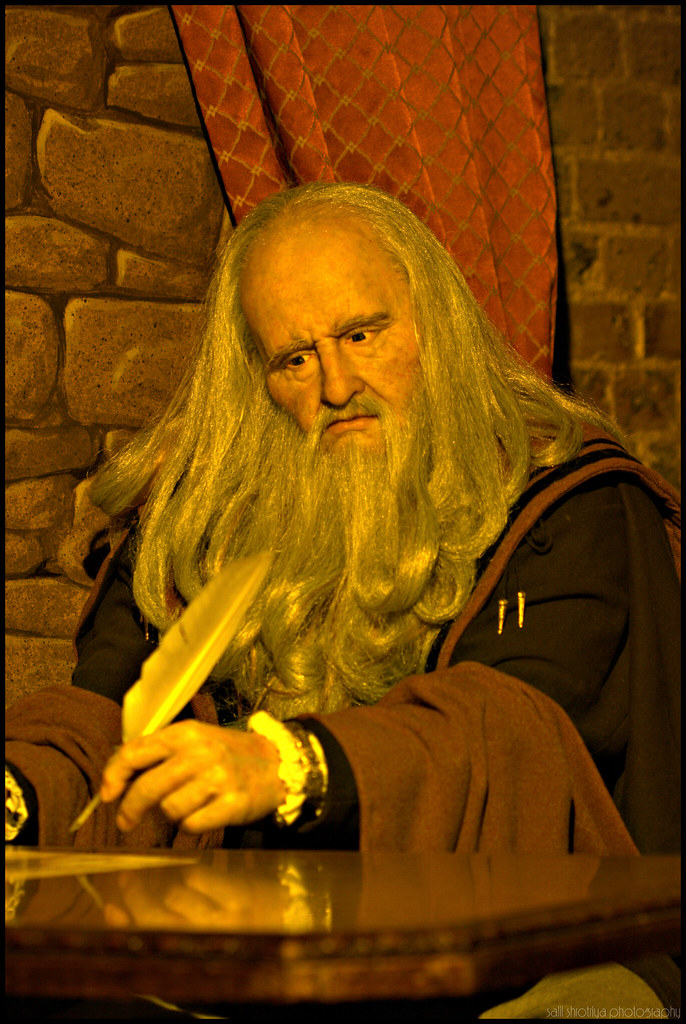
8. **The Second Milanese Period and a Flourishing of Scientific Minds**In 1506, Leonardo was personally summoned back to Milan by Charles II d’Amboise, the French governor, indicating his continued prestige. This ushered in his second Milanese period, where he took on the brilliant and devoted student, Count Francesco Melzi, who would become his favorite companion. Despite Florence’s desire for his return, his stay in Milan was extended at King Louis XII’s request, granting him freedom to immerse himself in scientific interests, delving into studies far ahead of his contemporaries.
His workshop in Milan became a crucible of creativity, attracting prominent painters like Bernardino Luini, Giovanni Antonio Boltraffio, and Marco d’Oggiono. These artists absorbed his revolutionary techniques and profound philosophical approach to art, spreading his influence widely. By 1508, Leonardo was settled once more in his own home in Porta Orientale, Milan, continuing his intellectual pursuits.
This phase saw him planning an elaborate equestrian monument for Gian Giacomo Trivulzio. However, like the *Gran Cavallo*, this ambitious project was prevented by political turmoil: an invasion drove the French from Milan in 1512. Despite the chaos, Leonardo chose to remain, continually observing, documenting, and learning, even spending several months in 1513 at the serene Medici’s Vaprio d’Adda villa.
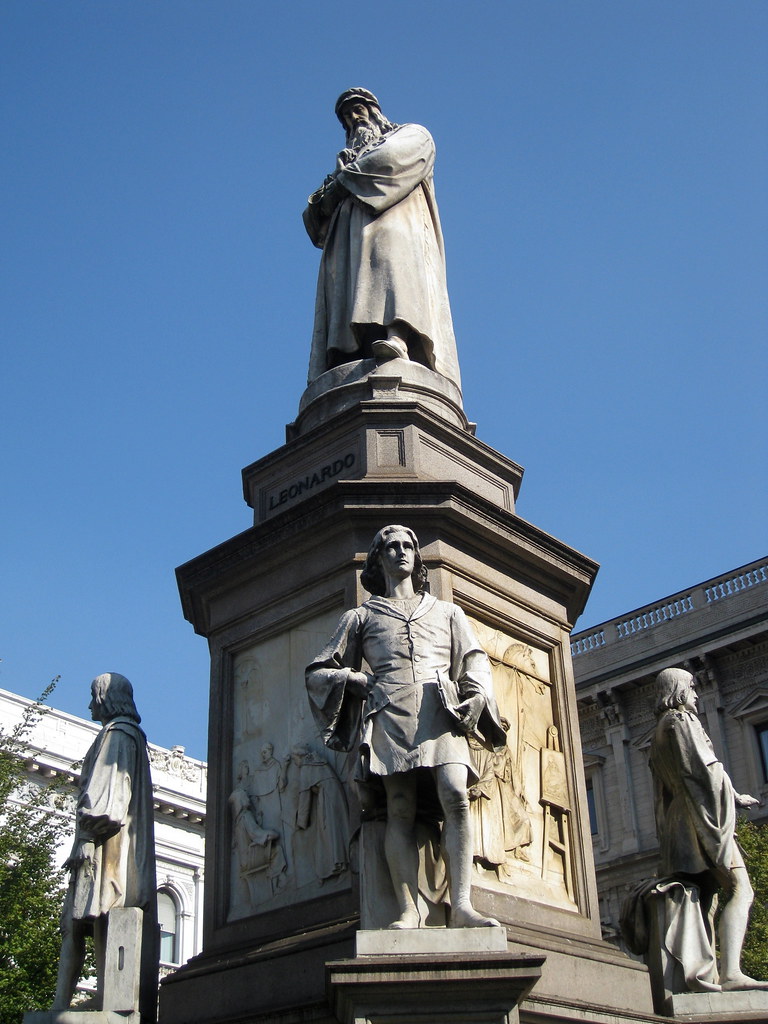
9. **A Brief but Illustrious Stay in Papal Rome**The pursuit of knowledge and patronage led Leonardo to Rome in September 1513, after Lorenzo de’ Medici’s son ascended to the papacy as Leo X. He was warmly received by the Pope’s brother, Giuliano, a clear sign of his esteemed status. For three years, Leonardo resided in the magnificent Belvedere Courtyard within the Apostolic Palace, where Michelangelo and Raphael were also actively creating! He was granted a generous allowance, underscoring the value placed on his unique contributions.
A charming anecdote from Vasari recounts his playful spirit: decorating a lizard with scales dipped in quicksilver, a whimsical glimpse into his mind. While the Pope commissioned Leonardo for a painting, his boundless curiosity led him to develop a revolutionary new varnish, causing the original commission to be canceled. It was during this period that Leonardo first fell ill, experiencing initial strokes foreshadowing his eventual passing.
Despite health challenges, Leonardo’s intellectual hunger remained unsated. He passionately practiced botany in the lush Vatican Gardens and his engineering prowess was again called upon for the Pope’s ambitious project to drain the vast Pontine Marshes. Ever the anatomist, he continued his dissections of cadavers, meticulously making notes for a comprehensive treatise on vocal cords, demonstrating his enduring drive to contribute and innovate.
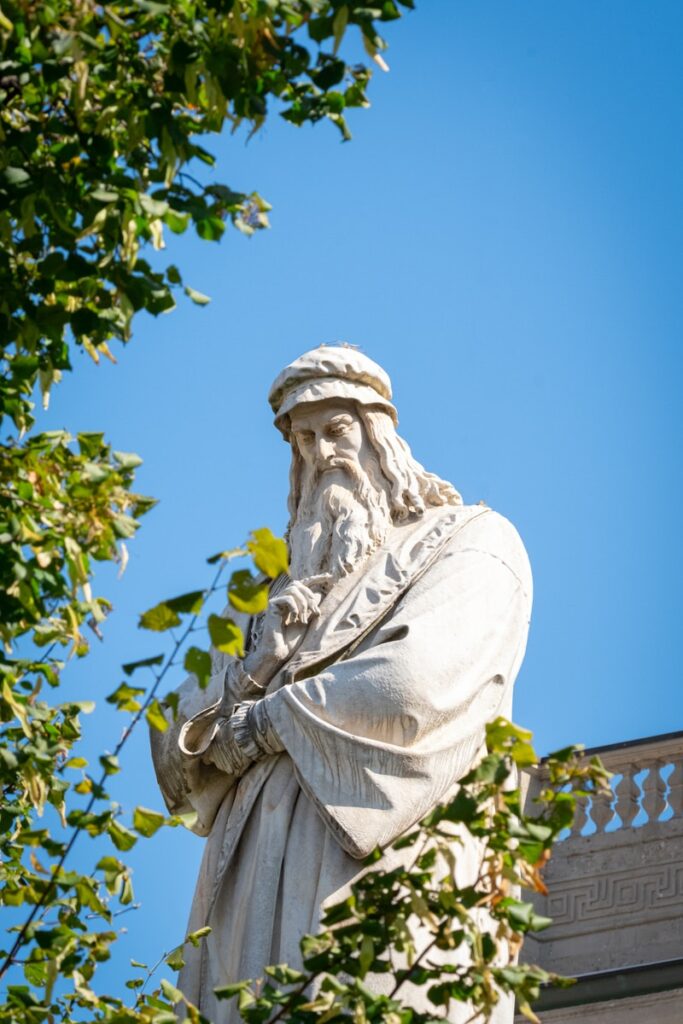
10. **Final Years in the Embrace of French Royalty**In a dramatic turn, King Francis I of France recaptured Milan in October 1515. Recognizing Leonardo’s unparalleled genius, he extended a personal invitation. By March 1516, the French ambassador conveyed Francis’s eager anticipation, assuring Leonardo of a warm reception. This set the stage for the final, illustrious chapter of Leonardo’s life, as he moved to France to serve the vibrant young monarch.
Later that year, Leonardo formally entered the service of King Francis I, a royal patronage offering both prestige and comfort. He was granted the picturesque manor house Clos Lucé, conveniently near the King’s residence at Château d’Amboise. Here, a unique friendship blossomed between the ambitious young monarch and the seasoned polymath, with Francis I frequently visiting Leonardo, eager to absorb his wisdom.
Their collaboration extended beyond traditional art. Leonardo drew ambitious plans for an immense castle town King Francis envisioned erecting at Romorantin, showcasing his architectural and urban planning genius. In a delightful display of his inventive spirit, Leonardo even crafted a mechanical lion for a grand pageant, a creation that would spectacularly open its chest to reveal a cluster of lilies. His devoted apprentice, Francesco Melzi, was constantly by his side.
Read more about: Why We Still Adore Them: A Deep Dive into the Most Gloriously Awkward ’80s Cars That Were So Ugly, They Became Icons
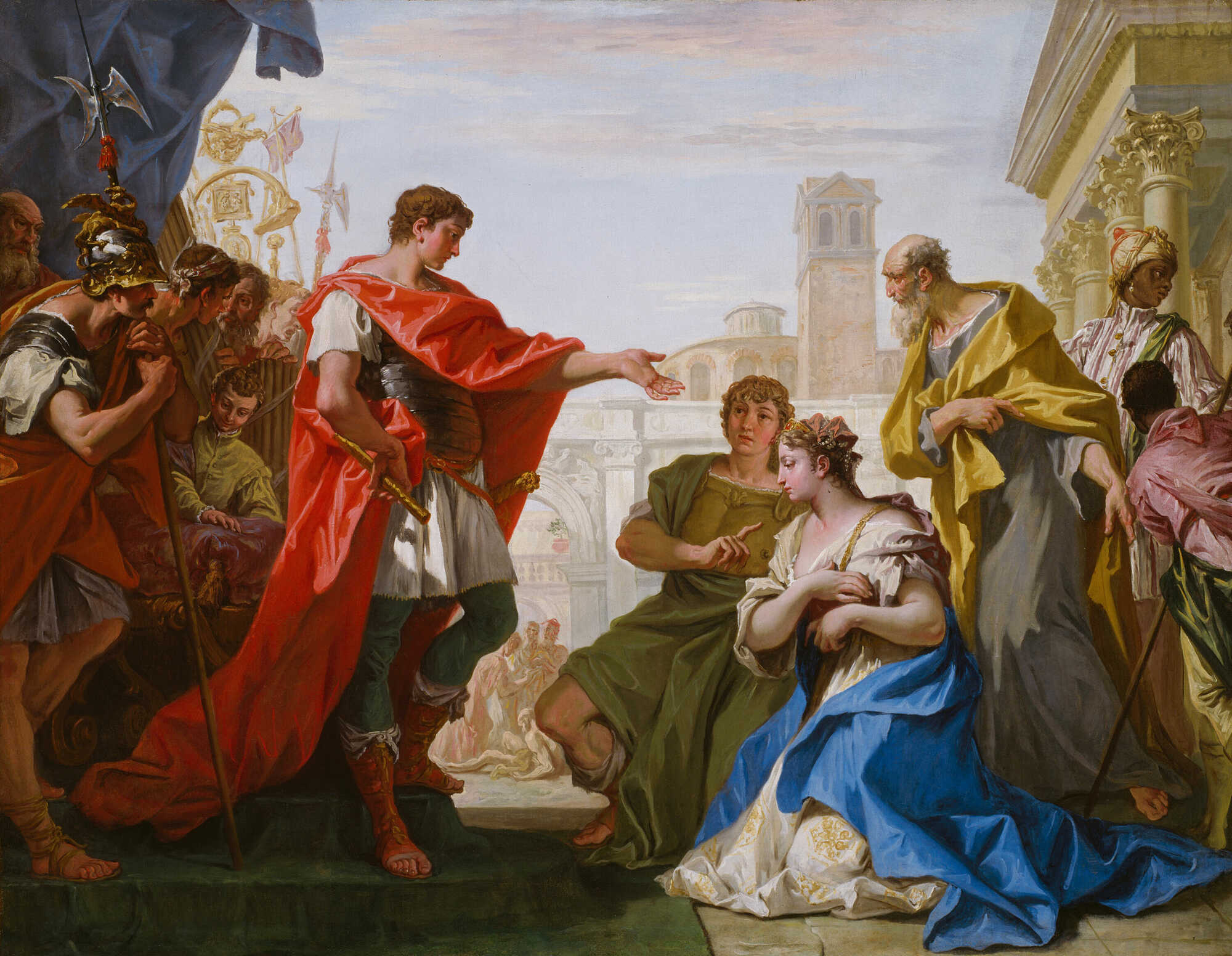
11. **The Enduring Mysteries of His Private World**Despite thousands of pages of notebooks, Leonardo da Vinci remains an enigma, particularly concerning his personal life. He scarcely made direct references to his intimate world, keeping much of himself private—a paradox given his meticulous observation. This privacy continues to fuel endless speculation.
Flashes of his personality emerge. Vasari speaks of his “great physical beauty” and “infinite grace,” qualities that, coupled with his inventive powers, stirred public curiosity. Vasari also highlighted Leonardo’s deep compassion, particularly his love for animals, likely underpinning his vegetarianism and his habit of purchasing caged birds merely to set them free, revealing a tender side. His closest relationships were with his pupils, Salaì and Francesco Melzi. Melzi described the master’s feelings for them as “loving and passionate.”
Claims of ual relationships persist. Modern biographers, like Walter Isaacson, explicitly state Leonardo’s relations with Salaì were intimate and homosexual. Historical records from 1476 document that Leonardo was charged with sodomy. Though dismissed, this event fuels centuries of debate about his presumed homosexuality and its reflections in his art, particularly the intriguing androgyny and eroticism observed in works like *Saint John the Baptist*.
Read more about: Unplugged and Unstoppable: Decoding How 15 A-List Stars Thrive Without Social Media
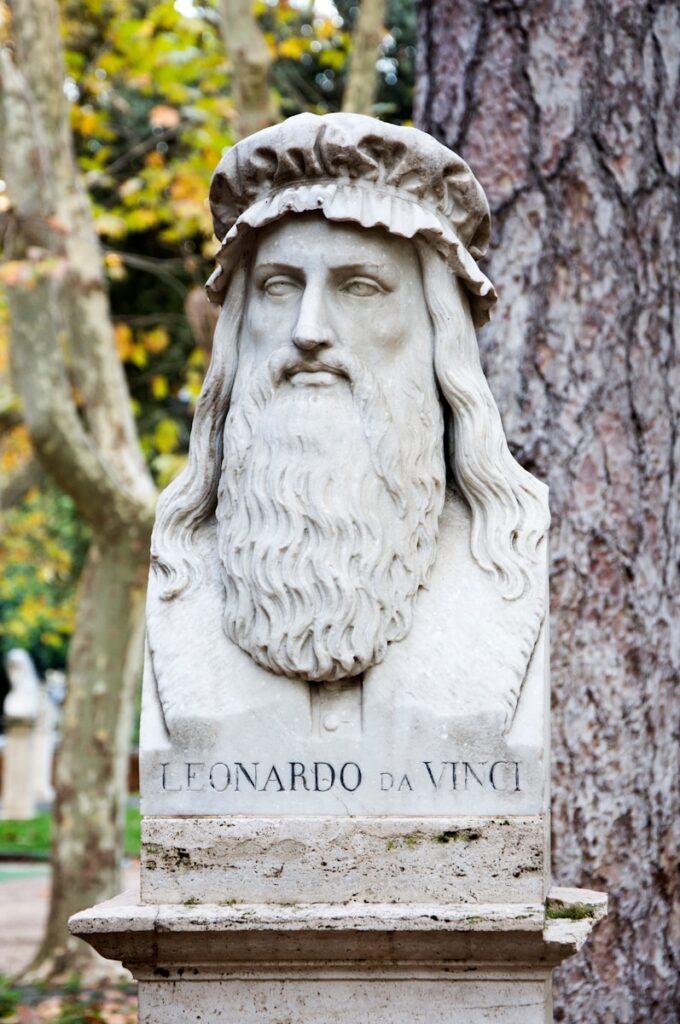
12. **The Unparalleled Legacy of a Quintessential Renaissance Man**On May 2, 1519, at 67, the world mourned Leonardo da Vinci’s passing at Clos Lucé, likely due to a stroke. King Francis I, a close friend, was reportedly by his side, though this detail is often more legend than fact. Vasari’s account notes Leonardo’s deathbed repentance, lamenting his failure to practice art as he should, and his request for confession and Holy Sacrament. His remains were interred in the Collegiate Church of Saint Florentin at the Château d’Amboise.
In accordance with his will, his loyal apprentice, Francesco Melzi, became the principal heir, receiving Leonardo’s priceless paintings, innovative tools, expansive library, and personal effects. Two decades later, Benvenuto Cellini recorded King Francis I’s powerful tribute: “There had never been another man born in the world who knew as much as Leonardo, not so much about painting, sculpture and architecture, as that he was a very great philosopher.” This encapsulates the sheer breadth of his universal genius.
For centuries, Leonardo’s fame primarily rested on his singular achievements as a painter, revered as one of the greatest in Western art history and credited as the founder of the High Renaissance. Even with lost and unfinished works, his creations profoundly shaped the Western canon. The *Mona Lisa* stands as the world’s most famous painting, *The Last Supper* the most reproduced religious painting, and his *Vitruvian Man* drawing an undeniable cultural icon.
His monumental legacy extends far beyond the canvas. Leonardo was a visionary engineer, astonishingly conceptualizing flying machines, an armored fighting vehicle, concentrated solar power, and an adding machine—ideas centuries ahead of his time. While many designs were not feasible, some smaller, ingenious inventions quietly revolutionized manufacturing. His substantial discoveries in anatomy, civil engineering, hydrodynamics, geology, optics, and tribology were groundbreaking, even if largely unpublished. From his enigmatic art to his scientific notebooks, Leonardo da Vinci remains the quintessential Renaissance man, a boundless intellect whose legacy continues to inspire awe and curiosity.
Read more about: Beyond the Blockbusters: Why Savvy Adults Are Flocking to Retro Streaming Services for Cinema’s Timeless Treasures
Leonardo da Vinci wasn’t just a man; he was a phenomenon, a force of nature whose mind soared beyond his era. His story is one of relentless curiosity, breathtaking innovation, and a personal journey as complex and beautiful as his masterpieces. His legacy isn’t just etched in paint and parchment—it’s woven into the very fabric of human achievement, continuing to inspire us to reach for the stars and never stop exploring the infinite wonders of the world, just as he did.