The dollar sign ($) is one of the most recognized and ubiquitous symbols in the modern world, a constant fixture in our daily lives from storefronts and financial reports to digital interfaces. While its immediate association is with money, wealth, and commerce, this seemingly simple character boasts a remarkably rich and complex history that extends far beyond mere monetary value. Most people encounter it daily, yet few stop to consider the intricate journey that led to its current form and its profound impact across various sectors.
This symbol, serving as shorthand for money, wealth, capitalism, and commodification, holds a story riddled with competing theories and fascinating historical developments. Its distinct shape, a capital ⟨S⟩ crossed with one or two vertical strokes, is recognized globally as the indicator for numerous currencies, predominantly those denominated as “dollar” or “peso.” In this in-depth exploration, we will unravel the multifaceted origins and diverse applications of the dollar sign, moving from its initial emergence in 18th-century business correspondence to its unexpected roles in programming languages and operating systems, offering a comprehensive understanding of its enduring impact.
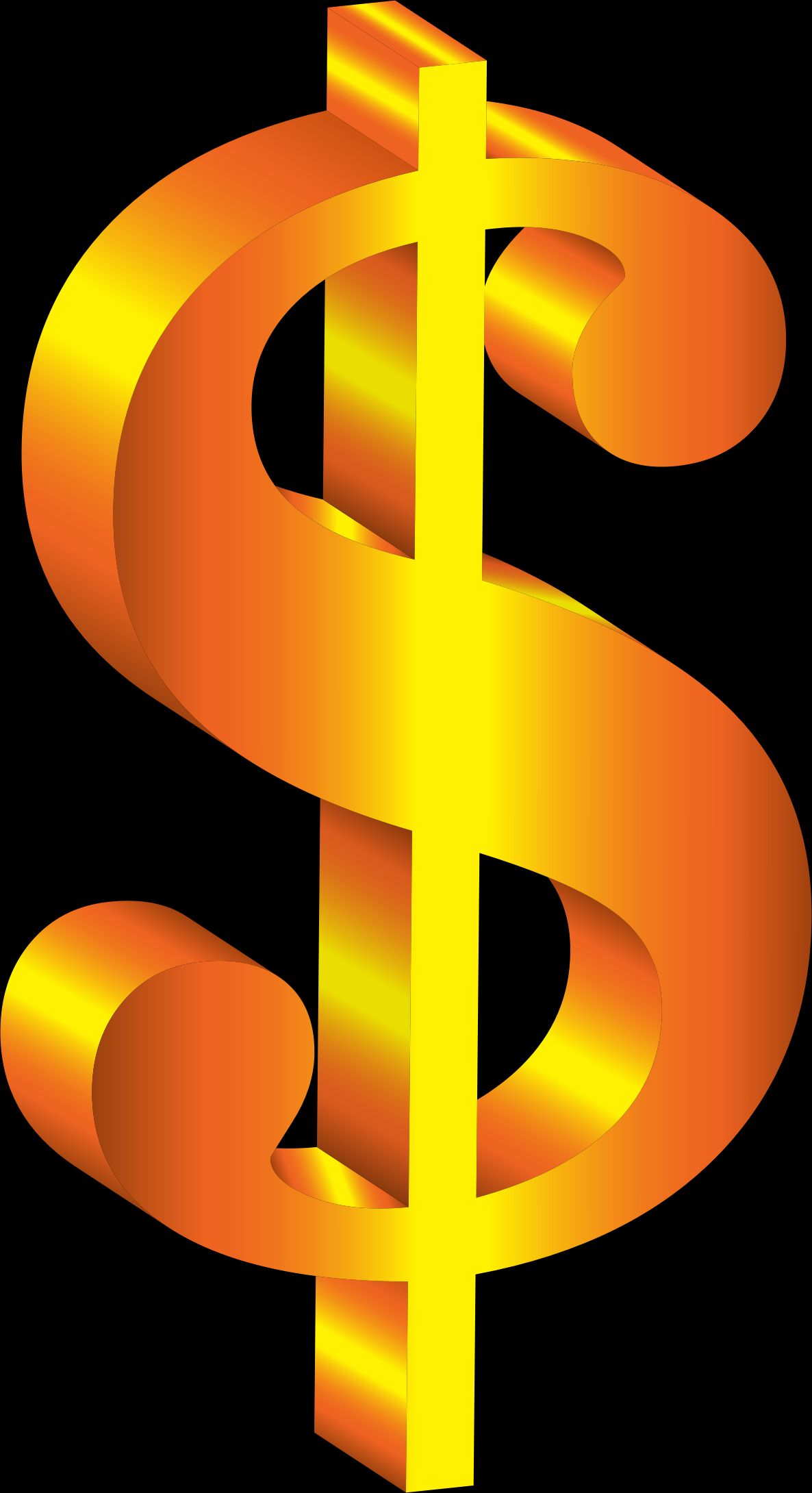
1. **The Dollar Sign: A Global Currency Symbol with Dual Strokes**The dollar sign, also known as the peso sign, is a distinct currency symbol instantly recognizable across the globe. Composed of a capital ⟨S⟩ intersected by either one or two vertical strokes, this iconic glyph is widely employed to denote the unit for a multitude of currencies, predominantly those denominated as “dollar” or “peso.” The explicitly double-barred sign is known as cifrão in Portuguese.
Beyond its standalone use, the dollar sign plays a pivotal role in several compound currency symbols, demonstrating its adaptability. Examples include the Brazilian real (R$) and the United States dollar (US$). In local contexts, the nationality prefix is typically omitted, reflecting an inherent assumption about the local currency. Often, in countries with different currency symbols, the “US” prefix is also left out when referring to the United States dollar, underscoring its assumed significance.
The distinction between the one- and two-stroke versions is frequently considered merely a stylistic or typeface variant. While they appear different, they convey the same monetary meaning. Although historically one variant might have been specifically designated by law or custom for a particular currency, the Unicode computer encoding standard defines a single code for both, reflecting a broader consensus on their equivalent semantic value.
In most English-speaking countries using this symbol, it is traditionally positioned to the left of the specified amount, e.g., “$1,” read as “one dollar.” This consistent placement aids in immediate recognition and clarity when processing financial figures, highlighting the symbol’s fundamental role in global economic communication.
Read more about: The Enduring Symbol: A Comprehensive Examination of the Dollar Sign’s Origins, Evolution, and Modern Applications
2. **Early Appearances: Tracing its Roots to the Spanish American Peso**The historical journey of the dollar sign begins not with the United States dollar, but with its predecessor: the Spanish American peso. Evidence suggests the symbol first appeared in business correspondence during the 1770s from the West Indies, referring to the Spanish American peso, also known as “Spanish dollar” or “piece of eight” in British America. This early usage highlights its deep commercial roots.
This Spanish coin profoundly influenced the monetary landscape of the nascent United States. Its widespread circulation provided the model for the currency the United States adopted in 1792. These coins also served as the blueprint for larger denominations issued by new Spanish American republics, like the Mexican peso and Argentine peso, cementing their foundational role in American and regional currency development.
The American colonies, engaged in frequent trade with Spain from the 16th to 18th centuries, adopted the Spanish peso (or “peso de ocho reales”) as their currency of reference. Even after the U.S. dollar was created, the peso “remained legal tender in the United States until 1857.” This enduring acceptance underscored the Spanish peso’s embedded role in the American economic system, providing a continuous environment for the dollar sign’s early usage and popularization.

3. **U.S. Adoption: Formalizing the Symbol with the Coinage Act of 1792**The United States’ path to a national currency system commenced with key legislative actions post-Revolution. The Continental Congress, on July 6, 1785, established the dollar as the official currency, initiating the move towards a cohesive national monetary system and paving the way for the symbol’s formal integration.
A pivotal moment was the Coinage Act of 1792, which officially created the U.S. dollar. It defined its value explicitly as “the value of a Spanish milled dollar as the same is now current.” This direct linkage to the widely circulated Spanish dollar cemented the historical continuity between the two monetary systems and their associated symbols.
Despite the U.S. dollar’s formal establishment, earliest American dollar coins did not feature any dollar symbol. Its first print occurrence is attributed to Philadelphia printer Archibald Binny in the 1790s. Foreign coins, including Spanish ones, remained legal tender until the Coinage Act of 1857 ended this status, illustrating a protracted transition where the dollar sign gradually became ingrained in financial communication.
4. **The “ps” Abbreviation Theory: The Most Accepted Origin Story**Among various dollar sign origin theories, the most widely accepted posits its evolution from the Spanish and Spanish American scribal abbreviation “p s” for “pesos.” This shorthand was common in 18th-century financial documentation, reflecting the Spanish peso’s prevalence as a primary currency.
A study of late 18th- and early 19th-century manuscripts reveals a clear progression where the ‘s’ was gradually written over the ‘p’. This overlapping script ultimately developed into a visual form closely resembling the “$” mark, driven by the need for efficiency in handwritten record-keeping.
Further supporting this, Oliver Pollock, an Irish trader and early American Revolution supporter, used the abbreviation “ps” in a 1778 letter. His rendition sometimes “almost exactly resembled the dollar sign.” Documents also show the common use of the two-stroke version in Portugal by 1775, demonstrating widespread scribal evolution across regions influenced by Spanish trade, solidifying the “ps” theory.
Read more about: The Enduring Symbol: A Comprehensive Examination of the Dollar Sign’s Origins, Evolution, and Modern Applications
5. **The Pillars of Hercules: A Classical Symbol’s Influence**Another compelling hypothesis links the dollar sign’s origin to the Pillars of Hercules, a classical symbol in Spanish iconography. This theory suggests the sign iconically represents these pillars, which marked the Strait of Gibraltar, often depicted with an “S”-shaped ribbon wrapped around them.
This device was a support element within the Spanish coat of arms and prominently featured on the most common real de ocho coins circulating in the Americas and Europe. Specifically, coins minted at the Potosí mint in Bolivia (1573-1825) showed “the Pillars of Hercules wrapped by a cloth band.”
The two vertical strokes of the dollar sign could represent the pillars, and the “S” curve the winding ribbon. The phrase “Plus Ultra” often adorned this ribbon, adding symbolic depth. In Qing Dynasty China, Spanish dollars were even called 雙柱 (Shuāngzhù), meaning “double-pillar,” further suggesting global recognition of this imagery’s association with the currency.
Read more about: The Enduring Symbol: A Comprehensive Examination of the Dollar Sign’s Origins, Evolution, and Modern Applications
6. **Potosí Mint Mark: A Distinct Monogram on Silver Coins**A variant of the Pillars of Hercules theory connects the dollar sign directly to the Potosí mint mark. This Bolivian mint was a crucial center during the Spanish Empire, producing a substantial portion of the world’s silver coinage. The coins from Potosí bore distinct features that could have influenced the symbol’s development.
A key characteristic on these Potosí coins was the superimposed letters “P T S I,” forming a unique monogram for the mint. Within this intricate design, the core element is recognized as resembling a single-stroked dollar sign, with the combination of “P” and “S” often forming a shape interpretable as the currency symbol.
This theory proposes that the practical mark of this highly productive mint, responsible for immense volumes of global currency, gradually became a general symbol for that currency. Given the widespread circulation of Potosí silver dollars, it’s plausible this distinctive mint mark evolved into a commercial shorthand, offering a direct derivation from a practical minting identification.
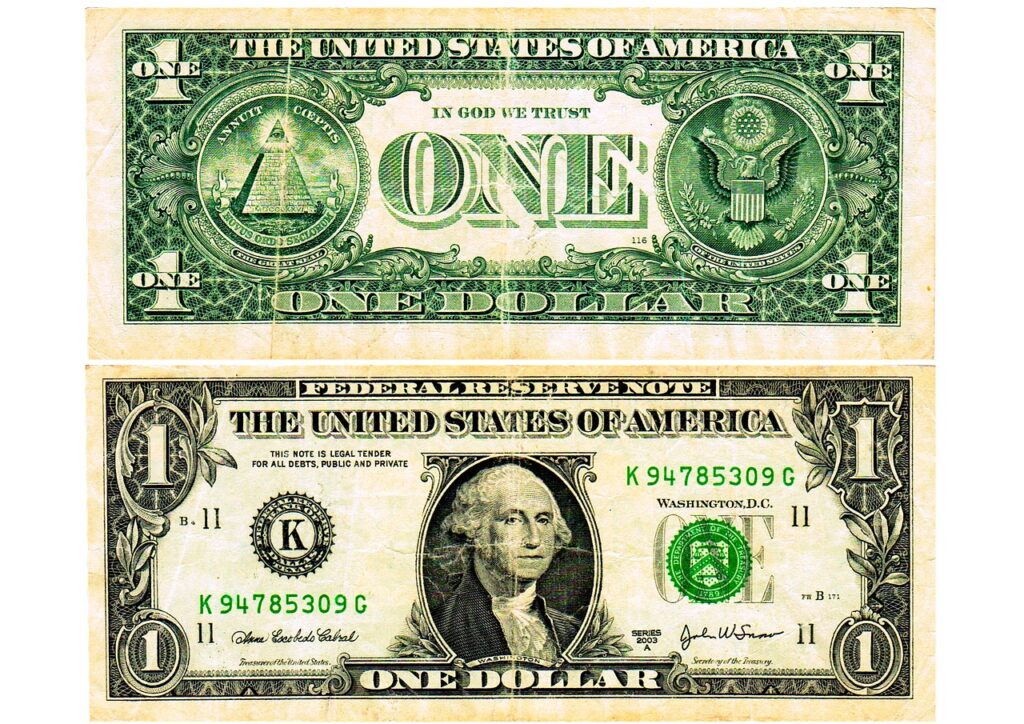
7. **The German Thaler Link: An Alternative Etymological Origin**Beyond Spanish influences, an alternative hypothesis delves into the etymological roots of the English word “dollar.” This theory suggests the dollar sign may derive from a symbol linked to the German silver coin, the Thaler (or Joachimsthaler), from which the word “dollar” originated via Dutch “daalder.”
The Thaler, a large German silver coin, was widely used across Europe. Proponents of this theory conjecture that the dollar sign could have originated from a specific symbol used to denote this coin, described as a superimposed ‘S’ and ‘I’ or ‘J’.
Evidence for such a symbol appears in John Collins’ 1686 edition of “An Introduction to Merchants’ Accounts,” predating many early American ‘$’ sign usages. Alternatively, the symbol might have come from a “snake and cross emblem” on Thaler coins. This German connection offers a fascinating perspective on broader European influences on monetary symbols.
Read more about: The Enduring Symbol: A Comprehensive Examination of the Dollar Sign’s Origins, Evolution, and Modern Applications
8. **Less Likely Origin Theories: The “US” Monogram**This theory, mentioned in letters to *Notes and Queries* in 1876, posits that the dollar sign originated from a monogram of “US.” The idea suggests that a narrow “U” was superimposed on the “S,” with the bottom part of the “U” subsequently lost, resulting in the two vertical lines that cross the “S.” It’s a fascinating, albeit less substantiated, interpretation of the symbol’s genesis, offering a distinctly American flavor to its supposed creation.
Henry Towne, in his classic 1886 essay on management, notably began with this particular theory, lending it some early visibility in discussions about the symbol. Decades later, the renowned author Ayn Rand also claimed this theory in her 1957 novel *Atlas Shrugged*. In her fictionalized account, she suggested that the “US” monogram would have been used on money bags issued by the United States Mint, adding a layer of patriotic symbolism to its supposed origin.
While intriguing, these “US” monogram derivations often fall short of the robust documentary evidence found in earlier commercial correspondence, which strongly points to the “ps” abbreviation. Nevertheless, it remains a popular, if speculative, explanation that speaks to a desire for a clearly American origin for the symbol, highlighting how different narratives can emerge to explain such a significant icon.
Read more about: The Dollar Sign: Tracing Its Storied Origins, Global Currency Impact, and Unexpected Digital Dominance
9. **Less Likely Origin Theories: Robert Morris and the Greek Psi**Another theory, put forth by historian James Alton James in 1937, claimed that the two-stroke symbol was an adapted design by patriot Robert Morris in 1778, specifically in letters written to Oliver Pollock. While Morris played a significant role in early American finance, direct documentary evidence for this specific design origination remains scant, leading many historians to regard it as less probable compared to other more supported hypotheses.
Adding to the array of less likely hypotheses, H. M. Larson suggested in 1939 that the sign could derive from a combination of the Greek character “psi” (ψ) and the letter “S.” This theory offers a more esoteric, linguistic-based approach to the symbol’s formation, connecting it to classical script rather than direct commercial abbreviations. However, like other fringe theories, it lacks broad historical corroboration in extant manuscripts, making it difficult to verify.
Further, a theory cited by authors T. Seijas and J. Frederick mentions a grim connection: that captors of slaves in Spanish territories sometimes branded enslaved people with a symbol very similar to a one-barred dollar sign. The theory posits that “esclavo” (Spanish for “slave”) and “clavo” (nail) could combine, suggesting an “S + clavo” origin. While this sheds light on a brutal historical practice, its direct link to the universally recognized dollar sign remains highly speculative and unproven in the context of currency symbol evolution.
Read more about: The Dollar Sign: Tracing Its Storied Origins, Global Currency Impact, and Unexpected Digital Dominance
10. **The Cifrão: A Distinct Symbol in the Portuguese Empire**Beyond the commonly recognized dollar sign, the explicitly double-barred variant, known as the cifrão (Portuguese pronunciation: [siˈfɾɐ̃w]), holds a fascinating and distinct history, primarily within the Portuguese Empire. This unique symbol has been used in Portugal, Brazil, and other former Portuguese territories, demonstrating a separate evolutionary path for a currency marker that shares visual similarities with the dollar sign.
Historically, the cifrão played a crucial role as a thousands separator in the national currency of Portugal, the real (plural “réis,” abbreviated “Rs.”). For instance, a sum like 123$500 would denote 123,500 réis. This usage is attested as early as 1775, though it may have roots stretching back a century or more. The name “cifrão” itself originates from the Arabic word “ṣifr” (صِفْر), meaning ‘zero,’ highlighting a deep linguistic and historical connection.
When Portugal redefined its national currency in 1911 as the escudo, worth 1000 réis and divided into 100 centavos, the cifrão adapted its role. It continued to be used, but this time as the decimal separator. For example, 123$50 would signify 123.50 escudos or 123 escudos and 50 centavos. This unique convention persisted until Portugal adopted the euro in 2002, marking the end of a long-standing monetary tradition and showcasing its unique decimal point application.
Cape Verde, a republic and former Portuguese colony, similarly adopted its local escudo and centavos in 1914, and notably retains the cifrão usage as a decimal separator to this day in 2021. Local versions of the Portuguese escudo with cifrão usage were also created for other overseas colonies including East Timor, Portuguese India, Angola, Mozambique, Portuguese Guinea, and São Tomé and Príncipe. Brazil, too, used the cifrão as a thousands separator until 1942, before switching to the Brazilian cruzeiro and using a comma for decimals, though the dollar sign, often rendered with two strokes, remained part of the “Cr$” symbol.
11. **Global Placement and Stylistic Variants: One vs. Two Strokes**The dollar sign’s placement in relation to the amount is a convention that varies across different cultures and languages, despite its universal recognition. In the United States, Mexico, Australia, Argentina, Chile, Colombia, New Zealand, Hong Kong, Pacific Island nations, and English-speaking Canada, the symbol is typically written before the number, such as “$5.” Intriguingly, while written before, the word itself is spoken after the number, as in “five dollars” or “cinco pesos.”
In contrast, French-speaking Canada presents an interesting exception where the dollar symbol usually appears after the number, for instance, “5$.”. This distinction underscores how linguistic and cultural nuances influence even the most common of symbols, demonstrating a divergence from the English-speaking norm. Similarly, the cent symbol is generally placed after the number in most countries that use it, like “5¢,” maintaining a degree of consistency across different monetary denominations.
Regarding the visual representation, the distinction between the one- and two-stroke versions of the dollar sign is frequently considered merely a stylistic or typeface variant. The Unicode computer encoding standard, for example, defines a single code point (U+0024) for both. This reflects a broader consensus on their equivalent semantic value, treating the difference as an aesthetic choice made by font designers, much like different letter styles.
While the Unicode specification treats them as allographs, meaning graphic variants of the same symbol, it’s worth noting that historically, one variant might have been specifically designated by law or custom for a particular currency. For instance, the two-stroke version was once used in some contexts to distinguish between the U.S. dollar and other local currencies, like the former Portuguese escudo. However, such specific usage is not standardized today, and the choice is often a matter of expediency or aesthetic preference, with the single-stroke version generally being more prevalent in modern digital typography.
12. **The Dollar Sign in Programming Languages**The pervasive presence of the dollar sign in early American computer applications, especially in business accounting, has cemented its universal inclusion in computer character sets. This ubiquity led to its appropriation for a myriad of purposes entirely unrelated to money across programming languages and command line interfaces, making it a surprisingly versatile and essential character in the digital realm.
In the world of programming, the dollar sign serves a diverse array of functions. For instance, in BASIC, it is appended to a variable name to explicitly define that variable’s data type as a character string, as seen in `H$=”Hello, world!”`. When discussing such a variable, it would be referred to as “H string.” In other languages like PHP, AutoIt, Perl, and Ruby, the dollar sign is prefixed to names to define variables. Perl, in particular, uses it for scalar variables and even for scalar elements within arrays (`$array[7]`) and hashes (`$hash{foo}`).
A common pattern across various Unix shells and later adopted by numerous programming languages, including Perl, JavaScript, C#, Scala, Groovy, and Kotlin, is the use of `$` to introduce an expression that should be evaluated to yield text. This allows for dynamic content generation within strings. Conversely, languages like Java and Python employ it to mark specific places where the result of an expression, defined elsewhere, should be inserted into a text string, facilitating templating and sophisticated string formatting.
Beyond variable and expression handling, the dollar sign finds unique applications. It defines hexadecimal constants in some variants of assembly language, such as the Motorola 6800, Motorola 68000, and MOS Technology 6502 assembly languages, as well as in Pascal and Pascal-like languages such as Free Pascal and Delphi. In the ALGOL 68 language, it delimits transput format regions, while in the TeX typesetting language, it marks mathematical regions. Early versions of FORTRAN 66 even allowed `$` to serve as an alternative to a quotation mark for delimiting strings, showcasing its early role in text handling.
The versatility continues with PL/M, where `$` can create a visible separation between words in compound identifiers, though `Some$Name` refers to the same entity as `SomeName`. In functional programming, Haskell uses `$` as a function application operator, simplifying complex function calls. AutoHotkey scripts leverage a `$` prefixed to a hotkey declaration to prevent it from being triggered by a ‘Send’ command within the same script, offering precise control. The widely used jQuery library defines `$` as its main symbol, functioning primarily to query web pages for HTML elements, and also hosting utilities like `$.
ajax`. Similarly, the Prototype. js library uses it for querying. ASP.
NET employs the dollar sign within a tag on a web page to indicate an impending expression, which remains language-agnostic across C#, VB. NET, or any CLR-supported language. Even Java utilizes `$` internally within class names in compiled `. class` files, such as `Outer$Inner.
class`, as part of its name mangling process for inner classes. Erlang precedes character literals with `$` (e. g. , `$$` for a dollar character), while COBOL uses it in the Picture clause to depict a floating currency symbol. In assembly languages like MIPS, `$` represents registers, and in Honeywell 6000 series assembler, it signifies the address of the current instruction.
CMS-2 uses `$` as a statement terminator, R employs it as a subsetting operator, and Q (from Kx Systems) uses it as a casting/padding/enumeration/conditional operator. More recently, Sass prefixes `$` to define variables, and Svelte uses it to mark reactive statements, demonstrating its enduring adaptability across evolving programming paradigms.
Read more about: The Streaming Wars: How Hollywood’s Content Bubble Burst Led to a New Era of Sustainable Growth and Industry Resilience
13. **The Dollar Sign in Operating Systems and Applications**The dollar sign’s utility extends far beyond programming languages, playing critical roles within various operating systems and software applications, often in ways that are deeply embedded yet seldom noticed by the average user. Its consistent presence in character sets, inherited from early computing, made it a natural choice for system-level functions and specialized commands.
In the foundational operating systems of CP/M and subsequently in all versions of 86-DOS and MS-DOS compatible operating systems, the dollar sign (`$`) holds a specific function: it marks the end of text displayed with system function 9. This seemingly small detail had practical implications for how text strings were processed and presented to users. A notable anecdote from this era involves CP/M developer Gary Kildall, who never explicitly explained his choice but once famously remarked that he knew the reason while Bill Gates did not, adding a touch of mystique to the symbol’s early digital life. Prior uses of `$` for “end of line” or “end of text” can be traced back to systems like JOVIAL, CMS-2, the QED editor, and DECsystem-10, the latter being a known influence on CP/M.
Within the Windows operating environment, the dollar sign takes on a more discreet but equally vital role in network administration. When appended to a share name, such as `\\server\share$`, it hides a shared folder or resource from casual browsing on a network. While `\\server\share` would be visible to other computers, adding the `$` renders it accessible only by explicit reference. This doesn’t alter its access permissions but makes it less discoverable, a common practice for most administrative shares. In the LDAP (Lightweight Directory Access Protocol) directory access protocol, `$` is utilized as a line separator within various standard entry attributes, such as `postalAddress`, enabling structured data entry within directory services.
The symbol also appears in more specialized operating environments. In the UNIVAC EXEC 8 operating system, `$` literally means “system.” It is appended to entities like system file names, the “sender” name in operator messages, and default names for system-created files (e.g., `TPF$`, `NAME$`) when no specific name is provided, clearly delineating system-managed components. RISC OS employs `$` in system variables to separate the application name from variables specific to that application, for example, `Draw$Dir` specifying the directory for the `!Draw` application. It also serves as a shorthand to refer to the root directory of a file system, demonstrating its crucial role in path and variable management.
Beyond operating systems, common applications also leverage the dollar sign. Spreadsheet software like Excel and its counterparts use `$` to denote a fixed row, fixed column reference, or an absolute cell reference (e.g., `$A$1`), which is crucial for maintaining formula integrity when copying cells. In the complex world of library catalog records, computer coding utilizes the dollar sign to introduce a subfield delimiter, helping to organize bibliographic data. Furthermore, in text processing tools like `sed`, `grep`, and various POSIX and Perl regular expressions, as well as in text editors such as `ed`, `ex`, `vi`, and `pico`, `$` matches the end of a line or string, a fundamental function for pattern recognition and text manipulation.
Read more about: The Enduring Symbol: A Comprehensive Examination of the Dollar Sign’s Origins, Evolution, and Modern Applications
14. **Beyond Currency: Symbolism and Miscellaneous Uses**The dollar sign, while intrinsically linked to finance, has transcended its monetary origins to embed itself in culture, art, and even scientific notation, often acquiring new meanings that reflect societal attitudes or specialized functions. Its distinctive shape makes it an immediately recognizable graphic element, ripe for appropriation in diverse contexts.
One common, often derisive, application involves using the dollar sign in place of the letter “S” to indicate greed, excessive money, or perceived Americanization. Examples like “Micro$oft,” “Di$ney,” “Chel$ea,” and “GW$” or “$ky” highlight this critical or satirical usage, where the symbol itself conveys a loaded message. This linguistic play underscores how deeply the dollar sign is associated with wealth and its accompanying connotations, allowing it to subtly alter the meaning of a word.
Conversely, the dollar sign is also intentionally employed for stylization and artistic expression, particularly in popular culture. Musicians and artists, for instance, have adopted it into their names to create a unique brand identity, as seen with A$AP Rocky, Ke$ha, and Ty Dolla $ign. Similarly, words themselves can be stylized, such as the musical group ¥€$, where the dollar sign joins other currency symbols to create a striking visual. Historically, even figures like Ambrose Bierce humorously referred to California governor Leland Stanford as “$tealand Landford” in 1872, demonstrating this creative usage extends far back in time.
Beyond these cultural and expressive uses, the dollar sign also holds highly specific, non-monetary roles in specialized fields. In Scrabble notation, a dollar sign (`$`) placed after a word indicates that it is considered valid according to North American word lists but not necessarily according to British word lists. This provides a clear, concise way to differentiate regional word acceptance in competitive play. More significantly, in nuclear reactor physics, the dollar symbol is used as a unit of reactivity. Here, “0$” represents the threshold of slow criticality, where a steady reaction rate is maintained, while “1$” signifies the threshold of prompt criticality, indicating a nuclear excursion or explosion. This precise scientific application highlights the symbol’s ability to convey critical information in highly technical contexts.
Finally, the symbol has even made a brief appearance in linguistic reform. In the 1993 version of the Turkmen Latin alphabet, the dollar sign (`$`) was temporarily used as a transliteration of the Cyrillic letter Ш. This unconventional choice was later replaced in 1999 by the more standard Latin letter Ş, but it serves as a peculiar historical footnote, illustrating the symbol’s occasional foray into unexpected phonetic representations.
From its humble beginnings as a scribal shorthand for the Spanish American peso, evolving through centuries of trade and adaptation, the dollar sign has truly become a global icon. Its journey spans diverse cultures, currencies, and contexts, embodying not just monetary value but also intricate histories, technological innovation, and multifaceted cultural symbolism. Whether adorning financial reports, defining variables in complex code, or even symbolizing critical thresholds in nuclear reactors, the `$` sign stands as a testament to the enduring power and adaptability of a simple mark. It’s a symbol that transcends its initial purpose, continuously finding new life and meaning in an ever-evolving world, making it far more than just a marker of money—it’s a ubiquitous emblem of progress and connection.