Once the quintessential symbols of accessible performance, American muscle cars, with their formidable V8 engines and audacious designs, have long captivated the imaginations of automotive enthusiasts. These machines, bred in the high-flying halcyon years of American motoring, were celebrated for their raw power and street-king dominance. However, their narrative has undergone a remarkable transformation from mere performance vehicles to highly coveted mobile investments, with some now commanding bids at auction that soar past the million-dollar mark, often exceeding the values typically associated with high-end exotic sports cars, including many iconic Ferraris.
This dramatic surge in value reflects a confluence of factors: extreme rarity, unparalleled performance, significant racing pedigrees, and an enduring wave of nostalgia. What were once considered aspirational purchases for a segment of the population have evolved into blue-chip assets for discerning collectors and investors. The market for these automotive legends is driven by a profound appreciation for their engineering, their limited production numbers, and the indelible mark they left on American culture and automotive history.
We embark on an in-depth exploration of some of these extraordinary American muscle cars. This article delves into the specific attributes that have propelled five of these magnificent machines into the automotive stratosphere, examining their unique characteristics, market performance, and the reasons behind their unprecedented financial appreciation in the contemporary collector’s landscape. Each vehicle represents a distinct pinnacle of American automotive prowess and investment potential.

1. **1971 Plymouth Hemi ‘Cuda Convertible**The 1971 Plymouth Hemi ‘Cuda Convertible is not merely a car; it is, without hyperbole, the ‘Mopar holy grail,’ a designation earned through its extreme scarcity and formidable powertrain. With an astonishingly low production run of just 12 units ever manufactured, its inherent rarity alone secures its place among the most valuable vehicles globally. This exclusivity has fueled an investment trajectory that sees this particular model likely selling for well over $3,000,000 today, positioning it as a standout example of muscle car appreciation.
The heart of this legend is the iconic 426 Hemi V8, an engine synonymous with brute force and uncompromising performance. This powerplant endowed the ‘Cuda Convertible with truly nasty acceleration, cementing its reputation as a street and strip dominator. Its capabilities were not just for show; they were a testament to the engineering prowess of the era, a dedication to horsepower that remains revered by purists and collectors alike.
Beyond its mechanical specifications, the 1971 Hemi ‘Cuda Convertible commands attention with an intimidating appearance that is unmistakably muscle. This combination of menacing aesthetics and earth-shattering power makes it a quintessential showstopper, a centerpiece in any serious collector’s garage. Its continued appreciation underscores its status not just as a vehicle, but as a tangible piece of American automotive heritage, a mobile investment whose value only strengthens with time.
Car Model Information: 2023 Toyota Tacoma SR
Caption: 1970 Hardtop Coupe
Name: Plymouth Barracuda
Manufacturer: Plymouth (automobile)
Production: 1964–1974
Assembly: Fenton, Missouri,Hamtramck, Michigan,Maywood, California,Windsor, Ontario
Layout: Front-engine, rear-wheel drive layout
Class: Pony car
Categories: 1970s cars, All articles with dead external links, All articles with unsourced statements, Articles with dead external links from February 2018, Articles with dead external links from January 2022
Summary: The Plymouth Barracuda is a two-door pony car that was manufactured by Chrysler Corporation from 1964 through 1974 model years.
The first-generation Barracuda was based on the Chrysler A-body and was offered from 1964 until 1966. A two-door hardtop (no B-pillar) fastback design, it shared a great majority of parts and bodywork with the Plymouth Valiant, except for the distinctive wraparound rear glass.
The second-generation Barracuda, though still Valiant-based, was heavily redesigned. Built from 1967 through 1969, it was available as a two-door in fastback, notchback, and convertible versions.
The third generation, offered from 1970 until 1974, was based on the Chrysler E-body, exclusive to it, and the slightly larger Dodge Challenger. A completely new design, the two-door Barracuda was available in hardtop and convertible body styles.
Get more information about: Plymouth Barracuda
Buying a high-performing used car >>>
Brand: Plymouth Model: Hemi ‘Cuda Convertible
Price: $33,199 Mileage: 59,070 mi.
Read more about: Beyond the Legends: Unearthing 12 Special-Edition Muscle Cars That Demand Recognition
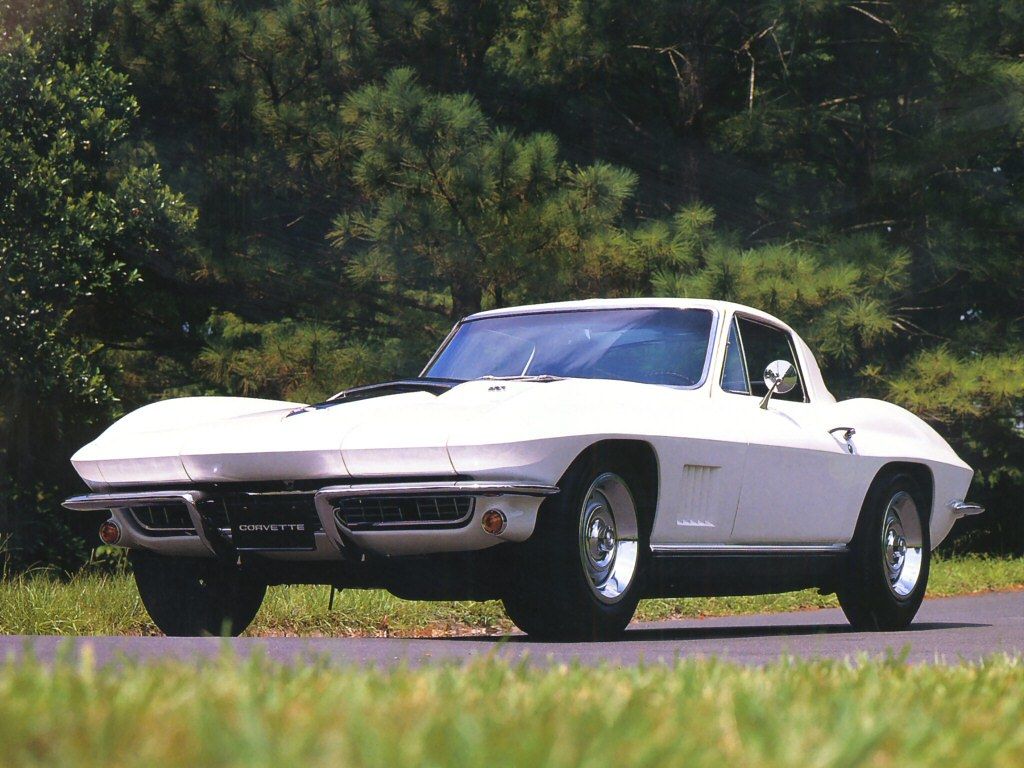
2. **1967 Chevrolet Corvette L88**The 1967 Chevrolet Corvette L88 stands as a monument to uncompromising performance, a vehicle constructed solely for the rigors of competition. While the Corvette generally falls into the sports car category, the L88 variant transcends this, boasting a 427 big-block engine that famously generated significantly more than its officially claimed 430 horsepower. This often-underrated output contributed to its legendary status, making it a formidable presence on any track.
Chevrolet’s commitment to creating a pure racing machine meant that only 20 units of the L88 were produced in 1967, ensuring its extreme rarity from the outset. This limited production, coupled with its competition-focused design, has propelled its value into the highest echelons of the collector market. Today, these scarce examples are known to command prices well over $3,000,000, with other references indicating sales over $2 million, showcasing its immense investment potential.
Further emphasizing its purpose-built nature, the L88 was intentionally stripped of amenities deemed unnecessary for racing. It lacked extra frills such as a heater and a radio, features that, in most vehicles, would be considered standard. This ‘business-only’ approach solidified its identity as a serious competitor’s machine, devoid of creature comforts to maximize its performance. For collectors, owning an L88 is possessing a pure, unadulterated slice of American racing history, a testament to raw power and focused engineering.
Car Model Information: 2025 Chevrolet Corvette Stingray w/3LT
Name: Chevrolet Corvette
Caption: 2021 Chevrolet Corvette C8
Manufacturer: Chevrolet
Production: 1953–present
ModelYears: bulleted list
Assembly: bulleted list
Class: Sports car
BodyStyle: coupé
Layout: Front-engine, rear-wheel-drive layout,Rear mid-engine, rear-wheel-drive layout
Categories: 1950s cars, 1960s cars, 1970s cars, 1980s cars, 1990s cars
Summary: The Chevrolet Corvette is a line of American two-door, two-seater sports cars manufactured and marketed by General Motors under the Chevrolet marque since 1953. Throughout eight generations, indicated sequentially as C1 to C8, the Corvette is noted for its performance, distinctive styling, lightweight fiberglass or composite bodywork, and competitive pricing. The Corvette has had domestic mass-produced two-seater competitors fielded by American Motors, Ford, and Chrysler; it is the only one continuously produced by a United States auto manufacturer. It serves as Chevrolet’s halo car.
In 1953, GM executives accepted a suggestion by Myron Scott, then the assistant director of the Public Relations department, to name the company’s new sports car after the corvette, a small, maneuverable warship. Initially, a relatively modest, lightweight 6‑cylinder convertible, subsequent introductions of V8 engines, competitive chassis innovations, and rear mid-engined layout have gradually moved the Corvette upmarket into the supercar class. In 1963, the second generation was introduced in coupe and convertible styles. The first three Corvette generations (1953–1982) employed body-on-frame construction, and since the C4 generation, introduced in 1983 as an early 1984 model, Corvettes have used GM’s unibody Y‑body platform. All Corvettes used front mid-engine configuration for seven generations, through 2019, and transitioned to a rear mid-engined layout with the C8 generation.
Initially manufactured in Flint, Michigan, and St. Louis, Missouri, the Corvette has been produced in Bowling Green, Kentucky, since 1981, which is also the location of the National Corvette Museum. The Corvette has become widely known as “America’s Sports Car.” Automotive News wrote that after being featured in the early 1960s television show Route 66, “the Corvette became synonymous with freedom and adventure,” ultimately becoming both “the most successful concept car in history and the most popular sports car in history.”
Get more information about: Chevrolet Corvette
Buying a high-performing used car >>>
Brand: Chevrolet Model: Corvette
Price: $87,990 Mileage: 3,779 mi.
Read more about: Unleashing Automotive Legends: 14 Iconic 1970s Cars Now Commanding Millions in the Collector’s Market
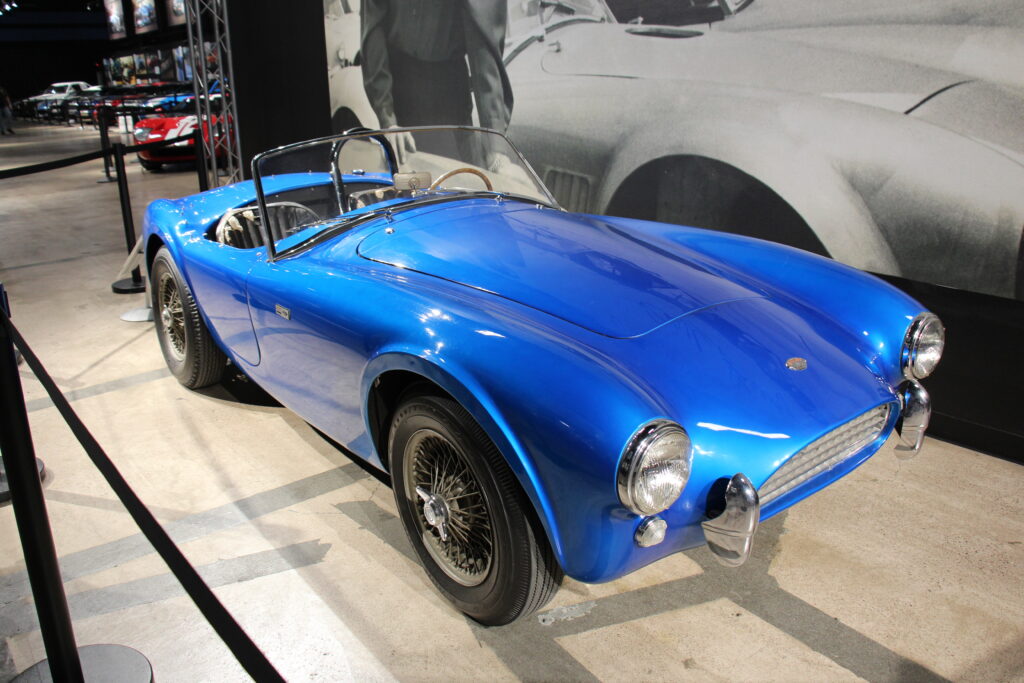
3. **1966 Shelby Cobra 427**The 1966 Shelby Cobra 427 represents a unique and iconic blend of automotive heritage, embodying a powerful mix of British design elegance and raw American muscle. This hybrid lineage, rather than diminishing its appeal, has amplified its legendary status and rarity, making it one of the most expensive vintage cars in the world. Its distinct presence is undeniable, marking it as a true collector’s gem that transcends typical categorizations.
At the core of the Cobra’s formidable reputation lies its powerful 427 V8 engine, a marvel of American engineering that delivered prodigious horsepower and torque. This potent powerplant, combined with a remarkably lightweight frame, created a machine of unparalleled acceleration and handling. The synergy between its robust engine and agile chassis established the Cobra as a dominant force on both the street and the race track, quickly becoming a legend in its own time.
Due to its influence, extreme rarity, and the sheer exhilaration it offered, original models of the 1966 Shelby Cobra 427 now command prices well into the millions. This valuation underscores its enduring appeal as an investment vehicle, coveted by those who appreciate its unique origin story, its significant racing pedigree, and its status as an icon of automotive design and performance. It remains a powerful symbol of Carroll Shelby’s vision for combining lightweight European chassis with immense American power.
Car Model Information: 2023 Toyota Tacoma SR
Caption: AC Cobra 427
Layout: front-engine, rear-wheel drive layout
Manufacturer: AC Cars,Shelby American
Production: 1965–1967
Name: MkIII
Aka: AC Shelby Cobra , Shelby AC Cobra
BodyStyle: Roadster (automobile)
Assembly: Thames Ditton,Surrey,England
Predecessor: AC Ace
Class: Sports car
Successor: AC MK IV
Related: AC 428,Shelby Daytona
Engine: cvt,V8 engine
Wheelbase: cvt
Length: cvt
Width: cvt
Height: cvt
Weight: cvt
Categories: 1960s cars, AC vehicles, All articles with unsourced statements, Articles with short description, Articles with unsourced statements from December 2014
Summary: The AC Cobra, sold in the United States as the Shelby Cobra and AC Shelby Cobra, is a sports car manufactured by British company AC Cars, with a Ford V8 engine. It was produced intermittently in both the United Kingdom and later the United States since 1962.
Get more information about: AC Cobra
Buying a high-performing used car >>>
Brand: Shelby Model: Cobra 427
Price: $33,199 Mileage: 59,070 mi.
Read more about: The Horsepower Haze: Performance Vehicles Assessed on Actual Output – From Dyno Kings to Paper Tigers
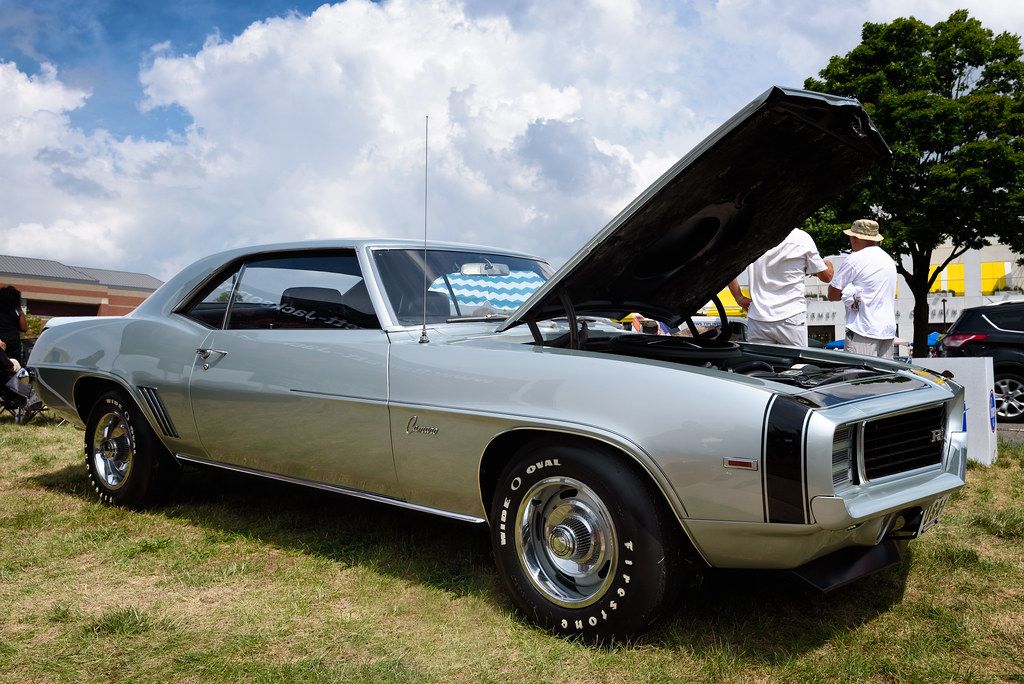
4. **1969 Chevrolet Camaro ZL1**The 1969 Chevrolet Camaro ZL1 stands as a pinnacle of factory-produced performance, conceived with a singular, uncompromised objective: drag strip domination. Chevrolet produced a mere 69 units of this exceptional Camaro, each meticulously equipped with an all-aluminum 427 cubic-inch big-block engine. This bespoke powerplant was not just powerful; it was engineered specifically for optimal performance in competitive environments, demonstrating an extraordinary commitment to racing success.
Initially, these vehicles faced challenges in the market due to their outrageous price point, a reflection of the specialized engineering and limited production. However, time has profoundly shifted their market perception. Today, the ZL1 Camaros are among the most sought-after muscle cars, regularly commanding more than $1,000,000 on the auction circuit. This dramatic appreciation highlights their transformation from niche performance cars to highly valued collector’s assets, proving that initial market resistance can often give way to long-term desirability.
Under optimal tuning, the all-aluminum 427 engine in the ZL1 was capable of producing in excess of 500 horsepower, a truly staggering figure for its era. This made it the ultimate Camaro factory machine, a testament to what Chevrolet could achieve when pushing the boundaries of street-legal performance. The aggressive styling, combined with its unparalleled power and extreme rarity, ensures the 1969 Camaro ZL1 remains a monumental piece of American automotive history and a prime example of muscle car investment.
Car Model Information: 2023 Toyota Tacoma SR
Name: Chevrolet Camaro
Manufacturer: Chevrolet
Production: 1966–2002,2009–2023
ModelYears: 1967–2002,2010–2024
Class: Pony car
BodyStyle: coupe,convertible
Platform: GM F platform,GM Zeta platform,GM Alpha platform
Layout: Front-engine, rear-wheel-drive layout
Categories: 1970s cars, 1980s cars, 1990s cars, 2+2 coupés, 2000s cars
Summary: The Chevrolet Camaro is a mid-size American automobile manufactured by Chevrolet, classified as a pony car. It first went on sale on September 29, 1966, for the 1967 model year and was designed to compete with the Ford Mustang. The Camaro shared its platform and major components with the Firebird, produced by General Motors’ Pontiac division that was also introduced for the 1967 model year.
Four distinct generations of the Camaro were developed before production ended in 2002. The nameplate was revived on a concept car that evolved into the fifth-generation Camaro; production started on March 16, 2009.
Production of the sixth generation of the Camaro ended in December 2023, for the 2024 model year.
Get more information about: Chevrolet Camaro
Buying a high-performing used car >>>
Brand: Chevrolet Model: Camaro ZL1
Price: $33,199 Mileage: 59,070 mi.
Read more about: These Are The Fastest Muscle Cars Ever: From Classic Legends to Modern Monsters

5. **1965 Shelby GT350R**Carroll Shelby’s vision for performance reached its zenith with the 1965 Shelby GT350R, a Mustang that was unequivocally track-focused and race-ready from the moment it left the factory. This wasn’t merely a high-performance variant; it was a purpose-built competition machine designed to dominate, and indeed, it did, reigning supreme on SCCA circuits across the nation. Its racing pedigree is integral to its legendary status and immense value today.
The rarity of the GT350R is another critical factor in its astronomical market value, with only 36 units ever built. This extremely limited production ensures that each surviving example is a highly coveted artifact in the automotive world. For collectors, possessing a GT350R is to own a direct lineage to Carroll Shelby’s uncompromising pursuit of speed and a tangible piece of American racing glory, a rare opportunity to own a vehicle with such a significant competitive history.
Equipped with a lightweight body, a stiff suspension system, and a high-revving 289 V8 engine, the GT350R was a true competitor’s dream. These engineering choices contributed to its superior handling and raw speed, making it a formidable adversary on any track. The combination of its legendary designer, its race-winning history, its mechanical excellence, and its extreme scarcity has propelled these Mustangs into the stratosphere, often selling for well over $1,000,000. It stands as one of the most sought-after Mustangs ever produced, a testament to its enduring legacy as an investment-grade muscle car.
Read more about: Behind Closed Doors: Unveiling Dwayne ‘The Rock’ Johnson’s Multi-Million Dollar Muscle & Supercar Collection

6. **1970 Plymouth Superbird 426 Hemi**The 1970 Plymouth Superbird 426 Hemi stands as an unequivocal icon of American automotive design, born from a singular pursuit of NASCAR domination. Its instantly recognizable, utterly distinctive enormous rear wing and sharply aerodynamic nose were not mere styling flourishes but functional elements engineered to conquer high-speed tracks. This machine was a bold declaration of intent, signaling Plymouth’s ambition to outpace all competition on the oval.
At the heart of this formidable track weapon lay the legendary 426 Hemi V8, an engine synonymous with Mopar brute force. This potent powerplant provided the Superbird with unparalleled thrust, allowing it to achieve blistering speeds that consistently left its NASCAR competitors struggling to keep pace. The Hemi’s contribution was pivotal, cementing the Superbird’s reputation as a top-tier performer in the high-stakes world of professional racing.
Its specialized, homologated design meant the Superbird was produced in strictly limited numbers, directly contributing to its extraordinary rarity today. These ‘aero cars’ were a unique chapter in motorsport, with their road-going counterparts serving as a necessary means to an end for racing certification. This inherent scarcity has naturally elevated its standing in the collector market, making each surviving example a prized automotive artifact.
Consequently, the market valuation for these rare birds has soared dramatically. Today, these machines are worth well over $500,000, with pristine, meticulously preserved examples known to surpass the remarkable $1,000,000 mark. The Superbird’s ability to command such figures firmly establishes its status as a premier investment-grade muscle car, valued both for its racing legacy and its undeniable financial appreciation.
Read more about: Revving Up History: Unearthing the Forgotten Engines That Forged American Muscle Legends
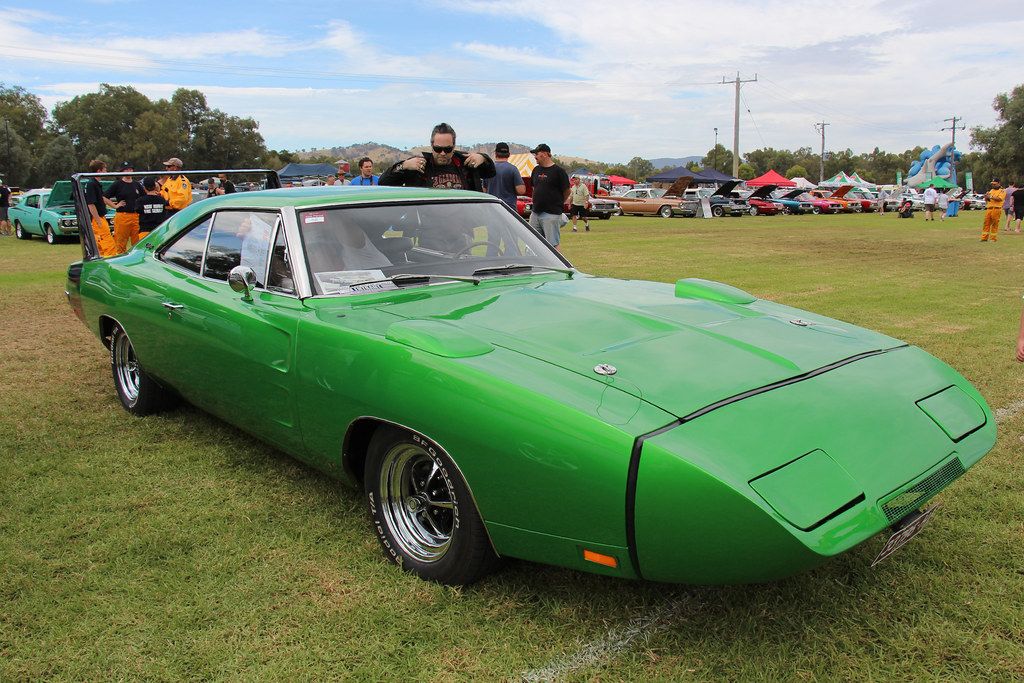
7. **1969 Dodge Charger Daytona**Much like its Plymouth counterpart, the 1969 Dodge Charger Daytona emerged as a formidable NASCAR battle-axe, meticulously engineered for competitive advantage. Its distinctive features, including a huge rear wing and an extended aerodynamic nose cone, were purpose-built to optimize airflow and stability at extreme speeds. This aggressive styling was a direct response to the demands of the racetrack, making it a pivotal player in the high-octane world of late 1960s stock car racing.
The Daytona’s production was acutely limited, with only 503 units ever seeing the light of day. This scarcity was further intensified by the powertrain choices, as those equipped with the legendary 426 Hemi engine are particularly rare and coveted by discerning collectors. Such limited availability at its inception immediately set the stage for its future as a blue-chip automotive asset.
Significantly, the Charger Daytona was among the very first American vehicles to cross the monumental 200 mph barrier in competition, a feat that indelibly cemented its legendary status in automotive history. This record-breaking performance underscored its advanced aerodynamic design and raw power, distinguishing it from nearly all contemporaries. Its groundbreaking achievements continue to captivate enthusiasts and investors alike.
The profound historical significance and extreme rarity of the Hemi-powered Daytona models are reflected in their astonishing market values. These iconic machines frequently sell for $900,000 or more on the auction circuit today. This robust valuation solidifies the 1969 Dodge Charger Daytona as a prime example of an American muscle car whose investment potential continues to appreciate, driven by its racing pedigree and unparalleled scarcity.
Car Model Information: 2023 Toyota Tacoma SR
Name: Dodge Charger Daytona
Caption: 1969 Dodge Charger Daytona
Manufacturer: Dodge
Production: 1969–1970,2006–2009,2013,2017–2023
Class: Muscle car
Layout: FR layout
Categories: 1960s cars, 1970s cars, 2000s cars, All articles needing additional references, All articles with unsourced statements
Summary: Dodge produced three separate models with the name Dodge Charger Daytona, all of which were modified Dodge Chargers. The name was taken from Daytona Beach, Florida, which was an early center for auto racing and still hosts the Daytona 500, NASCAR’s premier event. The original Dodge Charger Daytona was designed to beat the competition in NASCAR racing. It was the first NASCAR vehicle to reach 200 miles per hour, which was a major milestone at the time.
Get more information about: Dodge Charger Daytona
Buying a high-performing used car >>>
Brand: Dodge Model: Charger Daytona
Price: $33,199 Mileage: 59,070 mi.
Read more about: Unveiling Automotive Legends: The 12 Rarest Muscle Cars Ever Produced by the Big Three

8. **1971 Dodge Hemi Challenger R/T**The 1971 Dodge Hemi Challenger R/T stands as a quintessential embodiment of Mopar muscle, showcasing an aggressive aesthetic paired with a powertrain of brutal efficiency. Its commanding presence, characterized by sharp lines and a wide, assertive stance, immediately communicates its high-performance credentials. This model represented the zenith of Dodge’s commitment to delivering uncompromised street and strip dominance during the golden age of muscle cars.
The vehicle’s inherent rarity is a significant factor in its elevated status within the collector market. A mere 71 hardtops and an even more exclusive 12 convertibles of the Hemi Challenger R/T were ever produced. This exceptionally low production volume ensures that each surviving example is a highly sought-after artifact, representing a rare opportunity for collectors to acquire a piece of automotive history.
Powering this iconic machine was the formidable 426 Hemi engine, a powerplant celebrated for its immense horsepower and torque output. This engine bestowed the Challenger R/T with blistering acceleration and raw speed, making it a formidable contender against any competitor. Its engineering was a testament to the era’s pursuit of unadulterated performance, an attribute that continues to resonate with enthusiasts.
Today, the market valuation for these exceptionally rare Hemi Challengers reflects their enduring appeal and scarcity. These vehicles easily sell for more than $500,000, with specific, meticulously maintained examples achieving prices exceeding one million dollars. This robust financial appreciation solidifies the 1971 Dodge Hemi Challenger R/T as a significant investment, underscoring its dual appeal as both a high-performance legend and a rapidly appreciating asset.
Car Model Information: 2023 Toyota Tacoma SR
Name: Dodge Challenger (1970)
Production: 1969–1974
ModelYears: 1970–1974
Assembly: ubl
Successor: ubl
Caption: 1970 Challenger R/T
Manufacturer: Dodge
Wheelbase: cvt
Length: cvt
Width: cvt
Height: cvt
Categories: 1970s cars, All articles lacking reliable references, All articles needing additional references, Articles lacking reliable references from November 2014, Articles needing additional references from April 2024
Summary: The Dodge Challenger is an automobile produced by American automobile manufacturer Dodge. The first use of the Challenger name by Dodge was in 1959 for marketing a “value version” of the full-sized Coronet Silver Challenger.
From model years 1970 to 1974, the first generation Dodge Challenger pony car was built using the Chrysler E platform in hardtop and convertible body styles sharing major components with the Plymouth Barracuda.
Get more information about: Dodge Challenger (1970)
Buying a high-performing used car >>>
Brand: Dodge Model: Challenger R/T
Price: $33,199 Mileage: 59,070 mi.
Read more about: Unleashing Automotive Legends: 14 Iconic 1970s Cars Now Commanding Millions in the Collector’s Market
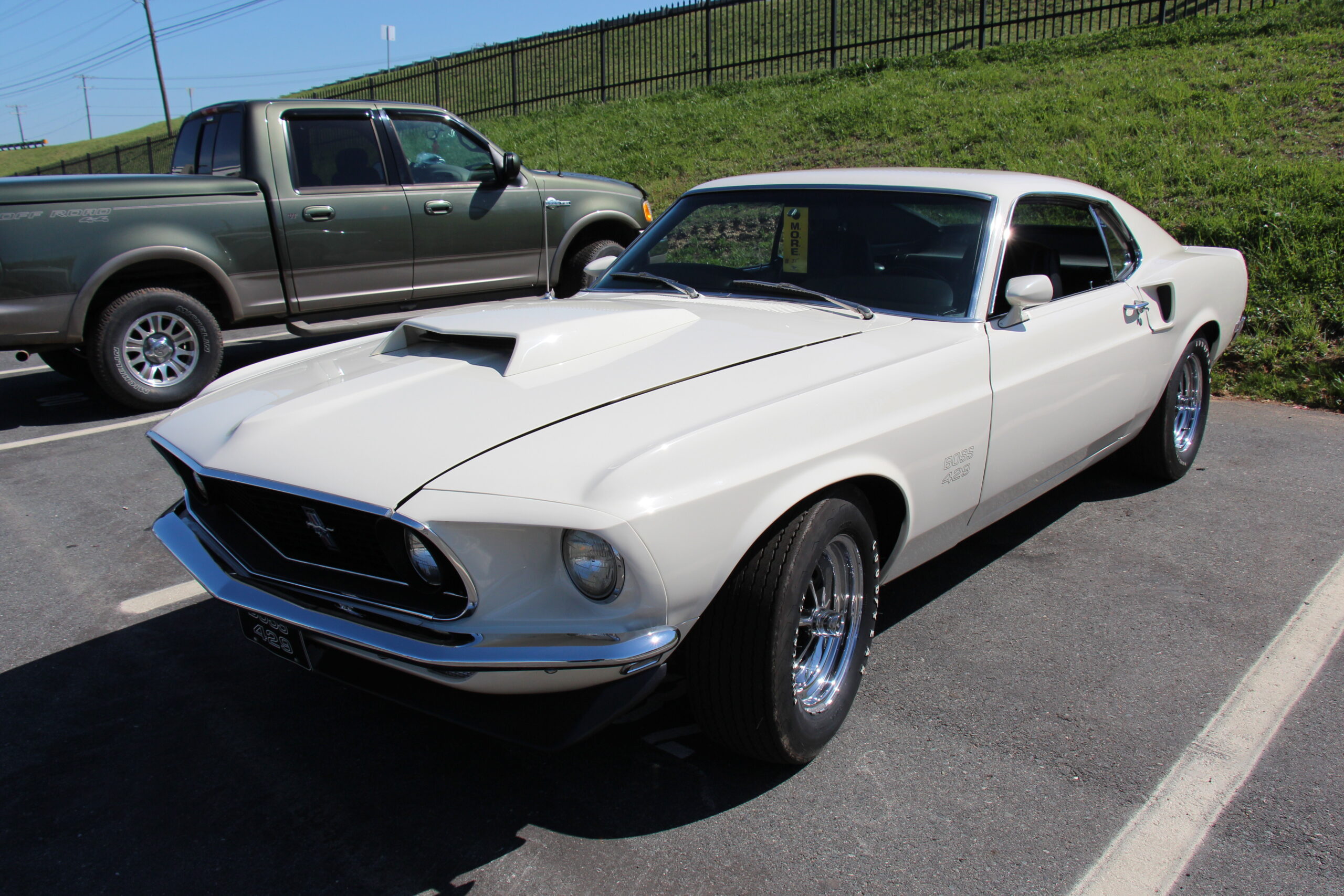
9. **1969 Ford Boss 429 Mustang**The 1969 Ford Boss 429 Mustang was conceived with a very specific, high-stakes mission: to homologate Ford’s formidable 429 cubic-inch engine for NASCAR competition. This purpose-driven genesis resulted in arguably the most distinctive Mustang ever produced, a machine that transcended the standard pony car ethos to become a true performance icon. Its unique engineering was solely focused on track superiority, setting it apart from its brethren.
To accommodate the gargantuan 429 big-block engine, Ford undertook extensive modifications to the Mustang’s engine compartment. This specialized engineering was necessary to house the powerful racing engine, a testament to the car’s competition-bred pedigree. The resulting vehicle was not just a powerful Mustang, but a homologation special that directly linked road car to race car.
Production of the Boss 429 was acutely limited to just 859 units, ensuring its extreme rarity from the moment it left the factory floor. This constrained availability, combined with its unique purpose and the sheer scale of its engine, has cemented its status as one of the most coveted Fords in the collector market. Each unit represents a pivotal moment in Ford’s racing aspirations and engineering prowess.
In the contemporary collector’s landscape, these highly exclusive vehicles now command prices well in excess of $500,000. This impressive valuation underscores the enduring allure of the 1969 Ford Boss 429 Mustang as both a monumental piece of American automotive history and a robust investment. Its rarity, powerful engine, and direct ties to NASCAR ensure its continued appreciation in the high-stakes world of classic car collecting.
Car Model Information: 1966 Ford Mustang Base
Name: Ford Mustang
Caption: 2018 Ford Mustang GT 5.0
Aka: Ford T5 (Germany)
Manufacturer: Ford Motor Company
Production: March 1964 – present
ModelYears: 1965–present
Class: Unbulleted list
BodyStyle: Unbulleted list
Layout: Front-engine, rear-wheel-drive layout
Categories: 1970s cars, 1980s cars, 1990s cars, 2+2 coupés, 2000s cars
Summary: The Ford Mustang is an American automobile manufactured and marketed by Ford since 1964, as Ford’s longest nameplate in continuous production. Currently in its seventh generation, it is the fifth-best selling Ford car nameplate. The namesake of the “pony car” automobile segment, the Mustang was developed as a highly styled line of sporty coupes and convertibles derived from existing model lines, initially distinguished by its pronounced “long hood, short deck” proportions.
Originally predicted to sell 100,000 vehicles yearly, the 1965 Mustang became the most successful vehicle launch since the 1927 Model A. Introduced on April 17, 1964 (16 days after the Plymouth Barracuda), over 400,000 units were sold in its first year; the one-millionth Mustang was sold within two years of its launch. In August 2018, Ford produced the 10-millionth Mustang; matching the first 1965 Mustang, the vehicle was a 2019 Wimbledon White convertible with a V8 engine.
The success of the Mustang launch led to multiple competitors from other American manufacturers, including the Chevrolet Camaro and Pontiac Firebird (1967), AMC Javelin (1968), and Dodge Challenger (1970). It also competed with the Plymouth Barracuda, which was launched around the same time. The Mustang also had an effect on designs of coupes worldwide, leading to the marketing of the Toyota Celica and Ford Capri in the United States (the latter, by Lincoln-Mercury). The Mercury Cougar was launched in 1967 as a unique-bodied higher-trim alternative to the Mustang; during the 1970s, it included more features and was marketed as a personal luxury car.
From 1965 until 2004, the Mustang shared chassis commonality with other Ford model lines, staying rear-wheel-drive throughout its production. From 1965 to 1973, the Mustang was derived from the 1960 Ford Falcon compact. From 1974 until 1978, the Mustang (denoted Mustang II) was a longer-wheelbase version of the Ford Pinto. From 1979 until 2004, the Mustang shared its Fox platform chassis with 14 other Ford vehicles (becoming the final one to use the Fox architecture). Since 2005, Ford has produced two generations of the Mustang, each using a distinct platform unique to the model line.
Through its production, multiple nameplates have been associated with the Ford Mustang series, including GT, Mach 1, Boss 302/429, Cobra (separate from Shelby Cobra), and Bullitt, along with “5.0” fender badging (denoting 4.9 L OHV or 5.0 L DOHC V8 engines).
Get more information about: Ford Mustang
Buying a high-performing used car >>>
Brand: Ford Model: Mustang
Price: $32,991 Mileage: 98,811 mi.
Read more about: Go Green, Save Green: 14 Gas-Guzzlers You Absolutely Should Not Keep in 2025, According to Emissions Data and Auto Experts
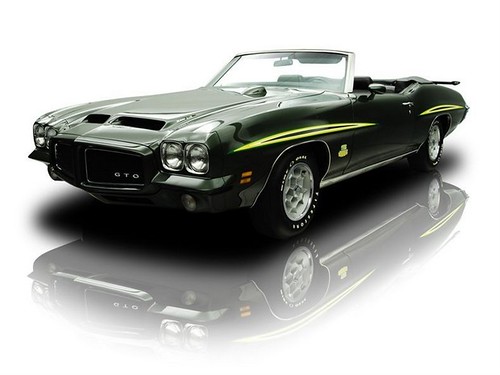
10. **1971 Pontiac GTO Judge Convertible**The 1971 Pontiac GTO Judge Convertible represents the pinnacle of Pontiac’s commitment to audacious muscle, famously regarded as the brand’s ‘most out-of-control GTO.’ This specific model was offered exclusively as a convertible, a decision that further amplified its prestige and underscored its status as a luxury performance vehicle for an elite segment of buyers. Its dramatic styling and powerful presence were unmistakable on the road.
The exclusivity of this particular model year is staggering, with only 17 units ever produced. This makes the 1971 GTO Judge Convertible an exceptionally elusive animal in the automotive world, pushing its rarity to an extreme seldom seen even among highly collectible muscle cars. Such limited production numbers are a primary driver of its formidable market value, positioning it as a truly unique acquisition.
Equipped with the potent Ram Air IV 455 engine, this convertible was more than just a rare beauty; it was a high-performance marvel. The Ram Air IV engine was a testament to Pontiac’s engineering prowess, delivering immense power and establishing the GTO Judge as the undeniable high-water mark of Pontiac performance. Its mechanical capabilities perfectly complemented its aesthetic grandeur.
Consequently, these extraordinarily rare and powerful GTO Judge Convertibles now bring well over $500,000 at auction. The confluence of its extreme scarcity, unparalleled performance from the Ram Air IV engine, and its iconic status within the Pontiac lineage positions it as a top-tier investment. For collectors, possessing one of these 17 examples means owning an irreplaceable slice of American muscle car royalty, destined for continued financial appreciation.
Car Model Information: 2023 Toyota Tacoma SR
Name: Pontiac GTO
Caption: 2005 Pontiac GTO
Manufacturer: Pontiac (automobile),Holden
Class: Mid-size car,Compact car,Mid-size car
Production: 1963–1974,2003–2006
Predecessor: Pontiac Tempest
Layout: Front-engine, rear-wheel-drive layout
ModelYears: 1964-1974 2004-2006
Categories: 1970s cars, 2000s cars, All articles with unsourced statements, Articles with short description, Articles with unsourced statements from October 2008
Summary: The Pontiac GTO is a front-engine, rear-drive, two-door, and four-passenger automobile manufactured and marketed by the Pontiac division of General Motors over four generations from 1963 until 1974 in the United States — with a fifth generation made by GM’s Australian subsidiary, Holden, for the 2004 through 2006 model years.
The first generation of the GTO is credited with popularizing the muscle car market segment in the 1960s. Some consider the Pontiac GTO to have started the trend with all four domestic automakers offering a variety of competing models.
For the 1964 and 1965 model years, the GTO was an optional package on the intermediate-sized Pontiac LeMans. The 1964 GTO vehicle identification number (VIN) started with 22, while the 1965 GTO VIN began with 237. The GTO was designated as a separate Pontiac model from 1966 through 1971 (VIN 242…). It became an optional package again for the 1972 and 1973 intermediate LeMans. For 1974, the GTO was an optional trim package on the compact-sized Ventura.
The GTO model was revived for the 2004 through 2006 model years as a captive import for Pontiac, a left-hand drive version of the Holden Monaro, itself a coupé variant of the Holden Commodore.
Get more information about: Pontiac GTO
Buying a high-performing used car >>>
Brand: Pontiac Model: GTO Judge Convertible
Price: $33,199 Mileage: 59,070 mi.
Read more about: Beyond Glare: Unpacking the Most Controversial Car Design Features and Their Unforeseen Impacts on the Road and Culture
As the automotive landscape continues its rapid evolution, these legendary American muscle cars stand as enduring testaments to an era defined by raw power, audacious design, and a relentless pursuit of performance. What were once symbols of accessible speed have definitively transformed into invaluable mobile assets, their worth now far surpassing initial expectations and often eclipsing that of many high-end exotics. The convergence of extreme rarity, undeniable historical significance, and a profound emotional connection ensures that these machines will not merely retain their value but continue to appreciate, cementing their legacy as more than just vehicles—they are tangible pieces of history, driving both passion and unparalleled investment returns for generations to come.