Long before it became the cinematic monolith we revere today—a film lauded as one of the greatest ever made, a landmark of the gangster genre, and a staple of American culture—*The Godfather* teetered on the brink of never existing. Its path to the silver screen was not one of smooth sailing and unanimous vision, but rather a tempestuous journey fraught with skepticism, artistic clashes, and relentless studio interference. The legendary 1972 crime epic, directed by Francis Ford Coppola and co-written with Mario Puzo, is a testament to perseverance, a narrative of how a powerful artistic vision clawed its way through a gauntlet of obstacles to achieve immortality.
From the very genesis of the project, through its arduous pre-production and early filming stages, nearly every foundational aspect of *The Godfather* was contested, challenged, or almost fell apart. It is a story not just of a film’s making, but of a monumental struggle for creative control against the rigid demands of a Hollywood studio, financial constraints, and even external societal pressures. The behind-the-scenes drama, in its own right, mirrors the intensity and high stakes depicted in the Corleone family saga itself.
Indeed, the saga of *The Godfather*’s creation is as rich and intricate as the film it produced, a fascinating chronicle of how a beloved best-selling novel was transformed into an enduring masterpiece despite a seemingly endless stream of setbacks. Join us as we explore the unbelievable story of the numerous critical junctures where this iconic film very nearly didn’t get made, beginning with the foundational decisions that almost saw it lost to history.
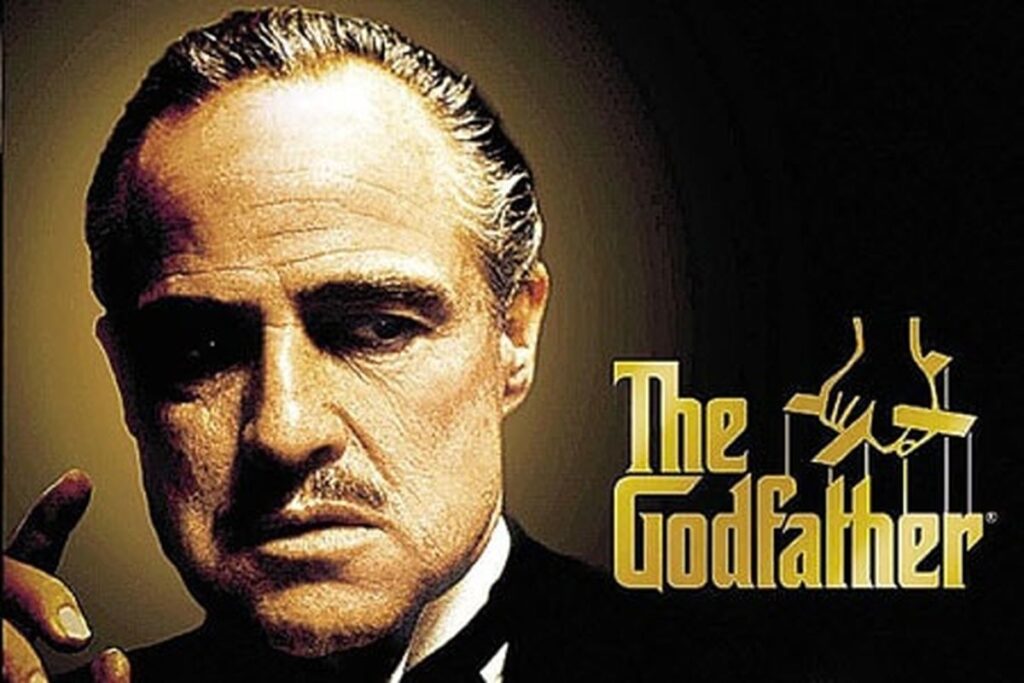
1. **The Overlooked Novel: A Bargain Nearly Missed**The genesis of *The Godfather*’s cinematic journey began with a remarkable stroke of foresight, or perhaps, sheer luck, on the part of Paramount Pictures. The studio obtained the rights to Mario Puzo’s novel for a modest $80,000. Crucially, this acquisition occurred *before* the book achieved its widespread popularity, a detail that underscores just how close the studio came to missing out on what would become a literary and cultural phenomenon.
In 1967, a literary scout for Paramount contacted then Vice President of Production Peter Bart about Puzo’s unfinished sixty-page manuscript, then titled *Mafia*. Bart, recognizing its potential beyond a simple crime story, secured an option for $12,500, with the full $80,000 promised if the complete work was adapted into a film. Puzo, in a desperate financial state, accepted the deal despite his agent’s advice to decline it, revealing his urgent need for $10,000 to cover gambling debts.
By the time the finished novel, *The Godfather*, was published in 1969, it became a runaway success, remaining on *The New York Times* Best Seller list for 67 weeks and selling over nine million copies in just two years. It was, for a time, the best-selling published work in history. Had Paramount not secured the rights early, its price would have undoubtedly skyrocketed, potentially making the project financially unfeasible or attracting other studios. The initial low-cost acquisition, made when the book’s potential was still largely unproven, was a pivotal decision that allowed the film to even be considered.
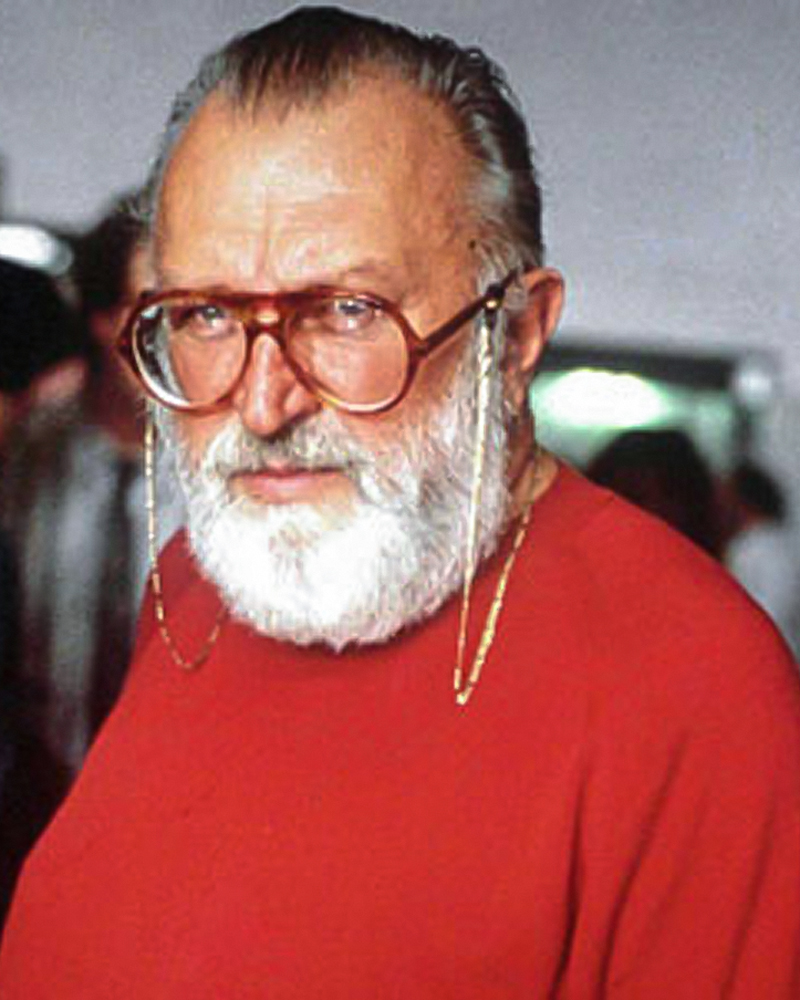
2. **The Elusive Director: Hollywood’s Hot Potato**Once the rights were secured, Paramount faced another formidable challenge: finding a director willing to tackle the material. Studio executives had significant trouble filling the position, as several prominent candidates turned down the opportunity. This reluctance highlighted the industry’s skepticism towards gangster films, especially in the wake of other box office failures.
Sergio Leone, known for his work on *Once Upon a Time in America*, was Paramount’s initial choice to direct. However, Leone ultimately declined the offer, opting instead to focus on his own gangster film. Following Leone’s refusal, Peter Bogdanovich was approached, but he too turned down the offer, citing a lack of interest in the mafia genre. This series of rejections signaled a deep-seated apprehension within Hollywood about the project’s viability.
Beyond these initial preferences, the director’s chair continued to be a hot potato. Peter Yates, Richard Brooks, Arthur Penn, Franklin J. Schaffner, Costa-Gavras, and Otto Preminger were all reportedly offered the position and, one after another, declined. The studio’s struggle to find a suitable helmsman was compounded by Robert Evans’s desire for an Italian-American director to make the film “ethnic to the core,” a response to the poor box office performance of Paramount’s earlier gangster film, *The Brotherhood*, which lacked Italian cast or creative personnel.
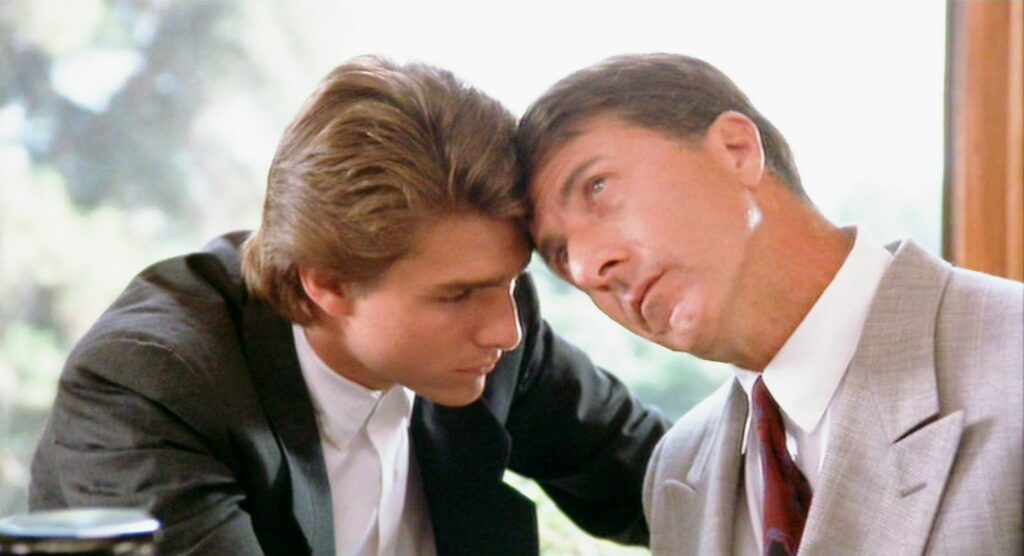
3. **Coppola’s Reluctance: A Reluctant Maestro Takes the Helm**It was against this backdrop of repeated directorial rejections that Francis Ford Coppola, then a relatively young director whose latest film, *The Rain People*, had performed poorly, was suggested by Evans’s chief assistant, Peter Bart. Coppola was seen as an Italian-American who would work for a low sum and budget, addressing Paramount’s concerns. However, Coppola himself was far from eager to take on the project.
Coppola initially turned down the job, finding Mario Puzo’s novel distasteful. He described it as “pretty cheap stuff,” considering it “sleazy and sensationalist.” His artistic sensibilities were at odds with what he perceived as the book’s pulp nature. This initial dismissal underscored the pervasive challenge of finding a director who not only met the studio’s criteria but also genuinely connected with the material.
Despite his artistic reservations, Coppola’s personal financial situation was dire. His studio, American Zoetrope, owed over $400,000 to Warner Bros. due to budget overruns on the film *THX 1138*. Faced with significant debt and advised by friends and family, Coppola reluctantly reversed his decision and took the job. He agreed to receive $125,000 and six percent of the gross rentals, a compromise that allowed him to tackle his financial woes. Remarkably, despite his initial disdain, Coppola later found a deeper theme for the material, deciding the film should be a family chronicle, a “metaphor for capitalism in America,” rather than just a story about organized crime.
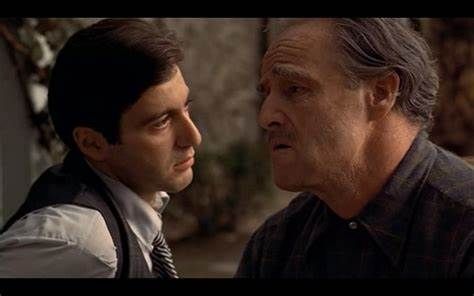
4. **Clash of Visions: A Battle for Authenticity**From the moment Coppola took the director’s chair, a fierce battle for the film’s creative direction began. Paramount executives held a starkly different vision for *The Godfather* than Coppola did, a disparity that threatened the film’s artistic integrity and historical accuracy. The studio’s primary concern was cost-cutting, leading them to propose radical changes that Coppola vehemently opposed.
Paramount executives wanted the movie to be set in contemporary Kansas City, a choice designed to significantly cut down on expenses. Their plan also involved shooting the film entirely in the studio backlot, further minimizing location costs. This vision would have stripped *The Godfather* of its essential period atmosphere and the gritty realism that became its hallmark, reducing it to a generic crime drama.
Coppola, however, fiercely objected to these cost-saving measures. He insisted on setting the movie in the same time period as the novel, the 1940s and 1950s. His reasons were deeply tied to the narrative’s core: Michael Corleone’s spell in the wartime Marine Corps, the emergence of corporate America, and the unique cultural landscape of America in the years following World War II. As the novel’s popularity surged, Coppola’s wishes ultimately prevailed, securing the authentic period setting that was crucial to the film’s lasting impact. This victory also allowed Coppola to film on location in New York City and Sicily, preserving the narrative’s geographical soul.
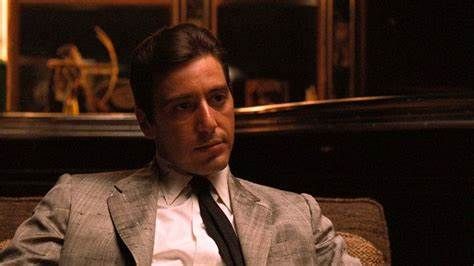
5. **Budgetary Battlegrounds: A Tight Purse String on Grand Ambition**The initial budget for *The Godfather* was set at a lean $2.5 million, a figure that quickly became a point of intense contention between Coppola and the studio. As the novel’s popularity exploded, Coppola found himself in a constant struggle to secure additional funds, arguing for a budget that matched the scope and ambition of his vision.
Despite the studio’s initial low-budget expectations, Coppola successfully argued for and ultimately received a larger budget. This was a critical turning point, as the growing success of Puzo’s book strengthened Coppola’s hand, making it harder for Paramount to deny him the resources he felt were necessary. However, even with the increase, the production remained under intense financial scrutiny, reflecting Paramount’s recent history of films greatly exceeding their budgets, such as *Darling Lili*, *Paint Your Wagon*, and *Waterloo*.
Gulf+Western executive Charles Bluhdorn, in particular, grew frustrated with Coppola over his perceived indecisiveness, especially concerning the numerous screen tests for various roles. Production began to fall behind schedule, incurring costs of around $40,000 per day. This financial bleed prompted Paramount to assign Vice President Jack Ballard to keep a close eye on production expenses, adding another layer of pressure and oversight to an already strained production environment. The battle over the budget was a continuous, underlying tension throughout the film’s making, constantly threatening to compromise its ambitious scale.
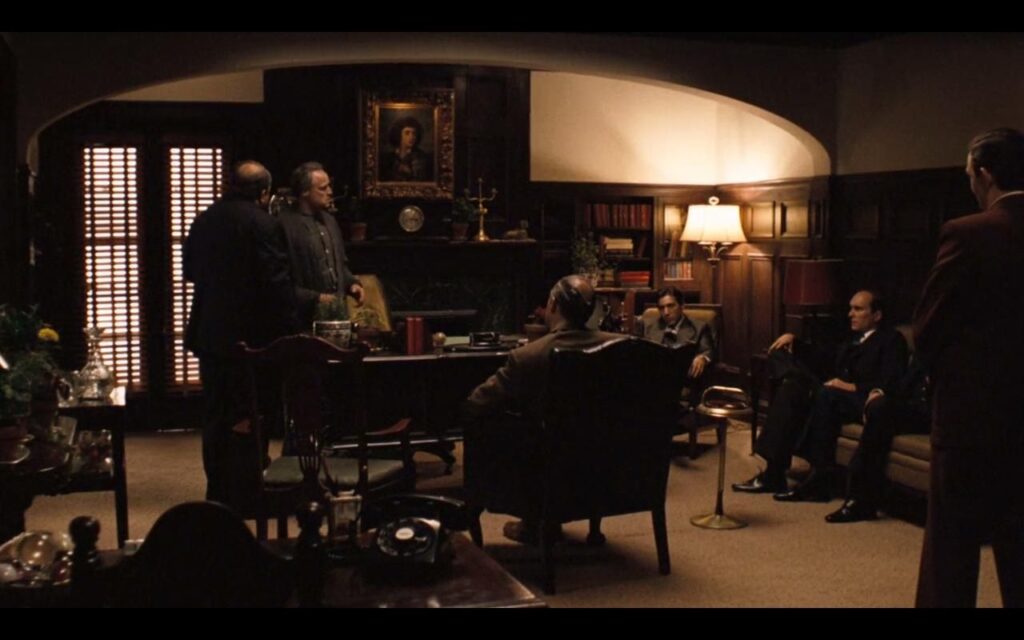
6. **The Threat of Firing: Coppola’s Precarious Position**Throughout the entire production of *The Godfather*, Francis Ford Coppola operated under the pervasive shadow of being fired. The constant conflicts with Paramount and the studio’s dissatisfaction with many of his decisions created an atmosphere of intense insecurity for the director. Coppola himself stated that he felt he could be dismissed at any point, a feeling that underscored the precarious nature of his creative control.
Paramount executives were indeed unhappy with Coppola’s methods and perceived inexperience. Producer Robert Evans, fearing that Coppola was too green to manage such a large-scale production, went so far as to ask Elia Kazan, a highly respected and experienced director, to take over the film. This direct attempt to replace him highlights the profound lack of confidence the studio initially had in Coppola’s ability to deliver, despite his eventual triumphant outcome.
Compounding his anxieties, Coppola became convinced that his film editor, Aram Avakian, and assistant director, Steve Kestner, were actively conspiring to get him fired. Avakian reportedly complained to Evans that he couldn’t correctly edit scenes because Coppola wasn’t shooting enough footage, a direct challenge to the director’s methods. In a move reminiscent of the very power dynamics depicted in *The Godfather*, Coppola explained, “Like the godfather, I fired people as a preemptory strike. The people who were angling the most to have me fired, I had fired.” This demonstrates the cutthroat environment Coppola navigated, constantly defending his vision and position. Crucially, Marlon Brando’s unwavering support, threatening to quit if Coppola was fired, played a vital role in keeping the director at the helm.
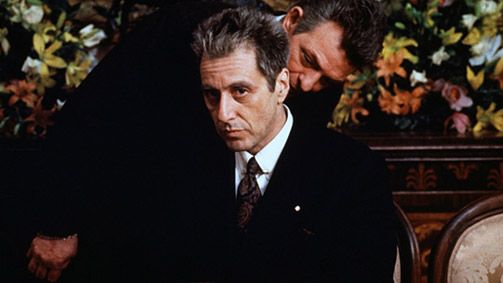
7. **The “Violence Coach” Ultimatum: Adding Edge Under Duress**Despite the film’s already inherent dramatic tension and themes of crime, Paramount executives, still focused on broad audience appeal, believed *The Godfather* needed more explicit excitement. They resorted to a rather extraordinary measure to push Coppola towards this vision: threatening him with a “violence coach” if he didn’t make the film more thrilling. This intervention showcased the studio’s desire to inject sensationalism, even at the cost of Coppola’s more nuanced approach.
The demand for increased “excitement” put Coppola in a difficult position, forcing him to make concessions to keep the studio happy and maintain his tenuous hold on the director’s chair. This external pressure directly influenced the final cut, pushing the narrative in ways that were not entirely organic to Coppola’s initial design. It was a tangible example of studio interference dictating specific cinematic choices.
As a direct result of this pressure, Coppola did add a few more violent scenes to appease the studio. One notable example is the scene where Connie smashes crockery after discovering Carlo has been cheating. This raw, emotional outburst, while serving the character’s arc, was specifically incorporated to satisfy Paramount’s demands for heightened drama and impact. It stands as a powerful reminder of the delicate balance Coppola had to strike between his artistic vision and the commercial mandates of the studio, a battle that shaped the very texture of the film.” , “_words_section1”: “1945
The preceding struggles for *The Godfather*’s very existence, from the novel’s acquisition to the director’s contested vision, merely set the stage for the next monumental battle: assembling the perfect cast and navigating the intricate web of external pressures and creative decisions that would solidify the film’s iconic identity. The journey was far from over, plunging into the intense crucible of casting and the unexpected interventions that shaped cinematic history.
8. **The Battle for Vito Corleone: Brando’s Audition and Studio Resistance**The quest to cast the indomitable Don Vito Corleone ignited one of the most fervent and celebrated casting battles in Hollywood history. Mario Puzo himself spearheaded the campaign for Marlon Brando, sending him a letter declaring him the “only actor who can play the Godfather.” Yet, Paramount executives vehemently opposed Brando, citing the “poor performance of his recent films and also his short temper,” a sentiment that put Coppola squarely at odds with the studio.
Coppola, however, was unwavering in his vision, favoring either Brando or Laurence Olivier for the pivotal role. When Olivier’s agent refused, claiming illness, the field narrowed. Paramount’s top brass championed other choices; producer Robert Evans pushed for Carlo Ponti or Ernest Borgnine, while Gulf+Western executive Charles Bluhdorn even proposed Charles Bronson. The list of considerations was exhaustive, including esteemed actors like George C. Scott, Richard Conte (who eventually played Don Barzini), Raf Vallone, Anthony Quinn, and even Orson Welles, who met with Puzo to plead his case.
After months of intense debate between Coppola and Paramount, a reluctant compromise was reached, placing Brando and Borgnine as the two finalists. Paramount president Stanley Jaffe, however, demanded a screen test for Brando—a rare and potentially insulting request for an actor of his stature. To circumvent this, Coppola ingeniously framed it as an “equipment test” at Brando’s California residence, allowing the actor to improvise without feeling demeaned.
It was during this “test” that cinematic magic unfolded. Brando, with cotton balls stuffed in his cheeks, shoe polish to darken his hair, and his collar rolled up, spontaneously transformed into the imposing patriarch. Coppola strategically placed Brando’s raw, powerful audition tape amidst others, ensuring the studio executives would be caught off guard. Impressed by his undeniable efforts, Paramount finally conceded, but with stringent conditions: Brando had to accept a lower salary and “put up a bond to ensure he would not cause any delays in production,” demonstrating the studio’s persistent skepticism. Ultimately, Brando received a significant “$1.6 million from a net participation deal,” a testament to his indispensable performance.
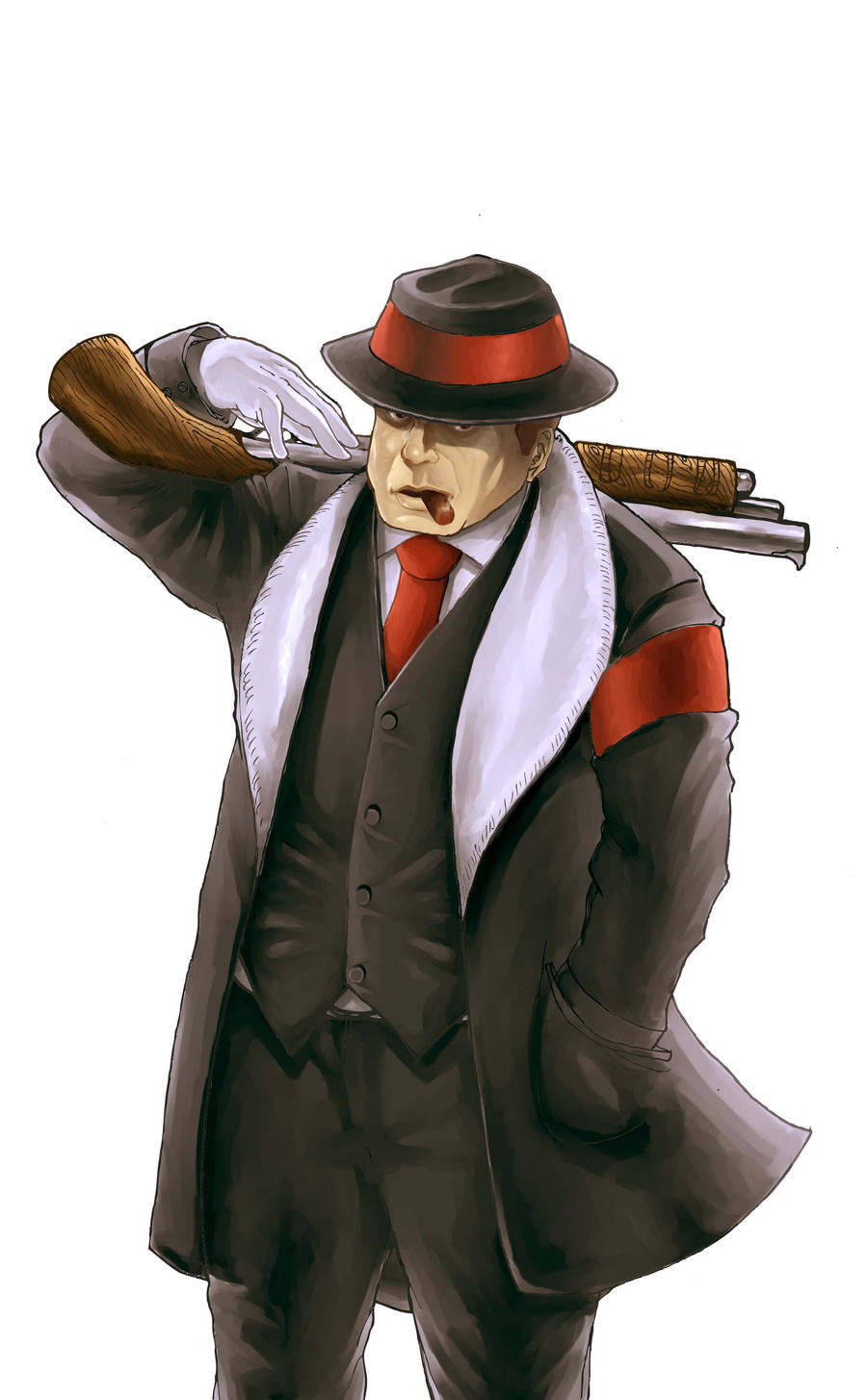
9. **The Elusive Michael Corleone: Finding the Reluctant Mafia Boss**As filming approached, the role of Michael Corleone, the moral compass turned ruthless Don, remained agonizingly uncast, prompting another fierce showdown between Coppola and Paramount. The studio, ever keen on commercial appeal, desired a popular, recognizable star such as Warren Beatty, Alain Delon, or Robert Redford. Producer Robert Evans was particularly captivated by French actor Alain Delon, a major European symbol who even carried a copy of Puzo’s novel, but whose polished image clashed with Coppola’s vision for a brooding, intense character. Ryan O’Neal, fresh off his success in *Love Story*, was also strongly considered.
Coppola, however, had a singular, unshakeable conviction: Al Pacino. He envisioned Pacino, an unknown Italian-American actor, “roaming the Sicilian countryside” and bringing an authentic, understated intensity to the role. Paramount executives were staunchly against Pacino, finding him “too short” and questioning his box office draw. A cavalcade of acclaimed actors auditioned, including Dustin Hoffman, Martin Sheen, Dean Stockwell, and even James Caan, who was initially cast as Michael while Carmine Caridi was slated to play Sonny Corleone.
The battle raged on, with Pacino struggling in early screen tests, often forgetting lines and improvising dialogue. He himself “couldn’t envision himself in the role” initially, seeing Michael as more glamorous, more akin to Alain Delon. Yet, Coppola’s belief never wavered. He urged producers Al Ruddy and Evans to watch Pacino in *Panic in Needle Park*, a performance that finally convinced them. They acquiesced to Pacino playing Michael, on the condition that Caan would instead take on the role of Sonny, a switch Evans preferred due to Caan being shorter than Caridi, aligning more closely with Pacino’s height.
The casting saga for Michael concluded dramatically just three weeks before shooting began. Pacino was still under contract to MGM for *The Gang That Couldn’t Shoot Straight*, a film that Robert De Niro had originally been cast in as Paulie Gatto, only to leave to join *The Gang* once Pacino departed. An urgent settlement between Paramount and MGM secured Pacino, finally bringing Coppola’s chosen Michael Corleone to the set, a decision that would redefine his career and solidify the film’s central performance.

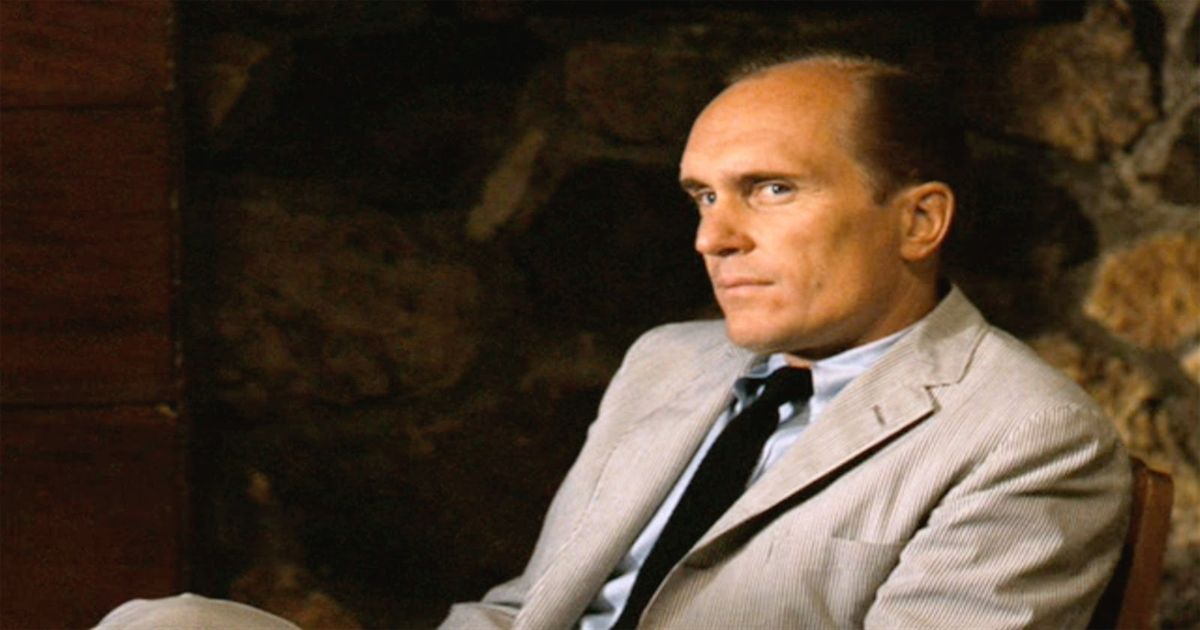
10. **Assembling the Corleone Ensemble: Key Supporting Roles**Beyond the titanic struggles for Vito and Michael, the assembly of *The Godfather*’s supporting cast was a meticulous, often fraught, process crucial to grounding the Corleone family’s world. Robert Duvall, who would become the formidable consigliere Tom Hagen, was Coppola’s immediate and unwavering choice from the outset, a decision that thankfully met with little studio resistance after testing several other actors.
The casting of singer Johnny Fontane, the character famously seeking Don Vito’s help, was a saga in itself, mirroring the film’s own themes of influence and power. Al Martino, a popular nightclub singer, was alerted to the character by a friend who felt he embodied Fontane. He contacted producer Albert S. Ruddy directly and secured the part. However, upon Coppola’s arrival, Martino was stripped of the role, which was then offered to Vic Damone. Martino, undeterred, reportedly reached out to his godfather, crime boss Russell Bufalino, leading to news articles suggesting Coppola was unaware of Ruddy’s initial casting. Damone ultimately dropped out, not wishing to “provoke the mob” and citing a low salary, paving the way for Martino to reclaim his iconic role, despite threats from Frank Sinatra.
Coppola also made inspired choices for other crucial family members. Diane Keaton was cast as Kay Adams, Michael’s girlfriend and eventual wife, “owing to her reputation for being eccentric,” bringing a compelling innocence to the Corleone outsiders. John Cazale, whose understated brilliance would define Fredo Corleone, caught Coppola’s eye in an Off Broadway production. Gianni Russo won the role of Connie’s abusive husband, Carlo Rizzi, after a screen test where he intensely acted out a fight scene with Connie.
In a deeply personal touch, Coppola peppered the film with his own family members, enriching its authentic Italian-American texture. His sister, Talia Shire, was cast as Connie Corleone. His infant daughter, Sofia, made an uncredited appearance as Michael Francis Rizzi during the baptism scene. His father, Carmine Coppola, contributed additional music and appeared as an extra playing piano. Even his wife, mother, and two sons made cameos as extras. These familial inclusions, along with other smaller roles like Luca Brasi being cast after filming had already commenced, contributed to the film’s rich, lived-in feel, further enhanced by Ruddy’s casting choices which reportedly earned him approval from the Italian-American Civil Rights League.
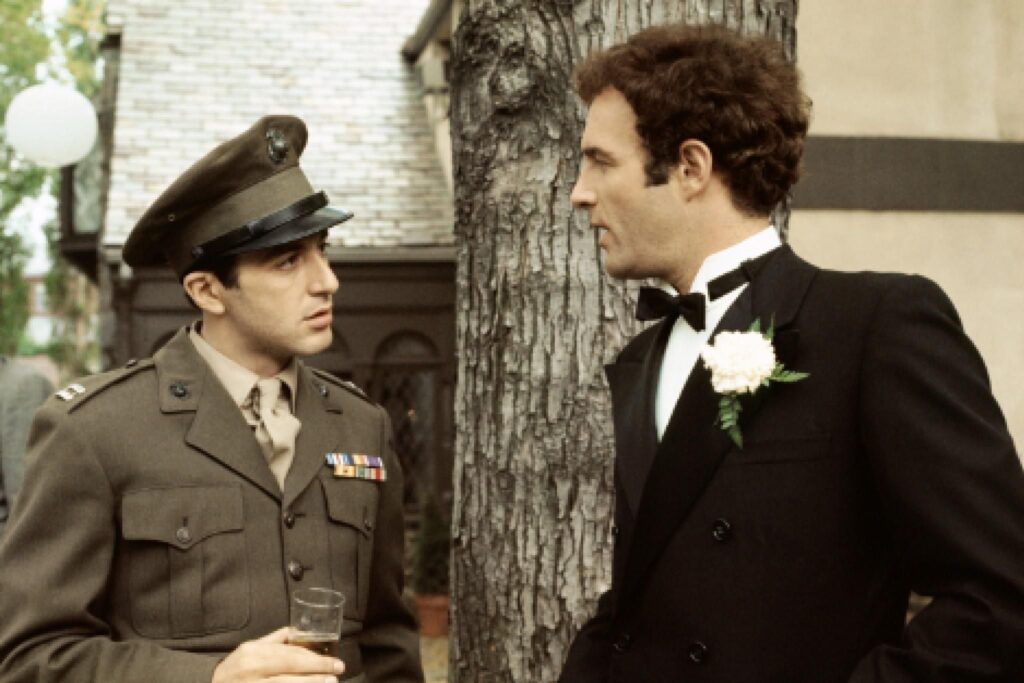
11. **The Mafia vs. Hollywood: The Italian-American Civil Rights League’s Intervention**The production of *The Godfather* faced not only internal studio battles but also unprecedented external pressure from the Italian-American Civil Rights League, led by the notorious mobster Joseph Colombo. The League vehemently contended that the film “emphasized stereotypes about Italian-Americans,” launching a campaign to cleanse the script of any perceived slurs. Their primary demand was the removal of all uses of the words “mafia” and “Cosa Nostra” from the screenplay, alongside a request that all profits from the film’s premiere be donated to their fund for building a new hospital.
This was no idle threat. The production had already experienced menacing interventions, including an incident where producer Albert S. Ruddy’s “car had been shot out with a note left on the dashboard which essentially said, ‘shut down the movie—or else.'” The tension escalated, forcing the filmmakers into a delicate negotiation. Coppola, for his part, maintained that Puzo’s screenplay contained only “two instances of the word ‘mafia'” and did not use “Cosa Nostra” at all.
In an extraordinary act of compromise, these contentious words were indeed removed and “replaced with other terms, without compromising the story,” as the filmmakers carefully navigated the demands. This concession was a direct result of Ruddy’s personal engagement with the League. In August 1971, he met with Joseph Colombo, his son Anthony, and approximately 1,500 delegates of the League, with their first meeting having taken place earlier on February 25, 1971.
Ruddy undertook numerous subsequent meetings with Anthony Colombo, ultimately agreeing to present the film’s narrative through the lens of individuals, assuring the League that it “would not defame or stereotype Italians.” This remarkable diplomatic effort proved successful, as the League eventually gave its crucial support to the script. So impactful was Ruddy’s diplomacy that Anthony Colombo “reportedly made Ruddy an honorary captain of the League,” a testament to the complex, real-world power dynamics that shadowed the making of this cinematic epic.
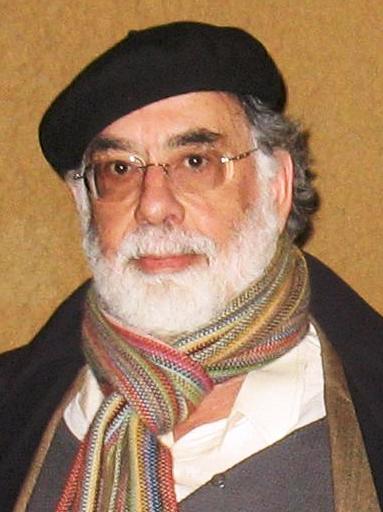
12. **Crafting the Script: Coppola and Puzo’s Collaborative Clash**The screenplay itself was another arena of intense artistic collaboration and occasional friction. On April 14, 1970, Mario Puzo was officially hired by Paramount for $100,000, along with a percentage of the film’s profits, to adapt his own best-selling novel. Puzo, naturally, aimed to retain many aspects from his book, completing his initial draft of 150 pages by August 10, 1970. However, Francis Ford Coppola, once on board as director, brought his own profound perspective to the material.
Coppola’s vision centered on themes of “culture, character, power, and family” at the film’s forefront, moving beyond a simple crime story. While Puzo worked on his draft in Los Angeles, Coppola independently developed his version in San Francisco. He meticulously created a “book” where he tore pages from Puzo’s novel, pasted them into his own manuscript, and made extensive notes on each of the book’s fifty scenes. These annotations delved into the major themes prevalent in each scene, whether it should be included in the film, and crucial ideas and concepts that could be employed during filming to ensure the movie remained “true to Italian culture.”
Despite their separate working processes, Puzo and Coppola maintained constant communication, making joint decisions on what to include and what to remove for the final screenplay. A second draft, spanning 173 pages, was completed by March 1, 1971. The final screenplay, finished on March 29, 1971, weighed in at 163 pages—a robust “40 pages over what Paramount had asked for,” underscoring the richness and detail they poured into the narrative. Coppola, notably, referred back to his self-created notebook throughout filming, a testament to his deeply considered approach.
Further illustrating the collaborative and evolving nature of the script, screenwriter Robert Towne was brought in to do some uncredited “script doctor” work, particularly enhancing the poignant dialogue in the garden scene between Pacino and Brando. Even with the third draft finalized, some scenes were still unwritten as production began, a characteristic of Coppola’s organic and adaptive filmmaking process that allowed for moments of spontaneous brilliance to be woven into the tapestry of the story.
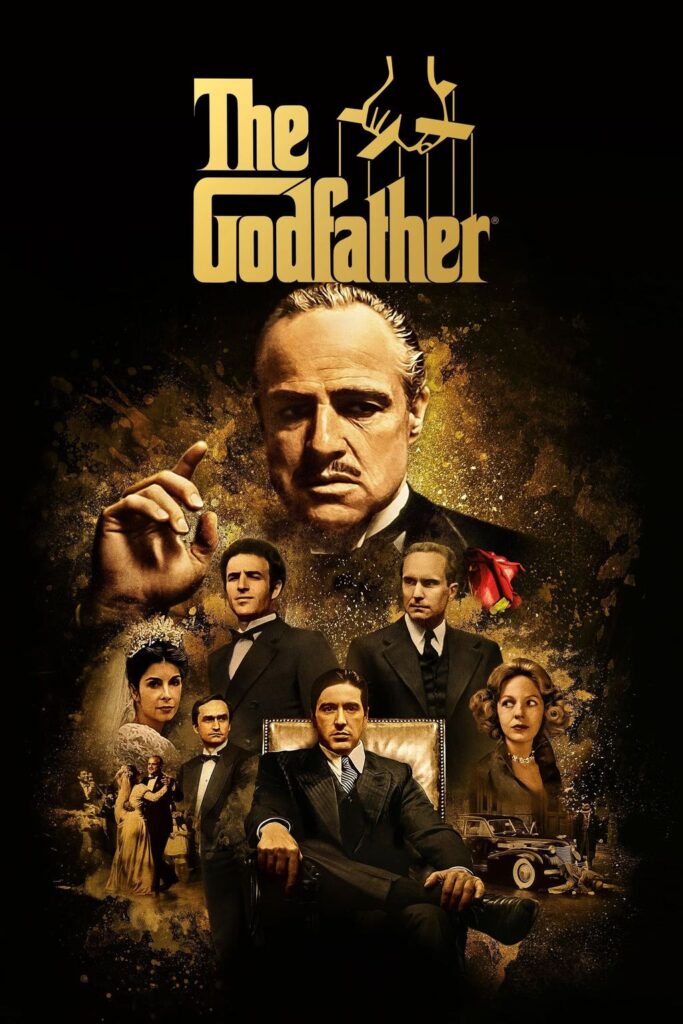
13. **Visualizing the Epic: Cinematography and Production Design Challenges**Bringing *The Godfather*’s world to life demanded a distinct visual language, a challenge brilliantly met by cinematographer Gordon Willis, though not without initial hesitation. Willis initially turned down the opportunity, finding the production “chaotic.” Once he accepted, he and Coppola formed a powerful creative alliance, agreeing to eschew “any modern filming devices, helicopters, or zoom lenses.” Instead, they adopted a “tableau format” of filming, aiming to make each shot resemble a painting, imbuing the film with a classical, timeless quality.
Willis became renowned for his masterful use of “shadows and low light levels throughout the film to show psychological developments,” crafting a visual chiaroscuro that mirrored the moral ambiguity of the Corleone world. He and Coppola deliberately “agreed to interplay light and dark scenes,” and Willis famously “underexposed the film in order to create a ‘yellow tone’,” giving the entire picture a rich, sepia-tinged palette that evoked a nostalgic, almost elegiac atmosphere. In stark contrast, the scenes in Sicily were consciously shot to “display the countryside and ‘display a more romantic land,'” lending these sequences a “softer, more romantic feel” than the grittier New York scenes.
The realism extended to audacious production choices, some of which stirred controversy. One notorious scene involved an “actual severed horse’s head,” leading to criticism for Coppola, although the head was ethically “obtained from a dog-food company from a horse that was to be killed regardless of the film.” The exact filming location for this iconic scene remains contested, adding to its mystique. The elaborate nature of the production was also evident in the three-day, “$100,000” shooting of Sonny’s death scene, which required building three tollbooths, guard rails, and billboards on a runway at Mitchel Field in Uniondale, and outfitting a 1941 Lincoln Continental with “holes drilled in it to resemble bullet holes.”
Coppola’s insistence on authentic locations paid off handsomely. Approximately “90 percent was shot in New York City and its surrounding suburbs, using over 120 distinct locations.” While some scenes found a home at Filmways in East Harlem and others in California, the decision to forego filming in Las Vegas due to “insufficient funds” underscored the persistent budgetary constraints. Sicily’s Savoca and Forza d’Agrò provided the rustic charm for Michael’s exile, and the opening wedding scene, a grand spectacle, was filmed in a Staten Island neighborhood, featuring “almost 750 locals as extras” at the iconic Corleone household at 110 Longfellow Avenue. Even the wall around the Corleone compound, an imposing symbol of their power, was ingeniously crafted from “styrofoam,” a testament to the ingenuity that permeated every aspect of this challenging production.
14. **The Sound of the Underworld: Music and Post-Production Struggles**The auditory soul of *The Godfather* was entrusted to Italian composer Nino Rota, who delivered one of cinema’s most instantly recognizable and emotionally resonant scores, including the melancholic “Love Theme from The Godfather.” Rota’s task was to create an underscore that intimately “relate[d] to the situations and characters in the film,” weaving a musical tapestry that would be intrinsically linked to the Corleone saga. He masterfully “synthesized new music for the film and took some parts from his 1958 Fortunella film score,” ingeniously adapting existing melodies to conjure an “Italian feel and evoke the tragedy within the film.”
Despite its eventual acclaim, Rota’s score initially met with resistance from Paramount. Executive Robert Evans found it “too ‘highbrow'” and was disinclined to use it. It was Coppola’s staunch advocacy and persuasive power that ultimately led Evans to concede, a crucial victory for the film’s artistic integrity. Coppola believed, rightfully so, that Rota’s musical pieces gave the film “even more of an Italian feel,” deepening its cultural authenticity. Adding to the family affair, Coppola’s father, Carmine, contributed “additional music” for the film, notably the lively pieces played by the band during the festive opening wedding scene.
The film’s rich incidental music further augmented its narrative power, featuring traditional Italian folk songs like “C’è la luna mezzo mare,” alongside classical excerpts such as Cherubino’s aria “Non so più cosa son” from Mozart’s *Le Nozze di Figaro* and “Brindisi” from Verdi’s *La traviata*. The soundtrack itself, released in 1972 and later reissued, offered over 31 minutes of music, predominantly Rota’s compositions, but also including contributions from Carmine Coppola and others. Critics universally lauded the album, with AllMusic calling it a “dark, looming, and elegant soundtrack” that successfully intertwined with the film’s core themes. Even during the iconic baptism scene, Bach’s Prelude and Fugue in D major, BWV 532, and Passacaglia and Fugue in C minor, BWV 582, underscore the dramatic weight of Michael’s ascendance.
Following the conclusion of filming on August 7, the arduous task of post-production commenced, primarily focused on “trimming the film to a manageable length.” This phase was far from straightforward, with producers and director “still including and removing different scenes from the end product, along with trimming certain sequences.” A rough cut of the film was viewed in September, revealing that many scenes centered around Sonny, which did not advance the plot, had been removed. By November, Coppola and Ruddy had finalized the semi-final cut, yet “debates over personnel involved with the final editing remained even 25 years after the release of the film,” highlighting the persistent friction. The film was eventually showcased to Paramount staff and exhibitors in late December 1971 and January 1972, poised for its monumental, world-altering premiere.
The story of *The Godfather*’s creation is a masterclass in perseverance, a compelling narrative of artistic vision battling against formidable odds. From the precarious acquisition of Puzo’s manuscript to the relentless pursuit of the perfect cast, from warding off external societal pressures to painstakingly crafting its visual and auditory identity, every step of its journey was fraught with challenges that would have sunk a lesser project. Yet, through sheer tenacity, unyielding creative conviction, and a series of dramatic compromises and triumphs, Francis Ford Coppola and his team forged an enduring masterpiece, a testament to the power of cinema to transcend adversity and achieve immortality. It is a legendary tale that reminds us that sometimes, the greatest art emerges from the most turbulent struggles, forever etching *The Godfather* not just as a film, but as a triumph of will against the tide of nearly not getting made at all.