Hollywood has a dark, well-trodden path for its youngest stars, a journey often fraught with peril that transforms childhood dreams into adult nightmares. The stories are tragically familiar: bright-eyed talents, once capturing hearts on screen, find themselves swallowed by the industry’s pressures, succumbing to personal demons, or simply vanishing into obscurity. From battles with addiction to legal woes, the narratives of child stars turning into “drug addicts, alcoholics, criminals, or worst of all—reality show participants” are a chilling reminder of the fragility of early fame.
Indeed, the industry’s history is littered with cautionary tales. For every adorable face that graces our screens, there’s the looming specter of the “numerous betrayals, arrests or humiliations that seem to plague so many kids who spend time in front of a camera.” It’s a landscape where parents are often left crossing their fingers, hoping their child can somehow defy the gravitational pull of the curse, dreaming of a path less destructive than those of a Gary Coleman or a Lindsey Lohan, or the heartbreaking fates of a River Phoenix or Sawyer Sweeten.
Yet, against this backdrop of widespread struggle and sorrow, there exist a precious few—a select group of child actors whose lives did not devolve into tabloid meltdowns and court proceedings. These are the individuals who managed to “cheat Fate,” forging paths to become functioning, successful adults, whether within the spotlight or far from its glare. We delve into the stories of the first half of these exceptional talents, exploring the pivotal decisions, unwavering support, and sheer resilience that allowed them to not only survive, but thrive, in an industry that so often consumes its young.

1. **Christian Bale**In the glittering, yet often treacherous, world of Hollywood, Christian Bale’s trajectory stands as a testament to the power of careful navigation and perhaps, a timely dose of healthy aversion to the trappings of fame. At just 13 years old, Bale rocketed to international recognition, taking on the demanding lead role in Steven Spielberg’s cinematic masterpiece, *Empire of the Sun*. This wasn’t his first foray into acting, with prior experiences in commercials and made-for-TV movies, but nothing could have truly prepared him for the intense, disorienting spotlight that followed.
The sudden, almost overwhelming “scary adulation” he received, both at school and on the streets, was a profound shock to his system. His mostly normal childhood, a grounding force, seemed to vanish overnight, leaving him feeling deeply unnerved. It was this jarring experience, this “first distaste of fame,” that arguably became his greatest shield. Rather than chasing every opportunity, young Bale considered quitting acting altogether, a powerful indicator of his detachment from the intoxicating allure that so often ensnares child stars.
His father, acting as his manager, played a crucial role in safeguarding his son’s future. Instead of succumbing to the pressure of cashing in on instant fame, they meticulously chose projects. This involved a deliberate strategy of selecting “interesting roles” that challenged him creatively, while also ensuring he was kept “far from the temptations and pitfalls of Hollywood.” This measured approach allowed Bale to build an impressive and diverse resume, facilitating a remarkably seamless transition from child actor to a critically acclaimed adult performer, culminating in his enviable status as a major star and a universally respected actor today. His occasional fiery outbursts, like yelling at someone on a *Terminator* movie set, are mere footnotes in a career largely defined by integrity and enduring success, proving he is, overall, “a pretty together guy.”
Read more about: These 12 Deleted Scenes Were So Violent, They Nearly Earned Movies an R-Rating

2. **Danica McKellar**For many child stars, having one iconic role can be both a blessing and a curse. Danica McKellar, forever etched in the minds of a generation as Winnie Cooper, the next-door neighbor and object of Fred Savage’s preteen affections on the hit TV series *The Wonder Years*, found herself at a familiar crossroads. Once the show concluded and the inevitable approach of adulthood loomed, the roles, as they so often do for former child stars, began to dry up. The industry’s fickle nature meant that producers weren’t “all that interested in casting a former child star,” setting her on what might have been a “pretty standard beginning in the former child star arc.”
This is where McKellar sharply diverged from the anticipated narrative of public flameouts and personal ruin. The script for a typical child star trajectory often includes escalating personal struggles: getting high, stealing a car, and succumbing to an embarrassing public meltdown. However, McKellar, with remarkable foresight and determination, “had other plans.” She redirected her formidable intelligence and drive toward academic pursuits, enrolling in mathematics at UCLA, a prestigious institution far removed from the glitz and glamour of Hollywood.
Her intellectual prowess truly shone as she not only excelled in her studies but also coauthored a paper on her own mathematical theorem, a feat few achieve regardless of their career path. Building on this intellectual foundation, she became a best-selling author, penning books that actively encouraged young women to break societal stereotypes and excel in mathematics. Today, while she still occasionally engages in acting work, primarily voice-overs, her life is primarily defined by her accomplishments as an author, with “three books under her belt.” McKellar stands as a vibrant example of someone who is “beautiful, smart, successful, and most importantly of all, grounded,” a stark contrast to the expected trajectory, offering a clear and resounding answer to others who falter: “Do you hear that Screech? There is a better way.”
Read more about: Totally Tubular: Catch Up With The Iconic Sitcom Queens Of The ’80s – You Won’t BELIEVE Where They Are Now!
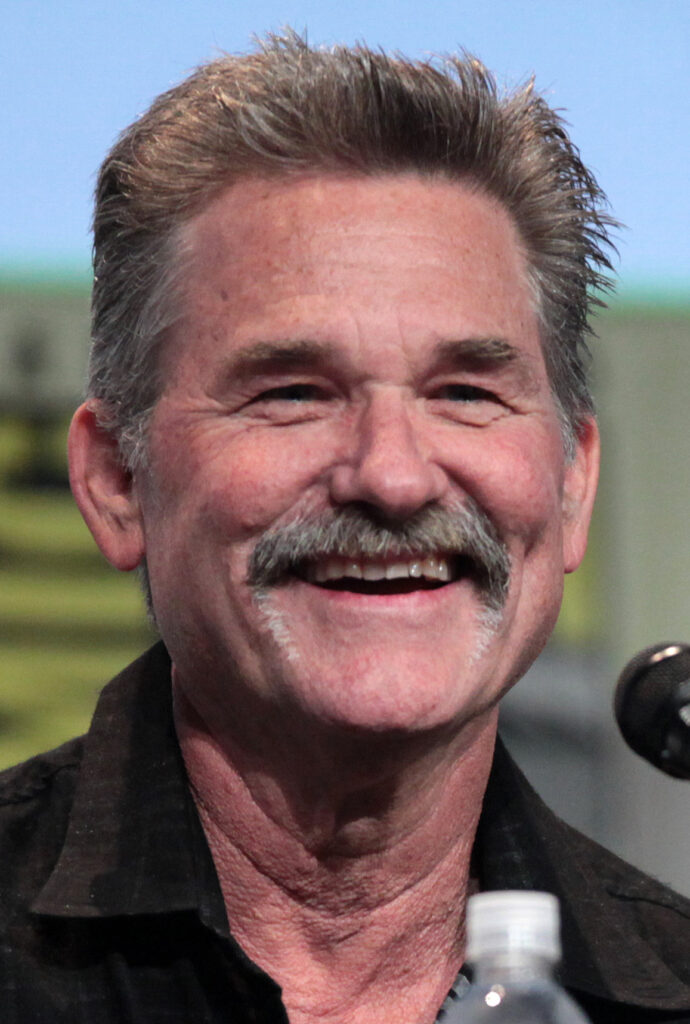
3. **Kurt Russell**Before he became the grizzled, formidable “Mr. Badass” of films like *Escape from New York* and *Tombstone*, Kurt Russell navigated the very same early Hollywood currents that have capsized so many young careers. His journey began not with immediate blockbusters, but with a foundational period in the Sixties, amassing numerous television roles that honed his craft. While those early movies might not have “stood the test of time” and are often overshadowed by his later, more iconic work, they were crucial stepping stones.
Russell’s career truly ignited in the 1970s when he signed a pivotal ten-year contract with Disney, transforming him into a “bona fide teen idol.” He charmed audiences in family-friendly flicks such as *The Original Family Band*, where he famously met his future wife Goldie Hawn, and *The Computer Wore Tennis Shoes*. These roles established him as a recognizable and beloved young star, cementing his status in the popular culture of the era.
What truly sets Russell apart is that, unlike the vast majority of child actors whose careers taper off dramatically as they transition to adulthood, his career “has continued unabated ever since.” He smoothly transitioned from teen heartthrob to leading man, demonstrating a rare longevity and versatility in Hollywood. His enduring success gives a powerful lie to the cynical belief that all child actors are destined to “end up dead, drunk, or ashamed,” instead providing a compelling narrative of sustained professional achievement and personal stability.
Read more about: The 27 Club: Unraveling the Persistent Myth of Rock and Roll’s Tragic Age

4. **Dakota Fanning**In an industry that frequently churns through young talent, casting them aside as they mature, Dakota Fanning represents a contemporary beacon of promise, already showcasing a remarkable ability to navigate the complex path from child star to accomplished actress. While it might seem “a little presumptuous to claim Dakota Fanning has missed the perils and pitfalls of a former child star considering she’s only 16” at the time of initial observation, all indicators suggest a trajectory toward “a healthy, interesting career for the young woman.” Her journey began incredibly early, captivating audiences in commercials at the tender age of five, rapidly ascending through the ranks of child stardom.
Fanning quickly graduated from commercials to appearances on popular TV series, and eventually, to significant roles in big-budget movies. Even at her remarkably young age, it was evident to critics and audiences alike that Fanning was “not just another cute kid.” Her talent was undeniable and profound; at merely seven years old, she garnered a nomination for a Screen Actors Guild Award for her extraordinary performance in *I Am Sam*, a clear signal of her exceptional abilities and commitment to her craft.
She continued to deliver “amazing performances in all sorts of movies,” showcasing her versatility across genres, from intense thrillers to charming voice-over work for cartoons, consistently impressing both her co-stars and critics. When a controversial role in the 2006 film *Hounddog* drew criticism, where her character is raped, Fanning handled the scrutiny with an uncommon maturity. She “patiently explained that it was ‘a movie. It’s not really happening,'” demonstrating a clear distinction between character and reality. Furthermore, her insightful decision in 2009 to “lay off any more lead roles until she finishes high school” provided further evidence that, regardless of the future twists and turns of her career, Dakota Fanning is one individual who is firmly committed to ensuring that fame will not, under any circumstances, “screw her up.”
Read more about: The Bullhorn Effect: Deconstructing Hollywood’s ‘Toxic Fandom’ Problem
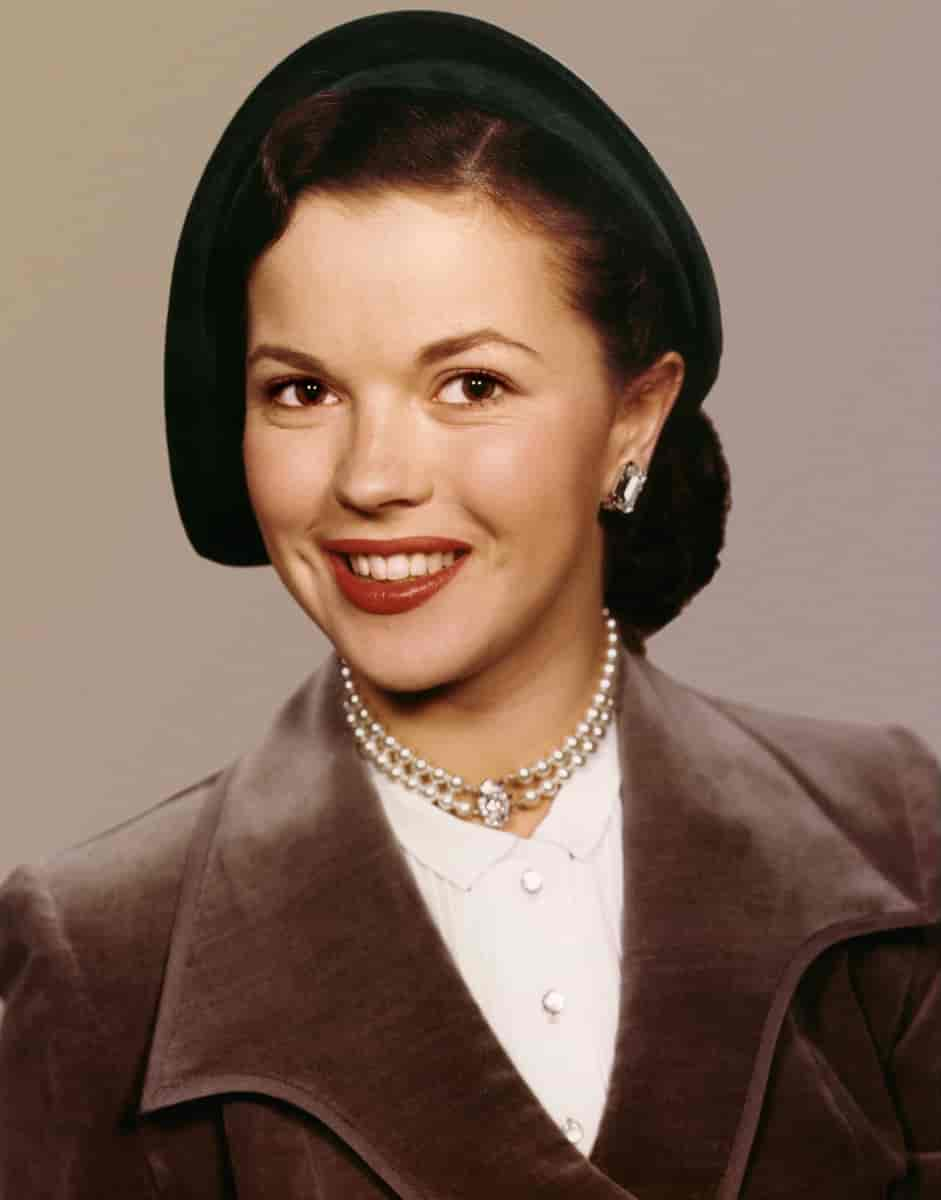
5. **Shirley Temple (Black)**Shirley Temple’s journey is arguably one of the most compelling narratives in the annals of child stardom, standing as a paramount example of a young performer who not only survived the entertainment industry’s trials but also transcended them to forge an entirely new, incredibly successful life beyond the spotlight. In the early 1930s, amidst the Great Depression, Temple was not merely the biggest child star; she was, for a period, “the biggest star period.” Her distinctive “golden locks, expressive eyes, and cute-without-being-cloying personality” utterly captivated the nation, and she unequivocally “ruled the box office.”
However, the golden glow of her early career was not without its shadows, particularly concerning her origins. While she is widely associated with heartwarming, happy-go-lucky films like *Curly Top* and *The Littlest Rebel*, the very beginning of her storied career is, “undoubtedly marred by some rather seedy practices.” Before she became a legitimate Hollywood phenomenon, Shirley Temple appeared in a series of films known as *Baby Burlesks*. These pre-code era productions featured an entire cast of toddlers parodying much more mature films and current events.
In these *Baby Burlesks*, children were, concerningly, “required to perform in skimpy clothing and mimic adult scenarios.” A particularly unsettling example is found in the film *War Babies*, where Shirley Temple, as a mere toddler, is depicted “wearing a loose-fitting top that seems almost purposely designed to slip and fall down her arms in a suggestive way.” More profoundly, she was made to “channel the mannerisms and demeanor of a prostitute,” engaging in “a caricature of a seductive dance” and being referred to as “baby” by other barely-dressed young boys, even calling herself “expensive.” Temple herself later condemned these films as “a cynical exploitation of our childish innocence” and noted that they “occasionally were racist or ist,” highlighting the deeply problematic nature of her initial foray into acting.
Beyond these exploitative beginnings, Temple endured relentless public scrutiny and bizarre rumors at the height of her fame. Pervasive whispers circulated that she wasn’t a child at all but “a 30-year-old dwarf,” a claim so widespread that “the Vatican even dispatched a priest to confirm whether or not Temple was actually an adult.” Fans would even attempt “to pull on her curls in the hopes of revealing a bald head,” fueled by rumors that her iconic hair was a wig. Compounding these pressures, her childhood was undeniably “unnatural,” as her friend and stand-in, Marilyn Granas, recalled, stating, “She didn’t get to go to public school. She didn’t have a lot of friends or get to do kid things, like ride bikes.”
As Temple matured, her acting career predictably began to fade, as “audiences had trouble accepting her as anything but an angelic child.” This is often the point where the familiar narrative of “drugs, alcohol and a string of failed marriages to seedy guys called Eddie are supposed to enter the picture.” But Shirley Temple, by all accounts, was “raised too well for that.” She instead chose a path of remarkable personal stability, marrying, raising a family, and embarking on an entirely new, profoundly impactful career.
After a few initial unsuccessful political campaigns, Temple transitioned into public service, becoming an ambassador and diplomat. Her illustrious second act saw her representing the United States’ interests at the UN, in Ghana, and ultimately in Czechoslovakia. She also served on the boards of numerous companies and published a best-selling book detailing her experiences. It’s a remarkable transformation, a true testament to her character, that “the little girl who sailed one the Good Ship Lollypop became a government official,” proving that even with a challenging and unconventional start, a life rich with purpose and achievement is possible far beyond the bright, often blinding, lights of Hollywood.

6. **Seth Green**Outside the scripted worlds of Hollywood movies and television sitcoms, the ‘smartass kid’ archetype often finds itself relegated to the sidelines. However, Seth Green has masterfully bucked this trend, transforming that early precocity into a formidable and respected adult career. His journey through the industry began remarkably early, including a notable turn playing a young version of Woody Allen in *Radio Days*, a formative experience that hinted at his unique comedic timing and sharp intellect.
Unlike many of his peers who either burn out or struggle to shed their adorable, fleeting images, Green managed to evolve without losing his distinctive edge. He didn’t just survive; he thrived, carving out a solid niche in the cultural landscape. His career as an adult actor has been defined by a consistent presence in projects that resonate deeply with dedicated fanbases, often lending his voice and wit to roles that have become indelible parts of pop culture.
Indeed, Green has become a veritable institution within the realm of ‘geek favorites.’ From his memorable turn as Oz in *Buffy the Vampire Slayer* to his enduring voice work as Chris Griffin on *Family Guy*, and, of course, the creative force behind *Robot Chicken*, his influence is undeniable. These roles are not merely jobs; they are extensions of a persona that embraces the intelligent, the quirky, and the profoundly funny, allowing him to connect with audiences who appreciate a brainy irreverence.
Perhaps the most compelling secret to Green’s longevity is his visible enjoyment of his craft and his life. In an industry where many young actors cultivate the image of tortured artists, lamenting the arduous nature of their profession, Green projects an aura of genuine contentment. That seemingly permanent smirk on his face isn’t, as the cynics might suggest, a sign of arrogance, but rather a reflection of someone who truly understands and appreciates the extraordinary fortune of “mak[ing] a good living playing pretend with his buddies and making people laugh.” This fundamental joy in his work has acted as an impenetrable shield against the typical child star traps, demonstrating that passion, coupled with a healthy dose of self-awareness, can pave a successful, un-tragic path through Hollywood’s unpredictable terrain.
Read more about: Seriously, How Did They Pull That Off?! 15 Celebs Whose Wives Are Totally Out of Their League (And What We Think Happened!)

7. **Christina Ricci**The transition from child actor to adult star is often a brutal evolutionary bottleneck in Hollywood, primarily because “cute doesn’t age well.” What makes a child utterly adorable on screen can, with the unforgiving march of time, translate into an unsettling strangeness on an adult face, leaving many former prodigies struggling to redefine their appeal. Yet, Christina Ricci stands as a striking, almost defiant, exception to this harsh rule, a testament to the power of cultivating a distinct, idiosyncratic appeal.
Ricci, initially celebrated for her undeniable cuteness, possessed an innate quality that subtly hinted at something more complex beneath the surface. As she matured, that “pretty cute kid” evolved, retaining a certain allure that, while “just slightly off” by conventional standards, proved to be her greatest asset. This wasn’t a flaw to be overcome; it was a unique selling proposition, a “good kind of off” that radiated an intriguing eccentricity.
This unique brand of “quirky off” allowed Ricci to effortlessly carve out a niche in an industry often flooded with homogenous, “dyed blonde robo-beauties.” After a robust start playing beloved, albeit quirky, children in major productions like *Mermaids* and *The Addams Family*, she navigated the treacherous waters of adolescence and young adulthood with remarkable grace. Her transition to complex, mature roles was almost seamless, a rarity that left industry observers marveling at her innate ability to adapt.
One moment, she was the memorable child actor in *Casper*, captivating audiences with a blend of innocence and understated depth. The next, she was delivering profoundly “complex adult performances in Ice Storm and The Opposite of Sex,” demonstrating a range and gravitas that belied her years. While her career might have seen a slight recalibration in pace lately, her reputation as a formidable and versatile actress remains untarnished. Crucially, she is “a long way from appearing on a crappy reality show to make a quick buck,” a stark and welcome contrast to the desperate measures many former child stars resort to, underscoring her commitment to meaningful artistic endeavors over fleeting fame.
Read more about: Beyond the Red Carpet: 14 Celebrity Couples Who Master the Art of Relationship Privacy and Why We Love It!

8. **Joseph Gordon-Levitt**In the annals of child stardom, there’s a particular niche for actors with three names, often accompanied by an unspoken desire from audiences to, shall we say, “punch [them] in the face.” Joseph Gordon-Levitt, however, not only defied this bizarre stereotype but also managed to sidestep the indignities of the former child star curse with an altogether more compelling defining feature: he is, unequivocally, a terrific actor. His early public recognition came from playing the seemingly anachronistic “old alien trapped in a teenager’s body on *Third Rock from the Sun*,” a role that, taken in isolation, might lead one to assume his disappearance after the show’s run.
And, in a way, he did “disappear” – but with purposeful intent. Instead of capitulating to the easy, well-lit path of mainstream teen idol roles that so many young actors embrace, Gordon-Levitt opted for a radical, almost subversive, strategy. He deliberately chose “difficult roles in dark films,” a decision that showcased a profound commitment to his craft over commercial viability. This wasn’t a misstep; it was a calculated move to hone his skills and defy expectations.
His choices in films like *Mysterious Skin*, where he portrayed a male prostitute, and *Brick*, a neo-noir high school gumshoe mystery, were bold and uncompromising. These roles were far from the conventional fare expected of a former sitcom star, revealing an actor unafraid to plumb complex emotional depths and challenge his audience. This “radical strategy” of appearing only in what he famously dubbed “good movies” quickly distinguished him, earning him critical acclaim and solidifying his reputation as one of the most intriguing and promising “up and coming actors in Hollywood.”
Still relatively young at 30 when this observation was made, Gordon-Levitt’s career was, in many ways, just beginning to fully blossom, building upon the sturdy, unconventional foundation he meticulously laid. His remarkable ability to not only navigate but actively sidestep the pervasive pitfalls of childhood fame has done more than ensure his personal stability; it has guaranteed audiences “another great actor to watch for years to come.” His trajectory is a masterclass in prioritizing artistic integrity and thoughtful career management over the fleeting allure of easy fame, a truly rare feat in a notoriously unforgiving industry.
Read more about: Beyond the Spotlight: 11 Child Stars Who Smashed the Odds and Kept Their Stardom Shining Bright

9. **Kirsten Dunst**The treacherous chasm between child star and respected adult actor is one that swallows careers whole, yet Kirsten Dunst, much like Christina Ricci, made this notoriously difficult transition seem “like the easiest thing in the world.” Her journey began with a successful stint as both a child model and actress, laying a foundation of industry experience. Her true breakthrough, however, arrived with a captivating and “well-received role in *Interview With A Vampire*,” where she held her own opposite titans like Tom Cruise and Brad Pitt, a feat that instantly signaled her serious acting chops.
From that formidable debut, Dunst continued to build an impressive resume throughout her childhood and teenage years, starring in several more critical and commercial hits. Her versatility was evident as she seamlessly moved between blockbuster franchises and more intimate projects. Eventually, she landed the coveted “plum role of Mary Jane in the *Spiderman films*,” solidifying her status as a mainstream star, while simultaneously indulging her artistic curiosities with appearances in “several romantic comedies and indie films,” and even embarking on a “fledgling singing career.”
However, it is precisely at this juncture that Dunst’s story veers from the typical success narrative and delves into something far more compelling. Unlike many who maintain a façade of perfection, Dunst publicly “battled with mental illness as an adult and stopped working and entered a rehab facility to battle depression.” This candid admission and proactive step towards recovery might sound eerily familiar within the grim tapestry of child star downfalls. Yet, critically, Dunst’s narrative diverged sharply from the tragic fates of so many of her “former child star colleagues” like Dana Plato.
Instead of succumbing to the pressures and the illness, “Dunst got help and resumed her career with barely a hiccup.” Her ability to confront her struggles head-on, seek professional assistance, and emerge with her career not just intact but thriving, stands as a powerful testament to her inner fortitude and resilience. It serves as an inspiring blueprint, offering a poignant contrast and begging the question, “If only Dana Plato would have done the same,” highlighting Dunst’s remarkable journey as a beacon of hope and strength in an industry often devoid of such triumphs.
Read more about: Beyond Baby Talk: 12 Essential Things You Didn’t Know About Your Infant’s First Year!
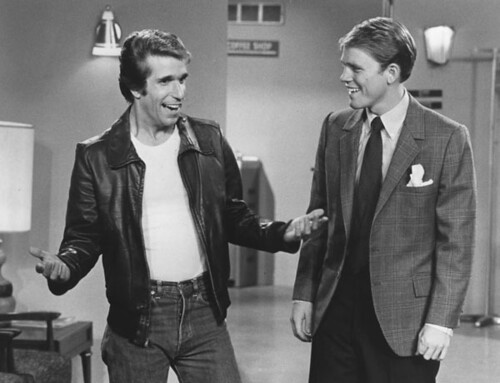
10. **Ron Howard**For any aspiring child actor dreaming of a career that extends beyond their 19th birthday, a diligent study of Ron Howard’s extraordinary trajectory should be an absolute prerequisite. His career is not merely a testament to longevity but a masterclass in strategic reinvention, a narrative so unique that Howard effectively “came back from being a former child star twice,” a feat almost unheard of in Hollywood. His initial foray into the public consciousness arrived in 1960, at the tender age of six, when he was cast as the beloved, precocious Opie Taylor on *The Andy Griffith Show*, endearing him to a generation.
Once that iconic series concluded, Howard experienced a period of transitional uncertainty, bouncing between “a few TV roles here and there,” a familiar limbo for many child actors struggling to shed their breakthrough image. However, his second act as a star ignited with undeniable force in 1973, with pivotal roles in George Lucas’s *American Graffiti* and the immensely popular television series *Happy Days*. This resurgence cemented his status as a legitimate Hollywood fixture, proving his enduring appeal and talent.
Crucially, this time, Howard approached his career with a newfound sense of autonomy and foresight, determined “not prepared to let anyone but himself decide the future of his career.” In a bold and career-defining move, he “left Happy Days at the height of its popularity” to embark on an ambitious quest: to become a director. He skillfully leveraged his existing fame, striking a shrewd deal with B-movie producer Roger Corman, agreeing to star in one of Corman’s films *only if he could direct another one himself*. This ingenious quid pro quo provided his crucial directorial debut, opening the floodgates for his true calling.
Having seized that opportunity, Howard parlayed the experience into a series of successful gigs directing television episodes and lower-budget movies, steadily honing his craft and building his reputation behind the camera. The rest, as they say, “is history.” Howard’s directorial prowess blossomed, leading him to helm a string of “major hits,” garner “critically acclaimed dramas,” and ultimately, culminate in the ultimate industry accolade: “an Academy Award.” His journey from child star to beloved actor to Oscar-winning director isn’t just a success story; it’s a veritable blueprint for sustained achievement, unequivocally demonstrating, “Now that’s how you have a career, kids!” It’s a powerful and enduring legacy that defies every cynical expectation of the child star curse.
Read more about: Beyond the Spotlight: The Shocking Child Star Controversies That Rocked Hollywood Forever
These ten remarkable individuals offer more than just tales of personal triumph; they provide a crucial counter-narrative to Hollywood’s often-grim folklore. Their journeys, marked by deliberate choices, unwavering support systems, a healthy dose of self-awareness, or an innate resilience, illuminate a hidden path where early fame doesn’t inevitably lead to personal wreckage. They are not merely exceptions that prove the rule, but rather living proof that while the “curse” of child stardom casts a long shadow, it is far from an unbreakable spell. For every cautionary tale echoing through the industry’s halls, these stars shine as beacons, illustrating that with the right combination of talent, fortitude, and a strategic mind, it is entirely possible to not only survive the spotlight but to truly thrive, transforming youthful promise into a lifetime of achievement, both on and off the silver screen.