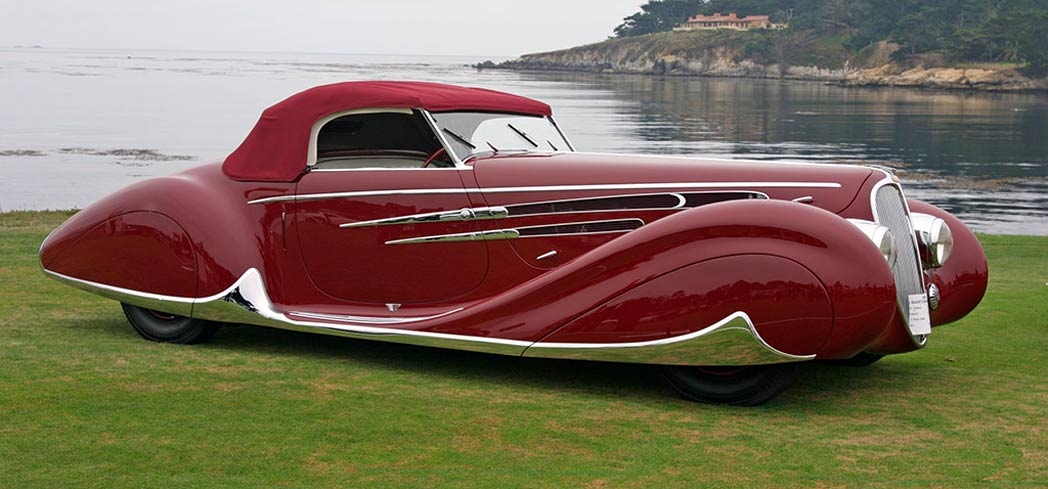
For many, the allure of classic cars is undeniable. These magnificent machines represent more than just vehicles; they are symbols of nostalgia, craftsmanship, and a tangible connection to automotive history. Owning a classic car can be a deeply rewarding experience, offering both the joy of preserving a piece of the past and the potential for a shrewd financial investment. However, the path to classic car ownership, particularly through restoration, is fraught with challenges that can quickly turn a dream project into a financial quagmire.
The enthusiasm for bringing a neglected vintage dream car back to life, often to concourse standards, can be immense. Yet, the reality of classic car restoration frequently demands years of dedicated effort and substantial financial investment. While some models promise a rewarding journey and significant appreciation, others, despite their iconic status or initial appeal, can ensnare even the most seasoned enthusiast in a “restoration trap” – where the cost of refurbishment far exceeds the vehicle’s potential market value.
This intricate world calls for a deep understanding of classic car history and a keen awareness of collector interest. Before diving headfirst into a restoration project, it’s paramount to objectively evaluate the car’s overall condition, its rarity, and the current market demand. This involves assessing structural damage, determining mechanical functionality, and understanding the role of originality. For certain models, the journey from rust bucket to showroom marvel is so prohibitively expensive that, paradoxically, they might be worth more as scrap metal than as a fully restored piece. Let’s explore some of these challenging contenders, starting with five models where the restoration costs can easily eclipse potential value, turning a passion project into a profound financial burden.
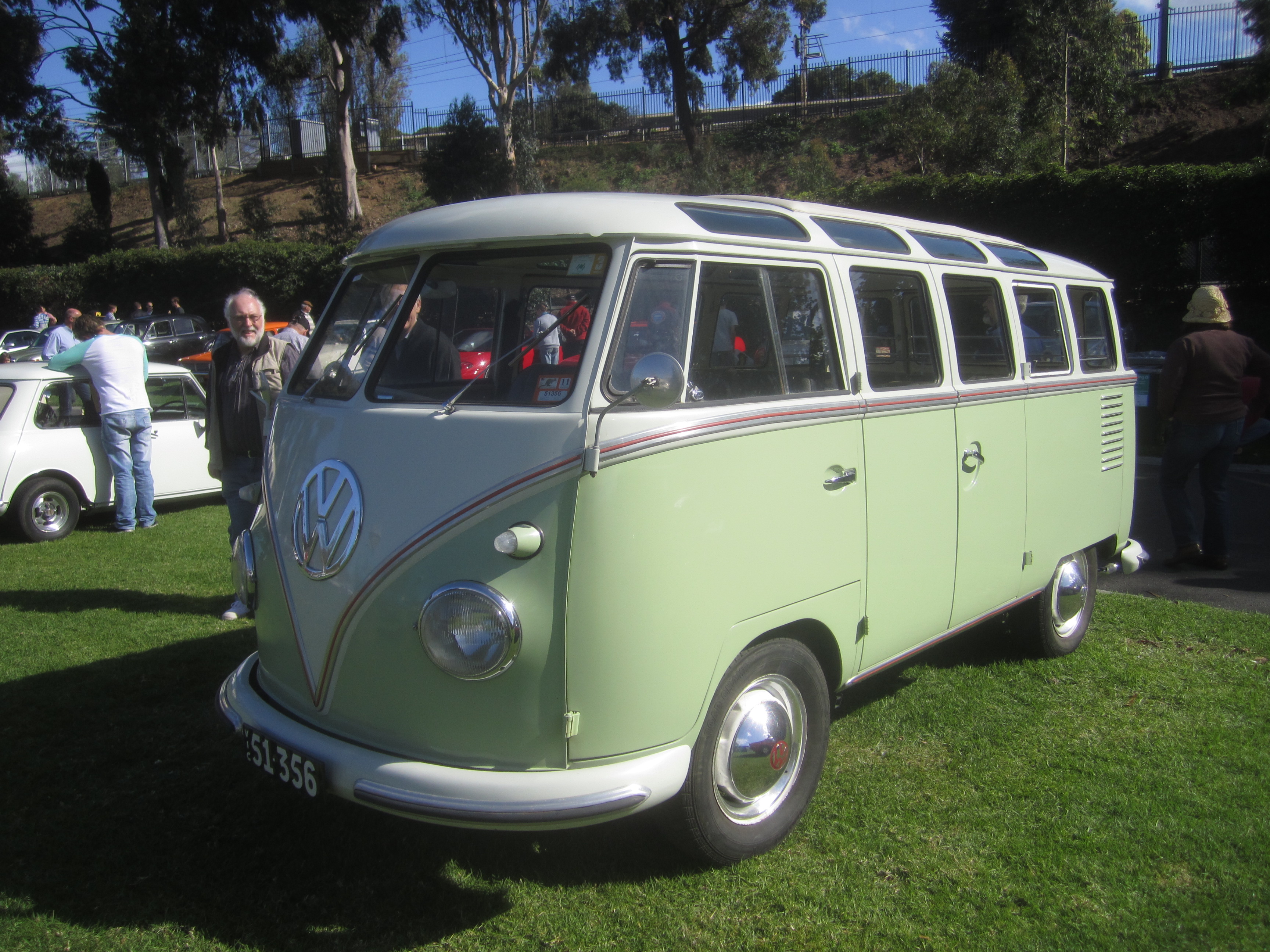
1. **Volkswagen Samba Bus**The Volkswagen Samba Bus, with its distinctive 23-window configuration and charming aesthetic, has enjoyed a resurgence in popularity, partly fueled by modern homages like the Volkswagen ID. Buzz. This increased demand for the original only intensifies the desire among collectors to own and restore these iconic vans. However, beneath the nostalgic surface lies a restoration project that is “far from simple,” presenting unique challenges that can quickly inflate costs.
Indeed, the “23-window versions are especially tricky, with rare skylight glass and intricate trim details.” Sourcing these specific components, often unique to the Samba Bus, becomes a significant hurdle. Not only is the availability limited due to their age and specific design, but the cost of acquiring authentic replacements or having custom fabrications made can be astronomical. This isn’t merely a matter of finding a part; it’s a treasure hunt that demands patience, extensive networking, and a willingness to pay a premium.
Furthermore, the “costs of restoring these classic vans can be substantial due to the number of components involved.” Beyond the rare glass and trim, a comprehensive restoration typically involves extensive bodywork to address rust, which is common in older vans, a complete interior overhaul, and a full mechanical refurbishment. Each system, from the electrical wiring to the drivetrain, requires meticulous attention. This culminates in a “lengthy and expensive restoration journey,” making it critical for enthusiasts to be prepared for the financial commitment required to bring these timeless pieces of automotive history back to their former glory, often at a cost that tests the boundaries of their eventual market worth.
Car Model Information: 2023 Honda Accord EX
Name: Volkswagen Type 2
Manufacturer: Volkswagen
Aka: unbulleted list
Production: November 1949 – present
Successor: Volkswagen ID. Buzz
Class: Light commercial vehicle
BodyStyle: unbulleted list
Platform: Volkswagen Group T platform
Layout: unbulleted list
Sp: uk
Categories: 1950s cars, 1960s cars, 1970s cars, 1980s cars, 1990s cars
Summary: The Volkswagen Transporter, initially the Type 2, is a range of light commercial vehicles, built as vans, pickups, and cab-and-chassis variants, introduced in 1950 by the German automaker Volkswagen as their second mass-production light motor vehicle series, and inspired by an idea and request from then-Netherlands-VW-importer Ben Pon.
Known officially (depending on body type) as the Transporter, Kombi or Microbus – or informally as the Volkswagen Station Wagon (US), Bus (also US), Camper (UK) or Bulli (Germany), it was initially given the factory designation ‘Type 2’, as it followed – and was for decades based on – the original ‘Volkswagen’ (“People’s Car”), which became the VW factory’s ‘Type 1’ after the post-war reboot, and mostly known, in many languages, as the “Beetle”.
The Volkswagen Transporter has been built in many variants. It may be best known for its panel vans, but it was also built as a small bus or minivan, with choices of up to 23 windows and either hinged or sliding side doors. From the first generation, both regular and crew-cab, as well as long- and short-bed pickups, were made, and multiple firms sprang up to manufacture varying designs of camper vans, based on VW’s Transporter models, to this day.
For the first 40 years, all VW Type 2 variants were forward control, with a VW-Beetle-derived flat-four engine in the rear, and all riding on the same (initial thirty years – T1 and T2), or similar (T3), 2.40 m (94 in) wheelbase as the Type 1 Beetle. As a result, all forward-control Type 2 pickups were either of standard-cab, long-bed or crew-cab, short-bed configuration, and because of the relatively high bed floor (above the rear, flat engine), most pickups came with drop sides in addition to the tailgate. In 1979, the third-generation Type 2 introduced an all-new, more square and boxy body, and in the 1980s also introduced a raised four-wheel-drive bus variant.
From the introduction of the fourth-generation Transporter in 1990, the vehicle layout changed to a more common front-engined one – no longer forward-control – and also changed from rear- to front-wheel drive, with four-wheel–drive remaining optional. From then on, the platform no longer shared technological legacy with the Beetle, and Volkswagen just called them ‘Transporter’, and no longer ‘Type 2’. The new models, though growing a bit in length, got a significantly longer wheelbase that pushed the wheels closer to the truck’s corners, noticeably reducing its front and rear overhangs, and extended-wheelbase models were also introduced.
Get more information about: Volkswagen Type 2
Buying a high-performing used car >>>
Brand: Volkswagen Model: Samba Bus
Price: $22,799 Mileage: 37,546 mi.
Read more about: The Collector’s Trap: 9 ‘Rare’ Cars Whose Value Will Never Justify the Cost of Restoration—Should You Sell Now?
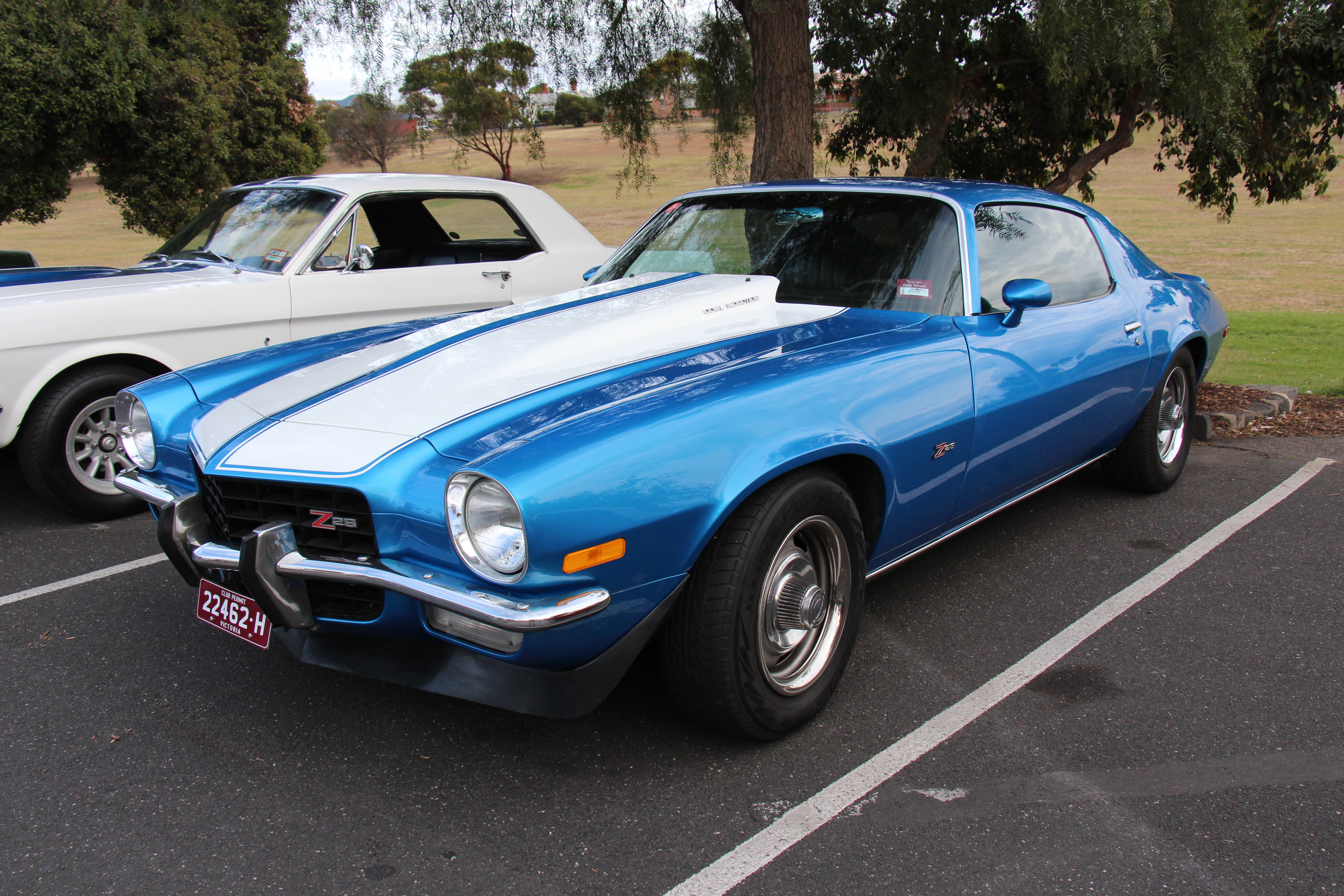
2. **Chevrolet Camaro Z28 LT1 (Second Generation)**Among classic car enthusiasts, the second-generation Chevrolet Camaro Z28 LT1 holds a revered place, often cited as a fan favorite. Celebrated for its “reworked engine, improved body design, and aluminum pistons,” it promised a thrilling driving experience that set it apart in its era. Its aggressive stance and performance capabilities cemented its status as an American muscle car legend, making it an attractive target for those looking to relive a golden age of automotive power.
Despite its undeniable appeal and the fact that one can “still find one for around $20,000,” the true cost of ownership often extends far beyond the initial purchase price. The primary challenge lies in its age; this muscle car is “now over 50 years old,” which means its “outdated mechanics make restoration a significant challenge.” Components that were cutting-edge in the early 1970s are now complex to repair or replace, and often require specialized knowledge and tools that are not readily available.
To genuinely bring a second-gen Camaro Z28 LT1 back to life, “extensive work to bring it back to life” is almost always required. This encompasses everything “from sourcing original parts to rebuilding the drivetrain.” The task of locating authentic, period-correct components can be both time-consuming and prohibitively expensive, especially for critical engine or transmission parts. Thus, while the initial entry price might seem appealing, the journey of restoring a second-gen Camaro is a “costly but rewarding endeavor for passionate restorers,” where the financial investment must be carefully weighed against the market’s appreciation for its restored condition.
Car Model Information: 2023 Honda Accord EX
Caption: 1970 Camaro
Name: Chevrolet Camaro,(second generation)
Manufacturer: Chevrolet
ModelYears: 1970–1981
Production: February 1970–1981
Assembly: Van Nuys Assembly
Predecessor: Chevrolet Camaro (first generation)
Successor: Chevrolet Camaro (third generation)
Class: Pony car,Muscle car
BodyStyle: coupé
Layout: Front-engine, rear-wheel drive layout
Platform: GM F platform
Engine: {{convert,229,cuin,L,1,abbr=on,Chevrolet 90° V6 engine#3.8L (229 CID)
Abbr: on
Transmission: Automatic transmission
Wheelbase: 108 in
Length: 188 in
Width: 74.4 in
Height: 50.1 in
Weight: 3310 lb
Related: Pontiac Firebird (second generation)
Designer: Henry Haga
Categories: 1980s cars, All articles needing additional references, All articles that may contain original research, Articles needing additional references from November 2009, Articles that may contain original research from December 2011
Summary: The second-generation Chevrolet Camaro is an American pony car produced by Chevrolet from 1970 through the 1981 model years. It was introduced in the spring of 1970. Build information for model 123-12487 was released to the assembly plants in February of that same year. It was longer, lower, and wider than the first generation Camaro. A convertible was no longer available. GM engineers have said the second generation is much more of “a driver’s car” than its predecessor. The high-performance Z/28 option remained available through 1975, redesignated as the Z28 in 1972.
Get more information about: Chevrolet Camaro (second generation)
Buying a high-performing used car >>>
Brand: Chevrolet Model: Camaro Z28 LT1
Price: $22,799 Mileage: 37,546 mi.
Read more about: The Collector’s Trap: 9 ‘Rare’ Cars Whose Value Will Never Justify the Cost of Restoration—Should You Sell Now?
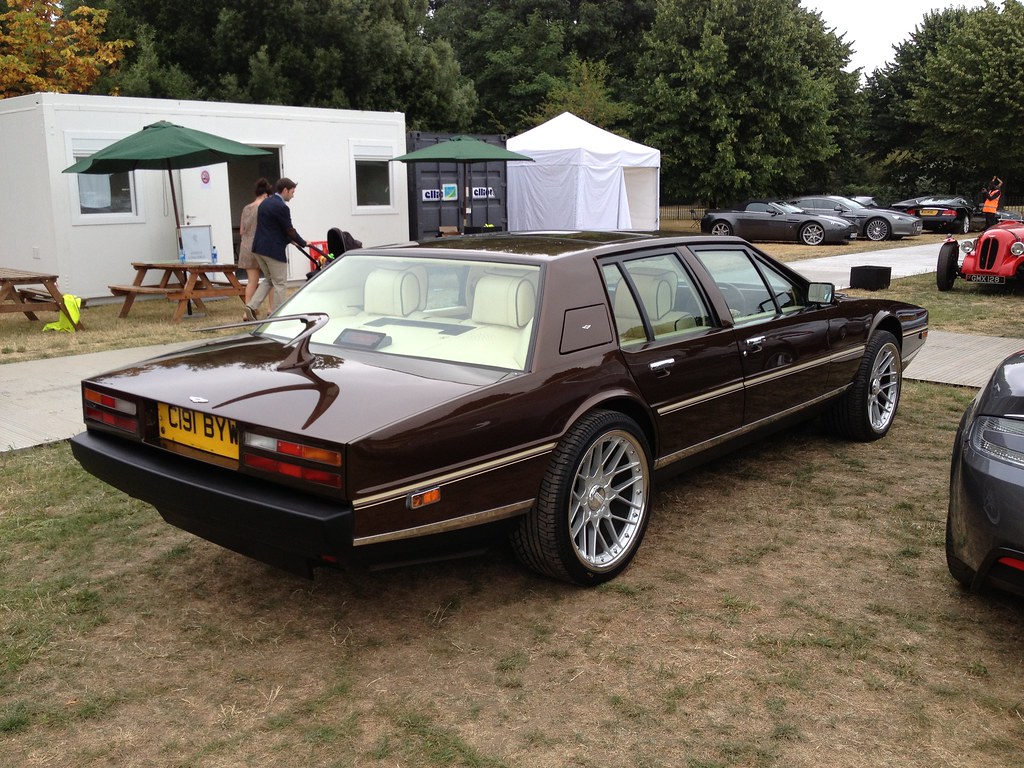
3. **Aston Martin Lagonda**The Aston Martin Lagonda is unequivocally a unique classic, a vehicle that boldly “divides opinions with its futuristic design and luxurious interior.” Conceived in an era when Aston Martin aimed to propel itself into the modern age, this sedan was a technological marvel for its time, “packed with advanced technology.” Its distinctive wedge shape and digital instrumentation were revolutionary, offering a glimpse into what luxury motoring could become, making it a truly audacious statement on wheels.
However, this very ambition and technological sophistication are precisely what render restoration of a Lagonda “a difficult and expensive task.” The advanced electronics and complex systems that defined its modernity are now largely obsolete and incredibly challenging to repair or replace. Mechanics trained in traditional automotive systems often find themselves out of their depth, necessitating specialized expertise that comes at a premium. The intricate nature of its design means that every repair or refurbishment is a bespoke undertaking, far removed from standard classic car procedures.
Moreover, “finding parts is a challenge, as Lagondas are rare, and their components are costly.” Given the limited production numbers of this avant-garde sedan, the scarcity of original parts is a constant battle. This lack of readily available components often forces restorers to commission custom-made replacements, further escalating costs. For those with “the patience and financial resources, restoring a Lagonda can be a satisfying experience,” transforming a challenging relic into a testament of engineering. Yet, it is explicitly “not a project to be taken lightly,” as the financial outlay can easily dwarf the car’s market value, solidifying its place in the restoration trap for most enthusiasts.
Car Model Information: 2023 Honda Accord EX
Caption: Aston Martin Lagonda Series 2
Name: Aston Martin Lagonda
Manufacturer: Aston Martin
Designer: William Towns
Production: 1974–1990,645 produced
Assembly: Newport Pagnell,Buckinghamshire,England
Predecessor: Lagonda Rapide
Successor: Lagonda Taraf
Class: Full-size,luxury car
BodyStyle: sedan (car)
Layout: Front-engine, rear-wheel-drive layout
Engine: cvt,V8 engine
Transmission: Torqueflite,automatic transmission
Wheelbase: 2916 mm
Abbr: on
Length: 5282 mm
Width: 1816 mm
Height: 1302 mm
Categories: 1980s cars, 1990s cars, All Wikipedia articles written in British English, All articles with unsourced statements, Articles with short description
Summary: The Aston Martin Lagonda is a full-size luxury four-door saloon manufactured by British manufacturer Aston Martin between 1974 and 1990. A total of 645 were produced. The name was derived from the Lagonda marque that Aston Martin had purchased in 1947. There are two distinct generations: the original, short-lived 1974 design based on a lengthened Aston Martin V8, and the entirely redesigned, wedge-shaped Series 2 model introduced in 1976.
In 2014, Aston Martin confirmed it would launch a new Lagonda model called the Taraf for the Middle-East market, sold on an invitation-only basis as a successor to this saloon. As of 2022, 113 remain registered in the United Kingdom, though 82 are SORN (unregistered for routine road use).
Get more information about: Aston Martin Lagonda
Buying a high-performing used car >>>
Brand: Aston Martin Model: Lagonda
Price: $22,799 Mileage: 37,546 mi.
Read more about: Beyond the Digital Divide: 15 Iconic Photos That Prove 20th Century Car Shows Were Pure Gold

4. **Dodge Challenger R/T (First Generation)**Few cars capture the raw essence of American muscle quite like the 1970 Dodge Challenger R/T. It stands as “one of the most iconic muscle cars ever built,” a veritable legend whose value today can exceed “over $100,000” for pristine examples. Its aggressive styling, powerful engine options, and association with a golden era of motoring ensure its revered status among collectors and enthusiasts, making it a highly desirable acquisition for anyone looking to own a piece of automotive history.
Despite its undeniable aesthetic appeal and cultural significance, the Challenger R/T presents a complex reality for owners and restorers. While it “exudes style, it is not the best car to drive due to its age and design.” The handling and braking characteristics, typical of cars from its era, fall short of modern expectations, and daily driving can prove taxing. More critically, “Mopar vehicles are known to be expensive to restore, and parts for first-generation Challengers are difficult to source,” marking a significant hurdle for any ambitious restoration project.
The challenge of restoration is magnified by the scarcity and cost of period-correct parts. From engine components unique to the R/T to interior trim and body panels, locating authentic replacements demands both tenacity and a substantial budget. This often means that “restoring one requires deep pockets and a lot of patience.” For many, the extensive financial outlay and the painstaking search for parts can lead to a point where, “while undeniably a great classic, the Challenger may prove to be more trouble than it’s worth for those without extensive restoration experience,” turning the dream of ownership into a persistent financial drain.
Car Model Information: 2023 Honda Accord EX
Name: Dodge Challenger (2008)
Production: 2008–2023
ModelYears: 2008–2023
Assembly: Brampton, Ontario
Designer: Brian Nielander,
Predecessor: ubl
Successor: Dodge Charger (2024)
Caption: 2017 Dodge Challenger R/T Scat Pack
Manufacturer: Dodge
Class: Muscle car
BodyStyle: notchback,coupe
Engine: unbulleted list
Abbr: on
Order: Chrysler Hemi engine#6.4 Apache / 392 Apache,V8 engine
Layout: Front-engine, rear-wheel-drive layout,Front-engine, all-wheel-drive layout
Transmission: Ultradrive#42RLE,5G-Tronic,Tremec TR-6060 transmission,ZF 8HP transmission
Wheelbase: cvt
Length: cvt
Width: cvt
Height: cvt
Categories: 2000s cars, 2010s cars, 2020s cars, All articles that are excessively detailed, All articles with style issues
Summary: The Dodge Challenger is a full-size muscle car that was introduced in early 2008 originally as a rival to the evolved fifth-generation Ford Mustang and the fifth-generation Chevrolet Camaro.
In November 2021, Stellantis announced that 2023 model year would be the final model year for both the LD Dodge Charger and LA Dodge Challenger, as the company will focus its future plans on electric vehicles rather than fossil fuel powered vehicles, due to tougher emissions standards required by the Environmental Protection Agency for the 2023 model year. Challenger production ended on December 22, 2023, and the Brampton, Ontario assembly plant will be re-tooled to assemble an electrified successor.
Get more information about: Dodge Challenger (2008)
Buying a high-performing used car >>>
Brand: Dodge Model: Challenger R/T
Price: $22,799 Mileage: 37,546 mi.
Read more about: Classic Cars That Looked Fast But Weren’t: The Ultimate Guide to Automotive Style Over Speed

5. **Chevrolet Bel Air Impala (Third Generation)**The third-generation Chevrolet Bel Air, particularly the Impala model, embodies the quintessential American cruiser of the late 1950s and early 1960s, a true “dream project for many classic car enthusiasts.” Its distinctive “sculpted body and extended wheelbase give it a distinctive presence,” making it an unmistakable icon on the road. This era of automotive design celebrated expansive proportions and intricate detailing, characteristics that contribute immensely to its allure and collector appeal.
However, these very design elements that define its beauty are precisely what make its restoration “particularly difficult.” The sheer size of the vehicle means larger body panels, more chrome trim, and an expansive interior, all of which require meticulous attention. “Finding and restoring original leather interiors and chrome accents requires both time and money.” The expansive chrome trim, a hallmark of its style, is incredibly expensive to replate or replace, and sourcing authentic fabric or leather for its vast interior can be a costly, time-consuming endeavor.
Furthermore, the car’s age means that “rust and mechanical degradation are common issues.” Large, flat body panels are prone to rust, especially in areas where moisture collects, and decades of wear and tear can leave the mechanical components in dire need of an overhaul. Addressing these widespread problems demands extensive bodywork, chassis repair, and a full mechanical rebuild. Ultimately, “restoring a Bel Air is a major undertaking, but for those willing to invest the effort, the result is one of the most stunning classics on the road.” However, the financial investment necessary can easily escalate beyond practical limits, pushing the Bel Air into the precarious territory of the restoration trap for the unprepared.” , “_words_section1”: “1948
Car Model Information: 2023 Honda Accord EX
Name: Chevrolet Impala
Caption: Fourth generation model (1967)
Manufacturer: Chevrolet
Production: 1957–1985,1994–1996,1999–2020
ModelYears: 1958–1985,1994–1996,2000–2020
Predecessor: Chevrolet Bel Air,Chevrolet Lumina#Second generation (1995–2001)
Successor: Chevrolet SS,Chevrolet Caprice
Platform: GM B platform,GM W platform,GM W platform (GMX211) (2005–2013),GM Epsilon platform#Epsilon II
Class: Full-size car,Mid-size car
Layout: Front-engine, rear-wheel-drive layout,Front-engine, front-wheel-drive layout
Categories: 1960s cars, 1970s cars, 1980s cars, 1990s cars, 2000s cars
Summary: The Chevrolet Impala () is a full-size car that was built by Chevrolet for model years 1958 to 1985, 1994 to 1996, and 2000 to 2020. The Impala was Chevrolet’s popular flagship passenger car and was among the better-selling American-made automobiles in the United States.
For its debut in 1958, the Impala was distinguished from other models by its symmetrical triple taillights. The Chevrolet Caprice was introduced as a top-line Impala Sport Sedan for model year 1965, later becoming a separate series positioned above the Impala in 1966, which, in turn, remained above the Chevrolet Bel Air and the Chevrolet Biscayne. The Impala continued as Chevrolet’s most popular full-sized model through the mid-1980s. Between 1994 and 1996, the Impala was revised as a 5.7-liter V8–powered version of the Chevrolet Caprice Classic sedan.
In 2000, the Impala was reintroduced again as a mainstream front-wheel drive car. In February 2014, the 2014 Impala ranked No. 1 among Affordable Large Cars in U.S. News & World Report’s rankings. When the 10th generation of the Impala was introduced for the 2014 model year, the 9th generation was rebadged as the Impala Limited and sold only to fleet customers through 2016. During that time, both versions were sold in the United States and Canada. The 10th-generation Impala was also sold in the Middle East and South Korea.
Get more information about: Chevrolet Impala
Buying a high-performing used car >>>
Brand: Chevrolet Model: Bel Air Impala
Price: $22,799 Mileage: 37,546 mi.
Read more about: The Collector’s Trap: 9 ‘Rare’ Cars Whose Value Will Never Justify the Cost of Restoration—Should You Sell Now?

6. **Pontiac Trans Am SD-455**The 1973 Pontiac Trans Am SD-455 stands as an absolute legend in the pantheon of muscle cars, coveted by enthusiasts for its sheer power and limited production run. With “only 252 Super Duty examples ever built,” its rarity alone makes it a highly sought-after vehicle, a true prize for any collector. This exclusivity, however, brings with it a specific set of challenges when it comes to restoration, often pushing it firmly into the “restoration trap” category for the unprepared.
Bringing one of these high-performance machines back to its original glory is “far from simple,” primarily because “electrical and mechanical parts are scarce.” Unlike more common models where aftermarket or readily available components might suffice, the SD-455 demands period-correct, often unique, parts. Locating these rare treasures can involve extensive searching, networking with specialized suppliers, and a willingness to pay premium prices, making the parts hunt a significant and costly undertaking on its own.
Furthermore, the heart of this beast—its high-performance engine—requires specialized expertise for a proper rebuild. While the “strong cylinder block and four-bolt main bearings” contribute to its inherent durability, only a handful of master mechanics possess the deep knowledge required to meticulously restore and tune an SD-455 engine to its original specifications. This specialized labor significantly adds to the overall restoration cost, making it a project demanding “deep pockets and a lot of patience.”
Restoring a Trans Am SD-455 “properly can take months of careful planning,” extending far beyond simple repairs. It often involves a complete strip-down, extensive bodywork to address any hidden issues, and a painstaking reassembly process to ensure every detail is period-correct. Enthusiasts embarking on this journey must be “prepared for high costs,” understanding that the financial commitment will likely be substantial, easily eclipsing the initial purchase price and, in many cases, exceeding its eventual market value.
Yet, for those who commit the necessary time and resources, the outcome is nothing short of breathtaking: “a muscle car masterpiece.” The appeal of reviving such a rare and powerful piece of American automotive history is immense, offering a unique driving experience and a tangible connection to a golden age of performance. However, without a clear-eyed assessment of the financial and logistical demands, this dream project can quickly devolve into a profound financial burden, highlighting why it’s a classic example of the restoration trap.
Car Model Information: 2023 Honda Accord EX
Name: Pontiac Firebird
Caption: The second, third, and fourth generations of,the Pontiac Firebird Trans Am
Manufacturer: Pontiac (automobile)
Production: February 23, 1967 – August 30, 2002
ModelYears: 1967 – 2002
Class: Pony car,Muscle car
Platform: GM F platform
Related: Chevrolet Camaro
Layout: Front engine, rear-wheel-drive layout
Categories: 1970s cars, 1980s cars, 1990s cars, 2000s cars, All articles with dead external links
Summary: The Pontiac Firebird is an American automobile built and produced by Pontiac from the 1967 to 2002 model years. Designed as a pony car to compete with the Ford Mustang, it was introduced on February 23, 1967, five months after GM’s Chevrolet division’s platform-sharing Camaro. This also coincided with the release of the 1967 Mercury Cougar, Ford’s upscale, platform-sharing version of the Mustang.
The name “Firebird” was also previously used by GM for the General Motors Firebird series of concept cars in the 1950s.
Get more information about: Pontiac Firebird
Buying a high-performing used car >>>
Brand: Pontiac Model: Trans Am SD-455
Price: $22,799 Mileage: 37,546 mi.
Read more about: The Collector’s Trap: 9 ‘Rare’ Cars Whose Value Will Never Justify the Cost of Restoration—Should You Sell Now?

7. **Mercedes-Benz 600**The Mercedes-Benz 600, often referred to as the “Grand Mercedes,” stands as an automotive monument to luxury and engineering excellence from a bygone era. This wasn’t merely a car; it was a statement, “built for royalty” and the world’s elite, offering unparalleled comfort and sophistication. The “Pullman version, in particular, is an extravagant vehicle,” stretching boundaries in terms of size, features, and sheer opulence, making it a desirable, albeit challenging, classic to acquire and maintain.
However, its regal status comes with a stern warning for potential restorers: “restoration costs reflect that prestige.” The advanced features that once defined its luxury, such as its complex hydraulic system controlling windows, seats, and even the boot lid, are now highly specialized and notoriously difficult to repair. This “intricate hydraulic system” alone can be a source of immense frustration and exorbitant expense, requiring mechanics with specific knowledge and tools that are few and far between.
“Finding a project car at an affordable price is difficult,” given their limited production numbers and historical significance. But even if you manage to secure one, “bringing it back to life is even harder.” The car’s “complex engine” and lavish interior are equally demanding. Every component, from the bespoke upholstery to the myriad of electrical systems, requires meticulous attention and, often, custom fabrication or sourcing of increasingly rare parts. This is not a vehicle that tolerates shortcuts or generic replacements.
The sheer scale of a 600 restoration means that “specialized parts and skilled labor” are not just recommended, but absolutely essential. Original components are scarce, and when found, command premium prices. Moreover, the labor involved in dismantling, repairing, and reassembling its sophisticated systems can be incredibly time-consuming, translating directly into high workshop bills. This intensive process often means that the final restoration bill can dwarf the vehicle’s market value, catching many enthusiasts in an unexpected financial bind.
While “owning a restored Mercedes 600 puts you in the company of icons like Queen Elizabeth II and Jack Nicholson,” fulfilling a collector’s ultimate dream, the path to that glory is paved with significant financial hurdles. This isn’t a project for the faint of heart or the shallow of pocket. The Mercedes-Benz 600 unequivocally exemplifies a restoration trap, where the allure of unmatched luxury can easily lead to a restoration investment that far exceeds the car’s eventual worth, demanding both extraordinary patience and substantial financial resources.
Read more about: Unveiling the 11 Essential Maintenance Checks Mechanics Perform to Keep Your Luxury Sedan in Peak Condition
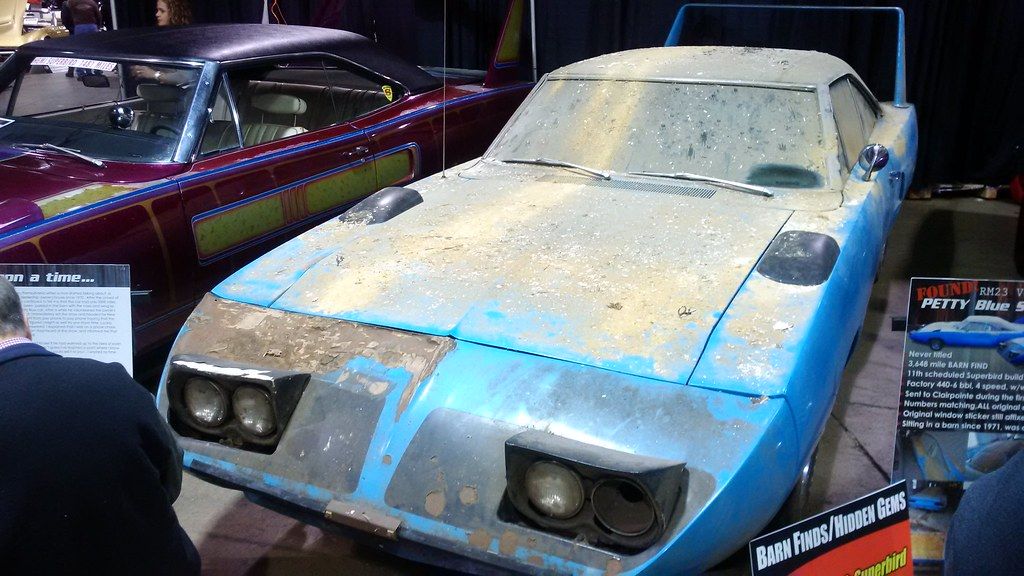
8. **Plymouth Superbird**The Plymouth Superbird, with its unmistakable towering rear wing and aerodynamic nose cone, is arguably “one of the most recognizable muscle cars ever built.” Designed specifically to dominate NASCAR tracks, its “distinctive rear wing and aerodynamic design” weren’t just for show; they were engineered for speed, making it an icon of American automotive innovation. This legendary status naturally places it high on the wish list of many muscle car collectors, despite the formidable challenges its restoration presents.
The quest to own a Superbird begins with its inherent rarity; “with only 2,000 units produced,” “finding one is a challenge” in itself. Many of the “surviving examples require extensive bodywork and mechanical repairs” due to their age, often hard lives on the road or track, and the sheer complexity of their unique modifications compared to standard Plymouth Roadrunners. This initial condition assessment is crucial, as the scope of work can quickly become overwhelming, both in terms of labor and specialized materials.
Beyond the visible damage, the Superbird’s unique aerodynamic features, such as its distinctive nose cone and the famous wing, introduce specialized restoration requirements. Replicating or repairing these elements to original specifications demands highly skilled craftsmanship and often custom fabrication, adding significantly to the complexity and cost. Standard body shops may not possess the expertise, necessitating specialists who command premium rates, pushing restoration costs “hundreds of thousands of dollars.”
The scarcity of original parts further complicates the restoration journey. Many of the Superbird’s components, especially those related to its unique aerodynamics and performance enhancements, are specific to this model and extremely difficult to source. This can lead to lengthy delays and inflated prices for authentic parts, or the necessity of costly bespoke manufacturing, again escalating the overall investment. Such expenses quickly drive the total cost well beyond reasonable market expectations for many other classic cars.
However, for those with “the patience and financial resources,” the reward of a “well-restored Superbird is an extremely valuable collector’s item.” Its racing pedigree and historical significance ensure its place as “a piece of American automotive legend.” Yet, the monumental investment required to bring one back to pristine condition often means that for most enthusiasts, the cost-benefit analysis places it squarely in the “restoration trap,” where passion can easily blind one to the financial realities of such an undertaking.
Read more about: Beyond Myth and Legend: Unearthing 15 of the Rarest American Muscle Cars Ever Built
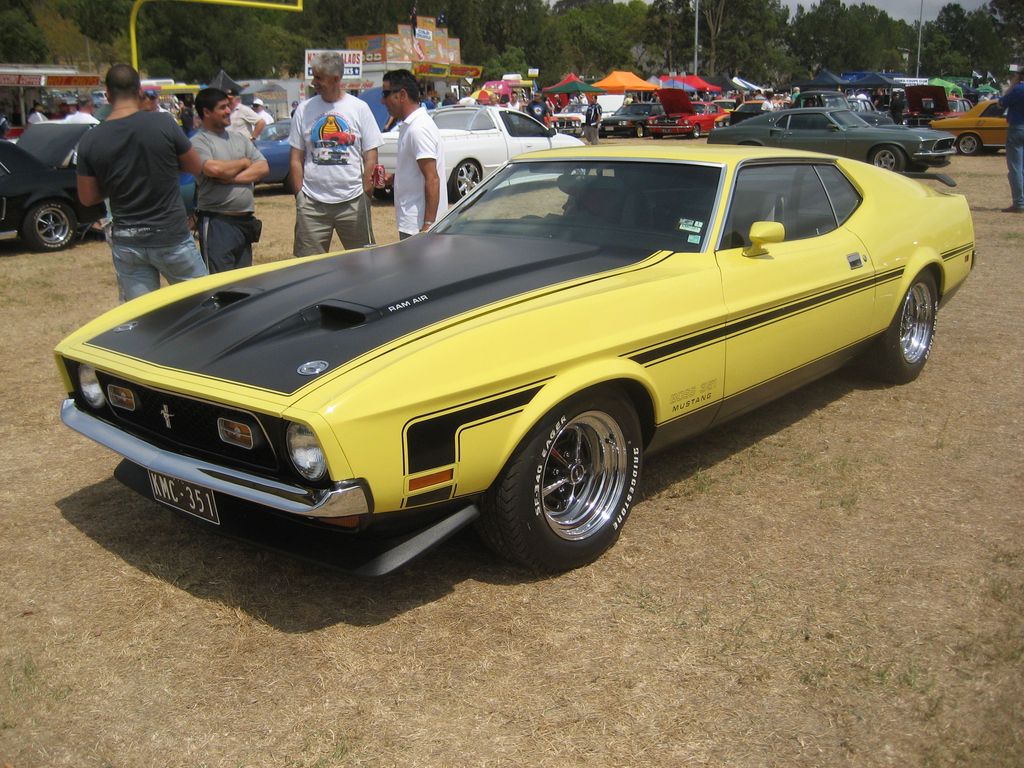
9. **Ford Mustang Boss 351**Among the pantheon of performance Mustangs, the Ford Mustang Boss 351 holds a special, albeit often overlooked, place. It’s a “rare gem, with only 1,806 units ever built,” making it a truly exclusive muscle car for those who appreciate its specific blend of aggressive styling and potent engine. While its exclusivity makes it desirable, its journey from neglected project to show-stopper is fraught with financial peril, often making it a prime candidate for the “restoration trap.”
Initial entry into Boss 351 ownership might seem manageable, with “prices ranging from $50,000 to $100,000” for examples in various states. However, these cars are “not known for their reliability” after decades of use and often neglect, meaning that what you purchase is likely a project car requiring substantial mechanical intervention. This underlying fragility immediately signals that the true cost of ownership will extend far beyond the initial transaction, requiring a significant further outlay to ensure dependable performance.
The restoration process for a Boss 351 is an “expensive process” because “original parts are hard to come by.” Unlike standard Mustangs, the Boss 351 featured unique engine components and specific performance enhancements that are difficult to source in today’s market. This scarcity drives up the cost of authentic replacements, and substituting with non-original parts can significantly detract from the car’s collector value, creating a dilemma for restorers trying to balance authenticity with budget.
Bringing a Boss 351 back to life “can easily double the initial purchase price,” sometimes even more, depending on the car’s initial condition and the desired level of restoration. This significant investment is “a serious commitment,” demanding not just financial resources but also considerable time and effort to oversee the meticulous work required. The complexity of its specialized engine and performance-oriented chassis means that only experienced restorers can tackle such a project effectively.
Ultimately, “for Mustang enthusiasts, the appeal of owning a fully restored Boss 351 is undeniable.” Its “rarity and performance potential make it a prized possession for collectors,” offering a unique piece of Ford’s muscle car heritage. However, the often-prohibitive costs of acquisition and restoration, coupled with the difficulty in sourcing specific parts, mean that many aspiring owners could find themselves sinking far more into the car than its eventual market appraisal, making the Boss 351 a clear example of the restoration trap.
Car Model Information: 2008 Ford Mustang GT Premium
Name: Ford Mustang
Caption: 2018 Ford Mustang GT 5.0
Aka: Ford T5 (Germany)
Manufacturer: Ford Motor Company
Production: March 1964 – present
ModelYears: 1965–present
Class: Unbulleted list
BodyStyle: Unbulleted list
Layout: Front-engine, rear-wheel-drive layout
Categories: 1970s cars, 1980s cars, 1990s cars, 2+2 coupés, 2000s cars
Summary: The Ford Mustang is an American automobile manufactured and marketed by Ford since 1964, as Ford’s longest nameplate in continuous production. Currently in its seventh generation, it is the fifth-best selling Ford car nameplate. The namesake of the “pony car” automobile segment, the Mustang was developed as a highly styled line of sporty coupes and convertibles derived from existing model lines, initially distinguished by its pronounced “long hood, short deck” proportions.
Originally predicted to sell 100,000 vehicles yearly, the 1965 Mustang became the most successful vehicle launch since the 1927 Model A. Introduced on April 17, 1964 (16 days after the Plymouth Barracuda), over 400,000 units were sold in its first year; the one-millionth Mustang was sold within two years of its launch. In August 2018, Ford produced the 10-millionth Mustang; matching the first 1965 Mustang, the vehicle was a 2019 Wimbledon White convertible with a V8 engine.
The success of the Mustang launch led to multiple competitors from other American manufacturers, including the Chevrolet Camaro and Pontiac Firebird (1967), AMC Javelin (1968), and Dodge Challenger (1970). It also competed with the Plymouth Barracuda, which was launched around the same time. The Mustang also had an effect on designs of coupes worldwide, leading to the marketing of the Toyota Celica and Ford Capri in the United States (the latter, by Lincoln-Mercury). The Mercury Cougar was launched in 1967 as a unique-bodied higher-trim alternative to the Mustang; during the 1970s, it included more features and was marketed as a personal luxury car.
From 1965 until 2004, the Mustang shared chassis commonality with other Ford model lines, staying rear-wheel-drive throughout its production. From 1965 to 1973, the Mustang was derived from the 1960 Ford Falcon compact. From 1974 until 1978, the Mustang (denoted Mustang II) was a longer-wheelbase version of the Ford Pinto. From 1979 until 2004, the Mustang shared its Fox platform chassis with 14 other Ford vehicles (becoming the final one to use the Fox architecture). Since 2005, Ford has produced two generations of the Mustang, each using a distinct platform unique to the model line.
Through its production, multiple nameplates have been associated with the Ford Mustang series, including GT, Mach 1, Boss 302/429, Cobra (separate from Shelby Cobra), and Bullitt, along with “5.0” fender badging (denoting 4.9 L OHV or 5.0 L DOHC V8 engines).
Get more information about: Ford Mustang
Buying a high-performing used car >>>
Brand: Ford Model: Mustang
Price: $16,785 Mileage: 81,832 mi.
Read more about: Classic Cars That Looked Fast But Weren’t: The Ultimate Guide to Automotive Style Over Speed

10. **Chevrolet Corvette Stingray (C2)**The second-generation Chevrolet Corvette, famously known as the C2 Stingray, is an automotive “true icon, known for its aggressive styling and impressive performance.” With its distinctive split-window design in 1963 and its powerful engine options, the C2 quickly cemented its place as an American sports car legend. “Early Corvettes, particularly the 1963 split-window model, are highly sought after,” driven by both their iconic aesthetics and their significance in automotive history, making them perpetual favorites among collectors.
However, the allure of the C2 Stingray often masks the significant financial and logistical hurdles involved in its restoration. While highly desirable, its “unique chassis and shortened wheelbase make sourcing parts difficult and expensive.” Many components are specific to the C2 generation and, after decades, have become scarce. This means that finding genuine, period-correct parts for mechanical systems, body panels, or interior trim can be a time-consuming and costly endeavor, often involving specialized vendors or extensive searches.
The structural integrity of older Corvettes, especially fiberglass bodies, can present unique challenges. Repairs to compromised fiberglass require specialized skills to ensure both structural soundness and aesthetic consistency, often demanding more specialized expertise than traditional metal bodywork. Rust, particularly in the birdcage frame, is another common issue that, if extensive, can necessitate complex and expensive structural repairs, driving up the total restoration bill significantly.
Consequently, “a full restoration often costs more than the initial purchase price,” and sometimes substantially so. The combination of rare and expensive parts, specialized labor for mechanical and bodywork, and the meticulous attention to detail required to bring a C2 to concours standards, can quickly push the investment into territory where it far exceeds the car’s eventual market value, even for highly desirable models. This financial reality places it firmly within the dreaded “restoration trap” for those who don’t approach it with open eyes and a substantial budget.
Despite these considerable challenges, “the C2 Corvette remains one of the most desirable classic cars, and a properly restored example commands high value among collectors and enthusiasts alike.” The satisfaction of owning and driving such an iconic machine is immense, often seen as a crowning achievement for a dedicated enthusiast. But anyone contemplating a C2 restoration must first perform a rigorous evaluation of the car’s condition and a realistic assessment of the potential costs, ensuring that their passion doesn’t become an insurmountable financial burden.
Car Model Information: 2021 RAM 2500 Big Horn
Categories: All article disambiguation pages, All disambiguation pages, Disambiguation pages, Short description is different from Wikidata
Summary: Chevrolet Corvette Stingray was the name for several model years of Chevrolet Corvettes:
Corvette Stingray (concept car), concept cars from 1959 and 2009
Chevrolet Corvette (C2), the second generation of the Corvette, introduced in 1963, referred to as the Corvette Sting Ray
Chevrolet Corvette (C3), the third generation of the Corvette, introduced in 1968, referred to as the Corvette Stingray from 1969 through 1976 — in 1968, the Corvette did not have the Stingray badging
Chevrolet Corvette (C7), the seventh generation of the Corvette, introduced in 2014, referred to as the Corvette Stingray
Chevrolet Corvette (C8), the eighth generation of the Corvette, introduced in 2020, referred to as the Corvette Stingray
These generations did not use the name stingray:
Chevrolet Corvette (C1), the first generation of the Corvette, introduced in 1953
Chevrolet Corvette (C4), the fourth generation of the Corvette, introduced in 1984
Chevrolet Corvette (C5), the fifth generation of the Corvette, introduced in 1997
Chevrolet Corvette (C6), the sixth generation of the Corvette, introduced in 2005
Get more information about: Chevrolet Corvette Stingray
Buying a high-performing used car >>>
Brand: Chevrolet Model: Corvette Stingray
Price: $33,564 Mileage: 45,952 mi.
Read more about: Unleashing Automotive Legends: 14 Iconic 1970s Cars Now Commanding Millions in the Collector’s Market
Restoring a classic car is undoubtedly a profound “labor of love, requiring time, money, and dedication.” While the dream of reviving a vintage vehicle to its former glory is powerful, the reality, as evidenced by these challenging models, often involves navigating a complex landscape of rare parts, outdated mechanics, and escalating costs. Each car on this list, despite its iconic status, presents significant hurdles that can easily push the financial outlay beyond its potential market value. For true enthusiasts, however, the satisfaction of transforming a forgotten relic into a cherished piece of automotive history often “far outweigh the difficulties.” With meticulous research, careful planning, and a realistic understanding of the investment required, a restored classic can indeed become a personal triumph and a lasting legacy. Yet, it is this very balancing act between passion and practicality that defines the classic car restoration journey, ensuring that only the most prepared and dedicated emerge victorious from the “restoration trap.”