Alright, gearheads, let’s talk about those classic rides that haunt our dreams — not because they were magnificent beasts of the asphalt, but because they were, well, a bit of a letdown. We’ve all seen those stunning profiles, the chrome gleaming under the sun, the badges that once screamed power and prestige. You imagine yourself behind the wheel, the roar of the engine, the thrill of the open road, a true icon under your command. But sometimes, often tragically, that dream quickly devolves into a sputtering, wheezing reality.
It’s a tough pill to swallow, isn’t it? When a car looks like it could tear through a quarter-mile in the blink of an eye, but struggles to keep pace with a grocery getter. We’re not here to nitpick the odd quirk or a minor flaw; we’re here to shine a harsh, yet loving, spotlight on the machines that utterly missed the mark. These are the classics that had all the aesthetic appeal in the world, the kind that still turn heads at a car show, but whose driving dynamics left enthusiasts scratching their heads and reaching for the nearest bus pass.
So, buckle up, because we’re taking a deep dive into the unfortunate saga of 10 classic cars that were total driving letdowns. These aren’t just cars; they’re cautionary tales, legends with asterisk marks, beautiful statues with soggy engines. Let’s peel back the layers of nostalgia and expose the truth behind these slow lane sirens, starting with some of the most prominent examples of automotive ambition falling short of execution.

1. **1975 Chevrolet Corvette (Base L48)**By 1975, the Chevrolet Corvette, a name synonymous with American performance and a symbol of raw power, had undeniably lost its edge. It was a disheartening period for Corvette loyalists, as the once-proud moniker found itself suffocated by the era’s stringent emissions regulations and an ever-increasing curb weight. The base L48 engine, the heart of this particular disappointment, coughed up a mere 165 horsepower. Let’s be brutally honest: that was an embarrassing figure by any muscle car standard, especially for a vehicle wearing the legendary Corvette badge.
Even opting for the supposed performance boost of the L82 engine barely moved the needle, clearing just 205 horsepower. Imagine the frustration: a car that looked like it belonged on the track, sleek fiberglass body promising blistering speed, yet under the hood, it drove like it was dragging an anchor. This wasn’t just a slight dip in performance; it was a fundamental compromise that undermined the very essence of what a Corvette was meant to be, turning a potential road warrior into a boulevard cruiser with an identity crisis.
Chevy might have sold over 38,000 units that year, a respectable number on paper, but let’s be clear—those sales were largely buoyed by the Corvette’s enduring reputation, not its actual on-road prowess. Buyers were drawn to the iconic styling, the dream of what a Corvette represented, only to find a defanged drivetrain that simply couldn’t deliver on that promise. It signaled a grim reality, marking the end of the road for genuine performance in the C3 era, at least for a while, leaving a generation of enthusiasts wondering where their beloved sports car had gone.
Car Model Information: 2025 Chevrolet Corvette Stingray w/3LT
Name: Chevrolet Corvette
Caption: 2021 Chevrolet Corvette C8
Manufacturer: Chevrolet
Production: 1953–present
ModelYears: bulleted list
Assembly: bulleted list
Class: Sports car
BodyStyle: coupé
Layout: Front-engine, rear-wheel-drive layout,Rear mid-engine, rear-wheel-drive layout
Categories: 1950s cars, 1960s cars, 1970s cars, 1980s cars, 1990s cars
Summary: The Chevrolet Corvette is a line of American two-door, two-seater sports cars manufactured and marketed by General Motors under the Chevrolet marque since 1953. Throughout eight generations, indicated sequentially as C1 to C8, the Corvette is noted for its performance, distinctive styling, lightweight fiberglass or composite bodywork, and competitive pricing. The Corvette has had domestic mass-produced two-seater competitors fielded by American Motors, Ford, and Chrysler; it is the only one continuously produced by a United States auto manufacturer. It serves as Chevrolet’s halo car.
In 1953, GM executives accepted a suggestion by Myron Scott, then the assistant director of the Public Relations department, to name the company’s new sports car after the corvette, a small, maneuverable warship. Initially, a relatively modest, lightweight 6‑cylinder convertible, subsequent introductions of V8 engines, competitive chassis innovations, and rear mid-engined layout have gradually moved the Corvette upmarket into the supercar class. In 1963, the second generation was introduced in coupe and convertible styles. The first three Corvette generations (1953–1982) employed body-on-frame construction, and since the C4 generation, introduced in 1983 as an early 1984 model, Corvettes have used GM’s unibody Y‑body platform. All Corvettes used front mid-engine configuration for seven generations, through 2019, and transitioned to a rear mid-engined layout with the C8 generation.
Initially manufactured in Flint, Michigan, and St. Louis, Missouri, the Corvette has been produced in Bowling Green, Kentucky, since 1981, which is also the location of the National Corvette Museum. The Corvette has become widely known as “America’s Sports Car.” Automotive News wrote that after being featured in the early 1960s television show Route 66, “the Corvette became synonymous with freedom and adventure,” ultimately becoming both “the most successful concept car in history and the most popular sports car in history.”
Get more information about: Chevrolet Corvette
Buying a high-performing used car >>>
Brand: Chevrolet Model: Corvette
Price: $87,990 Mileage: 3,779 mi.
Read more about: 15 Classic Cars You Might Want To Skip: An Expert Guide for Discerning Collectors

2. **1980 Ford Mustang Cobra**Ah, the Cobra badge. For Ford aficionados, that name once evoked images of raw, unadulterated power, track-ready aggression, and a legitimate threat to anything else on the road. Fast forward to 1980, and the Mustang Cobra became a poster child for all show and no go. This wasn’t a performance package; it was an unfortunate exercise in cosmetic marketing, slapping a revered name onto a car that simply couldn’t live up to its heritage.
Underneath the aggressive decals and the prominent hood scoop, buyers found themselves faced with two rather underwhelming engine options. There was a 2.3-liter turbocharged inline-four, or, even more perplexing, a 4.2-liter V8 that could only muster a paltry 118 horsepower. Let that sink in for a moment: 118 horsepower for a V8-powered Cobra. It was a number that struggled not just to outrun its rivals, but to outrun the car’s own storied reputation. The performance was so anemic that this Cobra version notoriously struggled to break 17 seconds in the quarter-mile.
The Cobra name did manage to sell approximately 5,000 units, a testament to the power of marketing and brand recognition. However, most of those buyers were undoubtedly left with a profound sense of underwhelm. It presented itself as a formidable competitor, visually ready to take on the Camaros and Firebirds of the era, but it simply lacked the muscularity to back up its aggressive façade. This version of the Cobra was a clear instance where the nameplate deserved far, far better—and thankfully, eventually got it, but this particular iteration remains a sore spot in Mustang history.
Car Model Information: 2025 Subaru Outback Premium
Caption: 2004 Ford Mustang SVT Cobra
Name: Ford SVT Mustang Cobra
Manufacturer: Special Vehicle Team
Production: 1993–2004 (79,958 produced)
Assembly: Dearborn, Michigan
Class: Pony car
BodyStyle: 1993:,hatchback,coupe,convertible
Successor: Shelby Mustang#2007.E2.80.932009 Ford Shelby GT500
Platform: Ford Fox platform
Layout: Front-engine, rear-wheel drive layout
Categories: 2000s cars, All articles with specifically marked weasel-worded phrases, Articles with short description, Articles with specifically marked weasel-worded phrases from July 2025, Cars introduced in 1993
Summary: The Ford SVT Mustang Cobra (also known as “SVT Mustang Cobra, SVT Cobra,” or simply as “Cobra”) is a pony car that was built by American automobile manufacturer Ford Motor Company’s Special Vehicle Team division (or SVT) for the 1993 to 2004 model years.
The SVT Cobra was a high-performance version of the Ford Mustang and was considered the top-of-the-line variant, being positioned above the Mustang GT and Mach 1 models during its production run. On three occasions, the race-ready, street-legal SVT Cobra R variant was produced in limited numbers.
The SVT Cobra was succeeded by the Mustang Shelby GT500 which was introduced for the 2007 model year.
Get more information about: Ford Mustang SVT Cobra
Buying a high-performing used car >>>
Brand: Ford Model: Mustang Cobra
Price: $32,439 Mileage: 5,116 mi.
Read more about: The Hidden Software Crisis: Examining the Most Impactful Automotive Glitches and Their Costly Consequences

3. **1976 Cadillac Seville**The 1976 Cadillac Seville stands as a fascinating, if ultimately flawed, chapter in American automotive history. Cadillac, seeing the rise of sophisticated European luxury sedans, harbored ambitions of competing directly with them. The Seville was their champion, a valiant attempt to inject tighter handling and a more refined, contemporary image into the Cadillac lineup. But, as is often the case with such ambitious endeavors, the execution fell short, leaving both traditional Cadillac loyalists and hopeful European luxury converts equally disappointed.
Beneath the Seville’s sleek, somewhat Euro-inspired sheet metal, lay a 5.7-liter V8 engine. On paper, a V8 sounds promising, but in practice, it only delivered 180 horsepower. Now, consider that this car tipped the scales at over 4,000 pounds. That horsepower figure simply wasn’t enough to move such a substantial vehicle with any real authority or dynamism. The resulting performance was decidedly soft, failing to deliver the spirited drive that buyers of European rivals expected. Furthermore, despite its sportier aspirations, the handling didn’t quite live up to the tighter, more agile feel it tried to project, feeling somewhat detached and imprecise.
Despite its performance shortcomings, the Seville wasn’t a sales disaster, topping 43,000 units in its first year. Many existing Cadillac fans appreciated the reduced size, a welcome change from the behemoths of previous decades. Yet, for those genuinely seeking a true European luxury rival, a car that combined opulence with engaging performance, the Seville was a letdown. It occupied a strange middle ground, failing to fully satisfy either audience, and ultimately, it didn’t deliver on the premium performance image it so desperately tried to project, solidifying its spot as a beautiful car with an uninspired drive.
Car Model Information: 2000 Cadillac Seville Base
Name: Cadillac Seville
Caption: 1998–2004 Cadillac Seville
Manufacturer: Cadillac
Production: 1975–2003
ModelYears: 1976–2004
Class: luxury car
Layout: FR layout
Predecessor: Cadillac Calais
Successor: Cadillac STS
Categories: 1980s cars, 1990s cars, All articles with unsourced statements, Articles with short description, Articles with unsourced statements from October 2016
Summary: The Cadillac Seville is a mid-size luxury car manufactured by Cadillac from the 1976 to 2004 model years as a smaller-sized, premium model. It was replaced by the STS in 2004 for the 2005 model year.
Get more information about: Cadillac Seville
Buying a high-performing used car >>>
Brand: Cadillac Model: Seville
Price: $15,000 Mileage: 126,722 mi.
Read more about: Why We Still Adore Them: A Deep Dive into the Most Gloriously Awkward ’80s Cars That Were So Ugly, They Became Icons
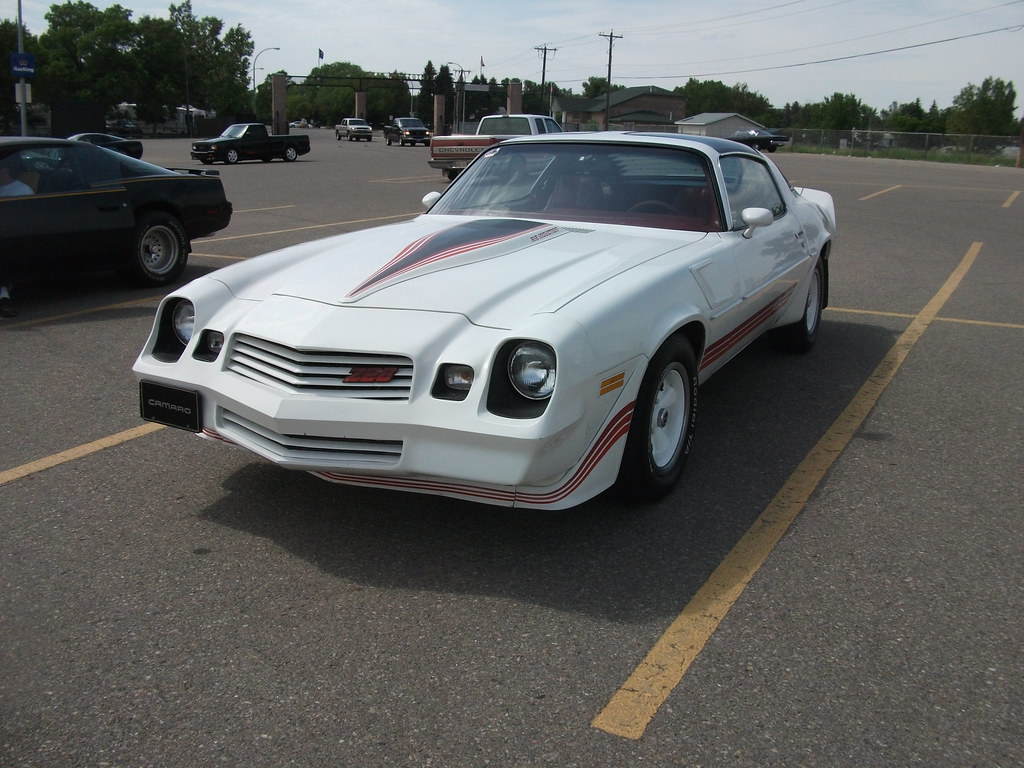
4. **1982 Chevrolet Camaro Iron Duke**Oh, the Iron Duke. Just the name conjures images of a hardworking, if unexciting, engine. But when Chevrolet decided to shoehorn the 2.5-liter Iron Duke inline-four into the aggressively styled, newly minted third-generation Camaro in 1982, it felt less like an innovation and more like a gamble that spectacularly failed. This was a car that looked like it could win a drag race just by sitting still, yet its engine had other, far more pedestrian, plans.
The numbers speak for themselves, and they whisper disappointment: a measly 90 horsepower. Combine that with a zero-to-sixty time that hovered agonizingly close to 20 seconds, and you have a car that was a stark visual contradiction. The sharp, angular lines, the iconic stance, the promise of American muscle—all of it undermined by an economy car performance that truly baffled enthusiasts. It was a Camaro that couldn’t quite live up to being a Camaro.
Chevrolet’s intention was clear: appeal to buyers who prioritized MPG over MPH during a period of shifting automotive priorities. However, the Iron Duke Camaro struggled to do either especially well. It offered neither impressive fuel economy nor the exhilarating performance expected from a car wearing the Camaro badge. Even the most die-hard Camaro fans found it an uphill battle to defend this particular iteration. It’s one of those rare muscle cars that, in the critical eyes of collectors and performance junkies, would have lost a drag race to a determined lawnmower—a truly ignominious fate for such an iconic nameplate.
Car Model Information: 2018 Chevrolet Camaro 1LS
Name: Chevrolet Camaro
Manufacturer: Chevrolet
Production: 1966–2002,2009–2023
ModelYears: 1967–2002,2010–2024
Class: Pony car
BodyStyle: coupe,convertible
Platform: GM F platform,GM Zeta platform,GM Alpha platform
Layout: Front-engine, rear-wheel-drive layout
Categories: 1970s cars, 1980s cars, 1990s cars, 2+2 coupés, 2000s cars
Summary: The Chevrolet Camaro is a mid-size American automobile manufactured by Chevrolet, classified as a pony car. It first went on sale on September 29, 1966, for the 1967 model year and was designed to compete with the Ford Mustang. The Camaro shared its platform and major components with the Firebird, produced by General Motors’ Pontiac division that was also introduced for the 1967 model year.
Four distinct generations of the Camaro were developed before production ended in 2002. The nameplate was revived on a concept car that evolved into the fifth-generation Camaro; production started on March 16, 2009.
Production of the sixth generation of the Camaro ended in December 2023, for the 2024 model year.
Get more information about: Chevrolet Camaro
Buying a high-performing used car >>>
Brand: Chevrolet Model: Camaro
Price: $18,785 Mileage: 69,196 mi.
Read more about: 12 Iconic Rides: The Vintage Cars That Defined the 1980s Automotive Landscape
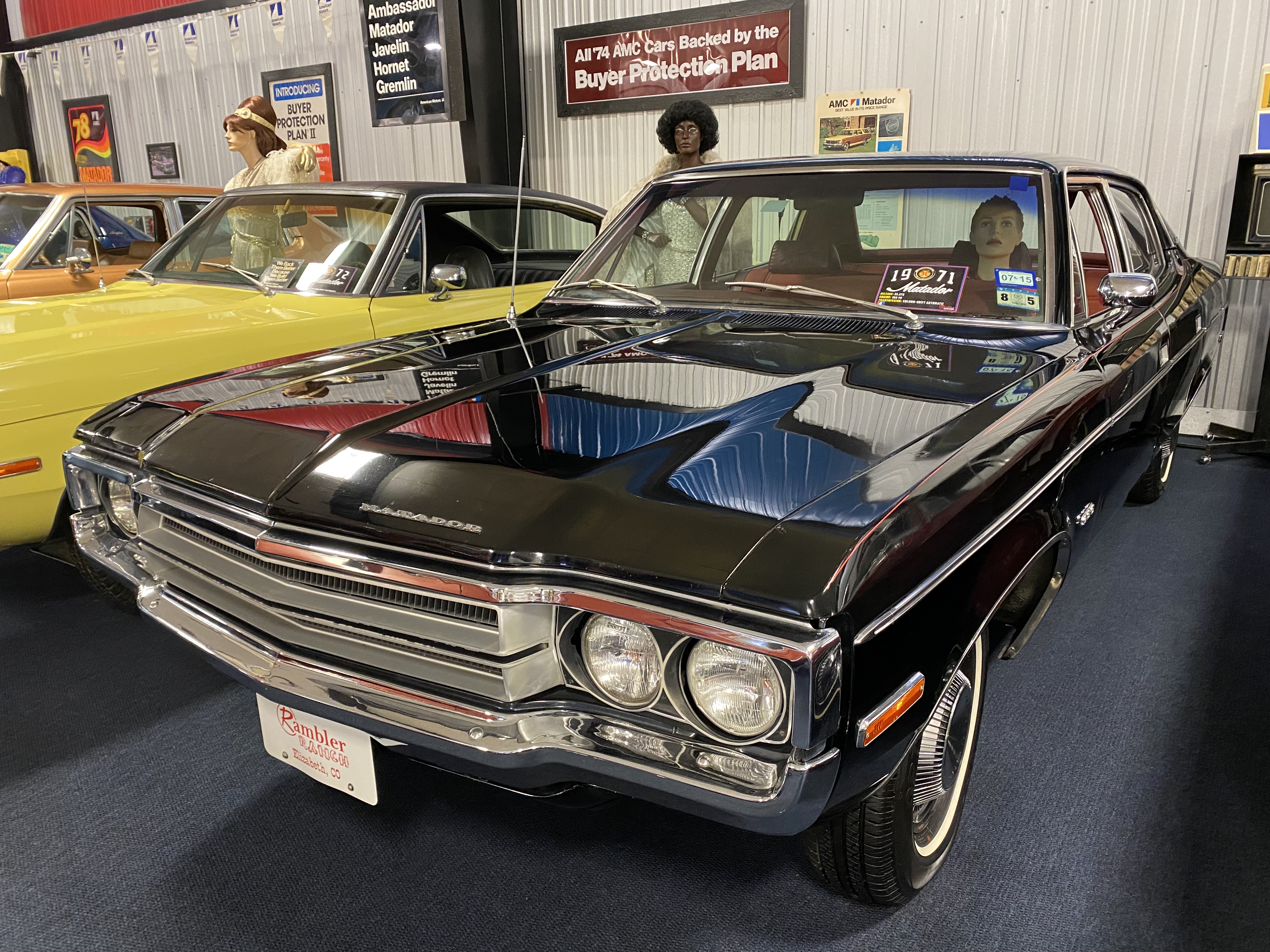
5. **1971 AMC Matador Machine**AMC, bless their hearts, truly tried to muscle their way into the red-hot muscle car craze of the early 1970s with the Matador Machine. The name itself, “Matador Machine,” screamed aggression and power, conjuring visions of a bullfight where the car was the victor. However, in a crowded and highly competitive arena dominated by established heavyweights, AMC arrived late to the party and, perhaps more critically, underpowered. The machine, in this case, was more of a polite suggestion than a roaring challenge.
Despite its assertive nomenclature, the actual performance of the Matador Machine struggled to match the promise. While most models were equipped with either the 304 or 360 V8 engines, these were, to be fair, not terrible powerplants on their own. Yet, in the context of the muscle car segment, they simply weren’t enough to allow the Matador Machine to stand out from the pack. It was a competent engine in a sea of extraordinary ones, leaving it feeling like an also-ran rather than a genuine contender.
Its fate was sealed fairly quickly, with fewer than 1,000 units ever built before it faded into a well-deserved obscurity. AMC had the right idea, and you have to credit them for the ambition, but the execution was undeniably off. The styling, while distinctive, was often described as awkward, and the performance, as mentioned, was nothing to brag about when stacked against its rivals. The 1971 AMC Matador Machine is, quite simply, a car most people forget—and for good reason. It tried to dance with giants but tripped over its own feet, becoming a beautiful curiosity rather than a celebrated legend. We love an underdog, but this one just couldn’t punch above its weight class.
Alright, gearheads, we’ve already winced our way through five stunning automotive disappointments, those gorgeous coupes that looked like legends but drove like… well, not legends. But believe it or not, our journey through the annals of “all show and no go” isn’t over yet. We’re about to delve into another five machines that had all the aesthetic charm to steal your heart at a car show, only to break it once you got them on the open road. These are the cars that not only missed the mark on performance but also left a dent in their brand’s reputation and left a peculiar legacy as beautiful, yet fundamentally flawed, machines. Let’s not mince words; these are the darlings that made us wonder, “What were they *thinking*?”
Car Model Information: 2025 Subaru Outback Premium
Caption: 1975 AMC Matador sedan
Name: AMC Matador
Aka: American Motors Matador
Manufacturer: American Motors Corporation
Production: 1970–1978
Assembly: Unbulleted list
Class: Mid-size car,Full-size car
Layout: Front-engine, rear-wheel drive layout
Predecessor: AMC Rebel,AMC Ambassador
Related: AMC Ambassador
Designer: Dick Teague
Categories: AMC vehicles, Adam-12, All articles with dead external links, All articles with unsourced statements, Articles with dead external links from July 2023
Summary: The AMC Matador is a series of mid- and full-size automobiles produced by American Motors Corporation (AMC) from 1971 through 1978 model years. Initially positioned as a mid-size family car, the Matador spanned two distinct generations: the first (1971-1973) featured two-door hardtop, four-door sedan, and station wagon body styles, while the second (1974-1978) transitioned to a full-size platform, offering two-door coupes as well as four-door sedans and wagons.
While aimed at the family market, the first generation Matador also saw performance-oriented versions. The two-door versions were successfully campaigned in NASCAR racing with factory support from 1972 until 1975.
After AMC discontinued the Ambassador line in 1974, the second generation Matador became the automaker’s flagship full-size model. Premium trim levels of the coupe, marketed as the Barcelona and noted fashion designer Oleg Cassini editions, targeted the personal luxury car segment.
The Matador sedan became popular as a police car in the United States and was prominently featured in several 1970s television series. The newly introduced Matador coupe was featured in the 1974 James Bond film, The Man with the Golden Gun
Internationally, the Matador continued to be marketed under the Rambler marque and assembled under license in Costa Rica, Mexico, and Australia. American Motors also exported right-hand-drive versions to markets such as the United Kingdom.
Get more information about: AMC Matador
Buying a high-performing used car >>>
Brand: AMC Model: Matador Machine
Price: $32,439 Mileage: 5,116 mi.
Read more about: Power Under the Hood, Eyesore on the Road: The 14 Ugliest Muscle Cars That Made Us Cringe
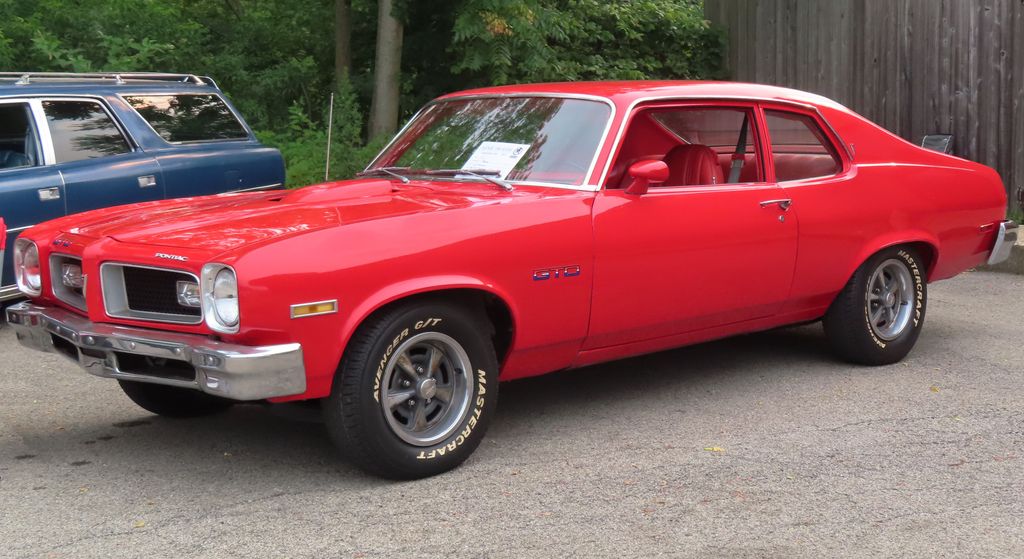
6. **1974 Pontiac GTO**Oh, the GTO. A name that, for generations, was synonymous with raw, unbridled American muscle, the very essence of a tire-shredding, asphalt-eating beast. But by the time 1974 rolled around, our beloved GTO had, regrettably, already peaked. It wasn’t just a gentle decline; it was a heartbreaking moment when Pontiac decided to slap that hallowed badge onto the Ventura body. For anyone who revered the GTO’s heritage, this felt less like an evolution and more like a cruel joke, a betrayal of everything the “Goat” was supposed to stand for.
Underneath the Ventura skin, the heart of this GTO was a 350-cubic-inch V8, which, in isolation, sounds decent enough. But the reality was a modest 200 horsepower—a figure that, even for the era, wasn’t going to set anyone’s world on fire. This wasn’t the kind of grunt you expected from a GTO; it was more akin to what you’d find in a plain-jane family sedan. The car itself, visually, looked more like a mildly dressed-up Nova than the ferocious predator the GTO nameplate deserved to be. It was a watered-down imitation, wearing a costume it couldn’t perform in.
The market, clearly, agreed with our assessment. Only about 7,000 units of this GTO were sold, making it one of the lowest-production models in the GTO’s storied history. It’s a stark reminder that you can’t just slap a legendary name on anything and expect it to resonate. This wasn’t just a change in direction for the GTO; it was a misstep, a painful lesson that a legacy can be diluted when the substance isn’t there. It stands today not as a collector’s prize, but more as a cautionary tale, a beautiful but ultimately hollow echo of greatness.
Car Model Information: 1966 Pontiac GTO Coupe
Name: Pontiac GTO
Caption: 2005 Pontiac GTO
Manufacturer: Pontiac (automobile),Holden
Class: Mid-size car,Compact car,Mid-size car
Production: 1963–1974,2003–2006
Predecessor: Pontiac Tempest
Layout: Front-engine, rear-wheel-drive layout
ModelYears: 1964-1974 2004-2006
Categories: 1970s cars, 2000s cars, All articles with unsourced statements, Articles with short description, Articles with unsourced statements from October 2008
Summary: The Pontiac GTO is a front-engine, rear-drive, two-door, and four-passenger automobile manufactured and marketed by the Pontiac division of General Motors over four generations from 1963 until 1974 in the United States — with a fifth generation made by GM’s Australian subsidiary, Holden, for the 2004 through 2006 model years.
The first generation of the GTO is credited with popularizing the muscle car market segment in the 1960s. Some consider the Pontiac GTO to have started the trend with all four domestic automakers offering a variety of competing models.
For the 1964 and 1965 model years, the GTO was an optional package on the intermediate-sized Pontiac LeMans. The 1964 GTO vehicle identification number (VIN) started with 22, while the 1965 GTO VIN began with 237. The GTO was designated as a separate Pontiac model from 1966 through 1971 (VIN 242…). It became an optional package again for the 1972 and 1973 intermediate LeMans. For 1974, the GTO was an optional trim package on the compact-sized Ventura.
The GTO model was revived for the 2004 through 2006 model years as a captive import for Pontiac, a left-hand drive version of the Holden Monaro, itself a coupé variant of the Holden Commodore.
Get more information about: Pontiac GTO
Buying a high-performing used car >>>
Brand: Pontiac Model: GTO
Price: $59,991 Mileage: 4,408 mi.
Read more about: The Unsung and Unmissed: 14 Muscle Cars That Faded From Memory

7. **1980 Dodge Mirada CMX**Ah, the 1980 Dodge Mirada CMX, a car that tried so hard to be the sophisticated, upscale personal coupe with a hint of muscle car flair. It certainly had the right proportions, a sleek profile that suggested power and prestige. You could squint and see a glimmer of what Dodge was aiming for: a challenger to the personal luxury coupes of the day, something with a bit more zest. On paper, the optional 360 V8 engine hinted at potential, a promise of something engaging for those who craved a little more from their boulevard cruiser.
However, the reality, as it so often did in that emissions-choked era, hit hard. That promising 360 V8 engine, thanks to those pesky restrictions, only managed to cough out 185 horsepower. For a car trying to project a “muscle car flair,” that number was less a roar and more a polite cough. To add insult to injury, this underpowered V8 was typically paired with a lazy 3-speed automatic transmission and tall gearing. This combination wasn’t built for spirited driving; it was designed for smooth, unhurried cruising, which, frankly, left any driver with an ounce of enthusiasm utterly cold.
The result was undeniably soft performance, a driving experience that lacked any real urgency or excitement. But the disappointments didn’t stop at the drivetrain. The Mirada CMX also suffered from spotty build quality, a common affliction of the era that only compounded its woes. Dodge only managed to sell around 5,000 CMX models, and most of them, sadly, disappeared quickly from memory and the roads. It was a car that presented itself as a contender, a sophisticated coupe with hidden athleticism, but in truth, it had the heart of a rental car, a bland, uninspired machine beneath its elegant exterior. Today, it’s remembered more as a punchline in automotive history than a prized classic, a beautiful dream that dissolved into a rather pedestrian reality.
Car Model Information: 2025 Subaru Outback Premium
Caption: 1981 Dodge Mirada
Name: Dodge Mirada
Manufacturer: Chrysler Corporation
Assembly: Windsor, Ontario
ModelYears: 1980–1983,52,947 produced
Class: Mid-size
Layout: FR layout
Platform: Chrysler J platform
BodyStyle: coupe
Engine: ubl
Abbr: on (1981–83)
Transmission: TorqueFlite#A904,Automatic transmission
Wheelbase: 112.7 in
Length: 209.5 in
Width: 72.7 in
Height: 53.3 in
Weight: 3373 lb
Designer: Ernie Barry
Predecessor: Dodge Magnum
Successor: Dodge 600
Related: Dodge Aspen,Chrysler Cordoba#Second generation (1980–1983),Imperial (automobile)#Sixth generation (1981–1983)
Categories: All articles needing additional references, All articles with unsourced statements, Articles needing additional references from October 2018, Articles with short description, Articles with unsourced statements from November 2019
Summary: The Dodge Mirada is a mid-sized, rear-wheel drive coupe manufactured and marketed by Dodge for the model years 1980 to 1983, sharing the Chrysler J platform along with its badge engineered variants, the second generation Chrysler Cordoba and the Imperial. Production of the Mirada reached just under 53,000 units, staying relatively unchanged during its four-year run, with the exception of paint colors and engines. The Mirada was marketed as a sporty personal luxury car with limited advertising and marketing during a period when Chrysler was in deep financial difficulty.
Get more information about: Dodge Mirada
Buying a high-performing used car >>>
Brand: Dodge Model: Mirada CMX
Price: $32,439 Mileage: 5,116 mi.

8. **1979 Lincoln Continental Mark V Collector’s Series**Now, let’s talk about excess, 1970s style, embodied perfectly by the 1979 Lincoln Continental Mark V Collector’s Series. This car wasn’t just big; it was colossal, a rolling testament to the belief that more was, well, more. Size and luxury were the absolute priorities here, and virtually everything else, especially performance and agility, took a backseat—or perhaps was left in a different zip code entirely. Tipping the scales at over 5,000 pounds, this wasn’t a car you drove; it was a car you captained, a land yacht designed for the most opulent of leisurely cruises.
Powering this magnificent behemoth was a 400-cubic-inch V8 engine, which, in theory, sounds like a respectable displacement. Yet, because of the prevailing regulations of the late ’70s, it only managed to churn out a rather pathetic 159 horsepower. Let’s put that into perspective: that’s barely enough to move a modern compact sedan with any authority, let alone a two-and-a-half-ton luxury coupe. Performance from this Mark V wasn’t just slow; it was glacial. To quote the enthusiasts of the era, you weren’t driving a bullet; you were piloting a barge, gently floating down the highway with all the urgency of a sleeping whale.
Only about 6,000 of these Collector’s Series models were produced, largely for buyers who wanted the absolute pinnacle of ’70s excess and conspicuous consumption. It came loaded with every conceivable luxury feature of the time: a plush interior, often adorned with tufted velour, acres of vinyl, and enough chrome to blind a small army. But what it offered in sheer presence and interior comfort, it utterly lacked in driving excitement. The Mark V Collector’s Series is remembered today, and rightly so, more for its sheer size and distinctive styling than for anything it could actually do on the road. It was a symbol, a statement, but never, ever, a driver’s car.
Read more about: Unmasking the Automotive Paradox: 15 “Classic” Cars You’d Expect to Be Priceless But Are Actually Worth Almost Nothing
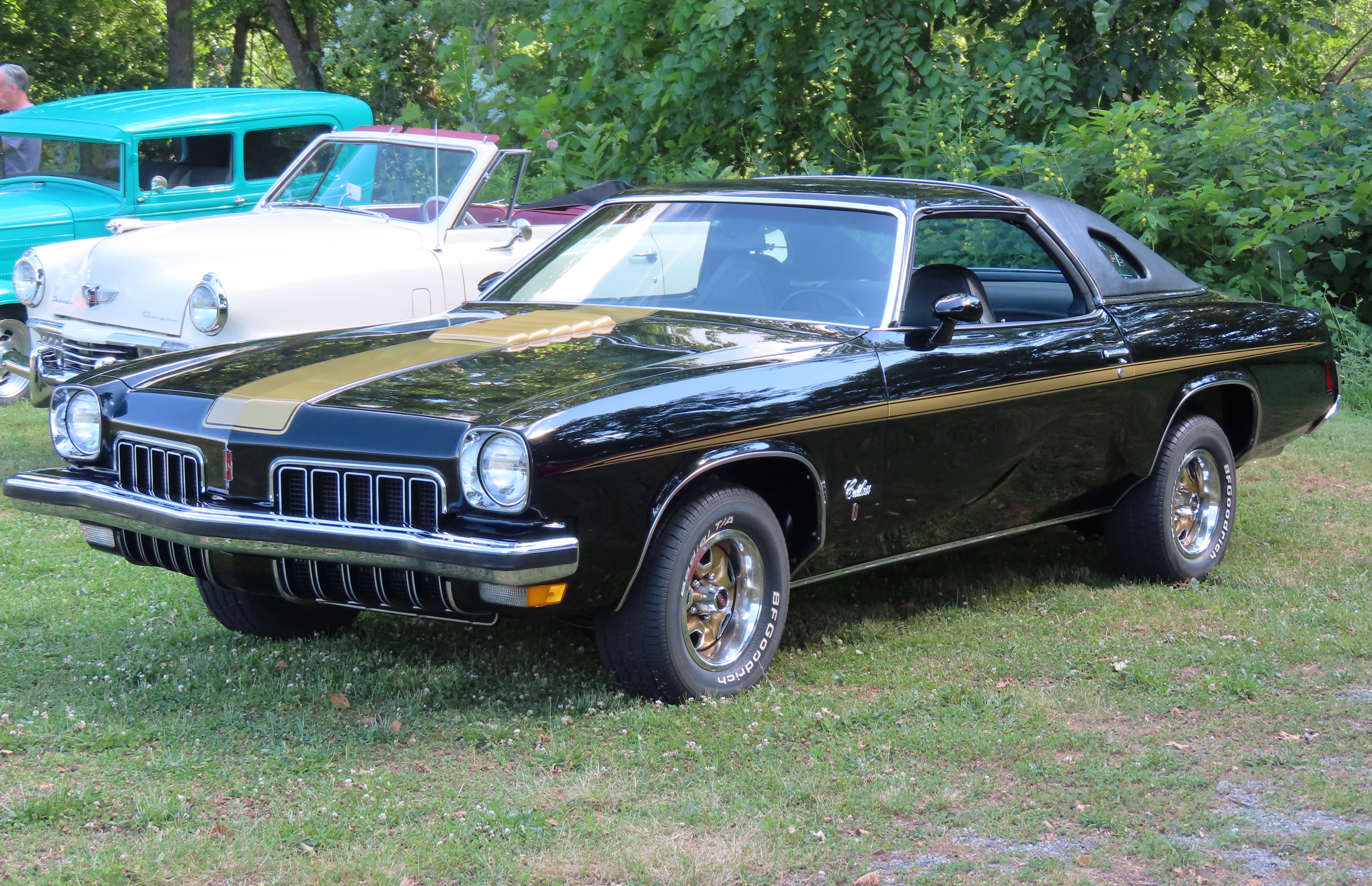
9. **1973 Oldsmobile Hurst/Olds**The 1973 Oldsmobile Hurst/Olds is a truly fascinating entry on our list, because from a purely visual standpoint, it had all the right ingredients to be an absolute showstopper. We’re talking about those iconic gold accents, the bold hood scoops that promised untold power, and enough Hurst/Olds badges to make sure no one mistook it for anything less than special. It had flair, presence, and a certain swagger that screamed “muscle car.” But, and this is a crucial “but,” under all that glorious surface, it was mostly theater, a meticulously crafted illusion of performance that sadly didn’t extend to the driving experience.
Beneath the flamboyant exterior, the standard 455 V8 engine, while still a big block, had been significantly neutered compared to its earlier, fire-breathing iterations. In ’73, it was delivering a respectable-on-paper 250 net horsepower, a figure that was undeniably down from previous years. Combine that power reduction with the era’s ever-increasing weight gain and a decidedly cushy, comfort-oriented suspension setup, and what you got was a car that simply didn’t handle like a muscle car. It wallowed through corners, felt disconnected from the road, and certainly didn’t inspire confidence when pushed. It had the look of a brawler but the moves of a ballroom dancer.
Around 1,097 of these ’73 Hurst/Olds models were built, making it a rare beast in the grand scheme of things. However, rarity doesn’t always equate to value or, more importantly for our purposes, performance legitimacy. It had presence, absolutely, the kind of car that draws a crowd at a local cruise-in, but very little genuine performance to back up that imposing façade. The Hurst/Olds name, a partnership that had produced some truly legendary machines, deserved more bite, more ferocity, especially during a time when true muscle cars were fighting tooth and nail to stay relevant in a rapidly changing automotive landscape. This one ended up being a beautiful, albeit somewhat soft, exclamation mark in the muscle car story.
Read more about: Revving Up History: Unearthing the Forgotten Engines That Forged American Muscle Legends
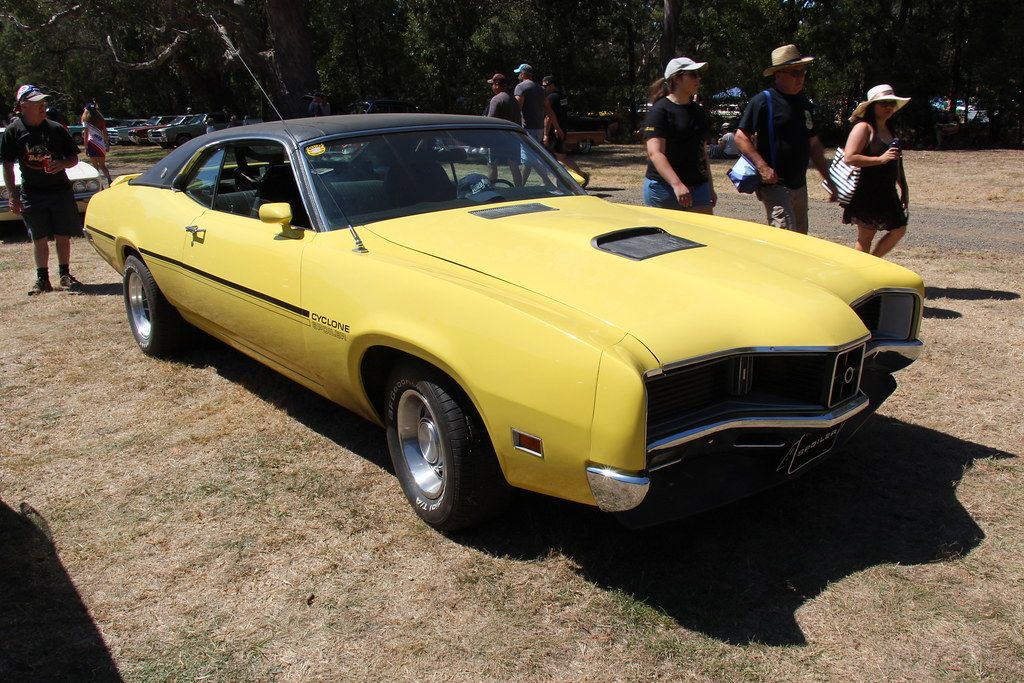
10. **1970 Mercury Cyclone Spoiler**Now, let’s talk about a car with a name so cool, so evocative, it promised pure, unadulterated velocity: the 1970 Mercury Cyclone Spoiler. Just saying “Cyclone Spoiler” out loud makes you imagine a beast of the track, a machine designed to dominate. This was a car that, on paper, had some serious muscle under the hood, often equipped with the legendary 429 Cobra Jet engine. That’s a powerhouse, no doubt, and it should have been a recipe for unbridled excitement.
However, as we’ve learned repeatedly on this journey, even a mighty engine can be undone by less-than-stellar execution. The Cyclone Spoiler, despite its formidable powerplant, suffered from a bulky design and poor weight distribution. This made it, to put it mildly, awkward to handle. It was a car that felt less like it was carving corners and more like it was wrestling with them. Even with up to 375 horsepower from that glorious 429 Cobra Jet, the sheer lack of finesse meant it simply couldn’t compete with the leaner, more balanced rivals of the era. It was like watching a heavyweight boxer with two left feet—all the power in the world, but unable to land a clean punch.
Mercury sold just over 1,600 Cyclone Spoilers that year, a number that speaks volumes about its reception in a fiercely competitive market. It was a car with real muscle, no question there, but it just didn’t have enough finesse, enough agility, to truly leverage that power effectively. For a vehicle with such an incredible name, such aggressive styling, and a beastly engine, it failed to earn the kind of legendary legacy its name so clearly implied. It’s a bittersweet tale of a car that had so much promise, so much potential, yet ultimately tripped over its own feet.
Car Model Information: 2025 Subaru Outback Premium
Name: Mercury Cyclone Spoiler II
Manufacturer: Mercury (division)
Aka: Ford Torino Talladega
Production: 1969
ModelYears: 1969
Class: Race car
BodyStyle: fastback
Layout: FR layout
Designer: FoMoCo
Categories: All articles needing additional references, All articles with unsourced statements, Articles needing additional references from July 2025, Articles with short description, Articles with unsourced statements from April 2025
Summary: The Mercury Cyclone Spoiler II is a muscle car that was produced by Mercury in early 1969. The Mercury Cyclone Spoiler II was a special, more aerodynamic version of the Mercury Cyclone. It was produced specifically to compete against the Dodge Charger Daytona and Plymouth Superbird produced by Chrysler, and the nearly identical Ford Torino Talladega, in NASCAR stock car racing, and was sold to the public only because homologation rules required a minimum number of cars (500 in 1969) be produced and made available for sale to the public. A total of 503 cars were built in both Yarborough (285) and Gurney (215) versions, a during the first few weeks of 1969.
Get more information about: Mercury Cyclone Spoiler II
Buying a high-performing used car >>>
Brand: Mercury Model: Cyclone Spoiler
Price: $32,439 Mileage: 5,116 mi.
Read more about: The Unsung and Unmissed: 14 Muscle Cars That Faded From Memory
And there you have it, folks. Ten glorious, iconic coupes that, for all their aesthetic brilliance and historical significance, were genuine letdowns when the rubber met the road. It’s a tough lesson, one that car enthusiasts learn again and again: sometimes, the dream doesn’t quite match the reality. Whether it was stifled engines, clumsy handling, or a fundamental identity crisis, these machines remind us that beauty isn’t always skin deep when it comes to driving enjoyment. They’re still head-turners, absolutely, but perhaps it’s best to admire them from afar, or at least be prepared for a driving experience that might leave you, shall we say, less than thrilled. But hey, at least they looked fantastic, right?