Driving an old car is much more than a mode of transportation—it is a journey through time. Among the defining aspects of this experience is the tactile, immersive act of shifting gears in a manual transmission. Unlike modern vehicles equipped with automated systems designed for maximum convenience, older cars demand a level of engagement that connects the driver to the machine in an intimate way. The feel of the gear shifter in hand, the resistance of the clutch, and the audible feedback of the engine are all elements that create a driving experience that’s both nostalgic and deeply satisfying. Shifting gears in old cars is more than a skill; it is a connection to history and craftsmanship.
In an increasingly digital, automatic world, the manual transmission remains one of the last truly analog links between driver and machine. It’s tactile. It’s mechanical. It demands presence and precision. Every shift becomes a part of the driving rhythm, an opportunity to sync your mind and body with the machine’s intentions. For all the talk about horsepower, turbochargers, and lap times, few things stir the soul of an automotive enthusiast more than the feel of a great manual gearbox.
Yet, not all manual gearboxes are created equal. Some provide silky-smooth engagement with short, crisp throws that feel like second nature, elevating a car to greatness. Others feel like you’re grinding metal, lost in a rubbery mess of vague gates and reluctant synchros, dragging a car into frustrating mediocrity. In this article, we dive into both extremes, looking beyond performance numbers and spec sheets to examine the feel, the feedback, and the soul of the shifter. Because when it comes to the manual transmission, feel isn’t just a preference; it’s everything.
### Five Cars with the Smoothest-Shifting Manual Gearboxes

1. **Honda S2000 (AP1/AP2)**
The Honda S2000 is often cited as the gold standard when it comes to manual transmissions, a benchmark many enthusiasts still refer to decades after its debut. From the moment you grasp the aluminum shift knob, the experience is unmistakable. It’s light, precise, and possesses a tactile quality that feels engineered specifically for the enthusiast driver.
This precision is no accident, as Honda engineered the S2000’s transmission with a front-mid engine layout. This clever design places the gearbox directly behind the engine, a strategic choice that minimizes the length of shift linkages and thereby dramatically reduces any potential vagueness. The six-speed gearbox itself is incredibly direct, showing minimal slop in its linkage.
Beyond the mechanical layout, the actual feel of the shift lever is a symphony of balanced forces. The throw is perfectly short enough to encourage rapid shifts, yet also long enough to prevent any accidental gear engagement. This throw distance strikes a flawless compromise between responsiveness and absolute control.
Moreover, the gear gates themselves offer a deeply satisfying mechanical detent. Drivers frequently describe this feedback as “rifle bolt” precise, which delivers a reassuring click that unequivocally confirms that the gear has fully engaged. This makes each shift feel incredibly intentional and purely mechanical, rather than vague or slippery.
The clutch pedal in the S2000 complements the gearbox’s excellent qualities with its light and linear engagement. This thoughtful design makes the car surprisingly easy to drive even in stop-and-go traffic, while simultaneously providing the exquisite sensitivity required for high-performance heel-and-toe downshifts on a track. It certainly doesn’t fatigue the left leg, yet it permits fine modulation of power delivery.
Owners of S2000s frequently remark on the gearbox’s remarkable ability to maintain its smooth, engaging feel over time. Unlike many older manual gearboxes that tend to grow sloppy or rubbery as bushings wear, the S2000’s robust design and high-quality components ensure consistently crisp shifts for tens of thousands of miles. Maintenance for this system is also commendably straightforward.
Many enthusiasts further enhance an already excellent system by upgrading to short-throw shifters or aftermarket bushings. The car’s high-revving engine actively encourages frequent shifts, a challenge the gearbox meets without disappointment. Revving beyond 7,000 rpm and snapping through the gears feels like an exquisite, rhythmic dance.
The inherent smoothness of these gear changes perfectly complements the engine’s eager willingness to rev, creating a holistic sense of driving harmony. It is truly rare to find a car that rewards enthusiasm so thoroughly and almost purely through its gearbox feel alone. Historically, the S2000 was Honda’s powerful statement of engineering excellence in the late 1990s.
Its goal was to compete with European sports cars based on precision and feel, rather than just outright power. Its gearbox was absolutely central to that ambitious strategy, cementing the car’s legacy as a true driver’s favorite. Many manufacturers since have tried, and often failed, to replicate that elusive “perfect” manual shift experience.
Even now, aftermarket support for the S2000 transmission remains incredibly strong, a testament to its enduring design. The vibrant community frequently shares tips on maintaining bushings and linkages, upgrading shift knobs, and refining the clutch system. This continued enthusiasm around the gearbox powerfully reinforces its position as one of the smoothest and most satisfying manuals ever built.
Car Model Information: 2004 Honda S2000 Base
Name: Honda S2000
Manufacturer: Honda
Production: 1999–2009 (110,673 produced)
Class: Sports car
Layout: Front-engine, rear-wheel-drive layout#Front mid-engine, rear-wheel-drive layout
BodyStyle: Roadster (automobile)
Designer: Shigeru Uehara
Caption: 2005 Honda S2000 (AP2)
Predecessor: Honda S800
Categories: 2000s cars, All articles lacking reliable references, Articles lacking reliable references from May 2024, Articles with short description, CS1: unfit URL
Summary: The Honda S2000 is a front-mid engine open top sports car that was manufactured by Japanese automobile manufacturer Honda, from 1999 until 2009. First shown as a concept car called the SSM at the Tokyo Motor Show in 1995, the production version was launched on April 15, 1999, to celebrate the company’s 50th anniversary. The S2000 is named for its engine displacement of two liters, while “S” stood for “sports” carrying on in the tradition of the S500, S600, and S800 roadsters of the 1960s.
Several revisions were made throughout the car’s production life, including changes to the engine, gearbox, suspension, interior and exterior. Officially two variants exist: the initial launch model was given the chassis code AP1; though cosmetically similar, the facelifted version, known as the AP2 in North America and Japan, incorporated significant changes to the drivetrain and suspension. Production of the S2000 ceased on August 19, 2009.
The Honda S2000 was notable for its exceptional specific power output of about 92 kW (124 hp) per liter, or about two horsepower per cubic inch, the highest of any mass production, naturally aspirated car, until 2010.
Get more information about: Honda S2000
Buying a high-performing used car >>>
Brand: Honda Model: S2000
Price: $23,995 Mileage: 93,304 mi.

2. **Mazda MX-5 Miata (NA–ND)**
The Mazda MX-5 Miata is arguably the most beloved lightweight roadster in the world, and a huge part of its widespread appeal is unequivocally due to its manual gearbox. Across every single generation, Mazda has masterfully crafted a transmission that perfectly suits the car’s inherent ethos: simple, light, and immensely engaging. The original NA model set an incredibly high standard with its short-throw five-speed, and subsequent models have only refined this feel with six-speed boxes that remained just as intuitive and remarkably smooth.
The shifter in the Miata is famously light and exceptionally precise, almost mechanical in its very nature. There is absolutely no mushiness or vague gating to worry about whatsoever. Instead, each and every gear engages with a deeply satisfying, positive click that makes shifting feel like a completely natural extension of the driver’s hand movements. The combination of its short throw and light effort allows for wonderfully rapid gear changes that never require wrestling with the lever or applying any excessive force.
Mazda’s dedicated engineers have consistently prioritized both low friction and direct mechanical linkage in the Miata’s design, often utilizing cable or rod linkages that are meticulously designed to minimize any slack. This mechanical purity directly translates into minimal play or sloppiness in the shifter itself, making the entire gearbox feel genuinely alive and incredibly responsive. Drivers consistently report that it’s remarkably easy to learn how to confidently row through the gears quickly.
With continued practice, shifts can be executed with near-instant precision, which proves to be an invaluable boon on challenging twisty roads or when driving on the track. The clutch pedal further complements the superb gearbox with its light and refreshingly progressive engagement. This particular characteristic allows new drivers to easily master smooth starts, while simultaneously providing more than enough feedback for experienced drivers to control power delivery with exquisite precision.
The remarkable combination of both the clutch and the shifter makes the MX-5 one of the most approachable sports cars available for enthusiasts and beginners alike. It consistently delivers a very “human” driving experience that is hard to find elsewhere. One particularly interesting point to note is how the MX-5’s gearbox has managed to remain so impressively refined despite the car’s significant evolution over the years. This journey goes all the way from the simpler, NA-era technology right up to its more modern drivetrains.
The latest ND generation, in particular, vividly showcases Mazda’s unwavering and continued dedication to pure manual driver engagement. It features improved internal components and meticulous tuning that effectively reduce noise and vibration, all without ever losing that beloved, raw mechanical feel. It’s a truly remarkable gearbox that manages to feel both strikingly modern and timelessly classic at the very same time.
Enthusiasts also consistently praise the MX-5’s gearbox for its exceptional durability and its relative ease of maintenance. While it’s certainly not entirely immune to eventual wear and tear, many owners find that it holds up incredibly well over extended periods of time. Crucially, replacement parts are both affordable and widely available, which further adds to its enduring appeal. A smooth-shifting manual transmission, after all, is of little good if it becomes clunky or frustratingly imprecise after only a few short years of use.
The MX-5’s magnificent gearbox is truly a perfect partner for the car’s beautifully balanced chassis and its lively, engaging handling characteristics. Whether you’re accelerating spiritedly out of a challenging corner or precisely downshifting into a tight hairpin, the consistently precise feel of the shifter instills and encourages a profound sense of driving confidence. This deep level of engagement encourages a driving style that is both wonderfully playful and immensely skillful, which is precisely why the MX-5 remains a perennial and enduring favorite within the entire enthusiast community.
Ultimately, the profound joy of the MX-5’s manual gearbox isn’t merely technical; it’s deeply emotional. Many drivers passionately report that the act of shifting gears in a Miata feels less like a task and more like a cherished ritual, a profound and personal way to truly connect with the car’s very spirit. This intangible yet powerful quality elevates the manual transmission far beyond mere function, transforming every single drive into a small, personal celebration of pure driver involvement.
Car Model Information: 2017 Honda Accord Touring
Name: Mazda MX-5
Manufacturer: Mazda
Aka: unbulleted indent list
Production: 1989–present
Assembly: Hiroshima
Class: Roadster (car),sports car
Layout: unbulleted indent list
Platform: List of Mazda model codes#Model codes
Categories: 1990s cars, 2000s cars, 2010s cars, 2020s cars, All Wikipedia articles in need of updating
Summary: The Mazda MX-5 is a lightweight two-seat sports car manufactured and marketed by Mazda. In Japan, it is marketed as the Mazda Roadster or, previously, as the Eunos Roadster. In the United States it is sold as the Mazda Miata (), and it was formerly marketed under the same name in Canada. The name miata derives from Old High German for “reward”.
Produced at Mazda’s Hiroshima plant, the MX-5 debuted in 1989 at the Chicago Auto Show. It was created under the design credo Jinba ittai, meaning “unity of horse and rider”. Noted for its small, light, balanced and minimalist design, the MX-5 has often been described as a successor to the 1950s and 1960s Italian and British roadsters, with the Lotus Elan serving as a design benchmark.
Each generation is identified by a two-letter code, beginning with the first generation NA. The second generation NB launched in 1998, followed by the third generation NC in 2005, and the fourth generation ND in 2015.
More than one million MX-5s have been sold, making it the best-selling two-seat convertible sports car in history.
Get more information about: Mazda MX-5
Buying a high-performing used car >>>
Brand: Mazda Model: MX-5 Miata
Price: $19,960 Mileage: 86,317 mi.

3. **Porsche Cayman (987/981)**
The Porsche Cayman, particularly the 987 and 981 generations, masterfully represents an era when Porsche achieved a remarkable balance. This balance was between delivering exhilarating high performance and ensuring deeply driver-focused engagement. Central to that highly acclaimed experience is the manual gearbox, which brilliantly combines Porsche’s legendary precision with an exquisitely refined mechanical feel. The six-speed unit is widely known and celebrated for its exceptional smoothness and the profound sense of confidence it instills. It offers a solid yet never overly heavy action that articulately communicates the car’s unique character.
While the Cayman’s throw is notably longer than those found in some lighter, more minimalist sports cars, it is characterized by being deliberate and perfectly weighted. This design choice flawlessly conveys a sense of profound mechanical integrity. The gear gates themselves feel remarkably distinct without ever being harsh, and the feedback transmitted through the shift lever is consistently firm, profoundly reassuring, and, for many, utterly addictive. Porsche meticulously engineered the Cayman’s transmission to function as a precise driver’s tool, rather than merely a drivetrain necessity. It unapologetically demands attention but lavishly rewards genuine involvement.
The clutch pedal is similarly, and impressively, well-calibrated. It possesses a medium-to-heavy feel that perfectly suits the Cayman’s inherently sporty nature. Crucially, it is neither vague nor fatiguing, consistently offering just the right amount of resistance to modulate power both smoothly and effectively. Drivers can effortlessly execute heel-and-toe downshifts with remarkable ease, and the clutch bite point remains consistently predictable, making it significantly easier to master spirited driving techniques. This exquisite balance between seamless smoothness and profound engagement stands as an enduring hallmark of Porsche’s peerless engineering philosophy.
Under the hood, Porsche’s unwavering commitment to using only the highest quality materials and employing the most precise manufacturing techniques ensures that the gearbox consistently feels both remarkably durable and exquisitely refined. The cable linkage is finely tuned with meticulous precision, engineered to minimize any perceptible play and to directly translate driver input straight to the transmission. The synchros are aggressively designed yet operate with remarkable smoothness, allowing for exceptionally fast shifts without any undesirable grinding, even for those who may be less experienced at the art of double clutching.
In practical terms, the Cayman’s manual gearbox proves to be surprisingly versatile. It performs admirably in the context of daily driving, offering smooth engagement and effortlessly easy gear changes, making mundane commutes a pleasure. However, it truly shines, unleashing its full potential, on the track or when navigating challenging, twisty backroads. The driver feels intimately connected to the machine at all times, and the inherently engaging gearbox actively encourages an assertive and active driving style. Porsche’s legendary attention to every minute detail means that this transmission doesn’t just unobtrusively get out of the way; it powerfully becomes an integral part of the overall driving enjoyment.
Owners of both 987 and 981 Caymans consistently speak in glowing terms about the gearbox’s impressive longevity and its consistently smooth operation, even after accumulating many miles and enduring spirited use. Routine maintenance diligently keeps the entire system feeling remarkably fresh, and its robust design significantly reduces the likelihood of common issues such as worn bushings or annoyingly sloppy gates. It is, unequivocally, a gearbox that is both a profound joy to use and supremely reliable, making it an absolutely perfect match for Porsche’s enduring ethos of precision and performance.
Finally, the Cayman manual gearbox stands as a magnificent bridge, elegantly connecting the raw, unadulterated driving feel with the refined luxury of sophisticated sports car engineering. It is a transmission that deeply respects the driver’s skill and actively encourages its development, yet notably without punishing mistakes or demanding excessive, tiring effort. This rare and exquisite blend has rightfully earned the Cayman a truly special and cherished place among discerning enthusiasts who deeply prize exceptional manual transmissions.
Car Model Information: 2016 Porsche Cayman GTS
Name: unbulleted list
Caption: Porsche Boxster Spyder (718)
Manufacturer: Porsche
Aka: unbulleted list
Production: unbulleted list
Assembly: unbulleted list
Class: Sports car
BodyStyle: unbulleted list
Related: unbulleted list
Layout: Rear mid-engine, rear-wheel drive layout
Predecessor: Porsche 968
Categories: All Wikipedia articles written in British English, All articles needing additional references, All articles with dead external links, All articles with unsourced statements, Articles needing additional references from August 2025
Summary: The Porsche Boxster and Cayman are mid-engine two-seater sports cars manufactured and marketed by German automobile manufacturer Porsche across four generations—as a two-door, two-seater roadster (Boxster) and a three-door, two-seater fastback coupé (Cayman).
The first generation Boxster was introduced in 1996; the second generation Boxster and the Cayman arrived in late 2005; and the third generation launched in 2012. Since the introduction of the fourth generation in 2016, the two models have been marketed as the Porsche 718 Boxster and Porsche 718 Cayman.
The nameplate Boxster is a portmanteau of boxer, a reference to its flat or boxer engine, and Speedster, a nod to the original Porsche Speedster of the 1950’s. The nameplate Cayman is an alternative spelling of caiman, a member of the alligator family.
In May 2025 Porsche North America confirmed the rumours that global “production for all current 718 Boxster and 718 Cayman variants, including RS models, is scheduled to end in October of” 2025. Porsche CEO Oliver Blume has confirmed future production of full-electric replacements but said they will arrive in the “medium term.”
Get more information about: Porsche Boxster and Cayman
Buying a high-performing used car >>>
Brand: Porsche Model: Cayman
Price: $79,980 Mileage: 16,833 mi.
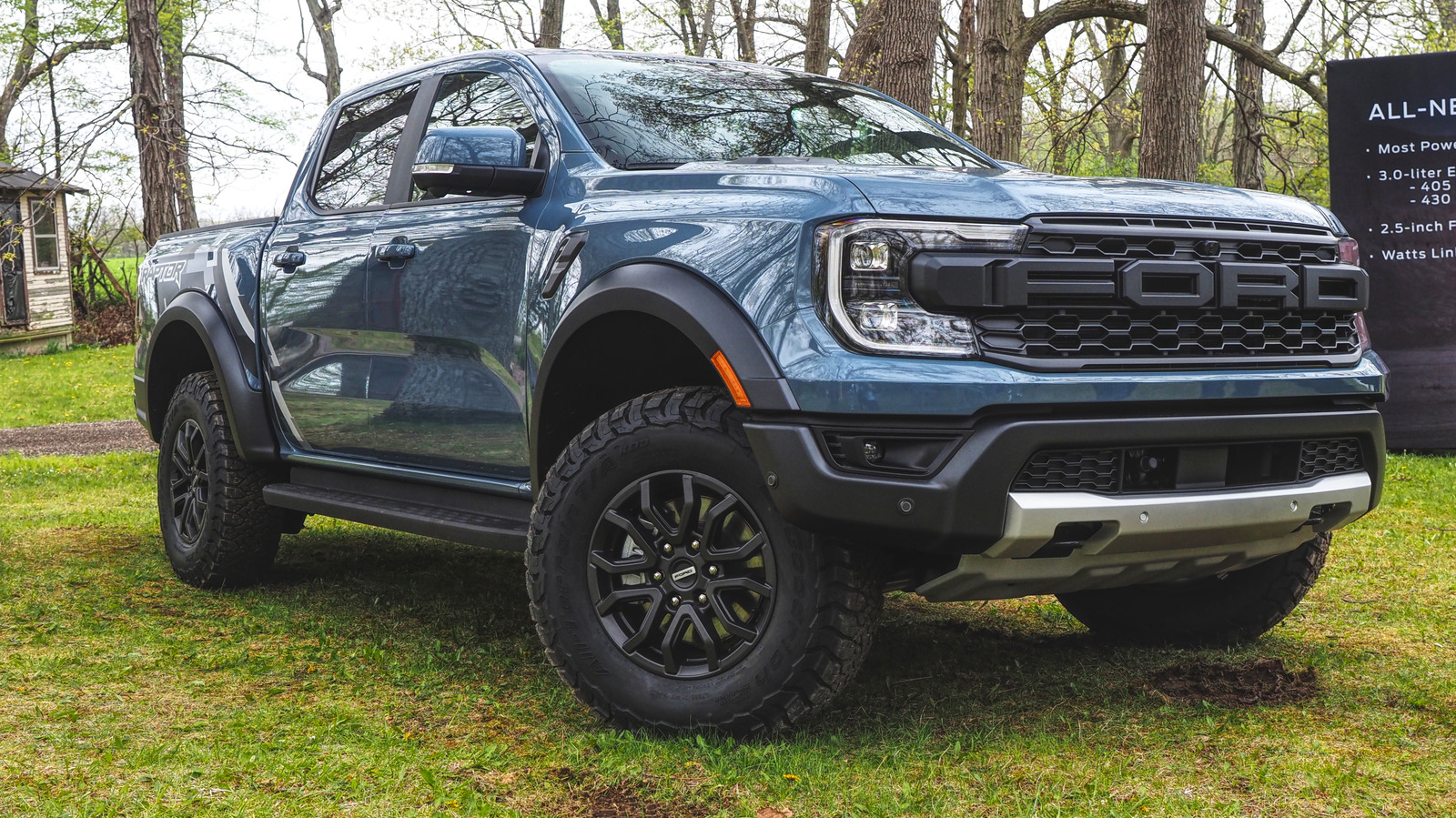
4. **Ford Mustang GT (S550, 2015–2023, with MT82-D4 or Tremec TR-3160)**
The Ford Mustang, America’s quintessential muscle car, might initially appear as an unlikely candidate for a discussion centered around a smooth manual gearbox. However, the S550 generation’s Tremec transmissions have dramatically and impressively changed that perception. The Tremec TR-3160, found in models such as the GT350 and Mach 1, particularly stands out as a transmission that ingeniously combines robust durability with exceptionally refined and positive shifts. It is fundamentally a gearbox designed to handle immense horsepower and substantial torque, but it has also been meticulously tuned to provide a genuinely satisfying mechanical feel.
It’s worth acknowledging that early versions of the MT82 gearbox in the Mustang did face criticism for their imprecise feel and legitimate durability concerns. However, Ford’s relentless and iterative improvements have undeniably made later S550 manuals significantly better. This continuous refinement included redesigned shift forks, the integration of upgraded synchros, and meticulous improvements to the internal geometry. These enhancements collectively resulted in a gearbox that delivered shorter throws, crisper engagement, and far more defined gates. This evolution serves as a powerful testament to how manufacturers can truly listen to the feedback from enthusiasts and systematically refine their products over a production cycle.
The shift feel in the Tremec-equipped Mustang is distinctly heavy but, crucially, incredibly precise. It embodies the type of gearbox that allows you to feel every single gear engagement with unequivocal firmness, almost as if the car itself is eagerly responding to your every input. While it may not possess the feather-light action of a Miata or the intensely tight precision of a Porsche, it perfectly fits the Mustang’s formidable character. This profound mechanical engagement significantly enhances the raw, untamed nature of the glorious V8 powerplant and perfectly complements the car’s aggressive, muscular personality.
The clutch pedal in these Mustangs is similarly substantial, imparting a reassuring sense of direct connection and absolute control. It is exceptionally well-suited for spirited driving, consistently providing a clear and predictable bite point for exhilaratingly quick launches and flawlessly smooth heel-and-toe downshifts. Working in perfect harmony, the clutch and gearbox actively encourage a driving style that is both profoundly confident and deeply rewarding. The visceral feeling of slotting gears amidst the thunderous rumble of the 5.0-liter V8 engine is an experience that is nothing short of thrilling.
Maintenance and overall durability are also particularly strong points for the Mustang’s manual gearbox. The Tremec is renowned across the automotive community for being virtually bulletproof, capable of handling tremendous torque and significant abuse with remarkable ease. For owners who are keen on modifying their Mustangs for dedicated track use or to achieve even higher power outputs, this gearbox stands as a perennial favorite platform, largely due to its inherent strength and its excellent shift quality. This unwavering reliability provides a solid foundation for performance enhancements.
The Mustang manual transmission experience serves as an excellent reminder that achieving a smooth and truly satisfying manual isn’t solely about lightness or exceptionally short throws. Sometimes, a gearbox that feels inherently heavy and robust, one that exudes a strong mechanical presence, can be equally and profoundly engaging. This is especially true when such a characteristic perfectly suits the car’s overarching personality and design. For a great many muscle car enthusiasts, this powerful combination of strength and satisfying engagement is precisely what they desire and expect.
Car Model Information: 2017 Honda Accord Touring
Name: Ford Mustang
Caption: 2018 Ford Mustang GT 5.0
Aka: Ford T5 (Germany)
Manufacturer: Ford Motor Company
Production: March 1964 – present
ModelYears: 1965–present
Class: Unbulleted list
BodyStyle: Unbulleted list
Layout: Front-engine, rear-wheel-drive layout
Categories: 1970s cars, 1980s cars, 1990s cars, 2+2 coupés, 2000s cars
Summary: The Ford Mustang is an American automobile manufactured and marketed by Ford since 1964, as Ford’s longest nameplate in continuous production. Currently in its seventh generation, it is the fifth-best selling Ford car nameplate. The namesake of the “pony car” automobile segment, the Mustang was developed as a highly styled line of sporty coupes and convertibles derived from existing model lines, initially distinguished by its pronounced “long hood, short deck” proportions.
Originally predicted to sell 100,000 vehicles yearly, the 1965 Mustang became the most successful vehicle launch since the 1927 Model A. Introduced on April 17, 1964 (16 days after the Plymouth Barracuda), over 400,000 units were sold in its first year; the one-millionth Mustang was sold within two years of its launch. In August 2018, Ford produced the 10-millionth Mustang; matching the first 1965 Mustang, the vehicle was a 2019 Wimbledon White convertible with a V8 engine.
The success of the Mustang launch led to multiple competitors from other American manufacturers, including the Chevrolet Camaro and Pontiac Firebird (1967), AMC Javelin (1968), and Dodge Challenger (1970). It also competed with the Plymouth Barracuda, which was launched around the same time. The Mustang also had an effect on designs of coupes worldwide, leading to the marketing of the Toyota Celica and Ford Capri in the United States (the latter, by Lincoln-Mercury). The Mercury Cougar was launched in 1967 as a unique-bodied higher-trim alternative to the Mustang; during the 1970s, it included more features and was marketed as a personal luxury car.
From 1965 until 2004, the Mustang shared chassis commonality with other Ford model lines, staying rear-wheel-drive throughout its production. From 1965 to 1973, the Mustang was derived from the 1960 Ford Falcon compact. From 1974 until 1978, the Mustang (denoted Mustang II) was a longer-wheelbase version of the Ford Pinto. From 1979 until 2004, the Mustang shared its Fox platform chassis with 14 other Ford vehicles (becoming the final one to use the Fox architecture). Since 2005, Ford has produced two generations of the Mustang, each using a distinct platform unique to the model line.
Through its production, multiple nameplates have been associated with the Ford Mustang series, including GT, Mach 1, Boss 302/429, Cobra (separate from Shelby Cobra), and Bullitt, along with “5.0” fender badging (denoting 4.9 L OHV or 5.0 L DOHC V8 engines).
Get more information about: Ford Mustang
Buying a high-performing used car >>>
Brand: Ford Model: Mustang GT
Price: $19,960 Mileage: 86,317 mi.

5. **BMW E46 M3 (2000–2006)**
The BMW E46 M3’s Getrag 6-speed manual transmission is frequently praised and often celebrated as one of the very best manual gearboxes in the illustrious history of BMW’s performance cars. It masterfully strikes a near-perfect balance between exquisite smoothness and profound driver engagement, consistently providing shifts that are wonderfully buttery yet still weighted enough to offer truly meaningful and communicative feedback. The medium-length throw, combined with an incredibly robust linkage design, makes every single gear change feel both remarkably precise and unequivocally deliberate.
One of the E46 M3’s greatest and most defining strengths lies in the gearbox’s exceptionally smooth synchros. Gear engagement happens quietly and cleanly, allowing drivers to fully focus their attention on the road ahead rather than unnecessarily worrying about the dreaded possibility of grinding gears or suffering from missed shifts. The shifter’s feel is consistently solid without ever being overly stiff—it’s light enough for comfortable daily use but simultaneously firm enough to inspire profound confidence when pushing the car hard during spirited driving.
The clutch pedal beautifully complements the transmission, offering a progressive engagement that seamlessly allows for smooth starts without ever sacrificing crucial control. This is a particularly important attribute for a car like the M3, which expertly balances everyday usability with genuine track readiness. Drivers deeply appreciate the unwavering consistency of the clutch bite point, a feature that significantly helps them master complex heel-and-toe downshifting techniques and precise launch control maneuvers with remarkable ease. This level of harmonious interaction defines the driving pleasure.
The E46 M3’s manual gearbox substantially benefits from BMW’s decades of profound transmission engineering experience. The Getrag unit features exceptionally robust gears, utilizes only the highest quality materials, and is manufactured with incredibly precise tolerances. This meticulous attention to detail not only rigorously ensures consistently smooth operation but also contributes to remarkable long-term durability. Many E46 M3s continue to run flawlessly and reliably even after enduring countless miles of spirited use and accumulating significantly high mileage.
Enthusiasts consistently highlight how the gearbox’s inherent smoothness never, ever comes at the expense of its profound engagement. Unlike some manual transmissions that tend to feel either frustratingly vague or overtly harsh, the E46 M3’s transmission consistently feels connected yet remarkably refined. This exceptional duality makes it an absolute joy to operate on challenging, twisty roads, where precise gear changes are absolutely essential for maintaining momentum and control, and equally delightful during everyday commuting, where its inherent smoothness is profoundly appreciated.
Ultimately, the E46 M3’s gearbox holds a truly special and cherished place in the hearts of driving purists worldwide. It stands as a rare and shining example of a manual transmission that possesses the remarkable ability to be both a precision instrument for high-performance driving and a genuine pleasure to use on a daily basis. For many discerning drivers, it represents the absolute epitome of what a truly outstanding sports sedan’s manual gearbox should authentically feel like: smooth, utterly confident, and intimately connected.
### Five Cars with Notchy or Less Satisfying Manual Gearboxes
Car Model Information: 2017 Honda Accord Touring
Manufacturer: BMW
Name: BMW 3 Series (E46)
Production: December 1997 – August 2006
ModelYears: 1999–2005 (North America)
Assembly: ubl
Designer: Chris Bangle,Wolfgang Reitzle
Class: Compact executive car
BodyStyle: coupé,convertible,hatchback,sedan (car),station wagon
Layout: unbulleted list
Related: BMW M3#E46,BMW 3 Series Compact#E46/5 (2000-2004),BMW Z4 (E85),BMW X3 (E83),Alpina B3
Engine: Unbulleted list
Transmission: unbulleted list
Wheelbase: 2725 mm
Abbr: on (sedan/wagon)
Length: unbulleted list
Width: unbulleted list
Height: unbulleted list
Weight: unbulleted list
Predecessor: BMW 3 Series (E36)
Successor: BMW 3 Series (E90)
ModelCode: E46
Categories: 2000s cars, All Wikipedia articles written in British English, All articles needing additional references, All articles with dead external links, All articles with unsourced statements
Summary: The BMW 3 Series (E46) is the fourth generation of the BMW 3 Series range of compact executive cars manufactured by German automaker BMW. Produced from 1997 to 2006, it was the successor to the E36 3 Series, which ceased production in 2000. It was introduced in November 1997, and available in sedan, coupé, convertible, station wagon and hatchback body styles. The latter has been marketed as the 3 Series Compact.
The M3 performance model was introduced in June 2000 with a 2-door coupé body style, followed by the convertible counterpart in April 2001. The M3 is powered by the BMW S54 straight-six engine with either a 6-speed manual or a 6-speed SMG-II automated manual transmission.
The E46 line-up was phased out starting from late 2004, following the introduction of the E90 3 Series sedans. However, the E46 coupé and convertible body styles remained in production until August 2006.
Get more information about: BMW 3 Series (E46)
Buying a high-performing used car >>>
Brand: BMW Model: E46 M3
Price: $19,960 Mileage: 86,317 mi.
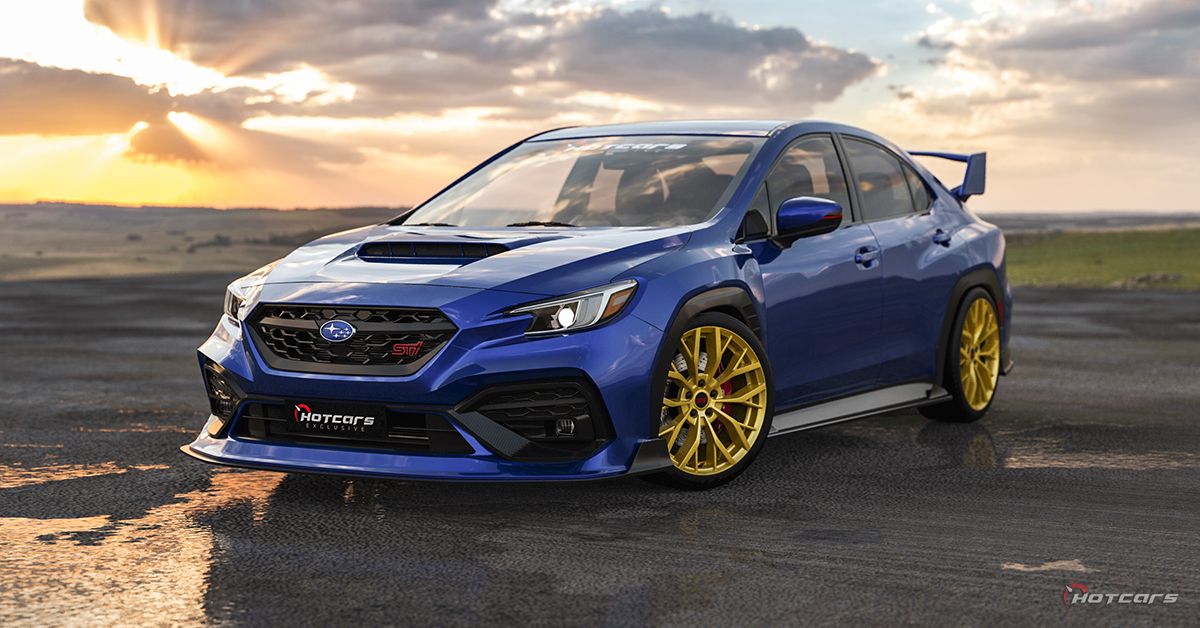
6. **Subaru WRX (Various Generations, especially 2008–2014)**
The Subaru WRX has long been a cherished favorite among rally enthusiasts, a car celebrated for its robust performance and tenacious all-weather grip. Yet, a consistent and frequently aired grievance across multiple generations—particularly the 2008–2014 era—has been its manual gearbox. It’s often branded as notchy, vague, and at times, utterly frustrating. While the WRX certainly delivers thrills, the tactile experience of shifting gears has historically lagged behind many of its rivals, lacking that crucial precision and refinement.
Drivers frequently describe the WRX’s manual as having a distinctly rubbery and vague feel. Shifts often demand an undue amount of effort and conspicuously miss the crisp, positive engagement found in more polished systems. There’s an unsettling uncertainty when navigating the gear gates; some owners vividly recount feeling like they’re “stirring a bowl of oatmeal,” grappling with indistinct positions and inconsistent feedback that can easily lead to mis-shifts, especially under spirited driving conditions. Adding to this dilemma, the clutch pedal often feels abrupt and possesses a narrow engagement band, which complicates smooth launches and can quickly sap a driver’s confidence in demanding situations.
These mechanical shortcomings can largely be attributed to Subaru’s choice of cable linkages and what appear to be less-than-optimal synchro designs from prior generations. Unlike the taut, communicative gearboxes in competitors like the Honda Civic Si or Mazda3, the WRX’s transmission often felt like an afterthought, lacking the precise tolerances and direct mechanical feedback that define a truly enjoyable manual. This problem is further exacerbated in cold weather, a common operating condition for many WRX owners, where the shifter’s resistance and notchiness become even more pronounced and irritating.
It’s genuinely frustrating because the rest of the WRX package is so immensely capable. Its turbocharged engine eagerly delivers thrilling power, and the legendary all-wheel-drive system provides almost unmatched grip. But the gearbox, regrettably, just doesn’t keep up. This disparity significantly detracts from what could otherwise be a sublime driver’s car, transforming a potentially rhythmic dance between driver and machine into an awkward, disjointed shuffle. For a vehicle that so actively encourages spirited driving, the consistent lack of shift quality feels like a major, unavoidable letdown.
While modern WRX iterations, such as the 2022 generation, have seen substantial gearbox improvements, those earlier models from 2008-2014 remain a potent reminder of how crucial tactile feedback is. Aftermarket modifications like short-shifters and stiffer bushings certainly help, but they also underscore the fact that a truly great manual shouldn’t require external fixes to feel acceptable. The WRX serves as a powerful case study: even an otherwise excellent performance car can be undermined if the fundamental interface between human and machine isn’t precisely right.
Car Model Information: 2018 Subaru WRX Base
Name: Subaru WRX
Caption: 2022 Subaru WRX GT
Aka: Subaru Impreza WRX (1992–2014)
Production: 1992–2014 (Impreza-based models),2015–present (standalone models)
Assembly: Ōta, Gunma
Layout: Front-engine, four-wheel-drive layout
Manufacturer: Subaru
Related: Subaru Levorg,Subaru WRX STI
Class: Sport compact
BodyStyle: Sedan (automobile)
Categories: 2020s cars, All-wheel-drive vehicles, All Wikipedia articles written in British English, All articles with unsourced statements, Articles with short description
Summary: The Subaru WRX is an all-wheel drive sport compact car manufactured by the Japanese automaker Subaru, originally based on the Impreza created for the World Rally Championship in 1992. Subaru claimed the name WRX stands for “World Rally eXperimental”. Starting with the 2015 models, the WRX lineup has been split from the Impreza, with a different body style that is not offered as an optional hatchback/wagon, being introduced as the separate Levorg model.
Get more information about: Subaru WRX
Buying a high-performing used car >>>
Brand: Subaru Model: WRX
Price: $14,980 Mileage: 117,516 mi.

7. **BMW E60 5-Series (Especially 530i and 545i Manuals)**
The BMW E60 5-Series represented a bold technological leap for the German marque in the mid-2000s, introducing a suite of innovations from iDrive to active steering. While its chassis, advanced engine options, and cutting-edge technology largely pushed boundaries, there was one particular area where the E60 decidedly failed to impress: its manual gearbox. This was particularly true for models like the 530i and 545i, which, despite their sporting pretensions, were saddled with a 6-speed manual that felt disconnected, imprecise, and oddly clunky.
Unlike the beautifully satisfying gearboxes found in earlier BMWs, such as the revered E39, or indeed the crisper units in the subsequent E90-series cars, the E60’s manual offered a shift action that was remarkably long and, frankly, quite rubbery. It suffered from an inconsistent resistance across its gates, meaning that while a shift from third to fourth might feel marginally acceptable, selecting second or reverse could often devolve into a notchy, even grindy affair. This erratic behavior severely eroded driver confidence, especially during cold starts or in rapid, demanding transitions.
Further compounding the issue was the E60’s clutch pedal, a truly sore point for many enthusiasts. It featured a long, somewhat vague travel combined with a mushy engagement point, making the execution of consistently smooth shifts an unnecessarily difficult task. For a luxury performance sedan bearing the BMW badge, this was a profoundly disappointing oversight. The clutch frequently felt out of sync with the shifter, leading to jarring, lurching starts or ungracefully abrupt gear changes, particularly when attempting any form of spirited driving. Such a pervasive level of detachment in a car designed for driving pleasure is, for many, unforgivable.
A significant contributor to this problem was BMW’s engineering approach to gearbox insulation and linkage design. In their commendable pursuit of isolating cabin noise and vibration for enhanced comfort, BMW inadvertently dulled the very mechanical feedback that forms the essence of an enjoyable manual transmission. The unfortunate result was a gearbox that felt almost synthetic in its operation – technically functional, yes, but utterly devoid of the soul and engaging interaction that enthusiasts have historically associated with the iconic BMW brand.
Compared to the razor-sharp, mechanical precision of the E46 M3, or even the solid feel of the E90 3-Series that came after it, the E60 manual simply felt like a significant step backward. This was especially frustrating because the engines themselves – particularly the charismatic V8 in the 545i – were brimming with character and formidable torque. Yet, the gearbox proved unable to keep pace, consistently diminishing the overall driving pleasure and unfortunately emphasizing the car’s more luxurious, rather than genuinely sporting, demeanor. It truly highlighted a missed opportunity to deliver a cohesive driver experience.
Car Model Information: 2017 Honda Accord Touring
Name: BMW 5 Series (E60/E61)
Manufacturer: BMW
Production: July 5, 2003 – 2010
ModelYears: 2004–2010
Assembly: Unbulleted list
Designer: Unbulleted list
Class: Executive car
Layout: Rear-wheel drive,All-wheel drive
BodyStyle: sedan (car),station wagon
Engine: Unbulleted list
Transmission: unbulleted list
Wheelbase: Convert,Convert
Length: cvt,cvt
Width: Convert
Height: Convert
Weight: Convert
Related: BMW 6 Series (E63)
Predecessor: BMW 5 Series (E39)
Successor: BMW 5 Series (F10)
ModelCode: E60 (Saloon),E61 (Touring)
Categories: 2010s cars, All Wikipedia articles written in British English, All articles with dead external links, All articles with unsourced statements, Articles with dead external links from May 2021
Summary: The fifth generation of the BMW 5 Series executive cars consists of the BMW E60 (saloon version) and BMW E61 (wagon version, marketed as ‘Touring’). The E60/E61 generation was produced by BMW from 2003 to 2010 and is often collectively referred to as the E60.
The E60 generation introduced various new electronic features, including the iDrive infotainment system, head-up display, active cruise control, active steering, adaptive headlights, night vision, lane departure warning and voice control. The E60 was the first 5 Series to be available with a turbocharged petrol engine, a 6-speed automatic transmission and regenerative braking.
The M5 model was introduced in 2005 and is powered by the BMW S85 V10 engine. It was sold in the saloon and wagon body styles, with most cars using the 7-speed SMG III transmission. It was the first and only M5 model to be sold with a V10 engine.
In January 2010, the BMW 5 Series (F10) began production as the successor to the E60.
Get more information about: BMW 5 Series (E60)
Buying a high-performing used car >>>
Brand: BMW Model: E60 5-Series
Price: $19,960 Mileage: 86,317 mi.

8. **Nissan 350Z (Early Model Years, Especially Pre-2006)**
The Nissan 350Z roared back onto the scene in the early 2000s, reigniting passion for the iconic Z badge with its striking styling and undeniable performance credentials. However, while the car deservedly garnered accolades, the early iterations of its 6-speed manual transmission frequently left a great deal to be desired. A chorus of complaints from many initial 350Z owners centered on a gearbox consistently characterized as stiff, notably notchy, and unfortunately imprecise—a trait particularly noticeable during cold starts or when engaged in more aggressive driving scenarios.
Car Model Information: 2004 Nissan 350Z Touring
Name: Nissan 350Z (Z33)
Manufacturer: Nissan
Aka: Nissan Fairlady Z
Production: July 2002–2008 (Coupe),2003–2008 (Roadster)
Assembly: ubl
Designer: Ajay Panchal at Nissan Design America (2000)
Class: Sports car
BodyStyle: hatchback,Roadster (automobile)
Platform: Nissan FM platform
Related: Infiniti G35,Nissan Skyline#V35
Layout: Front mid-engine, rear-wheel drive layout
Engine: Nissan VQ engine#VQ35DE,Nissan VQ engine#VQ35HR
Transmission: Jatco 5R05 transmission,Automatic transmission
Wheelbase: cvt
Length: {{cvt,4303,mm,in
Width: cvt
Height: {{cvt,1318,mm,in
Weight: cvt
Predecessor: Nissan 300ZX
Successor: Nissan 370Z
ModelYears: 2003–2009
Categories: All articles needing additional references, All articles with dead external links, All articles with failed verification, All articles with unsourced statements, Articles needing additional references from August 2011
Summary: The Nissan 350Z (known as Nissan Fairlady Z (Z33) in Japan) is a two-door, two-seater sports car that was manufactured by Nissan Motor Corporation from 2002 until 2009 and marks the fifth generation of Nissan’s Z-car line. The 350Z entered production in 2002 and was sold and marketed as a 2003 model from August 2002. The first year there was only a coupe, as the roadster did not debut until the following year. Initially, the coupe came in Base, Enthusiast, Performance, Touring and Track versions, while the Roadster was limited to Enthusiast and Touring trim levels. The Track trim came with lightweight wheels and Brembo brakes, but its suspension tuning was the same as all other coupes. The Nissan 350Z was succeeded by the 370Z for the 2009 model year, although the roadster was sold alongside the 370Z for 2009.
Get more information about: Nissan 350Z
Buying a high-performing used car >>>
Brand: Nissan Model: 350Z
Price: $21,000 Mileage: 77,910 mi.
The very first thing most drivers inevitably noticed was the distinctively notchy feel when attempting to transition between gears. This sensation of resistance and the almost metallic ‘catch’ made smooth, quick shifts a challenging endeavor rather than an effortless action. The transmission requ