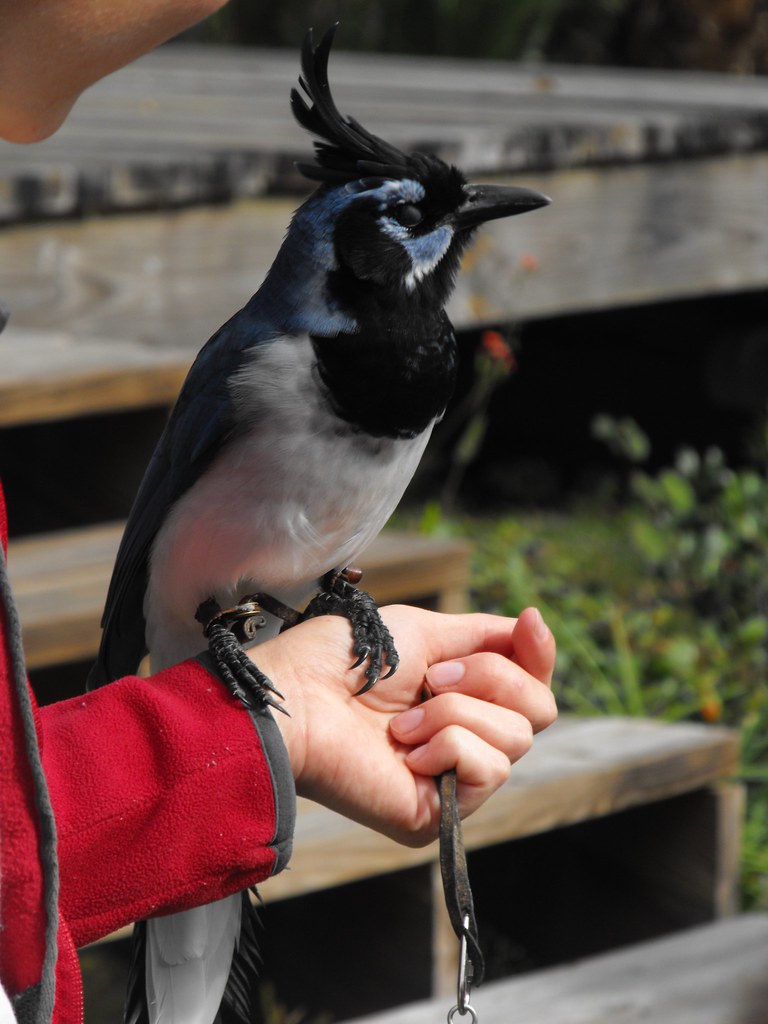
Welcome, fellow adventurers, to a journey that promises to ignite your senses and challenge your perceptions of the natural world. Forget everything you thought you knew about the subtle whispers of the forest; today, we’re diving headfirst into the magnificent, often boisterous, and undeniably brilliant realm of the Jay!
These are not merely birds; they are the high-performance machines of the avian kingdom, each model meticulously engineered by nature for survival, spectacle, and surprising intelligence. From the dazzling blue flash of a backyard visitor to the elusive, crested phantom of the mountaintops, Jays are a symphony of color, sound, and audacious character.
Strap in as we embark on an in-depth exploration of some of North America’s most dynamic Jay species – feathered marvels that, despite their undeniable charisma and crucial ecological roles, often fly under the radar. Prepare to be captivated by their unique engineering, their surprising power-to-weight ratios in the pursuit of a meal, and the sheer joy they bring to the landscapes they dominate.

1. **Blue Jay**
Chances are good that you’ve already encountered this striking avian powerhouse, a bird so vibrant it demands attention. The Blue Jay, a common large songbird, is an unmistakable presence throughout the Midwest and East, though it remains a rare visitor west of the Rocky Mountains. Its brilliant blue markings, complete with white wing-bars and a jaunty crest of feathers, make it truly hard to miss against any backdrop.
Beyond its visual splendor, the Blue Jay is renowned for its distinctive and often boisterous vocalizations. Its loud “jayyy jayyy” call is a telltale sign of its presence, and it produces a wide variety of quite harsh calls using clicks, peeps, ‘caws,’ and whistles. Yet, for all its assertive sounds, the Blue Jay also possesses a gentle fluted song, typically heard during courtship, adding a layer of surprising delicacy to its sonic repertoire.
This species is famously social, often traveling in lively family groups and valuing their territories, particularly during the nesting season. Blue Jays are not shy about making an appearance at seed or suet feeders, and they hold a particular fondness for peanuts, acorns, and beechnuts. Some observers might perceive them as “bullies” at the feeder, but their preference for platform or tray feeders allows them to make a quick exit, a strategic move for a bird of their size and demeanor.
Remarkably adaptable, these birds are not just about food; they also exhibit playful intelligence. Blue Jays have been observed engaging with shiny objects like aluminum or bottle caps, carrying them around, dropping them, and then picking them up again, showcasing a curious and intelligent side to their nature. They are truly an engaging sight, whether feasting on nuts and insects or displaying their unique capacity for playful exploration.
Read more about: 15 Iconic American Musicians Who Defined Generations and Revolutionized Sound
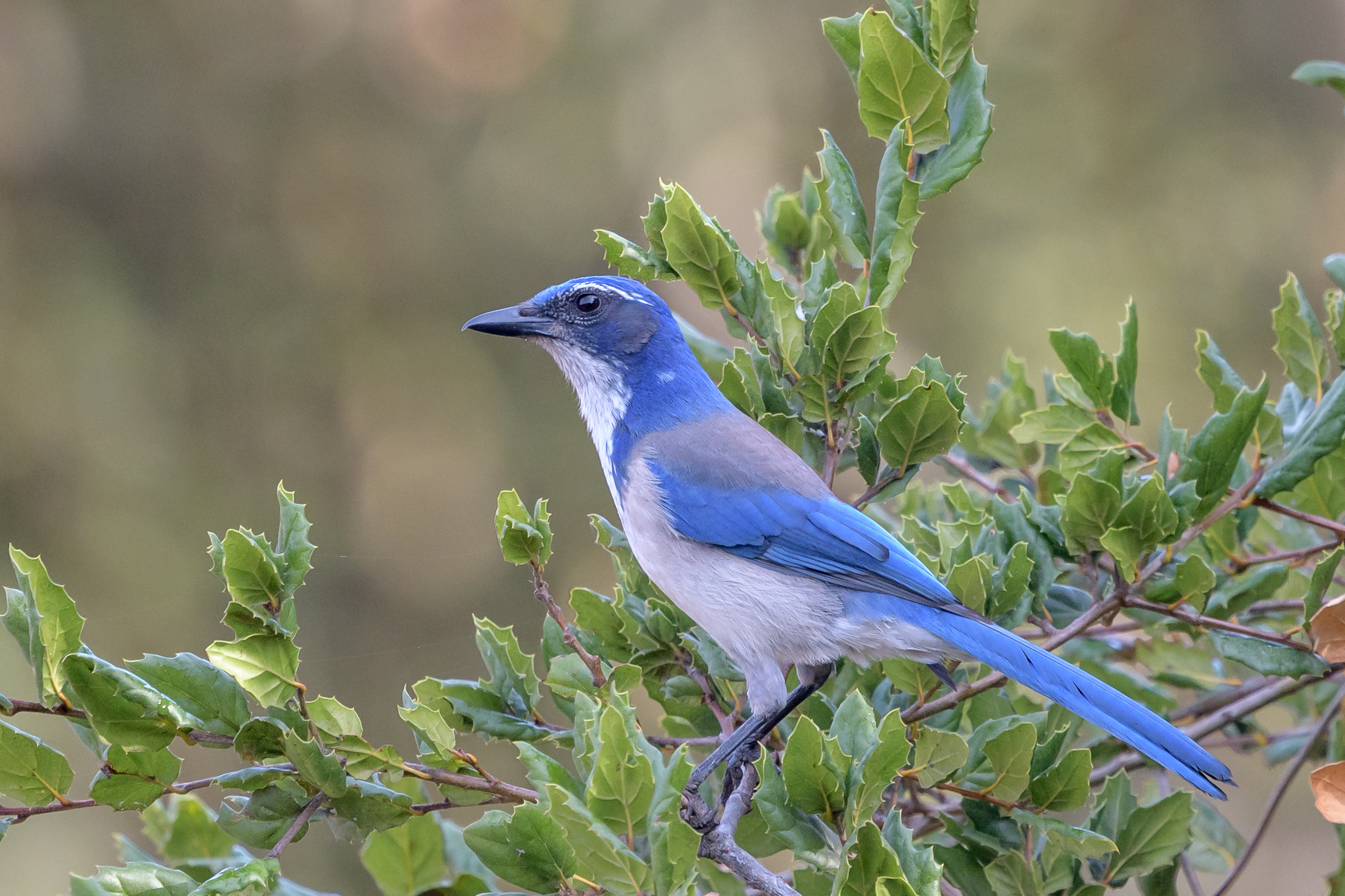
2. **California Scrub-Jay**
Venturing westward, we encounter the California Scrub-Jay, a bold and crestless marvel that commands attention across the lower elevations of the West. This large songbird, visually similar to the Woodhouse’s Scrub-Jay but with more vivid colors, sports a striking combination of blue and gray, accented by a distinct whitish underside and a bright blue breast band. Its long tail and contrasting white throat against a gray back make it easily identifiable.
These adaptable birds thrive in a variety of habitats, from coastal regions and shrubby areas to suburban yards, parks, and oak woodlands along the Pacific Coast, stretching from British Columbia down to Baja California. As omnivores, their diet shifts with the seasons, consuming insects and fruit during the spring and summer, then transitioning to a feast of seeds and nuts—especially acorns—in the fall and winter. They are particularly known for their foresight, diligently burying their favorite food, acorns, for later consumption.
Their vocalizations are as distinctive as their appearance. While they often emit scolding cries, these jays also serenade their mates with sweet, quiet, musical songs, a common trait among many jay species. A truly remarkable and somewhat somber behavior unique to the California Scrub-Jay involves its response to the deceased: they “will screech over the body of a dead jay and invite others to do the same, and this can last up to half an hour,” according to the University of California – Davis. It’s a fascinating display of social intelligence and perhaps even avian mourning.
When it comes to nesting, California Scrub-Jays are diligent artisans. Both parents collaborate to construct cup-shaped nests hidden in oak trees, meticulously crafted from twigs and moss. These sturdy abodes typically house 1 to 5 eggs, which hatch after a 17 to 19-day incubation period. To invite these intriguing birds to your own space, offering sunflower seeds and peanuts at your feeders is an excellent strategy.
Read more about: North America’s Feathered Geniuses: An Insider’s Look at Jays and a Climate-Driven Hybrid Discovery
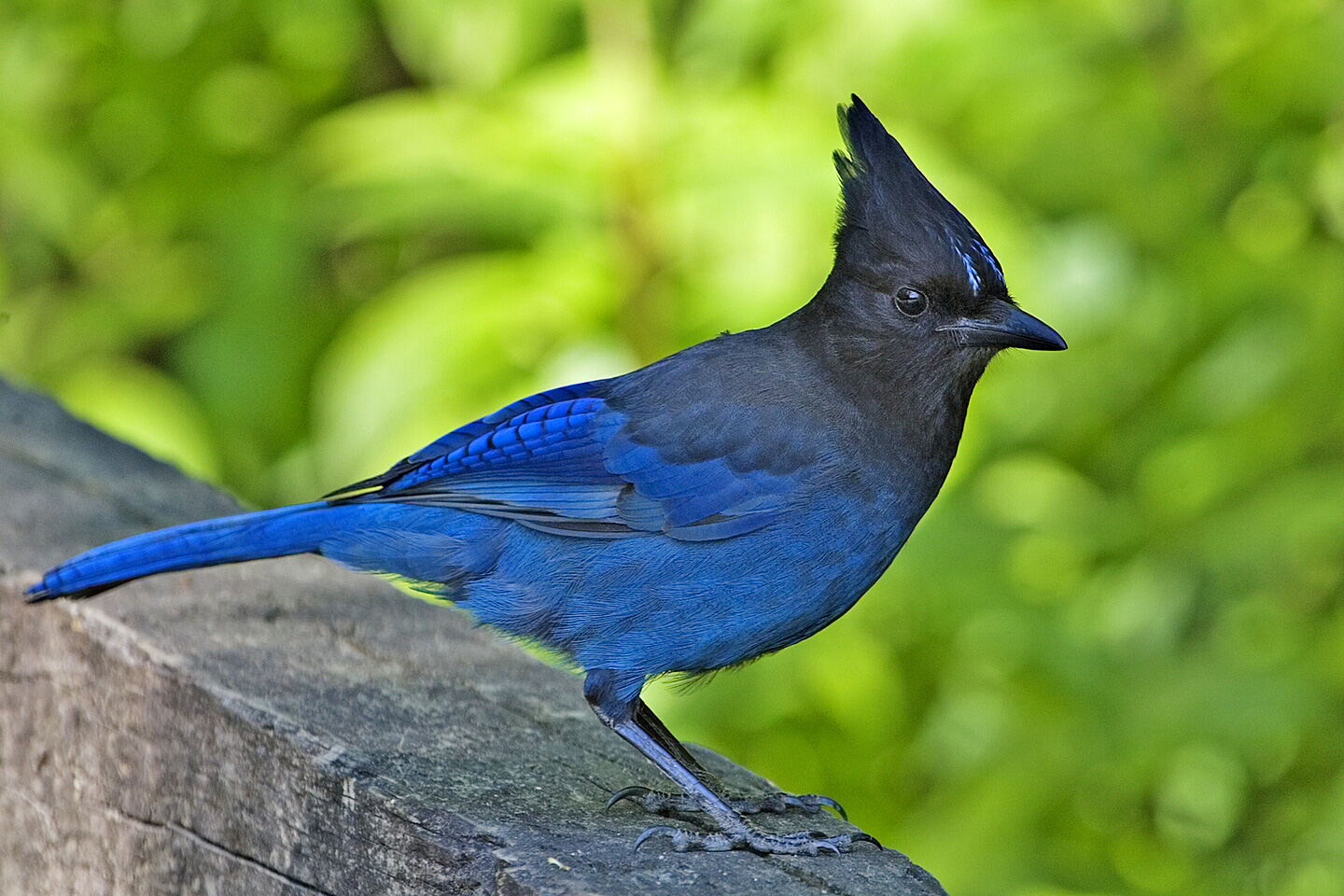
3. **Steller’s Jay**
Prepare for an encounter with the enigmatic Steller’s Jay, the only all-dark jay adorned with a crest, a true mountain spirit of the West. Recognized by its black triangular crest, which stands tall from its head, and the striking contrast of a black head, chest, and back against a deep blue body, this bird is an unmistakable icon of evergreen forests. Adding to its allure are small white or blue spots that grace its forehead, subtle yet captivating details.
These impressive birds are frequent residents of the mountainous West, where they typically explore the higher canopies with a quick “shek-shek-shek” call that often signals their presence. However, they are not averse to swooping into backyards or even perching around picnic tables and campgrounds, demonstrating an opportunistic side. Steller’s Jays are highly social, traveling in flocks except during their nesting period, and their range extends across western US states, western Canada, Mexico, and Central America.
The Steller’s Jay is a culinary adventurer, eating most things it can forage for. Its varied diet includes a bounty of insects, seeds, berries, eggs, and even nestlings. But beware: these clever birds have been known to “nibble on unattended picnic lunches, too!” and can be quite a nuisance around garbage, showcasing their remarkable adaptability and intelligence in securing a meal. Their vocalizations are equally diverse, featuring “kaw” sounds, fast two-toned calls, peeps, and harsh guttural sounds, alongside an impressive ability to mimic other birds, sprinklers, and even alarms.
Nesting is a strategic affair for the Steller’s Jay. Their nests are usually built high near the top of conifer trees, constructed from leaves and plant material held together by mud, and carefully lined with soft pine needles for comfort and insulation. To attract these magnificent, crested explorers to your outdoor sanctuary, offering peanuts and suet can prove to be an irresistible invitation. It’s a small price to pay for the privilege of observing such a dynamic and intelligent avian resident.
Read more about: North America’s Feathered Geniuses: An Insider’s Look at Jays and a Climate-Driven Hybrid Discovery

4. **Woodhouse’s Scrub-Jay**
Moving inland to the Southwest, we encounter the Woodhouse’s Scrub-Jay, often considered the “Blue-Jay of the Southwest.” This species presents a delightful blend of blue and gray, with a lighter blue and dark gray back transitioning to a light gray underside. Its long, blue tail is a prominent feature, though it lacks the jaunty crests of its more flamboyant cousins, the Blue Jays and Steller’s Jays. It’s also notably duller in color than the California Scrub-Jay, with only a small, subtle necklace distinguishing its appearance.
These intriguing jays are permanent residents of the inland regions of the southwest US states and Mexico. They thrive in specific habitats, preferring wooded areas abundant with pinyon-juniper trees and other scrubby terrains. This preference underscores their adaptability to arid and semi-arid environments, making them a fixture in the unique landscapes of their range.
The Woodhouse’s Scrub-Jay’s diet is a testament to its resourcefulness, adapting with the seasons. During the warmer months of summer, insects and various fruits form the bulk of its sustenance, providing essential nutrients. As winter approaches and resources shift, their diet cleverly transitions to nuts and seeds, showcasing a keen ability to utilize what the environment offers throughout the year.
However, it’s their fascinating and somewhat audacious behavior that truly sets them apart. Woodhouse’s Scrub-Jays are renowned as “thieves that steal food from other birds stores,” a particularly noteworthy trait. They are especially adept at pilfering acorns from the carefully curated “granary tree store” of Acorn Woodpeckers, a testament to their intelligence and opportunistic nature. Their nests are simple platforms of twigs, lined with moss and grass, often hidden within their preferred wooded areas, a stark contrast to their cunning foraging strategies. Attracting them to your backyard is straightforward; they readily take sunflower seeds and peanuts.
Read more about: North America’s Feathered Geniuses: An Insider’s Look at Jays and a Climate-Driven Hybrid Discovery
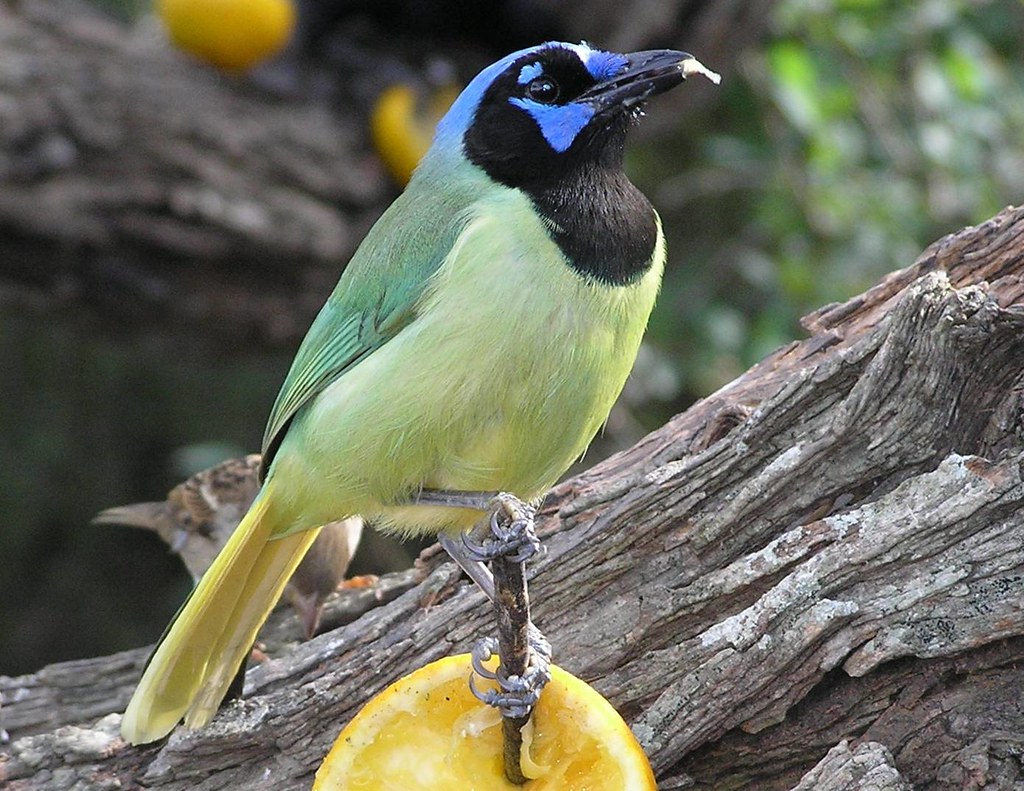
5. **Green Jay**
Prepare to be dazzled by the tropical vibrancy of the Green Jay, a species that truly lives up to its name with a fantastic mix of bright green, blue, and black. Its dark green back, paler belly, and incredibly bright blue and black head create a visual spectacle that is nothing short of breathtaking. This vividly colored bird is a rare and coveted sighting in the United States, typically found only in the southernmost reaches of Texas.
Historically, the Green Jay has primarily inhabited the coasts of Mexico, Central America, and South America. However, recent observations suggest a remarkable expansion of its range, with sightings now extending northward to Laredo, Corpus Christi, and even San Antonio—nearly 300 miles north. This northward creep is not merely interesting but potentially significant. As noted by Brian Stokes, a doctoral student of biology at the University of Texas at Austin, in a study published in *Ecology and Evolution*, “We think it’s the first observed vertebrate that’s hybridized as a result of two species both expanding their ranges due, at least in part, to climate change,” underscoring the dynamic shifts occurring in avian territories.
These exquisite birds prefer woodlands near streams and water, where they forage for a diet rich in insects, fruits, and seeds. If you’re fortunate enough to visit Texan wildlife refuges, you might catch a glimpse of them enjoying offerings like oranges, grape jelly, peanuts, sunflower seeds, and corn at bird feeders. Water is also a significant draw for these tropical beauties, making a birdbath an inviting feature.
Beyond their stunning appearance and expanding territory, Green Jays are among the few bird species known to use tools. They will ingeniously “use sticks to help pry up bark to get to food below,” a testament to their advanced problem-solving skills. Their vocal repertoire is as varied as their plumage, encompassing several fast calls that can be ‘Kaw’-like, buzzing, clicking, peeps, and even screams, adding to their vibrant personality. Their nests are simple twig constructions lined with moss, leaves, and grass, and remarkably, even their eggs exhibit a greenish tint, perfectly complementing their verdant lives.
Read more about: 15 Iconic American Musicians Who Defined Generations and Revolutionized Sound
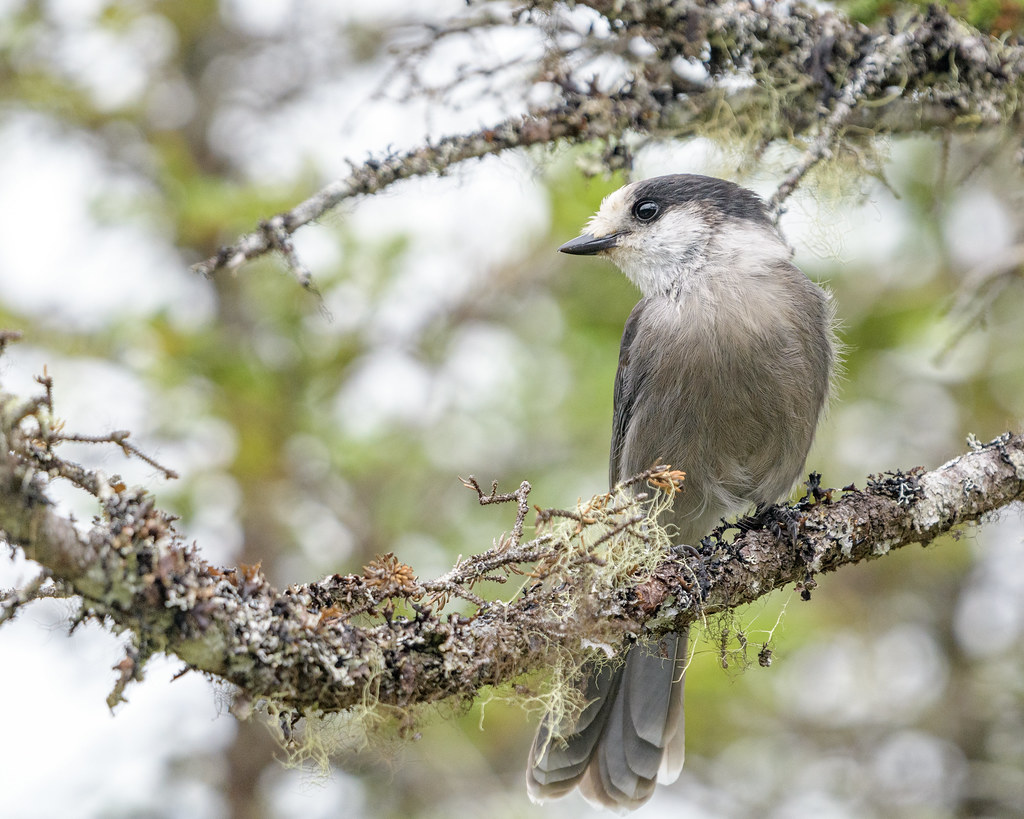
6. **Canada Jay**
Shifting our focus to the cooler, more serene landscapes of the far North, we encounter the Canada Jay, formerly known as the Gray Jay. This endearingly tame and undeniably cute bird stands apart from its boisterous relatives with its fluffy gray and white plumage, complemented by a white head and throat, and a distinctive black band running around the back of its head. Unlike many jays, the Canada Jay possesses a small bill, perfectly suited for twisting off meat rather than cracking hard nuts.
These fascinating jays are permanent residents of the boreal, coniferous forests of Canada, Alaska, and the high western mountains of the US, particularly thriving where spruce trees are common. Their legendary tameness is well-documented; they are famed for approaching hikers, hunters, and campers, often eating directly from a human hand. This fearless demeanor, however, belies a survivalist’s edge, as they are opportunity feeders, consuming a wide variety of food, including insects, berries, and carrion.
The Canada Jay’s seemingly sweet nature harbors a “deadly side”: they “will kill baby birds for food and even hunt smaller species such as chickadees and warblers.” This survival strategy in harsh northern environments is a stark reminder of the complexities of the natural world. They are less drawn to nuts and seeds at feeders, preferring meat, bread, suet, and other soft foods, which they meticulously cache.
Their food-caching technique is truly remarkable. Canada Jays “produce special saliva, which they use to mold food into a sticky blob, and then they stick it in a hiding place like gum under a desk,” often in bark or branches rather than in the soil. This ingenious method allows them to secure sustenance for the long, cold winters. Unlike their more vocal kin, these calm jays tend to be more silent, though they do possess a gentle whispered song alongside harsher calls and clatters, and can even imitate other species. They nest early in conifers, even when snow is still on the ground, building feather-lined nests on the south side of trees for warmth. Attracting them is relatively easy, as they will readily eat most kinds of bird food from tube or platform feeders.
Read more about: North America’s Feathered Geniuses: An Insider’s Look at Jays and a Climate-Driven Hybrid Discovery

7. **Pinyon Jay**
Now, let’s shift gears and discover a western species that truly embodies resilience and communal spirit: the Pinyon Jay. These magnificent birds are cloaked in an almost uniform blue, with backs a touch darker and bellies a paler shade, complemented by white throats and noticeably shorter tails. Unlike some of their more flamboyant cousins, they proudly wear no crests, and while males and females share this striking blue livery, juveniles may exhibit a charming grayish-blue hue.
Regrettably, the Pinyon Jay faces a dramatic decline, with an estimated 85% reduction in population since 1970. This staggering figure is largely due to the transformation of their vital tree and shrubby habitats into grazing lands. Yet, these jays persist as permanent residents of the inland western US states, particularly in pinyon-pine forests, a habitat that is not merely a home but a namesake and a cornerstone of their very survival.
These are truly the communal foragers of the avian world, often observed roaming in vast, boisterous flocks, a testament to their strong social bonds. Their diet is as specialized as it is essential, revolving around the rich, meaty pinyon pine nuts. However, they’re no strangers to adaptability; when pine nuts are scarce, they readily embrace juniper berries, acorns, and even small animals like lizards, baby birds, and insects. These opportunistic feeders communicate with distinct nasal caws, a constant chatter that keeps their large groups connected across the landscape.
When it comes to nesting, Pinyon Jays demonstrate meticulous craftsmanship. Their nests are robust constructions of sticks and grass, carefully built within the protective branches of pine trees, and lovingly lined with soft feathers and animal hair for comfort and insulation. A fascinating adaptation allows them to thrive in these resinous environments: they lack feathers over their nostrils, a clever evolutionary trick to prevent sticky pine pitch from accumulating and hindering their senses.
Read more about: North America’s Feathered Geniuses: An Insider’s Look at Jays and a Climate-Driven Hybrid Discovery

8. **Florida Scrub-Jay**
Next up, we have a truly iconic and tragically vulnerable species, the Florida Scrub-Jay, a bird that is literally a piece of Florida’s irreplaceable natural heritage. These stunning jays present a palette of blue, with gray bellies, backs, and foreheads, crowned by long blue tails. Notably, they forgo a head crest, distinguishing them from other jays. While males and females share this distinctive appearance, juveniles are typically grayer, with heads a softer shade of gray.
As their name proudly proclaims, Florida Scrub-Jays are unique, found exclusively in the sunny state of Florida, where they remain year-round, never migrating. They are an endemic species, meaning their entire native range is confined to this specific locale. Their preferred habitat is relatively open, sandy scrubby areas, rich with oak scrub – a landscape as unique and precious as the birds themselves.
Their diet primarily consists of insects and berries gleaned from the ground, but their true passion lies with acorns. These jays are master provisioners, with a single bird capable of caching an astonishing 6,000 or more acorns each year, diligently breaking them apart by holding them in their feet and hammering with their bills until they crack open. Unfortunately, these incredible birds are listed as vulnerable on the IUCN Red List, facing immense pressure from housing development, which relentlessly carves up their crucial scrub oak homelands into ever-smaller fragments.
Florida Scrub-Jays are highly social birds, renowned for forming cooperative flocks that often include young from the previous year. These communal groups are not merely social gatherings; they play a vital role in protecting against predators and collectively feeding their young, showcasing an impressive level of social intelligence and cooperation. Their vocalizations are quite harsh, and they spend a considerable amount of time calling to each other, maintaining constant communication within their cooperative units. Stocking feeders with peanuts can be a small but significant way to help sustain these remarkable and threatened birds.
Read more about: North America’s Feathered Geniuses: An Insider’s Look at Jays and a Climate-Driven Hybrid Discovery
9. **Black-throated Magpie-Jay**
Prepare to be utterly captivated by the audacious styling of the Black-throated Magpie-Jay, a bird that commands attention with its striking presence and dramatically long tail. This large avian showstopper boasts a conspicuous black crest that exudes confidence, complemented by a bold black throat. A vibrant patch of blue graces its eyebrows and extends under its eye, while its wings shimmer with blue and its tail is elegantly tipped with white, contrasting beautifully with its pristine white underside. Further south in their range, some variations sport whiter throats with a more delicate black band.
These magnificent birds are at home in the tropical lowland forests, plantations, and partially open areas of North America, where tall trees and hedges provide ideal perching and foraging grounds. They tend to steer clear of overly humid woodlands, preferring a slightly drier clime. Like many members of the intelligent crow family, the Black-throated Magpie-Jay is a true omnivore, its diet a thrilling mix of both plant and animal matter.
Their culinary preferences lean towards seeds and nuts, but they are also known to expertly hunt insects and even smaller birds, demonstrating their predatory prowess. A unique and rather charming fun fact about these birds is their dining etiquette: they prefer to eat standing up, skillfully using one foot to hold their food firmly while the other foot delivers morsels to their mouth. Their nests are typically crafted from sticks and twigs, thoughtfully lined with softer materials, where they lay up to seven eggs, ready to continue their striking lineage.
Read more about: North America’s Feathered Geniuses: An Insider’s Look at Jays and a Climate-Driven Hybrid Discovery
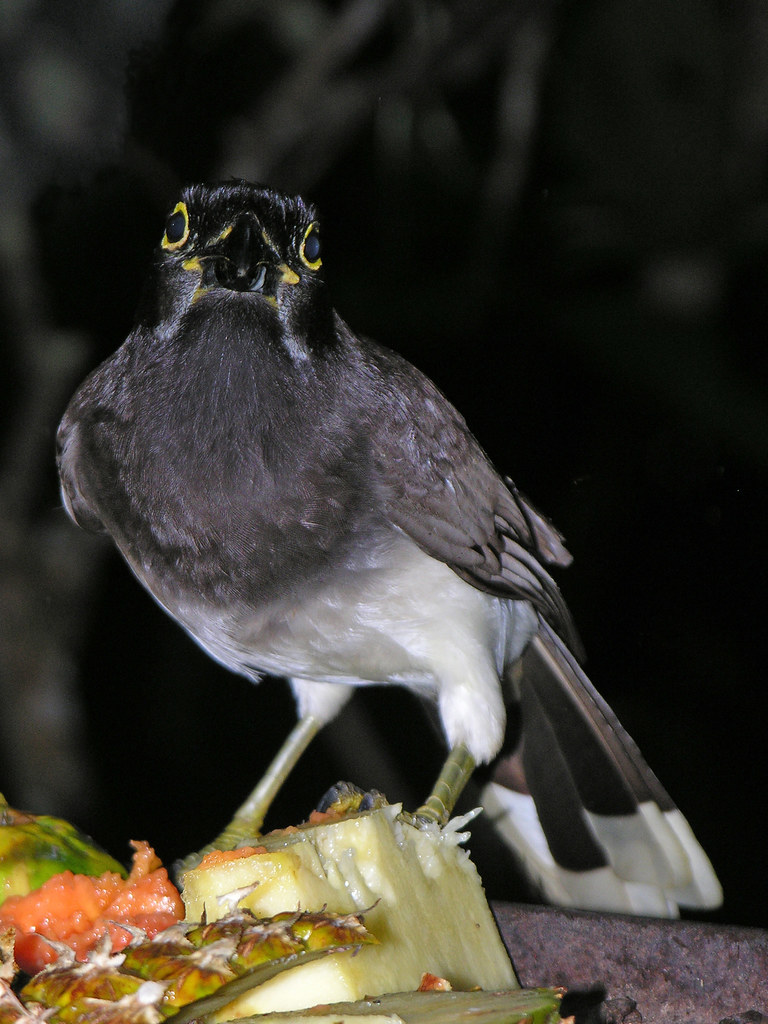
10. **Brown Jay**
Meet the formidable Brown Jay, a true titan of the North American Jay family, proudly holding the title of the largest among them. These impressive birds can be entirely dark brown, with a subtle lighter tint on their backs, or in certain southern species, they showcase striking white bellies and elegant white tips on their tail feathers. Adult Brown Jays are characterized by sleek black bills, legs, and feet, while their young carry a charming distinction with bright yellow legs and eye-rings.
While predominantly found across Mexico and Central America, the Brown Jay extends its northern reach into the southernmost tip of Texas, offering a rare glimpse of its grandeur in the US. These birds gravitate towards dense woodlands, particularly those adorned with tall trees and conveniently located near water sources, creating a verdant and thriving environment.
As resourceful omnivores, their diet is as varied as their habitat, encompassing insects and rodents alongside a bounty of berries, fruits, seeds, and even nectar. They are adaptable foragers, equally at home scouring the ground for sustenance or nimbly hopping from branch to branch in pursuit of their next meal. Their social structure is also quite fascinating: Brown Jays are known for their communal nesting habits.
Multiple adults collaborate to construct large, shared nests, typically nestled within a forked branch of a tree or a low-lying shrub. These cup-shaped abodes, fashioned from sticks and twigs, are meticulously lined with weeds and other soft materials to cradle their precious eggs. They can lay an impressive clutch of up to eight eggs, which typically hatch after about twenty days, with the young venturing from the nest approximately four weeks later, often still cared for by the collective flock.
Read more about: Navigating Movie Theater Bag Policies: An In-Depth Look at Why They Exist and What Patrons Need to Know

11. **Mexican Jay**
Journey with us now to the mountainous regions of Arizona, New Mexico, and Texas, where we encounter the Mexican Jay, a bird of quiet elegance and profound social complexity. These medium-sized jays are distinguished by their pale, bluish-gray plumage, often appearing lighter in color compared to other jays, complemented by a grayish upper neckline and chest. True to their understated charm, they possess a small, black bill and, like several of their western cousins, are notably crestless.
Mexican Jays, sometimes referred to as Mexican Scrub-Jays, thrive in the open oak and pine woods and forests of their range. They are perhaps best known for their exceptional social dynamics, consistently maintaining cohesive groups even during nesting season. This communal spirit extends to their diet, which is a diverse feast of insects, small reptiles, and even the eggs and young of other birds. As winter approaches, their diet cleverly transitions to a reliance on acorns and pine nuts, diligently stored during the preceding seasons, a testament to their foresight.
Their unique vocalizations, particularly their nasal wink calls, are a hallmark of their communication, helping to distinguish them within the diverse jay family. These calls are not just for social cohesion; a fascinating fun fact reveals that Northern Flickers have been observed following Mexican Jays in flight during migration, seemingly leveraging the Jays’ loud, shrill voices as an early warning system against potential predators, highlighting an intriguing interspecies relationship.
Nesting is a cooperative endeavor for Mexican Jays, with both males and females contributing to the construction of their arboreal homes. These nests, carefully built from sticks and twigs and lined with rootlets and plant materials, are strategically protected by thick leaves within trees. They typically lay around five eggs, which incubate for approximately eighteen days, with the young fledging after about twenty-five days, often remaining under the care of the flock for several weeks, further solidifying their strong communal bonds.
Read more about: North America’s Feathered Geniuses: An Insider’s Look at Jays and a Climate-Driven Hybrid Discovery
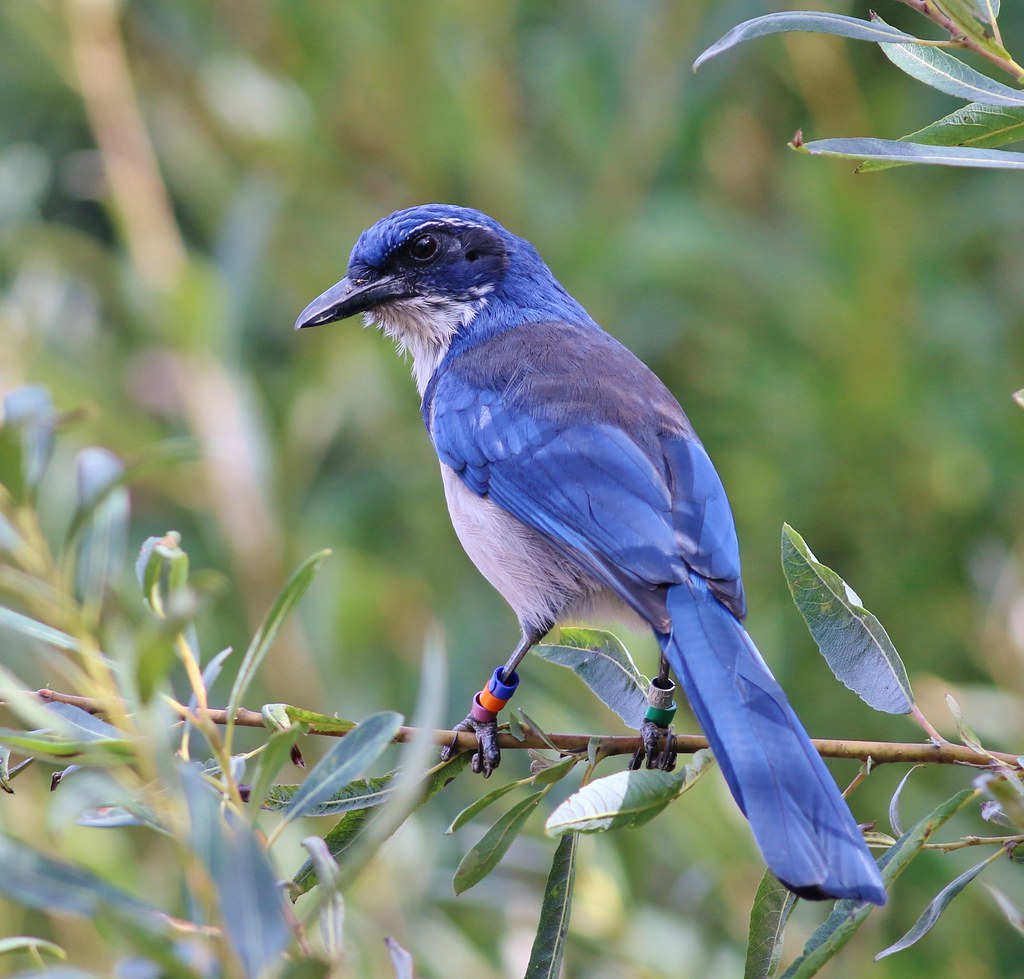
12. **Island Scrub Jay**
Finally, we arrive at the exclusive realm of the Island Scrub-Jay, a magnificent bird whose entire existence is tied to a single, pristine location. These large, brightly-colored jays bear a striking resemblance to the California Scrub-Jay, but with a richer, darker coloration to their feathers. They showcase a vibrant blue from head to tail on their backs, complemented by gray on the top of their wings and a distinct white throat.
As their name perfectly suggests, Island Scrub-Jays are permanent residents of California’s Santa Cruz Island, a truly unique endemism as they never migrate. Their island sanctuary is dominated by sprawling oak woodland and chaparral, punctuated by several streamside thickets and other trees, creating a diverse and bountiful ecosystem perfectly suited to their needs. Their diet is robust and varied, including a healthy portion of insects, small lizards, mice, and even the eggs and young of other smaller birds.
Come fall, these jays partake in a grand feast of acorns, expertly using their strong beaks to crack open the tough shells. While specific data on their vocalizations is less detailed in our context, their overall behavior mirrors the intelligence and resourcefulness common among jays. When it comes to nesting, Island Scrub-Jays exhibit the meticulous craftsmanship of their kin.
Their sturdy nests are carefully hidden within oak trees, built from twigs and meticulously lined with rootlets and animal hair, ensuring a soft and secure interior. They typically lay around four eggs, which hatch after about eighteen days. A remarkable fun fact underscores their unique status: because the Island Scrub-Jay never leaves Santa Cruz Island, it holds the distinction of having the smallest range of any North American bird, making every sighting a truly special event.
Read more about: North America’s Feathered Geniuses: An Insider’s Look at Jays and a Climate-Driven Hybrid Discovery
And so, our thrilling journey through the diverse world of North America’s Jays concludes. From the bold forest dwellers to the island exclusives, each species is a testament to nature’s ingenious engineering, showcasing remarkable intelligence, sophisticated social dynamics, and an unwavering spirit of survival. These are not merely birds; they are the vibrant, boisterous, and often surprisingly delicate characters that animate our landscapes, each with a story of adaptation, resilience, and captivating charm. Their continued presence is a powerful reminder of the rich tapestry of life that flourishes around us, a spectacle worth celebrating and protecting for generations to come.