
The relentless pursuit of the “top” is a driving force across all sectors of innovation, from groundbreaking design principles to cutting-edge automotive technology. We are consistently seeking the paramount, the most advanced, and the undeniable market leaders. In the fiercely competitive arena of electric vehicles, identifying the “top” contenders necessitates a rigorous and meticulous evaluation, much like delving into the very essence of language itself to understand what truly constitutes superiority.
Before we can fully appreciate the attributes that define a “top” electric car, it is imperative to embark on a foundational journey into the fundamental nature of the word “top” itself. This seemingly simple, monosyllabic term carries an extraordinary array of meanings, encompassing diverse positions, inherent qualities, and even intricate social dynamics. Our exploration, much like a comprehensive vehicle performance review, will dissect the linguistic mechanics of this pivotal word with expert precision and authoritative detail.
Drawing exclusively from comprehensive linguistic records, this in-depth analysis will meticulously examine twelve distinct manifestations of “top” within the English lexicon. We will scrutinize its deep etymological roots, its varied grammatical applications, and its profound evolution through diverse contexts. This methodical approach will ensure a foundational understanding that illuminates the true scope and significance of being “at the top” in any domain.

1. **The highest or uppermost part of something.**At its most fundamental, “top” denotes the highest or uppermost part of any given entity. This core definition establishes a clear spatial understanding, positioning an object or element above all others within a particular frame of reference. It’s a concept that is immediately intuitive, conveying a sense of finality and apex in vertical extent, much like the summit of a mountain.
This primary sense traces its roots deeply into linguistic history, showcasing its enduring descriptive power. The English “top,” or “toppe,” emerged from Middle English, which itself was derived from the Old English “topp.” This ancient term encompassed a rich array of meanings, including “highest part,” “summit,” “crest,” and even more specific items like a “tassel” or a “tuft.” Such historical breadth underscores its enduring utility in describing apex points across varied contexts.
The Germanic lineage further solidifies this foundational meaning, demonstrating a shared linguistic heritage. Connections can be drawn to Proto-West Germanic “*topp*” and Proto-Germanic “*tuppaz*,” which originally meant “braid” or “pigtail”—an intriguing link to the uppermost part of a woven structure. Cognates found in other European languages, such as Dutch “top” (summit, peak) and German “Topp” (top of a mast), strongly echo this shared conceptual ancestry.
Literary examples provided within the linguistic records beautifully illustrate this precise usage, grounding the definition in practical application. Consider the vivid image: “His kite got caught at the top of the tree,” which perfectly captures something reaching its vertical limit. Another illustrative instance states, “The linen-press and a chest on the top of it formed, however, a very good gun-carriage,” precisely placing one object upon the highest surface of another, solidifying this elementary and critical definition of spatial positioning.
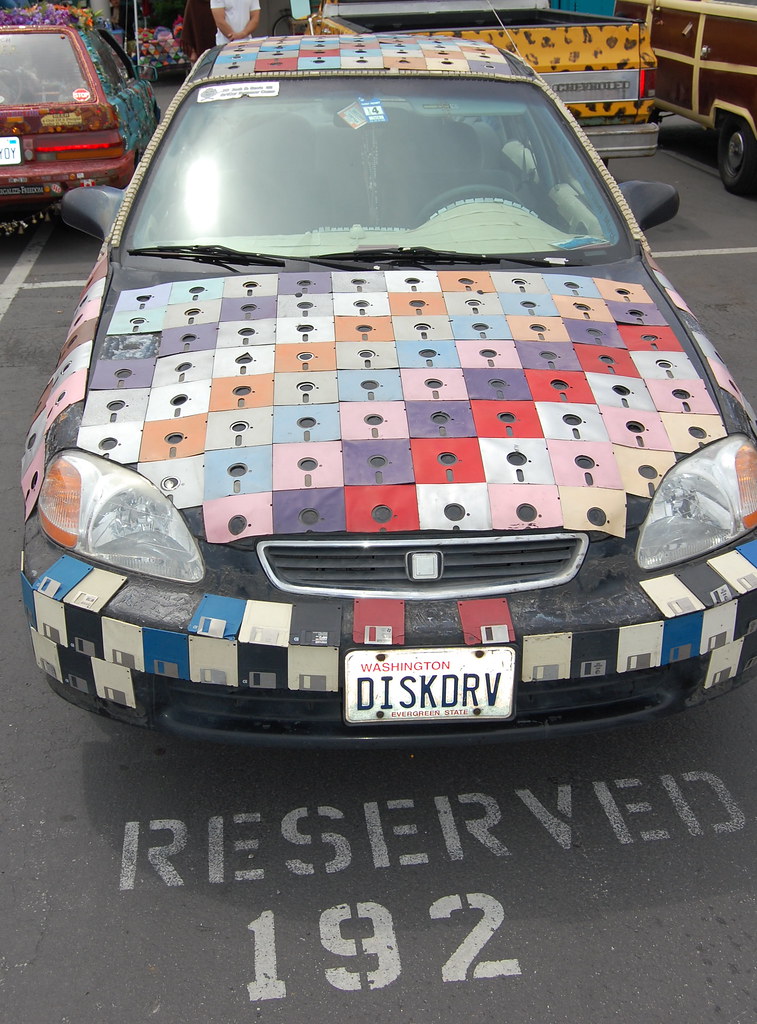
2. **The part of something that is usually highest or uppermost (irrespective of present orientation).**
Expanding beyond a strictly contextual “highest point,” “top” also expertly refers to the inherent uppermost part of an object, regardless of its current physical orientation. This crucial distinction highlights a recognized, default “top” that retains its intrinsic identity even when the object is temporarily reoriented. It speaks to an intrinsic design or a conventional understanding rather than merely an immediate, real-time spatial arrangement.
This definition is fundamentally crucial for understanding how we conceptualize and interact with objects that can be moved, rotated, or manipulated. The context provides a remarkably clear illustration of this principle in action: “We flipped the machine onto its top.” Here, “its top” refers unequivocally to the part of the machine *designated* as its top, even though it may momentarily be resting on that surface and therefore not be the “highest” point in that particular instant. This showcases its inherent design focus.
Such nuanced understandings are vital in technical discourse, where specific components and orientations are identified by their conventional, rather than momentary, positions. The example, “To mount the V8, I simply placed it on its top, and then prepped the mobo/CPU for installation (applied thermal compound),” extracted from a technical review, demonstrates how this consistent understanding is meticulously applied in practical, hands-on tasks, ensuring a reliable recognition of the ‘top’ irrespective of temporary positioning. This level of detail is paramount in precise technical communication.
This linguistic facet brilliantly highlights an anthropocentric element in language; we assign a “top” based on typical use, design, or conventional handling, which is a crucial detail for clarity in instructions or complex descriptions. Whether for assembling intricate machinery or articulating specific physical states, this stable identifier ensures consistent and unambiguous communication about an object’s intrinsic form and intended orientation.

3. **The uppermost part of a page, picture, viewing screen, etc.**In the ever-expanding realms of digital and print media, “top” expertly takes on a specialized meaning, referring specifically to the uppermost region of a page, a picture, or any viewing screen. This application is foundational to how we instinctively navigate and interpret visual information, consistently acting as a stable marker for the beginning or the primary segment of presented content.
This precise definition underscores the critical importance of visual hierarchy and intuitive user interface design in conveying information effectively and efficiently. The term “head” is explicitly offered within the context as a synonym when referring to a page, clearly indicating this specific, formalized application of “top.” Conversely, the “foot” symmetrically marks the opposite end, demonstrating a balanced linguistic understanding of these defined visual spaces.
The undeniable practical utility of this definition is abundantly evident in common instructions and standardized informational displays that guide our daily interactions. The context states, “Further weather information can be found at the top of your television screen,” indicating a standard and expected placement for supplementary data. Similarly, “Headings appear at the tops of pages” exemplifies a universal convention for organizing written material, making content instantly navigable and comprehensible.
This specific use of “top” has become profoundly ingrained in our daily interactions with media and technology, forming an indispensable part of our digital literacy. It provides an unvarying point of reference for information display, allowing users to quickly orient themselves and locate crucial details with minimal effort. Without such clear linguistic distinctions, the organization and consumption of visual data would be far more ambiguous and significantly less efficient.

4. **A lid, cap, or cover of a container.**The versatile term “top” also functions as a noun to denote the essential functional covering of a container—specifically, a lid, cap, or seal expertly designed to enclose or protect its contents. This meaning is inherently practical and utilitarian, emphasizing the crucial role of the “top” in containment and preservation, a critical aspect of everyday functionality and product integrity.
Synonyms meticulously provided within the linguistic data, such as “cap” and “coverlid,” powerfully confirm this specialized usage, highlighting its precise role as an external fitting that completes a vessel. The explicit instruction, “Put a top on the toothpaste tube or it will go bad,” offers a clear and universally relatable example of this function in action, underscoring its profound importance in maintaining product integrity and hygiene.
This definition extends beyond the simple act of closure, often implying a critical degree of security, freshness, or protection against external elements. The presence or absence of a “top” can powerfully signify whether a product is securely sealed, deliberately open, or unfortunately compromised. It is a small yet remarkably crucial component that speaks volumes about the meticulous engineering and thoughtful design of packaging across a vast array of industries.
The widespread and consistent application of this meaning across different types of containers, from common household items to complex industrial vessels, makes it a robust and utterly indispensable part of the English vocabulary. It brilliantly illustrates how a single, adaptable word can evolve to describe both abstract spatial concepts and concrete functional objects, precisely adapting to diverse human needs and technological advancements.
Read more about: Beyond the Brick Box: Unpacking the ‘Weird’ World of Classic Car Storage Options

5. **A garment worn to cover the torso.**In the dynamic and ever-evolving landscape of contemporary fashion, “top” colloquially refers to a specific piece of clothing meticulously designed to cover the torso. This usage captures an impressively broad category of apparel, encompassing everything from casual t-shirts and elegant blouses to sophisticated sweaters, serving as an exceptionally versatile term in discussions of personal style and wardrobe choices.
This modern and distinctly sartorial application of “top” stands in fascinating contrast with its earlier, more literal and spatial meanings, brilliantly demonstrating the profound semantic evolution of language. The context clearly offers “bottom” as an antonym, which in this clothing sense, refers to garments worn on the lower body, such as trousers or skirts, thereby establishing a complete and intuitive pairing in clothing terminology.
Practical examples meticulously provided within the linguistic data illuminate its common and everyday usage in contemporary conversation. Consider the phrases: “I bought this top as it matches my jeans,” or “I like this pyjama top.” These sentences perfectly reflect how “top” functions as a convenient, all-encompassing term for upper-body wear, effectively simplifying fashion descriptions and purchasing decisions in daily discourse.
The remarkable fluidity of this definition allows for immense variety and specialization, giving rise to numerous derived terms such as “crop top,” “tank top,” and “halter top,” which are all cataloged within the extensive list of related phrases. This adaptability makes “top” an essential and highly descriptive term in the dynamic landscape of fashion, proving its profound capacity to describe a constantly evolving array of designs and styles. It’s a compelling testament to the word’s practical and descriptive power in modern life.
Read more about: Your Guide to Military-Grade Gear: 16 Indispensable Surplus Items Civilians Can Purchase

6. **A child’s spinning toy; a spinning top.**Diverging significantly from the more common spatial or functional definitions, “top” also specifically designates a familiar and beloved children’s toy: a spinning top. This distinct meaning evokes enchanting images of playful motion and fundamental physics, embodying a unique cultural artifact with its own rich history, diverse mechanics, and universal appeal across generations.
The etymological note provided within the context highlights a particular and intriguing ambiguity regarding this specific sense. It states that “The sense of a spinning toy is separated from this, obscurely related to Dutch top and dop in this sense, against Standard Dutch tol, and French toupie having this sense.” This linguistic separation suggests a unique and somewhat independent trajectory for this specific meaning, clearly distinct from the primary spatial definitions of the word.
Despite this fascinating etymological complexity, the core concept of a spinning top as a toy is universally understood and instantly recognizable. The example given, “The boy was amazed at how long the top would spin,” perfectly captures the enduring essence of this toy’s appeal—its mesmerizing, sustained rotation and the simple wonder it inspires. This illustrates how “top” can denote an object whose primary characteristic is its dynamic, captivating action rather than a static position or a covering function.
The derived term “spin-top” further reinforces and clarifies this particular definition, emphasizing the core action intrinsically associated with the toy’s design and play. It is a compelling testament to how specific, culturally embedded objects can acquire their own dedicated lexical entries, richly contributing to and enriching the already intricate tapestry of the English language with tangible, interactive, and joy-inducing meanings.
Continuing our deep dive into the extraordinary versatility of the English word ‘top,’ we now shift our focus to its more specialized, hierarchical, and even contemporary slang interpretations. Much like evaluating the intricate engineering and market positioning of a groundbreaking electric vehicle, understanding these nuances requires a meticulous examination of how context profoundly shapes meaning. From the pinnacles of social standing to the most fundamental elements of the universe, ‘top’ continues to reveal its unparalleled adaptability and linguistic richness. This segment will meticulously analyze definitions seven through twelve, further solidifying our comprehensive understanding of this pivotal term.

7. **Someone who is eminent.**Beyond merely denoting a physical apex, the word ‘top’ expertly elevates to describe an individual of preeminent standing or exceptional distinction. This application highlights a crucial shift from inanimate positioning to a recognition of human accomplishment and societal influence. It embodies the aspirational quality of excellence, distinguishing individuals who have reached the pinnacle of their respective fields through unparalleled skill, profound insight, or sheer impactful presence.
This nuanced understanding of ‘top’ aligns perfectly with the initial premise of identifying market leaders and paramount contenders, albeit in the human rather than mechanical sphere. Linguistic records demonstrate an archaic, yet powerfully descriptive, usage where ‘top’ signified the ‘chief person; the most prominent one.’ Such historical usage underscores a long-standing tradition of employing the word to denote leadership and distinction within a group or domain.
Consider the illustrative phrase from 1649, where J[ohn] Milton referred to someone ‘to be the top of zealots.’ This example clearly positions an individual as the most ardent, the foremost, or indeed the ‘leader’ among a committed group. It speaks volumes about the capacity of ‘top’ to confer a sense of ultimate authority, influence, and recognition upon a person, marking them as the definitive standard within their community or profession.
This particular manifestation of ‘top’ therefore encapsulates not just a position but a perceived quality—a recognition of superiority in talent, status, or impact. It is a testament to the word’s ability to transcend simple spatial descriptors and capture complex social and professional hierarchies with singular precision, much like a vehicle’s performance metrics define its standing in a competitive market.

8. **The highest rank; the most honourable position; the utmost attainable place.**Expanding on the idea of individual eminence, ‘top’ equally articulates the concept of a superior hierarchical standing or the absolute highest attainable status within any given system or competition. This definition encapsulates the ultimate goal of ambition, representing the zenith of achievement, honor, or market dominance. It is the position everyone strives for, the undisputed first place in any rigorous evaluation.
This powerful sense of ‘top’ is frequently encountered in educational, professional, and competitive spheres, signifying the ultimate level of success. Phrases such as ‘to be at the top of one’s class, or at the top of the school’ immediately convey a sense of academic excellence and superior performance. In the financial realm, the context provides a clear illustration: ‘a top of $18.25 was reached during the week of Sept. 25,’ indicating the highest price point achieved, a critical metric for market analysts.
Literature, too, has long recognized this profound meaning. William Shakespeare, in ‘The Tragedie of Macbeth,’ eloquently speaks of someone who ‘wears upon his baby brow the round / And top of sovereignty.’ This majestic imagery links ‘top’ directly to the ultimate power and prestige of kingship, the supreme position of authority. It underscores how the word conveys not just a high place, but the very essence of paramount rule and ultimate control.
Even in contemporary sports reporting, the word retains its authoritative weight. The context highlights: ‘The Potters are now top of Europa League Group E ahead of back-to-back games with Maccabi Tel-Aviv,’ signifying the leading position in a highly competitive league. This widespread application demonstrates the enduring utility of ‘top’ in conveying supremacy, making it an indispensable term for describing peak performance and ultimate success in a diverse array of human endeavors.

9. **(BDSM) dominant partner in a sadomasochistic relationship or roleplay.**In a more specialized and often intimate context, ‘top’ serves as a precise identifier within the dynamics of BDSM (Bondage, Discipline, Sadism, Masochism) relationships or roleplay. Here, the term refers explicitly to the dominant partner, the individual who takes the leading role in controlling or directing the activities within the dynamic. This usage highlights the word’s capacity to describe roles within complex interpersonal interactions.
This specific application of ‘top’ contrasts sharply with its more general definitions, showcasing its impressive semantic range. The linguistic data meticulously provides synonyms such as ‘dom,’ ‘dominant,’ ‘domme,’ and ‘dominatrix,’ which further articulate the various forms this role can take. The coordinate term ‘bottom’ is also provided, clearly defining the complementary role within such dynamics, thereby establishing a complete and clear conceptual pairing.
To ground this definition in real-world application, the context offers a direct quote from Nancy Wechsler in ‘Gay Community News’: ‘As I went on doing s/m more and more, I found the idea of topping real attractive and so I started to do that. At this point in my life I’m playing top almost all the time.’ This firsthand account powerfully illustrates the personal experience and active adoption of the ‘top’ role within the BDSM community, demonstrating its practical and lived significance.
This specialized interpretation of ‘top’ is a compelling example of how language adapts to describe intricate social and psychological constructs. It underscores the precise vocabulary developed within specific subcultures to communicate complex roles and dynamics, maintaining clarity in sensitive and nuanced interactions, much like technical jargon clarifies complex automotive systems.

10. **(LGBTQ slang) penetrates or has a preference for penetrating during intercourse.**Continuing our exploration into specialized social contexts, ‘top’ also functions as a distinct piece of LGBTQ+ slang, particularly within gay male communities. In this specific usage, ‘top’ refers to an individual who penetrates or expresses a preference for penetrating during ual intercourse. This highlights the word’s evolution to denote sexual roles and preferences, offering clarity within specific communal lexicons.
This slang term provides a concise and universally understood way to describe a particular ual role, acting as an essential component of communication within the LGBTQ+ community. The context provides the synonym ‘(US) pitcher,’ and the coordinate term ‘bottom,’ which denotes the receptive partner. This linguistic pairing allows for clear and unambiguous communication about individual preferences and roles in sexual relationships, facilitating understanding and connection.
An explicit example from the context beautifully illustrates this usage: ‘I prefer being a top, and my boyfriend prefers being a bottom.’ This sentence directly conveys the personal preferences of individuals, showcasing the practical application of ‘top’ in daily conversation. Furthermore, the quote from Paul Mendez’s ‘Rainbow Milk’ adds a narrative dimension: ‘Jean-Alain is a man of great physical strength, and Jesse is sure he is quite a handful for his tops,’ demonstrating its use in describing partners in such roles.
This particular slang usage is a testament to the dynamic nature of language, constantly adapting to reflect and articulate diverse human experiences and identities. It underlines how specific communities create and adopt terms that are deeply meaningful and functional within their unique social fabric, further enriching the vast semantic landscape of the English language.

11. **(slang, vulgar, African-American Vernacular, MLE, MTE) Fellatio blowjob.**Diverging into the realm of modern colloquialisms, ‘top’ has also acquired a distinctly vulgar and explicit slang meaning, particularly prevalent in African-American Vernacular English (AAVE), Multicultural London English (MLE), and Multicultural Toronto English (MTE). In this context, ‘top’ is used as a shorthand to refer to ‘fellatio’ or ‘a blowjob,’ embodying a significant semantic shift that reflects contemporary linguistic trends and cultural expressions.
This usage, while considered vulgar, is undeniably present in various forms of modern media, including music lyrics, where it often contributes to the raw and unfiltered expression characteristic of certain genres. The context explicitly states its meaning and directs to a Thesaurus for synonyms, acknowledging its place within the broader lexicon of informal ual terms. Its inclusion here underscores the comprehensive nature of our linguistic analysis.
The context provides multiple vivid examples, primarily from musical artists, that illustrate this specific usage. Phrases such as J $tash’s ‘Baby gimme neck, you know I want some top’ and King Von’s ‘Just got some top from this stripper bitch’ unequivocally demonstrate this direct and often explicit application. These examples highlight how language can evolve rapidly within specific cultural and subcultural spheres, adopting new meanings that resonate with particular demographics.
This manifestation of ‘top’ serves as a compelling, albeit sometimes uncomfortable, illustration of the dynamic and sometimes explicit evolution of everyday language. It reveals the capacity of a simple word to take on vastly different connotations based on context, audience, and cultural background, cementing its place as a remarkably versatile, if occasionally provocative, term in the modern English lexicon.

12. **(particle physics) top quark.**In a dramatic shift from slang and social dynamics, ‘top’ also holds a highly specialized and fundamental position within the esoteric domain of particle physics, referring to the ‘top quark.’ This scientific application represents the pinnacle of specialized nomenclature, where a common word is repurposed to name one of the elementary particles that constitute matter itself. It underscores the extraordinary capacity of language to categorize and describe the most abstract and complex aspects of the universe.
The top quark is one of six ‘flavors’ of quarks, which are fundamental constituents of matter. The context explicitly provides ‘flavor’ as its hypernym, positioning it within a precise classification system vital to understanding the Standard Model of particle physics. This highly technical usage stands in stark contrast to all other definitions, showcasing the word’s remarkable flexibility across vastly different intellectual landscapes, from the everyday to the subatomic.
This abstract application of ‘top’ exemplifies how a seemingly simple word can be adopted for exceptionally precise scientific nomenclature, demonstrating the boundless capacity of language to adapt for rigorous academic and research purposes. It highlights the rigorous process of naming and classifying the building blocks of reality, a pursuit that demands clarity and unambiguous identification, much like the precise engineering specifications for a high-performance electric vehicle.
Ultimately, the ‘top quark’ reminds us that language is not merely for communication among humans but is also an essential tool for conceptualizing and articulating the most profound secrets of the cosmos. This scientific definition brings our comprehensive linguistic journey full circle, showcasing ‘top’ as a word capable of describing everything from a child’s toy to the highest echelons of power, and even the fundamental particles that compose our very existence.
From the highest points on a mountain to the subtle dynamics of human relationships, and from cutting-edge fashion statements to the elemental components of matter, the word ‘top’ has revealed itself to be a linguistic marvel. Its twelve distinct meanings, meticulously dissected here, underscore a versatility that is truly exceptional. This deep exploration into its semantic landscape mirrors the rigorous evaluation we apply to groundbreaking innovations, demonstrating that whether in language or technology, identifying the ‘top’ requires an unwavering commitment to detail, understanding, and authoritative insight. It is a word that not only marks a pinnacle but also embodies the continuous pursuit of excellence across all dimensions of human endeavor, proving its enduring power and profound significance in the English language.