Modern cars, bless their metallic hearts, are supposed to be marvels of engineering and convenience. With every passing year, manufacturers cram more technology, more sensors, and more digital wizardry into our dashboards and door panels, promising a driving experience that’s safer, smarter, and decidedly more luxurious. It’s a vision of the future where the car practically drives itself, and every interaction is as smooth as a freshly paved highway. But let’s be honest, sometimes that vision feels a lot more like a fever dream.
While we applaud the spirit of innovation—and trust us, MotorTrend has always had an eye toward what’s coming next—it seems automakers might be running a bit low on genuinely useful ideas. Instead of delivering truly groundbreaking advancements, we’re often subjected to an increasingly niche collection of add-ons with rapidly diminishing use cases. It’s not just “get-off-my-lawn” grumbling; it’s a genuine concern about feature bloat, where complexity often overshadows practicality, and the quest for a sleek, futuristic aesthetic sacrifices intuitive functionality.
So, buckle up, because we’ve polled our staff, tested every new car, truck, and SUV, and painstakingly compiled a list of the modern car features that our experts are most ready to be done with. From infuriating touch controls to safety systems that seem to have a vendetta against common sense, these are the top contenders for the title of ‘most useless or annoying’ in today’s automotive landscape. Get ready to nod in agreement, perhaps sigh in exasperation, and maybe even share a knowing chuckle at the expense of these well-intentioned but often misguided innovations.

1. **The Proliferation of Multi-Function and Touch-Sensitive Controls**There’s a prevailing notion in the automotive world that more screens and fewer buttons somehow equates to ‘modern’ or ‘futuristic.’ While a clean, minimalist interior might look sleek in a brochure, in the rough-and-tumble reality of daily driving, it often translates into a nightmare of fumbling frustration. We’re talking about everything from two window switches doing the work of four, as seen in some Volkswagen, Volvo, and Polestar models, to those insidious knobs and touch-sensitive buttons in Kia and Hyundai vehicles that switch between volume and stereo controls to temperature and climate settings with a single, often accidental, tap.
This trend extends to almost every aspect of the cabin. Adjusting air direction through touchscreens, a clever fluid dynamics trick Tesla employs, is needlessly complicated and downright frustrating when you’re trying to keep your eyes on the road. It’s also an expensive engineering choice, adding to the MSRP and making repairs a costly headache if those hidden motors and flaps decide to throw a tantrum. Imagine trying to precisely direct airflow with a swipe while navigating rush hour traffic—it’s a recipe for distraction and annoyance.
Then there are the touch-sensitive steering wheel controls, a particular pet peeve for many. Volkswagen, Mercedes-Benz, and Ferrari are guilty parties here. These aren’t high-tech; they’re simply infuriating. They’re never responsive enough when you deliberately want to use them, yet they’re somehow activated accidentally just by the subtle shift of your hands on the wheel. They do nothing better than traditional buttons and actively introduce driver distraction, making them a prime example of form completely overwhelming function.
This push away from tactile feedback extends to volume controls as well. Swiping or tapping at a touch-sensitive strip to adjust audio in a moving vehicle is a dumb idea. We miss the satisfying, intuitive feel of a volume knob—the kind you could instinctively reach for and twist without ever taking your eyes off the road. The ability to feel buttons depress, and the incremental clicks of round dials reverberating through your fingertips, allowed for adjustments to be made with muscle memory. This is something the modern, minimalist touchscreen simply cannot replicate, often leaving drivers fumbling through menus just to change the temperature or fan speed in some newer EVs, such as Teslas.
Read more about: Beyond the Hype: 14 Car Tech Features That Drive Drivers Absolutely Bonkers (and Make Us Miss Simple Dials)

2. **Hyperactive Active Safety Systems**Active safety systems are designed with the best intentions, aiming to make our roads safer by acting as an extra set of eyes and an electronic guardian angel. However, in practice, many of these well-meaning features often morph into sources of anxiety and frustration, doing more to annoy than to assist. Take, for instance, some Subaru models that seem to beep at you about every little thing, turning a quiet drive into a symphony of admonishment. Or systems that slam on the brakes when you’re backing into your garage, still four feet from the wall, creating unnecessary jolts and heart palpitations.
The problems don’t stop there. Constant false alerts or systems that grab the brakes when there’s no actual danger are common grievances. These glitches are not only startling but they undermine trust in the technology, often leading drivers to simply turn them off, thereby defeating their entire safety purpose. When a safety feature becomes a source of stress rather than assurance, it’s a clear sign that something has gone awry in its implementation.
Bad blind-spot monitoring systems are another culprit in this category. While blind-spot monitoring can be a godsend, especially with thicker roof pillars and rising beltlines, poorly calibrated versions are needlessly frustrating. They freak out if a car is within 100 yards in the next lane, constantly flashing warnings even when there’s no collision risk. If we’re not going to collide, they need to shut up. Adding to the confusion, some automakers put visible turn signal repeaters on door mirrors alongside orange blind-spot warning lights, creating visual clutter that makes it hard to discern which light is blinking when you’re actually trying to change lanes.
Lane departure systems, designed to alert drivers when they drift over lane markings, often prove unreliable and cause more frustration than safety. Similarly, lane keeping assist systems use cameras to identify lane markers and automatically re-center a vehicle that’s drifting. While intended to prevent tragic outcomes, these systems don’t always work properly. They might try to steer you back to the center when you’re intentionally moving outside your lane to pass farm machinery or give a pedestrian extra room. The technology also struggles with faded road lines or obscured visibility due to weather, leaving drivers wrestling for control and questioning if lane assist is even worth the trouble.
Read more about: Beyond the Hype: 14 Car Tech Features That Drive Drivers Absolutely Bonkers (and Make Us Miss Simple Dials)
3. **Obtrusive Driver-Monitoring Systems**In an era where distracted driving is a significant concern, driver-monitoring systems are pitched as a solution, using various methods to detect if a driver is drowsy or unfocused. Some systems monitor behaviors like lane drifting and frequent, sudden steering corrections, while others deploy interior cameras pointed directly at the driver’s face. If detected, warnings escalate from messages and suggestions to take a break, to audible beeps and even steering wheel vibrations. The goal is noble: to reduce the 3,308 fatal accident deaths attributed to distracted driving in 2022, as reported by the NHTSA.
However, the execution often falls short, creating a distraction of its own. Many drivers find these systems overly sensitive, scolding them for actions as simple as glancing over their shoulder to ensure the next lane is clear before merging. Wearing sunglasses, an otherwise innocuous accessory, can cause some camera-based systems to falsely conclude you’re distracted because they can’t detect your eyes. This leads to persistent, annoying warnings that pull attention away from the road, ironically creating the very hazard they’re designed to prevent.
Similarly, bad driver-monitoring systems associated with steering-assistance and hands-free driving often fall short. Most American roads are straight, yet some systems demand that drivers periodically jiggle the steering wheel, even when their hands are already on it and their eyes are on the road. This is obnoxious and unnecessary. Furthermore, some systems are overly aggressive, grabbing at the steering wheel if the car isn’t in the exact center of the lane, failing to account for traffic or objects in the road that might necessitate a slight deviation. At some point, one has to ask if the system itself isn’t a greater source of irritation and distraction than the problem it’s trying to solve.
4. **The Persistent Annoyance of Auto Start-Stop Systems**The auto start-stop system sounds like a brilliant idea on paper. Your car intelligently detects when it’s appropriate to briefly shut off the engine, typically when idling at a traffic light, to reduce emissions and save fuel. Then, it seamlessly restarts when you lift your foot off the brake pedal. According to testing by the Society Of Automotive Engineers, per Consumer Reports, this can lead to an increase in mileage between 7.27% and 26.4%. Cleaner air and less money spent at the pump? What’s not to like?
Plenty, it turns out. One of the primary complaints is that many automakers enable auto start-stop by default, meaning you have to manually turn it off every single time you start the engine if you dislike it. And good luck trying to permanently disable it; automakers often won’t allow this, as it’s crucial for achieving the best EPA mileage figures during testing. It’s an unwanted imposition that forces drivers to engage in an extra step every trip, adding an element of friction to the simple act of driving.
Another significant issue is the delay some auto start-stop systems introduce before restarting the engine. While a minor pause at a red light might be tolerable, it becomes a serious problem in situations where quick action is required, such as turning onto a roadway in an intersection without a light. Even a brief delay after releasing the brake pedal can throw off your timing, potentially compromising safety. As one Subaru owner on Reddit lamented, “The engine restart is exceptionally harsh, causing a jolt every time. The restart is also too slow. By the time my foot is pressing on the gas, the engine is still cranking.” This jolt and delay transforms a supposed fuel-saver into a constant source of irritation and a potential hazard.
Read more about: 12 SUVs to Steer Clear Of: Critical Insights into Models That Age Poorly and Rack Up Repair Bills

5. **Forgetful Vehicle Settings**Drivers personalize their cars. It’s a fundamental part of ownership, tailoring the vehicle to their preferences. They choose which features they want enabled, at what sensitivity, or with what intensity. Whether it’s the climate control, the radio station, driver assistance settings, or even the drive mode, these choices reflect how they want their car to behave. It’s not an unreasonable expectation that these personalizations should stick, remaining exactly as the driver left them when they turn the car off and back on again.
Yet, frustratingly, many modern vehicles seem to suffer from a severe case of digital amnesia. Drivers often find themselves having to reset everything on every single drive, turning what should be a seamless experience into a repetitive chore. This is particularly egregious if the vehicle offers an “individual” or similar settings mode, specifically designed for personalization. If a car has a mode dedicated to individual preferences, it should, by all rights, remember those preferences.
This oversight is more than just a minor inconvenience; it chips away at the overall driver experience. It undermines the feeling of connection between driver and machine, replacing it with a nagging sense of having to constantly re-establish control. The technology exists to save these settings, and it’s a baffling omission when it’s not implemented effectively. A car should adapt to its driver, not the other way around, especially when it comes to fundamental operational preferences.
Read more about: Beyond the Hype: 14 Car Tech Features That Drive Drivers Absolutely Bonkers (and Make Us Miss Simple Dials)

6. **Unnecessary “Power Boost” Modes**Let’s cut to the chase: every vehicle already possesses a perfectly functional “power boost” mode, and it’s called the accelerator pedal. When that pedal is firmly pressed to the floor, it should, by all logic, deliver the maximum available power from the engine. It’s the fundamental, intuitive way we interact with a car to get it to go faster. Yet, some automakers have decided this simple, direct interaction isn’t enough, introducing superfluous steps to unleash a vehicle’s full potential.
We’re looking at you, BMW, Porsche, Hyundai, and Dodge. These manufacturers, among others, sometimes require drivers to press a special button, select a specific drive mode from a menu, or delve into a touchscreen setting just to access what should be immediately available power. This adds an unnecessary layer of complexity and distraction to what should be an instantaneous command. Why complicate something so inherently straightforward?
This isn’t about having different drive modes for varying conditions, which can be useful. It’s about demanding an extra ritual for the car to give you all it’s got, even when your foot is already signaling that’s exactly what you want. It’s a prime example of over-engineering a simple concept, creating a feature that is, by definition, useless because the primary control already performs its function perfectly. It’s akin to needing a special button to turn the steering wheel all the way for a sharp turn—utterly redundant and counterproductive.
Read more about: Beyond the Hype: 14 Car Tech Features That Drive Drivers Absolutely Bonkers (and Make Us Miss Simple Dials)

7. **Inconvenient Key Cards Over Traditional Fobs**In the relentless march towards digital integration, some automakers have decided that the traditional key fob is a relic of the past, opting instead for key cards or pushing drivers towards using their smartphones as keys. The argument often centers on convenience: use your phone, share digital keys with friends or family, and embrace a more streamlined future. But in practice, this technological leap often creates more headaches than it solves, proving that sometimes, the old ways are simply better.
Making people download an app just to unlock the door or run a simple errand when borrowing a car is, frankly, ridiculous. It adds an unnecessary barrier to sharing a vehicle, especially for those who aren’t tech-savvy or don’t want another app cluttering their phone. The idea of a ‘digital key’ sounds sleek, but its real-world implementation often feels like a chore, requiring extra steps and connectivity that might not always be available.
Even worse are the pseudo credit card-style key cards. While compact, they are incredibly easy to lose, even easier to accidentally lock inside the car, and, crucially, often require physical contact with the vehicle to work. This negates the primary convenience of a traditional fob, which allows you to unlock doors or open the trunk from a distance with a simple button press. We get it, innovation is cool, but sometimes the most elegant solution is also the most practical. Just sell us a reliable key fob that anyone can use without additional steps or digital hoops to jump through. It’s a simple request for functionality over a flashy, yet ultimately frustrating, design choice.
Read more about: Beyond the Shadows: An In-Depth Look at Why Modern Cars Are Being Stolen in Broad Daylight

8. **Redundant In-Car Navigation Systems**Call us old-fashioned, but there was a time when a car’s built-in navigation system felt like a genuine marvel of modern technology. Before smartphones became omnipresent, having a dedicated screen in your dash guiding you turn-by-turn was nothing short of revolutionary. It was the future, beamed directly into your windshield, ensuring you never got lost on that pivotal road trip or important business meeting.
Fast forward to today, and these once-indispensable systems often feel like expensive, clunky relics. With popular apps like Waze and Google Maps readily available on our phones, offering real-time traffic updates, accident alerts, and even speed trap warnings, the pre-installed car navigation becomes largely superfluous. We can just “put our phone on a mount and use the GPS on its screen or connect our phones to the car to display its GPS on the car’s touchscreen,” as one astute observation from the context points out. Why pay extra for something your phone already does better, and with more up-to-date data?
While some might argue that a built-in system offers a few less steps for those who struggle with Bluetooth pairing, that’s a pretty weak defense for a feature that often adds a hefty sum to the car’s sticker price. For the vast majority of us, connecting a phone via Apple CarPlay or Android Auto is a seamless, superior experience that leverages the device we already carry everywhere. It’s time for automakers to either integrate these phone-based solutions flawlessly or build navigation systems that truly outclass their mobile counterparts – otherwise, they’re just adding bloat.
Read more about: From Billion-Dollar Bloopers to Daily Drive Disasters: The Top 15 Automotive Tech Fails That Left Drivers Shaking Their Heads

9. **The Pointless Obsession with In-Car WiFi**In the endless pursuit of connectivity, automakers seem to have convinced themselves that what every driver *truly* needs is built-in Wi-Fi. The pitch sounds appealing: constant internet access, great for passengers, especially kids with iPads, and a boon in areas with spotty service. Yet, peel back the glossy marketing, and you’ll find a feature that, for most people, is about as useful as a chocolate teapot in a car wash.
“Is anyone really in dire need of WiFi in their car? You know you can just, I don’t know, use your phone…” This sentiment perfectly encapsulates the core issue. Your smartphone already *is* a mobile hotspot, capable of providing internet access to all devices in the car. Most of us are already paying for robust data plans that make in-car Wi-Fi subscriptions feel redundant and financially illogical.
Because here’s the kicker: many car companies make you pay a monthly fee for this connectivity, often ranging from “$10 to $50 per month.” So, you’re essentially paying *twice* for the same service you already have, just to do it “in a car!” It’s a classic example of feature creep, where a perceived convenience becomes an unnecessary expense, adding nothing truly unique or essential to the driving experience. Just use your phone; your wallet will thank you.
10. **Autonomous Driving Systems (That Need Constant Babysitting)**Ah, the siren song of autonomous driving! Visions of relaxing behind the wheel, letting the car handle the mundane commute while you catch up on emails or perhaps even a quick nap. It’s the sci-fi dream we’ve been promised since the Jetsons, but the reality, as implemented in many modern vehicles, is far from that utopian ideal. Instead, what we often get are “cars with autopilot need constant babysitting,” as the context aptly describes it.
These systems are nowhere near the level where they can be trusted to take full control like in a ’50s sci-fi cartoon. Despite their advanced sensors and cameras, they demand the driver’s unceasing vigilance. “I’m not sure what the point of putting a car on autopilot is if you have to stare at the road and look for possible dangers the entire time,” one frustrated observation from the context states. It’s a fair question. If you still need to be ready to intervene at a moment’s notice, where’s the “autonomous” benefit?
The current iteration feels like a half-baked solution, caught in an awkward limbo between driver assistance and true self-driving. It’s neither fully hands-off freedom nor entirely hands-on control, instead creating a mentally taxing hybrid experience. As the context sarcastically suggests, “And this may be a personal gripe, but what is even the point of a car anymore if you aren’t driving? Just take the bus. Clear the highway for the rest of us.” Perhaps when the technology is truly ready for full autonomy, we can revisit the concept, but until then, these systems often feel more like an expensive, frustrating distraction than a genuine leap forward.

11. **Extremely Bright Yet Dumb Headlights**Ah, the dazzling glow of modern LED headlights! They’re “very impressive,” and the ability to “see better at night is a good thing,” no doubt about it. But in the grand scheme of automotive advancements, they’ve introduced a rather infuriating side effect: they’re “blinding everyone else with super bright headlights.” This isn’t just a minor annoyance; it’s a genuine hazard that turns night driving into a constant game of defensive squinting for oncoming traffic.
The problem isn’t necessarily that the lights themselves are *that* much brighter; as one source in the context suggests, “The Guardian claims that car lights haven’t gotten that much brighter in recent years — rather, cars have become larger.” With the proliferation of SUVs and pickups, those higher-mounted, intensely bright LEDs hit other drivers “right in the face with lights all night long.” It’s a design oversight that disproportionately impacts smaller vehicles and pedestrians, creating a legitimate safety concern.
The most frustrating part? The technology to mitigate this issue already exists. Europeans have enjoyed adaptive headlights on their cars for years, systems that “don’t shine any light at all on other cars, instead bending it around them.” Mercedes-Benz and Audi are explicitly named as manufacturers utilizing this intelligent technology. Yet, “archaic American regulations won’t allow it,” leaving drivers across the pond to suffer the consequences of outdated rules. It’s high time we embraced smart lighting solutions instead of simply opting for brute-force brightness.
Read more about: Beyond the Hype: 14 Car Tech Features That Drive Drivers Absolutely Bonkers (and Make Us Miss Simple Dials)
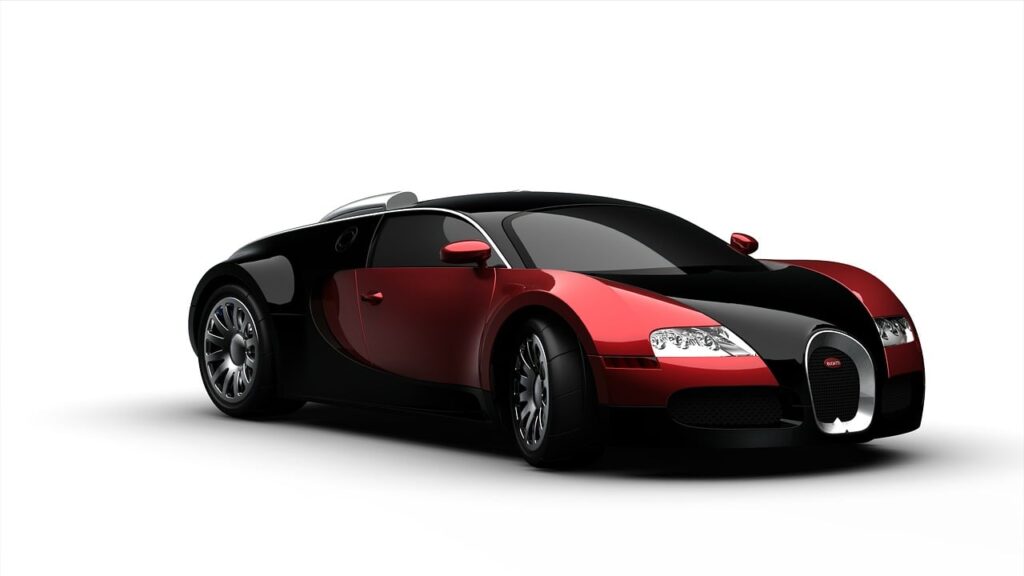
12. **Obnoxious and Useless Exterior Door Handles (Please Stop Reinventing Them)**You know, some things just work. A door handle, for instance. You grab it, you pull it, the door opens. Simple, intuitive, effective. For decades, it was a solved problem in automotive design. But in their ceaseless quest for “innovation”—or perhaps just to be different—some automakers have decided to “reinvent exterior door handles.” The result? Often, a frustrating exercise in form over function.
From flush-mounted designs that require an awkward push or slide, to retracting handles that hesitate on a cold morning, these “modern” solutions often make the simple act of opening a car door needlessly complicated. They might look sleek when recessed into the bodywork, contributing to that “futuristic” aesthetic, but try using one with gloves on, or with a handful of groceries, or in a hurry. The sleekness quickly gives way to fumbling, annoyance, and a longing for the good old days of a simple, robust handle.
The plea from the context is refreshingly direct and hits home for many frustrated drivers: “Please Stop Reinventing Exterior Door Handles. That is all.” It’s a prime example of an innovation that nobody asked for, solving a problem that didn’t exist, and in the process, creating new ones. Let’s just have functional, reliable door handles that don’t require a manual or a moment of contemplation every time you approach your vehicle.
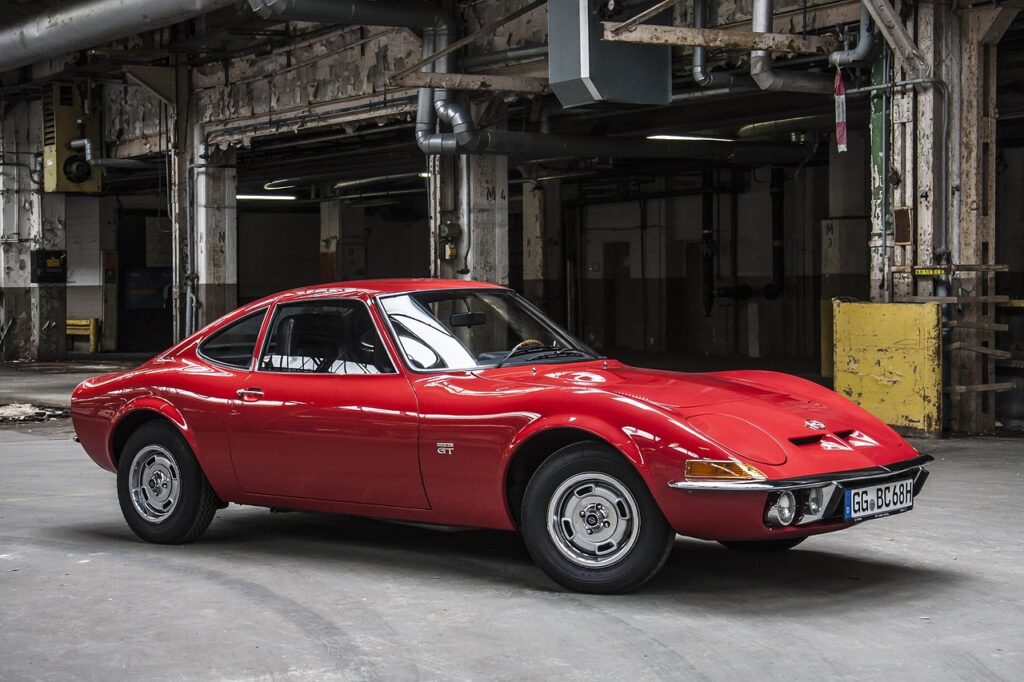
13. **Hot Wireless Phone Chargers (That Don’t Actually Charge)**The promise of wireless phone charging in your car is undeniably appealing: drop your phone into a designated slot, and it magically juices up without fumbling for cables. It’s the epitome of convenience, right? Well, in reality, many of these features are “Hot Wireless Phone Chargers” that, instead of providing power, often leave you with a phone “with less charge than when you started” due to overheating.
Here’s the frustrating truth: “Wireless charging creates heat, and phones stop charging when they get too hot.” Add to that the heat generated by running power-intensive apps like CarPlay or Android Auto, streaming maps, and playing audio, and you’ve essentially created a tiny oven for your device. When crammed into “a little slot or compartment,” with poor ventilation, the phone quickly reaches thermal limits, ceases charging, and sometimes even begins to drain its battery to cool down.
The good news is there’s a straightforward fix, and “some automakers are already doing it: blow cool air on the phone. Done.” It’s a simple engineering solution that transforms a useless, annoying feature into a genuinely convenient one. Until more manufacturers adopt this common-sense approach, these wireless charging pads remain little more than phone warmers, serving only to frustrate drivers who expect their devices to be charged, not cooked.

14. **The Folly of Electronic Parking Brakes**Remember the satisfying *clunk* of a handbrake engaging, or the firm press of a foot-activated parking brake? They were tactile, reliable, and unequivocally clear in their function. Then, along came the electronic parking brake, touted as a space-saving, modern alternative. While it might reclaim a tiny bit of console real estate, it often replaces a simple, mechanical action with a slow, electronic process that feels like solving a problem that never existed.
“Carmakers seem to believe humans are becoming so lazy that pulling up a parking brake is too much effort for us,” one source from the context wryly observes. Indeed, the electronic parking brake typically involves “a simple touch of a button to activate.” But this button, while seemingly convenient, introduces a delay and removes the direct, intuitive feedback of a mechanical system. In situations requiring a quick, decisive engagement or release, this electronic intermediary can feel sluggish and frustrating.
Ultimately, the electronic parking brake often falls into the category of solutions looking for a problem. It doesn’t enhance safety significantly, nor does it dramatically improve the driving experience. Instead, “I don’t see the point of wasting time switching to this button,” as the context highlights. It’s yet another example of automakers “wanting us to do less and less,” sometimes at the expense of simplicity and responsiveness, replacing perfectly functional analog controls with digital equivalents that offer little tangible benefit.
So, there you have it – a deep dive into the automotive features that, despite their shiny veneer of innovation, often prove to be more annoying than advantageous. From touchscreens that demand too much attention to safety systems that cry wolf, and from redundant connectivity options to needlessly reinvented door handles, it’s clear that not all technological progress is created equal. While we appreciate the drive to make cars smarter and safer, sometimes, the best feature is no feature at all, or at least one that doesn’t actively make us yearn for the simpler, more intuitive machines of yesteryear. Automakers, hear our plea: focus on genuine improvements that enhance the joy of driving, rather than adding complexity for complexity’s sake. After all, the open road is supposed to be about freedom, not frustration.