The American automotive landscape is undeniably dominated by pickup trucks. These versatile machines aren’t just vehicles; they’re essential tools and lifestyle companions, capable of everything from daily commutes to heavy-duty tasks like towing boats or hauling substantial loads. This incredible demand has pushed the U.S. pickup truck market to a staggering $215.6 billion valuation in 2024, with projections indicating it will reach $302.8 billion by 2034, largely driven by the industry’s shift towards electric power.
Ford, a name synonymous with American automotive innovation, is deeply rooted in this tradition. Henry Ford himself is credited with introducing the first factory-built pickup truck, the 1925 Model T Roadster with a pickup body, and even popularizing the term “pickup.” Since then, Ford has continued to offer a vast array of trucks in the U.S., earning a reputation for reliability and utility. However, what many American truck enthusiasts might not realize is that the “Blue Oval” has also developed a fascinating range of pickup trucks that were never sold stateside, finding considerable success in markets across the globe.
These “forbidden fruits” represent a captivating chapter in Ford’s global engineering story, tailored to unique regional needs, regulations, and consumer preferences. From robust workhorses designed for South American agricultural terrains to nimble urban utility vehicles, these trucks offer a glimpse into Ford’s adaptability and commitment to diverse markets. Let’s embark on a journey to explore some of these remarkable Ford truck models that, despite their ingenuity and success abroad, never made it to U.S. showrooms.
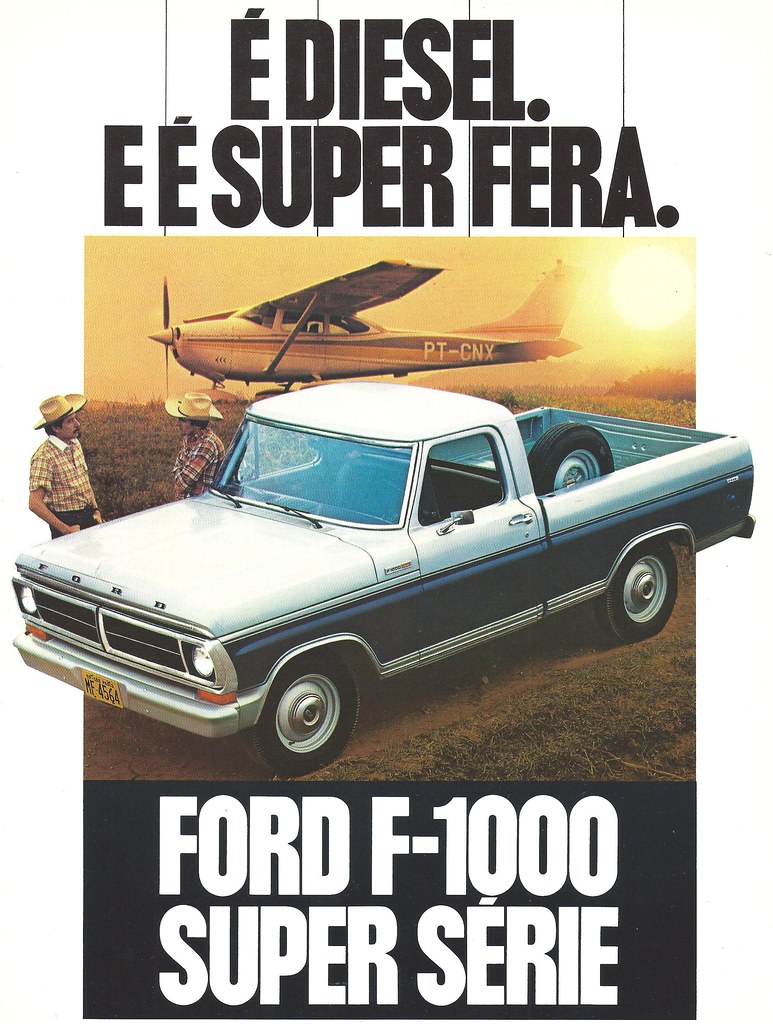
1. **Ford F-1000: Brazil’s Enduring Workhorse**When we talk about Ford’s F-series trucks in the U.S. and North America, familiar names like the F-150, F-250, and F-350 immediately come to mind. Yet, there’s a significant member of this illustrious family that many American truck fans have likely never encountered: the Ford F-1000. This formidable F-series pickup truck was exclusively designed and manufactured for the Brazilian market, serving as a testament to Ford’s tailored approach to international automotive needs.
The F-1000 made its debut in Brazil in 1979, built upon the robust body and chassis of the fifth-generation Ford F-250. What’s particularly intriguing is that while Ford ceased production of the fifth-generation F-250 in the U.S. in 1972, its foundational design continued to thrive and be utilized by Ford in Brazil for an extended period, right up until 1992. This longevity in a specific market highlights the adaptability and enduring utility of its design. The “1000” suffix in its name was a direct reflection of its increased load capacity, enabling it to handle a substantial 1,000 kg, or a little over 2,200 pounds.
Initially, the 1979 F-1000 was offered directly from the factory only in a regular cab configuration, paired exclusively with rear-wheel drive. Powering this robust machine was a 3.9-liter four-cylinder engine, which produced a respectable 86.4 hp for its time and intended usage. This initial offering laid the groundwork for a truck that would become a staple in the Brazilian utility vehicle segment.
Over the years, Ford continued to refine and upgrade the F-1000 to meet evolving market demands and competitive pressures. For instance, 1985 saw the introduction of the F-1000A, which notably featured a 6-cylinder engine engineered to be compatible with methanol, showcasing Ford’s innovative fuel solutions for the region. Further enhancements arrived in 1986, with Ford adding a distinctive four-headlight setup and some welcome interior updates, improving both aesthetics and comfort. By 1991, the original four-cylinder engine received a significant boost with an intercooled turbo, pushing its horsepower up to a more potent 119 hp.
The second-generation F-1000, launched in 1992, brought about even more extensive changes, specifically designed to counter the growing competition from the Chevrolet D20. This generation notably introduced a four-wheel drive option in 1993, expanding its capabilities and appeal for varied terrains and heavy-duty applications. The F-1000 nameplate maintained its presence in the Brazilian market for several more years, solidly establishing its legacy as a reliable and versatile utility vehicle, finally concluding production in 1998, when it was superseded by the locally produced F-250. The story of the Ford F-1000 is a compelling example of how Ford strategically adapted a familiar platform to create a successful, long-running model tailored precisely to the unique needs and operational environment of a specific international market, far from its North American homeland.
Car Model Information: 2025 Ford F-150 Raptor R
Name: Ford F-1000
ModelYears: 1979 – 1998
Manufacturer: Ford do Brasil
Assembly: São Paulo,Brazil
Class: Full-size,pickup truck
BodyStyle: 2-door regular cab pickup,2-door extended cab pickup (SuperCab)
Layout: Front-engine, rear-wheel-drive layout,Front-engine, four-wheel-drive layout
Successor: Ford Super Duty
Categories: Articles with short description, Cars discontinued in 1998, Cars introduced in 1979, Cars of Brazil, Ford F-Series
Summary: The Ford F-1000 is a line of pickup trucks produced by Ford Brazil from the 1979 to 1998 model years. Its production spanned through three generations.
The diesel-equipped models were the most popular, though ethanol or gasoline engines were available throughout most of the production. Four-speed and five-speed manual transmissions were available. Four-wheel drive was also available.
Get more information about: Ford F-1000
Buying a high-performing used car >>>
Brand: Ford Model: F-1000
Price: $229,900 Mileage: 60 mi.
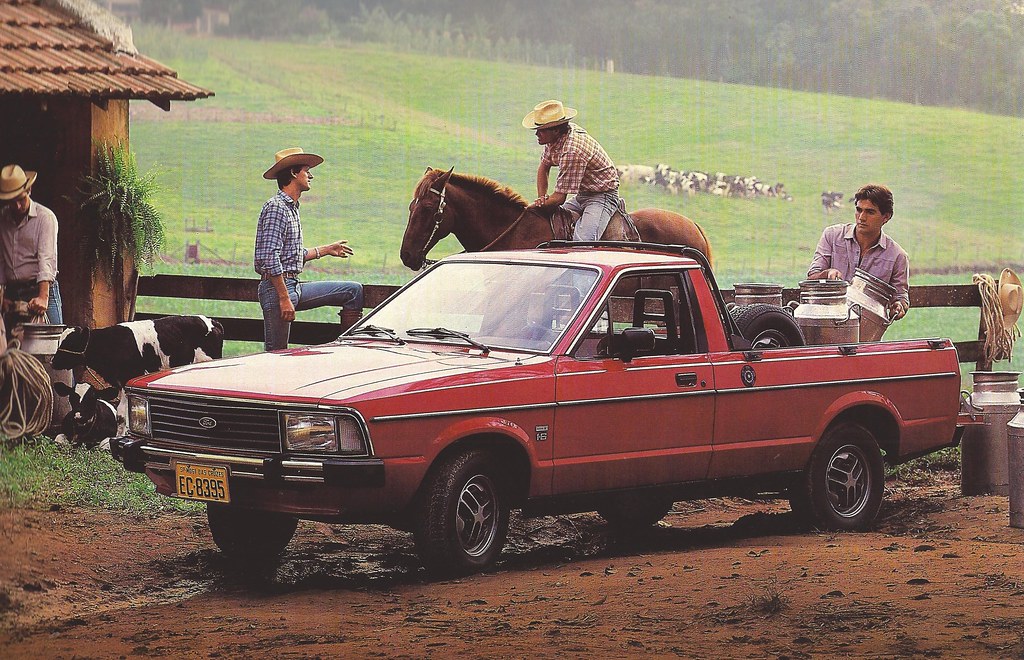
2. **Ford Pampa: Brazil’s Agile Light Pickup**Brazil has historically been a vibrant hub for Ford’s diverse truck offerings, with numerous models making their mark. Among these, the Ford Pampa stands out as a unique and pioneering vehicle, holding the distinction of being Brazil’s only light pickup truck to feature four-wheel drive for a significant period. Produced by Ford from 1982 to 1997, the Pampa represented a clever blend of car-like efficiency and light utility, making it an incredibly practical choice for a wide segment of the Brazilian populace.
The Pampa was ingeniously based on the Ford Corcel II, which itself was essentially a Renault 12 rebadged with the Ford nameplate, demonstrating Ford’s strategy of leveraging existing platforms for new market segments. Launched as a compact two-seater pickup truck, its appeal lay in its impressive fuel economy and remarkably low maintenance expenses. These characteristics made it an an ideal vehicle for workers and everyday commuters who required a practical, economical, and versatile mode of transport that could handle both personal and light commercial duties with ease.
Under the hood, the initial Pampa models were powered by a 1.6-liter engine, generating 67 hp, which was coupled with a five-speed gearbox. Given its designation as a “light pickup truck,” its load capacity was understandably limited, designed to carry up to 1,300 pounds, including the weight of the driver. To ensure the Corcel II’s car-based chassis could robustly support this load, Ford engineers made specific modifications, including increasing the ground clearance by 1.1 inches and equipping the truck with larger, more substantial tires to enhance its durability and utility, providing better capability over diverse Brazilian roads.
The Pampa’s evolution continued with several upgrades throughout its production run. In 1986, the GL model introduced enhanced features such as power steering and improved seat adjustments, adding a touch of comfort and convenience to its utilitarian nature. A significant development came through the strategic partnership between Ford and Volkswagen, which saw the Pampa receive a more powerful engine upgrade: the renowned VW AP-1800. This was the same reliable engine found in the Volkswagen Saveiro, boosting the Pampa’s output to a more spirited 92 hp, further cementing its performance capabilities and market competitiveness.
Perhaps one of the most remarkable features of the Pampa was the introduction of a four-wheel drive option starting in 1984. At that time, no other light pickup truck in the market offered this level of capability, giving the Pampa a distinct competitive edge for tackling varied terrain, from muddy tracks to uneven rural roads. While the 4×4 model offered superior versatility, it interestingly never quite matched the sales figures of its more conventional 4×2 siblings, indicating a preference for the more economical two-wheel drive variants among the majority of buyers. Minor aesthetic updates, such as a tweaked front grille in 1992 that mirrored the look of the Del Rey, and the addition of an electronic carburetor to its 1.8-liter engine in 1994, kept the Pampa fresh. Ford’s production of the Pampa continued until 1997, the same year an electronic injection system was introduced, marking the end of an era for this uniquely Brazilian light truck.
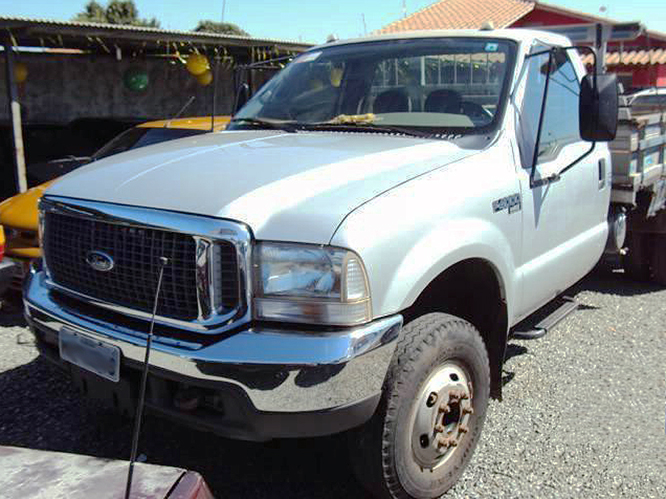
3. **Ford F-4000: South America’s Indispensable Heavy-Duty Truck**Beyond the F-1000, another stalwart from Ford’s F-series lineup that remained an elusive sight for American truck enthusiasts was the Ford F-4000. This heavy-duty pickup truck was specifically engineered and built for the challenging demands of the Brazilian and Argentinian markets. Its launch on May 25, 1975, marked the beginning of a remarkable run, as the F-4000 swiftly ascended to become Ford’s best-selling pickup truck in Brazil, a title it held with consistent popularity for decades, showcasing its immense utility and robust construction.
The F-4000’s immense success can be attributed to a powerful combination of versatility, durability, and ease of maintenance, qualities that made it an indispensable asset across a multitude of industries. Its robust design allowed for seamless adaptation to various applications, transforming readily into refrigerated vans, gas delivery vehicles, or conventional box trucks. This inherent flexibility made the F-4000 a preferred choice for heavy-duty tasks across critical sectors such as agriculture, construction, and general cargo transport, where reliability and adaptability were paramount.
Throughout its extensive production history, the Ford F-4000 was subjected to a continuous stream of upgrades and refinements, a testament to Ford’s commitment to keeping the model competitive and relevant. These enhancements spanned various aspects of the truck, including notable changes to its cabin design, improvements in engine performance, and expansions in drivetrain options, all aimed at bolstering its functionality and operator comfort. These thoughtful updates ensured that the F-4000 remained at the forefront of its segment, consistently meeting the evolving needs of its demanding customer base in South America.
A significant expansion of the F-4000’s utility came in 2008 when Ford began offering an extended chassis version. This particular variant stretched approximately 24 inches longer than the standard model, providing even greater cargo capacity and versatility for specialized applications. This extended model was prominently showcased at various Brazilian agribusiness fairs, where it was enthusiastically pitched as the ultimate “do-it-all” truck, further solidifying its reputation as a highly capable and adaptable work vehicle designed to tackle almost any task thrown its way in demanding environments.
Car Model Information: 2013 Ford C-Max Hybrid SEL
Name: Ford Super Duty,(F-250/F-350/F-450/F-550/F-600)
Caption: 2020 Ford F-250
Manufacturer: Ford Motor Company
Production: January 5, 1998–present
ModelYears: 1999–present
Class: pickup truck
Layout: Front-engine, rear-wheel-drive layout
Predecessor: Ford F-Series (ninth generation)
Categories: 2000s cars, 2010s cars, All-wheel-drive vehicles, All articles with bare URLs for citations, Articles with bare URLs for citations from August 2024
Summary: The Ford Super Duty (also known as the Ford F-Series Super Duty) is a series of heavy-duty pickup trucks produced by the Ford Motor Company since the 1999 model year. Slotted above the consumer-oriented Ford F-150, the Super Duty trucks are an expansion of the Ford F-Series range, from F-250 to the F-600. The F-250 through F-450 are offered as pickup trucks, while the F-350 through F-600 are offered as chassis cabs.
Rather than adapting the lighter-duty F-150 truck for heavier use, Super Duty trucks have been designed as a dedicated variant of the Ford F-Series. The heavier-duty chassis components allow for heavier payloads and towing capabilities. With a GVWR over 8,500 lb (3,900 kg), Super Duty pickups are Class 2 and 3 trucks, while chassis-cab trucks are offered in Classes 3, 4, 5, and 6. The model line also offers Ford Power Stroke V8 diesel engines as an option.
Ford also offers a medium-duty version of the F-Series (F-650 and F-750), which is sometimes branded as the Super Duty, but is another chassis variant. The Super Duty pickup truck also served as the basis for the Ford Excursion full-sized SUV.
The Super Duty trucks and chassis-cabs are assembled at the Kentucky Truck Plant in Louisville, Kentucky, and at Ohio Assembly in Avon Lake, Ohio. Prior to 2016, medium-duty trucks were assembled in Mexico under the Blue Diamond Truck joint venture with Navistar International.
Get more information about: Ford Super Duty
Buying a high-performing used car >>>
Brand: Ford Model: F-4000
Price: $6,267 Mileage: 141,350 mi.
The Ford F-4000 enjoyed an impressive production run that spanned from 1975 all the way to 2019. This remarkable longevity, however, came to an end when Ford made the strategic decision to cease its manufacturing operations in South America. The closure of its Sao Bernardo do Campo plant in Brazil, which was responsible for producing not only the F-4000 but also models like the Ford Fiesta, F-350, and the Cargo lineup, marked the cessation of the F-4000’s journey. With its departure, the Ford F-4000 joined the distinguished ranks of many other Ford pickup trucks that, despite their formidable capabilities and widespread success abroad, regrettably never had the opportunity to serve the American market.