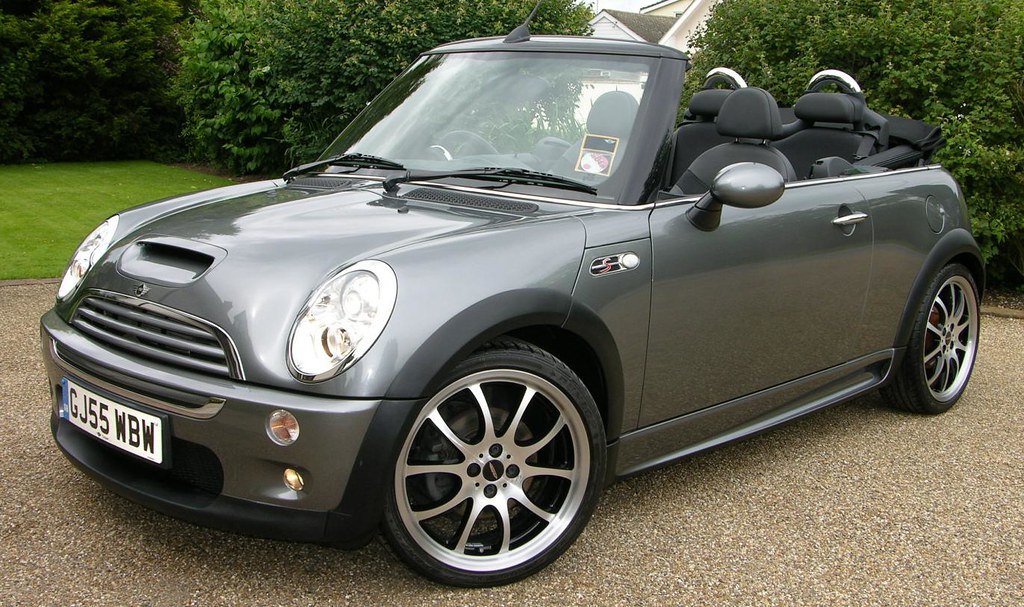
There’s something utterly primal, magnificently liberating, about a convertible. It’s not just a car; it’s an experience, a statement, a defiance of the mundane. The wind in your hair, the sun on your face, the symphony of an engine bouncing off canyon walls – these aren’t just details, they’re the very essence of why we fall head over heels for these open-topped marvels. They turn every journey into an adventure and every commute into a celebration.
The best convertibles aren’t merely modes of transport; they are rolling sculptures, engineering masterpieces, and, crucially, instant icons. They possess that indefinable charisma that makes heads turn, jaws drop, and dreams ignite. Whether it’s their groundbreaking design, their blistering performance, or the sheer audacity of their spirit, these machines etch themselves into our collective consciousness, becoming far more than just metal and rubber.
So, buckle up, petrolheads! We’re about to embark on an exhilarating ride through the annals of automotive history, celebrating a dozen of the most iconic, traffic-stopping convertibles ever to grace our roads. These are the machines that didn’t just participate in automotive culture; they shaped it, defined it, and continue to inspire generations of enthusiasts. Prepare for a full-throttle appreciation of engineering, artistry, and pure, unadulterated driving joy!

1. **1963–1971 Mercedes-Benz SL W113**
Now, some cars scream “hardcore sports car” from every panel, but not the W113-generation Mercedes-Benz SL-Class. Oh no, this magnificent machine offers a different kind of allure. It’s a stately and stylish convertible, exuding an air of glamorous sophistication that’s as effortless as it is captivating. It’s fast, yes, but its true genius lies in its elegant poise.
Fondly known as the “Pagoda,” this moniker came from its distinctive curved hardtop roof. That roof, you see, vaguely recalls the concave elements of some styles of tiered pagodas, and it’s an absolute stroke of genius. The design itself sprang from the brilliant mind of Paul Bracq, a celebrated designer whose name is synonymous with many iconic Mercedes models, cementing the car’s place as a visual masterpiece.
Beneath that elegant hood, the Pagoda was powered by several powerful inline-six engines. These weren’t just lumps of metal; they were finely tuned powerplants that delivered smooth, confident performance. It’s a testament to Mercedes-Benz engineering that this remains a remarkably usable and elegant classic convertible even today.
The desirability of these cars is certainly reflected in their values, which climb ever higher. Owning a Pagoda isn’t just about possessing a classic; it’s about owning a piece of automotive art that perfectly blends daily usability with timeless, head-turning style. It’s the kind of car that makes even the most jaded observer pause and appreciate its undeniable beauty.
Car Model Information: 2018 Toyota Camry SE
Name: Mercedes-Benz W113,230 SL, 250 SL, 280 SL
Manufacturer: Daimler-Benz
Production: 1963–1971,48,912 built
Assembly: Stuttgart
Predecessor: Mercedes-Benz W198,Mercedes-Benz 190SL
Successor: Mercedes-Benz R107
Class: Sports car
BodyStyle: coupé
Layout: Longitudinal engine,FR layout
Platform: Mercedes-Benz W111
Engine: ubl
Transmission: ZF Friedrichshafen,List of ZF transmissions
Wheelbase: Convert
Length: Convert
Width: Convert
Height: Convert
Weight: Convert
Related: Mercedes-Benz W108,Mercedes-Benz W109,Mercedes-Benz W112
Designer: Friedrich Geiger,Béla Barényi,Paul Bracq
Categories: 1970s cars, All articles with unsourced statements, Articles with short description, Articles with unsourced statements from October 2014, Articles with unsourced statements from October 2018
Summary: See Mercedes-Benz SL-Class for a complete overview of all SL-Class models.
The Mercedes-Benz W 113 is a two-seat luxury roadster/coupé, introduced at the 1963 Geneva Motor Show and produced from 1963 through 1971. It replaced both the 300 SL (W 198) and the 190 SL (W 121 BII). Of the 48,912 W 113 SLs produced, 19,440 were sold in the US. The W113 was marketed under the names Mercedes-Benz 230 SL, 250 SL and 280 SL.
The W 113 SL was developed under the auspices of Mercedes-Benz Technical Director Fritz Nallinger, Chief Engineer Rudolf Uhlenhaut and Head of Styling Friedrich Geiger, who had previously designed the iconic 500K/540K and 300 SL. The lead designers were Paul Bracq and Béla Barényi, who created its patented, slightly concave hardtop, which inspired the “Pagoda” nickname.
All models were equipped with a fuel injected inline-six engine. The bonnet, boot lid, door skins and tonneau cover were made of aluminium to reduce weight. The comparatively short and wide chassis, combined with an excellent suspension, powerful brakes and radial tires gave the W 113 superb handling for its time. The styling of the front, with its characteristic upright Bosch “fishbowl” headlights and simple chrome grille, dominated by the large three-pointed star in the nose panel, paid homage to the 300 SL roadster.
W 113 SLs were typically configured as a “Coupé/Roadster” with a soft-top and an optional removable hardtop. A 2+2 was introduced with the 250 SL “California Coupé”, which had a fold-down rear bench seat instead of the soft-top.
Get more information about: Mercedes-Benz W113
Buying a high-performing used car >>>
Brand: Mercedes-Benz Model: SL W113
Price: $17,412 Mileage: 86,724 mi.
2. **2000–2009 Honda S2000**
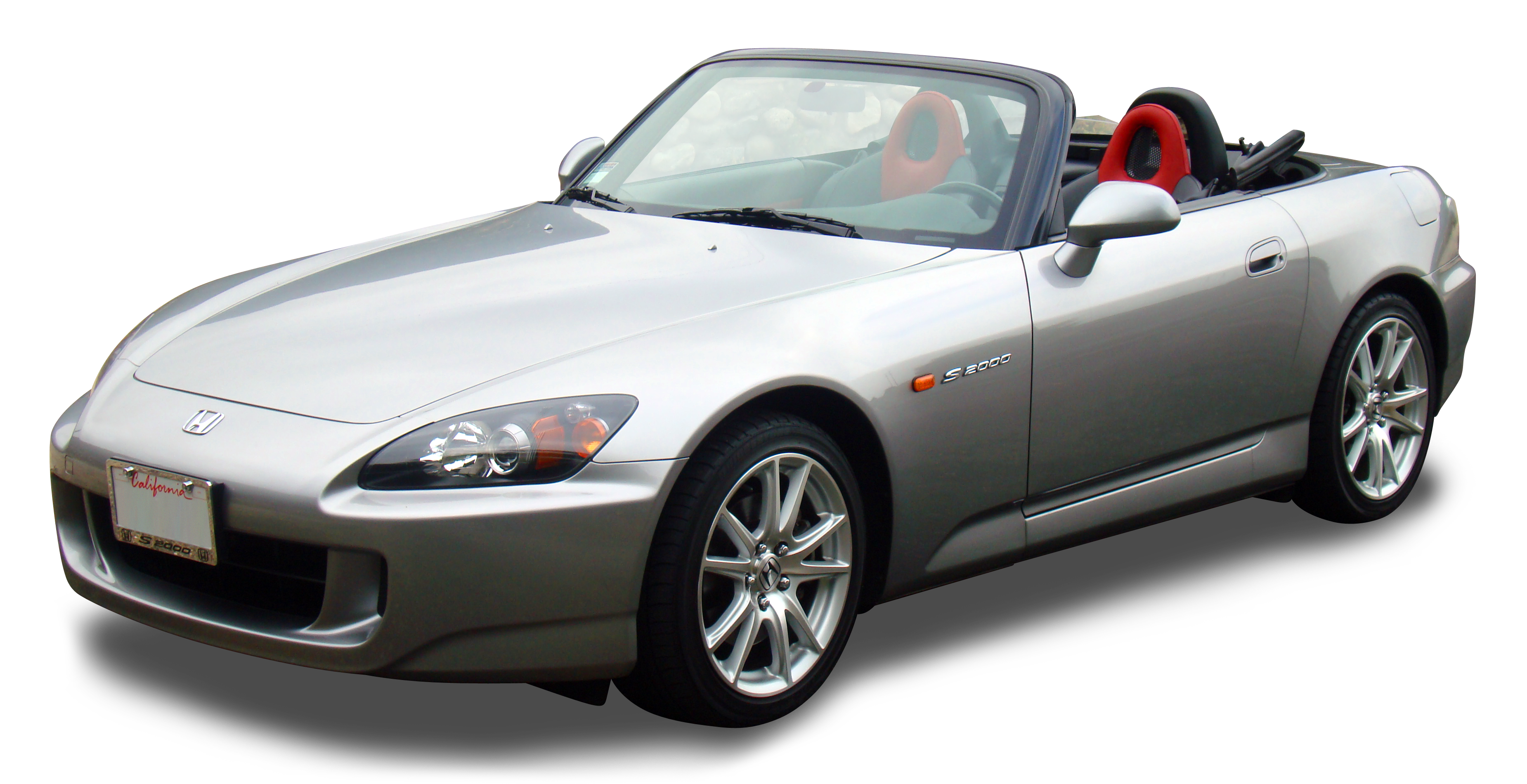
If there was ever a car that embodied the spirit of a true driver’s machine, it’s the Honda S2000. This is a car forged in the fires of Honda’s racing heritage, directly inspired by the S500, which was Honda’s second-ever road car—a true jewel of a sports machine. The S2000 arrived with a mission: to thrill.
And thrill it did! With an engine redline that seemed to flirt with the heavens, a futuristic dashboard that looked straight out of a concept car, and styling that was both handsome and aggressive, it was an instant classic. Years after its production ceased, it remains a white-hot commodity on the used car market, a testament to its enduring appeal and incredible driving dynamics.
Power came from either a screaming 2.0-liter engine, or a later 2.2-liter version that offered a bit more torque, though it retained the same glorious 237 horsepower stated output. This engine wasn’t just powerful; it was an event. It begged to be revved, delivering its power with an urgency and a mechanical symphony that was truly addictive.
Sure, some of its direct rivals might have boasted slightly more power on paper, but the S2000 compensated with an abundance of sheer visceral entertainment value. It was a car that connected with you, a machine that danced to your inputs, making every corner a joy and every straight an opportunity to unleash its high-revving fury. It’s a legend, pure and simple.
Car Model Information: 2005 Honda S2000 Base
Name: Honda S2000
Manufacturer: Honda
Production: 1999–2009 (110,673 produced)
Class: Sports car
Layout: Front-engine, rear-wheel-drive layout#Front mid-engine, rear-wheel-drive layout
BodyStyle: Roadster (automobile)
Designer: Shigeru Uehara
Caption: 2005 Honda S2000 (AP2)
Predecessor: Honda S800
Categories: 2000s cars, All articles lacking reliable references, Articles lacking reliable references from May 2024, Articles with short description, CS1: unfit URL
Summary: The Honda S2000 is a front-mid engine open top sports car that was manufactured by Japanese automobile manufacturer Honda, from 1999 until 2009. First shown as a concept car called the SSM at the Tokyo Motor Show in 1995, the production version was launched on April 15, 1999, to celebrate the company’s 50th anniversary. The S2000 is named for its engine displacement of two liters, while “S” stood for “sports” carrying on in the tradition of the S500, S600, and S800 roadsters of the 1960s.
Several revisions were made throughout the car’s production life, including changes to the engine, gearbox, suspension, interior and exterior. Officially two variants exist: the initial launch model was given the chassis code AP1; though cosmetically similar, the facelifted version, known as the AP2 in North America and Japan, incorporated significant changes to the drivetrain and suspension. Production of the S2000 ceased on August 19, 2009.
The Honda S2000 was notable for its exceptional specific power output of about 92 kW (124 hp) per liter, or about two horsepower per cubic inch, the highest of any mass production, naturally aspirated car, until 2010.
Get more information about: Honda S2000
Buying a high-performing used car >>>
Brand: Honda Model: S2000
Price: $30,988 Mileage: 36,725 mi.

3. **1966–1969 Alfa Romeo Spider (Duetto, Veloce)**
Ah, the Alfa Romeo Spider! This is a classic Italian roadster that doesn’t just exude style and sophistication; it practically bathes in it. Designed and manufactured by the legendary Italian design house Pininfarina, the Spider was a truly special project, being the very last model Battista “Pinin” Farina himself was involved with. That alone tells you something about its pedigree.
The original Duetto featured a monocoque, or unitized-body construction, which was quite advanced for its time. It also incorporated front and rear crumple zones, showcasing a commitment to safety alongside its stunning looks. Initially, the Duetto was powered by a spirited 108-hp 1557-cc DOHC inline-four, an engine that sang with a joyous Italian melody as it devoured the open road.
For those seeking a bit more gusto, the 1968 1750 Spider Veloce stepped onto the scene, boasting a 118-hp 1779-cc DOHC four engine. U.S. models even featured mechanical fuel injection, a detail that speaks to its sophisticated engineering. This car was all about balance, combining a lightweight body with a powerful, sonorous engine to create a truly engaging driving experience.
Its distinctive round tail wasn’t just for show; it earned the car the charming nickname “Osso di Seppia,” or “Cuttlefish bone.” But perhaps its greatest cultural moment came when it was immortalized on screen, famously driven by Dustin Hoffman’s character in the iconic 1967 movie “The Graduate.” This cinematic star power only amplified its already legendary status among classic car enthusiasts.
Car Model Information: 2018 Toyota Camry SE
Name: Alfa Romeo Spider
Caption: Alfa Romeo Spider Series 2 (“Coda Tronca”)
Aka: Alfa Romeo “Duetto”
Manufacturer: Alfa Romeo
Assembly: Grugliasco,Turin
Production: 1966–1993
ModelYears: 1966–1994
Class: Sports car
Layout: Front-engine, rear-wheel-drive layout
BodyStyle: Roadster (automobile)
Related: Alfa Romeo Giulia,Alfa Romeo 105/115 Series Coupés
Designer: Aldo Brovarone
Predecessor: Alfa Romeo Giulietta (750/101)
Successor: Alfa Romeo GTV & Spider
Sp: uk
Categories: 1970s cars, 1980s cars, 1990s cars, Alfa Romeo vehicles, All articles needing additional references
Summary: The Alfa Romeo Spider (105/115 series) is a two-seater, front-engined, rear-drive roadster manufactured and marketed by Alfa Romeo from 1966 to 1994 in four distinct generations, or “series”, each with modifications ranging from modest to extensive.
As successor to the Giulia Spider, the Spider remained in production for almost three decades. The first three series were assembled by Pininfarina in Grugliasco and the fourth series in San Giorgio Canavese. The last Spider of that series was manufactured in April 1993—the last rear-wheel drive Alfa Romeo before the Alfa Romeo 8C Competizione of 2007.
In 2012, FCA Italy and Mazda studied the possibility of jointly developing a new Spider for 2015 based on the Mazda MX-5 platform. Ultimately, FCA and Mazda chose to manufacture a modern interpretation of the Fiat 124 Sport Spider rather than reviving the Alfa Romeo Spider.
Get more information about: Alfa Romeo Spider
Buying a high-performing used car >>>
Brand: Alfa Romeo Model: Spider
Price: $17,412 Mileage: 86,724 mi.

4. **1958–1961 Austin-Healey Sprite Mark I**
Prepare to be charmed! The 1958-1961 Austin-Healey Sprite Mark I isn’t just a car; it’s a personality on wheels. Thanks to its famously large, round “Bugeye” headlights and a front grille that seems to be perpetually “smiling,” it’s arguably the most memorable British roadster of its vibrant era. You simply cannot look at it without cracking a grin yourself.
This diminutive two-seater measured a mere 137.0 inches long, making it a truly compact and nimble machine. It was designed for one thing: pure, unadulterated fun on the open road. Powering this delightful little bug was a 43-hp 948-cc inline-four, which, while not a powerhouse, was perfectly suited to the car’s featherlight construction.
One of its most distinctive, and perhaps quirky, features was the rear-hinged, one-piece front clip. This entire section – hood, fenders, lighting, grille, and bumper – lifted up as a single unit, revealing the engine beneath. It was a charming, almost theatrical way to access the mechanicals, setting it apart from its contemporaries.
And talk about practicality, or the delightful lack thereof! The absence of a traditional trunk opening meant you had to fold the seats forward just to access the spare tire and cargo area. Yet, despite, or perhaps because of, its lightweight and simple construction, the Austin-Healey Sprite remains immensely popular for competition even today, proving that pure driving enjoyment often trumps fussy convenience.

5. **1956–1959 BMW 507**
Behold, the BMW 507 – a car so stunningly beautiful, so utterly beloved, that its value today is nothing short of shocking. This wasn’t just a car; it was a halo car, a triumph of design that every automotive company dreams of having in its storied history. Its lines are pure poetry in metal, instantly captivating and eternally elegant.
Yet, for all its beauty, this magnificent machine almost kneecapped BMW at an incredibly vulnerable time. The company was diligently rebuilding its car business from the ashes of war, producing a rather disparate range of vehicles: from stodgy, outdated, and very expensive large cars to a line of adorable microcars like the Isetta. The 507 was meant to be a lucrative shot in the arm.
It was specifically aimed at discerning American buyers who had the cash to afford something truly special, something to rival the Mercedes-Benz SL. The Albrecht von Goertz shape was, and still is, absolutely stunning. It’s a masterpiece of automotive aesthetics, a testament to timeless design that refuses to age.
However, its pricetag was, shall we say, outrageous – considerably more than its rival, the SL. Few were sold, making it a major commercial failure at the time. But even in its commercial misstep, the 507 brought much-needed attention and prestige to the BMW name. Later, the company’s small “New Class” sedans would cleverly distil a fraction of the 507’s inherent sportiness into an affordable, charismatic package, ultimately cementing BMW’s legacy as purveyors of the “Ultimate Driving Machine.”
Read more about: Gone But Not Forgotten: 14 Beloved Cars That Vanished Unexpectedly from Production

6. **1953–1962 Chevrolet Corvette C1**
The Corvette, America’s original sports car, was born from a post-war love affair with European roadsters. It was the brainchild of the visionary Harley J. Earl, and in its very first iteration, the C1, it was exclusively a convertible. Imagine the excitement as this sleek, open-topped beauty rolled onto the scene, promising a slice of continental glamour with an American twist.
Initially, however, it famously wasn’t much of a performance machine. It offered more of the *idea* of European sophistication than the ground-churning power that it would eventually become legendary for. A 235 cubic-inch inline-six engine, paired with a rather sedate two-speed automatic transmission, didn’t exactly raise the pulse in the way its clean, sleek exterior design promised.
But Chevrolet was listening, and for 1955, the game changed forever. The famed small-block V-8 engine, coupled with a proper three-speed manual gearbox, was slipped under the hood. This was the turning point, finally backing up the Corvette’s inherent promise of sportiness with truly suitable power, transforming it from a stylish cruiser into a bona fide American sports car.
The C1 Corvette continued to evolve and improve throughout its lifecycle, with each model year building on the last, until the iconic C2, available as both a fastback coupe and a convertible, made its dazzling debut for 1963. The C1 laid the essential groundwork, establishing the Corvette as an enduring symbol of American automotive aspiration and a convertible icon in its own right.
Car Model Information: 2021 Mazda CX-5 Touring
Caption: 1954 Corvette
Name: Chevrolet Corvette (C1)
Manufacturer: Chevrolet
Production: June 1953–July 1962
ModelYears: 1953–1962
Platform: Series E2934 (1953–1957),Series J800 (1958-1959),Series 0800 (1960-1962)
Assembly: Flint Truck Assembly,St. Louis Truck Assembly
Designer: Harley Earl
Engine: {{convert,235,CID,L,1,abbr=on,Chevrolet Stovebolt engine#235,Straight-6
Abbr: Chevrolet small-block engine (first- and second-generation)#327
Transmission: Powerglide,manual transmission,4-speed manual
Wheelbase: cvt
Length: {{cvt,167.3,in,mm,0
Width: {{cvt,69.8,in,mm,0
Height: {{cvt,51.5,in,mm,0
Weight: {{cvt,2886,lb,kg,0
Related: Carrozzeria Scaglietti
Successor: Chevrolet Corvette (C2)
Class: Sports car
BodyStyle: Convertible (car)
Chassis: Body-on-frame
Layout: FR layout
Categories: 1960s cars, 24 Hours of Le Mans race cars, All articles covered by WikiProject Wikify, All articles with dead external links, All articles with unsourced statements
Summary: The Chevrolet Corvette (C1) is the first generation of the Corvette sports car produced by Chevrolet. It was introduced late in the 1953 model year and produced through 1962. This generation is commonly called the “solid-axle” generation, as an independent rear suspension did not appear until the 1963 Sting Ray.
The Corvette was rushed into production for its debut model year to capitalize on the enthusiastic public reaction to the concept vehicle. However, expectations for the new model were largely unfulfilled. Reviews were mixed, and sales fell far short of expectations through the car’s early years. The program was nearly canceled by General Motors, but decided to make necessary improvements because Ford was developing a two-seater that became the Thunderbird.
Get more information about: Chevrolet Corvette (C1)
Buying a high-performing used car >>>
Brand: Chevrolet Model: Corvette C1
Price: $22,300 Mileage: 57,500 mi.
Read more about: America’s Iconic Sports Car: Decoding the Most Problematic Corvette Models in History to Help You Buy Smart

7. **1962–1973 Lotus Elan**
Right, if you’re looking for a sports car that practically defines agility and sheer driving purity, you’ve just found it. The original 1962 Lotus Elan debuted as a nimble two-seat roadster, and what a debut it was! This wasn’t just another pretty face; it was the first car to proudly wear the automaker’s groundbreaking backbone chassis, a revolutionary bit of engineering that was all about lightness and stiffness.
And speaking of lightness, the Elan flaunted a fiberglass body that kept its weight down to a mere 1500 pounds. That’s barely more than a spirited sneeze! This featherlight construction, combined with a rather eager 1557-cc DOHC inline-four engine, making between 108 and 126 horsepower, meant this little stunner could truly dance. Zero to sixty in around 8.0 seconds and a top speed of up to 120 mph? In the 60s, that was serious pace for a car so exquisitely balanced.
The Elan wasn’t just a hit with drivers; it became a proper pop culture sensation, too. It was famously popularized by the ultra-cool character Emma Peel in the iconic British T.V. series “The Avengers,” solidifying its status as a car with undeniable star power. And here’s a little secret for you: this very car served as the direct inspiration for the original 1989 Mazda Miata. So, if you love the Miata’s ethos of light, engaging fun, you’ve got the Elan to thank for paving the way. A true trendsetter, through and through!

8. **1957–1972 Lotus Seven**
Now, if the Elan was about refined agility, the Lotus Seven is about pure, unadulterated, take-it-to-the-extreme minimalist driving. Is there any sports car more pure, more utterly lasting, more brutally honest than the Lotus 7? We think not! It’s a design so fundamental, so perfectly executed, that a steady stream of replicas, continuation cars, and tributes pour out of manufacturers to this very day, all endlessly riffing on or, dare we say, *improving* upon the original formula.
These machines are all about the raw essentials: light, minimalistic, and varying from brilliant to absolutely incandescent to drive. There’s no fat here, no superfluous luxury; just an engine, four wheels, and a seat – all perfectly honed to deliver an unparalleled connection between driver and road. It’s automotive purity distilled to its very essence, stripping away everything that doesn’t contribute to the driving experience.
As one wise owner once perfectly encapsulated its spirit, “It’s the ultimate sports car, and it’s utterly impractical for anything other than having fun.” And that, dear reader, is precisely its charm! That’s why even the most “pokey” vintage Lotus Sevens are still an absolute thrill to pilot, and modern Caterhams (the Seven’s spiritual successors) are searingly quick, capable of embarrassing supercars on a track. This isn’t just a car; it’s a philosophy, perhaps the ultimate enthusiast car, and its place in history is as assured as the thrill it provides.

9. **1965–1971 Meyers Manx**
Alright, hold onto your hats, because we’re taking a sharp left turn from elegant European sports cars to something gloriously, hilariously, and undeniably American: the Meyers Manx! Many of the vehicles on this esteemed list are driver-oriented sports cars with sleek lines and sophisticated mechanicals. The Manx? Not so much! This is a spunky, Beetle-based fun machine that was simplification personified, a grin-inducing antidote to automotive seriousness.
Underneath that delightfully cheeky fiberglass body, you’d find a shortened Volkswagen chassis and its ever-reliable flat-four engine. These were rugged, simple components that performed incredibly well, not because they were overpowered, but because the Manx suffered from a delightful lack of heft. It was all about maximizing fun with minimal fuss, transforming the humble Beetle into a sand-spraying, dune-bashing legend.
In fact, the Manx wasn’t just for cruising the beach; it actually *won* the inaugural Mexican 1000, which would later become the legendary Baja 1000! That’s right, this plucky little bug took on the brutal desert and emerged victorious. The very same formula that made it an absolute blast to drive on the street and the sand – big tires, an open top, and incredibly low mass – also made it a formidable off-road racer. It was a vehicle that truly embodied freedom and adventure.
Sadly, like many brilliant ideas, the Manx’s success attracted a swarm of imitators, which, in a bittersweet twist, ultimately drove its visionary creator, Bruce Meyers, out of the game. But while the original Meyers Manx itself may have been short-lived in production, its legend, its spirit of playful rebellion and open-air exhilaration, lives on. It’s a vivid reminder that sometimes, the most iconic machines are also the most unpretentious.

10. **1950–Present Morgan Plus 4**
Now, if you want to talk about tradition, about a car that seems to have gracefully aged like the finest single malt whisky, then you simply must talk about Morgan. Morgan is, quite famously, best known for *not* changing all that much over the decades. And while that pace of evolution has certainly accelerated in its more recent history (they do, grudgingly, use modern engines now), the Plus 4 (and its related, equally charming Plus 8) are what immediately spring to mind when most of us hear the company’s name. And honestly, why wouldn’t they? This model was proudly on sale for the majority of the 20th and some of the 21st century, with only a few brief, lamentable pauses.
Yes, you *could* sneer, if you were so inclined, and call some aspects of the car “primitive.” Its ladder-frame chassis, for example, is unapologetically old-school, and its legendary wood-framed body certainly harks back to an earlier era of coachbuilding. But to do so would be to miss the glorious point entirely! Because, dear reader, these “primitive” elements somehow coalesce into something absolutely brilliant on the move. It’s an immersive, tactile, and utterly engaging driving experience that modern cars, for all their electronic wizardry, often struggle to replicate.
There’s a profoundly good reason this particular Morgan survived and thrived for the better part of a century. It’s not just a car; it’s a rolling piece of history, an artisan’s masterpiece, lovingly crafted and meticulously evolved. And while its successor certainly modernizes many aspects, it resolutely refuses to completely abandon the spirit and the long-lived inspiration of the original. That’s commitment to heritage, right there, and it’s why the Plus 4 remains an icon of classic British motoring, perpetually turning heads with its unique charm.
Car Model Information: 2021 Mazda CX-5 Touring
Caption: 1963 Morgan Plus 4
Name: Morgan Plus 4
Manufacturer: Morgan Motor Company
Production: 1950–1969,4,584 produced,1985–2000,2005–2020
Class: Sports car
BodyStyle: convertible (car)
Layout: Front mid-engine, rear-wheel drive layout
Engine: ubl
Length: 145 in
Abbr: on (Super Sports)
Width: 56 in
Assembly: Malvern, Worcestershire,England,United Kingdom
Height: 52 in
Wheelbase: 96 in
Weight: 1848 lb
Related: Morgan 4/4,Morgan Plus 8
Successor: Morgan Plus Four
Categories: 1960s cars, 1980s cars, 1990s cars, 2000s cars, 2010s cars
Summary: The Morgan Plus 4 is a sports car produced by the Morgan Motor Company. It is a more powerful and, in the case of the earlier cars, a slightly longer version of the company’s previous 4/4 model. Plus 4 production ran from 1950 to 1969. It was revived in 1985 and filled the gap between the 4/4 and the Plus 8 until 2000. It was again produced from 2005 until it was replaced in 2020 by the “all new” Plus Four built on a bonded aluminium platform.
Get more information about: Morgan +4
Buying a high-performing used car >>>
Brand: Morgan Model: Plus 4
Price: $22,300 Mileage: 57,500 mi.
11. **1997–Present Porsche Boxster**
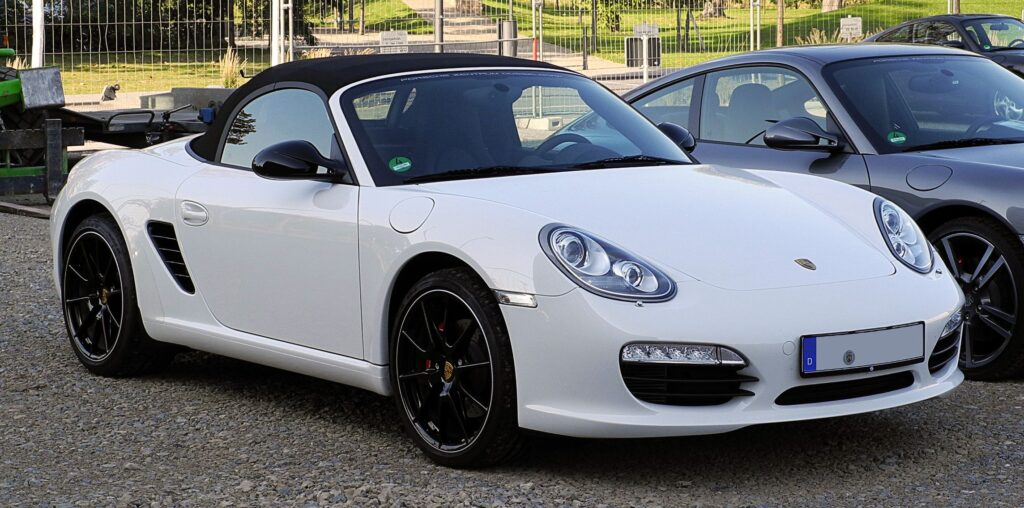
Alright, let’s talk about a car that didn’t just cement Porsche’s reputation for open-top excellence, but quite literally *saved* the company. Porsche, of course, boasts a rich and storied open-top history, from the delectable 356 and 550 speedsters to the always-divisive but undeniably cool 911 Targa. But when it comes to the company’s modern history, the Boxster, launched in 1997, is arguably the single most important vehicle they’ve ever produced.
The original Boxster, alongside the 996-generation 911 it was cleverly co-developed with, pulled Porsche back from the brink of almost certain oblivion. It was a masterstroke of engineering and marketing, delivering that quintessential Porsche driving experience in a more accessible, mid-engined convertible package. This wasn’t just a stop-gap measure; it was a defiant statement of intent, proving that Porsche could adapt and thrive, bringing in a whole new generation of enthusiasts.
And what a journey it’s been! The car has evolved and improved through its several generations, each one building on the last, refining that perfect balance and engaging character. From the very beginning, it has always been, at its core, a driver-focused, enthusiast-pleasing convertible. It’s a car that communicates with you, that encourages you to explore its limits, and rewards you with a symphony of mechanical feedback.
Now, in its latest guise, the 718 Boxster (and its hardtop sibling, the 718 Cayman), it’s dabbled with flat-fours – a controversial but undoubtedly potent move. But for the purists, and for those seeking the ultimate sonic and visceral thrill, it’s in their various flat-six incarnations where these cars truly, gloriously thrill. They continue the legacy, ensuring that the spirit of the Boxster remains as vibrant and traffic-stopping as ever.
Car Model Information: 2014 Porsche Boxster Base
Name: unbulleted list
Caption: Porsche Boxster Spyder (718)
Manufacturer: Porsche
Aka: unbulleted list
Production: unbulleted list
Assembly: unbulleted list
Class: Sports car
BodyStyle: unbulleted list
Related: unbulleted list
Layout: Rear mid-engine, rear-wheel drive layout
Predecessor: Porsche 968
Categories: All Wikipedia articles written in British English, All articles needing additional references, All articles with dead external links, All articles with unsourced statements, Articles needing additional references from August 2025
Summary: The Porsche Boxster and Cayman are mid-engine two-seater sports cars manufactured and marketed by German automobile manufacturer Porsche across four generations—as a two-door, two-seater roadster (Boxster) and a three-door, two-seater fastback coupé (Cayman).
The first generation Boxster was introduced in 1996; the second generation Boxster and the Cayman arrived in late 2005; and the third generation launched in 2012. Since the introduction of the fourth generation in 2016, the two models have been marketed as the Porsche 718 Boxster and Porsche 718 Cayman.
The nameplate Boxster is a portmanteau of boxer, a reference to its flat or boxer engine, and Speedster, a nod to the original Porsche Speedster of the 1950’s. The nameplate Cayman is an alternative spelling of caiman, a member of the alligator family.
In May 2025 Porsche North America confirmed the rumours that global “production for all current 718 Boxster and 718 Cayman variants, including RS models, is scheduled to end in October of” 2025. Porsche CEO Oliver Blume has confirmed future production of full-electric replacements but said they will arrive in the “medium term.”
Get more information about: Porsche Boxster and Cayman
Buying a high-performing used car >>>
Brand: Porsche Model: Boxster
Price: $33,989 Mileage: 64,592 mi.
Read more about: Beware Before You Buy: 15 Vehicles Notorious for Draining Your Wallet with Sky-High Repair Costs

12. **1962–1967 Shelby Cobra**
And finally, for our grand finale, we give you the automotive equivalent of a heavyweight champion stepping into the ring: the utterly legendary Shelby Cobra! The legend was born when the brilliant, and let’s be honest, slightly mad Carroll Shelby, had a stroke of genius. He took a tiny, lightweight AC Ace two-seat roadster body – a rather dainty British sports car – and, with a mischievous twinkle in his eye, stuffed a monstrous Ford V-8 engine under its bonnet. The result? Pure, unadulterated American muscle, wrapped in British elegance, and unleashed upon an unsuspecting world.
Now, its racing success might have been a bit mixed, a true testament to the raw, untamed nature of such a potent beast. But the Cobra’s spirit, its sheer audacity, quickly cemented its place in history. It remains incredibly popular among collectors, who understand that this isn’t just a car; it’s a living, breathing piece of automotive folklore. Early cars featured the formidable 260 and 289 cubic-inch Ford V-8s, while later, for those who truly believed too much power was merely *enough*, larger 427 and 428 cubic-inch engines were fitted. You can practically hear the asphalt screaming in terror.
With just over 1000 original Shelby Cobra roadsters ever built from 1962 to 1967, it’s no wonder prices for an authentic original car have skyrocketed into the stratosphere. These aren’t just cars; they’re investments, heirlooms, and tickets to a bygone era of visceral, uncompromising performance. Today, if you can’t quite stretch to an original, Shelby American thoughtfully sells new continuation cars, and thankfully, several component car companies produce fantastic replica kits, ensuring that the thunderous roar and iconic silhouette of the Cobra will continue to terrorize roads and capture imaginations for generations to come. It’s a pure, unbridled force of nature, and an undeniable traffic-stopper.
The journey through these magnificent machines, each a testament to engineering prowess, artistic vision, and a relentless pursuit of the open-road thrill, has been nothing short of exhilarating. From the sophisticated grace of a Mercedes-Benz Pagoda to the raw, untamed fury of a Shelby Cobra, these convertibles aren’t just vehicles; they are rolling sculptures, cultural benchmarks, and deeply personal expressions of freedom. They remind us that sometimes, the most enduring legacies are forged when the roof comes down, the wind rushes in, and the world opens up before you. So, which one is calling to your inner petrolhead? Which of these instant icons will grace your driveway and turn every drive into an unforgettable adventure? The road awaits, and with one of these beauties, it’s always an open invitation to excitement.