The dollar sign, a symbol so pervasive it often goes unnoticed, stands as one of the most powerful and instantly recognizable emblems of global finance and economic exchange. Far more than a mere placeholder for monetary value, it encapsulates centuries of trade, innovation, and cultural evolution. Its presence signifies wealth, transaction, and ambition, silently influencing decisions from the smallest personal purchase to the largest international investments.
Yet, beneath its seemingly simple form lies a rich and often debated history, intertwined with the very fabric of early global commerce and the establishment of new national economies. From its emergence in business correspondence of the 18th century to its adoption by nascent republics, the journey of the dollar sign reflects the dynamic forces that shaped modern economic systems. Understanding its origins is not just an academic exercise; it offers a deeper appreciation for the bedrock upon which contemporary financial success is built.
This in-depth exploration, presented in the spirit of Forbes’ commitment to profiling wealth creation and strategic insights, will meticulously unpack the dollar sign’s fascinating genesis. We will delve into the leading theories of its birth, dissect its graphical evolution, and critically examine the narratives that have, over time, been deemed less likely, ultimately revealing the intricate tapestry of a symbol that continues to command economic authority and inspire innovation across industries.
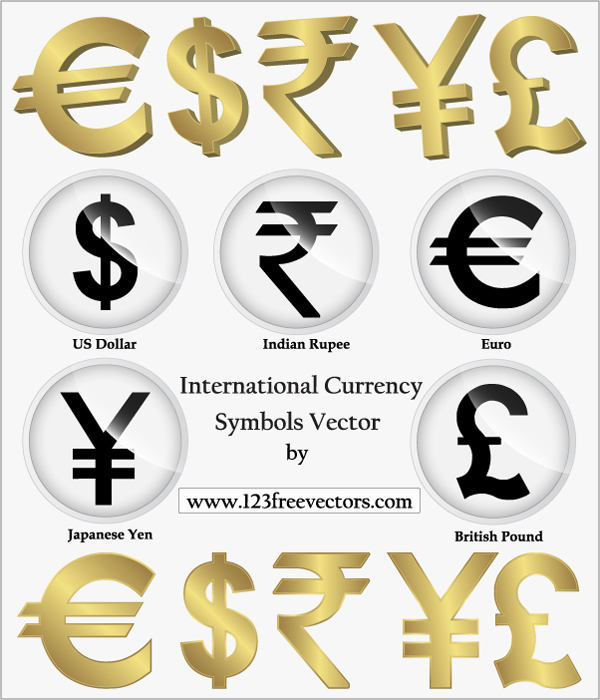
1. **The Dollar Sign’s Core Identity: A Universal Currency Symbol**At its most fundamental, the dollar sign serves as an indispensable indicator for units of various currencies worldwide, prominently for those denominated ‘dollar’ or ‘peso.’ This capital ⟨S⟩, typically bisected by one or two vertical strokes ($ or ), has transcended linguistic and national boundaries to become a universal shorthand for monetary value. While the single-stroke version is perhaps the most common in modern usage, the double-barred sign, known as cifrão in Portuguese, has its own distinct historical and regional significance.
These one- and two-stroke versions are frequently regarded as mere stylistic or typeface variants, a testament to the symbol’s adaptability across different visual contexts. The Unicode computer encoding standard, in fact, defines a single code (U+0024) for both interpretations, leaving the ultimate rendering to the discretion of specific fonts. This standardization reflects a practical acknowledgment of their interchangeable roles, even if historical customs in certain locales once assigned specific forms to specific currencies.
Beyond its core function, the dollar sign’s placement relative to the numeral often reveals cultural and regional nuances. In most English-speaking countries that employ the symbol, it is traditionally positioned to the left of the amount specified—for example, “$1,” which is then read as “one dollar.” Conversely, in French-speaking Canada, an interesting deviation occurs, with the dollar symbol usually appearing after the number, such as “5$.” This variation underscores the subtle yet significant differences in how a universal symbol integrates into diverse linguistic and representational systems.
Read more about: Unraveling the ‘$’ Symbol: A Deep Dive into the Dollar Sign’s Multifaceted History and Modern Relevance
2. **The Spanish Peso Hypothesis: Tracing the Sign’s Most Accepted Origin**Among the numerous theories attempting to explain the dollar sign’s mysterious genesis, the most widely accepted and historically supported holds that the sign evolved from the Spanish and Spanish American scribal abbreviation “p s ” for pesos. This theory is robustly supported by a comprehensive study of late 18th- and early 19th-century manuscripts, which vividly illustrate a gradual, organic transformation of this abbreviation into the recognizable dollar mark.
Historical documents reveal a clear progression where the ‘s’ in “ps” began to be written directly over the ‘p,’ eventually coalescing into a symbol that bore a striking resemblance to the modern “$” mark. A notable piece of evidence bolstering this hypothesis comes from Oliver Pollock, a prominent Irish trader and early financier of the American Revolution. In a letter dated 1778, Pollock employed the abbreviation “ps” in a manner where the letters were run together so closely that they almost exactly mimicked the dollar sign we know today, providing a tangible link to its scribal origins.
The profound connection between the Spanish American peso and the dollar sign extends directly to the foundational currency of the United States. The Spanish coins, particularly the “Spanish dollar” or “piece of eight,” served as the direct model for the currency adopted by the United States in 1792. The Coinage Act of 1792 explicitly defined the U.S. dollar to have “the value of a Spanish milled dollar as the same is now current,” solidifying this historical lineage. While the earliest U.S. dollar coins lacked any symbol, the first known occurrence of the ‘$’ in print is attributed to Archibald Binny, a Philadelphia printer, in the 1790s, indicating its rapid adoption as a formal currency designator.
Read more about: Unraveling the ‘$’ Symbol: A Deep Dive into the Dollar Sign’s Multifaceted History and Modern Relevance

3. **The Pillars of Hercules: A Grand Visual Theory of Genesis**Another compelling, albeit alternative, hypothesis for the dollar sign’s origin traces its lineage to an iconic visual representation: the Pillars of Hercules. This classical symbol, historically representing the two sides of the Strait of Gibraltar, featured prominently in Spanish iconography. According to this theory, the dollar sign emerged from a depiction of these pillars, often shown with a ribbon wrapped around each pillar, or both pillars, in the distinctive form of an “S.”
This powerful device was not merely an abstract emblem; it served as a significant support element of the Spanish coat of arms and was widely displayed on the most common real de ocho coins circulating throughout the Americas and Europe during that era. Crucially, these coins were frequently minted at the renowned Potosí mint in Bolivia, which operated from 1573 to 1825. The ubiquity and familiarity of this imagery on the currency of the time suggest a plausible visual inspiration for the new monetary symbol.
Further reinforcing the cultural penetration of this imagery, historical records from Qing Dynasty China reveal that one of the names used for Spanish dollars was (Shuāngzhù), which translates directly to ‘double-pillar.’ This nomenclature strongly implies that the visual motif of the Pillars of Hercules, as depicted on the Spanish coins, was sufficiently prominent and recognizable to influence the very naming conventions for the currency in distant lands, lending significant weight to its potential role in the dollar sign’s artistic evolution.
Read more about: Tracing the Dollar Sign: An In-Depth Examination of Its Enigmatic Origins and Enduring Global Impact
4. **From Potosí Mint’s Mark to Global Symbol: A Variant Origin Theory**Building upon the visual theories related to Spanish coinage, a specialized variant hypothesis for the dollar sign’s origin focuses directly on the mark of the Potosí mint itself. This mint, located in what is now Bolivia, was an immensely significant hub of silver production, responsible for mining a substantial portion of the Spanish Empire’s silver, which subsequently fueled global commerce. Given its central role in coin production, the symbols embedded within its coinage held considerable influence.
A key feature observed on many of these Potosí-minted coins was a distinctive monogram composed of the superimposed letters “P T S I.” This intricate mark served as an identifier for the mint, a symbol of its authority and the origin of the valuable currency it produced. The intertwining of these letters created a unique visual signature that circulated widely across the world, carried by the very silver coins that were the lifeblood of trade.
The intriguing aspect of this hypothesis is that the core of this “P T S I” monogram visually resembled a (single-stroked) “$” sign. This suggests a direct graphical lineage, where an internal component of the Potosí mint’s own identifier could have subtly evolved or been reinterpreted into the broader, more generalized symbol for currency. It posits that the dollar sign might not just be inspired by the coins, but could have literally emerged from a stylized mark *on* the coins themselves, a powerful emblem of their origin and value.
Read more about: The Enigmatic Journey of the Dollar Sign: Unpacking Its Rich History, Global Reach, and Digital Domination
5. **The German Thaler Connection: Europe’s Influence on the Dollar Sign**Stepping beyond the immediate influence of Spanish currency, another intriguing hypothesis delves into the broader European linguistic and numismatic landscape for the dollar sign’s ancestry. This theory posits that the English word “dollar” itself provides a crucial clue. It is understood that “dollar” originally entered English via the Dutch term “daalder,” which in turn derived from “Joachimsthaler” or simply “thaler.” The thaler was a large German silver coin, highly prevalent and widely used across Europe, much like its Spanish counterpart, the piece of eight.
Given this etymological link, proponents of this theory conjecture that the dollar sign itself might have derived from a symbol historically employed to denote this German silver coin. This symbol, it is believed, consisted of a superimposing of the letters “S” and “I” (or “J”). Such a combination could graphically echo the structure of the modern dollar sign, suggesting an older, pan-European predecessor for the symbol’s form rather than a purely Iberian-American origin.
Documentary evidence supports the existence of such a symbol. A symbol resembling a superimposition of S and I appears in the 1686 edition of “An Introduction to Merchants’ Accounts” by John Collins. This provides concrete historical proof that similar graphic conventions existed in European financial notation long before the widespread adoption of the dollar sign in the Americas. While less firmly established than the Spanish peso theory, the thaler connection offers a compelling glimpse into the diverse influences that may have converged to shape this iconic symbol, even considering a less likely alternative that suggests it came from a snake and cross emblem on the thaler coins.
6. **Debunking Myths: Critically Examining Less Likely Origin Theories**While several compelling hypotheses illuminate the dollar sign’s origins, historical and documentary scrutiny has also relegated some theories to the realm of less likely explanations. Maintaining an authoritative and data-driven perspective, it is crucial to examine these narratives critically, understanding why they have not garnered the same level of acceptance as others, despite their occasional popular appeal. Two notable examples often cited are the “US” monogram theory and the “S+clavo” theory.
One persistent, though largely discredited, theory suggests the dollar sign originated as a monogram of “US,” with a narrow “U” superimposed on an “S.” The narrative posits that the bottom part of the “U” would have been lost over time, leaving behind a symbol with two vertical lines. This theory gained some traction, being mentioned in letters to “Notes and Queries” in 1876 and by industrialist Henry Towne in his classic 1886 essay on management. Notably, author Ayn Rand also claimed this version in her 1957 novel “Atlas Shrugged,” asserting that the “US” monogram would have been used on money bags issued by the United States Mint. Despite its literary and historical mentions, documentary evidence for the actual use of such a monogram on currency or money bags as the origin of the dollar sign remains elusive, contradicting its widespread adoption from this specific source.
Another theory, also categorized as less likely, posits a much darker origin connected to the Spanish colonial period. This hypothesis notes that captors of slaves in Spanish territories sometimes branded enslaved people with a symbol very similar to a one-barred dollar sign. The theory suggests the symbol could represent “S + clavo,” where “Esclavo” is Spanish for “slave” and “clavo” means “nail.” While authors T. Seijas and J. Frederick have noted this practice, the direct and exclusive link between this branding symbol and the ubiquitous dollar sign’s general adoption for currency lacks definitive documentary support to supersede the more established and widely accepted scribal abbreviation theory. It serves as a stark reminder of historical atrocities but does not fully explain the dollar sign’s global financial emergence.

7. **Digital Encoding: The Dollar Sign’s Journey into Cyberspace**The dollar sign secured its universal presence in computer character sets due to its early role in business accounting software. Represented by Unicode U+0024, inherited from ASCII, it became a fundamental element of digital communication and programming. This foundational integration ensures its accessibility across diverse computing platforms, solidifying its status as a pervasive digital symbol.
The one- and two-stroke variations of the dollar sign are largely considered stylistic, typeface-dependent distinctions. Unicode, for practical reasons, defines a single code (U+0024) for both, leaving the specific visual rendering to individual fonts. This implies a unified digital identity despite historical graphical nuances, meaning its underlying semantic meaning remains consistent even if its appearance subtly changes.
Beyond this primary representation, Unicode offers specialized code points like U+FE69 (SMALL DOLLAR SIGN). However, for most computing applications, U+0024 is the recognized code. Despite formal requests and its distinct cultural use as the cifrão ( ), particularly in Portuguese-speaking regions, Unicode, as of 2019, still treats this as a stylistic difference, without a separate code point. This can create ambiguity, often necessitating the use of the ISO 4217 three-letter acronym for international clarity in official documents.
8. **The Dollar Sign in Programming Languages: A Versatile Sigil**The dollar sign’s early integration into computer character sets led to its widespread appropriation in programming languages. It has become a remarkably versatile “sigil,” utilized to define variables, introduce expressions, or mark specific syntactic elements. This highlights its adaptability far beyond its original financial context, showcasing the ingenuity of software developers in repurposing common symbols for critical functional roles.
In numerous programming environments, `$` acts as a crucial identifier for variables. In BASIC, `H$=”Hello”` defines a character string. PHP, AutoIt, Perl (for scalar variables and array/hash elements), and Ruby all employ `$` as a prefix for various variable types, establishing clear conventions for scope and kind. This consistency across diverse languages demonstrates its effectiveness in variable declaration.
Furthermore, `$` frequently introduces expressions for evaluation. It’s common in Unix shells for variable expansion and in modern languages like JavaScript, C#, and Kotlin for string interpolation. Conversely, Java and Python use it to mark insertion points for expression results, enabling dynamic content generation. Its roles also extend to hexadecimal constants in assembly languages and Pascal, and to delimiting mathematical regions in TeX, showcasing its breadth of application in development.
Read more about: The Enduring Mystery of the Dollar Sign: Tracing Its Origins, Evolution, and Unseen Influence

9. **Operating Systems and Beyond: Administrative and Structural Roles**The dollar sign’s operational versatility extends deep into the architecture of various operating systems, where it often serves critical administrative and structural purposes. Its presence in command lines, file naming conventions, and system protocols underscores its fundamental role in how computers organize and manage information, evolving beyond financial representation into the very mechanics of digital infrastructure.
In early computing, `$` marked significant boundaries. CP/M and MS-DOS systems used it to signal the end of text displayed by system function 9, crucial for processing command-line inputs. The specific reason for this choice by CP/M developer Gary Kildall remains a historical curiosity, highlighting the symbol’s early, often enigmatic, significance in computing’s foundational layers.
Modern operating systems, particularly Windows, continue utilizing `$` for administrative functions. Appended to a share name (e.g., `\\server\\share$`), it designates a shared folder as hidden. This prevents it from appearing in network browsing lists, making it accessible only by explicit reference. This feature is vital for administrative shares, providing a layer of operational obscurity that streamlines network management and enhances system integrity.
Further demonstrating its structural utility, `$` acts as a line separator in LDAP directory attributes like `postalAddress`. In UNIVAC EXEC 8, it signifies “system” in names of system files or operator messages. RISC OS uses `$` in system variables to delineate application names from specific variables and to refer to the root directory, showcasing its enduring role in defining digital hierarchies across different computing paradigms.
10. **Everyday Software and Cataloging: Expanding Practical Applications**Beyond its impact on programming and operating systems, the dollar sign integrates into a myriad of everyday software applications, enhancing functionality and providing concise data manipulation capabilities. Its pragmatic repurposing, driven by its consistent presence in character sets, allows for sophisticated operations with a simple, familiar mark, underpinning modern data processing and information management.
One of its most recognized functions is within spreadsheet software, notably Microsoft Excel, where `$` denotes absolute cell references. Placing `$` before a column or row (e.g., `$A$1`) “fixes” that part of the reference, ensuring consistency when formulas are copied. This is indispensable for complex financial modeling and data analysis, empowering users to build robust and accurate spreadsheets.
In specialized information systems, particularly library cataloging, the dollar sign acts as a precise subfield delimiter within computer coding of records. Standards like MARC formats rely on `$` to segment specific information within a field. This ensures that diverse data—such as author names and titles—can be correctly parsed, indexed, and retrieved, supporting vast digital libraries and efficient knowledge organization.
Its utility also extends into text processing and pattern matching. In `sed`, `grep`, and regular expressions, `$` is a metacharacter matching the end of a line or string, enabling sophisticated text manipulation. Similarly, in classic text editors like `ed` and `vi`, `$` represents the end of a line or the entire file, providing precise anchors for operations and demonstrating its versatility in command-line environments.
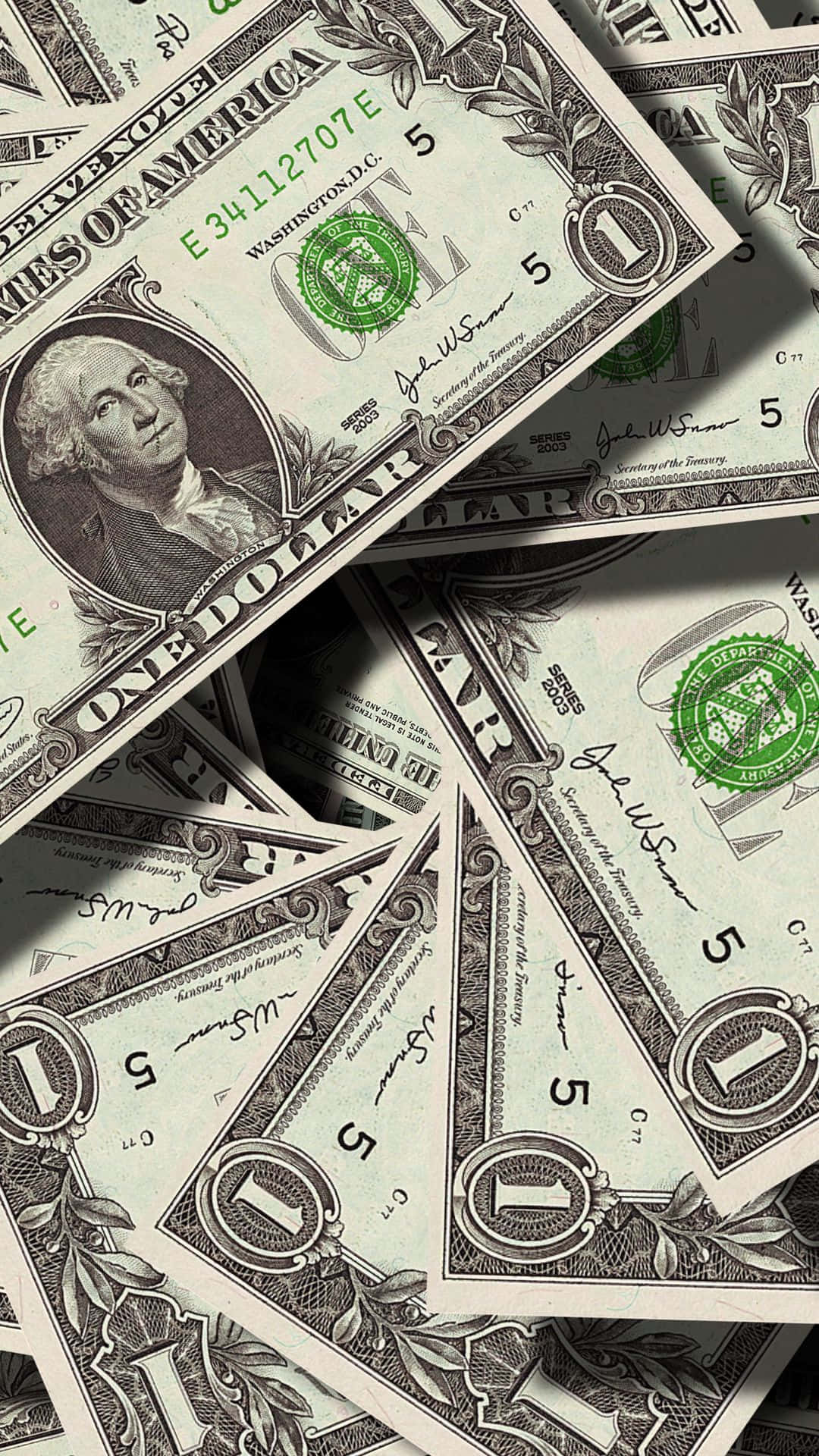
11. **The Dollar Sign in Linguistics and Pop Culture: Beyond Finance**Beyond its technical and financial applications, the dollar sign has deeply permeated popular culture and linguistic expression, often imbued with meanings far removed from its original intent. Its strong association with money and American economic power has made it a potent symbol, readily appropriated for commentary, branding, and artistic stylization. This showcases how a utilitarian mark can evolve into a multifaceted icon.
One common, often derisive, cultural use is as a substitute for ‘S’ in names like “Micro$oft” or “Di$ney.” This symbolically implies greed, excessive commercialism, or an overt focus on profit. Similarly, its use in words like “$ky” can critique perceived Americanization, transforming a neutral currency indicator into an instrument of social commentary on financial power and corporate influence.
Conversely, the dollar sign is embraced for intentional stylization, adding distinctive flair to personal brands. Musicians and public figures like A$AP Rocky, Ke$ha, and Ty Dolla $ign incorporate `$` into their names to evoke an edgy, savvy, or uniquely branded image. This deliberate integration elevates the symbol to a powerful element of identity, conveying specific attitudes within contemporary culture, much like the stylized “¥€$.”. Historically, Ambrose Bierce used it to imply corruption in “$tealand Landford,” demonstrating its long history as a tool for pointed social critique.

12. **Global Currency Designations and Positional Nuances**At its heart, the dollar sign continues its primary function as a fundamental monetary symbol for countless national currencies, acting as a concise and internationally recognized indicator of value. Prominently associated with “dollar” or “peso” denominations, its widespread adoption reflects global interconnectedness. While ISO 4217 three-letter codes (e.g., USD) are preferred for international professional clarity, the dollar sign remains the common shorthand in daily transactions worldwide.
Beyond its namesake currencies, the dollar sign denotes several other monetary units. This includes the Brazilian real (R$), Ethiopian birr (E$, until 1976), Macanese pataca (MOP$), Nicaraguan córdoba (C$), Samoan tālā, and Tongan paʻanga (T$). Historically, it also served the Malaysian ringgit. These examples underscore the symbol’s adaptability in designating value across diverse economic systems and its role as a visual constant amidst varying national denominations.
A fascinating aspect of its global application is its positional variance. In most English-speaking countries (U.S., Mexico, Australia), it precedes the amount, “$5,” though spoken after. In French-speaking Canada, however, it typically appears after the number, “5%$,” providing a subtle linguistic and cultural differentiation in numerical representation.
One of its most unique historical applications is within the Portuguese Empire, where the two-stroke variant, the `cifrão` ( ), played a distinctive role. In Portugal and Brazil, it served as a thousands separator in the `real` (`123 500 réis`). Post-1911, with the `escudo`, the `cifrão` transitioned to function as the decimal separator (e.g., `123 50` for 123.50 `escudos`). This usage persists in Cape Verde for its local `escudo`. Its name, from Arabic `ṣifr` (‘zero’), underscores the symbol’s adaptability in complex monetary notations, with similar methods used by the South Vietnamese `đồng` before 1975.
From its mysterious origins debated by scholars to its multifaceted roles in global finance, cutting-edge computing, and even popular culture, the dollar sign stands as a testament to the enduring power of symbols. It is far more than a simple mark of currency; it is a dynamic emblem of human ingenuity, adaptation, and interconnectedness. Its journey through history, from the scribal abbreviations of the Spanish peso to its sophisticated encoding in digital systems and its playful appropriation in modern branding, vividly illustrates how a single glyph can encapsulate centuries of economic ambition and technological innovation. As we navigate an increasingly digital and globalized world, the dollar sign continues to evolve, a silent, yet powerful, testament to the ongoing saga of wealth creation and the ever-expanding frontiers of human achievement.