
Every movie fan, every TV show binge-watcher, and indeed, anyone who’s ever consumed popular culture, has a mental rolodex of iconic lines of dialogue seared into their cerebral cortex. These one-liners, zingers, and profound pronouncements thrill us, inspire us, and make us laugh, becoming an integral part of our shared cultural language. We repeat them, often with great enthusiasm, believing we’re channeling the original moment perfectly.
But here’s a fascinating, almost bewildering truth: many of these beloved lines, the very phrases we’ve come to know and love, aren’t actually what was said. It turns out that the life of an iconic quote tends to play out much like the film industry’s version of broken telephone. A slight adjustment here, a word dropped there, a tense changed, until eventually, a misquote takes unshakeable hold over the collective cultural consciousness, often for decades. It’s a testament to the power of memory, adaptation, and perhaps, our desire for a more streamlined or dramatic narrative.
Prepare to have your mind blown, your assumptions challenged, and your intellectual curiosity thoroughly satisfied as we embark on a journey through some of the most famous lines in cinema, television, and popular culture that most of us get wrong. Whether it’s a minor grammatical tweak or a complete fabrication, the stories behind these misquotes are as entertaining as they are enlightening. We’re about to peel back the layers of linguistic evolution to reveal the actual words spoken, and uncover why these altered versions became so stubbornly popular.

1. **“Luke, I am your father.”**This line stands as perhaps one of the most shocking and iconic revelations in cinematic history, delivered by Darth Vader to Luke Skywalker in *The Empire Strikes Back*. It’s a moment that launched a thousand parodies and solidified its place in pop culture legend, instantly recognizable even to those who’ve never seen a *Star Wars* film. You’ve heard it countless times, probably said it yourself, and can practically hear James Earl Jones’s resonant voice echoing in your mind.
However, the surprising truth is that Darth Vader’s actual line doesn’t include Luke’s name at all. When Luke accuses Vader of killing his father, Vader responds with a much more direct and impactful, “No, I am your father.” The omission of “Luke” is a subtle but significant detail, transforming a direct address into an even more abrupt and devastating pronouncement. It’s a moment of pure, unadulterated shock, heightened by the starkness of the original dialogue.
The misquote likely stuck because fans felt the need to add context when recounting the scene, especially in casual conversation or when introducing the twist to others. Adding “Luke” naturally frames the statement for clarity, making it easier to retell without needing extensive setup. Over time, this convenient addition became indistinguishable from the original, creating a persistent collective memory that slightly, yet fundamentally, alters one of film’s most pivotal moments. It’s a classic example of how our desire for narrative completeness can subtly rewrite history.

2. **“We’re going to need a bigger boat.”**The chilling pronouncement from Chief Brody in Steven Spielberg’s 1975 masterpiece *Jaws* immediately evokes the image of a massive, menacing great white shark and the sheer terror of facing an unstoppable force of nature. It’s a line uttered in sheer disbelief and rising panic, perfectly encapsulating the growing horror as the scale of their problem becomes terrifyingly clear. This quote has become a universal shorthand for facing an overwhelming challenge, often humorously deployed in everyday situations.
Yet, if you listen closely to Roy Scheider’s delivery, you’ll notice a subtle, yet distinct, difference from the commonly remembered phrase. Chief Brody actually says, “You’re gonna need a bigger boat.” The change from “we’re” to “you’re” shifts the immediate burden of the problem from a collective struggle to a more pointed, almost accusatory observation directed at the owner of the boat, Quint, or perhaps the broader situation. It personalizes the daunting task, highlighting the inadequacy of their resources in the face of such a formidable foe.
This personal pronoun swap has made the misquote, the version with “we’re,” more relatable for the collective “we.” It transforms Brody’s line into a universal expression of a shared, daunting challenge, rather than a specific comment within the film’s narrative. The collective “we” aligns better with how audiences experience and relate to the film’s tension, drawing everyone into the shared predicament of confronting the enormous shark. It shows how minor linguistic changes can subtly, yet powerfully, alter the resonance and interpretation of a memorable line.

3. **“Play it again, Sam.”**This phrase is synonymous with the romantic and melancholic atmosphere of *Casablanca*, conjuring images of Humphrey Bogart’s Rick Blaine and Ingrid Bergman’s Ilsa Lund in a dimly lit café, reminiscing about a past love. It’s a line often attributed to Ilsa, pleading with Sam to play “As Time Goes By,” and it perfectly encapsulates the film’s themes of nostalgia and lost romance. It has permeated popular culture as a classic request for a beloved song or memory.
However, despite its widespread recognition, Humphrey Bogart’s character, Rick Blaine, never actually utters these precise words in the film. The closest any character comes to this iconic misquote is Ilsa Lund saying, “Play it, Sam. Play ‘As Time Goes By’,” and later, Rick says, “You played it for her, you can play it for me. If she can stand it, I can. Play it!” Neither of these lines includes the exact phrase “Play it again, Sam.” The popular version is a distillation, a romanticized summary of the sentiment rather than a literal quote.
The simplified version of the line became shorthand for the movie’s most famous scene and its deeply emotional core. It compresses the longing, the memory, and the romantic tragedy into a more concise, memorable phrase that’s easier to recall and repeat. This transformation illustrates how collective memory often prioritizes brevity and emotional impact over precise accuracy, streamlining complex dialogue into digestible, iconic soundbites that capture the essence of the moment. It’s a compelling example of a misquote that perfectly serves the narrative memory.
Read more about: Tony Roberts, Urbane Stage and Screen Veteran, Dies at 85: A Life Defined by Versatility and Woody Allen Collaborations

4. **“Beam me up, Scotty!”**For countless Trekkies and even casual sci-fi enthusiasts, “Beam me up, Scotty!” is the quintessential command from Captain Kirk, signaling instantaneous transport aboard the Starship Enterprise. It represents the wonders of futuristic technology and the boundless adventures of space exploration. This iconic phrase has transcended its origins, becoming a universal shorthand for teleportation and a staple of pop culture, instantly recognizable even outside the *Star Trek* universe.
Yet, despite its enduring popularity and immediate association with Captain Kirk, the surprising truth is that he never utters these exact words in any episode of the original *Star Trek* series. While Kirk frequently instructs his chief engineer, Montgomery “Scotty” Scott, to initiate transport, his commands always appear in variations such as “Scotty, beam us up,” “Beam us up, Mr. Scott,” or simply “Energize.” The precise phrasing of “Beam me up, Scotty!” never crosses his lips in the canon.
The line’s widespread adoption and enduring popularity exemplify how collective memory can sometimes create its own reality, separate from the source material. It became a cultural catchphrase because it perfectly encapsulated the thrilling concept of teleportation that captivated audiences and defined a core aspect of the *Star Trek* franchise. The precise, snappy rhythm of the misquote made it incredibly memorable and easy to repeat, solidifying its place in our shared cultural lexicon even if it wasn’t the exact dialogue from the show.

5. **“If you build it, they will come.”**This ethereal line from the beloved film *Field of Dreams* carries a profound sense of hope, faith, and the possibility of miraculous outcomes. It’s a whisper from an unseen voice, inspiring Kevin Costner’s character, Ray Kinsella, to construct a baseball field in his cornfield, promising an extraordinary gathering. The quote has been widely adopted in popular culture to describe the power of effort and vision, suggesting that if you create something worthwhile, an audience or opportunity will inevitably follow.
However, the actual whispered prophecy in the film differs slightly from the universally quoted version. The mysterious voice doesn’t say “they will come,” but rather, “If you build it, he will come.” This distinction is crucial because the original line specifically refers to the ghost of Shoeless Joe Jackson, the disgraced baseball legend, appearing on Ray’s field. It’s a more specific, personal invitation, tying directly into the film’s narrative of redemption and reconciliation.
The misquote, with its collective “they,” feels more inspiring and broadly applicable than the original. It transforms the message from a singular, almost mystical event into a universal principle of attraction and reward. This broader interpretation resonates more deeply with audiences, making the phrase a more versatile motivational mantra. The shift from a specific individual to a general group highlights how a slight change can expand a quote’s meaning and cultural impact, making it more appealing for widespread adoption.
Read more about: Erika Kirk’s Public Farewell: A Widow’s Grief, Defiance, and Vow to Uphold Charlie Kirk’s Mission Amidst National Mourning

6. **“Elementary, my dear Watson!”**When it comes to famous fictional detectives, Sherlock Holmes is undeniably at the top of the list, celebrated for his unparalleled deductive reasoning and his brilliant observations. This phrase, often delivered with a knowing smirk, perfectly encapsulates his genius and his tendency to make complex problems seem utterly simple to his loyal companion, Dr. Watson. It’s a phrase that has somehow wormed its way into popular culture as the ultimate expression of obviousness, instantly recognizable as Holmes’ signature line.
Yet, for all its iconic status and immediate association with the Baker Street sleuth, the phrase “Elementary, my dear Watson!” is never actually spoken in any of Sir Arthur Conan Doyle’s original stories. While Doyle’s Holmes frequently uses the word “elementary” and often addresses Dr. Watson, he never combines them into this specific, catchy sequence. It’s a line that originated and was popularized by various adaptations of the character, particularly in early 20th-century films, where the simplified phrasing helped convey Holmes’s brilliance to a broader audience.
The endurance of this misquote lies in its ability to perfectly capture the essence of Holmes’ character: his effortless intellectual superiority and his amiable, if sometimes patronizing, relationship with Watson. It feels so authentic, so perfectly *Holmesian*, that it’s almost impossible to believe it’s not canonical. This is a classic example of how adaptations can profoundly influence and even overwrite our memory of original works, making Hollywood’s version more vivid than the literary source. So, next time you find yourself quoting this line, remember it’s more silver screen than Baker Street.

7. **“I want to suck your blood.”**This line is arguably the most stereotypical and immediately recognizable phrase associated with the legendary vampire, Dracula. It conjures images of fanged creatures, dark castles, and ominous encounters, embodying the very essence of vampiric menace and allure. It’s the go-to quote whenever anyone imitates a vampire, becoming a cornerstone of Halloween clichés and countless parodies across various media. It feels inherently, undeniably, *Dracula*.
However, this chilling declaration is, in fact, pure fiction. Bram Stoker’s original novel *Dracula* and most classic, serious portrayals of the iconic vampire never feature him uttering these exact words. Dracula, throughout Stoker’s meticulously crafted narrative, communicates in a more formal, often archaic, and certainly less explicit manner about his desire for sustenance. The idea of him announcing his intentions in such a direct, almost crude, fashion is entirely at odds with his aristocratic and manipulative character.
The line likely originated and gained traction in parodies, stage adaptations, and Halloween clichés, where simplification and exaggeration are key to comedic or dramatic effect. To immediately convey “vampire,” this direct, almost primal statement served as effective shorthand, even if it sacrificed the character’s original nuance. It’s a fascinating illustration of how popular imagination and subsequent interpretations can create entirely new, widely accepted “facts” about a character or myth, fundamentally altering our collective perception of a classic literary figure.
Having unwrapped the surprising truths behind some of cinema’s most beloved lines, we’re only just getting started. The rabbit hole of misquotes runs deep, extending far beyond the silver screen into the hallowed halls of literature, historical anecdotes, and even profound philosophical statements. It seems that our collective memory, while powerful, has a charming tendency to favor conciseness, drama, or a more universally appealing narrative over painstaking accuracy.
Get ready to have even more of your cultural touchstones gently (or perhaps not so gently) corrected. We’re about to delve into another seven examples of widely-known phrases, from iconic movie moments to sayings attributed to historical figures, that have taken on a life of their own, far removed from their original utterance. Prepare to be surprised, delighted, and maybe a little bit smug with your newfound knowledge.
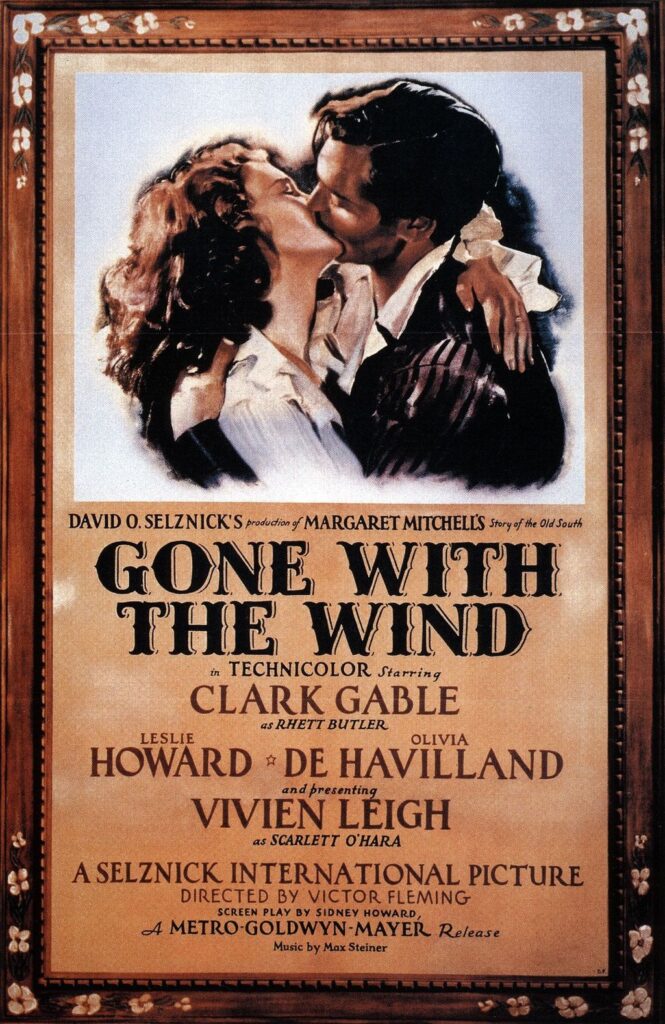
8. **“Frankly, Scarlett, I don’t give a damn.”**This line from *Gone with the Wind* is often cited as one of the most defiant and iconic break-up lines in cinematic history, delivered by Rhett Butler to Scarlett O’Hara. It perfectly encapsulates the exhaustion of a man who has finally given up on a tempestuous relationship, and its power lies in its directness and absolute finality. The phrase has become a cultural shorthand for profound indifference, echoed in countless conversations when someone wants to declare they truly don’t care.
Yet, as with many legendary movie quotes, a subtle shift has occurred in its popular recollection. The actual words spoken by Clark Gable’s Rhett Butler are, “Frankly, my dear, I don’t give a damn.” It’s a minor, almost imperceptible change, substituting “Scarlett” for “my dear.” However, this tiny alteration significantly impacts the original delivery, transforming a specific address to a character into a more broadly dismissive, almost paternalistic, endearment.
The omission of “my dear” in the misquote arguably makes the line feel sharper, more direct, and less adorned, which might contribute to its perceived punchiness in memory. While both versions convey the same sentiment of utter disregard, the original adds a touch of Rhett’s complex charm and perhaps a final, cutting condescension. It’s a prime example of how even a single word can subtly alter the nuance and impact of a quote over time.
9. **“Mirror, mirror on the wall…”**For generations of Disney fans and fairy tale enthusiasts, the Evil Queen’s ominous query to her magical looking glass in *Snow White and the Seven Dwarfs* is etched into memory. It’s the quintessential question of vanity and envy, a dark ritual performed to ascertain who truly holds the title of “fairest of them all.” The phrase has become universally recognized as a symbol of obsession with beauty and a common trope in popular culture whenever a character consults a reflective surface.
However, if you revisit the animated classic, you’ll find that the Queen’s magical confidant is addressed with a slightly different, yet equally enchanting, opening. Her actual dialogue is, “Magic mirror on the wall, who is the fairest one of all?” The popular misquote opts for the repetition of “mirror, mirror,” which admittedly rolls off the tongue with a certain rhythmic allure, making it incredibly memorable and easy to recite.
The shift from “Magic mirror” to the double “Mirror, mirror” is a fantastic illustration of how poetic rhythm and simplicity can take precedence over literal accuracy in collective memory. The misquoted version feels more like a chanted incantation, adding to its mystical quality, perhaps making it more captivating for young audiences. It perfectly captures the essence of the scene, even if it diverges from the exact words spoken, proving that sometimes, the ‘catchier’ version is the one that endures.

10. **“Houston, we have a problem.”**This concise and chilling communication from space has become an iconic representation of crisis and unexpected disaster. Uttered during the ill-fated Apollo 13 mission, it immediately conjures images of astronauts battling against overwhelming odds in the vast emptiness of space. The phrase has transcended its original context to become a universal way of announcing a significant, unforeseen challenge, often used in a self-deprecating or humorous manner.
Yet, the actual transmission from the crew to mission control was not quite as neatly packaged. The original words spoken by Jack Swigert were, “Okay, Houston, we’ve had a problem here,” and later confirmed by Jim Lovell with, “Ah, Houston, we’ve had a problem.” The movie *Apollo 13*, starring Tom Hanks, then streamlined this into the more dramatic and immediately impactful, “Houston, we have a problem,” solidifying the slightly altered version in popular memory.
The critical difference lies in the tense: “we’ve had” versus “we have.” The original “we’ve had” suggested a problem that had already occurred and was ongoing, a more measured report of an unfolding situation. The cinematic “we have” delivers a sense of immediate, present danger, heightening the drama for the audience. This slight linguistic tweak demonstrates Hollywood’s masterful ability to refine historical dialogue for maximum emotional resonance, even if it means sacrificing absolute fidelity to the original transcript. It’s no wonder Tom Hanks’ version became the defining phrase.
Read more about: Ready for Liftoff? We’re Ranking 13 Of The Best Space Movies Ever – How Many Have You Actually Seen?

11. **“Money is the root of all evil.”**This powerful statement has been quoted for centuries, serving as a cautionary proverb about the corrupting influence of wealth. It’s frequently invoked in discussions about greed, materialism, and the moral pitfalls associated with the pursuit of riches. Many people believe it comes directly from religious texts, serving as an ancient warning against worldly possessions, and it’s certainly a phrase that carries significant moral weight in popular discourse.
The surprising truth, however, reveals a crucial nuance often lost in the common adage. The biblical quote, found in 1 Timothy 6:10, actually states: “For the love of money is a root of all kinds of evil.” The addition of just three words — “the love of” — fundamentally shifts the meaning. It’s not money itself that is inherently evil, but rather the idolatrous attachment, the avarice, and the insatiable desire for it that leads to wickedness.
This omission dramatically alters the message, transforming a warning against human greed into an indictment of currency itself. The simplified misquote allows for a blanket condemnation of wealth, rather than a more nuanced critique of human character and priorities. It’s a fascinating case of how selective memory and the desire for a pithy, definitive statement can reshape a profound philosophical or religious teaching into something quite different, losing its original depth in the process.
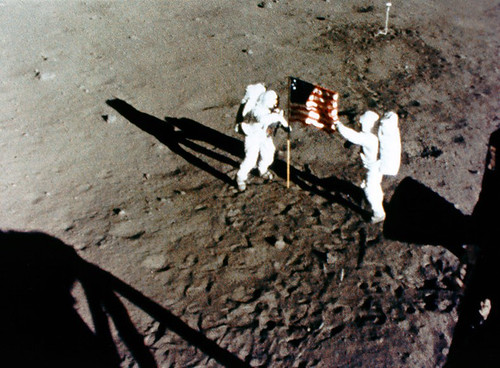
12. **“That’s one small step for man, one giant leap for mankind.”**Neil Armstrong’s immortal words upon stepping onto the lunar surface in 1969 are perhaps the most iconic statement of human exploration and achievement. It’s a profound declaration that beautifully encapsulates the significance of the moment, symbolizing both the individual effort and the collective advancement of humanity. The line is celebrated globally as a testament to human ingenuity and our boundless capacity to push beyond earthly limits.
Upon closer inspection, however, the phrase as commonly remembered presents a slight linguistic redundancy, as “man” and “mankind” are essentially synonymous. The truth is, Armstrong’s intended, and very likely actual, statement included a small but crucial article: “That’s one small step for **a** man, one giant leap for mankind.” The “a” makes all the difference, contrasting the single individual’s physical act with the monumental collective achievement it represented.
Audio analysis suggests that the “a” may have been obscured or lost in the transmission from the Moon, leading to the version that became ingrained in popular memory. The misquote, while still powerful, loses the precise philosophical elegance of the original, where the “a man” highlights the singular human experience against the backdrop of universal progress. It’s a fascinating intersection of technological limitations and collective memory shaping one of history’s most pivotal declarations.

13. **“Let them eat cake!”**This phrase has long been attributed to Marie Antoinette, the Queen of France, and is perhaps one of the most infamous quotes in history, symbolizing the callous indifference of the aristocracy towards the suffering of the impoverished populace leading up to the French Revolution. It paints her as a heartless and out-of-touch monarch, completely unaware of the struggles faced by her hungry subjects. This line has become a powerful, if tragic, emblem of class divide and aristocratic excess.
This phrase has long been attributed to Marie Antoinette, the Queen of France, and is perhaps one of the most infamous quotes in history, symbolizing the callous indifference of the aristocracy towards the suffering of the impoverished populace leading up to the French Revolution. It paints her as a heartless and out-of-touch monarch, completely unaware of the struggles faced by her hungry subjects. This line has become a powerful, if tragic, emblem of class divide and aristocratic excess.
However, historical evidence overwhelmingly suggests that Marie Antoinette never actually uttered these words. The quote, or a variation of it, actually predates her time in France. It appears in Jean-Jacques Rousseau’s *Confessions*, written when Marie Antoinette was merely a child. In Rousseau’s account, a princess (not specifically named Marie Antoinette) suggests giving brioche (a rich, eggy bread, not cake) to starving peasants if they had no bread.
The persistent misattribution likely stems from its potent narrative power. The phrase perfectly encapsulated the public’s perception of the monarchy’s extravagance and disconnect, making it an ideal, albeit false, symbol for the revolutionary fervor. It was a convenient and highly effective piece of propaganda, solidifying a caricature of Marie Antoinette that has endured for centuries, proving that sometimes, a compelling story can be far more enduring than the actual historical facts.
And so, our journey through the annals of misquotes concludes, for now. From the deepest reaches of space to the hallowed pages of religious texts, and from the silver screen to the political stages of history, it’s clear that the human mind has an extraordinary knack for tweaking, condensing, and occasionally completely reinventing famous phrases. Each misquote tells a story, not just about the original words, but about how we remember, retell, and relate to the narratives that shape our cultural landscape. It’s a testament to the dynamic nature of language and memory, where sometimes, the version we *think* we heard becomes more real than the truth itself. Keep your ears sharp and your intellect even sharper, because the world of words is always full of surprising twists!