In the exciting world of automotive innovation, few features capture the imagination quite like all-wheel drive, or AWD. It’s a system that promises enhanced grip, greater confidence, and a smoother journey, particularly when the roads decide to throw a curveball of rain, snow, or loose terrain. Given its undeniable benefits and increasing popularity, it’s perhaps no surprise that AWD has become a magnet for a host of intriguing — and often incorrect — beliefs among drivers.
Indeed, the concept of all four wheels working in harmony to propel a vehicle forward conjures images of unshakeable stability and supreme capability. This perception, while rooted in some truth, has unfortunately led to a myriad of misconceptions about what AWD truly means for your driving experience, its limitations, and how it interacts with other crucial vehicle components. Understanding these nuances is key to truly harnessing the potential of your AWD vehicle and making informed decisions on the road.
So, prepare to shift gears with us as we embark on an illuminating journey to bust some of the most stubborn and widespread myths surrounding all-wheel drive. Our goal is to provide clarity, grounded in factual information, so you can separate the marketing magic from the mechanical reality and truly appreciate the engineering marvel that is AWD, while also knowing its boundaries. Let’s start by challenging some fundamental assumptions many drivers still hold dear.
1. **Myth: AWD Helps You Stop Faster**One of the most pervasive misconceptions about all-wheel drive is the idea that having power distributed to all four wheels somehow translates directly into superior braking performance. It’s an understandable assumption; if AWD helps you get going, surely it helps you stop, right? However, this belief doesn’t hold up under scrutiny of how vehicles truly come to a halt.
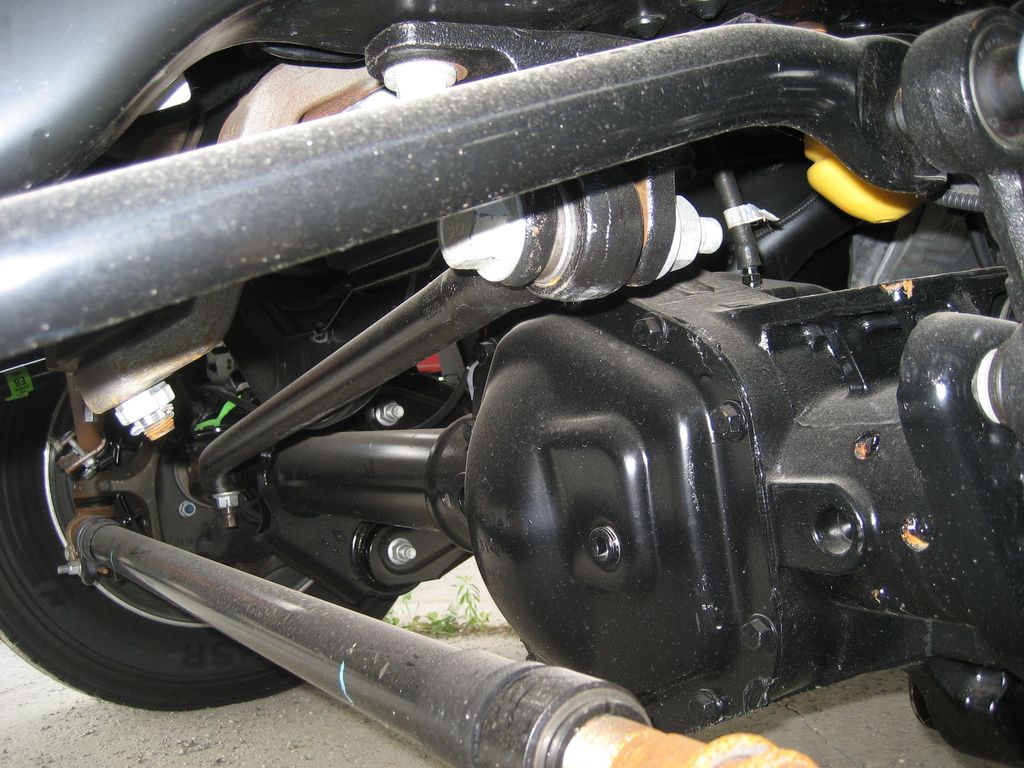
Braking, at its core, is about friction between your tires and the road surface, as well as the efficiency of your vehicle’s braking system, not how power is delivered to the wheels. The context information clearly states: “All-wheel drive does not assist with braking.” In fact, the mechanics of an AWD system, which include additional components like a transfer case, differentials, and extra half-shafts, contribute to a greater overall vehicle weight. This additional mass can actually mean that it might take longer to stop a vehicle compared with a two-wheel-drive version of the same model, due to the AWD vehicle’s additional momentum.
Engine braking, which uses the compression of an internal-combustion engine to help slow down, can be effective, especially when shifting into a lower gear. But the idea that an extra set of drive wheels aids this process is simply not true. While AWD dramatically improves grip and acceleration, particularly from a standstill or in slippery conditions, it’s crucial to remember that it doesn’t shorten your stopping distances. Factors like tire quality, road conditions, and the braking system itself are what truly dictate how quickly you can bring your vehicle to a safe stop.
Read more about: Stop Falling for These 19 Car Myths: Essential Facts for Drivers

2. **Myth: AWD Means You Don’t Need Winter Tires**This myth is perhaps one of the most dangerous, leading many drivers to a false sense of security when facing harsh winter conditions. While it’s true that all-wheel drive dramatically improves traction, manifesting primarily when accelerating from a stop in slippery conditions, this additional grip does not magically extend to cornering or, critically, to braking.
When the temperature drops significantly, or if there is snow and ice on the road, all-wheel drive is absolutely not a substitute for a proper set of winter or snow tires. These specialized tires are meticulously designed with unique rubber compounds that remain flexible in cold temperatures, and their aggressive tread patterns feature sipes (small slits) that bite into snow and ice, providing vastly superior grip for both turning and stopping. Deciding to rely solely on all-season tires because your automobile features all-wheel drive can result in alarmingly longer stopping distances and significantly reduced handling during the chilliest of seasons.
Even the most advanced AWD system can only transfer power effectively if the tires can grip the road. As the context emphasizes, “Tires are the only part of your vehicle making direct contact with the road.” Without the right tires for the season, the benefits of AWD are severely limited, especially when you need to slow down or navigate a turn on an icy patch. Prioritizing proper seasonal tire selection, alongside the benefits of AWD, is paramount for true safety and control in winter.
Read more about: 15 Car Myths Debunked: Don’t Fall for These Common Misconceptions

3. **Myth: AWD Is for Off-Road Use Only**When many people hear “all-wheel drive,” their minds immediately conjure images of rugged SUVs tackling rocky trails or trucks plowing through muddy fields. It’s true that all-wheel drive is often marketed alongside vehicles designed for adventure, suggesting its primary purpose is to handle rough, unpaved conditions. While this is certainly an aspect of marketing a sport-utility vehicle or pickup truck, the utility of all-wheel drive extends far beyond simply leaving the pavement behind.
In reality, AWD systems offer versatile benefits that enhance daily driving, even on paved roads. For instance, when matched with the right set of tires, AWD can add an extra dimension to winter driving, providing crucial traction on snow-covered or icy highways. Beyond challenging weather, sophisticated AWD systems can also be programmed for performance, helping to balance power output while cornering, thus improving stability and handling during spirited driving.
Furthermore, all-wheel drive can significantly improve acceleration by adding traction and grip for high-horsepower vehicles, allowing them to put more power down to the road efficiently without excessive wheel spin. This means that whether you’re navigating a wet city street, merging onto a busy highway, or enjoying a brisk drive on winding roads, AWD can provide a noticeable advantage in stability and control. It’s a technology that truly makes a difference in a variety of driving scenarios, not just when you venture off the beaten path.
Read more about: Stop Falling for These 19 Car Myths: Essential Facts for Drivers

4. **Myth: AWD Means Never Getting Stuck**It’s a comforting thought: investing in an all-wheel-drive vehicle means you’re immune to the frustration of getting stuck, no matter the conditions. While AWD is undeniably a powerful traction booster, significantly increasing your chances of maintaining momentum in challenging situations, it doesn’t grant your vehicle a magical invincibility cloak. All-wheel-drive-equipped cars, trucks, and SUVs are no exception to the realities of physics and challenging terrain.
As the provided context aptly puts it, “Until telekinesis is invented, drivers will find ways to get even the most capable vehicle stuck.” This humorous yet truthful statement underscores that no matter how sophisticated your drivetrain, there are limits. All-wheel drive, while certainly aiding in maintaining grip, won’t prevent you in every single case from being bogged down in deep snow, thick mud, loose sand, or other conditions that can severely restrict an automobile’s motion.
The ability to avoid getting stuck ultimately boils down to a combination of factors, including driver skill, appropriate tires, ground clearance, and understanding the vehicle’s limits. As with any other type of drivetrain, paying careful attention to where and how you are driving is essential to avoid finding yourself in a predicament. AWD provides a significant advantage, but it’s a tool to be used wisely, not a guarantee against all forms of vehicular immobility.

5. **Myth: AWD Is Always On**The assumption that an all-wheel-drive system is constantly and actively distributing power to all four wheels at all times is a very common misconception. The truth is, the world of AWD is far more diverse and technologically varied than many realize, with different systems operating in distinct ways. It’s a mistake to assume that all AWD setups function identically.
Many modern AWD systems are indeed designed to be ‘always on’ in the sense that they are continuously monitoring conditions and ready to engage, but they don’t necessarily send equal power to all four wheels without interruption. In particular, it’s important to be aware that some AWD setups, sometimes called “slip and grip” systems, only kick in and engage the rear wheels when traction loss is detected at the front wheels. These designs are frequently seen with hybrid vehicles that can utilize an electric motor at the rear axle to provide additional traction only when necessary or when driving below a certain speed. Some systems can even turn off completely at highway speeds to conserve fuel.
Conversely, there are also full-time AWD systems that continuously send power to all four wheels, but even these typically have differentials that allow wheels to spin at different speeds, unlike the locked axles of traditional four-wheel drive. Understanding your specific vehicle’s AWD system — whether it’s reactive, predictive, or full-time — is key to appreciating its capabilities and limitations. It’s less about being ‘always on’ in a static sense, and more about intelligent, dynamic power distribution.
Read more about: Beyond the Myth: 14 Luxury Coupes That Deliver High-End Thrills Without the ‘Never-Ending Expense’
6. **Myth: AWD Guzzles Gas**The notion that all-wheel-drive vehicles are inherently fuel hogs compared to their two-wheel-drive counterparts is another widespread belief, and it’s a bit more nuanced than a simple yes or no. Historically, this myth held more weight due to the mechanical realities of early AWD systems. The additional components, such as differentials, transfer cases, and drive shafts, naturally add weight to a vehicle. Turning an additional set of wheels also creates more drag on the drivetrain, both factors that can indeed lead to increased fuel consumption.
However, modern engineering has made significant strides in addressing these issues, meaning not all AWD models suffer significantly worse fuel mileage than their front-wheel- or rear-wheel-drive counterparts today. Many contemporary AWD systems are designed with efficiency in mind. For instance, systems that can completely disconnect the extra set of drive wheels when AWD is not needed, such as during steady highway cruising, are incredibly helpful in reducing parasitic drag and conserving fuel. This allows the vehicle to effectively operate in two-wheel drive mode when possible.
Furthermore, the integration of electric motors in certain AWD systems, particularly in hybrid vehicles, can actually improve overall fuel economy. These electric components can provide additional traction without relying solely on the internal combustion engine, helping AWD vehicles stay competitive with two-wheel-drive rivals in terms of efficiency. While it’s still generally true that an AWD version of a vehicle will be slightly less fuel-efficient due to its added weight and complexity, the gap has considerably narrowed thanks to these technological advancements.
Beyond the fundamental misunderstandings we’ve already explored, several other deeply ingrained myths about all-wheel drive continue to circulate among drivers. These fables often touch upon crucial aspects of vehicle ownership, from towing capabilities and maintenance expectations to the very definition of AWD itself and its relationship with its cousin, four-wheel drive. Unraveling these persistent misconceptions is vital for every driver looking to truly understand their vehicle’s capabilities and make the most informed decisions on the road.
Let’s delve deeper into these persistent fables, moving beyond the basics to uncover the fascinating realities of all-wheel drive technology.

7. **Myth: AWD Helps With Towing**It might seem entirely logical to assume that if all-wheel drive provides superior traction for accelerating and handling in challenging conditions, it would naturally enhance a vehicle’s towing capabilities. After all, what better way to pull a heavy load than with power distributed across all four wheels, ensuring maximum grip? This intuitive leap, however, overlooks some critical engineering realities that dictate how towing capacity is actually determined and what AWD genuinely contributes to the process.
While AWD certainly offers a distinct advantage in maintaining traction, particularly when initiating movement or navigating slippery surfaces with a trailer in tow, it doesn’t directly increase your vehicle’s overall towing capacity. In a surprising twist for many, all-wheel-drive systems can actually *reduce* a vehicle’s tow rating when compared to an identical two-wheel-drive model. The core reason lies in the fundamental calculation of towing capacity, which is intimately tied to an automobile’s gross vehicle weight rating (GVWR).
This GVWR represents the total maximum carrying capacity of the vehicle’s platform. When an all-wheel-drive system is integrated, its additional components — such as the transfer case, extra differentials, and drive shafts — contribute significant mass to the vehicle. This added weight directly subtracts from the capacity available for towing or hauling. Therefore, while AWD’s enhanced traction is undeniably beneficial for, say, pulling a boat up a slick ramp or navigating a camping trailer across uneven terrain, its contribution is to the *driving conditions* rather than to the vehicle’s inherent ability to *bear* a heavier load. The system provides crucial grip for movement, but it doesn’t magically boost the structural capacity for heavy towing itself.

8. **Myth: AWD Is a Maintenance Nightmare**The intricate dance of gears, shafts, and differentials within an all-wheel-drive system can certainly appear complex, leading many drivers to fear that AWD vehicles are prone to being maintenance nightmares. The assumption is that with more moving parts comes a greater likelihood of breakdowns and exorbitant repair bills. It’s true that the added complexity of an AWD drivetrain does necessitate a degree of extra care compared to a simpler two-wheel-drive setup, but labeling it a “nightmare” is often a significant overstatement of the reality.
In practice, AWD vehicles do require a small amount of additional maintenance, but this typically involves specific, manageable checks rather than constant, costly interventions. One of the most critical aspects of AWD maintenance revolves around tire care. With power being distributed to all four wheels, it becomes paramount that each tire exhibits a consistent level of wear. Unevenly worn tires can create subtle discrepancies in rotational speed, which can, over time, place undue stress and potentially cause damage to sensitive AWD components in certain models. This is why, in some cases, a single flat tire might necessitate replacing both tires on that axle, or even all four, to maintain this crucial consistency, though more affordable alternatives often exist.
Beyond meticulous tire management, the primary additional maintenance for AWD vehicles typically involves periodic fluid changes. Just like your engine and transmission, the transfer case and differentials — which are integral to distributing power to all wheels — contain specialized lubricants that need to be replaced at recommended intervals. These fluid changes are routine procedures, akin to oil changes, and are essential for the longevity and smooth operation of these components. So, while there’s a definite need for attention to specific areas, describing AWD maintenance as a “nightmare” sensationalizes what is, for the most part, a straightforward and predictable part of responsible vehicle ownership.

9. **Myth: AWD and 4WD Are the Same Thing**For many drivers, the terms “all-wheel drive” (AWD) and “four-wheel drive” (4WD) are often used interchangeably, like synonyms for a system that simply sends power to all four wheels. This widespread confusion is perfectly understandable, given that both systems ultimately involve all wheels receiving power. However, beneath this surface-level similarity lies a fundamental difference in their design, operational philosophy, and intended use. To truly grasp the capabilities of your vehicle, it’s crucial to understand that these two drivetrains are distinct technologies.
The primary distinction lies in their engagement and application. All-wheel drive systems are generally designed for automatic, continuous operation, seamlessly delivering power to all four wheels as needed. They are optimized for on-road driving, providing enhanced traction and stability in everyday conditions, such as rain-slicked roads, light snow, or even gravel paths. AWD systems constantly monitor road conditions and can automatically redistribute power to wheels with the most grip without any driver input, making them ideal for improving safety and performance in varying daily scenarios.
In stark contrast, four-wheel drive systems typically require manual engagement by the driver. While there are some automatic 4WD systems, the traditional and more common setup necessitates switching into 4WD mode when extra traction is needed, usually for more challenging, rugged terrain like deep mud, steep off-road trails, or heavy snow. Unlike AWD’s automatic power distribution, 4WD systems often involve locking the front and rear axles together, ensuring that all four wheels rotate in tandem. This provides maximum torque and control for extreme off-road conditions, but it’s generally disengaged on paved roads to improve fuel economy and prevent drivetrain stress. Therefore, while both systems involve four powered wheels, their operational nature and ideal environments are fundamentally different, making the terms far from interchangeable.
Read more about: The $13,000 Toyota Hilux Champ: Unpacking Why This Global Bargain Truck Might Never Conquer American Roads

10. **Myth: AWD Provides Better Off-Road Performance Than 4WD**Given the automatic, seamless nature of many all-wheel-drive systems, some drivers might mistakenly believe that AWD offers superior off-road performance compared to its more robust four-wheel-drive counterpart. The idea is that an intelligent system that constantly adapts to traction demands must surely be better at navigating varied and challenging terrain. However, this belief often overlooks the specific design objectives and mechanical strengths that differentiate AWD from traditional 4WD, especially when tackling truly difficult off-road environments.
While AWD undeniably improves traction and stability on slippery or uneven surfaces encountered in light off-road scenarios, such as graded dirt roads or gravel paths, its capabilities have limitations when faced with extreme conditions. AWD systems excel in preventing wheel slip on surfaces like wet asphalt or light snow, smoothly distributing power to maintain forward momentum. However, they are not typically designed for the kind of heavy-duty abuse and technical demands presented by serious off-roading, which includes navigating large rocks, deep mud, or steep inclines that require significant torque.
Four-wheel-drive systems, on the other hand, are engineered precisely for these tougher environments. They often feature crucial components like low-range gearing, which multiplies torque to provide immense pulling power at slow speeds, essential for crawling over obstacles or through deep mire. Furthermore, 4WD systems can often lock differentials, forcing all wheels to spin at the same rate, which is critical for maintaining traction when one or more wheels lose contact with the ground. In serious off-road situations, this specialized mechanical advantage of 4WD systems provides a level of control and brute force that typical AWD systems cannot match. If your adventures routinely involve challenging trails and rugged landscapes, 4WD remains the unequivocally superior choice.

11. **Myth: AWD Requires No Input from the Driver**One of the appealing aspects of modern all-wheel-drive systems is their largely automatic operation. Many drivers appreciate that AWD works silently in the background, constantly monitoring conditions and distributing power where it’s most needed without requiring any manual intervention. This ‘set it and forget it’ convenience naturally leads to the misconception that AWD demands absolutely no input or decision-making from the driver. While it’s true that AWD is significantly more hands-off than traditional 4WD, dismissing driver interaction entirely overlooks features that can further optimize its performance.
While the core function of most AWD systems is indeed automatic, many contemporary vehicles equipped with this technology also offer selectable driving modes. These modes allow the driver to actively optimize the vehicle’s performance for specific conditions, such as snow, mud, or even sport driving. By selecting ‘Snow’ mode, for instance, the system might adjust throttle response, shift points, and power distribution parameters to enhance grip and stability in slippery conditions. These thoughtful driver inputs can fine-tune the AWD system’s default operation, making it even more efficient and safe in diverse environments.
Even in systems without explicit modes, a driver’s understanding of how AWD works can influence their driving style, leading to smoother and safer navigation. Knowing that your AWD system is constantly adapting encourages a more confident yet responsible approach to varying road conditions. Therefore, while AWD is designed for substantial autonomy, acknowledging and utilizing available driver-selectable options, or simply understanding its capabilities, can significantly enhance its versatility and overall effectiveness. It’s a dynamic partnership between intelligent engineering and informed driving.

12. **Myth: AWD and 4WD Make No Difference Without the Right Tires**This particular myth is perhaps one of the most critical to debunk, as it highlights a dangerous misunderstanding that can severely compromise safety on the road. The misconception is that simply having an all-wheel-drive or four-wheel-drive system is enough to conquer any challenging condition, regardless of the tires fitted to the vehicle. Drivers might believe that the advanced drivetrain alone provides an impenetrable shield against slick roads or loose terrain, rendering tire choice secondary. However, this couldn’t be further from the truth, as the capabilities of any drivetrain are fundamentally limited by the component that makes direct contact with the ground.
Indeed, tires are arguably the most crucial safety component on any vehicle, serving as the sole interface between your automobile and the road surface. As the context clearly states, “Tires are the only part of your vehicle making direct contact with the road.” This direct contact is where all traction, handling, and braking performance originate. Even the most sophisticated AWD or rugged 4WD system cannot generate grip if the tires themselves are not suitable for the conditions. Imagine trying to run on ice in smooth-soled shoes; no matter how strong your legs are, you’ll still slip. Similarly, an AWD vehicle equipped with worn-out all-season tires will struggle significantly in deep snow or icy conditions, far more than a two-wheel-drive vehicle fitted with proper winter tires.
This underscores the undeniable fact that a superior drivetrain system, whether AWD or 4WD, will struggle immensely, or even fail, in challenging conditions if paired with inappropriate tires. Snow tires, with their unique rubber compounds and aggressive tread patterns, dramatically improve traction and handling in winter weather, even on a two-wheel-drive car. Conversely, mud-terrain tires are essential for true off-road performance. Therefore, regardless of whether your vehicle boasts AWD or 4WD, prioritizing the selection of quality, appropriate tires for the season and intended driving environment is absolutely paramount for optimal performance, safety, and control. It’s the essential foundation upon which any advanced drivetrain system truly delivers its promise.
So, there you have it: a comprehensive journey through the winding roads of all-wheel drive myths, finally setting the record straight. From debunking notions about towing capacity to clarifying the distinct roles of AWD and 4WD, we’ve unveiled the fascinating realities behind this popular automotive technology. Understanding these nuances isn’t just about gaining technical knowledge; it’s about empowering you as a driver to make smarter decisions, appreciate the engineering marvel that keeps you moving, and ultimately, drive with greater confidence and safety. The world of AWD is far more dynamic and intelligently designed than many of these persistent fables suggest, proving that knowledge truly is power, especially when you’re behind the wheel.