
In an era of increasing scrutiny on wealth disparities, the intricacies of the U.S. tax system often reveal surprising avenues through which the ultrawealthy manage their financial obligations. One such area, often flying under the radar, involves the considerable tax advantages enjoyed by private jet owners. These luxury aircraft, far from being mere symbols of opulence, have become instruments for generating millions in tax savings, turning what appears to be a personal indulgence into a sophisticated financial maneuver.
ProPublica’s “Secret IRS Files” series has brought to light dozens of examples illustrating how the richest Americans navigate tax laws. While the sheer scale of the biggest tax avoidance strategies can reach billions, the tax deductibility of private jets, though perhaps not the most massive feature of U.S. tax law, offers a revealing glimpse into the system’s operational dynamics. It underscores how easily the line between legitimate business expenses and personal pleasure can be blurred, particularly when it comes to high-value assets like private aircraft.
This in-depth exploration will unpack how these tax advantages work, spotlighting prominent figures who have leveraged them. We will examine the core mechanisms, the justifications employed, and the substantial financial benefits reaped by some of the nation’s wealthiest individuals, offering a clear view into this unique corner of tax policy.
1. **Tony Alvarez and Bryan Marsal: The Golf Club Moguls**
Tony Alvarez and Bryan Marsal, the partners behind a successful consulting firm specializing in corporate restructuring, share not only a professional bond but also a passion for golf. Their firm advises struggling or bankrupt companies, a business Marsal has grimly characterized as a “community of pain.” Beyond their consulting empire, these close friends co-own the Hogs Head Golf Club in Ireland, an enterprise they describe as “Built by Friends, for Friends, for Fun,” boasting picturesque views of mountains and a bay.
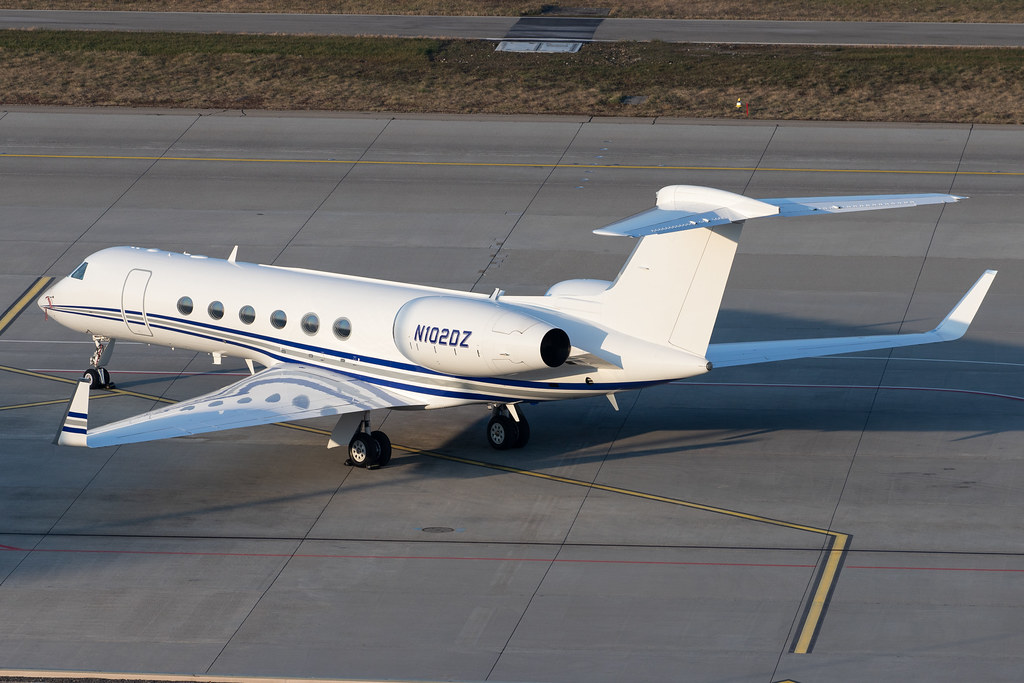
In 2016, anticipating the opening of their new course, Alvarez and Marsal acquired a 2001 Gulfstream IV jet through an LLC named after their golf club. A significant shift in tax law, ushered in by President Donald Trump’s tax cut in 2017, dramatically altered the landscape for private jet purchases. This legislation introduced “bonus depreciation,” allowing the full price of a plane to be deducted in its first year, a perk previously unavailable for pre-owned aircraft.
This change proved immensely beneficial for the partners. When they purchased a second plane, a Gulfstream V, in 2018, its entire cost became immediately deductible. This strategic acquisition, facilitated by the new tax provisions, resulted in a combined tax deduction of $14 million for their two planes that year, showcasing the profound impact of bonus depreciation on their financial planning.
Their private jets, capable of seating over a dozen passengers, have since been seen crisscrossing the Atlantic multiple times. For instance, last August, their Gulfstream V departed from Westchester County, New York, for Ireland, followed an hour later by their Gulfstream IV heading to the same small airport in County Kerry, near their golf club. Such trips, if primarily for overseeing the course, would allow for the full deductibility of operating expenses, including crew, fuel, and other associated costs, on top of the initial depreciation.
However, the line between business and pleasure can become indistinct. Last Christmas, both Gulfstreams were observed flying together to St. Vincent and the Grenadines in the Caribbean. While their consulting firm has an office in the Cayman Islands, these particular islands are approximately 1,400 miles distant, strongly suggesting a family trip. In such cases, operating costs for “entertainment” flights are typically not deductible. Nevertheless, the crucial bonus depreciation perk remains intact as long as the jet is used more than 50% of the time for business over the course of a year, demonstrating a clever balancing act between personal enjoyment and significant tax advantages.
2. **Mori Hosseini: The Homebuilder and Political Donor**
Mori Hosseini, a prominent Florida homebuilder, has amassed a considerable fortune and has been a private plane owner since at least 2006. As President Trump’s tax bill gained traction in Congress in the autumn of 2017, Hosseini seized the opportunity to upgrade, deciding it was the opportune moment to acquire a new jet. This timing allowed him to fully capitalize on the evolving tax landscape.
The nine-seat Bombardier Challenger 350 that Hosseini purchased for $19.5 million immediately translated into substantial tax relief. This entire amount appeared as a deduction on his 2017 taxes, leading to an impressive tax saving of almost $8 million right from the start. But the benefits didn’t stop there; even the interest on the loan taken out to finance the aircraft became deductible, with his 2018 tax filings showing a $600,000 expense for this.
Hosseini, a long-standing Republican donor and a close advisor to Florida Governor Ron DeSantis, also extended the use of his private aircraft for political and personal travel. In 2019, Governor DeSantis’s wife, Casey, flew on Hosseini’s jet from Tallahassee to Jacksonville for a fundraiser, a detail documented in campaign finance records. This was one of several instances where the DeSantis family or campaign utilized the jet over recent years, with such flights generally permitted under Florida law as long as they are properly disclosed as in-kind contributions.
To further solidify the business case for his jet, Hosseini’s taxes state that the LLC holding his plane is engaged in the “aircraft leasing” business. This is a common tactic among private jet owners: when not using their aircraft, they charter it out, often through an independent leasing company. This strategy not only helps to offset the significant costs of ownership but, more importantly, provides tax advantages by reinforcing the argument that the aircraft was acquired for a legitimate business purpose – that of chartering.
While tax law theoretically disallows deductions for businesses with no realistic hope of profitability, the reality for some billionaire-owned operations, including aircraft chartering, is different. ProPublica’s extensive review of tax records for over 30 wealthy American plane owners revealed that profits in the airplane chartering business were exceptionally rare. In Hosseini’s case, his records showed only two years of profit out of an eleven-year period, yet the business deductions continued to accumulate.

3. **George Argyros: The Real Estate Titan and Former Ambassador**
George Argyros, a California billionaire real estate developer, exemplifies the long-standing practice of leveraging private aircraft for substantial tax benefits. Known for his past ownership of the Seattle Mariners baseball team and his tenure as the U.S. ambassador to Spain from 2001 to 2004, Argyros is also a significant GOP donor. His approach to private jet ownership has involved a consistent strategy of leasing out his aircraft through his own chartering company for decades, a move that has generated considerable tax deductions.
Analysis of Argyros’ tax records from 2002 through 2019 paints a clear picture: despite his decades-long chartering operation, his company reported a profit in only two of those years. This consistent lack of profitability, however, did not deter the accumulation of tax benefits. Over this period, he successfully deducted over $50 million in net losses, demonstrating how an enterprise that appears to be more of an expensive hobby can still yield enormous tax advantages under current laws.
In a vivid illustration of the ultrawealthy lifestyle enabled by these financial strategies, Argyros’ Gulfstream jet landed at a small airport near Newburgh in New York’s Hudson Valley in June 2021. This cross-country flight from California connected him to another of his magnificent assets: his $83 million, 248-foot yacht, the Huntress, which awaited him nearby. In the weeks that followed, the colossal vessel, with its six decks, helipad, and hot tub, captivated locals as it cruised the Hudson River, a testament to the seamless integration of luxury travel and tax-efficient asset management.
Argyros’ case highlights a recurring theme: for the ultrawealthy, the primary objective of owning and operating private aircraft often appears to be tax minimization rather than direct profitability from chartering. The ability to claim millions in deductions against these operations, even when they consistently generate losses, is a cornerstone of this financial strategy, allowing significant personal wealth to be shielded from taxation.

4. **Robert Bigelow: The Aerospace Visionary and UFO Enthusiast**
Robert Bigelow, who made his considerable fortune in real estate, primarily through Budget Suites of America, an extended-stay apartment chain, possesses passions that extend far beyond earthly property. For decades, he has dedicated substantial resources to investigating UFO sightings and paranormal phenomena. Two years ago, he even announced $1 million in grants from his Bigelow Institute for Consciousness Studies for research into “contact and communication with post-mortem or discarnate consciousness.”
However, Bigelow’s most significant and well-documented passion lies in space exploration. He founded Bigelow Aerospace, a company committed to developing expandable space habitats, achieving notable successes such as securing a contract from NASA for a module destined for the International Space Station. Despite these groundbreaking endeavors, Bigelow Aerospace has consistently lacked profitability, a fact Bigelow himself candidly acknowledged by referring to the company as “my own real black hole,” into which he poured more than $350 million.
This vast investment in Bigelow Aerospace, coupled with its persistent losses, had a profound impact on Bigelow’s personal tax profile. In the two decades leading up to 2018, even as Forbes and The Wall Street Journal estimated his net worth to be between $700 million and $900 million, Bigelow frequently reported negative incomes on his taxes. The substantial losses from his aerospace company effectively wiped out his other income, illustrating a powerful, albeit unintended, tax sheltering effect.
His personal jet, held by Cosmos Air LLC, played a significant role in this financial landscape. From 2005 to 2018, Bigelow deducted a staggering total of $51 million related to the use of his private aircraft. Notably, ProPublica could not find any evidence suggesting that Bigelow chartered his aircraft to generate revenue. This highlights a different rationale for the jet’s tax benefits than the typical “aircraft leasing” business model employed by others.
In Bigelow’s situation, the deductions could be justified on the premise that the aircraft was essential for tending to his various businesses, including his sprawling real estate empire and his ambitious aerospace ventures. Essentially, the private jet, a luxury expense in itself, became a necessary tool to facilitate the operations that generated millions more in tax deductions, creating a symbiotic relationship where one “black hole” of expenses orbited another, ultimately reducing his overall taxable income.

5. **Mike Fernandez: The Healthcare Magnate and Yacht Owner**
Mike Fernandez, a highly accomplished Florida-based investor, built his fortune through astute entrepreneurship, founding and investing in various healthcare companies. While his business acumen is undeniable, his ventures into luxury asset leasing, specifically concerning his superyacht, reveal a familiar pattern of high expenses and minimal revenue, echoing the private jet loophole.
Fernandez owns the 180-foot yacht, the Lady Michelle, and, like many private jet owners, attempts to offset costs by leasing it out when not in personal use. However, his experience with this endeavor appears to have been less than stellar, with the context noting his “abysmal luck” in generating profits from its charter. This situation, while involving a yacht rather than a jet, offers a parallel insight into how luxury assets can be managed for tax advantages.
His tax returns for 2017 and 2018 highlight this disparity vividly. During these two years, Fernandez claimed a remarkable total of $11.3 million in expenses directly connected with the Lady Michelle. These costs encompassed depreciation, crucial repairs, wages for crew, and various other operational expenditures. In stark contrast to these substantial deductions, the total revenue generated from leasing the Lady Michelle over the same period amounted to a mere $178,000.
It is important to note that yachts are treated differently from airplanes under tax law; they are classified as “entertainment facilities,” which generally precludes deductions based on business travel. Despite this distinction, Fernandez’s case demonstrates that even for assets considered entertainment facilities, savvy financial structuring can still yield significant tax savings. This underscores a broader theme: the ultrawealthy often find ways to mitigate the costs of their luxury possessions, even when those possessions are legally distinct from business aircraft, by classifying associated activities in ways that allow for tax write-offs.

6. **The Core Mechanism: Understanding 100% Bonus Depreciation**
The ability of the ultrawealthy to secure millions in tax deductions for their private jets is largely underpinned by a specific, yet often little-discussed, provision within U.S. tax law: 100% bonus depreciation. This policy, particularly as cemented by what President Donald Trump dubbed his “Big Beautiful Bill,” offers an incredibly lucrative break for those investing in qualifying assets, especially high-value items like private aircraft.
At its heart, bonus depreciation allows businesses to write off the entire purchase price of eligible items in the year they are acquired. This dramatically differs from standard business accounting procedures, where capital investments are typically depreciated over multiple years, with only a portion deductible annually, and often never fully written off. The implication is straightforward and powerful: “A $10 million plane could now be a $10 million deduction in that same year,” as highlighted by the aviation industry publication *Flying magazine*.
This generous provision was initially introduced as part of the Tax Cuts and Jobs Act of 2017. While it was originally designed to gradually phase down from the 100% level starting in 2023 and expire completely by 2027, the legislative landscape shifted again. The version of Trump’s bill that passed the House in May only extended the 100% bonus depreciation through 2029. However, the Senate’s version made the deduction permanent, securing this significant advantage for future purchases.
The immediate impact of this policy has been a notable surge in private jet sales. Matthew Bere, managing director of aviation at BOK Financial, succinctly captured the sentiment, stating, “For someone interested in buying a jet, whether new or used, this is a very big deal.” He further anticipated that the bill’s passage would “spur a lot of activity in aircraft sales,” affirming the direct link between this tax incentive and market behavior. This “all-at-once tax deduction,” as Bere explained, has the potential to reduce jet buyers’ taxable income by “millions of dollars in a given year.”
Critics are quick to point out the broader societal cost of such provisions. Chuck Collins, director of the Program on Inequality and the Common Good at the Institute for Policy Studies, unequivocally labeled this an “example of oligarch friendly rules.” He described the bonus depreciation provision as a “massive tax break for billionaires and centi-millionaires,” attributing its existence to the influence of the “private jet lobby.” Estimates from the Congressional Budget Office underscore this concern, projecting that the permanent establishment of 100% bonus depreciation will cost taxpayers an estimated $378 billion over 10 years, reflecting a significant public subsidy for private luxury travel.

7. **The Elusive Line Between Business and Pleasure**
One of the most persistent challenges in regulating private jet tax deductions lies in the inherently blurry line between legitimate business use and personal indulgence. For the ultrawealthy, a private jet often serves multiple purposes, making it difficult for tax authorities to definitively separate work-related travel from leisure trips. As ProPublica’s “Secret IRS Files” series reveals, billionaires can easily navigate this ambiguity, frequently citing business justifications for flights that may also encompass significant personal enjoyment.
Accounting for how a jet is used can get complicated. If nonbusiness guests, such as family, ride along on what is deemed a business flight, it is technically treated as a taxable fringe benefit. However, the IRS formula used to calculate this benefit drastically undervalues the true cost of private jet travel, typically equating it closer to the price of a first-class commercial ticket rather than the actual expense of a private flight. This minimizes the taxable impact on the jet owner.
Wealthy clients are often advised on meticulous documentation to bolster the case for business use. Michael Kosnitzky, co-chair of the private client and family office group at the law firm Pillsbury Winthrop, recommends that clients “go to their secondary business location first” upon landing. This strategic advice aims to establish a clear business purpose, even when a vacation home or leisure activity is also located in the same area, underscoring the lengths to which efforts are made to legitimize deductions.
Read more about: Unpacking George Clooney’s Unspoken Travel Rule: Why His Family’s Privacy and Private Jets Define His Journey
8. **The IRS’s Uphill Battle Against Jet Loophole Abuses**
Enforcing tax laws related to private jet deductions presents a formidable challenge for the Internal Revenue Service. A significant hurdle lies in proving that a declared business, such as aircraft chartering, was not genuinely intended to be profitable. As ProPublica’s investigation into over 30 wealthy American plane owners showed, “Profits in the airplane chartering business for this set, judging from their taxes, were extremely rare,” yet substantial business deductions continued to accumulate.
Compounding the issue, the IRS’s budget has been significantly reduced over the past decade, making audits of these complex, high-net-worth cases increasingly unlikely. Even when an audit does occur, the agency faces the arduous task of demonstrating not only that the business lacked profitability, but also that the owner had no real intention of turning a profit. This high bar provides a substantial defense for private jet owners, allowing them to continue claiming extensive deductions despite consistent losses.
The argument that the private aircraft is necessary to conduct an owner’s main business, even if chartering doesn’t yield profits, further complicates the auditing process. This position allows the ultrawealthy to justify their aircraft as an essential tool for their primary, often sprawling, business empires, thus linking a luxury asset to legitimate business operations and preserving substantial tax benefits. The systemic under-resourcing of the IRS, combined with inherent legal complexities, fosters an environment where these loopholes can persist.

9. **The Staggering Cost to Taxpayers: A $378 Billion Burden**
The seemingly subtle provisions within tax law, such as 100% bonus depreciation for private jets, aggregate into an astonishing financial burden for the average taxpayer. According to estimates from the Congressional Budget Office, the permanent establishment of 100% bonus depreciation is projected to cost taxpayers a staggering $378 billion over a ten-year period. This figure represents a significant public subsidy for the luxury travel habits of the nation’s wealthiest individuals and corporations.
Critics are vocal about the regressive nature of such tax breaks. Chuck Collins, director of the Program on Inequality and the Common Good at the Institute for Policy Studies, has starkly characterized these policies as an “example of oligarch friendly rules.” He further describes the bonus depreciation provision as a “massive tax break for billionaires and centi-millionaires,” attributing its continued existence to the powerful influence of the “private jet lobby” on legislative processes.
These implications extend beyond just the direct cost of tax deductions. Senator Mark Kelly, D-Ariz., highlighted the broader inequity, stating, “This bill gives another tax break to the ultrawealthy — so they can buy another private jet.” This sentiment underscores a common concern: while working families struggle, tax policies appear to be designed to disproportionately benefit the wealthiest, allowing them to further accumulate assets at the public’s expense rather than contributing their fair share.

10. **Environmental Fallout: Private Jets and Climate Pollution**
Beyond the financial and equity concerns, the widespread use of private jets, facilitated by tax loopholes, carries a substantial environmental cost. Environmental groups frequently criticize private jet usage for its “outsized emission,” pointing to their disproportionate contribution to greenhouse gas (GHG) emissions compared to commercial or other forms of transportation. The burgeoning demand for private jets, spurred in part by these tax advantages, exacerbates climate change.
Data from the International Council on Clean Transportation highlights the global impact, revealing that “U.S. departures account for 65% of private jet flights globally.” This statistic places the United States at the epicenter of private aviation’s environmental footprint, emphasizing the critical role domestic tax policies play in enabling this high-emission activity. The increasing frequency of private flights directly translates to more carbon in the atmosphere, intensifying global warming.
Research by the Institute for Policy Studies (IPS) further concretizes the environmental and social ramifications. In 2023 alone, private jets emitted 19.5 million tons of greenhouse gas emissions, marking a significant 25% increase over 2013 levels. This surge in pollution is a direct consequence of the concentration of wealth and the corresponding demand for private aircraft, making tax policies that subsidize such purchases a contentious point in environmental advocacy and climate action debates.

11. **Unequal Skies: How Commercial Travelers Subsidize Private Flights**
The financial disparities in the aviation sector extend beyond direct tax deductions for jet owners; they also manifest as a significant subsidy from commercial airline passengers to private jet operators. This inequity is particularly stark when examining contributions to the Federal Aviation Administration’s (FAA) trust fund, which supports critical infrastructure like the Air Traffic Control (ATC) system.
According to a report from the Institute for Policy Studies, “commercial airlines pay 95% of all taxes to the Federal Aviation Administration’s trust fund, totaling $14.85 billion of the $15 billion collected last year.” In sharp contrast, “private and corporate jets use 15.6% of ATC resources but pay only 1.55% of all taxes into the trust fund.” This means that “regular commercial fliers are subsidizing private jets to the tune of more than $1 billion a year,” a staggering figure that highlights a deeply uneven financial landscape.
The tax structure itself creates this imbalance. Commercial passengers incur a multitude of taxes and fees on their tickets, including a 7.5% federal ticket tax and a $4.50 Passenger Facility Charge. Private and corporate jet owners, however, largely pay only a fuel tax—$0.218 per gallon for jet fuel or $0.193 per gallon for gasoline. This disparity is vividly illustrated by a Bloomberg review: a CEO in a private jet pays a “paltry $525 in fuel taxes” for a cross-country flight from New York to Los Angeles, while commercial passengers on the same route are “on the hook for $3,900” in total taxes and fees. This results in private jet owners owing “87% less in taxes for the same cross-country flight,” effectively paying “a tenth of airline taxes despite flying the same routes.”

12. **The Political Landscape: Legislative Maneuvers and Lobbying Influence**
The entrenchment of private jet tax loopholes is not merely an oversight but a direct outcome of specific legislative actions and the persistent influence of lobbying efforts. The 100% bonus depreciation, initially part of the Tax Cuts and Jobs Act of 2017, was set to phase down and expire. However, its trajectory dramatically shifted during recent legislative processes, demonstrating the power of industry advocacy.
While the House version of President Trump’s “Big Beautiful Bill” extended 100% bonus depreciation through 2029, the Senate went further, making the deduction permanent. This crucial difference secured an enduring advantage for private aircraft acquisitions, a move widely celebrated by the private aviation industry. Charter plane provider FlyUSA enthusiastically described the legislation as “a power-packed provision that could change the game for private aircraft acquisition,” underscoring its significant industry impact.
The “private jet lobby” is often cited as a key force behind these “oligarch friendly rules.” Progressive think tanks and nonpartisan watchdogs, along with Democrats, frequently criticize such provisions for disproportionately benefiting the wealthy. The Yale University Budget Lab projected that the bill would “lower the lowest 20% of American earners’ incomes by 2.9% while the top 1% of earners will get a 1.9% boost,” illustrating the broader economic implications of these politically-driven tax reforms.
**Conclusion: Navigating the Complexities of Wealth and Taxation**
The intricate web of tax policies surrounding private jet ownership reveals a deeper narrative about wealth, influence, and the design of economic systems. While often framed as incentives for business investment, provisions like 100% bonus depreciation frequently become mechanisms for the ultrawealthy to minimize their tax liabilities, often at the expense of broader public good. The blurred lines between business and pleasure, coupled with the formidable challenges faced by the IRS in enforcing these distinctions, perpetuate a system where luxury assets serve as powerful financial tools.
This in-depth look has underscored not only the individual strategies employed by billionaires but also the systemic costs: from the billions in lost tax revenue that could fund essential public services to the significant environmental impact of increased private jet travel. The ongoing debates, fueled by critical voices from policymakers and advocacy groups, highlight a growing demand for greater equity and accountability in tax policy. As the discussion continues, it is clear that understanding these loopholes is crucial for a comprehensive grasp of how wealth operates within the U.S. financial landscape, and for charting a path toward a more balanced and equitable tax future.