In the world of finance, technology, and even everyday conversation, few symbols are as instantly recognizable and universally understood as the dollar sign, ‘$’. From charting budgets in spreadsheets to defining variables in complex code, this seemingly simple character holds a surprising depth of history and functionality. Yet, for many, its origins remain shrouded in mystery, a testament to its long and winding journey through commerce, culture, and innovation.
It’s more than just a placeholder for money; it’s a marker of historical evolution, a silent witness to shifts in global trade, and a versatile tool adopted far beyond its initial monetary purpose. As a senior media editor, I’ve seen countless trends come and go, but the enduring presence and adaptability of the dollar sign are truly remarkable. Understanding its multifaceted story is like unlocking a secret history of our modern world.
So, let’s roll up our sleeves and delve into the fascinating chronicles of the dollar sign. This deep dive will uncover its earliest appearances, explore the compelling theories behind its creation, and shed light on how this powerful symbol came to signify so much more than just monetary value. Get ready to explore the nuts and bolts of one of the most iconic characters known to humanity.
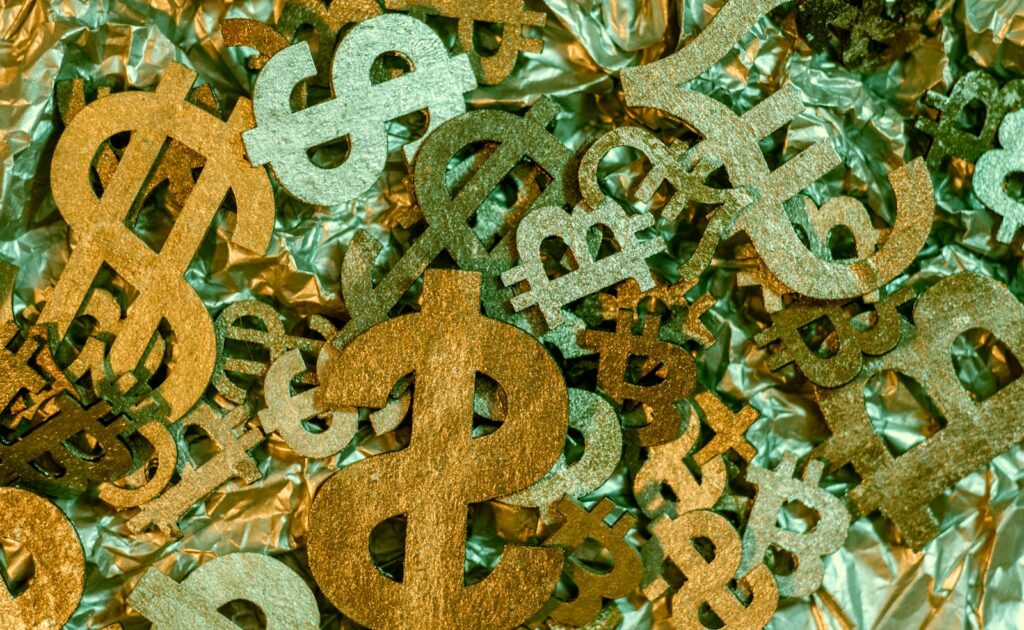
1. **Defining the Dollar Sign: Its Fundamental Form and Widespread Monetary Use**Our journey begins with the very essence of the dollar sign, a symbol consisting of a capital ‘S’ crossed with one or two vertical strokes. This iconic character, whether ‘$’ or ‘ depending on typeface, is universally recognized as a currency indicator for various denominations around the world. Though often seen as a simple glyph, its visual structure hints at a rich, complex past, sparking curiosity about its true beginnings.
While predominantly associated with currencies explicitly named ‘dollar’ or ‘peso’, its reach extends far beyond these. The sign has become a shorthand, a universal cue for monetary value in numerous contexts, often used locally without any nationality prefix. This widespread acceptance underscores its power as a visual language, transcending individual currencies to represent the concept of money itself.
It’s also important to note its role in compound currency symbols. For instance, you’ll see it as part of the Brazilian real, written as R$, or alongside the United States dollar, typically abbreviated as US$. Interestingly, in local usage, the nationality prefix is often omitted, with the simple ‘$’ symbol frequently assuming the US dollar when other currency symbols are absent. This highlights its informal yet powerful role in global financial communication.
2. **Early American Roots: The Spanish American Peso and the Birth of the US Dollar**To truly understand the dollar sign, we must rewind to the 1770s, where its first documented appearances surface in business correspondence from the West Indies. Here, the symbol was already referring to the Spanish American peso, a currency that held significant sway across the Americas. This early association firmly roots the symbol in the bustling trade networks of the colonial era, long before the United States formally adopted its own dollar.
The Spanish American peso, famously known as the “Spanish dollar” or “piece of eight” in British America, was more than just a coin; it was the model for the new currency the United States would embrace in 1792. These Spanish coins also served as the blueprint for larger denominations in the newly independent Spanish American republics, including the Mexican peso, Argentine peso, Peruvian real, and Bolivian sol coins. This demonstrates a direct lineage from a powerful colonial currency to the foundation of independent monetary systems.
Indeed, the United States Congress, with the pivotal Coinage Act of 1792, established the U.S. dollar, explicitly defining it to have “the value of a Spanish milled dollar as the same is now current”. This legislative act solidified the Spanish dollar’s influence, making various foreign coins legal tender in the US until the Coinage Act of 1857 finally rescinded this status. It’s a clear illustration of how historical precedent shaped the fledgling American financial system.
Interestingly, the earliest U.S. dollar coins themselves did not feature any dollar symbol. The first documented instance of the ‘$’ in print is attributed to Archibald Binny, a Philadelphia printer and creator of the Monticello typeface, in the 1790s. Later, a $1 United States Note issued in 1869 even depicted a large symbol resembling a ‘U’ with the right bar overlapping an ‘S’ like a single-bar dollar sign, alongside a very small double-stroke dollar sign in its legal warnings against forgery. This shows an evolving and sometimes varied graphical representation in its nascent stages.
3. **The “Ps” Abbreviation Theory: Tracing Its Likely Genesis in Scribal Practice**Among the various theories attempting to unravel the dollar sign’s mysterious genesis, one stands out as the most widely accepted and supported by historical evidence: its derivation from the Spanish and Spanish American scribal abbreviation “p s” for pesos. This hypothesis offers a practical and organic explanation, rooted in the everyday practices of merchants and record-keepers from centuries past.
Through careful study of late 18th- and early 19th-century manuscripts, researchers have observed a fascinating evolution in scribal habits. The ‘s’ in “ps” gradually began to be written directly over the ‘p’, eventually morphing into a composite symbol strikingly similar, almost equivalent, to the “$” mark. This wasn’t a deliberate invention but rather a natural progression of shorthand for efficiency, a common occurrence in handwritten documents before standardized printing.
Further bolstering this theory is the usage documented by Oliver Pollock, a wealthy Irish trader and a significant early supporter of the American Revolution. In a letter dated 1778, Pollock employed the abbreviation “ps”, sometimes rendering it in a way that so closely resembled the dollar sign that it’s nearly indistinguishable. Additionally, historical documents from Portugal, dating back to 1775, already show the common use of the two-stroke version, indicating this scribal evolution was not unique to one region but a broader trend in the Portuguese Empire. These examples provide compelling evidence for the “ps” origin.
Read more about: The Enigmatic Dollar Sign: 14 Deep Dives into Its Rich History, Global Reach, and Ubiquitous Digital Presence
4. **The Pillars of Hercules Hypothesis: A Classical Emblem’s Influence on Currency**While the “ps” theory garners significant support, another compelling hypothesis traces the dollar sign’s origins to a powerful classical emblem: the Pillars of Hercules. This theory posits that the sign is a depiction of the two sides of the Strait of Gibraltar, traditionally represented by columns, each or both wrapped with a ribbon in the distinct shape of an “S”. This visual device was a prominent support element of the Spanish coat of arms, deeply embedded in the iconography of the Spanish Empire.
Crucially, this very device appeared on the most common real de ocho coins that circulated extensively across the Americas and Europe during that era. These were, notably, those minted at the Potosí mint in Bolivia, which operated from 1573 to 1825, churning out vast quantities of silver. The presence of such a distinct and widely recognized symbol on these coins would undoubtedly give it widespread recognition and potential to evolve into a monetary sign.
The impact of this imagery was so profound that it even resonated in distant lands. For instance, one of the names used for Spanish dollars in Qing Dynasty China was 雙柱 (Shuāngzhù), which literally translates to ‘double-pillar’. This linguistic connection provides an intriguing cross-cultural testament to the iconic status of the Pillars of Hercules on Spanish coinage, lending significant credibility to its potential influence on the dollar sign’s development.
5. **The Potosí Mint Mark Puzzle: Uncovering a Unique Origin from Bolivian Coinage**Building upon the visual legacy of the Pillars of Hercules, a fascinating variant theory suggests that the dollar sign might have emerged directly from the unique mint mark of Potosí itself. This renowned mint, responsible for a colossal portion of the Spanish Empire’s silver production, often incorporated distinctive features into its coinage. These elements, deeply familiar to traders and common folk alike, could have easily inspired a simplified symbolic representation.
A key feature observed on these Potosí coins was a complex monogram formed by the superimposed letters “P T S I”. This intricate mark wasn’t just decorative; it identified the origin of the vast wealth flowing from the mines of Bolivia. The act of superimposing these letters created a unique visual signature that became synonymous with the currency itself, almost a brand mark of the era.
Intriguingly, the core structure of this “P T S I” monogram bears a striking resemblance to a single-stroked dollar sign. The way the letters intertwined could have, through simplification and repeated use, coalesced into the familiar ‘$’ symbol. This theory presents a compelling narrative where the very origin of the coins themselves, through their distinctive markings, gave birth to the symbol that would represent them, offering a direct link from production to representation.
6. **The German Thaler Connection: Exploring a European Linguistic and Symbolic Link**Shifting our gaze to European linguistic and monetary history, yet another hypothesis suggests a different lineage for the dollar sign, one connected to the English word “dollar” itself. The term “dollar” for the Spanish piece of eight originally filtered into English through the Dutch “daalder”, which, in turn, derived from “Joachimsthaler” or “thaler” – a large German silver coin widely circulated across Europe. This linguistic bridge opens the door to a potential symbolic connection.
It is therefore conjectured that the dollar sign could have emerged from a symbol that represented these German silver coins. This symbol is thought to have consisted of a superimposed “S” and “I” or “J”. The combination of these letters, perhaps used as an abbreviation or a specific mark for the thaler, could have, over time, been streamlined into the recognizable dollar sign. This highlights how complex symbols can arise from simpler, yet cleverly combined, letterforms.
Documentary evidence supports the existence of such a symbol, as it appears in John Collins’ 1686 edition of “An Introduction to Merchants’ Accounts”. This early sighting lends weight to the idea that a European-derived symbol, predating many of the American associations, might have contributed to the ‘$’ sign’s evolution. Alternatively, some speculate the symbol might have originated from a “snake and cross” emblem also found on certain thaler coins, adding another layer of intriguing, though less widely accepted, possibilities to its multifaceted past.
7. **Dispelling the Myths: Examining Less Likely and Discredited Theories of Origin**As with any symbol shrouded in antiquity, the dollar sign has attracted its fair share of intriguing, yet ultimately less substantiated, theories regarding its origin. While the previous hypotheses offer strong historical and logical pathways, it’s crucial to distinguish them from those that have been largely discredited or contradicted by more robust documentary evidence. Understanding these less likely theories helps us appreciate the depth of historical inquiry into this ubiquitous mark.
One such theory, put forth by historian James Alton James in 1937, claimed that the two-stroke symbol was an adapted design by patriot Robert Morris in 1778, specifically in letters written to Oliver Pollock. While Morris was a key figure in American finance, this specific claim lacks broader corroborating evidence to establish him as the definitive inventor. Similarly, in 1939, H. M. Larson suggested the sign could derive from a combination of the Greek character “psi” (ψ) and “S”. While visually imaginative, this theory also lacks the widespread historical textual evidence seen in other hypotheses.
Perhaps one of the most persistent, yet less likely, theories suggests the sign began as a monogram of “US”, with a narrow “U” superimposed on the “S”. The idea is that the bottom part of the ‘U’ would have been lost, leaving the two vertical lines. This theory gained traction, being mentioned in letters to ‘Notes and Queries’ in 1876, and was even embraced by Henry Towne in his classic 1886 essay on management. Ayn Rand further popularized a version of this in her 1957 novel ‘Atlas Shrugged’, where she posited the ‘US’ monogram was used on money bags issued by the United States Mint. However, historical documents and early appearances of the symbol generally don’t align with this graphical evolution.
Two other interesting, but ultimately less probable, theories include the idea from T. Seijas and J. Frederick that the dollar sign might be related to the branding of enslaved people in Spanish territories, combining ‘S’ with ‘clavo’ (nail, part of ‘esclavo’ for slave). Separately, a theory often cited in Portuguese-speaking countries suggests the ‘S’ of the doubly-stroked sign schematically represents the path of Umayyad Caliphate general Tariq Ibn Ziyad in his 711 CE conquest, with the two strokes symbolizing the Pillars of Hercules he crossed. While these theories add to the folklore surrounding the symbol, they lack the strong historical or linguistic connections found in the more accepted origins, highlighting the imaginative ways people seek to explain historical symbols.