The dollar sign, a ubiquitous symbol that transcends mere currency, holds a rich and complex history, alongside an astonishing array of applications in modern society. From its origins tied to ancient coinage and scribal abbreviations to its indispensable role in global finance and the intricate world of computer programming, the ‘$’ symbol has evolved far beyond its initial purpose. Understanding its journey offers a fascinating glimpse into the interplay of economics, culture, and technology across centuries.
This in-depth exploration will delve into the multifaceted story of the dollar sign, examining its foundational identity as a monetary indicator, tracing its earliest known appearances, and dissecting the various hypotheses put forth to explain its enigmatic genesis. We will scrutinize the most widely accepted theories, such as the ‘pesos’ abbreviation, alongside compelling visual narratives like the Pillars of Hercules and connections to historical German coinage.
Furthermore, this article will highlight the symbol’s unique cultural adaptations, particularly its distinctive use as the cifrão within the Portuguese Empire, and survey its global presence across a diverse range of national currencies. By systematically dissecting these critical aspects, we aim to provide a comprehensive understanding of the dollar sign’s enduring significance and its remarkable adaptability in an ever-changing world.
1. The Dollar Sign’s Core Identity: Symbolism and Variants
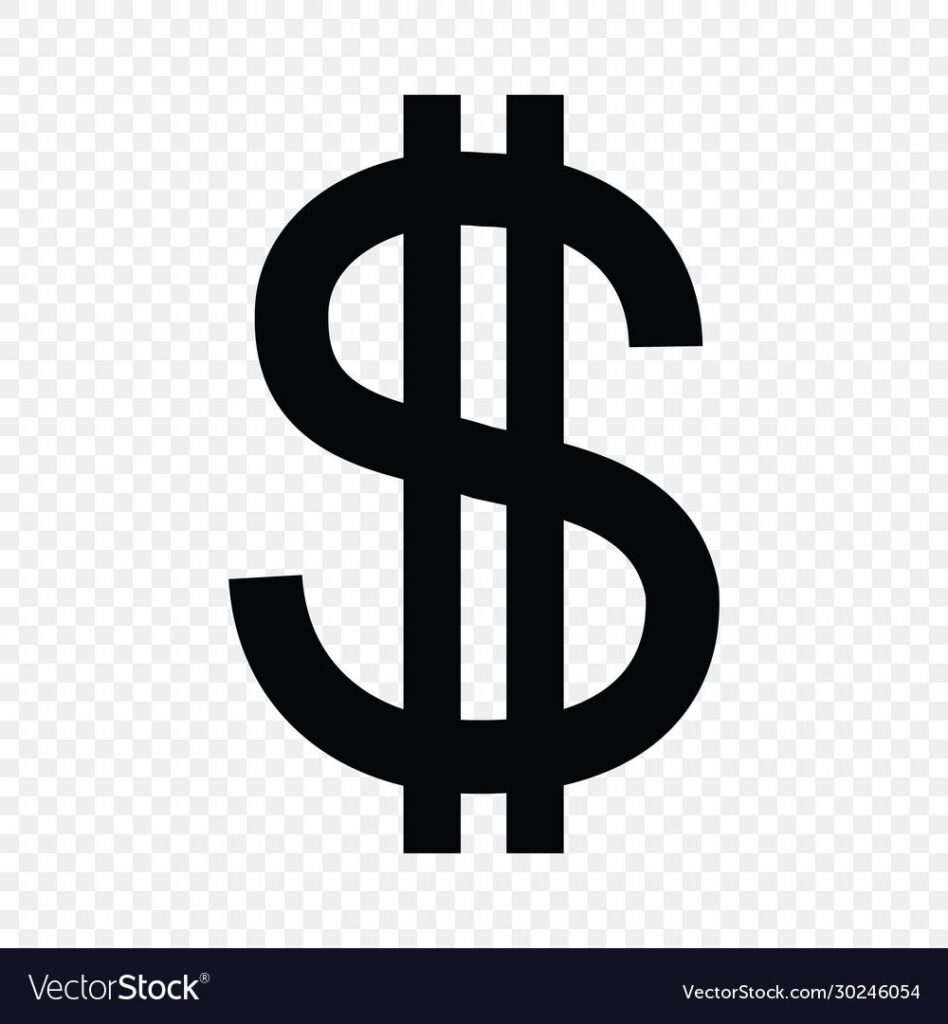
The dollar sign, frequently recognized as a capital ‘S’ bisected by one or two vertical strokes, functions as a universal currency symbol. This iconic mark is primarily employed to denote the unit of various currencies worldwide, predominantly those denominated as ‘dollar’ or ‘peso.’ Its design, while seemingly simple, carries a profound weight of financial significance across diverse economies.
While the symbol’s fundamental structure remains consistent, variations exist. The explicitly double-barred sign, for instance, is known as ‘cifrão’ in Portuguese-speaking regions, indicating a specific cultural and historical usage. However, the one- and two-stroke versions are generally considered stylistic variants, often influenced by typeface design rather than representing distinct numerical values or legal distinctions. The Unicode computer encoding standard supports this perspective by defining a single code for both graphical representations.
In practical application, the dollar sign often appears in compound currency symbols, such as ‘R$’ for the Brazilian real or ‘US$’ for the United States dollar. Locally, the nationality prefix is typically omitted, with the ‘US’ prefix often assumed when referring to the United States dollar in countries utilizing other currency symbols. This shorthand underscores the symbol’s widespread recognition and implicit association with certain dominant currencies.
Its placement relative to the numerical value is another key characteristic. In most English-speaking countries that utilize the symbol, it is positioned to the left of the specified amount. For example, ‘$1’ is read as “one dollar,” a convention deeply ingrained in financial literacy and daily transactions. This standard placement ensures clarity and uniformity in conveying monetary figures.
Read more about: The Dollar Sign: Tracing Its Storied Origins, Global Currency Impact, and Unexpected Digital Dominance

2. Tracing the Dollar Sign’s Roots: Early Appearances and US Adoption
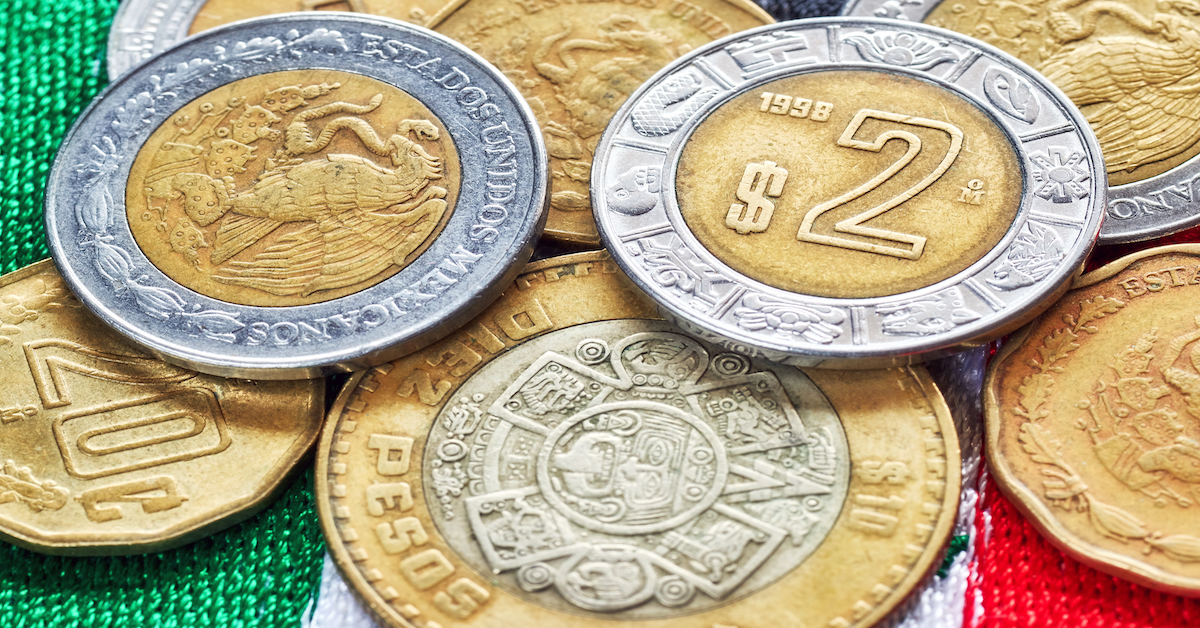
The earliest documented appearances of the dollar sign date back to business correspondence in the 1770s, specifically from the West Indies. In these early records, the symbol referred to the Spanish American peso, which was also colloquially known as the “Spanish dollar” or “piece of eight” throughout British America. This historical connection to Spanish coinage is crucial in understanding the symbol’s eventual adoption by other nations.
Following the American Revolution, the newly formed United States recognized the prevalence and stability of Spanish coins. These Spanish coins served as the foundational model for the currency system that the United States formally adopted in 1792. The influence was so profound that the Coinage Act of 1792 explicitly defined the U.S. dollar to have “the value of a Spanish milled dollar as the same is now current,” directly linking the nascent American currency to its Spanish predecessor.
Despite the creation of U.S. dollar coins, a variety of foreign coins, including the Spanish dollar, continued to be considered legal tender in the United States for an extended period. This status persisted until the Coinage Act of 1857 officially ended their recognition. This prolonged coexistence highlights the deep entrenchment of Spanish currency in the American economic landscape during the nation’s formative years.
Interestingly, the earliest U.S. dollar coins themselves did not feature any dollar symbol. The first documented occurrence of the dollar sign in print is attributed to the 1790s, by Philadelphia printer Archibald Binny, who was also the creator of the Monticello typeface. Later, in 1869, a $1 United States Note included a prominent symbol, which appeared as a “U” with its right bar overlapping an “S” in a manner resembling a single-bar dollar sign, along with a smaller double-stroke dollar sign featured in the legal warning against forgery.
3. The ‘Pesos’ Hypothesis: A Leading Theory of Origin
Among the numerous theories attempting to explain the origin of the dollar sign, one stands out as the most widely accepted: the ‘pesos’ hypothesis. This theory posits that the symbol evolved from the Spanish and Spanish American scribal abbreviation “p s” for pesos. Over time, manuscript analysis from the late 18th and early 19th centuries reveals a gradual transformation where the ‘s’ was increasingly written over the ‘p’.
This scribal practice ultimately resulted in a graphical representation that closely resembled the modern ‘$’ mark. The superimposition of the ‘s’ on the ‘p’ created a compact and efficient way to denote “pesos” in written communication, especially in business and financial contexts where such abbreviations were common. The fluidity of handwritten script likely facilitated this evolution, blurring the lines between the individual letters and forging a new, distinctive symbol.
Strong supporting evidence for this theory comes from figures such as Oliver Pollock, a prominent Irish trader and early financial supporter of the American Revolution. In a letter dated 1778, Pollock notably used the abbreviation “ps,” which at times was written in a merged form that bore an almost exact resemblance to the dollar sign we recognize today. This tangible historical document provides a compelling link between the scribal practice and the symbol’s emergence.
Further reinforcing this hypothesis are historical records from Portugal. Documents indicate the common use of a two-stroke version of a similar symbol in Portugal as early as 1775. This suggests that a related abbreviation or symbolic representation for currency units was developing concurrently in other parts of the Portuguese Empire, reinforcing the idea of a scribal origin for such monetary symbols in that era.
Read more about: The Enduring Symbol: A Comprehensive Examination of the Dollar Sign’s Origins, Evolution, and Modern Applications

4. The Pillars of Hercules: A Visual Origin Story
Another compelling hypothesis regarding the dollar sign’s origin ties its form to the iconic Pillars of Hercules. This theory suggests that the symbol derives from a depiction of these classical pillars, which represent the two sides of the Strait of Gibraltar. On historical coins, these pillars were often shown with a ribbon wrapped around each pillar, or around both, in a shape that resembles an ‘S’.
This device was not merely decorative; it served as a support element within the Spanish coat of arms. Crucially, this imagery appeared prominently on the ‘real de ocho’ coins, also known as Spanish dollars, which were the most common coins circulating throughout the Americas and Europe during that period. Many of these coins were minted at the renowned Potosí mint in Bolivia, which operated from 1573 to 1825, further solidifying the visual link between the symbol and actual currency.
The widespread recognition of this visual motif on Spanish currency extended even to distant lands. For instance, one of the names used for Spanish dollars in Qing Dynasty China was 雙柱 (Shuāngzhù), which literally translates to ‘double-pillar.’ This historical detail underscores how strongly the imagery of the Pillars of Hercules was associated with the Spanish dollar, making it a plausible inspiration for a currency symbol.
A variant of this theory connects the sign even more directly to the Potosí mint itself. It claims the sign originates from a unique mark on coins produced at Potosí, where a substantial portion of the Spanish Empire’s silver was extracted. A distinguishing feature on these coins involved the superimposed letters “P T S I.” The core graphical element within this monogram, when simplified, is observed to resemble a single-stroked dollar sign, suggesting a localized mint mark could have influenced the symbol’s development.
Read more about: The Enduring Mystery of the Dollar Sign: Tracing Its Origins, Evolution, and Unseen Influence

5. Alternative Origin Theories: From Thaler to Monograms
Beyond the leading ‘pesos’ and ‘Pillars of Hercules’ hypotheses, several other theories have been put forward to explain the dollar sign’s genesis, each offering a distinct perspective on its potential lineage. One such theory connects the symbol to the English word “dollar” itself. The word “dollar” for the Spanish piece of eight originally evolved through the Dutch “daalder” from “Joachimsthaler” or “thaler,” which was a large German silver coin widely circulated in Europe.
It is conjectured, therefore, that the dollar sign may have derived from a symbol used to denote this German silver coin, consisting of a superimposed ‘S’ and ‘I’ or ‘J’. Such a symbol can be found in the 1686 edition of “An Introduction to Merchants’ Accounts” by John Collins, providing some historical precedent for this graphical combination. Alternatively, a less common suggestion is that the symbol might have originated from a snake and cross emblem depicted on certain thaler coins, offering a more esoteric visual inspiration.
Another hypothesis, though now largely discredited or contradicted by documentary evidence, proposes that the symbol originated as a monogram of “US,” representing the United States. This theory suggests that a narrow ‘U’ was superimposed on an ‘S,’ with the bottom part of the ‘U’ eventually being lost, resulting in the dollar sign with two vertical lines. This idea was mentioned in letters to “Notes and Queries” in 1876 and later by Henry Towne in his 1886 essay on management, and even claimed by Ayn Rand in her 1957 novel “Atlas Shrugged,” where she suggested it was used on money bags from the United States Mint.
Other less likely theories include James Alton James’s 1937 claim that the two-stroke symbol was an adapted design by patriot Robert Morris in 1778, or H. M. Larson’s 1939 suggestion that the sign could derive from a combination of the Greek character “psi” (ψ) and “S.” Additionally, authors T. Seijas and J. Frederick noted that captors of slaves in Spanish territories sometimes branded enslaved people with a symbol very similar to a one-barred dollar sign, proposing a derivation from “S + clavo” (esclavo meaning ‘slave’ and clavo meaning ‘nail’).

6. The Cifrão: A Distinct Double-Barred Legacy in the Portuguese Empire
Within the historical context of Portugal, Brazil, and other territories of the former Portuguese Empire, a specific two-stroke variant of the dollar sign, known as the ‘cifrão’ (Portuguese pronunciation: [siˈfɾɐ̃w]), held a distinct and significant role. This symbol was traditionally employed not just as a currency indicator but notably as a thousands separator in the national currency, the real. For example, a value like “123$500” would represent 123,500 réis.
This particular usage of the cifrão is attested as early as 1775, though historical evidence suggests it may have been in use for a century or more prior. The cifrão is consistently depicted with its characteristic two vertical lines, distinguishing it graphically from the single-stroke variant. Today, it remains the official sign for the Cape Verdean escudo (ISO 4217: CVE), a lasting legacy of its historical application.
The role of the cifrão evolved with currency reforms. In 1911, when Portugal redefined its national currency as the escudo, valued at 1000 réis and divided into 100 centavos, the cifrão’s function shifted. It continued to be used, but now as the decimal separator. Under this new system, a notation like “123$50” signified 123.50 escudos, or 123 escudos and 50 centavos. This specific usage persisted until Portugal transitioned to the euro in 2002.
Various other Portuguese overseas colonies, including East Timor, Portuguese India, Angola, Mozambique, Portuguese Guinea, and São Tomé and Príncipe, also adopted local versions of the Portuguese escudo for a period, all consistently employing the cifrão as a decimal separator. Brazil, however, retained the cifrão as a thousands separator until 1942, when it switched to the Brazilian cruzeiro, adopting the comma as its decimal separator. Nevertheless, the dollar sign, often rendered with two strokes, was retained as part of the cruzeiro’s symbol, “Cr$,” as seen in examples like “Cr$13,50” for 13 cruzeiros and 50 centavos. The name “cifrão” itself originates from the Arabic word “ṣifr” (صِفْر), meaning ‘zero,’ highlighting its ancient semantic connection to numerical values.

7. The Dollar Sign in Global Currencies: Beyond Dollars and Pesos
The dollar sign’s influence extends far beyond currencies explicitly named “dollar” or “peso.” While it serves as the primary symbol for numerous currencies bearing these names, it is also broadly used for various other monetary units around the globe, with the notable exception of the Philippine peso, which employs its own distinct symbol, “₱.” This widespread adoption underscores its versatility as a universal currency indicator.
Within national borders, the dollar or peso sign is often used autonomously. However, in international contexts and to prevent ambiguity, it is typically combined with other glyphs or abbreviations. Examples include “CA$” or “Can$” for the Canadian dollar, providing clear national identification. For enhanced clarity and professional usage, especially in financial markets, the ISO 4217 three-letter codes (e.g., AUD for Australian Dollar, MXN for Mexican Peso, USD for United States Dollar) are generally preferred.
Historically and presently, the dollar sign, either independently or integrated with other characters, has been used to denote currencies with entirely different names. These include the Brazilian cruzeiro (now defunct), the current Brazilian real (R$), the Ethiopian birr (prior to 1976, E$), the Macanese pataca (MOP$), the Nicaraguan córdoba (C$), the Samoan tālā (which is a transliteration of the word ‘dollar’), and the Tongan paʻanga (T$). Past examples also include the Malaya and British Borneo dollar and the Malaysian ringgit before 1997, and the South Vietnamese đồng.
Another intriguing aspect of the dollar sign’s global usage is its placement relative to the numerical value. In countries such as the United States, Mexico, Australia, Argentina, Chile, Colombia, New Zealand, Hong Kong, Pacific Island nations, and English-speaking Canada, the sign precedes the number, as in “$5.” This is despite the word itself being spoken or written after the amount, for example, “five dollars” or “cinco pesos.” In contrast, French-speaking Canada presents an exception, where the dollar symbol customarily appears after the number, typically as “5$.

8. One Stroke vs. Two Strokes: A Typographical Nuance
The visual representation of the dollar sign, specifically whether it features one or two vertical strokes, often appears as a subtle yet recurring point of interest in its historical and contemporary usage. While the explicitly double-barred sign is recognized as “cifrão” in Portuguese-speaking regions, indicating a specific cultural and historical lineage, the broader distinction between single- and double-stroke variants is largely considered a matter of stylistic preference rather than a marker of distinct monetary values or legal definitions. The Unicode computer encoding standard supports this perspective by defining a single code for both graphical representations.
Historically, specific locales and eras might have assigned one version over the other, either by law or custom, to denote particular currencies. However, this usage was never standardized globally. Computer and typewriter keyboards typically feature only one key for the dollar sign, reflecting this underlying unity. Consequently, character encodings, including ASCII and Unicode, reserve a single numeric code for it.
This means that within the same digital document, the dollar sign might render with one or two strokes depending on the specific computer font employed, yet the fundamental U+0024 codepoint remains unchanged. Therefore, while certain “old-style” fonts like Baskerville might favor the two-stroke variant, the choice is ultimately an aesthetic one in the absence of a mandated custom or legal requirement.
9. The Dollar Sign in Digital Encoding: Unicode Standards and Variants
The dollar sign’s widespread adoption in early American computer applications, particularly in business accounting, ensured its almost universal presence within computer character sets from the outset. This ubiquitous inclusion has, in turn, facilitated its appropriation for a multitude of non-monetary functions across various programming languages and command-line interfaces. Its foundational presence in digital text is anchored by its Unicode code point U+0024, inherited directly from ASCII via Latin-1, making it a fundamental character in computing.
Crucially, the Unicode standard explicitly regards the one- and two-line variants of the dollar sign as stylistic distinctions, classifying them as allographs rather than requiring separate encodings. This means that the visual difference is considered a typeface design choice, a decision made by font creators rather than a semantic distinction in the character itself. Consequently, no separate code point exists in the Unicode standard for the cifrão, despite formal requests for its inclusion due to its distinct historical and cultural significance in Portuguese-speaking countries.
While U+0024 serves as the primary and widely recognized code for the dollar sign in most computing contexts, Unicode also includes a few other related code points originating from East Asian standards. These include U+FE69 ﹩ SMALL DOLLAR SIGN, U+FF04 $ FULLWIDTH DOLLAR SIGN, and U+1F4B2 💲 HEAVY DOLLAR SIGN. These variants typically present glyphs that are either larger or smaller than the primary code point, though their differences are predominantly aesthetic or typographic, with the underlying meaning of the symbol remaining consistent across these representations. For most specialized computing applications, however, U+0024 remains the only code point specifically recognized and processed for the dollar sign’s functional roles.

10. The Dollar Sign as a Sigil: Variable and Character Representation in Programming
The dollar sign has transcended its monetary origins to become a versatile sigil—a symbolic marker—in the realm of computer programming, often serving to distinguish or define variables and data types. In the foundational Beginner’s All-purpose Symbolic Instruction Code (BASIC), for instance, the ‘$’ character is appended to a variable name, explicitly declaring its data type as a character string, such as `H$=”Hello, world!”`. This simple convention allows programmers to differentiate between numerical and textual data.
Moving into more modern scripting paradigms, the dollar sign frequently acts as a prefix to variable names, particularly in languages like PHP and AutoIt. This prefixing convention provides an immediate visual cue to programmers, indicating that the following identifier refers to a variable. Similarly, in the Perl language, the ‘$’ is used to denote scalar variables, which represent single values, and even to access scalar elements within more complex data structures like arrays (`$array[7]`) and hashes (`$hash{foo}`).
The utility of the dollar sign as a defining sigil extends to other prominent languages. In Ruby, it is employed to designate global variables, establishing their scope and availability throughout a program. Sass, a popular CSS preprocessor, utilizes the ‘$’ sign as a prefix to define its own variables, enabling dynamic styling within web development. Beyond variable identification, in Erlang, the dollar sign precedes character literals, while in COBOL, it is used within the Picture clause to depict a floating currency symbol. MIPS assembly language employs the ‘$’ sign to represent registers, demonstrating its role in low-level memory management, and the Q programming language uses it as a casting, padding, enumeration, or conditional operator.
11. **The Dollar Sign in Programming: Expression Evaluation, Text Processing, and Advanced Operators**
Beyond merely identifying variables, the dollar sign also plays a crucial role in programming by introducing expressions that require evaluation or by acting as powerful operators in complex operations. In Unix shells, a widely used command-line environment, and subsequently in numerous other programming languages, the ‘$’ character precedes an expression that the system should evaluate to produce text. This convention allows for dynamic command execution and string manipulation, adopted by languages such as Perl, JavaScript, C#, Scala, Groovy, and Kotlin.
Other languages, like Java and Python, utilize the dollar sign to mark placeholders within text where the result of an expression or variable should be inserted, facilitating formatted output and string templating. In the TeX typesetting language, the dollar sign serves as a delimiter, marking the boundaries of mathematical regions within a document, crucial for academic and scientific publications. Furthermore, FORTRAN 66 allowed the ‘$’ as an alternative to a quotation mark for delimiting strings, and ALGOL 68 uses it to delimit transput format regions.
In some variants of assembly language, including those for the Motorola 6800, Motorola 68000, and MOS Technology 6502, as well as in Pascal and Pascal-like languages, the ‘$’ sign is used to define hexadecimal constants. PL/M uses it to visibly separate words in compound identifiers, enhancing readability. Haskell employs the ‘$’ as a function application operator, simplifying function calls, while AutoHotkey uses it to prevent hotkeys from being triggered by ‘Send’ commands within the script.
The jQuery library, a cornerstone of web development, notably defines ‘$’ as its main symbol, primarily as a function to query web pages for HTML elements, alongside other utilities like `$.ajax`. Similarly, Prototype.js uses it for querying. In ASP.NET, the dollar sign in a web page tag indicates an expression will follow, remaining language-agnostic across CLR-supported languages like C# and VB.NET.
The R programming language uses the ‘$’ as a subsetting operator, crucial for accessing elements within data structures. In Svelte, a modern JavaScript framework, the ‘$’ can be used to mark reactive statements, enabling dynamic and responsive UI components. Other specialized uses include Erlang, where it precedes character literals, and CMS-2, where it functions as a statement terminator.
12. Specialized Functions in Operating Systems: From Command Lines to Hidden Shares
Within the architecture and command structures of various operating systems, the dollar sign takes on specialized roles, facilitating system functions that range from indicating the end of a text string to managing access permissions. In early operating systems like CP/M, and subsequently in 86-DOS and all MS-DOS compatible systems, the ‘$’ symbol holds a distinct purpose: it marks the termination of text displayed using system function 9. This seemingly small detail was a significant operational marker, though its original developer, Gary Kildall, famously never fully elaborated on his choice, noting only that he knew the reason where Bill Gates did not. Prior uses of ‘$’ for “end of line” or “end of text” include JOVIAL, CMS-2, the QED editor, and DECsystem-10.
In modern Windows environments, the ‘$’ sign is employed in a critical administrative function: it is appended to the share name of a folder or resource to render it hidden on a network. For example, while `\\server\share` would be openly visible to other network computers, `\\server\share$` makes the resource accessible only through explicit reference. It is important to note that this action solely conceals the share’s visibility; it does not alter its underlying access permissions, though it may render it inaccessible to programs relying on visibility. Many essential administrative shares within Windows are configured as hidden using this method.
The dollar sign also serves as a line separator in certain standard entry attributes within the LDAP directory access protocol, such as `postalAddress`, aiding in the structured organization of directory information. In the UNIVAC EXEC 8 operating system, the ‘$’ carries the broad meaning of “system,” appended to entities like system file names, operator-sent message sender names, and default names for system-generated files—for instance, `TPF$` or `NAME$`. Furthermore, RISC OS uses the ‘$’ in system variables to delineate the application name from variables specific to that application, and also to denote the root directory of a file system, demonstrating its utility in hierarchical navigation.
Read more about: The Enduring Mystery of the Dollar Sign: Tracing Its Origins, Evolution, and Unseen Influence

13. Applications Beyond Programming: Spreadsheets and Cataloging
Beyond its pervasive influence in programming languages and operating systems, the dollar sign also holds distinct and practical applications within widely used software and data management systems, serving crucial functions in both spreadsheets and library cataloging. In spreadsheet software, such as Microsoft Excel, the ‘$’ sign is indispensable for defining cell references. Its primary use in this context is to denote a fixed row, a fixed column reference, or an absolute cell reference.
When placed before a column letter (e.g., `$A1`), it ensures that the column reference remains constant when a formula is copied or moved. Similarly, when preceding a row number (e.g., `A$1`), it fixes the row reference. The combination of both (`$A$1`) creates an absolute cell reference, meaning both the column and row remain fixed regardless of where the formula is copied. This functionality is vital for building robust and reusable formulas in financial modeling, data analysis, and various other spreadsheet applications, preventing unintended shifts in cell references.
Furthermore, in the specialized field of library science and information management, the dollar sign serves as a subfield delimiter within the intricate computer coding of library catalog records. These records often adhere to standards like MARC (Machine-Readable Cataloging), utilizing delimiters to organize and structure various pieces of metadata into distinct subfields within a larger data field. The ‘$’ character also matches the end of a line or string in several text processing tools and editors, including `sed`, `grep`, and POSIX and Perl regular expressions, as well as in `ed`, `ex`, `vi`, and `pico`.
14. Cultural and Scientific Roles: From Satire to Nuclear Reactivity
The dollar sign, a symbol deeply ingrained in global commerce, has also permeated popular culture and even specialized scientific fields, taking on roles far removed from its original monetary designation. In contemporary cultural contexts, it is sometimes employed derisively, replacing the letter ‘S’ in corporate or proper names to subtly or overtly indicate an association with greed, excessive money, or perceived commercialism, as seen in “Micro$oft” or “Di$ney.” Conversely, the dollar sign is also intentionally used as a stylistic device, lending a distinctive aesthetic to names or words. Artists and public figures such as A$AP Rocky, Ke$ha, and Ty Dolla $ign have incorporated the symbol into their monikers, and Ambrose Bierce playfully referred to Governor Leland Stanford as “$tealand Landford” in 1872.
Beyond these cultural appropriations, the dollar symbol finds a remarkably precise and critical application in the field of nuclear physics. Here, it functions as a unit of reactivity for a nuclear reactor, providing a standardized measure of how much a reactor’s power output deviates from a steady state. Specifically, 0$ represents the threshold of slow criticality, indicating a steady and controlled reaction rate where neutron population remains constant. In stark contrast, 1$ denotes the threshold of prompt criticality, a perilous state signifying an uncontrolled nuclear excursion or explosion. This highly specialized use underscores the dollar sign’s adaptability, transforming it from a financial indicator into a critical safety parameter in complex scientific calculations.
A more transient, linguistic application occurred in the 1993 version of the Turkmen Latin alphabet, where the ‘$’ was temporarily used as a transliteration of the Cyrillic letter Ш, before being replaced by the letter Ş in 1999. This demonstrates the symbol’s occasional utility in bridging linguistic gaps, albeit for a limited period, highlighting its versatile graphical form beyond its primary financial and computing roles.
The journey of the dollar sign is truly a testament to the enduring power and adaptability of symbols. From its debated origins in 18th-century mercantile shorthand, perhaps born from scribbled pesos or etched alongside the Pillars of Hercules, it has evolved into a global emblem of commerce. Yet, its story doesn’t end there; the ‘$’ has boldly ventured into the digital frontier, becoming an indispensable character in the intricate dance of computer programming and the structured logic of operating systems. It graces our spreadsheets, organizes our libraries, and even subtly comments on our culture. What an incredible voyage for a simple mark, proving that sometimes, the most profound stories are found in the most unexpected places.