Throughout automotive history, certain vehicles have gained notoriety not for their performance or style, but for their catastrophic design flaws that led to tragic consequences. These engineering failures represent the darkest chapter of vehicular design, where oversight, cost-cutting, or willful negligence resulted in preventable deaths and injuries.
From fuel tanks prone to explosion upon impact to suspension systems that caused unpredictable handling, these design defects transformed otherwise ordinary vehicles into potential deathtraps. The stories behind these flawed creations often follow a disturbing pattern: early warning signs dismissed, internal safety concerns overruled by profit motives, and corporate denial in the face of mounting evidence. More than mechanical failures, these cases reflect profound ethical breakdowns within the automotive industry.
However, there is a silver lining to these tragic narratives; each major safety scandal has ultimately led to stricter regulations, improved testing protocols, and heightened awareness that has saved countless lives. As we examine these infamous examples, we witness not just engineering failures, but also the evolution of automotive safety consciousness that emerged from their deadly legacies. Let’s dive into some of the most egregious errors that forever changed how we think about what a car should be.

1. **Ford Pinto (1971-1980)**The Ford Pinto stands as perhaps the most infamous example of a deadly design flaw in automotive history, becoming a stark case study in corporate ethics and product liability. Developed during the 1970s fuel crisis and rushed to production in just 25 months—a blistering pace compared to the typical 43—the Pinto harbored a catastrophic defect: its fuel tank was positioned behind the rear axle with minimal protection and separation from the passenger compartment.
This placement meant that in rear-end collisions, even at relatively low speeds of 20-30 mph, the tank could be punctured by bolts protruding from the differential. Alternatively, it could be pushed into the rear axle, causing fuel leakage and potentially catastrophic fires. It wasn’t just a design oversight; it was a fundamental vulnerability baked into the very structure of the car, turning minor fender benders into potential infernos.
What truly transformed this technical deficiency into a full-blown scandal was the chilling discovery of the “Pinto Memo.” This internal Ford document famously calculated the cost of improving the fuel tank design, estimated at a mere $11 per vehicle, against the projected expense of legal settlements for burn deaths, which Ford priced at $200,000 per life. This cold calculus revealed that Ford had identified the problem before production but deemed fixing it more expensive than paying for the resulting deaths and injuries. This revelation, when it hit the public, sent shockwaves across the nation and forever damaged Ford’s reputation, exposing a callous disregard for human life.
The human toll was devastating, to say the least. While exact figures remain disputed, estimates suggest that the Pinto’s fuel tank design contributed to between 500 and 900 burn deaths, leaving a trail of unimaginable grief. The most notable case involved the Ulrich family, whose 1973 Pinto was struck from behind, resulting in the car bursting into flames and tragically killing three teenage girls. The subsequent lawsuit, *Grimshaw v. Ford Motor Company*, resulted in a landmark $125 million punitive damages award, though this figure was later reduced to $3.5 million, a sum still sending a clear message.
In 1978, after years of controversy and mounting public pressure, Ford finally issued a recall to modify the fuel tanks of 1.5 million Pintos and Mercury Bobcats. The company added a plastic shield between the fuel tank and the differential, installed a longer fuel filler neck, and added reinforcements to prevent tank movement during collisions. Production ended in 1980, but the Pinto case permanently changed product liability law and forced the auto industry to prioritize safety over mere cost considerations. Today, the Pinto remains the quintessential example of how prioritizing profits over human lives can lead to corporate disaster and preventable tragedy, a lesson etched in automotive history.
Car Model Information: 1980 Ford Pinto WAGON
Name: Ford Pinto
Caption: Ford Pinto
Manufacturer: Ford Motor Company
Aka: Mercury Bobcat
Production: September 1970 – July 1980
ModelYears: 1971–1980 (Pinto),1974–1980 (Bobcat)
Assembly: Edison, New Jersey,Milpitas, California
Designer: Robert Eidschun (1968)
Class: Subcompact car
BodyStyle: Sedan (automobile),sedan delivery,station wagon,hatchback
Related: #Mercury Bobcat (1974–1980),Ford Mustang (second generation)
Layout: Front-engine, rear-wheel-drive layout
Chassis: Unibody
Engine: unbulleted list
Abbr: on
Disp: Ford Cologne engine
Transmission: unbulleted list
Wheelbase: 94.0 in
Length: 163 in
Width: 69.4 in
Height: 50 in
Weight: convert
Predecessor: Ford Cortina#Mark II (1966–1970)
Successor: Ford Escort (North America)
Categories: 1980s cars, Articles with short description, Cars discontinued in 1980, Cars introduced in 1970, Commons category link from Wikidata
Summary: The Ford Pinto is a subcompact car that was manufactured and marketed by Ford Motor Company in North America from 1970 until 1980. The Pinto was the first subcompact vehicle produced by Ford in North America.
The Pinto was marketed in three body styles throughout its production: a two-door fastback sedan with a trunk, a three-door hatchback, and a two-door station wagon. Mercury offered rebadged versions of the Pinto as the Mercury Bobcat from 1975 until 1980 (1974–1980 in Canada). Over three million Pintos were produced over its ten-year production run, outproducing the combined totals of its domestic rivals, the Chevrolet Vega and the AMC Gremlin. The Pinto and Mercury Bobcat were produced at Edison Assembly in Edison, New Jersey, St. Thomas Assembly in Southwold, Ontario, and San Jose Assembly in Milpitas, California.
Since the 1970s, the safety reputation of the Pinto has generated controversy. Its fuel-tank design attracted both media and government scrutiny after several deadly fires occurred when the tanks ruptured in rear-end collisions. A subsequent analysis of the overall safety of the Pinto suggested it was comparable to other 1970s subcompact cars. The safety issues surrounding the Pinto and the subsequent response by Ford have been cited widely as business ethics and tort reform case studies.
Get more information about: Ford Pinto
Buying a high-performing used car >>>
Brand: Ford Model: Pinto
Price: $5,951 Mileage: 107,000 mi.
Read more about: The Ugly Truth: Ranking the 12 Ford Coupes and Hatchbacks That Ruined the Brand’s Reputation
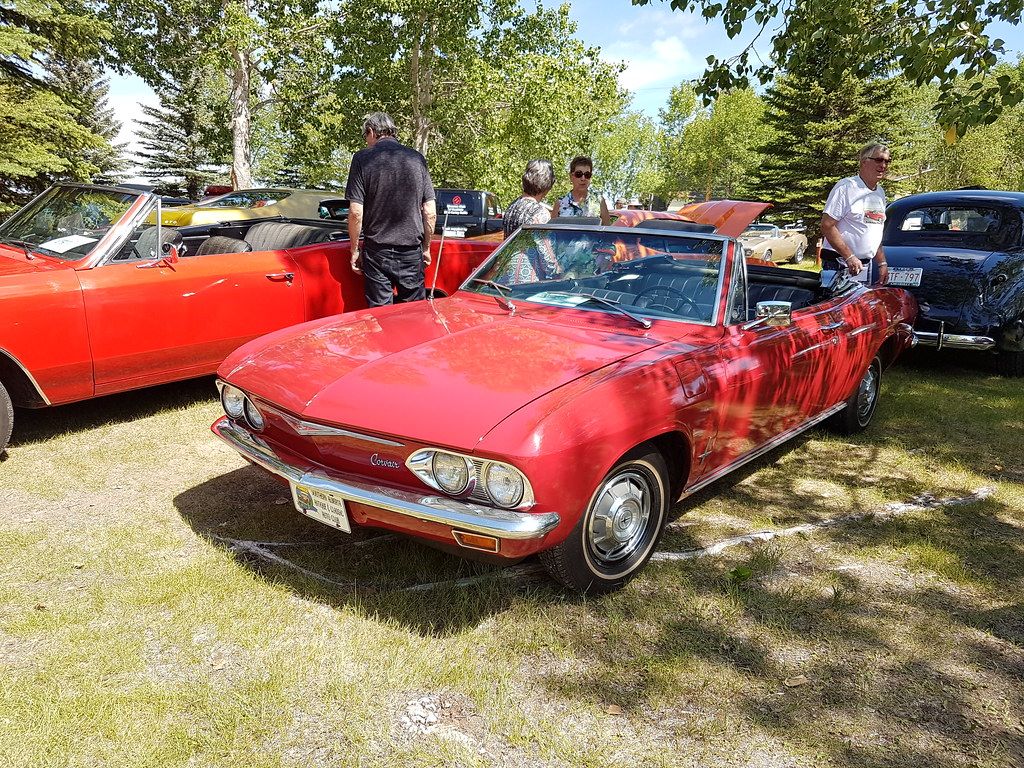
2. **Chevrolet Corvair (1960-1969)**The Chevrolet Corvair earned its infamous place in automotive lore through a combination of revolutionary design and deadly handling characteristics that, perhaps inadvertently, sparked the modern automotive safety movement. Breaking away from conventional American car design, the Corvair featured a rear-mounted, air-cooled engine and an innovative swing-axle rear suspension. While these were bold engineering choices, they inadvertently created a lethal handling flaw that caught many drivers off guard.
This unique configuration made the Corvair notoriously prone to sudden, unpredictable oversteer, especially during emergency maneuvers or at higher speeds. It wasn’t a matter of if, but often when, drivers would discover this unsettling tendency. The technical issue stemmed directly from the rear swing axle design, which, crucially, lacked a compensating mechanism. During hard cornering, the outside wheel would experience what engineers called “tuck under.” This meant extreme positive camber changes would cause the tire to lose crucial contact with the road precisely when grip was most desperately needed. Combined with the rear weight bias, this made the Corvair prone to spin out or, worse, roll over with little to no warning, transforming a casual drive into a perilous gamble.
The problem was exacerbated by a rather shocking decision by Chevrolet: they chose to save a paltry $0.57 per car by omitting a front anti-roll bar. This seemingly minor cost-cutting measure was made despite the fact that engineers had strongly recommended its inclusion during the development phase to mitigate the handling issues. This decision, prioritizing pennies over potentially saving lives, speaks volumes about the corporate mindset of the era.
The Corvair’s deadly design flaw gained national notoriety in 1965 when the consumer advocate legend Ralph Nader published his seminal work, “Unsafe at Any Speed.” He dedicated the entirety of its first damning chapter to the Corvair, under the unforgettable title “The Sporty Corvair: The One-Car Accident.” Nader’s meticulous investigation revealed a disturbing truth: General Motors knew about these critical handling issues but chose to conceal them rather than addressing them properly. The ensuing controversy ignited a firestorm, leading to congressional hearings and ultimately paving the way for the creation of the National Highway Traffic Safety Administration (NHTSA) in 1970, forever changing the landscape of automotive safety.
General Motors’ response to the growing scandal only compounded its woes. In a truly audacious move, they hired private investigators to follow Nader, hoping to discredit him and silence his criticisms. However, when this shocking harassment became public knowledge, it spectacularly backfired, only strengthening Nader’s credibility and further damaging GM’s already tarnished reputation. By 1964, GM had quietly implemented some design changes, including a transverse leaf spring to limit wheel tuck under, and later models (1965-1969) featured a completely redesigned suspension system with a fully independent rear suspension. Yet, the initial failures of the Corvair remain a potent symbol of how corporate denial can tragically overshadow engineering integrity.
Car Model Information: 1964 Chevrolet Corvair Monza
Caption: 1964 Chevrolet Corvair Monza
Name: Chevrolet Corvair
Manufacturer: Chevrolet
Production: July 1959
Platform: GM Z platform
Chassis: Unibody
ModelYears: 1960–1969
Assembly: United States,Kansas City, Missouri,Oakland, California,Van Nuys,St. Louis,Flint, Michigan,Belgium,Canada,Mexico,South Africa,Switzerland,Venezuela
Class: Compact car
Successor: Chevrolet Vega
Layout: Rear-engine, rear-wheel-drive layout
Categories: All Wikipedia articles written in American English, All articles lacking in-text citations, All articles needing additional references, All articles with dead external links, All articles with specifically marked weasel-worded phrases
Summary: The Chevrolet Corvair is a rear-engined, air-cooled compact car manufactured and marketed by Chevrolet over two generations from the 1960 through 1969 model years. The Corvair was a response to the increasing popularity of small, fuel-efficient automobiles, particularly the imported Volkswagen Beetle and American-built compacts like the Rambler American and Studebaker Lark.
The first generation (1960–1964) was offered in four-door sedan, two-door coupe, convertible, and four-door station wagon configurations. A two- and four-door hardtop, as well as a convertible, were available as second-generation variants (1965–1969). The Corvair platform was also offered as a subseries known as the Corvair 95 (1961–1965), which consisted of a passenger van, commercial van, and pickup truck variant. Total production was approximately 1.8 million vehicles from 1960 until 1969.
The name “Corvair” was first applied in 1954 to a Corvette-based concept with a hardtop fastback-styled roof, part of the Motorama traveling exhibition. When applied to the production models, the “air” part referenced the engine’s cooling system.
A prominent aspect of the Corvair’s legacy derives from controversy surrounding the handling of early models equipped with rear swing axles, articulated aggressively by Ralph Nader’s Unsafe at Any Speed but tempered by a 1972 Texas A&M University safety commission report for the National Highway Traffic Safety Administration (NHTSA) which found that the 1960–1963 Corvair possessed no greater potential for loss of control in extreme situations than contemporary compacts.
To better counter popular inexpensive subcompact competitors, notably the Beetle and Japanese imports such as the Datsun 510, GM replaced the Corvair with the more conventional Chevrolet Vega in 1970.
Get more information about: Chevrolet Corvair
Buying a high-performing used car >>>
Brand: Chevrolet Model: Corvair
Price: $29,988 Mileage: 74,787 mi.
Read more about: Unpacking Automotive Catastrophes: 12 Infamous Engineering Failures That Reshaped Car Safety

3. **Takata Airbags (Multiple Vehicles, 2002-2015)**While not a vehicle itself, Takata’s defective airbags represent perhaps the deadliest automotive design flaw in modern history, a crisis that mushroomed to affect tens of millions of vehicles across nearly two dozen manufacturers globally. This wasn’t a problem confined to one brand; it was a systemic failure that permeated the entire automotive industry. The catastrophic defect centered on the airbag inflator, which contained ammonium nitrate propellant without a crucial chemical drying agent, a seemingly small detail that led to monumental consequences.
When exposed to heat and humidity over time, this propellant could degrade and become dangerously unstable, turning a safety device into a weapon. The grim outcome was that upon deployment, the metal inflator housing would explode with uncontrolled force, spraying deadly metal shrapnel throughout the vehicle cabin at lethal speeds. The consequences were truly horrific and, in many cases, were initially mistaken by emergency responders for violent attacks rather than equipment failure. This is how fundamentally wrong these airbags went, ripping apart the very purpose of a safety device.
Victims suffered devastating injuries that beggar belief: severed carotid arteries, punctured eyes, shredded vocal cords, and penetrating brain injuries. Some first responders initially believed victims had been attacked with knives or gunfire due to the nature of their wounds, a testament to the sheer brutality of the airbag’s failure. It’s hard to imagine a more terrifying scenario than a safety feature designed to save you instead unleashing a barrage of deadly projectiles.
What made the Takata case particularly egregious was the mounting evidence that the company had known about this critical defect for years but actively concealed it from regulators and the public. Internal documents later revealed that Takata engineers had raised serious concerns about the unstable propellant as early as 2000. Even more disturbingly, when airbags began failing in internal testing, some test data was allegedly altered to hide the problem. And when Honda, one of Takata’s largest customers, began investigating early reports of injuries in 2004, Takata allegedly provided misleading information, obstructing the truth at every turn.
The scale of the defect was truly unprecedented, eventually affecting over 100 million vehicles worldwide from automotive titans including Honda, Toyota, Ford, BMW, Nissan, and many others. By 2023, at least 27 people had been killed and more than 400 injured in the United States alone, with additional fatalities reported globally, making this a truly global tragedy. The recalls became the largest and most complex in automotive history, with replacement parts shortages leaving millions of drivers navigating the roads in potentially lethal vehicles for years. The scandal ultimately led to Takata’s bankruptcy in 2017, resulted in criminal charges against several executives, and forced the company to pay approximately $1 billion in fines and compensation. This whole fiasco exposed dangerous gaps in automotive safety oversight and led to significant reforms in how defects are reported and tracked. Perhaps most importantly, it demonstrated how a single component’s flawed design could transcend brand boundaries to become an industry-wide safety crisis affecting millions worldwide, reminding us that no detail is too small when it comes to human lives.
Read more about: Unpacking Automotive Catastrophes: 12 Infamous Engineering Failures That Reshaped Car Safety

4. **Jeep Grand Cherokee (1993-2004)**The Jeep Grand Cherokee’s deadly design flaw centered on what safety advocates chillingly dubbed its “gas tank ticking time bomb.” The culprit was a fuel tank positioned behind the rear axle, placing it in a location incredibly vulnerable to rupture during even moderate rear-end collisions. This wasn’t just poor placement; it was a catastrophic oversight that left just 11 inches between the plastic fuel tank and the rear bumper, with alarmingly minimal structural protection. This design created a serious and unacceptable risk of fire or explosion, even in what might otherwise be considered a fender bender.
The design proved tragically flawed with devastating consistency. When struck from behind, the Grand Cherokee’s tank could be punctured by sharp objects, violently crushed against the rear differential, or have its filler neck violently torn away from the tank itself. Any of these failure modes could, and often did, spray atomized fuel near hot exhaust components and electrical systems. This created the perfect, horrifying conditions for catastrophic fires to erupt, transforming the vehicle into an inferno within moments.
Survivors and witnesses painted a chilling picture, describing vehicles engulfed in flames within seconds of impact, often trapping helpless occupants inside. It was a terrifying scenario, where a vehicle designed for adventure became a death trap in an instant. Chrysler’s response to the mounting, undeniable evidence of this danger only compounded the tragedy and stoked public outrage. Despite numerous fatal crashes and at least 75 documented fire deaths, the company initially resisted recalls, weakly arguing that the vehicles met all federal safety standards of their time. While technically true, this defense was increasingly recognized as inadequate and frankly, unacceptable given the human cost.
Internal documents later unearthed revealed a damning truth: Chrysler engineers had identified this critical vulnerability during the vehicle’s development but, astonishingly, continued with production as planned. This corporate decision to prioritize deadlines and budgets over known safety risks is a dark stain on their history. The most heartbreaking cases involved children, like 4-year-old Remington Walden, who tragically burned to death after his aunt’s Grand Cherokee was struck from behind at an intersection. The jury in that case, rightfully outraged, awarded $150 million to the family, finding Chrysler had acted with “reckless disregard” for human life, though the award was later reduced to $40 million on appeal. This sent a clear message, but the cost had already been paid in innocent lives.
After years of relentless pressure from tenacious safety advocates and the Center for Auto Safety, NHTSA finally pushed for a recall in 2013. Chrysler initially resisted, dragging its feet, but eventually agreed to a limited “voluntary campaign” covering 1.56 million 1993-1998 Grand Cherokees and 2002-2007 Liberty models. The “fix” was, to put it mildly, deeply controversial. Rather than undertaking the costly and complex process of relocating the dangerous fuel tanks, the solution involved installing a trailer hitch to provide what was deemed “marginal additional protection.” Many experts, rightly so, criticized this as an entirely inadequate solution, a band-aid on a gaping wound, leaving a legacy of doubt about corporate accountability in the face of grave design flaws. The lessons from this fiery saga continue to fuel the fight for uncompromising vehicle safety.
Car Model Information: 2024 GMC Sierra 1500 Elevation
Name: Jeep Grand Cherokee
Manufacturer: Jeep
Production: 1992–present
ModelYears: 1993–present
Class: unbulleted list
BodyStyle: sport utility vehicle
Layout: unbulleted list
Chassis: Vehicle_frame#Uniframe
Categories: 2000s cars, 2010s cars, 2020s cars, All-wheel-drive vehicles, All Wikipedia articles written in American English
Summary: The Jeep Grand Cherokee is a range of mid-sized sport utility vehicles produced by American manufacturer Jeep. At its introduction, while most SUVs were still manufactured with body-on-frame construction, the Grand Cherokee has used a unibody chassis from the start.
Get more information about: Jeep Grand Cherokee
Buying a high-performing used car >>>
Brand: Jeep Model: Grand Cherokee
Price: $42,936 Mileage: 39,751 mi.
Read more about: Unpacking Automotive Catastrophes: 12 Infamous Engineering Failures That Reshaped Car Safety
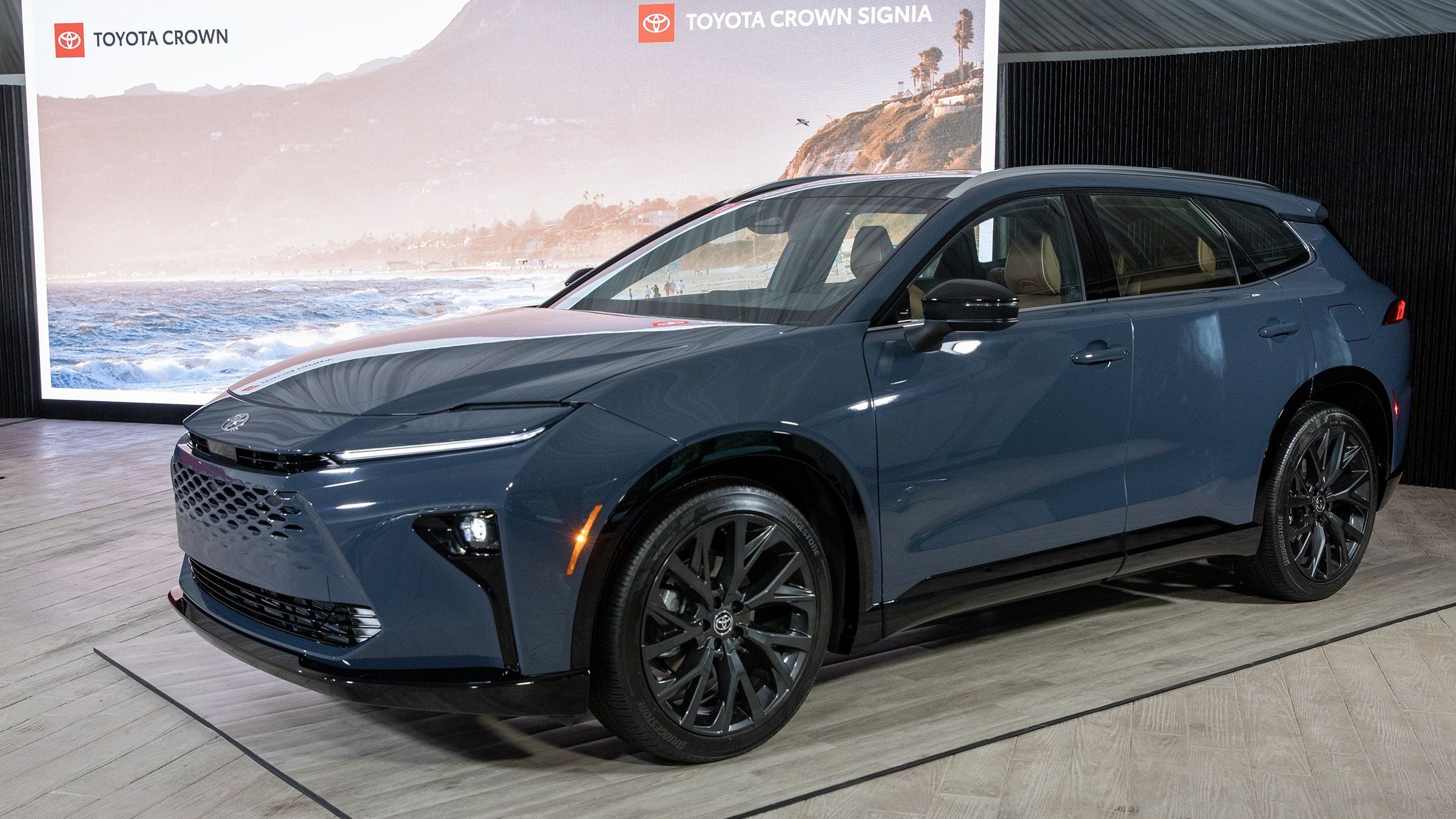
5. **Toyota Unintended Acceleration (2002-2010)**Toyota, a brand often synonymous with reliability and quality, found itself embroiled in one of the most complex and controversial safety crises in recent memory: the unintended acceleration phenomenon. Between 2002 and 2010, thousands of Toyota and Lexus vehicles began exhibiting a terrifying tendency to suddenly accelerate without driver input, often reaching dangerous speeds despite desperate attempts to apply the brakes. It was a phantom menace that turned once-trusted cars into runaway nightmares, leading to a grim tally of at least 89 deaths and 57 injuries officially attributed to the defect, although many safety advocates argue the true human cost was far higher.
Initially, Toyota, in a classic corporate move, tried to pin the blame on external factors. They suggested improperly installed floor mats could trap accelerator pedals or that the pedal mechanisms themselves could become “sticky” due to wear. These explanations, however, failed to satisfy a growing chorus of bewildered and terrified drivers who swore their vehicles accelerated uncontrollably even with properly secured mats and seemingly functional pedals. It became clear to many that something far more sinister and systemic was at play, something beyond the usual mechanical suspects.
Safety advocates and a cadre of independent engineers quickly pointed their fingers at the electronic throttle control system, a relatively new “drive-by-wire” technology that had replaced traditional mechanical linkages. The critics argued that glitches, electromagnetic interference, or faulty sensors could corrupt the electronic signals that dictated engine power, leading to these terrifying surges. While Toyota staunchly denied any electronic involvement, NASA engineers later identified specific, albeit rare, scenarios where certain electronic failures could indeed cause unintended acceleration without triggering any diagnostic trouble codes – essentially, a ghost in the machine that left no trace.
Then came the human tragedies that amplified the crisis to a deafening roar. The most heartbreaking and widely publicized case involved California Highway Patrol officer Mark Saylor and three family members. Their loaned Lexus ES 350 accelerated uncontrollably to over 100 mph before a horrific crash claimed all their lives. The 911 call, capturing their final moments of terror, indelibly etched the crisis into public consciousness. Even more damning were revelations that Toyota had been aware of numerous similar incidents for years, but bafflingly chose to categorize them as mere “customer satisfaction” issues rather than critical safety defects, a decision that would haunt the automaker for years.
The fallout was immense. The crisis triggered multiple recalls affecting over 9 million vehicles worldwide, with “fixes” ranging from revised floor mats and modified accelerator pedals to vital software updates implementing brake override systems. Toyota ultimately paid a staggering $1.2 billion in fines and settlements, including a record penalty for misleading regulators and consumers. More significantly, the crisis transformed automotive safety by making brake override systems an industry standard and highlighted the formidable new challenges of diagnosing complex, intermittent electronic defects in an increasingly computerized automotive world. It was a brutal wake-up call that proved that even the most reputable automakers aren’t immune to catastrophic, potentially deadly, design flaws.
Read more about: Unpacking Automotive Catastrophes: 12 Infamous Engineering Failures That Reshaped Car Safety
6. **Firestone/Ford Explorer Crisis (1990-2001)**The Firestone/Ford Explorer crisis stands as a chilling testament to how a “deadly partnership” between two seemingly unrelated products can create a perfect storm of automotive carnage. On their own, neither the Ford Explorer SUV nor the Firestone tires were necessarily catastrophic failures; it was their unfortunate combination that produced one of the most lethal design flaws in modern history. Between 1990 and 2001, Firestone Wilderness AT and ATX tires began experiencing catastrophic tread separation at an alarming rate, particularly when bolted onto the high-riding Ford Explorer. When these failures inevitably occurred at highway speeds, the Explorer’s elevated center of gravity and specific suspension characteristics made it exceptionally prone to flipping over, transforming a tire defect into a deadly rollover incident.
The technical roots of this deadly interaction were multi-layered and insidious. Many of the Firestone tires, especially those produced at the company’s Decatur, Illinois plant, suffered from serious manufacturing defects, a problem exacerbated by lingering labor disputes that seemingly compromised quality control. These tires had an inherent propensity for internal belt separation, a weakness that became acutely dangerous when underinflated and subjected to high temperatures, particularly prevalent in warmer climates. Ford, in a move that critics found inexcusable, had compounded this problem by recommending tire pressures of 26 PSI—lower than Firestone’s recommended 30 PSI—purportedly to improve the Explorer’s ride comfort and reduce its rollover risk during crucial government stability testing. This seemingly minor tweak was a catastrophic miscalculation that primed the tires for failure.
The human cost of this defect was nothing short of staggering. The National Highway Traffic Safety Administration (NHTSA) linked the combination of faulty tires and the Explorer’s instability to over 271 confirmed deaths and more than 800 injuries in the United States alone, with countless more fatalities reported internationally. Victims predominantly succumbed not to the initial tire failure, but to the brutal forces of the subsequent rollover crashes, often being ejected from the vehicle or crushed by its collapsing roof structure. Tragically, those in the back seats, where roof crush was most severe and seatbelt usage less consistent, were disproportionately affected, leaving a trail of unimaginable grief and loss.
What truly ignited public outrage and transformed this technical defect into a full-blown corporate scandal was the mounting evidence that *both* companies had prior knowledge of the dangers, yet inexplicably delayed taking decisive action. Internal documents revealed that Firestone possessed data indicating abnormally high tire failure rates years before the recall, a horrifying secret kept from the public. Simultaneously, Ford had observed identical tire failures on Explorers in warmer regions like Venezuela and Saudi Arabia, where high temperatures accelerated the defect’s manifestation. Yet, instead of initiating a global response, Ford initially limited corrective actions to those international markets, leaving American consumers unknowingly driving ticking time bombs.
Public fury reached a fever pitch when a former Firestone steelworker courageously testified that quality concerns were routinely ignored at the plant, with one manager allegedly uttering the chilling words, “If you build them, they’ll buy them,” a stark reflection of corporate indifference to safety. The crisis ultimately forced the recall of a colossal 14.4 million tires and, crucially, spurred the passage of the TREAD Act (Transportation Recall Enhancement, Accountability, and Documentation Act). This landmark legislation established new, stringent requirements for automakers and tire manufacturers to report potential defects to NHTSA, ensuring such widespread corporate denial would hopefully never be repeated. The Explorer/Firestone saga remains a potent and painful reminder of how separate design compromises can interact with devastating synergy, and how corporate reluctance to acknowledge safety issues can turn a manageable technical problem into a catastrophic human tragedy.
Car Model Information: 2017 Ford Explorer XLT
Name: Ford Explorer
Caption: Sixth-generation Ford Explorer
Manufacturer: Ford Motor Company
Production: 1990–present
ModelYears: 1991–present
Class: unbulleted list
Chassis: unbulleted list
Predecessor: Ford Bronco II
Successor: Ford Territory (Australia)
Categories: 2000s cars, 2010s cars, 2020s cars, All-wheel-drive vehicles, All Wikipedia articles in need of updating
Summary: The Ford Explorer is a range of SUVs manufactured by the Ford Motor Company since the 1991 model year. The first five-door SUV produced by Ford, the Explorer, was introduced as a replacement for the three-door Bronco II. As with the Ford Ranger, the model line derives its name from a trim package previously offered on Ford F-Series pickup trucks. As of 2020, the Explorer became the best-selling SUV in the American market.
Currently in its sixth generation, the Explorer has featured a five-door wagon body style since its 1991 introduction. During the first two generations, the model line included a three-door wagon (directly replacing the Bronco II). The Ford Explorer Sport Trac is a crew-cab mid-size pickup derived from the second-generation Explorer. The fifth and sixth generations of the Explorer have been produced as the Ford Police Interceptor Utility (replacing both the Ford Crown Victoria Police Interceptor and the Ford Police Interceptor Sedan).
The Explorer is slotted between the Ford Edge and Ford Expedition within North America’s current Ford SUV range. The model line has undergone rebadging several times, with Mazda, Mercury, and Lincoln each selling derivative variants. Currently, Lincoln markets a luxury version of the Explorer as the Lincoln Aviator.
For the North American market, the first four generations of the Explorer were produced by Ford at its Louisville Assembly Plant (Louisville, Kentucky) and its now-closed St. Louis Assembly Plant (Hazelwood, Missouri). Ford currently assembles the Explorer alongside the Lincoln Aviator and the Police Interceptor Utility at its Chicago Assembly Plant (Chicago, Illinois).
Get more information about: Ford Explorer
Buying a high-performing used car >>>
Brand: Ford Model: Explorer
Price: $12,968 Mileage: 133,580 mi.
Read more about: Unpacking Automotive Catastrophes: 12 Infamous Engineering Failures That Reshaped Car Safety
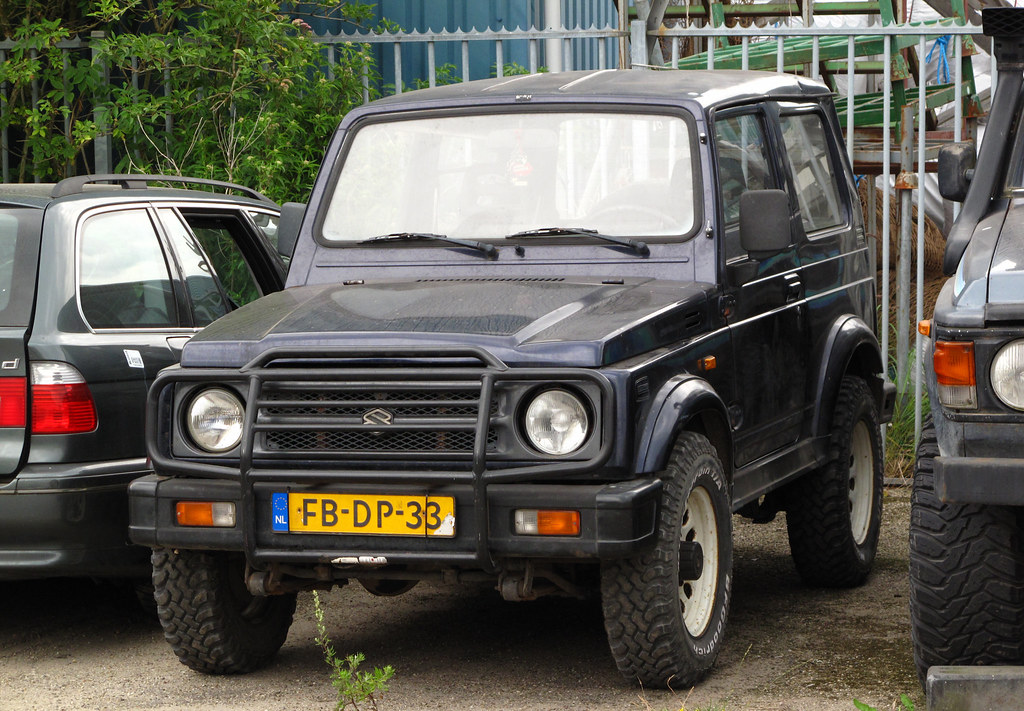
7. **Samurai Suzuki (1985-1995)**The Suzuki Samurai, a plucky compact SUV designed for rugged off-road adventures, tragically earned itself the unenviable reputation of being one of the most rollover-prone vehicles ever sold in the United States. It was a potent cocktail of design elements—a narrow track width, a relatively high center of gravity, and a short wheelbase—that, when combined, created a terrifying recipe for instability, especially during sudden emergency maneuvers. The vehicle’s fundamental design choices, while excellent for navigating challenging terrain, made it a genuine liability on paved roads, quickly transforming its adventurous spirit into a serious safety concern. The issue exploded into public consciousness in 1988 when the venerable Consumer Reports magazine published its now-infamous “Not Acceptable” rating, chillingly reporting that the Samurai tipped onto two wheels during their routine testing, sparking widespread alarm about real-world rollover risks.
The technical problems at the heart of the Samurai’s instability stemmed directly from its foundational engineering. Its solid front axle and rudimentary leaf spring suspension, which were undeniably superb for rock crawling and challenging off-road obstacles, unfortunately translated into highly unpredictable handling characteristics during rapid directional changes or evasive maneuvers on the highway. Compounding this, the Samurai’s remarkably narrow body, a mere 66 inches wide, was paired with an almost comically tall ride height, shifting its center of gravity perilously high. Most critically, the suspension design allowed for excessive body roll, leading to dramatic weight transfer during cornering that could lift the inside wheels completely off the ground. This combination created a dangerously unstable platform, making the Samurai prone to sudden, violent rollovers with little warning.
The human consequences were, as one might expect, tragically severe. Over its decade-long run in the U.S. market, between 1985 and 1995, at least 213 deaths and 8,200 injuries were directly attributed to Samurai rollovers. Rollovers are a particularly brutal mode of crash, with victims frequently suffering catastrophic head and neck injuries due to the intense forces of roof crush or, even worse, being ejected from the vehicle. To compound the danger, the Samurai’s lightweight roof structure offered minimal protection during these violent rollovers, exacerbating the severity of injuries. Young drivers, often drawn to the vehicle’s affordable price and sporty, adventurous image, were disproportionately affected, lacking the driving experience to anticipate and counteract its treacherous dynamics.
Suzuki’s corporate response to this mounting crisis only served to worsen its public image and fuel further controversy. Rather than confronting and rectifying the fundamental stability issues that plagued the Samurai, the company chose to launch an aggressive, highly publicized campaign against Consumer Reports. This included a substantial $60 million lawsuit, alleging that the tests were rigged and unfairly designed to malign their product. However, internal documents later brought to light a damning truth: Suzuki executives were well aware of these stability problems even before the vehicle’s introduction to the U.S. market but pressed forward with minimal modifications to the Japanese-market model, choosing denial over design correction.
The Samurai controversy ultimately left a lasting, positive impact on automotive safety, particularly in the realm of SUV design and testing. It directly spurred the development of the “fishhook” maneuver, a critical test now routinely employed in government rollover evaluations. It also accelerated the widespread adoption of electronic stability control (ESC) systems, technologies that are now standard and can proactively prevent many of the precarious conditions that led to the Samurai’s notorious rollover propensity. While Suzuki never officially recalled the Samurai for its rollover tendencies, sales plummeted by an astonishing 70% following the scathing Consumer Reports article, effectively driving the vehicle out of the U.S. market by 1995. It remains a stark cautionary tale, illustrating the perilous consequences of prioritizing marketing appeal and off-road prowess over the fundamental safety considerations essential for on-road stability.
Car Model Information: 1987 Suzuki Samurai Base 2dr 4WD SUV
Name: Suzuki Jimny
Caption: 2019 Suzuki Jimny SZ5
Manufacturer: Suzuki
Production: April 1970 – present (2.85 million units sold by September 2018)
Class: Off-road vehicle,mini SUV
BodyStyle: SUV,van,convertible,pickup truck
Layout: Front-engine, rear-wheel-drive layout,Front-engine, four-wheel-drive layout
Chassis: Body-on-frame
Related: Maruti Gypsy
Categories: 1980s cars, 1990s cars, 2000s cars, 2010s cars, All Wikipedia articles written in British English
Summary: The Suzuki Jimny (Japanese: スズキ・ジムニー, Suzuki Jimunī) is a series of four-wheel drive off-road mini SUVs, manufactured and marketed by Japanese automaker Suzuki since 1970.
Originally belonging to the kei class, Japan’s light automobile tax/legal class, the company continues to market a kei-compliant version for the Japanese and global markets as the Jimny, as well as versions that exceed kei-class limitations. Suzuki has marketed 2.85 million Jimnys in 194 countries through September 2018.
Get more information about: Suzuki Jimny
Buying a high-performing used car >>>
Brand: Suzuki Model: Samurai
Price: $18,900 Mileage: 74,344 mi.
Read more about: Unpacking Automotive Catastrophes: 12 Infamous Engineering Failures That Reshaped Car Safety

8. **Pontiac Fiero (1984-1988)**The Pontiac Fiero, a truly ambitious and innovative mid-engine sports car, was heralded as General Motors’ answer to the influx of fuel-efficient imports when it launched in the mid-1980s. Its sleek design and exotic layout promised affordable performance, but this dream quickly devolved into a fiery nightmare. The Fiero gained a terrifying notoriety not for its speed or handling, but for its alarming tendency to spontaneously combust. It quickly earned the chilling moniker of a “firetrap,” a reputation born from fundamental engineering compromises that turned what should have been a thrilling drive into a potential inferno, frequently caused by oil leaking onto hot exhaust components during seemingly normal operation.
Digging into the Fiero’s technical shortcomings reveals a series of critical missteps. GM’s decision to adapt the robust but somewhat agricultural “Iron Duke” four-cylinder engine—originally designed for mundane front-wheel-drive applications—for the Fiero’s mid-engine layout without adequate modifications was a monumental error. The engine’s connecting rods, perfectly sufficient for a sedate commuter car, were woefully inadequate for the higher RPMs and spirited driving that the Fiero’s sporty image encouraged. This often led to catastrophic connecting rod failures, puncturing the engine block and spraying highly flammable oil directly onto the scorching hot exhaust manifold. Compounding this, the Fiero’s engine cradle design provided insufficient ventilation and oil containment, meaning any leak quickly turned into a conflagration, especially with the vehicle’s composite body panels acting as readily available fuel.
By August 1987, the National Highway Traffic Safety Administration had meticulously documented a shocking 260 engine fires. What was particularly alarming was that 31 of these incidents occurred while the vehicles were parked and completely turned off—a truly dangerous scenario that presented the risk of fires spreading to garages or even homes. Survivors and emergency responders described vehicles being utterly consumed by flames within mere minutes, giving occupants precious little time to escape. While the number of verified fatalities was thankfully lower compared to some other vehicles on this list, numerous injuries were sustained, primarily burns from desperate attempts to retrieve belongings or from the struggle to escape the rapidly engulfing infernos.
What makes the Fiero case particularly troubling is the undeniable evidence that General Motors was fully aware of these critical issues during the vehicle’s development phase, yet inexplicably pressed ahead with production. Internal reports indicated that engineers had repeatedly requested crucial design changes and additional rigorous testing to mitigate the fire risks. However, management, seemingly fixated on meeting ambitious cost targets and tight production timelines, overruled these vital safety concerns, effectively sealing the Fiero’s fate as a potential rolling barbecue. It was a classic tale of corporate expediency tragically trumping engineering integrity.
The Fiero’s saga serves as a potent reminder for enthusiasts and engineers alike that even bold, innovative designs can be fatally undermined by compromised execution and neglected details. Despite its brief and troubled production run, the Pontiac Fiero remains a stark symbol of how sacrificing engineering integrity for the sake of deadlines and budgets can lead to a car that is not only notoriously unreliable but potentially lethal. Its fiery legacy forever changed how GM, and indeed the entire industry, approaches the integration of existing components into new, ambitious vehicle platforms, emphasizing that sometimes, a completely fresh start is the only safe way forward.
Car Model Information: 1988 Pontiac Fiero Formula
Name: Pontiac Fiero
Caption: 1988 Fiero Formula
Manufacturer: Pontiac (automobile)
Production: August 1983 – August 16, 1988,370,168 produced
ModelYears: 1984 – 1988
Successor: Pontiac Solstice
Assembly: Pontiac, Michigan
Designer: Hulki Aldikacti,George Milidrag
Class: Sports car
BodyStyle: fastback,notchback
Platform: GM P platform
Layout: Rear mid-engine, rear-wheel-drive layout
Engine: {{cvt,151,CID,L,1,disp=flip,Iron Duke engine#LR8,Inline-four engine
Transmission: Turbo-Hydramatic 125,Manual transmission,Getrag 282 transmission,Isuzu
Wheelbase: 2373 mm
Abbr: on
Length: 4072 mm
Width: 1750 mm
Height: 1191 mm
Weight: 1116 to
Categories: All articles with unsourced statements, Articles with short description, Articles with unsourced statements from February 2012, Articles with unsourced statements from July 2024, Articles with unsourced statements from September 2011
Summary: The Pontiac Fiero is a rear mid-engine, light sports car manufactured and marketed by Pontiac for model years 1984 – 1988. Intended as an economical commuter car with modest performance aspirations, it was Pontiac’s first two-seater since their 1926 to 1938 coupes, and the first mass-produced, rear mid-engine car by any American manufacturer.
In addition to using 4- and 6-cylinder engines to help Pontiac meet America’s ‘CAFE’ average fuel economy requirements, the Fiero’s chassis and structure technology used non-load-bearing, composite body-panels, contributing to the car’s light-weight and its unique selling proposition. Pontiac engineers modified the design over its life to enhance its performance and reposition the two-seater closer to the implications of its sporty configuration.
The Fiero 2M4 (two-seat, mid-engine, four-cylinder) placed on Car and Driver magazine’s Ten Best list for 1984, and was the Official Pace Car of the Indianapolis 500 for 1984.
A total of 370,168 Fieros were manufactured over five years’ production, its mild performance, reliability and safety issues becoming points of criticism. The Fiero was discontinued after annual sales fell steadily.
Get more information about: Pontiac Fiero
Buying a high-performing used car >>>
Brand: Pontiac Model: Fiero
Price: $11,000 Mileage: 101,027 mi.
Read more about: Unpacking Automotive Catastrophes: 12 Infamous Engineering Failures That Reshaped Car Safety
These vehicles, from the fiery Pinto to the unpredictable Fiero, stand as stark, metal monuments to the lessons learned through tragedy. Each one represents a unique chapter in the ongoing narrative of automotive safety, born from a confluence of engineering oversights, corporate compromises, and, at times, outright denial. They forced the industry to confront uncomfortable truths, leading to stricter regulations, unprecedented recalls, and a fundamental shift in how we perceive vehicle safety. As we drive forward into an era of increasingly complex and computerized cars, these historic failures serve as an enduring reminder that vigilance is paramount, and that the ultimate price of cutting corners will always be measured in human lives.