Let’s be real — in 2025, a car’s infotainment system can make or break the driving experience. Whether you’re syncing your phone, navigating through traffic, or just trying to change the damn song without crashing into a curb, that touchscreen is your co-pilot. It’s no longer just an add-on; it’s a central nervous system for your vehicle, deeply integrated into daily commutes and long-haul journeys alike.
And while some automakers have finally figured out how to deliver systems that just work — smooth, intuitive, fast — others are still out here serving laggy menus, random crashes, and Bluetooth connections that disappear like ghosts. It’s frustrating, especially when you’ve spent serious money on a car only to wrestle with its tech every time you start the engine. The J.D. Power 2025 U.S. Initial Quality Study underscored this ongoing frustration, revealing that infotainment systems remain the most problematic vehicle category at 42.6 problems per 100 vehicles, despite a modest improvement.
This in-depth report cuts through the noise to help you steer clear of the digital lemons and find the gems. We’ve rounded up five cars with infotainment systems you can count on — the kind that boot up fast, pair instantly, and don’t require a manual thicker than your glove box. Later, we’ll call out five that glitch nonstop, because no one deserves to suffer through another frozen screen mid-drive. If tech matters to you — and let’s be honest, it should — then this list is your road map to a smarter, smoother ride.

1. **Lexus RX (2023–Present) – Lexus Interface**Lexus, once perceived as being behind the curve in the realm of automotive technology, has dramatically transformed its reputation with the introduction of the all-new Lexus Interface in the latest RX models. This system features a fast, intuitive touch interface complemented by crystal-clear graphics, making navigation and interaction genuinely enjoyable. A responsive voice assistant, rivaling even the sophisticated Mercedes MBUX with its “Hey Lexus” command, further enhances the user experience, allowing for seamless control without diverting attention from the road.
The redesign for the 2023 model year elevated the Lexus RX, distinguishing it in the highly competitive midsize luxury SUV market. The exterior now presents a more refined iteration of Lexus’ signature spindle grille, while the cabin has been meticulously updated with expansive, high-resolution displays that underscore its tech-forward ambiance. This commitment to both aesthetic and functional improvements positions the RX as a formidable contender for buyers who prioritize advanced, reliable in-car technology.
Beyond its impressive infotainment, the RX offers a compelling array of powertrain options. From the base RX350 with its turbocharged four-cylinder engine to the advanced plug-in hybrid RX450h+, Lexus provides meaningful choices for diverse buyer preferences. While the base engine and its automatic transmission were noted in a First Test of the F Sport variant as somewhat underwhelming in performance and smoothness, the hybrid models are the most compelling, delivering refined power and brisk acceleration, particularly the serene and polished 350h variant. For 2024, the RX450h+ joined the lineup, boasting up to 37 miles of electric-only range and offering composed handling and comfort, despite its premium price point.
The RX also showcases its performance credentials with the RX500h, designed for a sportier driving experience. This variant proved its mettle in head-to-head comparisons, outperforming the Mercedes-Benz GLE450e 4Matic and the Acura RDX Type S, attributed to its agile dynamics, well-tuned suspension, and robust tech features. Despite wishing for power output that fully matched its aggressive styling, Lexus enhances its dramatic appeal with options like the sharp-looking Black Line appearance package, complete with eye-catching orange brake calipers. For the 2025 model year, the RX continues its versatile offering with four distinct powertrains, maintaining standard front-wheel drive for the RX350 and all-wheel drive for all other variants, ensuring that one of its many configurations is likely to align with individual preferences.
In terms of infotainment specifics, the Lexus Interface stands out for its clean layout and seamless Google Maps integration, both contributing to minimal lag and a smooth operational flow. Owner surveys consistently praise its stability and ease of use, affirming the brand’s successful pivot. This system rarely presents issues like freezing or unresponsiveness, which is a testament to its robust design and execution, proving that Lexus has not only caught up but, in many aspects, surpassed previous expectations for in-car technology.
Car Model Information: 2016 Lexus RX 350 Base
Name: Lexus RX
Caption: Lexus RX 500h F Sport Performance (TALH17, Germany)
Manufacturer: Toyota
Aka: Toyota Harrier
Production: December 1997 – present
ModelYears: 1998–present
Class: unbulleted list
BodyStyle: SUV
Layout: unbulleted list
Chassis: Unibody
Successor: unbulleted list
Categories: 2000s cars, 2010s cars, 2020s cars, All-wheel-drive vehicles, All Wikipedia articles written in American English
Summary: The Lexus RX is a luxury crossover SUV sold since 1998 by Lexus, a luxury division of Toyota. Originally released in its home market of Japan in late 1997 as the Toyota Harrier, export sales began in March 1998 as the Lexus RX. Considered as the first luxury crossover SUV by many sources, five generations of the RX have been produced to date, the first being compact in size, and the latter classified as mid-size. Both front- and four-wheel drive configurations have been used on the RX series, and several gasoline powertrain options, including V6 engines and hybrid systems, have been offered. In the Lexus model lineup, the RX sits below the larger Lexus LX (marketed as the Toyota Land Cruiser body-on-frame SUVs outside North America, respectively), and below the body-on-frame, but also mid-size GX SUV. The name “RX” stands for “Radiant Crossover”. It has also been labelled as “Recreational Cross Country” in some markets. The RX’s current Toyota counterpart is the Highlander/Kluger; past counterparts included the Harrier and Venza. The first-generation RX 300, fitted with a 3.0-liter V6 engine, began sales in 1998. The Japanese market Harrier released in 1997 also offered a 2.2-liter inline-four, later uprated to 2.4 liters. The second-generation RX 300 (3.0-liter V6) and RX 330 (3.3-liter V6) models went on sale in 2003, with both variants supplanted by the more powerful RX 350 (3.5-liter V6) in 2006. Like the previous series, a 2.4-liter inline-four engine was sold alongside the 3.0-liter V6 in the Japanese market Harrier. In 2005, a hybridized gasoline-electric version of the 3.3-liter second-generation model was made available as the RX 400h in export markets and as the Harrier Hybrid in Japan. For the third generation released in 2009, both RX 350 (3.5-liter V6) and RX 450h (3.5-liter V6 hybrid) models were initially offered, with an entry-level RX 270 (2.7-liter inline-four) offered by Lexus in some Asian markets, including in Japan, since 2010. Since the release of the third generation, Japanese sales have occurred under the RX name as opposed to Harrier as had been the case previously. In the fourth generation, a turbocharged (2.0-liter inline-four) RX 200t/300 model was introduced to replace the previous 2.7-liter unit. The RX has been assembled at Toyota Motor Kyushu since launch. The RX and RX Hybrid were the first Lexus models to be built outside Japan, with North American market versions produced at the Toyota Motor Manufacturing Canada plant in Cambridge, Ontario beginning 2003 (RX) and expanded in 2014 (RX Hybrid). Hybrid transaxles are built at the Kokura plant in Kitakyushu, Fukuoka since 2009.
Get more information about: Lexus RX
Buying a high-performing used car >>>
Brand: Lexus Model: RX
Price: $19,500 Mileage: 129,460 mi.
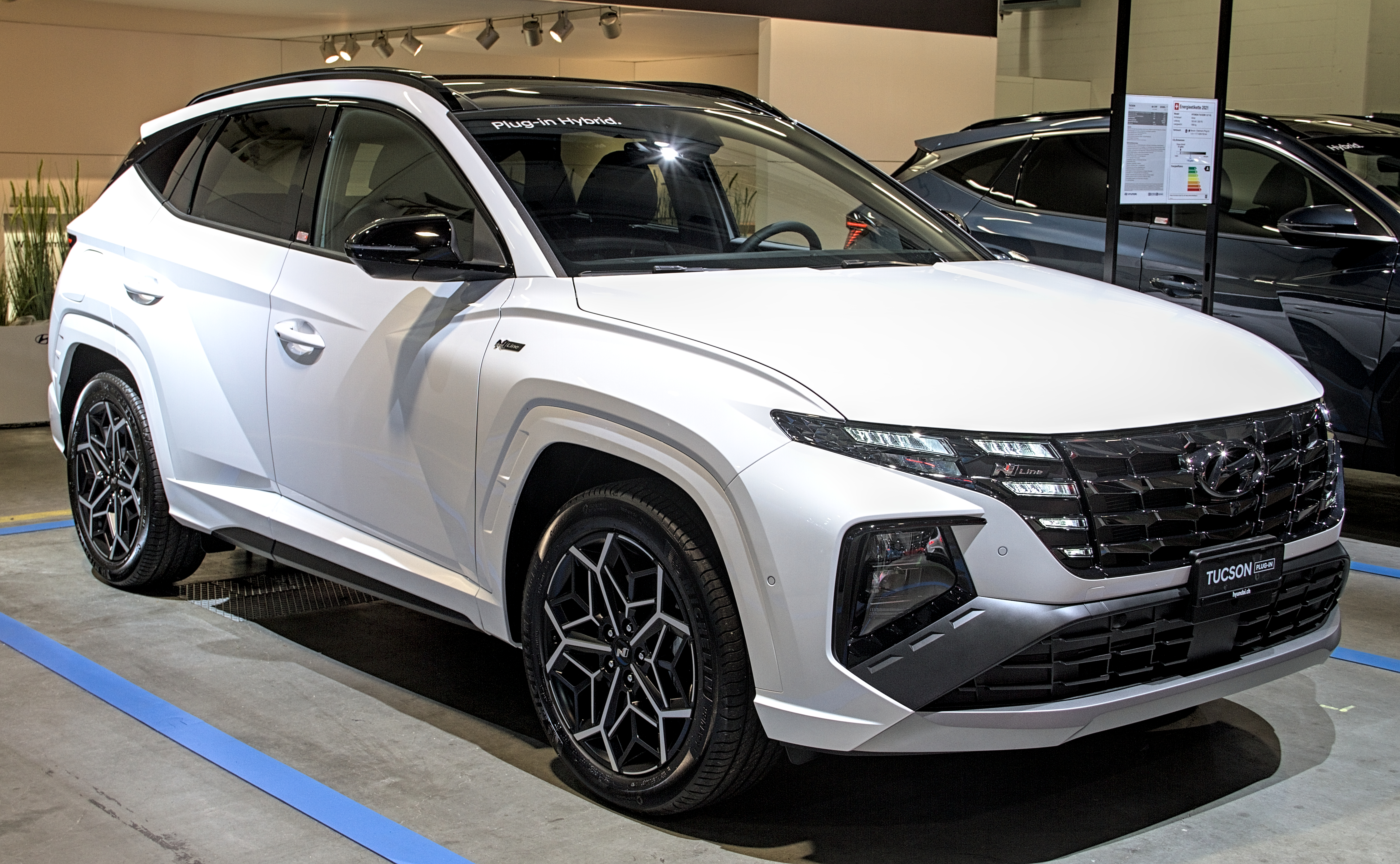
2. **Hyundai Tucson (2022–Present) – 10.25-inch Touchscreen**Hyundai has rapidly matured its infotainment systems across its lineup, and the Tucson’s 10.25-inch touchscreen interface is a shining example of this evolution. It delivers snappy performance, ensuring quick responses to inputs and smooth transitions between menus. Critically, the system benefits from frequent over-the-air updates, a proactive approach that keeps the software current and addresses potential bugs efficiently, resulting in rare software crashes that plague many competitors. This commitment to continuous improvement underscores Hyundai’s dedication to providing a reliable digital experience.
The 2022 Hyundai Tucson made a bold entrance into the compact SUV market with an eye-catching new design, signaling a fresh approach. While the base model features a traditional 2.5-liter four-cylinder gasoline engine, similar to the Hyundai Sonata, the availability of hybrid and plug-in hybrid versions, both powered by a turbocharged 1.6-liter four-cylinder engine paired with an electric motor, offers diverse choices. Regardless of the chosen powertrain, the Tucson consistently comes well-equipped and is recognized as one of the most visually distinctive options in its segment, earning it a coveted Editors’ Choice award for 2022 and ranking high among compact SUVs.
Positioned at number three in the latest rankings of compact SUVs, the 2022 Hyundai Tucson stands alongside strong competitors such as the Honda CR-V, Mazda CX-5, Toyota RAV4, and Volkswagen Tiguan. Its comprehensive redesign for 2022 embraced Hyundai’s latest design philosophy, presenting a bolder and more assertive aesthetic. With pricing ranging from $26,245 to $36,595 across its extensive trim lineup—from SE to Limited—the SEL Convenience trim is often recommended for its optimal blend of features and value, including heated front seats, blind-spot monitoring, adaptive cruise control, a sunroof, and a 10.3-inch digital gauge display.
Performance-wise, the Tucson’s engine lineup, starting with a 187-horsepower 2.5-liter four-cylinder mated to an eight-speed automatic transmission, provides adequate acceleration for urban commuting and highway merging. While it might not satisfy drivers seeking aggressive power, our all-wheel-drive Limited test model achieved a respectable 0–60 mph time of 8.8 seconds. The hybrid and plug-in hybrid models offer a livelier feel on the road, though they do not match the acceleration of segment leaders like the Toyota RAV4 Prime. However, the Tucson truly impresses with its confident handling, responsive steering, and a composed, comfortable ride, particularly noted for its quiet and refined cruising character that lends a near-luxury ambiance rarely found at its price point.
The infotainment system’s reliability is further cemented by its logical menu structure and fast boot-up times, minimizing frustration from the moment the vehicle starts. A standout feature is its split-screen multitasking capability, allowing drivers to view navigation and audio controls simultaneously without complex toggling. Owner complaints about bugs or freezing are remarkably few, solidifying its reliability verdict as a top-tier system that consistently performs as expected, making the Tucson a smart choice for tech-savvy drivers.
Car Model Information: 2024 Hyundai TUCSON Hybrid SEL Convenience
Name: Hyundai Tucson
Caption: Hyundai Tucson (NX4, SWB)
Manufacturer: Hyundai Motor Company
Aka: Hyundai ix35 (2009–2015)
Production: 2004–present
ModelYears: 2005–present
Class: Compact crossover SUV
BodyStyle: sport utility vehicle
Layout: Front-engine, front-wheel-drive layout,Front-engine, four-wheel-drive layout
Sp: us
Categories: 2010s cars, All-wheel-drive vehicles, All Wikipedia articles written in British English, All articles needing additional references, All articles with dead external links
Summary: The Hyundai Tucson is a compact crossover SUV produced by the South Korean manufacturer Hyundai. It is named after the city of Tucson, Arizona, U.S. The second-generation model was marketed as the Hyundai ix35 in several markets, including Europe, Australia and China, before reverting to Tucson for the third-generation. Since its first-generation, the Tucson has been developed alongside the Kia Sportage, sharing platforms and engines. The Tucson is the best-selling Hyundai model, with more than 7 million units sold globally since it launched in 2004. Of these, 1.4 million units have been sold in Europe.
Get more information about: Hyundai Tucson
Buying a high-performing used car >>>
Brand: Hyundai Model: Tucson
Price: $28,275 Mileage: 13,387 mi.
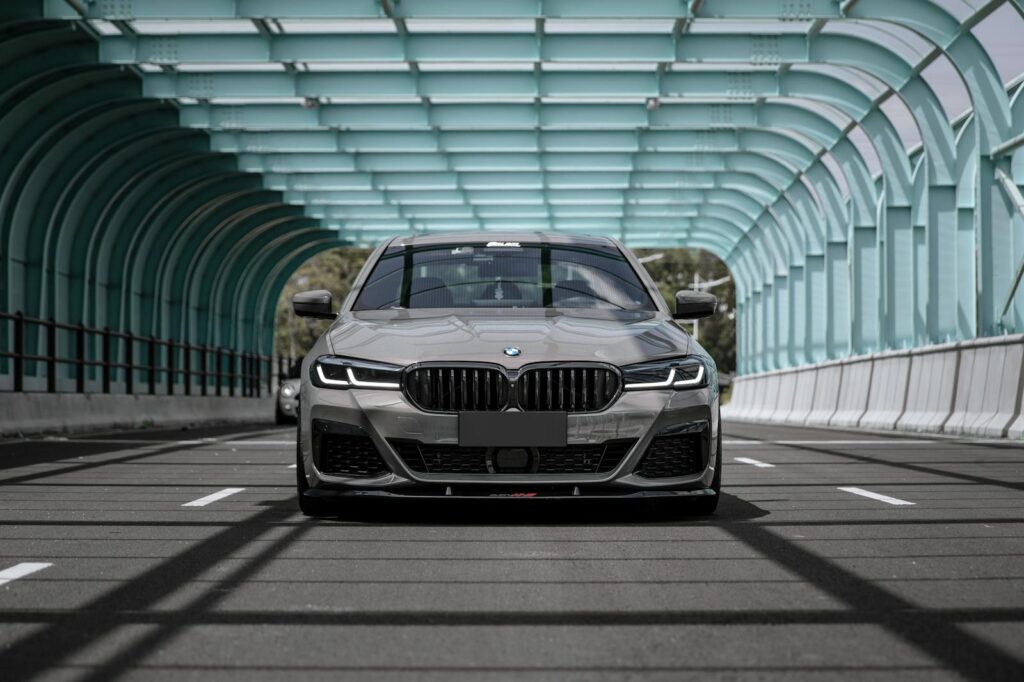
3. **BMW 5 Series (2021–Present) – iDrive 7 & 8**BMW’s iDrive system has long been considered a benchmark in the automotive industry, and its versions 7 and 8, implemented in the 5 Series since 2021, continue to uphold this reputation with remarkable consistency and sophistication. These iterations have evolved to feature sharp, high-resolution graphics that are a pleasure to behold, providing clarity and aesthetic appeal. The inclusion of a precise rotary controller offers an essential tactile input method, seamlessly complementing the touchscreen capabilities and allowing drivers to navigate menus with minimal distraction. Crucially, iDrive 7 and 8 boast near-zero software crashes, ensuring a consistently smooth and reliable user experience.
For those who prioritize quiet luxury and elegant design, the 2021 BMW 5 Series sedan emerges as a compelling choice. Its cabin is a sanctuary of spaciousness, refinement, and comfort, making it an ideal companion for both daily commutes and extended journeys. BMW’s commitment to catering to diverse preferences is evident in its array of powertrain options, which effectively balance fuel economy with the thrill of a V-8. A visual update for 2021 further sharpens the 5 Series’ styling, enhancing its upscale appeal and ensuring its competitiveness against formidable rivals such as the Audi A6, Genesis G80, and Mercedes-Benz E-class.
In the 2021 rankings for best luxury mid-size cars, the 5 Series secured the number eight spot, a testament to its enduring quality and appeal. Priced from $55,195, the lineup includes several variants, with the mid-level 540i standing out for its exceptional value, offering a well-balanced blend of performance and comfort. For 2021, significant changes were introduced, including a freshened design, a new 48-volt hybrid powertrain for the 540i, an enlarged 12.3-inch infotainment display, and meaningful upgrades to driver-assistance technologies, all contributing to an enriched driving experience.
Performance is a strong suit for the 5 Series, with both the 530i’s four-cylinder and the 540i’s six-cylinder engines delivering smooth, responsive, and efficient power. The 540i, in particular, benefits from the new 48-volt hybrid system, and both engines are paired with an eight-speed automatic transmission that is responsive and well-calibrated. Stepping up to the M550i unlocks serious performance with a twin-turbocharged 4.4-liter V-8, allowing it to accelerate to 60 mph in just 4.1 seconds in testing, outpacing rivals like the Audi S6 and Mercedes-AMG E53. While every 5 Series model handles with composure, prioritizing comfort and refinement, its steering feedback is on the lighter side, a deliberate choice that aligns with its luxury brief, even if it doesn’t fully satisfy enthusiasts seeking razor-sharp dynamics.
One of the most praised aspects of BMW’s iDrive system is the harmonious coexistence of physical and touchscreen controls. This design philosophy acknowledges that while larger touchscreens are visually appealing, physical controls are often safer and more intuitive for frequently used functions, as emphasized by J.D. Power findings. The ability to customize settings deeply and enjoy smooth performance further contributes to its high marks. Even with extensive use, the system rarely freezes or crashes, earning a strong reliability verdict and solidifying its position as an infotainment leader.
Car Model Information: 2017 Honda Accord Touring
Name: BMW 5 Series
Manufacturer: BMW
Production: 1972–present
Class: Executive car
BodyStyle: Sedan (automobile)
Layout: Front-engine, rear-wheel-drive,Front-engine, all-wheel-drive
Predecessor: BMW New Class
Categories: 1980s cars, 1990s cars, 2000s cars, 2010s cars, 2020s cars
Summary: The BMW 5 Series is an executive car manufactured and marketed by BMW since 1972. It is the successor to the BMW New Class sedans and is currently in its eighth generation. The car is sold as either a sedan or, since 1991, a station wagon (marketed as “Touring”). A 5-door fastback (marketed as “Gran Turismo”) was sold between 2009 and 2017. Each successive generation has been given an internal G-code designation since 2017. Previously, a F-code designation was used between 2010 and 2016, while an E-code designation was used between 1972 and 2010. These are used to distinguish each model and generation from each other.
The first generation of the 5 Series was powered by naturally aspirated four-cylinder and six-cylinder petrol engines. Following generations have been powered by four-cylinder, six-cylinder, V8 and V10 engines that are either naturally aspirated or turbocharged. Since 1982, diesel engines have been included in the 5 Series range.
The 5 Series is BMW’s second-best-selling model after the 3 Series. On 29 January 2008, the 5 millionth 5 Series was manufactured, a 530d sedan in Carbon Black Metallic. It is BMW’s oldest nameplate still in production and the first model line to use “Series” in the name, debuting the three-digit model naming convention still used today. Since the E28, all generations of 5 Series have included an “M” model, called the BMW M5.
Get more information about: BMW 5 Series
Buying a high-performing used car >>>
Brand: BMW Model: 5 Series
Price: $19,960 Mileage: 86,317 mi.

4. **Mazda CX-5 (2019–Present) – Mazda Connect (New Gen)**Mazda has deliberately chosen a path of simplicity and intuitive design with its Mazda Connect infotainment interface, found in the CX-5 since 2019. This system is primarily controlled by a rotary dial, a design choice that is less prone to driver distraction and minimizes lag often associated with touch-only interfaces. The latest version of Mazda Connect achieves a commendable balance between aesthetic appeal and practical functionality, making it a system that is not only visually pleasing but also genuinely easy and safe to use while driving. This focus on driver engagement over flashy, complex digital screens distinguishes Mazda in an increasingly touchscreen-dominated market.
For the 2019 model year, Mazda expanded the CX-5 lineup with the introduction of Grand Touring Reserve and Signature trims, bringing a richer array of premium features. These higher trims notably came equipped with a new turbocharged 2.5-liter four-cylinder engine, sourced from the larger CX-9, delivering up to 250 horsepower and a robust 310 pound-feet of torque. This addition effectively addressed a longstanding criticism that the CX-5’s standard four-cylinder engine was often perceived as underpowered compared to its competitors, providing a much-needed boost in performance. Additionally, a 2.2-liter diesel engine was made available late in the model year, exclusively on the CX-5 Signature trim, designed to offer enhanced towing capabilities and improved fuel efficiency, though these upgraded engines remain restricted to the higher-priced trims.
Despite offering less passenger and cargo space than some other models in its class, the Mazda CX-5 continues to stand out in the competitive SUV segment. It strikes an admirable balance between sporty handling, ride comfort, and everyday practicality, making it a versatile choice for a wide range of drivers. Furthermore, its interior feels notably upscale, boasting a level of refinement and material quality that is often uncommon among its peers. All these attributes combine to make the CX-5 a smart and rewarding choice for those seeking a premium feel without an exorbitant price tag.
Regarding its infotainment system, Mazda Connect shines with minimal bugs and an intuitive layout that makes it exceptionally easy to navigate. A key standout feature, and a significant contributor to its reliability, is the intentional disabling of the touchscreen functionality while the vehicle is in motion. This design choice, while perhaps initially surprising to some, significantly reduces system overload and driver distraction, aligning with Euro NCAP’s upcoming safety requirements that advocate for physical controls for critical functions. This deliberate design prioritizes safety and user focus, ensuring a more stable and predictable experience.
This thoughtful approach to infotainment design has paid dividends in terms of reliability. Owners consistently report almost no system faults, even on older models, which speaks volumes about the robustness and stability of Mazda Connect. The system’s consistent performance, free from the common glitches and freezes that plague other vehicles, reinforces its reputation as a highly dependable and user-friendly interface. For drivers who value uncomplicated, distraction-free interaction with their vehicle’s technology, the Mazda CX-5 with its New Gen Mazda Connect system is an exemplary choice.
Car Model Information: 2015 Mazda CX-5 Grand Touring
Name: Mazda CX-5
Caption: Second generation CX-5 (KF; 2024)
Manufacturer: Mazda
Production: 2012–present
ModelYears: 2013–present
Class: Compact crossover SUV
BodyStyle: SUV
Layout: unbulleted list
Predecessor: unbulleted list
Categories: 2020s cars, All-wheel-drive vehicles, All articles containing potentially dated statements, All articles lacking reliable references, All articles with dead external links
Summary: The Mazda CX-5 is a compact crossover SUV, produced by Mazda since 2012. A successor to both the Tribute and the slightly larger CX-7, it is Mazda’s first model to feature the “Kodo” design language and the first model to be fully developed with a range of technologies branded as Skyactiv, including a rigid, lightweight platform combined with a series of engines and transmissions to reduce emissions and fuel consumption.
Since 2019, the CX-5 is positioned above the smaller CX-30. As of 2022, depending on the region, the CX-5 is positioned right below the larger CX-50, CX-60 or the CX-8 within Mazda’s crossover SUV line-up.
Since 2014, the CX-5 has consistently been Mazda’s best-selling model globally. It achieved record sales in 2019, with 444,262 units sold worldwide. As of March 2022, cumulative sales of the CX-5 reached around 3.5 million units.
Get more information about: Mazda CX-5
Buying a high-performing used car >>>
Brand: Mazda Model: CX-5
Price: $11,991 Mileage: 124,693 mi.
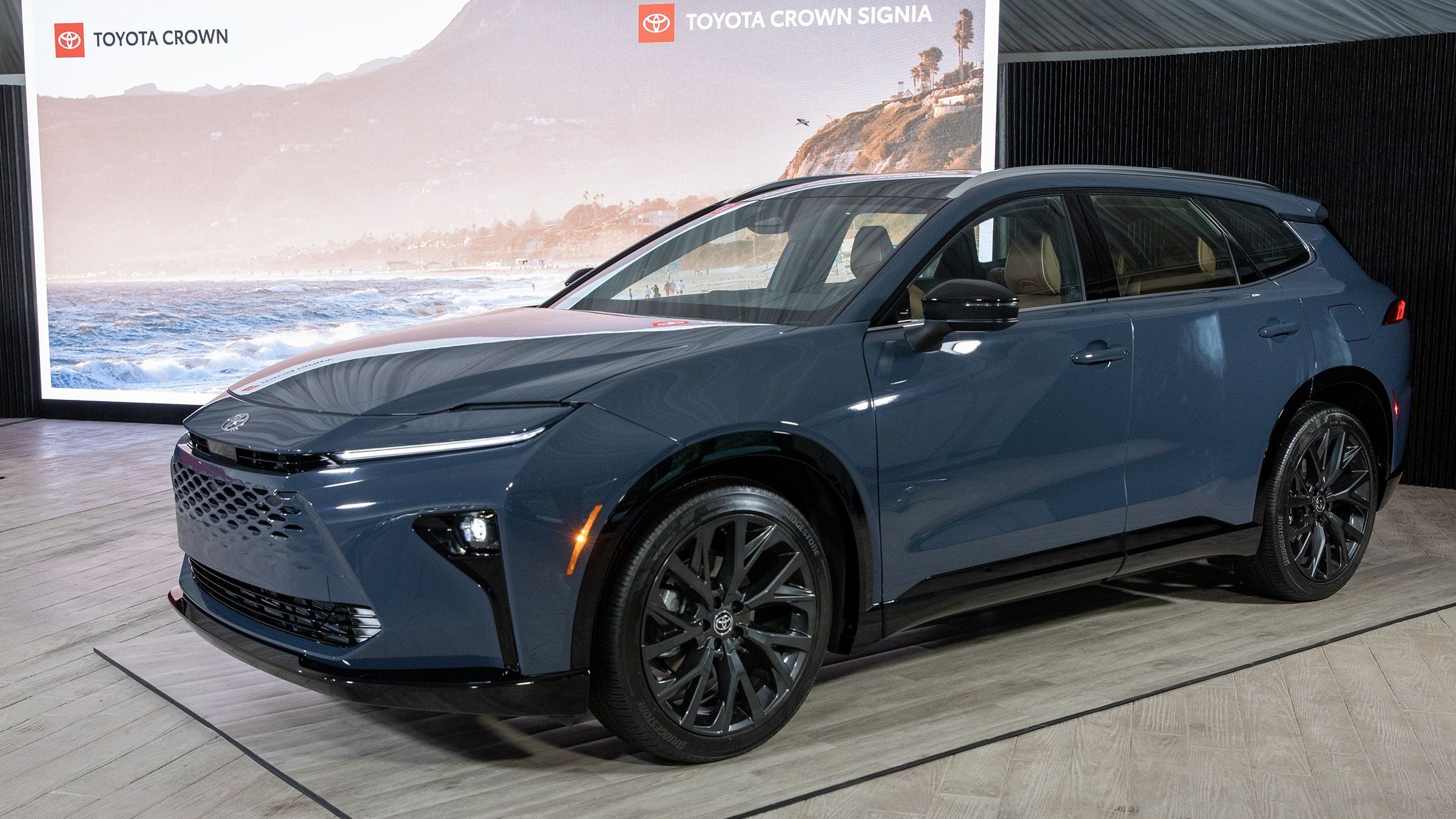
5. **Toyota Camry (2021–Present) – Toyota Audio Plus / Premium**Toyota’s updated infotainment systems have become remarkably reliable, a clear win for the brand’s commitment to practical dependability. While the system in the Camry might not be the flashiest or most visually audacious on the market, it excels in its core functions: it’s quick, stable, and now includes the much-desired wireless Apple CarPlay and Android Auto. This seamless smartphone integration means drivers can easily access their preferred apps, navigation, and media without the hassle of cables, enhancing the overall convenience and user experience significantly. Toyota’s conservative design philosophy often translates into solid, dependable technology, and the Camry’s infotainment is a prime example.
Despite the Camry often being labeled as “boring,” a perception that doesn’t detract from its quality, the interior cabin has seen subtle yet effective upgrades. The overall layout largely retains its familiarity compared to pre-2021 models, but a new floating infotainment display provides a slight visual refresh, bringing it more in line with contemporary aesthetics. While interior materials in the models we’ve tested felt average for the class, and the design—both inside and out—is largely unremarkable, the focus here is on consistent, practical performance rather than overt luxury or avant-garde styling.
In terms of driving dynamics, the Camry presents a somewhat mixed picture. Even with what Toyota touts as its best-handling Camry chassis ever, the overall handling can still feel a bit loose, exhibiting more body movement than some drivers might prefer. In a head-to-head comparison with the Nissan Altima, it was noted that in the Camry, “you’ll get where you’re going but forget how you got there,” suggesting a driving experience that prioritizes comfort and predictability over engaging excitement. However, the AWD version offers a tangible traction advantage, providing enhanced stability and grip in various conditions.
Where the Camry truly distinguishes itself is in two critical areas: fuel efficiency and safety. The four-cylinder models deliver impressive mileage figures, offering economic operation even if it comes at the expense of lively performance. The hybrid version, in particular, sips fuel with exceptional restraint, making it an outstanding choice for eco-conscious drivers. Furthermore, the Camry’s recognition as a 2020 IIHS Top Safety Pick+ underscores its robust crash-test credentials, and Toyota’s commendable inclusion of its full suite of active safety features as standard on every trim level reinforces its position as a supremely safe vehicle. For those seeking a bit more performance, the Camry TRD offers an affordable entry to the V-6 engine, though its application of the TRD badge was described as somewhat underwhelming.
The reliability verdict for Toyota’s infotainment system is overwhelmingly positive. Its conservative design ethos results in remarkably few glitches or issues with updates, providing a bedrock of stability that many other manufacturers struggle to achieve. A standout feature is that it rarely needs resets or reboots, a testament to its robust underlying software. The system’s basic yet responsive nature, combined with seamless smartphone integration, makes it a reliable co-pilot that simply works, day in and day out, affirming Toyota’s reputation for long-term dependability.
In this segment, we’re peeling back the layers on modern cars whose digital brains just can’t seem to get their act together. These are the models where infotainment issues are not just a nuisance, but a consistent source of frustration for owners, notoriously plagued by screen freezes, infuriating lag, and connectivity failures that significantly impact the overall driving experience. Drawing from owner complaints, expert verdicts, and industry reports like the J.D. Power 2025 U.S. Initial Quality Study, which consistently flags infotainment as the most problematic category, we’ll detail the common glitches and their real-world consequences. If seamless tech is non-negotiable for your daily commute, consider this your essential guide to which systems to approach with caution.
Car Model Information: 2019 Toyota Camry LE
Name: Toyota Camry
Caption: 2018 Toyota Camry Ascent (ASV70, Australia)
Manufacturer: Toyota
Production: March 1982 – present
Aka: ubl
Class: ubl
Layout: ubl
Predecessor: ubl
Successor: Toyota Avensis (T250)
Categories: 1990s cars, 2000s cars, 2010s cars, 2020s cars, All-wheel-drive vehicles
Summary: The Toyota Camry is an automobile sold internationally by the Japanese auto manufacturer Toyota since 1982, spanning multiple generations. Originally compact in size (narrow-body), the Camry has grown since the 1990s to fit the mid-size classification (wide-body)—although the two widths co-existed in that decade. Since the release of the wide-bodied versions, Camry has been extolled by Toyota as the firm’s second “world car” after the Corolla. As of 2022, the Camry is positioned above the Corolla and below the Avalon or Crown in several markets. In Japan, the Camry was once exclusive to Toyota Corolla Store retail dealerships. Narrow-body cars also spawned a rebadged sibling in Japan, the Toyota Vista—also introduced in 1982 and sold at Toyota Vista Store locations. Diesel fuel versions have previously retailed at Toyota Diesel Store. The Vista Ardeo was a wagon version of the Vista V50.
Get more information about: Toyota Camry
Buying a high-performing used car >>>
Brand: Toyota Model: Camry
Price: $21,199 Mileage: 55,414 mi.
Read more about: Smart Buys for Families: 13 Used Cars Under $15,000 That Mechanics Trust for Long-Term Reliability
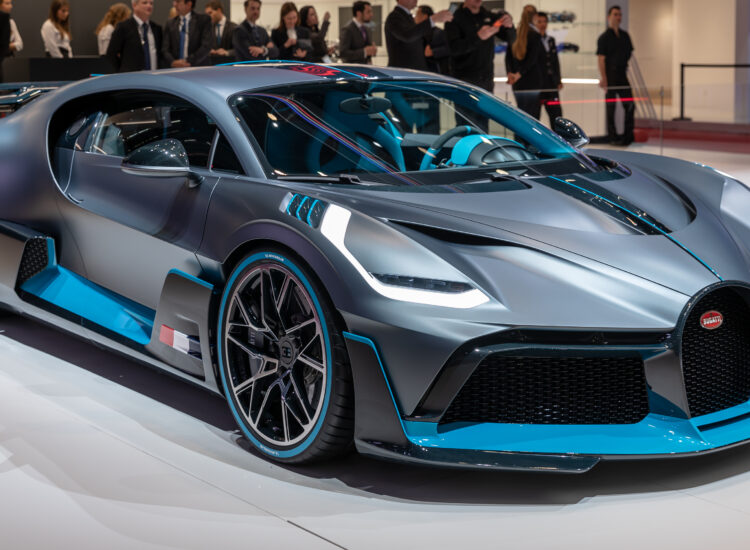
6. **Ford Explorer (2020–2023) – SYNC 3 & 4**Ford’s SYNC system, once a brand highlight, has unfortunately become a significant point of contention for 2020–2023 Explorer owners. Users frequently report a host of frustrating issues plaguing SYNC 3 and SYNC 4, including exasperating screen freezing and unexpected random restarts that disrupt navigation and media playback. Many highlight consistent Bluetooth dropouts, especially when attempting to use smartphone integration like Android Auto, undermining the very convenience these systems promise.
Beyond core operational issues, specific functionalities draw criticism. The climate control screen is prone to freezing, leaving drivers unable to adjust critical cabin comfort settings. Furthermore, the voice recognition system often struggles to accurately interpret commands, leading to repeated attempts and increased driver distraction. These flaws transform everyday interactions with the vehicle’s tech from simple tasks into irritating struggles, demanding drivers’ attention more often than safety permits.
The real-world impact can be more than just an annoyance. Owners frequently voice concerns about the system restarting unexpectedly while driving, with one common complaint stating, “System restarts while driving, forcing me to lose navigation.” This unpredictable behavior is not only disruptive but can pose a genuine safety risk when crucial navigational information vanishes mid-journey. Such recurring problems often necessitate trips to the dealership for intervention, highlighting a fundamental instability in the software.
The Explorer itself is a capable SUV, offering potent powertrains from a 300-hp turbocharged 2.3-liter four-cylinder to a 400-hp twin-turbocharged 3.0-liter V-6 in the ST variant, the latter transforming it into a genuine performance SUV. A hybrid model also contributes to its versatility. Built on a rear-wheel-drive platform with optional AWD, it provides commendable ride quality and handling. While the Explorer has many strengths as a family SUV, the pervasive issues with its SYNC 3 and 4 infotainment systems remain a significant drawback, consistently marring an otherwise appealing package.
Car Model Information: 2022 Ford Explorer ST
Name: Ford Explorer
Caption: Sixth-generation Ford Explorer
Manufacturer: Ford Motor Company
Production: 1990–present
ModelYears: 1991–present
Class: unbulleted list
Chassis: unbulleted list
Predecessor: Ford Bronco II
Successor: Ford Territory (Australia)
Categories: 2000s cars, 2010s cars, 2020s cars, All-wheel-drive vehicles, All Wikipedia articles in need of updating
Summary: The Ford Explorer is a range of SUVs manufactured by the Ford Motor Company since the 1991 model year. The first five-door SUV produced by Ford, the Explorer, was introduced as a replacement for the three-door Bronco II. As with the Ford Ranger, the model line derives its name from a trim package previously offered on Ford F-Series pickup trucks. As of 2020, the Explorer became the best-selling SUV in the American market.
Currently in its sixth generation, the Explorer has featured a five-door wagon body style since its 1991 introduction. During the first two generations, the model line included a three-door wagon (directly replacing the Bronco II). The Ford Explorer Sport Trac is a crew-cab mid-size pickup derived from the second-generation Explorer. The fifth and sixth generations of the Explorer have been produced as the Ford Police Interceptor Utility (replacing both the Ford Crown Victoria Police Interceptor and the Ford Police Interceptor Sedan).
The Explorer is slotted between the Ford Edge and Ford Expedition within North America’s current Ford SUV range. The model line has undergone rebadging several times, with Mazda, Mercury, and Lincoln each selling derivative variants. Currently, Lincoln markets a luxury version of the Explorer as the Lincoln Aviator.
For the North American market, the first four generations of the Explorer were produced by Ford at its Louisville Assembly Plant (Louisville, Kentucky) and its now-closed St. Louis Assembly Plant (Hazelwood, Missouri). Ford currently assembles the Explorer alongside the Lincoln Aviator and the Police Interceptor Utility at its Chicago Assembly Plant (Chicago, Illinois).
Get more information about: Ford Explorer
Buying a high-performing used car >>>
Brand: Ford Model: Explorer
Price: $34,888 Mileage: 34,300 mi.
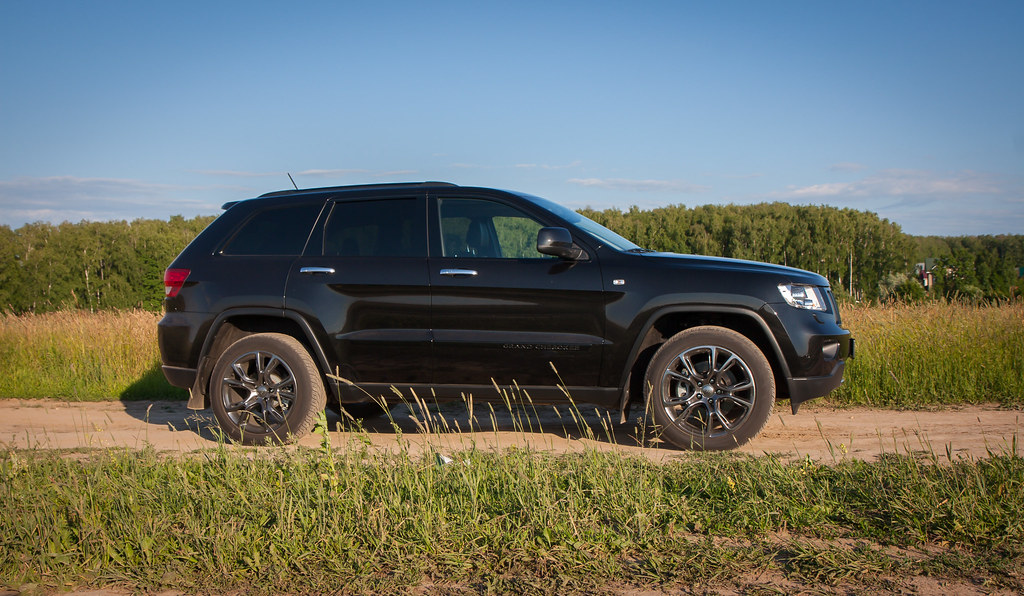
7. **Jeep Grand Cherokee (2021–2023) – Uconnect 5**Jeep’s Uconnect system has a good reputation, and Uconnect 5, introduced in the 2021–2023 Grand Cherokee, promised faster speeds and enhanced graphics. Regrettably, its real-world implementation has been notoriously plagued with bugs, frustrating many owners. Widespread reports detail significant issues like frequent touchscreen blackouts, rendering all digital controls inaccessible, and delayed inputs, where a noticeable lag occurs between touch and system response.
These persistent glitches extend beyond inconvenience, impacting critical vehicle functions. Owners routinely encounter audio dropouts and, more critically, the GPS system freezing mid-route, forcing reliance on alternative navigation or pulling over to reset. A frequently cited complaint illustrates this instability: “System doesn’t wake up unless I restart the car,” indicating a deep-seated issue requiring a complete vehicle reboot to resolve.
The redesigned fifth-generation Grand Cherokee for 2021 was a significant launch, introducing a new platform initially as a three-row Grand Cherokee L. This architecture, promising improved driving dynamics, offered familiar V-6 and V-8 powertrains, with a 4xe plug-in hybrid also planned. The vision for the new Grand Cherokee encompassed high-end materials and expansive digital displays, positioning it against more luxurious competitors.
While the vehicle itself aims for spaciousness, comfort, and advanced features, the reliability of its Uconnect 5 infotainment system has proven to be a major Achilles’ heel. The “Glitch Verdict” is clear: it’s a promising system fundamentally hampered by inconsistent software updates and unresolved bugs. For a vehicle aiming at the premium segment, such fundamental technological instability is a significant letdown, eroding user confidence and diminishing the overall ownership experience.
8. **Volkswagen Atlas (2021–2024) – MIB3 Infotainment**Volkswagen’s strategy for the 2021–2024 Atlas fully embraced a modern, digital interface with its MIB3 infotainment system, integrating capacitive touch buttons and extensive digital screens. This ambitious leap, however, has proven notoriously unreliable in practice. Owners and reviewers frequently point to a litany of issues, including sluggish response times that make interaction a test of patience, and disappearing menus where essential controls vanish without warning, forcing frustrating restarts.
Further compounding frustration are persistent volume control bugs, where the system either fails to adjust audio levels or does so erratically. A frequent complaint encapsulates the core issues: “Touchscreen lags and Bluetooth randomly disconnects.” This combination of delayed responses and unreliable connectivity significantly hampers the driving experience, turning simple actions into aggravating interruptions. While the MIB3 system attempts to be cutting-edge, its execution falls far short of expectations, betraying Volkswagen’s design intentions with poor reliability.
Under the hood, the Atlas offers a choice between a 235-hp four-cylinder and a 276-hp V-6, both paired with an eight-speed automatic. These engines, available with FWD or AWD, deliver smooth and refined performance. While acceleration is average, the Atlas rarely feels underpowered and is impressively agile for its size, offering composed handling and a comfortable ride. Fuel economy is competitive, with the four-cylinder FWD model achieving 21 mpg city/25 mpg highway.
Despite its practical strengths, the Atlas’s commendable attributes are consistently overshadowed by the shortcomings of its central digital hub. The “Glitch Verdict” for the MIB3 Infotainment system is critical: it represents overly ambitious tech with poor execution and persistently laggy performance. The reliance on capacitive touch buttons, which often require multiple attempts, and a digital interface that frequently struggles with basic functionality, actively detracts from the driving experience. For a brand known for precision, the MIB3 in the Atlas is a significant misstep, failing to deliver the seamless digital interaction modern drivers expect.
Car Model Information: 2021 Volkswagen Atlas Cross Sport 3.6L V6 SEL R-Line
Name: Volkswagen Atlas
Manufacturer: Volkswagen
Aka: Volkswagen Teramont
Production: 2017–present
ModelYears: 2018–present
Class: Mid-size crossover SUV
BodyStyle: SUV
Layout: unbulleted list
Predecessor: Volkswagen Touareg
Categories: 2020s cars, All-wheel-drive vehicles, Articles with short description, CS1 German-language sources (de), CS1 Mexican Spanish-language sources (es-mx)
Summary: The Volkswagen Atlas is a mid-size crossover SUV manufactured by the German automaker Volkswagen since 2017. Developed mainly for the North American and Chinese market, the vehicle is based on the Volkswagen Group MQB platform. Outside the US, Canadian, and Chilean markets, the vehicle is marketed as the Volkswagen Teramont. It is positioned above the long-wheelbase Tiguan and below the smaller but more upmarket Touareg.
Get more information about: Volkswagen Atlas
Buying a high-performing used car >>>
Brand: Volkswagen Model: Atlas
Price: $24,897 Mileage: 66,506 mi.

9. **Tesla Model Y (2020–Present) – Tesla OS**Tesla has pioneered a minimalist interior approach, consolidating nearly all vehicle functions into a large, central touchscreen powered by its proprietary Tesla OS. While futuristic, this interface is far from flawless in the 2020–Present Model Y. The sheer breadth of functions controlled by this single screen means any glitch can escalate from inconvenience to a potentially dangerous situation, as software instability directly impacts critical driving controls.
Owners frequently report alarming software issues. Screen reboots while driving are a significant concern, momentarily removing access to vital information and controls. Apps like Spotify are prone to crashing. More critically, users have reported laggy turn signals, where the visual indication on the screen is delayed or unresponsive. One troubling complaint states: “My HVAC and wipers froze because the screen crashed.” Such instances show basic comfort and safety features are directly linked to system stability, presenting real-world hazards.
The Tesla Model Y, in dual-motor versions, features 19-inch alloys, heated seats, power-folding heated side mirrors, and LED lighting as part of the premium interior. A seven-seat layout is optional, and the Performance variant enhances driving with 20-inch wheels, upgraded brakes, a carbon fiber spoiler, lowered suspension, and Track mode, underscoring its impressive performance.
While Tesla is known for over-the-air updates, which keep vehicles evolving, these frequent updates don’t always translate to improved infotainment stability. The “Glitch Verdict” for the Model Y’s OS acknowledges that while software is updated often, stability remains a major concern. The high integration of all vehicle functions into one screen means software bugs disproportionately impact user experience. For a brand priding itself on advanced technology, these persistent glitches are a notable Achilles’ heel.
Car Model Information: 2017 Honda Accord Touring
Name: Tesla Model Y
Caption: Pre-2025 Tesla Model Y
Manufacturer: Tesla, Inc.
Production: January 2020 – present
Assembly: Unbulleted list
Designer: Franz von Holzhausen
Class: Compact crossover SUV
BodyStyle: SUV
Layout: Unbulleted list
Related: Unbulleted list
Motor: unbulleted list
Battery: val,Lithium-ion battery
ElectricRange: FTP-75
Charging: unbulleted list
Wheelbase: Unbulleted list
Length: Unbulleted list
Width: cvt
Height: Unbulleted list
Weight: cvt
Sp: us
Categories: 2020s cars, All Wikipedia articles written in American English, All articles lacking reliable references, All articles that may contain original research, All articles to be expanded
Summary: The Tesla Model Y is a battery electric compact crossover SUV produced by Tesla, Inc. since 2020. The vehicle was presented in March 2019 as the company’s fifth production model since its inception after the Roadster, Model S, Model X and Model 3.
After its 2019 introduction, the Model Y started production at the Tesla Fremont Factory in California, US in January 2020. Production at Giga Shanghai, China was added in December 2020, and at Gigafactory Texas, US since late 2021. Deliveries from Gigafactory Berlin-Brandenburg, Germany started in March 2022.
The Model Y is based on the Model 3 sedan and serves as a larger variant, with around 76 percent of parts being shared between the two and identical exterior and interior styling. While most Model Y are configured with two-row seating, in the US the Model Y offers optional third-row seats for a seven-passenger seating capacity.
In 2023, Tesla delivered 1.2 million Model Ys, making it the world’s best-selling vehicle that year, surpassing the Toyota Corolla and becoming the first electric vehicle to claim that title. With at least 2.16 million units delivered since its start of production up to December 2023, the Model Y is also the most popular electric vehicle of all time. In 2024 sales were second to the Toyota RAV4. A refreshed version of the Model Y was revealed in January 2025, with upgrades similar to the upgraded Model 3.
In mid-2025, Tesla unveiled and released the Model Y L, a long-wheelbase, six-seat variant of the Model Y. That year, Tesla debuted the performance model of the Model Y.
Get more information about: Tesla Model Y
Buying a high-performing used car >>>
Brand: Tesla Model: Model Y
Price: $19,960 Mileage: 86,317 mi.
Read more about: Driving Value Forward: 9 New Entry-Level Cars Redefining the Segment in 2025
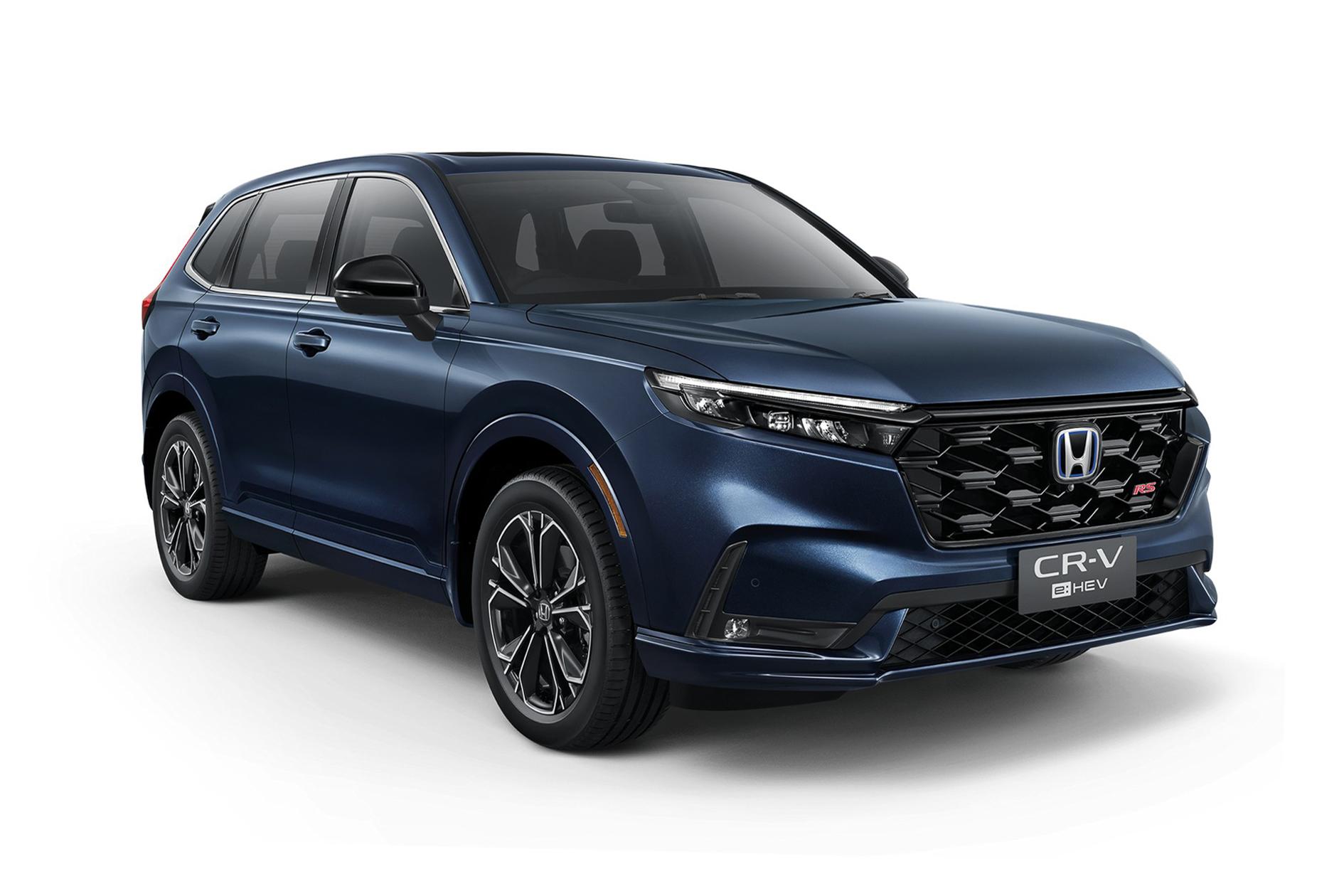
10. **Honda Accord (2018–2020) – Display Audio System**The 10th-generation Honda Accord (2018–2020) was admired for its style, comfort, and practicality. However, its Display Audio System was marred by widespread issues. Common complaints included painfully slow boot-up times, forcing drivers to wait for the system to become operational. Touch unresponsiveness was frequent, leading to commands failing to register, and the system often froze, particularly when using Apple CarPlay.
These persistent issues made daily use a chore. One frequent complaint captures it: “Takes 3 minutes to boot up, even in warm weather,” indicating fundamental software inefficiency. Such delays are inconvenient and reflect poorly on a vehicle otherwise known for dependability. The unresponsiveness and freezing, especially with smartphone mirroring, undermine convenience, forcing users to resort to their phones for navigation or media, thereby increasing distraction.
Beyond its tech woes, this Accord remains a strong contender. It offers a quiet, smooth, and engaging driving experience, with energetic engines and a rare manual transmission option. Its 16.7 cubic feet of trunk space is among the largest, complemented by clever interior storage. Honda also equipped it with impressive standard safety features, including the Honda Sensing suite, highlighting its commitment to safety.
While newer Accord models have improved infotainment, the issues in the 2018–2020 Display Audio System were significant. The “Glitch Verdict” for this generation is unambiguous: the system frequently required dealer software updates or even full replacement. This indicates a deep-seated technological flaw Honda struggled to rectify effectively. For prospective buyers of used Accords from this period, infotainment reliability proved a notable drawback in an otherwise exemplary vehicle.
Car Model Information: 2014 Honda Accord LX
Name: Honda Accord
Caption: 2023 Honda Accord LX (US)
Alt: Front three-quarter view of a front-engined four-door car.
Manufacturer: Honda
Production: 1976–present
Class: Compact car
BodyStyle: hatchback
Layout: Front-engine, front-wheel-drive layout
Predecessor: Honda 1300
Categories: 1980s cars, 1990s cars, 2000s cars, 2010s cars, 2020s cars
Summary: The Honda Accord, also known as the Honda Inspire in Japan and China for certain generations, is a series of automobiles manufactured by Honda since 1976, best known for its four-door sedan variant, which has been one of the best-selling cars in the United States since 1989. The Accord nameplate has been applied to a variety of vehicles worldwide, including coupes, station wagons, hatchbacks and a Honda Crosstour crossover.
Get more information about: Honda Accord
Buying a high-performing used car >>>
Brand: Honda Model: Accord
Price: $11,345 Mileage: 138,057 mi.
As we conclude our comprehensive journey through modern automotive infotainment, one truth is abundantly clear: the digital experience inside your car is no longer a peripheral feature; it’s a foundational element profoundly shaping your driving reality. From the impeccably stable Lexus Interface to the frequently frustrating Honda Display Audio, the spectrum of reliability is vast, and the impact on driver satisfaction, safety, and convenience is undeniable. Automakers like Lexus, BMW, and Mazda demonstrate that thoughtful design, whether through tactile controls or robust software, can yield intuitive and and dependable systems, proving you don’t always need the flashiest display for true reliability. Conversely, even vehicles from technologically advanced brands like Tesla, or those aiming for premium feel like Jeep and Volkswagen, show that an overly ambitious or poorly executed digital strategy can severely detract from the overall vehicle experience. The J.D. Power Initial Quality Study consistently highlights infotainment as the leading source of owner frustration, and as Euro NCAP prepares to mandate physical controls for critical safety functions by 2026, the industry is at a pivotal crossroads. When you’re in the market for your next ride, look beyond the shiny screen; investigate the real-world usability and reported reliability of its infotainment system. Because in the sensor saga, glitches, crashes, and persistent lag aren’t just minor annoyances—they can fundamentally diminish your connection with your car and even compromise your safety on the road. Choose wisely, and drive smarter.